Staff Rides can trace their origins back to the Prussian Army after the Napoleonic Wars. They were adapted by the US military and then more recently by many American fire agencies. They are now considered an essential technique to develop senior leadership skills.
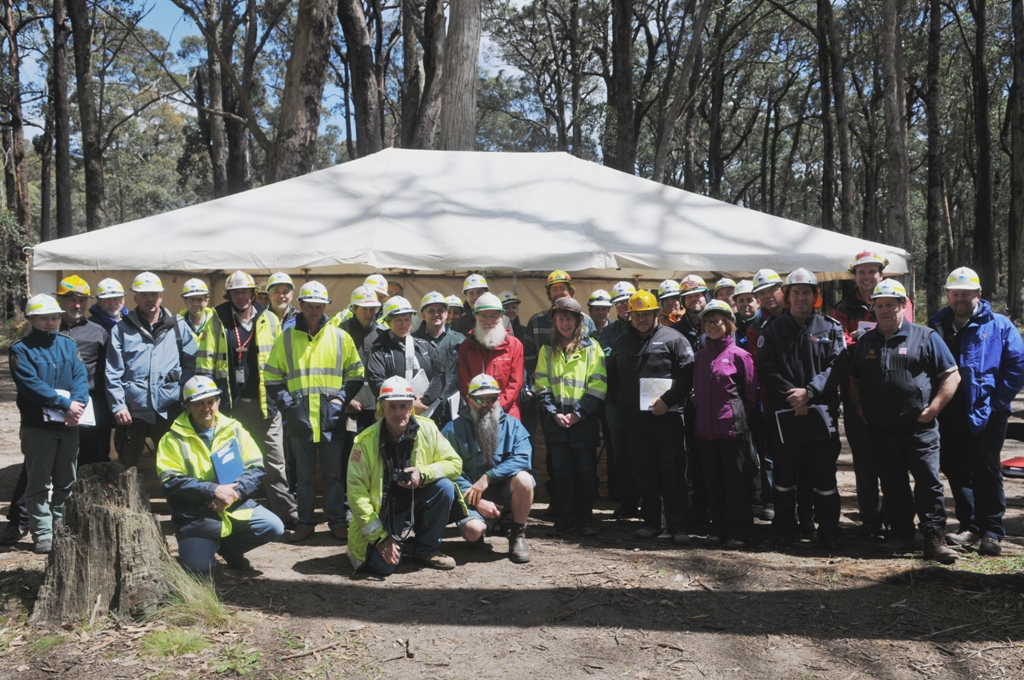
The Cobaw Bushfire Staff Ride in 2011 was the first attempt in Victoria. Another followed at Linton in 2014.
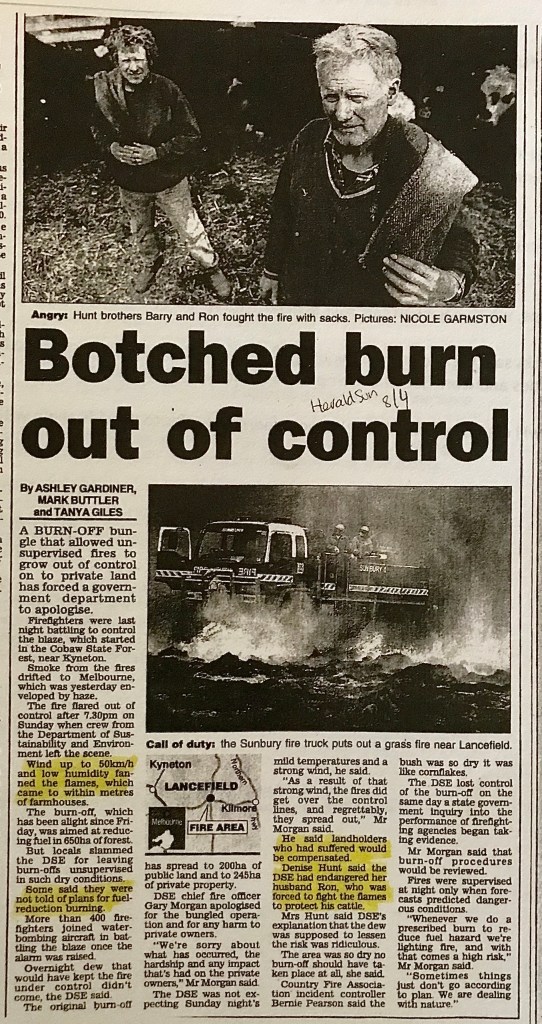
The escape of a Fuel Reduction Burn (FRB) from the Cobaw State forest 20 years ago during early April 2003 couldn’t have happened at a worse time.
The escape was against the backdrop of the huge alpine fires in Victoria and NSW together with the loss of some 500 homes and four lives in Canberra. People were angry and several state and federal government inquiries were announced.
On the face of it, the FRB at Cobaw seemed simple and routine but in fact proved very complex. There was no “right” answer, and the “truth” may never be fully known.
The Cobaw Staff Ride consisted of three distinct phases:
Preliminary Reading about the bushfire event, often weeks before the staff ride, involving forensic study of investigation reports, individual biographies, first-hand accounts, weather information, maps, photos, logs, media reports etc.
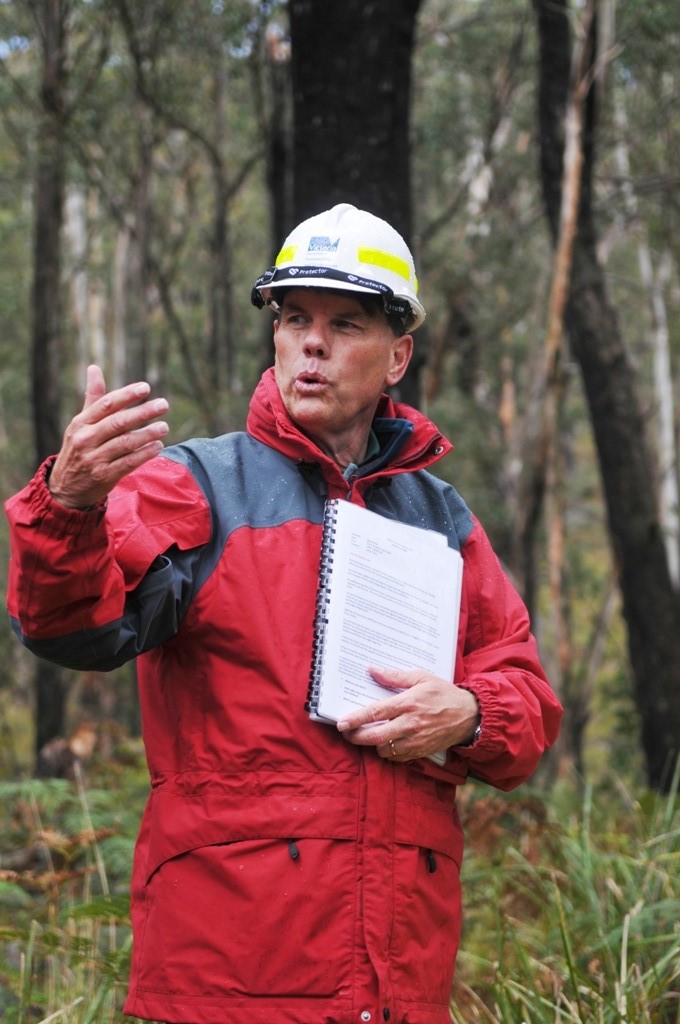
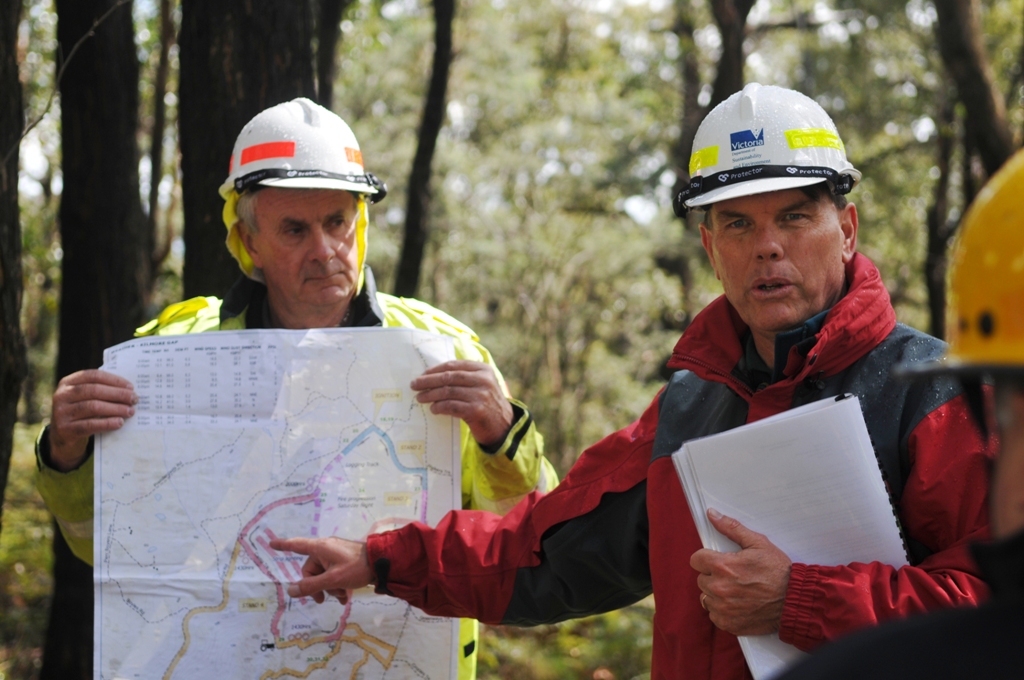
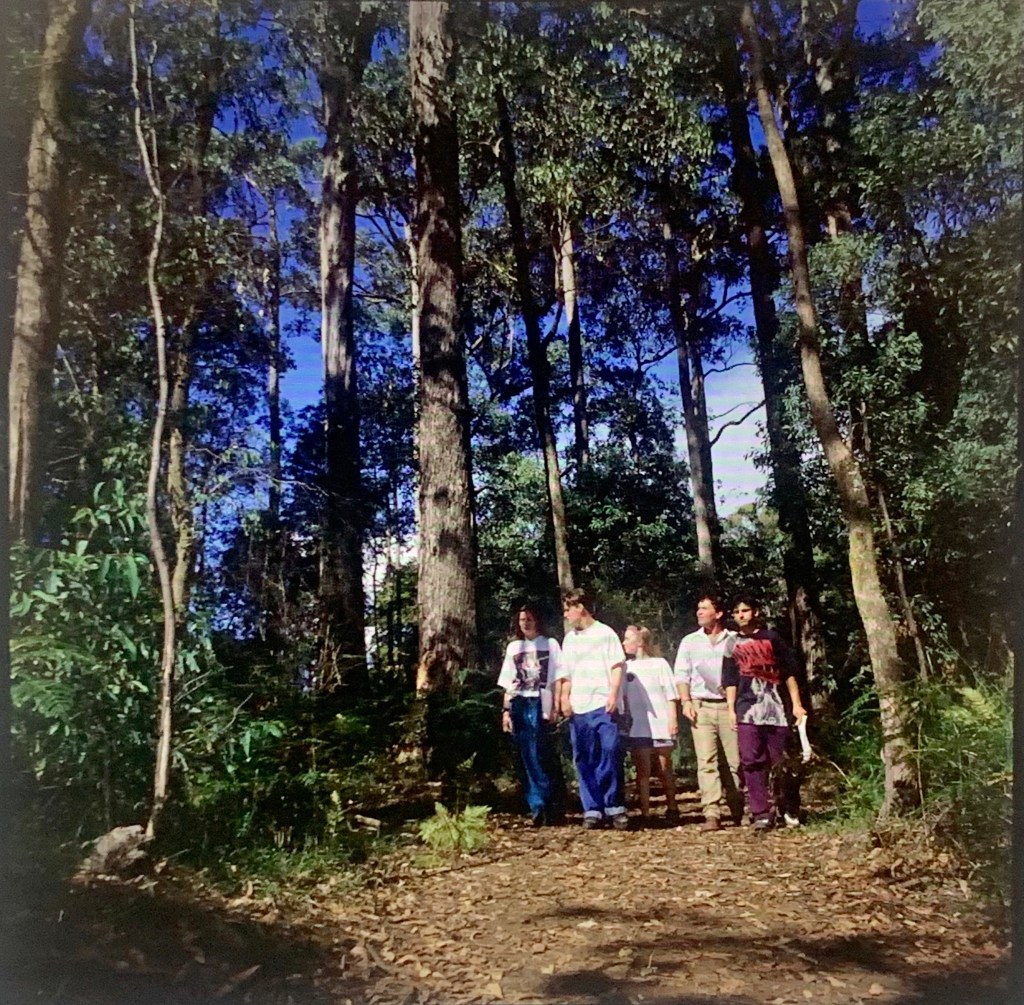
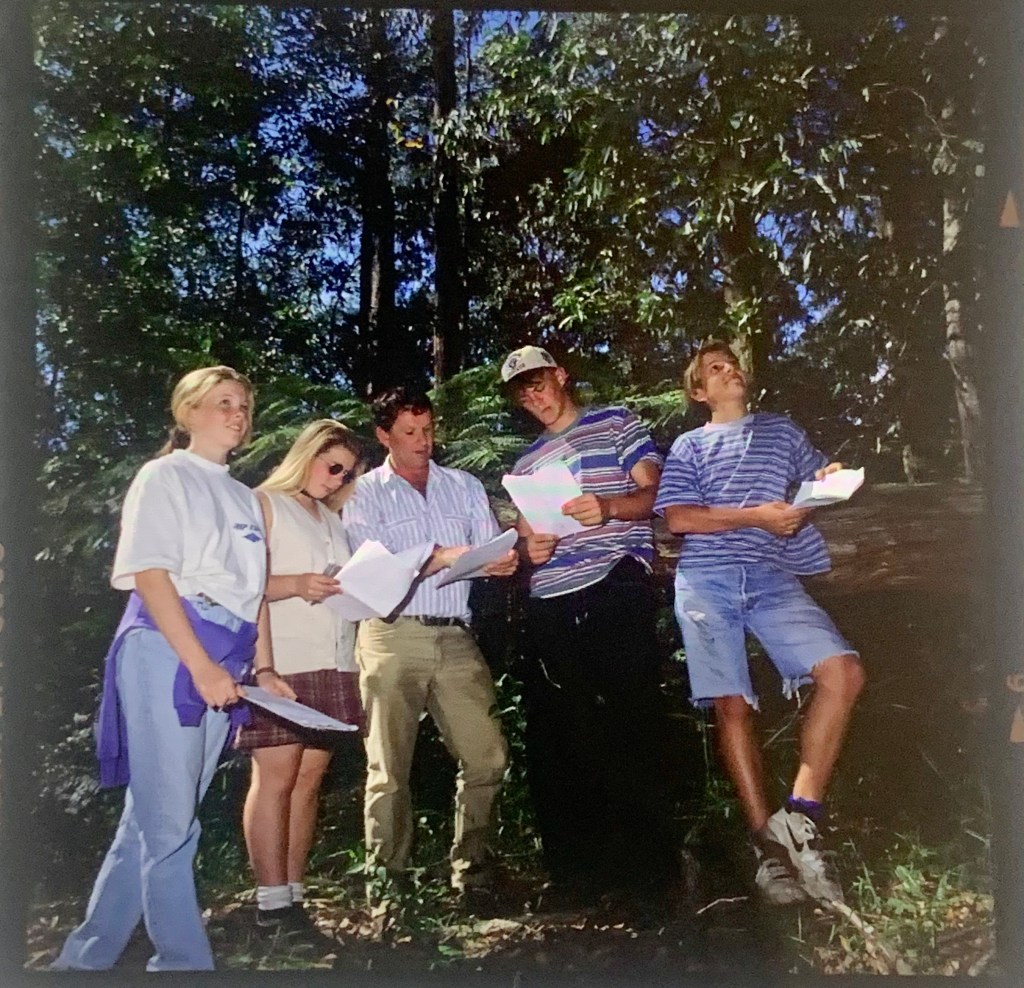
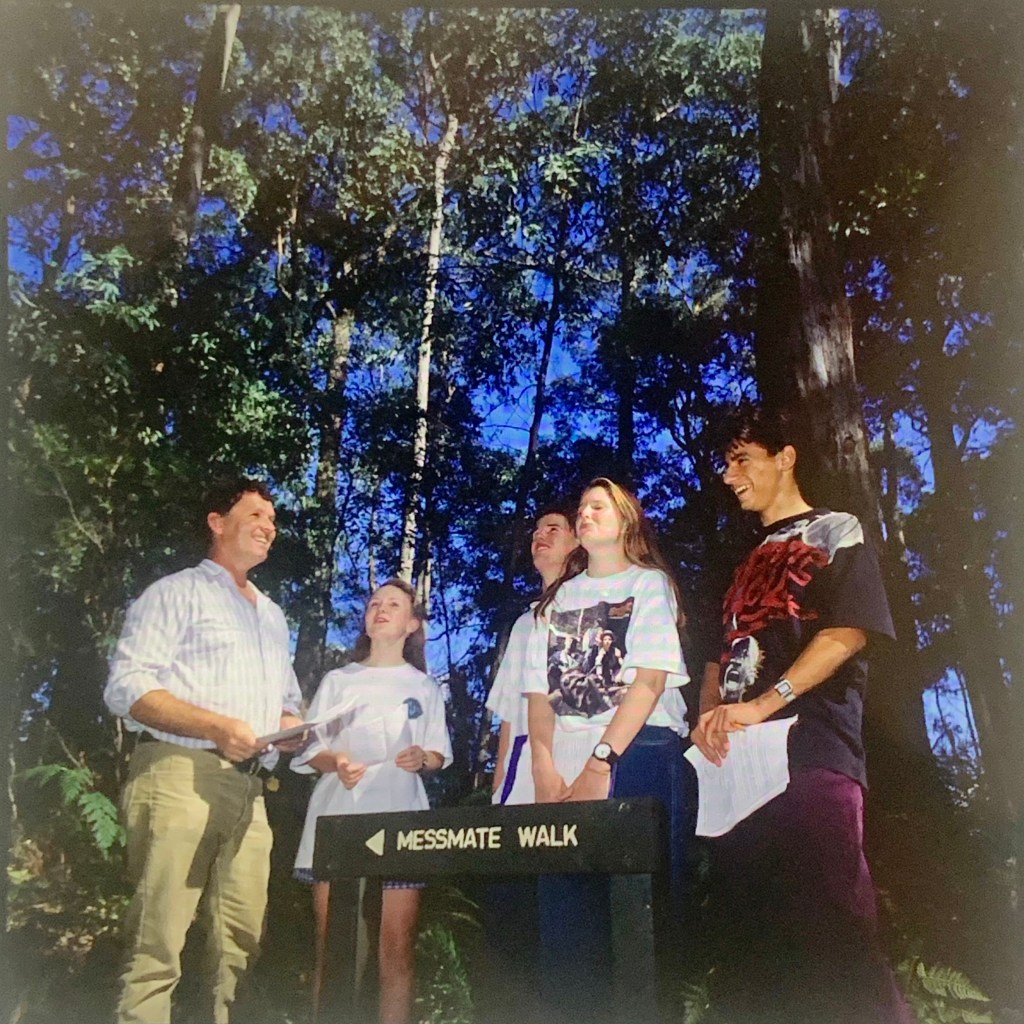
Field Study walking across the fire ground in small groups with a facilitator to understand the unfolding story from the perspective of people actually involved and discuss major assumptions, events and critical decision points.
Integration Phase to share impressions and lessons learned with other participants.
The Cobaw Bushfire staff ride presented a unique opportunity to learn from a past incident and was not about blame. The best decision maker, even taking all reasonable steps and precautions will still make misjudgements.
Every firefighter will know that bushfires are a dynamic and complex environment, and every decision made in real time is imperfect. The Staff Ride:
provided a chance to learn from low frequency but high-risk events.
gave an opportunity to analyse the key decisions and assumptions together with a study of the actual terrain and to demonstrate the effects of weather, slope, topography and fuels upon the fire.
focused on leadership, communications, decision making, biases and human factors.
encouraged discussion and debate between participants.
Bushfire staff rides are a powerful form of experiential learning because participants can see, hear and feel the environment where the decisions took place. Firefighting is often characterised by:
rapidly changing circumstances.
risky and sometimes life-threatening situations.
ambiguous instructions and objectives.
limited time for analysis, reflection and consultation.
failure to communicate clearly, or at all.
lack of adequate fire ground intelligence.
lost opportunities caused by failing to act quickly or seize the initiative.
lack of situational awareness.
over / under estimation of people’s capabilities.
“Staff Rides are told as stories and experiences”.
When constructed like stories with beginnings, middles and ends, bushfire staff-rides can be a profound method of learning.
Unlike many bushfire training exercises, (or worse still death by PowerPoint), with their often-rigid outline of facts and statistics (including the presumption that all the “facts” are known, the behaviour of the fire was inevitable, and could have been predicted), a bushfire staff ride, constructed like a story, places the same fire event using the same facts and statistics into a storyline with a strong narrative structure.
People involved with the bushfire tell, in their own voices, using their own words, the story of what happened to them.
Stories can more easily deal with ambiguity and the “fog of battle” that is so common to bushfires. Within the framework of a staff ride story, a bushfire event becomes more intricate and complex.
The outcome of bushfires or planned burns is rarely the result of a single decision made by one person. It is usually the result of many decisions made in an environment of competing demands, incomplete information, and pressures of time.
Participants were challenged to push past the basic questions of what happened. And unlike a simple historical tour they got to stand on the actual fire ground for themselves and “walk in the shoes of others”, then consider through a series of challenging tactical decision exercises what they would do in the same situation.
For many course participants it proved very uncomfortable and confronting to shift from their initial standpoint of “what the hell were they thinking”, to then realise that they probably would have done exactly the same things and made exactly the same decisions.
This shock realisation was often accompanied with a lot of “feet shuffling” and “hand wringing” and common blame shifting phrases such as … would’a… should’a… could’a…
But as I often used to say, “nobody sets out to have a bad day” and “everything seems inevitable in hindsight”.
The Cobaw Staff Ride ran successfully from 2011 for several years for many hundreds of participants but ceased after the Lancefield escaped burn under similar circumstances in October 2015. The independent review of Lancefield noted the importance of the Cobaw Staff Ride and recommended it continue.
The career of Lee Gleeson, the experienced Fire Management Officer from Bacchus Marsh, was a significant casualty of the Cobaw and Lancefield burn escapes. More importantly, Lee deserves to be commended for his willingness to share his story so that others may learn.
The Cobaw Staff Ride was evaluated by the Bushfire CRC and also won the prestigious Victorian Fire Services Award in 2012.
This was followed by an invitation from the US Forest Service in 2014 to be a participant/instructor in their senior level fire leadership course, which was run by the US Marines, and which examined the lessons learned from the Battle of Gettysburg in 1863. The invitation also stretched to the South Canyon Staff Ride in Colorado where in 1994 fourteen USFS smokejumpers and hotshots died when a fire overran them.
“If you want a new idea, read an old book” – Ivan Pavlov.
The summer of 2002-03 had been one of the largest and most prolonged fire seasons for many years. Huge bushfires spread across the Victorian Alps, NSW and even into some Canberra suburbs where four people died and over 500 homes were lost.
People and communities were angry and several state and federal government inquiries were announced.
Many bushfire “experts” were running commentary in the press with renewed allegations that a lack of Fuel Reduction Burning (FRB) on public land had contributed to the extent of the summer bushfires.
In the first week of April 2003 the Department of Sustainability and Environment (DSE) had conducted 59 FRBs across the State, all without incident.
Most firefighters were becoming fatigued, and the summer crews were nearing the end of their annual employment contracts.
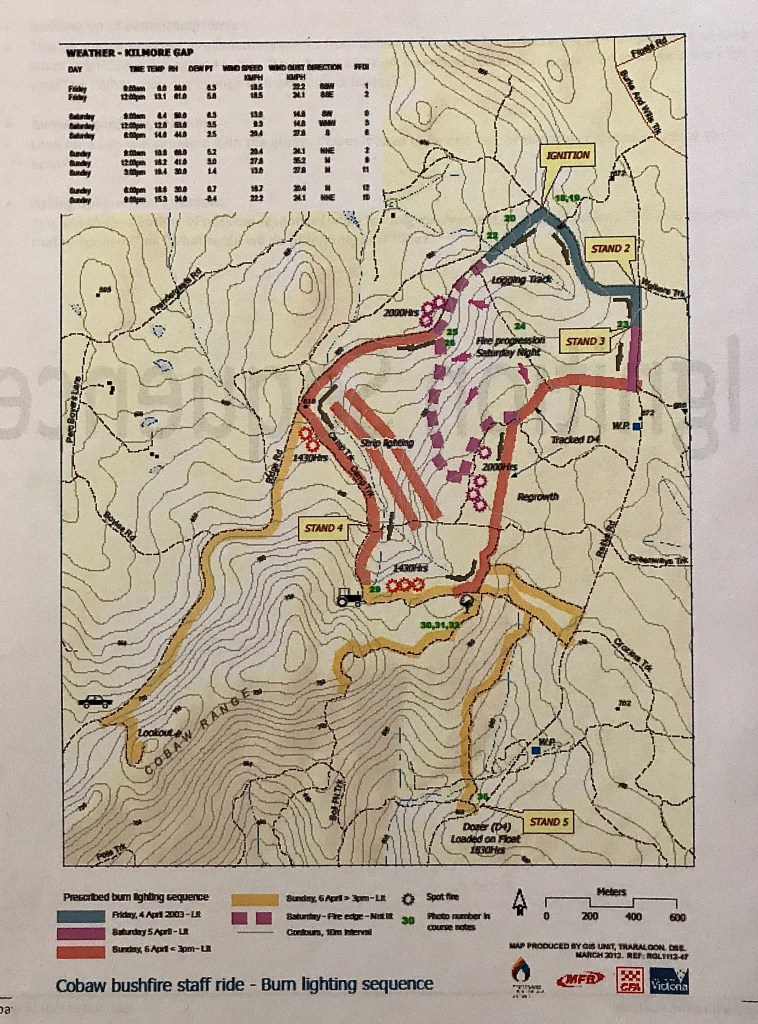
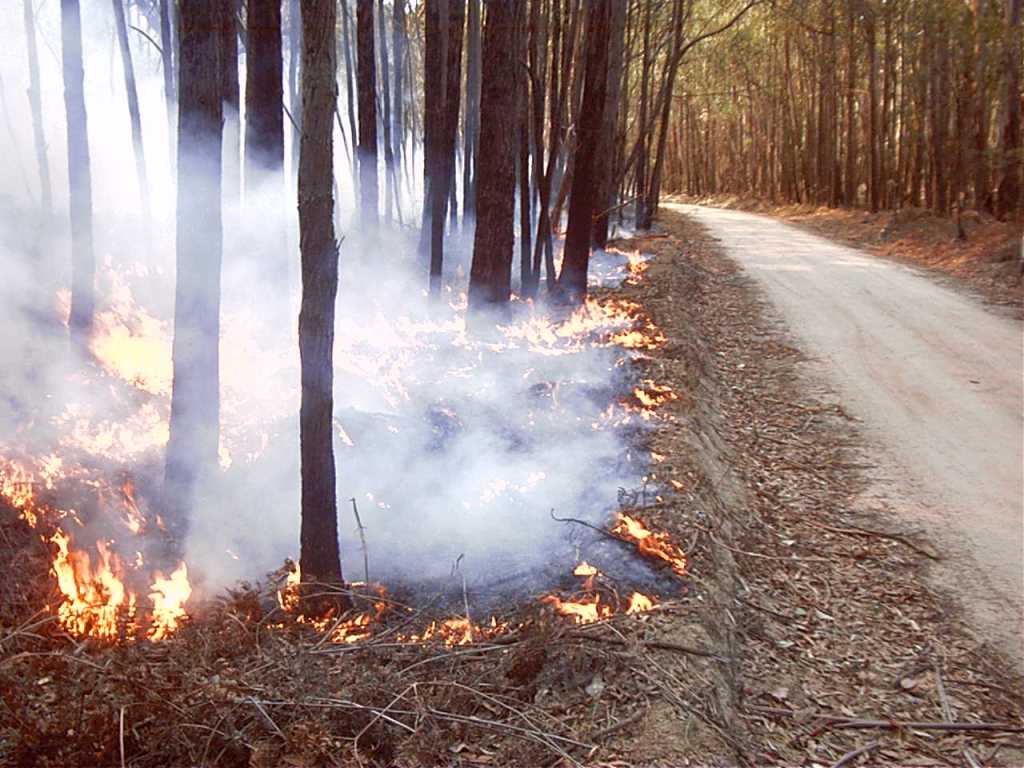
It was against this backdrop that on Friday morning, 4 April 2003, staff from DSE together with colleagues from Parks Victoria (PV), ignited an approved 650 ha Fuel Reduction Burn in the Cobaw State forest north of the Macedon Ranges.
The burn was planned and led by an experienced Fire Management Officer (FMO) from Bacchus Marsh.
The weather pattern was leading into a typical autumn drying cycle and was within prescriptions. Most of the area hadn’t been burnt since 1965 and the ground and elevated fuels were at extreme levels. The thick stringybark on the messmate trees (E. obliqua) presented a particular hazard.
The local CFA brigades were notified, but it was not customary for them to participate in routine burns on State forest.
A test burn was lit at 09.30 am and ignition was attempted throughout Friday morning but was terminated around midday because of the slow progress and damp fine fuels from a shower of rain earlier in the week. However, the underlying soil and fuel dryness was still high with a Kettch-Byram Drought Index well above 100.
The DSE and PV crews returned home in the late afternoon and patrols were arranged over the weekend with an intention of returning early on Monday morning to complete the job.
It was not uncommon to leave Fuel Reduction Burns unattended overnight, particularly if they were within containment lines and during autumn when the nights were cool and followed by a morning dew. This conserved crews for daylight work when they could be more effective.
On Saturday morning around 10.00 am an experienced Park Ranger from Macedon went on patrol as planned. Also rostered that weekend were the Fire Duty Officers at Bacchus Marsh and Ballarat that took responsibility for coordination of burns across the region.
The burn had continued to trickle slowly over Friday night but remained sluggish, so efforts were made during Saturday morning to consolidate boundaries and bring the burnt edge out to containment lines and roads.
Forest fuels have a long residual burning time and don’t extinguish quickly or easily like grass. This adds considerably to the complexity and length of the firefighting effort, particularly patrol and blackout.
The fire behaviour escalated steadily throughout Saturday afternoon with some flare ups and spotting around 6.30 pm as the fuels dried out. But as expected, the fire quietened down again later in the evening.
However, because of the fire behaviour on Saturday, additional crews and bulldozers were deployed early on Sunday 6 April to cut-off the fire boundary on Camp Track.
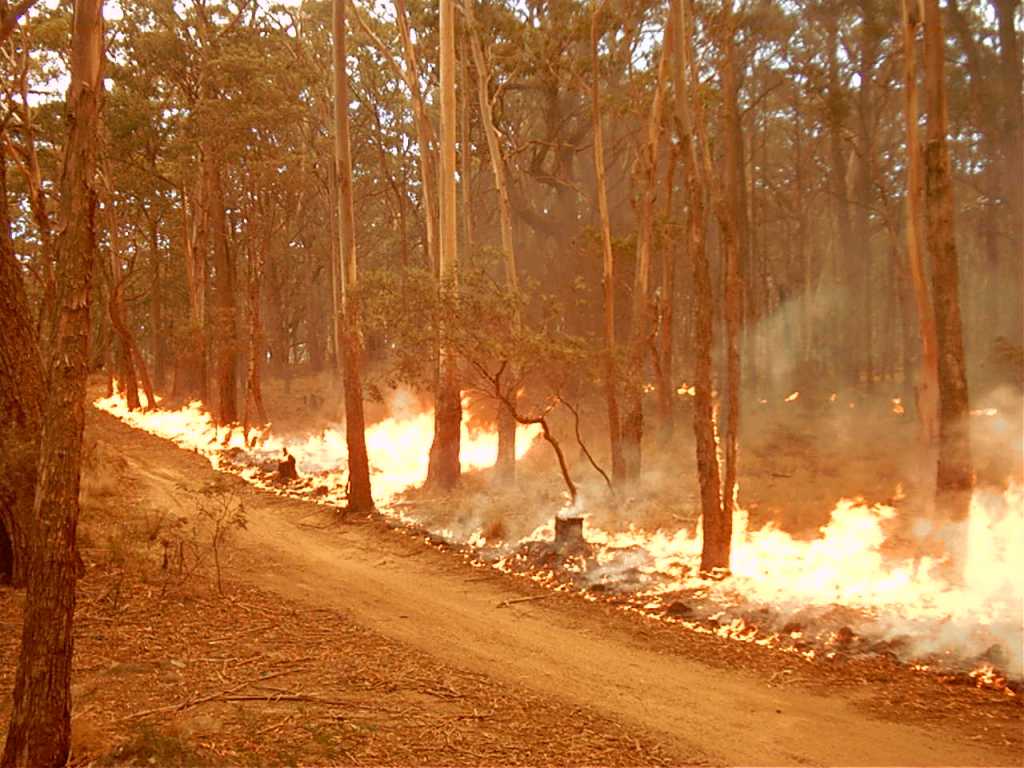
But by mid-afternoon the weather worsened, and the fire spotted over Camp Track and threatened the safety of a D4 bulldozer operator.
The fire behaviour then intensified with high rates of spread and flames climbing into the tree crowns. The smoke column, measure by the radar at Tullamarine airport, reached 4000 m.
At the same time as the spot over of Camp Track an empty parked car was discovered on Ridge Road and two hikers were believed to have made their way to an old lookout which was in the direct path of the fire. Crews were deployed to find the couple without success so backburning was commenced to stop the spread of the fire towards the lookout area.
Despite all the fire activity during the afternoon the fire was still within the original planned containment lines at 7.30 pm on Sunday evening, and fire behaviour quiet, when all crews left the bush.
The experienced Officer In Charge reasonably believed that the fire would once again die down overnight and intended to return with a full complement of vehicles and crew on Monday to complete the task.
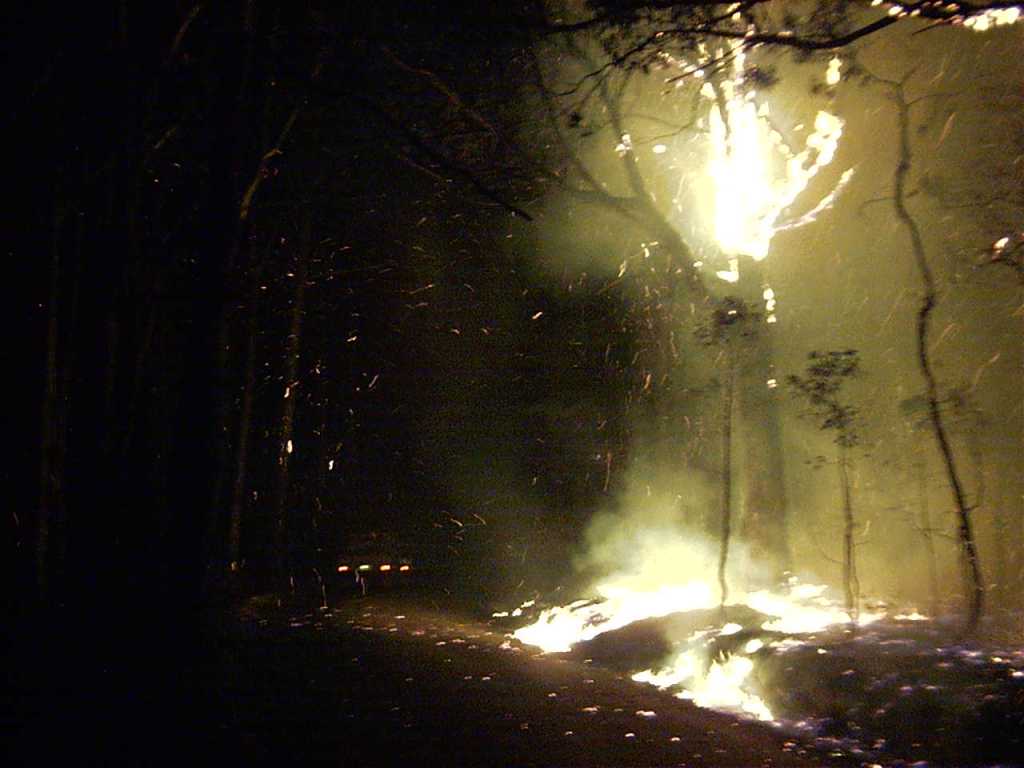
But during the middle of the night the fire unexpectedly began to spread downhill over two kilometres under the influence of northerly winds and a dry air mass sitting at altitude above the fire.
Surprisingly, the Cobaw State forest sits up high at an elevation of 650 m, which was above the temperature inversion layer that developed on Sunday night. This meant that the bush remained dry and warm while the paddocks and nearby farms on the lower flats received fog and a light dew.
The fire was reported in private property at 05.00 hrs on Monday morning 7 April 2003 and a joint DSE/CFA incident management team was deployed to control the escape.
The 1339 ha fire burnt 360 ha of private property to the south causing slight damage, but also threatened some houses. It took months to rebuild fences and settle all compensation the claims with landholders.
There was considerable criticism of DSE by media commentators, armchair experts and the local community. Disappointingly, some other firefighters joined the noisy chorus while the smoke was still swirling and before the investigation had even begun.
Two internal reviews were conducted leading to some changes to procedures. Importantly, the Chief Fire Officer Gary Morgan, apologised to the community but remained resolute in his support for the staff and crews.
It was found that the main things that contributed to the escape were the complexities of the site and seasonal conditions, the underlying drought, the heavy fuels, particularly the messmate bark. Lighting over three days was not originally planned so crews became caught up in a rapidly drying cycle that saw the fire intensity increase more than expected. Not being able to cut the burn off at Camp Track, the two hikers and the unanticipated temperature inversion of Sunday night played a big role. Not having enough crews to leave online overnight to patrol was also a significant factor.
Fuel Reduction Burning is inherently risky and requires great skill and courage, as well as a generous dollop of good fortune, to execute successfully.
It’s one thing to be an outside observer, or even a firefighter holding a drip torch, but quite another to plan a FRB and approve “dropping the match” and then take full responsibility for its success, or failure.
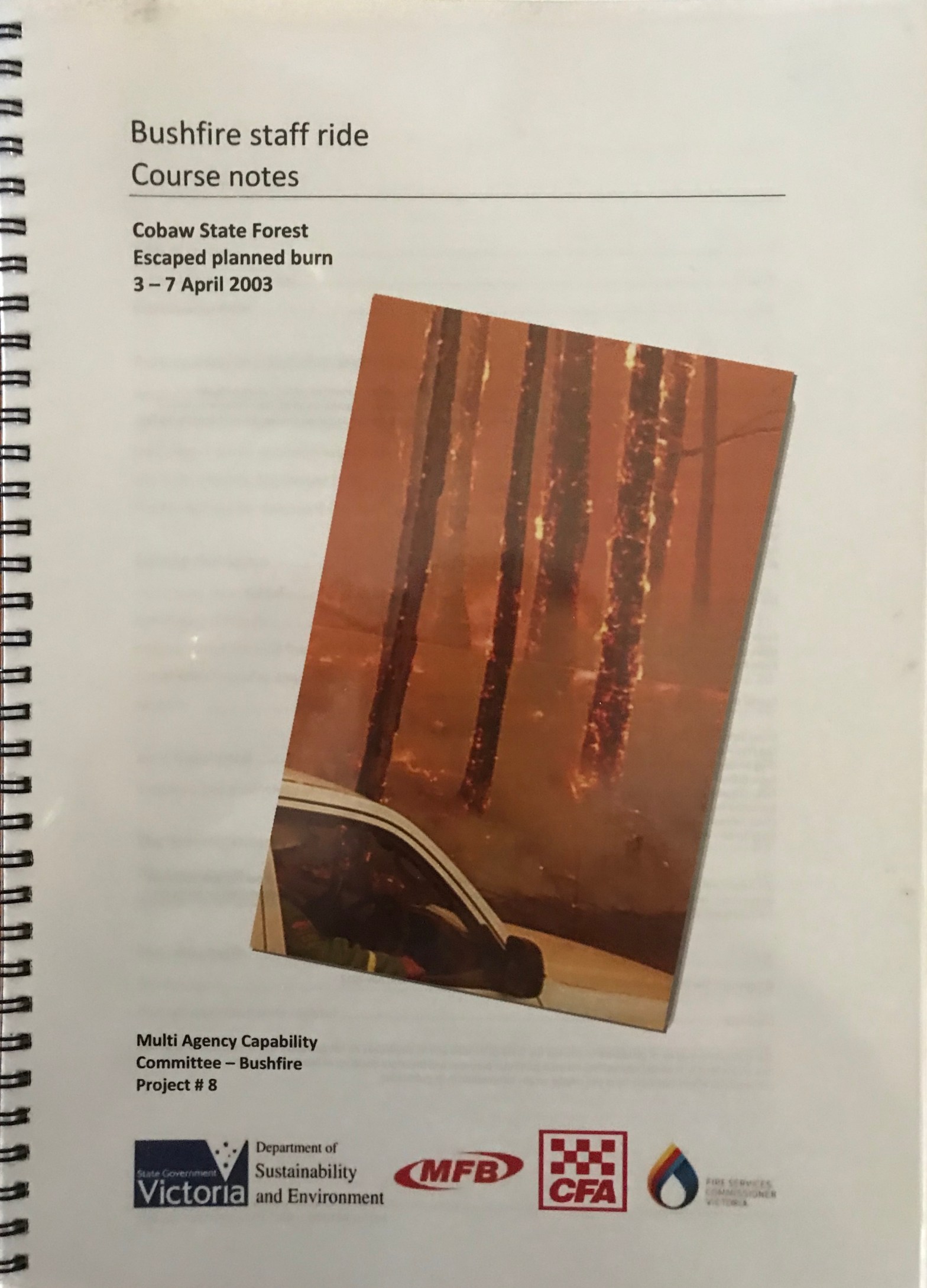
The escape at Cobaw later became the subject of a senior fire leadership training program called a Staff Ride.
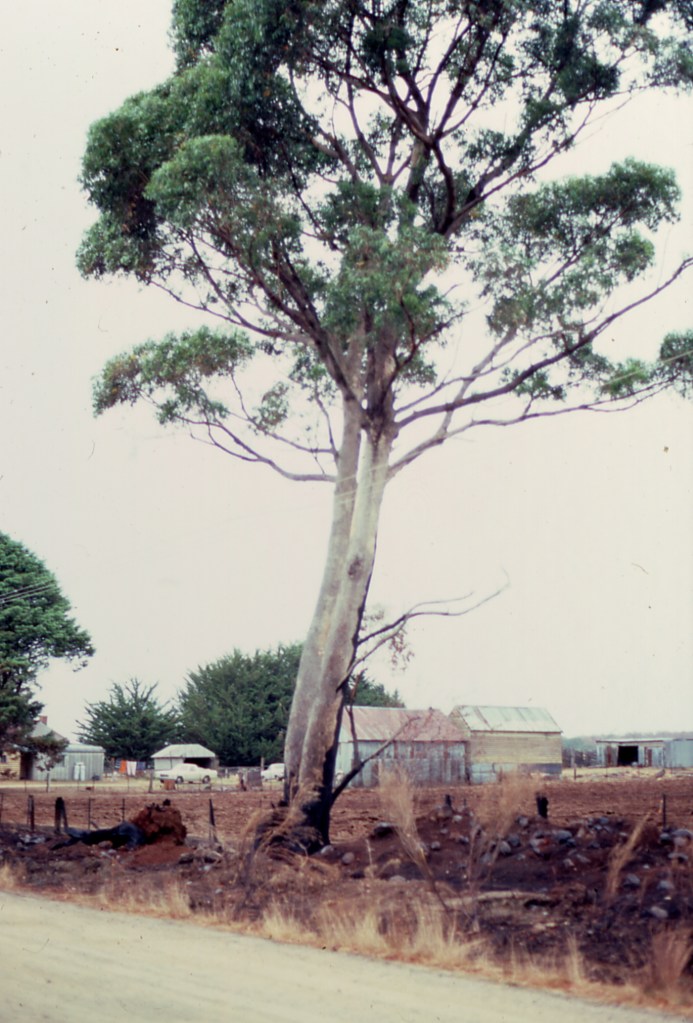
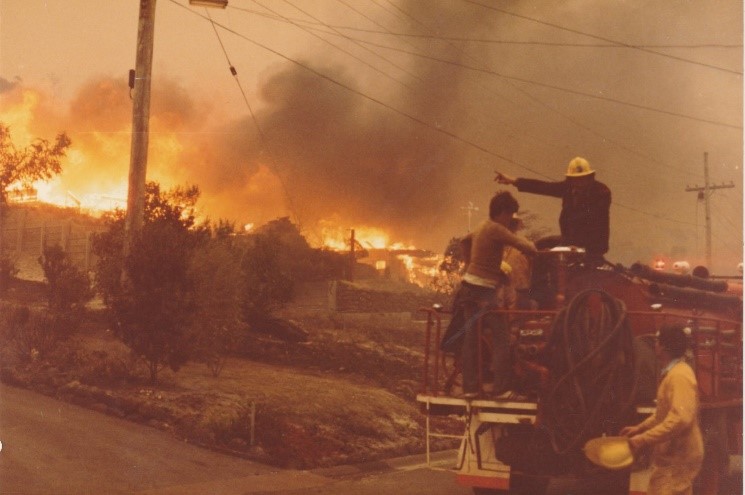
Top Photo: The fire escaped after it crossed Camp Track on Sunday afternoon. Photo: Lee Gleeson
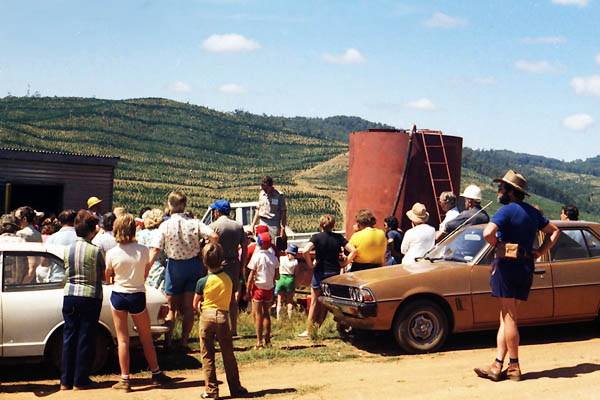
Forestours were launched by the Forests Commission Victoria (FCV) at Lakes Entrance in January 1977.
A brainwave of Bairnsdale forester David Buntine, Forestours got their inspiration from the NSW Forestry Commission on the south coast which offered free self-drive, or tag-along tours on mostly gravel roads in State forest under the guidance of local forestry staff.
The first tours began on Wednesday 12 January 1977 when 49 cars with 172 people booked into one of the four tours available on the day.
In an era before mobile phones, the internet and social media, Forestours were promoted by the local newspaper, flyers in motels, the tourist bureau and word of mouth.
Tours were held again over the next four weeks for a total of about 850 visitors.
The tours visited the nearby Colquhoun State forest and included sleeper cutting with swing saws and broad axes. They also inspected logging coupes and Jack Ramsdell’s sawmill at Nowa Nowa, as well as the nearby FCV fire tower.
The tours concluded at the Mississippi Creek picnic ground where people often lingered and chatted with staff. The kids loved being fitted with a hard hat, and many of the adults too for that matter, while the Forest Environment and Recreation (FEAR) Branch provided special “We’ve been on a Forestour” stickers to put on the cars.
There were additional guided bushwalks with forester and naturalist Peter Fagg near Lake Tyers.
Forestours were judged a success and spread from Lakes Entrance to Marlo in January 1978, and then to other centres across the State including Toolangi, Upper Yarra, Healesville, Tallangatta, Corryong, Bright, Heywood and the Otways.
Forestours were generally offered at summer holiday locations where visitors were often looking for alternative things to do, particularly if they were free, short duration, family friendly and involved something new or interesting.
Many local FCV staff were willingly recruited as guides and found the experiences to be friendly, rewarding and worthwhile.
The FCV annual report of 1983-84 noted a total of 50 Forestours, 70 spotlight walks of the forest by night, and forest excursions for 500 schools and 100 other groups.
But sadly, Forestours fizzled out in the mid-1980s with the new Department of Conservation Forest and Lands.
Ray McCrae at the Forestour assembly point – Lakes Entrance, 1977. Photo: David BuntinePBrian Fry at the Forestour assembly point – Lakes Entrance, 1977. Photo: David BuntineForestour at Ramsdell’s Sawmill – Nowa Nowa, 1977. Photo: David Buntineorestour nature walk conducted by Peter Fagg Denis Read left of centre, 1978. Photo Peter FaggDavid Buntine with Forestour group at Shelley Firembombing Base, 1981. Photo: David BuntineFCV Annual Report 1976/77
Forest Environment and Recreation (FEAR) Branch provided car stickers. Source: FCRPA
Today is World Forestry Day (WFD) which was proclaimed by the United Nations Food and Agriculture Organisation over 50 years ago in 1971.
It was set down for 21 March each year to coincide with the vernal equinox when the sun passes over the equator giving equal lengths of day and night.
It also marks the first day of spring in the northern hemisphere and autumn down under.
For many years Forests Management staff celebrated by staging a diverse and innovative range of community events.
Sadly, the occasion has become a bit lost and forgotten in amongst a modern and cluttered calendar full of sometimes bizarre commemorative days complete with different coloured ribbons for this-n-that.
WFD was rebadged “International Day of Forests” by the UN in 2012 but still recognises the essential importance of our forests.
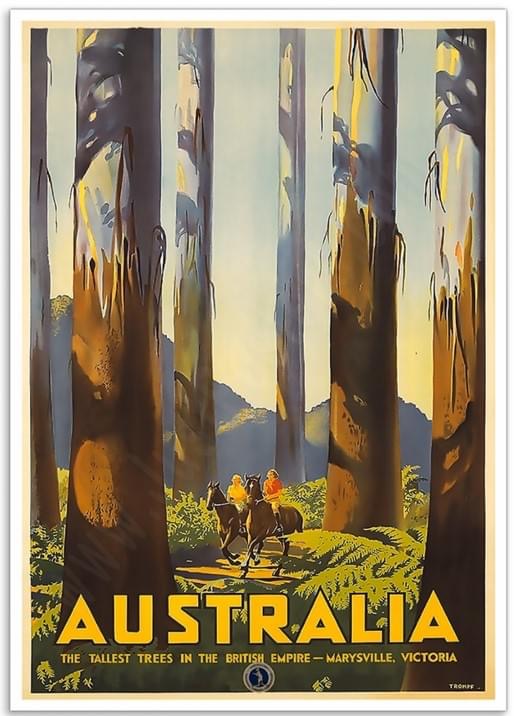
Poster: The Tallest Trees in the British Empire. Marysville, Victoria. By Percy Trompf (1936). Australian National Travel Association. National Library of Australia.
The magnificent Toolangi Forest Discovery Centre (TFDC) was opened by the State Minister for Natural Resources, Geoff Coleman, and the Federal Minister for Resources, David Beddall, to a large crowd of dignitaries on Monday 14 February 1994, but its origins can be traced back many decades earlier.
During the late 1960s, the Forests Commission Victoria (FCV) started to dip-its-toe into the world of public information and schools’ education.
Recreation and conservation on State forest was receiving greater focus and a key moment for the Commission came in August 1970, then under the new chairmanship of Dr Frank Moulds, with the creation of the Forest Recreation Branch.
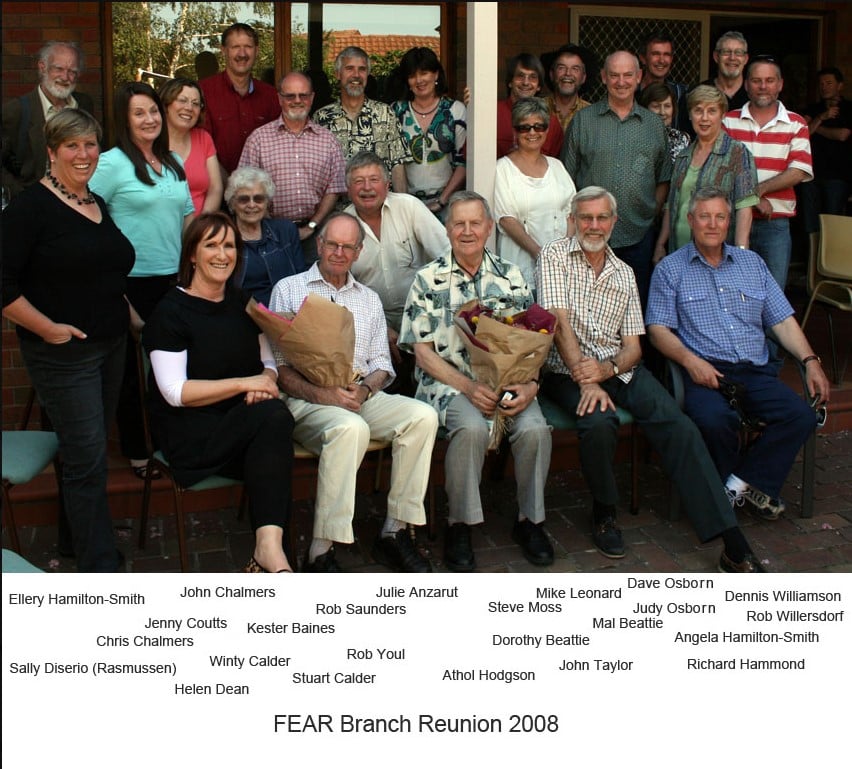
This initiative was a first for any Australian Forest Service, but its brief soon widened and by 1971 it became the Forest Environment and Recreation (FEAR) Branch under the stewardship of Athol Hodgson, and later Stuart Calder. This move was accompanied with the appointment of some specialist ranger and planning positions in the field.
During the 1970s, local FCV district staff were encouraged to bring school groups into the bush and organise other ad hoc tours. Toolangi developed into an innovative forest education hub under the enthusiastic direction of Rod Incoll, the District Forester, with strong support from the Divisional Forester at Healesville, Ken Harrop.
By the early 1980s, Rod Incoll had convinced the Forests Commission that a modern office and depot complex was needed at Toolangi. The new building included, in-part, the FCV’s first purpose-built community education centre.
After the election of the Cain Labor Government in 1982, and the release of the ground breaking Timber Industry Strategy (TIS) later in 1986, the idea of a dedicated forest education centre began to take hold.
In 1990, an education project to produce school curriculum materials was formalised. The group had strong representation from the Education Department and school teachers.
The materials were deliberately designed to challenge students to think about the complexities, controversies and contradictions of forest and bushfire management, endangered species conservation, timber harvesting and timber sustainability, ecotourism and forest ecosystems. The project also produced the video “Forests of Ash” in 1993.
Meanwhile, several sites for a new education centre were considered including Barmah, Marysville, Macedon, Toolangi, the Dandenong Ranges and the Grampians.
There were some concerns expressed about the TFDC location on the Healesville-Kinglake Road as being “off the beaten track”, and therefore generating limited passing traffic. However, the site had other big advantages of being within two hours of Melbourne schools and sited in an active “working forest” with a rich harvesting and sawmilling history. Toolangi also had proven credentials as being able to deliver education programs.
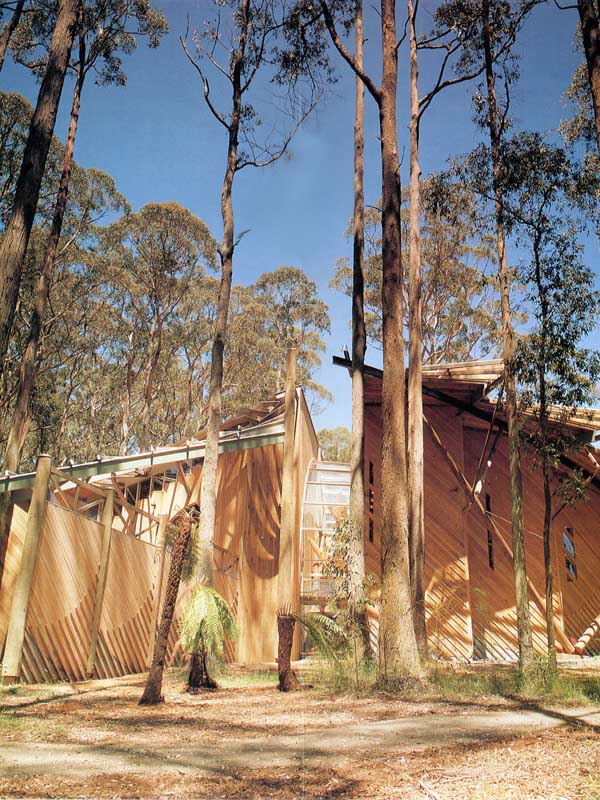
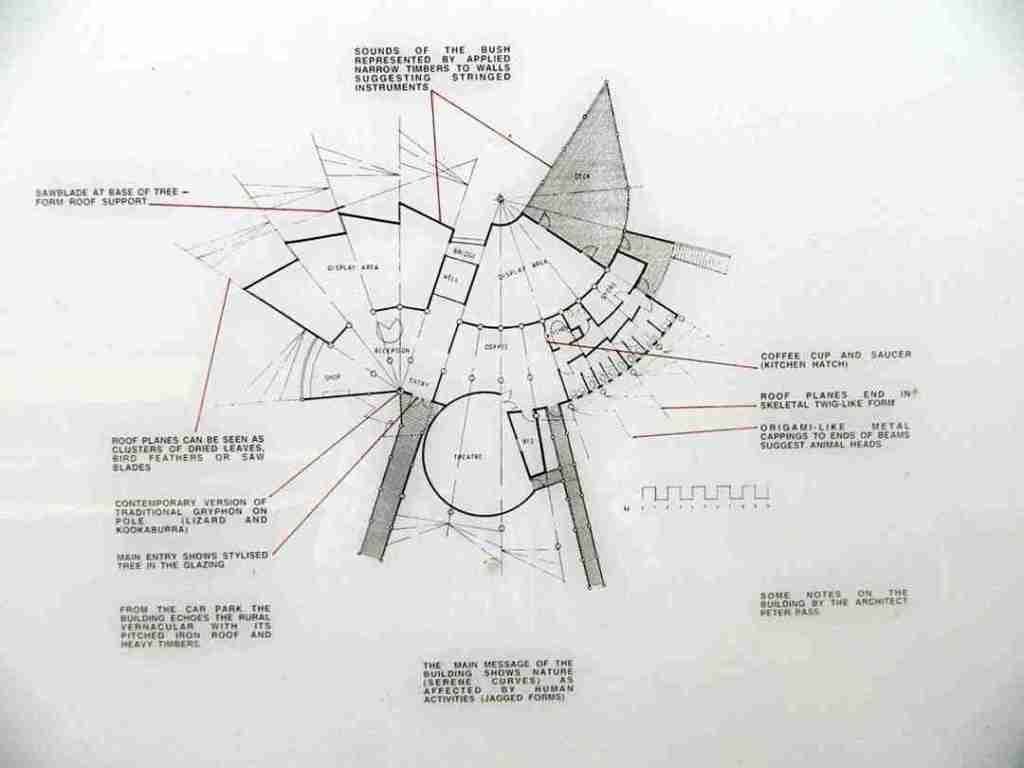
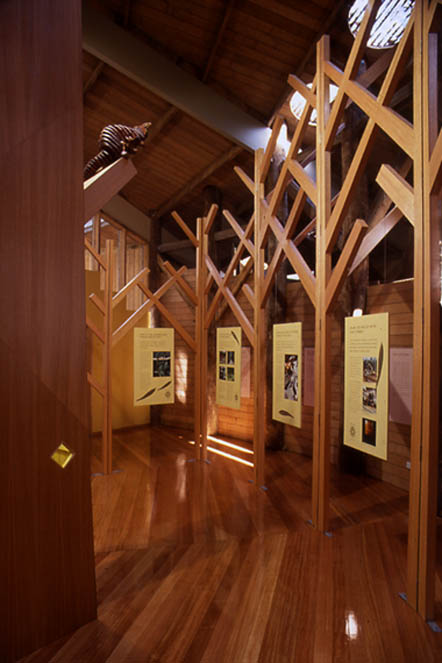
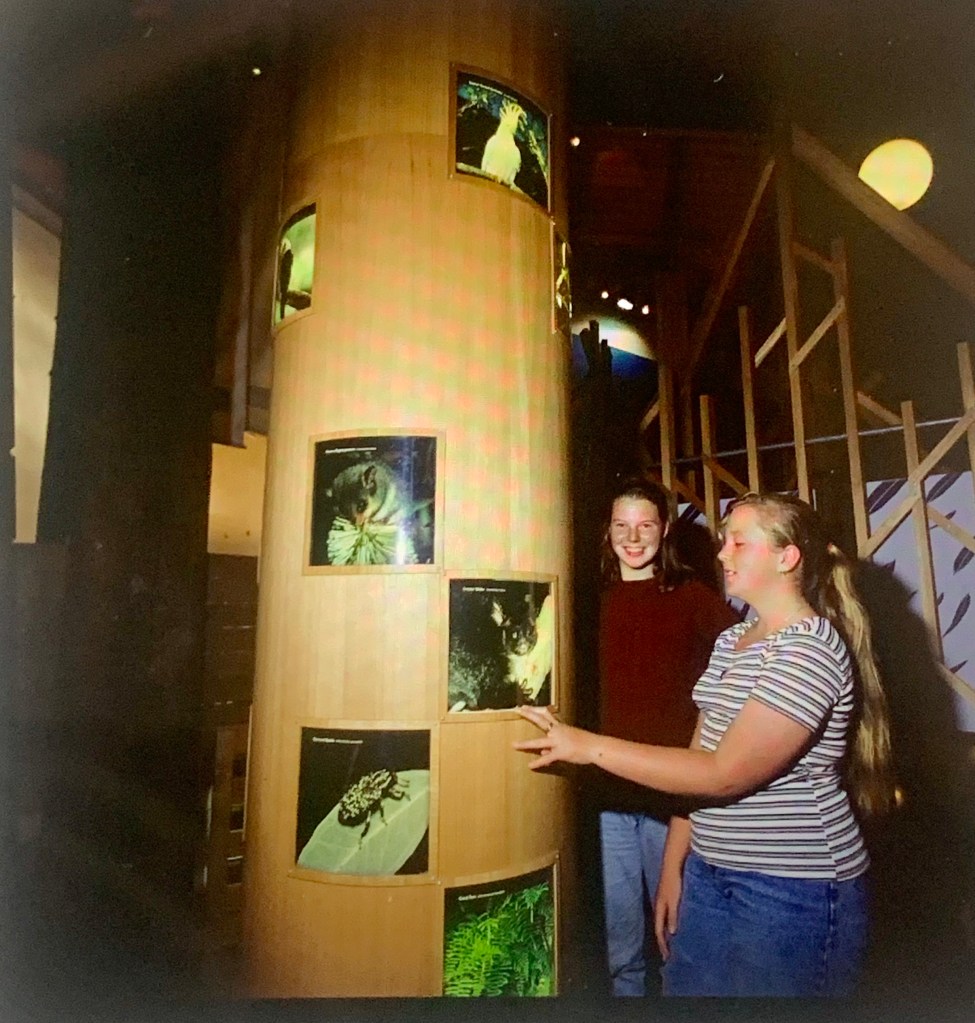
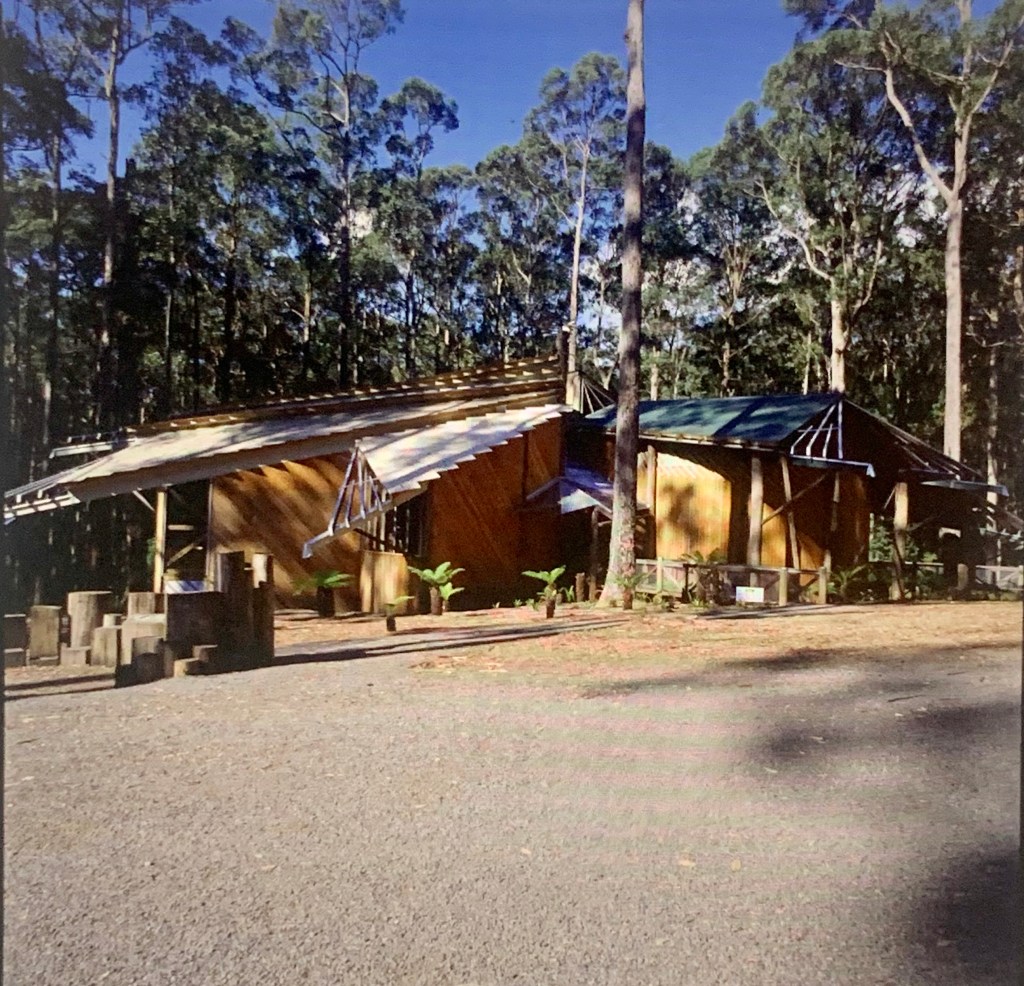
The Toolangi Forest Discovery Centre was designed by Victorian Government architect Peter Pass to match its surroundings using many local timbers. It was deliberately nestled into the messmate bush near the Department of Conservation and Natural Resources (DCNR) offices and the cathedral-like building has a roof shape resembling overlapping gum leaves lying gently on the forest floor.
The building was funded with a $1.5m grant from the Federal Government and another $200k being “chipped-in” from the State. This amounted to a major capital works project in an era when average wages were about $29,000 per year and a house and land package in Melbourne was only $114,000.
The ongoing operating costs for teaching staff and building maintenance were to be met by DCNR.
The visionary TFDC project was led by DCNR forester Kevin Wareing as the Head of Forest Commerce Branch, while on-site construction was managed over two of Toolangi’s notoriously wet and cold winters by forester John Cunningham. The exhibition design was by Rosemary Simons with many others in support.
Once it became operational the responsibility shifted to Forest Management Branch in Melbourne, headed by David Holmes. A Forest Environment team, led by Mike Leonard, worked closely with the staff at Toolangi and North East Region of DCNR to implement the education programs.
Qualified sessional teachers were recruited to run the education programs and it proved a huge success with between 10,000 to 12,000 students each year and many repeat visitors.
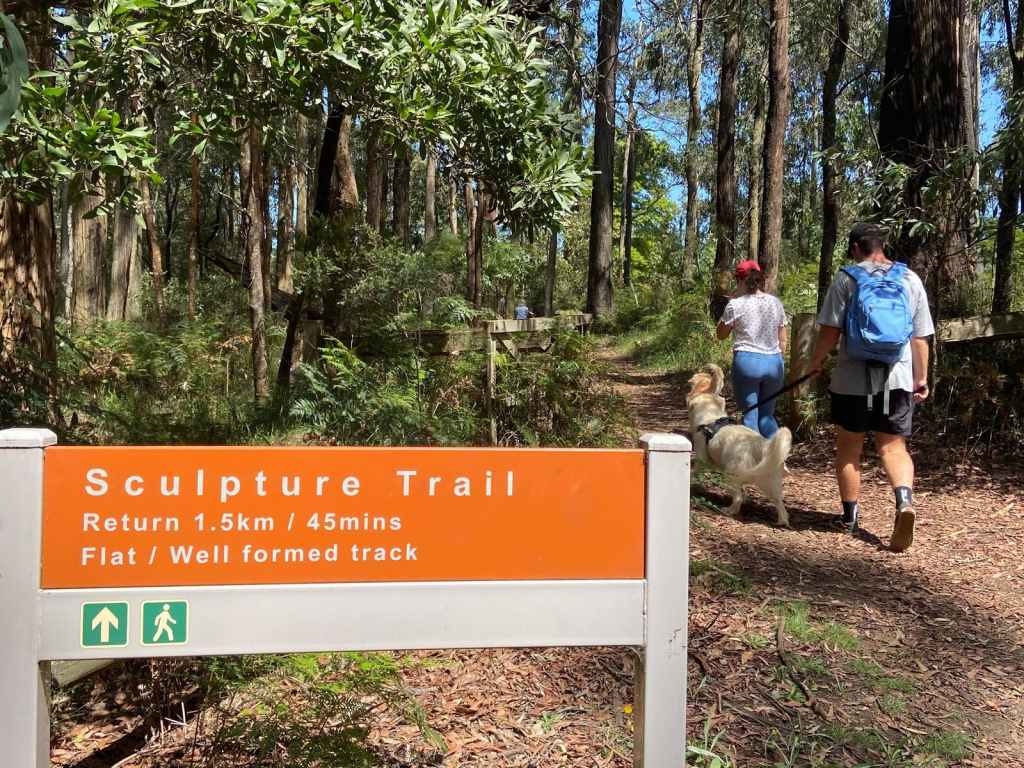
A highlight in 1996 was the International Sculpture Festival and the establishment of a trail leading from the centre through the bush.
But sudden funding cuts at the end of 1998 caused the closure of the main TFDC building, although the education programs continued to operate from an adjacent “Tin Shed” (AKA the Discovery Tree) under a three-year contract with the Northern Melbourne Institute of TAFE.
At the conclusion of the TAFE arrangement, the forest education programs came back under the department’s umbrella using up to 10-12 sessional teachers.
During this period, the main TDFC building was sometimes open on weekends and public holidays, depending on available funding.
In about 2000 the proprietors of the Toolangi General Store approached the Department to convert part of the building as a coffee shop, the Crosscut Kiosk. The existing staff tearoom was extended and some of the displays were removed to make space for tables. However, the proposal didn’t ultimately succeed, and the Toolangi Tavern was built instead, next to the site of the general store.
In 2003, the Natural Resources Conservation League (NRCL) closed its nursery in Springvale and needed a new home. It leased space at Toolangi, but in 2007 moved to the Waterwheel Centre in Warburton.
There had been grave fears for the wooden building during the 2009 Black Saturday bushfires when part of the adjoining departmental offices and forest were destroyed.
Some forest education programs continued until June 2012, when the Department announced that forest education was no longer “core business”.
By the beginning of 2013 one of Australia’s oldest registered environmental charities, the Gould League, had also been trained to run existing programs at the Discovery Tree, which continue to this day.
Between 2015 and 2018 there was an unsuccessful effort by a community group to establish a Committee of Management under the Crown Lands (Reserves) Act 1978 and revive the main TFDC as a tourist information centre, gallery and Ecology Café.
But critical maintenance of the iconic wooden building had been neglected, and the structure slowly deteriorated, while the costs of repair and restoration to modern building and fire protection standards began to climb into the millions.
Sadly, by August 2018 the Toolangi Forest Discovery Centre once again fell silent.
A second Committee of Management was appointed and, in 2021, began a planning scheme amendment with Murrindindi Shire, as well as writing a business case for the TFDC to be more broadly used by the community and for commercial purposes. The land and building remain permanent Crown Land in public ownership.
In the meantime, the Toolangi Forest Discovery Centre remains closed leaving a huge void in much needed, hands-on, balanced and factual education materials about forests and bushfires for students and the general public.
Photograph probably taken in the mid-1990s (Source: J Cunningham) : Toolangi Forest Discovery Centre
Photograph probably taken in the mid-1990s. Source: Mike Leonard.A new Forests Commsion office was completed in 1983 and included space and facilities for forest education. The TFDC, built in 1994, was nearby. Photo: David Pocket 1983.New Committee of Managment – Lynn Dean, James Stewart (dept), Deanne Eccles, Bernard Kennedy, Michael Nardella and Steve Meacher. Source: Mountain Views – September 2016. 19971997199719971997199719971997Lisa Alida April 2024Lisa Alida April 2024Lisa Alida April 2024Closed and abandoned – Lisa Alida – April 2024.
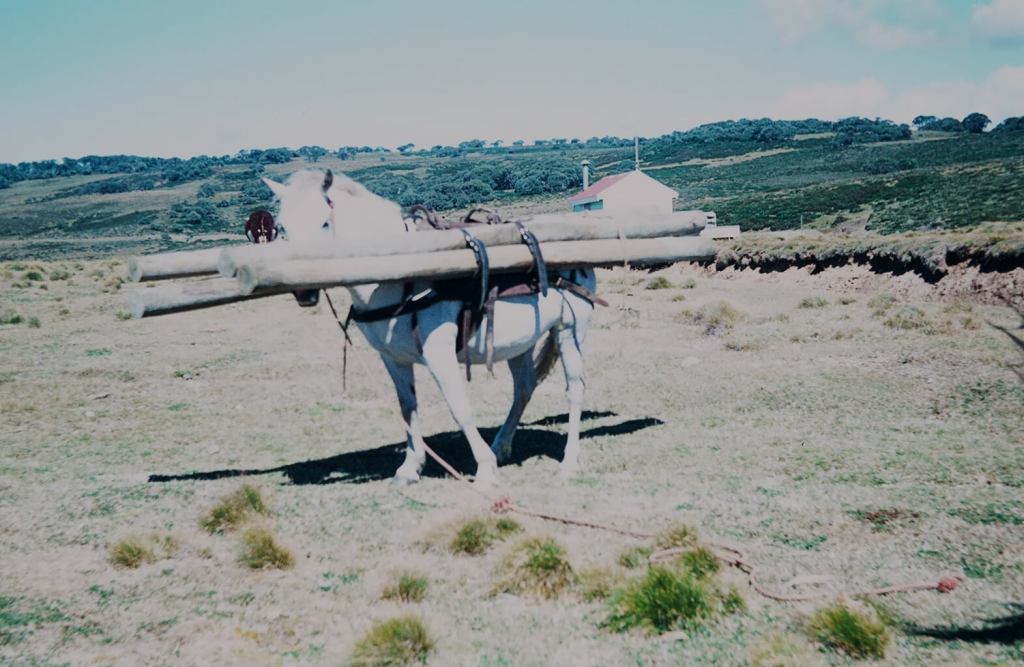
This pack saddle was thought to be owned by the Forests Commission and used by fireguards from Orbost at remote fire towers like Stringers Knob, or by forest assessors measuring stands of timber.
They could spend up to a week away at time and the saddle was designed to be secured on the back of a horse to carry heavy loads, like food and radio batteries.
The saddle would rest on a blanket or pad to spread the weight and the underside is curved to fit the shape of the horse.
From the collection of the Orbost & District Historical Society
Bushfire behaviour is influenced by many things including temperature, relative humidity, forest type, fuel quantity and fuel dryness, topography and even slope. Wind has a dominant effect on the Rate of Spread (ROS), and also bushfire size, shape and direction.
Fuel arrangement is as important as fuel quantity (tonnes/ha). Fibrous and ribbon bark, together with elevated and near-surface scrub fuels act as ladders which lead flames into the tree canopy.
But the availability of fuel to burn depends largely on its moisture content. When it exceeds 20-25% not much will burn, whereas 12-15% is generally ideal for fuel reduction burning, but if the moisture content drops as low as 7-10% virtually everything will ignite, and fire behaviour becomes extreme. During the afternoon of the Ash Wednesday bushfires on 16 February 1983 fuel moisture contents were recorded at Stawell as low as 2.7%.
Fine fuels like leaves and bark can rapidly absorb moisture after a shower of rain, or from the air when the Relative Humidity (RH) is high, and the temperature is low. Conversely, they can also dry out very quickly.
So even though the overall fuel quantity in the forest doesn’t change, the fine fuel availability can increase rapidly from zero after rain to many tonnes per hectare as the fuel dries out. This can happen over a few hours on hot and windy days. Heavy fuels like logs on the ground take longer to dry out.
Since the 1930s foresters, firefighters and researchers have been working to develop quick and reliable techniques for measuring fuel moisture content.
One of the most accurate methods is slowly drying a sample of fuel in a conventional oven for 24-48 hours to remove all the moisture and measuring the weight difference, but this takes time and is not practical in the field when rapid measurements are needed. But oven drying is often used as a benchmark to compare other methods.
Microwave ovens are faster but can cause uneven drying and even char the fuel. They are also not very practical for use in the field.
Some mathematical models rely on weather records such as rainfall, wind speed, evaporation, cloud cover, shading, relative humidity, slope, aspect and season of the year to predict soil and fuel moisture. The Keetch-Byram Drought Index of soil dryness is the most common. But complex fuels with leaves, twigs, grass etc make the predictive models often inadequate for fine fuels.
The most common technique in Victorian forests until recently was the trusty Speedy Moisture Meter. Originally developed in England during the 1920s for measuring moisture in wheat and other grains it was adapted for Australian forest fuels in the 1950s (I think).
Fuel was first ground using a spong mincer, often attached to the bullbar of a vehicle, and a small sample placed into the Speedy together with a measure of calcium carbide and then sealed. A chemical reaction created gas pressure which was read on the external dial.
There were important techniques with cleaning, mincing and using the chemicals with the Speedy to give reliable readings, but it was quick, inexpensive, robust, portable and practical in the field. It was used routinely before igniting a fuel reduction burn or measuring fuel moisture differentials on slash burns.
But in about 1996, Karen Chatto and Kevin Tolhurst from the Department’s Creswick Research Station developed the Wiltronics Fuel Moisture meter which measured electrical resistance.
Wiltronics is an Australian owned company operating from Ballarat.
The final result was a kit that was portable, accurate and could reliably measure fuel moisture contents between 3% and 200%. Although expensive, it is now widely used by fire agencies around the world which has virtually relegated the Speedy to the back cupboard.
But in my view, nothing really replaces the “crackle test” of lighting a small patch of bush, or holding a burning leaf, just before the main ignition to judge flame heights and rates of spread.
Three weeks after Ash Wednesday, on Thursday 10 March 1983 at about 8.30 pm, a fire broke out in the National Park about 4 km west of Loch Sport near Beacon Swamp Track.
The fire began in thick coastal heathland on the southern shores of Lake Victoria and the cause was undetermined, although many suspected arson or careless campers.
The fire burnt fiercely under the influence of a north easterly breeze and there were initial fears for Seacombe and some settlements further away on the 90-Mile-Beach.
Bushfires in heathland with a mixture of t-tree, banksia and grass trees are notoriously very intense, and often short duration, being mostly driven by wind which can be unpredictable on the coast.
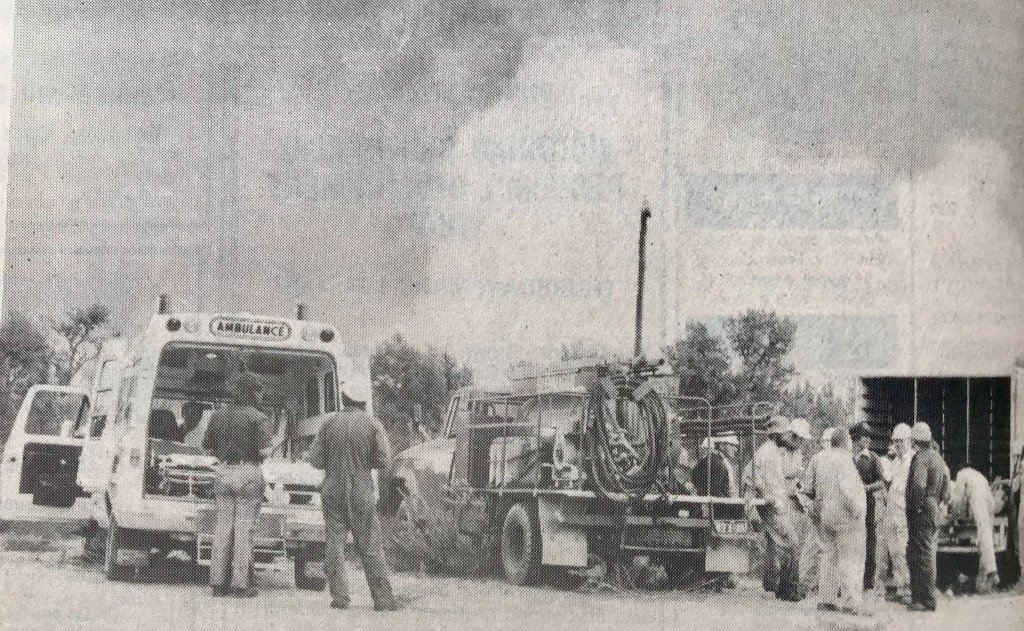
Four Forests Commission tankers and three National Parks Slip-On-Units were quickly at the blaze. Six bulldozers and five water tankers were also deployed.
There was a rapid escalation of CFA equipment with 32 tankers and 150 firefighters from Yarram, Stradbroke, Traralgon, Rosedale, Maffra, Glenmaggie, Morwell, and as far away as Warragul.
Police blocked the Loch Sport Road and the SES stepped in to feed firefighters. An ambulance was on standby.
A Bell 212 helicopter from the NSCA fitted with a 1700-litre water bucket, which was contracted to the FCV, once again proved very effective dousing hot spots, as it had also done earlier at Moonlight Head in February.
Later, a Forests Commission twin engine aircraft dropped aerial incendiaries to burnout fuel on the main Loch Sport Road.
The 1900 ha fire was controlled by late Friday morning and CFA crews withdrew by 9.00 pm in the evening, leaving FCV and NPS crews to patrol and blackout the edge for several more days.
DELWP records indicate this has been the largest fire on the Loch Sport Peninsula in the last 50 years.
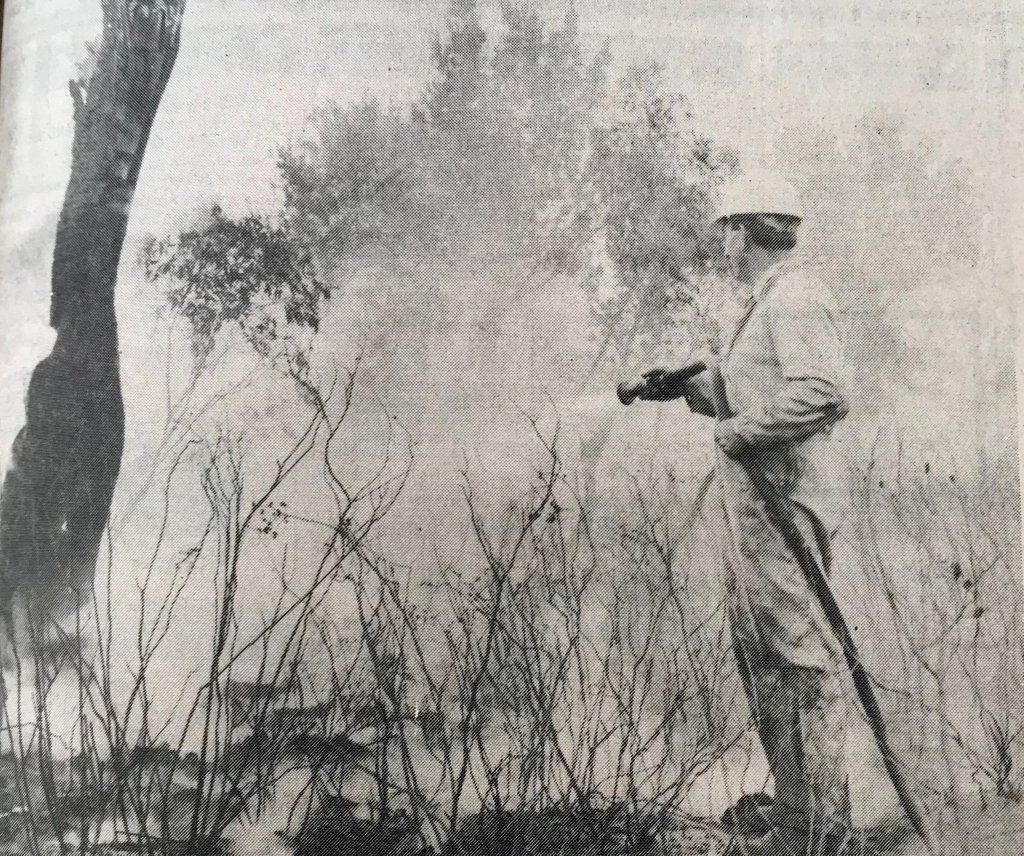
Newspaper photos: Source: Gippsland Times, 15 March 1983
Map produced by Peter McHugh 2022. DEECA records indicate this has been the largest fire on the Loch Sport Peninsula in the last 50 years.
Snake Island is Victoria’s largest sand island and is named after its elongated serpent shape, rather than the many slithering danger noodles that often lurk in the thick t-tree scrub. The place also abounds with introduced hog deer, migratory birds, koalas and gazillions of pesky mozzies.
The uninhabited island is situated within Corner Inlet in the shadow of the Prom, while Port Welshpool has the closest boat launch.
For over 100 years local farmers had been driving cattle across the shallows at low tide to graze on the island.
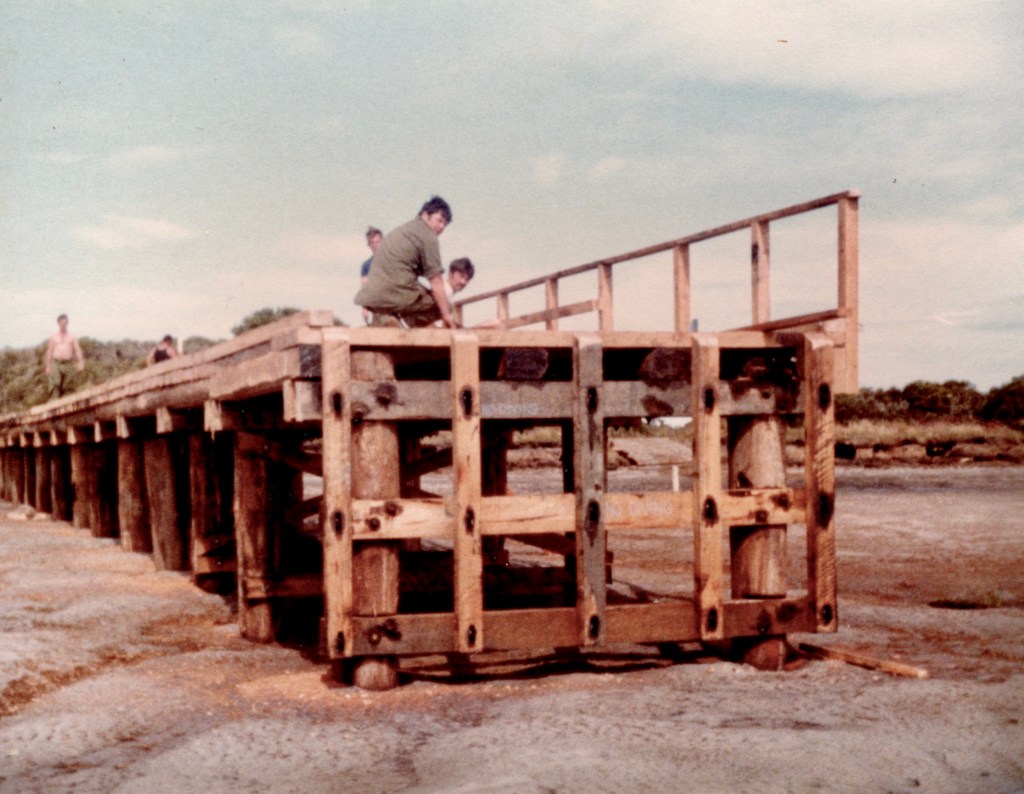
With a tidal range of two metres the remote island was badly in need of a jetty. The only suitable spot being the Swashway, a shallow channel between Snake and neighbouring Little Snake Island where the cattle once crossed between the two.
The idea of building a timber jetty had its genesis during a work visit with Fisheries and Wildlife staff to the Island in the late 1970s by then Major Rob Youl, Commanding Officer of the Army Reserve’s 91 Forestry Squadron (The Woodpeckers).
The local cattlemen and deer hunters were very generous with their support and advice on the jetty proposal.
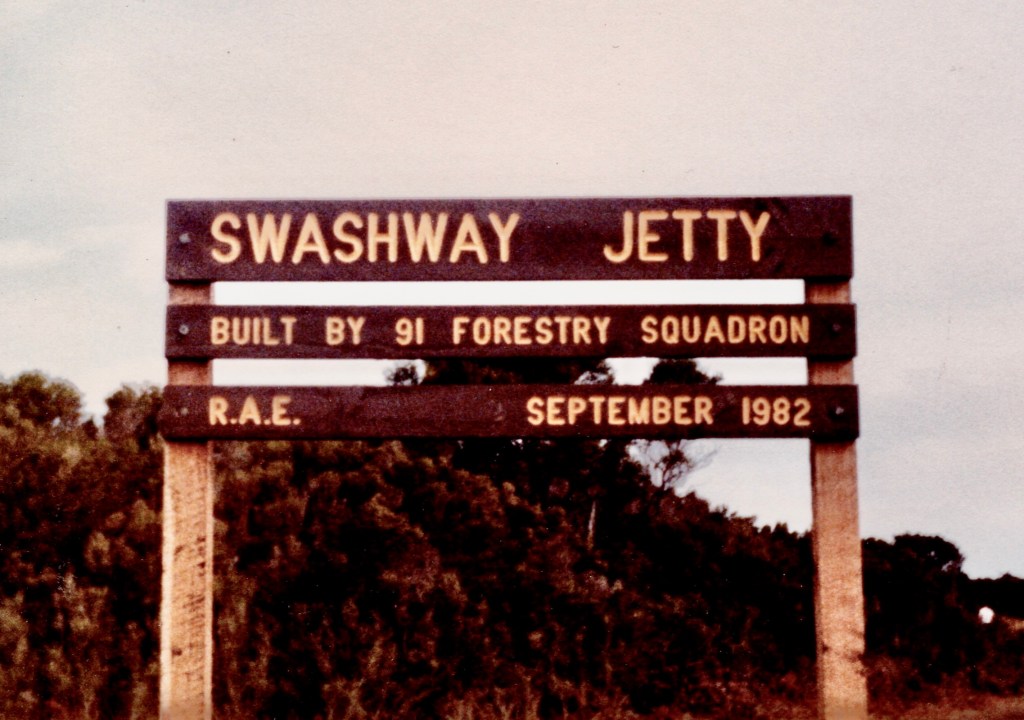
After some frustrating years of discussion, planning, design, dealing with bureaucracy, getting approvals, as well as garnering support from the Forests Commission Victoria (FCV) as their main sponsor to supply the logs, the Woodpeckers embarked on an ambitious project to build a new timber jetty at the Swashway on Snake Island.
Initial designs were rejected by the Ports and Harbours engineers as not being robust enough. In hindsight, this insistence proved to be justifiably wise given the hostile coastal environment.
But the new strengthened design for the 53 m long jetty required larger logs and heavier equipment causing a last-minute organising rush from the Royal Australian Engineers (RAE) cadre staff.
Eventually, all the “ducks lined up” and the project was set for September 1982 as part of the Woodpecker’s annual bivouac.
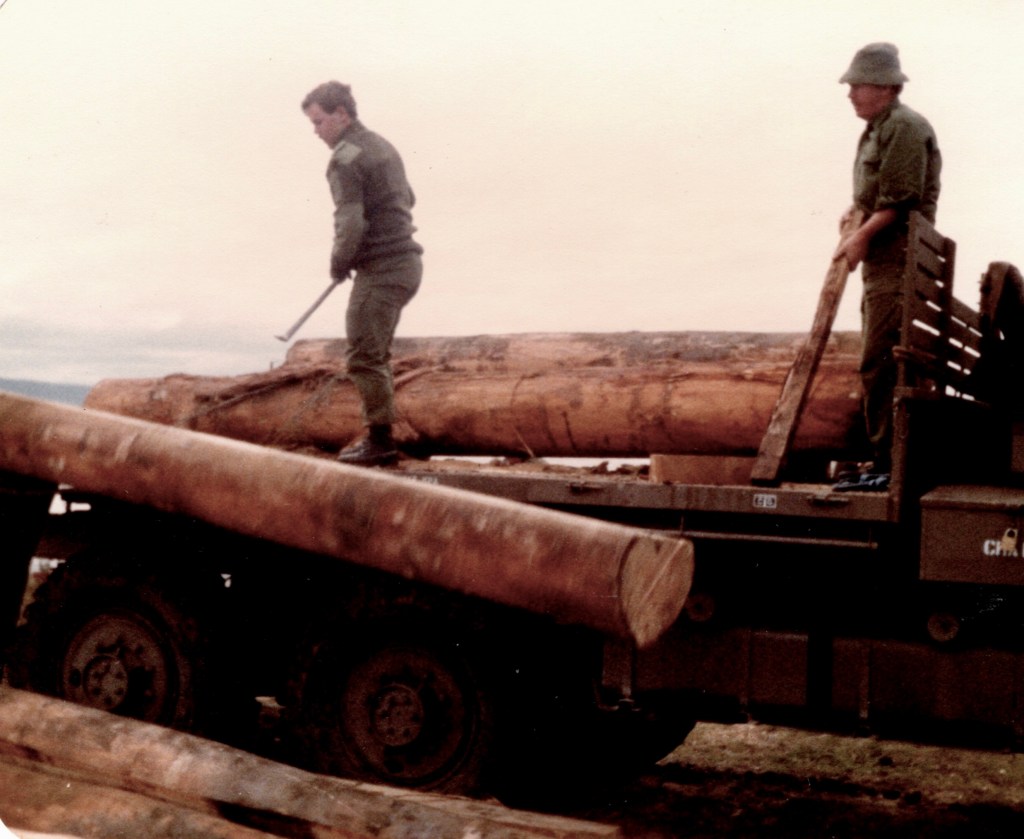
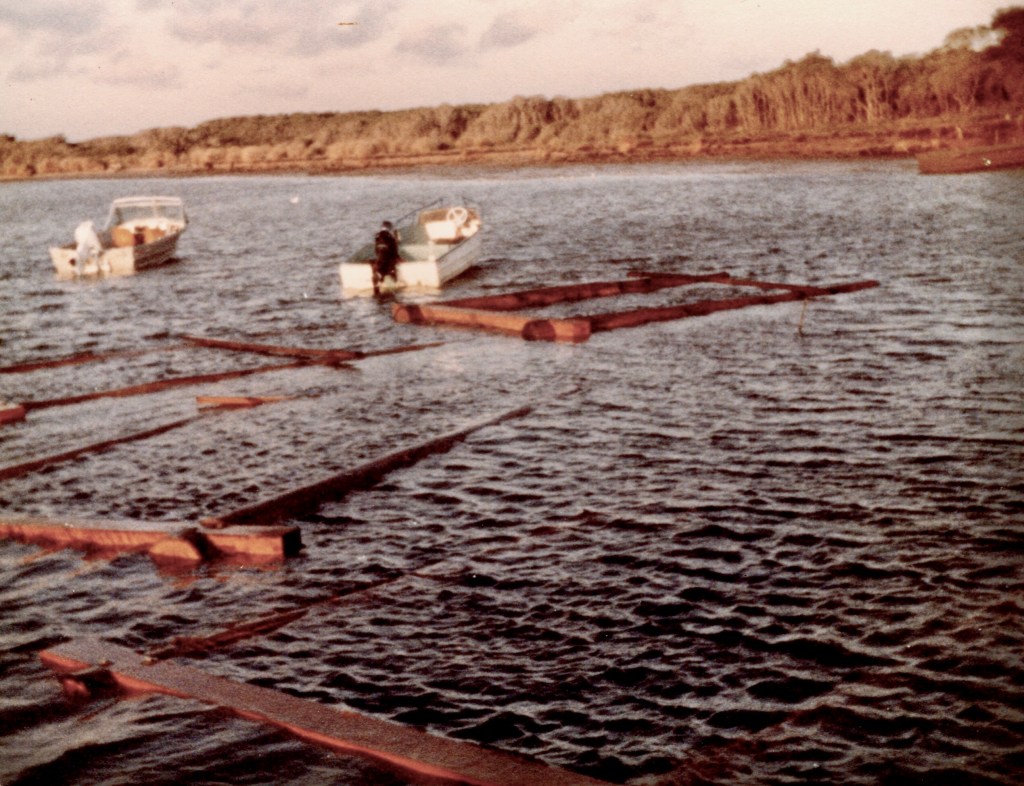
Firstly, a small portable forestmil, manufactured by MacQuarrie Boundy, was established by the Woodpeckers in the nearby State forest at Alberton West and the highly durable yellow stringybark (Eucalyptus muelleriana) logs were felled and sawn.
But it quickly became apparent that the Army’s sawmill was seriously underpowered and struggled with the larger log sizes, so hasty arrangements were made with a local Yarram sawmiller for the sappers to finish the job in time.
Some larger 9m logs and other sawn timbers were also delivered to the nearby Bulga National Park for the 39 Electrical and Mechanical Squadron from Yallourn to replace the Corrigan Suspension Bridge a few months later.
Two large LCM-8 landing craft, operated by the 35 Water Transport Unit from Sydney, were delayed after they made a perilous journey along the wild and rugged coastline to Port Albert and needed to shelter from heavy gales at both Eden and Lakes Entrance.
The Ports and Harbours depot at Port Welshpool was chosen as a marshalling yard, with another base camp on Snake Island, which added to the many logistical challenges.
The LCM-8s, which could carry up to 60 tonnes, transported a bulldozer and forklift and landed them across the island’s gooey mudflats at high tide with the aid of beach mats constructed by the sappers.
The bulldozer then cleared the site for the jetty and cut a new 800 m access track, as well as sinking some fire dams.
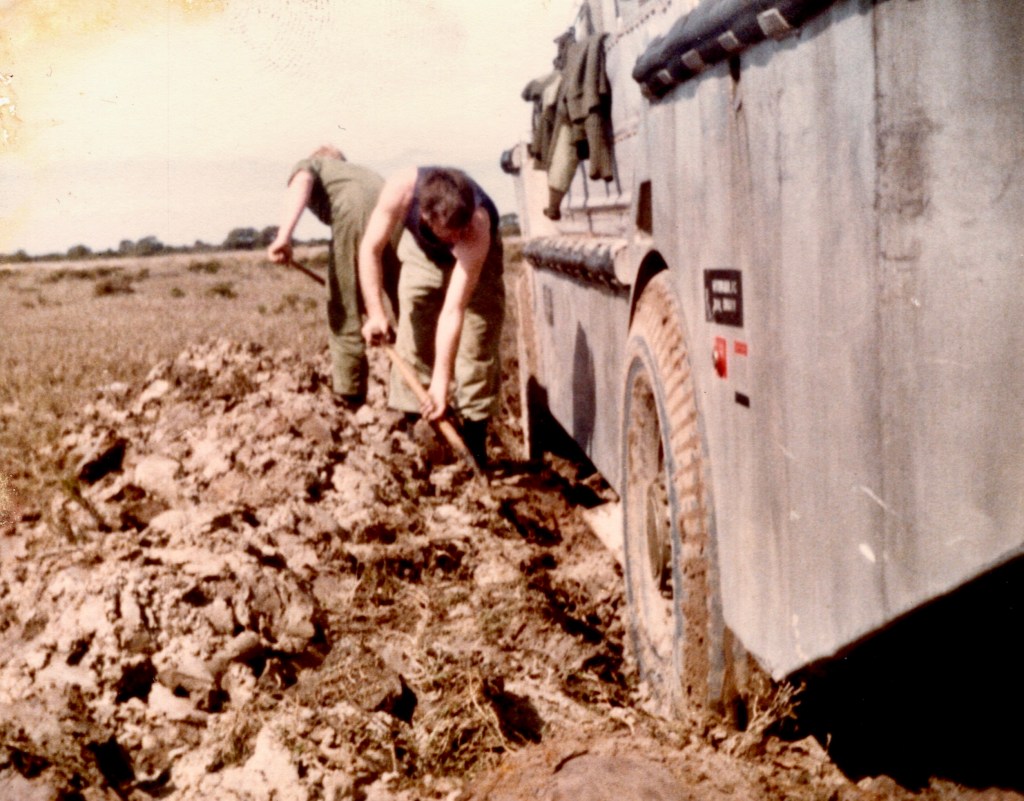
Four smaller LARC-V amphibious landing craft, or Army Ducks, from the Melbourne Water Transport Division were also used, but they were prone to getting bogged in the mud and soft sand.
Smooth scheduling of the deliveries of logs and sawn timber from the State forest at Alberton West to Port Welshpool, and then to Snake Island in the heavy landing craft to match the tides, was crucial to the project’s success.
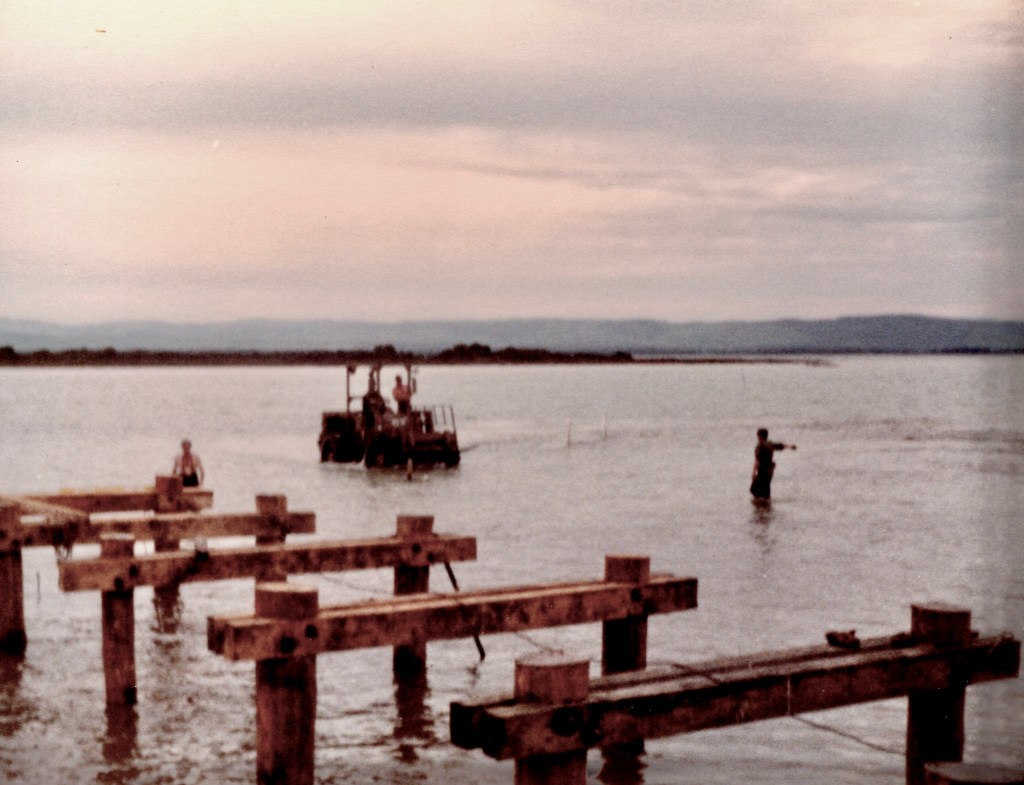
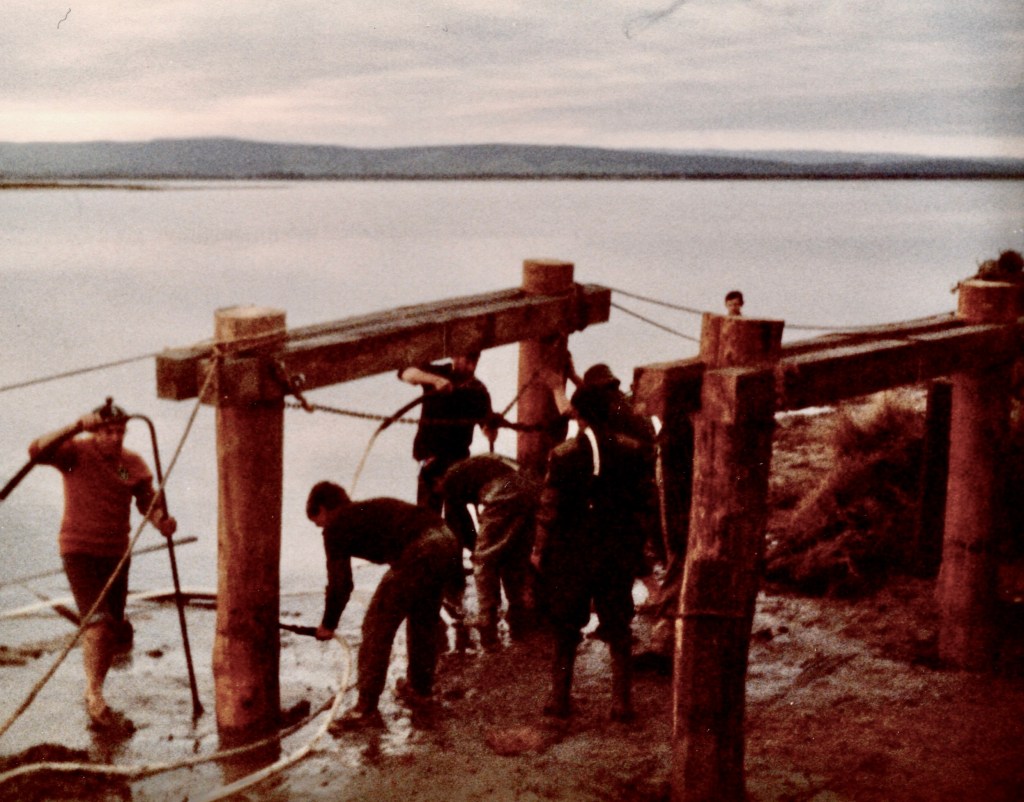
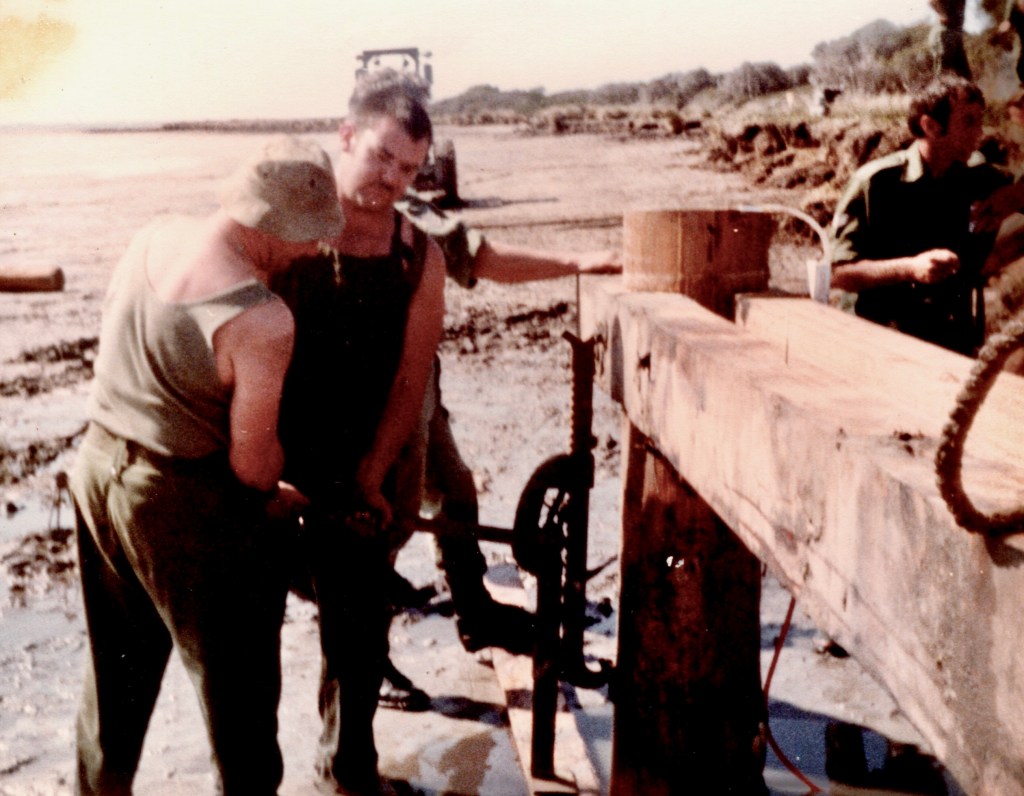
The challenge of driving piles into the coastal mud without heavy equipment was ingeniously solved by the sappers using long galvanised metal probes connected to a boat mounted pump. The nozzles on the end of the probes washed high pressure water under the ends of the piles which then sank about 3 meters under their own weight. With a Bailey Bridge jack and dumpy level to make some final adjustments, and following a few tide changes, the timber piers settled perfectly square and rock-solid.
Decking and handrails were also sawn in the bush and added to the structure. Timber abutments to protect the jetty from the relentless waves and tide were essential in the overall design.
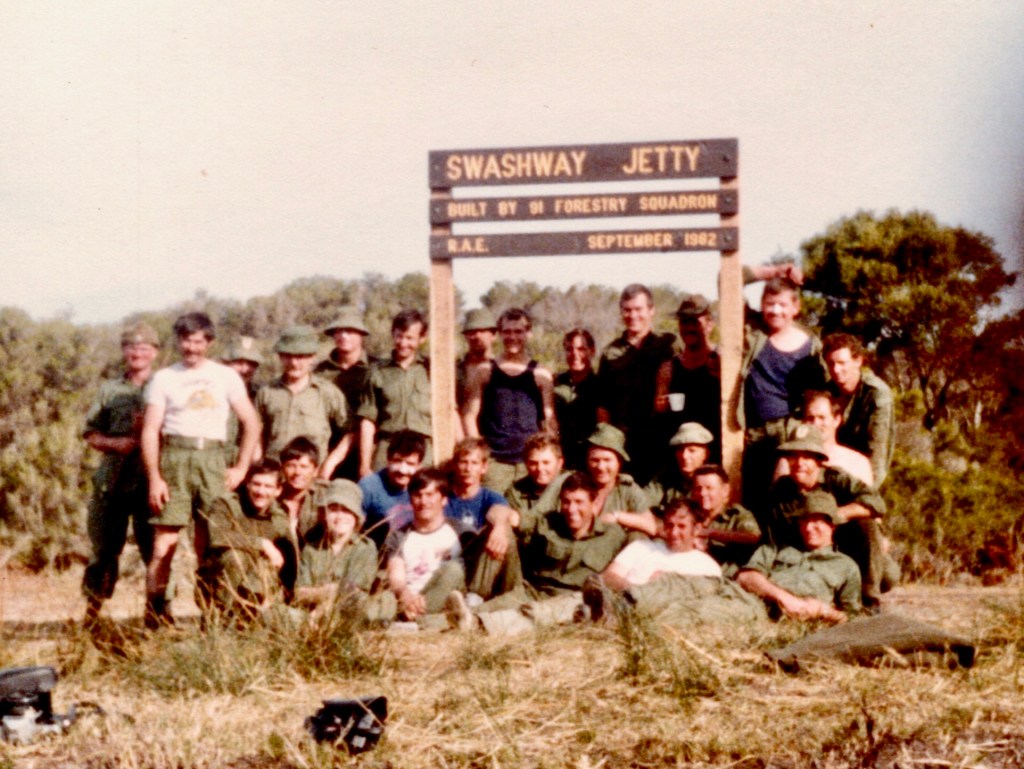
The wet and windy weather wasn’t altogether kind, but the jetty was completed in only 9 days with a crew of 30 Woodpeckers.
Many visitors came to the site including some WW2 forestry veterans who confirmed that things were just as they remembered, as well as the new Minister for Conservation, Evan Walker, with the local media in tow.
A year later the bolts were tightened because the timber had shrunk a bit as it dried. Then in 2004, the Woodpeckers returned to install some replacement timber and sandbag the abutments to protect the structure from the elements.
The Woodpeckers confronted some significant technical and logistical difficulties to build the Swashway jetty. It also required the combined efforts of about 160 regular and reservist soldiers from other Army Corps and Units.
When they now gather for a cold frothy or two, the old Sappers from the 91 Forestry Squadron often reminisce about this rewarding and worthwhile achievement with well-deserved pride.
Some decking is now due for replacement by Parks Victoria, but the Swashway Jetty still stands after 41 years as an enduring testament to the Woodpecker’s incredible ability to simply Get Stuff Done (GSD).
But, best-of-all, the bush where yellow stringybark logs were selectively harvested from State forest at Alberton West is now a stand of thriving regrowth and well on its way to growing the timber needed for a replacement Swashway Jetty when the time comes.
The Army’s MccQuarrie Boundy Forestmil similar to this was seriously underpowered for the large yellow stringy logs. https://nla.gov.au/nla.obj-326212859
In the lead up to the summer of 1982/83, most of Victoria experienced a severe drought, which began as early as 1979. Rainfall during the winter and spring of 1982 was low while summer rainfall for Victoria was up to 75% less than in previous years.
The persistent low rainfall meant less moisture in the soil, while dams and creeks in many places were almost dry. Melbourne and most regional towns were on severe water restrictions. Farmers were carting water.
The moisture in the air, known as Relative Humidity (RH), was also extremely low, which combined with high temperatures and low fuel moistures in the forests created extreme fire hazard conditions.
Bushfires in forests require fuel such as dry leaves, bark, twigs, and other vegetation to burn. Fuels were dry and forest vegetation in valleys and gullies, usually moist in most summers, was also very dry. The farm paddocks were dry and bare with very little grass.
The hot, dry, and windy weather towards the end of 1982 gave firefighters an ominous foreboding of what might lay ahead.
The Country Fire Authority (CFA) and the Forests Commission Victoria (FCV) introduced summer fire restriction 6 to 8 weeks earlier than normal when the “Prohibited Period” was introduced on 23 October 1982 in some western areas and extended across the entire State by 13 November.
The earliest Total Fire Ban (TFB) day ever declared, up to that point, occurred on 24 November 1982. While over the 1982-83 fire season, 22 Total Fire Ban days were declared.
The Forests Commission’s normal workforce of 450 staff and 650 field crew were supplemented by an additional 610 summer crew.
In mid-1982 the Commission contracted for 4 agricultural-type firebombing aircraft on a full-time basis throughout the entire fire season. Contracts were also let for two light helicopters. And as in previous years, arrangements were made to have additional light aircraft, fire bombers and helicopters on standby when needed.
Also, for the second year of a trial, the RAAF C-130 Hercules carrying a Modular Airborne Fire Fighting System (MAFFS) was borrowed from the US Forest Service and operated from three major airfields in Victoria. A high-performance twin-engine command aircraft (birddog) was also placed on contract and flown by a FCV pilot.
The National Safety Council of Australia (NSCA), which was based at West Sale in Gippsland, expanded its aerial operations significantly during the 1982-83 bushfire season, and the Forests Commission made arrangements for use of their large fleet of helicopters and fixed wing aircraft.
Between 16 – 25 February 1983 more than 30 aircraft were engaged in forest fire fighting by the Commission – the most intensive air operations in Australia’s history up to that time.
The CFA, State Electricity Commission (SEC) and the Melbourne and Metropolitan Board of Works (MMBW) also hired fixed wing aircraft for reconnaissance on an ad-hoc basis, while Victoria Police had their own air wing.
The 1982/83 Fire Season.
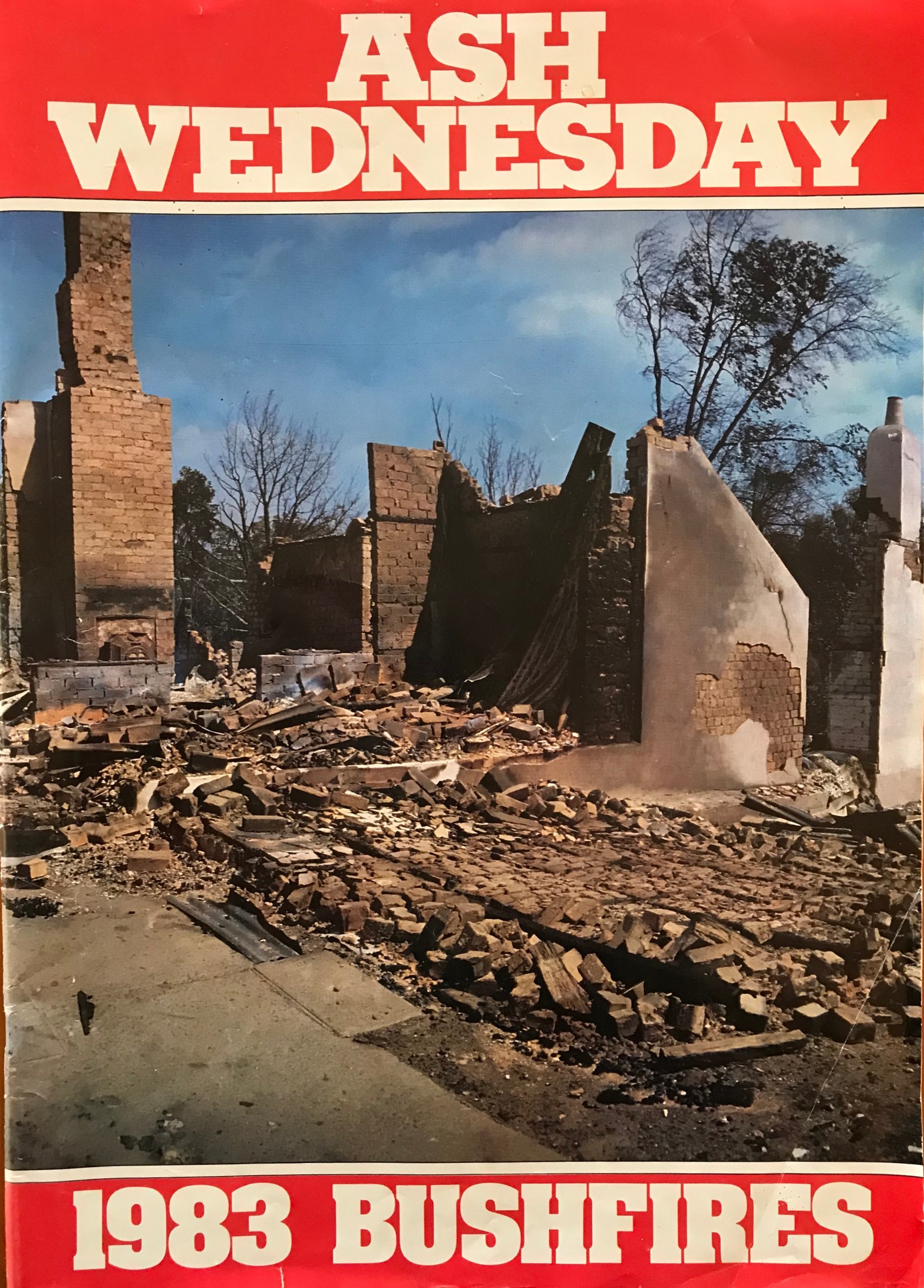
While the bushfire season is best remembered for those on Ash Wednesday on 16 February 1983, significant bushfires occurred right across Victoria from August 1982 until April 1983.
The first big bushfire occurred in August 1982 in the Little Desert. This was followed by major fires in November at Nowa Nowa/Murrindal, Heyfield/Seaton, Nowa Nowa/Mt Elizabeth, Bright, Mildura and Mt Disappointment.
The bushfires continued unabated into January 1983, which was one of the hottest and driest on record.
A major 16,000 ha bushfire at Greendale on Saturday 8 January 1983 resulted in the deaths of two Forests Commission employees from Daylesford, Des Collins and Alan Lynch. The men died when the bulldozer they were operating was overrun by fire. They were the first FCV employees to die in bushfire since 1939 and it shook the organisation to its core. However, their deaths were somewhat overshadowed by the 47 fatalities in Victoria on Ash Wednesday just a few weeks later, which included 14 CFA firefighters.
The hot summer continued when on Tuesday 8 February 1983 strong winds lifted an estimated 50,000 tonnes of dry soil and sand from the mallee desert and created a vast dust storm across southern Australia including Melbourne. The temperature in the city rose quickly as the north wind strengthened, and by 2.35 pm it had reached a record 43.2 degrees Celsius. The 300-metre-high dust cloud stretched over 500 km from Mildura to Melbourne and extended on a 150 km wide front. It reached Melbourne by 2.55 pm and the sky went black. More significantly, the exact weather pattern that caused the dust storm was repeated eight days later during the catastrophic Ash Wednesday bushfires.
Two weeks before Ash Wednesday, on Tuesday 1 February 1983, the weather forecast was for a very hot day with temperatures of 41 degrees Celsius and windy conditions. The CFA declared a day of Total Fire Ban (TFB).
A fire, which was carelessly started by workmen using a metal grinder, broke out just north of the Macedon Ranges near Braemar College. 500 FCV and CFA crew, with 6 bulldozers and 76 tankers were deployed. FCV quickly had several aircraft over the fire and deployed the large MAFFS firebomber. The fire destroyed about 50 homes, but more significantly, the area burnt on 1 February 1983 stopped the East Trentham fire as it made its deadly run up the slopes of Mount Macedon on Ash Wednesday.
While in the far east of the State, and largely hidden from media view, FCV and CFA faced 2 large campaign bushfires over a 2-month period. The bushfires at Cann River which began in late January, with another later in March, were some of the largest in Gippsland since 1965. They burned a combined total of 253,000 ha under extreme drought and weather conditions, with temperatures exceeding 46 degrees Celsius, relative humidity as low as 16%, and wind speeds exceeding 100 km/hr. The campaign bushfires at Cann River overlapped the Ash Wednesday fires and were a significant drain on departmental resources.
In early March there was a fierce 1,900 ha bushfire in thick coastal heathland near Loch Sport on the southern shores of Lake Victoria, while last major fire of the season was in the southern Grampians on 22 April under warm and windy conditions.
Overall, FCV attended 878 fires totalling 486,030 ha, which was well above the 11-year average of 141,000 ha.
The CFA attended nearly 3,200 fires during the same fire danger period.
Ash Wednesday – 16 February 1983
Over its 12-hour rampage, more than 180 fires, fanned by winds of up to 110 km/h, caused widespread destruction across Victoria and South Australia on Ash Wednesday, 16 February 1983
In Victoria, 47 people died, while in South Australia there were a further 28 deaths. Many fatalities occurred because firestorm conditions were caused by a sudden and violent wind change in the evening which rapidly switched the direction and size of the fire front.
Major fires broke out at
East Trentham / Macedon – 29,500 ha.
Otways – Deans Marsh / Lorne / Great Ocean Road / Anglesea – 41,200 ha.
Belgrave Heights / Upper Beaconsfield – 9,200 ha.
Cockatoo – 1,833 ha.
Cudgee & Ballangeich – 50,000 ha.
Moonlight Head – 1,440 ha.
Warburton / Powelltown – 44,500 ha.
The speed and ferocity of the flames, aided by abundant dry fuels and a landscape immersed in smoke, made fire suppression and containment almost impossible. In many cases, residents fended for themselves as the bushfires broke communications, cut off escape routes and severed electricity, telephones and water supplies.
It was not possible to outrun them. Spot fires simply leapfrogged across the parched landscape and there often seemed to be no distinct fire front, but instead hundreds of rapidly developing spot fires that eventually joined.
In most cases, efforts to control the fire storms was too dangerous and ineffective, so were all but abandoned, and the focus shifted to saving lives and property as well as warning and evacuating people ahead of the advancing blaze.
Approximately 2,090 homes, plus another 807 buildings, were destroyed in Victoria while many businesses, stores, equipment, machinery, stock, and other private assets were also lost. The total cost of the property-related damage in Victoria was estimated to be over $200 million.
Ash Wednesday – Weather
It began with a cool Sunday when the temperature only reached 23 degrees Celsius, warming on Monday to 34 degrees Celsius. A TFB was declared for the Tuesday, which was a fine, warm, and partly cloudy day with light winds and a top temperature of 31 degrees Celsius.
Fire authorities were lulled by forecasts of more mild weather for the following day, but early on Ash Wednesday, 16 February 1983 at 6.30am the Bureau of Meteorology (BOM) amended its predictions, and a TFB was declared.
By early that morning, 104 fires were already burning in Victoria. Most were controlled or contained, but at about 2.00pm the situation escalated dramatically.
Years of severe drought and extreme weather combined to create one of Australia’s worst fire days since Black Friday in 1939.
Clear skies and rising temperatures were observed, and a front of cold air was situated in the Great Australian Bight off the coast of South Australia.
The new BOM forecast was for strong upper winds of 60-65km/hr at 1000 metres increasing to 70-90 km/hr at 1500 metres.
The front caused the hot air in the centre of Australia to be drawn southwards, creating a hot, dry northerly wind over Victoria. As a result, temperatures in many places rose to over 40 degrees Celsius, and air moisture dropped below 15%.
By noon, the high pressure had not moved and a deep trough of low pressure with several cold fronts had moved into the bight off western Australia.
The squeezing up of the systems increased a pressure gradient which led to strong winds of up to 70 km/h at Tullamarine where temperatures reached 43 degrees Celsius and the Relative Humidity (RH) dropped to less than 5%.
Wind Change
A strong south-west wind change began moving through Victoria by early evening. It reached Framlingham near Warrnambool at 5.58pm, Lorne on the coast at 6.40pm, East Trentham at 8.45pm, Cockatoo at 9.05 pm and Warburton at 9.15pm. The erratic and violent wind change caused the fires to change both direction and size.
Prior to the change, under the prevailing north westly winds during the day, the fires had been relatively long and thin with a narrow front. But after the wind change, the long edge on the eastern flank of the fire switched to become the main front. The fire then became much broader and spread out in many fingers with long distance spot fires up to 20km ahead of the front being observed.
Most of the losses of life and property occurred in the hour or so following the wind change.
At Lorne, windstorms with gusts more than 100 km/hr, several houses lost roofs, trees were smashed, and some outbuildings disintegrated while roofing iron and burning mattresses were seen flying through the air. A fire tornado near Moggs Creek cut an 800 metre swathe through the forest, and mature red ironbark trees up to 15 metres tall were uprooted or snapped off.
The wind change also caused fires to merge, like the Cudgee/Ballangeich fire near Warrnambool.
12 CFA firefighters, in trucks from Narre Warren and Panton Hill, also lost their lives on a narrow bush track at the Critchley Parker Junior Reserve at Upper Beaconsfield when the fire overran them following the severe wind change.
But by midnight, the temperature was slowly dropping to 24 degrees Celsius with the RH hovering at 40%. At about 4.00am on Thursday a light drizzle began to fall as the temperature dropped at Powelltown even lower to 12 degrees Celsius. The spread of all the Ash Wednesday fires virtually stopped but they hadn’t gone completely out.
Cooler weather on the Thursday allowed consolidation, backburning, blacking out and patrols to continue.
Heavy rain fell across Victoria during the week after Ash Wednesday which extinguished most of the remaining smouldering edge, but in some cases caused flash flooding and landslips.
Recognised Causes.
The official causes of some of the Ash Wednesday fires remains unknown but other causes included sparks caused by damaged and clashing electricity power lines, tree branches hitting power lines as well as suspected arson.
Overall Damage.
During the hectic 1982/83 summer period FCV personnel attended 878 fires, of which 823 affected the Fire Protected Area (FPA). The total area of FPA burnt was 486,030 hectares, which was well above the 11-year average of 141,000 hectares.
Lightning caused 230, or 28% of all fires, which was more than 3% above the 11-year average of 24.8%. 95 of these fires occurred during the 10-day period from 21 February.
A further 149, or 18% of fires, were attributed to deliberate lighting and approximated the 11-year average; a cause for great concern was the number of these fires which were lit on days of high to extreme fire danger.
Only 29 fires exceeded 400 hectares and, of these, 13 exceeded 4,000 hectares, the 2 largest fires occurred in Cann River Forest District and burnt 127,200 hectares and 126,100 hectares respectively.
Of all fires, 91% burnt less than 40 hectares and 79% did not exceed 4 hectares.
The FCV’s total fire suppression expenditure for the hectic 1982/83 season, which included Ash Wednesday, was $16.2millon.
The fires also damaged valuable timber in State forests as well as public and private plantations, with losses of around $50million. The fires burned the vegetation that protects the soil and there was damage through soil erosion, affecting streams and water catchments. Park and forest facilities and offices were also damaged or destroyed.
Over 16,000 firefighters attended the Ash Wednesday fires. They include those from the FCV, the National Park Service (NPS), the Crown Lands and Survey Department. These agencies later merged in mid-1983 to become the Department of Conservation Forests and Lands (CFL) – the forerunner to DEECA and FFMVic.
Firefighters also came from the Melbourne and Metropolitan Board of Works (MMBW), the State Electricity Commission (SEC), the Country Roads Board (CRB), Post Master General (PMG), interstate forest services, private forestry companies, sawmillers and logging contractors, individual forest workers, adjoining landowners and Local Government authorities. They worked alongside thousands of Country Fire Authority (CFA) volunteers and staff.
There were well over 400 vehicles (fire trucks, water tankers, and bulldozers), 11 helicopters, and 14 fixed-wing aircraft used. 1,000 Victoria Police and 500 Australian Defence Force (ADF) personnel from the Navy, Army and Air Force also assisted.
The Victorian State Emergency Service (SES), Australian Red Cross, Salvation Army, St John Ambulance Brigade and many other volunteer organisations, and countless individuals, greatly assisted by supporting the welfare of fire fighters, particularly after the 16 February Ash Wednesday emergency.
There was shock, heartache, anger, blame and bewilderment. This was followed by months of clean up, and relief, with years of recovery and rebuilding of lives, homes and communities.
South Australia
The fires also reached South Australia, burning 208,000 hectares in the Adelaide Hills and farming country in the state’s southeast. In addition, destroying 21,000 hectares of pine plantations. The fires in South Australia killed 28 people and destroyed 383 houses. The estimated cost of damage was more than $200 million.
Review After the Ash Wednesday bushfires, a procedural review by Police Commissioner Mick Miller commenced on bushfire disaster preparedness and response in Victoria. The State Coroner also separately investigated the deaths at Greendale and on Ash Wednesday. The new State Premier, John Cain, decided against a Royal Commission
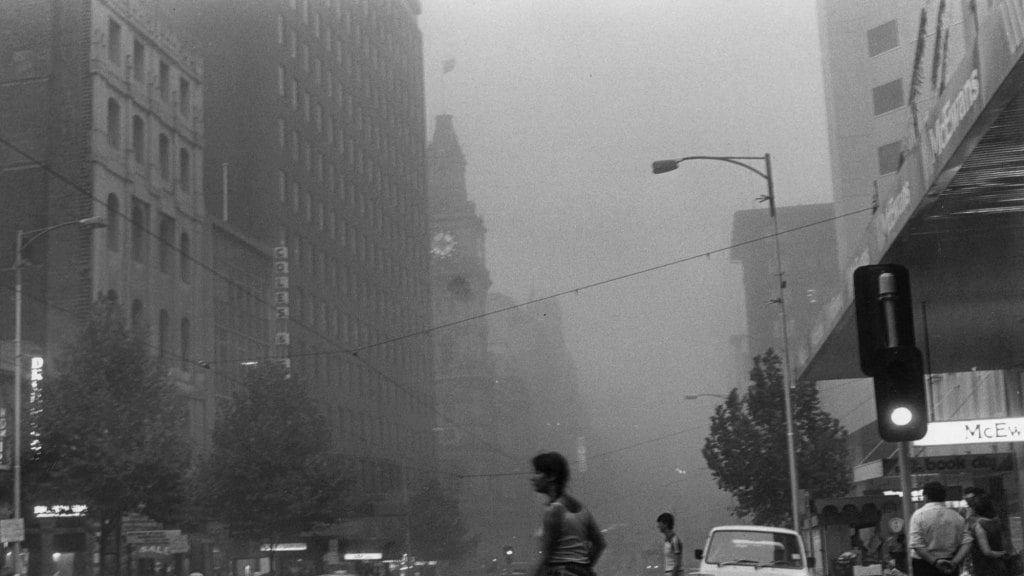
Victoria was in the grip of drought when Melbourne was smothered by a giant dust storm blown in from the mallee deserts during the afternoon of Tuesday 8 February 1983.
Earlier in the morning a strong, but dry, cold front began crossing Victoria, preceded by hot, gusty northerly winds.
The temperature in the city rose quickly as the north wind strengthened, and by 2:35 pm it had reached 43.2 degrees.
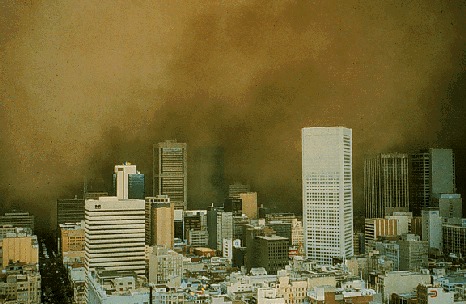
The 300 metre high dust cloud stretched over 500 km from Mildura to Melbourne and extended on a 150 km wide front.
It reached the city by 2.55 pm and the sky went black.
Winds of up to 140 km/h were reported at Point Lonsdale while at Mornington, gusts reached 100 km/h. In the city, winds reached 85 km/h.
The storm cut power, damaged houses, uprooted trees, disrupted train services and ripped boats from moorings.
The worst of the dust storm was over by 4 pm when the wind dropped as the cool change arrived. There was no rain and everything was covered in a layer of dust.
But more significantly, the exact weather pattern that caused the dust storm, with high temperatures and strong northwest winds followed by a strong southwest change, was repeated eight days later during the catastrophic Ash Wednesday bushfires.
Top Image: Australia Bureau of Meteorology/Photographer: Trevor Farrar
Time is 2.56 pm. Source: Museum Victoria.
Bourke Street mid-afternoon when the dust storm hit Melbourne.CREDIT:FAIRFAX ARCHIVES.
Dust storm entering Melbourne 8th February 1983 (source: Bureau of Meteorology)
The Australian Fire Service Medal (AFSM) is awarded by the Governor General on both Australia Day and Queens Birthday and recognises distinguished service by members of Australian fire services.
Congratulations to those many firefighters across the nation that have been awarded today.
But it’s been two years (and four missed opportunities) since a Victorian forest firefighter has been honoured. (AKA those wearing the green overalls – DEECA /FFMV/ ParksVic/ VicForests/ Melb Water, etc).
Some say these awards don’t matter, but I don’t agree. I reckon it must hurt that, once again, forest firefighters have been overlooked and no one is deemed worthy.
The CFA and Fire Rescue Victoria (FRV) run a separate process of nomination and seven AFSMs were awarded this year.
A spreadsheet of previous forest firefighter recipients is attached.
Albert Eli Lind was born on 21 February 1878 at East Charlton in northwest Victoria, but drought drove the family to East Gippsland in 1882 where they settled.
Albert attended Lucknow and Bairnsdale State schools and found work in the hop and maize fields.
At 12 he was apprenticed to local builders and later self employed as a signwriter, carpenter, painter and decorator.
He was a keen sportsman, winning many local cycling races and rowing trophies around the State; he also participated in coursing.
In 1904 he married Flora Catherine Arthur and selected land at Mount Taylor with his brother Ernie and developed it into a fine dairying property.
Lind was elected local councillor of Bairnsdale Shire in 1914-25 and was President during 1917-18. He was known as a forceful advocate for rural roadworks.
In October 1920, as a Victorian Farmers Union candidate, he won the Legislative Assembly seat of Gippsland East.
Over the next 40 years in State Parliament, he amassed an impressive range of portfolios including:
Minister of Lands – April 1935 to January 1942
Minister of Forests – April 1935 to September 1943
Deputy Premier – October 1937 to September 1943 including acting as Premier on several occasions.
Minister of Public Instruction – January 1942 to September 1943
Minister of Lands and of Forests – September 1943 to October 1945
Minister of Soldier Settlement – June 1950 to October 1952
Minister of Lands and of Forests – June 1950 to October 1952
Minister of Soldier Settlement – October 1952 to December 1952
Minister of Lands and of Forests – October 1952 to December 1952
Chairman of Committees – 1947 to 1950
Electricity Supply Committee – 1922
Railways Standing Committee – 1924 to 1931
Public Accounts Committee – 1956 to 1961
As Victoria’s longest serving Minster for Forests his legacies include:
The Strzelecki Ranges reforestation program which ran for an amazing 60 years and was the biggest reforestation scheme of its type in Australia
With the support of two prominent Melbourne businessmen and philanthropists, Herbert Robinson Brookes and George Richard Nicholas (of Aspro fame), together with Forests Commission Chairman, A. V. Galbraith, Albert Lind, was instrumental in establishing a unique and enterprising “Boys Camp” at Noojee in 1933. The program proved a success and expanded to a total of 15 camps on State Forest across Victoria.
After the bushfires of 1939 the Stretton Royal; Commission led to a massive timber salvage and roading program in the Central Highlands and sweeping changes to fire protection.
The Lind National Park in East Gippsland is named after him.
He was responsible for the reservation of five of Victoria’s National Parks and as Commissioner of Crown Lands and Survey, he initiated and actively supported ongoing works programs including the Buchan Caves.
Emergency supplies of firewood for civilian heating and cooking was needed because of reductions in coal, briquettes, electricity and gas. Over the period from 1941 to 1954, nearly two million tons was produced.
Together with Chairman of the Forests Commission, A V Galbraith, he articulated a vision for the revitalisation of the timber industry in regional Victoria in what is sometimes referred to as the “Grand Design”.
David Parnaby graduated from the Victorian School of Forestry (VSF) in 1940 and initially worked for the Forests Commission’s Assessment Branch.
He later had postings to Heathcote, Powelltown, Dandenong’s, Bruthen and Beechworth Districts.
Promoted as District Forester in 1951, David moved to Cann River, and then later back to Heathcote (1955), Castlemaine (1958) and Daylesford (1971). Following a period with the Forest Protection Branch in Melbourne he retired in 1980.
David was an accomplished cartoonist who provided insightful and humorous commentary through the Victorian State Forester’s Association Newsletter.
His cartoon foresters only ever wore a shirt and tie, but no pants or shoes, as a tongue-in-cheek poke at the stingy departmental uniform policy at the time.
David also carved two fire awareness totem poles that stood for many years outside the Forests Office at Noorinbee and then later at Cann River.
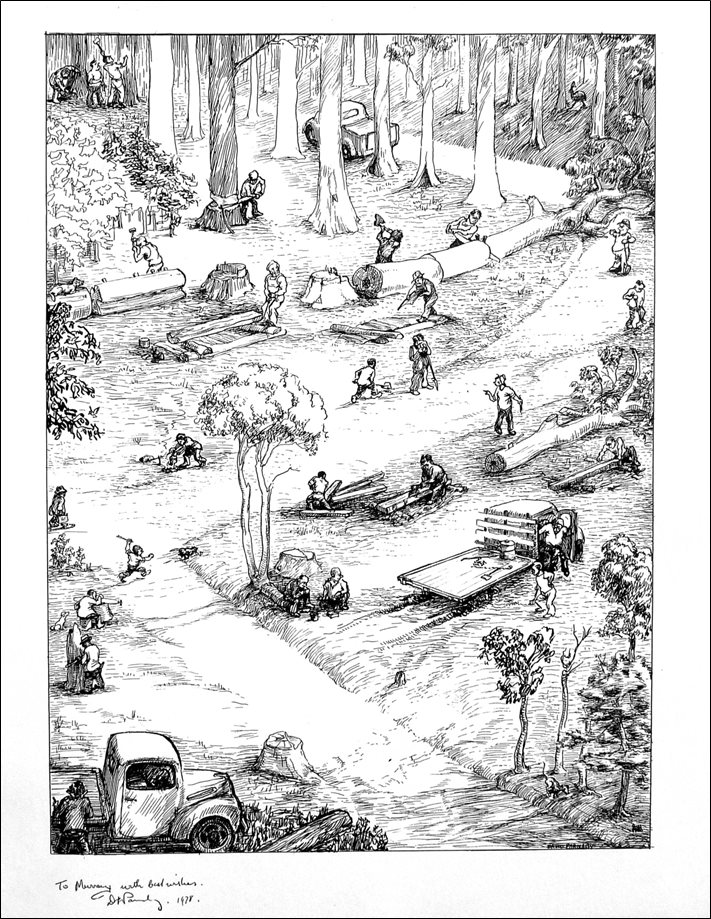
His keen eye for the antics of sleeper cutters at Cann River in the 1950s remains a classic…
The sketch is a bit like “Where’s Wally”… the more you look… the more you will see…
See if you can find…
the forest assessors.
harvesting by axe and cross-cut saw.
broadaxe, adzes, wedges and mauls for sleeper cutting,
harvesting bark.
trees dropped across the road.
bogged flattop trucks.
man’s best friends.
new regeneration.
hard workers and somebody always willing to watch.
even some wildlife action.
A signed version of this amazing drawing was a gift to the FCV’s Chief Forest Assessor, Murray Paine, in 1978.
Prints exist at the Beechworth Forestry Museum, Creswick Forestry School, Altona Fire workshop and in private hands.
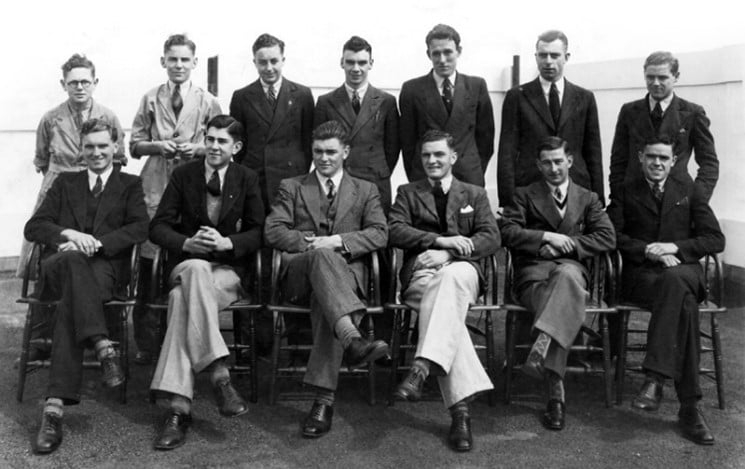
Taken at the VSF in about February 1940. Two students had a significant role in this Forest Faces story. Jack Gillespie (standing third from left) collected photos including Mr Stringy and one of Alfonso Spaghetti, while David Parnaby (sitting third from left) gave us his many humorous doodlings and carvings of the Noorinbee Totems in 1951. Source FCRPA Collection.
David Parnaby drew insightful cartoons for the Forests Commission’s staff association newsletter. His foresters only wore a shirt and tie but no pants or shoes as a tongue-in-cheek poke at the stingy uniform policy at the time. State Foresters Association Newsletter – August 1975. Source: FCRPA collection. https://www.victoriasforestryheritage.org.au/showcase/galleries/65-parnaby-cartoons.html
Here is a collection of nearly 100 stories posted on FB over this year. As with series one and two, another free e-book has been lodged in the State and National Library so the stories aren’t lost in the Facebook soup. Please feel free to download and/or share the link…
The State Government held an interest in developing tourism in the Victorian Alps as far back as the early part of last century, which at the time were considered as “Wastelands of the Crown”.
A ministerial tour on horseback was arranged in March 1915 to develop firm proposals, but intervention of WW1 a few weeks later pushed the idea onto the back burner.
A suggestion for long-distance walking track across the Victorian alps then came from the Field Naturalist Club of Victoria in 1948.
Ideas and maps were put forward by the Parliamentary State Development Committee in 1952.
However, it seems there was little support from bushwalkers at the time so the idea languished.
So it took until 1968 for the idea to resurface again with a proposal from Maurice Harkins, Director of Tourism Victoria, and keen bushwalker.
The revised initiative for an Alpine Walking Track was accepted by the Ministry of Tourism, which then provided a sizable grant towards the project in early 1970.
Most of the proposed route crossed State forest and used many existing 4WD tracks as links to reduce costs.
The Forests Commission Victoria (FCV) became involved in the planning, mainly through its then Forest Recreation Officer Stuart Calder.
Foresters John Morrow, John McDonald and Rus Ritchie were also keen contributors.
The FCV took the construction authority role because the challenges of building a walking track of this magnitude, in a remote mountainous location, was well suited to its experience and skills.
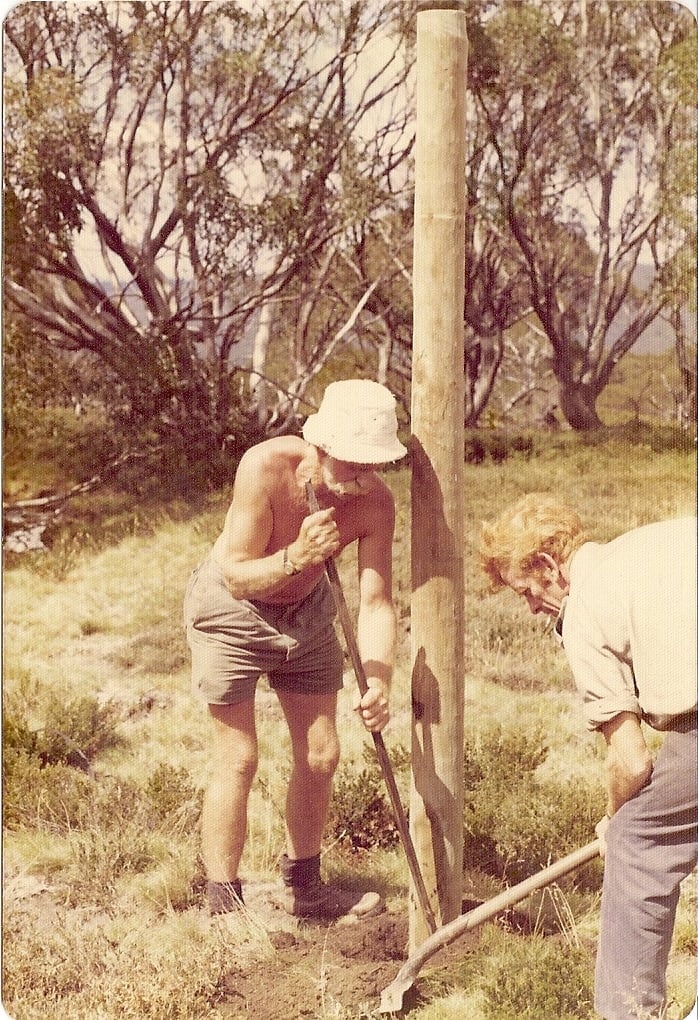
Work started in October 1970, and by 1976 the Victorian segments of the Alpine Walking Track were completed.
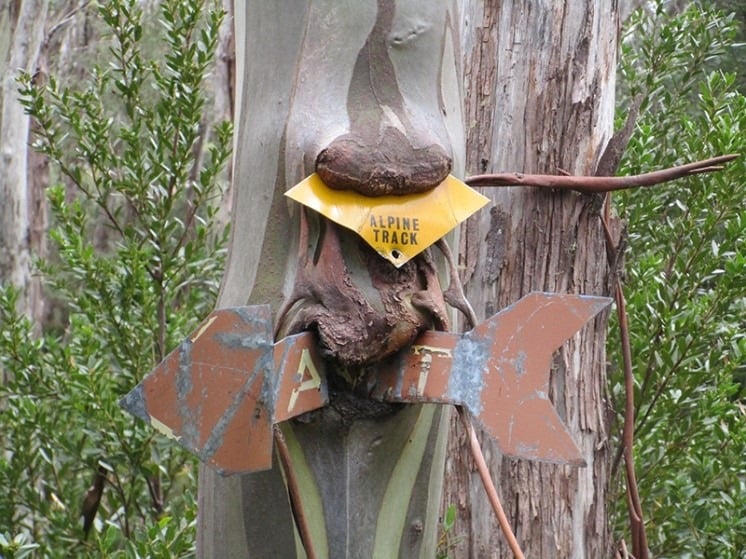
The route was marked with distinctive yellow diamond markers, some of which still exist today.
Victoria’s Alpine National Park wasn’t proclaimed until 1989.
However, it took until the 1990s for the track to extend through the Kosciusko NP in NSW to Canberra.
The AWT is now 655 km long, with about 400 km in Victoria. It starts at Walhalla and ends at Tharwa, ACT near Canberra.
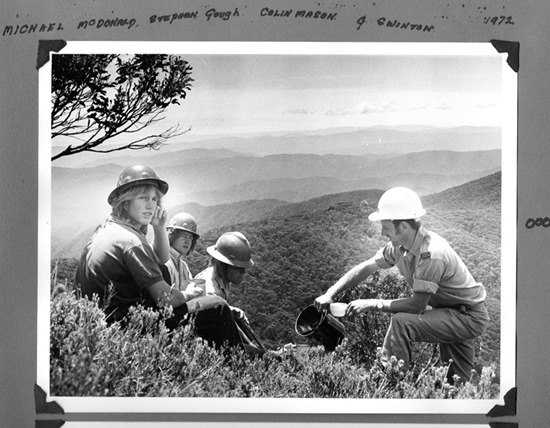
L-R Michael McDonald, Stephen Gough, Colin Mason, Graeme Swinton – 1972. Source: Rob CaddellL-R Russ Ritchie, Divisional Forester, Graeme Swinton – Foreman, John McDonald – DFO, at Mt Wills 1972. Source: Rob CaddellThis Bell 47J was used to transport equipment and materials to the remote alpine walking track. Source: FCV Annual Report 1972.Erecting Snow Poles on the walking track across the high plains from Hotham to Bogong. Les Ortlipp and Neville Robinson from the FCV were the team leader/surveyors.
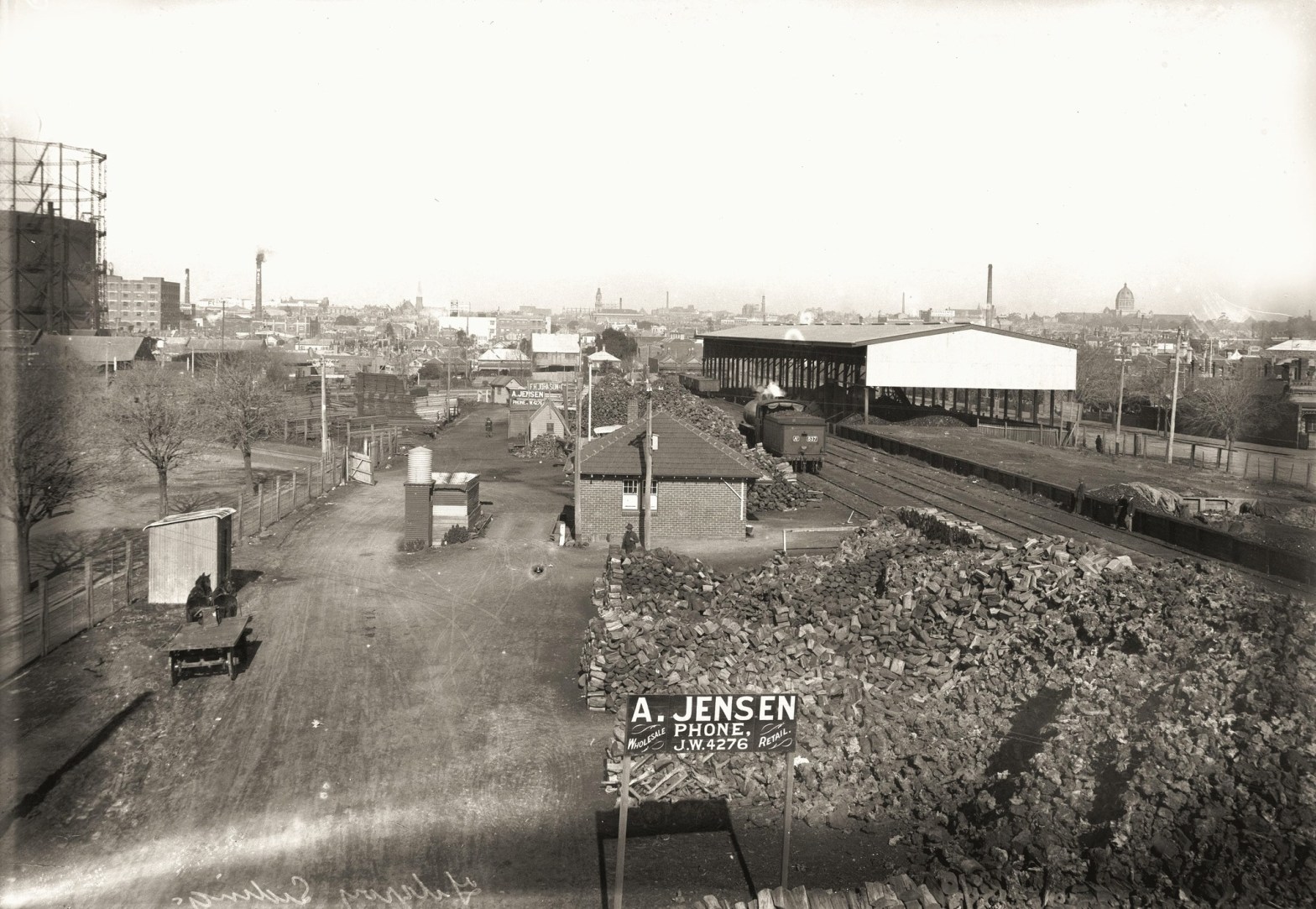
There were once over 500 of these wood yards across Melbourne.
During the Victorian Firewood Emergency from 1941 to 1954 nearly two million tons was produced from Victoria’s State forests and delivered to major depots by special freight trains.
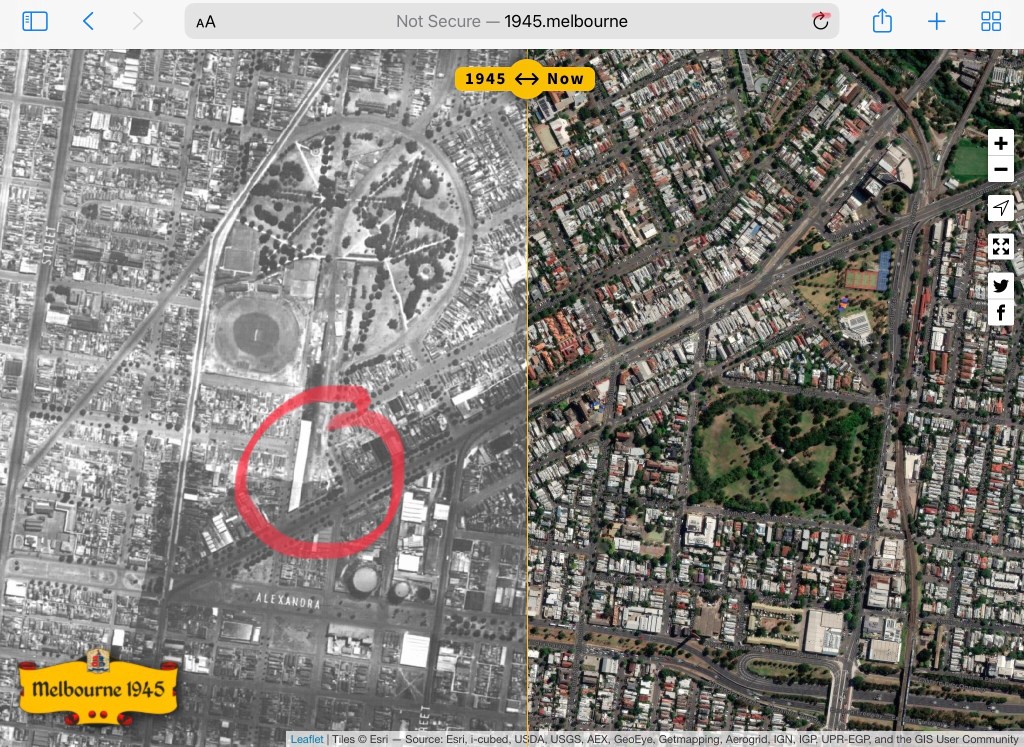
Anton Jensen’s wood yard was at the Fitzroy siding on the now dismantled inner circle railway.
Steam Engine A1 837 is visible on the main line
The wood yard and railway siding were replaced by housing in Napier Street after the line was closed in 1981.
This view is looking south and the gasometer on the left was in Queens Parade. Built in 1859, the Fitzroy Gasworks was a key supplier of gas to Melbourne until closing in 1927. The site operated as a gas storage facility until the 1970s and has recently been dismantled.
About one-third of Victoria, or about 7.1 million hectares, is publicly owned native forest.
Under Section 50 of the Forest Act, it was possible for the Forests Commission to set aside reserves, usually for recreation or the conservation of natural features.
In 1957 the area covered by this provision was quite small being only 700 ha, with the exception of Mt Buller at 1710 ha.
But by the mid-1950s it became evident that community attitudes to forests and conservation were beginning to shift.
In 1958 the Commission set aside Lake Mountain and Mt Baw Baw reserves. And over the next 10 years, the number of reserves increased to 81 with an aggregate area of 17300 ha.
In 1968, Sir William (Blackjack) McDonald, a local pastoralist and Minister for Lands controversially announced a new rural settlement scheme which involved the clearing of remnant Mallee woodlands and then selling Crown Land in the Little Desert.
An unlikely alliance of farmers, agricultural experts, economists, suburban activists, politicians, scientists and conservationists including the local District Forester Bill Middleton, banded together to oppose McDonald’s plan.
The Age Newspaper was fiercely critical and ran reports and editorials opposing the proposal for many months.
A surprise electoral backlash over the Little Desert plan against the Bolte Government in the May 1970 elections, where McDonald also lost his safe Liberal seat, laid the foundations for the formation of the Land Conservation Council (LCC) later in 1971.
The poorly-conceived Little Desert scheme was eventually consigned to oblivion, but it proved a watershed moment and is often considered to mark the beginning of widespread environmental awareness and activism in Victoria.
The Forests Commission, now under the Chairmanship of Dr Frank Moulds, responded swiftly, and in 1970 the Forest Environment and Recreation (FEAR) Branch was created to give greater focus to the multiple use of State forests.
FEAR Branch was an innovative idea and other state forest services around Australia soon followed.
By about 1973, the area set aside in forest reserves had grown to 56000 ha.
By 2013, about half (4 M ha) was set aside as Parks and Conservation Reserves with the other half (3.1 M ha) as State forest.
















































 Victoria’s Forests & Bushfire Heritage