There is always a danger making lists but, to my mind, some of the main events that have shaped forest and bushfire management in Victoria are below…
• 1820s – Before European settlement around 88% of the 23.7 million ha of what was to become the Colony of Victoria was tree-covered.
• 1851 – In January, the Black Thursday bushfires burnt an estimated 5 million ha.
• 1851 – On 1 July, the District of Port Phillip splits from NSW to become the independent Colony of Victoria.
• 1851 – Gold Rush begins, the population swells, mining and land clearing boom has huge impacts on the forests.
• 1852 – Timber regulations under the Lands Act.
• 1862 – First sawmill licences under Lands Act.
• 1865 – Forest management was chaotic, and the Argus Newspaper championed the cause of protecting our forests.
• 1866 – The Corio Shire Council became very concerned about the extensive cutting of both dead and green timber, so the Lands Department declared an 800-hectare Timber Reserve around the You Yangs.
• 1869 – The new Lands Act was the first to make it possible to select land first and get a survey after that. There had been earlier Land Acts, but this legislation made an incredible difference to the rate of selection of State forests and clearing for agriculture.
• 1869 – William Ferguson, the first Inspector of State forests and Crown Land Bailiff appointed.
• 1871 – Local Forest Boards attempted to exercise some control, however, the task of regulating wasteful clearing proved formidable and they were abolished in 1876.
• 1872 – First government nursery established at Macedon by William Ferguson with the aim to restore land degraded by gold mining.
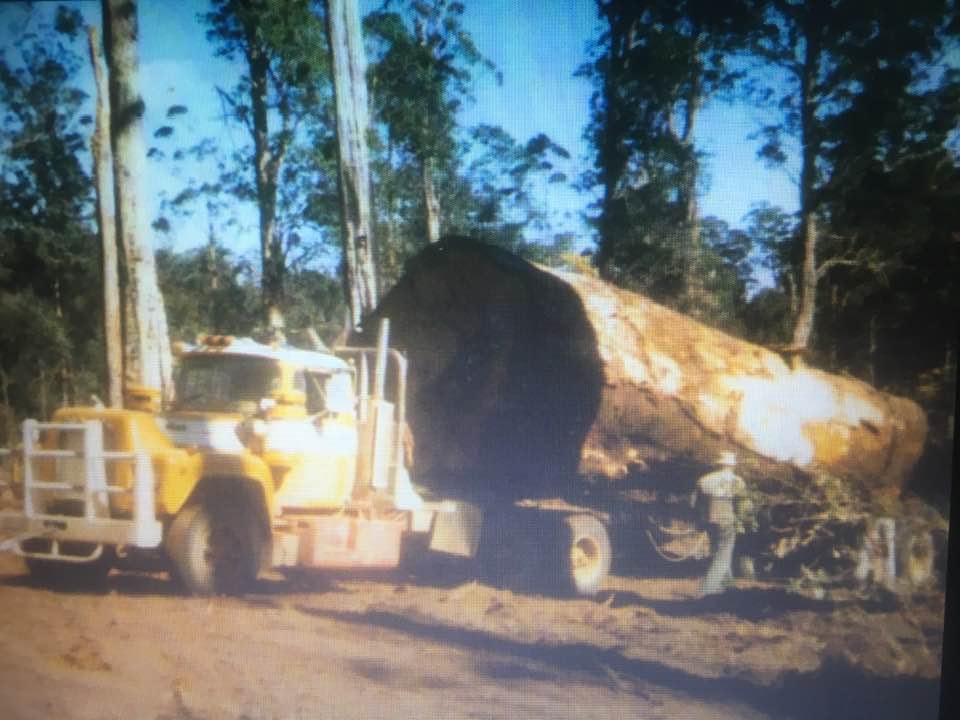
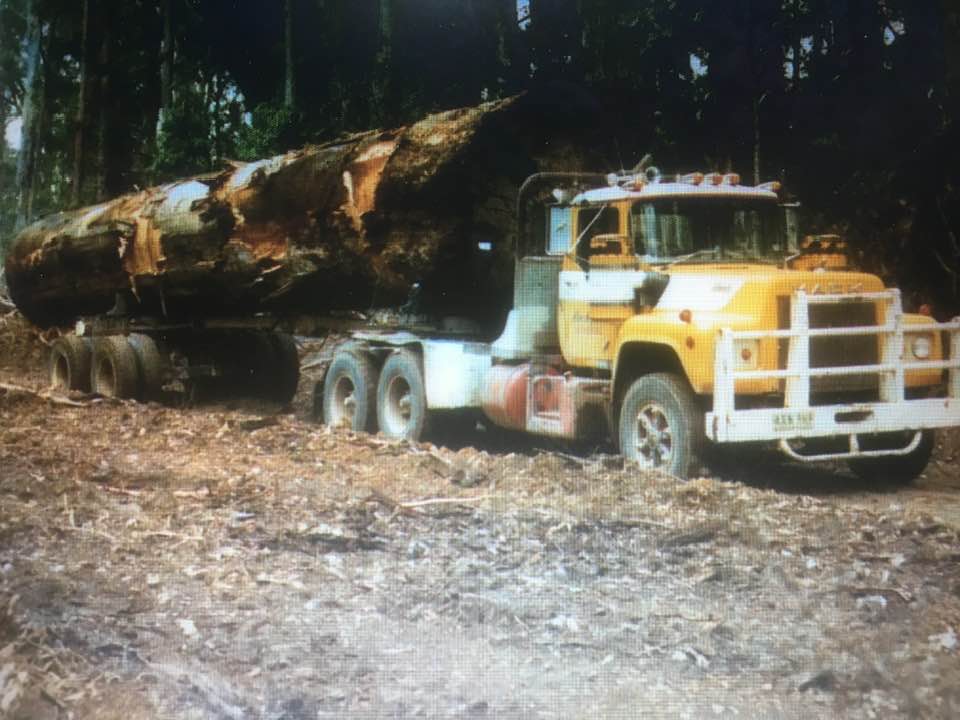
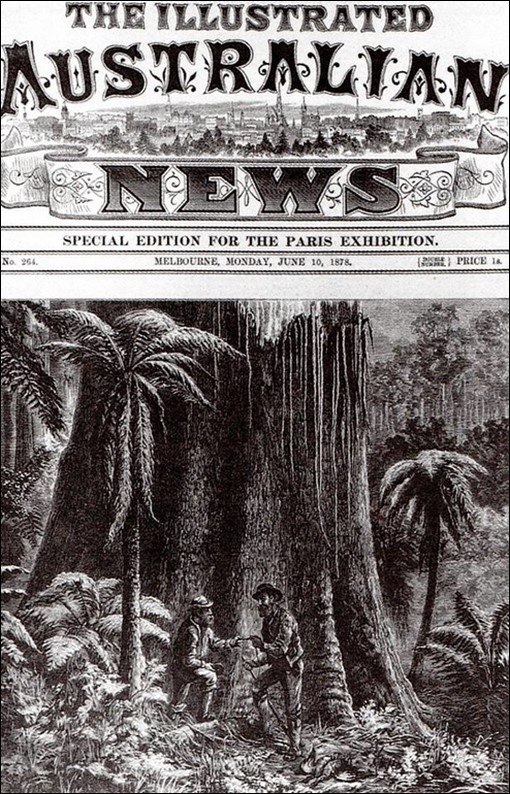
• 1872 – William Ferguson is said to have measured a tree that had fallen across a tributary of the Watts River north of Healesville at 435 feet long.
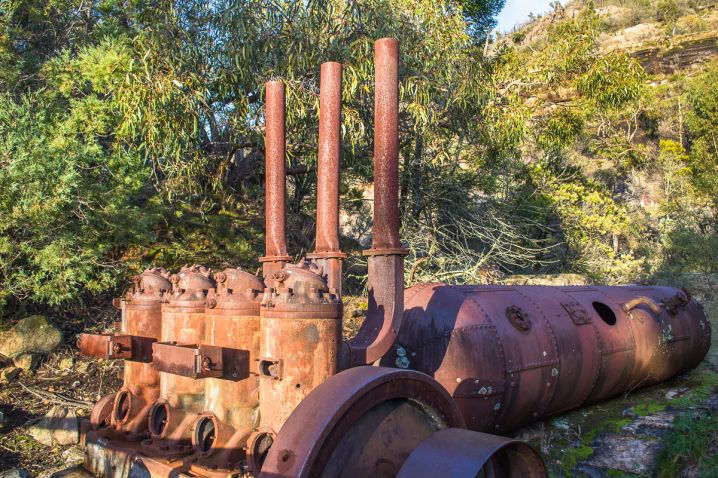
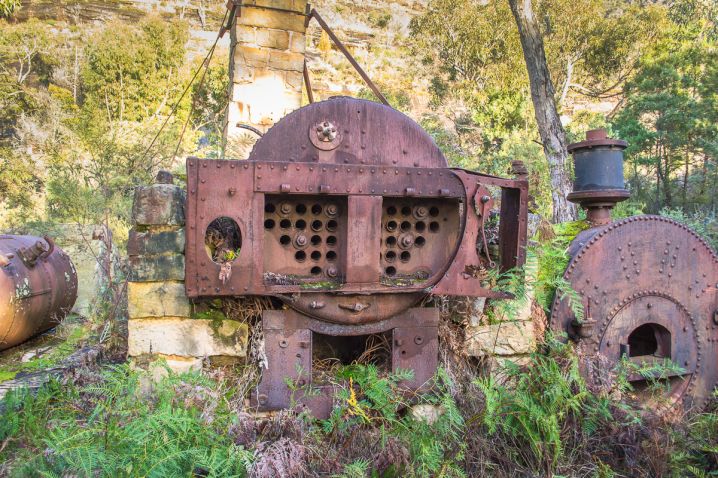
• 1873 – Some 1150 steam engines in the gold mining industry were indiscriminately devouring over one million tons of firewood.
• 1878 – Report of the Wattle Bark Board of Inquiry into the exploitation of black wattle and fears about its potential extinction.
• 1879 – Valonia Oak planted at Castlemaine to supply the leather tannery trade as a substitute for dwindling supplies of black wattle.
• 1881 – Despite wild claims of trees over 500 feet tall, Victoria’s tallest reliably tree was measured near Thorpdale by a surveyor, George Cornthwaite at 375 feet before it was chopped down.
• 1882 – John La Gerche appointed as one of sixteen foresters held out a promise to end the forest destruction and wastage.
• 1888 – First Conservator of Forests, George Samuel Perrin was appointed. He died suddenly in 1900.
• 1888 – Melbourne Centennial Exhibition offers a reward for the tallest forest tree. The “New Turkey Tree” near Noojee won at 326 feet 1 inch and a girth of 25 feet and 7 inches.
• Three independent reports from D’A. Vincent (1887), Perrin (1890), Ribbentrop (1895) into the parlous state of Victoria’s forests lead to a Royal Commission.
• 1891 – Melbourne’s forested water catchments vested in the Melbourne and Metropolitan Board of Works (MMBW).
• 1893 – First timber royalty regulations made under the Lands Act.
• 1897 – 1901. Royal Commission into forest destruction after the gold mining boom and indiscriminate land clearing. With 14 separate reports.
• 1898 – Red Tuesday bushfires, mainly in south Gippsland.
• 1900 – State forests were still commonly regarded by the general public, and by most of their parliamentary representatives, as the inexhaustible “Wastelands of the Crown” and ready for disposal via alienation into freehold property for the purposes of agricultural settlement.
• 1901 – Federation and the formation of the Commonwealth of Australia. Forest and bushfire management remain the responsibility of the States.
• 1851 – 1907. The responsibility for the administration of Victoria’s forest estate had been shunted back and forth at least eleven times between three Government Departments including Lands and Survey, Agriculture and Mines.
• 1907 – Legislation finally passed to create a State Forest Department (SFD) with Hugh Robert MacKay as the first Conservator. The fledgling Department had 66 staff.
• 1907 – Britannia Creek Wood Distillation plant established.
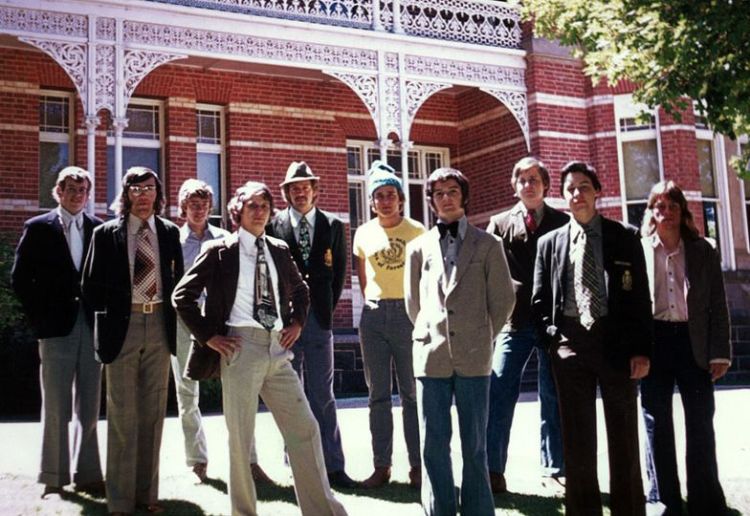
• 1910 – Victorian School of Forestry at Creswick opens. The first headmaster was Thomas Stephan Hart.
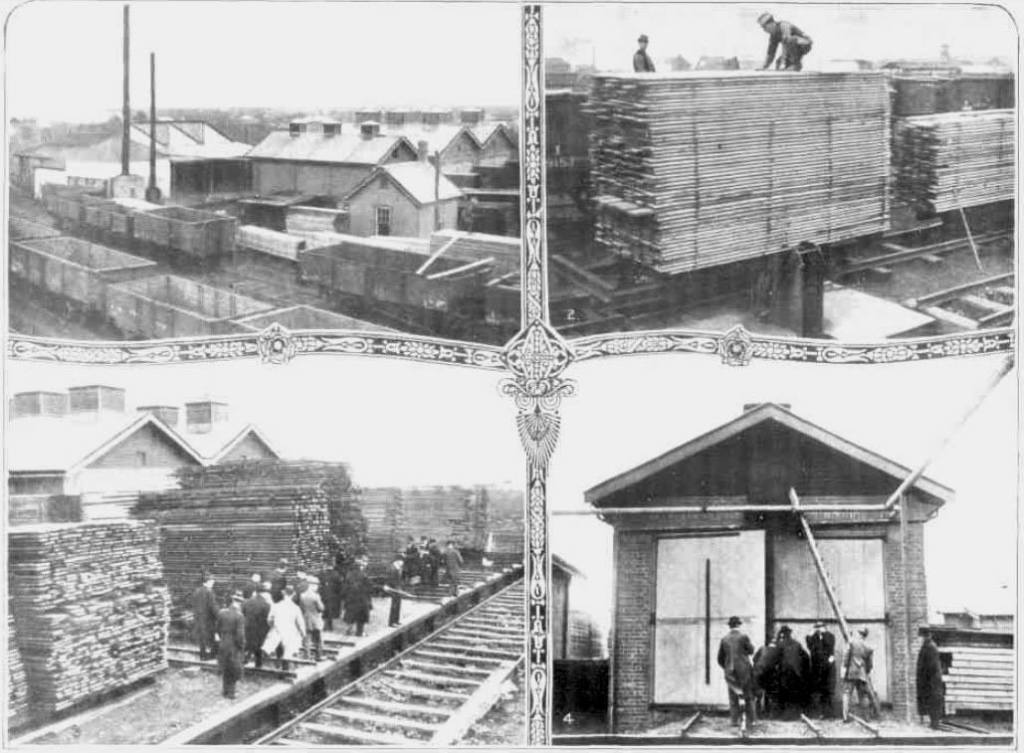
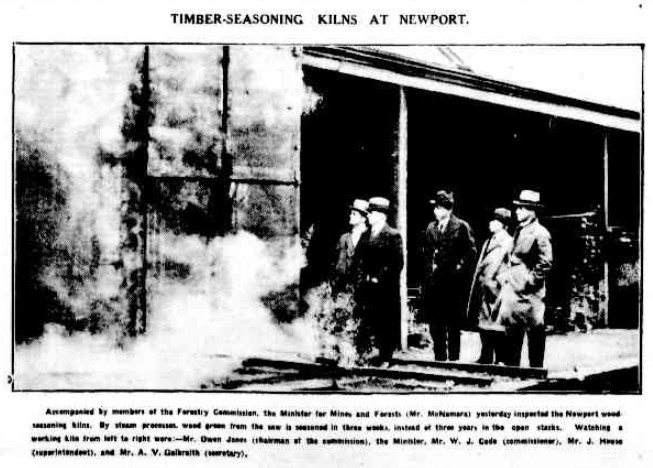
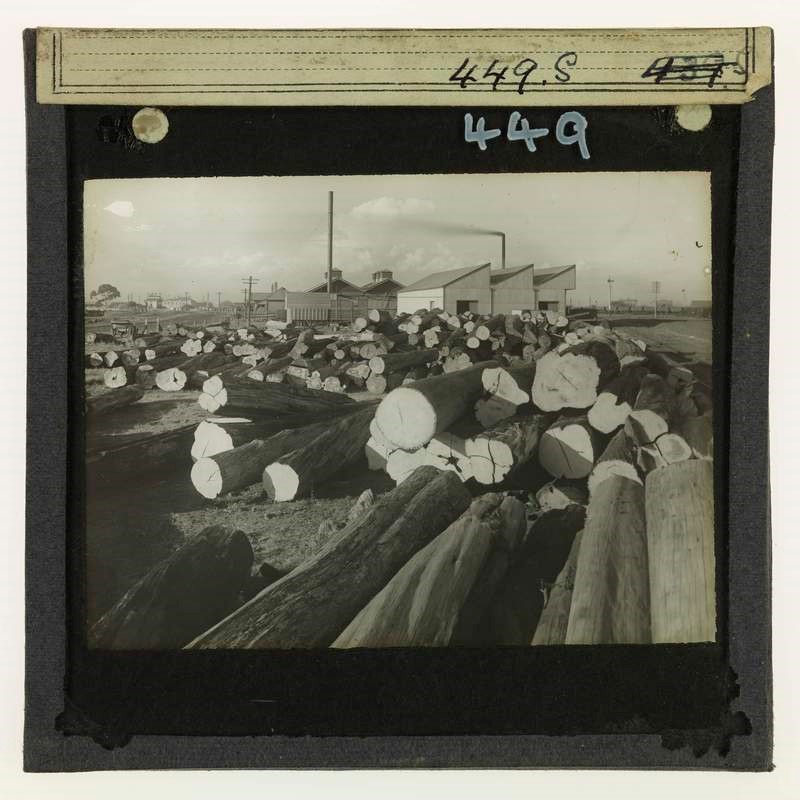
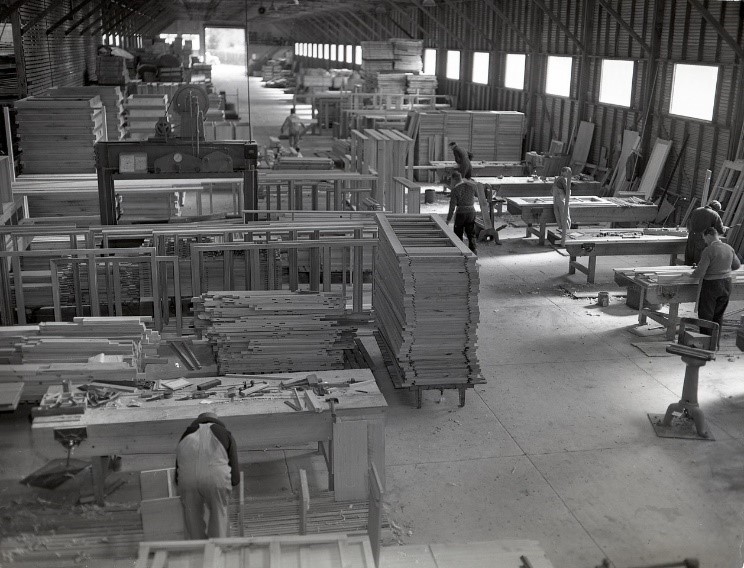
• 1911 – Opening of the Newport experimental seasoning workshop and kilns.
• 1911 – Victorian Government introduced the Matches Act in 1911 to limit the sale, distribution and use of these dangerous devices over the summer months.
• 1912 – First celebrations of Wattle Day.
• 1914 – 1918 World-War-One drew men away from the Forests Service including Albert Jacka who was perhaps Australia’s finest fighting soldier and has the honour of being the first Australian to be awarded the Victoria Cross in WW1, the highest decoration for gallantry in the face of the enemy.
• 1916 – Reginald Graham Lindsay was one of the first foresters to graduate from the School of Forestry in 1910 and was Killed–in-Action on New Year’s Eve.
• 1916 – Experimental pine plantations were established on a number of coastal sites including Anglesea, French Island, Korumburra and Frankston. The largest plot was some 2500 acres associated with the new McLeod Prison farm on French island. Nearly all these coastal plantings failed due to soil and site conditions.
• 1918 – Lollipop tree planted at Mt Beckworth west of Ballarat. It becomes a local landmark.
• 1918 – State Parliament legislation passed only weeks after the end of World War One to create an independent three-person Forests Commission Victoria (FCV).
• 1919 – Owen Jones appointed the first FCV Chairman. Jones was a thirty-two-year-old graduate Welsh forester trained at Oxford with practical forestry experience in Ceylon and served during World War One with the Royal Flying Corp.
• 1919 – A forestry fund allows the Commission to keep half its revenue giving it a degree of independence from Government.
• 1920 – First Premier’s Conference attempts to formulate a National Forest Policy.
• 1921 – Morris William Carver, a junior clerk with the department, was instructed to destroy all the old and inactive files that FCV inherited from all its predecessors. Before completing this task Morris took many of the files home, and lucky for us, started compiling his own summary of the history of the forest service in what became known as “the Carver Papers”.
• 1920s – Pons Asinorum carved near Cann River. It started a movement of mysterious wooden faces in Gippsland’s forests
• 1925 – Owen Jones, the first Chairmen of the Forests Commission, resigned suddenly in what is thought to be a dispute with the State Government over their plans to allow more clearing of State forests for farmland in the Otways.
• 1925 – William Code becomes FCV Chairman after Owen Jones moves to NZ.
• 1926 – Black Sunday bushfires. Florrie Hodges receives a bravery medal for saving her siblings.
• 1926 – The Wellsford eucalyptus distillation plant established by the FCV near Bendigo. The Principal of the Forestry School, Edwin Semmens conducts many of the early experiments.
• 1927 – William Code retires, and Alfred Vernon Galbraith becomes Chairman of the FCV until 1949.
• 1927 – Harman steam engine purchased for the East Tyers railway. It turned out to be a failure.
• 1927 – Three Norwegian foresters arrive to establish the assessment branch.
• 1928 – Edwin James Semmens appointed as Principal of the Victorian School of Forestry and stays until 1951.
• 1928 – Australia’s first aerial photography project covering 15000 acres of forest flown by the RAAF.
• 1928 – Purchase of the Climax steam engine from Philadelphia to run on the departmental Western Tyers railway near Erica.
• 1929 – Timber workers strike over wages and conditions lasted nearly 6 months
• 1929 – Public pressure was mounting to conserve forests from logging, so the one-square-mile Cumberland Memorial Scenic Reserve is dedicated to returned soldiers by the Minister and includes the Cora Lynn and Cumberland Falls as well as the “Sample Acre” of tall trees.
• 1929 – Russell Grimwade he made an endowment of £5000 to the then Commonwealth Forestry and Timber Bureau to create the Prize for forestry. The award was for a post-graduate course at the Imperial Forestry Institute at Oxford.
• 1930 – Bushfire Awareness Week opens in January with great flourish. An Australian first.
• 1930 – First flights of RAAF Wapiti aircraft from Pt Cook for fire spotting.
• 1930s – During the Great Depression, the Forests Commission employs thousands of men in Susso programs as well as 15 Boys Camps. Lots of infrastructure projects in rural Victoria.
• 1936 – Beginning of the Strzelecki reforestation program to restore the “Heartbreak Hills”. A program that ran quietly for the next 60 years.
• 1936 – A small, sheltered grove of Coast Redwoods was planted in the Aire Valley in the Otway Ranges.
• 1936 – Agreement reached with Australian Paper Manufactures (APM) to build a pulpwood plant at Maryvale under a Legislated Supply Agreement. It first takes pulpwood from State forests not long after the 1939 bushfires.
• 1937 – The Forests Commission and APM conduct Australia’s first firebombing trials. The US Forest Service commences trials around the same time. The two agencies begin a long-term collaboration that continues to this day.
• 1937 – Reg Torbet appointed as the first Fire Protection Officer.
• 1939 – 13 January, Black Friday bushfires where 2 million ha burnt, and 71 people died including four staff.
• 1939 – Charles Isaac Demby, FCV overseer awarded posthumous medal for bravery.
• 1939 – Scathing Stretton Royal Commission report into the bushfires sets a new direction. The Forests Commission gained additional funding and took responsibility for fire protection on all public land including State forests, unoccupied Crown Lands and National Parks plus a buffer extending one mile beyond their boundaries on to private land and its responsibilities grew in one leap from 2.4 million to 6.5 million hectares of crown land plus 1 million ha. private land.
• 1939 – Newly appointed Fire Protection Officer, Alf Lawrence, immediately set about the huge challenge of rebuilding a highly organised and motivated fire fighting force, introducing more RAAF fire spotting patrols, new firetowers and lookouts, modern vehicles, fire tankers and equipment such as powered pumps and crawler tractors, as well as a statewide radio. communications network, VL3AA.
• 1939 – 1945. World-War-Two presented many unique challenges including completing the timber salvage after the 1939 bushfires and producing firewood and charcoal.
• 1940 – Many staff left for military service with the 2/2 Forestry Company in the UK and New Guinea.
• 1940 – POWs and Italian Internes were used for forest labour to cut firewood and produce charcoal.
• 1941 – The secretive Volunteer Air Observers Corp formed to scour the coast for submarines and the forest for bushfires.
• 1941 – The Commission purchased the paddle steamer Hero to transport logs from Barmah to Echuca during the wartime firewood emergency. The Commission also rebuilt the historic Echuca wharf.
• 1941 – Kurth Kiln at Gembrook built to supply charcoal for motorists during the war.
• 1941 – Stringers Knob firetower built near Orbost
• 1941 – Murtoa Stick Shed built to store surplus wheat with hardwood poles salvaged after the 1939 bushfires.
• 1942 – Bill Ah Chow completes Moscow Villa on Bentley’s Plain.
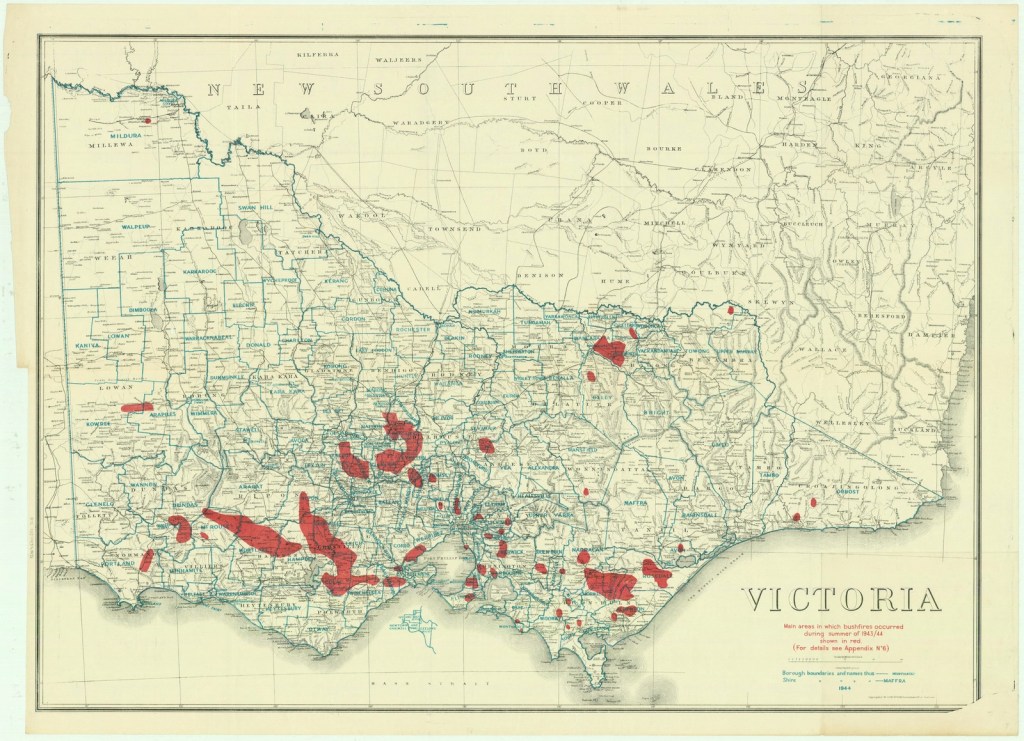
• 1943 – 1944. Bushfires across Victoria leave 51 people killed, 700 injured and 650 buildings destroyed.
• 1944 – CFA formed after a second Bushfire Inquiry by Judge Stretton which finally brought some clarity and stability to bushfire responsibilities in rural Victoria.
• 1944 – Save the Forests campaign begins, led by the FCV.
• 1945 – Radio VL3AA broadcasts across Victoria for the first time.
• 1945 – Cosstick Weir near Nowa Nowa built.
• 1945 – About 3.4 million hectares of forest were photographed by the RAAF and used to produce orthophoto maps.
• 1946 – Royal Commission into forest grazing and its impacts on soil erosion and the environment conducted by Judge LEB Stretton.
• 1946 – A new fleet of army surplus vehicles including Blitz trucks, White Scout cars and fire equipment begins to arrive. Staff morale improves.
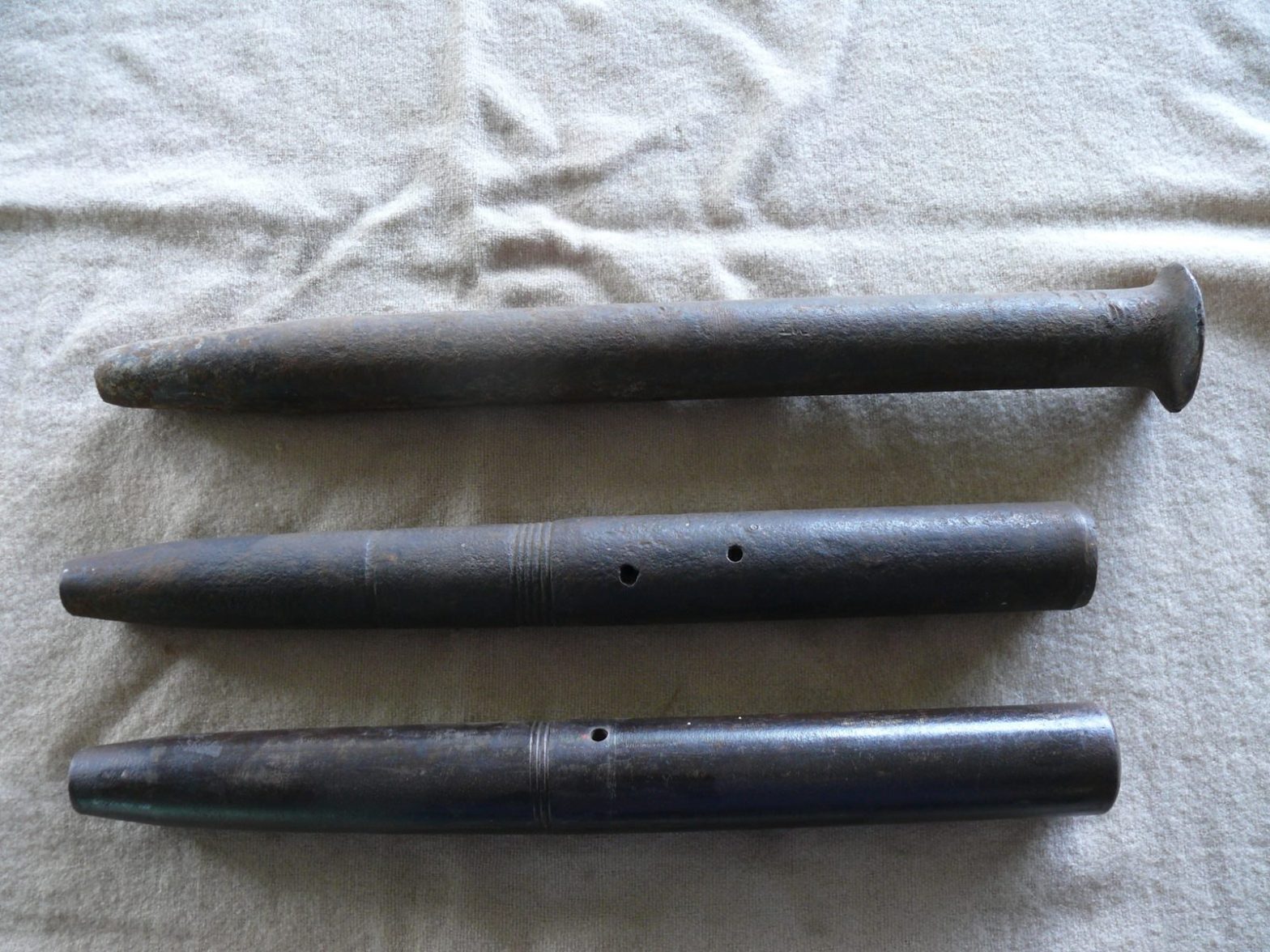
• 1946 – Firebombing trials recommence at Anglesea dropping 500 lb bomb casings to compare the performance of different RAAF aircraft.
• 1946 – Industrial land at North Altona purchased for a fire cache and workshop which became Aladdin’s Cave of Wonders.
• 1947 – Mt Cole State forest reopened to timber harvesting after having been closed in 1904. Stawell Timber Industries established with new licences.
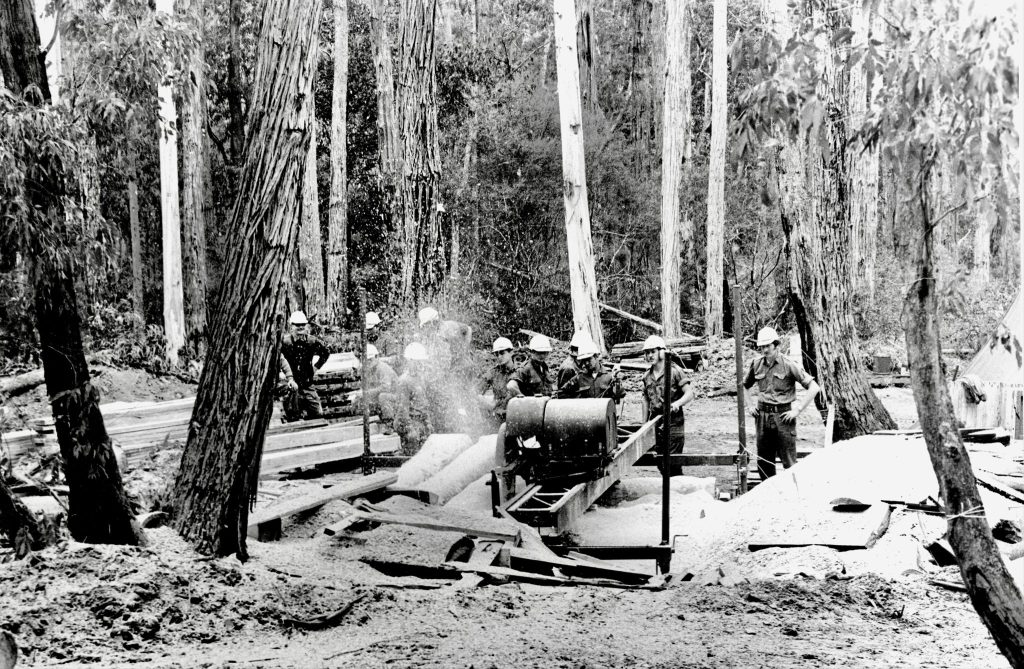
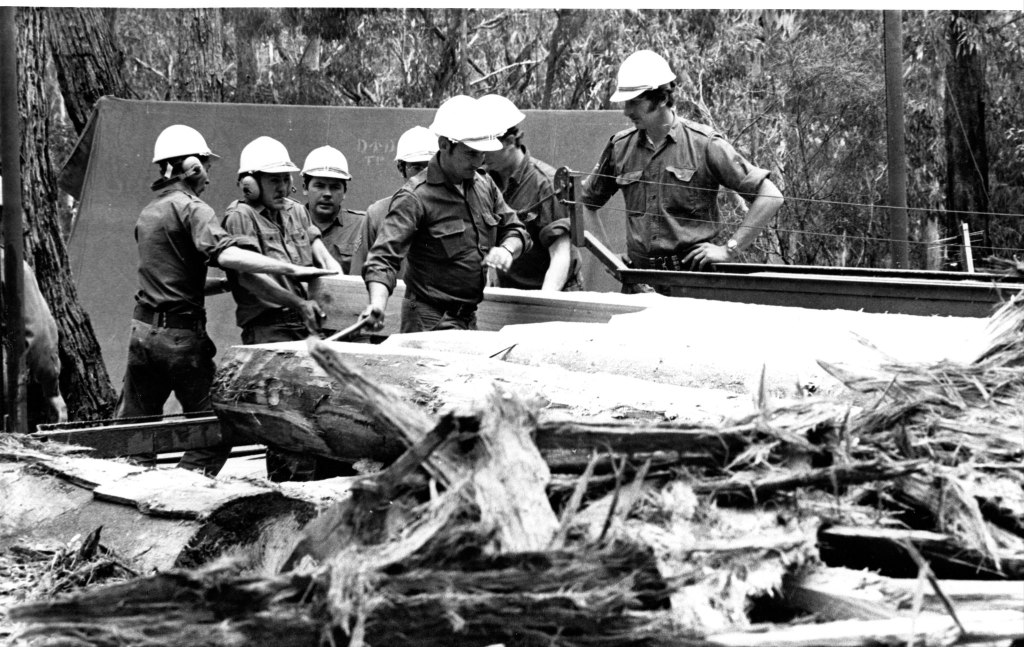
• 1947 – Forests Commission sponsored Australia’s only military sawmilling unit, the 91 Forestry Squadron (the Woodpeckers).
• 1947 – Cloud seeding experiments in NSW near Sydney were spectacular. It led to decades of attempts to increase rainfall.
• 1948 – Establishment of a Committee of Management for Mt Buller leads to the rapid expansion of the snow resort.
• 1948 – The forest road network has expanded to over 5000km.
• 1949 – Helicopter trials with a RAAF Dragonfly begin at Erica.
• 1949 – Chairman A. V. Galbraith dies suddenly after a 31-year career as Commissioner.
• 1949 – Alf Lawrence appointed as new Commissioner while Finton Gerraty becomes Chairman until he also dies suddenly in 1956.
• 1950 – Royalty Equation System introduced to sell forest produce and reduce wastage associated with “sawmiller selection”.
• 1950s – “The Grand Design” leads to the eastward movement of the timber industry in the wake of the 1939 timber salvage. Forest assessment and then road-building expand to meet Victoria’s post-war timber needs. Sawmills are prohibited from establishing in the forest and more powerful logging trucks lead to small “Timber Towns” like Heyfield, Orbost and Swifts Creek.
• 1951 – Edwin James Semmens (MBE) retires after a 23-year career as Principal of the Forestry School. William (Billo) Litster becomes Principal until 1969.
• 1951 – Major bushfires swept across Wilson Promontory and nearly destroyed the lighthouse. Fire protection and suppression responsibility for Wilsons Promontory National Park, which at the time was administered by a Committee of Management as “Occupied Crown Land” under the Lands Act, was complex and confused. The fire, in part, contributed towards new National Park legalisation in 1958.
• 1951 – David Parnaby, District Forester at Noorinbee, erects two bushfire totems out the front of the office. They were shifted to Cann River in the mid-1960s and become icons of East Gippsland. They collapsed in about 1998 and replicas were made in 2022.
• 1951 – Last trip of the Climax steam engine which was later obtained and restored by Puffing Billy Railways.
• 1952 – Lake Elizabeth near Forrest created by a massive landslip.
• 1952 – October – The Alexander Peacock gates were opened at the Victorian School of forestry
• 1956 – Forests Commission underwent a major restructure to create 56 Districts. It included amalgamating the plantations and hardwood operations, which had been separate entities up to that time. Things remained largely unchanged for the next three decades.
• 1956 – The National Parks Service is formed.
• 1956 – Newport seasoning workshop closes under a financial cloud.
• 1956 – Alf Lawrence becomes Chairman of the FCV after the sudden death of Finton Gerraty and stayed in the role until he retired in 1969.
• 1956 – Bob Seaton becomes Chief Fire Officer until 1961.
• 1957 – The Forests Commission sets aside Sherbrooke Forest Park as the first of many parks and reserves including Lerderderg Gorge, You Yangs, Mt Cole, Grampians and Mt Baw Baw.
• 1957 – The 1939 fire salvage operation draws to a close as the last of the timber stockpiled in dumps is recovered.
• 1958 – New Forests and CFA legislation was enacted.
• 1959 – A storm at the Sample Acre in the Cumberland Reserve destroyed 13 of its big trees. The site only narrowly escaped the earlier 1939 Black Friday bushfires.
• 1961 – Softwood plantation extension (PX) program expands by 2000ha/yr for the next 40 years.
• 1961 – Leadbeater’s Possum rediscovered at Cumberland Scenic Reserve after 50 years absence.
• 1961 – Ted Gill appointed Chief Fire officer until 1967.
• 1961 – The iconic Forests Commission Victoria (FCV) “two-tree” logo was designed by graphic artist, Alan Rawady.
• 1962 – RAAF reconnaissance flights end as private aircraft begin contracts with the Commission.
• 1962 – Dandenong Ranges bushfires and the commencement of the land buyback program that last more than 20 years.
• 1963 – Firebombing trials at Ballarat using a Ceres agricultural aircraft dropping bentonite slurry.
• 1963 – Tamboritha Road opens from Licola. Part of A.V. Galbraith ’s “Grand Design”.
• 1965 – Gippsland bushfires are the biggest test of the organisation since 1939.
• 1965 – In the wake of the Gippsland bushfires the Forests Commission engages a Bell 64G helicopter on a year-round contract in an Australian first. Rappel crew commences at Heyfield but lapses after two seasons.
• 1965 – A new chemical, Phoscheck retardant, dropped for the first time in Victoria.
• 1965 – CSIRO begins aerial ignition trials in Western Australia.
• 1965 – Snowy Range airfield built which is followed by Victoria Valley in the Grampians in 1967.
• 1966 – State sawmill at Erica closes after a period of operation of 45 years.
• 1967 – McArthur Forest Fire Danger Index (FFDI) meter first seen in operation.
• 1967 – Val Cleary becomes Chief Fire Officer for the next 13 years until he retires in 1980.
• 1967 – Melbourne was suffering a prolonged drought and the Bolte Government approved works for a 20 km diversion tunnel from the Thomson River and planning to begin for the construction of the massive Thomson Dam but with the catchment to remain as State forest.
• 1967 – Australia’s first operational firebombing mission flown by Ben Buckley and Bob Lansbury from Benambra.
• 1967 – Delayed Action Incendiary Devices (DAIDs) used for the first time. A few months later DAIDs were used to ignite a 20000 ha backburn in northeast Victoria in what is believed to be a world first.
• 1968 – Yarra Tributary Catchments set aside under a lease agreement between the Commission and the MMBW in 1968 to augment water Melbourne’s supplies.
• 1969 – Alf Lawrence (OBE) retires on his 65th birthday after a career spanning nearly 50 years since entering the Victorian School of Forestry. His significant roles included Chief Fire Officer after the 1939 bushfires and Commissioner for over 20 years.
• 1969 – the Victorian Railways demonstrated their firefighting train at Bayswater railway station. The innovation by the railways is believed to have stemmed from the successful use of train during the 1965 Gippsland bushfires to transport water.
• 1969 – Alan Eddy appointed Principal of the Victorian School of Forestry.
• 1969 – Frank Moulds becomes Chairman of the FCV.
• 1970/71 – Forest Environment and Recreation (FEAR) Branch formed to bring greater focus to multiple use of forests. Other State forest services follow the idea.
• 1971 – Land Conservation Council (LCC) formed after the Little Desert controversy in the late 1960s. It leads to a significant expansion of the National Parks estate over the next 30 years aligned with changing community values.
• 1971 – World Forestry Day proclaimed by the United Nations for 21 March, on the autumnal equinox. Celebrated for many years by Department staff. Now known as the International Day of Forests
• 1973 – “The Fight for the Forests” published by the Australian National University.
• 1974 – “The Alps at the Crossroads” published.
• 1974 – Metrication of the forest and timber industry. Cubic meters replace chords and cunits.
• 1976 – First female students enter the Forestry School at Creswick.
• 1977 – Forest tours began at Lakes Entrance
• 1977 – In February, a bushfire swept through a large part of the VSF demonstration forest at Creswick and destroyed many fine old stands of timber established in the 1880s including a plot of ponderosa pine that had been planted by John La Gerche for sailing ship masts.
• 1978 – Lighting strikes across the eastern ranges on 15 January 1978. Many were controlled quickly but eight developed into major fires and Stage 2 of the State Disaster Plan was enacted so large RAAF Iroquois helicopters came to help.
• 1978 – Crash of a helicopter at Bright with the death of two forest officers, Peter Collier and Stan Gillett together with their pilot John Byrnes led to sweeping changes to aerial ignition techniques.
• 1978 – Frank Moulds retires, and Alan Threader becomes Chairman of the FCV.
• 1978 – Jim Edgar becomes Principal of the Victorian School of Forestry during the transition of the campus being run by Melbourne University.
• 1979 – Forests Commission Retired Personnel Association (FCRPA) formed.
• 1979/80 – Major bushfires in East Gippsland during October, marking an early start to a major fire season
• 1980 – The Commission employed some 300 foresters plus a further 500 technical and administrative staff and over 1000 works crew spread across country Victoria in 48 districts and 7 divisional offices.
• 1980 – Last three-year diploma students graduate from the Victorian School of Forestry. This marks the end of the fully funded scholarships from the Forests Commission as the campus transitions to the University of Melbourne.
• 1980 – Stan Duncan becomes Chief Fire officer until 1984.
• 1981 – Bob Orr appointed Principal of VSF.
• 1981 – Largest fuel reduction burning program on record of 477,000 ha.
• 1982 – After an 18-year absence helicopter rappel teams recommence.
• 1982 – MAFFS borrowed from the US Forest Service to test under Victorian conditions.
• 1982 – The Swashway jetty on Snake Island built by 91 Forestry Squadron (the Woodpeckers)
• 1982 – NSCA begins trials of helicopter bellytanks.
• 1982 – Labor wins the State election and John Cain became Premier after 27 unbroken years of Liberal Government. It heralded many changes to forests and land administration.
• 1983 – Greendale fire where two Forests Commission crew, Des Collins and Alan Lynch were killed when their bulldozer was overrun by fire.
• 1983 – Victoria was in the grip of drought when Melbourne was smothered by a giant dust storm blown in from the mallee deserts during the afternoon of Tuesday 8 February.
• 1983 – Ash Wednesday bushfires including major campaign fire at Cann River. The Country Fire Authority (CFA) attended nearly 3,200 fires over the summer, and 22 Total Fire Ban Days (TFB) were declared. The Forests Commission attended 823 bushfires within their legislated Fire Protected Area (FPA), having a total area of 486,030 ha, which was well above the eleven-year average of 141,000 ha.
• 1983 – It was an unusually long fire season for the Commission which began in August 1982 with a 3,400 ha fire in the Little Desert, and concluded nine months later in April 1983 with a 6,400 ha bushfire in the Grampians.
• 1983 – Alan Threader retires, and Ron Grose becomes Chairman of the Commission during the transition period to CFL.
• 1983 – On 4 May the Minister for Forests, Rod Mackenzie, announced in Parliament the State Government’s intention to “shake up” the forest service. This ultimately led to the formation of CFL.
• 1983 – 1985 – Amalgamation of the Forests Commission, Crown Lands and Survey Department, National Park Service, Soil Conservation Authority and Fisheries and Wildlife Service into the single Department of Conservation Forest and Lands (CFL). Professor Tony Eddison as the new Director-General with 18 Regional Managers.
• 1983 – The Forestry Fund which had been in operation since 1918 and given the Forests Commission some autonomy to retain revenue and invest is closed by new State Treasurer Rob Jolly.
• 1983 – The Australian Conservation Foundation declares its policy that “wood production should be transferred from native forests to plantations established outside the current forest estate”.
• 1983 – in December – Board of Inquiry, led by Professor Ian Ferguson, into Victoria’s Timber Industry.
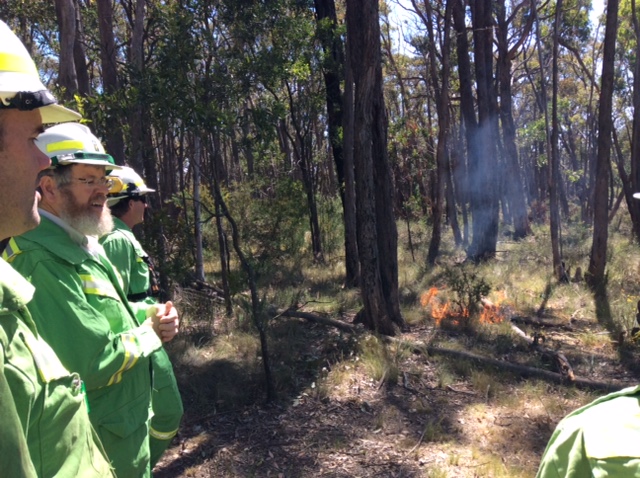
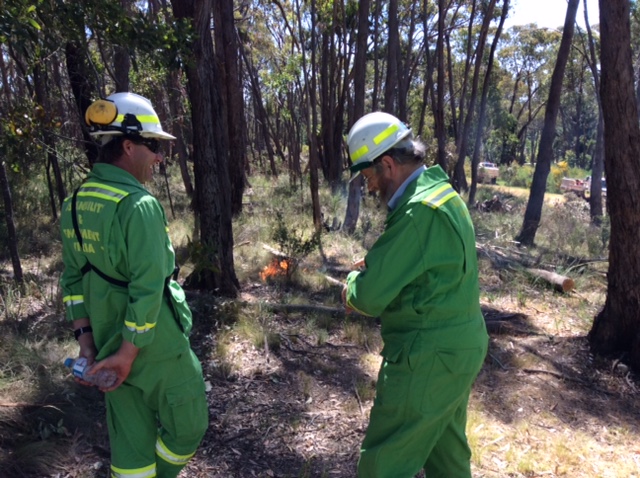
• 1984 – New green fire safety overalls issued (Kermit suits). The unique colour had been chosen by FCV Chairman Alan Threader and was patented to the Department.
• 1984 – Grampians National Park declared.
• 1984 – Athol Hodgson becomes Chief Fire Officer after his role as FCV Commissioner is abolished during the CFL restructure.
• 1984 –the first of the logging protests on the Errinundra Plateau began in January. They follow the success of “No Dams” campaign in Tasmania.
• 1985 – 111 lighting strikes in 24 hours cause widespread fires across the alpine region. The largest use of firefighting aircraft in Australia at Mt Buffalo.
• 1985 – Timber Industry Inquiry report by Professor Ian Ferguson from the University of Melbourne which led to Timber Industry Strategy (TIS) in 1987.
• 1986 – Timber Industry Strategy (TIS) sets new directions with 15-year sawlog licences, regional sustainable yield, Forest Management Area Plans, the Code of Forest Practice, Harvesting Prescriptions, roading levy and Forest Operator Licencing. Also the Silvicultural System Program (SSP) trials and Statewide Forest Inventory (SFI) to map and measure timber resources.
• 1987 – Clearing of native forest for softwood plantations ceases.
• 1987 – State Conservation Strategy released
• 1987 – Barry Johnston becomes Chief Fire Officer on the retirement of Athol Hodgson.
• 1988 – Australian Fire Service Medals (AFSM were first introduced during the Bicentenary.
• 1989 – National Safety Council of Australia (NSCA) collapses which forces the Department to make alternative arrangements for aircraft. The fleet of aircraft steadily expand.
• 1989 – The Alpine National Park, Victoria’s biggest is proclaimed.
• 1990 – Rod Incoll appointed Chief Fire Officer.
• 1990 – The Office of Environment included in Dept
• 1990 – Department of Conservation and Environment (DCE)
• 1991 – Australasian Inter-Service Incident Management System (AIIMS) adopted. The Department had earlier modified the United States system NIIMS in 1984.
• 1992 – National Forest Policy Statement signed by all state and federal governments.
• 1992 – Department of Conservation and Natural Resources (DCNR)
• 1992 – Water Resources included in Dept
• 1993 – Victorian Plantations Corporation (VPC) split from the Department with a 167,000-ha estate.
• 1994 – Catchment Management Authorities (CMAs) formed which took many of the previous functions of the Department including Landcare and soil conservation.
• 1994 – The Toolangi Forest Discovery Centre opened.
• 1995 – Blockade by logging trucks of Parliament House in Canberra leads to Regional Forest Agreements (RFA).
• 1996 – Department of Natural Resources and Environment (NRE).
• 1996 – Parks Victoria splits from the Department and joins with Melbourne Parks and Waterways to become a separate entity.
• 1996 – Surveyor-General office returns and corporate services along with staff from the agriculture department.
• 1996 – Gary Morgan appointed Chief Fire Officer
• 1996/97 – the Australasian Fire Authorities Council (AFAC) funded trials of two Canadair CL-215 amphibious Super Scoopers which were based in the Otways.
• 1997 – Erikson Skycrane (Elvis) deployed to Victoria for the first time.
• 1998 – Hancock Victorian Plantations (HVP) purchase all Government plantation assets and rights except the land base which remains publicly owned.
• 1998 – Linton Bushfire. Five CFA volunteers from the Geelong West fire brigade were killed. A long running coronial enquiry followed led to many changes to the CFA including “minimum skills”.
• 2000s – The tempo, size and severity of bushfire incidents in southern Australia intensified.
• 2000 – First international fire deployments to the US with reciprocal arrangements made possible because of the earlier adoption of AIIMS.
• 2000 – The US military switches off selective availability and GPS becomes a ubiquitous global phenomenon.
• 2002 – Department of Primary Industries (DPI) for about 6 months.
• 2002 – Department of Sustainability and Environment (DSE)
• 2002 – State Government initiates the “Our Forests Our Future” program with a large buy-out of timber licences and the cessation of timber harvesting in Western Victoria.
• 2002 – Escape of a planned burn at Cobaw.
• 2002 – 2003. Alpine bushfires. These fires were followed by a number of inquiries.
• 2003 – Cheryl Leanne Barber-Fankhauser killed in a flash flood in the Buckland Valley.
• 2003 – Forest Heritage Museum opened at Beechworth.
• 2004 – VicForests formed with an independent Board.
• 2004 – A decision of the Australian High Court in 1999 overturned the long-standing legal protection of “nonfeasance” for road mangers like the VicRoads, local councils, and Department. It led to the introduction of the Victorian Roads Management Act and forced a major review and rationalisation of the entire 50,000 km road and track network on State forest and Parks.
• 2005 – Ewan Waller appointed as Chief Fire Officer.
• 2006 – The South Face Road near Erica, which began in 1986, was finally completed as probably the Department’s last major road construction project.
• 2006 – 2007 Great Divide Complex of bushfires lasted for 69 days and burnt 1.1 M ha.
• 2009 – Black Saturday Bushfires and the subsequent Royal Commission led to the formation of Emergency Management Victoria.
• 2009 – Revised Victoria’s Timber Industry Strategy (after the 1986 version)
• 2010 – Craig Lapsley appointed as Victoria’s first and only Fire Services Commissioner.
• 2010 – The last Barmah Muster.
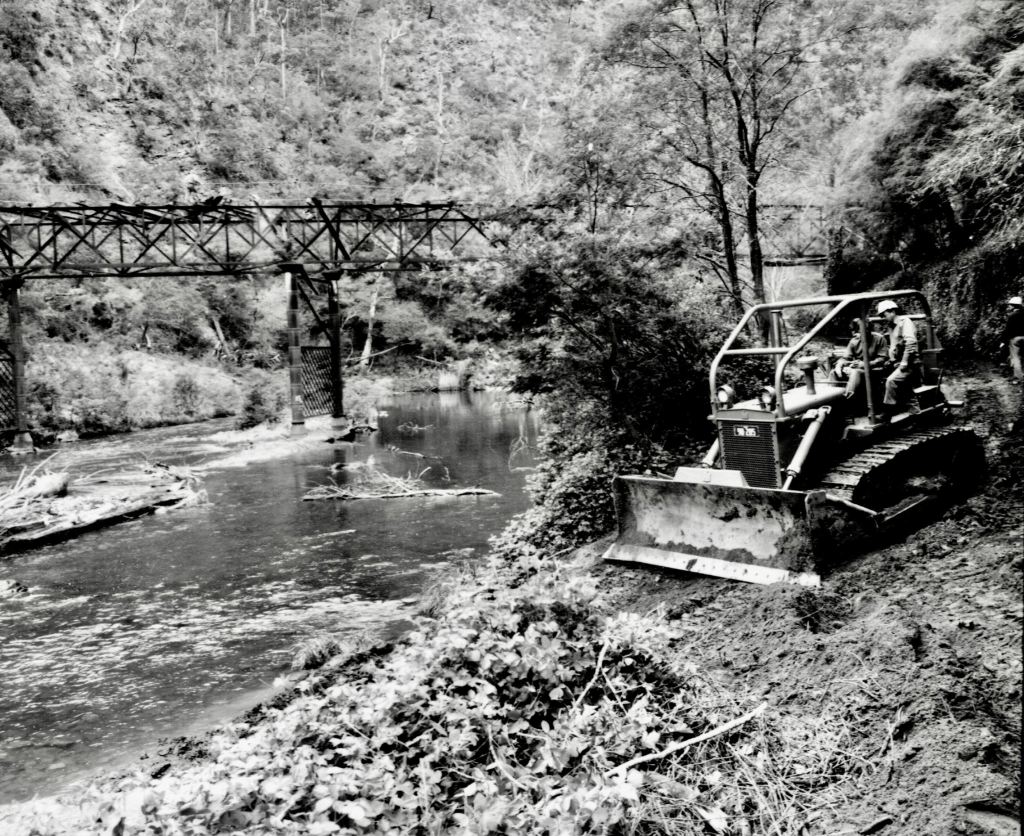
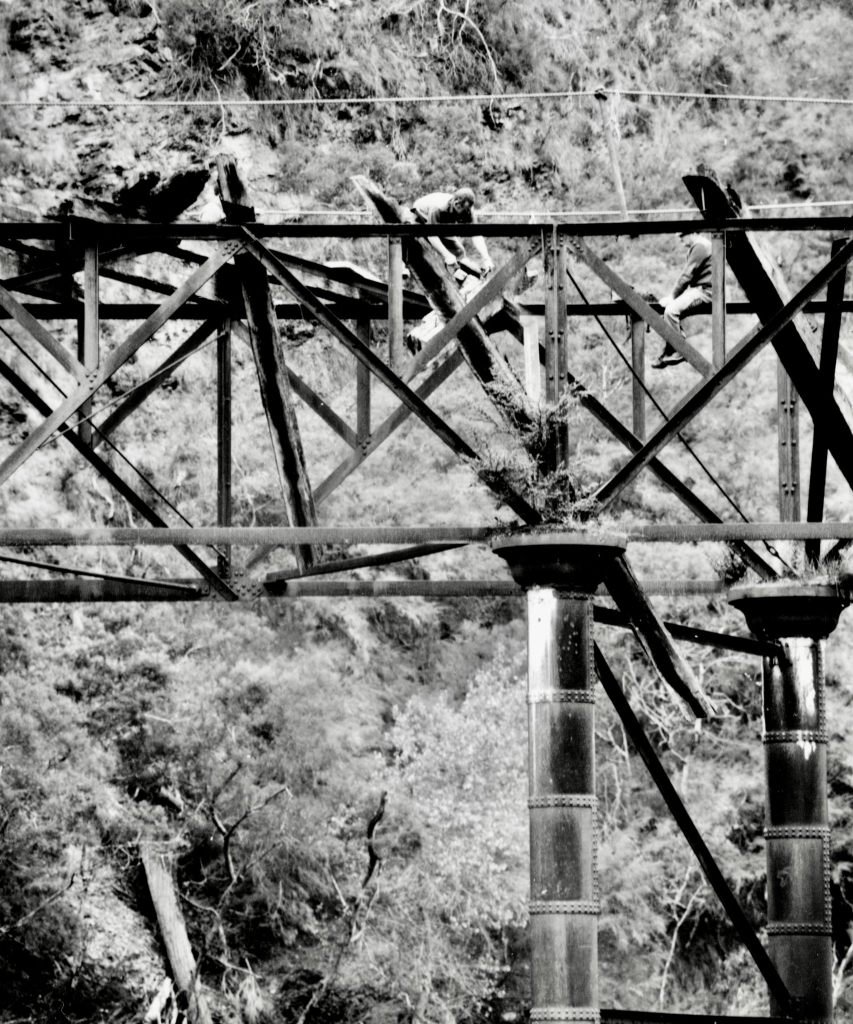
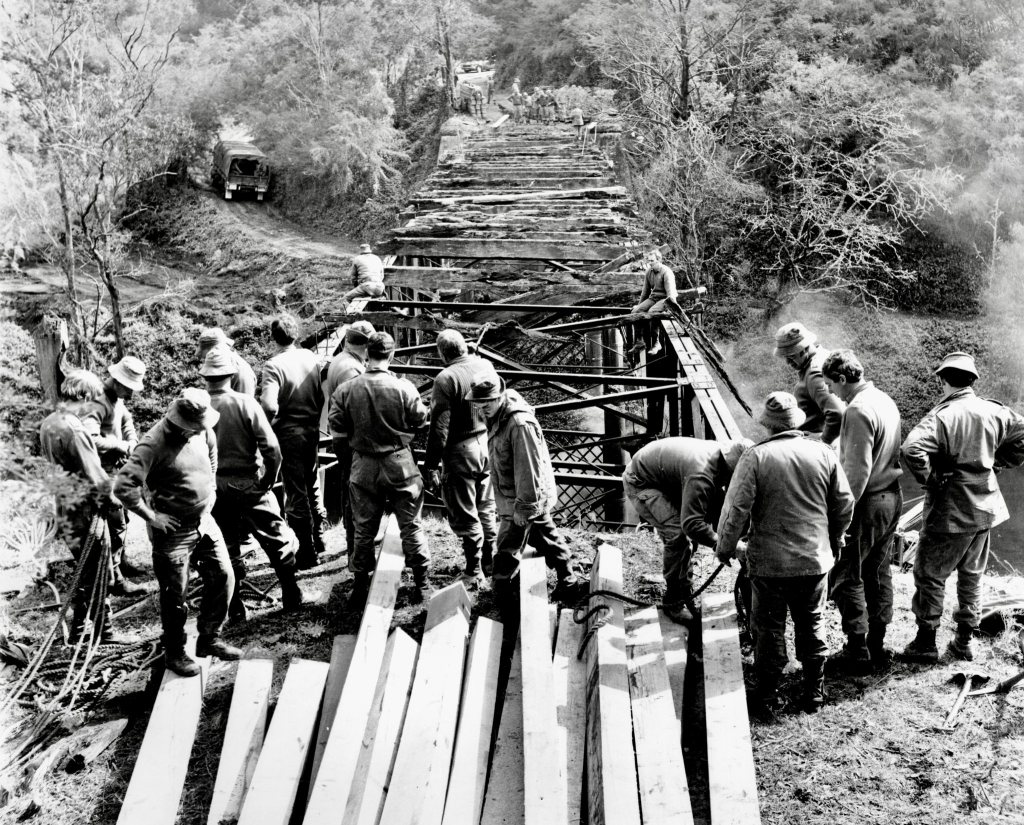
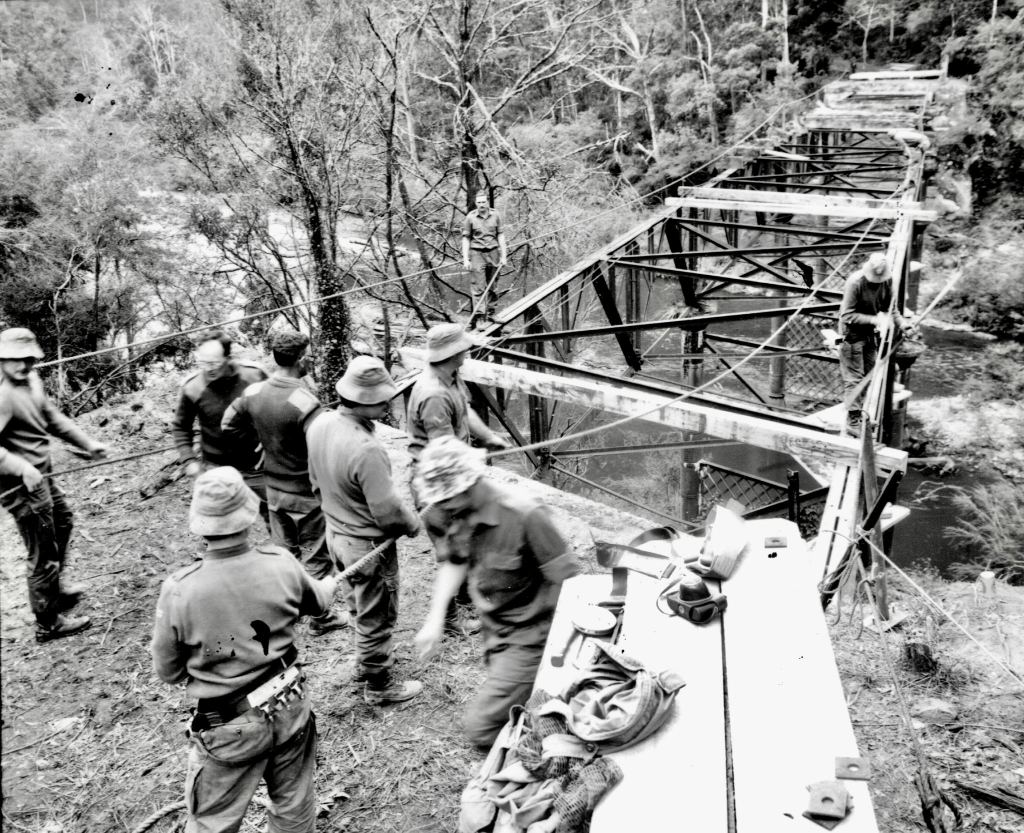
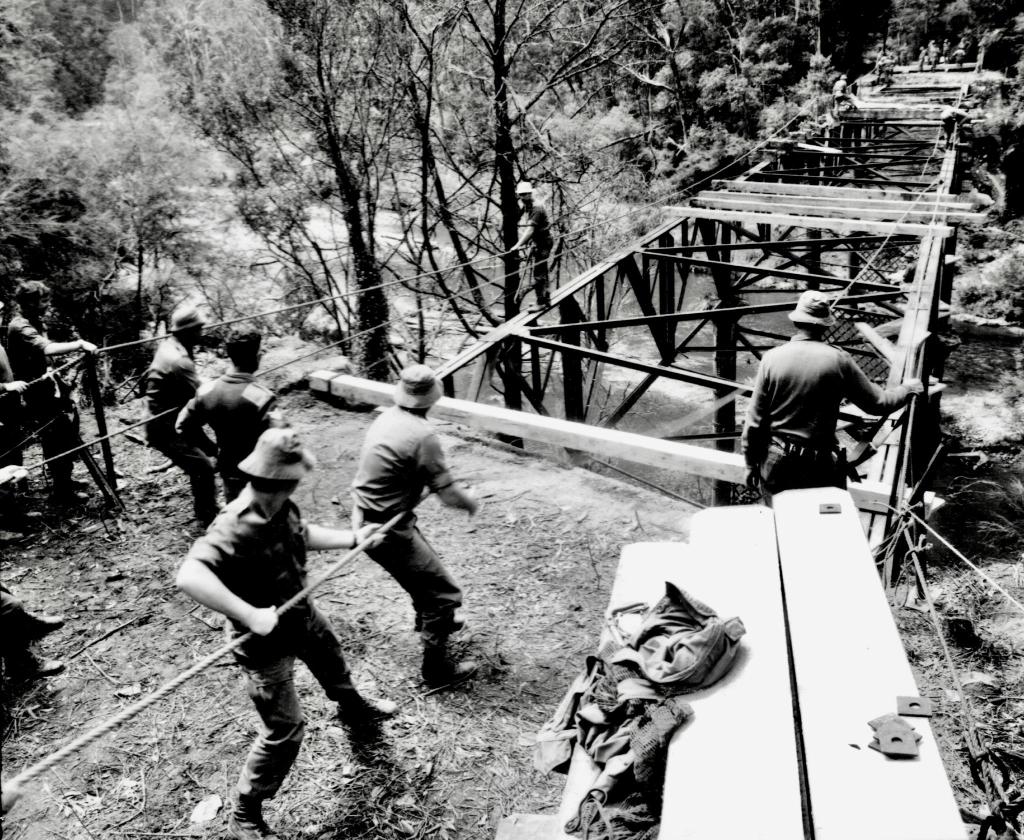
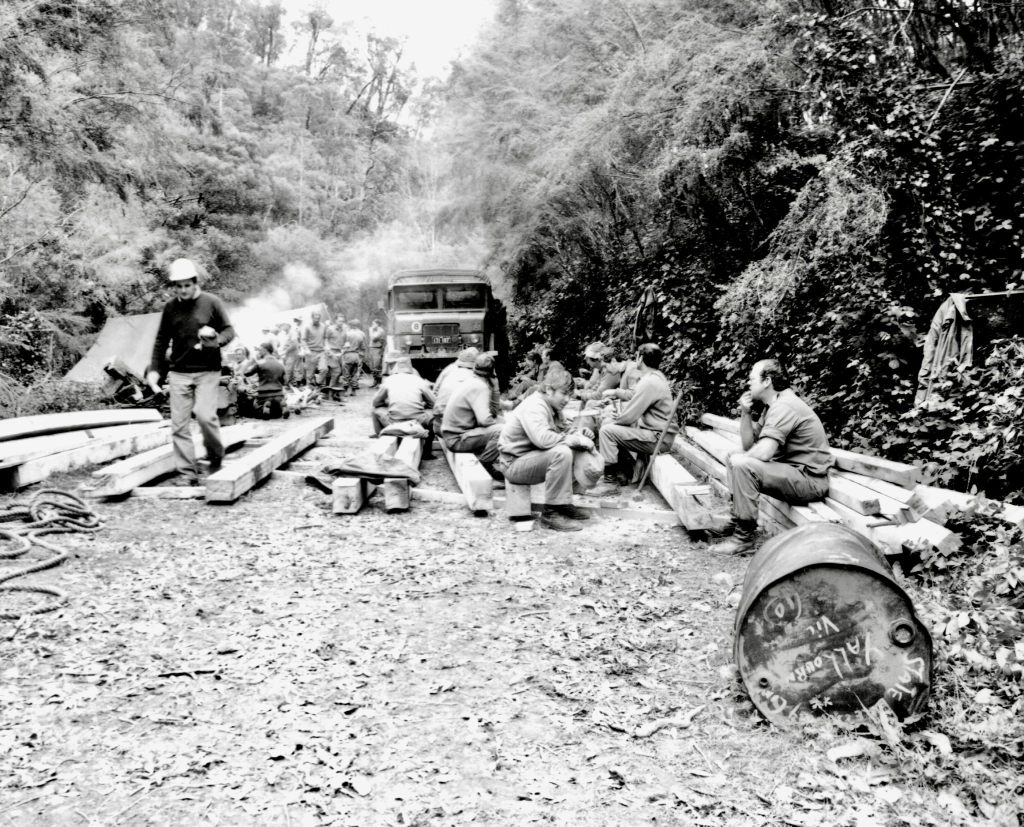
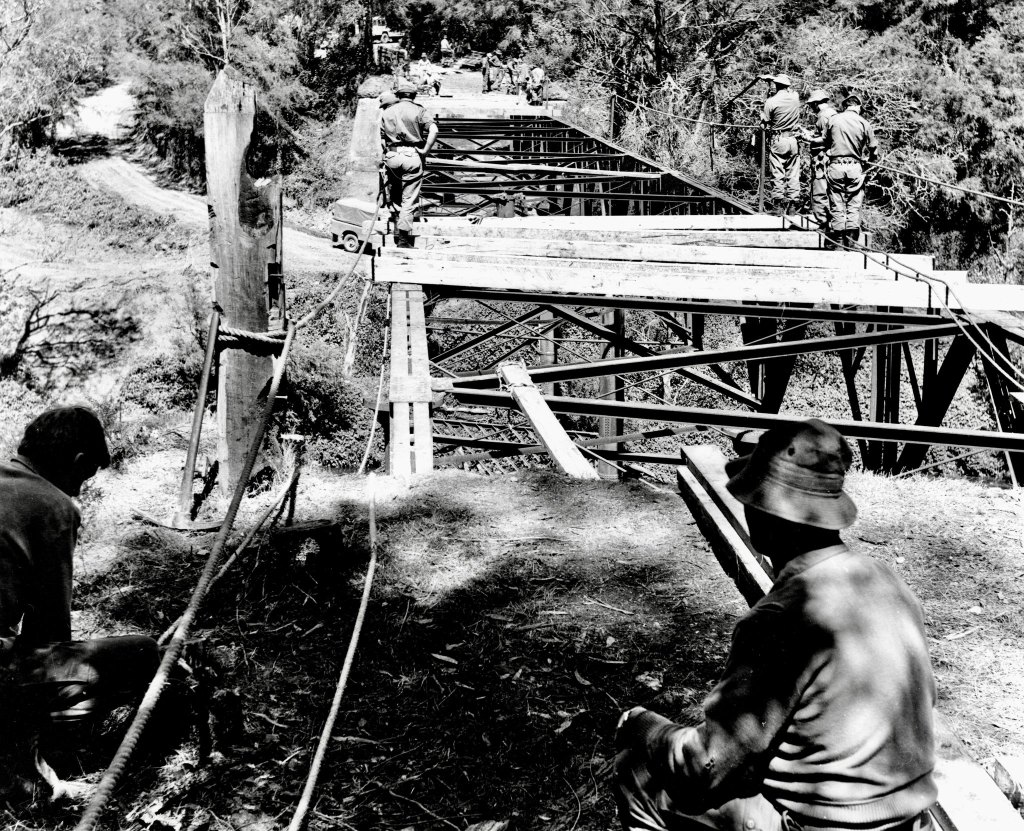
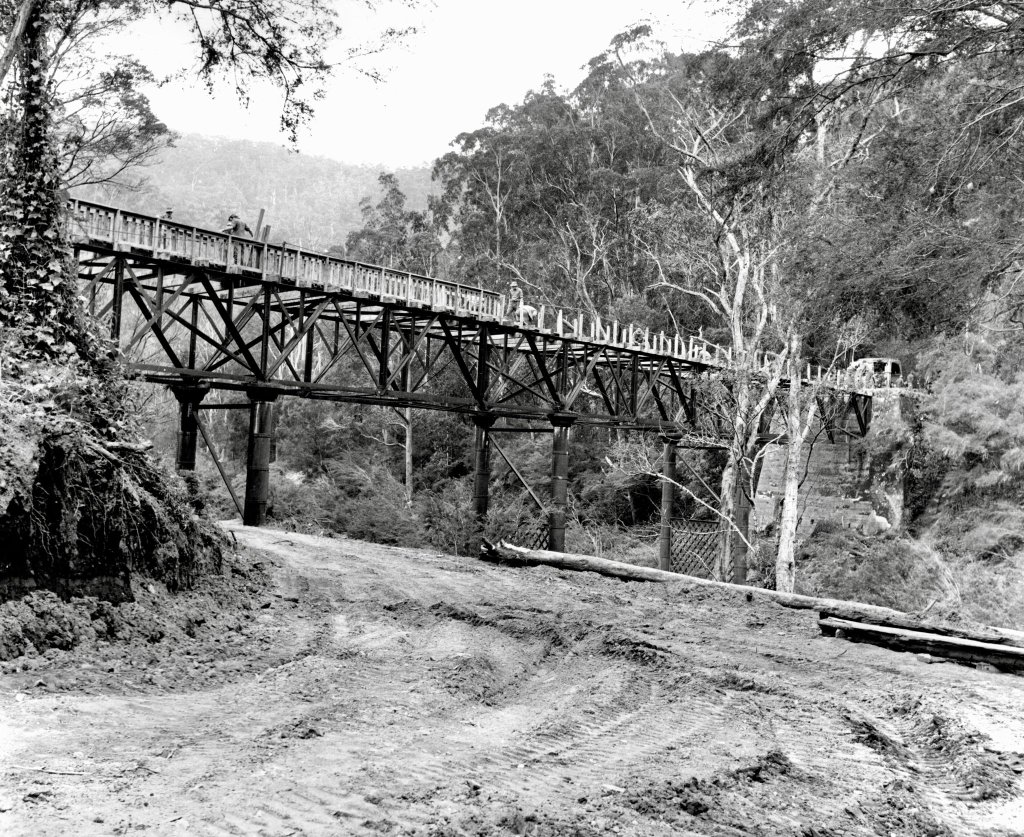
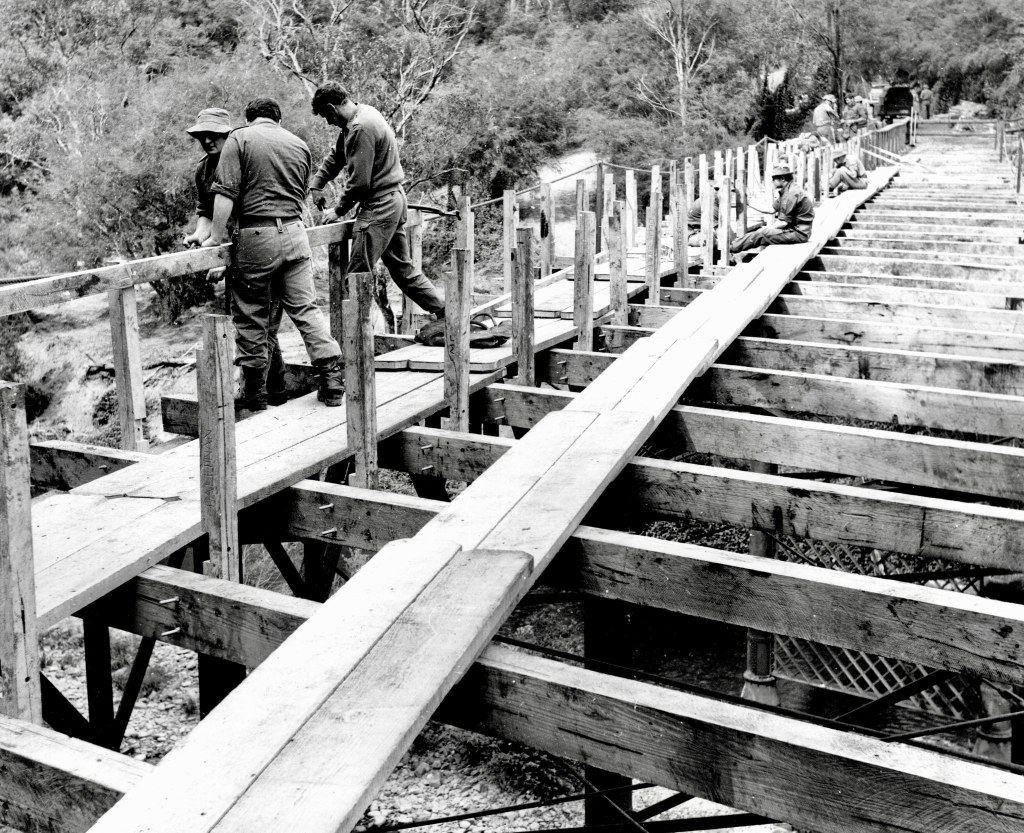
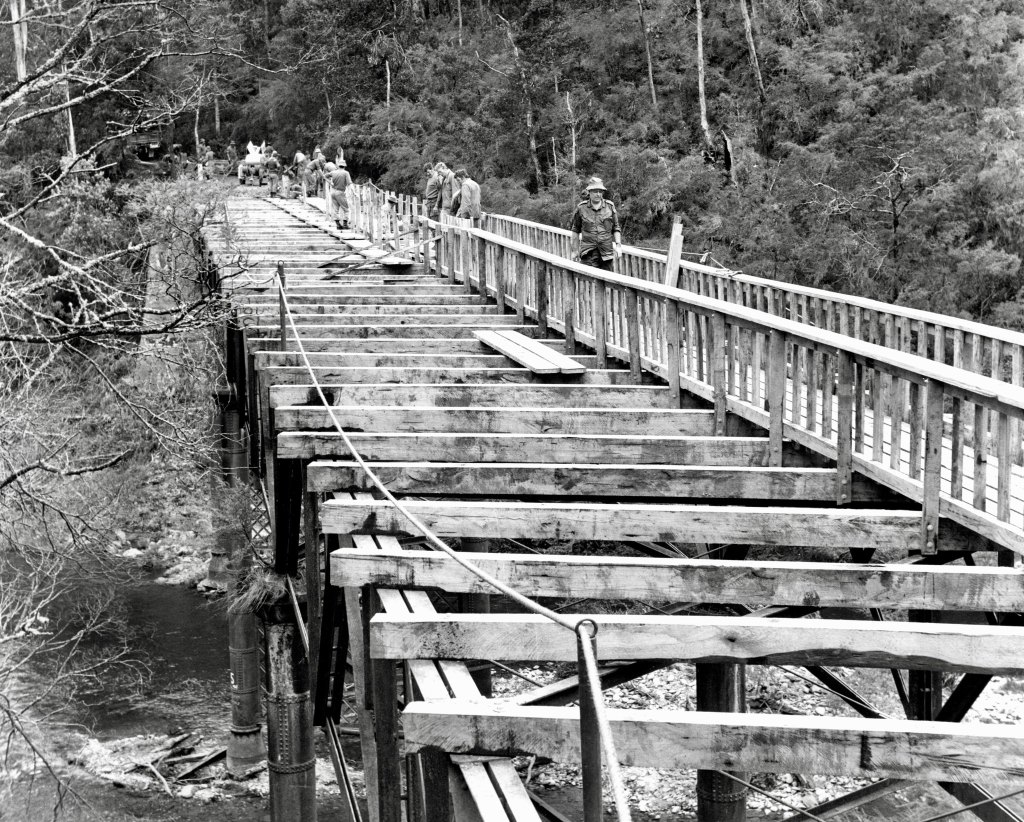
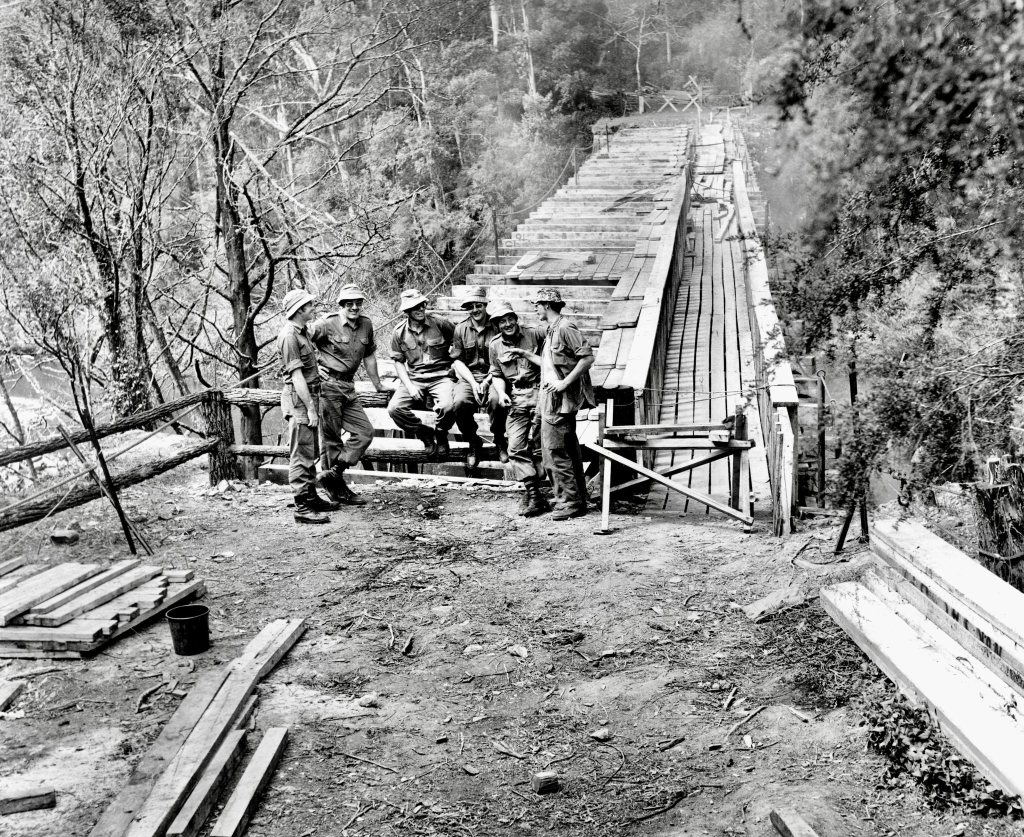
• 2010 – Major injection of $60M for the replacement of hundreds of wooden bridges on strategic bushfire roads.
• 2010 – New State forest signs policy developed.
• 2012 – Department of Environment and Primary Industries (DEPI).
• 2012 – Alan Goodwin becomes Chief Fire Officer.
• 2013 – Steven Kadar and Katie Peters killed when a tree falls on their vehicle during a bushfire in the Buckland Valley on 13 February.
• 2014 – Hazelwood Coalmine fire burns for 45 days and costs a staggering $100m to extinguish. The snowy complex of bush fires in East Gippsland burn for two months.
• 2014 – Emergency Management Victoria (EMV) formed with Craig Lapsley as EM Commissioner.
• 2014 – Department of Environment, Land, Water and Planning (DELWP) formed.
• 2015 – Escape of a planned burn at Lancefield and subsequent review leads to the formation of Forest Fire Management Victoria (FFMV) within DELWP.
• 2016 – Stephanie Rotorangi becomes Chief Fire Officer.
• 2018 – Chris Hardman appointed Chief Fire Officer.
• 2018 – Craig Lapsley stepped down as Victoria’s Emergency Management Commissioner and was succeeded by Andrew Crisp, from Victoria Police.
• 2019 – Night firebombing becomes operational at the Rosedale fire.
• 2019 – The Victorian State Government flags its intention to end the native forest timber industry by 2030.
• 2020 – “Black Summer” bushfires across the eastern seaboard. Three separate state and federal government inquiries. Community calls for larger sovereign firebombing fleet, more planned burning and action on climate change.
• 2020 – Firefighter Bill Slade was killed when hit by a falling tree near Anglers Rest on 11 January
• 2020 – Reorganisation and merger of the Melbourne Fire Brigade (MFB) and Country Fire Authority (CFA) with the subsequent the formation of Fire Rescue Victoria (FRV). The CFA remains as a volunteer only fire service in rural Victoria.
• 2020 – DELWP erects honour boards at HO and in regions to commemorate staff who died in the line of duty.
• 2020/21 – Coronavirus sweeps the globe and affects everything people normally do. Panic buying, working from home, travel restrictions and teleconferences become the norm.
• 2021 – Major storms sweep the state and create extensive damage in the Dandenongs, the wombat forest and other places.
• 2021 – A new memorial in Melbourne’s Treasury Gardens was opened in September to honour emergency services personnel who lost their lives while serving their communities.
• 2022 – Following the November state election DELWP was reorganised and became the Department of Energy, Environment and Climate Action (DEECA), with Minister MP Lily D’Ambrosio.
• 2022 – The Forests Commission Retired Personnel Association (FCRPA) museum at Beechworth threatened with closure after the Shire of Indigo advise that they want the building for other purposes. The museum was opened in 2003.
• 2023 – Maryvale paper mill announces the closure of its white paper machine resulting in major job loss. The company cites problems with the supply of timber of State forests.
• 2023 – In the 40 years since the end of the Forest Commission and the formation of CFL, the department experienced no less than 7 State Premiers (both Liberal and Labor), 15 Government Ministers, 13 Director-Generals / Secretaries and 9 Chief Fire Officers, all of whom wrought their own changes which added to the organisational precariousness.
• 2023 – Major fires in Canada see many staff deployed from Australia. Made possible by the adoption of AIIMS.
• 2023 – In a shock announcement, the Labor Premier, Daniel Andrews, brought forward the proposed closure of the timber industry from 2030 to January 2024. He cited problems with court proceedings by environmental groups which have been blocking harvesting for some time. The decision created an uncertain future for hardwood timber industry and even minor produce like firewood.
• 2023 – Responsibilities for managing Victoria’s 7.1 million ha State forest and Parks estate are now split between the Department of Energy, Environment and Climate Action (DEECA), FFMVic, Parks Victoria, Alpine Resorts Commission, Melbourne Water, and the privately-owned Hancock Victorian Plantations.