The Army Reserve was always willing to help the Forests Commission and rural municipalities blow stuff up.
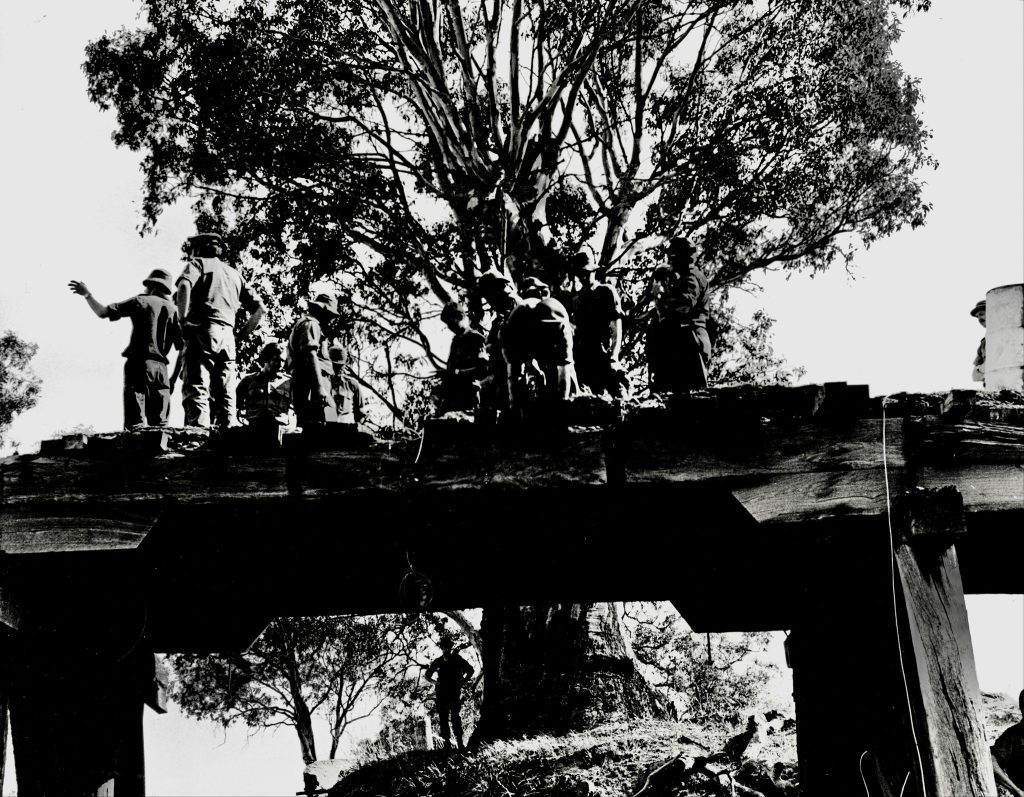
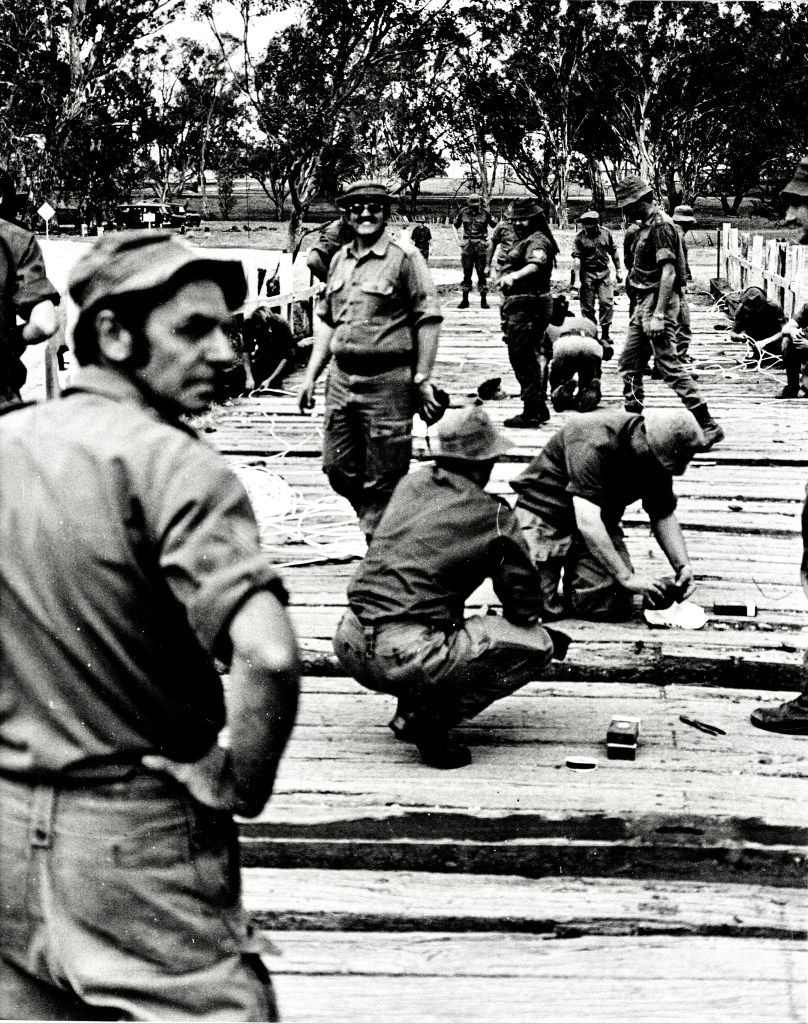
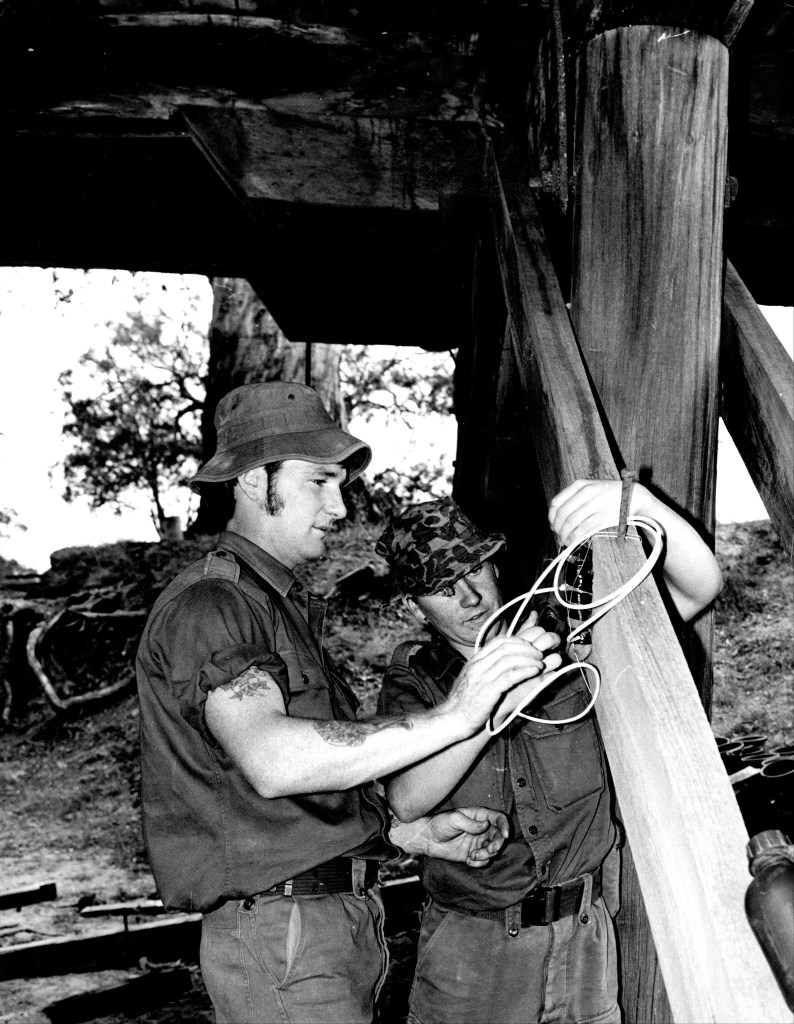
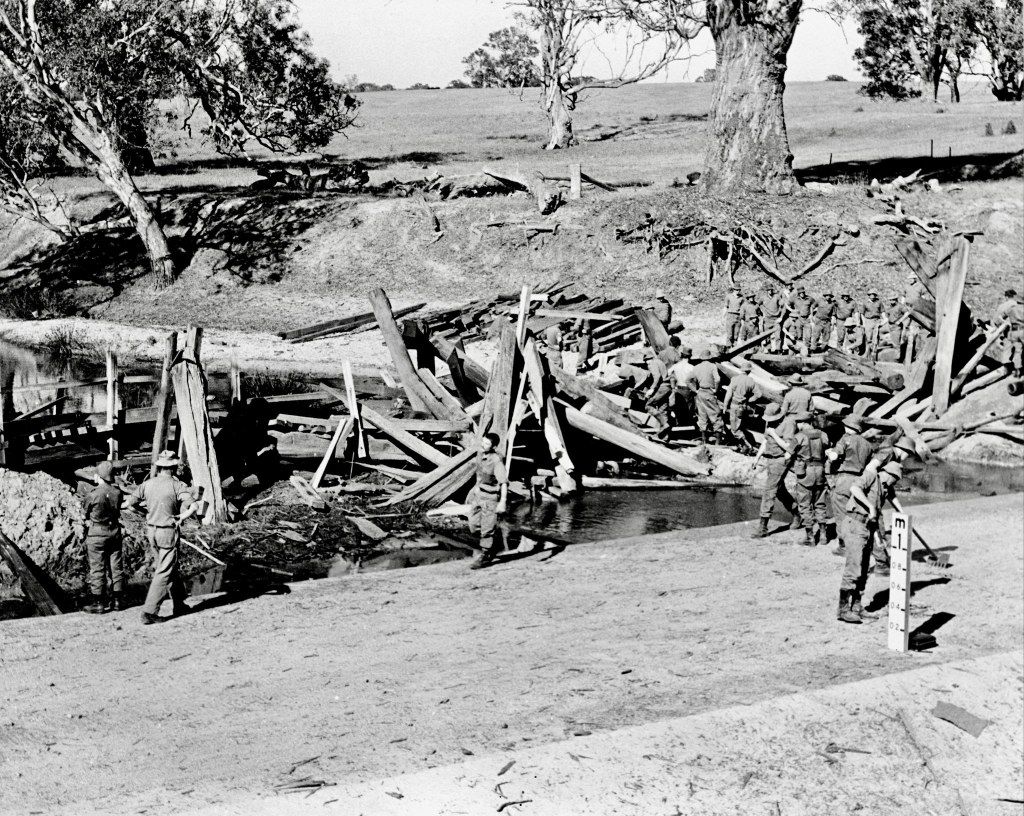
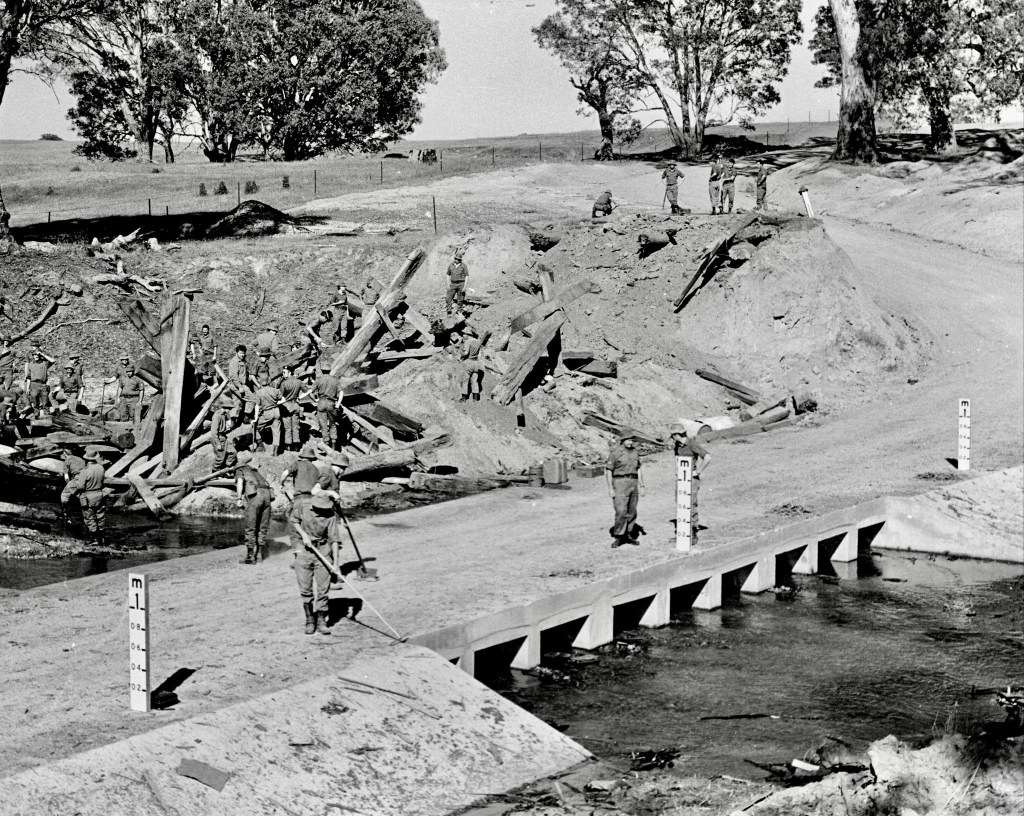
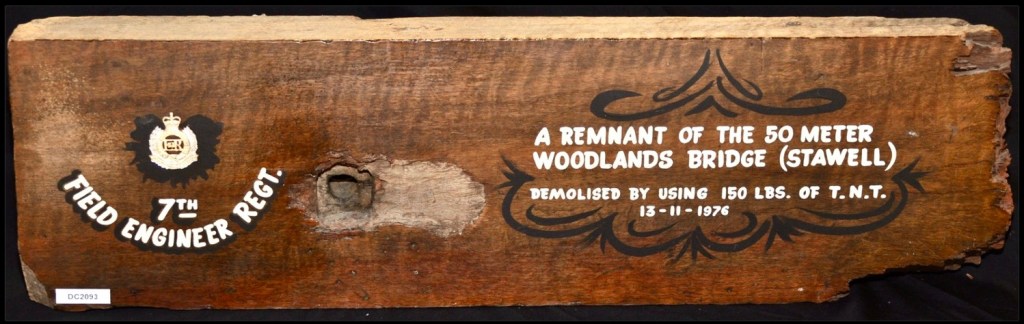
In November 1976, sappers in the 7 Field Engineers Regiment (7FER) from Ringwood, plus some other engineers from Gippsland, helped the Horsham Shire remove an old wooden bridge on Bulgana Road, east of Stawell.
About 63 kg of plastic explosives, 11 kg of TNT, a bag of ammonium nitrate, 60 detonators and primers, plus several hundred metres of detonating fuse was enough to shatter a 50 m long timber bridge on the Wimmera River.
The Forests Commission Victoria (FCV) had a large and active engineering branch for making stuff… as well as breaking stuff…
Most overseers, as well as some foresters, were trained in the use of explosives to “blow stuff up” such as removing stumps and rocks from roads. Districts usually had a small powder magazine tucked away in the bush for storage of gelignite and detonators.
However, the legendary FCV demolitions expert, Jock Paxton, was on-hand for large or more complex works like road construction and quarry blasts.
In January 1977, a minor demolition project was arranged to remove the silt from a small fire dam on Clematis Creek in Sherbrooke Forest, which just happened to be adjacent to the main Belgrave-Kallista Tourist Road.
In his thick Scottish accent Jock directed proceedings from the roadside, while the difficult and dirty work of wading through the mud, digging holes and loading the charges fell to a couple of forestry school students, Geoff Pike and Megan Varty, working over their summer vacation.
Blast holes, about 3 inches in diameter and about 3 feet deep, were dug on a grid pattern into the gooey mud. The holes were filled with granular ammonium nitrate mixed with diesel, which is an ideal “lifting charge”. Half sticks of gelignite and detonators were then inserted into the blast holes.
The charges were electrically wired with micro delay fuses. The sequence of ignitions was set to direct the blast upstream of the small dam and away from the wall.
Local staff were on hand to observe the blast including Ranger – John Lloyd, Overseer – Max Seamer and Assistant Forester – Phil Evans
All was set to go, and the forestry students were given the honour of detonating their hard work. They hid behind a nearby tree and Megan flicked the blasting switch.
KABOOM !!! … mud went flying everywhere…
Maybe there had been a miscalculation, but the effect was mud mayhem. Tree ferns were also laid flat in concentric circles around the dam.
The blast certainly cleared the dam as intended but also spread an inch-thick layer of mud across the adjoining Belgrave-Kallista Road.
Luckily it was a quiet day with not too many tourists around. There was no traffic management in place other than Jock standing on lookout. But one car came down the road from Kallista and slid on the gooey mess into an embankment.
The shire grader happened to be passing from Upwey and scraped the road clean of mud while the Olinda tanker came down to give it a wash down.
Megan and Geoff spent the remainder of their afternoon propping up flattened tree ferns.
But Jock’s valiant utility had been parked on the roadside, and forgetfully he had left the passenger-side window down, so the entire inside, including the seat, steering wheel and dashboard became smothered with thick mud and debris. The tray of Jock’s work ute also received a pasting. Staff tried hard not to laugh.
Everything was cleaned up and life resumed to normal, but the sorry tale of the layers of sticky mud inside Jock’s car became the stuff of local legend. But sadly, there is no photographic evidence of the embarrassing escapade.
Blasting by departmental staff and crews continued until about 2008 when there was a serious accident at a quarry near Marysville. All blasting is now done by qualified contractors.
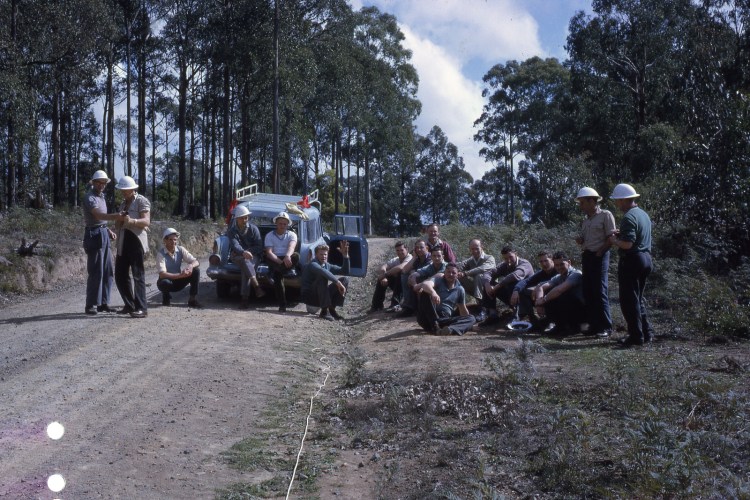
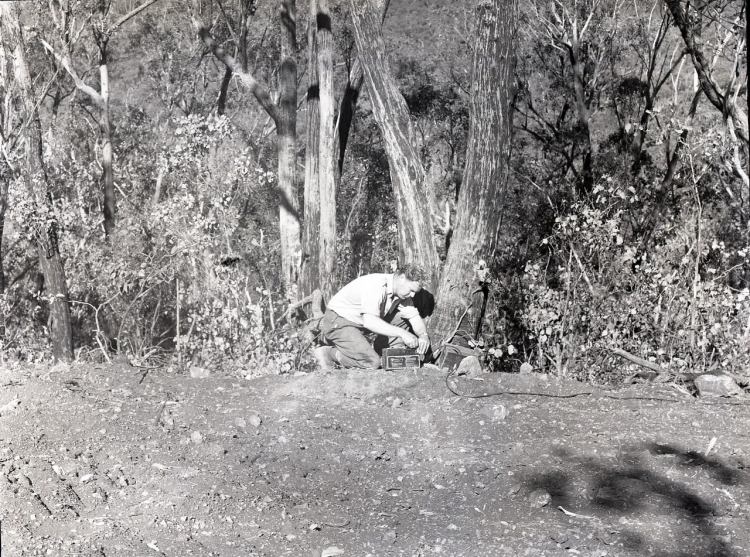
harlie Saunders teaching the use of explosives for overseers at Mt Disappointment – 1962. L / R; Bert Allen, Jack Hutchison, Don Dyke, Geoff Mair, Col English, Ron Smedley, D’Arcy Smith, Ron Harris, Stan Kirkham, Bill Barnes, Des Kelly, Jack Blythman, Clarrie Pring, Len Arnold, Ken Doyle, Tom Waldron and Max Seamer. FCRPA CollectionJohn Wilson, construction overseer, setting charges on the Tamboritha Road. C 1960. FCRPA Collection
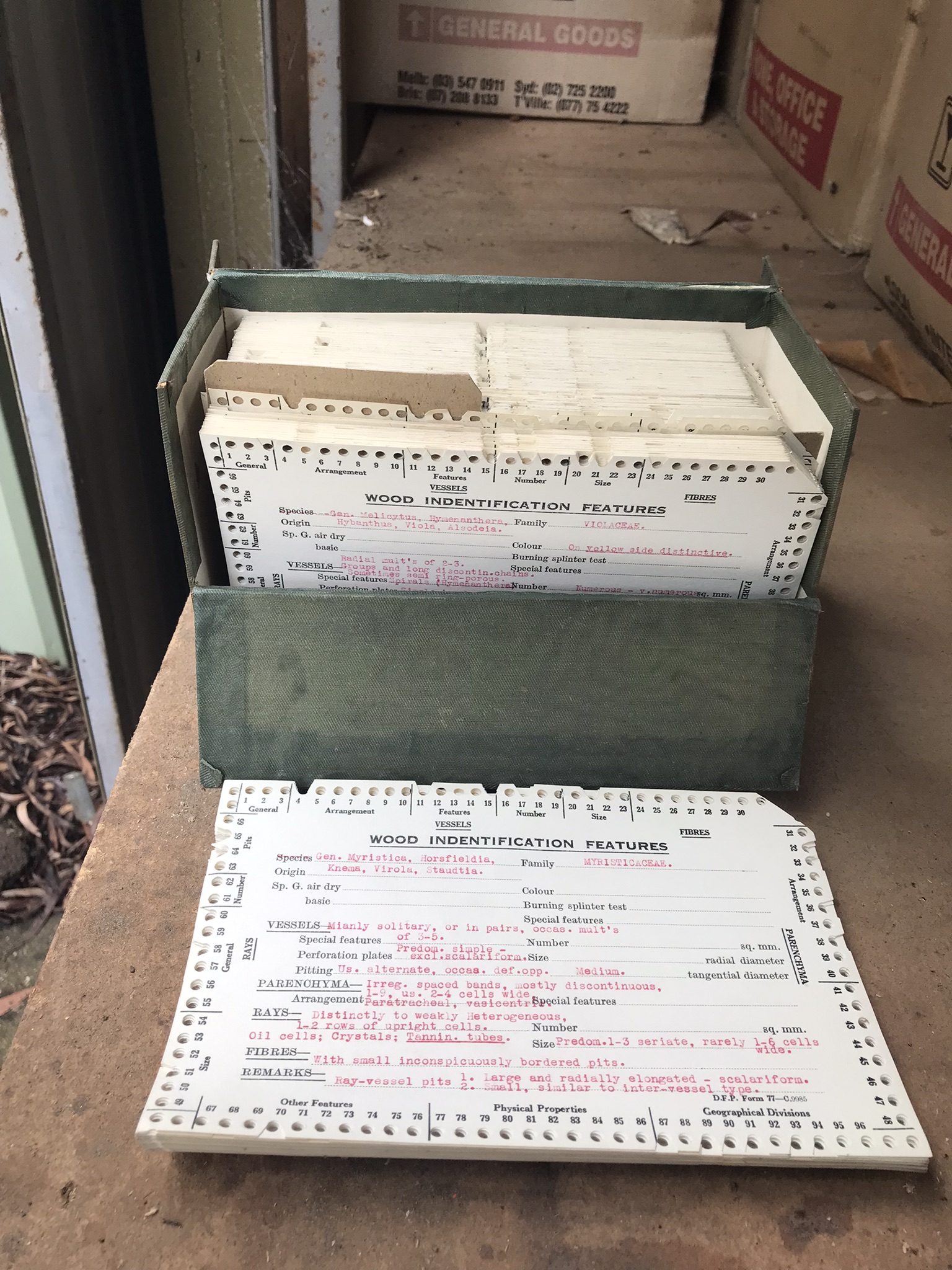
Edge-notched index cards were invented in about 1896 and have holes punched around the borders. The top right-hand corner is also clipped to help stacking the deck. The holes could be clipped to search and sort information.
For foresters, these cards were commonly used to identify timber samples.
Using a 10X magnifying lens, or a microscope, the key structural features of the timber sample were first identified. For example, softwood or hardwood.
A long knitting needle was inserted into the hole for the feature and the cards shaken. Those cards which matched fell onto the table. The fallen cards were then restacked and the next identifying feature selected with the needle. The whole process repeated until there was only one, or maybe a few, cards left.
Each sample card had a more detailed description of the timber.
It was a very simple and effective binary (yes/no) decision process to search through hundreds of timber types.
Needless to say, computers replaced the old wood technology cards.
Denser cells and presence of large pores (xylem vessels) in hardwoods (oak, top) compared to a more open structure and an absence of pores in softwoods (pine, bottom). The cell walls of xylem vessels in hardwoods are lined with lignin, which is an extremely hard material, and in part is, responsible for the hardness of the tree. Source: Wikipedia
The strike lasted nearly six months and affected all sections of the timber industry including the Forests Commission Victoria (FCV) which supplied logs from State forest. The Commission also operated its own sawmill at Nayook, near Noojee, as well as a major timber seasoning plant at Newport.
The Commission estimated the loss in production of sawn timber during the strike was £500,000, with the loss of direct revenue of £27,000.
The immediate cause of the dispute was a wages award made on 23 December 1928 by Judge Lionel Lukin from the Commonwealth Arbitration Court.
His decision reduced wages by 3 shillings per week and increased hours for 20,000 timber workers from 44 to 48 hours per week.
The decision also affected the ratio of juveniles to adults in the workforce which could lead to a major loss of adult jobs.
At the time, timber workers had a more generous pay deal compared to other sectors because of an earlier decision of the Arbitration Court in 1920.
Trouble had been brewing for some time. The Timber Workers Union was very militant under the leadership of future Labor Prime Minister, and ex Creswick lad, John Curtin.
After the 1925 election, the Nationalist Party Prime Minister Stanley Bruce seemed obsessed with industrial relations. He amended the Crimes Act in 1926 to “deal with industrial extremists”.
Bruce became emboldened after the 1928 election which he won on a law-and-order reform platform, mainly as it applied to unions. Timber workers, waterside workers and miners were his obvious targets.
It’s worth noting that the timber workers had more political clout in the 1920s because the Australian economy depended heavily on timber, with almost everything packed in wood such as fruit cases and butter boxes.
The urban nature of timber mills in 1929 also meant that industrial action was concentrated around the working-class areas of the affected cities such as Glebe in Sydney.
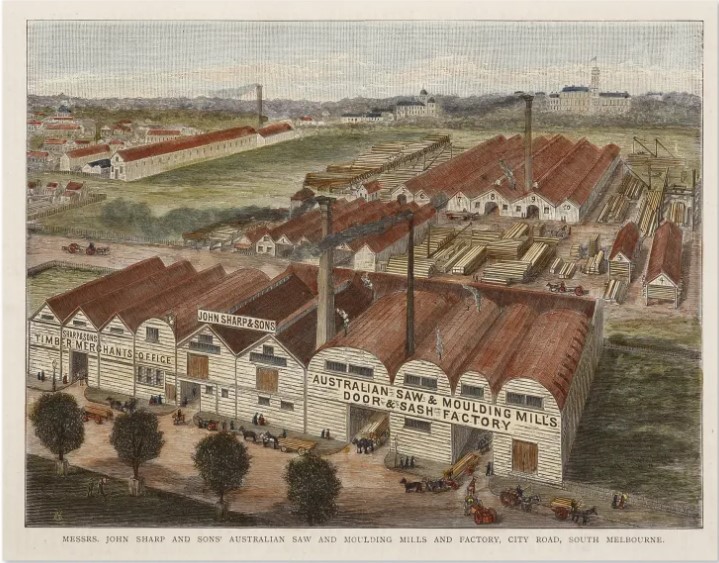
In Melbourne, the dispute centred in the industrial areas south of the Yarra where some major timber mills and wholesalers were located. The biggest was John Sharp and Sons at 169 City Road, South Melbourne. Millers was another large timber importer on Maffra Street while Wrights was in Sturt Street, whereas Fulwood’s was right in the middle of the City on the corner of Lonsdale and Spencer Street.
The timber workers held mass meetings on 3 January 1929 in Melbourne, Sydney, and Adelaide and refused to work the four hours extra stipulated by the Lukin award. The Federal Government took legal action against the Union which was fined £1000.
A secret ballot, which was largely boycotted by the workers, was held with an overwhelming number of those responding voting no to the new conditions. This was the first attempt to enforce a secret ballot in an Australian industrial dispute.
As the dispute dragged on things got a bit nasty. Near Powelltown one group of disgruntled strikers wanted to remove sections of the train tracks to stop “black” workers from arriving the township, but fortunately cooler heads prevailed, so instead they put grease the steel rails on an uphill stretch to the stop train getting through. The grease was quickly removed but the action caused considerable division amongst the townsfolk for some time to come.
Those that refused to work at Powelltown were threatened with eviction from company houses, but with the onset of cold weather this could have become a serious matter, and thankfully nothing came of it.
But striking families in the bush were far from the public eye and many left to find other work.
The strike dragged on and union support funds began to dry up, while some sawmills kept operating with scab labour. It was the middle of the great depression and people would do almost anything to earn a living.
It eventually became apparent that the workers could not hope to win, and by late June 1929, the strike had all but collapsed and most men chose to return to work.
At the end of July, seven union leaders were charged with “unlawful conspiracy by violence and threats of violence”, but a jury subsequently acquitted them.
Stanley Bruce lost the federal election in October 1929, in part, because of his Government’s approach to industrial relations.
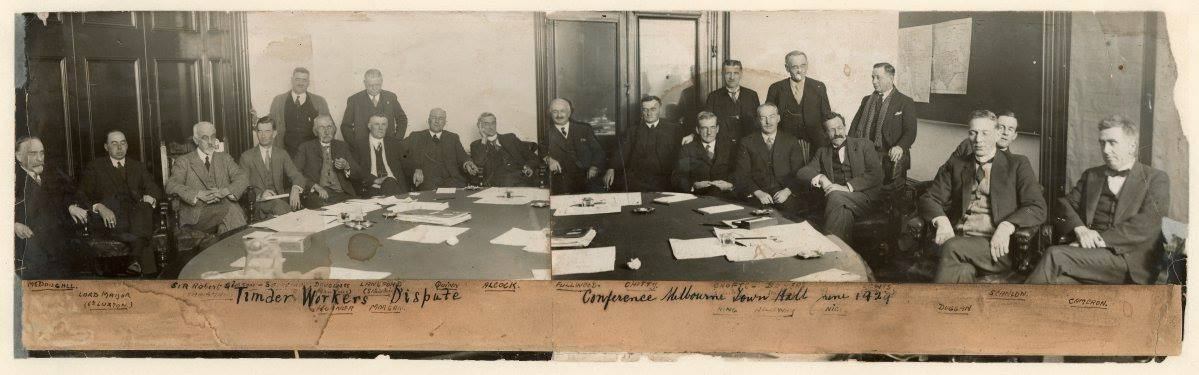
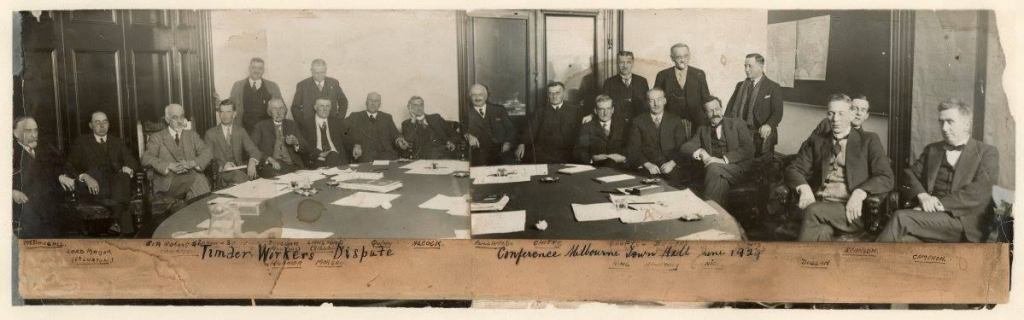
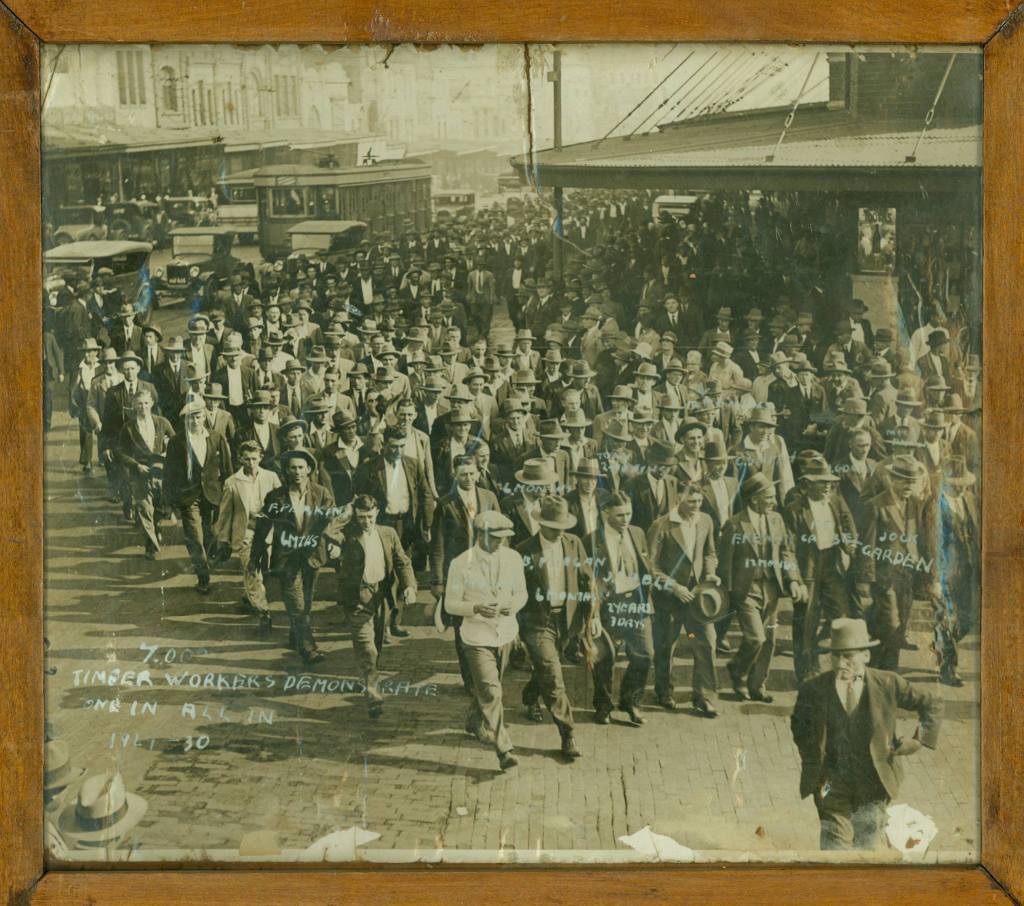
Timber Workers’ strike conference at the Melbourne Town Hall. Source: University of Melbourne ArchivesTimber workers in Oxford St Sydney on their way to Darlinghurst Court House. The workers named in the photo were all sent to jail. Source: Wikipedia
John Sharp and Sons was established in the 1870’s close to the Yarra River at 169 City Road South Melbourne and was Melbourne’s biggest timber trader.
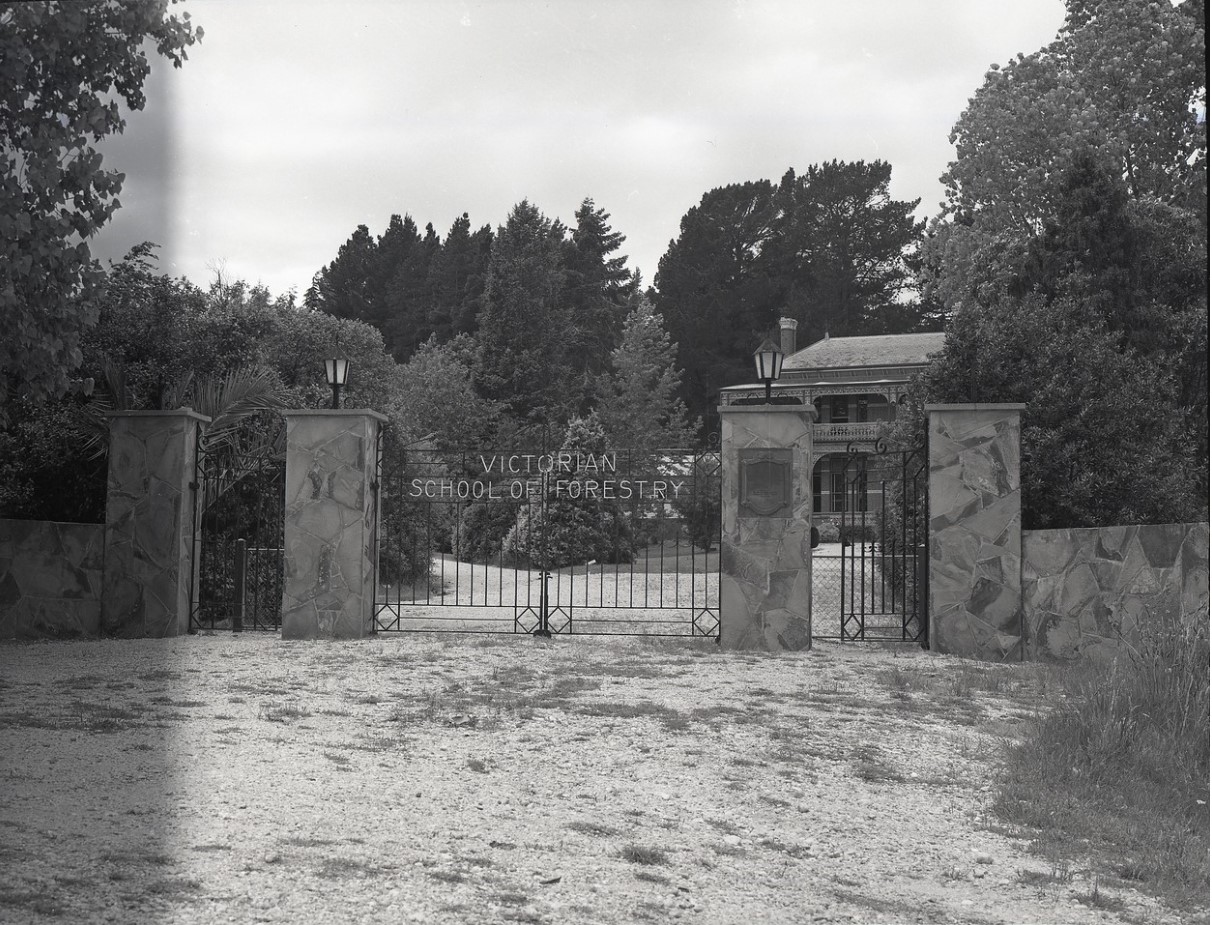
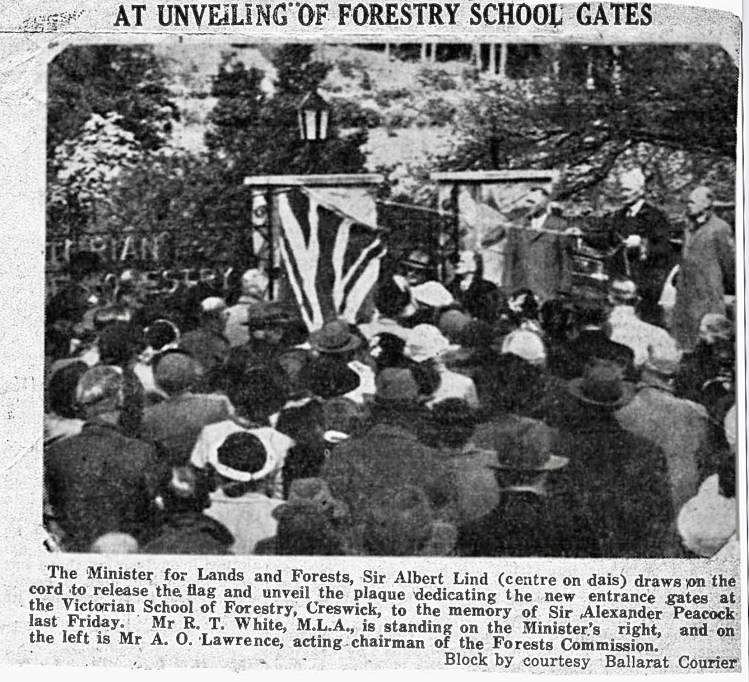
Prior to the new gates there was just a simple wire fence.
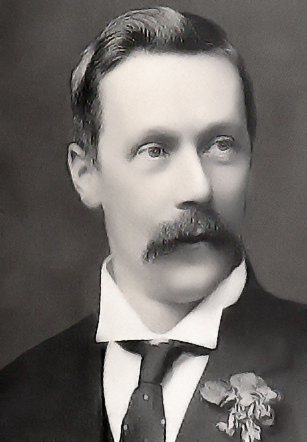
Peacock was born at Creswick in 1861 and was the local politician at the time when VSF opened in 1910. He spent 44 years in State Parliament including becoming the 20th Premier of Victoria in 1901. He died in October 1933.
The old Creswick hospital buildings and grounds were purchased by the Victorian Government and refurbished at the instigation of John Johnstone, Superintendent of State Plantations, under the direction of Donald McLeod, then Minister of Forests, (1904–1909) followed by Sir Peter McBride, Minister from 1909 to 1913.
There is some debate about the role and significance that Sir Alexander Peacock made compared to Johnstone.
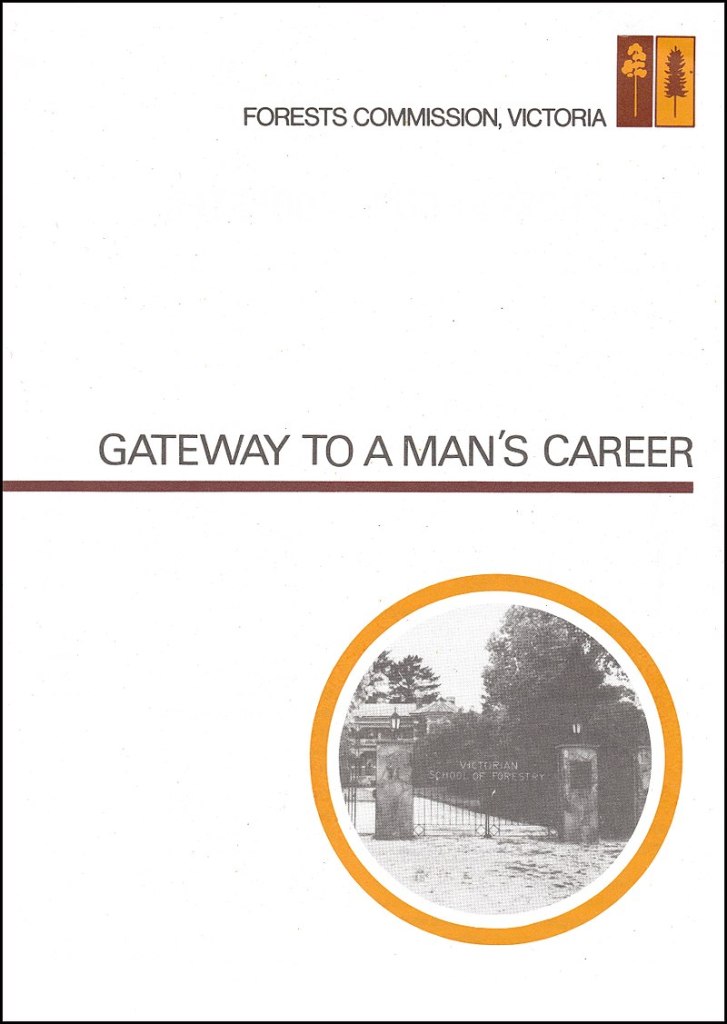
The new entrance was promoted as a “Gateway to a Man’s Career” by the Forests Commission until female students first entered the school in 1976.
Photograph taken in 1915 (Source: FCRPA) : Tremearne House and the Victorian School of Forestry
Les Ortlipp was born on 18 May 1925 at Culcairn in New South Wales but moved to Bright in NE Victoria in 1933 after his father died and his mother remarried.
Les left school aged 12 and took an apprenticeship at the local Jack Sharp’s bakery.
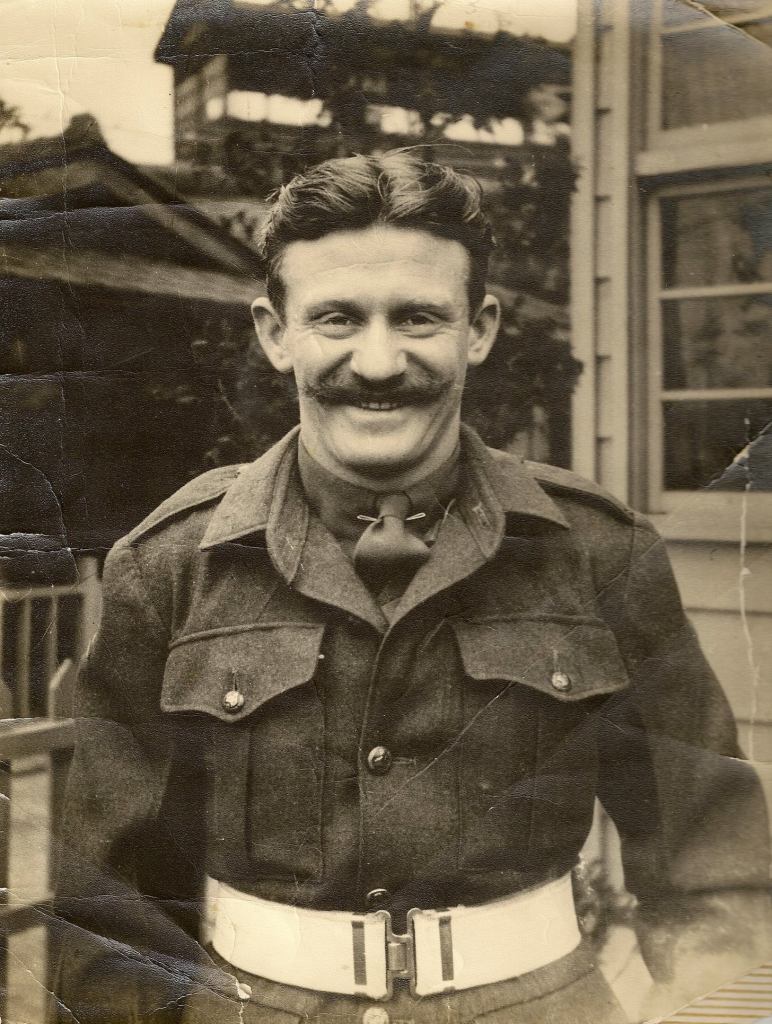
When aged only 16, Les lied about his age to join the Army, but his mum found out and he was sent home. But about 12 months later in 1943 he joined again (# VX93307) and was sent overseas. He served as a machine gunner in New Guinea, the Islands, Halmaheras, Morotai and Borneo, before being accidently sent to Japan with the American Occupation Forces. Les was discharged in 1947.
On his return to Australia, Les worked briefly for the Forests Commission Victoria (FCV) at Bright, before spending a couple of years as a Guard on the Old Ghan railway between Quorn and Alice Springs.
After getting married at Quorn to Colleen, Les returned to Bright in March 1951 and resumed his job on the crew with the Forests Commission.
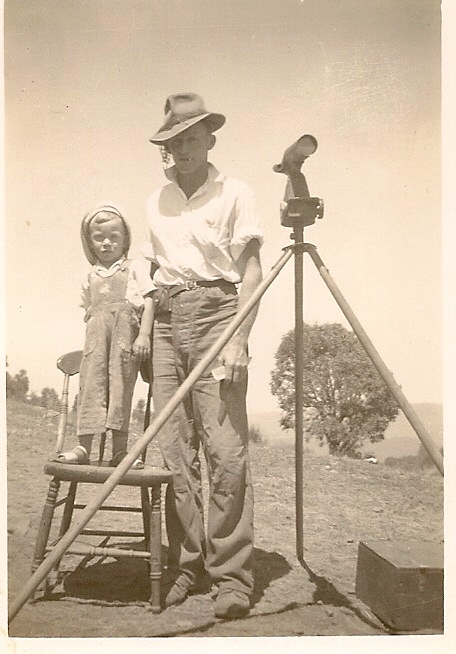
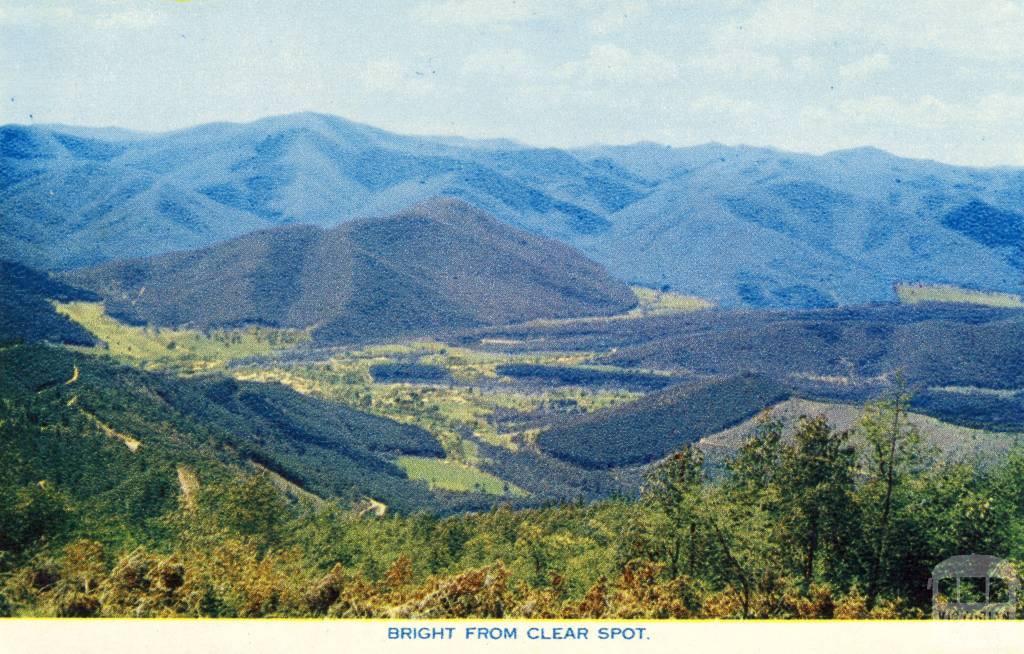
During the summer months from 1951-1956, Les worked as a fire lookout at Mt Clearspot overlooking the Ovens Valley Plantations. He rode his horse up each day to the summit. And until the late 1950s, there was no tower and not much shelter other than a couple of recycled Stanley Huts on just a bit of open ground, with a telescope mounted on a movable tripod.
During this period at Bright, Les became an active volunteer with the CFA and a foundation member of the local Civil Defence Branch (the forerunner to the State Emergency Service). Les also taught first aid as a St Johns volunteer and was one of the first Ambulance drivers in the township.
Because he showed strong leadership skills and an aptitude for forestry and bushfire work, Les was selected, along with a number of others, to attend the 6-month forest foreman’s school at Mt Disappointment near Broadford in 1962.
On completion of the course, and some short postings in other forest districts, Les returned to Bright in mid-1963 and was later appointed to a permanent Forest Overseer position in June 1965.
A bit like Warrant Officers in the Army, Forest Overseers with the Commission were the people who led the works crew and made things happen. Whether it be remote firefighting, building a road or establishing a plantation, overseers were practical, reliable and down to earth men with a wealth of knowledge. They also guided many a young wet-behind-the-ears forestry school graduate.
But unlike foresters who were compulsorily moved around the state every few years to different districts, Forest Overseers tended to stay put in one place for long periods and so got to know their communities and their patch of forest better than many others.
Les was so familiar with the bush, the mountains, the landmarks and the tracks he was often called upon when the Police needed assistance.
In 1980 and fit as a trout, Les, then aged 55, was the oldest competitor in the “king of the mountains” marathon running event to ascend Mt Bogong, Mt Porepunkah, Mt Feathertop, Mt Hotham and Mt Buffalo over five consecutive days.
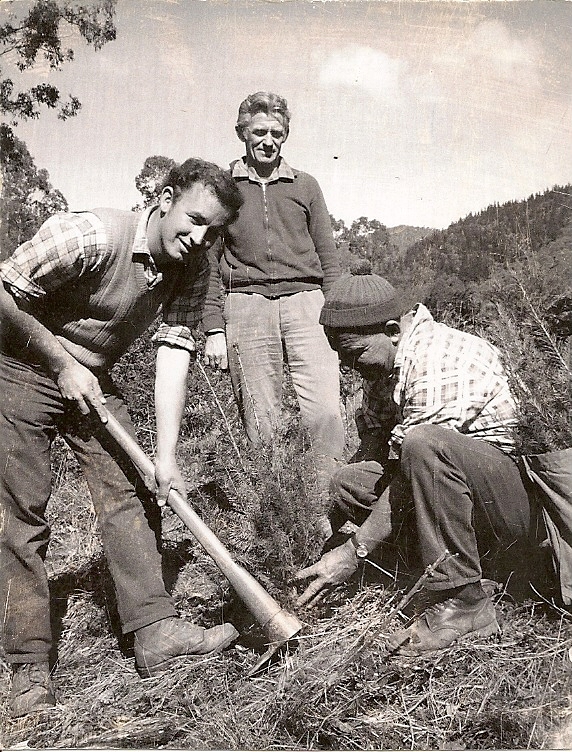
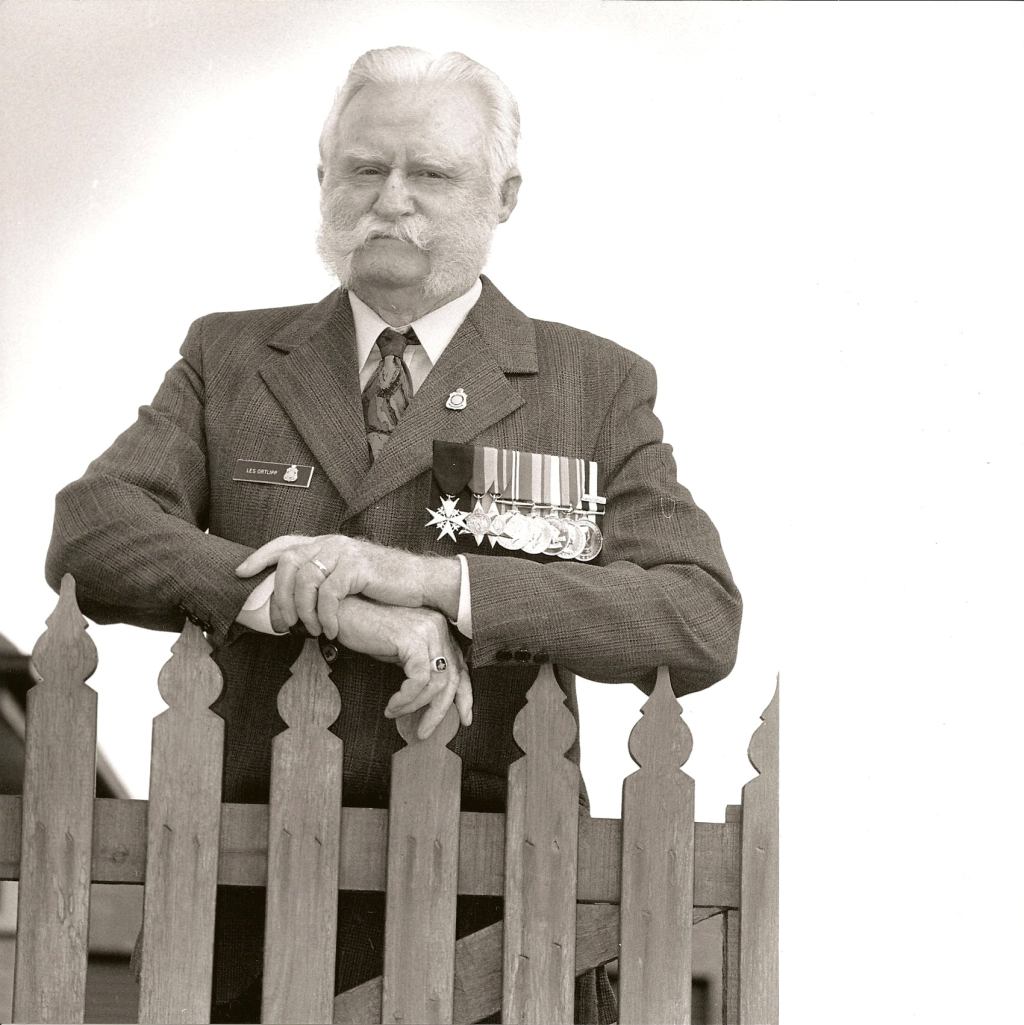
Les was well known and well liked throughout the Forests Commission and became instantly recognisable for his trademark bushy mutton chops and moustache.
He spent the remainder of his career at Bright before retiring in late 1984, aged nearly 60. This was around the time of the major disruption and restructuring associated with the newly amalgamated Department of Conservation, Forests and Lands (CFL). Many senior staff chose to leave which led to a massive loss of corporate knowledge and field experience.
The Forests Commission organised a farewell dinner for Les in November 1984. The District Forester Derrick Rolland together with senior FCV dignitaries including Commissioner Ron Gross, Chief of Forest Operations, Max Boucher and Divisional Forester Russ Ritche along with 60 guests attended. A gift included a collection of wood working tools. Les also became an avid photographer of the alps in later years.
The Bright Shire Council also organised a testimonial dinner in his honour a year later on 6 December 1985, after which Les and Colleen moved to a new home at Howlong near Albury.
Les Ortlipp later died in Melbourne on 17 April 2004 and his ashes were returned to Mount Clearspot.
Thank you to Charles Ortlipp for his help with compiling this story.
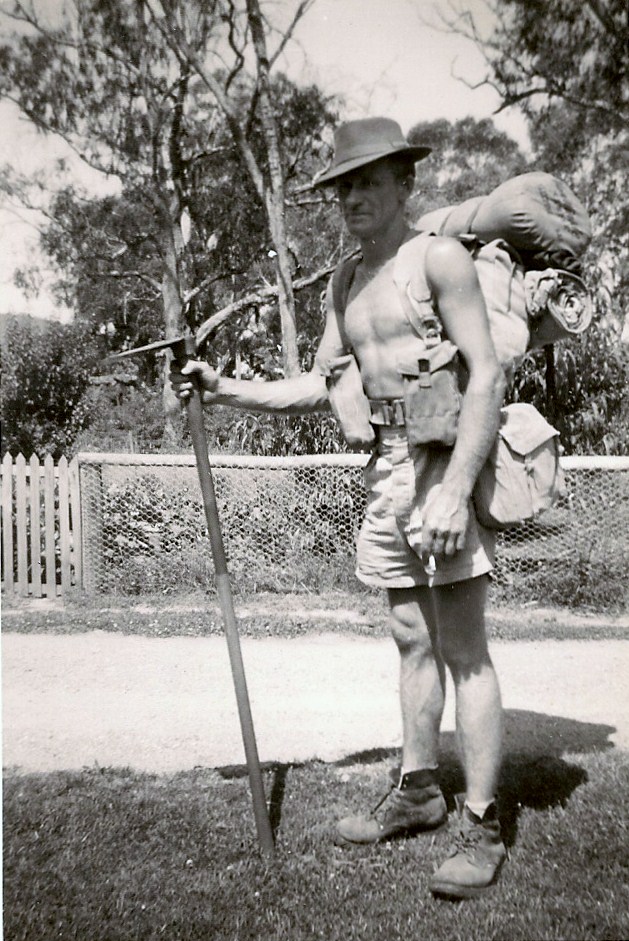
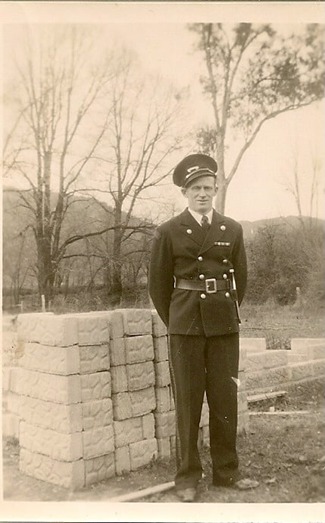
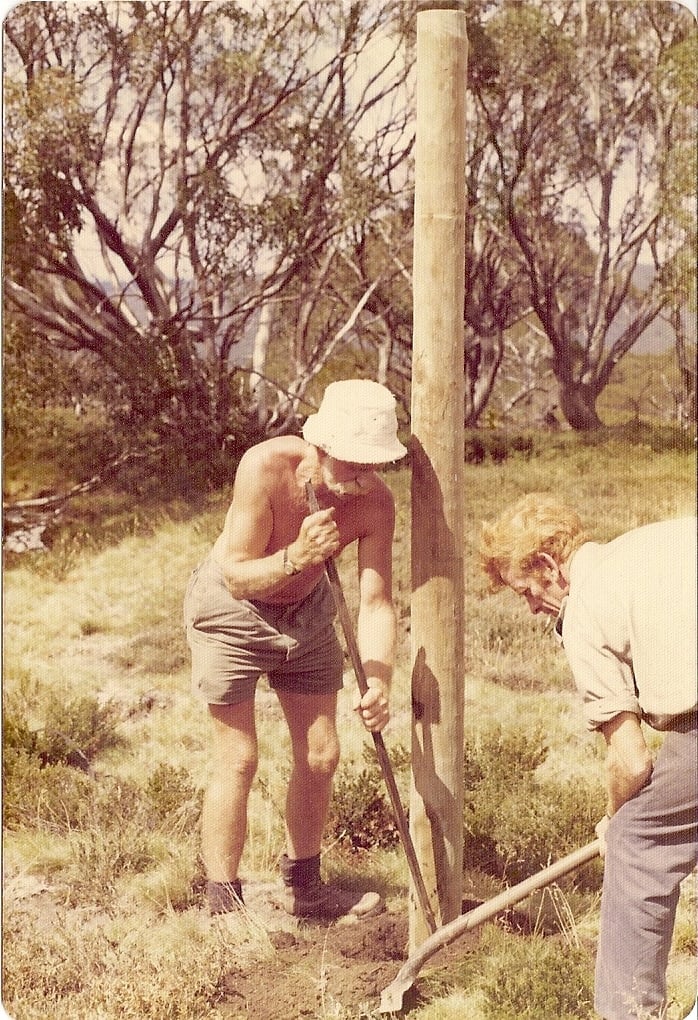
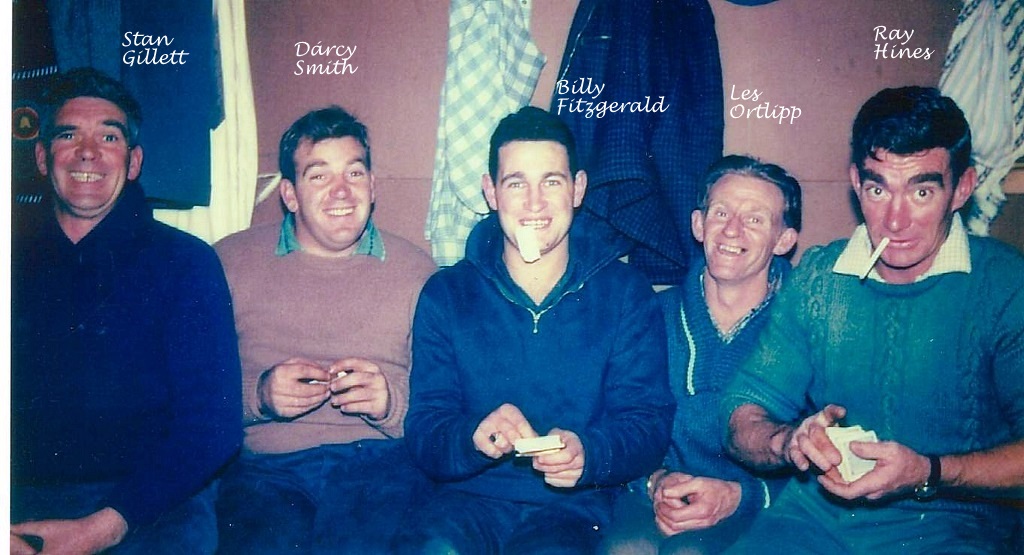
Les Ortlipp about to head off to fight bushfires. C 1960s. Photo: Charles OrtlippLes Ortlipp with his son Charles when he was fire spotting on Mt Clearspot south of Bright. C 1950s. Photo: Charles OrtlippIn the 1950s the FCV upgraded Mt Clearspot with a couple of Stanley Huts. Then by 1960 they built a two-story dedicated lookout tower. Photo: Charles Ortlipp.From Clear SpotLes Ortlipp (centre) planting trees at Bright. C 1970. Photo: Charles OrtlippCFA Volunteer. Source: Charles Ortlipp Source: Charles Ortlipp Source: Charles Ortlipp Erecting Snow Poles on the walking track across the high plains from Hotham to Bogong in 1977. Les Ortlipp and Neville Robinson from the FCV were the team leader/surveyors. Source: Charles OrtlippLes attended the Forest Foreman’s School at Mt Disappointment in 1962. Photo FCRPA Standing; Ian Sartori, Jack Blythman, Clarrie Pring, Stan Kirkham, Laurie Ritchie, Les Ortlipp, Bill Barnes, Kelvin Taylor, Fred Craig, Harry Blanch, Albert Allen, Max Boucher, Don Sexton behind, Jack Hutchison behind Bill Woods, John Edwards, Len Arnold Denis O’ Connor, Ray Bennett, Stan Gillett, Brian Sheehan, Don Dyke, Chris Collin, Bert Toogood, George Mortimer, Doug Barge, Max Seamer, Des Kelly, Theo Goldie and Noel Fraser. Squatting; Ken Doyle, Brian Warren, Ray Hines Phil King, Ron Harris, Jim Speirs, Eddie Page, Billy Fitz, Geoff Clinch, Tom Waldron, D’arcy Smith, Col English, Ernie Cole and Geoff Mair.The camp at Mt Disappointment had been used during the war to house Italian internees. The Stanley Huts were bleak in winter. Photo: Noel Fraser – FCRPALes attended the Forest Foreman’s School at Mt Disappointment in 1962. Stan Gillett, also from Bright, was killed in a helicopter crash at Wandiligong in 1978. Photo Noel Fraser – FCRPANovember 1984. Source: Charles OrtlippDecember 1985. Source: Charles Ortlipp
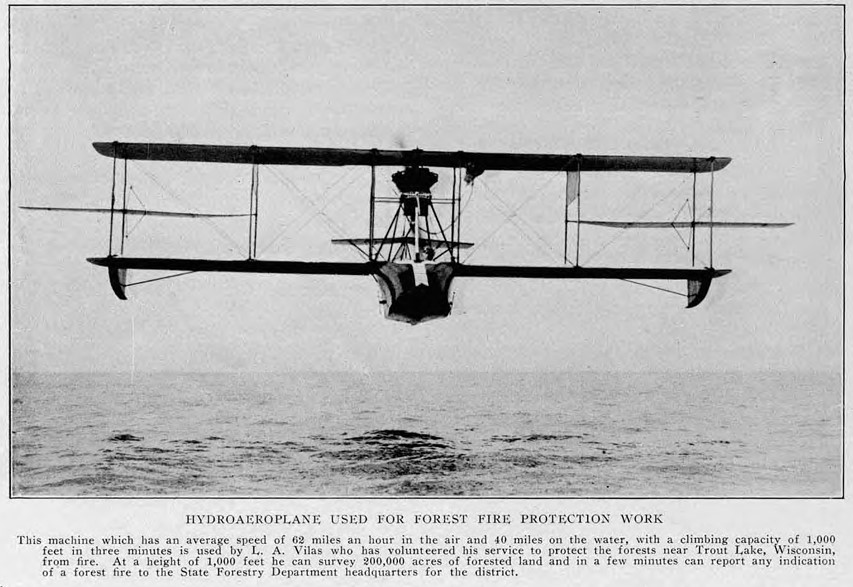
On 29 June 1915, 108 years ago today, what is believed to be the world’s first forest patrol flight was made at Trout Lake in Wisconsin.
Aviation pioneer and wealthy Chicago sportsman Logan “Jack” Vilas made the initial flight to demonstrate the viability of using aircraft in fire prevention.
He took Chief Forester, Edward Griffith, for a ride in his new Curtiss Flying Boat to demonstrate how easy it was to spot forest fires from the air.
Impressed, Griffith had the Wisconsin Conservation Commission appoint Vilas as a flying fire warden. Vilas flew almost daily in July and August from the forestry headquarters at Trout Lake in Boulder Junction.
The use of aerial detection to spot and report forest fires—dubbed the “Wisconsin Plan”—soon became a vital tool in fighting wildfires in many forested countries.
The U.S. Forest Service joined with the Army Air Service in 1919 to introduce aerial fire patrols over national forests.
Rumour has it that the planes were equipped with a telescope and machine gun as a deterrent to arson—the number of fires on the Cleveland National Forest decreased for a while.
But reviews by foresters were mixed. Not as many fires were first spotted by the air patrols as hoped, and the lack of wireless radios for communication between pilot and ground crew slowed the fire reporting process down significantly.
In 1925, Secretary of War, John Weeks, ended the program, telling the Forest Service it was time to turn patrols over to commercial operations. But having already purchased some planes the Forest Service continued their own patrols for two more years.
In Australia, discussion took place between the Forests Commission Victoria (FCV) and the Air Board as early as 1926, and then over a period of years prior to 1929-30, with the view to commencing regular fire patrols using RAAF aircraft but a lack of safe landing areas and radio communications proved the main obstacle.
Eventually, the first fire spotting aircraft in Australia was deployed on 18 February 1930 when a RAAF Westland Wapiti from No.1 Squadron operating out of Point Cook near Melbourne flew over the nearby Dandenong Ranges.
So break out your silk scarves and goggles to celebrate those daring young men in their flying machines because the rest is history….
American Forestry magazine – September 1915 issue.
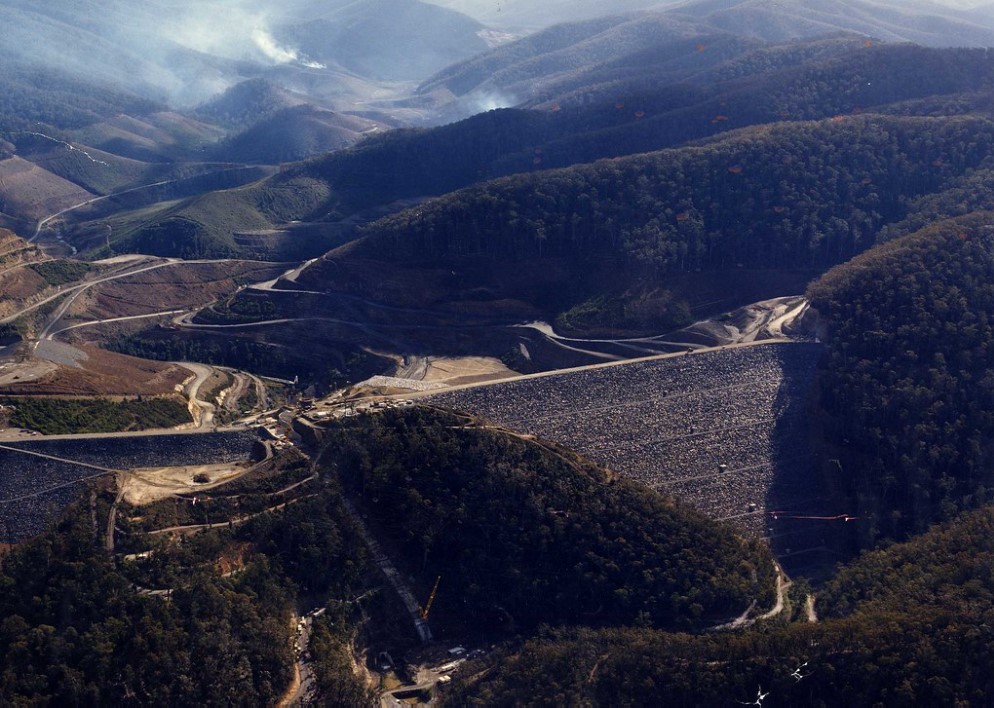
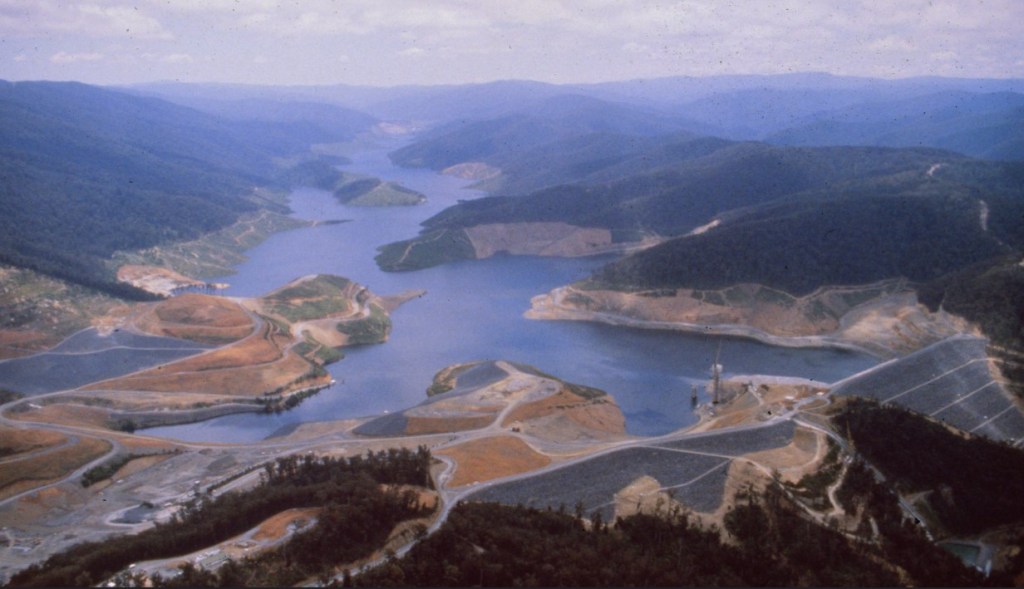
The decision to build the massive Thomson Dam in Gippsland was a result of a State Government inquiry into Melbourne’s water security in the late 1960s.
The dam wall and diversion tunnels were built in three stages between 1969 and 1985.
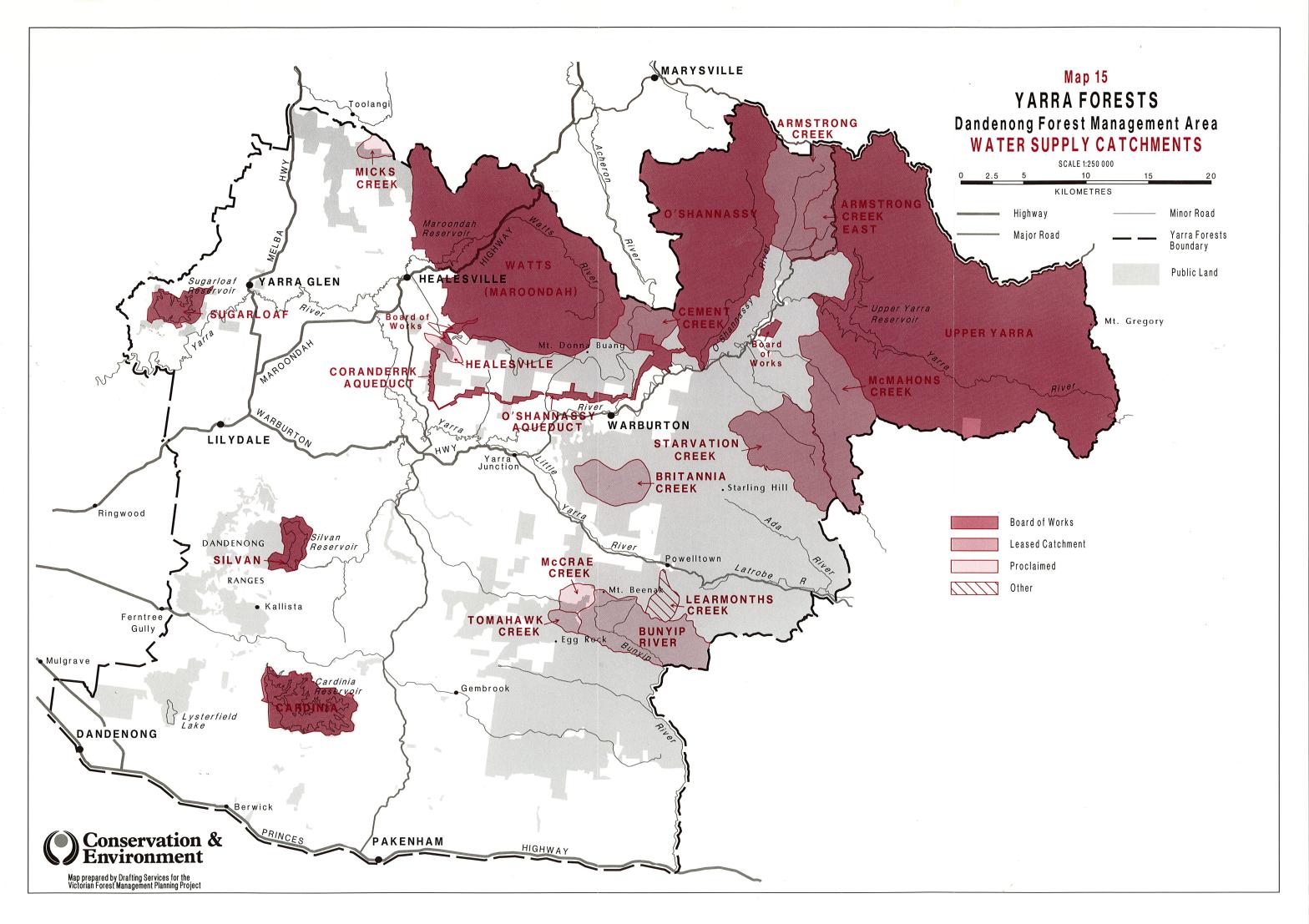
But unlike the Upper Yarra and Maroondah catchments which were “vested“ in the Melbourne and Metropolitan Board of Works (MMBW) and closed to public access, the Thomson catchment remained State Forest to managed by the Forests Commission and available for timber harvesting and some other uses.
It’s fair to say, that neither the MMBW nor the Forests Commission were entirely happy about the arrangements.
One of the major issues was the delineation of land to be inundated for water storage.
The wonderfully straight horizontal line along the 450 m contour of the high-water mark was no accident.
Forests Commission staff spend many months trudging through the thick scrub with an aneroid barometer marking the exact elevation.
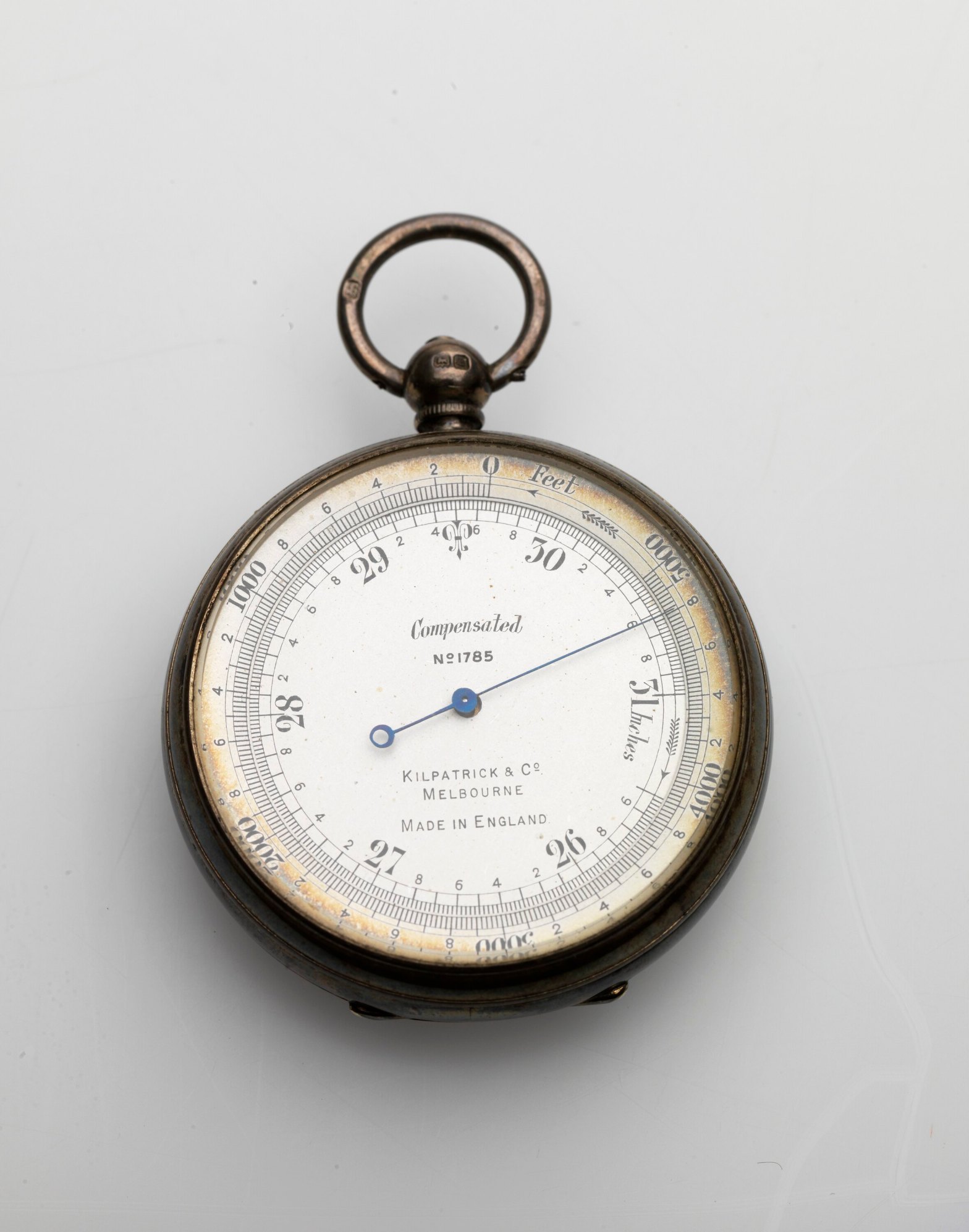
The barometer relied on differences in atmospheric pressure to measure elevation. Regular radio calls were made back to the FCV Erica Office throughout the day to check on deviations in atmospheric pressures to recalibrate the gauge.
The sawlogs and pulpwood below the line were salvaged before MMBW bulldozers scraped the slopes bare and pushed all the debris into the bottom of the gullies ready to be burnt.
Above: Pocket Altimeter – Aneroid Barometer Type, Fitzpatrick & Co, Melbourne, circa 1900 Photographer: Jon Augier. Source: Museums Victoria
The 1960s saw more prolonged droughts and water restrictions. There were also deadly bushfires on the fringes of Melbourne in 1962, and again in 1968.
Growing concerns about long term water security led to a Parliamentary Public Works Committee inquiry between 1965 and 1967.
In response to the inquiry, the Bolte Government immediately approved works for a 20 km diversion tunnel from the Thomson River and began planning for the massive Thomson Dam in Gippsland (the Upper Yarra Dam had been completed in 1957).
In addition to the Thomson, several smaller diversion catchments known as the Yarra Tributaries were set aside in 1968 under a 10-year lease agreement between the Forests Commission Victoria (FCV) and the Melbourne and Metropolitan Board of Works (MMBW).
Five small concrete weirs on the Armstrong (east and west), Starvation, McMahons and Cement Creeks were built to divert water directly into the Silvan Conduit which connected the Upper Yarra Reservoir to Melbourne.
All the newly designated “Yarra Tribs” as they became known, as well as the Thomson Catchment, sat on State forest, unlike the major Yarra water catchments which were vested with the MMBW in 1891.
The Forests Commission had long opposed the closed catchment policy of the MMBW, arguing that timber harvesting, controlled public access and the protection of water supplies were all compatible.
Previously, in 1958–60, the State Development Committee held an Inquiry into the utilisation of timber in watersheds of the State and the Forests Commission advocated strongly, but unsuccessfully, for access for logging in closed catchments.
However, during the latter 1965-67 Parliamentary Inquiry, the Commission remained more concerned that access to timber in the Thomson catchment would be restricted with construction of a new reservoir. The Commission once again advanced as evidence its successful conduct of harvesting in many proclaimed catchments across Victoria.
The State Government had no appetite to overturn the long standing MMBW closed catchment policy but resolved that timber harvesting would continue in the Yarra Tributaries and Thomson catchments but with some additional protections and they were closed to public access and gates were erected.
Releasing water from the Yarra Tribs was also important to maintain environmental flows in the Yarra River.
Construction on the new Thomson Dam and diversion tunnels commenced in the early 1970s and was completed in 1985.
Long term agreements were eventually negotiated between Melbourne Water and the Forest Service to manage activities in both the Thomson catchment and the Yarra Tribs.
Source: McHugh, Peter. (1991). Statement of resources, uses & values for the Dandenong forest management area (Yarra forests). Dept. of Conservation and Environment. ISBN 978-0724198498.
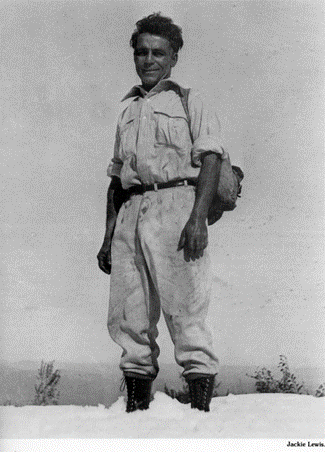
Jackie Lewis began as a Ranger in 1924 with the Melbourne and Metropolitan Board of Works (MMBW) and worked in the remote Upper Yarra water catchments beyond Warburton and Woods Point.
The legendary “Iron Man” of the bush enjoyed the solitary nature of his work. As a champion long-distance runner Jackie was selected for the 1926 Australian Olympic team, and few could keep up with him anyway.
Foresters and bushmen often reported that he seemed to just appear, on foot, out of nowhere at their camps.
“As I proceeded through the ash forest and rounded a bend, I was startled by a person on the downside of the road crouching over a black-fellow’s fire in the vast cavity of a hollow log. This was Jackie Lewis – patrolman for the Melbourne and Metropolitan Board of Works whose duties required him to inspect the catchments to ensure trespass did not occur. This log was Lewis’ first camp after a walk up from Marysville and he had similar bivouacs scattered throughout the watershed. He was a legend for the distances he could walk. The story was told of how one evening in Warburton he had a party with two tourists. The tourists drove off next day to Moe and up into the mountains to Walhalla. At the hotel in Walhalla, they met a man at the bar who bore a strong resemblance to their friend of the previous night – Lewis. When asked, he astounded them by proving he was the same man – having walked from Warburton up the Yarra Valley, over the Baw Baw Plateau and across the Thomson Valley to Walhalla to surprise (and astound) his friends of the night before.” – Jim McKinty, Forest Assessor, 1937-38.
Jackie fought his first bushfire in 1910 and lost an eye when a blazing tree fell near him during the 1939 fires.
Trapped with a group of fifty men in the 1942 bushfires, he threatened to use his axe on anyone who tried to dash through the flames in the hope of reaching safety. They stayed – and survived.
But it was Jackie’s intrepid, solo, five-week trek in April 1931 through some of Victoria’s densest forest in search of the missing aircraft Southern Cloud, that earned him hero status.
On the way back he fell down a 12-metre precipice and had no choice but put three stitches in a gaping leg wound himself. It’s said he stayed awake all night fending off howling dingoes before dragging himself for hours the next day to the road. But he was back at work in a matter of days.
Searching for people hopelessly lost in dense bush was all part of the MMBW’s service to the community and it’s said that Lewis rescued over 70.
Jackie wrote about his adventures in an article “My Job in the Big Bush” for the Melbourne Herald in January 1933.
Jackie never carried a compass himself and when once called upon to help find a party of tourists lost near Mt Donna Buang, he told police exactly where they would be even before they set out.
In his spare time during winter, Jackie coached the Warburton football team or went skiing.
But sadly, Jackie Lewis died of a heart attack in 1956, aged 62, before he could achieve his retirement ambition… a book based on his diaries in which he noted every trip, and especially the wildflowers of the area, on which he had become an authority.
Jackie, who was a naturalised Greek, died a few days after his brother, and was buried with him at Bundaberg in Queensland.
Later in 1963, the Warburton Advancement League erected memorial gates at the main entrance to the Camping Park at Warburton in his memory. He is also acknowledged on a set of murals next to the Warburton Water Wheel.
Melbourne grew rapidly after the 1851 gold rush and struggled to maintain adequate water supplies and sewerage disposal.
All the night soil, trade waste, as well as waste from kitchens and homes was just thrown into open channels in the street and it simply flowed wherever gravity took it… mostly into the Yarra River. The problem got so bad that some British journalists unkindly described the city as ‘Smellbourne’.
In response, the Yan Yean reservoir was built on the Plenty River in 1857 as Australia’s first water supply reservoir, followed by the Werribee sewage treatment farm in 1897.
But water-borne diseases, particularly cholera, remained fearful killers in cities throughout the nineteenth century. A Royal Commission was established by the Victorian Government in 1880 to address these concerns.
In a bold and visionary political move, large catchments in the Upper Yarra River were vested in the newly established Melbourne and Metropolitan Board of Works (MMBW) in 1891.
A closed catchment policy was also introduced where timber harvesting, recreation, mining, farming, settlements and all public access was not permitted, mainly as a step against the threat of disease.
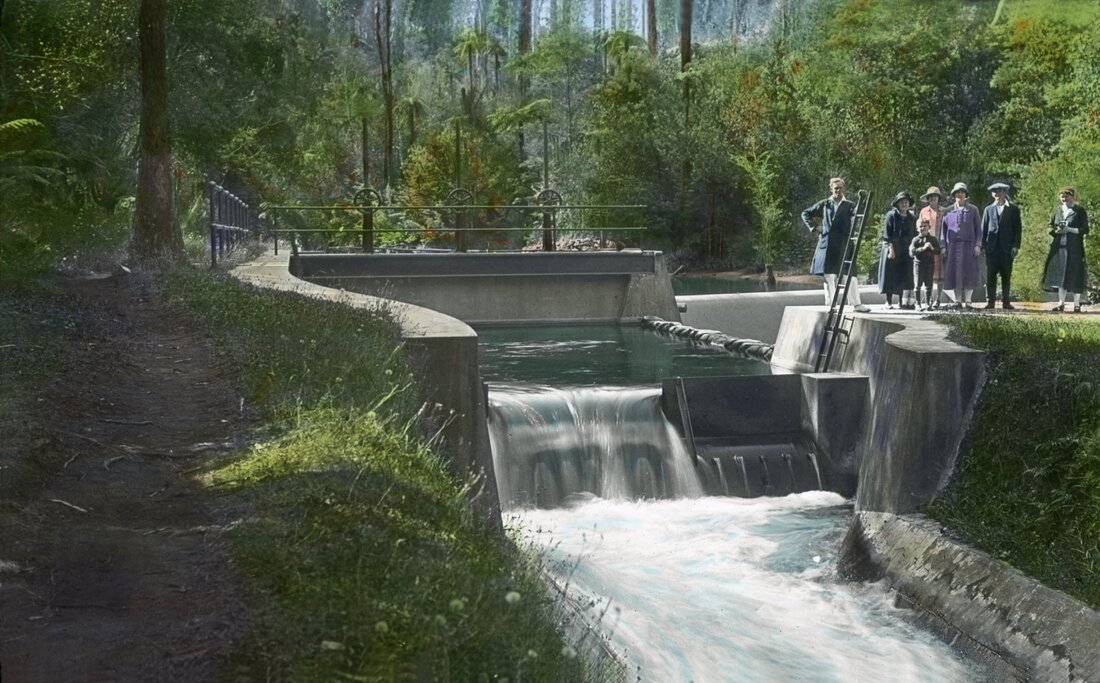
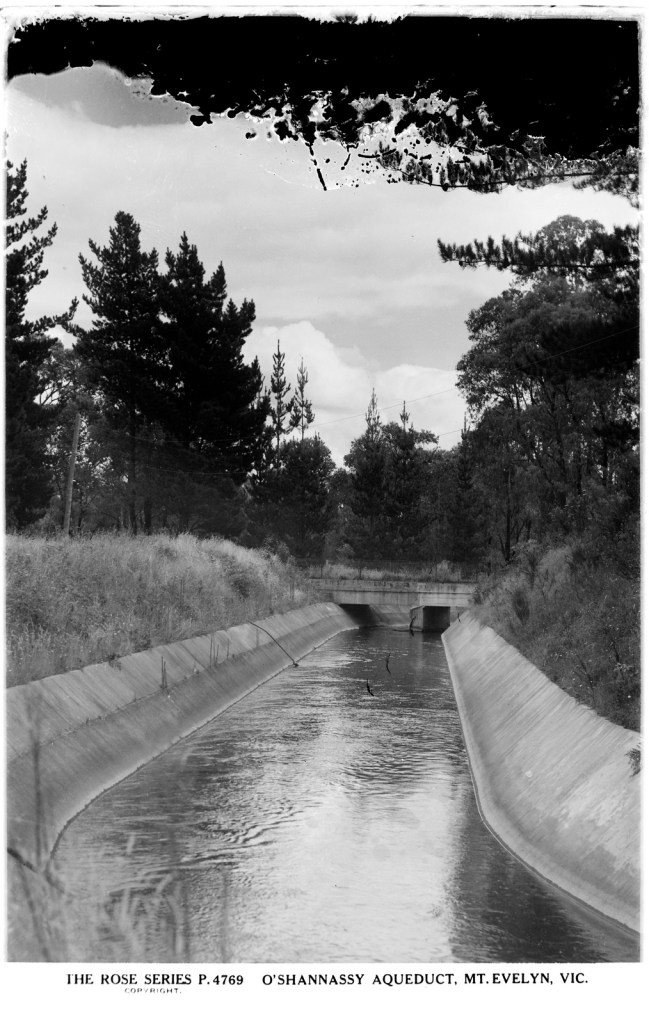
The relatively small O’Shannassy watershed was vested in the MMBW in February 1910 and an aqueduct commenced soon after to carry water some 50 miles to the Surrey Hills Reservoir to supply the fast-growing eastern suburbs of Melbourne.
Its sometimes claimed the aqueduct was named after Sir John O’Shanassy, three times Premier of Victoria, although I have my doubts because the spelling is slightly different and the dates don’t align with the period of his reign.
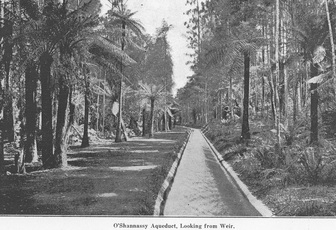
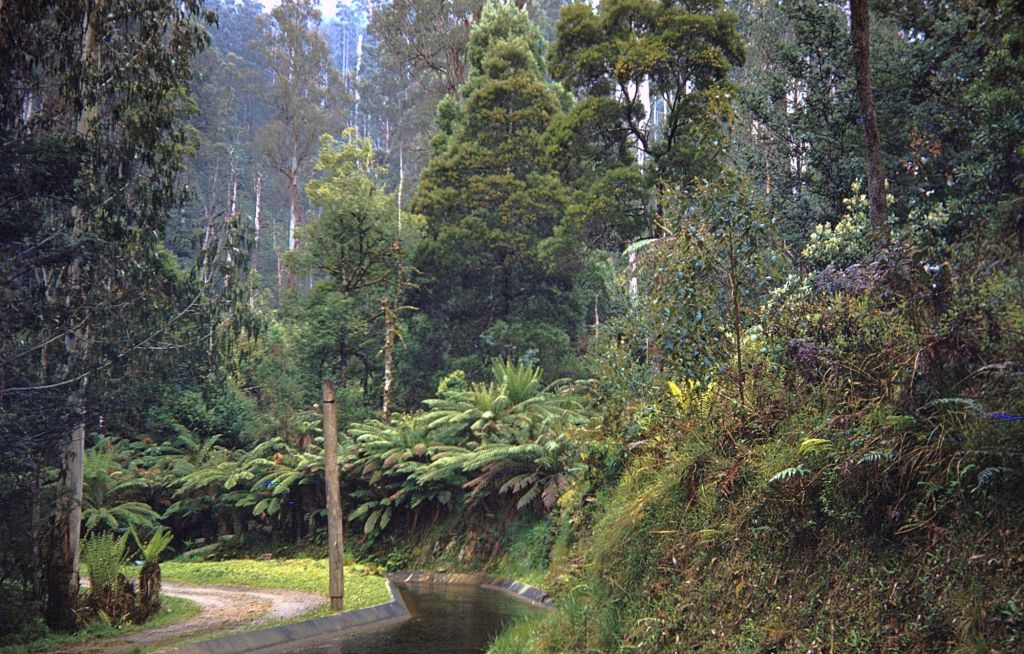
The open concrete channel skirted along the southern slopes of Mount Donna Buang on a constant gradient of 2 feet to the mile and operated completely by gravity.
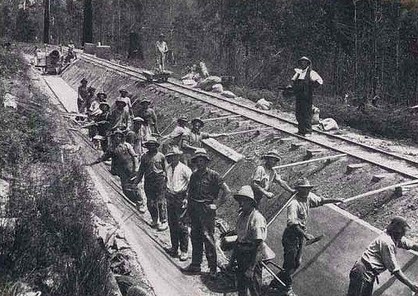
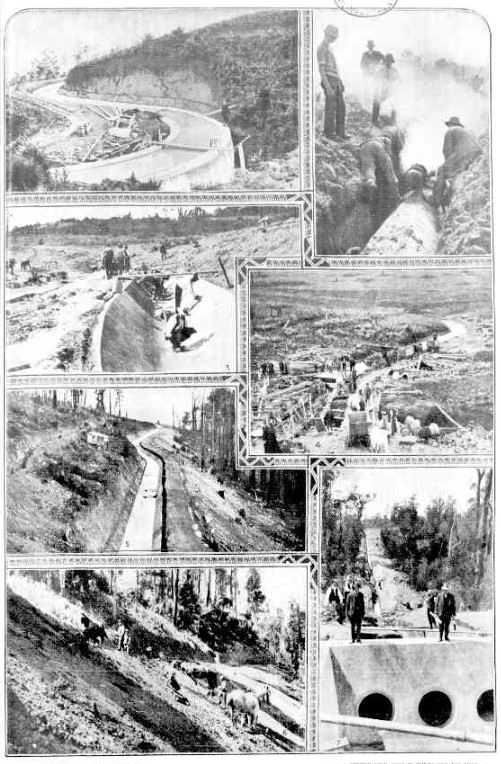
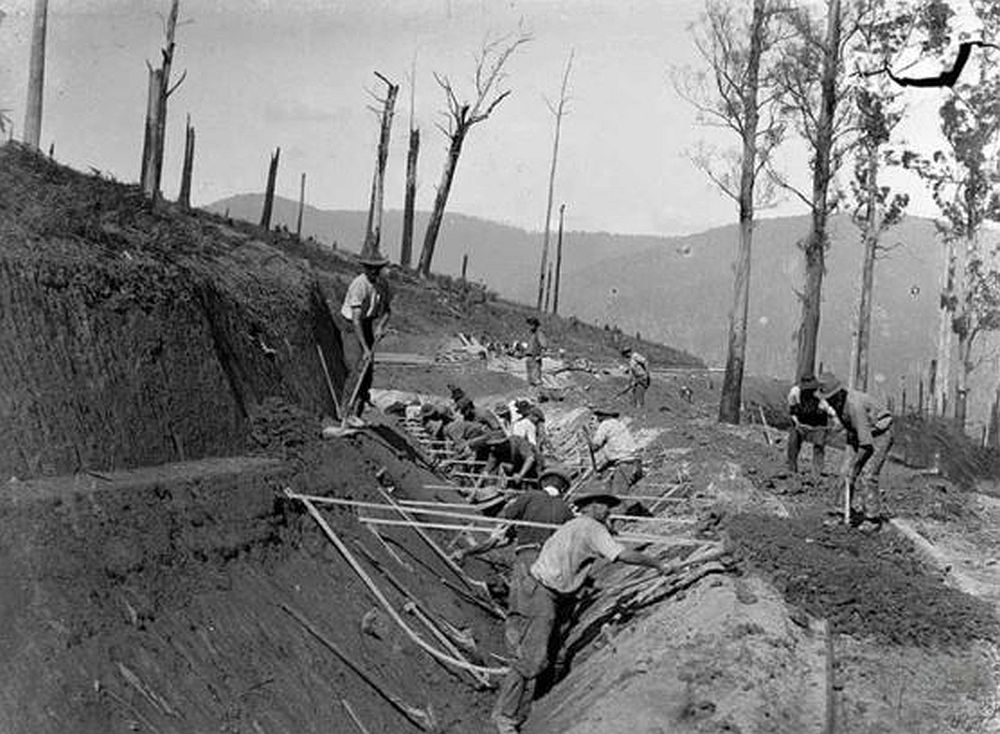
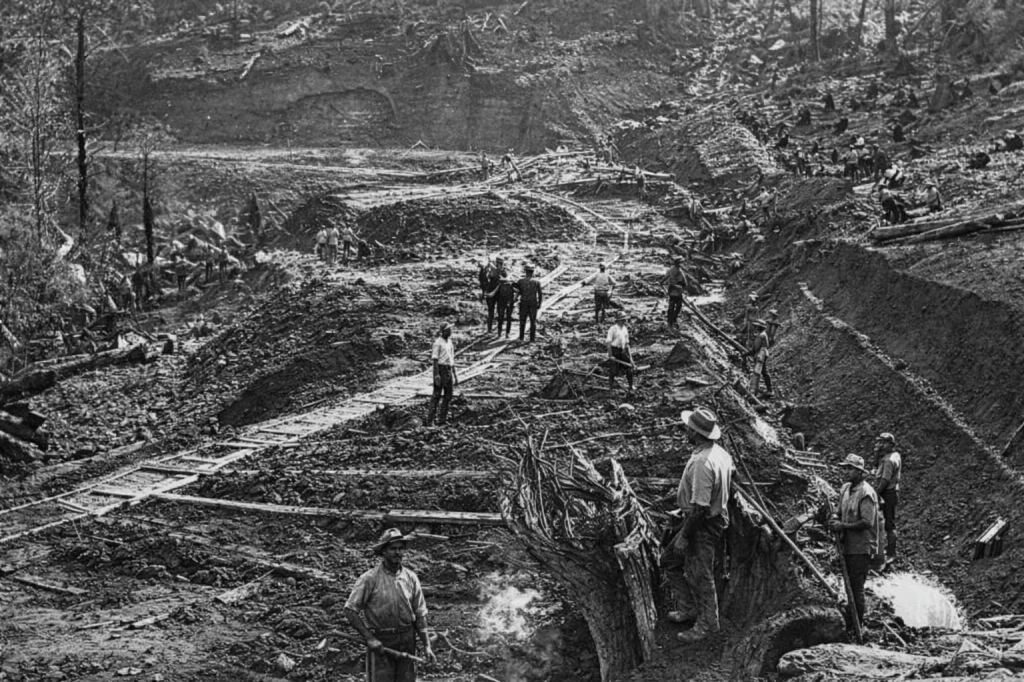
The channel, 9 feet 3 inches wide at the top and 3 feet 4 inches deep, was dug by hand and horse-drawn scoops.
Next to the cement lined channel, a flat access track was constructed from the excavated material with a rail line on top to deliver heavy construction materials like timber, stone, pipes, steel and cement.
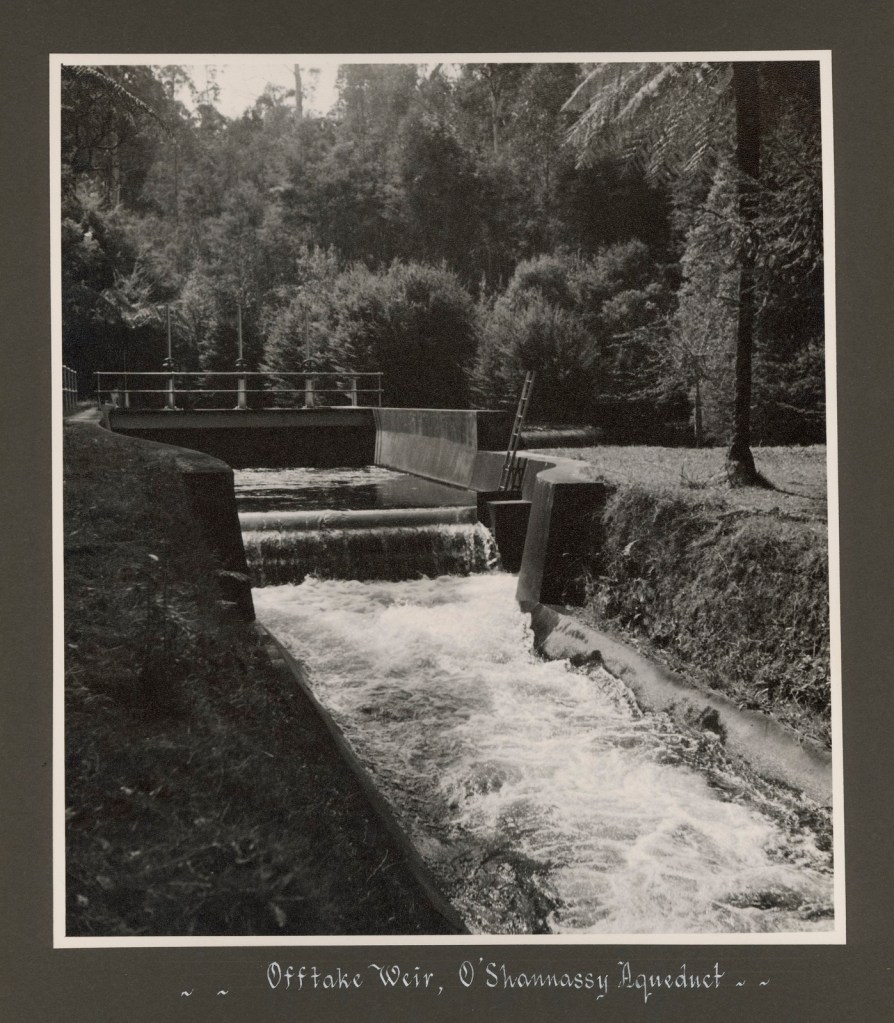
Water was also carried up and down the steeper slopes, across roads, creeks, rivers and through both farmland and residential areas by siphons, pipes and weirs. Some of the pipes were made from timber staves and some from steel.
The total cost of construction of the O’Shannassy aqueduct on its completion in 1914 was £426,890.
But Melbourne’s water supply woes continued and in 1924 the channel was increased in size to 12 feet 11 inches wide and 5 feet 2 inches deep. Its capacity effectively tripled from 20 million to 60 million gallons per day.
The O’Shannassy scheme was augmented in 1929 by a new weir on the Coranderrk Creek near Healesville which diverted water into an aqueduct that joined near Woori Yallock.
Resident caretakers stationed along its length carefully controlled water flows with a series of manually operated locks and gates. They also patrolled the channel to keep it clear of debris and functioning properly.
The next major phase in the O’Shannassy project was the construction of Silvan Dam in the eastern foothills of the Dandenong Ranges. Works began in 1927 and were completed by 1930.
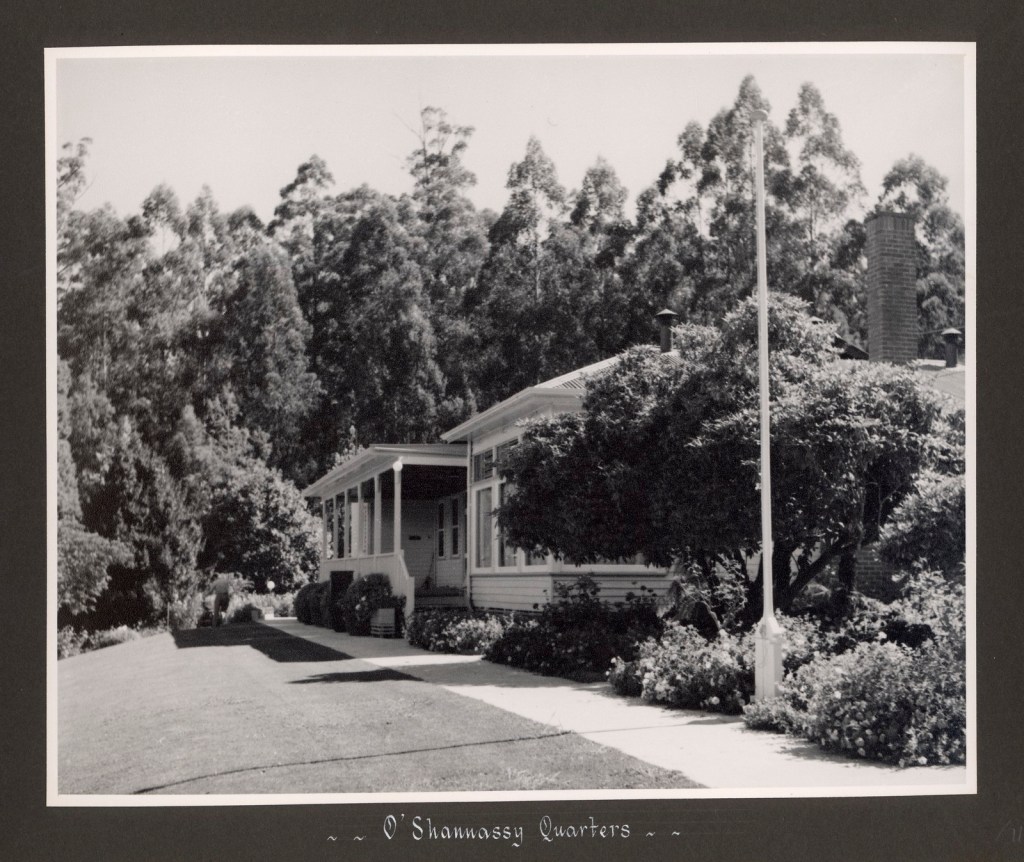
The sumptuous O’Shannassy Lodge was also built near the aqueduct. It was mostly used by the MMBW Commissioners and their guests as a private weekend retreat. The Lodge famously hosted Queen Elizabeth and Prince Phillip when they visited Melbourne in 1954.
But by the mid-1990s, the ageing aqueduct was nearing the end of its service life. There had been several serious collapses over the years, the main one being at Dee Road above Warburton which placed the town and community at severe risk of flash flooding.
Eventually in December 1996, the open aqueduct was closed and replaced with large underground pipes to carry the water to Silvan.
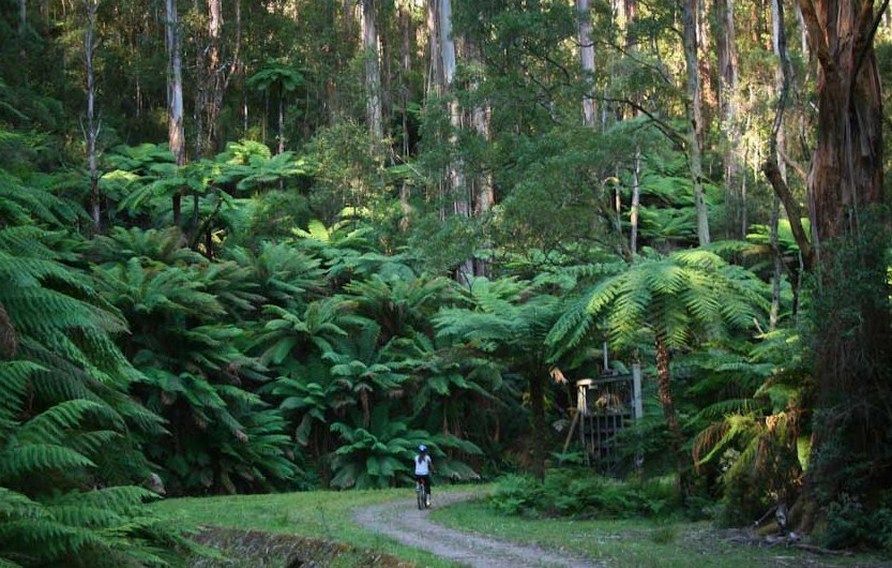
Today, a 34 km section of the old O’Shannassy aqueduct is a spectacular bushwalking and bike riding route.
Up to a thousand Sessile oaks (Quercus petraea) were felled to reconstruct the ancient 800-year-old timber roof and fallen spire of Notre Dame Cathedral in Paris after it was destroyed by fire in April 2019.
A nationwide tree hunt began soon after French president, Emmanuel Macron, decided that the iconic Cathedral would be rebuilt exactly as it was before.
The oaks were between 150 and 230 years old, with trunks at least one metre in diameter and lengths over 18 metres.
Eight of the trees – destined for the most monumental part of the spire – were found in the Forest of Bercé that once belonged to the kings of France.
The trees were harvested over the late winter of 2021 when they were dormant and without leaves, otherwise harmful tree sap and moisture could enter the wood fibres. The logs were then left out to air dry for up to 18 months.
But harvesting the oaks was not without controversy.
Craftsmen then used medieval carpentry techniques and traditional hand tools to shape the replacement roof timbers.
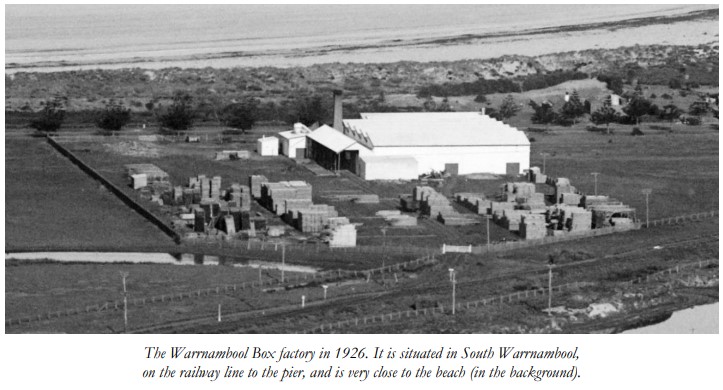
Warrnambool in southwest Victoria has a strong dairy industry that once boasted two factories making thousands of wooden butter boxes.
The first factory was opened in 1896 near the railway station by Welsh immigrant Henry McGennan.
The second factory owned by the Western District Co-Operative Box Company, came a few years later in 1912, on land in South Warrnambool, fronting Pertobe Road. There had been initial negotiations for a single company, but these fell through.
The butter boxes were made with quarter inch sawn boards and timber ply and could hold one cubic foot of butter.
Every three months around 1,200 m3 of kahikatea, or white pine, (Dacrycarpus dacrydioides) was imported from New Zealand. Australian hardwoods were deemed unsuitable because their natural tannins and oils tainted the butter.
But in 1920 the imported pine was switched to cheaper mountain ash (E. regnans) from the Otways once a way was found to reduce the taint using a neutral coating.
The new process enabled butter boxes to be manufactured for one shilling and nine pence each compared to two shillings for New Zealand boxes.
To source the mountain ash timber the Co-Op purchased three abandoned agricultural blocks totalling 400 ha in the head of the Aire River about 8 kms east of Beech Forest and built a sawmill. Conditions were harsh and a good day’s output, under manager Charles Brown, was around 10 m3.
The roads were impassable in winter, so the company also built its own timber tramline through the bush for 3 kms to the Olangolah Road and then along the road for further 3 kms to make a connection with an earlier built tramway which joined onto the railhead at Beech Forest.
The remote box mill worked until 1926 when the bush was cut-out and the area abandoned.
The Warrnambool factory then turned to other suppliers of timber. This move kept the plant going for several more years until a fire in 1936 which damaged part of the works. The company then closed the factory and moved its operations to Melbourne.
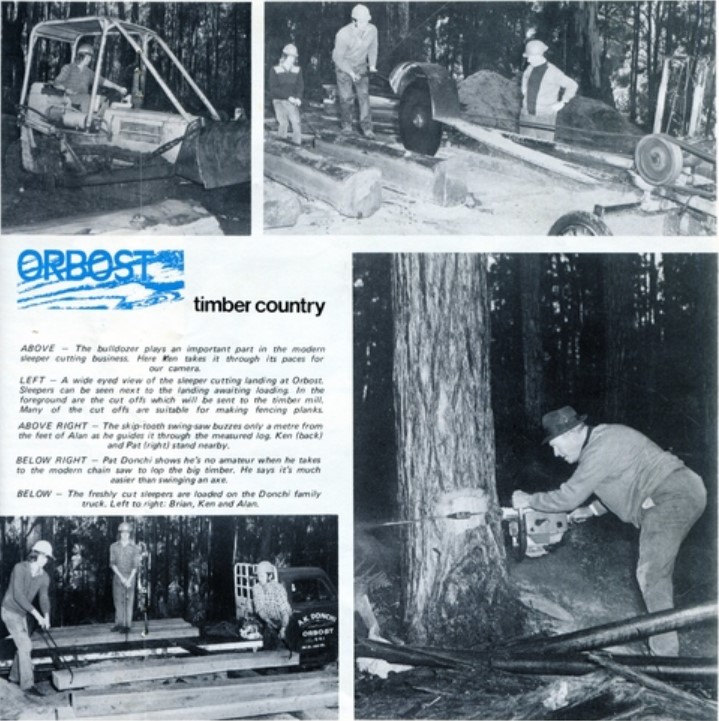
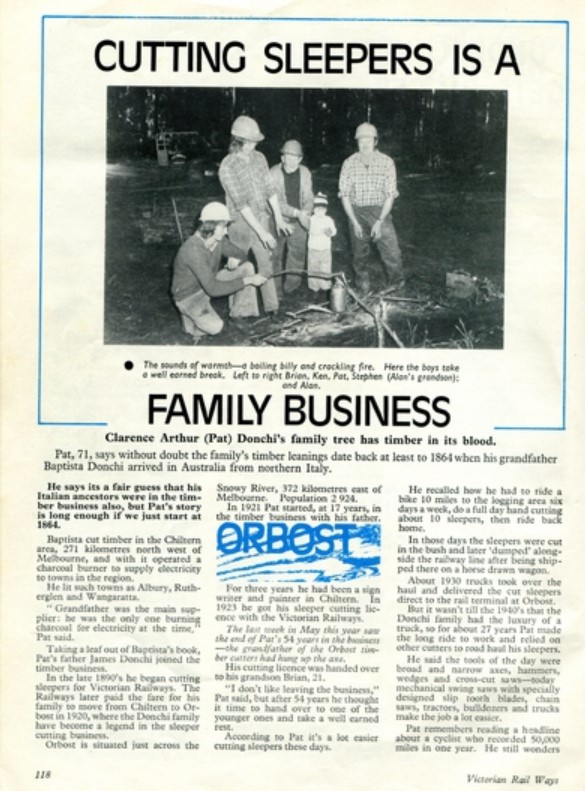
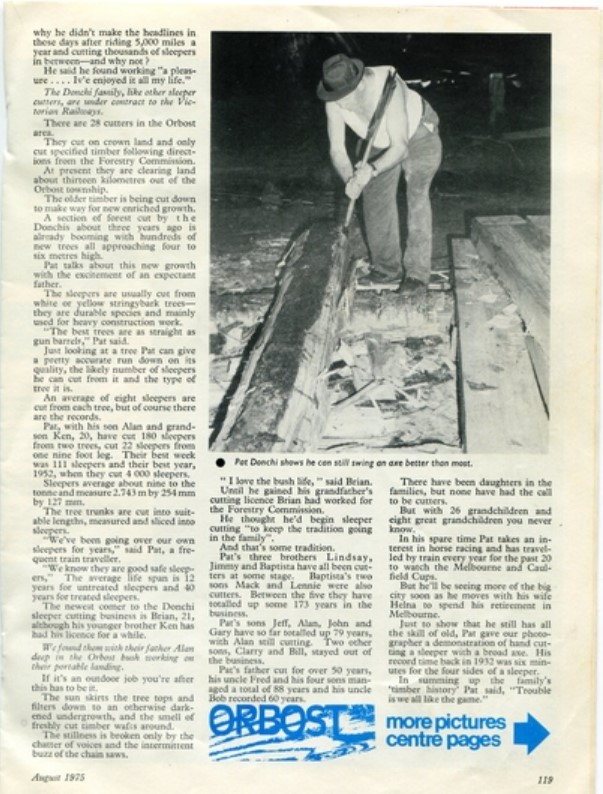
The figures for railway sleepers produced from State forests are simply astounding.
More than 26 million were cut between 1919 and 1986, primarily from the red gum forests along the Murray, the yellow stringybark forests of Mullundung near Yarram and greybox from East Gippsland.
Sleeper cutting began around Orbost in the 1920s and there are records of up to 150 sleepers being cut from a single tree.
Initially cut by hand with a broad-axe and adze most sleeper cutters switched over to terrifying swing saws.
This article about the well known Donchi family from Orbost appeared in Victorian railways magazine in August 1975.
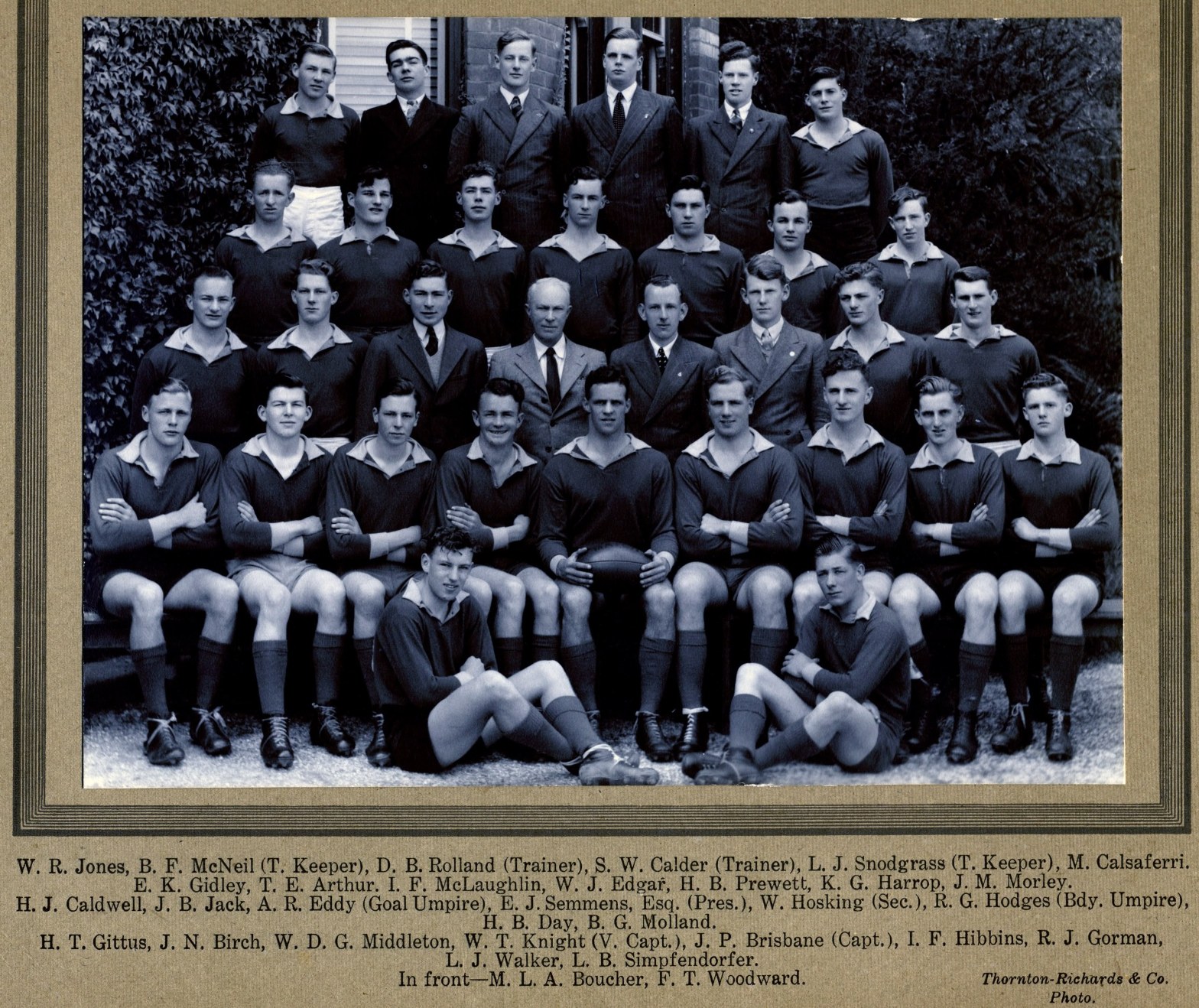
For many years, the number of students at the Victorian School of Forestry (VSF) at Creswick was too small to field its own competitive football team.
In 1942 there were only about 17 students, but in 1944 the annual intake increased, with the result that by 1946 the number in residence had more than doubled to 36.
The 1946 intake was also unique because it included four ex-servicemen that came to the school under the Commonwealth Reconstruction Training Scheme. They were also about two years older than their fellow VSF students with some experience of the “rough-n-tumble” in the outside world.
The ex-servicemen were Jeff Brisbane (RAN), Trevor Arthur (RAAF), Bill Middleton (2 AIF) and Derrick Rolland (RAAF), three of whom were very good footballers.
Early in 1946, Tom Evans, Secretary of the Clunes League football competition (and later an MLA) visited the School and suggested that it enter a team. The Principal, E J Semmens was a strong supporter.
But setting up a new football team would be expensive. Funds would be required for team guernseys (forest green being the natural colour of choice), plus footballs, bus hire for away matches, and many other overhead expenses.
The School had no sports fund, and the students received no cash allowance. Moreover, Creswick township already had a football team, so the VSF students couldn’t expect much local financial support for a rival team.
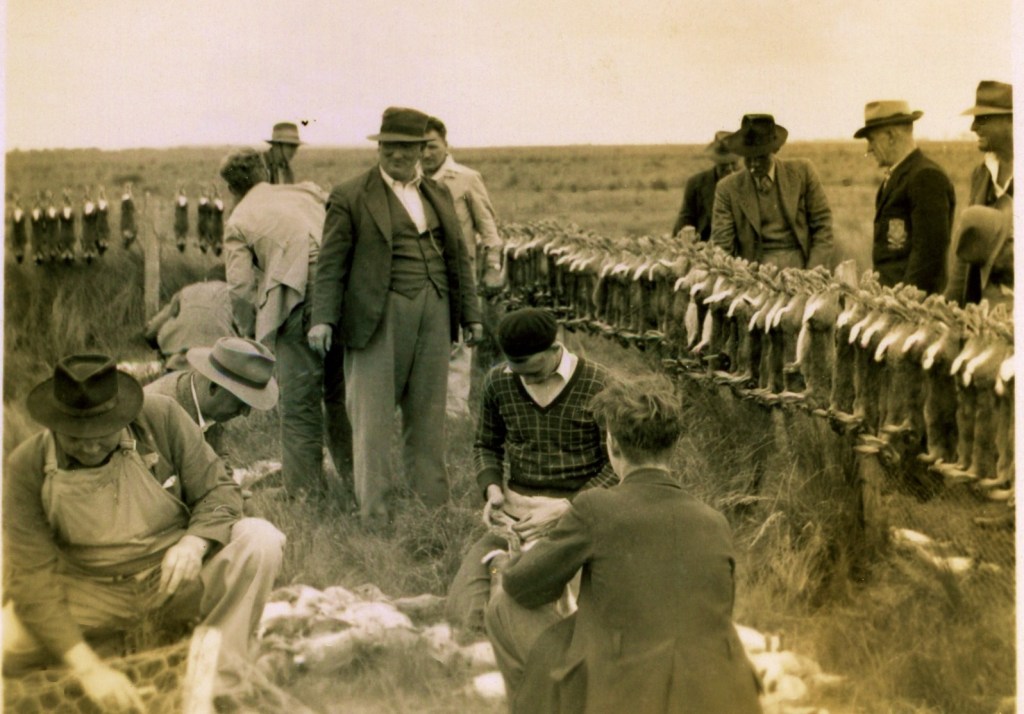
So, the students decided to fund the new team themselves and held weekend rabbit drives in the heavily infested paddocks around Newlyn. They also cut firewood in the school bush to support their fledgling club’s modest budget.
The VSF team went well and played in the 1946 grand final, only to be defeated by Smeaton.
The forestry school fielded a team for several years and many students also played successfully in other local teams. The Captain, Jeff Brisbane, had an invitation to play at a senior level with Geelong.
Before the fires, the well-established Ezards company already operated several sawmills and had constructed (and owned) a section of tramway in the Thomson Valley from Erica to a point just beyond the iconic South Cascade Bridge.
After the fires, the Forests Commission extended the line and operated a separate tramway further north as far as Little Boys. The Commission ran this section of line with two small diesel rail tractors.
But Ezards closed all their mills around Erica in about 1950 and then shifted operations to Swift’s Creek, north of Bairnsdale.
The Forests Commission was unable to reach an agreement with Ezards over the use of the company railway line from Erica, so the company ripped up their tracks and sold the metal rails. This effectively left the section of FCV track marooned from the South Cascades Bridge to Little Boys.
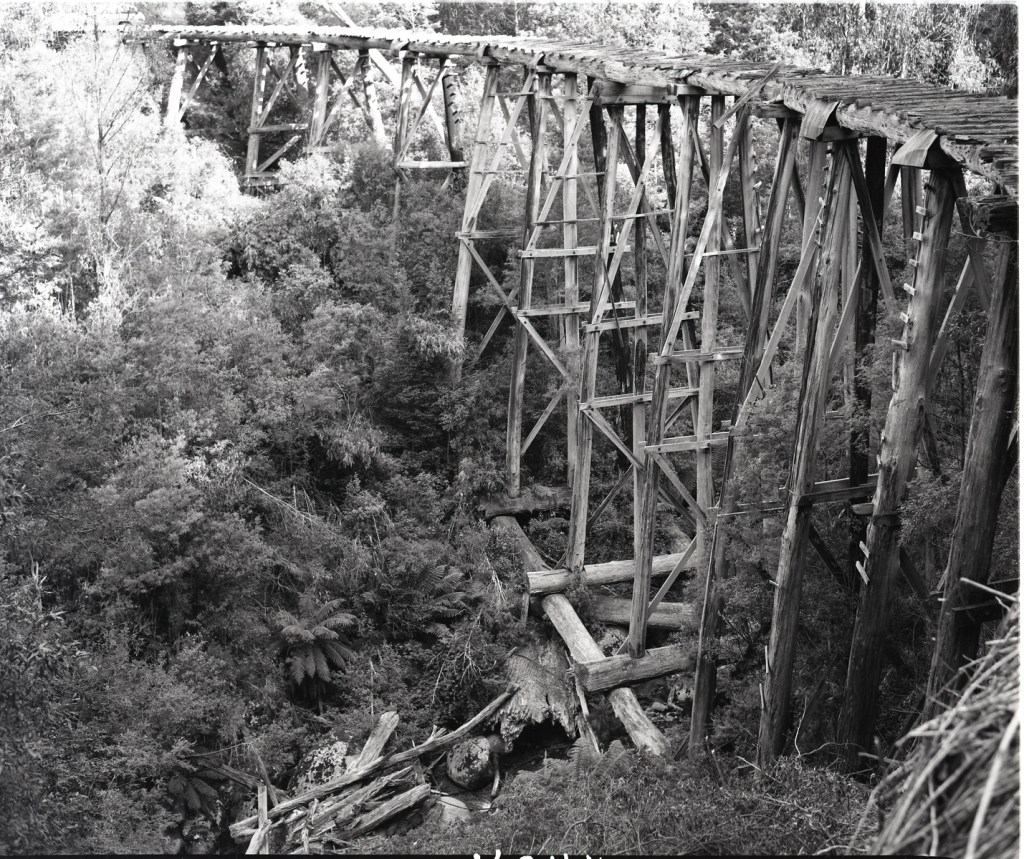
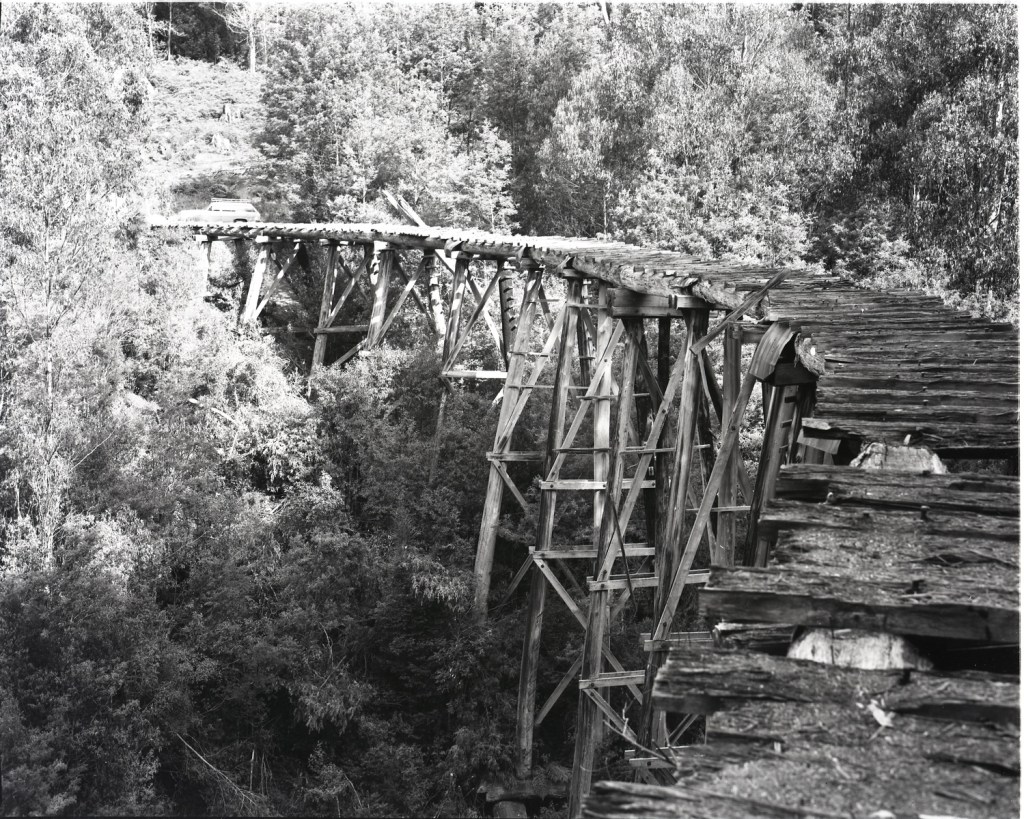
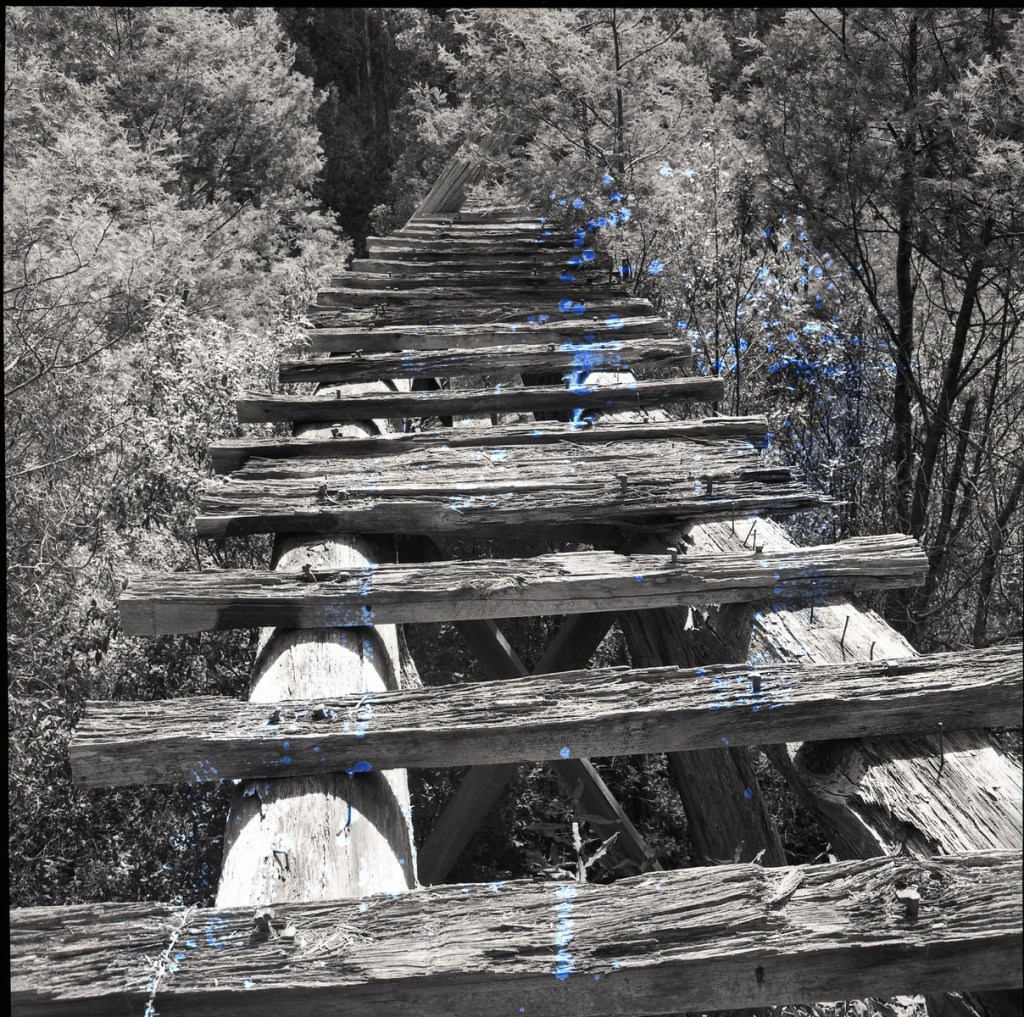
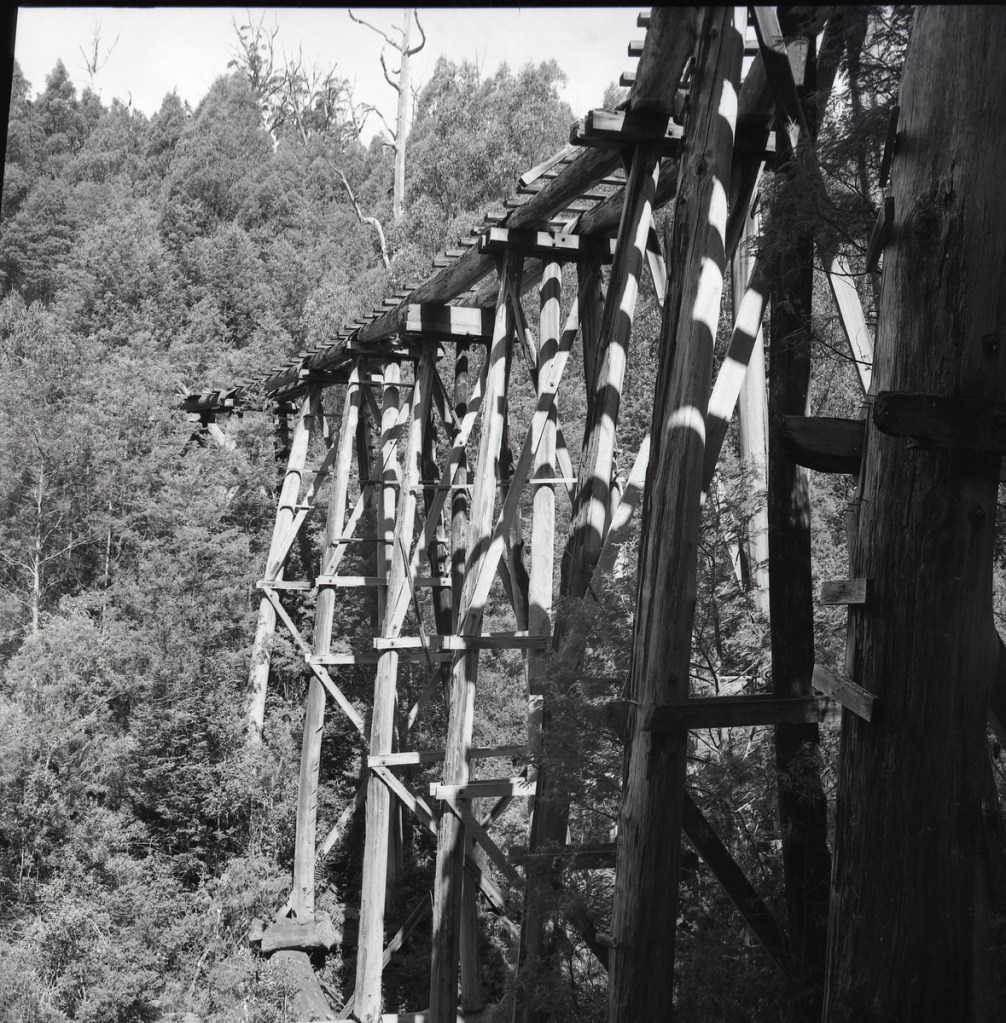
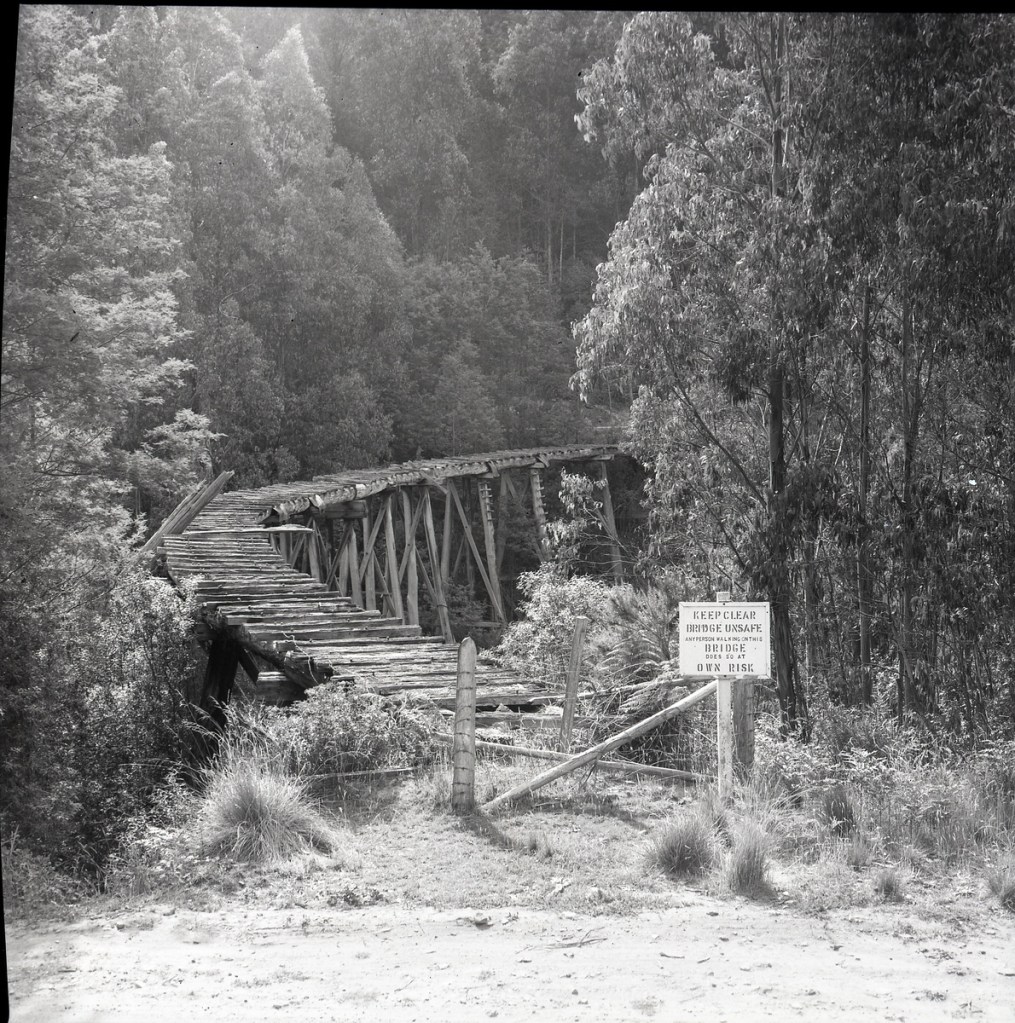
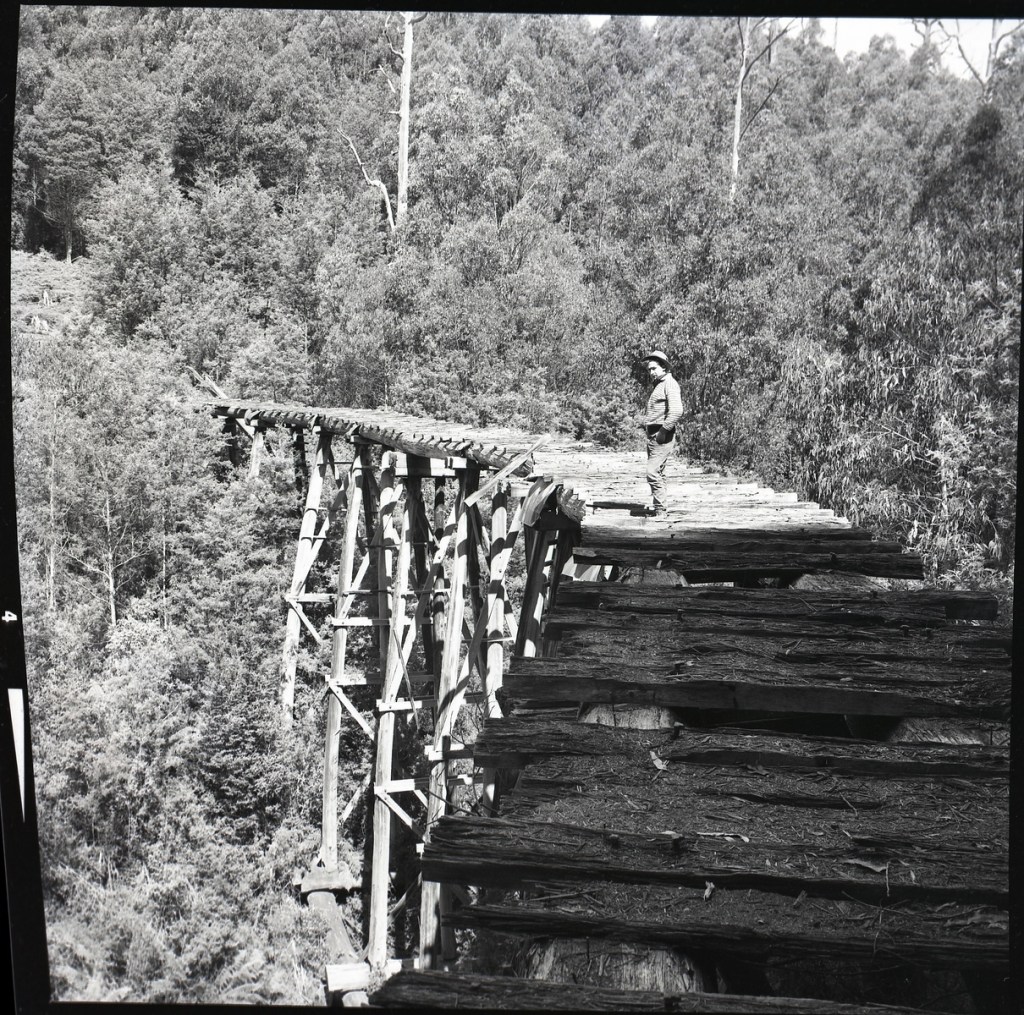
But at the time, there was a major technological shift away from steam and rails to diesel and roads, so the curved rail bridge over South Cascade Creek was abandoned.
The current Thomson Valley Road more-or-less follows the alignment and grade of the old FCV rail line as it hugs the contours of the hillside.
However, the South Cascade Bridge became a popular visitor spot but by the late 1960s the Commission became concerned that the slowly decaying structure was too dangerous for the public to walk over. And there was no funding to repair it.
In 1968, Max Boucher was local District Forester and Bernie Evans was the senior assistant, while Tony Manderson and Bill Clifford were also based at Erica.
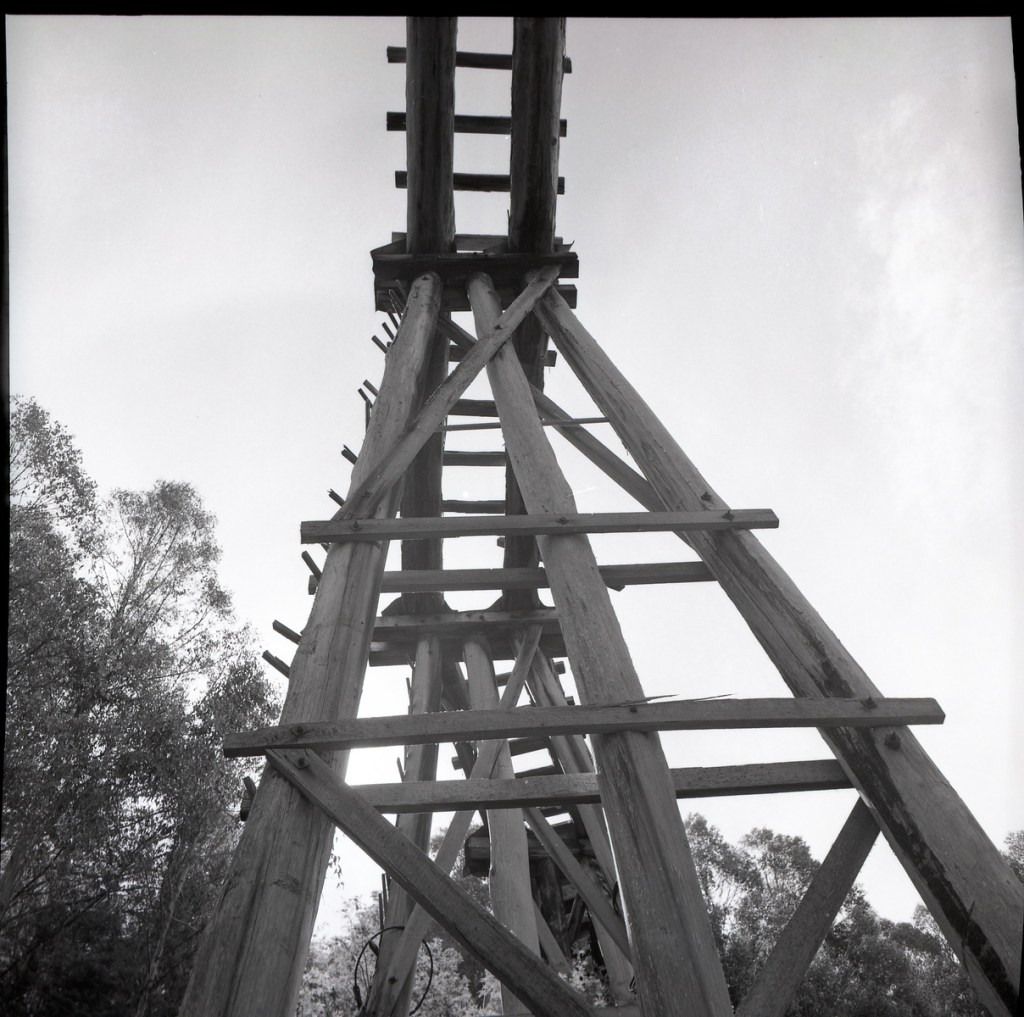
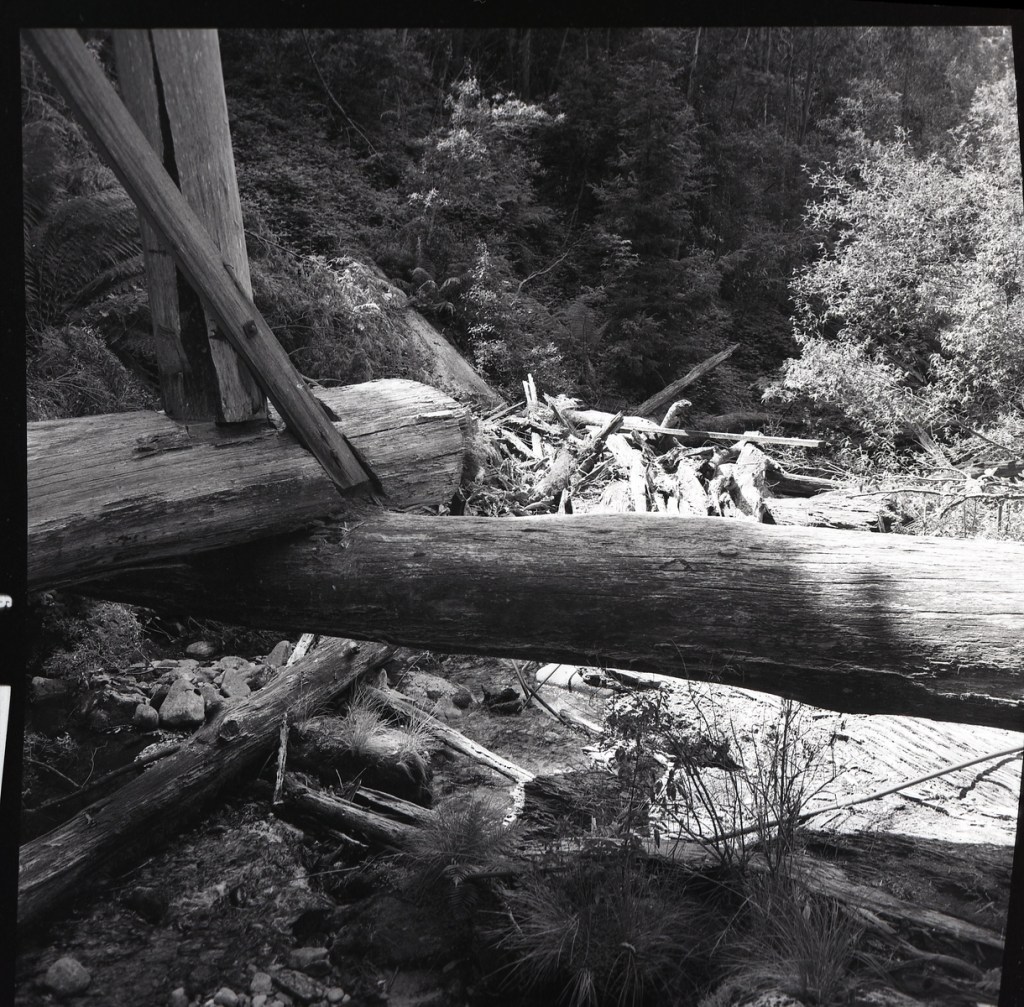
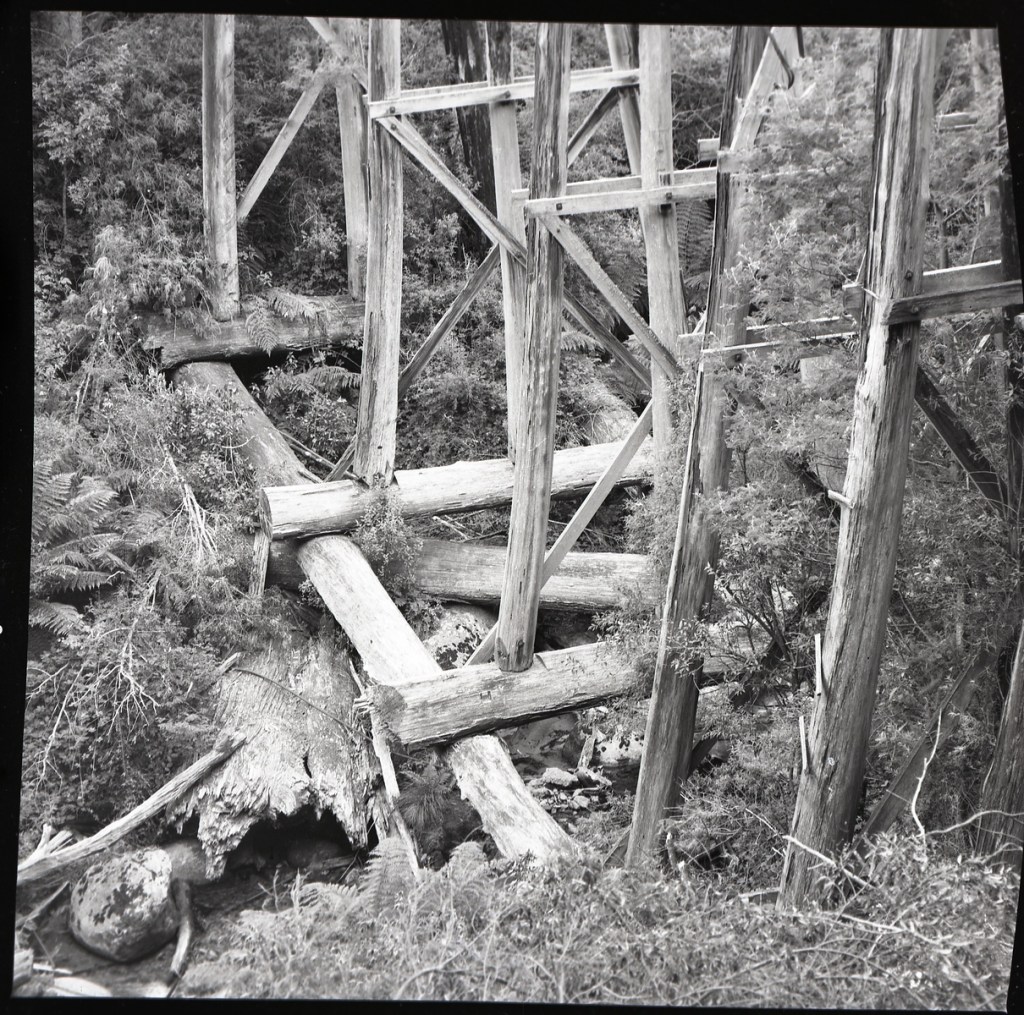
Max reluctantly gave the order to demolish the South Cascade Bridge. It was done by the local FCV district staff under the direction of the Commission’s explosives expert “Blow em up” Charlie Saunders.
Bernie and Tony together with a couple off the crew scrambled down through the steep gully laying explosives at the base of the various pylons. Charlie was a large man and happily supervised most of the operation from the road.
It took a couple of goes to demolish the bridge (the structure wasn’t as fragile as everyone thought) and there were still a few metres of it left on the south side that was subsequently fenced off.
It’s often reported that the Army Reserve blew the bridge up, but this is not so, although that may have become involved in some later demolitions.
Photos: FCRPA Collection
Photograph probably taken in the mid-1940’s (Source; FCRPA) : Thomson Valley tramway, South Cascade bridge
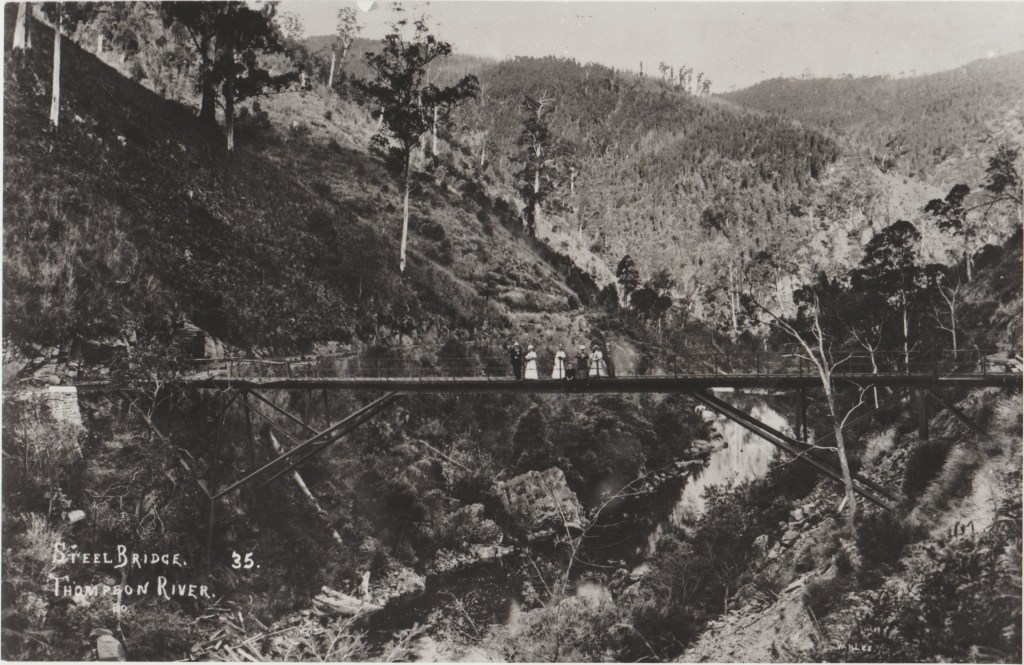
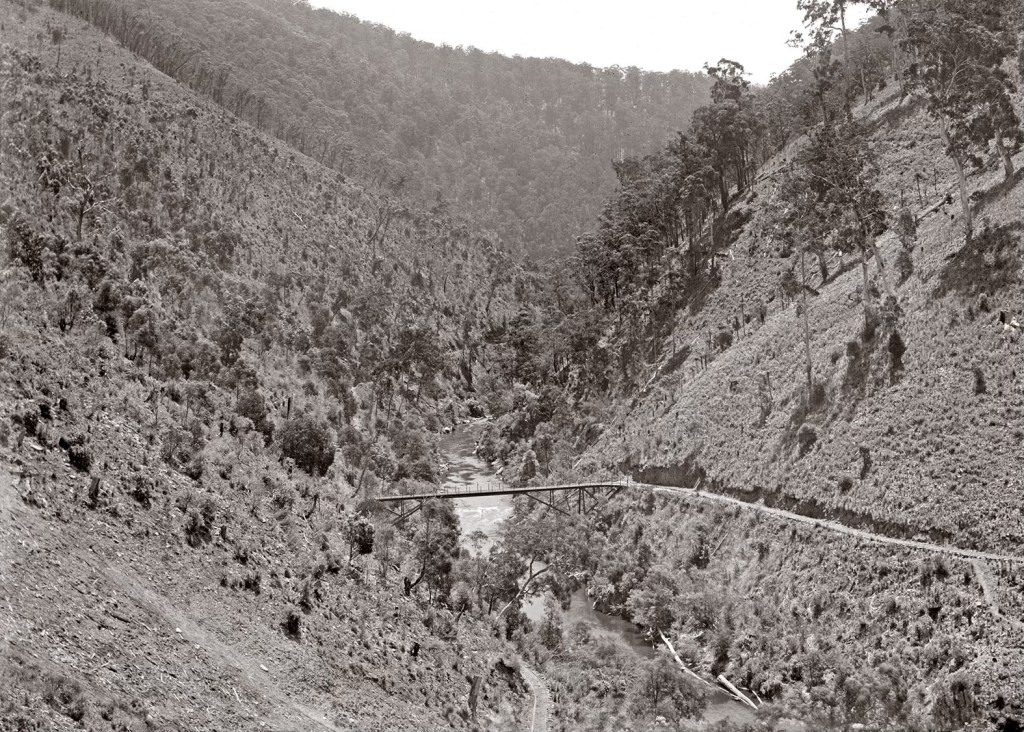
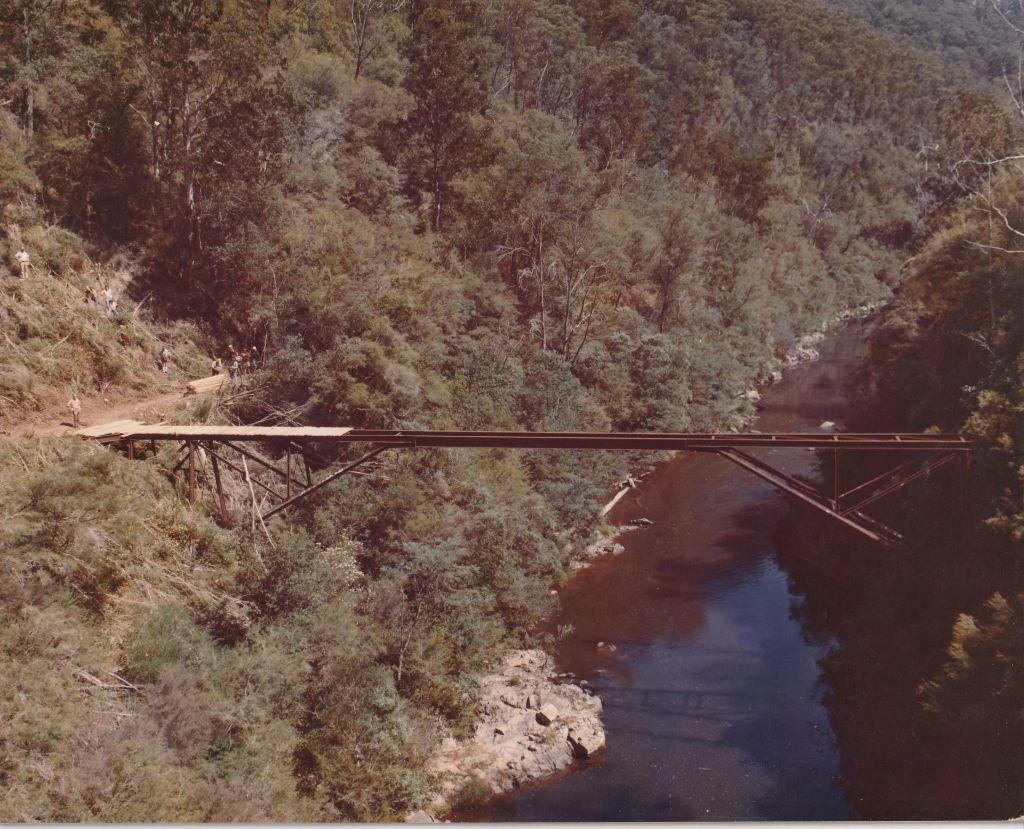
Also known as the Tramway Bridge or the Old Steel Bridge, Poverty Point Bridge was designed by Mr. Timmins, an engineer from the Victorian Railways.
The prefabricated steel components were manufactured by Dorman Long and Co and erected in 1900 by Austral Otis Co from South Melbourne.
Dorman Long and Co was a Middlesborough firm – a city on the Tees straddling the North Yorkshire – Durham border. In Australia, of course, it is best known for its role in the construction of the Sydney Harbour Bridge two to three decades later.
The Poverty Point Bridge was part of a seven-mile, horse-drawn, two-foot gauge tramway to serve the Long Tunnel gold mine in Walhalla during the town’s gold rush.
There was an extensive network of tramways in the bush which transported structural timbers and thousands of tonnes of boiler-wood for the mine’s voracious furnaces.
The line closed between Platina and Walhalla in 1944 and the timber deck was later destroyed by bushfire.
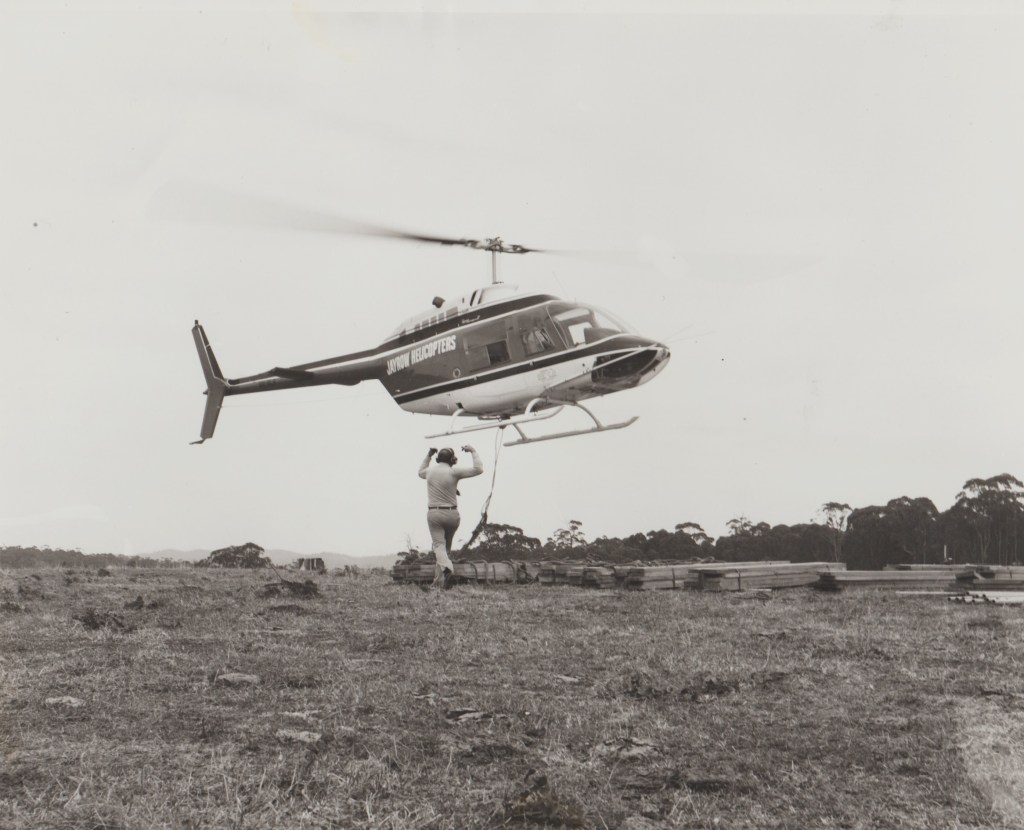
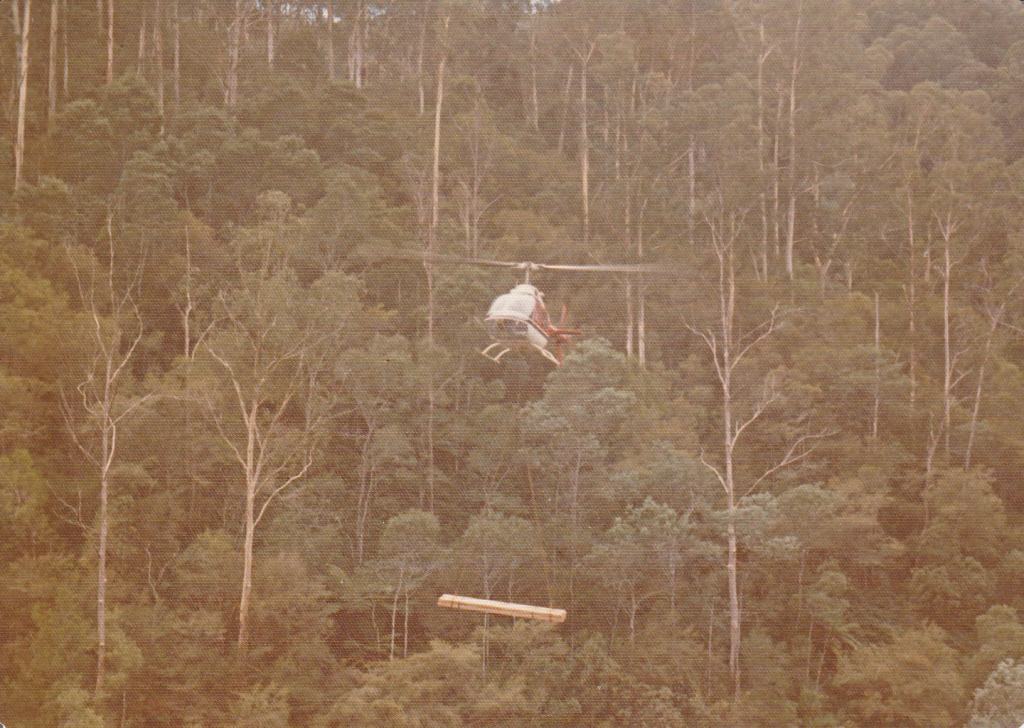
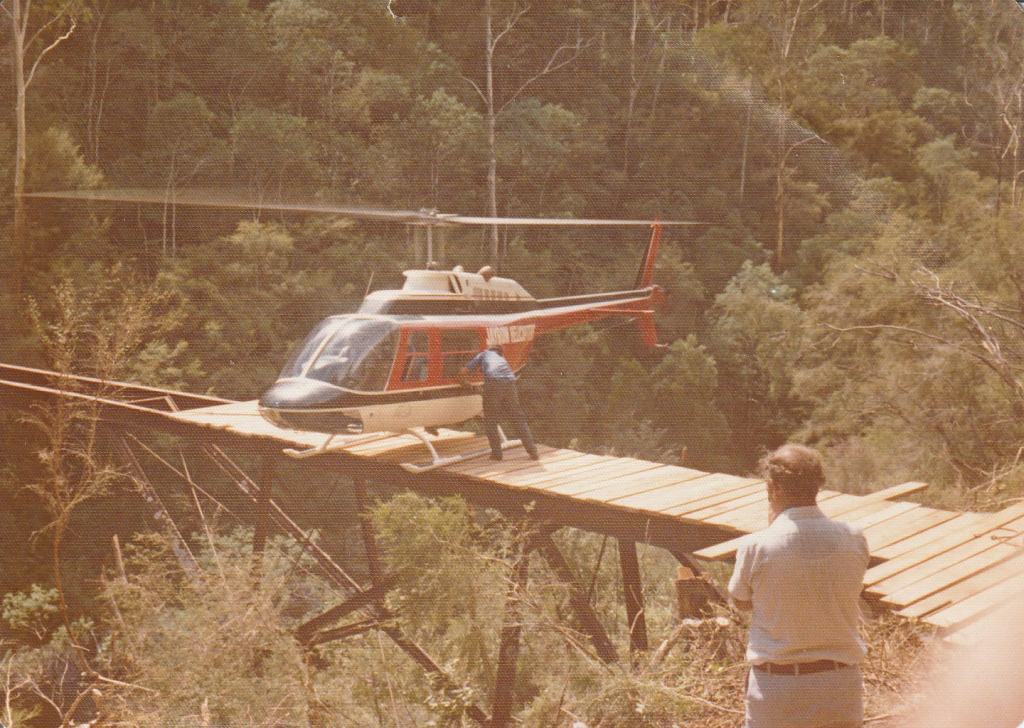
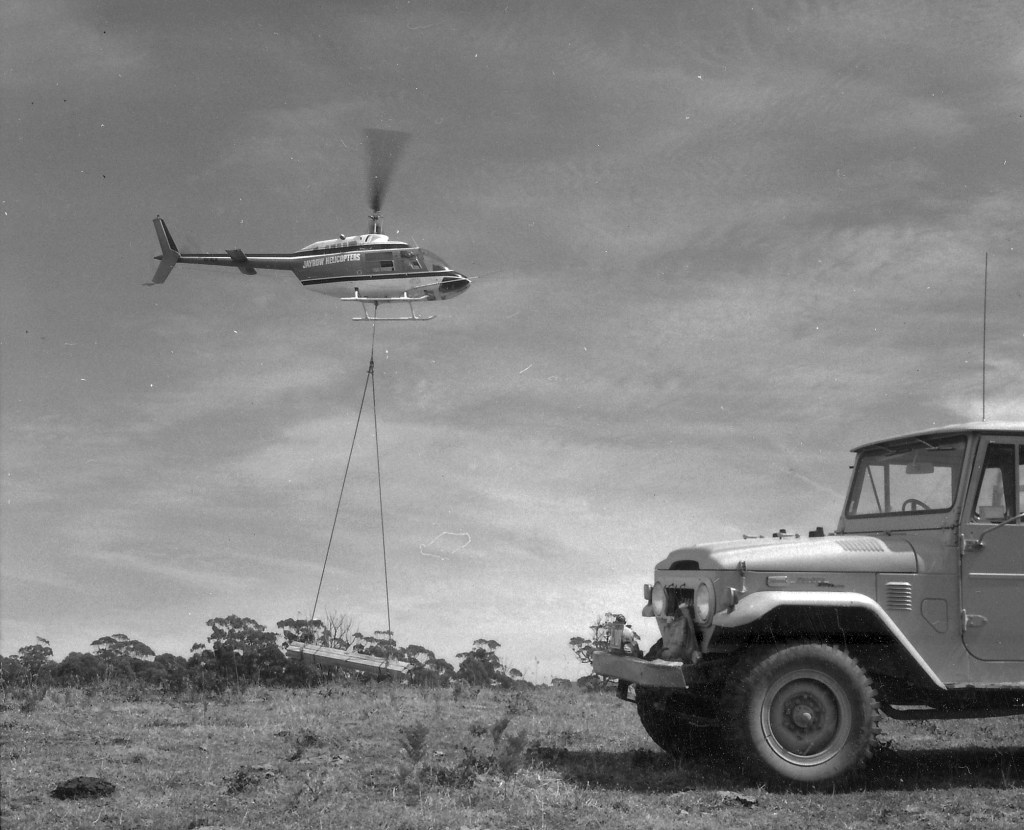
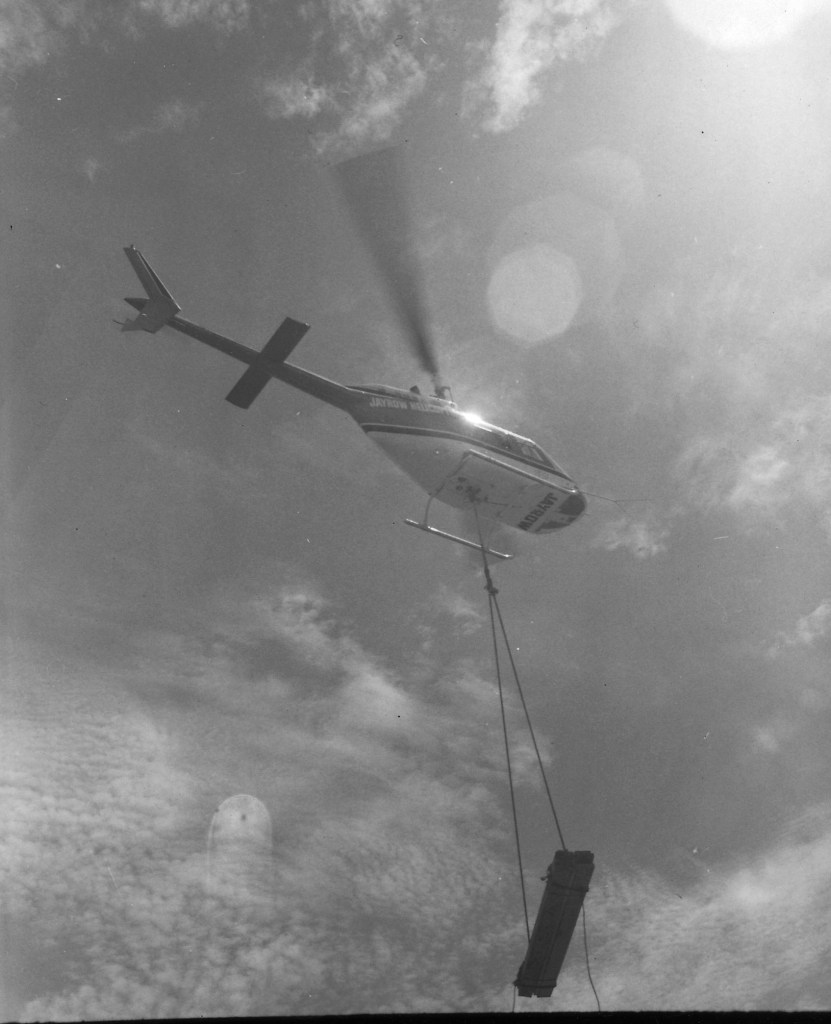
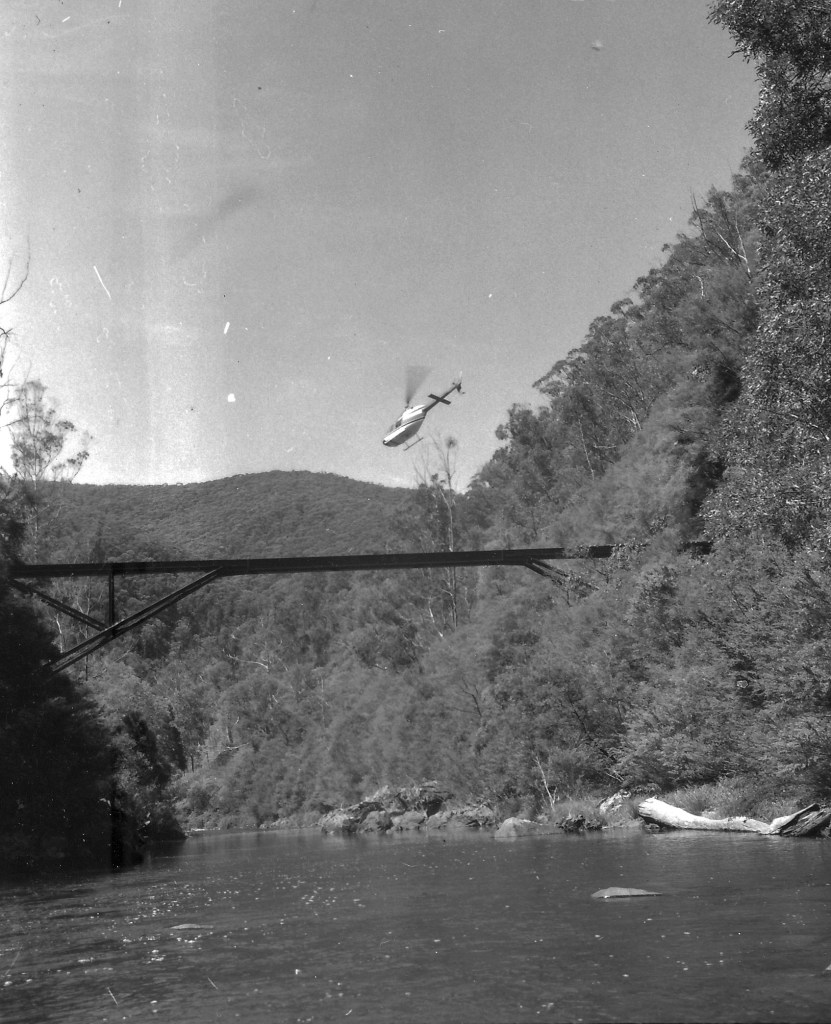
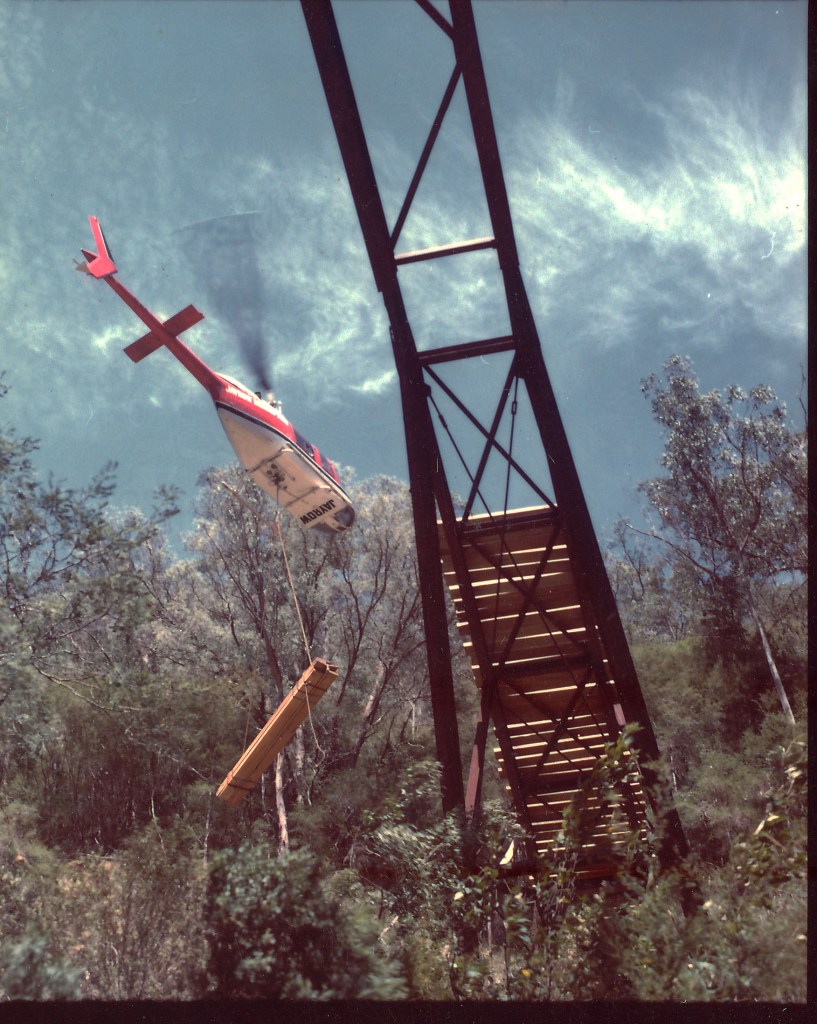
In March 1976, the bridge was redecked by the Forests Commission using a Jayrow Bell 206 Jetranger to sling-load timber to the site.
The bridge is architecturally significant and is listed as state significance on the Victorian Heritage Register.
It is also part of the Alpine Walking Track but is currently closed.