Firewood – home heating cost comparison.

There has been a cold snap recently and everyone knows that the costs of home heating this winter have risen sharply.

Firewood has traditionally been a cheap fuel, particularly for country folk… but it’s getting expensive now and harder to source.

But how does firewood compare with mains gas or reverse cycle aircon?

Comparing apples with apples is tricky so I have calculated the energy running costs on a per Megajoule basis. I haven’t included the capital, maintenance or depreciation cost of various heating systems. Warning… mathematics ahead!!!

To give some context and putting aside the complex science of thermodynamics and energy loses for one moment, boiling one litre of water in an electric kettle uses about one-third of a Megajoule of energy.

Turning up the thermostat, or putting more wood on the fire, will put more Megajoules into your room per hour, and the running costs will go up.

And let’s not go down the renewability, sustainability, greenhouse emissions rabbit hole for the moment.

Firewood.

Buying firewood is problematic. I have always advocated buying air-dried firewood by weight rather than more dubious cubic metres or chords. And I’m also very wary when there is too much bark on it.

One cubic metre of solid wood in a standing tree or round log generally expands in volume up to 1.5 m3 when its cut into blocks, then split and neatly stacked. Or as much as 2.5 m3 when loosely chucked into a pile. That’s an awful lot of fresh air.

Therefore, what looks like one cubic metre of firewood in a tightly stacked, and slightly heaped, 6×4 trailer may only be equivalent to about three quarters of a cubic metre of solid wood.

Also, green wood can be more than 50% water, whereas air-dried firewood is ideally between 10-15%, while oven-dried wood has none. A large amount of energy is wasted trying to burn wet wood.

Getting a load of air-dried mixed species firewood cut, split and delivered to your home from a reputable timber merchant has recently increased in price from about $120 per cubic metre to about $300 per cubic metre. The dramatic increase has been caused by the closure of Victoria’s State forests to timber harvesting from 1 January, and firewood is now being imported from NSW forests.

Then there are always arguments about red gum verses mixed species, and you may find this a bit surprising… but it’s really important… ALL eucalypts have approximately the same calorific value, or energy content per kilogram, irrespective of species.

The energy content of eucalypt hardwood is about 18 Megajoules per kilogram @10% moisture content, or air-dried. Softwood pine has a high resin content and therefore has more energy per kg. And stinky brown coal briquettes had 26.6 Megajoules per kg.

But the density of air-dried eucalypts varies enormously from 673 kg/m3 for mountain ash up to 1121 kg/m3 for grey box. Mixed species firewood averages out at about 1000 kg/m3.  So, a load of grey box in the trailer weighs nearly TWICE as much as the mountain ash for the equivalent amount of space.

So, if you are buying firewood on a volume or cubic metre basis it makes perfect sense to buy the heaviest, or densest, wood you can afford.

There are also a few other things to consider like ease of splitting and ignition, charring, tar content, burning time, coals, pesky splinters, manual handling, storage space, disposing of messy ash and potential smoke (mostly a problem from burning green wood).

Assuming you can still get the old delivered price of $120 per cubic metre (~750 kg of air-dried wood) which equals 16 cents per kg, then one Megajoule of energy from air dried firewood costs 0.89 cents (16÷18).

The more expensive wood at $300 per cubic metre (~750kg air dried wood) increases to 40 cents per kg, so one Megajoule of energy from air dried firewood costs 2.22 cents (40÷18).

By comparison, firewood in bags at the petrol station costs $1.50 per kg so one Megajoule is a hefty 8.33 cents (150÷18).

And a modern firewood heater burning air-dry wood gets about 70% efficiency. Open fires not so much – maybe only 20-30%.

So, the costs of one Megajoule of usable energy output from burning air-dry firewood in a wood heater varies from 1.27 cents (0.89 @70%) to 3.17 cents (2.22 @70%) depending on whether you paid $120/m3 or $300/m3.

A wood fire is not something you can turn on and off easily like gas or electricity. If it’s cold outside, and I’m home all day, with the wood heater settings on low and our large lounge room at a comfy 20 degrees, I might burn up to 50 kg of firewood (or 900 Megajoules). This equals 8 dollars of wood at the old price of 16 cents per kg, or less than one dollar per hour.

Natural gas.

For those fortunate enough to have access to natural gas, it retails about 3.7 cents per Megajoule (forget about the supply charges for a moment).

And a modern gas space heater can be about 78% efficient. The other 22% goes straight up the chimney.

Therefore, one Megajoule of energy from mains gas heating costs about 4.7 cents (3.7 @ 78%)

The large Rinnai 1005FT gas space heater in our family room puts out about 30 Megajoules of energy, and costs about 141 cents per hour (30 x 4.7) if its running on high. Obviously, if the thermostat gets turned down it uses a lot less gas.

Reverse cycle air conditioning.

Electricity prices vary throughout day, but in the evening until about 11 pm when off-peak kicks-in, they are about 66 cents per Kilowatt Hour (KWH) – excluding poles and wires charges.

And one KWH equals 3.6 Megajoules of energy. Therefore, one Megajoule of electrical energy costs about 18.3 cents (66 ÷ 3.6).

If you have a solar system with the old 66 cents/Kw feed-in tariff or a battery, the costs of electricity change considerably.

But here is the bizarre bit. A reverse cycle air conditioner acts as a “heat pump” moving heat from one place to another and can be 400% (or 4 times) efficient.

So, one Megajoule of energy output from a reverse cycle heating only costs about 4.6 cents (18.3 @ 400%).

Our Fujitsu 7.1KW split system is suitable for medium space and, on the maximum setting, puts out 25.6 Megajoules of heat, which costs about 118 cents per hour (25.6 x 4.6). And just like the gas heater, if the temperature setting is reduced the energy consumption goes down too.

Bar radiators.

The old-style bar radiators were 100% efficient because they converted all the electrical energy into heat.

And one watt equals one joule per second, so a 2400-watt radiator suitable for a small room puts out 8.64 Megajoules of energy (2400 x 60 x 60), which costs about 161 cents per hour (8.64 x 18.6 cents).

Summary – energy output.

So, there you have it …

  • Firewood in wood heater (@ $120 /m3) = 1.27 cents per Mj.
  • Firewood in wood heater (@ $300 /m3) = 3.17 cents per Mj.
  • Mains gas space heater = 4.7 cents per Mj.
  • Reverse cycle air conditioning = 4.6 cents per Mj.
  • Bar radiator = 18.6 cents per Mj.

If you still have access to a bit of bush and can legally cut firewood yourself, the costs might only be $20 /m3 to cover petrol for the chainsaw and your car to go and collect it.

However, for those without the means to collect wood themselves, the recent doubling in the retail price of firewood has hugely diminished the benefits of heating your home with wood, but it’s still one of the cheapest.

Buying cheap firewood on the back of a battered ute, or for cash from some bloke in the pub, or advertised anonymously on Facebook, must be of dubious origin – either knocked-off from State forests, National parks, or roadsides, or maybe cut without a council permit from private land. It’s worth asking where it came from rather than buying stolen goods. The demise of commercial firewood contractors in Victoria’s native State forests will undoubtedly return us to the lawless bad-old-days. But don’t get me started…

In practical terms, heating large rooms in my home with either mains gas, a wood heather or reverse cycle costs less than one dollar per hour. I accept that many other things come into play like how well the room is sealed from drafts and insulated from the cold outside.

A wise old District Forester once said to me… there are four jolly good “warms” in a load of firewood. First, you get to cut it, then you get to split it, then you get to stack it, before you finally get to burn it

I’m absolutely certain someone will want to challenge my logic and arithmetic. But, in the meantime, try to stay warm as best you can…

Smokey Bear turns 80.

Smokey Bear, the icon of the U.S. Forest Service, is the longest running wildfire prevention campaign in United States history.

The character was authorised on August 9, 1944, a date now celebrated as his official birthday.

He was originally drawn by Artist Albert Staehle complete with his trademark campaign hat and jeans.

Three years later, Smokey’s slogan — “Remember … only YOU can prevent forest fires” — made its debut.

Over the decades, several artists drew Smokey, and he evolved slightly in appearance.

Smokey Bear’s popularity skyrocketed in the 1950s and ‘60s. He appeared in children’s colouring books and kids could write to Smokey and receive a Junior Ranger kit, complete with a badge shaped like the Forest Service shield. He even had his own animated cartoon series on television.

In the spring of 1950, a bear cub was rescued from a fire in the Capitan Mountains of New Mexico, treated for his burns, and then transported to Washington, DC, to serve as the living symbol of Smokey Bear at the National Zoo. This bear received so much mail that the U.S. Post Office gave Smokey his own zip code—20252.

Smokey Bear made a goodwill visit to Victoria in 1977.

So, happy birthday Smokey.

https://en.wikipedia.org/wiki/Smokey_Bear

Source: Forest History Society.

Fire gallows signs.

The E.C. Manning Provincial Park in the Cascade mountains of Canada was established in 1941 and named in memory of Ernest C. Manning, chief forester of British Columbia from 1936 to 1941.

During his time, Manning championed to set land aside for future generations to enjoy. The park was described as a “holiday land without peer”.

Then in August 1946, a carelessly unattended campfire escaped and burned for nearly three weeks.

In spring 1950, two park employees — Chester Lyons and Mickey Trew — and came up a dramatic fire awareness sign which was erected beside the highway on the western entry to the park.

ONE CAMPER MADE THIS 5,700 ACRES LOOK LIKE HELL!
DON’T YOU BE CARELESS.

The blunt message was one of the earliest attempts at a public campaign to prevent forest fires in British Columbia.

However, the Department of Public Works objected to the sign because they had not given permission for it on their highway and also felt that the word “hell” was too strong to be displayed publicly.

The sign was taken down, but if Public Works had hoped that was the end of the matter, they were sadly mistaken.

An even more dramatic replacement sign went up in summer 1950 – this time a huge gallows, from which dangled a 10-foot-long cigarette in a noose.

THE ONE WHO DROPPED IT SHOULD ALSO BE HANGED.

It was later updated, but stayed on the highway until the 1960s.

I’m working with DEECA to have the Parnaby gallows signs replaced at Cann River… Hmmmm.

https://search-bcarchives.royalbcmuseum.bc.ca/gallows-fire-protection-sign-in-manning-park-after-devastating-forest-fire-in-1947

Mann Gulch – 5 August 1949.

Seventy-five years ago today, twelve US Forest Service smokejumpers, and one USFS fireguard, lost their lives in a blow-up at Mann Gulch in Montana.

And people are still talking about it…

The smokejumpers landed at 4.10 pm, and at 5.56 pm a fire storm raced up the steep slope and swept over them.

It was a classic “Swiss Cheese” situation where several factors aligned to cause the disaster.

And remember, everything always seems inevitable in hindsight.

To their credit, the Forest Service drew from the hard-earned lessons of the tragedy and designed new training and safety measures. They also revisited wildfire suppression tactics as well as investing heavily in understanding the science of fire behaviour.

The story has been told many times and, in many ways, including books, music and film but, to my mind, the best critical analysis of what happened comes from the training material set out in the Staff Ride.

https://www.nwcg.gov/wfldp/toolbox/staff-ride/library/mann-gulch-fire

Freda Treasure Tree Reserve – Dargo High Plains Road.

As soon as the winter snows melted, the Treasure family traditionally drove cattle from their home at Castleburn up to the Victorian Alps and the rich grasslands on the Dargo High Plains.

The pioneering family could trace its pedigree on the High Plains back to 1878, where they held long-term grazing leases over about 100,000 acres of unoccupied Crown Land and State forest.

Clare Freda Treasure was born at Bairnsdale in 1922 as the only daughter of Harry and Clara Treasure. She had older three brothers – Don, Jim and Jack.

Freda, as she was better known, was initially educated by correspondence with the support of her mother but later, during the 1930s, at the prestigious Methodist Ladies College (MLC) in Melbourne.  

Harry took all his children into the family farming and grazing business, among them his daughter Freda who helped on the family property. Her father later gave Freda a paddock at Castleburn, known as Bryce’s.

Harry and his sons built a substantial weatherboard homestead on the High Plains from local timbers.

The 1939 bushfires inflicted heavy losses on the family, as it did for many others. They lost 700 stock, miles of fences, several huts and yards, but they saved the homestead complex.

Harry made impassioned submissions to the Stretton Royal Commission regarding the causes of the 1939 fires and his views about the lack of burning in the high country.

He was also an Avon Shire councillor for over thirty years.

After the 1939 fires, Harry gave Freda a 28,000-acre bush grazing block, known as Jones’, where she lived in an existing hut and used the cattle yards. She stayed in the hut throughout the winter and was occasionally visited by her mother.

Freda was said to be a magnificent horsewoman who could shoot a rifle, whistle her dogs, and crack a stockwhip with the best of them. She camped out on the Dargo High Plains miles from anywhere on her own, and she knew the land better than any other Victorian woman. It was also said she was a keen and expert skier and had never been lost.

Freda became a bit of a celebrity and was often pursued by newspaper journalists and became known as the “Maid of the Mountains”, or ”Cowgirl of the Alps”.

In 1957, Freda married Wally Ryder from another pioneering high plains family, and the couple moved over the Great Dividing Range to a property at the base of Mt Bogong near Tawonga.

In 1959, there was some trouble brewing in Dargo over the establishment of a new sawmill in the town and the commencement of alpine ash logging on the high plains by the Forests Commission Victoria (FCV).

Relationships were strained. Freda’s older brother Jack Treasure and other cattlemen expressed concerns about the impact of heavy log trucks on the Dargo High Plains Road (DHPR) and particularly interference with their traditional use as a cattle route.

The ownership and maintenance of the DHPR was the responsibility of the Avon Shire and they were a bit grumpy too.  They wanted it reclassified as a “Forest Road” under the 1943 Legislation #4953, and for the Country Roads Board (CRB) to take over the maintenance, but that never happened.

Meanwhile, Freda never lost her passion and interest in the Dargo High Plains. She had a reputation for being gentle and generous but, when required, she could be very forthright and direct. In early 1960 she successfully lobbied her local MP, Sir Albert Lind, to protect several strips of alpine ash, or woollybutt, (E. delegatensis) from timber harvesting along the family stock routes she so often rode.

Freda’s letter was forwarded to the Minister for Forests, Alexander Fraser on 24 February 1960, for consideration.  The Chairman of the Forests Commission, Alf Lawrence, noted his suspicions about the motives behind the letter and the links to the disquiet from the Treasure family about the new Dargo sawmill.

Despite the Chairman’s misgivings, Stuart Calder, the District Forester at Briagolong, was subsequently asked on 22 March to identify, map and assess the impact on timber resources for a possible new reserve.

Stuart dutifully responded on 8 April 1960 recommending a new reserve on State forest, 5 chains (100m) wide on each side of the DPHR (200 m total) in three parts –

  1. The first area near Spring Hill junction set aside 90 acres of bush with a total length of 133 chains. It also covered the old Bandicoot Arms Hotel site on the road to Grant.
  2. Another 100 acres of alpine ash was identified on a stretch of 60 chains further north near Mt Ewen springs.
  3. A 5-chain buffer around the old Grant Cemetery was also recommended.

The Freda Treasure Tree Reserve, as it eventually became known, was subsequently excluded by the Forests Commission from logging along the edges of the DPHR. The manager of the Dargo sawmill, W. D. Downey, was subsequently advised.

But despite recommendations from the District Forester the Commission decided not to formally set the land aside as a Scenic Reserve under Section 50 of the Forest Act (1958).

However, a very clear instruction was issued to FVC staff in June 1960, not to organise logging within the strip, and this arrangement worked very effectively over the subsequent decades.

The Land Conservation Council (LCC) conducted a review of the Alpine Area in 1979, but the long-standing arrangements with the reserve were somehow overlooked.

In 1984, the Shire of Avon wrote to Graeme Saddington, the District Forester at Maffra, seeking clarification of the status of the land and suggesting it become known as the Freda Treasure Reservation. Local Commission staff once again supported the proposal, but there was still no action on a formal Section 50 Reservation, probably because the Forests Commission was going through a major disruption at the time to create the Department of Conservation, Forest and Lands (CFL).

Freda died on 25 April 1988, and just seven days later her husband Wally died too. On 8 December 1991, a plaque dedicated to Freda’s memory was unveiled in the bush near Spring Hill by the Mountain Cattlemen’s Association.

The original 1960’s Freda Treasure Tree Reserve was subsequently incorporated into a Special Management Zone (SMZ) during the Central Gippsland Forest Management Planning process in 1998. An extended reserve stretches along most the DHPR which was later ratified in the Federal Regional Forest Agreement (RFA), signed in March 2000.

https://www.highcountryhistory.org.au/wp-content/uploads/sites/7/10015.pdf

Main Photo: November 1951. https://trove.nla.gov.au/newspaper/article/265582324

Freda Treasure in 1945 with her horse and dogs. https://trove.nla.gov.au/newspaper/article/145704061/12480759

Source: DEECA Dargo – June 2024.

Source FCV File 59/73 PROV

Sir Albert Lind, MLA, Dear Sir Albert

To whom this letter should really be written I am not just sure, but I will leave it to you if it should be sent elsewhere.

Yesterday I rode from Dargo to Mt Ewan with cattle. On the way I suddenly felt impelled to stop and look for something. I couldn’t find what it was and felt mystified. Yet I know that Our Lord intended me to see something.

Later in the day I was again called strongly to look about me, but again saw nothing. Early this morning I rode again down from Mt Ewan, and it was then at each place that I saw the reason. A beautiful forest of the greatest magnificent stands there, with cool gullies and tree ferns – undisturbed for many hundreds of years, now natures perfection.

Next time I ride along all this will be destroyed by the destructive hand of millers. I think that I am intended to ask that these two stretches of road be spared and left in their present glory, to reward nature lovers who travel far to see such beauty.

Perhaps a width each side of the road could be left stand. 4 chain wide.

Perhaps just a stretch of ¼ mile or better still ½ mile on each side should be left.

Warmest wishes to yourself, sincerely, (Mrs) F Ryder (nee Freda Treasure)

P.S. The first place of beauty is at the foot of the first cutting towards Dargo from the Grant turnoff.

The other place is starting up the first cutting on the Dargo side of the Mt Ewan water gully going towards Dargo.

The letter has illegible pitman shorthand markings written in pencil, and I suspect these were made by the Minister’s Secretary in preparing a response.

Albert Lind then wrote to the Minister for Forests, A J Fraser MLA, on 24 February 1960 asking that Freda’s proposal be considered.

In March 1938, the “Kyeema” from Australian National Airways did a publicity “mail drop” to mountain cattlemen on the Dargo High Plains. Newspapers reported “mail by air for lonely cattle musterers … who normally wait two or three weeks for mail”. Those on the ground included Freda Treasure, Jack Treasure, Mr and Mrs E.E. Treasure, Carl Wraith, Jim Treasure and T Evans.
Sadly, the same aircraft crashed just a few months later into Mt Dandenong, killing all on board.
https://trove.nla.gov.au/newspaper/article/244593502

Talbot Hut – Alpine Walking Track.

In 1906, prominent surveyor and geologist, William Baragwanath, was commissioned by the Public Works Department to identify a tourist track along the Baw Baw Plateau from Warburton to Walhalla.

In February 1907, the new 51-mile route was ridden by a small party of eminent dignitaries including the Governor of Victoria, The Hon. Sir Reginald Talbot and his aide-de-camp Captain Richard Crichton, together with the Minister for Lands, John Mackey and the Surveyor-General, Joseph Reed, accompanied by surveyor John Goodwin.

On arrival, the party were greeted on the Thomson River Bridge and made guests of the President of the Shire of Walhalla, John Finlayson, and Dr. Edwin Allester, President of the newly formed Mountaineering Association. They were hosted to a lavish civic reception at the Empire Hotel which was followed by a very convivial “smoke night” of port and cigars.

Several tourist huts were later built as staging points along the way including Yarra Falls, Mt Whitelaw and Talbot Peak – named in honour of the Governor.

Each hut was a simple structure with two rooms, walls made of spIit-timber palings or corrugate iron, a concrete fireplace, an earthen floor and a corrugated iron roof. Each hut was equipped with wire mattresses and cooking utensils and fenced paddocks were Iocated nearby for horses. The track was also marked and promoted with tourist maps.

In 1938, the Talbot Peak hut was destroyed in a storm while many of the others were destroyed later in the 1939 bushfires.

Walkers lost interest after the bushfires.  The shutting of the route from Warburton through the Upper Yarra catchment in the 1940s and the closure of the Walhalla mine which forced the cessation of the passenger railway service, all combined to seal the fate of the track.

The current Alpine Walking Track begins at Walhalla and incorporates part of the original 1906 alignment along the Baw Baw Plateau including a camp site at Talbot Hut. It was developed in the 1970s by the Forests Commission which played a lead role in the planning and on-ground works.

Note – Talbot Hut is sometimes called Mt Erica Hut.

Main Photo: Talbot Peak 1919. https://collections.museumsvictoria.com.au/items/768589

https://trove.nla.gov.au/newspaper/article/196150105

https://www.victoriasforestryheritage.org.au/community/recreation/556-the-alpine-walking-track.html

Tourist map Warburton, Mt. Baw Baw, Walhalla / issued by Victorian Department of Lands & Survey.
https://nla.gov.au/nla.obj-231772438/view
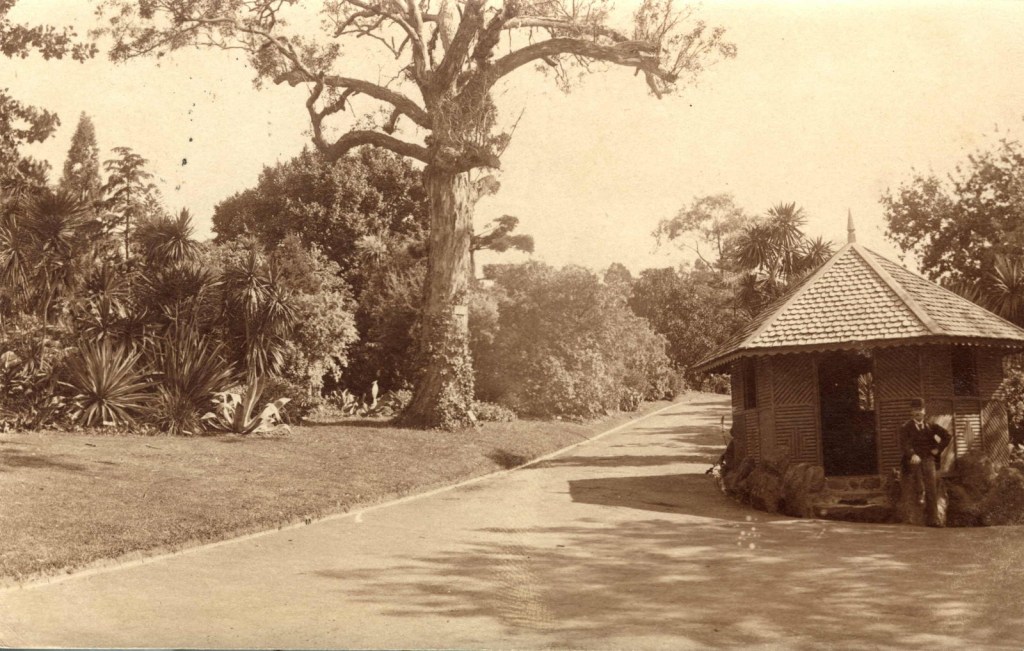
The Governor Sir Reginald Talbot and his party were met at the Thomson river bridge by Mr A. W. Craven MLA, Cr John Finlayson (Shire President), Mr J. Renshaw (Shire Sec), Cr Hartrick (Chairman of Railway Trust), Crs Bessell, Thomson and Frazer Anderson; Dr Edwin Allester (President Mountaineering Association), Mr H. Rawson (Manager of Long Tunnel Extended), Mr Chas Collins and other gentlemen, and escorted into Walhalla. The Governor is wearing a white pith helmet out the front. Source: Greg Hansford

Talbot Hut ruins

Mundic Wier – Toorongo Plateau.

The firestorm tore trees from the ground and scattered them like matchsticks across the landscape.

The devastation of the 1939 bushfires was unprecedented. Several towns were entirely obliterated leaving 71 people dead including four FCV staff, 69 sawmills were lost and over 3700 buildings destroyed.

Nearly two million hectares of Victoria’s State forests were burned. The intense bushfire killed vast swathes of mountain ash, alpine ash and shining gum, some for the second time since 1926 and 1932.

Salvage of the fire-killed trees became an urgent and overriding task for the Forests Commission. It was estimated that over 6 million cubic metres needed to be harvested, and quickly, before the dead trees split and the valuable timber deteriorated.

New roads and bridges were hastily constructed, sawmills and timber tramways rebuilt. A massive job made more difficult by labour shortages caused by the War and a bleak winter of 1939.

There was so much timber that many of the logs were stockpiled into huge dumps along creek beds and covered with soil and tree ferns or wetted down with sprinklers to stop them from cracking. Some logs were recovered as many as fifteen years later.

Mundic Wier was hurriedly built in 1941 of logs and earth on the Toorongo Plateau north of Noojee by Forests Commission engineer, Phillip Avery. The dam was a massive crib-log construction, with the upstream side faced with heavy planking. However, not long after its completion, a violent storm on the Toorongo Plateau filled Mundic Creek to overflowing; the planking failed and the dam burst. It was not repaired and, consequently, the dump remained only partially submerged.

https://www.victoriasforestryheritage.org.au/activities1/producing/78-post-1939-fires-recovery-salvage.html

Photos: FCRPA and Melb Uni Collections.

Mundic Weir on the Toorongo Plateau – 1941. Information from Owen Salkin.
The remnants of Mundic Weir are still visible on the Toorongo Plateau. Information from Owen Salkin.

Toyota Land Cruisers.

In the post war period, the State Government put a strong emphasis on buying British 4WD vehicles such as Series 1 Land Rovers.

They were light weight but pretty primitive and very prone to breakdown.

The files in the Public Record Office are thick with warranty claims by the Forests Commission about the reliability of Land Rover gearboxes and drive trains.

Meanwhile in the early 1950s, the Korean War created a big demand for light military vehicles, and the United States government tasked the Toyota Company to manufacture what later became the Land Cruiser.

In 1958, Sir Leslie Thiess imported Toyota Land Cruisers into Australia for the Snowy Mountains Scheme which proved they were robust and reliable.

But at the time, there was some outright community hostility towards vehicles made in Japan.

The Forests Commission took the matter direct to the Premier Sir Henry Bolte and State Cabinet to have the purchasing policy overturned.

The Victorian Government Motor Transport Committee (VGMTC) finally acknowledged the mechanical failure of Land Rovers was contributing to higher overall maintenance costs and lower resale values of the Forests Commission’s fleet. This problem was made worse by a chronic shortage, and long delays, in dealers sourcing replacement parts from England. In some cases, differentials from surplus WW2 Austins were being substituted.

Sir Henry grudgingly gave his permission in the mid-1960s for the FCV and other agencies to make a quiet switch to purchasing Japanese Toyotas.

Joe Trent – Toorongo Falls.

This small brass plaque to the late Joe Trent can be found at the base of Toorongo Falls near Noojee.

It was Joe’s son Gregory who had been lost in the bush for 27 hours on July 16 and 17, during the middle of winter in 1967.

Joseph Charles Trent died of a heart attack two weeks later on 30 July 1967. It’s said the strain of the search contributed to his death. He was 54 and is buried at Rye.

His wife Rita and the family erected this plaque, which is a bit misleading because it gives the false impression that it was Joe that died in the bush.

Joe had been a truck and tractor driver and served in the Citizens Military Forces (CMF) during World War Two – which explains the smaller plaque from the Rye sub-branch of the RSL.

During 1966-67 the Forests Commission supported the Police in 35 search and rescue operations.

Another major search was mounted at Toorongo Falls for Kostya (Costa) Mezentseff, aged 5, who ran away during a family picnic on 27 August 1972. The search was scaled down by Police after five days, but local FCV staff and other groups such as the Scouts and St John Ambulance persisted until early September. But sadly, Kostya was never found.

https://trove.nla.gov.au/newspaper/article/106969601

https://trove.nla.gov.au/newspaper/article/102003511/11016104

Search and Rescue.

A Victorian Search and Rescue committee was established in 1954 after the earlier successful rescue of a young couple, Kirk McLeod and Jennifer Laycock, at Mt Donna Buang near Warburton.

The committee was led by the Police, and included the Federation of Victorian Bushwalking Clubs, the Board of Works, the Forests Commission, the Country Fire Authority, the State Electricity Commission and the National Safety Council.

The history of organised search and rescue efforts can be traced back to when the Melbourne Walking and Touring Club banded together with other groups into the Federation of Victorian Bushwalking Clubs in 1934. And while their chief Interest was enjoying the bush, in 1949 a dozen walkers joined in the search for a man missing at Wilsons Promontory.

The Federation then formed a Search and Rescue Section to assist Police looking for people lost in remote or difficult terrain. In the early 1990s the name changed to Bushwalkers Search and Rescue.

The Forests Commission mainly took a supporting role to the Police by providing staff with local knowledge of bush tracks as well as provision of 4WD vehicles and drivers. The Commission’s field offices and radio system always played a key role.

The 1954-55 annual report describes the Commission’s role in the dramatic search and rescue of two men at Mt Baw Baw. One of the members of initial search party, 19-year-old David Hally, became lost himself and was rescued after 6 days in the snow, but the body of 21-year-old skier Mihram Haig was never found.

“The Commission’s radio equipment and organisation under the direction of the radio engineer were used effectively over a period of ten days in an intensive search for two persons missing in the Baw Baw mountains during the winter. Field communications were based on VL3AZ, Tanjil Bren, and fourteen stations were in operation.”

The Police formed a specialist Search and Rescue Squad not long after in 1957 while the State Emergency Service (SES) was formed in 1975.

Stringy’s Tree – Heywood.

Harold Aldridge (AKA Stringy) worked for the Forests Commission Victoria (FCV) at Heywood in far south western Victoria, firstly as a labourer in 1930, and later from the early 1960s as a forest foreman and overseer.

Stringy also served as a driver in the CMF during the war years.

During the 1950s and ‘60s forest overseers were undisputed kings of their domain with overall operational control of the bush.

The men working at Heywood included Stringy Aldridge at Narrawong, Central Cobboboonee, Dunmore and Tyrendarra, while Tim Hodgetts was at Gorae, and Alec Murphy looked after Greenwald and Dartmoor. Bob Riley was responsible for Digby and Hotspur while Stanley Oswald (Dick) Aldridge had charge of Drumborg, Annya and Myamyn.

Dick Aldridge, a returned RAAF serviceman, was Stringy’s younger brother and joined the Forests Commission at Heywood in 1940. He also rose to become Forest Overseer and retired in 1976.

In addition to firefighting, road maintenance and other operational works, one of the main tasks of a forest overseer was marking trees to be felled in the bush before they were snigged out and loaded onto trucks to be delivered to local sawmills.

The silvicultural operation tended to be selective harvesting and thinning of the larger trees, rather than clear felling.

Stringy Aldridge is noted for protecting a large messmate (E. obliqua) in the Cobboboonee State forest, just west of Heywood,

The tree is said to have germinated as a seedling in 1834 when the Henty Brothers first settled at Portland, making it about 190 years old.

Rumour also has it that an occasional bag of fertilizer was spread under the tree. The crown and stem certainly look very healthy.

Stringy Aldridge died suddenly at his home in Heywood on 29 December 1968, aged 64, and he is buried at the Portland South Cemetery.

Later, in 1973, local Forest Commission staff from Heywood erected a large interpretive sign at the tree in Stringy’s honour. The sign is looking a bit tired and worn now, although surprisingly, there are no bullet holes in it, and it would be nice to see it refurbished.

In June 2024, I personally remeasured the height of Stringy’s Tree with my trusty tape and clinometer at 31.25 m (102.5 feet). This represents an increase of 1.7 m (5.5 feet) over the last 51 years since 1973.

The weathered sign also states that the tree was 10 feet in circumference in 1973. This equals a girth of 305 cm, or a Diameter Breast Height Over Bark (DBHOB) of 97 cm.

In 2004, I also remeasured the circumference of Stringy’s Tree at 381 cm, which equals a DBHOB of 121 cm.

The increase in DBHOB of 24 cm (121 – 97) since 1973 equates to a growth rate of 0.47 cm/year. (which seems very low for a messmate on good soils).

If we assume an average diameter increment of 0.47 cm per year over its life, and then working backwards, Stringy’s Tree might be 257 years old (121 cm ÷ 0.47), rather than the 190 as claimed on the sign board.

I accept there are lots of assumptions and flaws with this method, and without cutting it down and counting the rings, or taking core samples, it’s impossible to tell. And maybe it doesn’t really matter because Stringy’s Tree is still a magnificent specimen.

Ref: Garry Kerr. (1995) A History of the Timber Industry in Victoria’s Far Southwest.

https://drive.google.com/file/d/1-1sUrxaop-Qe-8DQ4CWSrBlAFf-L61Ju/view
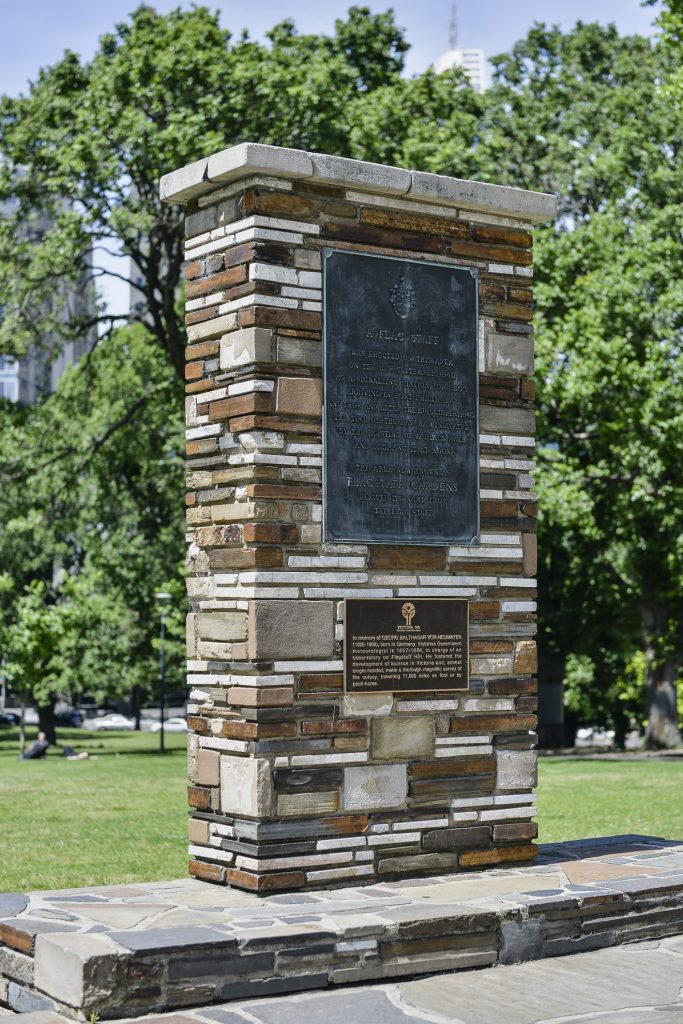
https://www.victoriasforestryheritage.org.au/showcase/what-was-it-like/689-fcv-overseer-dick-aldridge.html

Photo: In the Heywood bush. Harold “Stringy” Aldridge, Alf Telford and Harry Perkins. Photo: Vern McCallum Collection

Bilston Tree – remeasured.

The magnificent Bilston Tree near Brimboal in far western Victoria was a big part of the local consciousness in the late 1950s.

The massive river red gum (Eucalyptus camaldulensis) was scheduled to felled for railway sleepers on 12 June 1961 but was saved by local community action led by Bill Flentje, the District Forester at Casterton.

Subsequent negotiations between the Forests Commission Victoria (FCV) with the landowners, Mr Thomas Henry Bilston and his brother Mr John Wheeler Bilston, as well as Mr Lance Thyear from Pyramid Sawmills, led to the acquisition of the tree by the FCV on 6 March 1962 for the sum of 70 pounds as compensation for the loss of timber.

Significantly, the Bilston brothers also donated a small patch of land (1 acre, 1 rood, 26 perches) surrounding the tree, including a half-chain-wide right of carriageway.

The brothers had always wanted to see the tree preserved as a tribute to their grandfather who had been one of the district’s earliest pioneers. Thomas Bilston (Snr) had driven stock into the area in 1839, shortly after Major Mitchell’s historic expedition in 1836, and the Henty Brothers had established Portland’s first permanent settlement in 1834.

In the late 1950s, they had offered to gift the tree to the National Parks Authority (NPA) and contacted Dewar Wilson Goode from Coleraine, a prominent local pastoralist, conservationist and board member of the NPA, but he was not in a position to accept the generous proposal.

All the standing timber on three paddocks of the Bilston’s property was subsequently sold for a cash amount to Pyramid Sawmills at Casterton but the owner, Lance Thyer, could readily see the significance of the big tree to the local community and was instrumental in having it saved.

Lance wrote to the Minister for Forests, Mr Alexander John Fraser, in August 1961 to advise that he had willingly forfeited 10,000 super feet of timber that would have been cut from the Bilston Tree but, instead, had harvested an equivalent volume of unallocated timber from another paddock owned by the Bilstons.

A total of 70 pounds (which was roughly the equivalent of four times the basic weekly wage) was offered to the Bilstons by the State Government as compensation to offset the loss of revenue from the additional timber made available to Pyramid sawmills.

The donated land around the tree was then transferred to the Crown on 16 August 1963, with legal fees of 4 pounds and 4 shillings met by the FCV. The land was subsequently declared Reserved Forest on 28 May 1964.

At the time of purchase, the tree was thought to be about 400 years old – not 800 as is now more commonly claimed.

Its circumference was estimated (annoyingly, not measured with a tape) at between 27 and 29 feet (at shoulder height – 5 foot). The total height was also estimated at 135 feet.

The massive specimen was once known as the “Big Fella”, but now more commonly as the Bilston Tree after the original landowners, is listed on both the National Trust and Victorian Heritage Registers.

A sign on the Casterton-Chetwynd Road makes the bold claim that the Bilston Tree is the world’s largest river red gum. Tourism websites and Google repeat the assertion.

But how do you best measure a river red gum ??? – is it height, girth, diameter, crown size, crown spread or log volume ???

The national register of big of trees, compiled by well-known botanist Dean Nicolle, uses a points-based system combining height, girth and crown spread to identify Australia’s largest river red gums.

The Bilston Tree, with 443 points, makes it onto the list, as does the well-known tree at Guildford near Castlemaine (562 points), but the biggest river red gum in Victoria is the “Morwell Tree” in the Grampians which accumulated a massive 700 points.

The Bilston Tree is not exceptionally tall either. A gun-barrel straight river red gum in the Barmah state forest named “Codes Pile”, after the Chairman of the Forests Commission, William James Code, was measured at 46.6 m. The Bilston Tree is also not of great girth, being only 812 cm measured at breast height (1.3 m) above the ground.

There are certainly lots of river red gums with more bulk (or biomass) but the unique thing about the Bilston Tree is its clear unbranched trunk, with very little taper, up some 40 feet (12 m).

Estimates in 1971 suggested that 9,100 super feet (HLV) or 21.5 m3 of timber could be sawn from the tree, which is enough for over 300 railway sleepers. This probably makes the Bilston Tree the largest “merchantable” river red gum.

The local Forest Overseer, Peter Musgrove, reported in 1987 “you might find a taller river red, or one with a bigger girth, but there is none with such bulk as this”.

River red gums are a bit like people. They shoot up in height in their early years. But, also a bit like people, river red gums then slowly thicken around the middle as they age, and mature trees can come in all different shapes and sizes.

Competition from other trees, soils, droughts, floods, and the rhythm of the seasons all have an impact on growth rates, with wet years encouraging increasing tree dimensions.

Tree size, together with its dominance and spacing in the landscape, bushfire, pests and diseases are also factors in tree growth.

River red gums often regenerate as a dense thicket of seedlings after flood, or wet conditions, and it can take years for a dominant stem to emerge. The mature tree can then suppress regeneration and growth of nearby seedlings by leaching tannins from their leaves, which is known as an allelopathic effect.

The Bilston Tree is commonly claimed to have germinated in 1200 AD making it now 824 years old. This is more than double the estimate made in 1963 when the tree was purchased. The first suggestion of such a remarkable increase in antiquity seems to have been made in a newspaper article (thought to be from 1971), but it’s unclear where the enhanced statistic came from.

But estimating the growth rate and age of trees, particularly old river red gums, which often have a large hollow in the centre, and are sitting out exposed in a paddock, can be a notoriously fraught process, so even the initial 400-year-old claim must be an educated guess at best.

Roger Edwards, a Forest Officer at Cavendish, measured the growth of river red gums in the nearby Woohlpooer State Forest over a 25-year period from 1977 to 2002. The trees probably originated as natural regeneration after grazing ceased in 1913 and the block was acquired by the Forests Commission. The trees were thought to be between 75-110 years old at the completion of his trial. Four of his one-hectare plots had been thinned. Roger found diameter growth rates were highly variable and ranged from nearly zero to 0.6 cm per year, but with an average of 0.26 cm per year. And unsurprisingly, he found that larger, well-spaced trees grew faster than smaller and more crowded ones.  

Whereas, I have measured the diameter growth of young, well-spaced, 23-year-old river red gums, near a creek at 2.3 cm/year.  Trees planted on farms, with access to ground water, well-spaced and initially well-fertilised also show high growth rates.
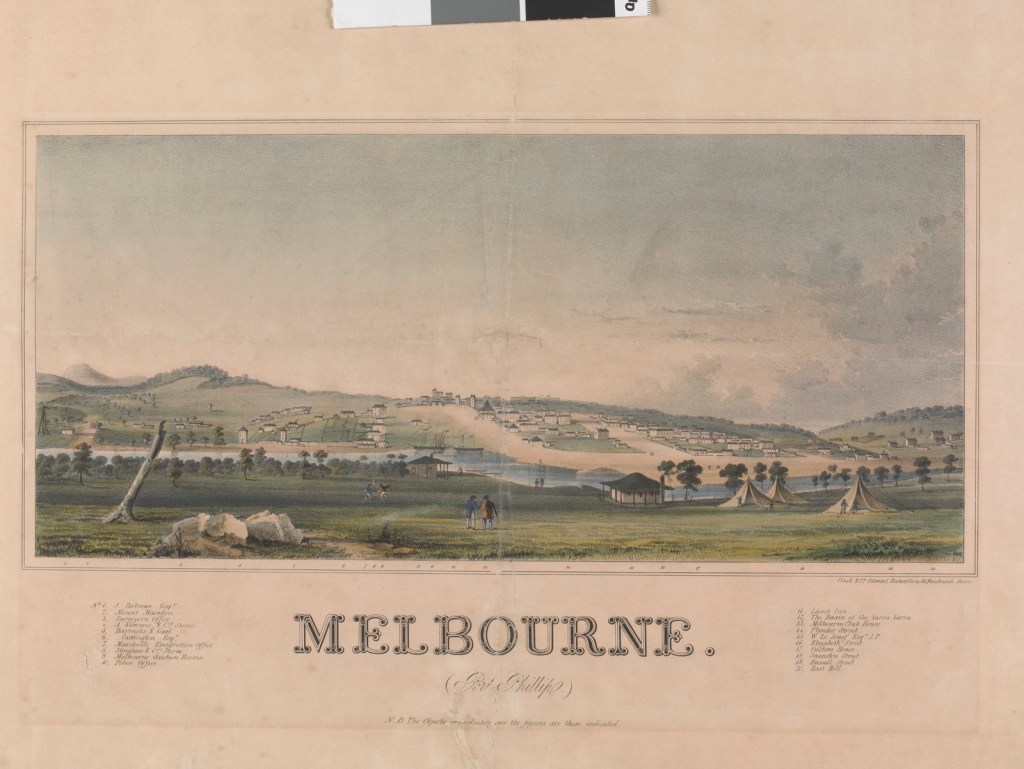
So, in June 2024, I decided to practice a bit of field forestry and measure the Bilston Tree for myself with a trusty tape and clinometer, and then compare its size to other records.

But if you look at the attached table I have compiled, there are some odd contradictions and discrepancies for the tree’s dimensions, particularly for 1961, 1987 and 2013. It’s also hard to know what techniques may have been used to measure the tree in the past, or if a standard breast height of 1.3m for diameter was adopted.

For the purposes of this exercise, I have considered the 1971, 1998, 2011 and 2024 measurements to be the most reliable.

If you look at the increase in diameter using the measurements from 1971 to 2024, the Bilston Tree grew a total of 27 cm over the 53-year period. This equates to an annual diameter increment of 0.51 cm/year. That’s the equivalent of a single annual growth ring (or end grain) being only 2.5 mm wide which, as any wood turner will tell you, seems reasonable for red gum timber .

The 26-year period from 1998 to 2024 equates to an increase in diameter of 13 cm, or 0.50 cm/year.

And it’s a very similar story for the more recent 9-year period from 2011 to 2024 which equates to 0.55 cm/year.

So, if we assume an average diameter increment of 0.5 cm per year over its life, and then working backwards, the Bilston Tree might now be more modest 516 years old. (258 cm ÷ 0.5).

However, if we use a lower growth estimate of 0.26 cm/year, based on those trees measured by Roger Edwards at Woohlpooer, it could be nearly 1000 years old (which seems very high).

I accept there are lots of assumptions and flaws with this method, but without cutting it down and counting the rings, or taking core samples, it’s impossible to be 100% certain.

The crown is thinning and showing signs of senescence while there is some epicormic growth from the lower trunk. Unlike many other old river red gums, there is no major swelling at the base or large burls. Large branches fell in 1973 and again in 2013 which may partly explain its shrinking stature over the decades.

I understand a core test showed in 1987 that the trunk was solid. The large branch which broke from the tree in 2013 has been carved by local artists.

The carpark, walking track, interpretive signs and surroundings all looked well-loved and carefully maintained. Although, some of the information on the interpretive sign about the Bilston Tree is contradictory and would benefit from a review. The magnificent carvings on the fallen branches had been freshly coated with preservative. Full credit must go to the local DEECA staff and the adjoining landowner for taking care of this arboreal treasure.

The Bilston Tree may not be the world’s largest or oldest river red gum as is often claimed in the tourist brochures. And maybe it doesn’t really matter because it’s still big, still old, still magnificent and still well worth the visit.

https://en.wikipedia.org/wiki/Bilston_Tree

https://www.hamilton-field-naturalists-club-victoria.org.au/images/pdf/Publications/NaturalHistory/bryan-swamp-and-other-ancient-river-red-gums-2022.pdf

Forests Commission Files – 73/1299 & 61/888. “Reprieve for a giant red gum at Wattleglen, Parish of Warrock, Brimboal [Bilston’s Tree], Casterton Forest District”. Held at Public Record Office Victoria (PROV).

Main Photo: Bilston Tree – Feb 1964. Photo: Gregor Wallace.

From Google.

https://www.nationalregisterofbigtrees.com.au/editorfiles/file/largest_river_redgums_feb_2022.pdf

Coast redwoods.

There are three distinct species of redwoods commonly planted in Victoria.

  1. Dawn redwood (Metasequoia glyptostroboides). Thought to have been extinct for millions of years, the Dawn redwood was rediscovered in 1944 by a forester in the Sichuan-Hubei region of China.
  2. Giant sequoia (Sequoiadendron giganteum) which grow into the most massive trees on Earth. The General Sherman Tree in Sequoia National Park is probably the best well-known. They reach an average height of 50–85 m with trunk diameters ranging from 6–8 m. They are found in groves on the western slopes of the Sierra Nevada mountain range of California.
  3. Coast redwood (Sequoia sempervirens), also known as Californian redwood, can live up to 2000 years or more. They are the tallest trees on Earth, and the current tallest is the Hyperion, measuring 115.61 m (379.3 ft). By comparison, the tallest measured mountain ash (E. regnans) is named Centurion and stands 100.5 metres tall (330 feet) in Tasmania.

And while all three species of redwood are breathtaking to behold, the Coast redwoods are something special.

There are some significant individual specimens in both private and public gardens in Victoria. One of the most notable is outside the Bright Golf Clubhouse which was planted by the Forest Commission in 1923 when the site was a softwood nursery. And there are at least three large street trees around the township of Beechworth.

There were a few old Coast redwoods near the Forestry School at Creswick, but they were damaged or destroyed in the 1977 bushfires which swept the bush.

However, two small stands of Coast redwoods have become incredibly popular destinations over the last few decades.

Probably, the most well know was planted by the Melbourne & Metropolitan Board of Works (MMBW) in 1930. The site is about 8km east of Warburton on Cement Creek Road and has several species of softwoods including Coast redwoods.

It was established as a research plot to examine interception of rainfall by tree canopies and for comparison with native mountain ash forest in the Coranderrk area. There are over 1476 trees ranging in height from 20 metres to the tallest being 55 metres on an even 3.3 m grid spacing. The stand has not self-thinned like the one in the Otways and is not as tall.

It is believed that the seed came from England and the seedlings were raised at the Forests Commission nursery at Creswick.

The East Warburton stand can become packed with visitors on weekends, somewhat destroying the serene and eerie ambiance of the tall trees.

The second, and my personal favourite, is the experimental stand of Coast redwoods planted by the Forest Commission in 1936 in the Aire Valley in the Otways. I understand there were five other stands of Coast redwoods, but they are now gone.

The initial plot of 461 trees has thinned down to 220 stems since planting in 1936. Some have died, some have been struck by lightning, some have been removed or cut down, and others have fallen down. The planting rows, where trees were originally spaced at of 3.3 metres, are still visible.

The initial growth of the seedlings was disappointingly slow, but they are now about 60 metres tall (2004).

The Forests Commission built a camp next to the Aire Valley Redwoods in March 1948 which consisted of a cookhouse and mess, shower block, toilets, woodshed and eighteen small two-man Stanley Huts. It was used to house post-war immigrants and refugees who came from Lithuania, Latvia, Estonia, Poland, Czechoslovakia and Yugoslavia. The “Balts”, as they were known, had come to replant the degraded and abandoned farmland in the Otway Ranges which had been progressively purchased by the Commission for softwood plantations.

I’m also aware of two other smaller, and less accessible stands of Coast redwoods.  One known as the Magic Forest in the Stanley plantation near Beechworth, and the other is hidden in the bush between Toolangi and Narbethong.

It’s hard to know exactly what has triggered the incredible popularity of Coast redwood plantations in the last few years. Maybe it’s a quest by pouting influencers for that perfect selfie or Instagram photo. Or perhaps, it’s the latest trend of shinrin yoku, which is the ancient Japanese relaxation ritual of forest bathing.

https://www.facebook.com/groups/forestcommisionheritage/posts/3808045622555093


Photo: The Aire Valley redwoods were planted by the Forests
Commission in 1936 as an experiment. Photo: Peter McHugh 2024. https://en.wikipedia.org/wiki/Redwoods_of_the_Otway_Ranges


The Coast redwood at the Bright golf club was planted by the Forests Commission in 1923.
East Warburton plot layout. Source MMBW

Gunter’s Chain.

Ever wondered about Chains, Links, Yards, Furlongs, Miles, Acres, Roods and Perches?

Before metrication was introduced into Australia during the 1970s, distance on parish plans was shown in chains and links while area was in acres, roods and perches.

Gunter’s chain was used for measuring distance in surveying. It was designed and introduced in 1620 by English clergyman and mathematician Edmund Gunter (1581–1626).

Gunter developed the measuring chain of 100 links. The chain and the link became statutory measures in England and subsequently the British Empire.

This 66-foot-long brass Gunter’s Chain is from the forestry museum at Beechworth.

It is divided into 100 links (each 7.92 inches long) and marked off into groups of 10 by shaped tags which simplify intermediate measurement.

The chain was a precision part of a surveyor’s and foresters’ equipment. It required frequent calibration yet needed to be sturdy enough to be dragged through rough terrain for years. It has brass hand grips at each end of chain.

It is heavy but flexible enough to be dragged through the bush on surveying transects. (Hence the common forestry term – chainman).

  • 1 chain = 100 links = 22 yards = 66 feet = 792 inches.
  • 10 chains = furlong.
  • 80 chains = 1 mile.
  • 1 acre = 10 square chains = 4 roods (1/4 acre each) = 40 perches.

After metrication, units of length were thankfully measured in meters and area in hectares.

The chain was later superseded by flexible steel ribbon tape.

https://victoriancollections.net.au/items/65e6e1de1161e6234932dca2

Ernie Richards – Cobungra.

The January 1939 bushfires swept across almost five million acres, killed 71 people, destroyed 69 bush sawmills and almost entirely obliterated several towns. The small and remote township of Omeo lost the hospital, four shops, the main hotel and 27 houses.

Workmen from Omeo went to fight the fire at Cobungra Station, but they were trapped when the wind caused fresh outbreaks. Along with refugees from the station, including several children, they plunged into the Victoria River, and remained there until rescued.

Amongst those killed in the bushfires was James Ernest (Ernie) Richards, aged 31, a stockman from Cobungra who perished along with his horse and cattle dog.

The story goes that Ernie was out droving and tried to return to Cobungra to rescue his wife and young infant, but was caught in the flames. His wife and child had been taken into Omeo earlier by the doctor for safety.

Ernie’s body was recovered and buried at Omeo Cemetery, but the remote site in the bush was lost in time as the scrub regrew and people moved on with their lives.

The story I was told from a reliable source, but haven’t been able to independently verify, is that about 20 years ago someone from the Richards family (possibly Ernie’s son) was trying to locate the site and set out with the assistance of either forest management or parks staff from Swifts Creek and some knowledgeable folks from the Omeo Historical Society.

With the aid of a modern metal detector the searchers found a metal buckle from a horse saddle and figured they had discovered the right spot.

A metal plaque was later placed on a nearby rock by the side of the Alpine Way between Cobungra and Mt Hotham.

My photos were taken in October 2020, not long after bushfires had once again swept the area.

https://trove.nla.gov.au/newspaper/article/205973017

Country Roads Board (CRB).

The first “road” to be built in Victoria by European settlers was on Phillip Island, more than two centuries ago.

The “project manager” was the Commander of HM Brig Lady Nelson – John Murray – who was surveying the Bass Strait area in 1801 on behalf of Victoria’s first road authority – the Government of New South Wales.

The New South Wales Government continued to oversee the development of Australia’s south-eastern corner until 1851, when Victoria was proclaimed a Colony in its own right.

But by 1851, Victoria’s roads were in a parlous state and the new government tackled the issue as a matter of priority. It was spurred by the huge increase in traffic fuelled by the gold rush, and in 1853 an Act for making and improving roads in the Colony of Victoria was passed.

A Central Road Board, as well as several District Road Boards, were established, the former responsible for main roads and the latter for local roads.

The State Government financed the main roads and contributed half the cost of local roads, while maintenance was partially funded through tolls.

The Central Road Board was a great success, but nonetheless was abolished in 1857 and its responsibilities transferred to a new Board of Land and Works. These were days when rail travel was in the ascendancy, taking up much of central government’s time and money.

The responsibility for building and maintaining roads was increasingly devolved to local municipalities. And here, local interests often prevailed over the greater good, leading to patchwork development of the Colony’s road system.

But roads were to undergo a resurgence, not surprisingly, driven by the ever-increasing popularity of the motor car at the turn of the century (the first motor vehicle in Melbourne appeared in 1897).

The earlier period of 1851 – 1857 had shown the value of central direction on road management and, in 1913, the Country Roads Board (CRB) was established – the heir of the Central Road Board and a parent of the current VicRoads.

Civil engineer William Calder was appointed the first Chairman of the Board, and he took an important role in guiding the development of the Great Ocean Road until his death in 1928. Calder, after whom the Calder Highway is named, often inspected roads on horseback.

The new Board began by conducting a two-year investigation of Victoria’s roads (which it found to be “anything but satisfactory”, according to its first annual report).

The Board, in its first year, also approved contracts for works amounting to 94,876 pounds.

Interestingly, the first annual report also commented on matters such as the false economy of cheap construction, poor maintenance methods, the need to set road standards, conservation and aesthetics.

With its first investigations completed, the CRB hoped to begin major construction work. However, this was set back by the start of the First World War in 1914.

From 1918 to 1943, the CRB’s brief expanded to include many other classes of road. The most significant was State Highways, which were developed and maintained by the CRB to relieve municipalities of providing for long distance “through traffic”.

Meanwhile, after the 1939 bushfires, the Forests Commission was busy building over 50,000 km of forest roads and tracks. The two organisations always had a close working relationship because of the need to transport logs from the forest to sawmills in nearby towns, and then move sawn produce to markets.

The CRB obviously worked to different engineering standards, but the two organisations shared knowledge and sometimes equipment. CRB crews and their machines were always handy at bushfires.

VicRoads was formed in 1989.

The Roads Act (2004) help to delineated road ownership between VicRoads, municipalities, and the Department.

https://www.vicroads.vic.gov.au/about-vicroads/our-history

Photo: Members of the newly formed Country Roads Board on their inspection of roads in the Strzeleckis – 25 June 1913. CRB Collection, Public Record Office, Victoria. VPRS 17684/P0003/108, 13_00122_A

A Country Roads Board car bogged on the Princes Highway between Hospital Creek and Orbost, 25 October 1913. From the PROV Collection: VPRS 17684/P0003/137, 13_00168

Using a “Spanish windlass” recover a bogged Country Roads Board car on the Princes Highway between Hospital Creek and Orbost, 25 October 1913. From the PROV Collection: VPRS 17684/P0003/140, 13_00169_A
A Country Roads Board car in difficulties on a newly-formed, re-routed section of the Nowa Nowa-Buchan-Gelantipy Road, 21 October 1913. Part of the PROV Collection. VPRS 17684/P0003/121, 13_00144_B

The Dandenong Ranges Timber Reserve – 1867.

Even before the gold rush of the 1850s, timber splitters invaded Victoria’s eastern forests including the Dandenong Ranges which were close to the city.

Mr. J. W. Beilby established a sawmill at Ferntree Gully in about 1850 and a small township sprang up around it. He later claimed that his was the first sawmill established in Victoria.

However, the credit for Melbourne’s pioneer sawmill can be attributed to Alison and Knight which started up in 1841.

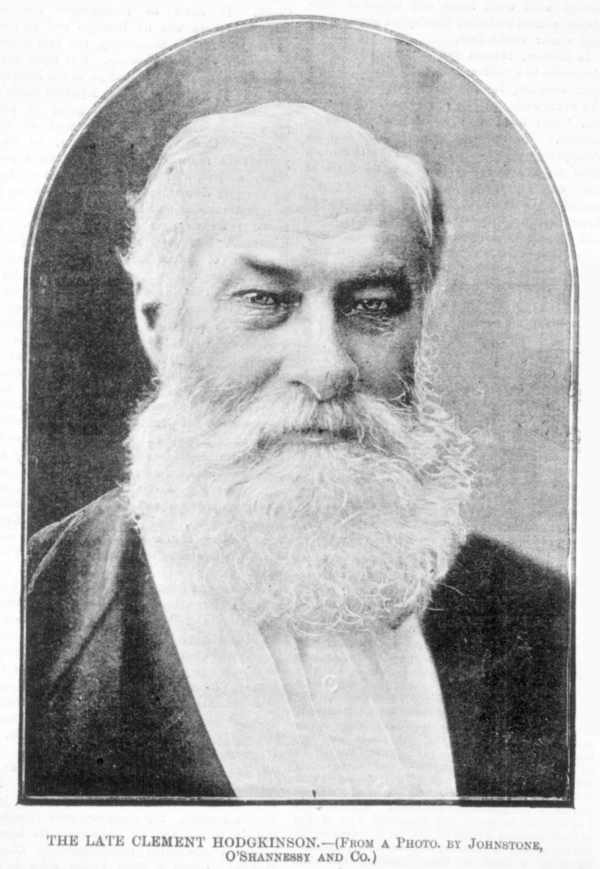
The early explorers noted magnificent trees growing in the wet gullies of the mountains. The records are mostly unreliable and often exaggerated but one tree in the Dandenong Ranges was measured in 1859 by the Surveyor-General Clement Hodgkinson at 300 feet tall.

Mr George Washington Robinson, an early pioneer and later shire engineer who lived at Narre Warren between 1854 and 1862, is said to have measured several mountain ash at 340 feet or better.

However, indiscriminate and unregulated cutting by splitters and timber getters was continuing to have a major impact on the forests across the state.

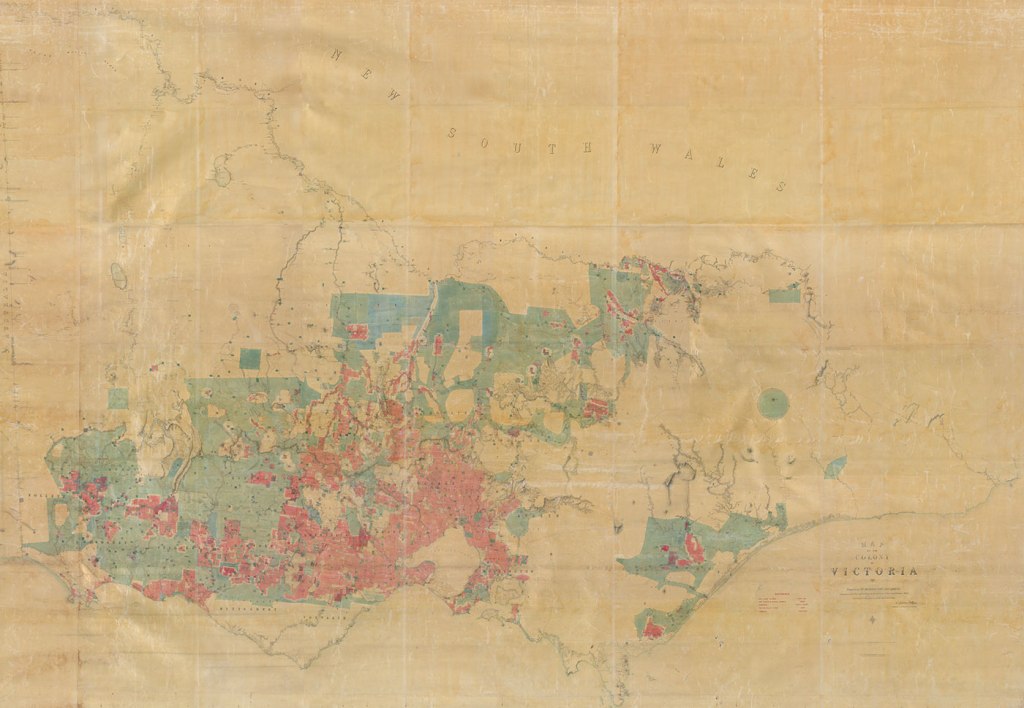
The first legislative power to reserve timbered areas of the Colony was an amendment of the Lands Act in 1862 which enabled the Governor-in-Council to proclaim areas for the “preservation and growth of timber” A total of 116,000 acres were reserved under this provision.

In 1867 the State Government instructed John Harvey to survey a Timber Reserve in the nearby Dandenong Ranges. Harvey initially identified some 32,940 acres, but on 1 April 1867 a reduced 26,500 acres of the “Dandenong and Woori Yalloak State Forest” was officially declared.

A “Board of Lands and Works” was authorised to issue licences to cut timber inside the new reserves. The first recorded Crown Land Bailiff to be appointed to enforce the new regulations in the Dandenongs was George Charles Dickson in 1868.

But by 1878 the demand for land near Melbourne resulted in 10,000 acres the Timber Reserve sliced off and being made available for selection and private sale.

The clearing of land and felling of large trees for the new settlements easily supplied Melbourne’s timber demand so harvesting ceased in the government Timber Reserve for a time.

Later during Melbourne’s economic depression of the 1890s a further 10,000 acres of the Timber Reserve was made available by the Minister for Lands, John McIntyre for families to purchase and settle. The eastern Strzelecki Ranges in Gippsland was opened up at the same time.

The boundaries of the original Timber Reserve continued to be slowly whittled away until the Forests Commission finally took control of the State Forest in 1907 and the alienation of public land virtually stopped.

By the 1930s, most of the 26,500 acres of original the Timber Reserve had vanished. All that remained were some stream reserves, the Olinda Forest comprising 3326 acres and the Monbulk Forest (which included Sherbrooke) with a further 2050 acres.  A parcel of 556 acres of the Timber Reserve had been set aside in 1882 as the Ferntree Gully National Park.

James O’Donohue was the first forester in the Dandenong Ranges from about 1915 and a small plot of pine trees was planted by him in Sherbrooke Forest which became a popular picnic ground.

Timber harvesting was regulated under licence including Sherbrooke Forest. There were tramlines in both Hardy and Monbulk gullies drawing logs to the trestle bridge near Belgrave and there was also a sawmill on Coles Ridge.

The public land area increased in June 1950 by another 689 acres with the purchase of the Doongalla estate at the Basin.

Following the 1962 bushfires the State Government embarked on a long-term land buyback program which saw the area of State forest increase, most notably on the fire prone western face of the Ranges.

There were other acquisitions including the historic Nicholas gardens.

In 1957, the Forests Commission set aside Sherbrooke Forest Park as the first of many parks and reserves including Lerderderg Gorge, You Yangs, Mt Cole, Grampians and Mt Baw Baw.

The Dandenong Ranges National Park was proclaimed in 1987 which consolidated all the public land under one tenure.

Source: Helen Coulsen (1959). The story of the Dandenongs.

https://mapwarper.prov.vic.gov.au/maps/11097#Preview_Rectified_Map_tab

Giddy… Giddy… Gouts…

Cubs, Scouts, Brownies and Guides all provide great outdoor adventure and leadership opportunities for young people.

Major-General Robert Baden-Powell started the movement in 1907 at a time when explorers were reaching the north and south poles, the Wright brothers were taking off at Kitty Hawk, and the first Model T Fords were rolling off the production line.

Scouts soon went global and by the end of 1908 eleven Scout Troops had formed in Victoria and the organisation continued to grow and thrive over the subsequent decades. Membership declined during the 1980s but from 2007 Scouts Victoria experienced a strong resurgence.

Lots of Forests Commission staff had either been scouts in their youth or volunteered as scout leaders later on. The relationship between the Commission and the scouts and guides was always strong.

State forests near major scout camps like Gilwell Park at Gembrook and guide camps at Britannia Creek were always popular for overnight hikes and building elaborate contraptions made of wood, rope and canvas. Long bush poles and firewood were always in demand and the Commission was happy to oblige where it could.

Both scouts and guides always had a strong commitment to helping in their local communities. As an example, in 1971 the 1st Upwey Scout Group built a wooden fire lookout tower.  The boys watched for smoke during the summer months and used instruments along with a sightline to the Emerald Water Tower and other mapped landmarks to plot the bushfire locations and report them to the local CFA Brigade.

The Chairman of the Forests Commission, Alf Lawrence, somehow found times in his busy schedule to occupy various leadership positions with the Victorian Boy Scouts, including Deputy Chief Commissioner in 1968. On Queens Birthday 1969, Alf was honoured with a civil Order of the British Empire (OBE) for his outstanding services to forestry and scouting.

I’m also pretty sure that being a Queen’s Scout had some influence on many applicants being offered a place in the Victorian School of Forestry.

Photo: Boy scouts near Combienbar, East Gippsland, C 1950. Photo from “Walkabout” magazine, part of the Mitchell Library Collection, State Library of NSW. https://collection.sl.nsw.gov.au/digital/0LXDeDlag7BZG