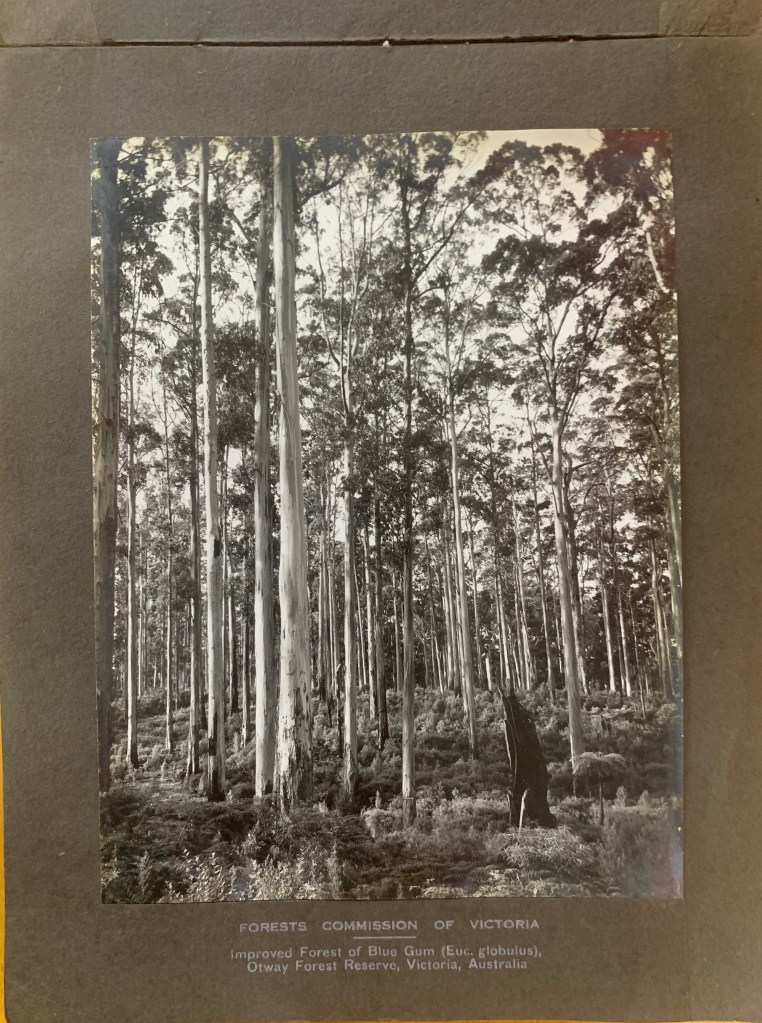
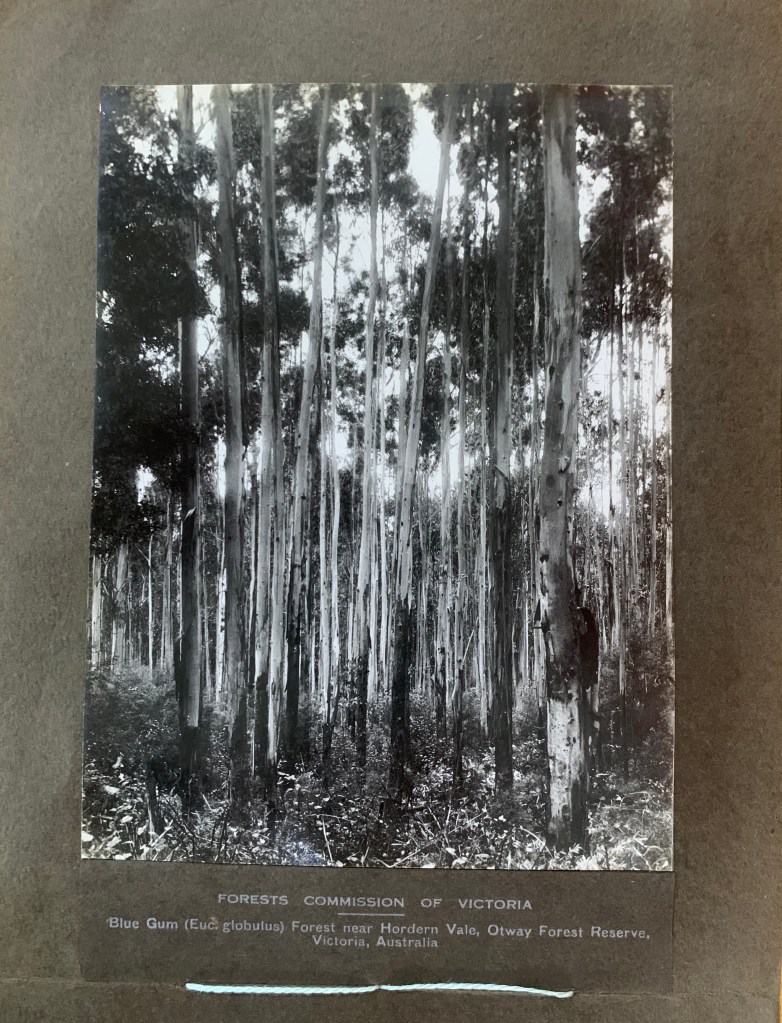
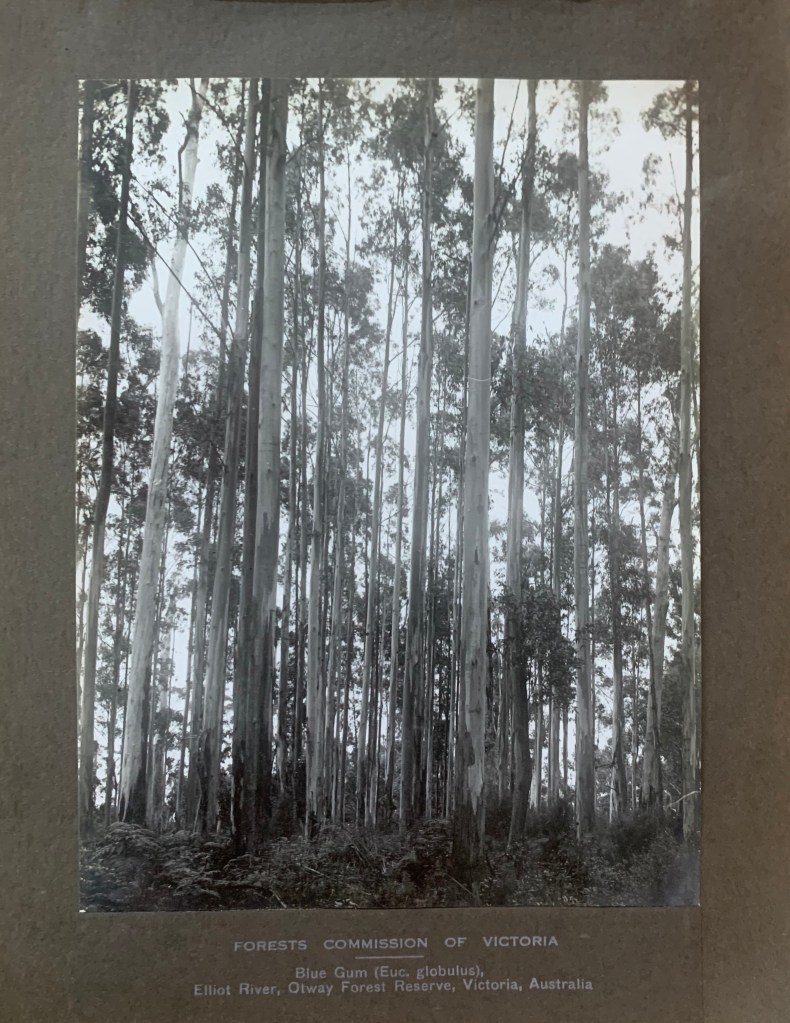
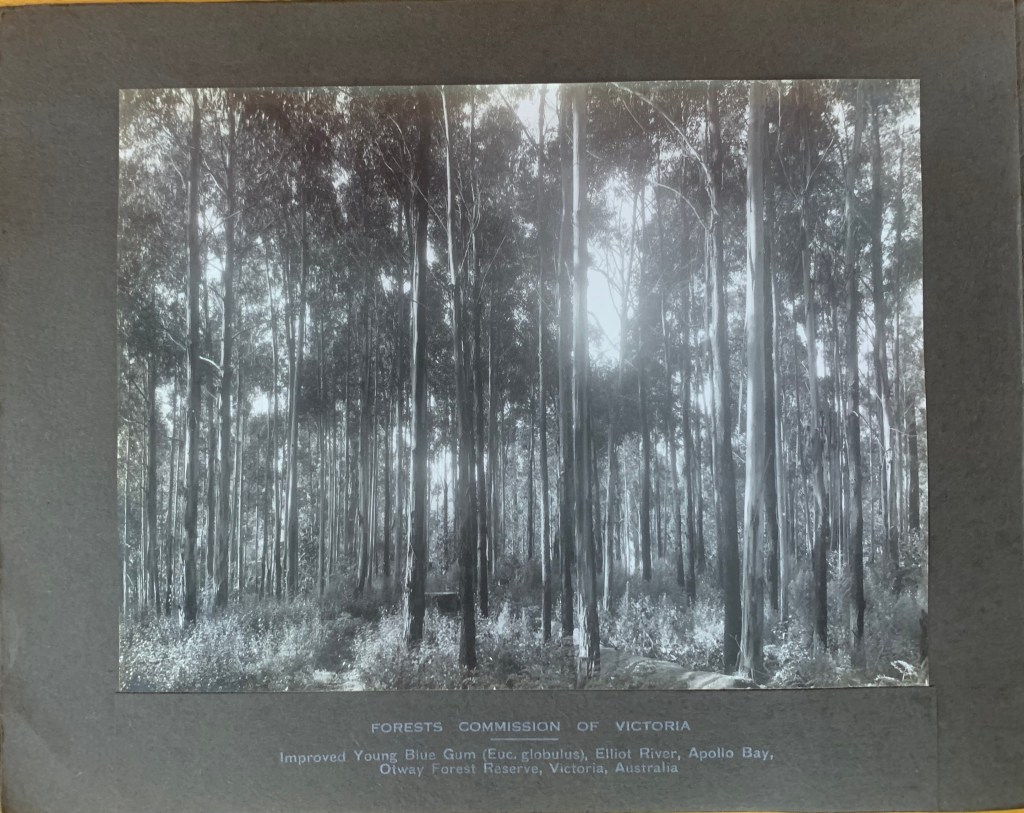
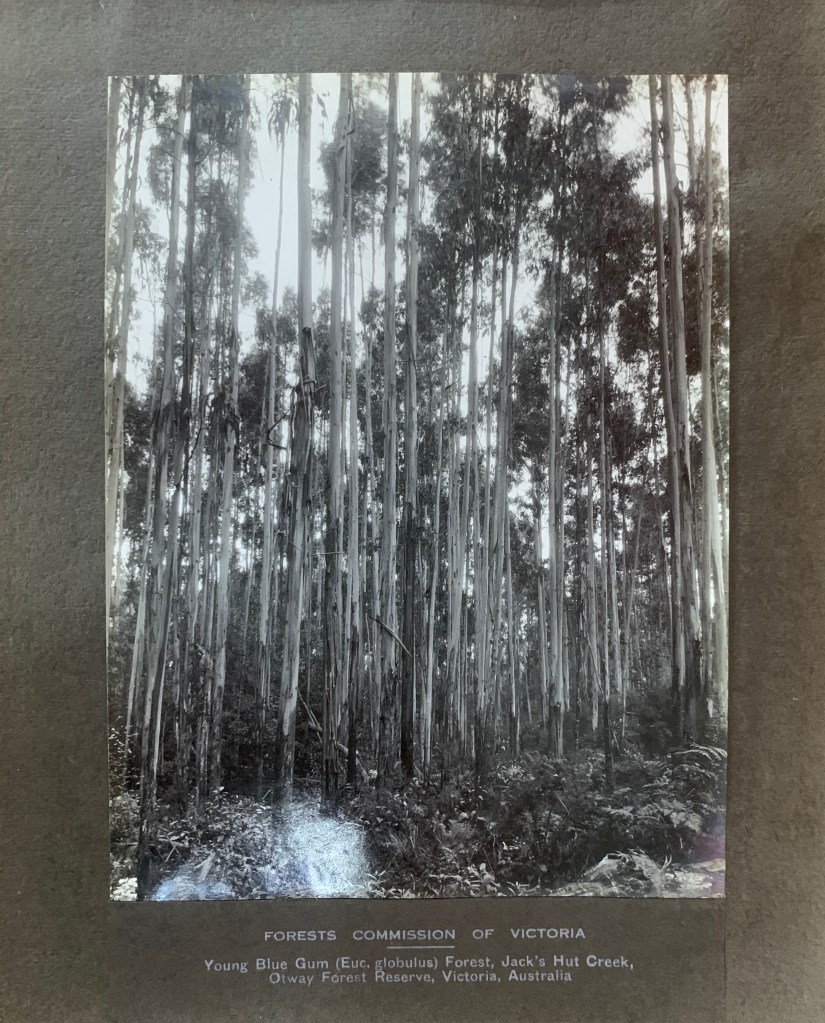
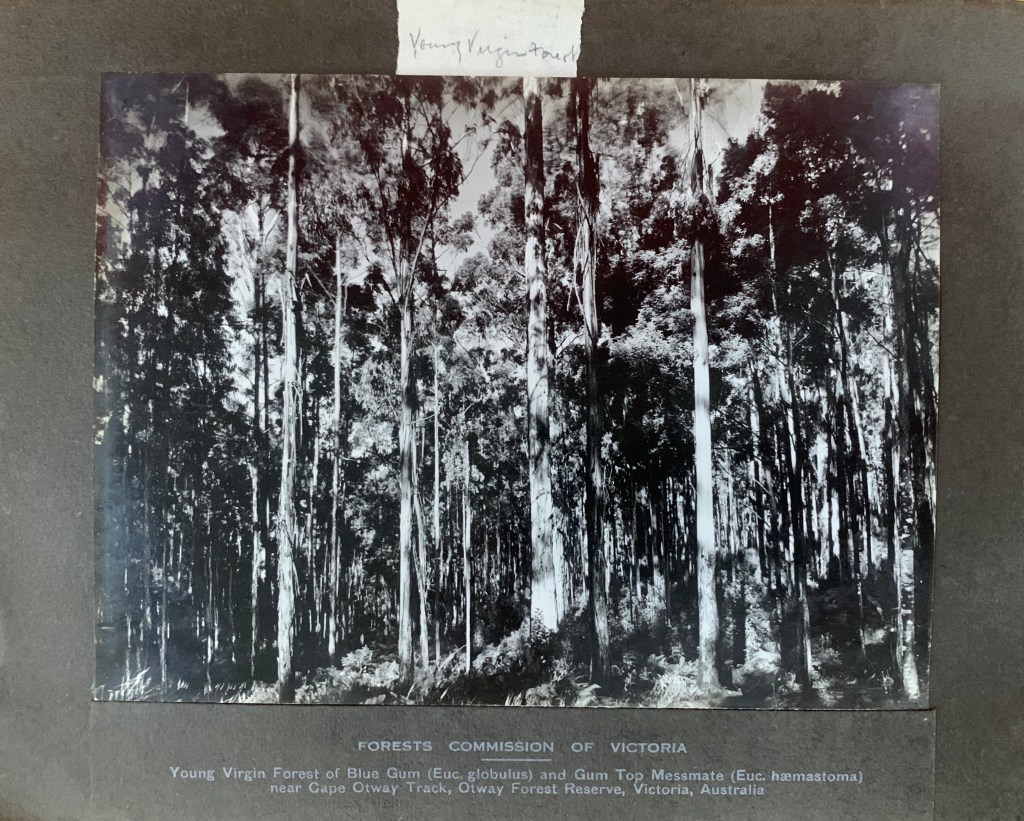
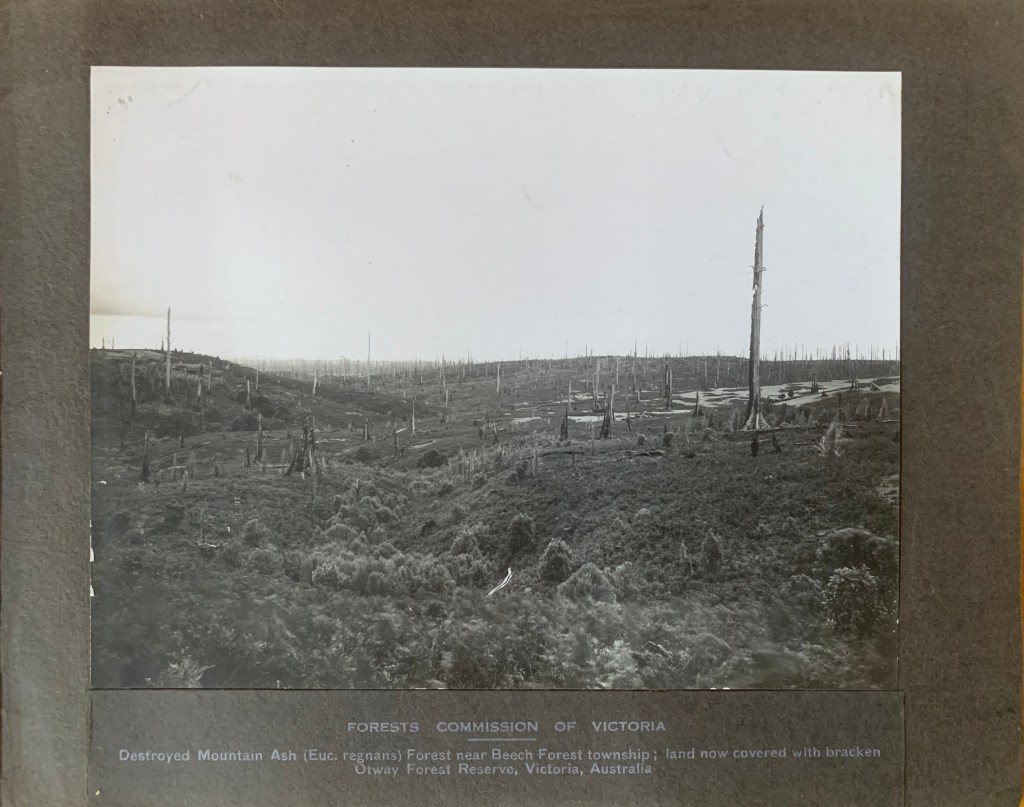
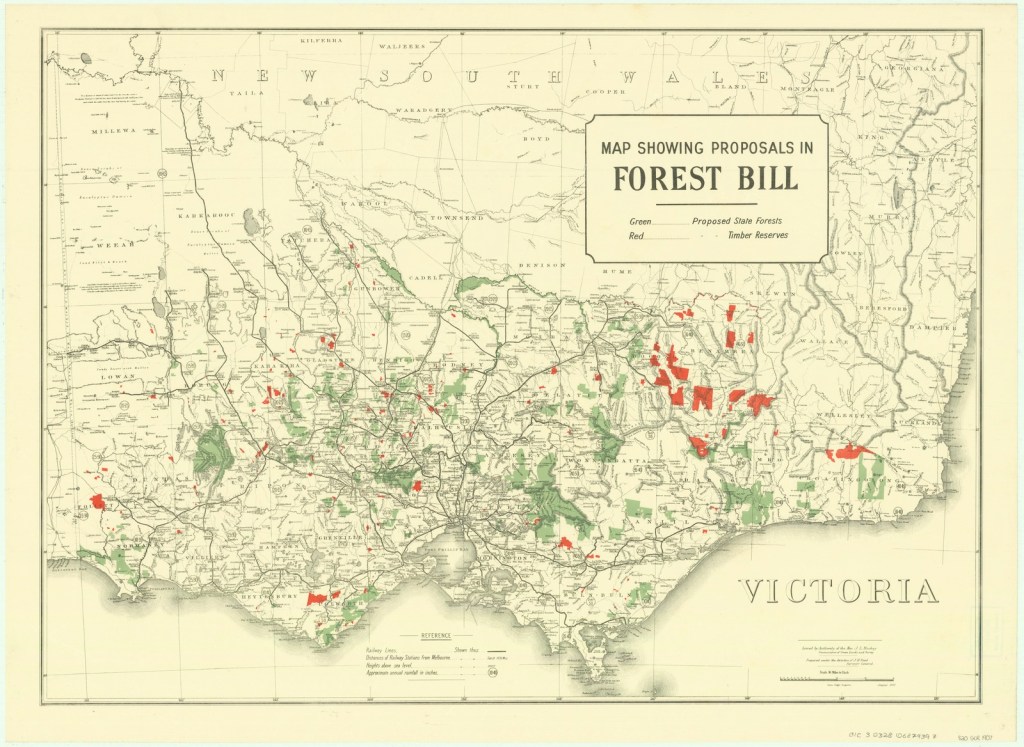
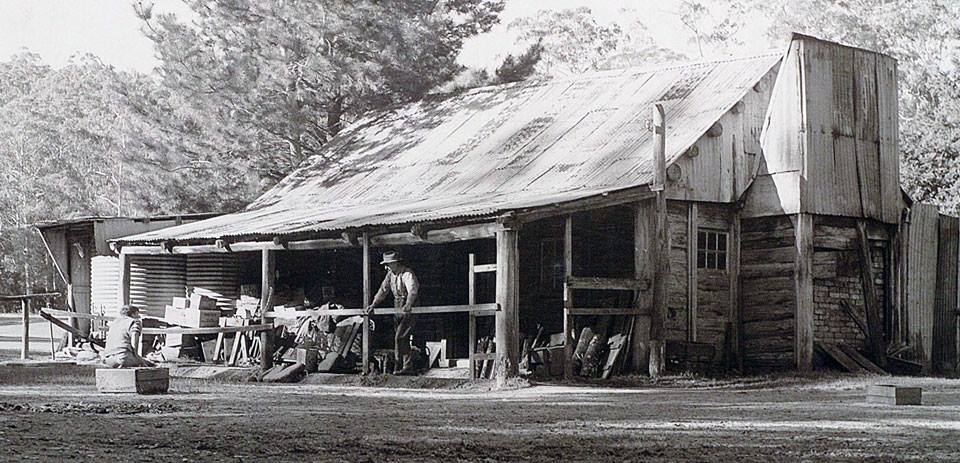
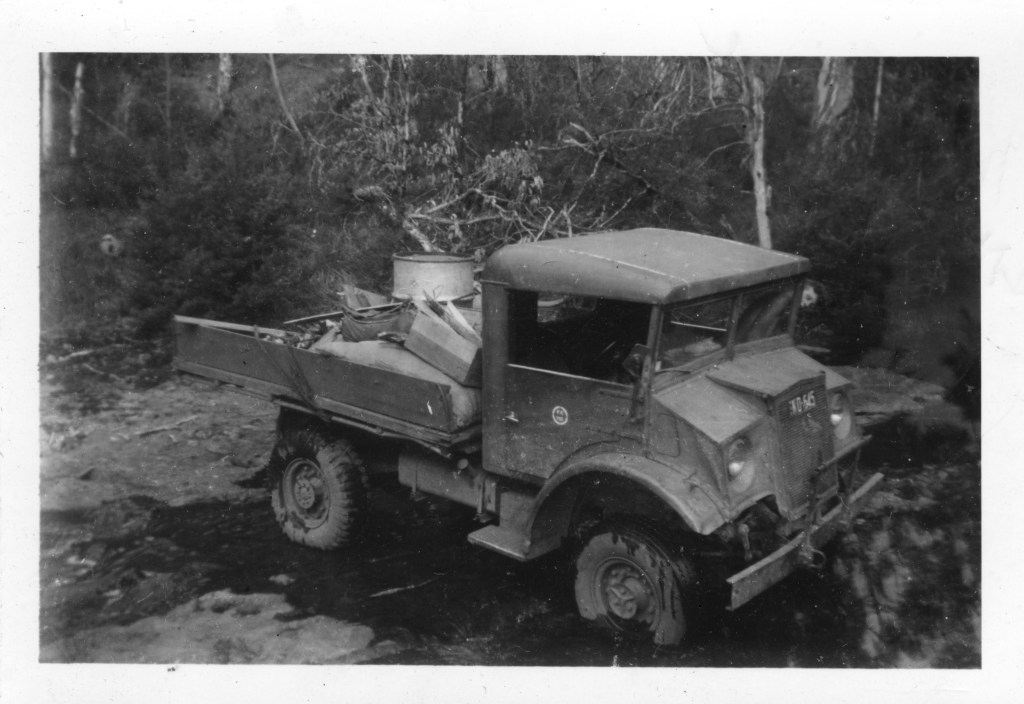
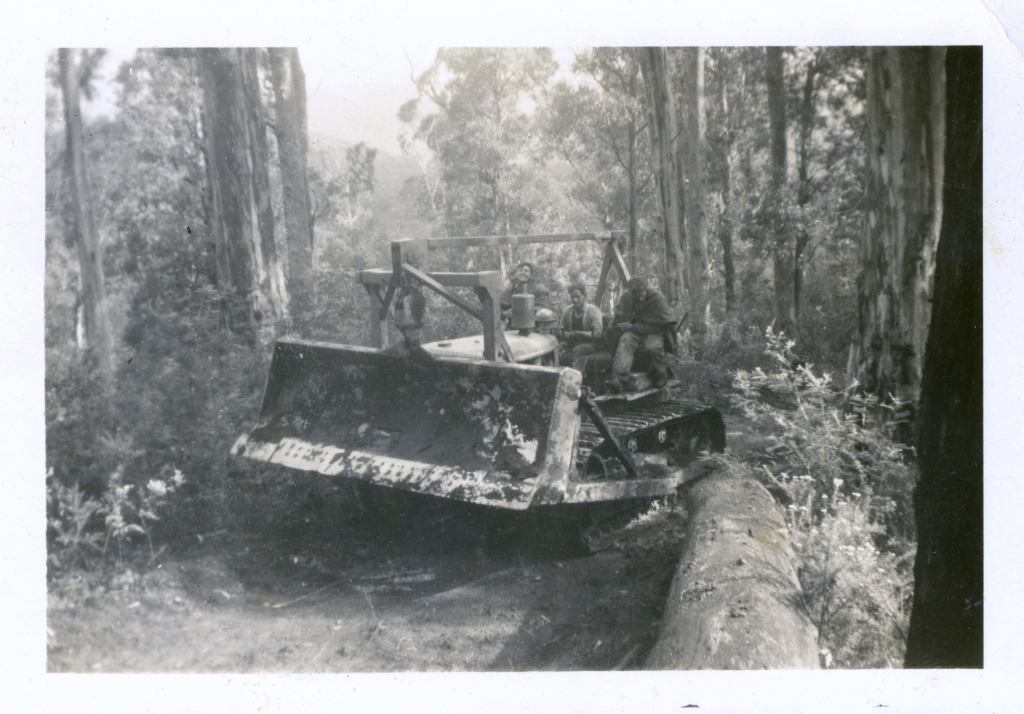
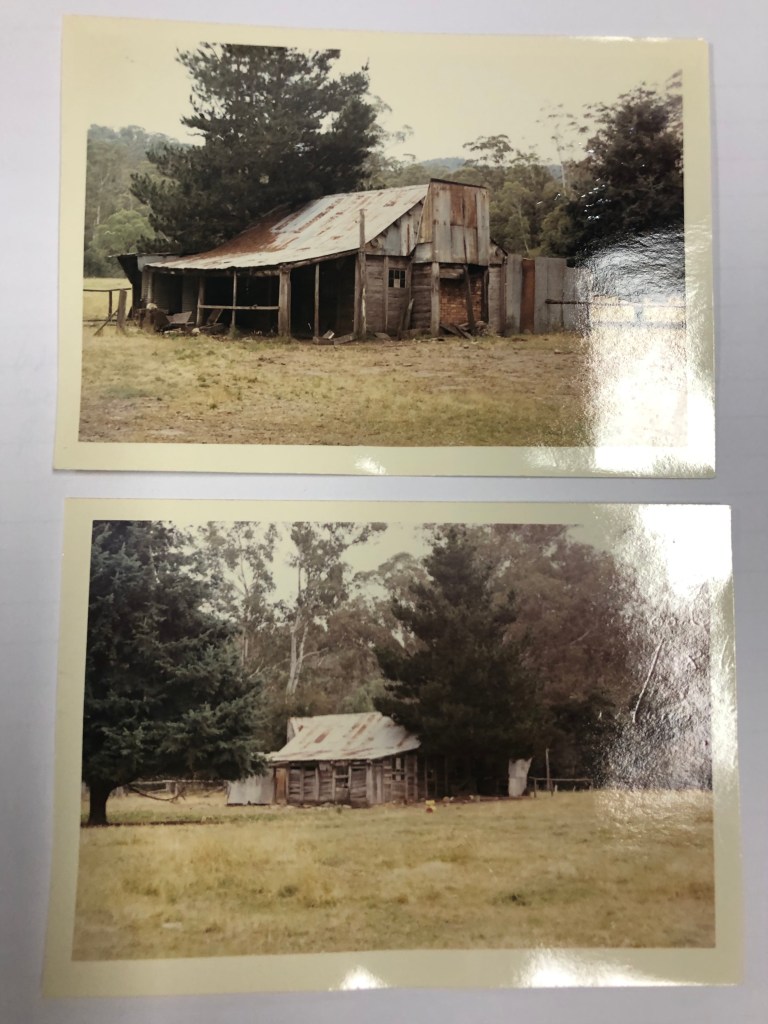
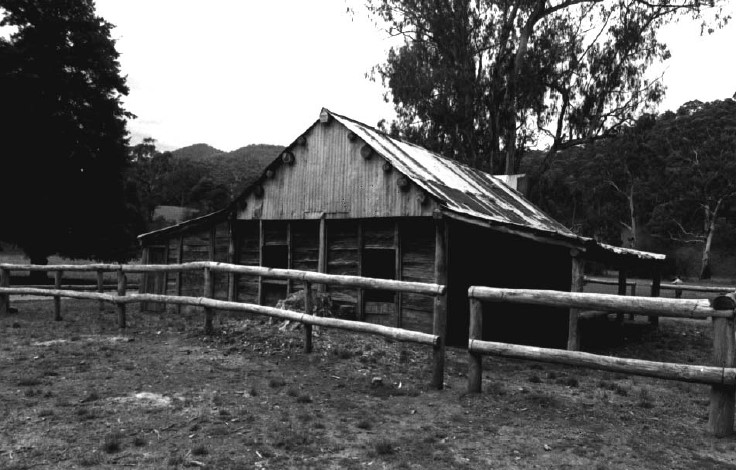
This nice little find comes from the Public Record Office. It’s a small photo album of the Otways forests from the early 1920s.
My guess is that it was produced during a major stoush between the Forests Commission, sawmillers, and the community against the Lands Department trying to alienate (sell) more forest in the western Otways.
The foresters eventually won, but there were casualties. The newly appointed Chairman of the Commission, Owen Jones, quit in disgust and went to new Zealand.
The land eventually became the Otways National Park.
The South Face Road (SFR) climbs steadily for 25 km, in an east-west direction, across the southern slopes of the Baw Baw Ranges in Central Gippsland.
It links the Thomson Valley Road in the east to the Baw Baw Tourist Road in the west.
The South Face Road was without doubt the biggest and most complex road construction project that the Department had undertaken since the heady days in the late 1950s when the Forests Commission built the Tamboritha and Moroka Roads into the mountains beyond Licola.
It took 20 years to build at a direct cost of $25 M.
The entire design and construction project was managed in-house by the Department of Natural Resources and Environment with Len Wanke as the Chief Engineer and Wayne Beaton assisting.
The ground was steep with highly erodible soils and strewn with large granite boulders and the route included several major river crossings.
Major earth moving and side cuts were required because the road alignment ran across the side slope of the Baw Baw Ranges.
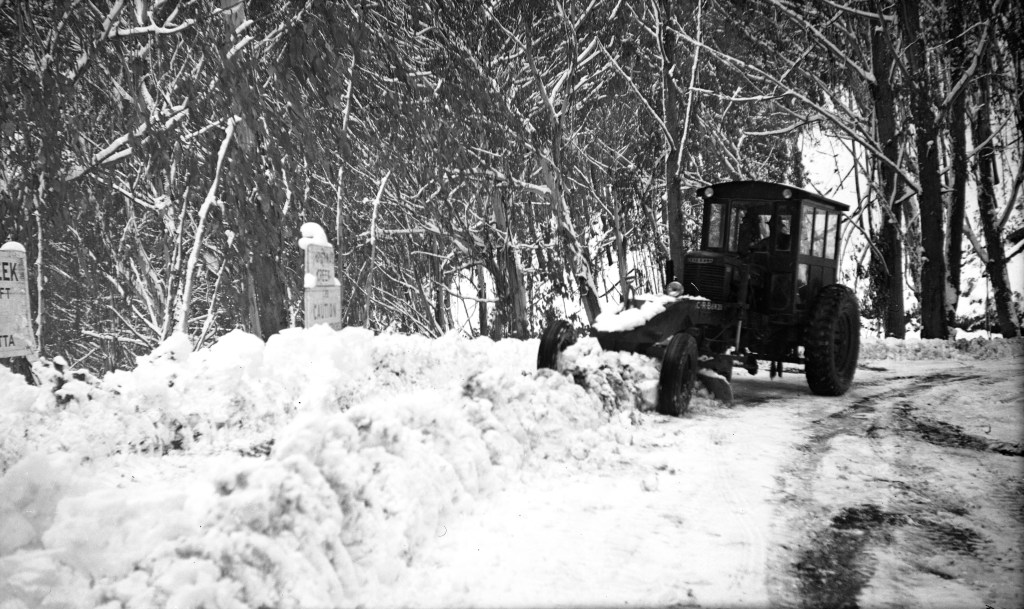
The thick mountain ash forests were wet, and it often snowed in winter, so earth works only progressed over the short summer months.
There were also many biodiversity values to protect including streams, rainforests and Baw Baw frog habitat.
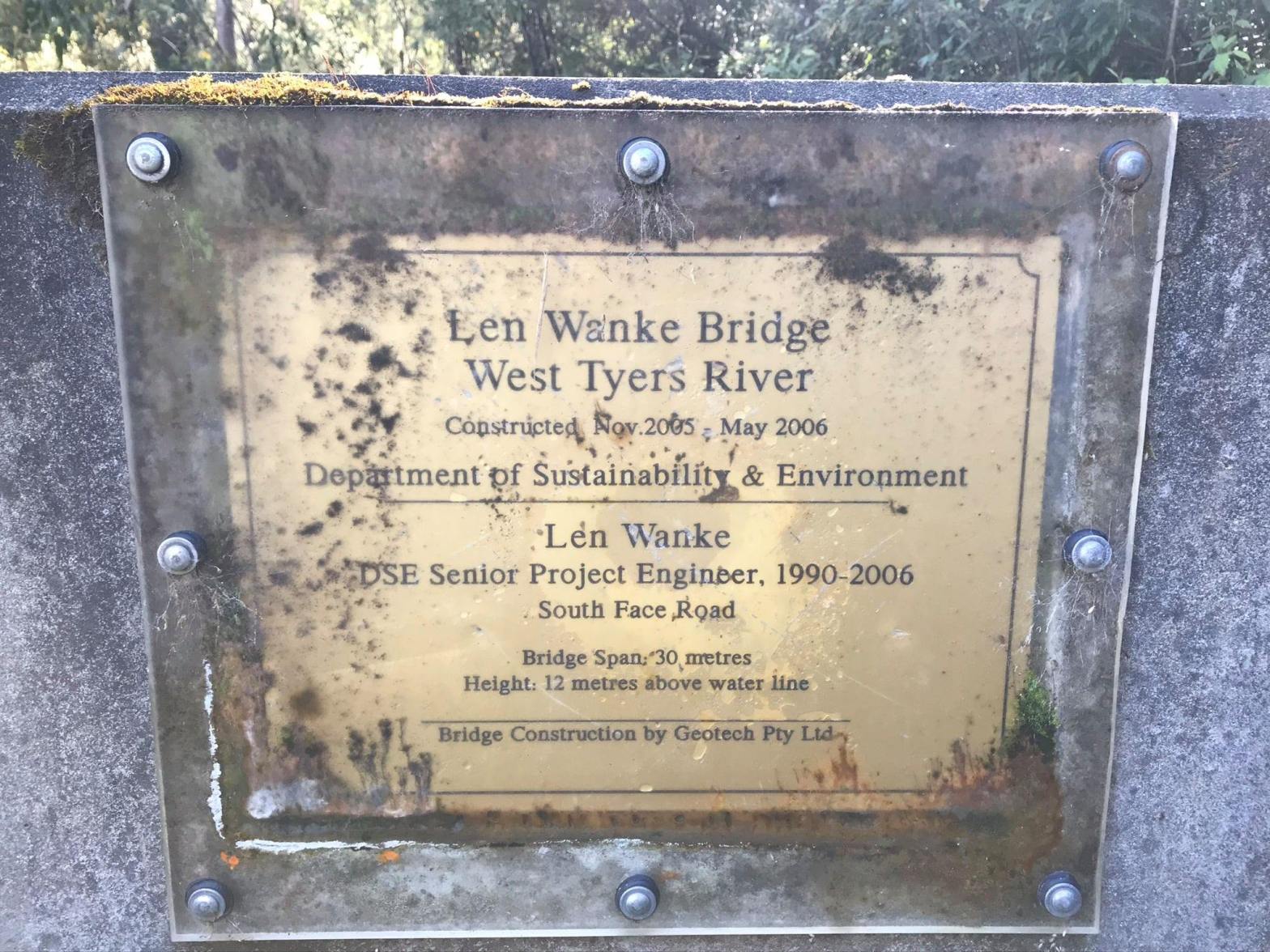
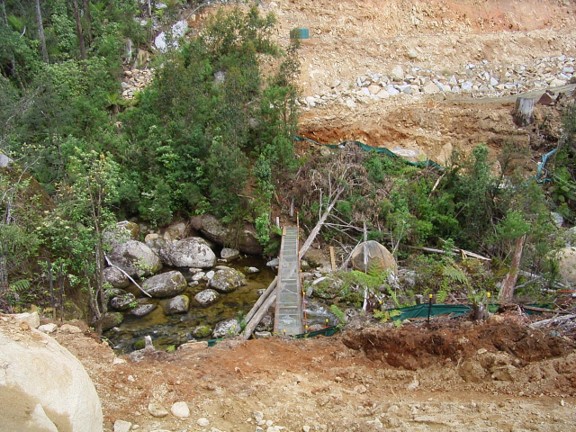
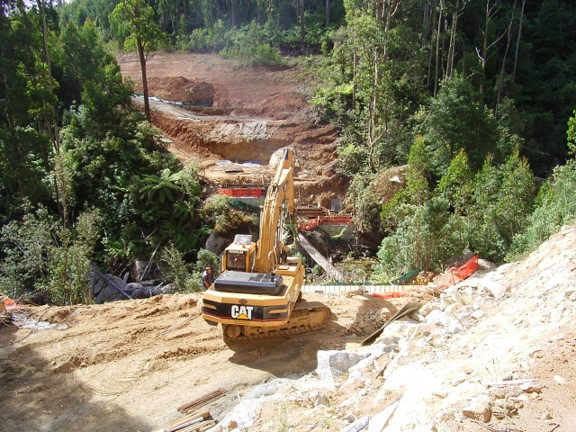
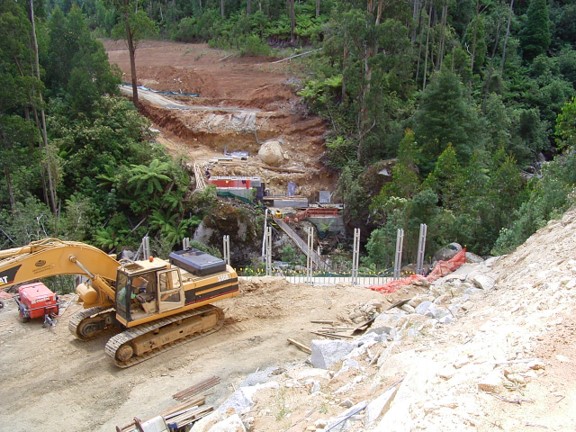
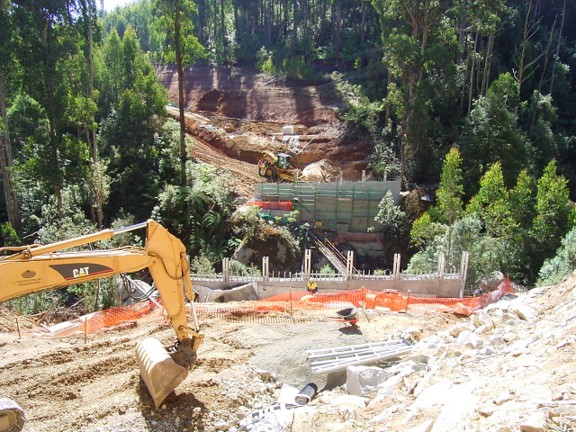
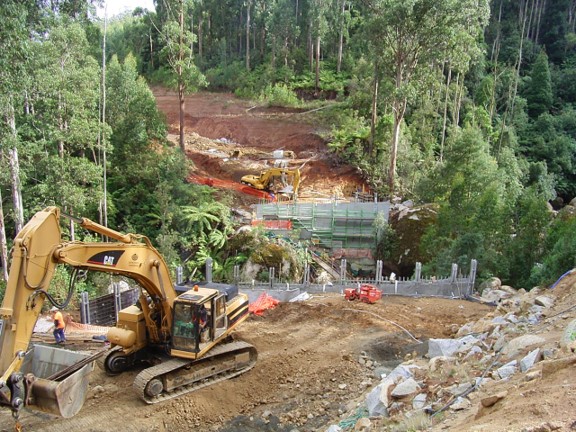
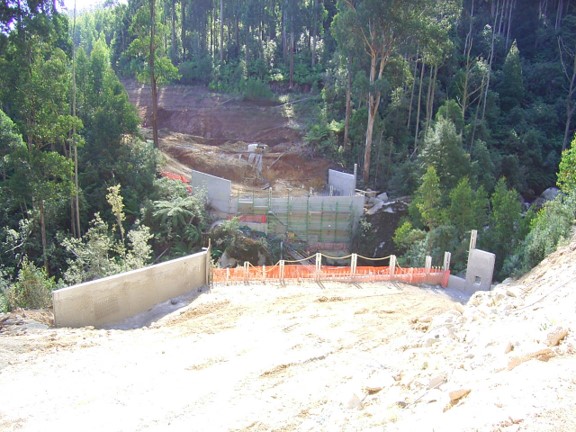
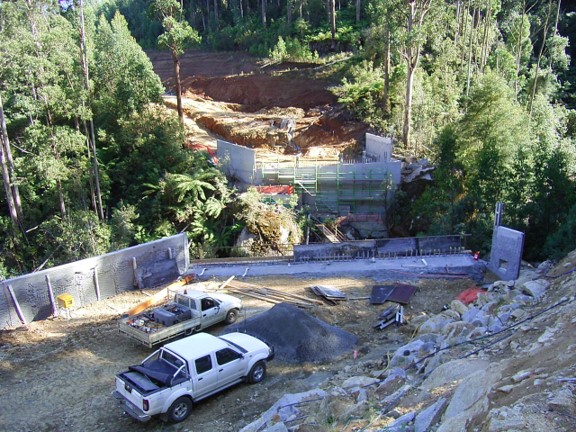
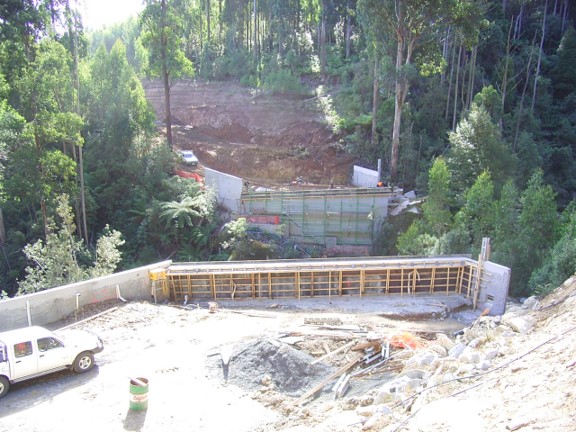
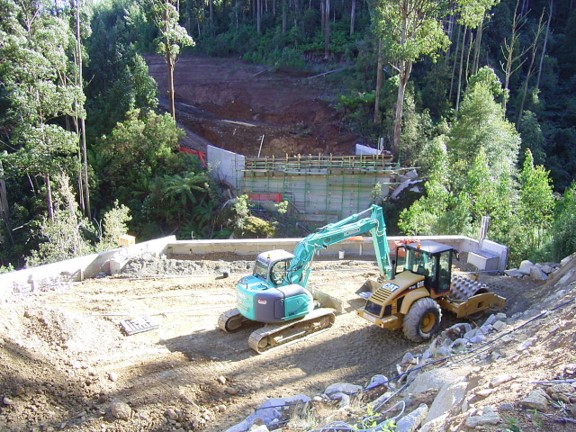
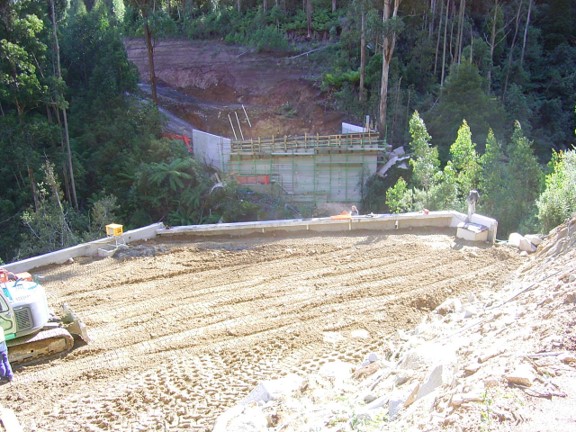
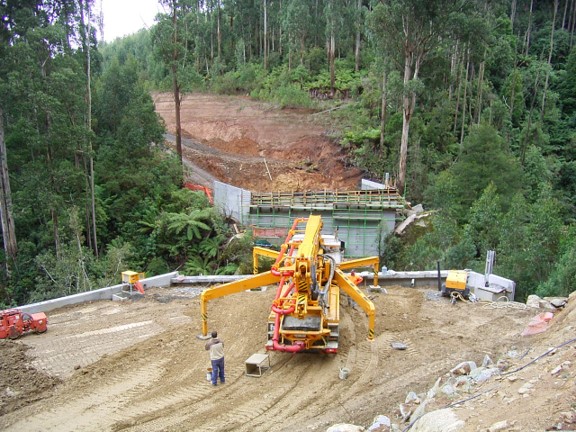
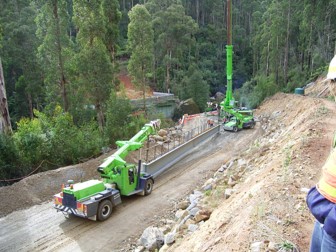
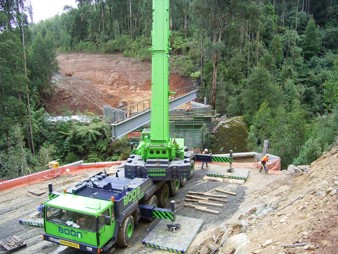
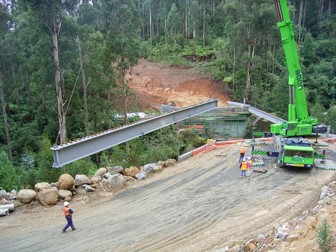
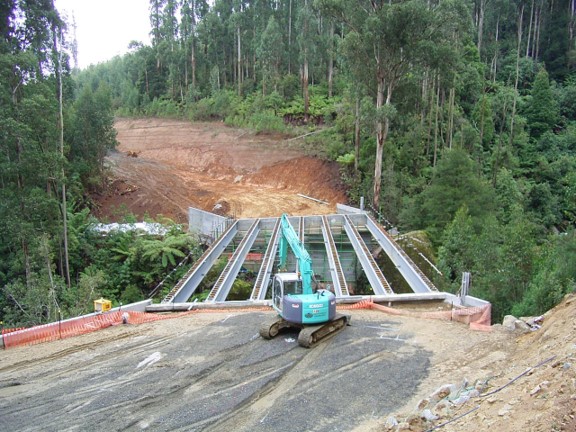
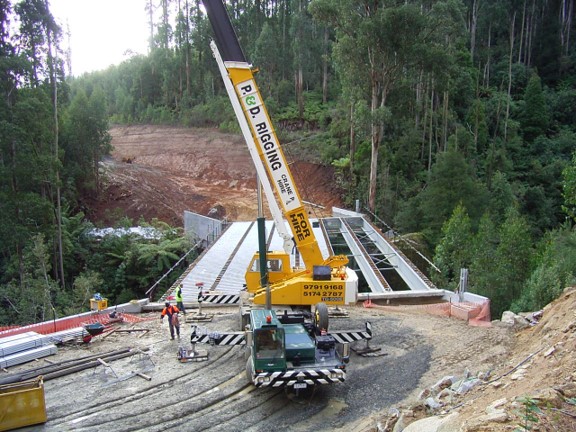
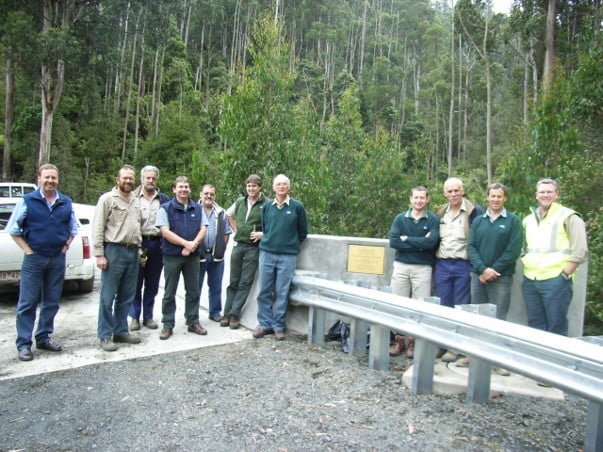
The major engineering obstacle was the bridge over the West Branch of Tyers River. It took six months build between late 2005 and mid-2006 and cost $1.5M. This series of photographs was taken by Peter West, the forester in charge of the project from Erica.
Now that the construction scars have healed the South Face Road is a very scenic drive through these magnificent wet forests. This is an obvious bonus for tourism at the Baw Baw snowfields at one end, and the settlement of Walhalla at the other.
The road was funded by the timber industry so it’s hard to imagine another project of this magnitude ever being undertaken again.
21 Nov 20055 Dec 200520 Dec 200517 Jan 200619 Jan 20067 Feb 200614 Feb 20061 March 200616 March 200620 March 200624 March 200624 March 20063 April 20066 April 200612 April 200627 April 20062 May 20065 May 20069 May 20069 May 200617 May 200617 May 200624 May 200624 May 200624 May 200624 May 200625 May 200629 May 20065 June 20066 June 200614 June 2006Len Wanke Bridge over the West Branch of the Tyers River.
Len Wanke Bridge over the West Branch of the Tyers River. Grange Jephcott, Phil Ripper, Peter McEwan, Ross Pridgeon, ?, Peter West, Len Wanke, Wayne Beaton, Pat Dowling, Martin Slate, Andy Channon. 2006 Source: Peter West
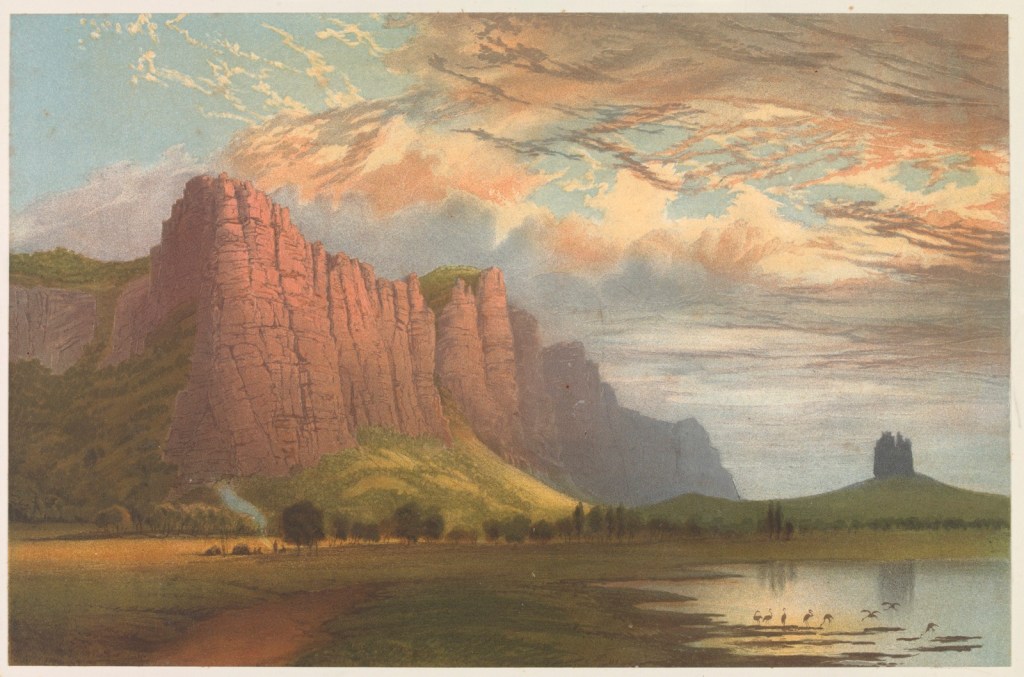
Mount Arapiles is an isolated sandstone outcrop near Horsham which rises 460 feet above the flat Wimmera plains.
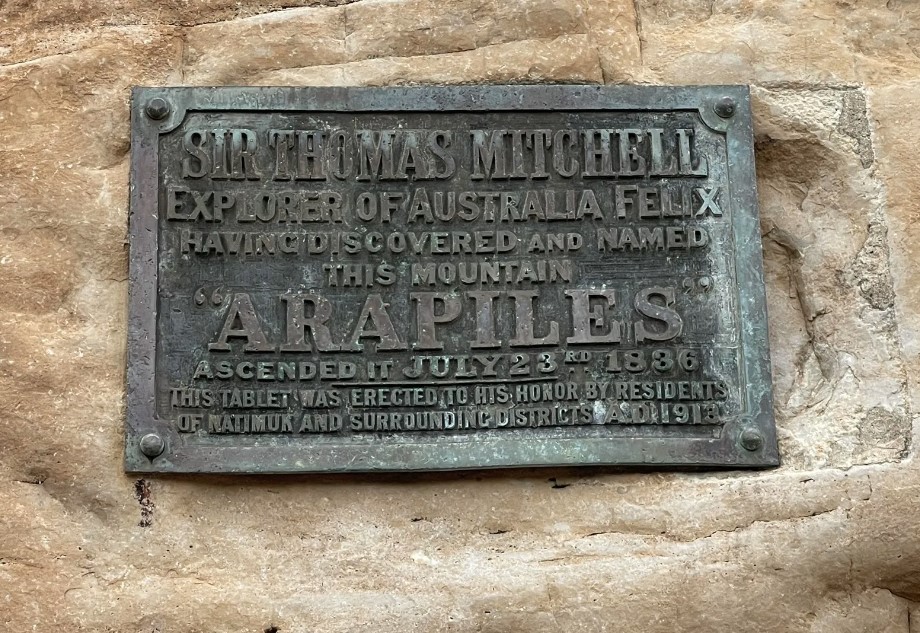
The first European to see the mountain was Major Thomas Mitchell during his epic overland trek in 1836.
He named the landmark on 23 July 1836 after the Arapiles Hills near Salamanca in Spain. Mitchell had seen action as an Army Officer in the Battle of Salamanca during the Peninsular Wars in July 1812. An extract from Mitchell’s diary reads:
“I ascended this hill on the anniversary of the battle of Salamanca, and hence the name.”
When squatters moved into the area during the early 1840s, Mt Arapiles was included in the Vectis Run, which was taken up by the Wilson Brothers in 1844.
By the early 1870s, selectors had moved into the Wimmera from Hamilton and from across the SA border. Those that selected in the vicinity of Mt Arapiles were probably the first to use the area for recreation.
In 1897, Mount Arapiles was first gazetted as a 4653-acre Timber Reserve under the Land Act (1892) and then again under the new Forests Act of 1907.
In 1912, the Shire Council of Arapiles, which was formed in 1888, requested 18 acres of the Timber Reserve be excised and set aside for recreation. This was a unique request, and it became the first area of Reserved Forest to be formally set aside under the Forests Act (1907) for “natural beauty and interest”.
There were only a couple of options open to the Forests Commission under the legislation at the time.
Section 16 provided for the excision of land from permanent forest, “…. which may be required for public use as mineral or medicinal springs, or for reservation for visitors to any waterfalls, caves or places of natural beauty or interest, or as health resorts ….”
Section 24 provided for various types of leases, one of which was: “…. the Governor in Council may grant to any person for any term not exceeding seven years a lease of any Crown land within any reserved forest”.
The second option was adopted, and permissive occupancy was granted over 18 acres. But there was no provision in the 1907 legislation for the appointment of a Committee of Management and it had to wait until the Forests Act of 1918 before a legal committee could be formed.
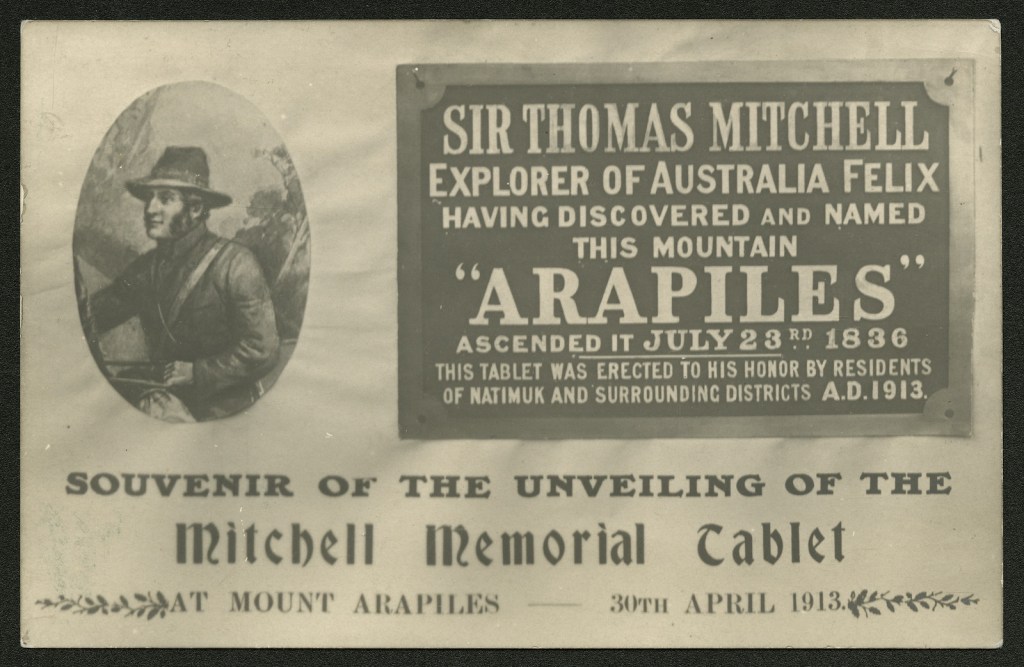
Facility development and maintenance was undertaken by the Arapiles Shire Council and the Natimuk Progress Association. A memorial tablet was unveiled in April 1913 to mark Major Mitchell having climbed and named the mountain in 1836.
In May 1933, the Arapiles Shire Council discussed the Centenary celebrations which were being planned for Victoria in 1935. These celebrations were to commemorate the 100th anniversary of the arrival of the first settlers in Victoria. It was suggested that a special stone gateway be erected at Mt Arapiles.
But it was decided to defer the celebrations until July 1936 to mark 100 years since Mitchell’s ascent of Mount Arapiles.
The Natimuk Progress Association sought approval from the Forests Commission to erect the gateway, to build a shelter shed and toilets and to plant trees in the reserve. The Association also indicated that they wished to name the picnic ground – Centenary Park. Other names such as Major Mitchell Park were considered.
The Forests Commission agreed and requested that a new list of nominees be forwarded so that a committee of management could be formed. They included L. Lang, R. E. Sudholz, R. G. McClure, A. G. Sudholz, G. Grant, H. Woolmer and A. W. Lockwood.
The official opening of the gates at Centenary Park on 23 July 1936 was a huge and festive event. The Horsham Times estimated the crowd at 3,000 and commented:
“It was a red-letter day in the Wimmera and attracted one of the largest crowds at a country function for years.”
The Melbourne Argus reported on 24 July 1936:
Advantage was taken of the opportunity which the centenary provided to establish what has been named Arapiles Centenary Park, comprising 18 acres granted by the Forests Commission.
One of the two larger pillars bears the inscription “Arapiles Centenary Park ” and the other ” To Commemorate the 100th Anniversary of the Discovery of the Mount”
Councillor R E Sudholz, president of the celebration committee, introduced Mr Scholfield, MHR, Mr Lamb MLA, Councillor P J Wilmoth (Major of Horsham), Councillor E Zerbst (president of the Arapiles Shire), Councillor L Ryan (president of the Kowree Shire), Councillor Smith (Wimmera Shire), Mr J W Gray (representing the Education Department), Mr A S Kenyon (representing the Historical Society, Anthropological Society and Field Naturalists) and Mr J E Menadue (Horsham High School), representing the Australian Natives Association.
The official opening of the gates was performed by Mr A W Lockwood, secretary of the celebration committee.
The discovery of the mount was re-enacted by a pageant, Mr F Woolcock impersonating Major Mitchell, accompanied by 25 horsemen.
The memorial gates are still there along with a few old pine trees in the campground.
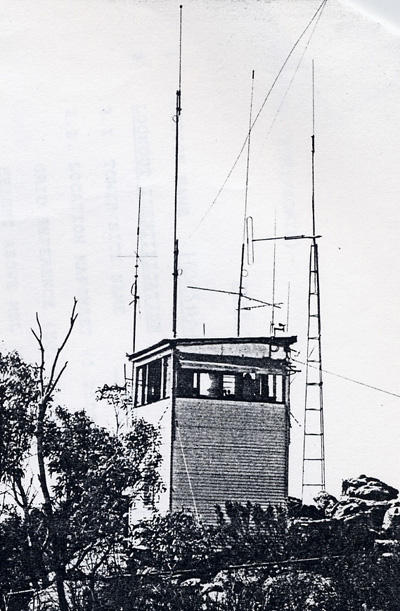
The Country Roads Board (CRB) built many of the major roads at Mt Arapiles in 1938 and the Forests Commission built a firetower on the summit in about 1955.
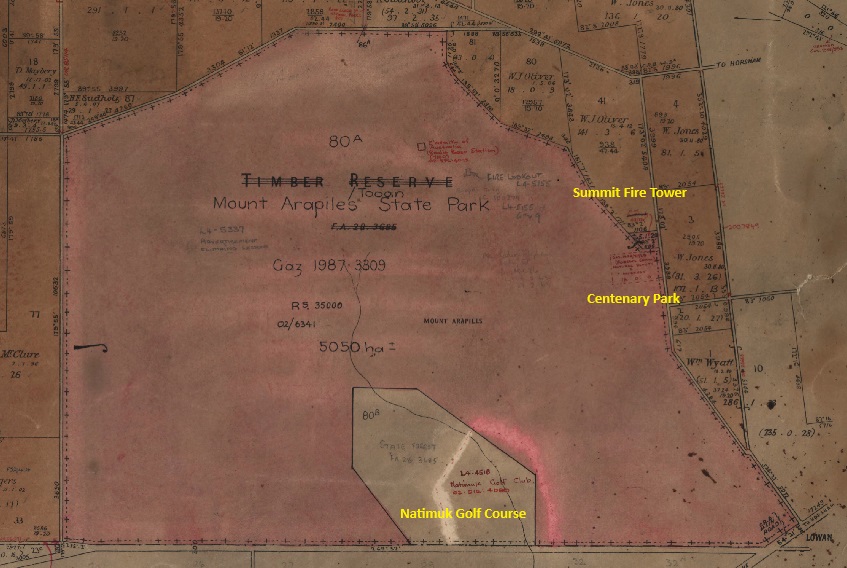
In the late 1950s, the Forests Commission used provisions in Section 50 of the Forest Act (1958) to set aside areas as Special Purpose Reserves. They included the 18-acre Centenary Park, along with a new 40-acre wildflower reserve to protect fairy wax flower, and another 40-acre picnic ground. The 18-hole Natimuk golf course was also licenced in the southern part of the Timber Reserve.
Mt Arapiles became popular for recreational rock climbing from the early-1960s and is now one of the premier climbing sites in Australia.
The Timber Reserve passed from the Forests Commission into the Mt Arapiles – Tooan State Park after the Land Conservation Council (LCC) made its final recommendations in 1982. The land was permanently reserved under the Crown Land (Reserves) Act and managed by the National Parks Service (now Parks Victoria).
It’s believed that the Shire relinquished its responsibilities over the small 18-acre Centenary Park in the mid-1980s.
Mt Arapiles is just one of many areas of State forest across Victoria which were originally set aside as Timber Reserves and are now seen as worthy of being declared National and State Parks. Sherbrooke Forest in the Dandenong Ranges is another notable example.
Source: Tony Willett, Victorian State Foresters Association Newsletter No 48. December 1980.
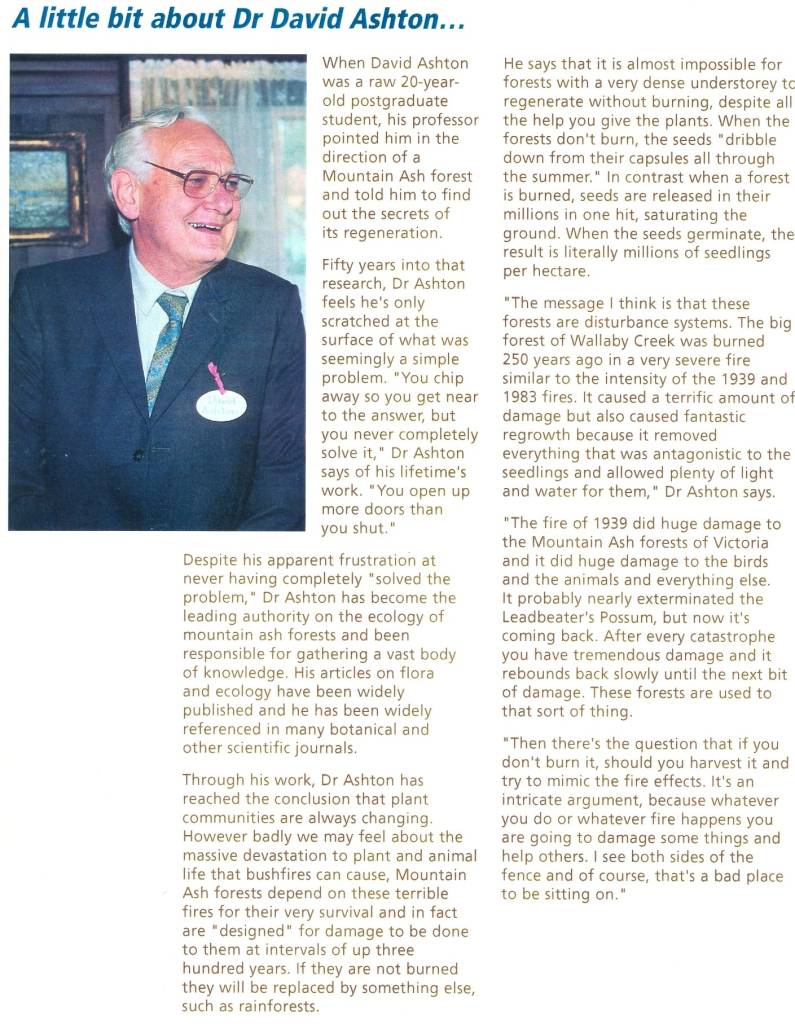
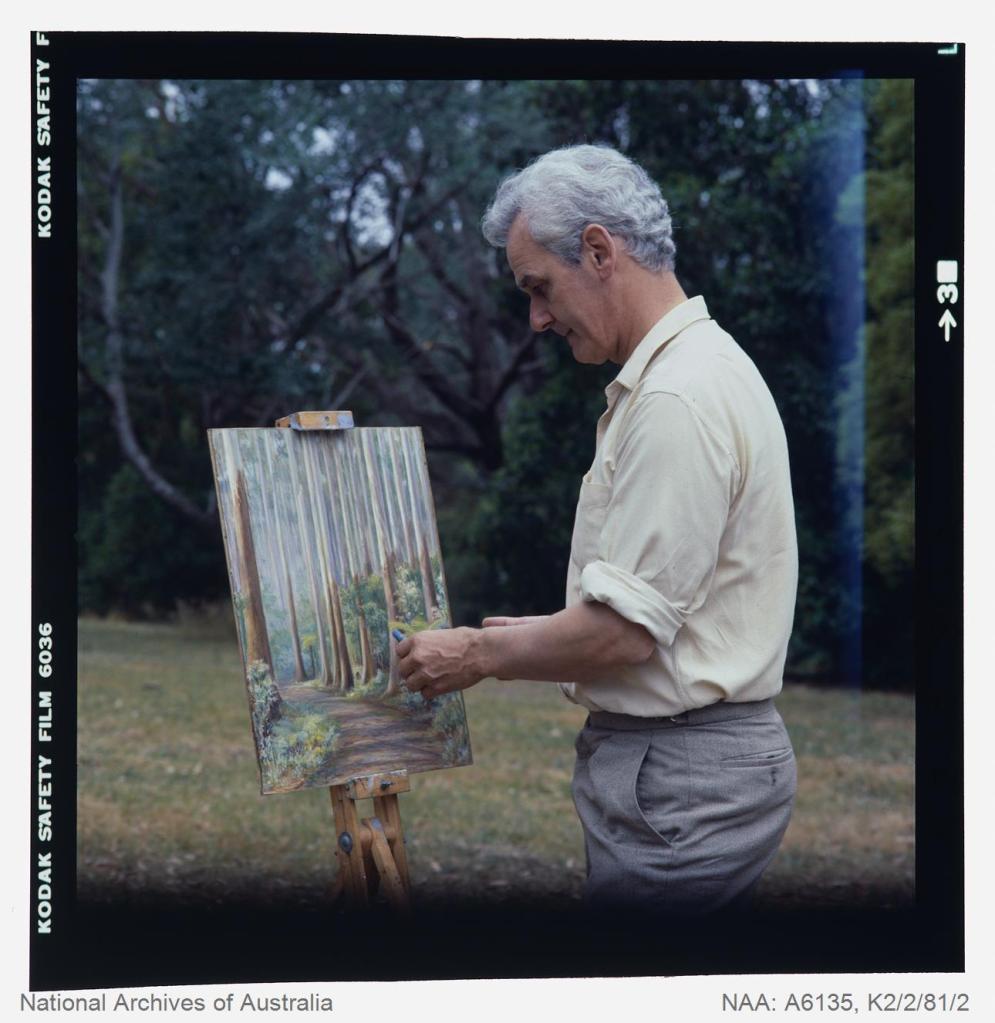
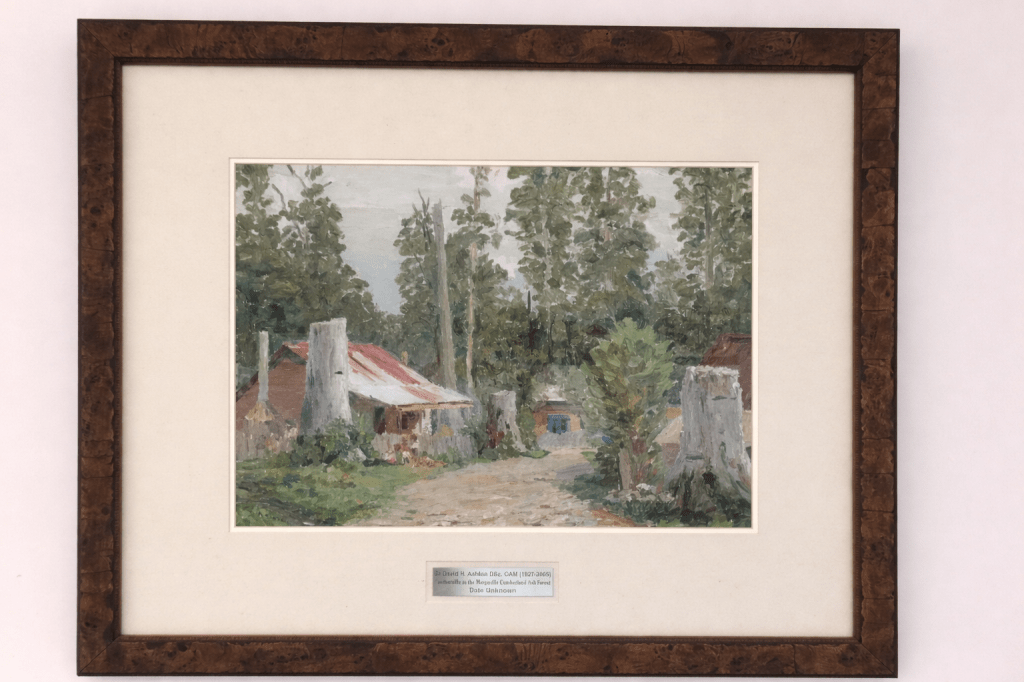
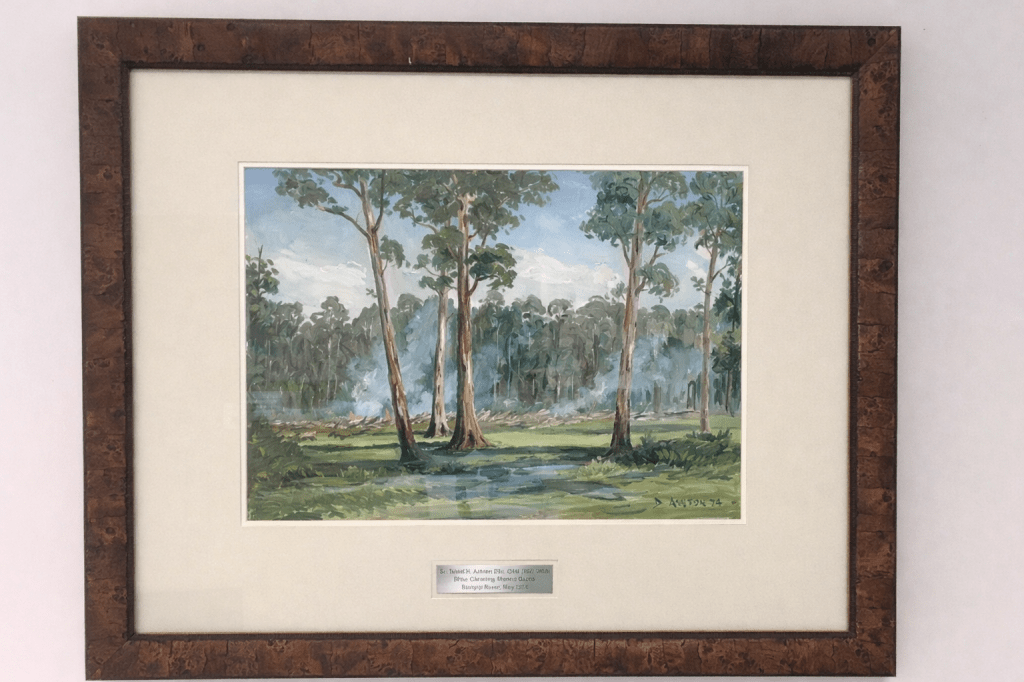
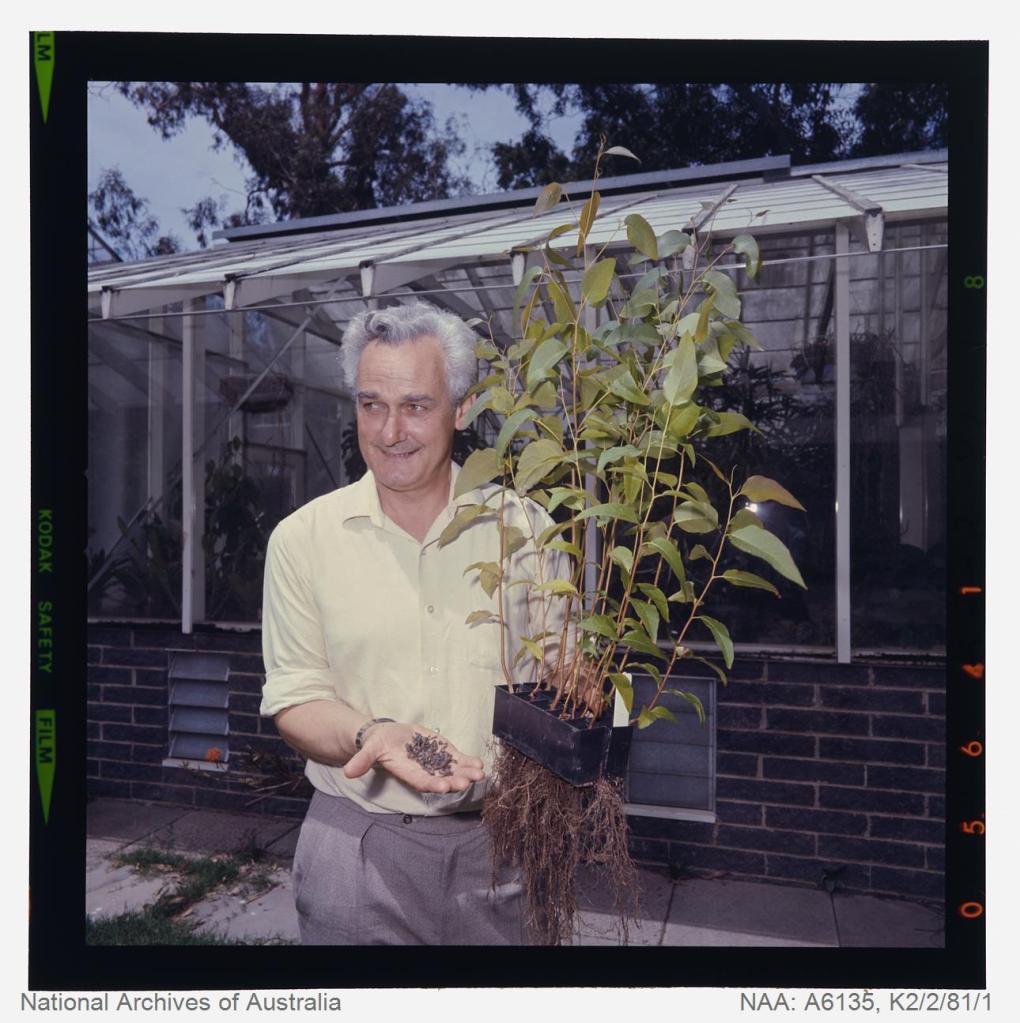
This small memorial plaque overlooks the Toororrong Reservoir north of Melbourne and commemorates Dr. David Ashton.
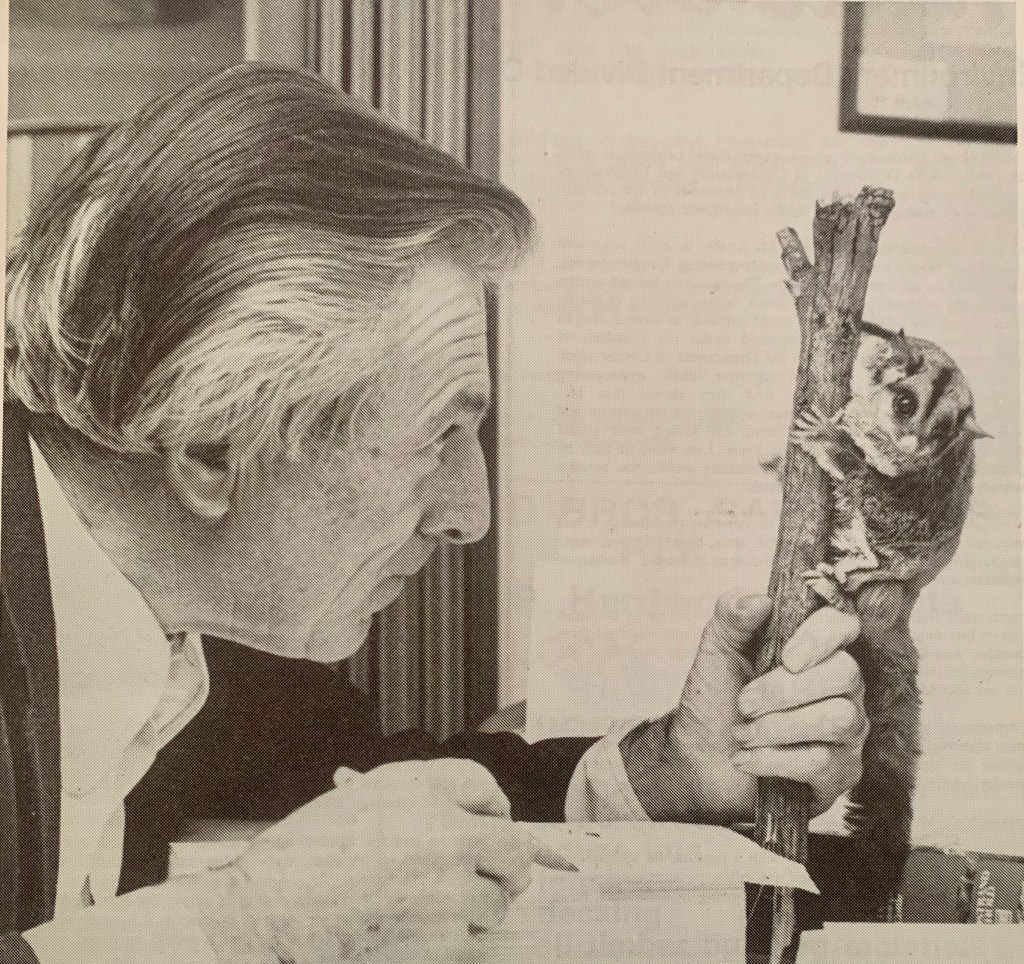
David was unquestionably the world expert on the ecology of mountain ash forests (Eucalyptus regnans).
He was born in Melbourne in 1927 and received a Bachelor of Science in 1949, and a PhD later in 1957.
In 1949, David initiated a 50-year experiment in the Wallaby Creek Catchment after parts of the mountain ash forests had been severely burnt, killed and then regenerated after the Black Friday fires of 1939.
Some of the oldest trees remaining in Wallaby Creek originated from a bushfire in about 1700, while others regenerated after the great fire of 1851. The forest was burnt once again in the Black Saturday bushfires of 2009.
Along with other foresters and dendrophiles like Murray Cunningham, David discovered the essential role of disturbance by infrequent but intense bushfires in regenerating and renewing these wet mountain forests.
He became an inspiring and passionate teacher for over three decades at the University of Melbourne as Associate Professor of Botany. He undoubtedly influenced several generations of Victorian botanists and foresters… including me…
David received many honours and awards including an Order of Australia (OAM) in 2001 “For service to the science of plant ecology, particularly in the areas of forest regeneration, conservation and management”.
In the early 1990s, a new State Forest Management Planning process was in full swing, and a community advisory committee was appointed by the Minister for Conservation and Environment, Steve Crabb.
The committee for the Yarra Forests was headed by local shire councillor, Gordon Buller, and included representatives from the timber industry, as well as recreation and conservation groups.
Peter Preuss represented the Australian Wildlife Protection Council, while Ron Reid, a local sawmiller from Yarra Junction, represented the timber industry on the committee.
I led the forest planning process at the time, and unsurprisingly there was a strong divergence of views within the advisory committee which occasionally flared up but overall, there was a genuine willingness to listen and work together.
Peter was a school teacher in Yarra Junction and particularly active in the long-running campaign to stop logging and create a large National Park in the Central Highlands. He produced his own “Have Your Say” booklet on the forest planning process in conjunction with other conservation groups. It even included a self-guided forest drive around the bush. The Department was not consulted nor involved in its production.
Meanwhile, Leadbeater’s possum had become a symbolic emblem of the forest conservation movement, particularly when it was rediscovered near Marysville by Eric Wilkinson in 1961, after it was believed to have become extinct.
Peter Pruess was a good friend of Des Hackett who is often credited with the first successful captive breeding of Leadbeater’s Possum at his wildlife refuge in his suburban backyard at Blackburn during the early 1960s.
The story goes that Des collected possums by progressively cutting down old-growth mountain ash trees with a chainsaw around Noojee and Powelltown until he had gathered enough of the small arboreal mammals for his captive breeding program. I’m not sure if the Fisheries and Wildlife Department, or the Forests Commission, were aware of his activities at the time, but it’s hard to imagine they would have approved.
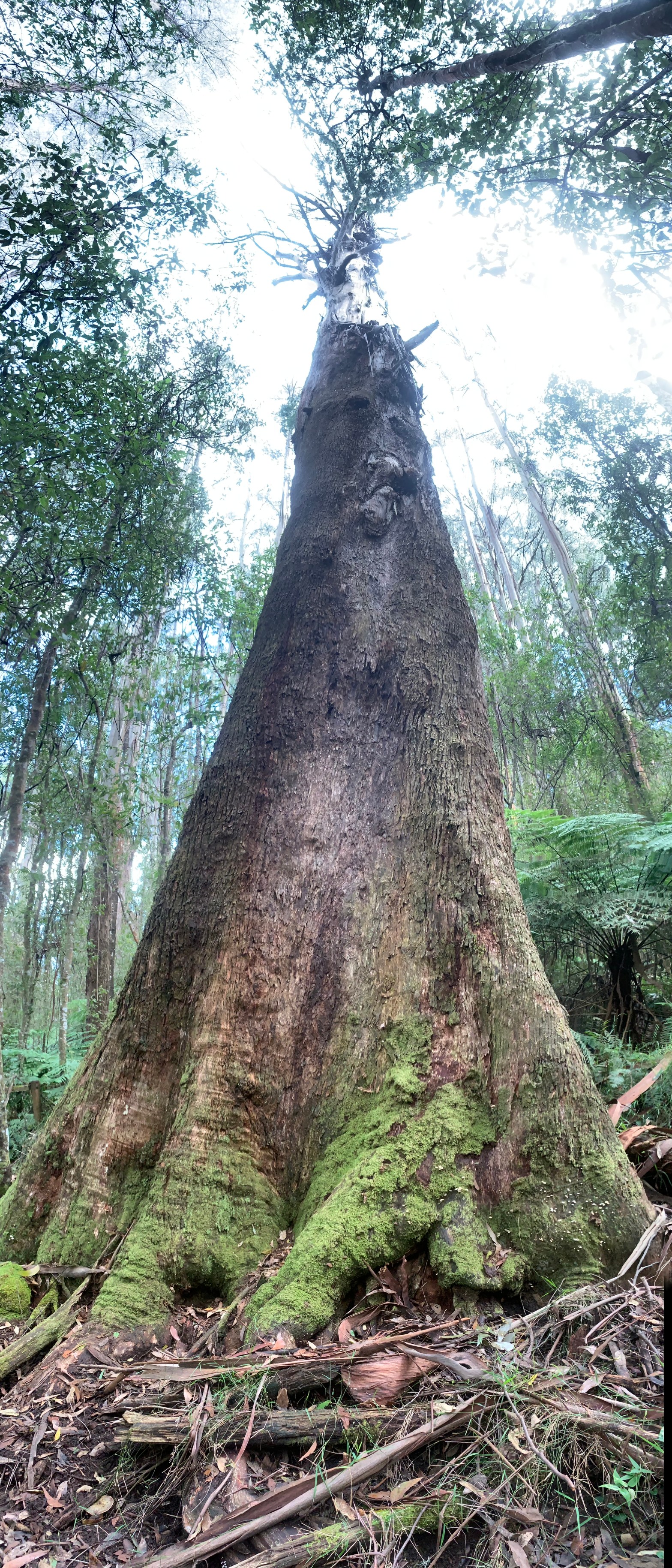
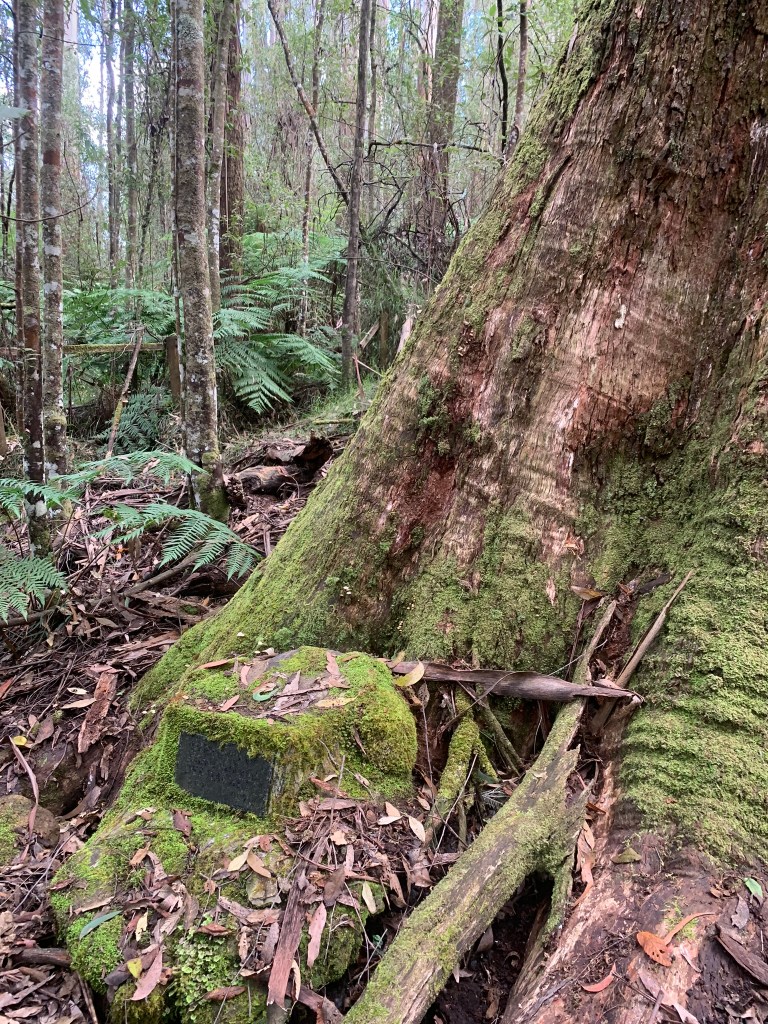
One of the large trees that Des often surveyed was on Pioneer Creek Road, east of Powelltown. The tree was probably 300-400 years old.
During winter, between May and August 1991, Peter Preuss, together with volunteers from the Australian Wildlife Protection Council, the Australian Conservation Foundation (ACF), the Wilderness Society, the Environmental Youth Alliance and the Upper Yarra Conservation Society, constructed a timber boardwalk and viewing platform at what became known as the Hackett Tree. The timber for the boardwalk was supplied by local sawmiller Ron Reid.
The Department was going through another restructure and downsizing process at the time, and the works on the boardwalk were largely unbeknown to senior management staff in the Regional office.
I later learned that the Operations Area Supervisor at Powelltown had been verbally advised, but he took a redundancy package and left the Department not long after. Furthermore, I saw Peter regularly at advisory committee meetings and I don’t recall him ever saying anything to me about the new boardwalk until it was nearly completed.
There was certainly never any formal or written proposal to the Region. By default, the Department as the manager of the State forests inherited responsibility for the long-term public liability risks if anyone hurt themselves.
Then in late November 1991, the boardwalk was unveiled with great fanfare by Channel Nine’s weatherman and ACF Councillor, Rob Gell. Groups of conservationists, some timber workers and school kids attended. An environmental theatre group, Vox Bandicoot, closed the proceedings with a song especially written for the event called “Don’t Hackett the Trees”.
I also don’t believe that any senior management staff from the Department were invited or attended the event. I recall that the Regional Manager, Peter Sheehan, was furious when he became aware that the boardwalk had been constructed and opened on State forest without his knowledge, or any formal written approval.
Meanwhile, tensions over the future of State forests and timber harvesting were running high and it wasn’t long until there was a reaction.
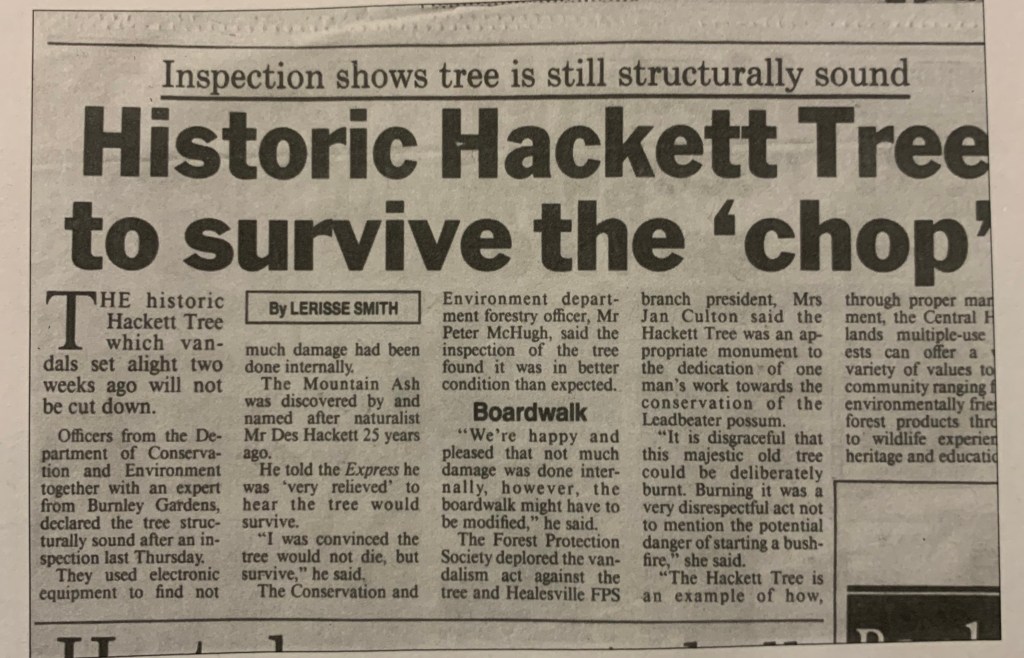
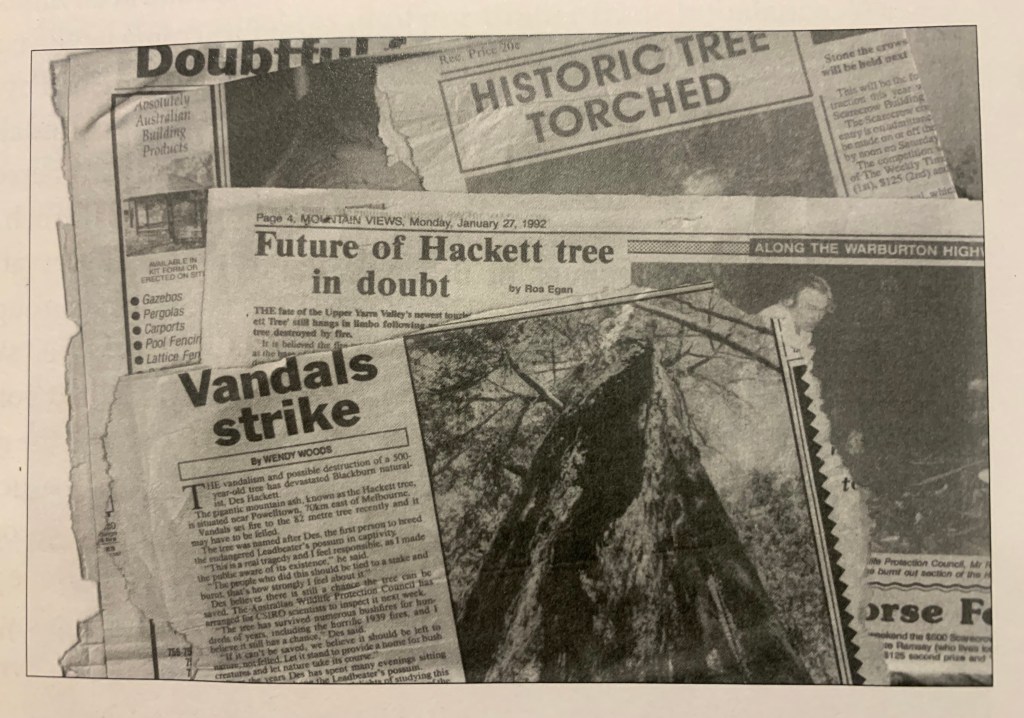
Late on Friday evening, 17 January 1992, someone took matters into their own hands and, with the aid of some diesel fuel, set fire to the base of the Hackett Tree. It was the middle of the fire season but luckily the weather conditions were mild at the time and the small fire was quickly extinguished by local forestry crews and the CFA from Powelltown.
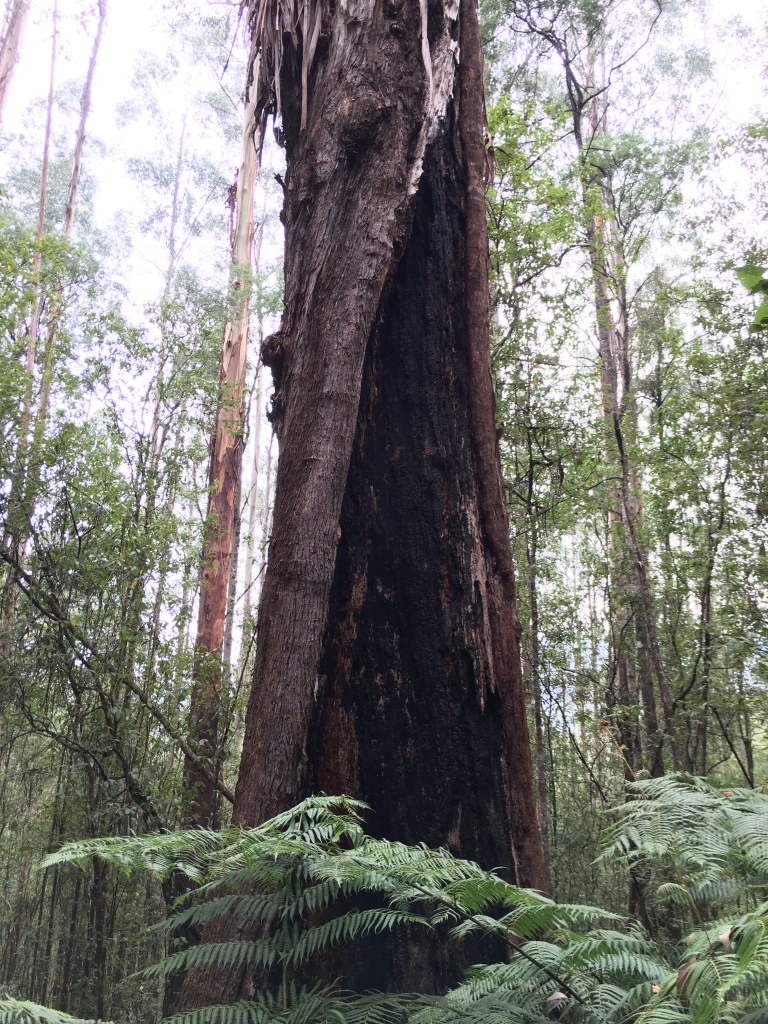
Fortunately, the damage to the tree was minimal. Some people and the media wrongly assumed that the large fire scar on the side of the Hackett Tree was a direct result of the vandalism that night, but it was an older and pre-existing fire scar, possibly a result of the earlier 1939 Black Friday or 1983 Ash Wednesday bushfires.
Not surprisingly, Peter Pruess was seething at the wilful damage, and without any discussion or warning he invited the media to the Hackett Tree on Monday 20 January 1992. I was contacted late on Sunday evening and dropped in the deep end.
Melbourne TV channels including ABC, 9, 7, 10 and SBS converged on the tree. Journalists from The Age, the Herald-Sun and local newspapers also came expecting a clash or a dramatic headline. Local harvesting contractor, Gary Moran, came to represent the timber industry.
Allegations and rumours swirled that someone from the timber industry had lit the fire as a reprisal and, while a very likely cause, there was absolutely no evidence. The local community grapevine was oddly silent. Sergeant Bob Walker from the Warburton Police had been immediately advised and fire investigators from the arson squad later visited the site, but without any firm conclusions.
There were many difficult media interviews that Monday afternoon as I tried to diffuse the issue. I offered to seek professional advice from arborists before making any long-term decisions about the future of the tree.
Arborists from the Royal Melbourne Botanical Gardens as well as the Burnley Horticultural School subsequently visited the Hackett Tree on Thursday 30 January. They included Dr Greg Moore, Kevin Blaze and Steve Fitzgerald.
There had been suggestions and unfounded fears, amplified by the media, of the tree’s imminent collapse because it had been weakened by the fire. The arborists climbed the tree and took core wood samples which confirmed, what all the local foresters already believed, that the tree was healthy for its age and would survive. It certainly didn’t need to be felled because it was unsafe. But they did say it was unwise to encourage people to sit under the tree.
The Melbourne media were invited back to meet the arborists, but the story had gone cold, so only the junior cadet from the local newspaper turned-up.
As the newly appointed Senior Forester for the Yarra Valley, the whole sorry saga put me in a difficult dilemma. Firstly, the slippery boardwalk structure had not been officially approved. But more importantly, it was poorly constructed and presented a significant long-term public safety risk. For example, the timber walking surfaces weren’t flat and sloped downhill making it hard enough to stand on even when it was dry. The steps were uneven, and the tread and lift dimensions didn’t meet any design or safety standards. Some sharp nails and bolts even protruded from the decking and handrails.
But to repair or remove the boardwalk would have been too inflammatory under the circumstances. So, it was decided to adopt a benign stance and allow time and nature to take its course.
Furthermore, it was decided not to maintain the boardwalk or promote the Hackett Tree to the general public with either directional or interpretive signs, nor highlight its location on forest maps and tourist brochures. People could continue to visit, but at their own risk.
I advised Peter Preuss of the Department’s position but not surprisingly he viewed things differently and was not happy with the decision.
But it was also decided to protect the tree from logging or disturbance with a large 200 m buffer. Later, a formal Special Protection Zone (SPZ) was set aside in the Forest Management Plan.
Unlike the previous experience with Werner Marschalek and the Ada Tree, if there had been some consultation in the design and materials used for the boardwalk at the Hackett Tree, it undoubtedly would have been supported and approved.
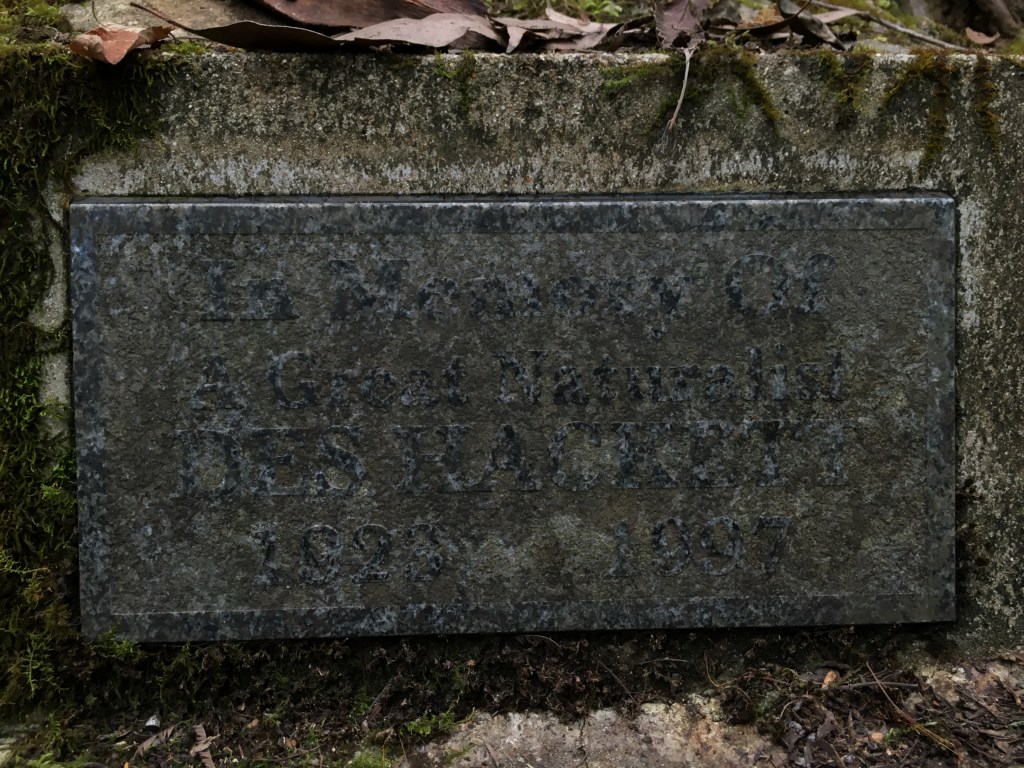
Des Hackett, the man who owes the tree its name, died later in 1997. A small memorial was concreted at the base of the tree, but it has become difficult to read.
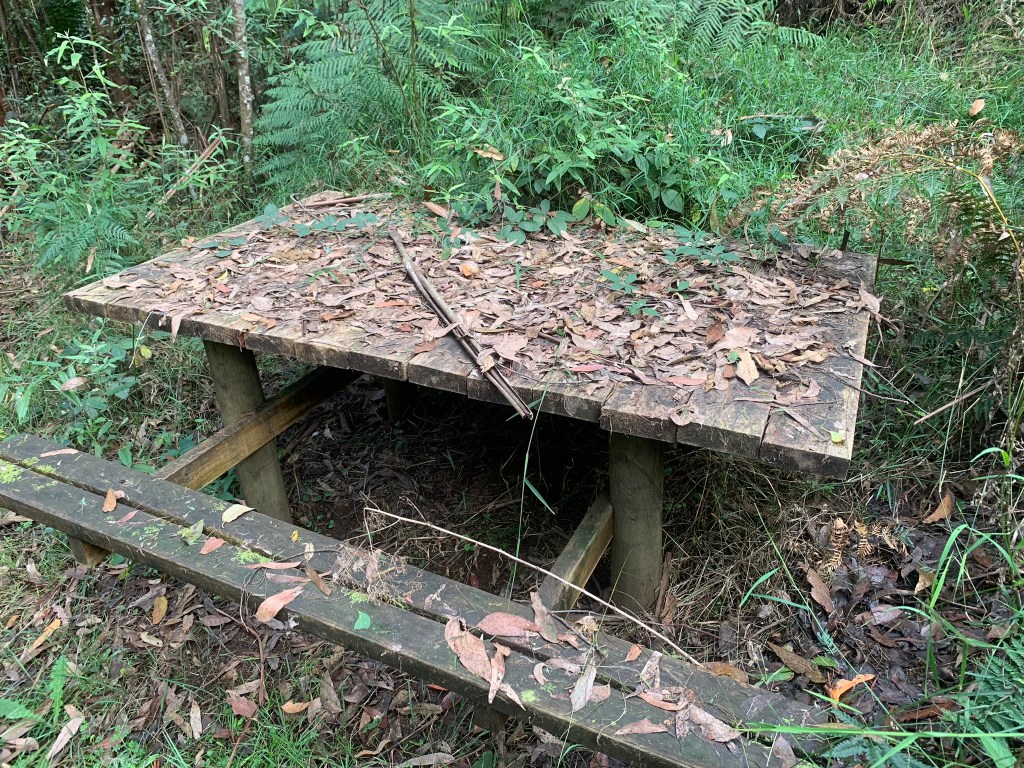
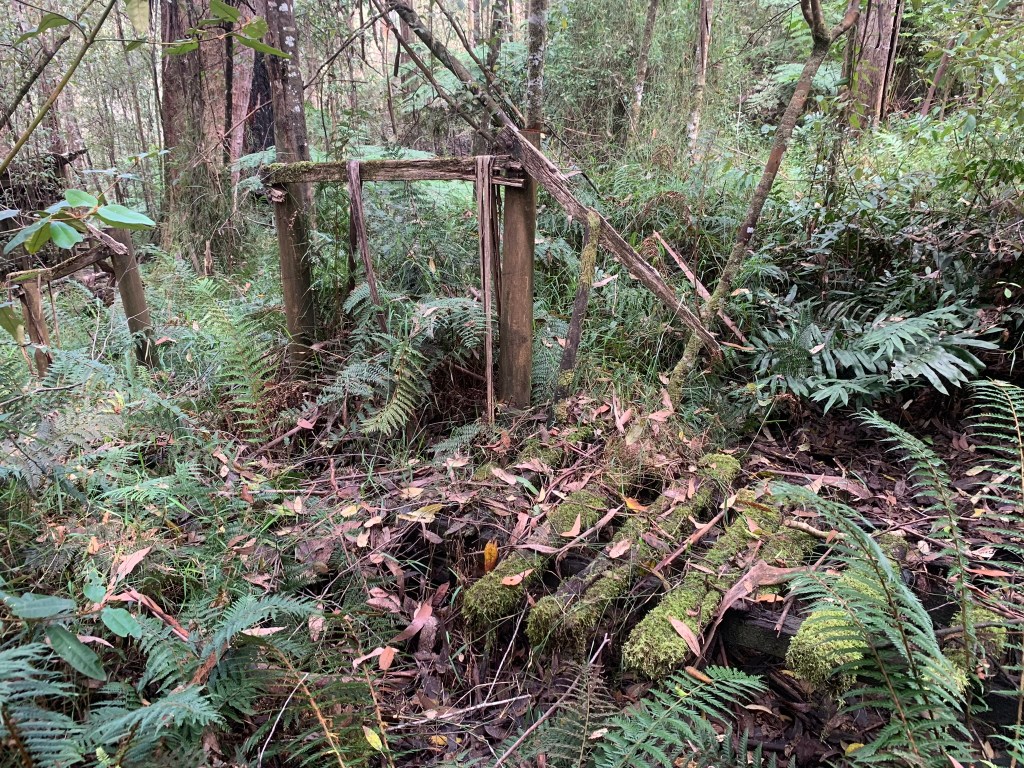
The wooden boardwalk continued to slowly rot away and in about 2003 some of it was removed. The shelter and other remnants remain.
Some schools and conservation groups continue to visit the Hackett Tree, often with Peter as their guide. There is also a geocache at the tree which attracts some visitors.
A recent proposal to rebuild the boardwalk has been examined, but once agian arborists advised that the Hackett Tree was still too dangerous to encourage people to visit, or certainly sit under it.
The Hackett Tree continues to survive but is slowly senescing and its crown is showing its age. I’m not sure if there have been any recent surveys to determine if Leadbeater’s possum still live in it.
The large fire scar on the uphill side probably originates from either the Ash Wednesday bushfires in 1983 or the earlier 1939 Black Friday blaze. Photo: Tom Fairman 2016.Photo: Peter McHugh 2024Photo: Peter McHugh 2024Photo: Peter McHugh 2024From “Born to be wild” by Peter Preuss (2013)From “Born to be wild” by Peter Preuss (2013)From “Born to be wild” by Peter Preuss (2013)The cover of the booklet. Photo: Peter Pruess 1991Des Hackett at his home in Blackburn. Photo: Peter Pruess 1991From “Born to be wild” by Peter Preuss (2013)Photo: Peter McHugh 2024Photo: Peter McHugh 2024With the forest advisory committee. Photo: Peter McHugh 1991.
The Forests Commission and its successors continuously encouraged bushfire research and innovation.
In 1946 a large parcel of industrial land was purchased at North Altona as a fire equipment cache and workshop.
The Altona workshop became a hotbed of new technological thingumajigs… a marvellous blend of Aladdin’s Cave of Wonders coupled with Wallace and Gromit’s madcap contraptions… an exhilarating place where lots of gizmos were invented and tested… mostly with astounding results… but nearly always with some head-scratching frustrations… and thankfully not too much explosive mayhem.
In fact, a lot of Australia’s pioneering equipment development was led by staff from Altona, often in collaboration with other State forestry and fire authorities. The CSIRO also contributed significantly.
The US Forest Service, the US Bureau of Land Management and US State agencies such as the California Department of Forestry and Fire (CalFire) as well as the Canadian Forest Service faced similar challenges and proved strong and willing partners in sharing knowledge, ideas, equipment and expertise over many decades.
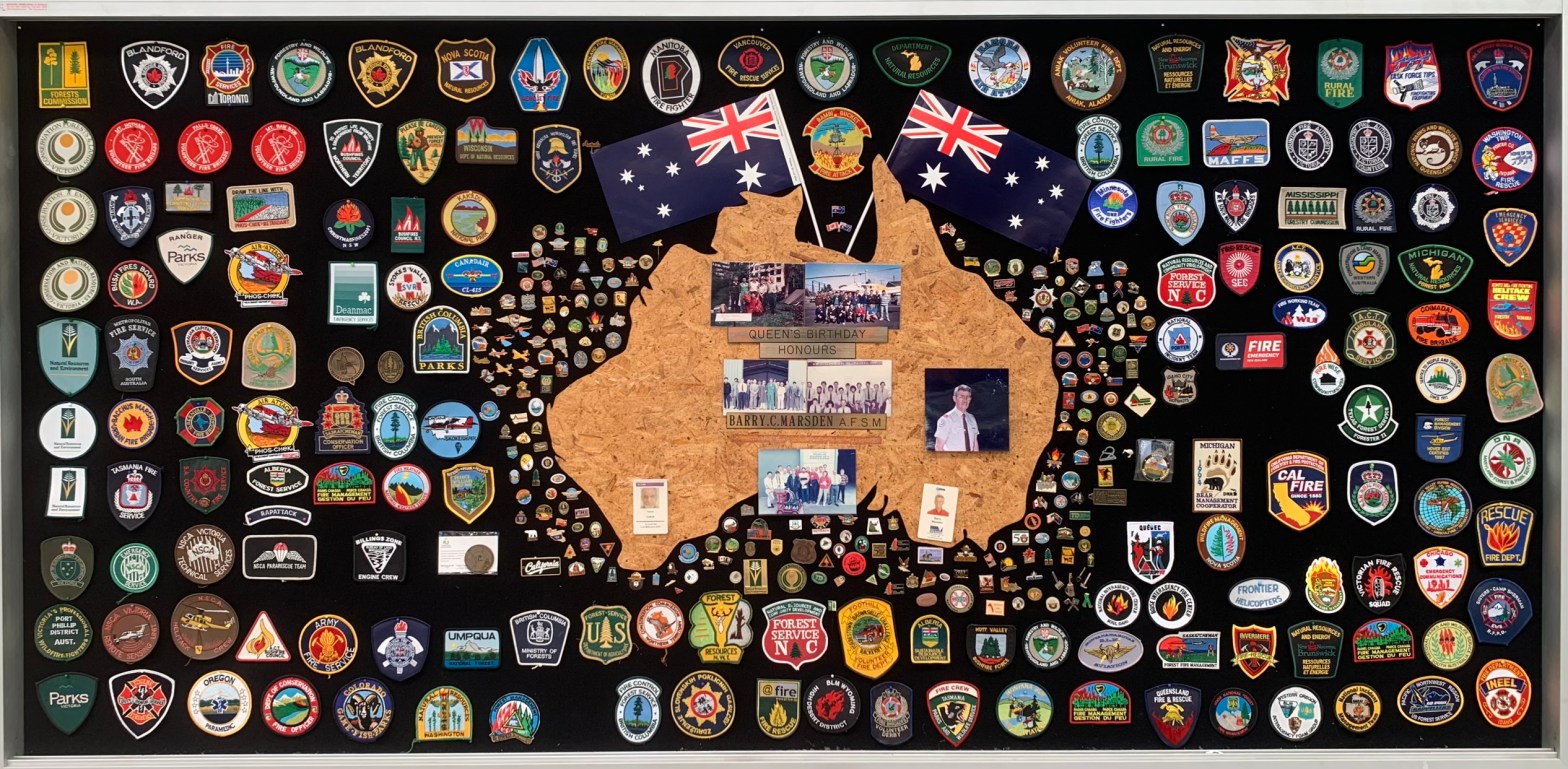
A small museum of some of these amazing inventions and other eclectic stuff collected by fire equipment wizard Barry Marsden is housed at Altona. It can be visited by appointment.
This collection of badges is testament to the relationships that were forged across the globe with staff from the Altona workshop.
Having good cartographic skills to use and interpret aerial photographs to make maps was an integral part of most foresters working career.
Aerial photos were used to make maps of forest types, timber resources, to survey logging areas and regeneration, to mark boundaries of public land and new plantations, to identify new roads and tracks, as well as for fire suppression. Infrared film was sometimes used to monitor insect and disease attack.
The images needed to sharp, with high contrast, and in a large format (most were printed in B&W on 9-inch by 9-inch glossy photographic paper) with at least a 60% overlap to enable stereoscopic viewing and with a 20-30% side lap to allow for aircraft drift. Preferably, the photo scale was close to the final map scale avoid to problems when enlarging and to reduce distortion.
It was a big winter job to view hundreds of overlapping photos through a mirror stereoscope and mark features either directly onto the images, or onto transparent overlays, with fine Rotering ink pens or sharpened Chinagraph wax pencils.
Various lens combinations were used on a Zeiss Sketchmaster to adjust for scale and then “rubber sheet” the image to lineup topographic features like streams and roads. The photo information was then laboriously transferred using a light table onto large A0 paper maps or translucent drafting film. The maps were later hand coloured with either Derwent pencils or delicately painted with Pelikan ink wash.
Strict cartographic guidance was provided by the FCV’s 1947 publication – “Handbook of Conventional Signs and Symbols for Use in Forest Mapping and Plan Drawing”. It was slow and exacting work but very rewarding.
Something was needed to supplement the very expensive and infrequent large-area photography programs. From the mid-1960s Victorian foresters began experimenting with small format 70mm and 35mm cameras which proved simple, practical, cheap and flexible.
It was found that any SLR camera could be used provided it had a good quality lens and fast shutter speed (preferably down to 1/1000 second). Motorised cameras with a large film capacity had obvious advantages and were essential when access to the camera was not possible during flight. It is also essential for the shutter to operate at low temperatures and those lubricated with silicones were recommended.
Wide angle lenses were the most practical to ensure overlapping images when flying in light aircraft because they simplified flightline navigation and limited the number of photographs.
Components of a typical FCV Divisional Office system included –
A Hasselblad or Vinten 70 mm format aerial camera with a focal plane shutter which could be electrically operated.
Interchangeable lenses to allow for different photo scales and flying heights.
Several large film magazines, which were loaded in a darkroom, each with a capacity of 100 feet or approximately 500 frames.
A remote control for the camera in single-shot mode or automatic firing at selected intervals of 2 to 50 seconds. It also needed a frame counter.
A light aircraft was modified with an internal mounting for the camera to keep it level and steady. Often a hole was cut through the floor for the lens.
The aircraft also needed an inbuilt 12 Volt DC battery to operate the motorised camera shutter. The front passenger seat was generally removed to improve access to the camera.
An Aldis drift sight was also fitted. This might be likened to an inverted periscope and is used to determine drift, to facilitate accurate navigation along flight lines and to determine the exposure interval for stereoscopic overlap.
Some smaller 35mm aerial camera setups were also developed by FCV Districts which were inexpensive and required no permanent modification to aircraft.
But the advent of accurate GPS in 2000 and high resolution satellite imagery, combined with sophisticated Geographic Information Systems (GIS) and colour digital plotters, has made the cartographer’s skill of Aerial Photographic Interpretation (API) almost redundant.
Google Maps has consigned beautifully hand-coloured paper maps as curiosities in old Vertiplans or the state archives, while Derwent pencils and mirror stereoscopes have become museum pieces.
Source: Ray Spencer, Victorian Forester & VSFA Newsletter No 30. May 1972.
Despite the repeated suggestions, there are still lots of large and old mountain ash trees in the State forests of the Central Highlands.
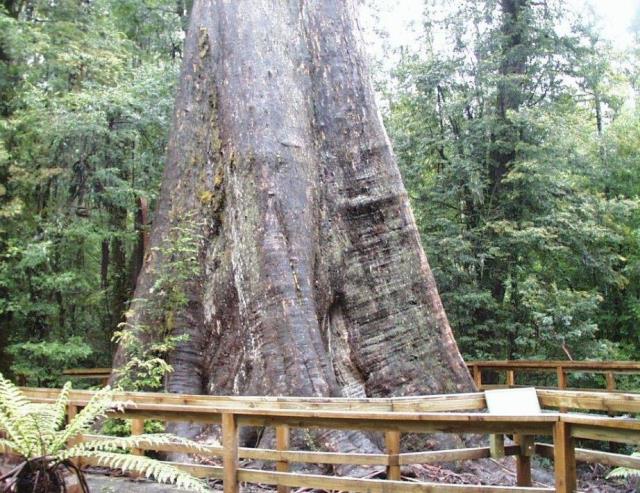
One very popular walk is to the Ada Tree near Powelltown. Its massive trunk is thought to be nearly 400 years old with a diameter over 15m and height of about 76m. It has a broken top and may have once been up to 90m tall, but that’s a complete guess.
The Ada River is believed to be named after Ada Christina Mortimore who lived at nearby McMahons Creek and knew the local Crown Lands surveyor.
It seems the Ada River catchment was home to many large trees. In 1888, during a quest on behalf of the Centennial Exhibition to find Victoria tallest tree, a specimen was identified as the “New Turkey Tree” at 326 feet 1 inch (99.4m).
The Ada Tree, which had survived repeated bushfires and storms, was well known to early timber getters and sawmillers but had been left behind presumably because it was believed to be either too large to fell with hand tools and probably too faulty inside to cut into quality sawn timber.
The Ada Tree was “rediscovered” by forest assessment crews led by Peter Woodgate, and then mapped by Peter Black, after the 1983 Ash Wednesday bushfire swept the forests.
Werner Marschalek and Ray Wright, both passionate environmentalists and big tree hunters, are said to have pinpointed the exact location of the Ada Tree on the ground in about 1986.
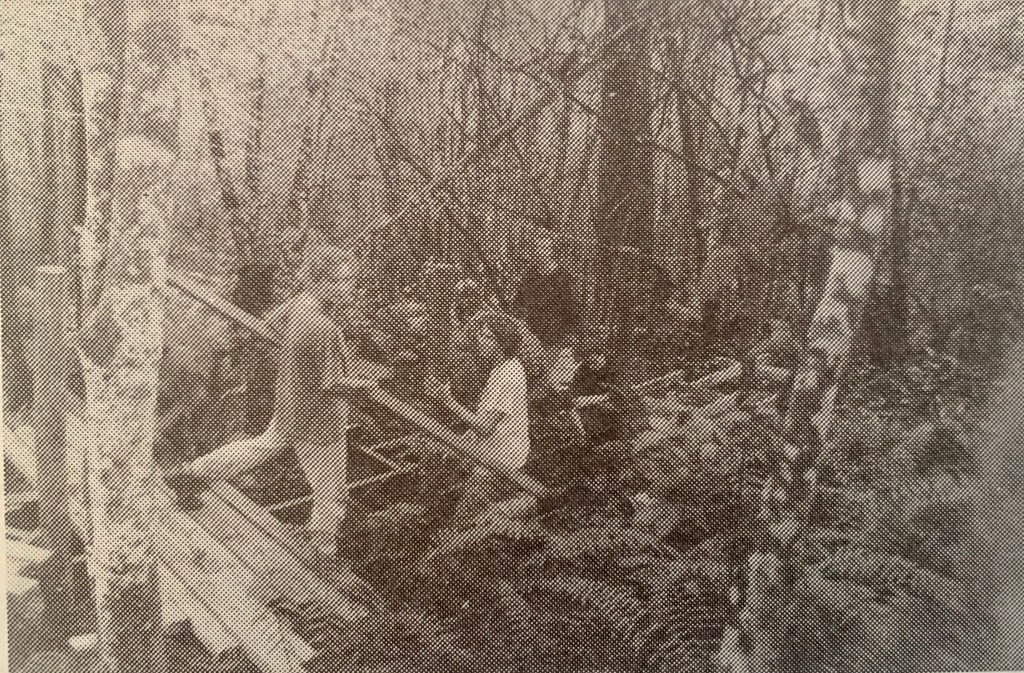
The pair then scrounged some materials (including metal gangways from the SEC power station at Loyang) as well as some funds. Together with other hardy volunteers, they spent every other weekend over the next five years building a path through the thick scrub to the Ada Tree. At one stage, a group of prisoners from Pentridge also worked on the project.
Importantly, Werner and Ray worked closely with local Forests Commission staff from Powelltown on the project.
The “Ada Tall Trees Reserve” was excised from the surrounding State forest in about 1987 when Joan Kirner was the Minister for Conservation, Forests and Lands (CFL). It was then permanently reserved in 1997 under Section 4(1) of the Crown Land (Reserves) Act 1978.
Later in 1993, using federal rainforest conservation funds, the Department upgraded the walking track and built a viewing platform circling the Ada Tree to protect its roots from trampling.
The southern section of the Ada River Road ran very close the creek and constantly collapsed into the wet rainforest causing significant environmental damage. It was decided to close this section of road and terminate it at a new carpark at the entrance to the walking track. The rough New Turkey Spur track was upgraded into a better-quality haulage road around the same time.
The easy 3.2 km loop walking track to the Ada Tree was linked to the popular “Walk Into History” and the old Federal sawmill site which is nearby.
The area has received several upgrades over the decades including toilets and improved car parking.
Among the many pressing priorities for Alf Lawrence, the Forests Commission’s new Chief Fire Officer, in rebuilding the firefighting capacity after the catastrophic 1939 bushfires was to invest heavily in modern vehicles and equipment.
Powered pumps like the trailer-mounted Coventry Climax (Godiva) gave firefighters a much greater capacity than ever before to put the “wet stuff on the red stuff”.
Its four-cylinder, four-stroke, water-cooled, petrol motor produced 38Hp and was connected with either 1½ inch or 2½ inch canvas hose for direct attack, or as a filler pump it could deliver 300 gallons per minute at 120 psi.
Some of the first acquisitions included war surplus veterans shipped over from the London after the blitz bombings of WW2.
A fine example of an early Coventry Climax Pump sits in the Altona Museum collection.
In recent weeks, volunteers from the Forests Commission Retired Personnel Association (FCRPA) have been working with professional photographer, Mark Jesser, to systematically photograph the best of the Altona collection and make items accessible on-line in “Victorian Collections”.
It follows earlier work in February with Mark at the Beechworth forestry museum.
The Altona project has been strongly and generously supported by DEECA to enable Mark to once again work his magic.
Just compare some happy snaps taken with an iPhone to Mark’s museum-quality images taken with a high-resolution Nikon SLR, a white background and high-powered flash lighting to bring out the true colours and eliminate most of the shadows.
Put simply… successful natural regeneration of native eucalypt forests often came down the three S’…
Seed… Seedbed… and Season…
Seed collection, extraction and storage to support regeneration after logging was always a big drain on the District budget.
Seed collection was also subject to the vagaries of the flowering cycle and some commercial eucalypt species only produced a bumper crop every few years.
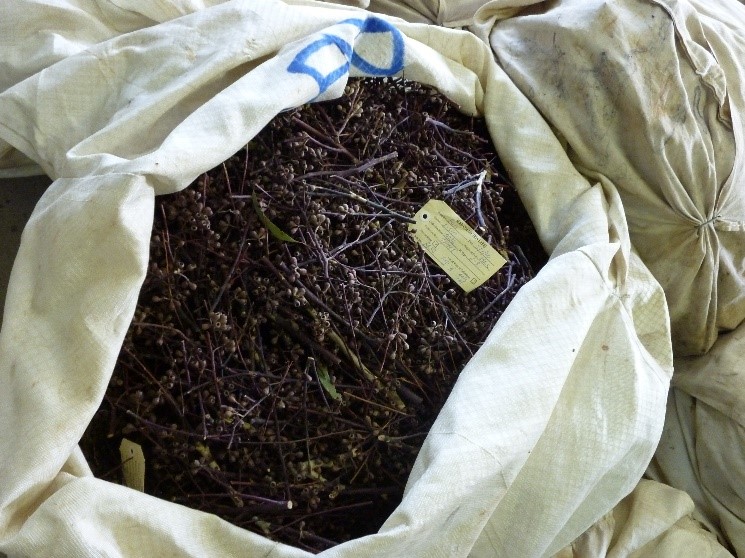
In late summer through to autumn, after the trees has set seed, branches were cut and collected in the field and transported in large wool bales, or on the back of trucks.
The seed capsules and branchlets were usually placed on large wire framed drying racks or on sheets of corrugated iron to extract the seed. This job was very labour intensive.
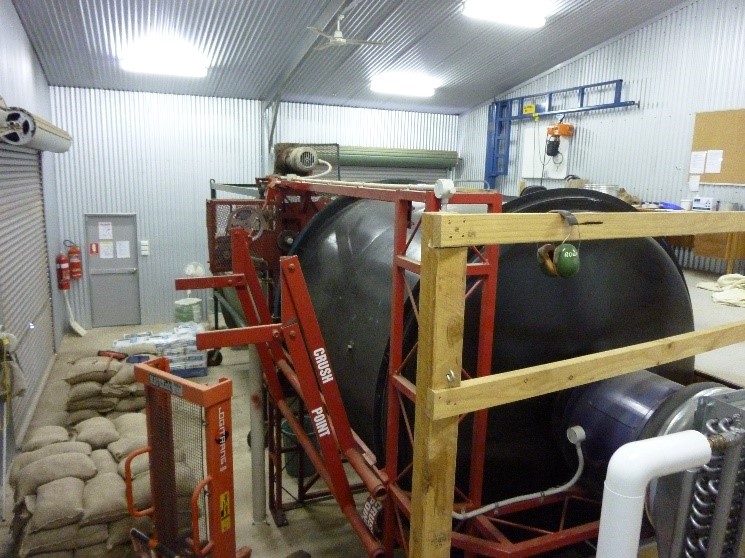
In 1971, Noel Fraser, a FCV Overseer from Omeo, developed the now common rotary drum seed extractor.
Seed capsules were heated inside the metal drum and gently tumbled. It was found that the extraction time for alpine ash (E. delagatensis) seed could be reduced to about 36 hours. It was a lot less reliant on warm weather and significantly reduced handling. The losses of seed compared to air-drying were also reduced.
A full drum of branches and capsules of alpine ash yielded about 20 pounds of seed or enough for about 20 acres of regeneration.
Seed was then stored in a cool dry place, ready for use.
Encouraging and supporting innovation was a key feature of the Forests Commission.
Victorian Forester & VSFA Newsletter No 30. May 1972
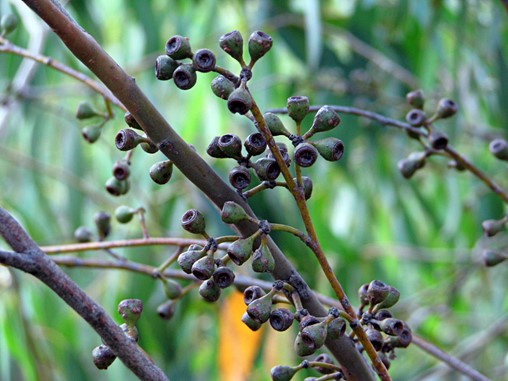
Seed capsules and branchlets (mountain ash)Collecting seed capsules in the bush with secateurs. Photo: FCRPA Collection.Capsules were sometimes transports on a tipper. FCRPA CollectionBales of seed capsules ready for extraction. Careful records needed to be kept protecting seed provenance. Photo: Peter McHugh 2010Drying racks to extract seeds from capsules were used before the development of rotating seed kilns in the 1970s. Source: FCRPA Collection.Green Gold – tiny seeds power-packed with magical DNA. About 1 kg per hectare is enough to grow a new forest of 300 feet tall alpine ash when sown onto a receptive ash seedbed. Photo: DELWP Gippsland.
Forest Overseer, Noel Fraser developed the prototype rotation seed kiln at Swifts Creek in 1971. Source: FCRPA Collection.
Seed banks can be kept for decades under controlled moisture and refrigerated conditions. Photo: Peter McHugh 2010.Modern rotating seed kiln at Mansfield. Photo: Peter McHugh 2010.
The Forests Commission was not the only State Government organisation growing seedlings.
The State Rivers and Water Supply Commission was established under the Water Act (1905) as a single and independent authority to coordinate and manage the State’s rural water resources.
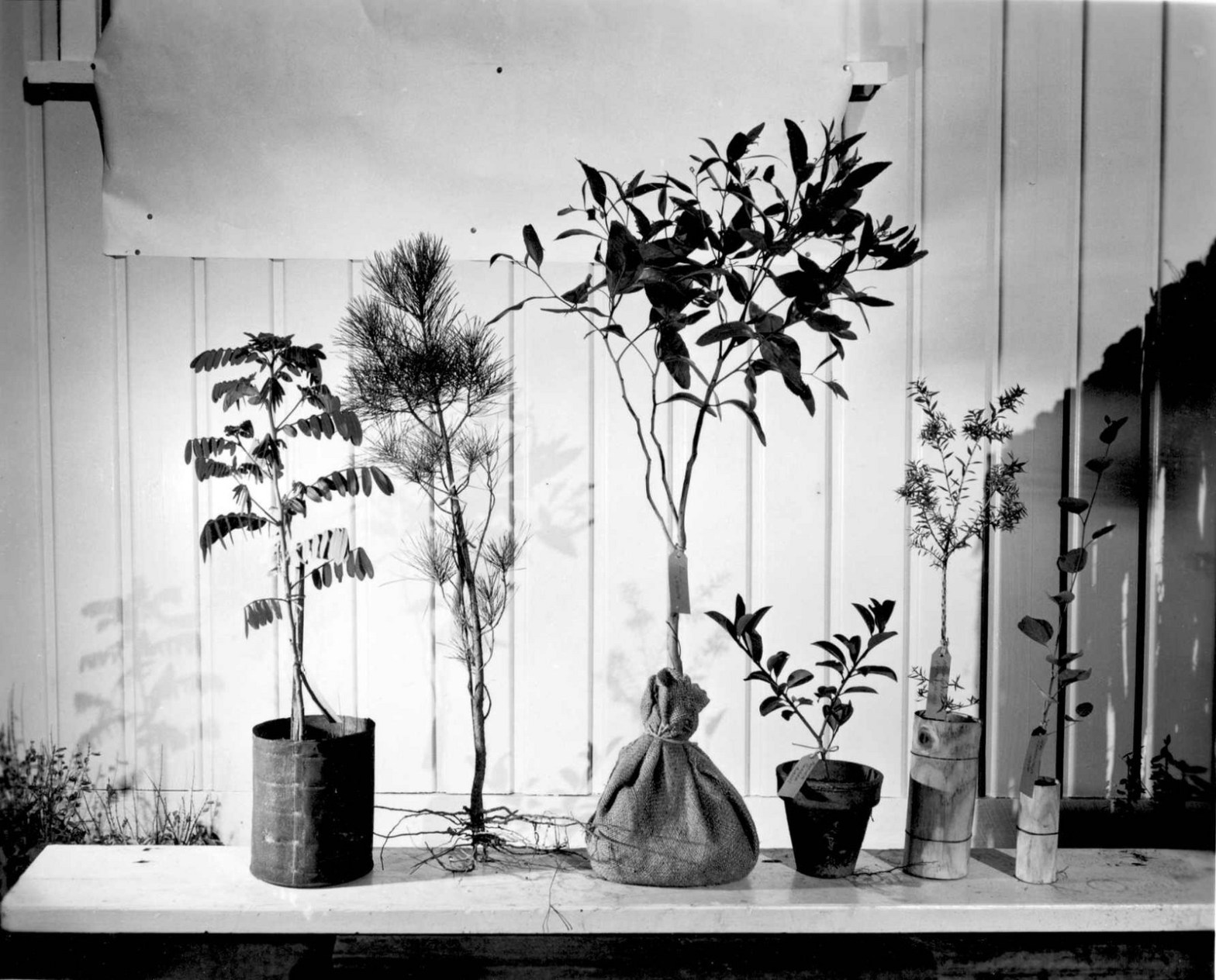
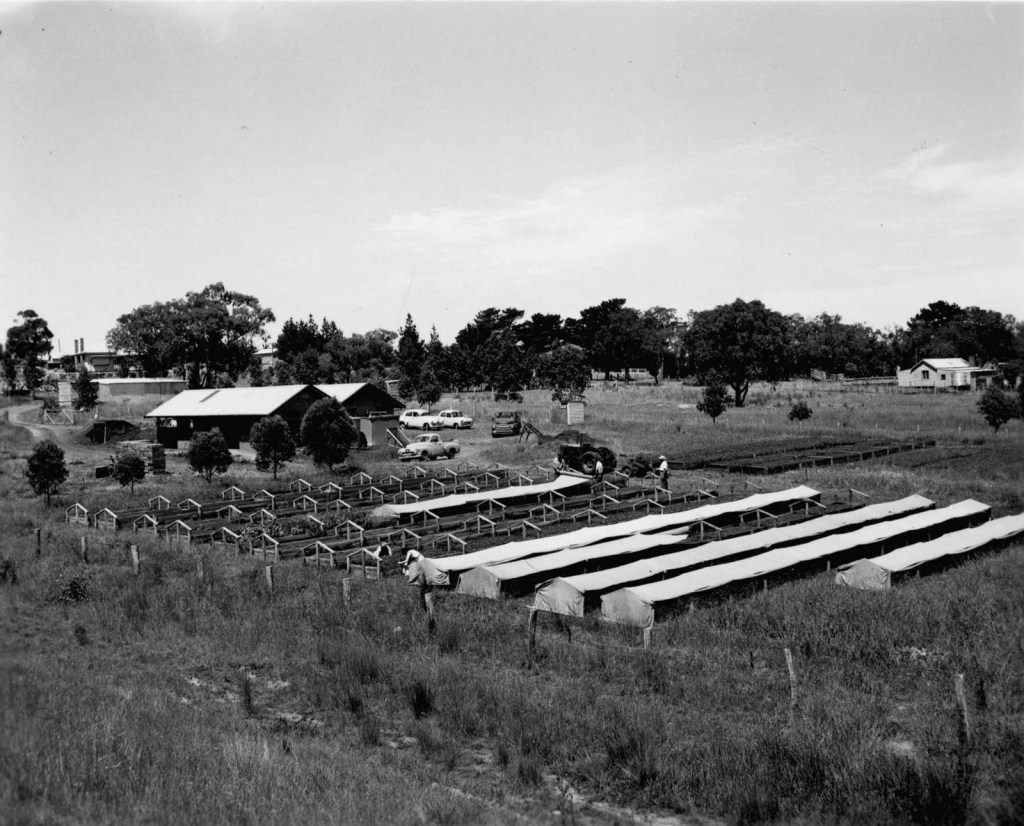
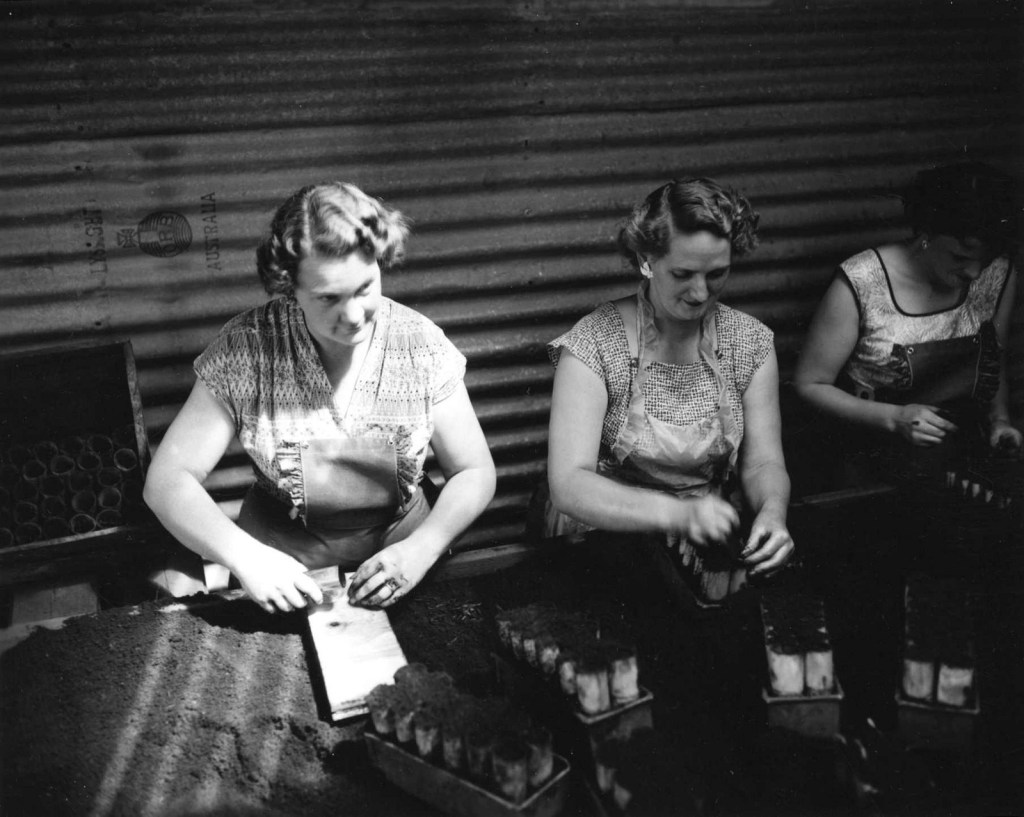
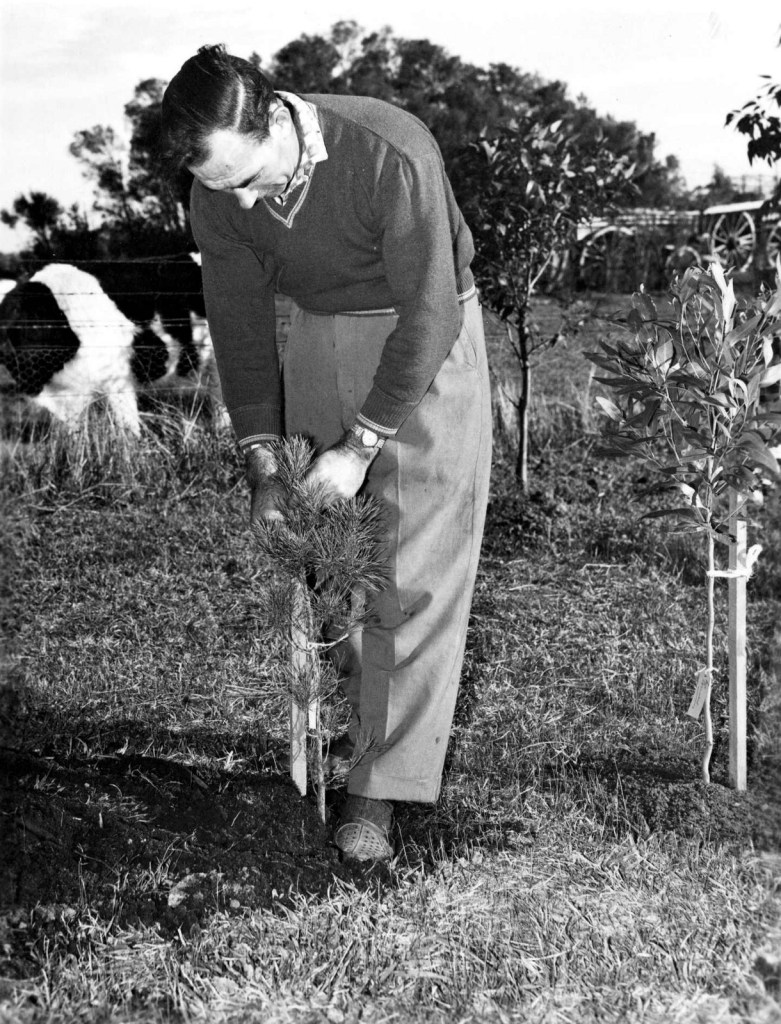
The SR&WSC had a nursery at Lysterfield. These photos were taken in 1958 and come from the State Library of Victoria’s collection.
And just like the Forests Commission, the SR&WSC was abolished in 1984, and its responsibilities taken over by other water authorities like southern rural water.
Catchment Management Authorities (CMAs) were formed in 1994 and assumed the lead in Landcare, waterway protection and soil conservation.
The first State forests nursery was established by William Ferguson at Macedon in 1872, while another was opened shortly after by John La Gerche at Creswick in 1887. Their main purpose was to grow trees to stabilise land damaged by gold mining.
The Royal Commission of 1897-1901 into the destruction and wastage of Victoria’s forests also identified the importance of protecting soils and forested water catchments.
In 1917, an Erosion Inquiry Committee was formed by the Minister for Public Works, but little seemed to come from its deliberations.
The State Rivers and Water Supply Commission (SRWSC) established its own River Erosion and Flood Protection Branch in 1931 to carry out minor river stabilisation works.
As early as 1922, Forests Commission had taken a strong interest in the protection of soils and water on forested catchments as well as private land.
And in the 1930s, the Commission took a leading role in stabilising soils in the desert country of northwest Victoria ravaged by drought and excessive clearing of Mallee woodlands for farming.
Revegetation works using Cypress Pine were carried out in the dry Hattah – Kulkyne forests in 1937-38 but it was severely hampered by large rabbit populations and the vagaries of the weather.
Soil erosion once again came into very sharp focus during the severe droughts of the 1940s across the Wimmera and Mallee deserts where the sand from bare paddocks drifted across railway lines, roads and into irrigation channels. And huge dust storms were common.
But the problems in the northwest were only the tip of the iceberg. Laanecoorie Reservoir on the Loddon River had been reduced by 47% of its capacity within 50 years because of siltation.
The Victorian State Government was slow to act, but finally in 1940, the Soil Conservation Board (SCB), headed by Chairman H G Strom was created.
The “Save the Forests” campaign was founded in January 1944 which rose from the ashes of the 1939 Black Friday bushfires. It was broad-based and included representatives from over 50 government and philanthropic organisations and boasted over 100000 members.
The campaign, which was led by the Forests Commission, had noble goals of improving forests, protecting them from bushfire and growing trees to restore farmland.
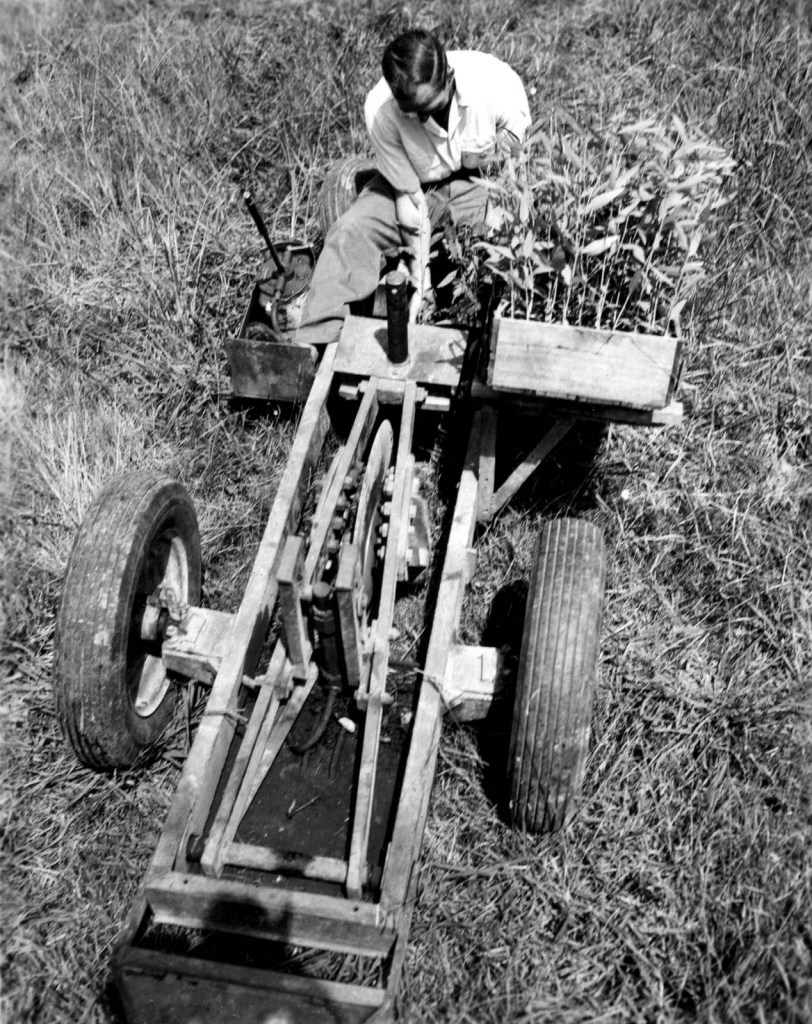
Its activities included operating native plant nurseries, community tree planting, programs for schools, seed collection, farm inspections and advice as well as organising a number of high-profile events including “Forest Week” at the Melbourne Town Hall.
By 1951, the campaign became the Natural Resources Conservation League (NRCL).
The momentum continued, and by the late 1960s the Forests Commission operated large nurseries at Mildura and Wail near Horsham growing nearly one million native plants each year to support the “trees on farms” initiative.
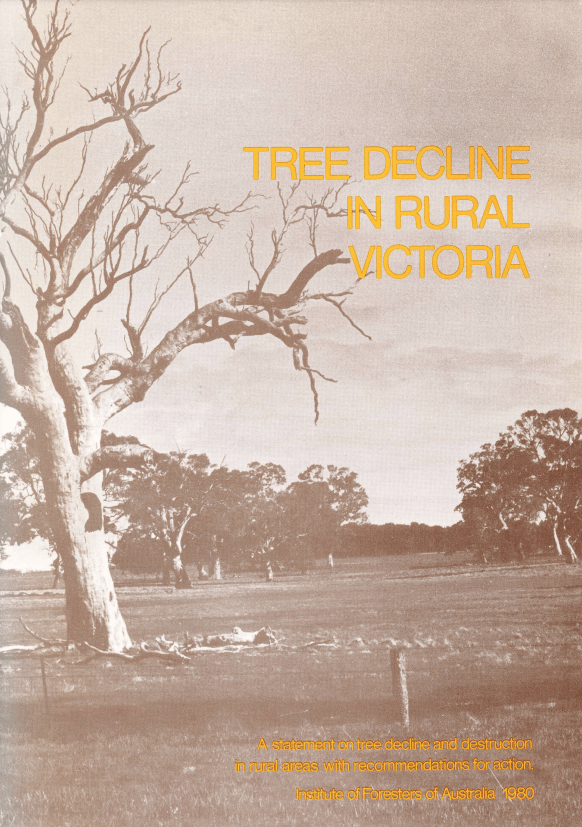
In 1980, the Institute of Foresters publication, “Tree Decline in Rural Victoria”, focussed attention on the problem, particularly in the north of the State.
This led to “Project Tree Cover” and the Focus on Farm Trees Conference held in Melbourne in 1980.
It was during this era the Forests Commission beefed up its role and formed an “Extensions Branch” servicing the tree growing needs of rural landowners. The Branch worked closely with many field staff to build relationships with landholders and rural communities.
From 1983 onwards, the newly formed Department of Conservation, Forests and Lands (CFL) brought together five disparate government agencies (the Forests Commission, National Parks, Fisheries and Wildlife, Lands, and the Soil Conservation Authority) which previously had overlapping roles and a track record of collaboration that was patchy at best.
The new CFL needed to work across private and public lands to tackle issues at a large scale such as erosion, salinity, pests and weeds, and they needed to involve the community.
The aggregation of these many ideas were the major precursors to the Landcare.
Joan Kirner, Minister for CFL and Heather Mitchell, President of the Victorian Farmers Federation (VFF), officially launched Landcare at Terry Simpson’s property at Winjallok near St Arnaud on 25 November 1986.
Not long after, in 1989, the national Landcare movement officially began with Rick Farley of the National Farmers Federation and Phillip Toyne of the Australian Conservation Foundation, successfully encouraging the Hawke Labor Government to commit to the concept.
This was followed in 1990, when the Prime Minister announced the $340 million investment in the ”Decade of Landcare”.
Within five years, Landcare had spread to involve more than one third of farming families — an extraordinary achievement on a relatively modest budget. There are now approximately 4000 Landcare groups across Australia.
Up until the mid-1970s, 4WDs were primarily the domain of farmers, miners and foresters, rather than for the after-school-pickup run.
The original 4WDs were rugged and spartan vehicles with none of the modern comforts or safety features like power everything, cloth seats, carpets, chrome trim, airbags, cruise control, disk brakes, sound system, satnav… blah… blah… blah…
It seemed that all government vehicles in the 1970s came factory fitted with the “Poverty Pac”, and the only air-conditioning was 4WD-60… Four Windows Down… 60 miles per hour…
The aptly named Subaru Forester then hit-the-market in Australia in about 1975 which heralded a new era of small, comfortable, well-equipped and safe family 4WDs.
The Forests Commission purchased some for the fleet, but they didn’t hold up well to rough bush tracks and weren’t very popular with forest supervisors and overseers who were more accustomed to their indestructible shorty-40 Tojos.
They also seemed to spend a lot of time in the garage getting CV joints repaired.
Then in the mid-1980s, the Department briefly flirted with the tragically beige Toyota Tercel (AKA – The Turtle).
James (Jim) Fry was born in 1852 and worked as a carrier bringing supplies over treacherous tracks to several gold mining companies in the remote mountains east of Mansfield during the early 1870s.
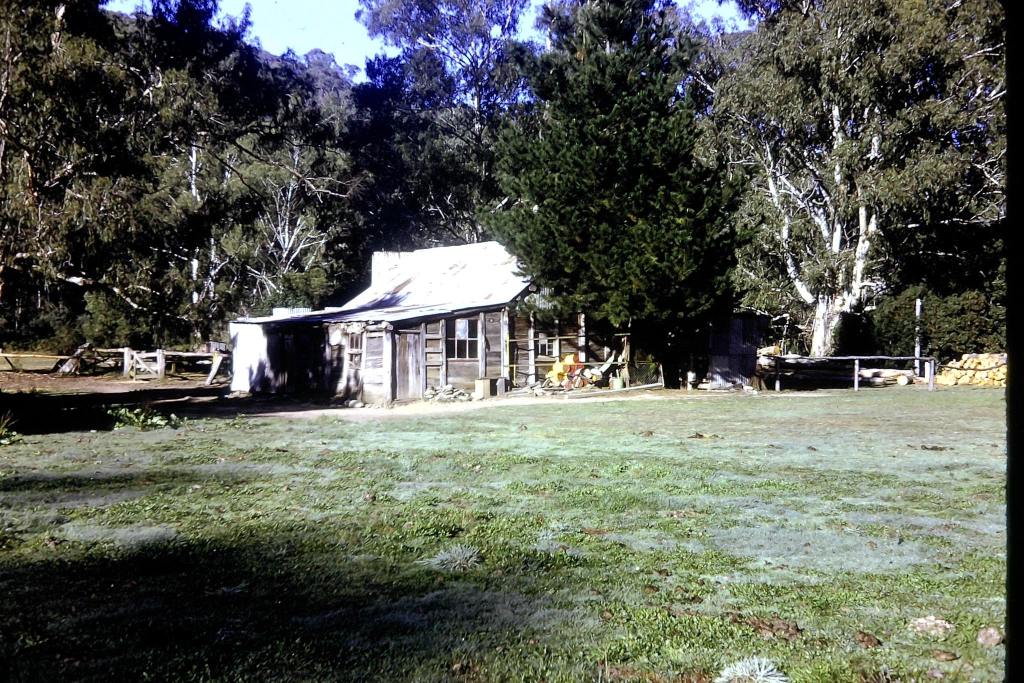
The former manager’s house (c.1874) from the Great Rand Mine had been left abandoned and was shifted from nearby Martin’s Gap by bullock team and rebuilt on the Howqua River flats in about 1897. Jim acquired the building which was clad with corrugated iron, rather than logs or split timbers, while fossicking for gold and lived there with his wife, Mary Agnes Wheeler, and the couple’s two children, who are said to have ridden ponies to the Merrijig school.
Frederick (Fred) Samuel Fry was born in Mansfield on 14 July 1895 as one of 17 children and was Jim’s nephew. Fred left school when he was eight and mastered his many bushcraft skills while working with the Hoskins family at Jamieson, earning 10 shillings per week plus food and lodgings.
Like his uncle Jim before him, Fred worked a team of draft horses hauling supplies to the Woods Point and Gaffney’s Creek goldfields until he was superseded by roads and motor vehicles. He then took a job on the Wonnangatta Station near Dargo for Arthur Phillips and Geoff Ritche.
When his uncle Jim died, aged 83 on 26 March 1935, Fred moved into the old mine managers house on the Howqua Flats to live with his Aunt Mary. He later inherited the house when she died in 1939, aged 74.
Fred was then joined by his older brother, Stephen (Steve) John Fry, who had been working on the railways. Together, Fred and Steve did some gold prospecting, worked as stockmen, as roustabouts, as guides for more adventurous anglers, and as Forest Rangers (Fireguards) cutting tracks for the Forests Commission Victoria (FCV). They also packed salt for the Lands Department which was used to kill noxious weeds.
In 1942, the Forests Commission supplied Fred with a newfangled RC-16B radio to communicate back to Mansfield. It was powered by heavy dry cell batteries and had a long antenna wire strung up in the trees.
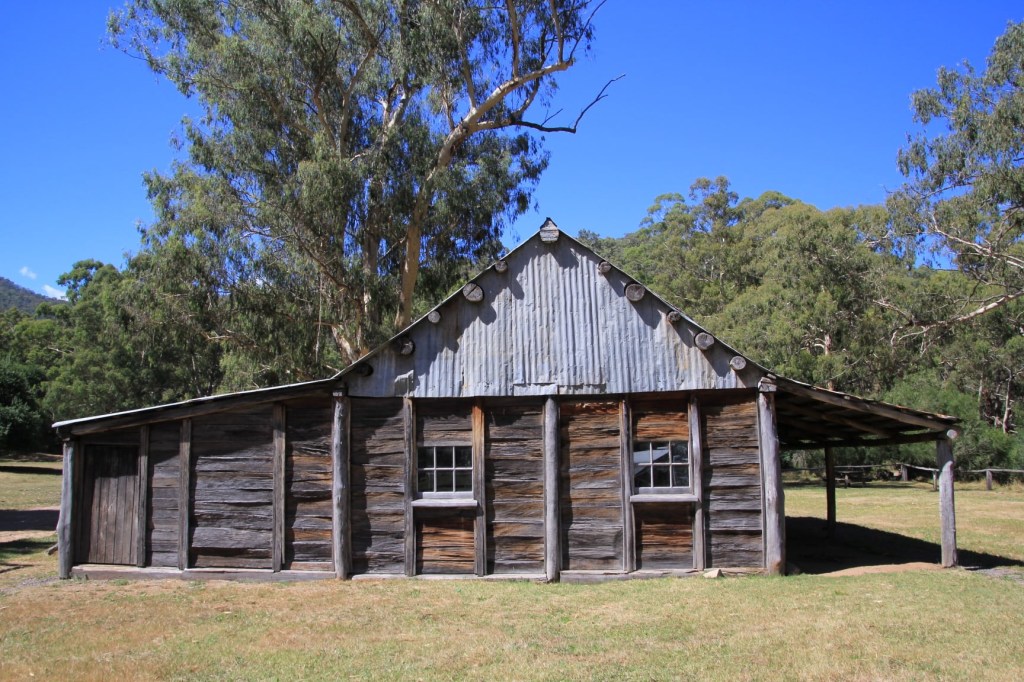
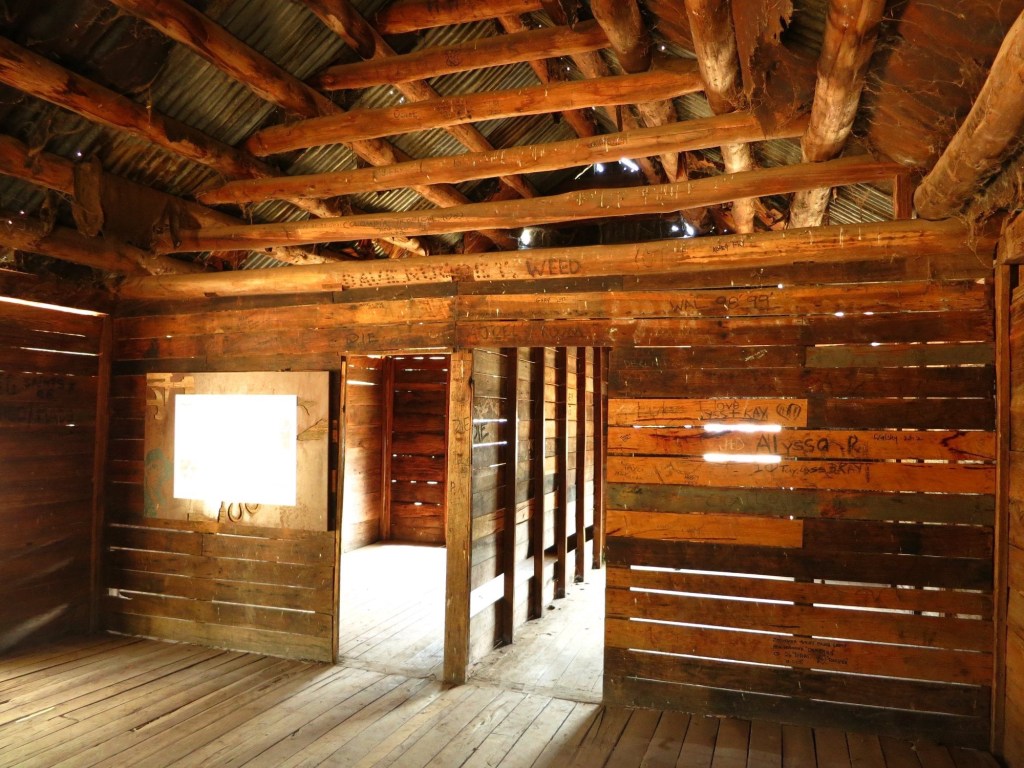
Fred was a notable bushman and had built several unique huts in the valley including Ritchie’s, Ashwin’s, Gardner’s, Pickering’s, Bindaree and Helen Schusters’. He had his own distinctive design of hand-split, drop-timber walls. He rolled the heavy roof poles up a temporary ramp and into place over cribbed-end trusses using a horse and chain to create a long centre ridge.
The new hut was built sometime between 1948-1951.
By the late 1940s, Fred’s old mine manager’s house was just about ready to collapse after being eaten by termites. Fred built the current hut at some stage between 1948 and 1951 – (a report in the Sun Newspaper from 5 July 1947 describes Fred and Steve living in the original mine manager’s hut but indicating that a new structure was planned).
Fred salvaged most of the old timber and iron from the original building and scavenged additional materials from old mining ruins scattered around the valley. Steve Fry, Harry Norris and Charlie Clark all helped with the construction. It’s assumed that the new hut was built close to the old 1897 mine manager’s house.
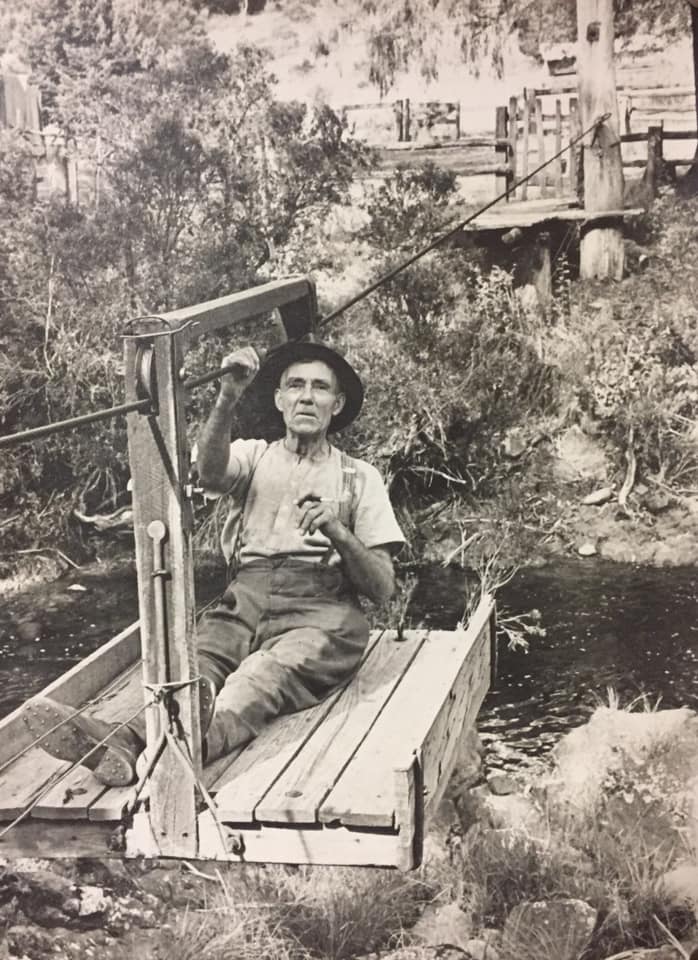
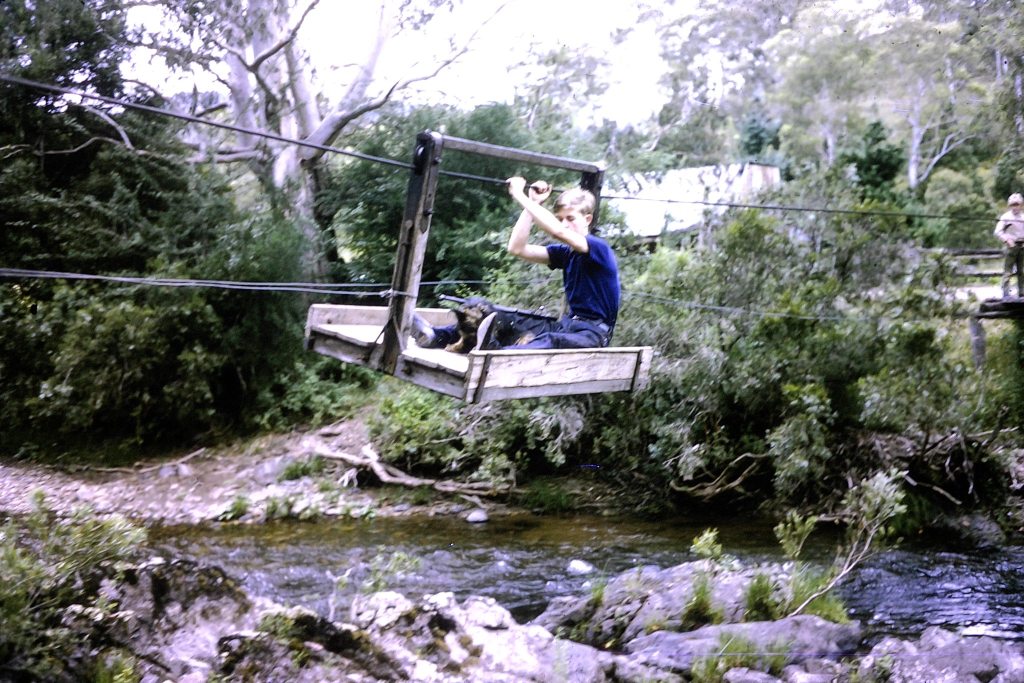
Fred also built a flying fox across the river to the old Howqua township where he owned some blocks of land and where there were a few holiday shacks. The flying fox was always a delight to visitors. It was restored in 1972 but removed in about 2004.
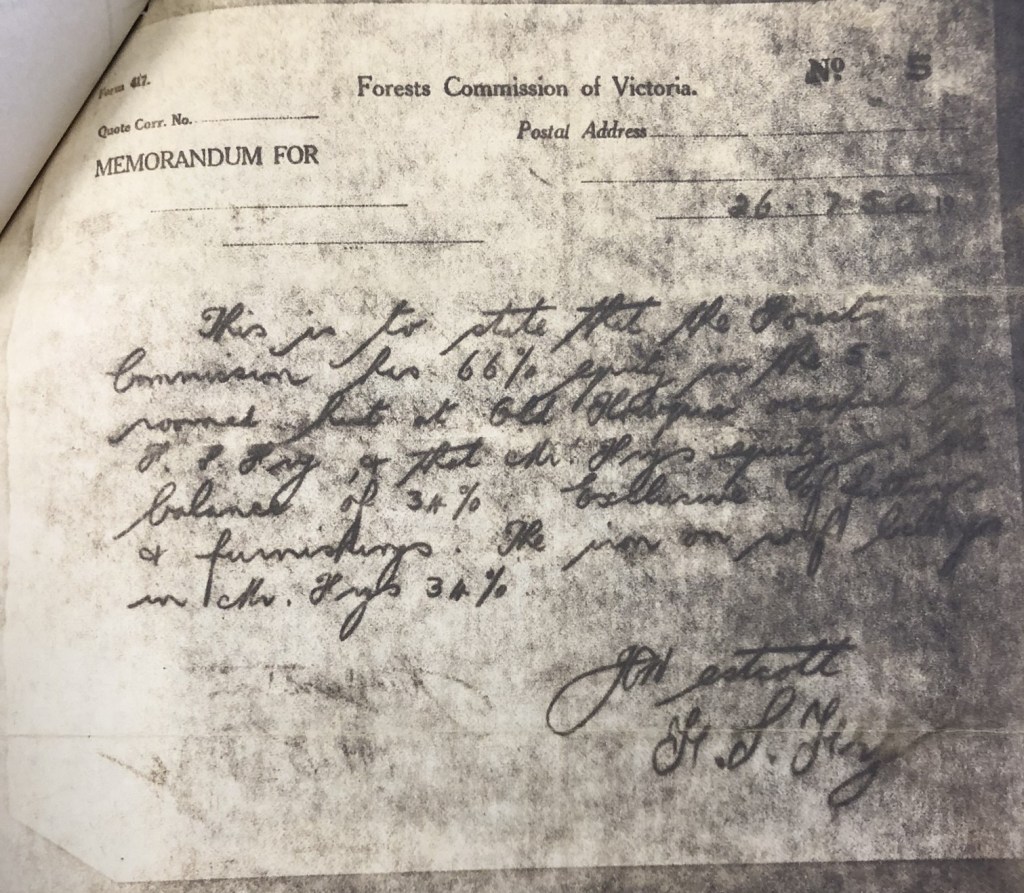
Jim Westcott was the District Forester at Mansfield between 1940 and 1951. Jim negotiated an agreement with Fred Fry on behalf of the Forests Commission, dated 26 July 1950, which gave Fred 34% equity in his new hut, with the FCV holding the remaining 66%. Oddly, part of Fred’s share included the roof sheeting iron.
This is a very unusual tenure arrangement, normally private buildings on State forest were issued with an annual licence, or permissive occupancy, and a rental fee was paid.
But it certainly would have been in the Commission’s interests to have Fred living in the remote Howqua Valley. Maybe the FCV contributed labour or building materials towards it, remembering that there were severe post-war shortages at the time. We will never know.
Why Fred built his hut on Crown Land rather than one of his private allotments across the river in the old Howqua township is also a puzzle.
The house plans, dated June 1951, describe the new building as Patrol Hut – FCV building number – B236.
The replacement building had five rooms with a big verandah facing the river and a skillion roof at the back. Two rooms had plank floors, one with an earth floor and the other two rooms had T&G pine flooring. The roof was recycled corrugated iron over Malthoid paper and the walls were made using Fred’s characteristic horizontal “drop slabs” of wood. There were also several casement windows.
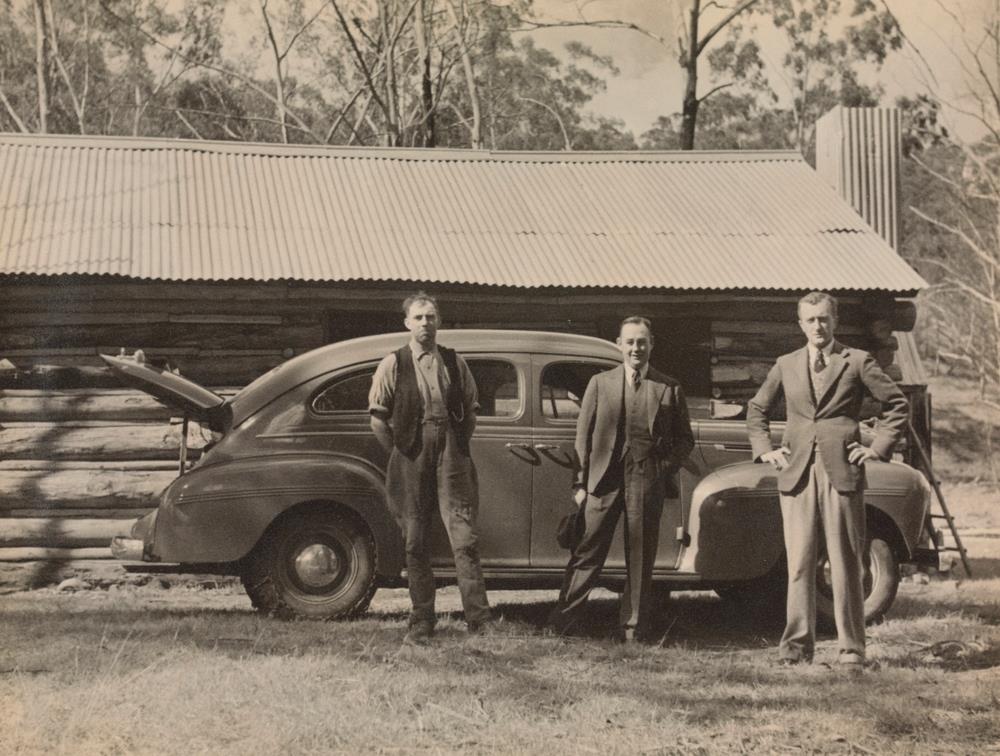
Joe Morley graduated from the Forestry School at Creswick in December 1948 and a short time later, in October 1949, led a Forests Commission assessment team into the remote mountains east of Mansfield. The crew took an unreliable TD-18 Bulldozer, pack horses, an ex-army Blitz Truck and M3 White Scout Car, as well as a Land Rover.
While searching for timber resources, they constructed a rough track over Mt Stirling from King Saddle to Stanleys-Name Gap and then back down various spurs to Bindaree Hut on the Howqua River. They lived like dingos and travelled on horseback and used many huts as basecamps, including Fred’s.
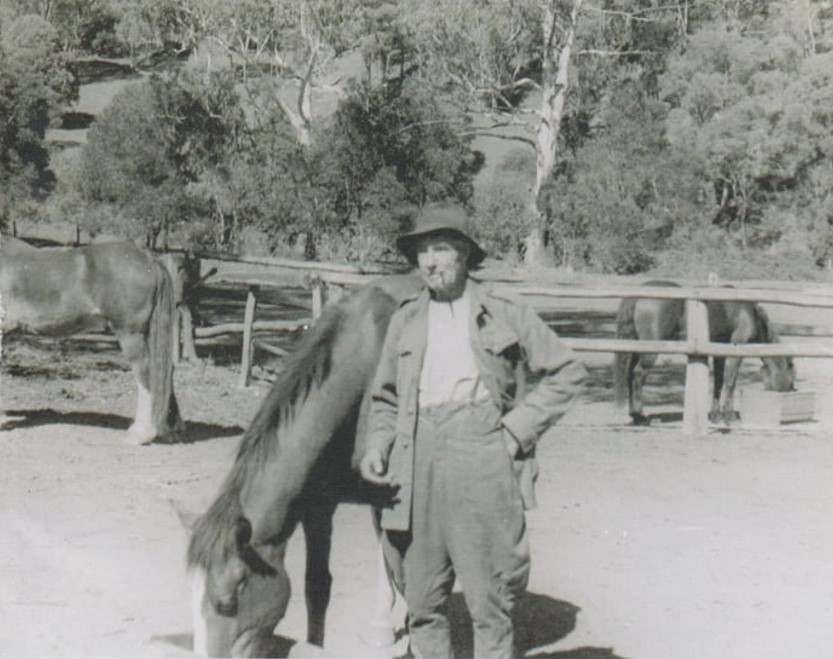
Fred’s brother Steve died at Healesville in 1963, aged 75, leaving Fred to live a solitary existence for his remaining years in the Howqua Valley, although he had a steady stream of visitors including foresters, fisherman, bushwalkers and Geelong Grammar students from the Timbertop campus. Fred’s life formed the basis of the character Billy Slim in Neville Shute’s 1952 novel “The Far Country”.
Fred was an expert trout fisherman and often tossed a line while sitting in the middle of the chilly Howqua River on his horse, “Flourbag”. When he rode to Merrijig for supplies, Fred was known to be fond of a drink or two and his trusty horse would bring him home safely in the night.
The Forests Commission inherits Fry’s Hut – 1971.
Over the decades, the financial arrangements surrounding Fred’s hut (number B236) were lost from local corporate memory as well as from the FCV official files. When Fred was reported in a critical condition in a Melbourne Hospital in early May 1971 the Commission found to its surprise that it owned 66% of the building.
Fred died on 10 May 1971, aged 76. He had written his Last Will & Testament 20 years earlier, on 31 January 1951. His executor, Robert (Bob) Ritchie (another proud hut owner and shire councillor), held discussions with the Mansfield District Forester, Jack Channon, soon after Fred’s death indicating he was keen to see the building preserved. Bob generously declared Fred’s 34% equity as nil, so the Forests Commission then found itself the proud 100% owner of Fry’s Hut.
Probate was lodged with the Supreme Court on 21 June 1971. The legal documents record Fred’s total assets as four small building blocks on the other side of the river in the old Howqua township – value $400, one draft horse mare – value $150, one ten-year-old pony mare – value $300 and another old mare with zero value – how sad is that? His household effects and other contents such as horse saddles and harnesses were catalogued as worn and of little or no value. Importantly, there was no mention of any equity in his hut in any of the probate documentation.
Fred was retired from the FCV so would have received an old age pension. He held the grand sum of $500 in the Mansfield Branch of the Bank of NSW. And that was all. He bequeathed his entire estate to Mansfield District Hospital and there were no other beneficiaries.
Jack Channon proposed keeping the hut for public use because of its magnificent setting and rich history. He also added that the Forests Commission could use it as a base for work crews or firefighting.
The hut was described as “quite solid although rough” but vandalism was the main concern if the hut remained unused.
Around the same time, the new 45 km Howqua Feeder Track was being built by the Forests Commission past Fry’s Hut along some old mining tracks to join up with the Alpine Walking Track (AWT) at Mt Howitt. An approach was made to the Federation of Victorian Walking Clubs to gauge their level of interest in maintaining and using the hut. The Federation responded positively but listed many important and expensive works that needed to be undertaken first, and the idea eventually lapsed.
Hughie Brown arrived as the newly appointed District Forester at Mansfield on 20 October 1971 and identified essential works to stabilise the building.
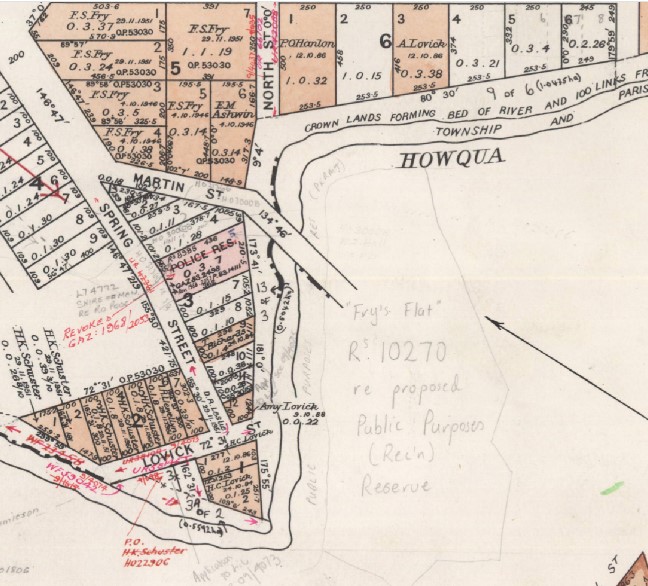
In September 1972, staff from Mansfield completed a chain and compass survey to set aside seven acres of State forest around the hut under the Lands Act as a Public Purposes Reserve to regulate camping and protect the building.
But by June 1973, no works had been done on the hut and Hughie Brown feared for its future. He correctly said, “This building has a great historic value and is treasured by a large section of the community”.
In September 1974, the Commission finally approved expenditure, and by mid-1975 Hughie Brown reported that various works had been completed to secure the integrity of the building and its surrounds. The large pine tree overshadowing the building was removed.
Geelong Grammar, which operated Timbertop, offered in 1974 to take a role in oversight and care of the hut after Fred’s death.
The National Parks Service later took responsibility for Fry’s Hut when the Alpine National Park was declared in 1989, and they undertook refurbishment works between 1988 and 1991.
Additional working bees have been organised by Parks Victoria, the Victorian High-Country Huts Association and 4WD Clubs. There was another major restoration to replace rotting timbers in 2007.
Even though Fry’s Hut has been altered since its original construction it remains historically and socially significant to Victoria.
File – DCNR 09/87/110 & FCV 74/399. (thanks to the staff in DEECA for finding the files)
Jim Fry. Source: Cattlemen and huts of the High PlainsFrys’ Hut was built sometime between 1948-1951. Source: Victorian High-Country Huts AssociationFred fishing for trout in the Howqua River on the back of “Flourbag” – July 1947. https://trove.nla.gov.au/newspaper/article/279226389 Fred and Steve Fry outside the original mine managers hut in July 1947 (note the building is clad with corrugated iron rather than split timber like the current hut) https://trove.nla.gov.au/newspaper/article/279226389 Fred Fry on a flying fox crossing the Howqua River. Source: High Country History.Fred – date unknownSargood’s Hut on the Howqua River – Fred Fry, Sir Colin Syme and Denis Sargood – 1945. Photo: SLV.Fred Fry and Cyril Brock – sawmill manager. 1963.Fred Fry. Source: High Country History.It looks like the FCV Blitz Truck out the front of Fred’s Hut. Source: Cattlemen and huts of the High PlainsThe first Blitz truck to cross the Howqua River. January 1950. Source: Joe Morley, FCRPA CollectionMoving assessment teams with packhorse. Source: Joe Morley, FCRPA CollectionFred fishing in the Howqua. Source: Joe Morley, FCRPA CollectionThe unreliable TD-18 bulldozer used by the assessment team to construct access tracks. Source: Joe Morley, FCRPA CollectionThe building was in poor condition when the Forests Commission took ownership. Source: FCV fileGraeme Butler & Associates, 1996. Victorian Alpine Huts Heritage Surveys.Fry’s Hut in 1951, adapted from the FCV file. Source: Graeme Butler & Associates, 1996. Victorian Alpine Huts Heritage Surveys.Trademark design of hand-split, drop-timber, slab walls.Fred’s unique design cribbed roof truss.Jan 1965. Mansfield Victoria – A History in PicturesJan 1965. Mansfield Victoria – A History in PicturesThe unusual agreement dated 26 July 1950 between Fred and Jim Westcott reads – “This is to state that the Forests Commission has 66% equity in the five roomed hut at Old Howqua occupied by F. S. Fry and that Mr Fry’s equity is the balance of the 34%. The iron roof belongs in Mr Fry’s 34%. Signed.”
The Parish Plan #5388 shows the boundary of the Public Purposes Reserve as well as the blocks of land that Fred owned in the old Howqua township. Source: PROV
I have written before about Archie Hair and Blue Pool near Briagolong. But I recently ventured into the Public Record Office to uncover the old FCV file which gives more detailed insights into the arrangements Archie had over the site.
In February 1940, William O’Regan, an invalid pensioner and gold prospector, who had lived along the Freestone Creek for many years, wrote to the Forests Commission at Briagolong seeking permission to rent a small ½ acre lot of State forest near the Blue Pool at a place called Froam to build a hut and small garden.
The local District Forester, Frank Halloran, assessed his application and recommended that a “miscellaneous licence” be issued with an annual fee of 5 shillings. But by June 1942, relationships with the Commission had soured when Mr O’Regan refused to pay his annual rent, claiming he had entitlements under a Miners Right over the land. The rent arrears accumulated, and the matter was sent to the Crown Solicitor for action. But the dispute lapsed after William died in July 1945 and his rough bark and kerosene tin hut and garden were abandoned.
However, the vacancy of the site created an opportunity for another part time prospector, Archie Hair, and on 28 October 1946, he wrote to the Forests Commission seeking to take over the land and the annual licence from Willam O’Regan. He also asked about the possibility a more permanent arrangement because he planned to build a more substantial dwelling.
Archie’s application was supported by the local forester at Briagolong and in November 1946 the annual licence was transferred, with a rental increase to 7 shillings per year.
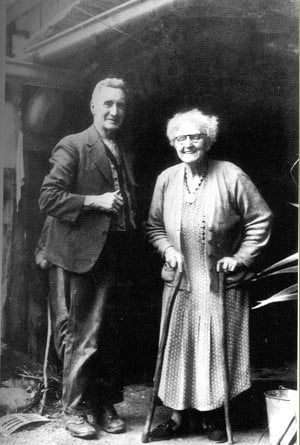
Archie and his wife, Edna, subsequently built an eclectic house and garden known as “The Arches”. They retired in the mid-1950s to Blue Pool from their farm at Willung.
Their first house was destroyed in the 1965 bushfires. But undeterred, Archie built another soon after. Both houses looked like something out of a Mother Hubbard storybook, and neither had mains power or town water but had an open fire and kerosene fridge.
Archie and Edna’s generous hospitality of home-made ginger beer and ANZAC biscuits served to their many visitors were legendary. And visitors often sent Christmas cards to the pair each year to their great delight.
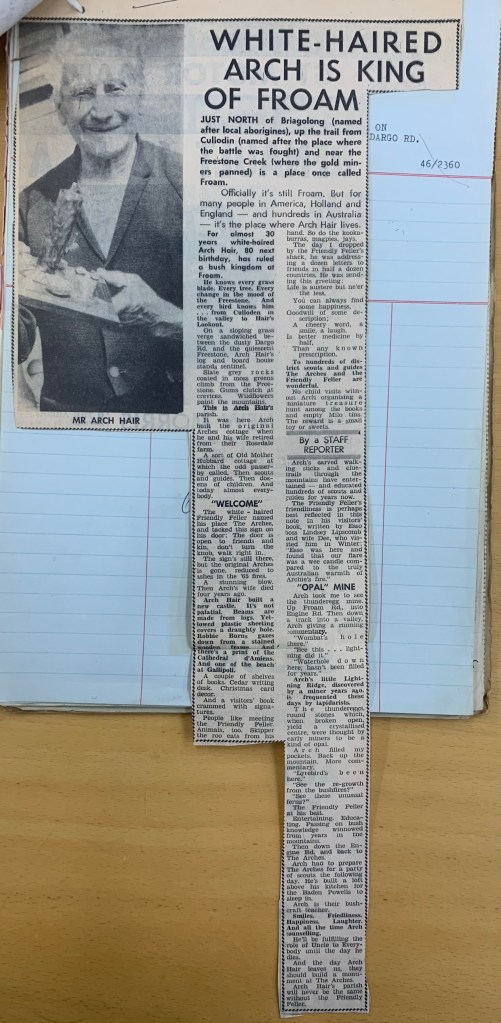
In November 1970, Archie wrote to the Forests Commission seeking access to an adjoining 2 acres of land to establish picnic and camping sites for scouts and guides. He also asked about a more permanent tenure arrangement such as a long-term lease, or even freehold title, rather than the annual licence. He attached a newspaper article from the Gippsland Times.
The District Forester, Allan Sims, was sympathetic to Archie and agreed to licence the additional parcel of land for a total of 8 dollars per year but could see that in the long term the Blue Pool was going to become an important recreation area so politely declined his request for a more enduring tenure arrangement. However, Archie was allowed to remain in his house as long as he wanted but the FCV identified the possibility of cancelling the licence at some point in the future.
Archie went into aged care at Maffra in 1978 and died on 21 December 1980, aged 89.
The house at the Blue Pool became empty and fell into a state of disrepair. There were reports of squatters living in the house and fears of bushfires. The District Forester at Maffra, Graeme Saddington, as well as the local police recommended cancelling the licence and removing the building. The executors of Archie’s estate were advised.
Some material was salvaged but local FCV crew demolished the remaining building and buried most of the debris onsite. Little trace remains other than a few rogue garden plants, broken bricks and mining relics. However, the original Arches house sign remained near the entrance to the current picnic ground for many years.
Blue Pool picnic and camping area is one of Gippsland’s secret gems and has undergone a recent upgrade. It’s proudly maintained by the local FFMV crew from Briagolong and Heyfield.
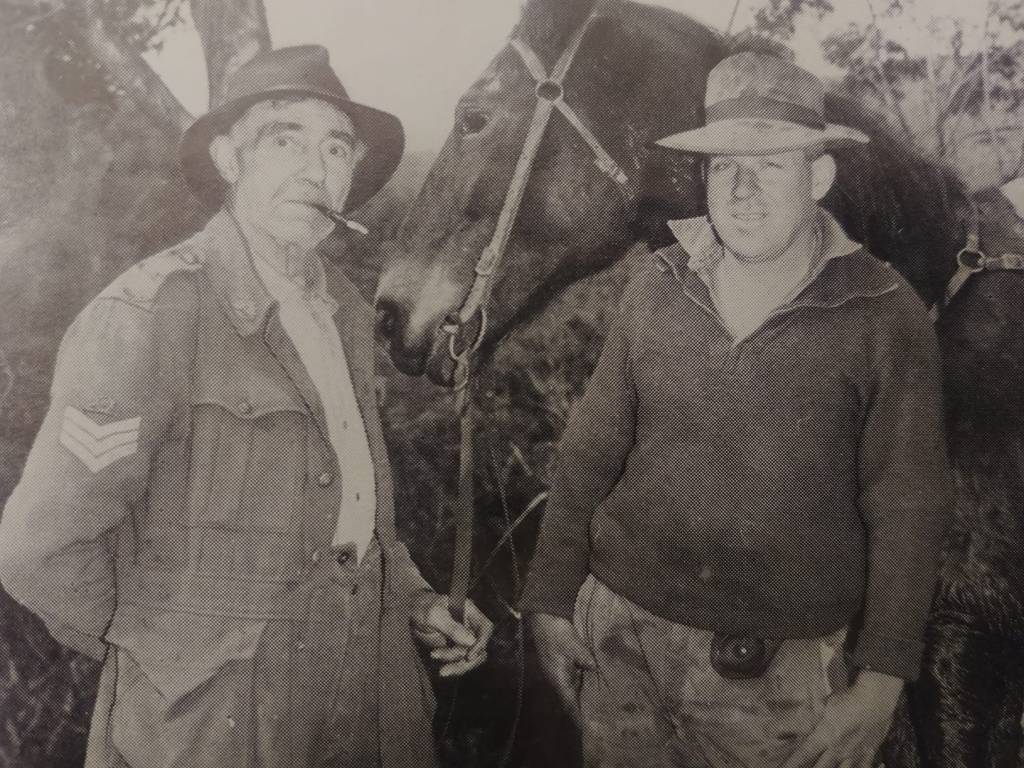
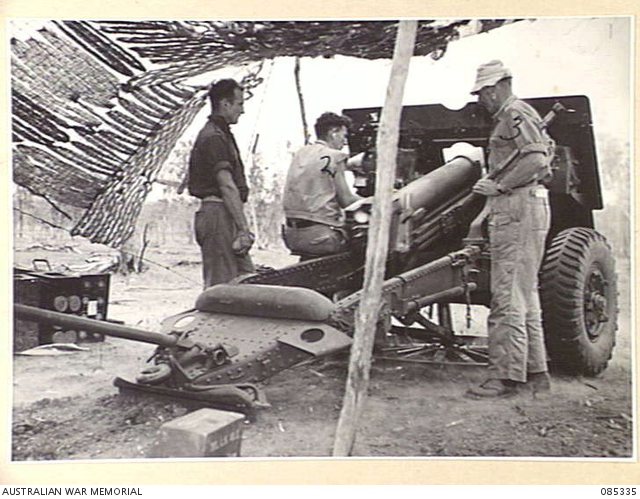
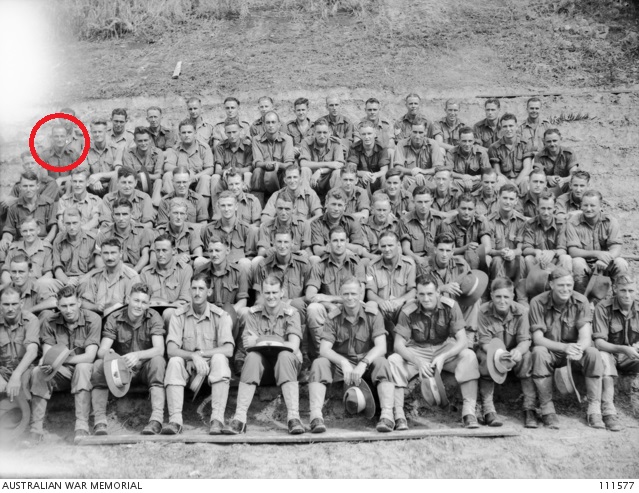
Clarence (Clarrie) Gray Ward saw action as a gunner with the 2/7th Field Artillery Regiment around Tobruk in 1941 and during the first and second battles of El Alamein in 1942. He later landed at Tarakan in Borneo in May 1945.
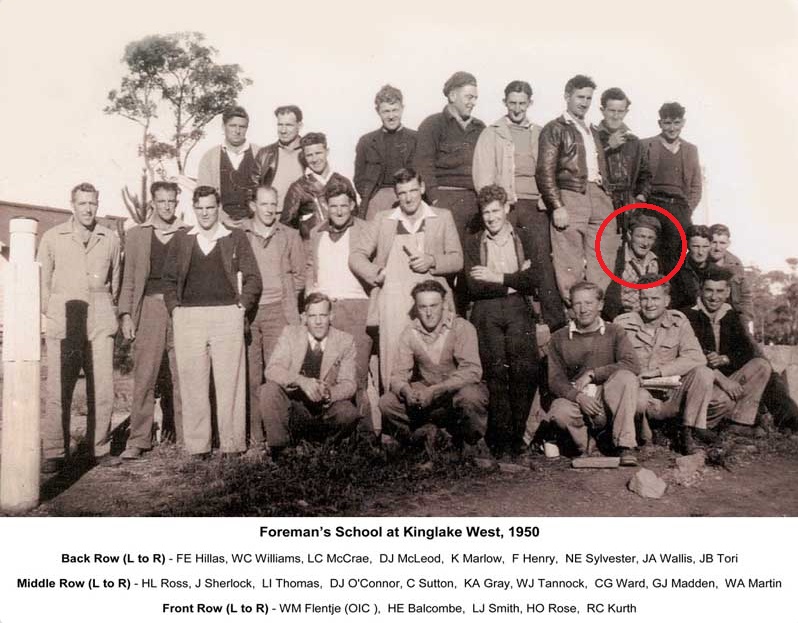
Clarrie was one of about ninety ex-servicemen recruited as overseers into the Forests Commission Victoria (FCV) after the War.
A handful of ex-servicemen were also accepted into the Forestry School at Creswick, some under a special entry scheme. They included Jeff Brisbane (RAN), Trevor Arthur (RAAF), Bill Middleton (2 AIF), Frank May (RAAF), Derrick Rolland (RAAF), Keith Jerome (RAN), Col Almond (RAN), Joe Adams (RAAF), Dudley Adams (RAAF), and John Macdonald (RAAF).
Several foresters who had already graduated from Creswick also served with distinction. They included Ben Benallack (2 AIF), Paddy McMahon (2 AIF), John Chinner (2 AIF), Bill Flentje (RAAF), Stan Butler (2 AIF), John Newey (RAN), Charles Fletcher (RAAF), Rex Jones (2 AIF), Bert Head (2 AIF), Roly Parke (2 AIF), Alan Gordon (2 AIF), John Fitzpatrick (2 AIF), Tom Loughrey (2 AIF), Ken Simmonds (RAN), Russell Larnach (RAAF) and submariner Alf Leslie (RAN).
Others who had previously served in the First World War, such as the Divisional Forester at Wangaratta, Charlie Watson, reenlisted into the Volunteer Defence Corps (VDC) to serve once again on the home front.
The Chairman of the Forests Commission, A. V. Galbraith, a WW1 veteran who had been badly gassed at Messines on the western front, was very supportive of other servicemen.
These blokes often had reputations for being tough, no-nonsense and practical, foresters and bushmen. They undoubtedly helped shape the “can-do” culture of the Forests Commission.
The forest foreman and overseers were the backbone of the Commission and became the undisputed kings of their domain with overall operational control of their individual patch of bush. This included firefighting, fuel reduction burning, silviculture, logging supervision, road maintenance and other works.
Overseers had influence in their local communities, longevity of service, and status to go with it. Occasionally a bit gruff, they also proved invaluable mentors to fresh-faced foresters straight out of Creswick and enjoyed playing a few harmless tricks on them from time-to-time.
Unlike Creswick foresters who were regularly and compulsorily moved around the state by the Commission every few years, forest overseers tended to stay in one place for longer periods and not only got to know the bush but integrated into their local communities.
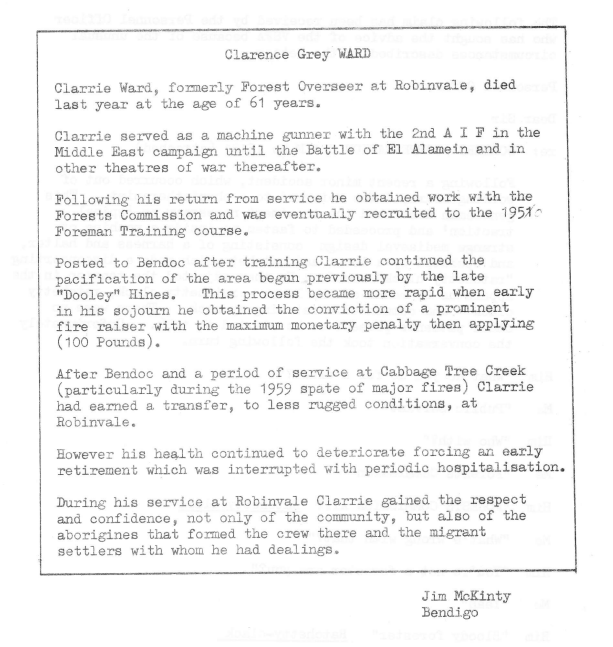
Clarrie had an interesting and varied forestry career. After attending the Foreman’s School at Kinglake West in 1950, he was first posted to the wilds of Bendoc and then Cabbage Tree in far East Gippsland, and later to Robinvale on the Murray River in 1965. It was here that he gained the confidence and respect, not only of the community, but also the local indigenous FCV crews. He died in April 1977 after a long illness, aged 61.
Clarrie Circled. At least 11 of the 24 people in this photo were ex-servicemen. Source: FCRPA Collection
Source: Victorian State Foresters Association Newsletter #40, April 1978.
F Troop, 2/7 Field Regiment firing during an exercise held in conjunction with the 2/2 machine gun battalion. identified personnel are: – gunner Ward, (1); gunner Reddish, (2); sergeant Wilson, (3). Source: AWM
Clarrie circled. Group portrait of F Troop, 2/7 Field Regiment. Tarakan. 16 July 1945. Source: AWM
By Rob Youl – Reproduced from Victorian State Foresters Association (VSFA) Newsletter #38 April 1977.
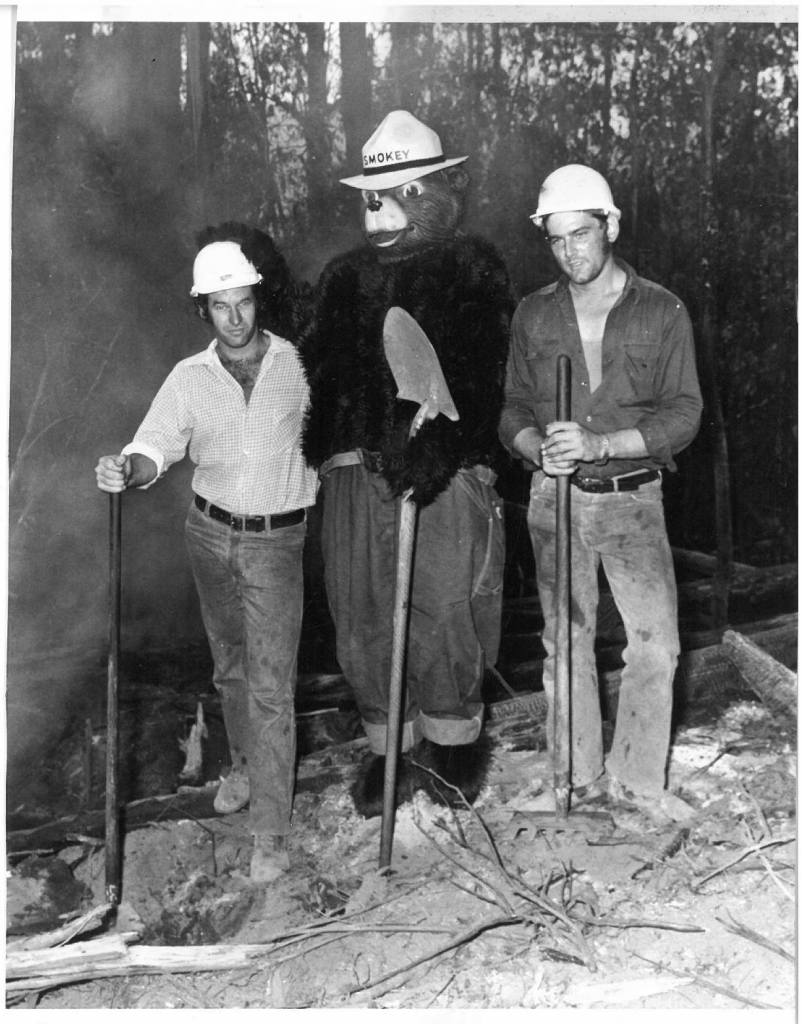
Almost 50 years later, the author apologises for his sexism, insensitivity and excess testosterone. Furthermore, he trusts his readers will discard their disgust and accept this as the zeitgeist[1] of the 1970s. But more embarrassingly, I ask myself now, why didn’t I brandish a rakehoe in the photo?
I’d led a drab and conservative life until that fateful day.
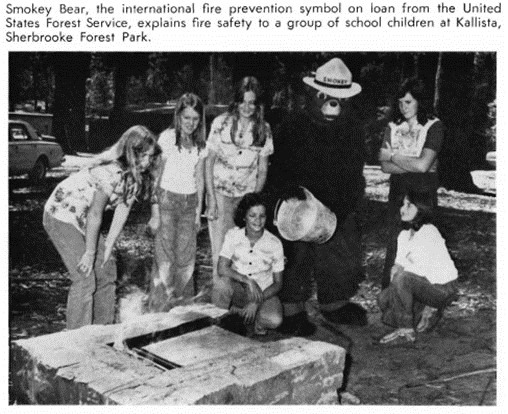
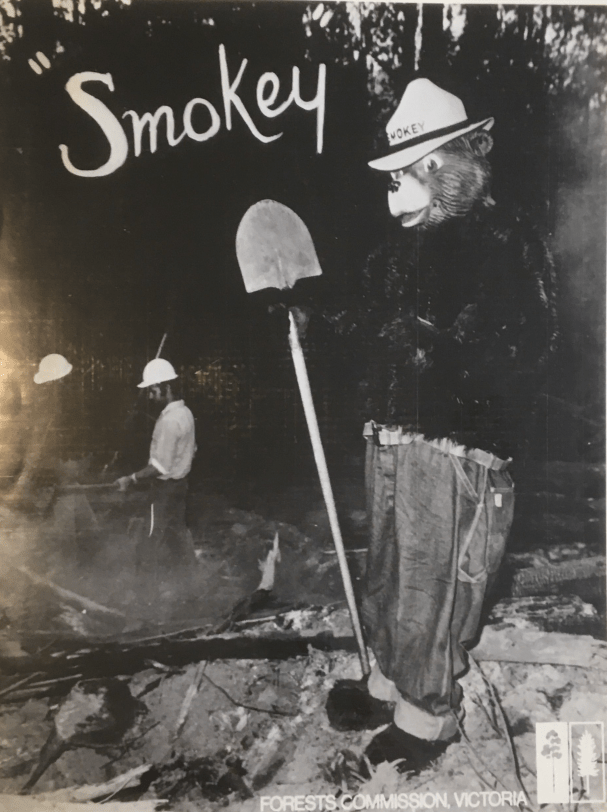
The Public Relations Officer called me in. The US Consulate just rang offering us Smokey Bear. We want to put him in Moomba. My reply probably reflected my interest in the protection of our national culture and my knowledge, as a gardener, that horse manure made excellent compost. But we need a human body to drape the suit around. How about you? I agreed. I knew that a few others would be silly enough to ley themselves in for such a task and I thought that seeing half a million Victorians through Smokey’s eyes would be interesting (for I presumed that he had ocular orifices).
I met the bloke from the Consulate, and he showed me the United States Forest Service Information. I suddenly realised that the whole effort had to be taken more seriously than I usually approach things. One suddenly had responsibility on a nation-to-nation scale. I therefore resolved to stay sober and decorous, to never wander around with my Smokey head under my arm and to always ensure that my jeans were clean. It was intriguing to see State Department cables from Washington describing the famous bear’s visit – doubtless quite a frivolous change from the usual cryptic messages about shipments of hamburger beef and sales of F-111s.
The first appearance was at Tullamarine. The media would meet Smokey, but first they had to see Bobby Vee, ageing US rock star of the Brylcream days of yore, who’d arrived on the same plane as I ostensibly had. I’d loved “Rubber Ball”, “Be True to Your School” and “Take Good Care of my Baybee”, but, waiting in the wings under wraps, dressed up for the first time and ready to go myself, I wasn’t able to ask him for his autograph.
Smokey was ushered in. Arc lights glared. The sweat flowed as if through opened floodgates; the RH rose. Athol and Big Frank did the talking – Smokey is advised to stay mute. The media jocks took photos of him leaving the Pan Am jumbo with the hostesses. These young, and not so young, ladies were quite affectionate. As I hold them before the camera they speculated on my gender, and I found the massive size of my paw convenient camouflage for carnality until i was reminded by my shrewd mentor from the Consulate, “Now, now, Smokey. Decorum!”
Walking about the terminal I realised the anonymity of the suit prevented me from being embarrassed. It was also excellent in that it allowed uninhibited perving.
Outside the terminal Athol., looking handsome in his FCV uniform shirt, ably parried the probing questions of the splendid young TV interviewers, even a hard one about Blinky Bill. A couple of kids spotted me then and came running over, and I immediately realised Smokey’s greatest strength and, in fact, his raison d’etre. The children were excited, but pleasant and friendly. They recognised Smokey from television cartoons they’d seen. We were to drive off triumphantly in MZF*000 led by police motorbikes; I climbed into the limousine but was jammed in a foetal position because my unfamiliar hat added inches to my height.
The next engagement was days later at a Mulgrave kindergarten. The kids were a delight although some of the photos taken showed Smokey looking like a child molester. Then we drove off to Sherbrooke. A group of pensioners on a coach trip enjoyed the unexpected anthropomorphic spectacle and the Kallista school marched down to hear John Lloyd and Bill Clifford talk about fire prevention. The Sun photographer took pictures of Smokey holding two kids on his shoulders. The pose had to be held for a couple of ultimately agonising minutes. I was mobbed by the kids, and in the melee, lost a bear paw. Thank God it was quickly found and tied into place. I could hear the kids debating below me. Despite the evidence of the briefly glimpsed boot underneath the paw, most of the children refused to believe that Smokey was human and not ursine[2].
The girls from St. Monica’s Convent, Footscray, wanted autographs and I discovered the thrill of being a celebrity. For 10 minutes I was Dennis Lillee. “From Smokey to Debbie and Wayne”. “From Smokey to Pia and Shane”.
Healesville was next with a Rod Incoll pyrotechnical master touch. We drove in, bear on tailgate, with Dave Osborn holding aloft a yellow smoke bomb. Rod told the 500 children I’d sign autographs and suddenly Smokey was surrounded by clutching, clawing, tugging, grabbing, pulling, pushing, probing, thrusting, jostling, bustling organisms. I recalled Hitchcock’s film “The Birds’ and all that I’d ever read about mass hysteria. One kid was heard to say “Let’s see whose Dad’s inside! There was only one thing to do. Military training provided the instinctive reaction. “On the command Abort Mission, Abort Mission! OK, Abort Mission”. We were away.
Then it was off to Marysville, and Smokey’s greatest thrill in a brief career as a multi-media personality. The energetic and capable young headmaster had the kids outside the school with placards and ready to cheer. Smokey was escorted through the gate to a green-painted, bracken-garlanded throne made from beer boxes and then given presents – the school’s entire output of arts and crafts for that day, in fact. The children took Smokey to a camp they’d set up with tents and fire pit and confidently told him why they’d taken the precautions they had. One lad came forth with a brown paper parcel which had a reassuring cold, metallic, cylindrical feel, a present from the teachers. Smokey was escorted back out the gate and was very moved by the warm and polite juvenile adieux like “Come back again, Smokey!” repeated by so many.
The Moomba sun rose, and we assembled at Carlton. I felt like Clark Kent as I changed in a basement car park. Added fuel to my fetishes was provided by the rubber urine bag (the suit itself has no drain holes) with AD/DC, S&M, B&D undertones and overtones, which I lashed to my thigh. From the float I recognised and amazed an old friend I hadn’t seen for years. I don’t think he’s sure even now who he was talking to.
The parade began. Immediately behind was the delightful Ms Italian Community. (Trevor Brown had been doing his bit to make Australia a more assimilated and happy nation by keeping her company and calming her nerves). I soon discovered that I had little time to leer or even look.
I discovered also the Queen has a very difficult job. Waving makes you tired. The cheering was intense as the masses of humanity, orchestrated by the enthusiastic Tony Manderson, roared approval of our float. I leapt around trying to acknowledge everyone, but even at one km/hr that was difficult. Ask Jim Stirling, intrepid photographer. He found taking shots of the procession from all angles hard going at that speed too. At one point our smoke generator caught fire, but quick-thinking Kester Baines solved that problem. One noticed the police were rarely wreathed in smiles, but that the dignitaries outside the Town Hall were as extroverted in their behaviour as everyone else who formed the crowd.
The parade slowed down in the gardens, but the kids still shouted and cheered.
A crisis developed. The suit had to be in Sydney that night for a tourist promotion. The plane left Tulla in about half an hour. A quick strip behind the float’s grove of brush box trees and a police escort got the suit dispatched.
One reverted to life as a human. When I waved no-one cheered. When I waved no-one responded. When I held my arm out in front of me i didn’t see a furry paw, but distinctly Caucasian hand. I was Rob Youl again. The experience gave me an insight into the life of a professional actor and how the characters one plays could dominate your own character. I thought that I could see why George Reeves, the former Superman, had killed himself.
Impressions from the parade were that there’s still a lot of kids in Victoria, even if population growth is close to zero, that this country still produces very attractive women, that our population is now exceedingly heterogeneous, and that Melbournians aren’t entirely staid and stolid.
Quote of the week was the statement by Alan Threader, “You should be in a rat’s suit, not a bear’s!
A couple of late performances at Creswick (thanks a million, Tom [Morrison]), Yooralla, Toorak and Heathcote and we packed Smokey into his crate. It must be bloody cramped in there for him. Back he’ll go to the USA.
And you might criticise our use of an American Madison Avenue folk figure. Keith Dunstan did (The Sun, 21 Mar 77). Well, we never said that Smokey was anything else than that. Like my other visiting fireman does, he came for a look around, and he gave pleasure to many children and plenty of adults too. He also made some of those citizens, of all ages, think about fire prevention. To criticise Smokey specifically is to ignore the overall assault on our culture, and on the remnants of our national identity. In a global village, in a world where trade is free, there are thousands of international influences we cannot avoid. We can’t avoid Sony calculators, Abba, London and Liverpool slang, sweet and sour pork, Danish blue movies, Starsky and Hutch, and Peugeot bikes, any more than we could avoid computers, or the environmental revolution or the permissive society.
[1] zeitgeist – the defining spirit or mood of a particular period of history as shown by the ideas and beliefs of the time.
Philip King was born in the remote Glen Valley in far eastern Victoria on the 12 Feb 1933 where he attended the local primary school. It was cold in the mountains where it often snowed, and the Omeo Highway was regularly blocked during winter.
Phil later attended high school at Richmond in Melbourne but soon returned to find a job closer to home in the office of the Glen Wills gold mining company. But the company finally closed in about 1950.
Gold had been discovered in 1861 in Wombat Creek, which flows northeast from Mount Wills. A couple of decades later, tin and silver were also found. Large amounts of money were invested in tin mines, but the results were disappointing.
Sunnyside was established in 1891 and grew by 1893 to have a population of about 300. The bustling townships of Glen Valley and Glen Wills also served the mines with post offices, schools and hotels. A public hall was built in 1936.
But like most small gold mining settlements, prosperity of the valley steadily declined as the gold petered out and all that now remains are a few houses and farms.
The Grand Design.
The devastation of the 1939 Black Friday bushfires was unprecedented. Several townships were entirely obliterated leaving 71 people dead including four Forests Commission staff, 69 sawmills were lost and over 3700 buildings were destroyed.
Nearly two million hectares of Victoria’s State forests were burned. The intense bushfire killed vast swathes of mountain ash, alpine ash and shining gum in the Central Highlands, some for the second time since earlier bushfires in 1926 and 1932.
In the wake of the catastrophic bushfires and the scathing Stretton Royal Commission report, a quiet revolution began across Victoria’s state forests. An epic story that took decades to unfold and where several things were in play.
Salvage of the fire-killed trees became an urgent and overriding task for the Forests Commission. It was estimated that over 6 million cubic metres needed to be harvested, and quickly, before the dead trees split and the valuable timber deteriorated.
Severe shortages of labour and other pressing needs during the war years slowed the task but the massive timber salvage program was virtually completed by 1950.
The mountain ash forests in the Central Highlands were regenerating vigorously after the bushfires but they wouldn’t be available for timber harvesting for many decades to allow them enough time to regrow.
It was apparent that Victoria’s timber industry needed to shift to the east and northeast but it was always intended that it would move back into the Central Highlands once the ash resource had recovered in about 60 to 80 years’ time.
Meanwhile, the demand for hardwood timber for the post-war housing boom continued unabated.
The Forests Commission was under considerable pressure to identify new timber resources to replace the mountain ash lost in the 1939 fires. The alpine ash stands to the north of Heyfield and the east of Mansfield came into particularly sharp focus.
The Commission also needed to make its own maps of the remote forests using the aerial photographs taken by the RAAF during the war years.
Based on new and more reliable assessment figures, decisions could be confidently made about the allocation of timber licences and the location of new sawmills.
The memory of the losses of in the 1939 bushfires was still fresh. And despite strong and vocal opposition, the Forests Commission refused to allow new sawmills to be rebuilt inside the forest as they had before 1939. But those few that still existed were permitted to remain… for a while anyway.
The advent of more powerful bulldozers, crawler tractors, geared haulage trucks and petrol chainsaws dramatically changed logging practices.
Diesel and roads were rapidly replacing steam and rails.
The newly built and expanded departmental road and track network made it feasible for trucks to haul logs directly from the forest to town-based sawmills within a few hours.
The earlier research done at the Commission’s Newport seasoning kilns was bearing fruit and Victorian eucalypts became highly prized for flooring, joinery and furniture and the timber industry began investing in new value-adding equipment.
Victoria’s softwood industry was relatively modest at the time until planting expanded in 1961.
An agreement was negotiated between the Forests Commission and Australian Paper Manufactures (APM) in December 1936 and the mill began taking pulpwood at Maryvale to make heavy-duty Kraft paper from October 1939. This had a big impact on the utilisation of lower quality logs and the economics of the logging industry.
The main social and economic beneficiaries of the Grand Design and the big move east of the Victorian timber industry were small rural settlements like Heyfield, Mansfield, Myrtleford, Bruthen, Nowa Nowa, Orbost, Cann River, Colac, Alexandra and Swifts Creek, which grew into thriving communities based upon State forests.
These places became flourishing “Timber Towns” with jobs, decent housing, schools, shops, sporting clubs, public transport and health care. A more secure and safer place for families than the itinerant sawmills set deep in the bush which was characteristic of the earlier period.
The visionary architects behind the Grand Design were the Chairman of the Forests Commission, A.V. Galbraith, together with the Chief Fire Officer, Alf Lawrence, who was appointed after the 1939 bushfires and later became FCV Chairman until he retired in 1969. Undoubtedly, Sir Albert Lind, the Minister for Forests and local MP for East Gippsland from 1920 to 1961, played an influential role too.
The Forest Assessors.
The Victorian State Government invested heavily. The stakes were high, and it was critical for the Forests Commission to collect accurate timber volume figures because future decisions about new sawmill locations were to have long-term social and economic ramifications.
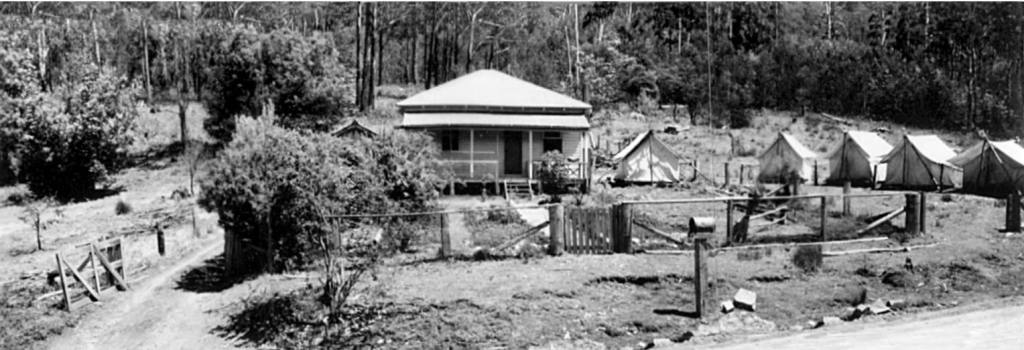
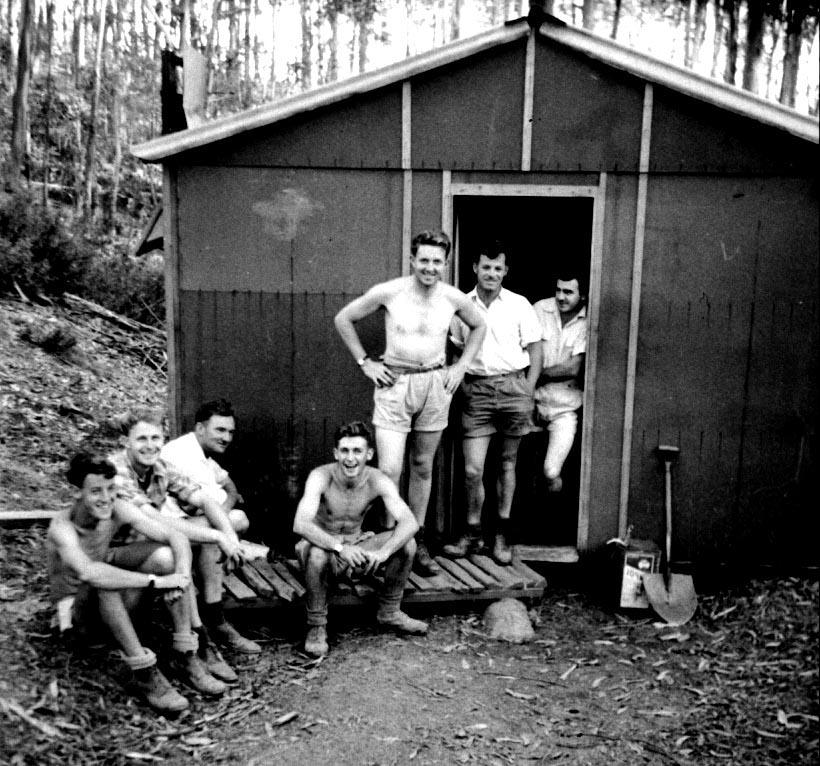
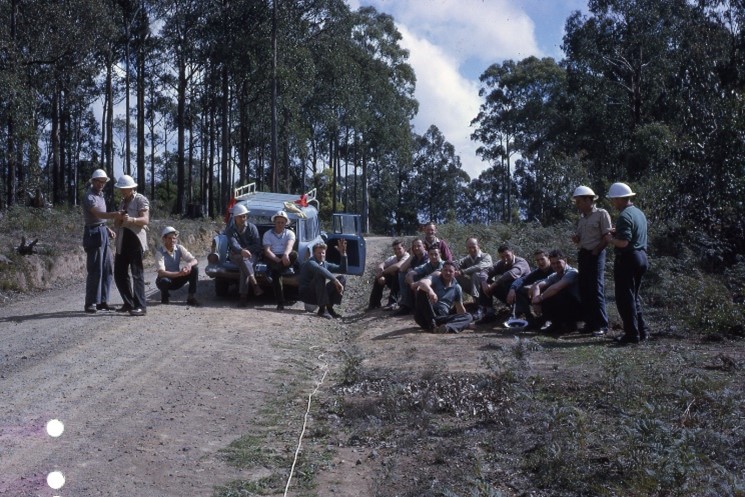
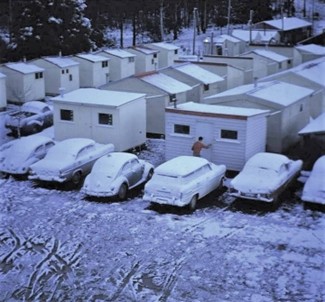
Forest assessment crews were nomadic and established rudimentary base camps deep in the bush. They were also resourceful and lived under canvas, in cattlemen’s huts or sometimes took a couple of portable and prefabricated flat-pack Stanley Huts with them.
They could be away in the mountains for many weeks at a time with little contact with the outside world other than a scratchy RC-16B radio.
They were fit and lean and life was Spartan. Fresh food and supplies travelled on rough 4WD tracks or by packhorse, so crews often supplemented their meagre rations by living off the land.
Rough and steep terrain, sketchy maps, occasionally getting lost, toppling off horses, thick scrub, snakes and wire grass lurking with a myriad of other bighty and prickly things. The vagaries of the weather like heat, snow, dangerous river crossings, falling trees and the ever-present threat of bushfires. There were occasional injuries.
If assessors needed to trek away from their basecamp for a few days, they took the minimum amount of stuff and slept under the stars.
While it all sounds very romantic, it was harsh and lonely and by the end of a long summer bashing through the scrub each day the novelty had worn off and tempers sometimes frayed.
There was also a challenge of crew leadership to be rapidly learned on-the-job. And for many first-year forestry school graduates being posted to Assessment Branch for a couple of years was a rite of passage and a solid grounding.
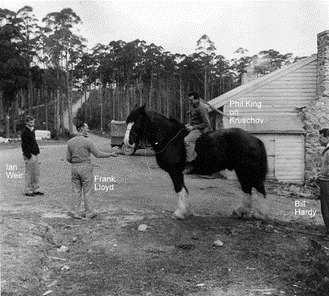
Leon Pederick graduated from the Victorian School of Forestry at Creswick in December 1950 and like so many others before him was posted to the Assessment Branch. After some initial assessment jobs and more training at the Kinglake Assessment school, Leon led the Glen Wills team to measure trees in State forests near Mt Bogong in October 1952.
Meanwhile, Phil King was only 19 when he returned from a short stint in compulsory National Service with the Army. He was driving a cow home to Glen Valley and happened to be walking past an old timber cottage at Sunnyside which was owned by the Forests Commission and where Leon’s forest assessors were setting up camp. He was approached by Ray Brash about a job as chainman in the assessment crew which he readily accepted.
And so began a lifelong career with the Forests Commission.
Phil’s task was simply to bash through the scrub on a set compass bearing pulling a metal measuring chain while at the same time pushing down the wiregrass and kicking the tiger snakes out of the way. The assessors would follow in his path and measure the trees one chain on each side of the narrow strip. Being chainman was difficult and arduous and not many people had the stamina or fortitude to last long in the job.
Their initial surveying of roads, tracks and ridges through the alpine ash forest near Glen Wills was not difficult, but the work became more strenuous when they had to leave the tracks and follow fixed bearings through the steep countryside.
And for the assessors, having a good sense of direction, being able to read a paper map and use a measuring chain, prismatic compass and dead reckoning were essential skills, as well as a stout pair of walking boots to somehow navigate through the bush and get back to camp at the end of a long day.
But getting lost was embarrassingly common, particularly in broken or undulating terrain with few roads or tracks. And in the days before GPS, walking up to a hilltop or ridgeline to get a better view and reset your bearings was often the most practical solution.
The team were in radio contact with the Commission’s Tallangatta office. Orders for food and supplies were relayed to shops and then transported on the bus which serviced Glen Wills each day.
Because Phil showed good horsemanship skills, he was soon elevated to the important job as packman to move supplies and equipment as well as setting up temporary camps at old cattleman’s huts and in the bush for the team.
There was frequent vehicle trouble, with the Land Rover and Dodge truck out of action at regular intervals. Sometimes they were able to take them to Tallangatta for repairs, but other times the crew did their own maintenance and somehow kept them running.
At the conclusion of the Glen Wills assessment, the team moved to Bullengarook near Daylesford and lived in the old internment camp at Bullarto used during World War Two. They had been sent to measure pole-sized mixed species forests that had regenerated after the damage done to the bush in the decades following the Gold Rush of 1851.
It was while at Bullarto that a couple of the crew members pooled their cash to purchase an old 1927 Packard sedan from a Malvern car yard to get around on the weekends. It served the team well providing transport to frivolities in Melbourne every second weekend, costing one penny per mile to cover fuel and running costs.
There were several more assessment projects before Phil transferred to a less transient position based at Tallangatta to build new roads and 4WD tracks working for Kevin O’Kane.
But the lure and adventure of assessment remained, and Phil returned for several more tours at Benambra, Tom Groggin, Heyfield and the Otways.
In 1956, the Forests Commission underwent a major internal restructure by amalgamating the hardwood and plantation divisions to create 56 new forest districts, each under the control of an experienced District Forester. Things remained largely unchanged for the next three decades. In about 1960, Phil secured a role based at Omeo in the newly formed Swifts Creek District working for Moray Douglas.
Forest Forman’s School – 1962.
In 1962, while working at Omeo, Phil was fortunate enough to be selected for the coveted Forest Forman’s school based at the No. 1 Camp in the Mt. Disappointment State forest. Foresters, Max Boucher and Fred Craig, were the main lecturers during the intensive nine-month course.
The camp had previously been used to house Italian internees and later German POWs during the war and was remote from any townships and cold in winter.
But the course changed Phil’s life and he kept in contact with his 1962 cohort of classmates and their families over the subsequent decades.
Forest District Life.
Upon graduation, Phil had short postings with the Forests Commission, firstly at Daylesford for two months, then Orbost for another two months, before finally settling at Broadford in May-1963. He was appointed as a probationary Forest Foreman and, from June 1965, as a permanent Forest Overseer, a job he enjoyed for the next 14 years.
Forest foreman and overseers were the backbone of the Forests Commission and became undisputed kings of their domain with overall operational control of their individual patch of bush. In addition to firefighting, road maintenance and other works, one of Phil’s main tasks was marking trees to be felled in the bush before they were snigged out and loaded onto trucks to go to local sawmills.
Unlike Creswick foresters who were regularly and compulsorily moved around the state by the Forests Commission every few years, Forest Overseers tended to stay in the one place for longer periods and so got to know the bush and their local communities.
But in 1977, Philip King (one L) decided to move back to East Gippsland as a forest overseer based at Nowa Nowa and took supervision responsibilities for all the post and sleeper cutters in the coastal and foothill forest as far as the Lakes-Colquhoun Road. His long-time nemesis Phillip Morgan (two Ls) operated on the other side from Mt Taylor near Bruthen.
And like all forest overseers, Phil had an active role in bushfires and fuel reduction burns but in later years became noted across East Gippsland for his exemplary skills as a catering officer and camp cook. A very important role at any bushfire.
The Forests Commission surrendered its discrete identity in 1983 when it merged into the newly formed Department of Conservation, Forests and Lands (CFL).
It took some years for the new regional structure to settle, but Phil remained at Nowa Nowa largely unaffected by the turbulence going on around him.
However, the tempo of change accelerated after the initial amalgamation in 1983 with many more departmental restructures and name changes occurring over the subsequent decades.
Widely known and well regarded, Phil retired in 1993 after 41 years of service from what by then had become the Department of Conservation and Natural Resources (CNR).
And like most forestry employees, Phil was always encouraged to be active in his local community. He had joined the Lions Club of Australia and was later elevated to the senior leadership position of the District Governor.
Phil recently turned 90 and is still fighting fit with a sharp memory and is full of rich stories of his time in the Forests Commission.
Main Photo: Retirement – Sam Bruton, Doug Stevenson (CNR Regional Manager), Phil King, Ray Bennett, Norm Cox – 1993.
Speed Maintainer clearing Snow at Christmas Creek c 1947. https://prov.vic.gov.au/archive/4CD4F787-FD8E-11EA-BE8C-612FB3FF00FD/contentGlen Wills Hotel, c.1950. Photo: SRWSC – SLV – http://handle.slv.vic.gov.au/10381/298425BACK: Geoff Dowler, Frank Lloyd, John Crawley, Dave McCabe, Chris Collin, MIDDLE: David Paterson, Frank Gerraty, Phil King, FRONT: Ray Brash, Gordon Doran.Packman Phil King. Photo: FCRPA CollectionThe 1927 Packard and its owners. Leon Pederick, David Anderson, Eric Bachelard, Bill Clifford.Photograph taken about April 1953 (Source: L Pederick). The Bullengarook assessment crew. Back (l to r) – Chris Collin, Dave Anderson, Phil King. Front (l to r) – Frank Gerraty, Geoff Dowler, Leon Pederick, Eric Bachelard, Bill Clifford. Source: Leon PederickThe assessment team camped at an old weatherboard cottage with four rooms at Sunnyside on the Omeo highway. They erected six sleeping tents at the back. Source: Leon PederickPhotograph taken in 1962 (Source: FCRPA) : FCV Foreman’s School at Broadford No. 1 CampPhotograph taken in about January 1957 – Assessing at Mt Useful. From left – Jack Gittins, Bob Allen, Frank Lloyd, Arthur Webb, Brian Woodruff, Bill Hardy, Phil KingCharlie Saunders teaching the use of explosives for overseers at Mt Disappointment – 1962. L / R; Bert Allen, Jack Hutchison, Don Dyke, Geoff Mair, Col English, Ron Smedley, D’Arcy Smith, Ron Harris, Stan Kirkham, Bill Barnes, Des Kelly, Jack Blythman, Clarrie Pring, Len Arnold, Ken Doyle, Tom Waldron and Max Seamer. FCRPA CollectionNo.1 Forestry Camp at Mt. Disappointment under snow in 1962. Photo: Noel Fraser. FCRPA CollectionBullarto Camp. Phil riding the horse. c 1953Bullarto CampThe Cape Horn road construction camp on the Great Ocean Road, north of Apollo Bay.Photograph taken in 1993 at Phil King’s retirement (Source: FCRPA) : l to r – Sam Bruton, Doug Stevenson, Phil King, Ray Bennett, Norm Cox