If an organisation is fortunate, it can claim a few colourful characters amongst its ranks. And over its long and proud history, the Forests Commission Victoria (FCV) had its fair share.
Alexander (Lex) Wade was one such character who grew up in the Dandenong Ranges east of Melbourne, and despite his many wanderings always seemed to gravitate back to his beloved hills.
Voluntarily departing Upwey High School in Year 9, Lex took a short-lived apprenticeship with the railways and a few farm labouring jobs.
In 1966 he was recruited onto the Forests Commission works crew at Kallista after a short chat with the well-regarded District Forester, Jim Westcott. Lex had found his “happy place”.
Lex started at the bottom of the pile with a hand slasher cutting fire breaks and as “billy boy” in Sherbrooke Forest. Around the same time, he joined the Kallista & The Patch CFA Brigade, in what became a lifetime affiliation.
Protection from bushfire of the communities and forests of the Dandenong Ranges became an overriding theme for Lex throughout his entire career.
The idea of Mobile Support Crews (MSC) had their origins after the Forests Commission’s Chief Fire Officer, Ted Gill, returned from a study trip to America in the mid-1960s.
Like their American counterparts, better known as Hotshots, Mobile Support Crews were based on the temporary employment of fit young people as mobile, highly trained, well equipped and well-led firefighters to give additional surge capacity when needed.
MSCs were based at Benalla, Bruthen, Broadford, Heyfield (Connors Plain and later Surveyors Creek) as well as Stawell over summer.
The size of each MSC ranged between fifteen to eighteen people and was self-contained with vehicles, radios, camping and firefighting equipment, including chainsaws, rakehoes and axes. Depending on where it was based the MSC may have included a camp cook.
In 1968, Lex left Kallista District to join the Heyfield MSC based at Connors Plain, northwest of Licola. The crew was supervised by John Wilson, the engineer in charge of local road construction works.
The end of the fire season in 1969 saw Lex head off to Benalla to plant pines over winter in the chilly Strathbogie Ranges. He applied for but missed out on the sought-after FCV foreman’s school, so took some other work such as driving trucks for the next few years.
15 October 1980 remains an important date for Lex because it was when he secured a permanent role back with the Forests Commission at the Sky-High restaurant near Mount Dandenong.
In 1982, Reub Watson retired from Gembrook and Lex happily moved onto the works crew. His mentors Bob Ferres, Bill Rankin and Butch Reid all helping to cement his practical down-to-earth outlook and hone his many bush skills.
The 1982-83 bushfire season is best remembered for those on Ash Wednesday on 16 February 1983, where 47 people died In Victoria and a further 28 in South Australia. But other significant bushfires occurred right across Victoria from August 1982 until April 1983, and it proved a long and hectic fire season for all Forests Commission staff.
Lex drove the Gembrook Bedford M Series tanker (MZF 347), first to South Belgrave then to Upper Beaconsfield and later to Cockatoo on the fateful and manic Ash Wednesday.
While generally considered “bulletproof” the petrol fuel lines on the Bedford were very prone to vaporise in the heat causing the motor to stall, often at the most dangerous moment… in this case frightening the crap out of its driver.
Some jokingly said this design quirk was an inbuilt safety feature to stop crews getting too close to the fire in the first place.
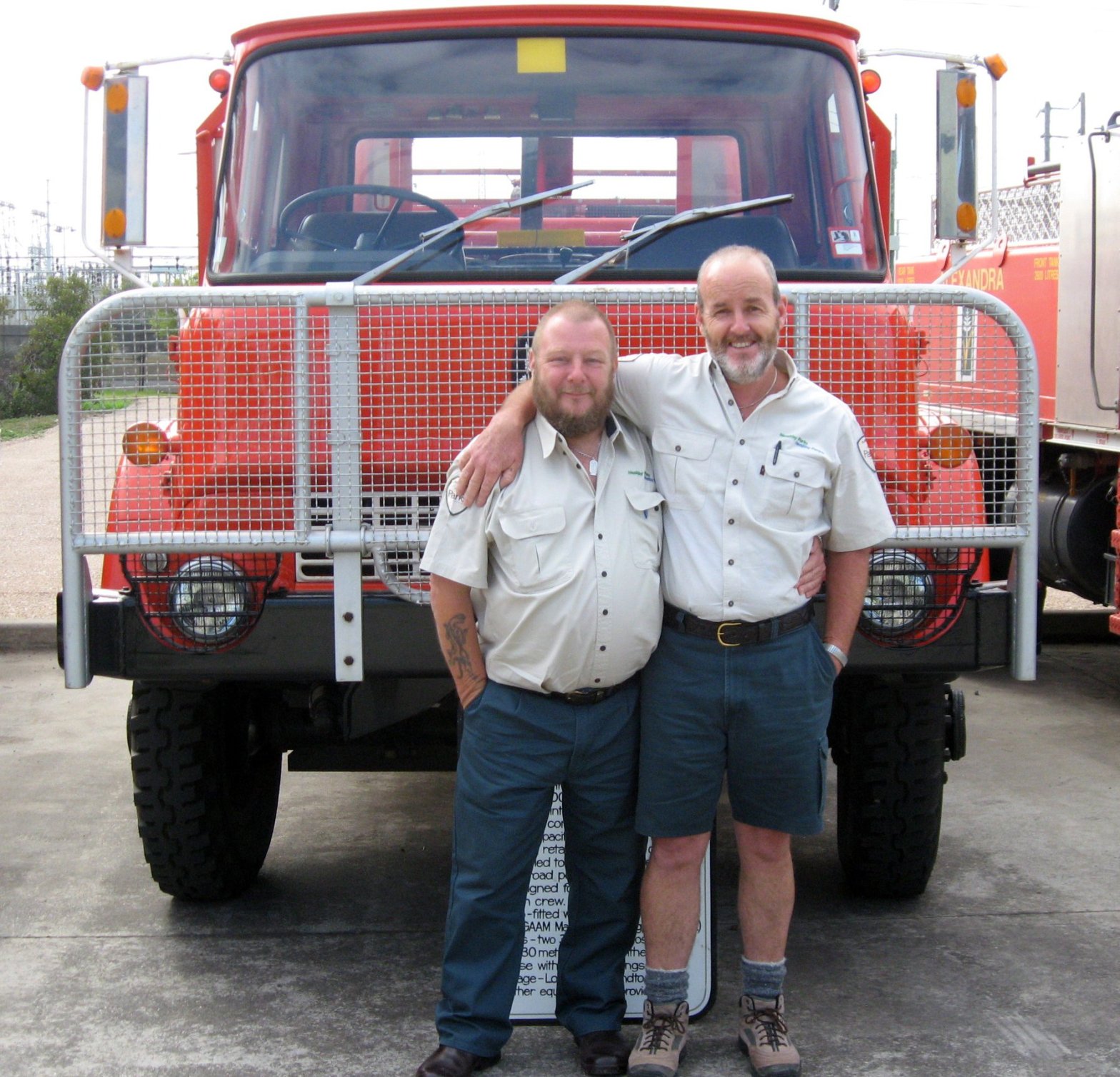
The old Bedford warhorse was subsequently rescued from the scrapheap after its retirement by Lex and fire equipment wizard Rocky Marsden. After a lick of fresh paint and most of its battle scars “buffed out”, this time-honoured veteran now takes pride of place at the Department’s Altona North workshop.
In 1984, Lex moved to Benalla to lead the local Mobile Support Crew, before returning a year later in 1985, like a moth-to-a-flame, to the familiarity of the Dandenong Ranges.
His move back home was around the time of the major restructure and the formation of the Department of Conservation, Forests and Lands (CFL).
Following the Ash Wednesday fires and the formation of CFL there were some significant changes to fire training including a new fireline supervisors’ course in 1985, where Lex took an active role in shaping and delivering the innovative program together with John Nankervis.
Lex made a move from Gembrook to Ferntree Gully in about 1989 and took a role as a Ranger in the newly created Dandenong Ranges National Park.
On the 14 January 1985 there were 111 lightning strikes in 24 hours across Victoria’s alpine region that caused widespread fires, with the largest at Mt Buffalo. Aircraft from the Army, Navy and AirForce were once again deployed, plus a major fleet from the National Safety Council of Australia (NSCA). It proved the largest operation of firefighting aircraft in Australia up to that point.
These fires not only tested both the new Department and the AIIMS system but highlighted some serious shortcomings in aviation management. As a result, Richard Alder, Bryan Rees and others quickly established new aviation roles, training and accreditation to control aircraft at bushfires.
Lex underwent air observer training in 1998, which was followed a year later gaining accreditation as an Air Attack Supervisors (AAS). Lex proved a natural in the air and took many senior leadership roles in bushfire aviation over the subsequent decades.
While not universally welcomed or adopted by other fire agencies, the common structure and language of AIIMS enabled firefighters to be deployed overseas to America and Canada in what has now become a routine exchange.
Lex and his inseparable friend Ion Worrell (Wol) were like peas in a pod… if you found one… the other wasn’t far away. Unsurprisingly, Lex and Wol were both amongst the first contingent of firefighters to leave Australia in 2000, serving in Idaho and Montana.
In the off season, Lex retained his “day job” at Olinda focusing on fire training, dangerous tree assessment as well as liaison with other emergency services. There probably isn’t a Policeman or CFA Captain in the Dandenongs that hasn’t enjoyed a cup of tea and a bit of banter with Lex as he nurtured these important relationships.
Lex was very deservedly awarded the prestigious Australian Fire Service Medal (AFSM) in 2002. This honour was in addition to his National Medal (1993) and National Emergency Medal (2013) for the bushfires on Black Saturday.
The CFA also recognised Lex with long service medals and life membership.
Widely known across the Dandenong Ranges, and even far beyond, Lex retired from Parks Victoria in 2020 after a lifetime of service.
However, retirement gave Lex more time for his second love of motor sport. As a one-eyed “Holden Man” Lex volunteered with gusto as a rescue firefighter at many premier race events including 25 of Melbourne’s Formula One Grands Prix.
Lex has confronted a couple of major health scares recently including spending nearly three months in Box Hill and Monash Hospitals. He remains astonished and humbled by the depth of support he received from a wide network of generous friends.
As well as being an affable knockabout bloke and firefighting legend, Lex was sometimes likened to a jovial and lovable garden gnome. But everyone who met or worked with Lex has their own engaging anecdote to tell.
It’s simply not possible to sum-up Lex in a mere sentence or two. There are so many worthy qualities including a life committed to protecting forests and communities from bushfire, a dedication to safety, a selfless focus on others, a forthright willingness to speak plainly, lasting friendships, and fierce loyalty. All this topped with a generous layer of infectious humour and effervescent larrikinism.
Lex Wade remains truly one of a kind…
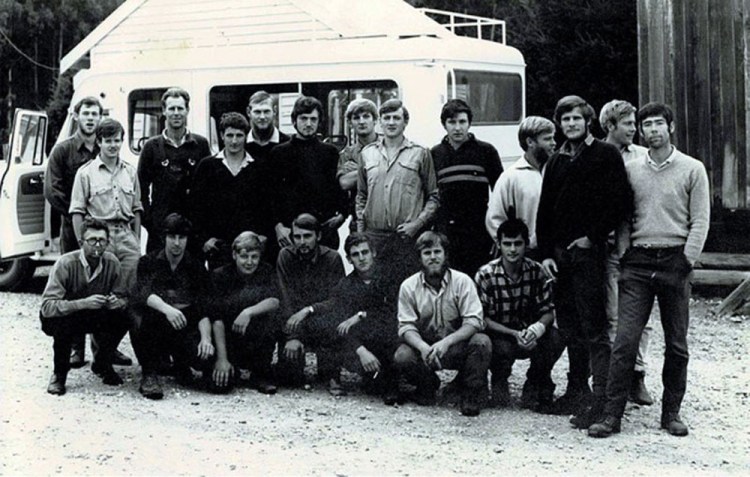
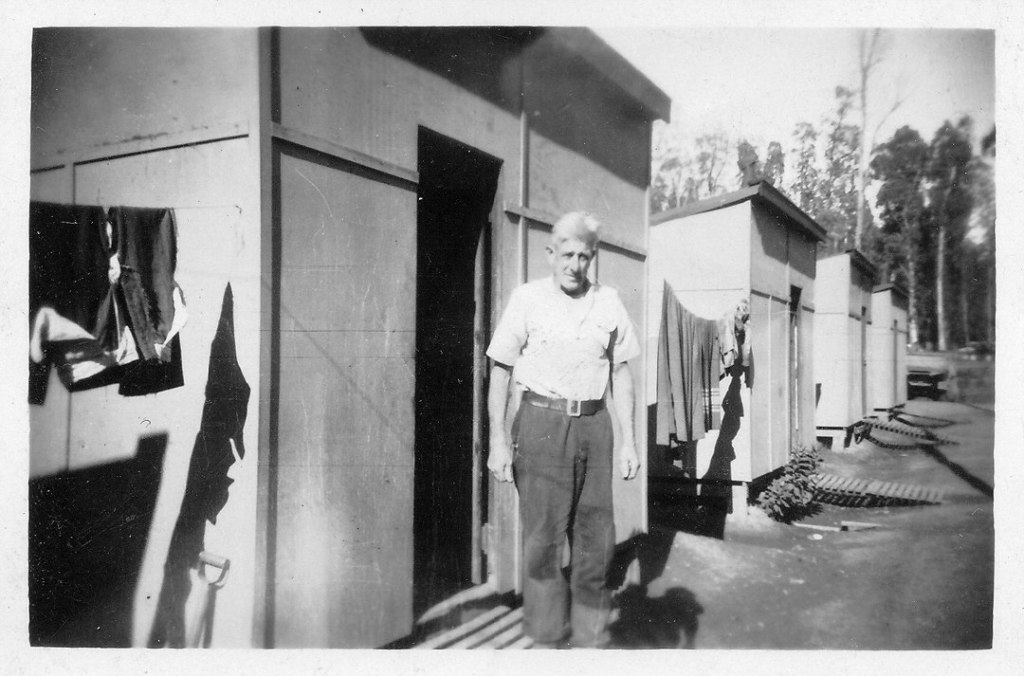
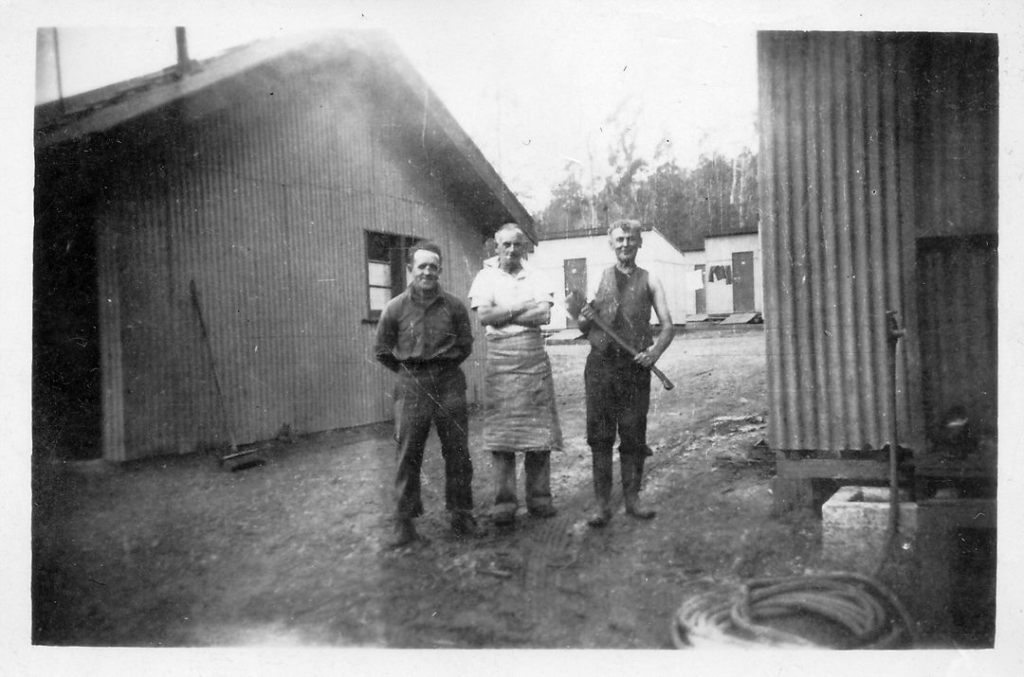
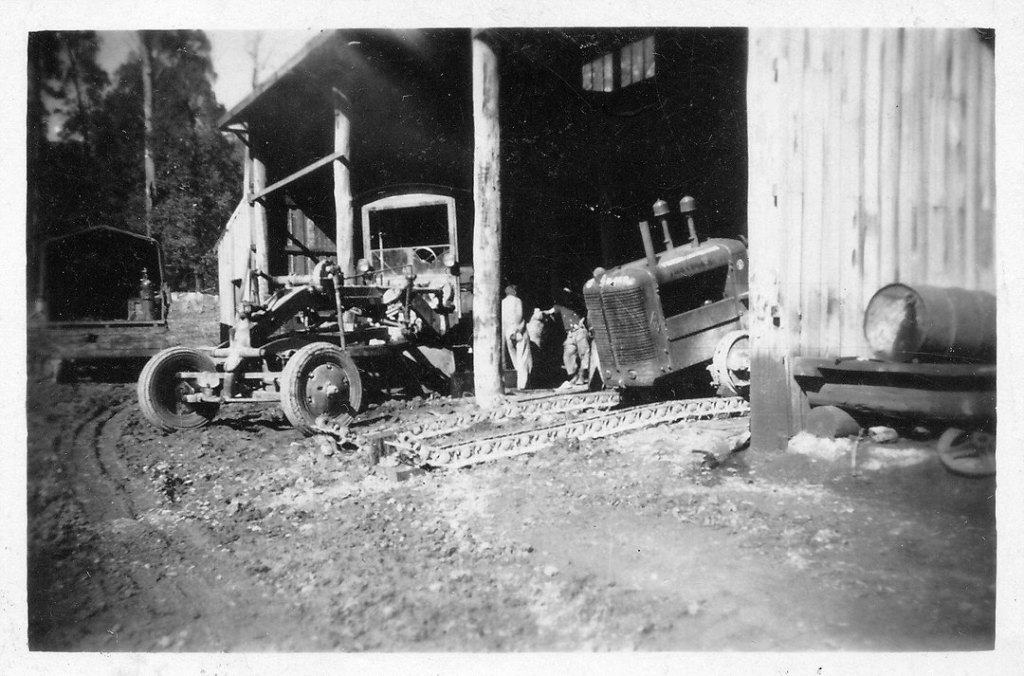
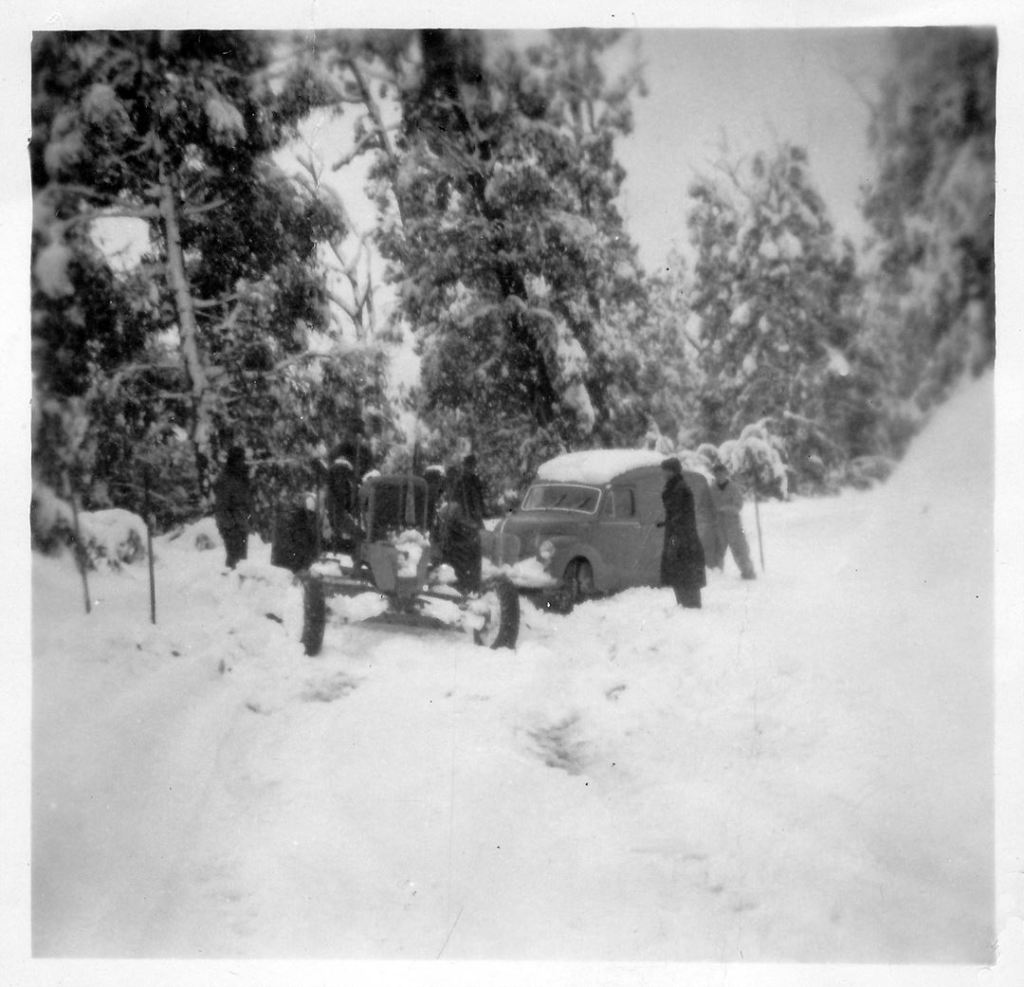
Mobile Support Crew at Connors Plains – 1968/69. Standing (L to R) – Dave Buckle, Kester Baines, John Wilson, Alan Falkingham, Dick Noble, Peter Fitzpatrick, Euan ‘Wanga’ Thompson, Tim Clark, Kevin ‘Wings’ Holland, Brendan Lay, Dave Hannah, Tim Hannah, Ian Walkley. Squatting (L to R) – Peter Thomas (Cook), Ray Trenfield, Lex Wade, Craig Irvin, Neville Horan, Ross Foster, Robin Young. Source: FCRPA CollectionLex at Altona. October 2023.Like peas in a pod. Wol and Lex.At Olinda base.At Sandown Racecourse
Australian Fire Service Medal (AFSM), National Emergency Medal for Black Saturday in 2009 and the National Medal (with clasp)
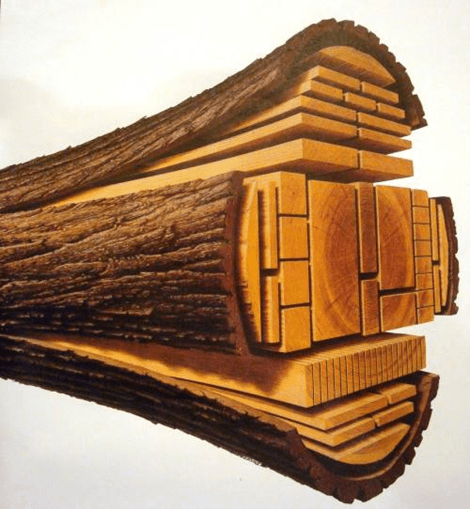
The losses from converting round logs onto square sawn timber depends on the species of tree, the diameter and length of the log, straightness and the overall taper of the log, internal defects and waste.
Sawn timber recovery can vary from 40 to 50% of the gross volume (cubic metres) for a large mountain ash sawlog. Smaller or defective logs have much lower recovery.
The recovery rate was one of the main factors used to determine log royalty (price) and was sometimes hotly contested by sawmillers.
Waste includes the outer round edges, docking of internal defects like knots and rot as well as sawdust.
Sawdust can account for 15-20% of the overall log volume loss.
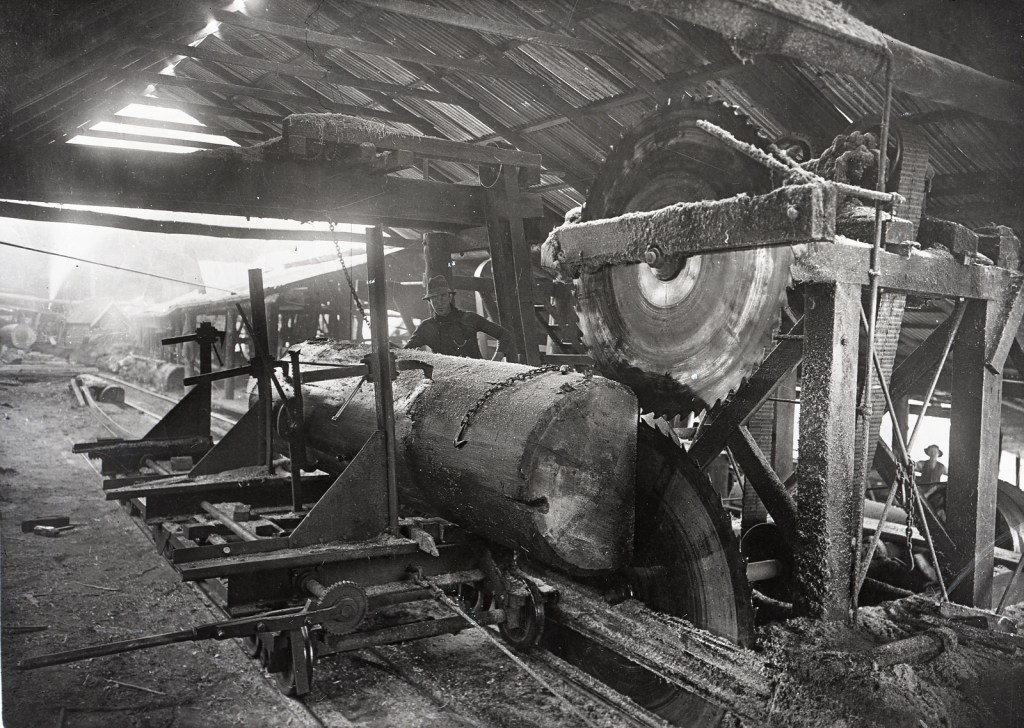
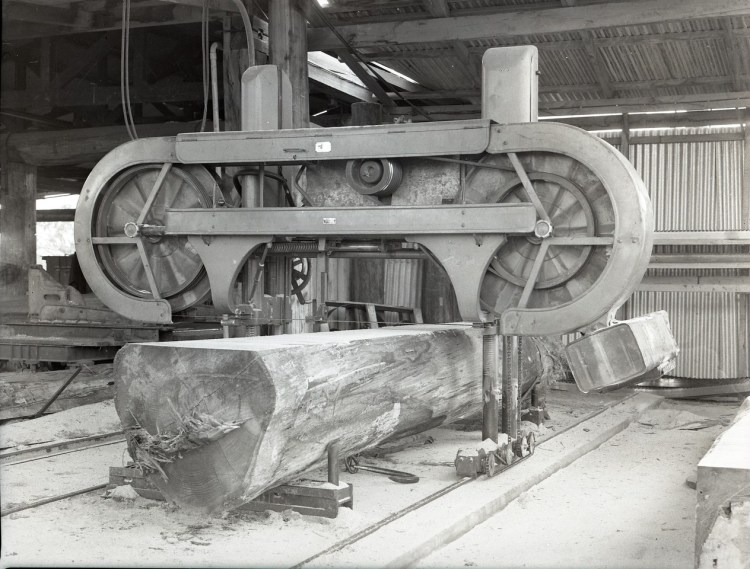
The type of saw is also important. Older circular saws were much thicker than modern band saws. This width is known as the “kerf” and typically was as much as 3/8 inch (9.5 mm) for a large breaking down saw and 1/8 inch (3.2 mm) on resaw benches.
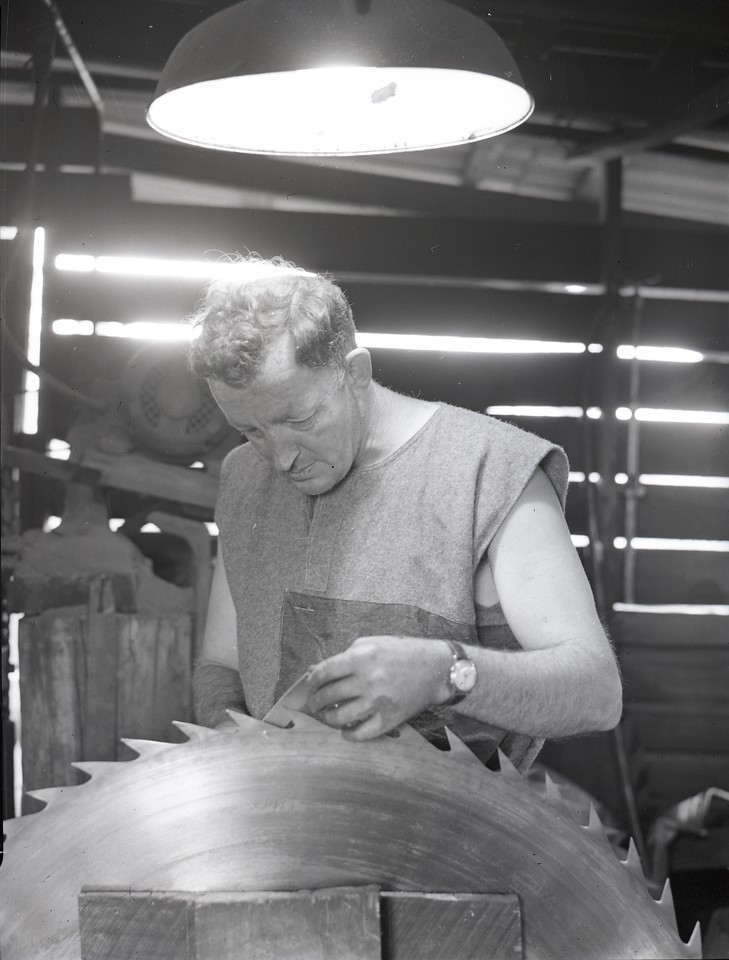
The kerf depends on the thickness of the steel blade and the “set”, or offset of the teeth, the amount of wobble in the blade during cutting, and the amount of material pulled out of the sides of the cut. Keeping saws sharp and in shape required the skills of a saw doctor.
Modern bandsaws have thinner blades and narrower kerf teeth which operate under high tension. They produce more accurate cutting with less sawdust loss.
The quantity of sawdust produced depends not only on the kerf of the blade, but also sawing pattern and the number of cuts. Smaller dimension timber like garden stakes or fence palings need many more cuts than large structural beams or floorboards.
There may be further shrinkage losses as the sawn timber dries and needs to be dressed and planed into shape.
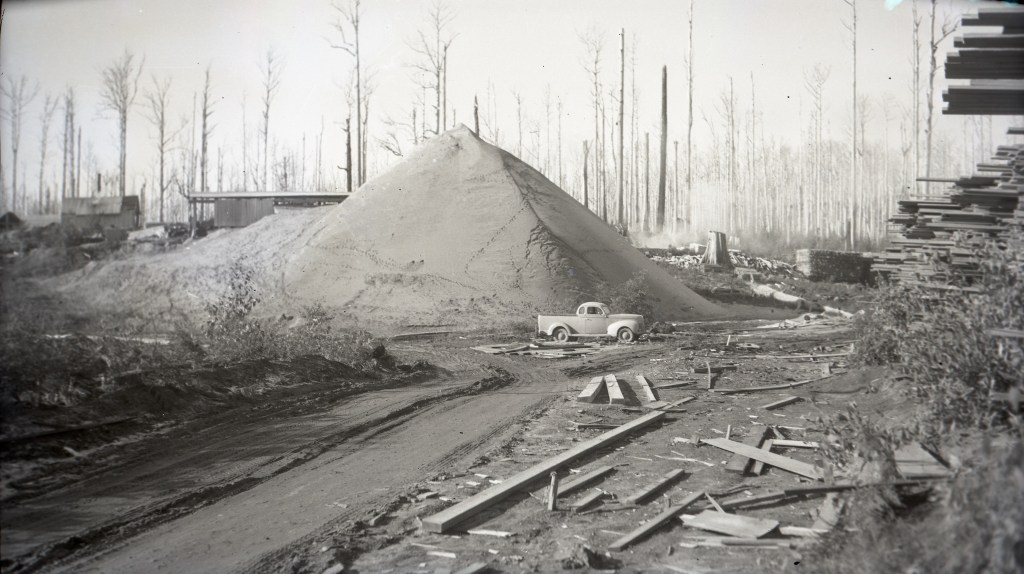
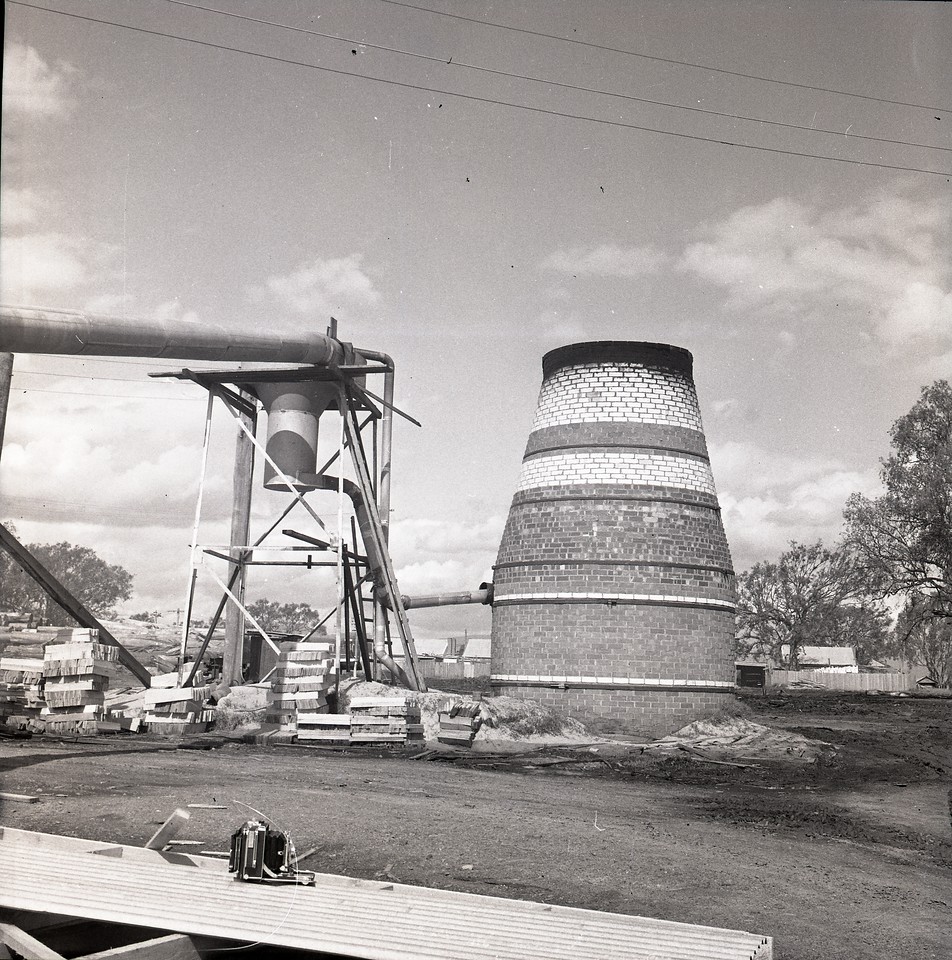
Older sawmills literally produced mountains of sawdust waste if there wasn’t a teepee burner or firepit nearby. In a few cases sawdust was recovered and used to make bricks.
Sawdust can also be made into wood flour and used for soil additives, filters, extenders for glues, fillers in wood composites as well as absorbents for explosives.
But sawdust has high levels of tannin and, in the absence of bushfires, can take decades to break down. There are still plenty of old heaps dotted around the bush.
Twin circular breaking down saws had a wide kerf and were prone to wobble which generated more sawdust.
Bandsaws have thinner blades which operate under tension. They produce more accurate cutting with less sawdust loss.
Written by his family and contributed by his son Tony Edgar.
William James Edgar was born in Yenda in the NSW Riverina on 11/11/1927. At the time of his death, he was a father of seven, a grandfather of 22 and a great grandfather of 22.
He has always been known as Bill. His parents were Keith and Magdalen Edgar. His mother was known as Queenie. He had an older sister, Irene. Keith was a returned serviceman and had taken up a soldier settlement block at Yenda growing grapes. When phylloxera hit the Yenda District in the late 1920’s, like many others, they left their block and moved to Sydney. Bill has very little memory of their time in Sydney. They shortly afterwards moved to May Grove in South Yarra to live with Queenie’s family. After a short time they moved to 9 Arthur Avenue, Brighton where Bill lived until he left home at 16.
When Bill was about three or four, he and his mate Jack decided to go down to Hampton St to visit the cannon. They made it to the cannon and climbed on it but couldn’t find their way home. Someone took them home and Queenie was very upset. She took Bill to the local school and asked if they could look after him. Bill said that the school agreed and a really lovely nun looked after him and he loved it. Bill talked about all of the local kids playing out front in the street. One of these kids got polio and couldn’t play anymore.
Bill attended the local catholic school. He had an active sporting life and particularly enjoyed swimming. Summers involved spending a lot of time at the Brighton Baths. Bill had an aim to ride from his home to the baths on his pushbike without touching the handlebars. As this involved crossing a couple of busy roads he rarely achieved this.
In his teens he swam in competitions and at one stage held an under age Victorian breaststroke record. He was also a very good diver and gymnast. Bill was involved in scouting and became a King Scout. The mayor of Brighton who lived in their street told him that he was the only King Scout in Brighton.
Keith, his father, obtained work as a proof reader for The Age newspaper. This was primarily to proof read the advertisements which were in the paper. Initially he would line up outside The Age offices in the evening and hope that he would be selected to work that night. If work was not available he would catch the train home. If he obtained work he would get home as Bill and Irene were heading off to school for the day. After a while Keith got a permanent position, so his children saw little of him as their sleep cycles were so different.
Bill’s mother Queenie was an excellent seamstress and the main breadwinner in the family. Bill talked of hearing her sewing late into the night every night. She had a lady who came in on Saturdays to help with housework. She did work on commission for a couple of shops in Melbourne. Bill recalled taking finished articles to the local train station where they would go by rail to the shops in Central Melbourne. She made coats for General Douglas MacArthur’s children during World War 2.
Bill as a young lad got a Saturday morning job at a local shop to do deliveries. He rode his pushbike and had to be able to give change. Bill was proud of his work and the trust placed in him to handle the money.
Bill applied to enter the Victorian School of Forestry (VSF) for the 1943 year. He was unsuccessful and went to school for one more year. He spent this year at St Kevins after having spent his previous years at Christian Brothers College. He had obtained his leaving certificate from the University of Melbourne by passing English, Mathematics III and Physics in December 1942 and French and Chemistry in February 1943.
At the end of 1943 he passed his Matriculation and again applied to VSF and was accepted for the 1944 intake. This was a three year Diploma Course resulting in the awarding of a Diploma of Forestry (Creswick). There were only 24 students when he started, with twelve in his year.
This number increased with twelve new students in 1945 and thirteen in 1946. By 1946 some of the students were returned servicemen who would have been older than the third year students.
Bill enjoyed his time at Creswick. It was a fairly regimented system, not unlike a boarding school. Students were expected to study at night. Accommodation and meals were provided. Students were required to attend church on Sundays. Most students, including Bill were bonded to the Forests Commission at the completion of their course. Saturday mornings were devoted to field work where students were tasked to various jobs in the Creswick Demonstration Forest.
During his time at VSF, the School entered a football team in the local Clunes League. They had a number of fairly handy footballers, including Jeff Brisbane who had played for Geelong in the VFL. Bill was also among their better players. Years later when Jeff Brisbane umpired a VSF match he told Tony that Bill was a very good footballer.
Bill graduated in 1946 and was posted to Assessment Branch. One of his first assessments was at Connors Plains north of Licola in central Gippsland. Bill tells the story of this assignment in an interview he did which can be found at………
His next postings were to Forest Protection, Delatite, Scarsdale and then Corryong. While at Delatite Bill played in a band as a drummer. It appears that his main task was to supply the whisky. He also played football for Mansfield.
At Corryong Bill was the Assistant District Forester. He continued his football career. One night after being at the pub, Bill was driving home four abreast in a Land Rover. While going around a corner, the driver’s door flung open and Bill, who was driving, fell out. He broke his pelvis and was taken to the Corryong Hospital where Sheila Drill was a nurse.
Bill decided she was a bit of “all right” and began courting her. Sheila had taken a job at Corryong and had intended to then move to Sydney. Bill proposed a number of times before Sheila said yes to him. They were married at St Ignatius in Richmond on May 23, 1953. Bill’s father in law Leo was not too sure of the relationship as he thought all public servants were lazy buggers.
In November 1953, Bill was promoted to District Forester at Beechworth. As Bill and Sheila did not have a car, Dick Caddell, an overseer from Beechworth drove to Corryong and picked them and their possessions up in the forestry truck.
In Beechworth, both Bill and Sheila became heavily involved with the local football club where Bill was one of the star players. The local doctor was the club President and when Michael was born in 1954 did not tell Bill until after Bill had finished training. Tony and Kevin were born in 1955 and 1956. While at Beechworth, Bill commenced a thesis to obtain a Diploma of Forestry(Victoria). Without either a Bachelor Degree or this Diploma the Forests Commission would not promote anyone past the level of District Forester.
In September 1958 Bill was transferred to the Erica Forest District. At that time this was one of the biggest and most complex Districts in the state. As well as running the District, Bill was in charge of the State Sawmill located in Erica. This mill took a lot of time as it had never generated a profit. Bill had also not yet completed his thesis. He had done the field work but needed to submit it and have it assessed. The thesis was “A Working Plan for the Chiltern Forest”. Bill and Sheila bought their first car at about this time. They welcomed Mary and Brendan into the family in 1959 and 1960. Bill’s football career ended as Erica did not have a team and it would have been too difficult to play with any nearby town.
Bill found the work at Erica quite stressful. He came down with rheumatic fever and was hospitalized for a short time. As a consequence he was transferred to the Nyah District in 1962. The Nyah District extended along the Murray River from Hattah National Park to Swan Hill. Andy joined the family not long afterwards. In Bill’s words, he said he thought that he had died and gone to heaven when he arrived at Nyah, and then they sent me Webby. Webby is Brian Webb and Brian and his wife June moved to Nyah shortly after the Edgars. Bill and Brian were like peas in a pod, as they both enjoyed fishing, hunting and being outdoors. They had drum nets in the Murray River and both families had lots of feeds of fish and Murray Crays. There was also an abundance of fresh fruit and vegetables to be had. Bill played golf at the Nyah golf club and lots of summer weekends were spent at Picks Point swimming hole on the Murray. It was while at Nyah that the FJ Holden was moved on and Bill and Sheila bought a Ford Customline.
Holidays were taken during school holidays and were spent at Trentham with Bill’s parents or Hawthorn with Sheila’s. At Trentham, Bill and the family would cut a year’s supply of firewood for the Lux stove in the kitchen. Bill could cut wood quickly enough to keep all of the older children busy stacking.
Hawthorn trips often involved a walk to watch Hawthorn training. Bill switched his football allegiance from Richmond to Hawthorn. It was a terrific decision as Hawthorn have been the most successful club of the last 50 years by a considerable margin.
The next move was to Neerim South in 1965. This was another very busy District which included the Baw Baw Ski Resort which was run by the Forests Commission. While the main office was at Neerim South, the main depot was at Noojee. Bill and Sheila spent a fair bit of time making sure that the local pool was usable. The pool filled from the local creek and had to have the slime removed each year before filling. The water was not treated, so it had to be emptied and refilled.
By now the older children were involved in organised sport. A fair bit of time was needed to cart them around to their various events or to organise a lift for them. Bill was also very supportive of the children joining cubs and later scouts, and he often helped when he could. Bill had a brief, not very successful, cricket career while at Neerim South. Rob became the latest member of the family when he was the last child born in the old Neerim South Hospital. Bill was rung from the hospital to say he “had another little woodchopper”.
In 1968, Bill was promoted to Assistant Divisional Forester for the Western Division based in Horsham. For the first time since having children the family lived in a house without a wood stove in the kitchen. The house was on the outskirts of Horsham and unsurprisingly, life was fairly hectic. The children now ranged from being in Form 3 down to Rob who was still some way off starting school. Luckily, the older children were able to get themselves to many of their activities. Bill and Sheila also did a lot of running around to various events, as they encouraged all of their children to participate in sports.
The ADF role involved quite a bit of travel as the Division extended from the coast up to Mildura. It also included the Grampians which at that stage was being managed by the FCV. There were lots of family trips to the Grampians for picnics and to look at various sights. Favourite outings were the walk through Wonderland to the nerve test and swimming in the hot pools at Zumsteins. Bill also took up lawn bowls in Horsham and won a few trophies.
Bill and the family liked to frequent Op Shops when holidaying in Melbourne. Bill found a very expensive Rolleiflex Camera on one of these visits and became quite a good photographer.
Bill had a large vegetable garden at Horsham that extended into the neighbours yard. Vegetable gardens were a constant at most places he and Sheila lived. Bill was always on the lookout for free food. All of the family were involved in collecting foods such as tabbies, blackberries, apricots, walnuts, almonds, asparagus, mushrooms, plums, figs, mulberries and apples. Bill and Sheila made blackberry jam, tomato sauce and tomato chutney most years and shared them with their family.
Bill was an excellent shot and often took the whole family rabbit shooting at dusk. He would shoot rabbits from the car window after they stood when captured by the headlights. At times he would try to get two rabbits with one shot. Rabbit casserole was often on the menu, particularly at Neerim South.
Bill was promoted to Divisional Forester for Southern Division in 1972. This involved packing the family up and moving to Traralgon. By this stage Michael had left home to attend Monash Uni and Tony was about to do the same. Up until this stage in their marriage Bill and Sheila had always lived in houses provided by the FCV. As a Divisional Forester, Bill would not get a house so they had to buy one. In their usual methodical manner, Bill and Sheila listed what they wanted in a house and Bill travelled to Traralgon and in a few days bought a house which best met their needs. This was quite a challenge for them as it meant going into debt. They borrowed some money off Sheila’s dad, Leo, so that they could buy the house at 4 Charles St.
Southern Division included the Neerim, Erica, Heyfield, Maffra and Yarram Districts. This was one of the busier Divisions. The APM paper mill was in the Latrobe Valley and many of the Districts had active plantation extension programs. The Yarram District included the Strzeleckis where the FCV were buying farms to plant pines or eucalypt plantations.
Fires were also fairly constant with multiple lightning strike fires being a common occurrence. Bill had a radio installed at 4 Charles St so that he could listen in to the chatter from the fire towers during summer.
As a Divisional Forester, Bill was part of the FCV Central Council which met in Melbourne regularly. This was an event which he did not enjoy and for which he was always well prepared. Bill often enjoyed travelling to some of his old haunts to see how things had changed. Over his career and into retirement seeing the reforestation and silvicultural treatment of the Strzelecki Ranges and other areas such as Boola Boola State Forest gave Bill enormous satisfaction. He got quite a kick out of seeing areas which had been treated silviculturally thriving.
Bill and Sheila had always had a very strong involvement in the Catholic Church. All of the family attended Mass on Sundays from when they were babies. In Traralgon this involvement became stronger. After retirement Bill and Sheila usually attended mass daily. They also involved themselves in many church committees and projects.
While Bill has since lived in Sale for a short while, the majority of his and Sheila’s life continued to be lived at 4 Charles St until not long before Sheila’s death.
Bill had a significant health scare in 1980. He had a heart attack which culminated in a triple bypass at the Alfred Hospital. This operation was quite risky at the time, with the chances of success being put at about 50%. The operation was successful and about three months later, Bill was back at work. Bill liked an occasional menthol cigarette, a beer in the evening and he loved a bit of Devon Ham, none of which are great for your heart. He improved his diet and started to exercise more. If he strayed with his diet, Sheila would make sure he got back on track.
Bill remained as Divisional Forester until the creation of the Department of Conservation, Forests and Lands in 1982. The new Department had 18 Regions and Bill applied to be the Regional Manager for the Traralgon Region. For the first time in his career he had to be interviewed for a job. He took a lot of time putting his application together and was quite nervous about the interview. He was offered the role as Regional Manager at Yarram, which was at a higher level than the Traralgon role. The Yarram Region included the Wilson’s Promontory National Park and also had an active plantation extension program on farmland which the Department purchased. Bill remained in this position until his retirement. Bill enjoyed running the Region but struggled a bit with some of the politics which were inevitable at this senior level.
During this time, Mary and Paul were building a rock house at Seaton. This was going slowly, so Bill took three months long service leave and he and Sheila drove out to Seaton each day and laid rocks. Bill has often said that he got a great deal of pleasure from doing this. The work he and Sheila did made a huge difference to the time it took to finish the house.
Bill remained Regional Manager until retirement at age 57. He took most of his superannuation as a pension, but also took a lump sum payout. From the lump sum he purchased Rocky and a boat. Rocky was a yellow Daihatsu four wheel drive and it gave him the freedom to take day trips through the bush or go fishing. Bill took great pride in being self sufficient financially in retirement. He had a small share portfolio and closely followed his investments. He kept meticulous financial records recorded in an exercise book and did all of his own tax returns.
Retirement gave Bill and Sheila the opportunity to travel. For several years they took trips around Australia. Bill never had any strong interest in overseas travel. They did travel to New Zealand and enjoyed this trip. They also particularly enjoyed traveling to northern Australia. One trip was to the Northern Territory and on returning Bill said that he was less than impressed with Kakadu and dubbed it Kaka don’t. Bill and Sheila also visited Andy and Monica in Singapore when they lived there. Bill was very taken with the wet markets.
Bill and Sheila were also happy to help their children. They would travel and stay with the children and loved the interactions with their grandchildren. These trips were to a fair few different towns as their children shifted around. This was also a good opportunity to have a look at cities such as Canberra and Singapore. Bill would always visit his sister, Irene, when in Canberra.
Bill and Sheila also looked after grandkids when Michael and Tony lived in Traralgon. They often did school and kinder pick ups and established really close relationships with the children. Everyone was treated equally by Bill and Sheila and they could always be relied on for help when needed, or they would provide support unannounced.
A constant through Bill and Sheila’s marriage were trips to Cowes. Sheila’s father Leo owned a house at 11 Walpole St Cowes and many holidays were taken there. The house needed a lot of looking after, but this just gave more opportunity to spend time there. While the children were younger, there were often gatherings of the Edgar’s and their cousins the Hampshire’s. When Leo died in 1987 he left the house jointly to Sheila and her sister Kath. Bill and Sheila usually spent at least a month a year at Cowes after retirement and encouraged their children and grandchildren to also spend time there. Card games were played with no prisoners taken, and if the game was 500, Bill’s team nearly always won.
Bill discovered how to collect abalone and found some reliable spots. It became a bit of a ritual to look for low tides and calm weather and take as many people as possible to collect the bag limit of ten per person.
Fishing was a passion of Bill’s. His ex colleagues often mentioned Bill giving them a big wave and a smile as he headed off fishing while they were working. Rocky with the boat on the back was a familiar sight in Gippsland. For a number of years he and Norm Cox and sometimes others would head to Tamboon Inlet for a few days fishing. Bill would save his favourite whisky for this week away and looked forward to it enormously.
For many years, Bill and Sheila volunteered at Vinnies in Traralgon. They were in charge of toys. Their house in Traralgon often had the carport full of toys which they brought home to clean, fix and price. They were both very proud of the amount of funding that their work brought in.
Bill and Sheila enjoyed doing cryptic crosswords. There were always a pile of crosswords waiting to be completed sitting on the table at Charles St. It might take days to complete some of the more difficult crosswords but Bill would persevere until they were finished.
Bill had a number of health concerns over the years. He had a chronically bad back which would occasionally “go” on him. Later in life he showed Rob the spot on a bridge on the Murray River near Corryong where he first injured his back as a young man, apparently diving into the River to impress Sheila. On one occasion Michael and Tony got a panicked call from Sheila to come and move Bill. He was standing in a doorway and was unable to move. He needed to be carried to bed. One way he dealt with this was by walking. He would walk a number of kilometers a day. He liked being outside and the walking helped his back.
Bill had a second triple bypass when he was 80 with the same surgeon who had performed the previous operation. The chances of survival had markedly improved despite his advancing years. The surgeon was very surprised to see that the first treatment had worked for so long.
A few years ago, Bill had bowel surgery. He was in intensive care for quite a while and had a long recovery. Bill realised that he and Sheila could no longer continue to live at 4 Charles St and put the house on the market. They decided on an agent and their price and were really happy when the house sold almost immediately. When he was released from hospital, Bill and Sheila lived with Michael and Cheryl in Morwell for six months until they found a small unit in Sale that really suited them.
Bill recorded a couple of short videos in 2021 where he expressed how grateful he was for the work that Mary and Michael did looking after him and the meals that Andy would drop off, Chicken Cacciatore being a particular favourite.
Sheila passed away in early 2020. Bill continued to live on his own at the unit with Mary making sure that he had everything he needed. Bill missed Sheila enormously. One way he dealt with this was by walking, which helped his back and general health. Bill was still driving until about a year before his death and most days would drive to Lake Gutheridge and walk around the lake.
More recently Bill moved to Margery Cole Aged Care in Traralgon. His health deteriorated and he passed away peacefully on the 25 September, 2023.
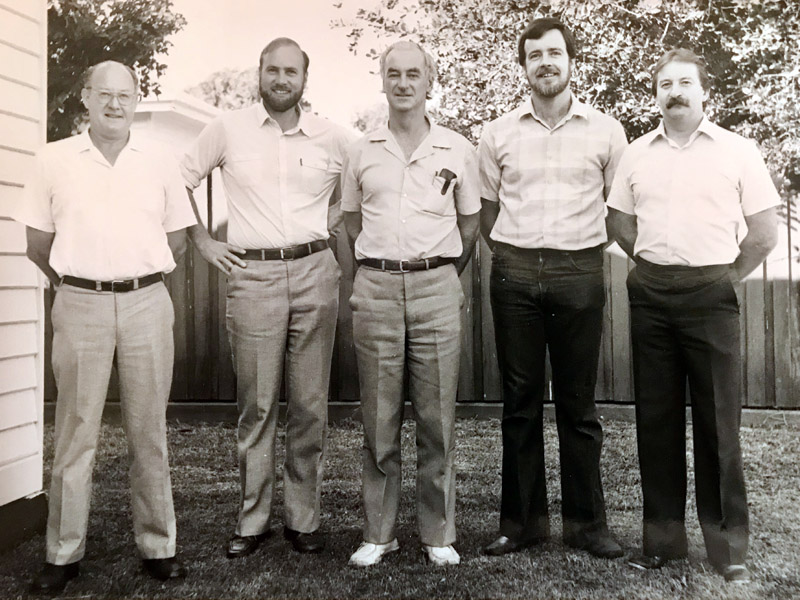
Image: Yarram CFL Regional Management Team (RMT). (L to R) Robert (Bob) Niggl – Operations, Ian Leversha – Resource Conservation, William (Bill) Edgar – Regional Manager, Ken King – Public Land Management, Ralph Hubbert – Services. Source: Bill Edgar c 1985
Photograph taken in 1978 – Reunion of Erica District Foresters : l to r – John Youl (1928-1934), Charles Elsey (1936-1942), Arch Shillinglaw (1934-1936), William (Bill) Edgar (1958-1962), Hugh Brown (1969-1971), Max Boucher (1966-1969), Ray Baker (1975-1983), Brian Williams (1958), Noel Birch (1971-1975), Alan Threader (1953-1958), Stan Duncan (1962-1966), Jim McKinty (1949-1951) – Not Present: Leslie Strahan (1924-1928), Henry Irvine (1942-1949), Jack Gillespie (1951-1953). Note : Don Thomson was DFO from 1983-1985
Australian foresters are lucky to no longer endure some of the older “head scratching” imperial measurements.
Hoppus Log Volume (HLV) was used around the British Empire and is still used in some countries.
Introduced in 1736 by English surveyor Edward Hoppus, it estimated the volume of a round log that would produce usable or merchantable timber after processing. This was in effect, attempting to “square” a “round” log.
Round logs were measured at the midpoint for circumference (or girth) in inches and length in feet.
Hoppus Log Volume, in cubic feet, was calculated using one quarter of the girth, which was then squared and multiplied by the length of the log, with the total then divided by 144. This method slightly underestimated the volume of the log but did away with the using the pesky π.
The combined result of “squaring” a round log, as well as allowing for the quarter girth technique, meant that Hoppus Log Volume was 27.3% less than the “true”, or round, log volume. This was intended to allow for sawn waste.
One cubic foot hoppus is a lump of wood 1 foot wide by 1 foot long and 1 foot thick.
The Forests Commission traditionally measured and reported the production of sawn timber in super feet – which was short for superficial feet. Sometimes also known as a board foot it represented a piece of sawn timber 1 foot wide by 1 foot long and 1 inch thick. There are 12 inches in a foot, so one cubic foot equalled 12 super feet.
Round logs were measured and reported by the Forests Commission in Super Feet Hoppus Log Volume.
Confused… so were most people… but from 1 July 1974 all logs and sawn produce were thankfully measured in cubic metres (true volume).
However, in the United States and Canada, buying and selling logs as well as standing trees is still based on board feet.
There are also over 95 log scaling rules bearing about 185 names. However, only three, Doyle’s, Scribner, and International, are widely recognised and in current use, but they can vary across the country.
Fred Neumann measuring logs on Connors Plain north of Licola. Photo: Gregor Wallace – 1959.
Decimal currency was spectacularly introduced in an overnight overthrow on 14 February 1966, but it took another 8 years before metrication finally arrived in the forest and timber industry.
Eventually, the measurement of logs and sawn timber changed from imperial, and excruciating, measures such as super feet of sawn timber, billets and cunits (100 cubic feet) of stacked pulpwood and hoppus log volumes to simpler cubic metres.
Measuring firewood was a particular nightmare. For example, there were standard chords, stove cords, kitchen cords, running cords, face cords, thrown chords, fencing cords, country cords, long cords, raummeter or steres (1m x 1m x 1m).
A standard cord of firewood had a volume of 128 cubic feet, measured as a pile 8 feet long, 4 feet high and 4 feet wide (3.624 m3).
And how about this for confusing…. in Victoria, an imperial or long ton (by measure) of green firewood was a stack 5 feet long billets (2 axelengths at 2′ 6″ each), one axelength high (2′ 6″) and two axelengths long (5 feet) equalling 62.5 cubic feet.
For added befuddlement, there were three different sorts of tons: Imperial tons or long tons, American short tons and metric tonnes (spelled with two n’s). Not forgetting that a cubic imperial ton of firewood (40 cubic feet) which equalled 1.133 cubic metre.
But wait for it… a few redundant and old imperial measures still existed like a “faggot” for a bundle of firewood sticks 3 feet in length and 2 feet in circumference but not surprisingly the term wasn’t in common usage.
The metrication process began in 1974 and was completed by 1976 but the transition was not without its challenges along the supply chain for foresters, overseers, logging contractors, sawmillers, hardware stores and builders alike.
Timber lengths changed from feet to metres but were still sold in multiples of one foot or 0.3 m (1.8, 2.1, 2.4, 2.7 etc) whereas a menacing lump of 4-Bee-2 transformed into a rather less colourful 100mm by 50mm.
Measurement and calculations of area also became so much easier in hectares rather than complicated acres, roods and perches.
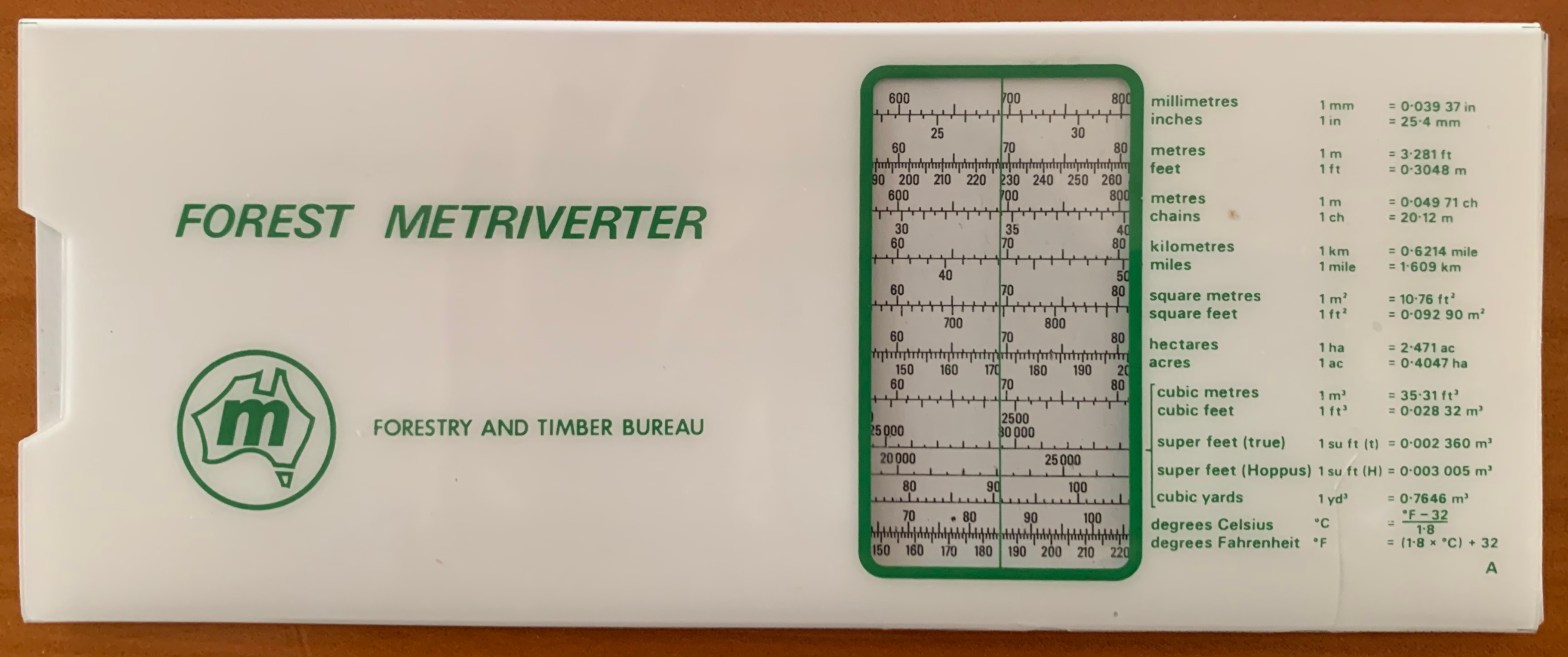
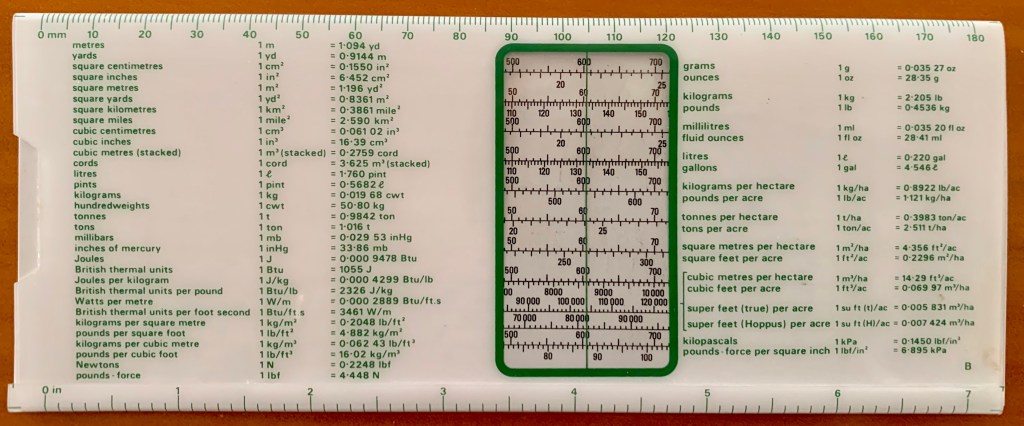
The Forest Metriverter slide-rule was issued by the Forestry and Timber Bureau to make metric conversions easier.
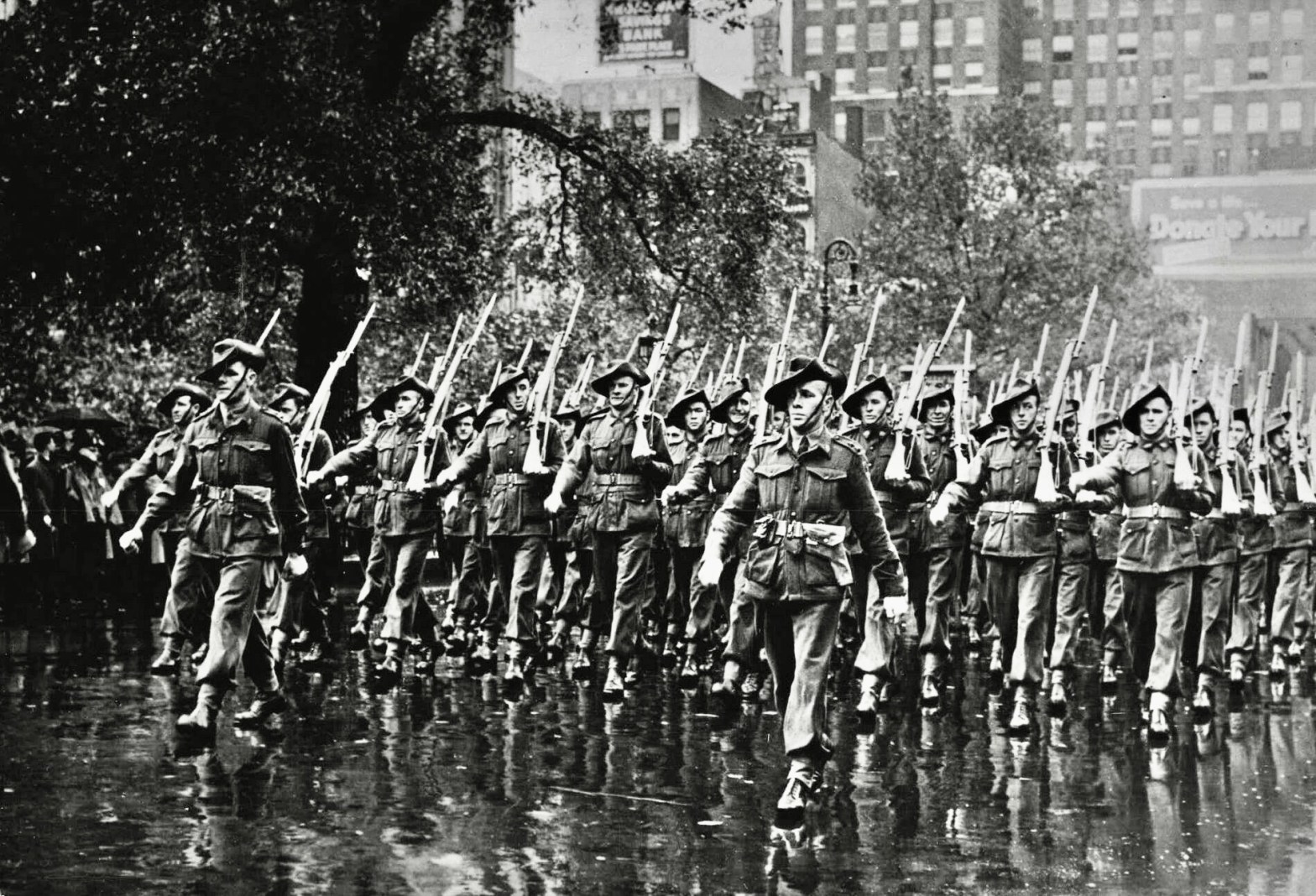
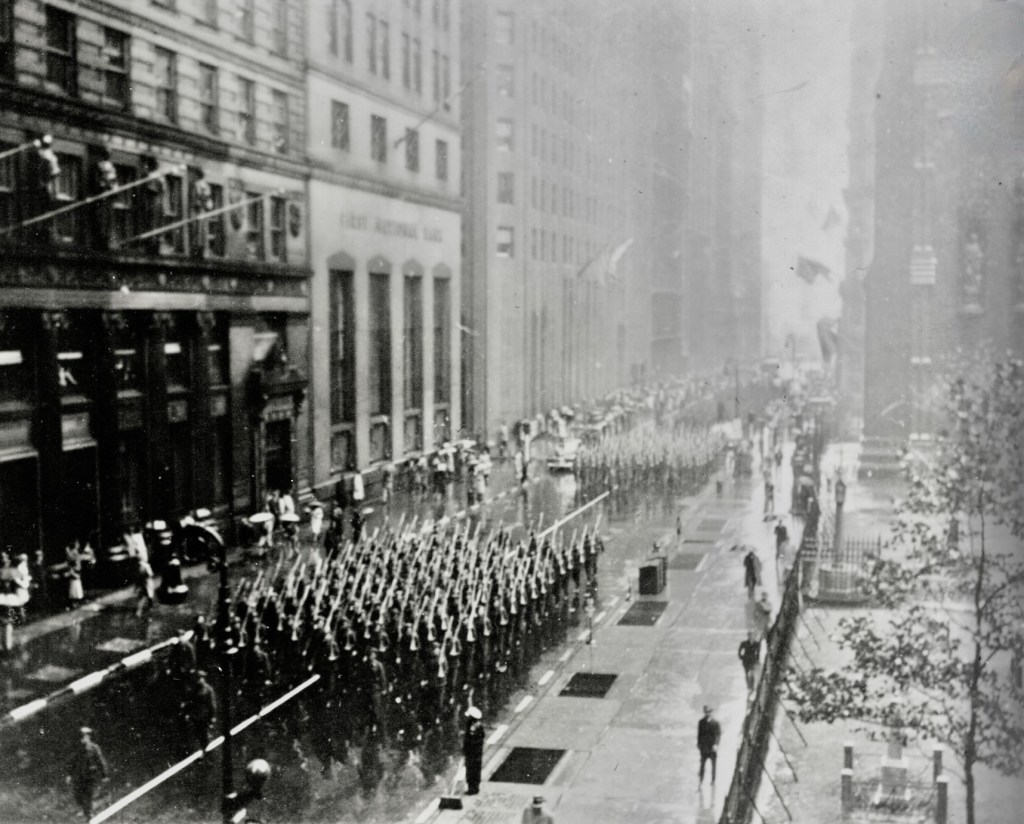
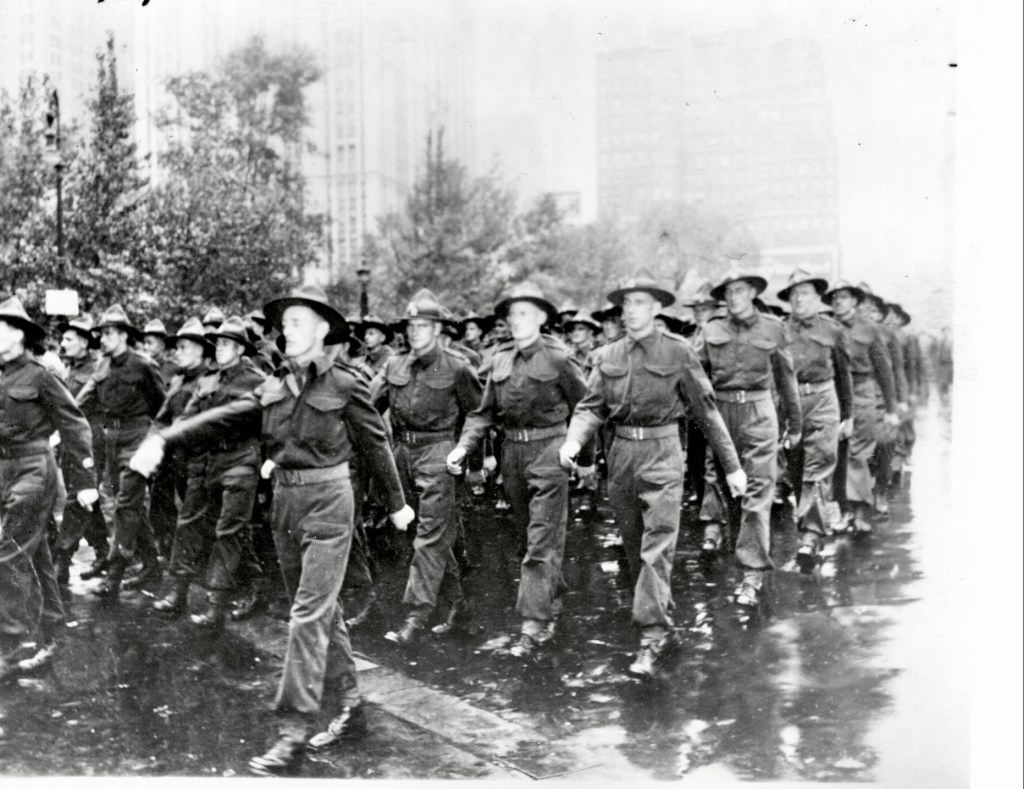
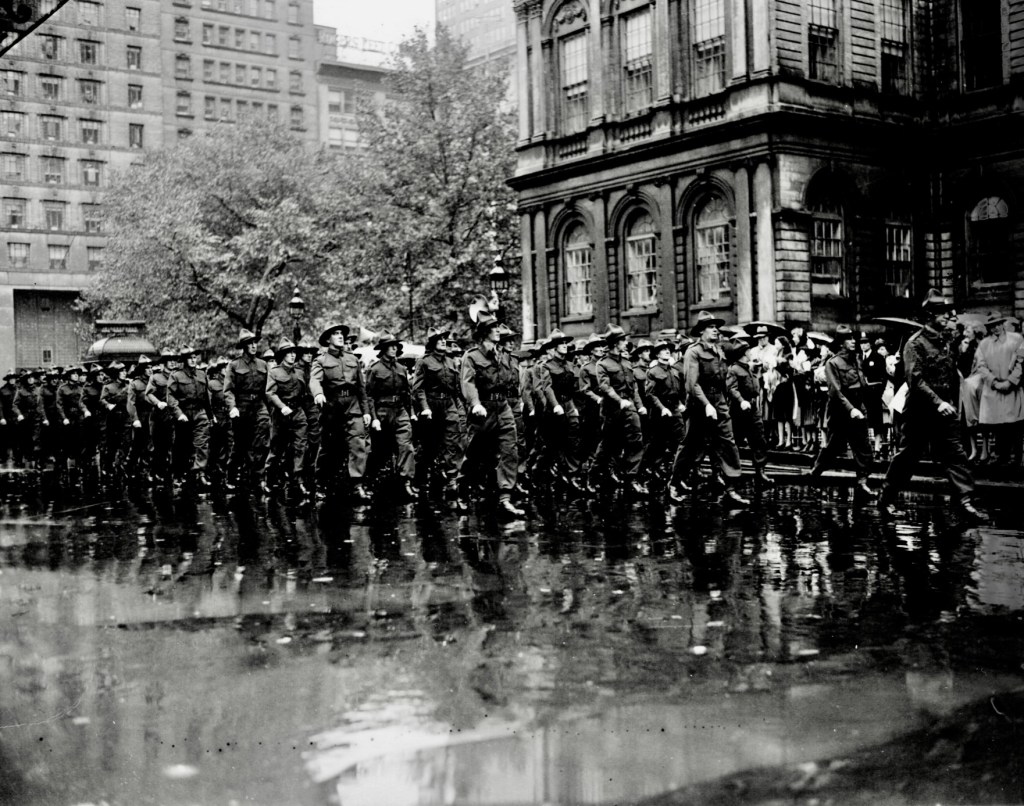
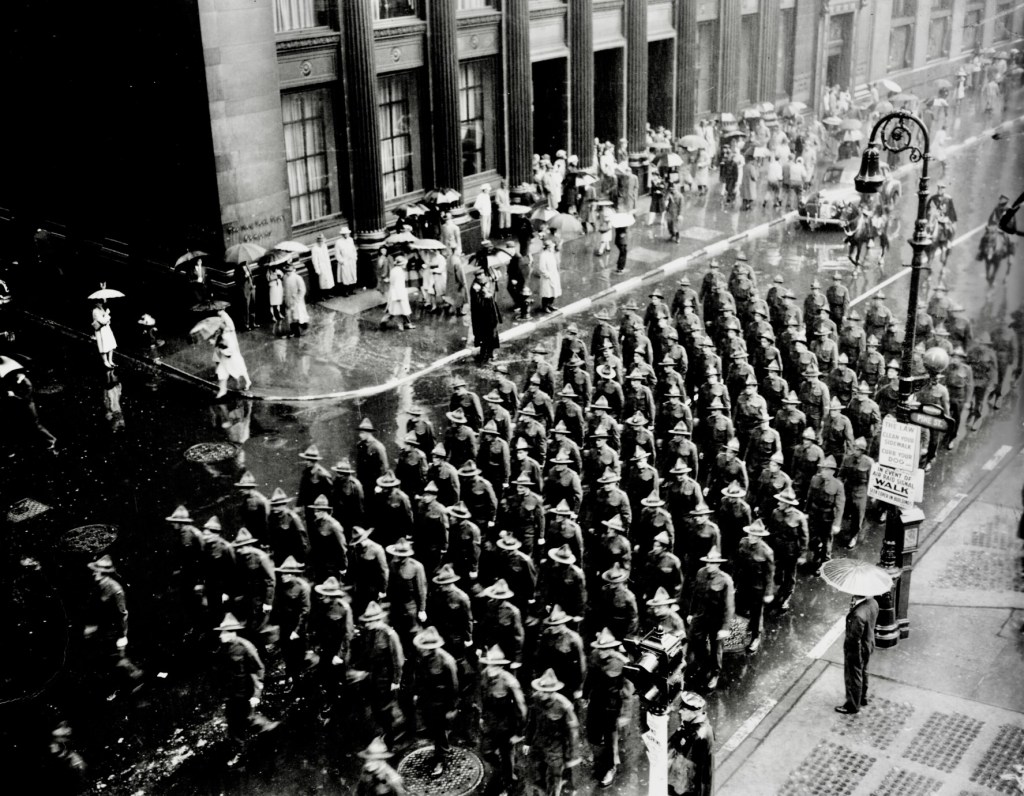
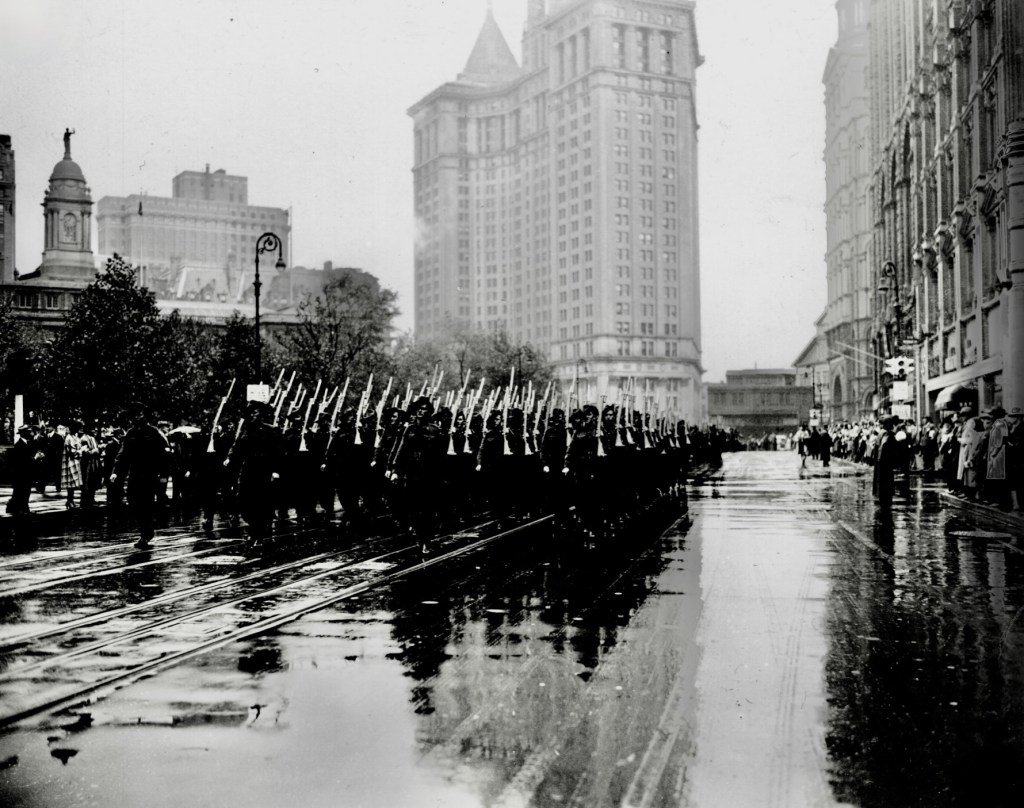
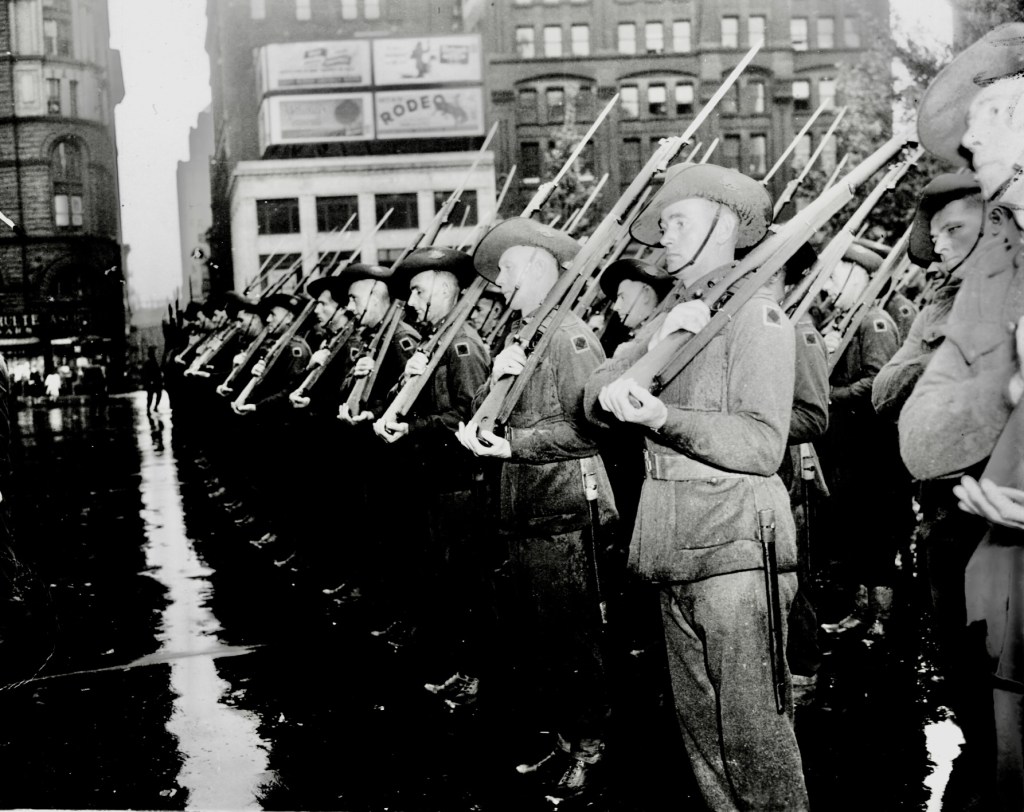
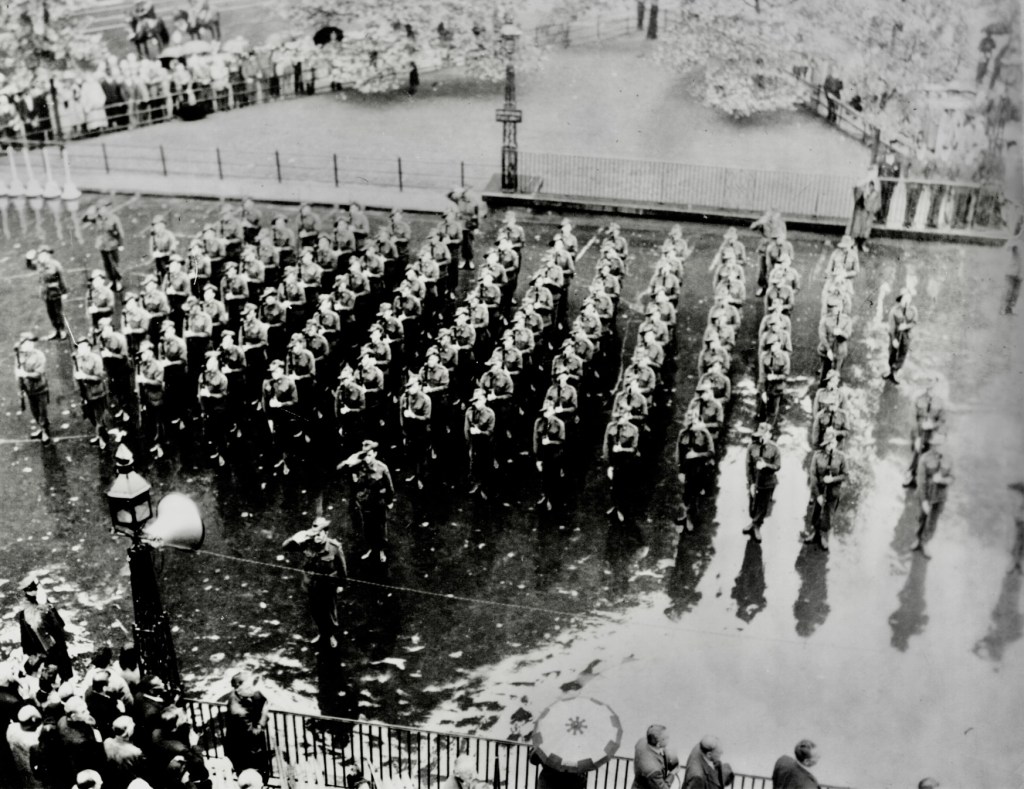
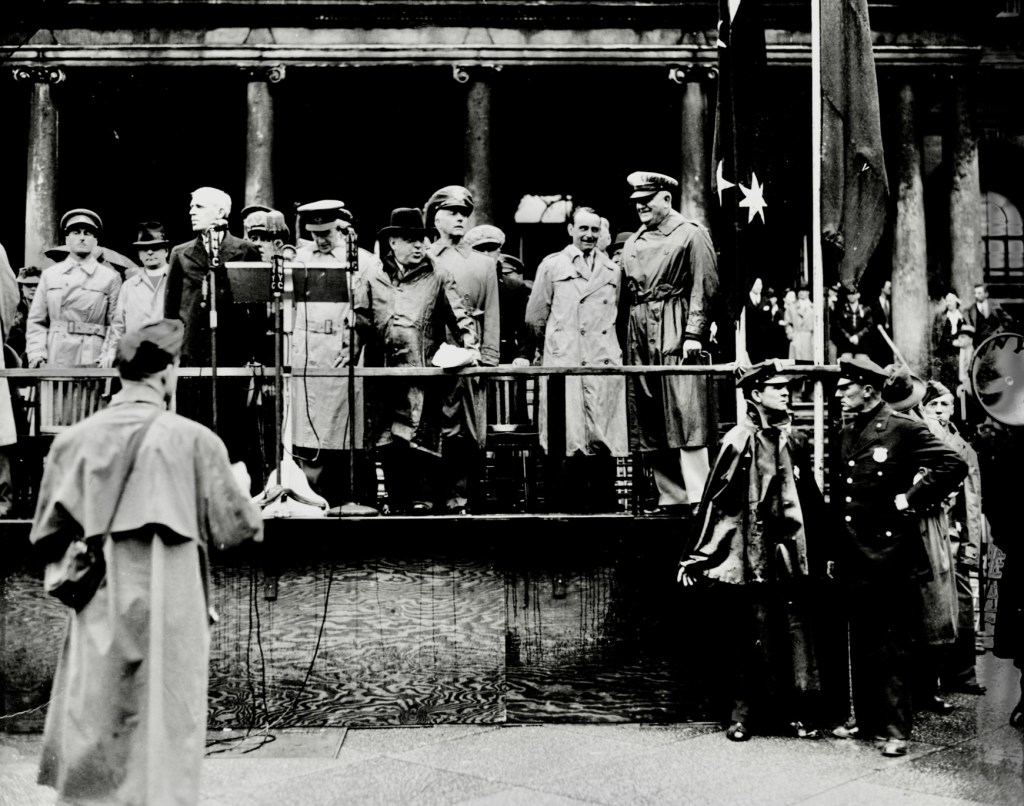
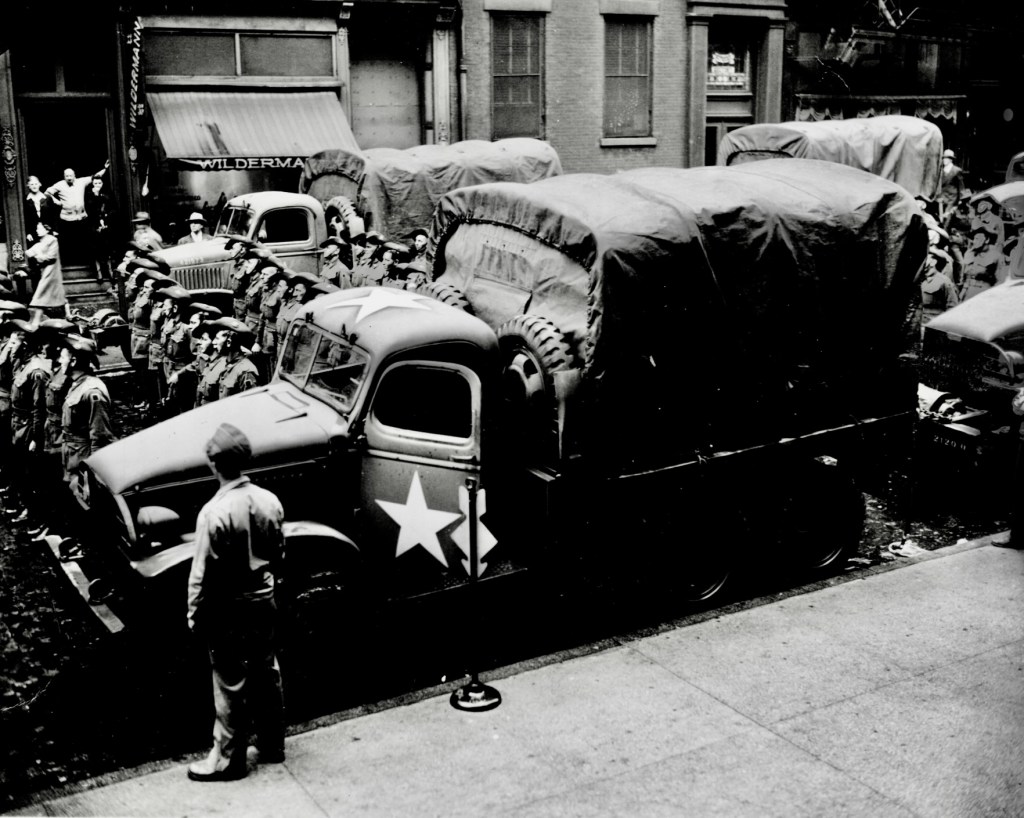
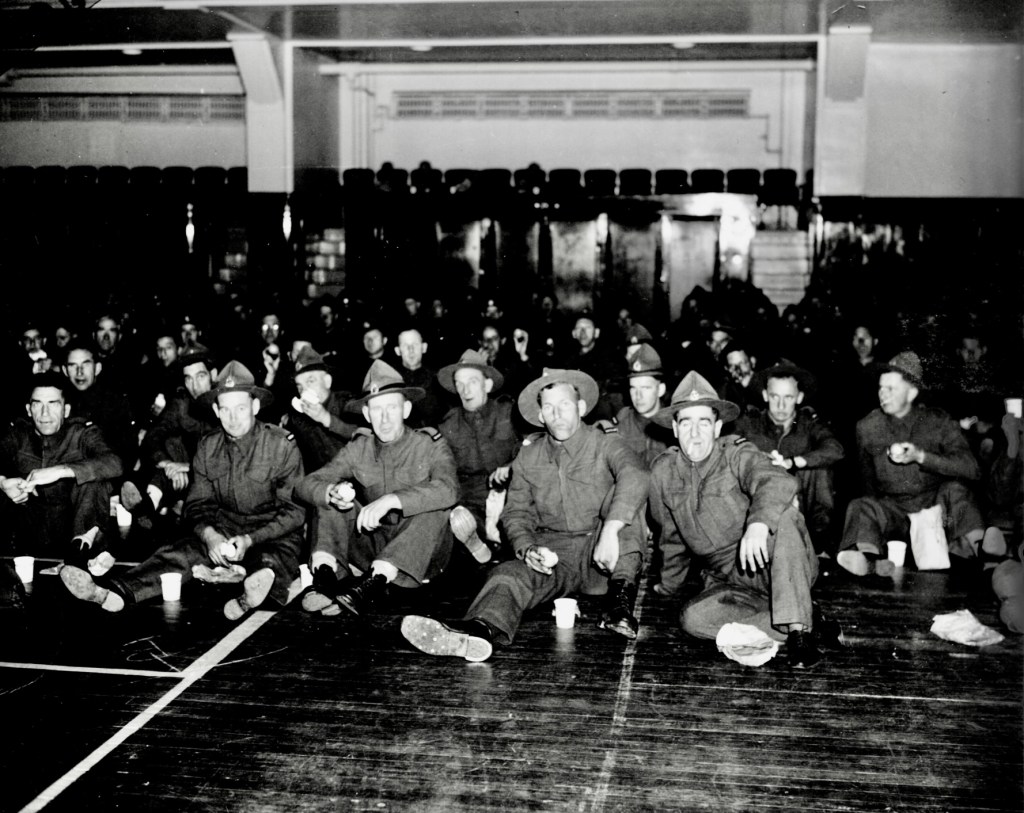
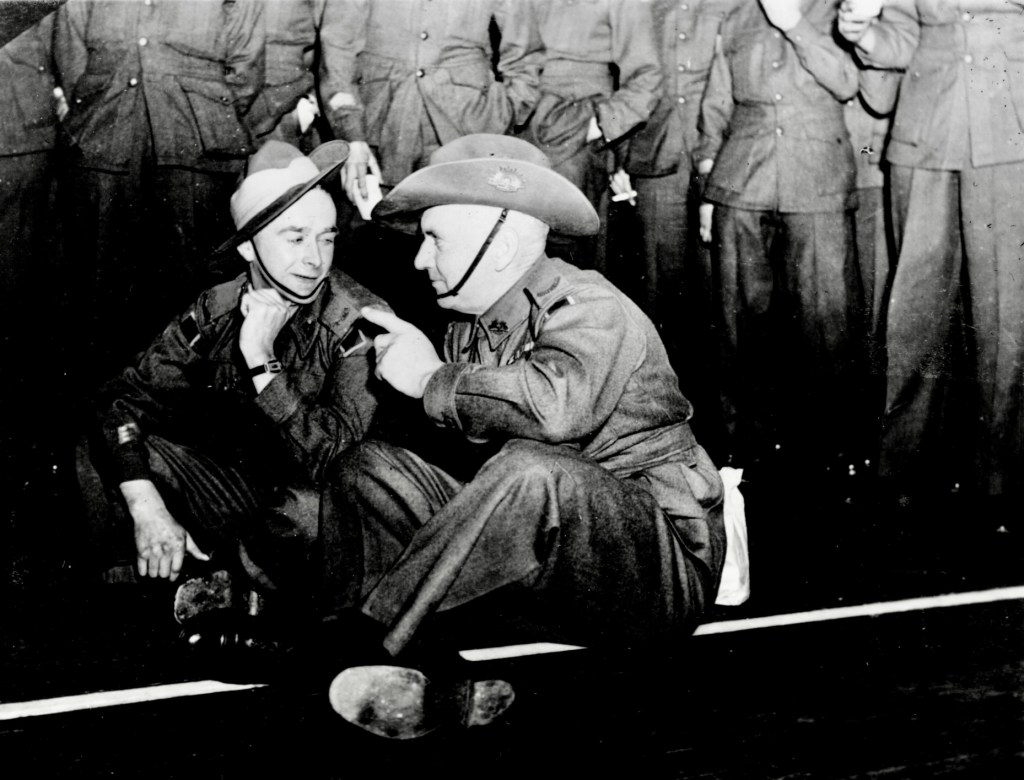
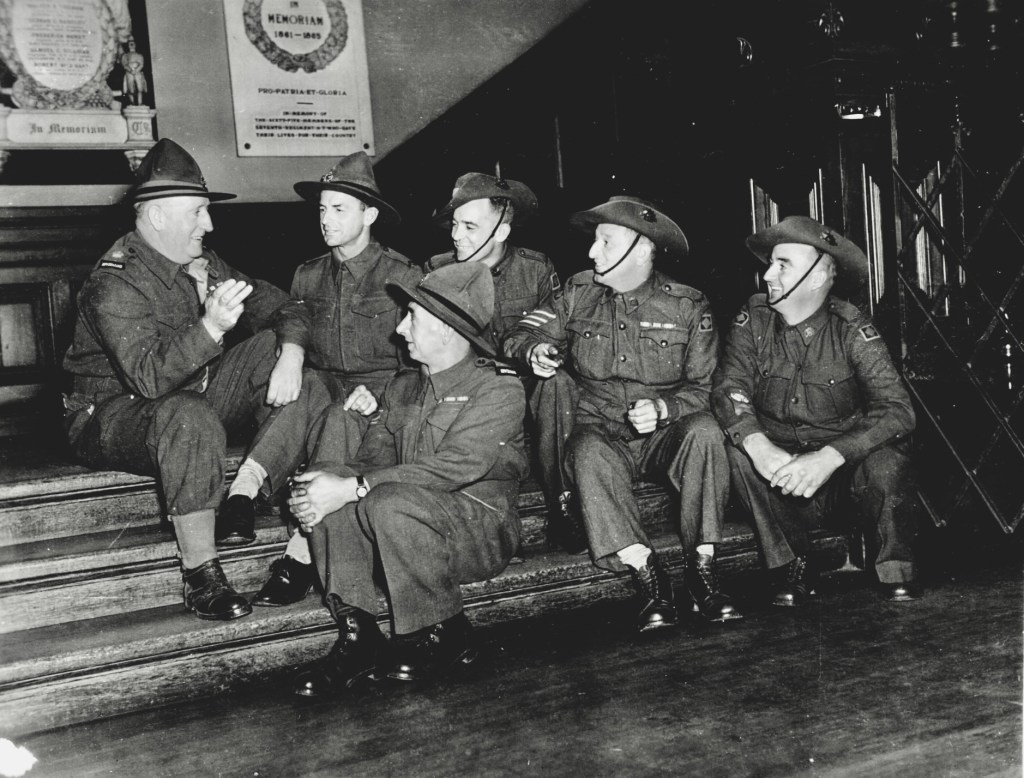
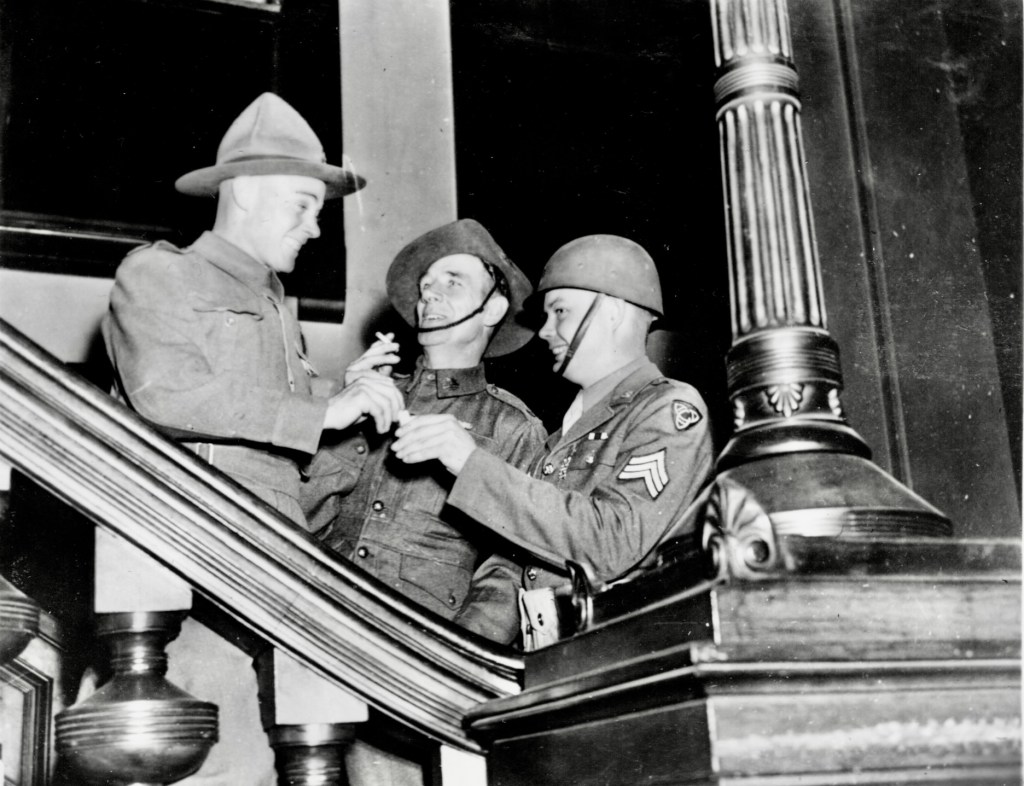
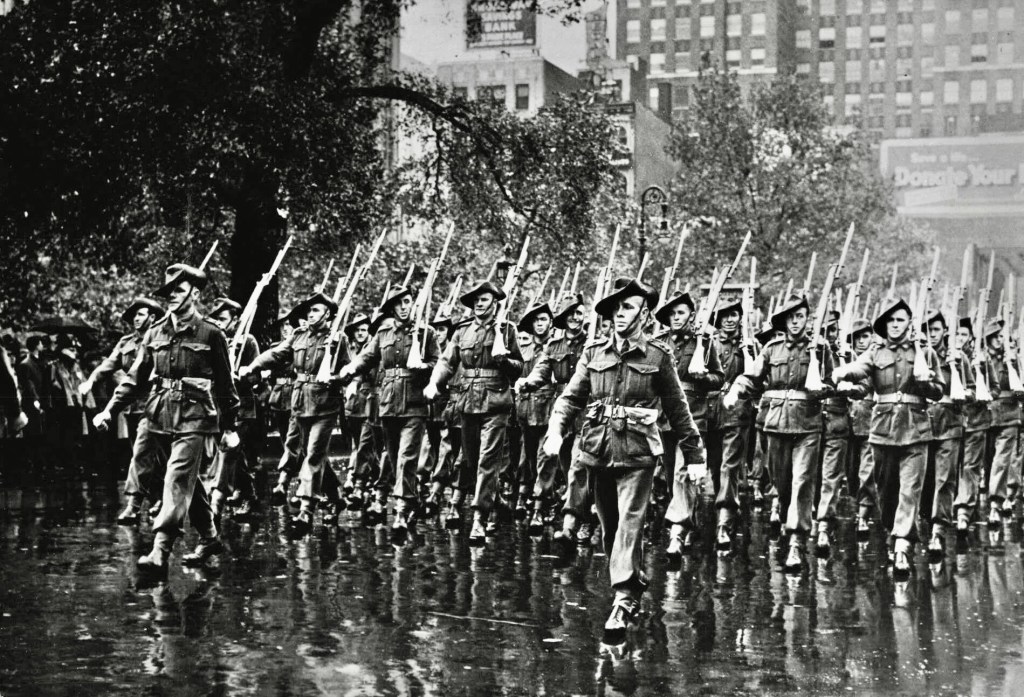
On Friday 1 October 1943, in the pouring rain, six hundred Australian and New Zealand forestry troops, en-route from England to their home countries, were given the unique honour of marching in a ticker-tape parade, with fixed bayonets down Broadway in New York.
It’s said to be the only occasion that armed foreign troops had marched through an American city since Independence.
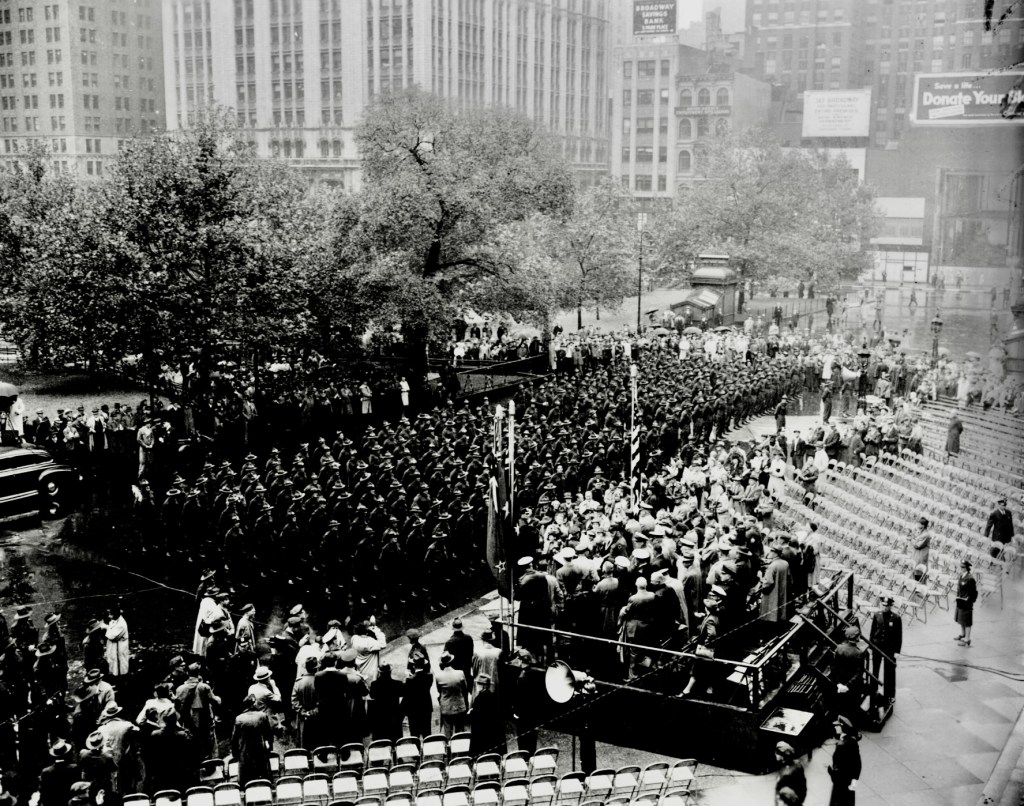
They were officially welcomed by Mayor Fiorello H. La Guardia at City Hall, New York City. Speaking to the many female onlookers, La Guardia pronounced them “as manly a group as he’d ever seen”.
Mayor La Guardia asked the men to convey to the people of Australia and New Zealand the city’s assurance of cooperation in the war effort.
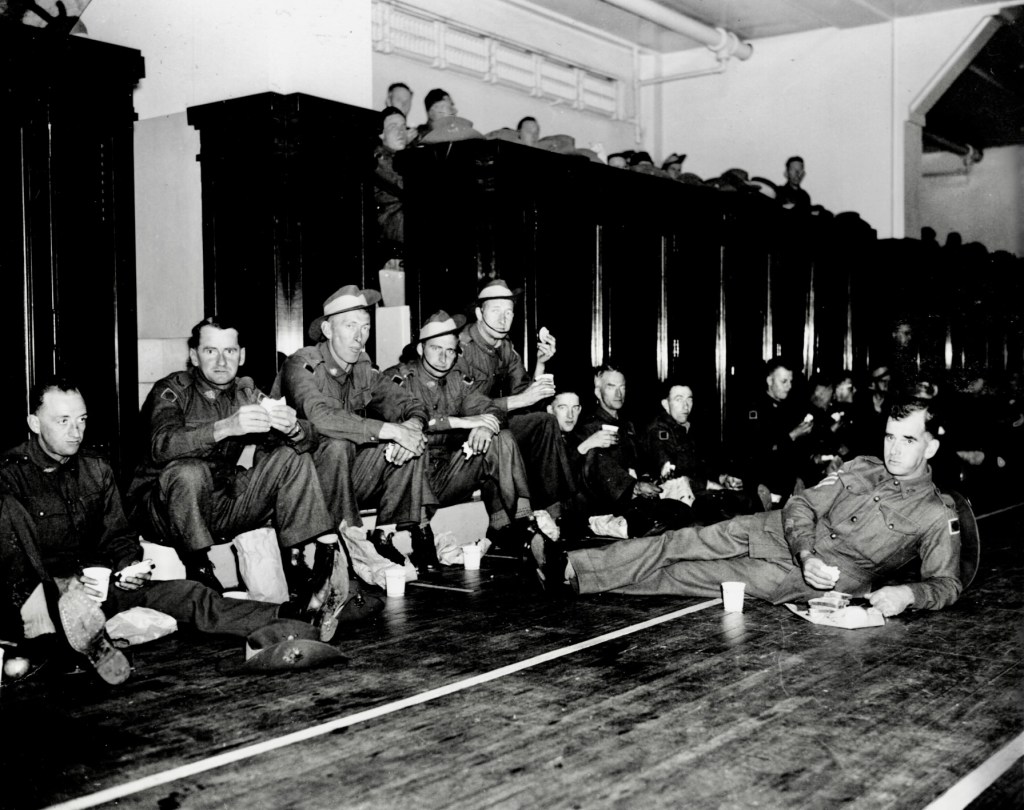
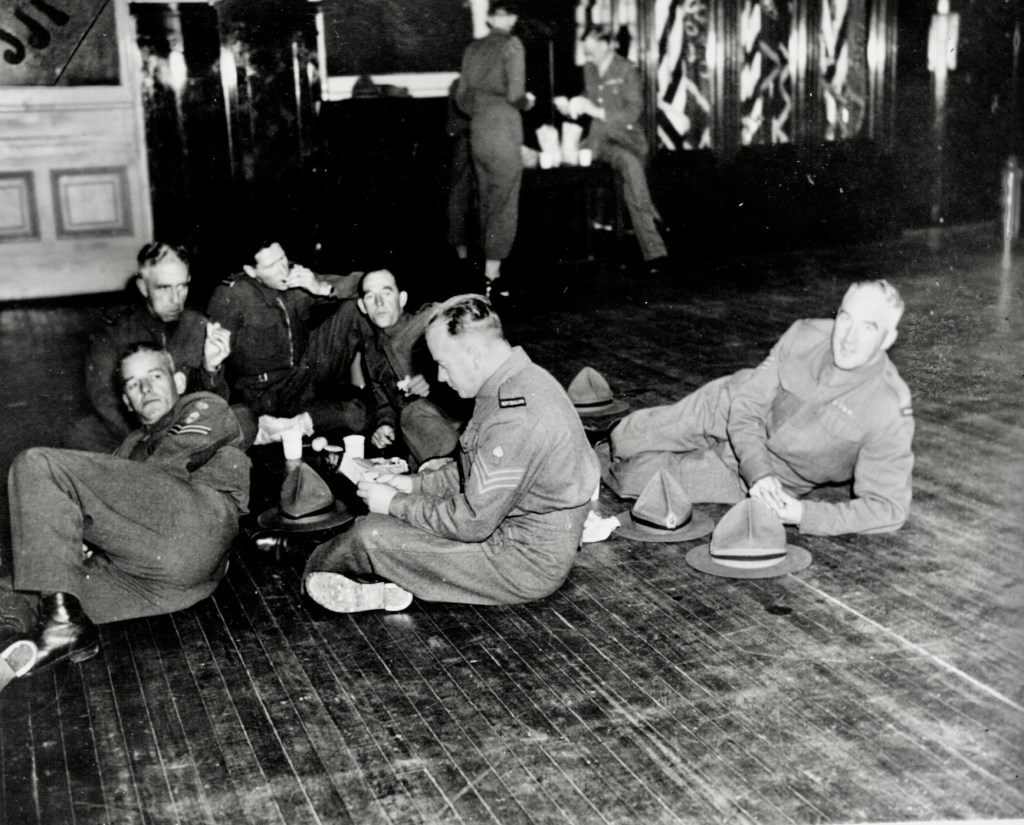
After the reception, the soldiers were taken on a shopping and sightseeing trip that took in the Yankee Stadium in New York City where they saw a NY Yankees Versus Chicago White Sox baseball game. Then a reception held at the historic 7th Regiment Armory, also in New York City.
The Australian contingent was the “Australian Forestry Group” an element of the Second Australian Imperial Force raised for forestry duties. Its constituent units were established in 1940 and 1941 in response to a request from the British Government for foresters to work in France. After the fall of France, the three Australian forestry companies were sent to the United Kingdom. The group headquarters was raised in July 1941. The foresters worked in northern England and Scotland and had a secondary military role.
The Australian Forestry Group returned to Australia via the United States in 1943, and its three companies later served in the Northern Territory and New Guinea.
LTCOL Cyril Richard Cole was the Commander of the ANZAC’s, others on the reviewing stand are; BRIG GEN Troup Miller the US Army, Inspector General of the Eastern Defence Command – Sir Godfrey Haggard, British Consul – GEN Sir Owen Dickson Australian Minister to the US – GEN V.A. Sturdee, Chief of the Australian Military Mission at Washington the US Capital – Mayor Fiorello H. La Guardia of New York City and BRIG GEN Ralph K. Robertson of the US Army.Marching in the front row is Lt John (Jack) Godfrey Saxton from an innovative Victorian sawmilling family, who had survived the 1939 bushfires by sheltering in a dugout at Tanjil Bren. Source: AWM
Prior to the formation of the Alpine Resorts Commission (ARC) in 1983, Victoria’s snowfields were managed by a conglomerate of competing government agencies including the Victorian Railways, National Parks Service, Lands Department, State Electricity Commission and the Forests Commission Victoria.
The Forests Commission first developed a substantial interest in the development of Mt Buller as a major ski field from the early 1940s. The challenge of establishing roads, communications, water and sewerage, accommodation and other services in a remote location was well suited to its experience and skills. The road to the Mt Stirling ski fields was built by the FCV in the 1940s.
Downhill skiing at Mt Baw Baw and snow play as well as cross country skiing at Mt Donna Buang, Mt Erica, Mt Stirling, Mt Wills and Lake Mountain near Marysville were also administered directly by the Commission, or through their Committees of Management.
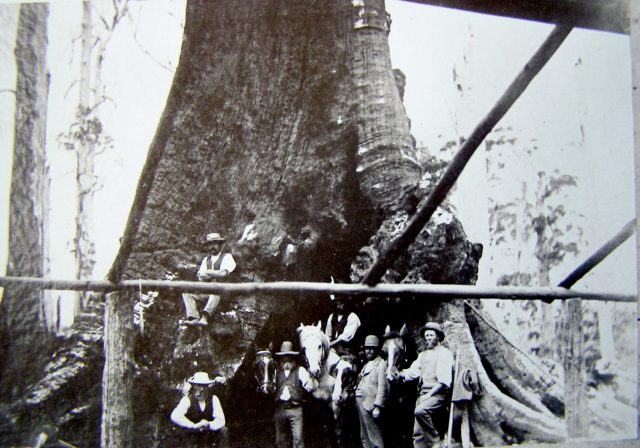
Most of the large and significant trees in Victoria were found in the mountain ash forests of the Otways, Strzelecki Ranges and the Central Highlands.
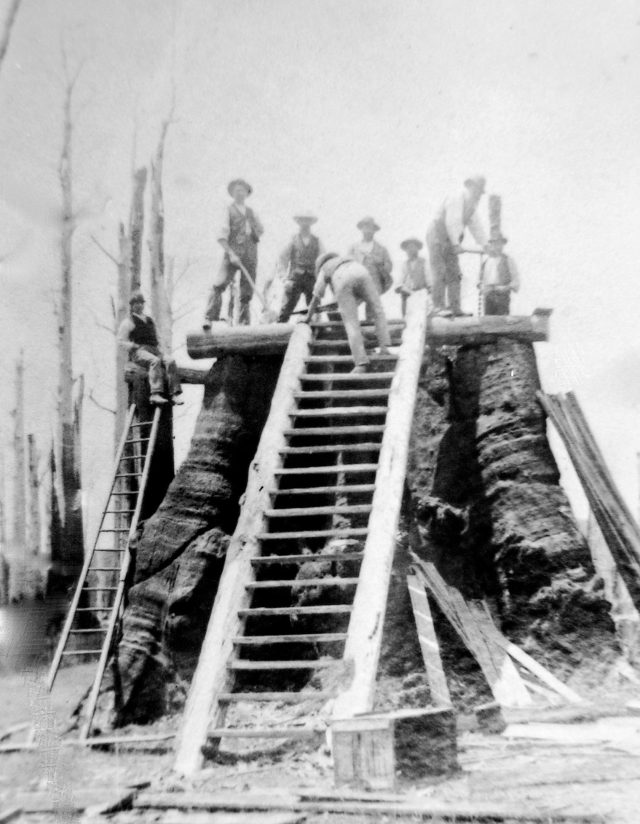
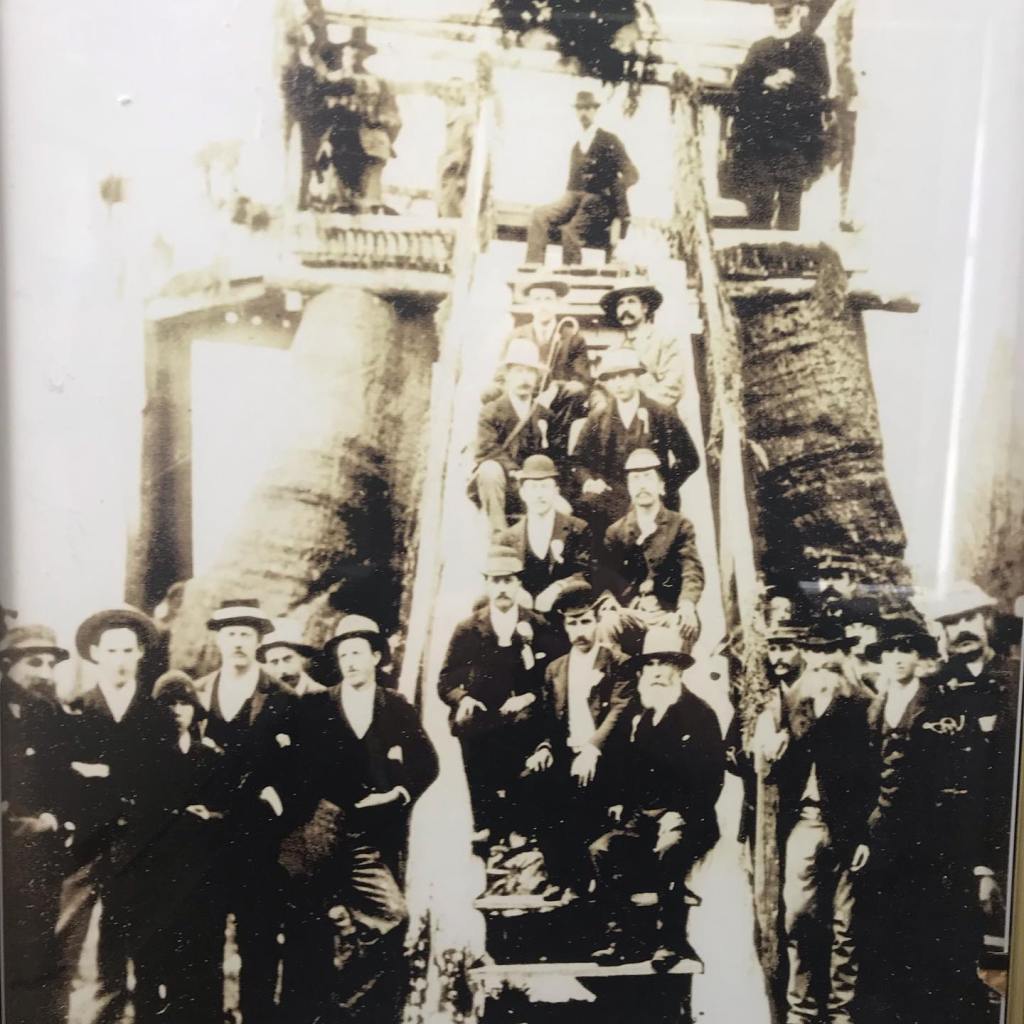
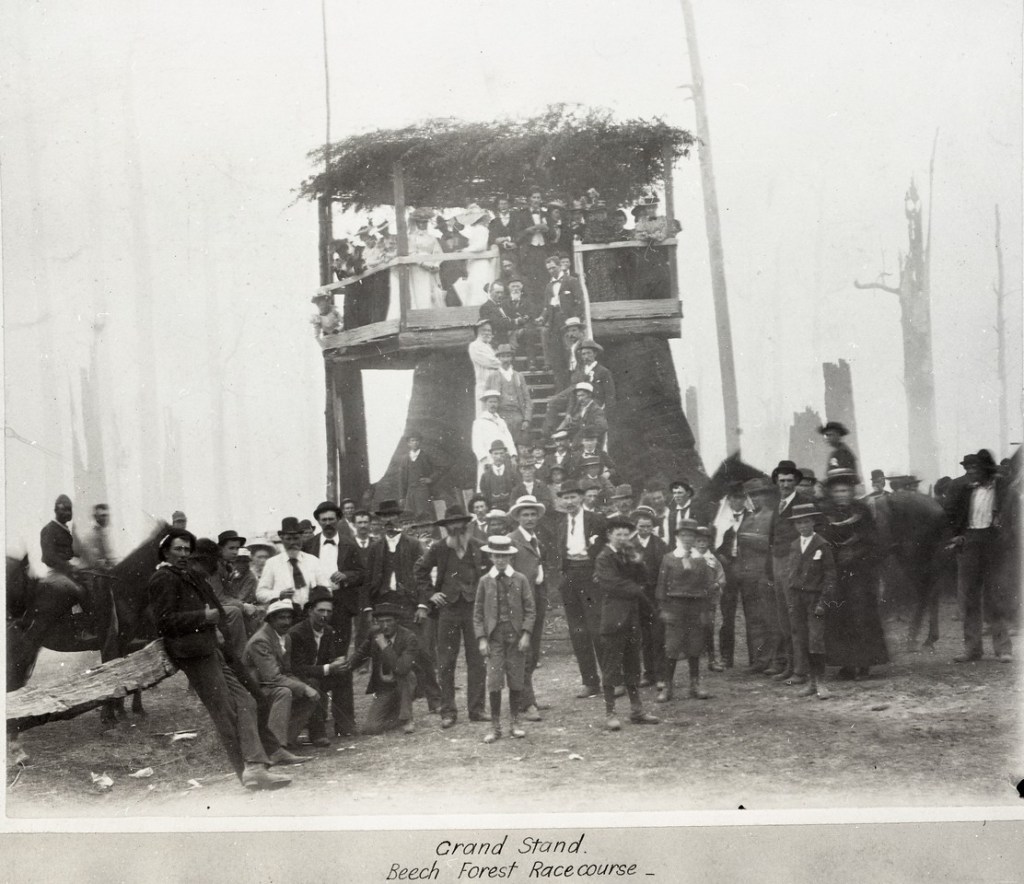
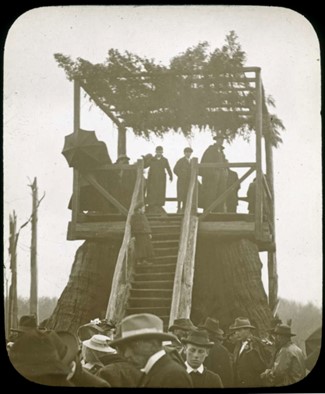
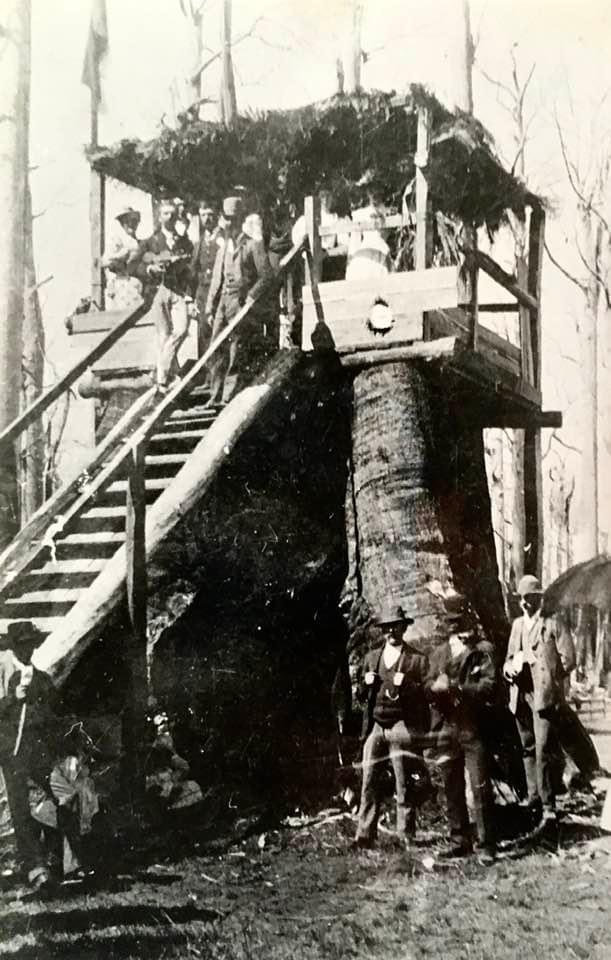
This enormous tree stump was converted into a Grandstand at the Beech Forest turf club in the Otways for their first race meeting in Easter 1893.
The Melbourne Cup had been introduced earlier in 1861 by the Victorian Turf Club.
The racecourse was set out on fairly flat land at Ditchley Park (not far from the existing football oval). There was a railway siding for spectators to alight from Colac and the steam train also pulled carriages for visiting racehorses.
Legend has it that bushfires regularly destroyed the steps, railings and roof of the stand so they were repeatedly renewed.
The Grandstand under construction. Source: SLVThe Grandstand under construction. Source: SLVStump at Beech Forest 1893 which doubled as a grandstand. Photo: SLVAnnual Beech Forest race meeting 1904, Photo: Victorian School of Forestry, Creswick Campus Historical Collection https://omeka.cloud.unimelb.edu.au/cchc/items/show/5146Flynn, John. (1912). People gathered on and around a platform built over a large tree stump. Link to other photos of the same stump. https://nla.gov.au/nla.obj-142375657/viewThe Colac Herald, 31 January 1893. https://trove.nla.gov.au/newspaper/article/87655162
I bet we don’t even give them a second thought as we slurp on the quickly melting Chocolate Paddle-Pop dribbling down our fingers while luxuriating at the beach in the sunshine.
But Australia was once a major producer and exporter of the humble ice cream stick.
I’m aware of two plants, Beddisons at Nangwarry near Mt Gambier in South Australia which processed radiata pine. It was purchased by Carter-Holt-Harvey, but the ice cream stick plant was eventually closed about 25 years ago (I think).
There was another company called Stickmakers at Gladstone in Queensland which was established in the 1930s.
In 1995 the QLD plant made six million ice-cream sticks a day – seven million on a good day – five days a week – three shifts a day. It all adds up to 1.5 billion sticks a year. I think they also made flat dixie cone sticks.
Stickmakers employed about 65 people in its $10 million factory and converted an annual volume of 17,000 tonnes of plantation hoop pine (Araucaria cunninghamii) into sticks. The logs were first peeled into a thin veneer and the ice cream stick then punched, tumbled till smooth and then coated with a thin layer of wax.
Importantly, the stick needed to be taste free, the ice cream must adhere to its smooth surface and obviously it mustn’t have splinters, and, finally, the stick must have the strength not to break.
Stickmakers at one point was also eyeing off the export chopstick market.
But in 2013 the company went the same way has the humble redhead match made by Bryant and May. Production has moved offshore, and timber sourced from exotic places like Scandinavia and France with the sticks often made in China.
Photo: Beddisons plant at Nangwarry SA where ice cream sticks were punched from Radiata Pine. Source: National Archives
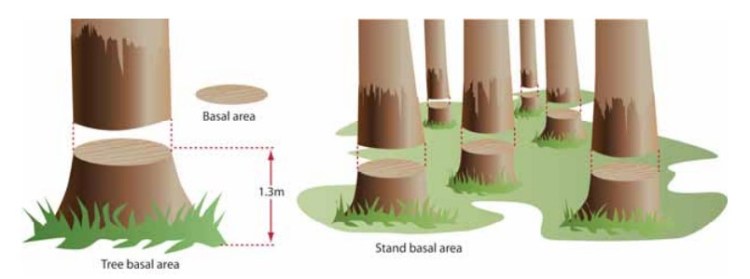
Foresters usually measure the diameter of trees at Breast Height – traditionally 4 foot, 6 inches – now 1.3 m – which is termed Diameter Breast Height Over Bark (DBHOB).
Basal Area is the cross section of the tree trunk at breast height, and the sum for the stand of trees is expressed in square metres per hectare.
Lots of skinny trees, or a few fat ones, can have the same Basal Area, but when combined with the number of stems, Basal Area is a good indicator of stand density.
Two common methods are used to measure of Basal Area – fixed area plots and angle count sampling.
Fixed area plots require setting out a small area, commonly 50 m x 20 m, and measuring all the trees at breast height, and doing some quick sums.
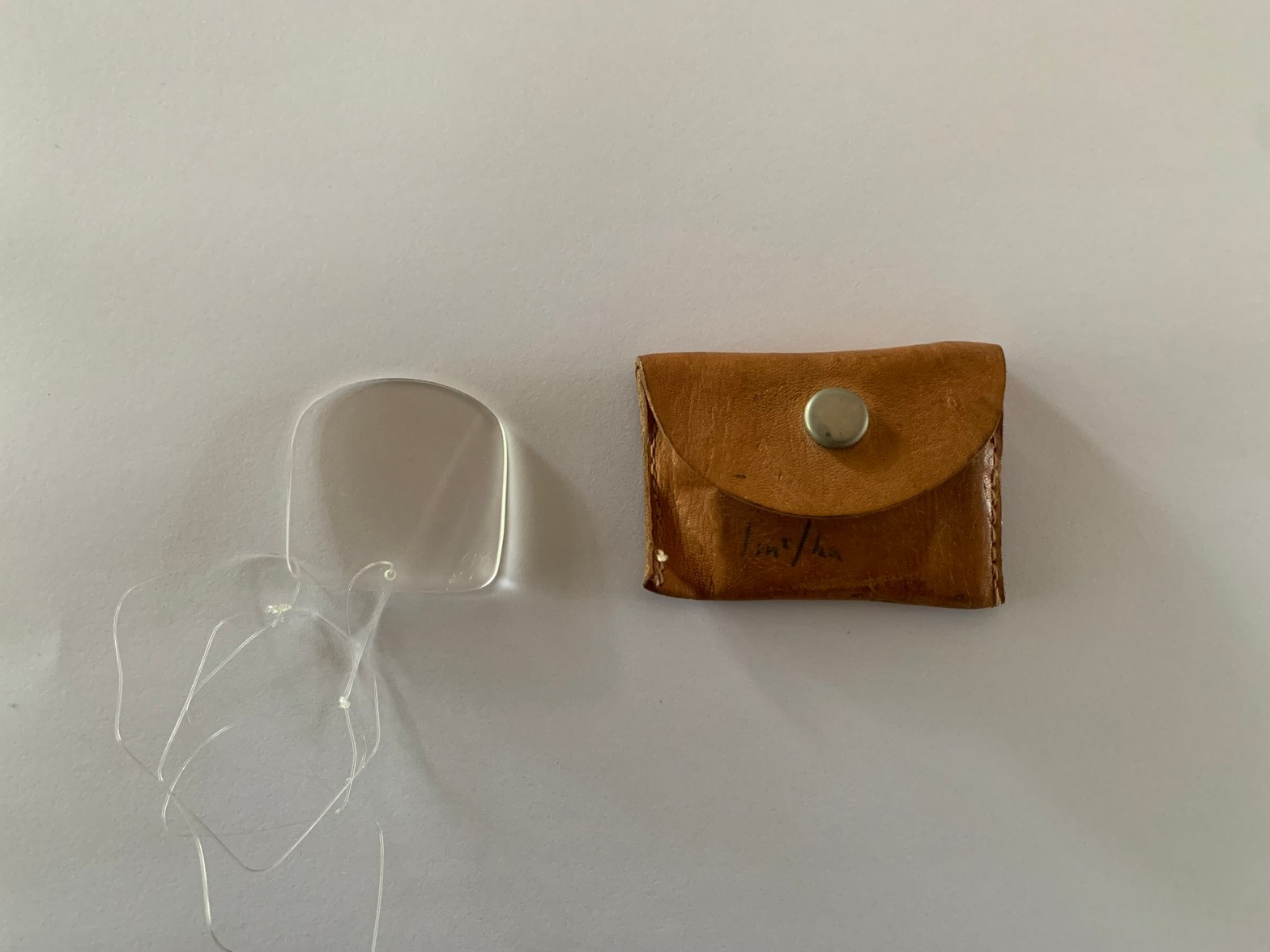
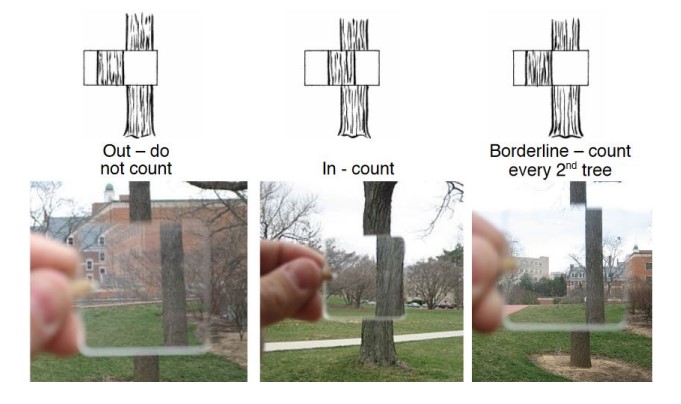
Angle count sampling involves a simple sweep of the forest from a fixed sampling point using a relascope, dendrometer sight, angle gauge, or glass wedge prism.
A glass wedge prism has a shallow angle (usually less than 3 degrees) which causes light to refract. Depending on tree size and how close you are, the vertical edge of the tree at breast height can appear separated. Standing in one spot, a sweep is made with the prism held at arm’s length, and trees are counted as either “in” or “out”. The number of trees is multiplied by conversion factor of prism (1 m2/ha in my case) to estimate basal area. It’s very quick and effective.
Basal area is commonly used during thinning operations to reduce the number of smaller or defective stems and concentrate growth on the larger and straighter trees.
A large area of 1950s mixed species regrowth (mostly silvertop and messmate) in the Boola forest, north of Traralgon, was mechanically thinned during the 1980s and ‘90s.
For the older regrowth stands it was usual to retain about 20-25 m2/ha, or at least 50% of the initial Basal Area. The thinned stems were sold to APM for pulpwood.
There are very few native softwoods in Victoria, and those that do exist, like white cypress pine (Callitris glaucophylla), grow too slowly to be suitable for large scale commercial plantations.
From its earliest days in the 1830s, Victoria imported large quantities of softwoods, mostly from north America and Scandinavia. The need for cheaper and more reliable local sources for internal work, furniture and joinery was apparent.
Early foresters quickly discovered that the physical properties of native forest hardwoods were unsuitable for some applications and plantation-grown softwoods offered the chance to replace expensive imports of Baltic Pine, Oregon and other timbers with domestic supplies.
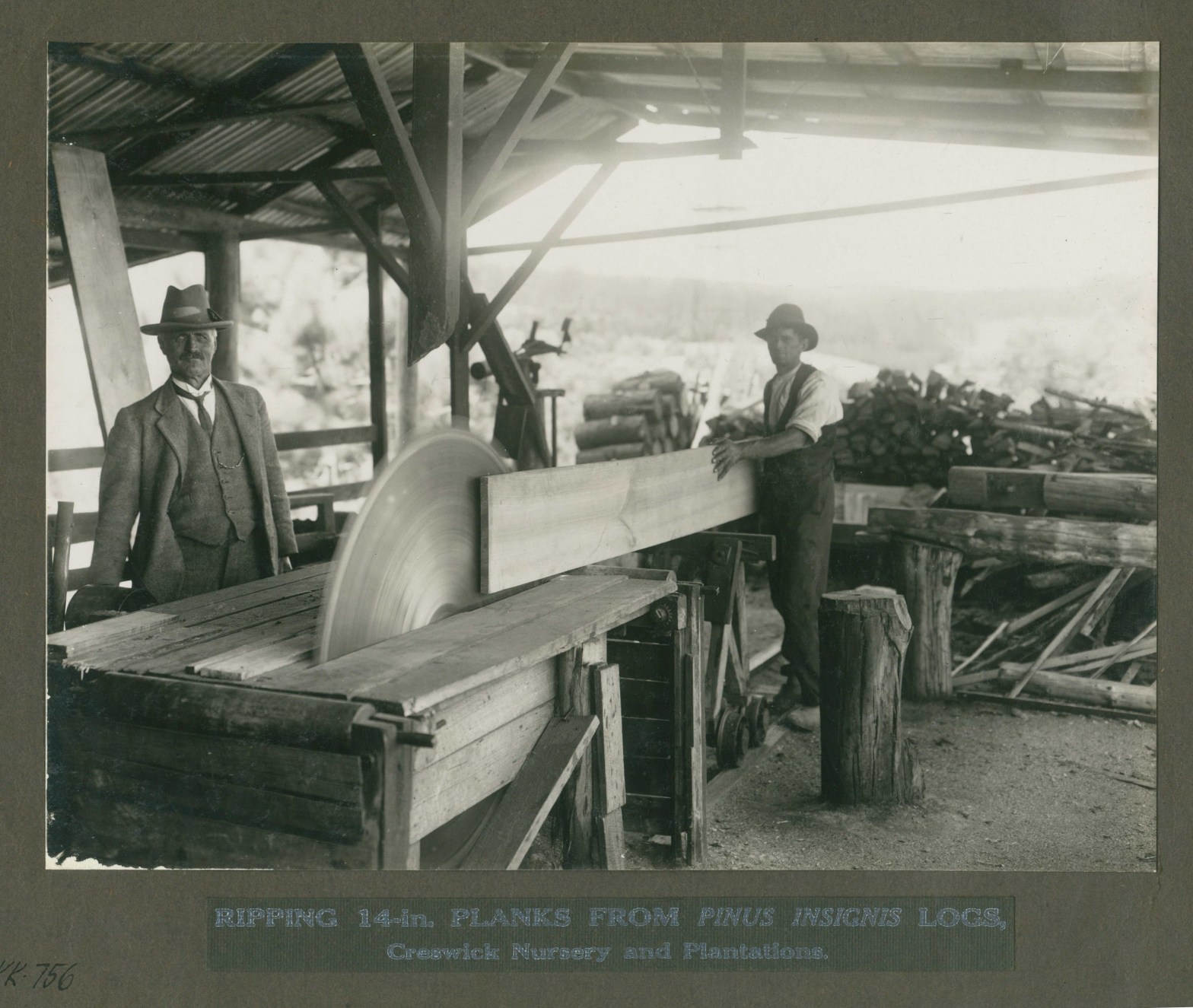
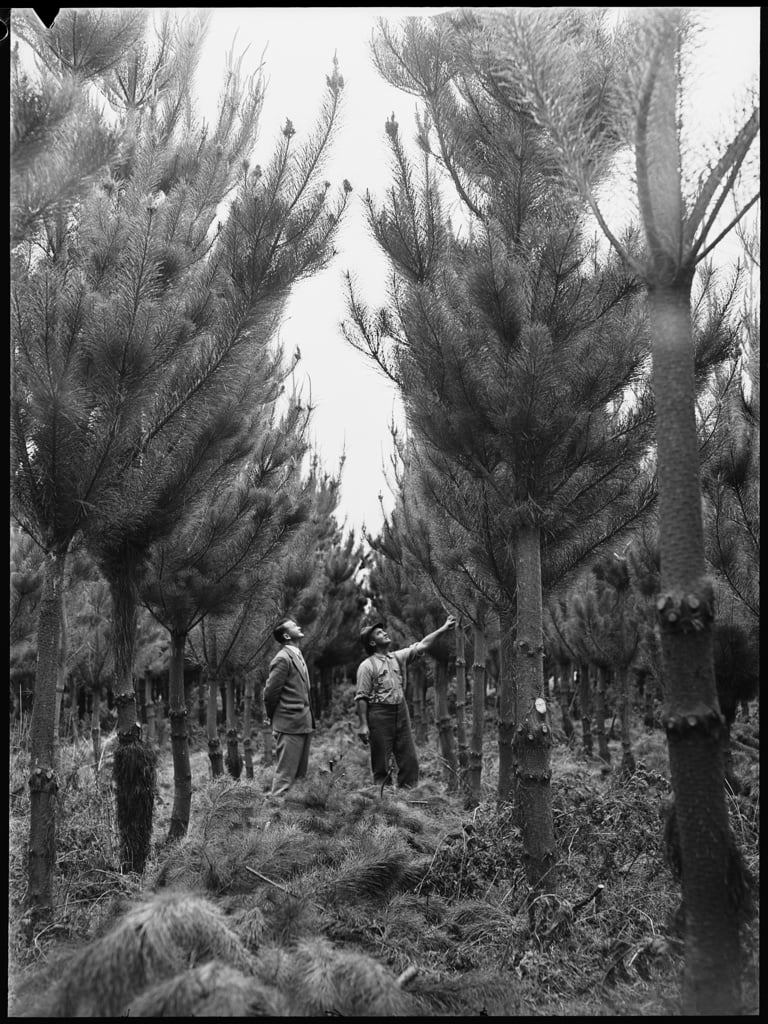
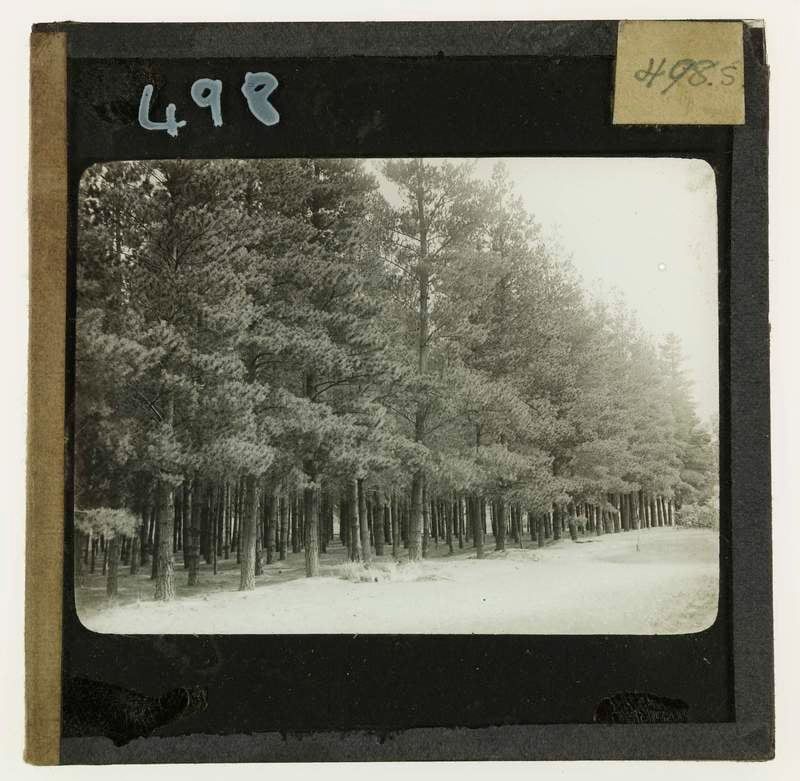
Pinus insignis (now called Pinus radiata), which is native to the central coast of California and Mexico, was first planted in gardens and windbreaks at Doncaster during the 1860s and grew well. It was sufficiently promising for commercial plantings to begin from 1887.
Initially, the planting goals were simply to rehabilitate land cleared during the gold rush, provide some timber and avoid the costs and unreliability of imported timber, generate some revenue and create jobs in local sawmills.
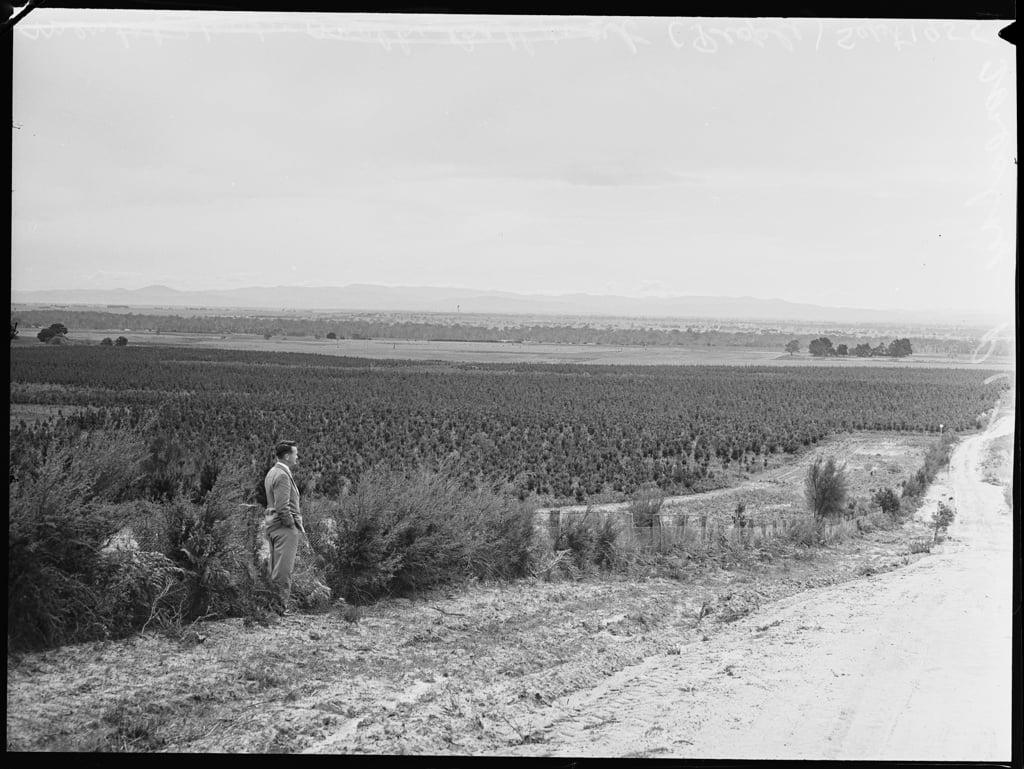
Experimental pine plantations were established under the stewardship of John Johnstone, the Victorian Superintendent of Plantations (and often overlooked founder of the forestry school at Creswick). These were at Frankston and Harcourt (1909), Wilsons Promontory (1910), Bright (1916), Port Campbell/Waarre (1919), Anglesea (1923) and Mount Difficult (1925). The largest plot was some 2,500 acres associated with the new McLeod Prison farm on French Island (1911).
However, nearly all these plantings failed due to poor soil and site conditions, but valuable silvicultural lessons were learned. The earlier success of radiata pine had partly given rise to the fallacy that it could grow anywhere.
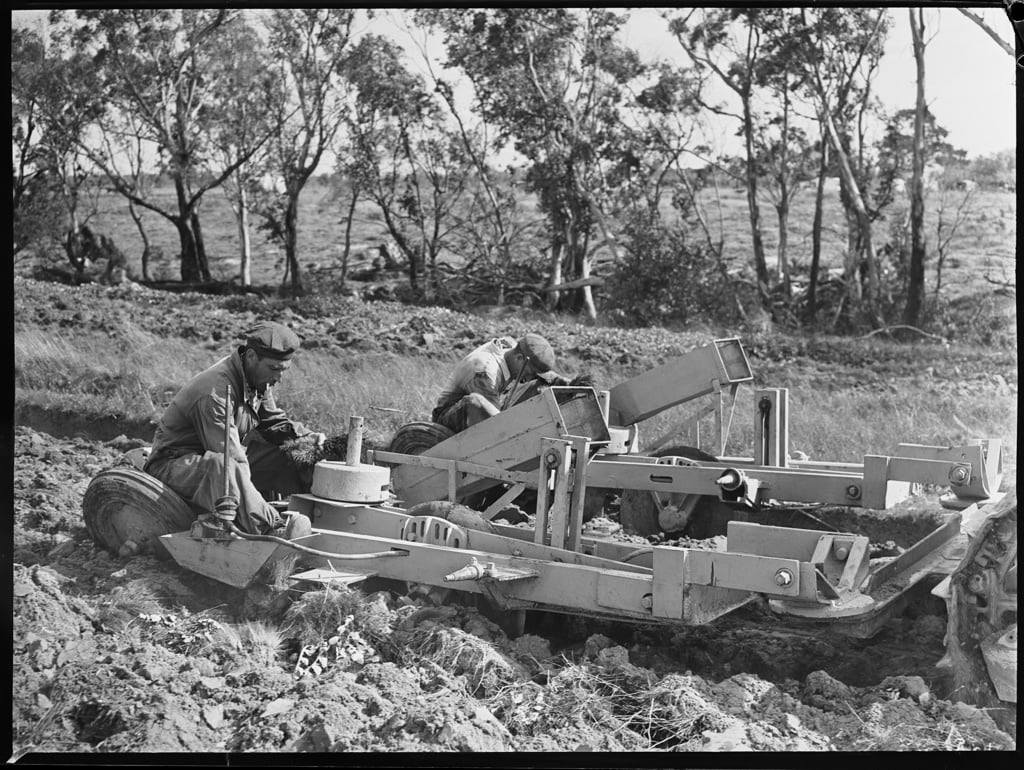
Planting activity once picked up again in the 1930s with unemployment relief schemes during the Great Depression.
The Forests Commission began the Strzelecki reforestation program in the 1930s with planting of both softwoods and hardwoods on abandoned farmland of the “Heartbreak Hills”.
APM Forests (APMF) was formed in 1951 with the primary aim of supplying pulpwood to the Maryvale Mill in the LaTrobe Valley through the establishment of plantations and co-ordination of harvesting and transport. The company also invested heavily in plantations in the Strzelecki’s under the stewardship of Norwegian forester Bjarn Dahl.
In 1949, the Commonwealth Forestry and Timber Bureau proposed a national planting program to make Australia more self-reliant in timber after the shortages experienced during the second world war.
But the big leap for Victoria came in 1961, when the Chairman of the Forests Commission, Alf Lawrence, attended the World Forestry Conference in São Paulo Brazil, and upon his return took a bold decision to commit to a massive plantation expansion program which initiated nearly four decades of plantation establishment.
The Commission decision created a new wave of momentum and private investment optimism. The plantation area eventually reached a threshold where manufacturers could confidently establish major processing plants.
In 1964, the newly formed Australian Forestry Council (AFC) set a national estate target of 1.2 million ha by lifting the average annual planting rate from 16,000 ha to 28,000 ha and maintaining that level until 2000.
The Commonwealth agreed to provide loan funds to the States to plant more trees and Victoria took up the challenge by establishing and maintaining its plantations at nearly half the average cost of the other states.
Over time the Commission identified eight major plantation zones at Benalla/Mansfield, Central, Ovens, Upper Murray, Latrobe, Portland/Rennick, Ballarat and the Otways.
Planting in Victoria peaked in 1969 with a record 5,183 ha.
By the end of 1982, when the amalgamated Department of Conservation, Forests and Lands (CFL) was formed, the Forests Commission had established 87,000 hectares of softwood plantations, a five-fold increase since 1940.
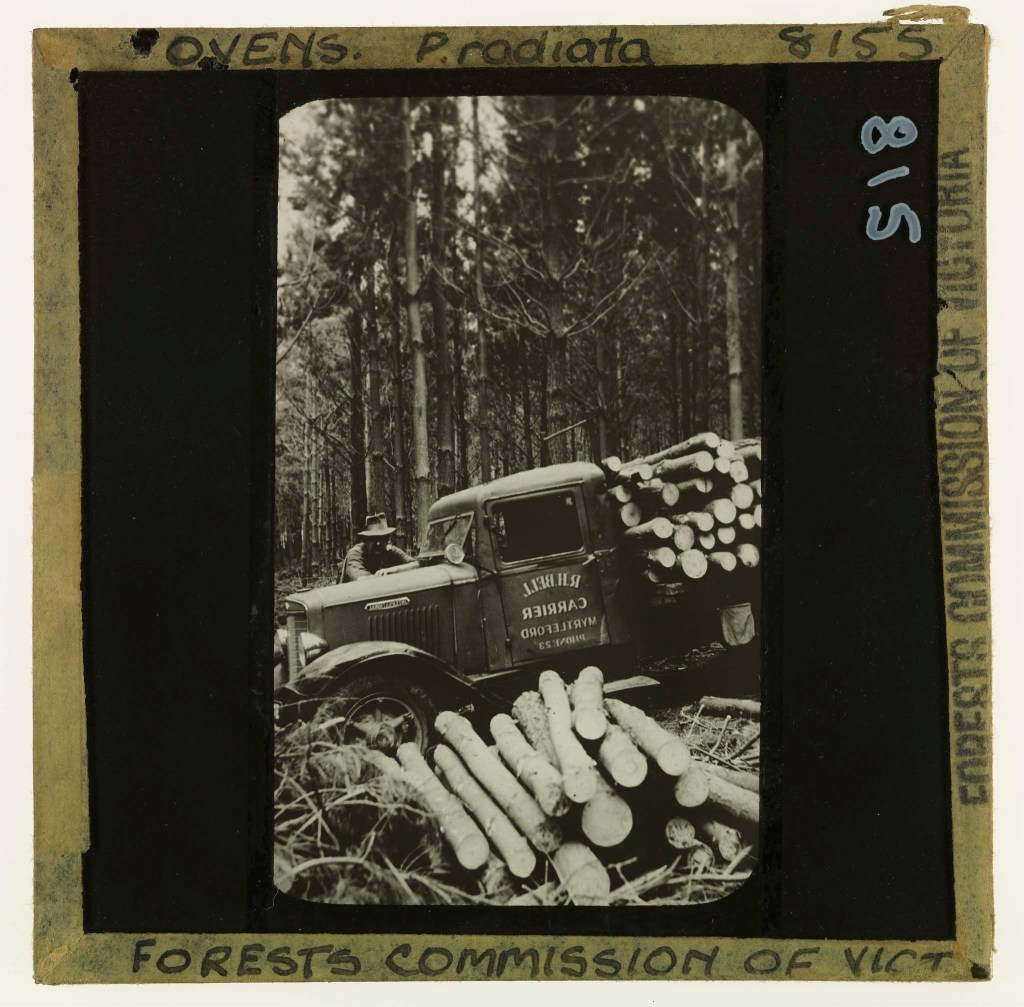
And as the government and private plantation base progressively expanded and matured, agreements were reached with private mills such as Bowater-Scott (now Carter Holt Harvey) at Myrtleford in 1972, and the Australian Newsprint Mills at Albury in 1980.
But attitudes towards pine plantations began to change in the 1970s with growing disquiet from environment and community groups about the social impacts of planting. These included changes to the profile of rural communities and farmland leading to the closure of small towns and schools, also concerns about fire protection, clearing of native forests and conversion to pines, together with the use of chemical sprays.
The Victorian Timber Industry Strategy (TIS) in 1986 set new government policies for the industry and management of public forests and plantations.
In 1987, the State Government introduced a policy to stop clearing of native forest for softwood plantations.
The State Labor Government started to explore options to sell the plantation assets in about 1990 but there were a number of complex legal, financial and practical impediments to overcome first. The Premier, Joan Kirner, confirmed in July 1992 that the State’s plantations would be corporatised and sold, with the entire estate vested into a newly formed state-owned enterprise known as the Victorian Plantations Corporation (VPC). The land was not sold.
A year later in 1 July 1993, under a new Kennett Liberal Government, the VPC took full legal control of 106,250 ha of softwood plantations. There were also 7,180 ha of hardwood plantations, which were mostly in the Strzelecki Ranges.
Later in 1998, the VPC was sold to an American and Australian superannuation company Hancock Victorian Plantations (HVP) for $550 million.
In about 2000, HVP acquired the plantation assets formerly owned by Australian Paper Manufacturers Forests (APMF) in Gippsland to become one of Australia’s largest softwood companies supplying over 3 million tonnes of wood annually to local manufacturing industries
The Green Triangle spans the border area between South Australia and western Victoria. Major private growers include Forestry-SA, Auspine, HVP, Associated Kiln Driers (AKD), Timbercorp and ITC with timber processing by Kimberly Clark, Carter Holt Harvey and Auspine.
The green triangle region grows around 160,000 ha of mature softwood plus another 110,000 ha of short-rotation hardwood plantations which were mostly established from the mid-1990s.
Victoria now has 382,600 hectares of privately owned and managed plantations, making up nearly a quarter of the national total.
And Victoria produces around 25% of Australia’s plantation grown wood, while the industry generates an average of $500 million in value per year.
In addition to local processing, about 5.3 million m³ of pulpwood (woodchips) are exported through Geelong and Portland each year.
With native forest timber harvesting set to end in Victoria in 2024, it’s fortunate that the visionary planting schemes by the Forests Commission, which then encouraged others, has left a large and thriving plantation industry.
Short rotation softwoods will never fully replace the beautiful slow-grown hardwood timbers that we all love, but thankfully the plantation legacy will meet some of our future timber needs.
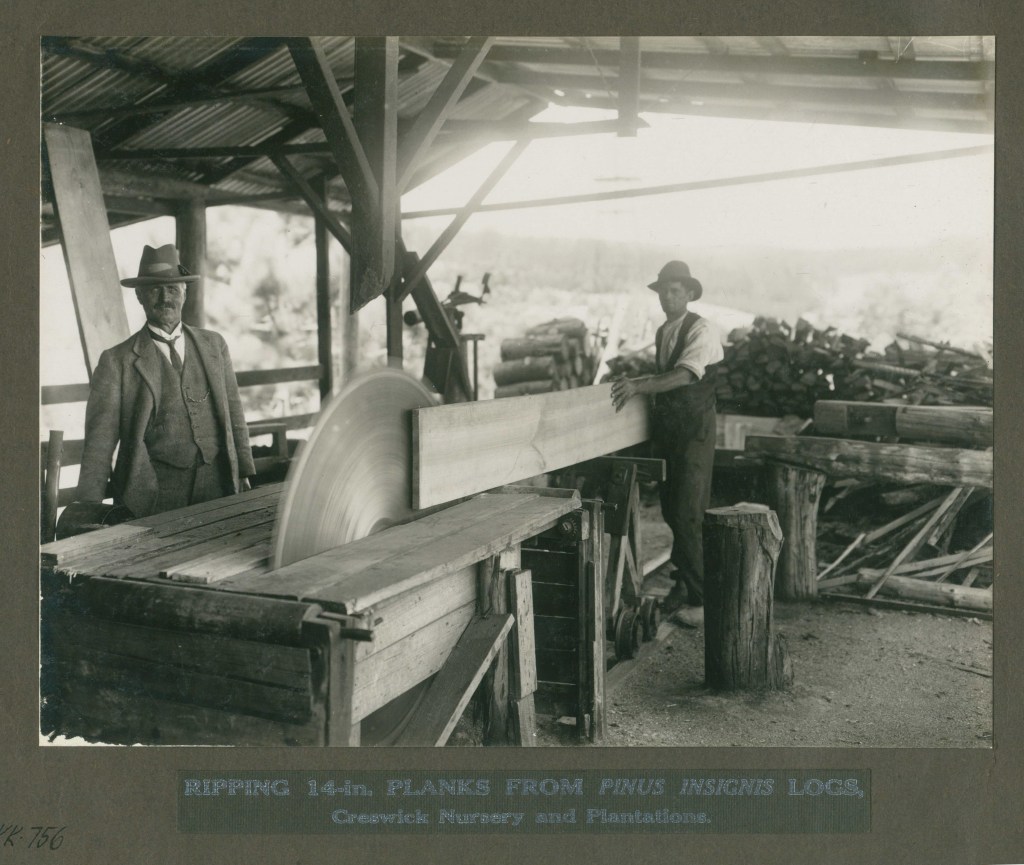
Photograph probably taken in the early 1920s (Source: Item No: 1434-3, Creswick Historical Collection, Uni of Melb. Photographer unknown) : John Johnstone at left. Ripping 14 inch planks from Pinus insignis logs at the Creswick Nursery.
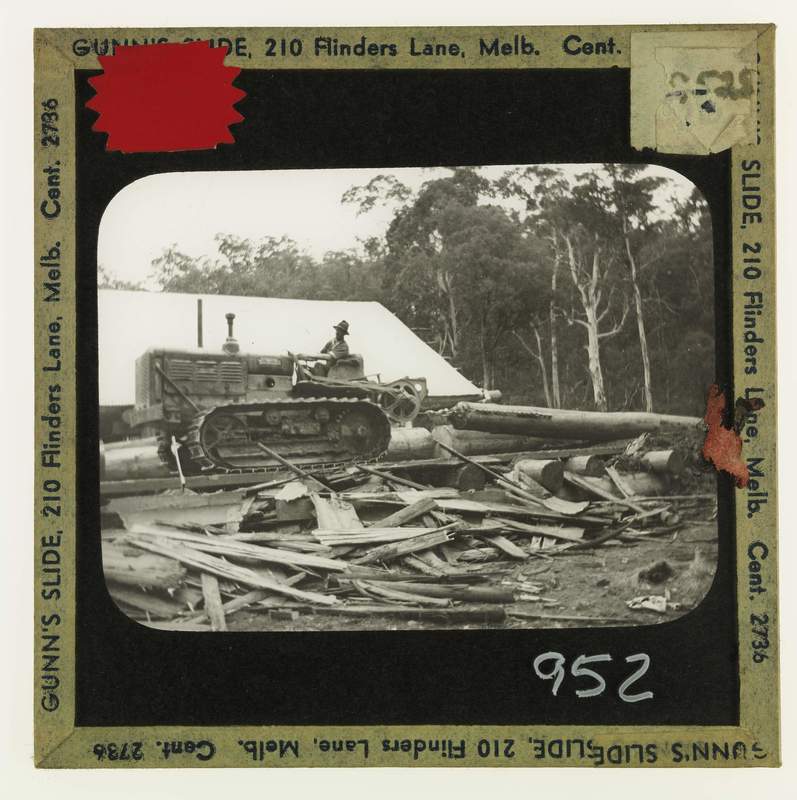
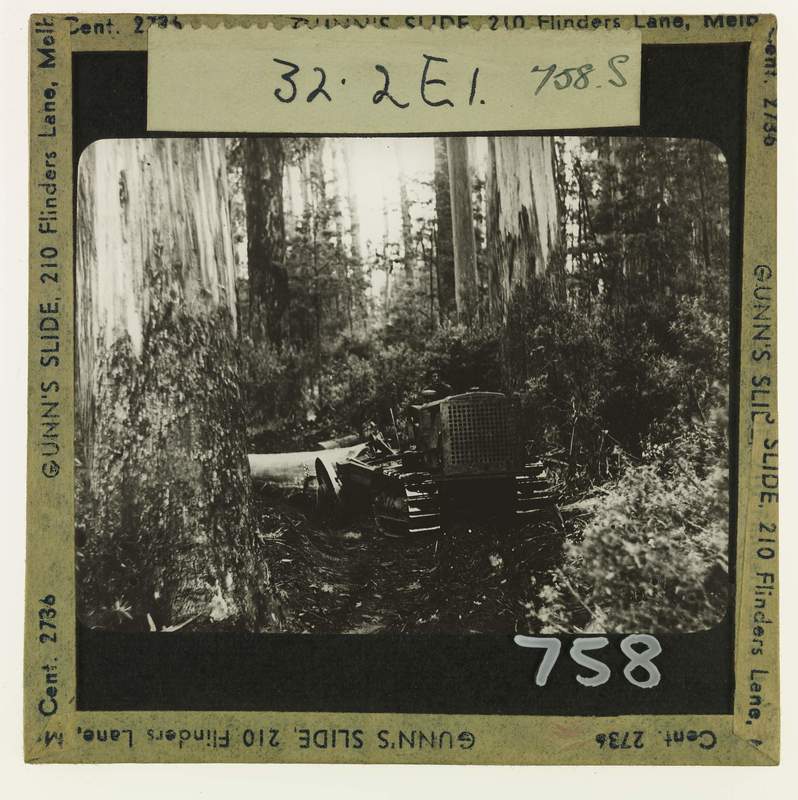
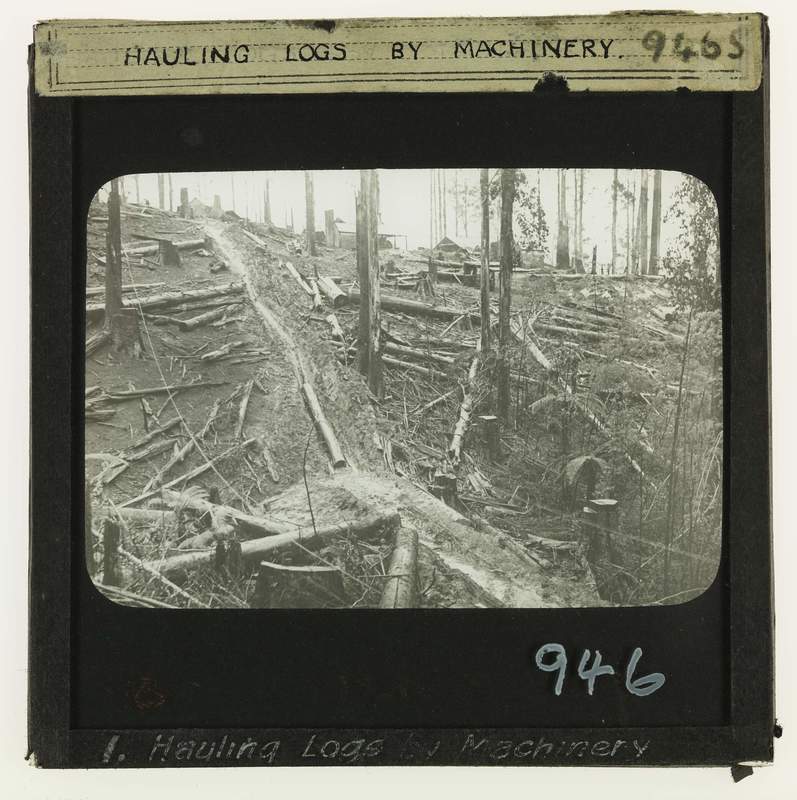
The first reference to the use of crawler tractors in Victorian logging operations was in 1934.
Forester, and later FCV Chairman, Finton Gerraty, reported in the Victorian Foresters Journal.
“A diesel oil caterpillar tractor which may be used either as a stationary winch, or as a mobile haulage unit, is the latest addition to log hauling machinery in use in the Victorian bush”.
The machine was owned by Anderson and Rowe from the Marysville Seasoning Company and was working on Mt Strickland at an elevation of about 4000 feet.
The sawmilling and logging industry had known for a very long time that using animals such as horses and bullocks for hauling heavy logs in the steep and wet mountain forests had its limitations.
For many years logging contractors had been using stationary steam winches which partly solved the problem, but they were costly to set up and operate. For example, they required a licenced engine driver, a whistle string man and track swampers (what great job titles).
Stationary steam engines weren’t much good for harvesting small quantities of timber either. The economic threshold was about 200 acres (80 ha) of heavily timbered forest.
Mobile crawler tractors solved many of these problems. The three-cylinder, water cooled caterpillar tractor produced 35 horsepower which is piddling compared to today’s models.
It also came with a 9-inch, two speed winch with about 1000 feet (300 m) of ½ inch steel rope which could pull 12,700 pounds (5.7 tonnes).
With the winch, the machine weighed about 8 tonnes and had a top speed of 4.6 mph (7 km/hr).
The following production figures were obtained over sixteen day working test.
Average number of logs per hour – 1.1
Average size of logs – 1923 super feet (4.5 m3)
Average length of haul – 67.5 chains (1360 m)
Fuel consumption – 1 gallon per hour at 8 pence per gallon.
Tractors were clearly the way of the future, although steam continued to play a big role in the 1939 salvage operations in the Central Highlands.
Hauling logs by tractor to C.J. Rowe & Sons sawmill, Marysville
Logging in rough and steep country had always presented serious challenges to contractors and sawmillers. In addition to the obvious safety considerations, delays caused by terrain or weather had impacts on operating costs and ensuring smooth wood flows to the sawmill.
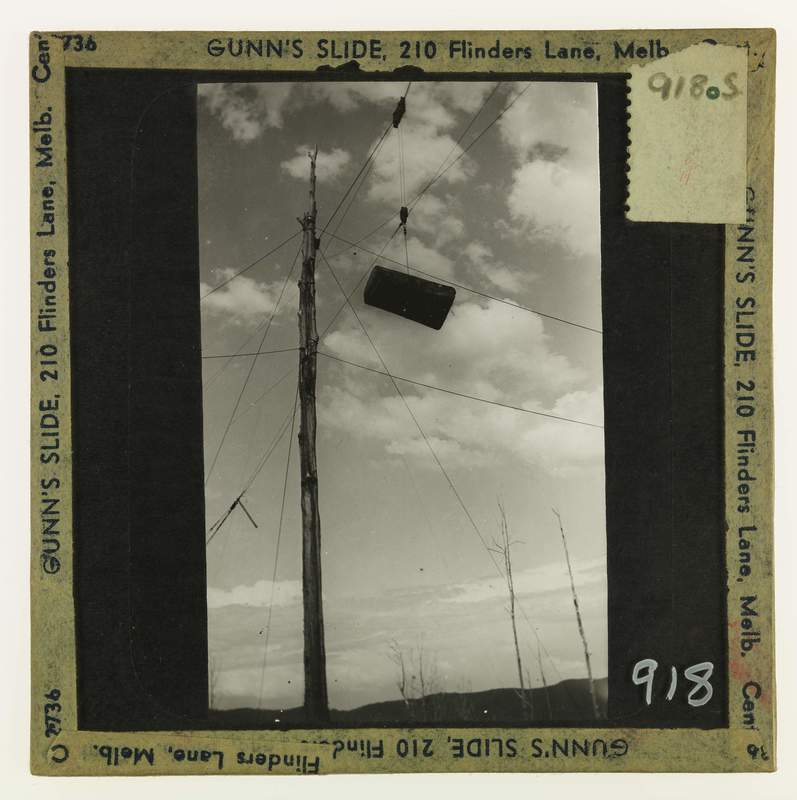
In 1936, Erica District Forester, Arch Shillinglaw, gave an account in the Victorian Foresters Journal about skyline and high lead logging operations by notable local sawmiller Jack Ezard.
Ezards operated a number of mills and timber tramlines in the wet mountain forests along the length of the Thomson catchment. They had previously owned and operated sawmills in the Warburton area from 1907, before shifting to Central Gippsland in 1932, and later to Swifts Creek in about 1950.
Ground snigging of logs had serious disadvantages at these higher elevations in the Thomson Catchment. The bush was also studded by massive granite boulders and traversed by steep rocky creeks. It often snowed in winter and, other than the timber tramways operated by the company, there were very few roads.
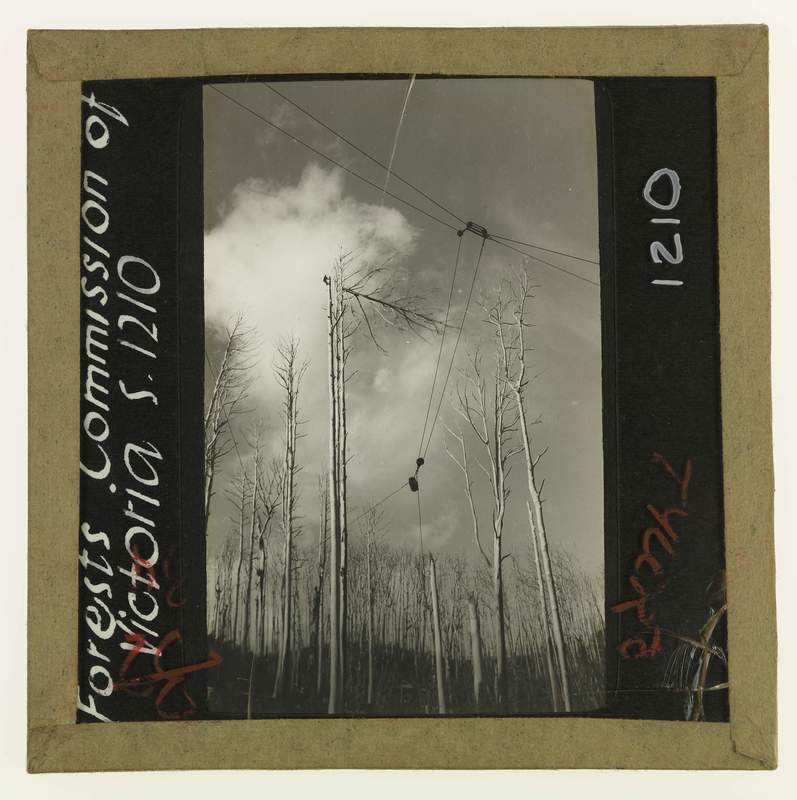
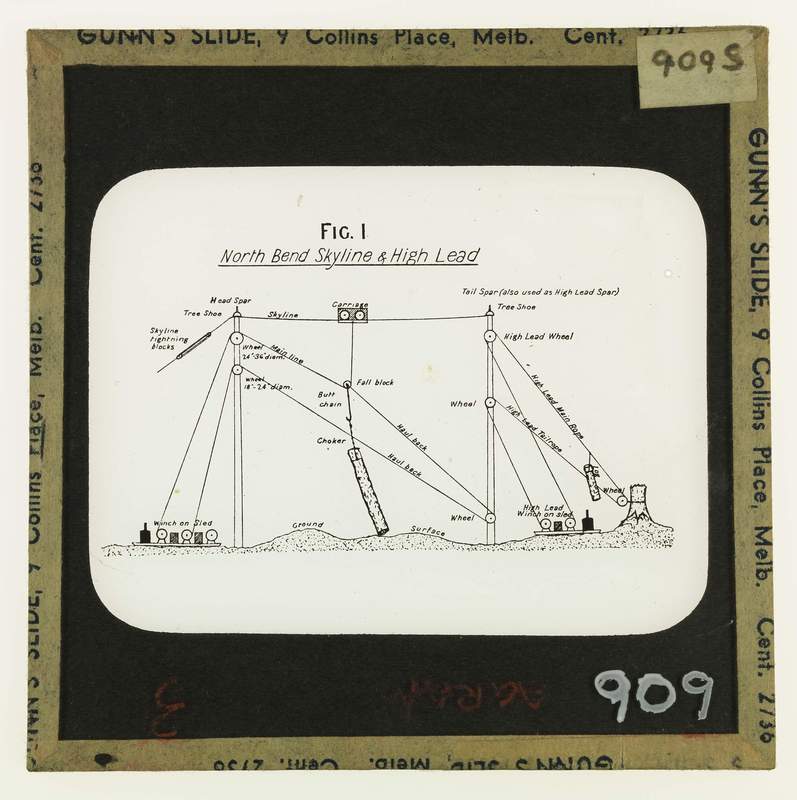
To overcome the steep and difficult logging conditions Ezards purchased an American North Bend Skyline System.
The system was first introduced into the Pacific Northwest by the North Bend Lumber Company based in Washington in 1912 and consisted of a number of key elements.
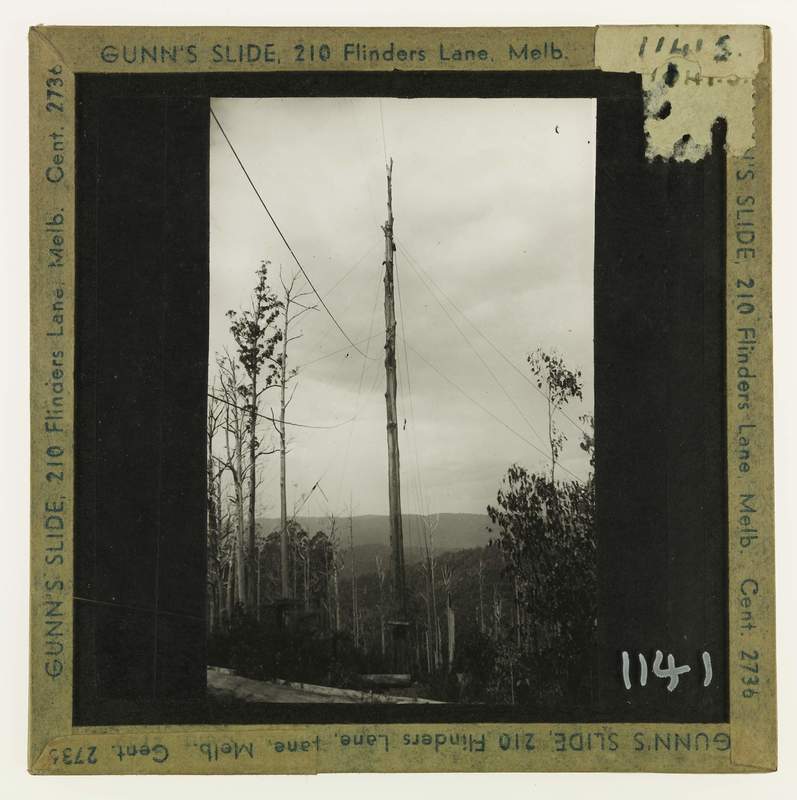
Head and tail spar trees, preferably 200 feet or taller in height, and placed any distance apart to a maximum of 2,500 feet. The spar trees were supported by several stay wires.
The skyline is a wire rope of about 1 ½ to 2 inches in diameter, passing over a tree shoe at the top of each spar then tightened and fixed at each end. A sag of 5% deflection was allowed to prevent undue strain and breakage of the wire.
The steel carriage, measuring 4’6” x 2’6” and weighing 7 hundredweight (360 kg) fits over the skyline and runs along on two wheels.
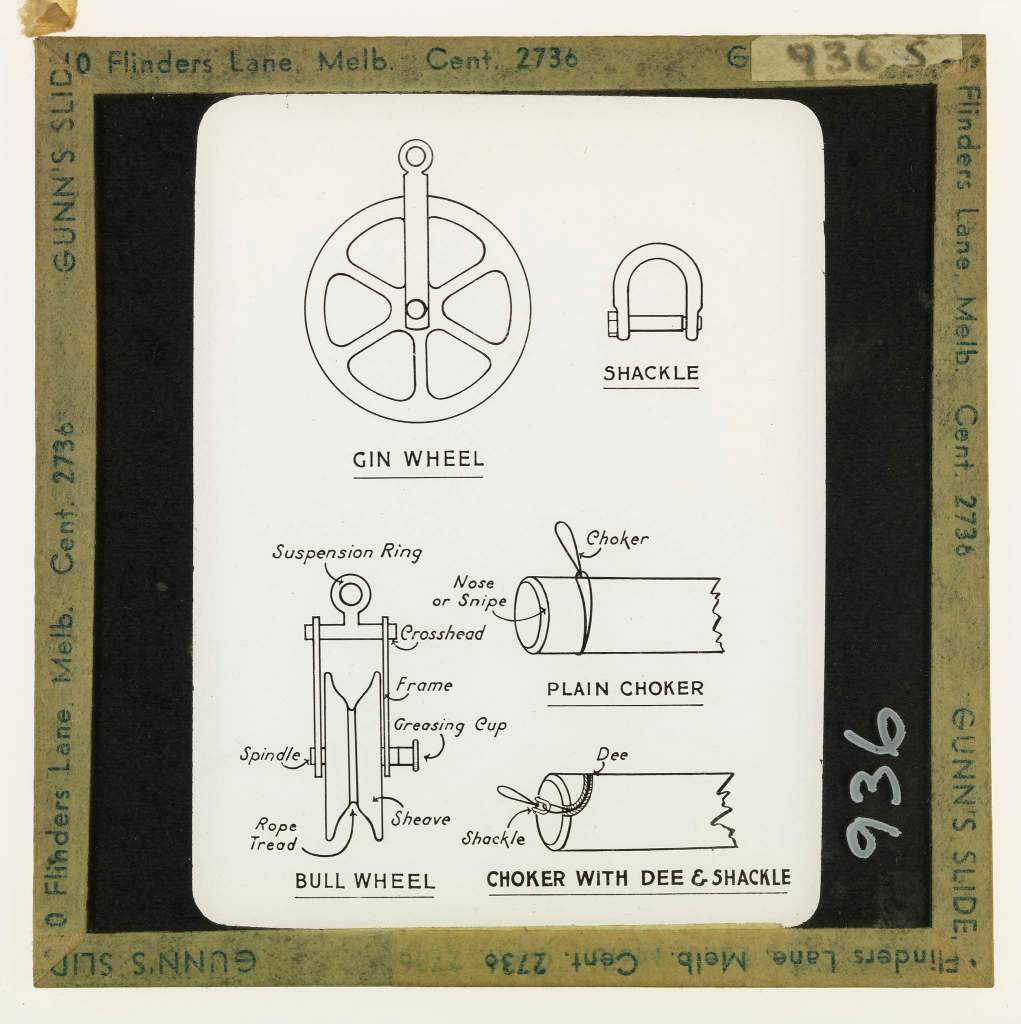
The main line is a wire rope 1 inch in diameter with one end attached to the steel carriage and passing down through a fall block and then over the high lead wheel near the top of the head spar and then to a which drum.
The haul back, or tail rope, is a smaller ½ inch to 5/8-inch diameter wire rope attached to the fall block and then passing over a wheel at the base of the tail spar, then back over another wheel on the head spar before making its way to the winch drum.
A butt chain is attached to the fall block and to a “chocker” – a wire rope for gripping the log.
The steam winch at the head spar sits on a timber sled to enable movement. It has 10 inch by 12 inch cylinders or greater and operates at 140-200 pounds of stem pressure. If it is a “friction machine” it has two drums for logging (main and tail rope drums) and one drum for loading. If it is a geared machine and additional engine is needed for loading.
The skyline system can log a strip up to five chains wide either side of it. It also lifts logs completely off the ground, or with just the tail dragging. Logs can be brought in much faster than with ground haulage and can straddle streams and go over large rocks.
Once logs arrive at the head spar, they are loaded onto rail trucks by the winch or by tractors.
High lead systems have a slightly different arrangement with the main rope from the winch drum passing over the high lead wheel at the top of the tail spar. The rope then leads off into the bush and is tied to a stump. The rope moves in an arc to another stump as the coupe progresses.
A high lead system can gather up and yard logs to the tail spar over a radius of about 2,000 feet, depending on the height of the spar and the nature of the terrain.
Working in conjunction, a skyline and high lead system, can potentially log over 500 acres.
It’s thought the last steam driven high lead logging operation in Victoria was the Washington Winch near Swifts Creek. It was also operated by Ezards as late as 1960-61.
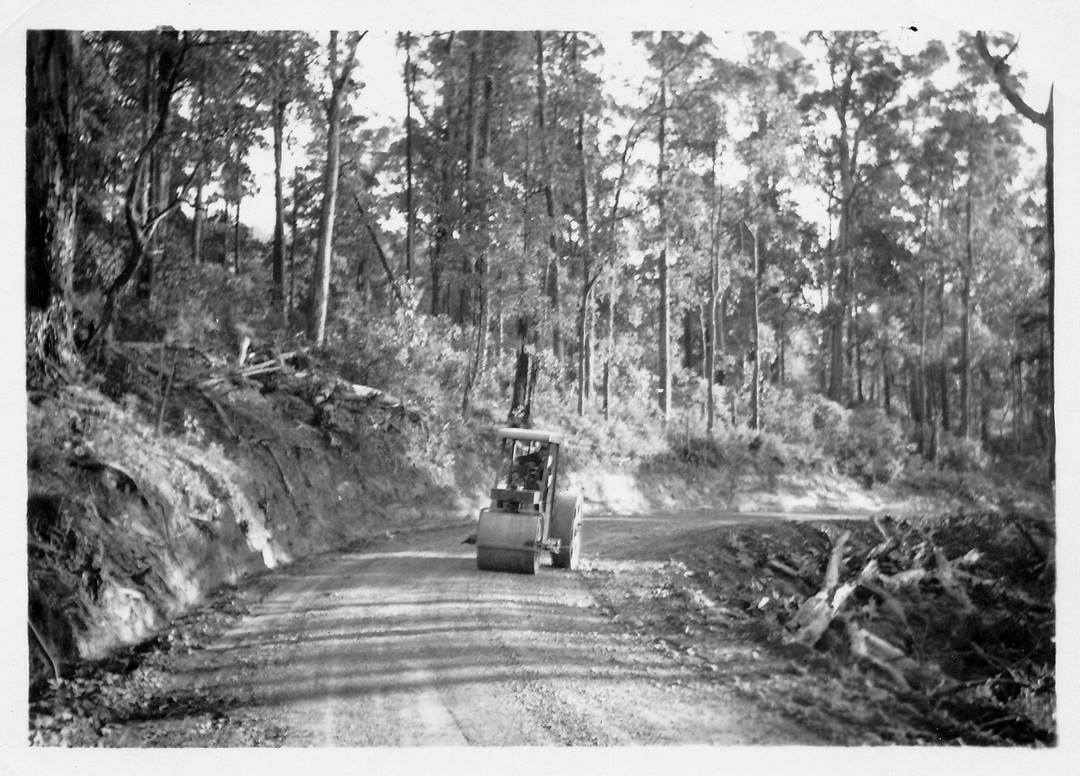
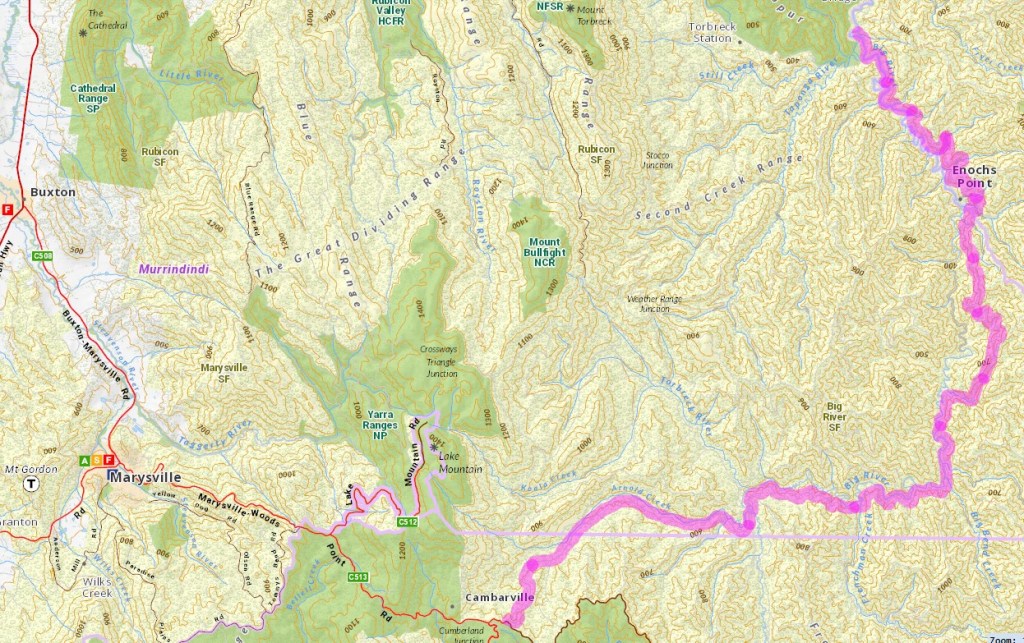
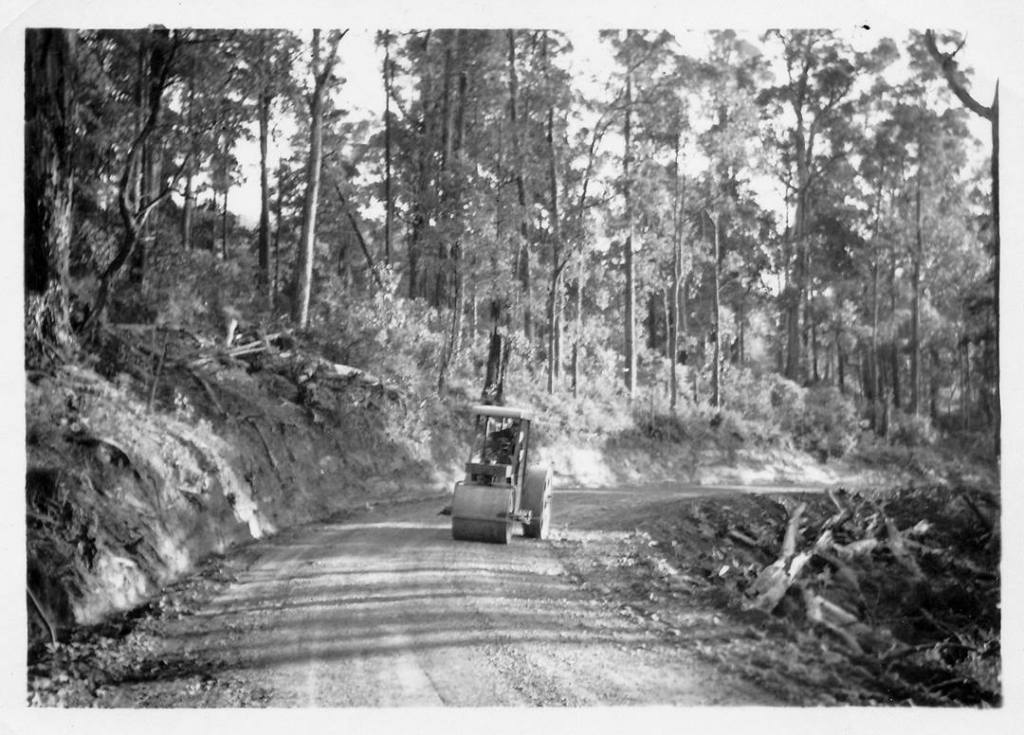
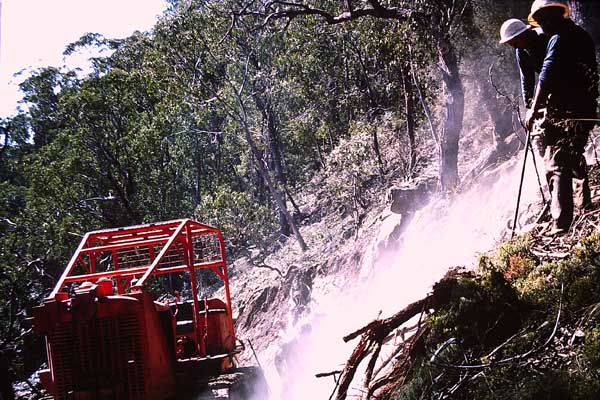
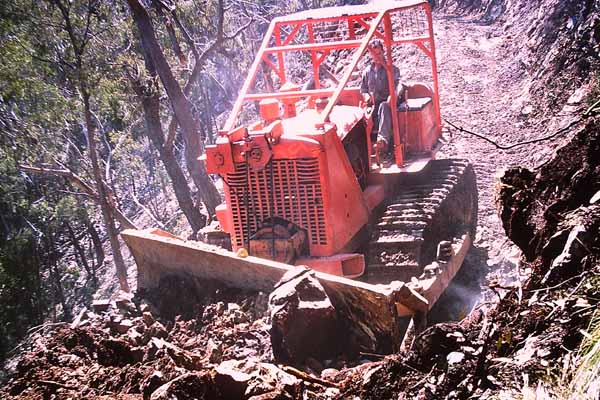
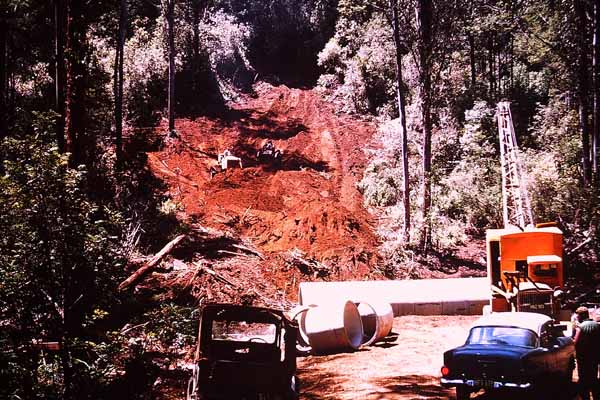
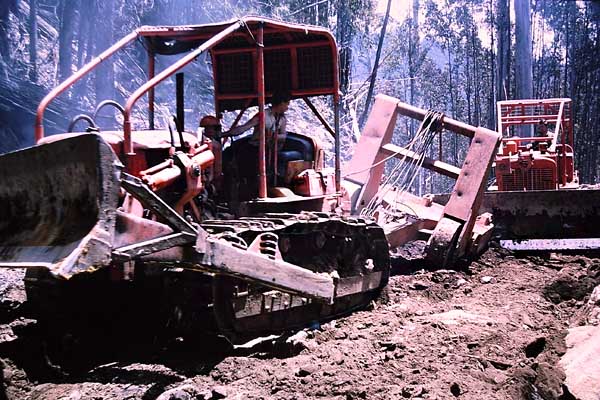
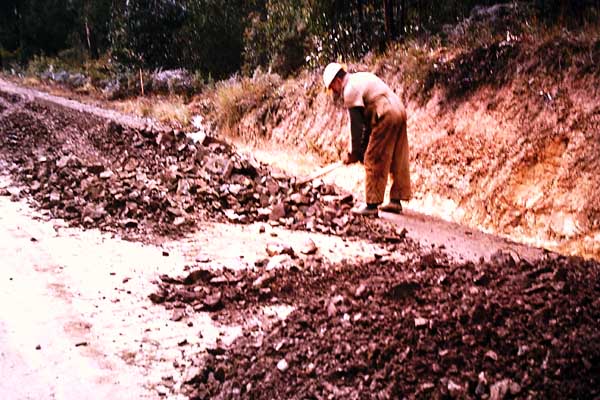
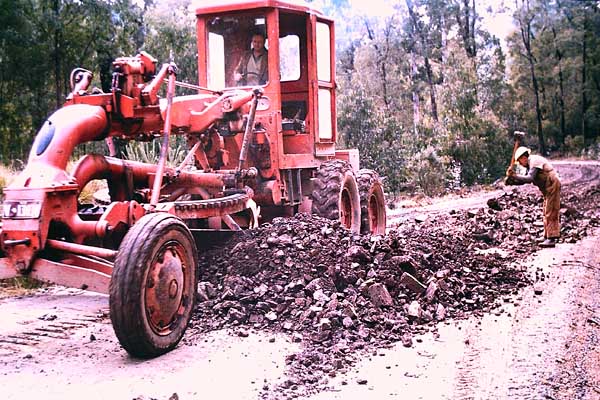
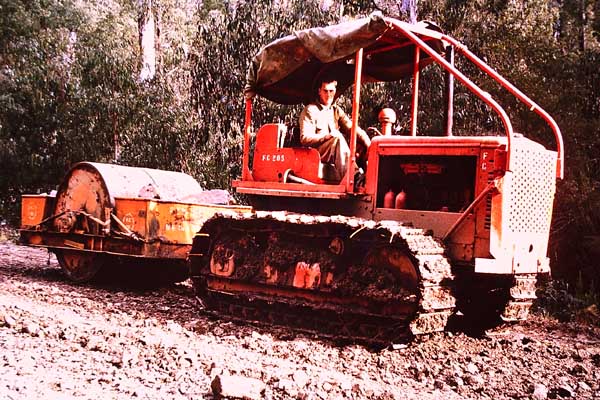
Stretching more than 60 km from the junction of the Woods Point Road near Cambarville, east of Marysville, to the Eildon-Jamieson Road in the north, the Big River Road was a major element in the expanded road network built by the Forests Commission Victoria (FCV) throughout Victoria’s mountains in the post war period to access ash timber resources and for fire protection.
Records are sparce in FCV annul reports, but as far as I can tell the road was begun in about 1944/45.
But unlike the massive Tamboritha Road near Licola, which was completed in about three years, the Big River Road was progressively extended over time and works were still ongoing into the mid-1960s.
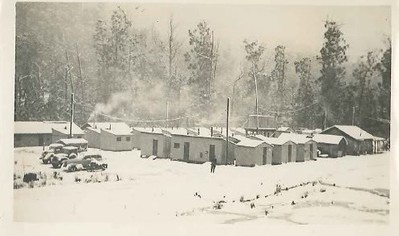
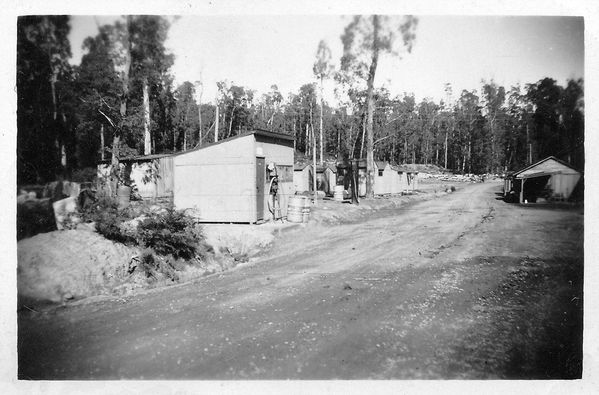
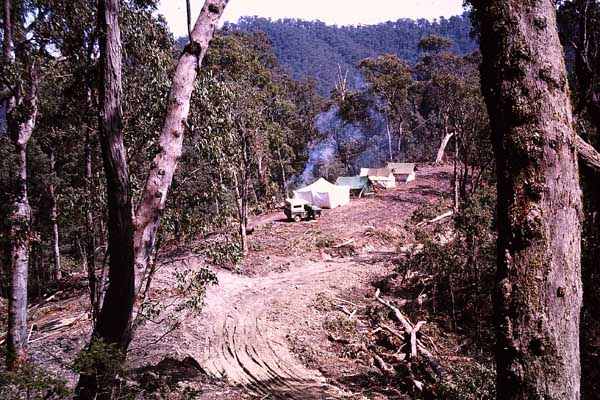
A series of workers camps were established along the way, and I believe that Ray Brown, a FCV overseer from Marysville, was the main construction supervisor after Roy Brown moved to Heyfield in about 1960.
Now a popular 4WD route, I’m keen to know a bit more about this history of this important road project and would welcome any additional information.
Photos are from a variety of sources including the FCRPA collection and the Marysville Historical Society.
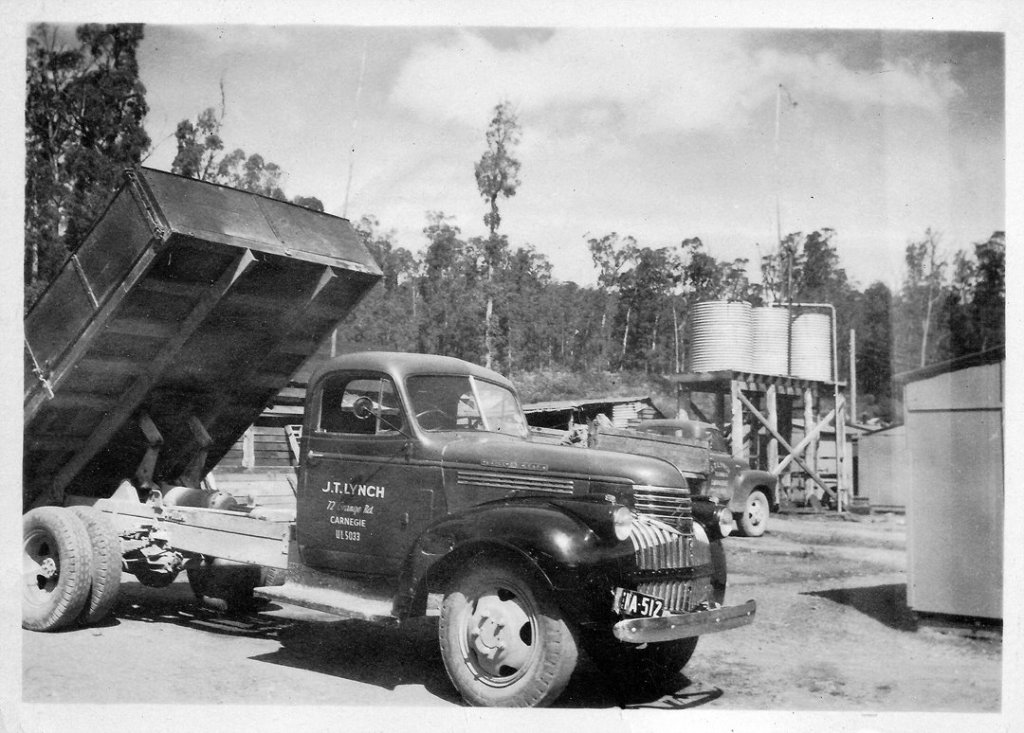
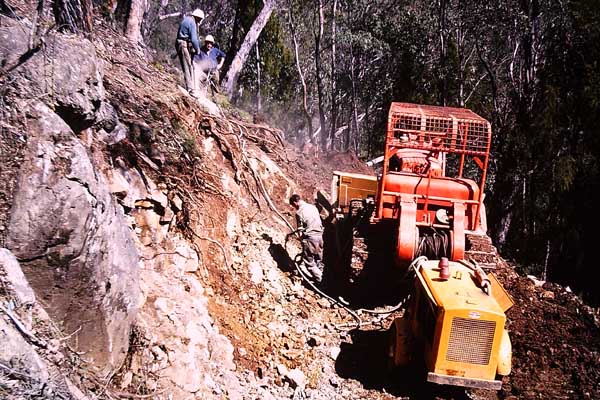
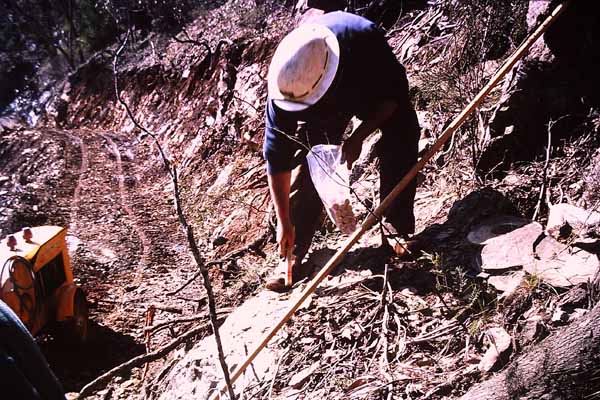
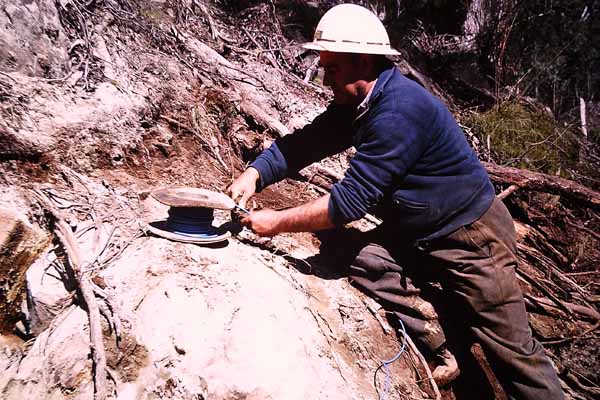
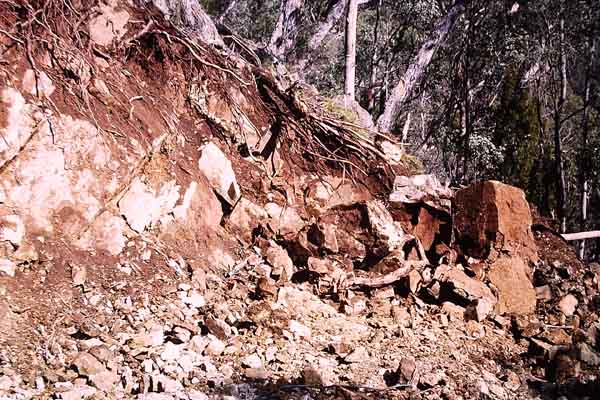
Photograph taken by N Cox in 1963 : FCV Construction camp – Big River RoadPhotograph taken by N Cox in 1963 : FCV Construction of the Big River RoadPhotograph taken by N Cox in 1963 : FCV Construction of the Big River Road – Ern Snell (left) drilling and Chook HopePhotograph taken by N Cox in 1963 : FCV Construction of the Big River Road – Chook Hope placing gelignite into drill holesPhotograph taken by N Cox in 1963 : FCV Construction of the Big River Road – Chook Hope connecting charged holes with cordtexPhotograph taken by N Cox in 1963 : FCV Construction of the Big River Road – after blastingPhotograph taken by N Cox in 1963 : FCV Construction of the Big River Road – breaking out after blastingPhotograph taken by N Cox in 1963 : FCV Construction of the Big River Road – building a culvertPhotograph taken by N Cox in 1963 : FCV Construction of the Big River Road – ripping and widening after breakoutPhotograph taken by N Cox in 1963 : FCV Construction of the Big River Road – breaking up large surfacing materialPhotograph taken by N Cox in 1963 : FCV Construction of the Big River Road – spreading surfacing materialPhotograph taken by N Cox in 1963 : FCV Construction of the Big River Road – compacting the surface
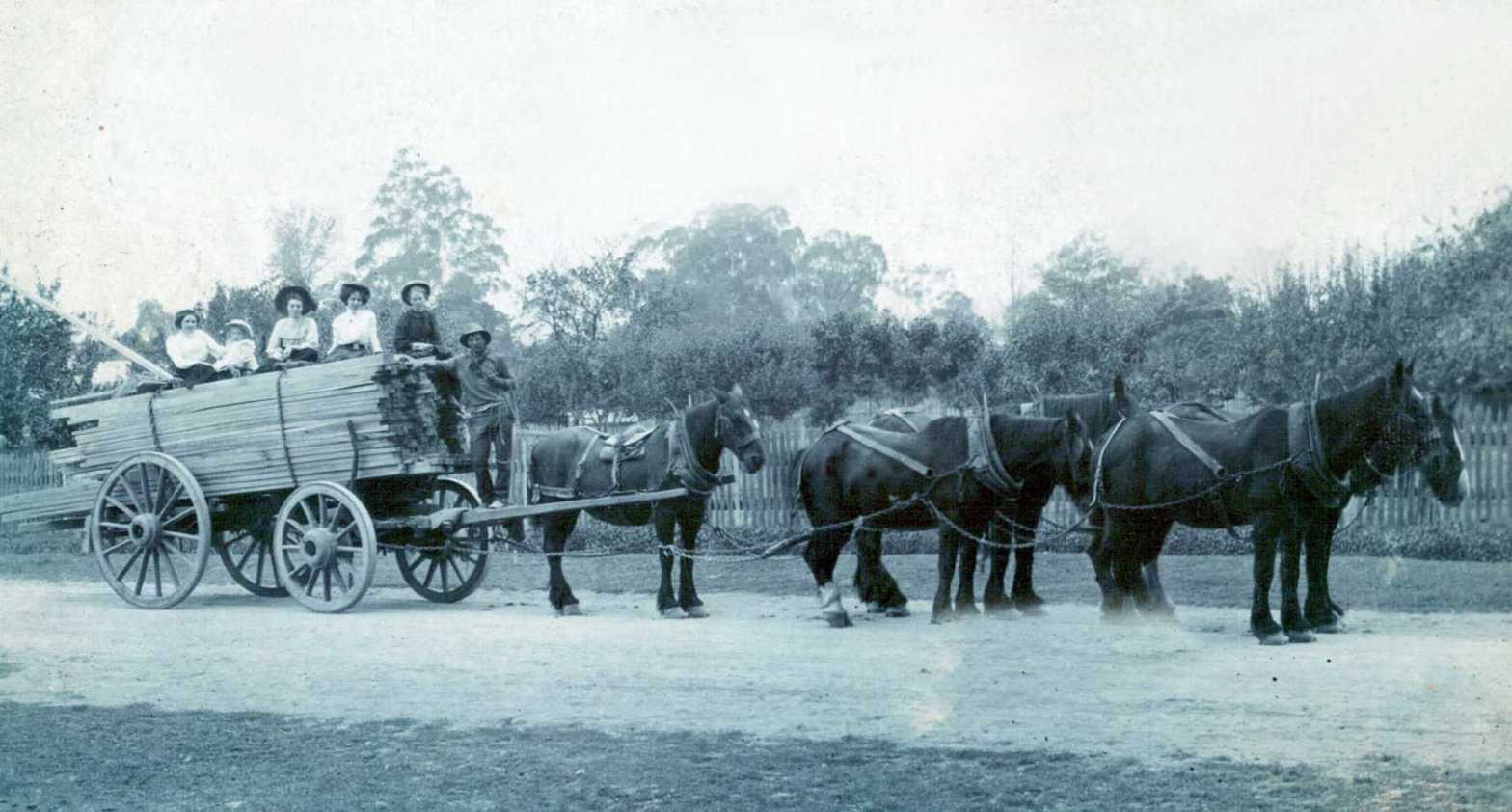
The arrival of the Victorian Railways narrow gauge train (now the iconic Puffing Billy) into Gembrook in about 1900 signalled the rapid expansion of sawmilling in the district.
Sawmills had operated at Gembrook from the 1880s, but their produce was transported by primitive tramways to places like Nar Nar Goon in the south. A new Victorian Railway with direct access to timber yards in Melbourne was a major turning point.
While not on the scale of the harvesting of the mountain ash forests at Noojee and Powelltown, at least sixty small sawmills worked the drier mixed species bush, and for some time the timber industry was the largest single employer in the Gembrook area.
By industry standards the individual mills were not large producers of sawn timber but there were many of them operating in the forest.
The mills ranged in size from small itinerant two-man spot benches to larger more permanent mills operated by well-known local identities like the Mortimer, Russell, Ure, Dyer and Williams families.
Together these mills produced a huge volume of sawn timber for a rapidly growing metropolitan Melbourne, but also fruit cases for the local orchards.
A complex network of tramways developed through the private land and adjoining State forests. These bush railways were built with ingenuity and resourcefulness by men with little or no formal engineering training but plenty of courage and years of experience.
But like most of Victoria’s timber industry, steam and rails were progressively replaced by diesel and roads in the post war area. Then in 1953, a landslide blocked the track and the line to Gembrook closed.
The production of sawn timber from Gembrook peaked in the 1920s and 1930s, with another spike in the 1950s, but then declined steadily over time, and by the mid-1980s only a few local hardwood sawmills remained. The reopening of the post 1939 ash timber resources in the Central Highlands had a big impact on the competitiveness of the smaller under capitalised Gembrook mills.
Today, much of the land around Gembrook is dedicated to farming. The State forests have been redesignated as national park and timber harvesting has ceased. But there is still evidence of these fascinating old tram lines and sawmills if you know where to look.
Ref: Mike McCarthy (1987). Bellbrakes, bullocks and bushmen. LRRSA.
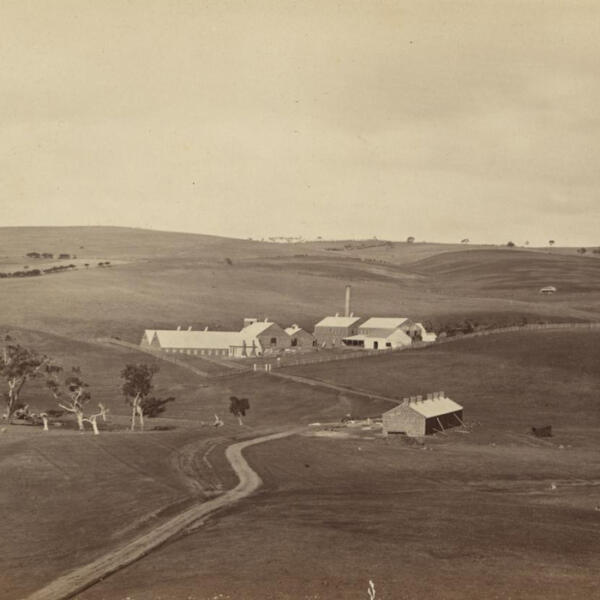
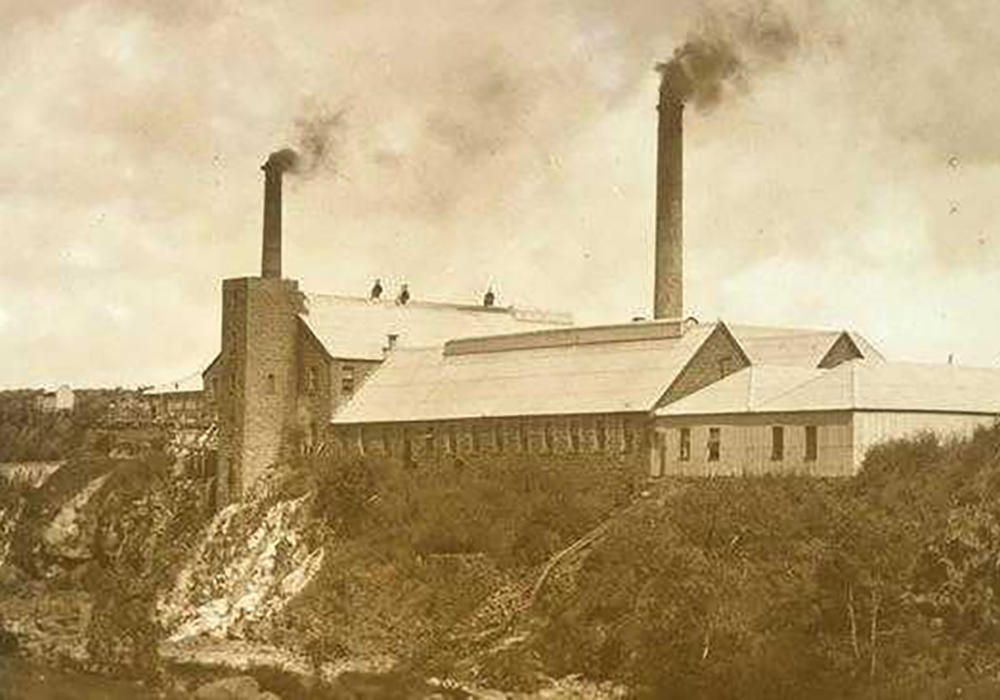
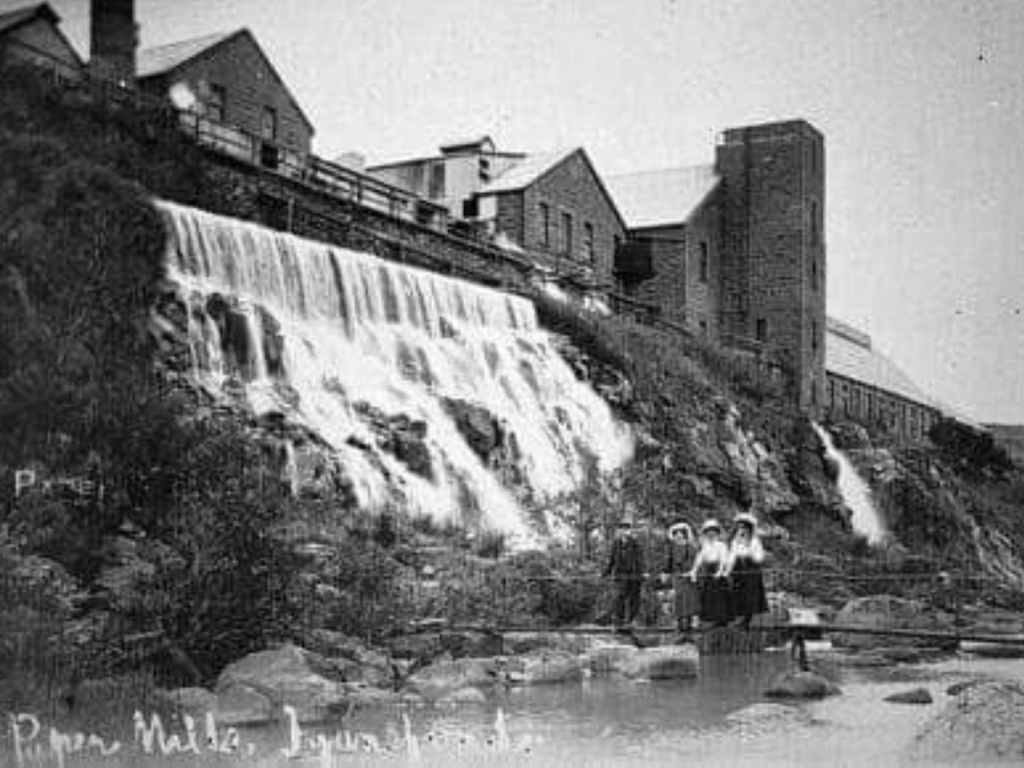
Building the Fyansford Paper Mill, on the Barwon River near Geelong, commenced in the 1870s and was completed in 1878. When the site opened, it was claimed to be one of the most advanced paper mills in the southern hemisphere.
At the time, there were seven paper mills in Australia and Fyansford is one of the earliest and operated for the longest period.
The mill used rags, offcuts of rope, recycled books, sails, straw, cloth and other by products collected from around the region as its main feedstock rather than wood fibre like Maryvale in Gippsland.
In 1895, the Australian Paper Mills (APM) acquired the complex and operated it until 1923.
From 1929 to 1941, the site was home to the Hydro Ice Company which used it as cool stores and to manufacture ice. The site was acquired by the Australian Navy during WWII.
The Fyansford Paper Mill remains as one of the most complete of its kind, still retaining many of its original mill buildings and water race.
Sugar Gum (Eucalyptus cladocalyx) originates in South Australia in three distinct populations: the Flinders Ranges, Eyre Peninsula and Kangaroo Island.
Sugar Gum is also widely planted across the drier western district of Victora as a windbreak or shelterbelt and for durable farming timber as well as magnificent firewood.
Sawn timber harvested from sugar gum has little defect and is prized for its durability. It is particularly suited to situations requiring high strength where appearance is also important, such as flooring and joinery. Its durability also makes it a valuable timber for exterior applications such as cladding, decking, outdoor furniture and pickets.
The Forests Commission recognised value of sugar gum from its earliest days.
In 1890, a nursery was established at Gunbower Island to grow sugar-gums and blue gums for the arid dry plains of the Avoca and Loddon catchments, and the dry sandy mallee wastes of the north-west and northern portions of the Colony.
By 1905, it was reported that large wattle and sugar gum plantations were established in the Portland district, and smaller ones at Mount Beckwith, Eddington and Cave Hill.
The 1907-08 annual report stated that plantations at You Yangs, near Lara cover some 1,300 acres, and consist chiefly of blue gum, sugar gum, pine of several species, and wattles for tanning.
A year later it was reported that commencement has been made at Dimboola, where 2,500 acres are enclosed with sowing and planting of sugar gum, bluegum and various other hardwoods.
The plantation expansion continued, and by 1917 the Commission reported “Eucalypts, chiefly ironbark, spotted gum, blackbutt, red mahogany, and sugar gum, were planted and sown at Dimboola, Dargile, Callawadda, and Korumburra, to the extent of 320 acres. Black featherleaf wattle was sown on 393 acres at the Grampians, at Lake Lonsdale (near Stawell), and at Mount Beckworth (near Clunes).
However, it now appears that there are only four significant areas of sugar gum plantation remaining.
Barrett near Dimboola – 160 ha. A late planting – perhaps 1960s -1970s. Very small areas can also be found in the Bryntirion State forest dating from the 1950s.
Majorca near Maryborough – 210 ha. Establishment of this plantation was underway as early as 1887.
Wail – 300 ha. Surrounding the old FCV nursery from about 1909-1910.
You Yangs – 680 ha. Establishment of this plantation was underway in 1887 and trees can still be found.
Given the expected shortfall in firewood with the cessation of timber harvesting on State forest in 2025, it seems a shame that these plantations were not maintained and expanded.