Bushfire in the burbs.

As the summer bushfire season of 1943-44 opened, Australia had already endured four years of war with many men and women away overseas or deployed to northern Australia.

In Melbourne’s bayside suburbs, as in all parts of Australia, austerity measures were in place with rationing of food, petrol, clothing, gas, electricity, firewood and other basic goods. There were also severe labour shortages which affected essential services like the railways, as well as community organisations such as the Red Cross and volunteer firefighters.

Melbourne was hot in January, and the driest since colonial records began. Less than three quarters of an inch of rain fell, less than a third of the long-term average, as drought conditions gripped much of southern Australia leaving many areas tinder dry and fire prone.

The early weeks of 1944 produced heat waves with temperatures exceeding 100 degrees on the old Fahrenheit scale.

Bushfires just before Christmas on 22 December 1943 had already killed 10 firefighters near Wangaratta.

Eighty years ago today, on Friday 14 January 1944 bushfires raged at Daylesford, Woodend, Gisborne and other central Victorian towns near Bendigo. To the west of Melbourne there were blazes out of control from Geelong to the South Australian border. Fires burned near towns such as Hamilton, Skipton, Dunkeld, Birregurra, Goroke and Geelong itself.

Friday was hot with a strong dry northerly wind, the maximum temperature rose to 103.2° F with a maximum wind gusting to 54 mph, the relative humidity fell to 6% and the moisture content in fuel plummeted to about 2%.

In the sleepy beachside suburbs of Beaumaris, Cheltenham, Black Rock and Mentone, about 12 miles south of Melbourne, the threat came swiftly as two overlapping bushfires broke out during late morning. The first began near the corner of Bay Road and Reserve Road and spread into the grounds of the Victorian Golf Club. It was followed by another nearby blaze soon after.

At the time, these neighbourhoods resembled small coastal villages with unmade roads, sandy tracks and modest weatherboard and fibro-cement houses scattered throughout the dense thickets of t-tree scrub with overhanging manna gums and an understory of acacias and tall bracken. There was also a string of more substantial brick homes with manicured gardens along Beach Road overlooking Port Phillip Bay.

The inferno headed south and burned properties along Beach Road towards the Beaumaris Hotel and eventually reached the foreshore near Table Rock.

Fire brigade officers reported that the water pressure was so poor that their hoses were useless, the flow being little more than a trickle even when pumps were used.

The fire also cut telephone and electricity as the timber poles burned and fell blocking many streets.

The fire occurred before the formation of the Country Fire Authority (CFA) and there was limited coordination and communications amongst volunteer firefighters. Control was quickly handed over to the Melbourne Metropolitan Brigade’s (MFB) Chief Fire Officer, James Kemp, when the extent of the disaster became obvious.

Large numbers of volunteers, air raid wardens, army personnel from barracks at Caulfield, State Electricity Commission (SEC) staff, police, residents and regular firemen fought the blaze.

Some residents evacuated to the relative safety of the beach. It’s reported that some put what possessions they had managed to grab into small boats to keep them safe. But one boat loaded with suitcases broke loose and drifted out to sea, driven by the strong northerly wind and was eventually recovered the next day near Williamstown.

The fire eventually burned itself out late on Friday afternoon when it reached scrubland on the coast near Rickett’s Point.

The overall fire area was comparatively small at about 1500 acres, and the part burnt by flames only totalled 700 acres. But the ferocity of the blaze placed some 118 houses in grave danger and 58 homes were destroyed, with 8 others suffering serious damaged. An additional 57 properties sustained damage to outside sheds, dunnys and fences.

Most of the losses were behind the iconic Beaumaris Hotel in the Tramway Parade area. Another eight homes were lost along Dalgetty Road. Cromer Road, Coreen Avenue, Hardinge, Rennison and Stayner Streets. The caravan park on Beach Road was also burned with the loss of seven vans and five motor cars.

Thankfully no lives were lost, but 20 were killed in other parts of Victoria.

The Prime Minister, John Curtin, announced an immediate £200,000 Commonwealth grant for fire victims in NSW and Victoria, while the Victorian Premier, Albert Dunstan, added a State grant of £50,000. Public appeals were also opened which were co-ordinated by bayside councils.

As is always the way, the aftermath of the Beaumaris fires produced a flurry of finger-pointing and attempts to shift blame.

Issues arose over road construction, power and water supplies as well as restrictions on clearing of native vegetation. The risks of charcoal gas producers on cars and uncontrolled burning off by residents also received notable mentions.

Because of wartime austerity measures and shortages of building materials, it took years for communities to rebuild. Many families simply moved away, and it wasn’t until the 1950s and Melbourne’s post-war housing boom that the suburbs rebounded.

There was also justifiable public outcry at the lack of government action after similar events five years earlier in 1939 and the landmark Royal Commission by Judge Stretton. One of his key recommendations had been to create a single fire service for country Victoria.

These fires, along with those at Wangaratta and Yallourn a month later on 14 February 1944 finally forced the State Government to act.  The Premier Sir Albert Dunstan and Minister for Forests Sir Albert Lind, who had both delayed legislative changes in Parliament, decided there was no alternative but to ask Judge Stretton to chair a second Royal Commission.

Stretton’s report returned to his earlier themes and once again highlighted the lack of a cohesive firefighting ability outside the Melbourne area.

After nearly six months of debate and argy-bargy in State Parliament, legislation to establish the Country Fire Authority (CFA) was finally passed in two stages on 22 November and 6 December 1944. The Chairman and Board members were appointed on 19 December 1944. The CFA came into legal effect on 2 April 1945.

https://localhistory.kingston.vic.gov.au/articles/319

In January 1944 a bushfire raged through the Melbourne seaside suburbs of Cheltenham and Beaumaris. https://trove.nla.gov.au/newspaper/article/272068974
Beach Reserve, Beaumaris c 1935. Source: SLV

The Parliament House Dummy-Spit.

State forests and public land not only produce timber but are also important for sand, crushed rock and dimensioned stone for buildings.

Victoria has large quantities of hard basalt, or bluestone, across the western district plains but in the early days of the Colony it had to suffer the indignity of importing sandstone from NSW.

In about 1861 Francis Watkins, a stone mason from Stawell, was hunting at Mount Difficult in the Grampians when he spotted some high-quality and durable rock.  

The white sandstone had excellent grain, texture and colour. More importantly, it was weather resistant and easy to work, but hardened when exposed to the elements.

Francis took a lease on 3 acres of Crown land at what later became known as Heatherlie Quarry and by the 1870s was supplying stone to Stawell for the courthouse, Anglican and Catholic churches, the Town Hall and memorial tombstones.

Between 1872 and 1876, Watkins submitted samples of the stone for consideration for the Governor’s proposed new residence, Melbourne’s Law Courts as well as for Parliament House, but was rejected each time because it was deemed either poor quality or too expensive.

Stone for Parliament House was instead chosen from Bacchus Marsh, but it decayed rapidly, and large parts had to be replaced with stone from Tasmania. Such was the outrage over the design and construction of the project that in 1876 a Royal Commission was held into the matter.

Francis enlisted the support of his local member of Parliament, Mr John Woods MP, who advocated that stone quarried from his electorate would be most suitable for the Parliament Building.  

If you look carefully, just near the corner of the Royal Exhibition Buildings in Carlton, there is a lonely column of sandstone which has defiantly stood there since 1881. The odd-looking obelisk with the slightly wonky lean looks a little out of place against the magnificent World Heritage Building. It has always intrigued me, and at first glance it resonates as a century-old dummy spit. The plaque which was put there in 1979 says in part…

this pillar of stone quarried from Stawell was placed here on the insistence of the Hon. John Woods, M.P. to express his indignation of the choice of New South Wales stone for Parliament House and to show the enduring qualities of local stone.

But by 1882 the fortunes of the Heatherlie Quarry had reversed and a government-funded narrow-gauge tramway connected the quarry to Stawell and the main railway to Melbourne. Contracts were signed to use the stone for the next stage of Parliament House and by February the first rail trucks reached Stawell on their way to Melbourne.

But things came to an abrupt halt when there were concerns about the quality of some of the initial samples. The matter was subsequently investigated by an Expert Committee, a Board of Enquiry, and a Parliamentary Select Committee, who all visited the quarry site.

Finally in 1885, a tender to build the classical colonnaded front of Parliament House, which looks down Bourke Street, using Mt Difficult stone was accepted.

Between 1886-1887 the Heatherlie Quarry was working at peak production employing over 100 men. Optimism was high and a new township was gazetted which even included a school.

The quarry also supplied stone for the Melbourne Town Hall, State Library, General Post Office (GPO), Regent Theatre and Port Authority Building among others.

But Melbourne’s economic boom following the 1850s gold rush turned to bust in 1890, and the demand for building stone plummeted. However, the quarry reopened in 1899 with more orders for significant Melbourne buildings.

The quarry declined and was eventually closed in 1938 seeing much of the machinery sold. The Tramway (which is now a rail trail) was closed to traffic in 1949.

Limited quantities of stone were used until about 1981 for the repair of existing buildings, as well as facing the wall in Melbourne’s troubled City Square and extensions to an ANZ Bank.

The Grampians National Park was proclaimed in 1984.

In the 1990s, the State Premier Jeff Kennett suggested completing Parliament House’s unfinished “grand design” which included a large central dome as well as north and south wings. But these new works would have required reopening the Heatherlie Quarry, and it was deemed politically too difficult in a National Park so the idea was shelved.

The sandstone pillar was erected in 1881 at the insistence of John Wood MP. The plaque was placed on the column in 1979. Photo: Museum Victoria.

The “grand design” with a huge dome and wings of Parliament House were never completed. Source: SLV

Victorian timber industry – 1982.

What a difference 42 years makes.

This 1982 map shows Victorian hardwood and softwood sawlog production, as well as the number of mills by region.

The Forests Commission reported in 1981-82 that there were fewer new houses completed than for the previous 30 years. Home loan interest rates were at a record high of 16.5%.

Consequently, the sales of sawlogs from State forests were down from the previous year to 1.08 million m3 of hardwoods and 0.33 million m3 of softwoods.

Pulpwood to APM at Maryvale and softwood pulp to Australian Forest Industries at Myrtleford and Australian Newsprint Mills at Albury are not included in the map.

Importantly, the map was produced before the 1985 report of Timber Industry Inquiry, chaired by Professor Ian Ferguson from the University of Melbourne.

Ferguson’s report was followed by the Timber Industry Strategy (TIS) in 1986 which set new and optimist directions.

The TIS included 15-year sawlog licences to give greater resource security; encouragement of investment in value adding such as kiln drying; a new log grading system; clearer log allocation and pricing mechanisms; regional sustainable yields rather than statewide figures; Forest Management Area Plans with new public consultation ideas; the Code of Forest Practice; Harvesting Prescriptions; Forest Operator Licencing and a roading levy which built the South Face Road among others.

The TIS was also the catalyst for the Silvicultural System Program (SSP) trials in the Central Highlands and East Gippsland to assess alternative harvesting techniques.

Funding was also increased for major reforestation programs and Statewide Forest Resource Inventory (SFRI) to map and measure timber resources.

From: Atlas of Victoria. Ed by J S Duncan – 1982.

The Bendoc Log.

The 1 January 2024 not only marks the beginning of a New Year, but also marks the end of timber harvesting in Victorian State forests.

Some people will be rejoicing, but many will be angry and looking for explanations, or someone to blame.

However, the demise of native forest timber harvesting has been a very long time coming and is a complex saga that has taken decades to unfold. Forestry has always been a bothersome political issue and one day I’m gunna write a book.

But for today, I’m marking the occasion with the story of a log… just one log… but not just any old log… a bloody big log… the Bendoc Log…

More significantly, the Bendoc Log in far-far East Gippsland, sits at the very epicentre of environmental activism and years of argy-bargy over the future of Victoria’s forests. Bendoc has also been the scene of many bitter and protracted blockades with the ”cops and loggers” in the middle.

Bendoc and the remote Errinundra Plateau are about as far as you can get from Parliament House in Spring Street or Canberra, but they somehow came to characterise the complicated blur between federal and state jurisdictions. Probably, the most obvious example of this murkiness was the fraught Regional Forest Agreement (RFA) process in the 1990s, which was meant to resolve the matter… once-and-for-all.

The State forests around Bendoc, like so many other places, have suffered from the compounding effects, and slow incremental creep, of countless political and administrative “quick fixes”, often strongly influenced by the voting preferences of marginal and inner-city electorates, rather than informed by sound, long-term, forestry advice.

The Bendoc Log also perhaps signifies the endless and tortured debate over sustainable and renewable timber supplies; security of regional economies and jobs; a widening disconnect between urban and regional communities; forestry facts and fallacies; armchair experts and academics of all flavours; shifting public opinion and growing disquiet about forest preservation verses balanced multiple-use; National Parks verses State forests; old-growth verses regrowth; deforestation verses regeneration; sawlogs verses woodchips; plantations verses native forests; public land verses private land; the short and long-term impacts of major bushfires; widespread concerns about climate change and questionable claims of carbon offsets in forests; all influenced and over-simplified by a sometimes-biased or hostile media.

The latest and very effective tactic of “Eco-Lawfare” by tangling up VicForests inside an expensive legal system of court rooms and injunctions, needlessly arguing over some poorly worded government legislation or policy loopholes, in the end, had some far-reaching and unintended consequences. Leaving the interpretation of complex forest policy to judges and lawyers wearing funny wigs, was never going to end well.

And finally, this gigantic lump of wood represents the myopic forfeiture of a sustainable supply of strong and beautiful Ozi hardwood timbers, helped by a convenient consumer blindness to the globalisation of the timber trade with cheap imports sold in hardware stores which come from some far-away land, often with unsustainable logging practices and dodgy environmental, governance and social standards.

But… back to the Bendoc Log… the story goes that in 1981 Ken Hepburn, drove his 1976 Mack truck on a perilous journey from Wombat Track to Cuthbertson & Richard’s sawmill at Bendoc.

His load was a giant 60-tonne log which was said be the largest ever harvested in the Bendoc area. It measured 9.2 metres in length and 251 cm in diameter with a volume of about 45 cubic meters.

This giant Shining Gum (E. nitens) was felled by Steve Goodyear of Bombala which took him over four hours.

The D7F bulldozer on the coupe was incapable of pulling the massive log so the operator, Des Yelds, an experienced bushman, built an earth loading ramp next to the log and pushed it onto the truck.

With such a heavy load, the bulldozer then towed the Mack truck from the landing along the narrow coupe access track as far as the main Back Creek Road.

The short butt section of the colossal log was displayed outside the Bendoc sawmill for many years until it was donated to the town in 2004 by the mill owner, Alan Richards, and later moved to its current location in the Historic Park, which is opposite the iconic Bendoc pub.

It was a major logistical exercise to shift the log again and many townsfolk came out to witness the event.

The huge log is still in pretty good condition for its age after having been exposed to the weather for over 40 years. It is frequently photographed by visitors to the town.

The Bendoc Log now stands stoically as a fitting memorial to a once thriving and prosperous Victorian timber industry.

Growth Rings (updated).

There is always a danger making lists but, to my mind, some of the main events that have shaped forest and bushfire management in Victoria are below…

• 1820s – Before European settlement around 88% of the 23.7 million ha of what was to become the Colony of Victoria was tree-covered.

• 1851 – In January, the Black Thursday bushfires burnt an estimated 5 million ha.

• 1851 – On 1 July, the District of Port Phillip splits from NSW to become the independent Colony of Victoria.

• 1851 – Gold Rush begins, the population swells, mining and land clearing boom has huge impacts on the forests.

• 1852 – Timber regulations under the Lands Act.

• 1862 – First sawmill licences under Lands Act.

• 1865 – Forest management was chaotic, and the Argus Newspaper championed the cause of protecting our forests.

• 1866 – The Corio Shire Council became very concerned about the extensive cutting of both dead and green timber, so the Lands Department declared an 800-hectare Timber Reserve around the You Yangs.

• 1869 – The new Lands Act was the first to make it possible to select land first and get a survey after that. There had been earlier Land Acts, but this legislation made an incredible difference to the rate of selection of State forests and clearing for agriculture.

• 1869 – William Ferguson, the first Inspector of State forests and Crown Land Bailiff appointed.

• 1871 – Local Forest Boards attempted to exercise some control, however, the task of regulating wasteful clearing proved formidable and they were abolished in 1876.

• 1872 – First government nursery established at Macedon by William Ferguson with the aim to restore land degraded by gold mining.

• 1872 – William Ferguson is said to have measured a tree that had fallen across a tributary of the Watts River north of Healesville at 435 feet long.

• 1873 – Some 1150 steam engines in the gold mining industry were indiscriminately devouring over one million tons of firewood.

• 1878 – Report of the Wattle Bark Board of Inquiry into the exploitation of black wattle and fears about its potential extinction.

• 1879 – Valonia Oak planted at Castlemaine to supply the leather tannery trade as a substitute for dwindling supplies of black wattle.

• 1881 – Despite wild claims of trees over 500 feet tall, Victoria’s tallest reliably tree was measured near Thorpdale by a surveyor, George Cornthwaite at 375 feet before it was chopped down.

• 1882 – John La Gerche appointed as one of sixteen foresters held out a promise to end the forest destruction and wastage.

• 1888 – First Conservator of Forests, George Samuel Perrin was appointed. He died suddenly in 1900.

• 1888 – Melbourne Centennial Exhibition offers a reward for the tallest forest tree. The “New Turkey Tree” near Noojee won at 326 feet 1 inch and a girth of 25 feet and 7 inches.

• Three independent reports from D’A. Vincent (1887), Perrin (1890), Ribbentrop (1895) into the parlous state of Victoria’s forests lead to a Royal Commission.

• 1891 – Melbourne’s forested water catchments vested in the Melbourne and Metropolitan Board of Works (MMBW).

• 1893 – First timber royalty regulations made under the Lands Act.

• 1897 – 1901. Royal Commission into forest destruction after the gold mining boom and indiscriminate land clearing. With 14 separate reports.

• 1898 – Red Tuesday bushfires, mainly in south Gippsland.

• 1900 – State forests were still commonly regarded by the general public, and by most of their parliamentary representatives, as the inexhaustible “Wastelands of the Crown” and ready for disposal via alienation into freehold property for the purposes of agricultural settlement.

• 1901 – Federation and the formation of the Commonwealth of Australia. Forest and bushfire management remain the responsibility of the States.

• 1851 – 1907. The responsibility for the administration of Victoria’s forest estate had been shunted back and forth at least eleven times between three Government Departments including Lands and Survey, Agriculture and Mines.

• 1907 – Legislation finally passed to create a State Forest Department (SFD) with Hugh Robert MacKay as the first Conservator. The fledgling Department had 66 staff.

• 1907 – Britannia Creek Wood Distillation plant established.

• 1910 – Victorian School of Forestry at Creswick opens. The first headmaster was Thomas Stephan Hart.

• 1911 – Opening of the Newport experimental seasoning workshop and kilns.

• 1911 – Victorian Government introduced the Matches Act in 1911 to limit the sale, distribution and use of these dangerous devices over the summer months.

• 1912 – First celebrations of Wattle Day.

• 1914 – 1918 World-War-One drew men away from the Forests Service including Albert Jacka who was perhaps Australia’s finest fighting soldier and has the honour of being the first Australian to be awarded the Victoria Cross in WW1, the highest decoration for gallantry in the face of the enemy.

• 1916 – Reginald Graham Lindsay was one of the first foresters to graduate from the School of Forestry in 1910 and was Killed–in-Action on New Year’s Eve.

• 1916 – Experimental pine plantations were established on a number of coastal sites including Anglesea, French Island, Korumburra and Frankston. The largest plot was some 2500 acres associated with the new McLeod Prison farm on French island. Nearly all these coastal plantings failed due to soil and site conditions.

• 1918 – Lollipop tree planted at Mt Beckworth west of Ballarat. It becomes a local landmark.

• 1918 – State Parliament legislation passed only weeks after the end of World War One to create an independent three-person Forests Commission Victoria (FCV).

• 1919 – Owen Jones appointed the first FCV Chairman. Jones was a thirty-two-year-old graduate Welsh forester trained at Oxford with practical forestry experience in Ceylon and served during World War One with the Royal Flying Corp.

• 1919 – A forestry fund allows the Commission to keep half its revenue giving it a degree of independence from Government.

• 1920 – First Premier’s Conference attempts to formulate a National Forest Policy.

• 1921 – Morris William Carver, a junior clerk with the department, was instructed to destroy all the old and inactive files that FCV inherited from all its predecessors. Before completing this task Morris took many of the files home, and lucky for us, started compiling his own summary of the history of the forest service in what became known as “the Carver Papers”.

• 1920s – Pons Asinorum carved near Cann River. It started a movement of mysterious wooden faces in Gippsland’s forests

• 1925 – Owen Jones, the first Chairmen of the Forests Commission, resigned suddenly in what is thought to be a dispute with the State Government over their plans to allow more clearing of State forests for farmland in the Otways.

• 1925 – William Code becomes FCV Chairman after Owen Jones moves to NZ.

• 1926 – Black Sunday bushfires. Florrie Hodges receives a bravery medal for saving her siblings.

• 1926 – The Wellsford eucalyptus distillation plant established by the FCV near Bendigo. The Principal of the Forestry School, Edwin Semmens conducts many of the early experiments.

• 1927 – William Code retires, and Alfred Vernon Galbraith becomes Chairman of the FCV until 1949.

• 1927 – Harman steam engine purchased for the East Tyers railway. It turned out to be a failure.

• 1927 – Three Norwegian foresters arrive to establish the assessment branch.

• 1928 – Edwin James Semmens appointed as Principal of the Victorian School of Forestry and stays until 1951.

• 1928 – Australia’s first aerial photography project covering 15000 acres of forest flown by the RAAF.

• 1928 – Purchase of the Climax steam engine from Philadelphia to run on the departmental Western Tyers railway near Erica.

• 1929 – Timber workers strike over wages and conditions lasted nearly 6 months

• 1929 – Public pressure was mounting to conserve forests from logging, so the one-square-mile Cumberland Memorial Scenic Reserve is dedicated to returned soldiers by the Minister and includes the Cora Lynn and Cumberland Falls as well as the “Sample Acre” of tall trees.

• 1929 – Russell Grimwade he made an endowment of £5000 to the then Commonwealth Forestry and Timber Bureau to create the Prize for forestry. The award was for a post-graduate course at the Imperial Forestry Institute at Oxford.

• 1930 – Bushfire Awareness Week opens in January with great flourish. An Australian first.

• 1930 – First flights of RAAF Wapiti aircraft from Pt Cook for fire spotting.

• 1930s – During the Great Depression, the Forests Commission employs thousands of men in Susso programs as well as 15 Boys Camps. Lots of infrastructure projects in rural Victoria.

• 1936 – Beginning of the Strzelecki reforestation program to restore the “Heartbreak Hills”. A program that ran quietly for the next 60 years.

• 1936 – A small, sheltered grove of Coast Redwoods was planted in the Aire Valley in the Otway Ranges.

• 1936 – Agreement reached with Australian Paper Manufactures (APM) to build a pulpwood plant at Maryvale under a Legislated Supply Agreement. It first takes pulpwood from State forests not long after the 1939 bushfires.

• 1937 – The Forests Commission and APM conduct Australia’s first firebombing trials. The US Forest Service commences trials around the same time. The two agencies begin a long-term collaboration that continues to this day.

• 1937 – Reg Torbet appointed as the first Fire Protection Officer.

• 1939 – 13 January, Black Friday bushfires where 2 million ha burnt, and 71 people died including four staff.

• 1939 – Charles Isaac Demby, FCV overseer awarded posthumous medal for bravery.

• 1939 – Scathing Stretton Royal Commission report into the bushfires sets a new direction. The Forests Commission gained additional funding and took responsibility for fire protection on all public land including State forests, unoccupied Crown Lands and National Parks plus a buffer extending one mile beyond their boundaries on to private land and its responsibilities grew in one leap from 2.4 million to 6.5 million hectares of crown land plus 1 million ha. private land.

• 1939 – Newly appointed Fire Protection Officer, Alf Lawrence, immediately set about the huge challenge of rebuilding a highly organised and motivated fire fighting force, introducing more RAAF fire spotting patrols, new firetowers and lookouts, modern vehicles, fire tankers and equipment such as powered pumps and crawler tractors, as well as a statewide radio. communications network, VL3AA.

• 1939 – 1945. World-War-Two presented many unique challenges including completing the timber salvage after the 1939 bushfires and producing firewood and charcoal.

• 1940 – Many staff left for military service with the 2/2 Forestry Company in the UK and New Guinea.

• 1940 – POWs and Italian Internes were used for forest labour to cut firewood and produce charcoal.

• 1941 – The secretive Volunteer Air Observers Corp formed to scour the coast for submarines and the forest for bushfires.

• 1941 – The Commission purchased the paddle steamer Hero to transport logs from Barmah to Echuca during the wartime firewood emergency. The Commission also rebuilt the historic Echuca wharf.

• 1941 – Kurth Kiln at Gembrook built to supply charcoal for motorists during the war.

• 1941 – Stringers Knob firetower built near Orbost

• 1941 – Murtoa Stick Shed built to store surplus wheat with hardwood poles salvaged after the 1939 bushfires.

• 1942 – Bill Ah Chow completes Moscow Villa on Bentley’s Plain.

• 1943 – 1944. Bushfires across Victoria leave 51 people killed, 700 injured and 650 buildings destroyed.

• 1944 – CFA formed after a second Bushfire Inquiry by Judge Stretton which finally brought some clarity and stability to bushfire responsibilities in rural Victoria.

• 1944 – Save the Forests campaign begins, led by the FCV.

• 1945 – Radio VL3AA broadcasts across Victoria for the first time.

• 1945 – Cosstick Weir near Nowa Nowa built.

• 1945 – About 3.4 million hectares of forest were photographed by the RAAF and used to produce orthophoto maps.

• 1946 – Royal Commission into forest grazing and its impacts on soil erosion and the environment conducted by Judge LEB Stretton.

• 1946 – A new fleet of army surplus vehicles including Blitz trucks, White Scout cars and fire equipment begins to arrive. Staff morale improves.

• 1946 – Firebombing trials recommence at Anglesea dropping 500 lb bomb casings to compare the performance of different RAAF aircraft.

• 1946 – Industrial land at North Altona purchased for a fire cache and workshop which became Aladdin’s Cave of Wonders.

• 1947 – Mt Cole State forest reopened to timber harvesting after having been closed in 1904. Stawell Timber Industries established with new licences.

• 1947 – Forests Commission sponsored Australia’s only military sawmilling unit, the 91 Forestry Squadron (the Woodpeckers).

• 1947 – Cloud seeding experiments in NSW near Sydney were spectacular. It led to decades of attempts to increase rainfall.

• 1948 – Establishment of a Committee of Management for Mt Buller leads to the rapid expansion of the snow resort.

• 1948 – The forest road network has expanded to over 5000km.

• 1949 – Helicopter trials with a RAAF Dragonfly begin at Erica.

• 1949 – Chairman A. V. Galbraith dies suddenly after a 31-year career as Commissioner.

• 1949 – Alf Lawrence appointed as new Commissioner while Finton Gerraty becomes Chairman until he also dies suddenly in 1956.

• 1950 – Royalty Equation System introduced to sell forest produce and reduce wastage associated with “sawmiller selection”.

• 1950s – “The Grand Design” leads to the eastward movement of the timber industry in the wake of the 1939 timber salvage. Forest assessment and then road-building expand to meet Victoria’s post-war timber needs. Sawmills are prohibited from establishing in the forest and more powerful logging trucks lead to small “Timber Towns” like Heyfield, Orbost and Swifts Creek.

• 1951 – Edwin James Semmens (MBE) retires after a 23-year career as Principal of the Forestry School. William (Billo) Litster becomes Principal until 1969.

• 1951 – Major bushfires swept across Wilson Promontory and nearly destroyed the lighthouse. Fire protection and suppression responsibility for Wilsons Promontory National Park, which at the time was administered by a Committee of Management as “Occupied Crown Land” under the Lands Act, was complex and confused. The fire, in part, contributed towards new National Park legalisation in 1958.

• 1951 – David Parnaby, District Forester at Noorinbee, erects two bushfire totems out the front of the office. They were shifted to Cann River in the mid-1960s and become icons of East Gippsland. They collapsed in about 1998 and replicas were made in 2022.

• 1951 – Last trip of the Climax steam engine which was later obtained and restored by Puffing Billy Railways.

• 1952 – Lake Elizabeth near Forrest created by a massive landslip.

• 1952 – October – The Alexander Peacock gates were opened at the Victorian School of forestry

• 1956 – Forests Commission underwent a major restructure to create 56 Districts. It included amalgamating the plantations and hardwood operations, which had been separate entities up to that time. Things remained largely unchanged for the next three decades.

• 1956 – The National Parks Service is formed.

• 1956 – Newport seasoning workshop closes under a financial cloud.

• 1956 – Alf Lawrence becomes Chairman of the FCV after the sudden death of Finton Gerraty and stayed in the role until he retired in 1969.

• 1956 – Bob Seaton becomes Chief Fire Officer until 1961.

• 1957 – The Forests Commission sets aside Sherbrooke Forest Park as the first of many parks and reserves including Lerderderg Gorge, You Yangs, Mt Cole, Grampians and Mt Baw Baw.

• 1957 – The 1939 fire salvage operation draws to a close as the last of the timber stockpiled in dumps is recovered.

• 1958 – New Forests and CFA legislation was enacted.

• 1959 – A storm at the Sample Acre in the Cumberland Reserve destroyed 13 of its big trees. The site only narrowly escaped the earlier 1939 Black Friday bushfires.

• 1961 – Softwood plantation extension (PX) program expands by 2000ha/yr for the next 40 years.

• 1961 – Leadbeater’s Possum rediscovered at Cumberland Scenic Reserve after 50 years absence.

• 1961 – Ted Gill appointed Chief Fire officer until 1967.

• 1961 – The iconic Forests Commission Victoria (FCV) “two-tree” logo was designed by graphic artist, Alan Rawady.

• 1962 – RAAF reconnaissance flights end as private aircraft begin contracts with the Commission.

• 1962 – Dandenong Ranges bushfires and the commencement of the land buyback program that last more than 20 years.

• 1963 – Firebombing trials at Ballarat using a Ceres agricultural aircraft dropping bentonite slurry.

• 1963 – Tamboritha Road opens from Licola. Part of A.V. Galbraith ’s “Grand Design”.

• 1965 – Gippsland bushfires are the biggest test of the organisation since 1939.

• 1965 – In the wake of the Gippsland bushfires the Forests Commission engages a Bell 64G helicopter on a year-round contract in an Australian first. Rappel crew commences at Heyfield but lapses after two seasons.

• 1965 – A new chemical, Phoscheck retardant, dropped for the first time in Victoria.

• 1965 – CSIRO begins aerial ignition trials in Western Australia.

• 1965 – Snowy Range airfield built which is followed by Victoria Valley in the Grampians in 1967.

• 1966 – State sawmill at Erica closes after a period of operation of 45 years.

• 1967 – McArthur Forest Fire Danger Index (FFDI) meter first seen in operation.

• 1967 – Val Cleary becomes Chief Fire Officer for the next 13 years until he retires in 1980.

• 1967 – Melbourne was suffering a prolonged drought and the Bolte Government approved works for a 20 km diversion tunnel from the Thomson River and planning to begin for the construction of the massive Thomson Dam but with the catchment to remain as State forest.

• 1967 – Australia’s first operational firebombing mission flown by Ben Buckley and Bob Lansbury from Benambra.

• 1967 – Delayed Action Incendiary Devices (DAIDs) used for the first time. A few months later DAIDs were used to ignite a 20000 ha backburn in northeast Victoria in what is believed to be a world first.

• 1968 – Yarra Tributary Catchments set aside under a lease agreement between the Commission and the MMBW in 1968 to augment water Melbourne’s supplies.

• 1969 – Alf Lawrence (OBE) retires on his 65th birthday after a career spanning nearly 50 years since entering the Victorian School of Forestry. His significant roles included Chief Fire Officer after the 1939 bushfires and Commissioner for over 20 years.

• 1969 – the Victorian Railways demonstrated their firefighting train at Bayswater railway station. The innovation by the railways is believed to have stemmed from the successful use of train during the 1965 Gippsland bushfires to transport water.

• 1969 – Alan Eddy appointed Principal of the Victorian School of Forestry.

• 1969 – Frank Moulds becomes Chairman of the FCV.

• 1970/71 – Forest Environment and Recreation (FEAR) Branch formed to bring greater focus to multiple use of forests. Other State forest services follow the idea.

• 1971 – Land Conservation Council (LCC) formed after the Little Desert controversy in the late 1960s. It leads to a significant expansion of the National Parks estate over the next 30 years aligned with changing community values.

• 1971 – World Forestry Day proclaimed by the United Nations for 21 March, on the autumnal equinox. Celebrated for many years by Department staff. Now known as the International Day of Forests

• 1973 – “The Fight for the Forests” published by the Australian National University.

• 1974 – “The Alps at the Crossroads” published.

• 1974 – Metrication of the forest and timber industry. Cubic meters replace chords and cunits.

• 1976 – First female students enter the Forestry School at Creswick.

• 1977 – Forest tours began at Lakes Entrance

• 1977 – In February, a bushfire swept through a large part of the VSF demonstration forest at Creswick and destroyed many fine old stands of timber established in the 1880s including a plot of ponderosa pine that had been planted by John La Gerche for sailing ship masts.

• 1978 – Lighting strikes across the eastern ranges on 15 January 1978. Many were controlled quickly but eight developed into major fires and Stage 2 of the State Disaster Plan was enacted so large RAAF Iroquois helicopters came to help.

• 1978 – Crash of a helicopter at Bright with the death of two forest officers, Peter Collier and Stan Gillett together with their pilot John Byrnes led to sweeping changes to aerial ignition techniques.

• 1978 – Frank Moulds retires, and Alan Threader becomes Chairman of the FCV.

• 1978 – Jim Edgar becomes Principal of the Victorian School of Forestry during the transition of the campus being run by Melbourne University.

• 1979 – Forests Commission Retired Personnel Association (FCRPA) formed.

• 1979/80 – Major bushfires in East Gippsland during October, marking an early start to a major fire season

• 1980 – The Commission employed some 300 foresters plus a further 500 technical and administrative staff and over 1000 works crew spread across country Victoria in 48 districts and 7 divisional offices.

• 1980 – Last three-year diploma students graduate from the Victorian School of Forestry. This marks the end of the fully funded scholarships from the Forests Commission as the campus transitions to the University of Melbourne.

• 1980 – Stan Duncan becomes Chief Fire officer until 1984.

• 1981 – Bob Orr appointed Principal of VSF.

• 1981 – Largest fuel reduction burning program on record of 477,000 ha.

• 1982 – After an 18-year absence helicopter rappel teams recommence.

• 1982 – MAFFS borrowed from the US Forest Service to test under Victorian conditions.

• 1982 – The Swashway jetty on Snake Island built by 91 Forestry Squadron (the Woodpeckers)

• 1982 – NSCA begins trials of helicopter bellytanks.

• 1982 – Labor wins the State election and John Cain became Premier after 27 unbroken years of Liberal Government. It heralded many changes to forests and land administration.

• 1983 – Greendale fire where two Forests Commission crew, Des Collins and Alan Lynch were killed when their bulldozer was overrun by fire.

• 1983 – Victoria was in the grip of drought when Melbourne was smothered by a giant dust storm blown in from the mallee deserts during the afternoon of Tuesday 8 February.

• 1983 – Ash Wednesday bushfires including major campaign fire at Cann River. The Country Fire Authority (CFA) attended nearly 3,200 fires over the summer, and 22 Total Fire Ban Days (TFB) were declared. The Forests Commission attended 823 bushfires within their legislated Fire Protected Area (FPA), having a total area of 486,030 ha, which was well above the eleven-year average of 141,000 ha.

• 1983 – It was an unusually long fire season for the Commission which began in August 1982 with a 3,400 ha fire in the Little Desert, and concluded nine months later in April 1983 with a 6,400 ha bushfire in the Grampians.

• 1983 – Alan Threader retires, and Ron Grose becomes Chairman of the Commission during the transition period to CFL.

• 1983 – On 4 May the Minister for Forests, Rod Mackenzie, announced in Parliament the State Government’s intention to “shake up” the forest service. This ultimately led to the formation of CFL.

• 1983 – 1985 – Amalgamation of the Forests Commission, Crown Lands and Survey Department, National Park Service, Soil Conservation Authority and Fisheries and Wildlife Service into the single Department of Conservation Forest and Lands (CFL). Professor Tony Eddison as the new Director-General with 18 Regional Managers.

• 1983 – The Forestry Fund which had been in operation since 1918 and given the Forests Commission some autonomy to retain revenue and invest is closed by new State Treasurer Rob Jolly.

• 1983 – The Australian Conservation Foundation declares its policy that “wood production should be transferred from native forests to plantations established outside the current forest estate”.

• 1983 – in December – Board of Inquiry, led by Professor Ian Ferguson, into Victoria’s Timber Industry.

• 1984 – New green fire safety overalls issued (Kermit suits). The unique colour had been chosen by FCV Chairman Alan Threader and was patented to the Department.

• 1984 – Grampians National Park declared.

• 1984 – Athol Hodgson becomes Chief Fire Officer after his role as FCV Commissioner is abolished during the CFL restructure.

• 1984 –the first of the logging protests on the Errinundra Plateau began in January. They follow the success of “No Dams” campaign in Tasmania.

• 1985 – 111 lighting strikes in 24 hours cause widespread fires across the alpine region. The largest use of firefighting aircraft in Australia at Mt Buffalo.

• 1985 – Timber Industry Inquiry report by Professor Ian Ferguson from the University of Melbourne which led to Timber Industry Strategy (TIS) in 1987.

• 1986 – Timber Industry Strategy (TIS) sets new directions with 15-year sawlog licences, regional sustainable yield, Forest Management Area Plans, the Code of Forest Practice, Harvesting Prescriptions, roading levy and Forest Operator Licencing. Also the Silvicultural System Program (SSP) trials and Statewide Forest Inventory (SFI) to map and measure timber resources.

• 1987 – Clearing of native forest for softwood plantations ceases.

• 1987 – State Conservation Strategy released

• 1987 – Barry Johnston becomes Chief Fire Officer on the retirement of Athol Hodgson.

• 1988 – Australian Fire Service Medals (AFSM were first introduced during the Bicentenary.

• 1989 – National Safety Council of Australia (NSCA) collapses which forces the Department to make alternative arrangements for aircraft. The fleet of aircraft steadily expand.

• 1989 – The Alpine National Park, Victoria’s biggest is proclaimed.

• 1990 – Rod Incoll appointed Chief Fire Officer.

• 1990 – The Office of Environment included in Dept

• 1990 – Department of Conservation and Environment (DCE)

• 1991 – Australasian Inter-Service Incident Management System (AIIMS) adopted. The Department had earlier modified the United States system NIIMS in 1984.

• 1992 – National Forest Policy Statement signed by all state and federal governments.

• 1992 – Department of Conservation and Natural Resources (DCNR)

• 1992 – Water Resources included in Dept

• 1993 – Victorian Plantations Corporation (VPC) split from the Department with a 167,000-ha estate.

• 1994 – Catchment Management Authorities (CMAs) formed which took many of the previous functions of the Department including Landcare and soil conservation.

• 1994 – The Toolangi Forest Discovery Centre opened.

• 1995 – Blockade by logging trucks of Parliament House in Canberra leads to Regional Forest Agreements (RFA).

• 1996 – Department of Natural Resources and Environment (NRE).

• 1996 – Parks Victoria splits from the Department and joins with Melbourne Parks and Waterways to become a separate entity.

• 1996 – Surveyor-General office returns and corporate services along with staff from the agriculture department.

• 1996 – Gary Morgan appointed Chief Fire Officer

• 1996/97 – the Australasian Fire Authorities Council (AFAC) funded trials of two Canadair CL-215 amphibious Super Scoopers which were based in the Otways.

• 1997 – Erikson Skycrane (Elvis) deployed to Victoria for the first time.

• 1998 – Hancock Victorian Plantations (HVP) purchase all Government plantation assets and rights except the land base which remains publicly owned.

• 1998 – Linton Bushfire. Five CFA volunteers from the Geelong West fire brigade were killed. A long running coronial enquiry followed led to many changes to the CFA including “minimum skills”.

• 2000s – The tempo, size and severity of bushfire incidents in southern Australia intensified.

• 2000 – First international fire deployments to the US with reciprocal arrangements made possible because of the earlier adoption of AIIMS.

• 2000 – The US military switches off selective availability and GPS becomes a ubiquitous global phenomenon.

• 2002 – Department of Primary Industries (DPI) for about 6 months.

• 2002 – Department of Sustainability and Environment (DSE)

• 2002 – State Government initiates the “Our Forests Our Future” program with a large buy-out of timber licences and the cessation of timber harvesting in Western Victoria.

• 2002 – Escape of a planned burn at Cobaw.

• 2002 – 2003. Alpine bushfires. These fires were followed by a number of inquiries.

• 2003 – Cheryl Leanne Barber-Fankhauser killed in a flash flood in the Buckland Valley.

• 2003 – Forest Heritage Museum opened at Beechworth.

• 2004 – VicForests formed with an independent Board.

• 2004 – A decision of the Australian High Court in 1999 overturned the long-standing legal protection of “nonfeasance” for road mangers like the VicRoads, local councils, and Department. It led to the introduction of the Victorian Roads Management Act and forced a major review and rationalisation of the entire 50,000 km road and track network on State forest and Parks.

• 2005 – Ewan Waller appointed as Chief Fire Officer.

• 2006 – The South Face Road near Erica, which began in 1986, was finally completed as probably the Department’s last major road construction project.

• 2006 – 2007 Great Divide Complex of bushfires lasted for 69 days and burnt 1.1 M ha.

• 2009 – Black Saturday Bushfires and the subsequent Royal Commission led to the formation of Emergency Management Victoria.

• 2009 – Revised Victoria’s Timber Industry Strategy (after the 1986 version)

• 2010 – Craig Lapsley appointed as Victoria’s first and only Fire Services Commissioner.

• 2010 – The last Barmah Muster.

• 2010 – Major injection of $60M for the replacement of hundreds of wooden bridges on strategic bushfire roads.

• 2010 – New State forest signs policy developed.

• 2012 – Department of Environment and Primary Industries (DEPI).

• 2012 – Alan Goodwin becomes Chief Fire Officer.

• 2013 – Steven Kadar and Katie Peters killed when a tree falls on their vehicle during a bushfire in the Buckland Valley on 13 February.

• 2014 – Hazelwood Coalmine fire burns for 45 days and costs a staggering $100m to extinguish. The snowy complex of bush fires in East Gippsland burn for two months.

• 2014 – Emergency Management Victoria (EMV) formed with Craig Lapsley as EM Commissioner.

• 2014 – Department of Environment, Land, Water and Planning (DELWP) formed.

• 2015 – Escape of a planned burn at Lancefield and subsequent review leads to the formation of Forest Fire Management Victoria (FFMV) within DELWP.

• 2016 – Stephanie Rotorangi becomes Chief Fire Officer.

• 2018 – Chris Hardman appointed Chief Fire Officer.

• 2018 – Craig Lapsley stepped down as Victoria’s Emergency Management Commissioner and was succeeded by Andrew Crisp, from Victoria Police.

• 2019 – Night firebombing becomes operational at the Rosedale fire.

• 2019 – The Victorian State Government flags its intention to end the native forest timber industry by 2030.

• 2020 – “Black Summer” bushfires across the eastern seaboard. Three separate state and federal government inquiries. Community calls for larger sovereign firebombing fleet, more planned burning and action on climate change.

• 2020 – Firefighter Bill Slade was killed when hit by a falling tree near Anglers Rest on 11 January

• 2020 – Reorganisation and merger of the Melbourne Fire Brigade (MFB) and Country Fire Authority (CFA) with the subsequent the formation of Fire Rescue Victoria (FRV). The CFA remains as a volunteer only fire service in rural Victoria.

• 2020 – DELWP erects honour boards at HO and in regions to commemorate staff who died in the line of duty.

• 2020/21 – Coronavirus sweeps the globe and affects everything people normally do. Panic buying, working from home, travel restrictions and teleconferences become the norm.

• 2021 – Major storms sweep the state and create extensive damage in the Dandenongs, the wombat forest and other places.

• 2021 – A new memorial in Melbourne’s Treasury Gardens was opened in September to honour emergency services personnel who lost their lives while serving their communities.

• 2022 – Following the November state election DELWP was reorganised and became the Department of Energy, Environment and Climate Action (DEECA), with Minister MP Lily D’Ambrosio.

• 2022 – The Forests Commission Retired Personnel Association (FCRPA) museum at Beechworth threatened with closure after the Shire of Indigo advise that they want the building for other purposes. The museum was opened in 2003.

• 2023 – Maryvale paper mill announces the closure of its white paper machine resulting in major job loss. The company cites problems with the supply of timber of State forests.

• 2023 – In the 40 years since the end of the Forest Commission and the formation of CFL, the department experienced no less than 7 State Premiers (both Liberal and Labor), 15 Government Ministers, 13 Director-Generals / Secretaries and 9 Chief Fire Officers, all of whom wrought their own changes which added to the organisational precariousness.

• 2023 – Major fires in Canada see many staff deployed from Australia. Made possible by the adoption of AIIMS.

• 2023 – In a shock announcement, the Labor Premier, Daniel Andrews, brought forward the proposed closure of the timber industry from 2030 to January 2024. He cited problems with court proceedings by environmental groups which have been blocking harvesting for some time. The decision created an uncertain future for hardwood timber industry and even minor produce like firewood.

• 2023 – Responsibilities for managing Victoria’s 7.1 million ha State forest and Parks estate are now split between the Department of Energy, Environment and Climate Action (DEECA), FFMVic, Parks Victoria, Alpine Resorts Commission, Melbourne Water, and the privately-owned Hancock Victorian Plantations.

Formation of the CFA – the summer of 1943-44.

Most people know about the Black Saturday Bushfires in 2009, and possibly can recall Ash Wednesday in 1983, or maybe have even heard of Black Friday in 1939.

But very few could recount the 1943-44 summer bushfires when over 1 million hectares was burnt, 51 people were killed, 700 injured, and 650 buildings were destroyed.

The first major losses of the season were 80 years ago today on 22 December 1943 when 10 members of the Wangaratta bushfire brigade, including two 14-year-old boys, were overwhelmed by fire. This monument is on the Great Alpine Road at Tarrawingee.

The tragedy indirectly led to the formation of the Country Fire Authority (CFA) a year later.

More deadly bushfires in mid-January burnt across the state and even into the outskirts of Melbourne and Geelong. But the loss of a further 13 lives at Yallourn on 14 February 1944, together with the impact on the State’s electricity supplies when the critical brown coal fields caught alight, finally brought the bushfire season into sharp media and political focus.

There was a justifiable public outcry at the lack of government action after similar events five years earlier in 1939 and the landmark Royal Commission by Judge Stretton. One of his key recommendations had been to create a single fire service for country Victoria.

But the war years had intervened and arguably the legislative reforms recommended by Judge Stretton had moved to the back burner.

However, following the summer of 1943-44, the Premier Sir Albert Dunstan and Minister for Forests, Sir Albert Lind, who had both delayed legislative changes in Parliament, decided there was no alternative but to ask Judge Stretton to chair a second Royal Commission.

Stretton’s report returned to his earlier themes and once again highlighted the lack of a cohesive firefighting ability outside the Melbourne area.

After nearly six months of debate and argy-bargy in State Parliament, legislation to establish the Country Fire Authority (CFA) was finally passed in two stages on 22 November and 6 December 1944. The Chairman and Board members were appointed on 19 December 1944. The CFA came into legal effect on 2 April 1945.

The Forests Commission held two seats on the new CFA Board with Herbert Duncan Galbraith (the man behind Stringers Knob fire tower at Orbost) together with Joseph Firth. The Forests Commission Chief Fire Officer, Alf Lawrence, was appointed later in 1946. The CFA then took responsibility for fire suppression on “Country Victoria” leaving the Forests Commission to focus on the public land estate such as State forest and National Parks which amounted for the remaining one third of the State.

https://en.wikipedia.org/wiki/1943%E2%80%9344_Australian_bushfire_season

This map of the 1943/44 bushfires was probably produced for the Stretton Royal Commission. Source: State Library of Victoria.
http://handle.slv.vic.gov.au/10381/119987

Forests and Bushfire History of Victoria – Series 4 (2023)

It’s been another busy year on the Victorian Forests and Bushfire Heritage FB page.

Once again, the main stories have been gathered up into free eBook and published in the National and State Libraries so they don’t get lost in the Facebook soup.

Other notable things for 2023 include.

  1. Researching the forgotten story about Des Collins and Alan Lynch who died in a bushfire at Greendale on 8 January 1983. Then arranging with DEECA and the CFA and a special memorial service for the families to mark the 40th anniversary.
  2. Publication of a free eBook about the 1982-83 bushfire season (including Ash Wednesday), which gives emphasis to the mostly untold role that the FCV played.
  3. Updating the outdated DEECA website about Ash Wednesday.
  4. Writing a personal reflection for the Ash Wednesday commemorative program that was handed out at a memorial service at Cockatoo to mark the 40th anniversary of Ash Wednesday. For personal reasons, I didn’t attend.
  5. Contacting Alan Rawady who designed the iconic “two tree” FCV logo in the 1960s. Then producing 500 commemorative lapel badges (which sold out quicker than anyone expected).
  6. Moving closer to getting the replica Parnaby Totems erected at Cann River.
  7. Appointment to a ministerial advisory group to assess a proposal for a new bushfire museum for Victoria.
  8. Monitoring and periodically updating over 30 Wikipedia pages I have written.
  9. Publication of several stories in the Australian Forest History Society journal.
  10. Continued expansion of a web page which runs in parallel with Facebook.
  11. Making some progress with the FCRPA Beechworth museum collection before the Shire kicks us out.

Im not sure about next year… We shall see…

In the meantime, please feel free to download and/or share the link to Series Four…

https://nla.gov.au/nla.obj-3268334034/view

Or here…

https://1drv.ms/b/s!Asq7e0kAUsJYsVxaS-3_uKQl5vLp?e=o6hT49

Christmas Trees

For 100 years, the National Christmas Tree has stood on the “Ellipse”, which is south of the White House in Washington DC. Another tree is positioned outside the US Capitol Buildings.

The US Forest Service has been called upon many times to supply the festive trees. The trees this year are two Norway spruces (Picea abies) from the Monongahela National Forest in West Virginia.

A National Christmas Tree lighting ceremony began on Christmas Eve in 1923 when President Calvin Coolidge lit a 48-foot Balsam Fir from Vermont decorated with 2,500 red, white, and green electric bulbs. This year, the tree was lit in a special ceremony on 30 November.

The 2023 White House Christmas tree is an 18-foot Fraser fir (Abies fraseri) from a nursery in North Carolina. This tree is traditionally decorated at the discretion of the First Lady of the United States.

While not on the same scale, there was a time when the Forests Commission also delivered Christmas trees to State Government Offices.

This is a truck load of pine trees being delivered to Treasury Place in Melbourne.

In 1963-64, the Commission produced nearly 20,000 Christmas trees from state plantations.

A tradition maybe worth resurrecting.

Splitting guns.

Black powder splitting guns were commonly used to split large logs into more manageable pieces before the advent of excavators and front-end loaders in bush logging operations.

A typical splitting gun used in Victorian forests was a piece of high-grade steel about 1-1/2 to 2 inches in diameter and about 16 inches long, and slightly tapered at one end.

They had a ¾ inch hole drilled about 9 inches deep into the centre of the shaft with a small pilot hole drilled from the outside to load the fuse.

The tube was carefully loaded with an amount of black gunpowder using a funnel and spoon. Experience being the guide on how much powder to use, which depended on log size, species and difficulty of splitting the wood.

The hole was stopped with a piece of wadded paper and the gun positioned at the end of a length of the log to be split.

The splitting gun was then belted into the log with a large wooden maul or even the back of an axe to a depth of about 3 to 4 inches. There were often markings as a guide. This also had the effect of tamping the black powder inside the gun.

Preferably the gun was backed up by another large log to absorb the shock and avoid it flying off in the bush somewhere. I have seen guns where a length of string and coloured flag could be attached to help find them.

A length of fuse was then inserted in the small hole and lit.  Kaboom !!!!

Needless to say, the splitting gun was a dangerous implement.

Source: Axe and Woodworking Appreciation FB page

Mechanical pulp splitters at a landing off the old Cowwarr Road in the Boola Boola forest in 1964. This was the first attempt at a mobile splitter to replace the black powder splitting gun. Photo: Brian Fry.

Tall trees and taller tales.

It’s often said that mountain ash, Eucalyptus regnans, is the world’s tallest flowering plant, and possibly the tallest plant of all time, although no living specimens can make that claim.

Tree height is influenced by species, genetics, age, stand density, soil type and depth, rainfall, aspect, altitude, protection from wind and snow damage, fire history and insect attack.

Tree scientists believe that trees have a theoretical maximum height of 430 feet (130 m) even though there are many historical claims of taller trees.

The main physiological factor limiting tree height is its ability to suck a continuous column of water up against the forces of gravity. The crowns of the tallest trees need to lift sap more than 10 times the surrounding atmospheric pressure by combining the complex physics of capillary action and leaf transpiration. Contrary to popular belief, tree roots do not pump water although root pressure is a factor.

As early as 1866 Baron Ferdinand Von Mueller, the Victorian Government botanist, published some astonishing, and probably exaggerated, claims of a mountain ashon the Black Spur near Healesville being 480 feet high.

There were similar reports from nurseryman David Boyle and others of trees in the Yarra Valley, Otways and Dandenong Ranges reaching “half a thousand feet”.

Doyle was later savagely criticised by Melbourne newspapers in 1889 about a tree he had named “The Baron” in homage to his friend von Mueller.

The tree was growing at Sassafras Gully in the Dandenong Ranges and Doyle said he had initially measured it in 1879 at 522 feet tall. It was later remeasured for the Melbourne exhibition in 1888 where it had reduced in size to 466 feet. However, when properly measured by Commissioner Perrin from the Forest Department and surveyor Mr Fuller from the Water Supply Dept in 1889, it was found to be only 219 feet 9 inches – a somewhat catastrophic reduction in height to less than half of that originally claimed. Its girth had also inexplicitly shrunk from 114 feet to 48 feet. Poor measurement techniques in thick scrub probably being the most generous explanation of their dimensional discrepancies.

William Ferguson, the State Government’s first “Overseer of Forests and Crown Land Bailiff” wrote to the Assistant Commissioner of Crown Lands, Clement Hodgkinson in 1872 reporting trees in great number and exceptional size in the Watts River catchment but his account is often disputed as unreliable.

“Some places, where the trees are fewer and at a lower altitude, the timber is much larger in diameter, averaging from 6 to 10 feet and frequently trees to 15 feet in diameter are met with on alluvial flats near the river. These trees average about ten per acre: their size, sometimes, is enormous. Many of the trees that have fallen by decay and by bush fires measure 350 feet in length, with girth in proportion. In one instance I measured with the tape line one huge specimen that lay prostrate across a tributary of the Watts and found it to be 435 feet from the roots to the top of its trunk. At 5 feet from the ground, it measures 18 feet in diameter. At the extreme end where it has broken in its fall, it (the trunk) is 3 feet in diameter. This tree has been much burnt by fire, and I fully believe that before it fell it must have been more than 500 feet high. As it now lies it forms a complete bridge across a narrow ravine” …. William Ferguson, The Melbourne Age, February 1872.

The Victorian public remained fascinated by large trees and to celebrate the Melbourne Centennial Exhibition in 1888 offered a reward for the tallest tree. Parliamentarian and exhibition organiser, James Munro personally offered an additional £100 for anyone who could locate a tree taller than 400 feet. No such tree was ever found but there were issues with the time allotted for the survey.

The tallest tree reliably measured for the 1888 Exhibition was the “New Turkey Tree” near Noojee at 326 feet 1 inch.

In 1976, a monument was unveiled by the Hon Jim Balfour to the “World’s Tallest Tree” near Thorpdale which, in 1884, was measured twice by a surveyor George Cornthwaite at 375 feet, once in the upright position, and again after it had been chopped down. This account was reported in the Victorian Field Naturalist many years later in July 1918 but is often considered the most reliable record of Victoria’s tallest tree.

The Chairman of the Forests Commission, Alfred Vernon Galbraith studied mountain ash for his Diploma of Forestry and wrote in 1937 that “they can make serious claims to be the world’s highest tree”. His successor, Finton Gerraty personally measured a fallen tree near Noojee after the 1939 bushfires at 338 feet and with “its top tantalisingly broken off”.

Recent measurements between 2000 and 2002 of over 200 of Victoria’s trees found the tallest specimen of mountain ash was inside the Wallaby Creek Catchment near Kinglake being over 300 years old and 301 feet (92 m) high.  The height was accurately determined using a ground-based laser rangefinder and then verified by a tree climber with a tapeline, however the tree later perished along with 15 other tall trees during the 2009 Black Saturday bushfires.

The tallest regrowth mountain ash in Victoria is currently named “Slinky Sloan in the Upper Yarra at 305 feet (93 m).

Australia’s tallest measured living specimen is named Centurion and stands at 330 feet (100.5 m) in Tasmania. However, I’m aware surveys are underway, and this may have changed.

Whether a mountain ash over 400 feet high ever existed in Victoria is now almost impossible to substantiate but the early accounts from the 1860s are still quoted in contemporary texts such as the Guinness Book of Records and Al Carder as well as being widely restated on the internet.

Currently the world’s tallest living tree is a Coast Redwood, Sequoia sempervirens, named the Hyperion, discovered in California in 2006. It is believed to be between 700 and 800 years old and was measured at 380.3 feet (116 m).

Photo: This mountain ash from Fernshaw featured on the cover of the Illustrated Australian News of June 10th, 1878. Unofficial measurements were 430 feet (131 meters) from base to crown, 380 feet (116 meters) to its first branches with a girth of 80 feet (24 meters). Source https://trove.nla.gov.au/newspaper/article/60095304

Biltmore Stick

The most common way that Australian foresters measure tree diameter is to place a calibrated tape around the stem at breast height (1.3m). It’s simple, but can be slow, particularly if the scrub is thick, or if there are heaps of trees.

The Biltmore Stick was developed at the famous Biltmore forestry school in North America during the 1890s. It’s also sometimes known as a “Cruising Stick”.

The stick looks a bit like an everyday wooden yardstick with etched markings. They often include a Hypsometer scale to estimate tree height as well.

The specially marked Biltmore stick is held horizontally at arm’s length against the tree trunk at breast height. A sighting is then taken along the tangent of the stem to read the diameter directly from the scale.

By using some marvellous mathematics, and the trigonometry of ‘similar triangles”, the Biltmore measuring stick can quickly give a pretty accurate estimate of Diameter Breast Height Over Bark (DBHOB).

For some reason, the Biltmore stick is not commonly used in Australia, but some years ago I was involved in a trial to compare them to the more common diameter tape, and they were found after a bit of practice to be remarkably reliable.

Photo: Using a Biltmore Stick, Jasper County, South Carolina. August 1946: Source: Forest History Society

Branding Hammers.

Metal branding hammers were the most common way to control the sale and movement of hardwood timber produce like logs, railway sleepers, fence posts, and poles from Victorian State forests. Royalty was also paid on this basis.

The hammer had a crown stamp on one end with a unique number in the middle which identified its owner, and a crows foot or broad arrow on the other.

The broad arrow was a symbol traditionally used in Britain and its colonies to mark government property.

Forest regulations state that an authorised officer may use the crown mark to identify produce which has been sold and may be removed from the forest, whereas the broad arrow can be used to brand and mark trees which are not to be felled, or to indicate forest produce which has been seized.

Hammers were traditionally only ever issued to forest officers and were an important, and closely guarded tool-of-trade. They were not transferred between staff and lending hammers was not permitted.

But it was an onerous task for staff to hammer and tally hundreds of logs, or thousands of fence posts each week, so in about 1990 a system was introduced whereby hammers were allocated to logging contractors to grade logs and tally them instead. But there was still spot checking by authorised officers.

A register was kept, and contractors paid a substantial deposit to make sure they didn’t lose them, but they occasionally turn up by fossickers with metal detectors.

While branding hammers are still used in some smaller locations, plastic tags and barcodes are now more common.

Image: Dave Hocking’s branding hammer – #606

Reuben Ferguson.

Reuben Douglas Ferguson died alone after he was crushed by a burning tree at a bushfire near Gembrook in January 1955.

Reuben was born at Greytown near Heathcote in 1897 and enlisted in 1916 with the 39th Battalion to serve in France, where he was gassed.

Reuben worked as a labourer and had been employed by the Forests Commission since March 1954. And like many others, he was stationed during the working week at the Kurth Kiln forestry camp, which is just north of Gembrook township.

Reuben and his wife, Veronica Mary, normally lived in Montague Street in South Melbourne with their children James, Elaine, Joseph, Daniel and Loretto.

On Saturday 15 January 1955 a small fire broke out in the headwaters of the Bunyip River and two gangs (i.e., crews) of about 20 men were deployed – one from Kallista and one from Gembrook which included Rueben.

The fire was only 20 acres in size, so at 11 pm the word was passed around for the men to leave the fireground and resume work at daylight on Sunday morning around 5 am.

However, the men left the line in three different vehicles, and at different times and, more importantly, there was no head count to make sure that everyone was accounted for.

To complicate matters, the men also split up, with some going to their homes in Kallista and Gembrook, while others went back to camp at Kurth Kiln. It was late and people were tired, and no one noticed that Reuben was missing at the time.

Tragically, Reuben was found dead by a search party early on Sunday morning. It’s believed he had died instantly when a large burning tree fell tree across him on Saturday evening.

He is buried at Melbourne General Cemetery.

At the inquest, the Coroner expressed concern that Reuben’s absence had not been noticed and that crews had left the line without him. The Forests Commission developed new safety procedures following the accident.

I don’t have the stats, but I bet most injuries and fatalities amongst forest fire fighters has been from falling trees.

Photo: Emergency Services Memorial – Treasury Gardens.

The Argus, Monday 17 January 1955. https://trove.nla.gov.au/newspaper/page/6555988

Brunton’s Bridge.

The iron framed Brunton’s Bridge is undoubtedly one of Gippsland’s engineering icons. It was opened in 1888 on the road from Toongabbie to the Walhalla goldfields.

Mr Mephan Ferguson, (Great-Grandfather of VSF forester, and later CFA Chief Fire Officer, Euan Ferguson) built the bridge under contract from the Public Works Department at a cost of £4690.

It’s said to be a replica of the Victoria Bridge over the Yarra near Melbourne and has a total deck length of 217 feet 7 ½ inches. It’s 18 feet wide and nearly 50 feet above the Thomson riverbed.

Six iron columns support the steel substructure with four steel spans which are thought to have been manufactured in England.

Red gum planks 5 inches thick were laid diagonally across red ironbark bearers on the top of the main girders which were secured by wrought iron bolts.

But the timber decking was destroyed during the 1939 bushfires and the bridge remained abandoned.

Restoration was planned after the successful re-decking of Poverty Point Bridge further up-stream by the Forests Commission, earlier in 1976

Many groups worked together on the restoration including Army Reserve’s 91 Forestry Squadron (The Woodpeckers), 39 Electrical and Mechanical Squadron based in the LaTrobe Valley, the Forests Commission at Erica, the Shire of Narracan, APM Forests, the National Trust, Latrobe Valley Historical Society, and engineering students from the Gippsland Institute of Advanced Education at Churchill, who tested the bridge structure before work began.

Between 17 October and 12 November 1979, the Woodpeckers prayed hard for good weather to cut the timber from nearby State forest for the bridge deck. Major Oliver Raymond, who normally worked as a forester for APM at Maryvale, led the project. Construction work at the bridge site was done by 39 E&M Squadron.

Later in 1982, the bridge was listed in the Victorian Heritage Register (VHR H1450).

The timber parts of the bridge, including beams, decking and handrails, were once again destroyed by bushfires in 2006 and have been replaced with steel decking and handrails.

Source: RAEAV photo collection PV 1074

Blue Gum piles.

These photographs, taken in the early 1900s, are of 100 foot long Blue Gum (Eucalyptus globulus) piles produced by the Gray Brothers mills on Bruny Island in southern Tasmania.

The timber was destined as hewn piles for Admiralty Harbour Works at Dover in England and for similar works at Simon’s Town in South Africa.

The piles were floated out on barges and loaded lengthwise through a special port hole in the bow of the ship.

The company also operated a steam powered sawmill on the island which was fed by a network of timber tramlines.

The Hobart Mercury of Monday 8th June 1903.

https://trove.nla.gov.au/newspaper/article/12277295

University of Tasmania Library

https://eprints.utas.edu.au/22430/

Tolly.

Kevin Tolhurst graduated from the Victorian School of Forestry in 1976 and forged a stella career in fire research.

Sadly, Tolly died suddenly on 5 October 2023 at Mallacoota after a community bushfire meeting.

In the early 1980s Kevin led the ground breaking Fire Effects Study Area (FESA) project in the Wombat State Forest. The trial which ran for nearly 30 years was subdivided into five treatments with – a control, short-rotation spring, short rotation autumn, long-rotation spring, long-rotation autumn burning. The aim of the study was to determine the impacts of repeated low-intensity prescribed fire on fauna, flora, soils, fuels, tree growth and defect development in foothill forests. It remains one of the few long-term studies of its kind.

Kevin completed a Doctor of Philosophy in 1996 and during his career authored more than 200 scientific papers. He held the title of Associate Professor in Fire Ecology and Management in the Department of Forest and Ecosystem Science at the University of Melbourne.

His research led to the development of the PHOENIX RapidFire bushfire spread model, the Wiltronics fuel moisture meter and the Overall Fuel Hazard Assessment tool.

Each fire season, Kevin made himself available at Incident Management Teams, and State Co-ordination Centres during fire emergencies, including Black Saturday in 2009.

Chief Fire Officers from FFMVic and the CFA routinely sought Kevin’s advice and he undoubtedly had a major influence on Victoria’s fire management policies.

He was often called as an expert witness and spent hundreds of hours appearing at court cases and inquests including the Linton Coronial Inquiry (1998), Canberra Coronial Inquiry (2003), the House of Representatives Inquiry (2003), the Parliamentary Inquiry into the 2007 fires in Victoria and the 2009 Victorian Bushfires Royal Commission.

Kevin was made a Member of the Order of Australia in 2015. And in 2016, was honoured with the International Association of Wildland Fire’s ‘Ember Award’ for excellence in wildland fire science.

Tolly sadly died only a few weeks before receiving the N. W. Jolly Medal, which is Forestry Australia’s highest and most prestigious honour.

In his retirement Kevin and his wife Rosemary travelled Australia in their campervan and remained active in their local Creswick community and church.

But Kevin was an unusual academic. Not only a practical forester and brilliant bushfire scientist, Tolly also had a gentle and uncommon knack of communicating complex concepts in ways people could easily understand.

Equally at home in a lecture room or in the bush, Kevin is seen here in his element, wearing his green overalls and generously sharing his deep knowledge at a planned burning “masterclass” in the Albert Street bush near Creswick in November 2014.

Forests, fuel, weather, topography, heat, dust, dirt and smoke… all in real-time… aided by a box of matches…. together with his insightful commentary give just a glimpse of Kev’s unique gift.

There is an ancient proverb often attributed to Confucius.

I hear and I forget… I see and I remember… I do and I understand…

FFMVic Photos: Geoff Pike.

Kevin dispensing knowledge and wisdom at Planned Burn Task Force burn # 47 Willaura 15 Feb 2023. Photo: Christopher Simmins
Graduating Class taken at the VSF in December 1976: L to R – Kevin Tolhurst, Andrew Buckley, Ron Harper, Brian Walsh, Gary Wood, Peter Novotny, Greg Esnouf, Mike Niven, Karl Rumba, Rob Willersdorf. FCRPA Collection.

Timber seasoning – Newport.

Early foresters, as well as some sawmillers and timber merchants, recognised the unique qualities of Victorian hardwood timbers and the Government was keen to promote them to the world market.

But by far, the greatest proportion of dressed timber for internal work, joinery and furniture was expensive imports from North America and Scandinavia. There was also a strong reluctance from most builders, architects and cabinet makers to use local timber.

Native eucalypts had a reputation and being difficult to dry successfully, although there had been some initial success by Robert Affleck Robertson at the Wandong Seasoning Works between 1890 and 1903.

The prized native timber of the day was messmate (E. obliqua) and, generally speaking, mountain ash (E. regnans) was much despised by sawmillers. Many said the timber was unstable and too soft while others said it tended to rot. Few had good words to say of the timber that was often simply split into palings for the fences of Melbourne’s burgeoning suburbs.

Mountain ash was also very prone to excessive shrinkage and collapse of its fibres during the seasoning process. The traditional European method of kiln drying caused boards to severely deform and the corrugations could only be corrected by planing which was expensive and wasteful.

However, major research into native timbers began sometime after Federation in 1901 and progressed with the publication in 1919 of Richard Thomas Bakers seminal work “Hardwoods of Australia and their Economics”.

The Chairman of the State Forest Department, Hugh Robert Mackay, was determined to see the commercial application of Victoria’s vast mountain ash resource and in 1910 persuaded the State Government to establish an experimental seasoning plant on some disused railway land at Newport.

The revolutionary seasoning method was perfected by Mr Harry D Tiemann, a kiln drying expert from America, that Hugh Mackay invited over in September 1921.

Progress was frustratingly slow, but the breakthrough came with the simple discovery that steam reconditioning immediately after kiln drying expanded the timber back into a stable shape and the irregularities on the surface largely disappeared.

This simple technique resulted in mountain ash becoming the “Cinderella Timber” as sawmilling and seasoning plants in the forests east of Melbourne boomed.

The State Seasoning Works at Newport demonstrated the potential uses of Victorian hardwoods and this pioneering work done in partnership with the CSIR bore fruit. By 1931 it was estimated that 80% of flooring laid down in Melbourne was kiln-dried mountain ash milled from the State’s forests.

Some of the finished timber from Newport was even shipped to London to feature as flooring in Australia’s High Commission building.

Most of the seasoned timber produced at Newport was used by government agencies such as the Public Works Department, technical schools and so on.

Also, the ubiquitous Stanley Huts were prefabricated in huge numbers at Newport. The huts came as “flat-packs” and could be easily transported, assembled and disassembled with very few tools.

Most of the timber for Newport was supplied by the State sawmills, first near Nayook and later at Erica.

Newport closed under a controversial financial cloud in 1956. A situation made worse because the works had barely ever been profitable. Newspapers accused the Forests Commission of “juggling the books” to turn a loss into a profit. The Chairman of the Forests Commission, Finton George Gerraty died suddenly in June 1956, right in the middle of the crisis. The State Government was furious about the whole financial fiasco and there was talk of an independent inquiry and appointing an outsider to run the Forests Commission. It took more than six months for the dust to settle and for Alf Lawrence to be appointed as Chairman. He stayed until 1969.

Besides, after 46 years of innovative research and development, Newport had probably served its purpose. The Forests Commission had only ever sought to improve the position of native hardwoods in the market and put the Victorian timber industry on a sound footing.

But, with a few notable exceptions, most of the Victorian sawmilling industry was slow to adopt the expensive kiln drying process, preferring instead to sell green OB timber (Off the Bench) straight into Melbourne’s booming housing market.

Things shifted in 1986 when a long-standing principle of the Forests Commission was formalised in the Timber Industry Strategy (TIS).  The better grades and species of sawlogs were then allocated under 15-year license agreements to those sawmills which could cut “value added” products like kiln-dried flooring and panelling.

Australian Sustainable Hardwoods (ASH) at Heyfield grew to become Australia’s largest hardwood sawmiller, kiln drier and quality timber manufacturer, but its future is under a cloud after recent State Government announcements about the cessation of hardwood native timber harvesting from 1 January 2024.

https://www.victoriasforestryheritage.org.au/88-forestry-businesses/459-newport-seasoning-works.html
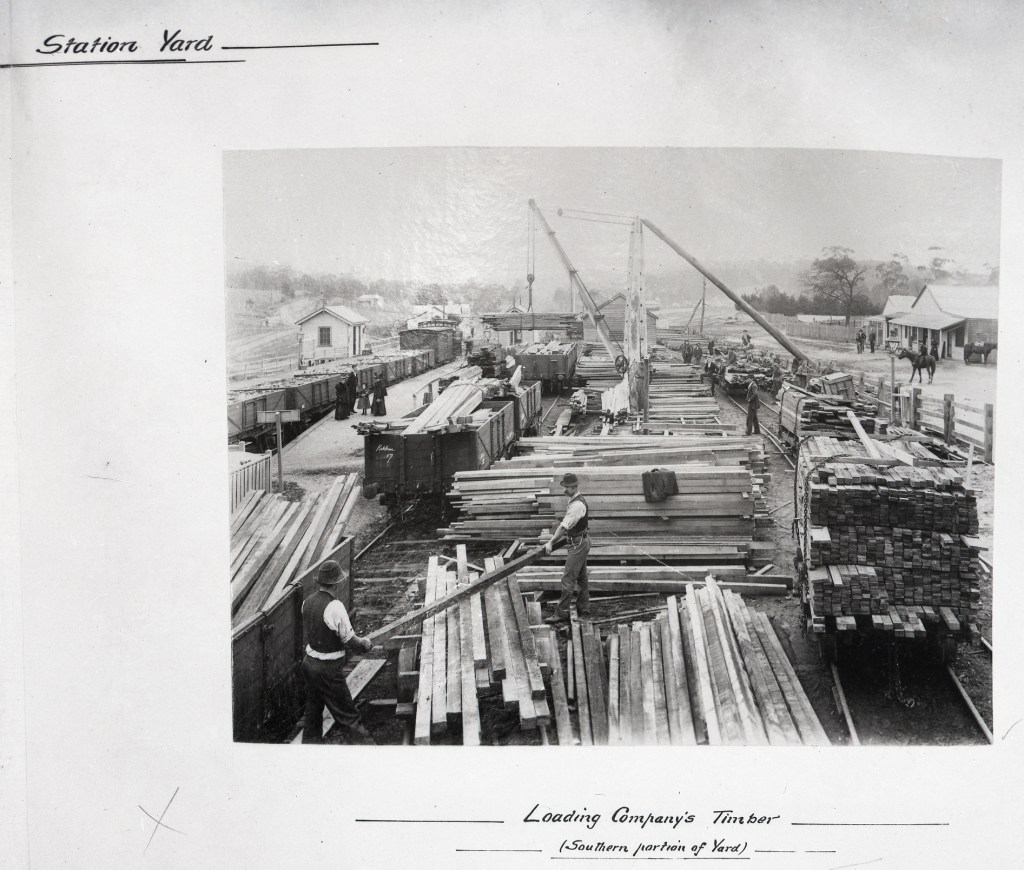
Ministerial visit to the timber-seasoning works at Newport, Wednesday, August 23, 1916. The green timber is stacked on trucks above a bed of charcoal in the drying kilns. Steam is then introduced, the temperature graduated, and in 16 days the boards are thoroughly seasoned.
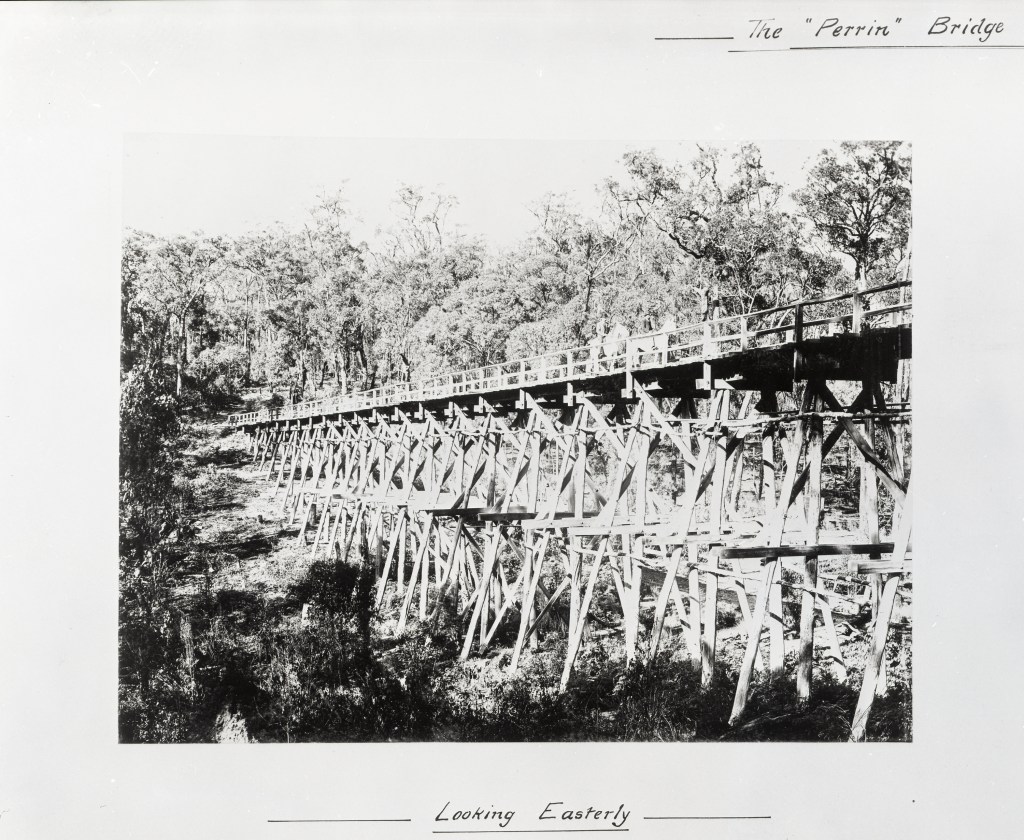
https://trove.nla.gov.au/newspaper/article/140697668
Accompanied by members of the Forestry Commission, the Minister for Mines and Forests (Mr. McNamara) yesterday Inspected the Newport wood-seasoning kilns. By steam processes, wood green from the saw is seasoned in three weeks, Instead of three years in the open stacks. Watching a working kiln from left to right were:-Mr. Owen Jones (chairman of the commission), the Minister, Mr. W. J. Code (commissioner), Mr. J. Hausa (superintendent), and Mr. A.V. Galbraith (secretary). Argus, 7 August 1924.
https://trove.nla.gov.au/newspaper/article/4202468
Samples produced by the department to promote Victorian hardwood timbers. Source: Simon Murphy.

Boat Knees.

The beautiful curves of wooden boats have surfaces which come together at odd angles and often use special timber shapes called “boat knees” to join them together and add strength.

Most woodworkers know that timber is strongest along the grain but will split when force is applied across the grain.

Timber can be bent, joined or laminated but boat knees from the natural crooks or bends in trees are highly prized by shipwrights. Tree roots are a common source of 90-degree bends.

In 1943-44 the Forests Commission supplied some 722 boat knees from State forest…

Photo: NAA.