The Upper Yarra Fire #12 erupted on Ash Wednesday, 16 February 1983, on the slopes of Mount Little Joe near Millgrove at 7.20 pm and quickly progressed under the influence of the strong north westerly wind.
Also often known as the Warburton or Powelltown Fire, it was first spotted by Jon Gwilt in the Briarty’s Hill firetower, and while the cause is unknown, most suspected arson. Another fire broke out in virtually the same spot in 1991.
Purely by chance, the Forests Commission Victoria (FCV), the Melbourne and Metropolitan Board of Works (MMBW), and the CFA were marshalling some tankers and equipment at Yarra Junction with the intention of heading to Belgrave South and Upper Beaconsfield when the Warburton fire broke out.
The Cockatoo fire also broke out at 7.28 pm.
By 7.50 pm the fire had grown to 100 ha and reached the summit of Mt. Little Joe. About an hour later at 8.40 pm, the fire had begun spotting through thick forest into the small sawmilling township of Powelltown, 14 km away.
Direct attack on the fire was too dangerous and ineffective, so crews were dispatched to warn landowners of the advancing blaze and to protect lives and property.
By 8.00 pm the FCV resources totalled 28 men, 2 tankers, 1 dozer and 3 Slip-On-Units. About 80 CFA volunteers on 20 trucks were also deployed.
Ray Baker, the District Forester from Powelltown, was the Fireboss. Paul Mainey was the assistant forester and had been despatched to Trentham earlier in the day but returned on Thursday evening after being ordered by Ken Harrop, the Divisional Forester at Healesville. Forester Ron Harper assisted Ray during the initial run of fire.
The fire began spotting over the Old Warburton Road and calls were made for additional resources, but they were hard to find, with just about everyone and everything from the Forests Commission already deployed to other fires. Crews from Noojee that were on their way to Cockatoo were snaffled.
A little while later at 8.25 pm Briarty’s Hill reported the fire spotting over Britannia Creek Road, some 6 or 7 km from the origin of the fire.
By 8.40 pm the fire had spotted south of the Powelltown – Yarra Junction Road. This spot fire was to the west of the town and burning fiercely through thick messmate (E. obliqua) and silvertop (E. sieberi) forest with a very flammable wiregrass understory.
The hot wind was still from the northwest, but the change was imminent, when the main ground fire reached Podolinsky Hill near the township. The average Rate of Spread through the bush was 10.5 km/hr.
The southwest wind change arrived at 9.15 pm and split the fire in two. The northern front headed around Warburton township towards Reefton and the Upper Yarra reservoir, while the other near Powelltown moved back into the thick bush and headed towards Noojee.
And on the wind change, the small spot fire west of Powelltown burnt into a cleared area next to the FCV depot, nursery and office complex which was luckily spared.
Approximately 200 people took shelter at the local oval at Powelltown and at the town dugout. Residents from Reefton and McMahons Creek sheltered in a MMBW underground pipeline tunnel.
The fire continued throughout the night in the thick stands of mountain ash and messmate within the State forest. Because there was no threat to communities there was little point in mounting a suppression effort in the dark.
By midnight, the temperature was slowly dropping to 24 degrees with the RH hovering at 40%.
At about 04.00 am on Thursday a light drizzle began to fall at Powelltown as the temperature dropped even lower to 12 degrees. The rate of spread of the fire virtually stopped but it hadn’t gone out.
In the back of the fire controller’s minds was the blaze to the west of Powelltown near Kurth Kiln at Gembrook which had originated as a long-distance spot from Cockatoo. It was uncertain if more spot fires were still smouldering and undiscovered in the bush.
A reconnaissance flight was arranged at first light on Thursday with Assistant Divisional Forester Harry Prewitt to assess the situation and the damage.
By dawn at Powelltown there were 93 FCV employees plus 9 from APM with 8 bulldozers assembled to trail the southern edge and commence backburning. A further 30 FCV crew from Neerim south were deployed to the New Turkey Spur on the boundary of the two FCV Districts.
The Noojee township, which had been devasted by the 1939 bushfires, was evacuated and Police closed the Powelltown – Noojee Road.
Firebombers operated from Jessop airstrip near Noojee. The MAFFS was used to drop retardant on the main edge burning at the head of Alderman’s creek. Kevin Ritchie from Bendigo was the Air Attack Supervisor (AAS).
Basecamps were established at the Powelltown football ground, as well as the recreation reserve at Neerim South, with the support of the SES and Red Cross.
The northern tongue of the fire came out of the bush early on Thursday morning at 10.30 am when it crossed the Warburton Highway near the intersection of Brahams Road. Fortunately, the iconic stand of coast redwoods near Cement Creek, and the century-old Reefton Pub were spared.
The CFA had 60 units and 600 volunteers working at Wesburn, Reefton, Warburton and Gladysdale. The Metropolitan Fire Brigade (MFB) also sent appliances and crews from Melbourne to Warburton where there was a mains town water supply and were very effective.
On day 2, Thursday 17 February, the weather was mild with 22 degrees, RH 46% and a light south east wind of 10 km/hr.
Rod Incoll, the District Forester from nearby Toolangi was appointed night shift Fireboss while John McDonald from Alexandra and Andy Banks from Benalla, who had only recently transferred from Powelltown, took subsequent day shifts. Andy Beveridge worked at Neerim South.
The Navy sent 120 personnel from HMAS Cerberus, equipped with 110 fire beaters, 10 knapsacks and a mobile cooker to Powelltown on Friday to assist with fireline construction on Black Sands Road.
An Army crew, along with the FCV Mobile Support Crew (AKA Hotshots), worked in the O’Shannassy catchment alongside the MMBW to build a huge hand trail through the thick scrub.
There was a great deal of discussion about how to treat large patches of unburnt forest in the middle of the fire. Building a control line around the fire perimeter through the thick bush required a huge effort and may not be completed before the onset of more hot weather.
The CSIRO infrared Linescan was used on Saturday to map the fire boundary through the thick smoke. This is believed to be the first time the technology had been used operationally, and the image helped to develop a control strategy.
By Monday 21 February, the fire edge had stabilised, and backburning and aerial ignition was virtually completed in the expectation of more warm weather. However, 19 mm of heavy rain fell on Wednesday which extinguished most of the smouldering edge and made any further ignition impossible.
The rain enabled a major de-escalation of crews back to their home bases. The fires at Cann River were still burning and FCV crews were becoming exhausted with the repeated tours of duty.
However, the intense thunderstorm also caused major erosion of catchment slopes and gullies across the State forest. The rain which fell on Mt Little Joe created a mudslide of trees, rocks and debris to flow down a natural gully and completely block the highway to Warburton.
The fire also burnt the Yarra Tributaries and part of the Upper Yarra catchment which supply Melbourne’s drinking water.
Overall, 27 homes were destroyed in the Warburton Fire #12, but no lives were lost so there was no coronial inquiry.
The Warburton fire was one of the largest on Ash Wednesday with an area of 44,500 ha. It killed or severely damaged 4,979 ha of mountain ash forest while a further 12,636 ha were less severely impacted or unburnt.
Salvage of valuable timber commenced almost immediately before the logs dried out and degraded. Fortunately, the experience gained by the FCV in the salvage after 1939 was put to good use in a program that followed the fires at Warburton, Powelltown Bruthen, Broadford and Cann River. Softwood salvage included operations at Bright, Macedon and Geelong.
By the end of June 1983 some 16,600 cubic metres of sawlogs and pulpwood had been salvaged while over the next 12 months this increased to 443,000 cubic metres of sawlog and 239,000 cubic metres of pulpwood.
And while it was not on the same scale as the massive 1939 salvage program, it took over two years to complete the salvage with logging contractors coming from adjoining forest districts.
Fire on Mt. Little Joe on 16 February. Source: CFAView from the main street in Warburton. Source: CFACFA Tankers at the century-old Reefton Hotel. Fires burnt all around the hotel with houses being lost close by. Photo Tony Crivelli.MFB Mk 2 pumpers were very effective around Warburton township where there was a MMBW mains water supply. Source: Fire Services MuseumThe FCV Mobile Support Crew (hotshots) worked with the Army and MMBW to build a massive hand trail through the O’Shannassy catchment. Note flannel shirts and jeans. No work overalls were issued, only hart hats and safety boots. Photo: Athol Hodgson.Extensive areas of mountain ash forest around Powelltown were killed by the 1983 Ash Wednesday bushfire. The forests had originated after the 1939 bushfires and regenerated naturally once again from seed fall. Photo: Peter McHugh 1983A healthy stand of mountain ash regrowth at Powelltown that regenerated following timber salvage and natural seed fall after 1983 Ash Wednesday bushfires…. Photo: Peter McHugh 2021.As many as 83 residents from the townships of McMahons Creek and Reefton sheltered in the underground MMBW tunnel at Upper Yarra Dam. Source: The Age
Early stages of Day 1 before the wind change. Spot fire near Powelltown. Source: PROVWith the wind change at the end of Day 1 the fire split around Warburton and Powelltown. One part headed towards Reefton and the Upper Yarra Dam while the other headed east towards Noojee (dark blue line – Thursday day 2). Source: PROVFriday Day 3 – Each of the tongues of fire expanded over the next 24 hours. Source: PROVSaturday Day 4 – The boundary became more stable. Source: PROVSaturday Day 4 – CSIRO LINESCAN was used to map the fire edge through the thick smoke. Source: PROVDetailed mapping of fires was greatly assisted using a CSIRO Fokker Friendship aircraft fitted with infra-red linescan equipment. FCRPA Collection.Backburning and aerial ignition was used to consolidate boundaries after the LINSCAN identified to large unburnt patches. Source: PROVMonday Day 6 – Final fire area.44.500 ha. Source: PROV
Don to many, and Thommo to just about everyone else, Don Thomson was a timber man, and a legendary forester’s forester.
Thommo was born in Lilydale on 25 March 1942 and his earliest years were spent with his grandmother on a poultry farm in Bayswater, while his father Norm served in the RAAF.
When Norm returned from the war in 1946 the family returned to Lilydale for a while, but Norm worked for the National Bank, first as a bank clerk and later as Branch Manager, and they moved to Terang in about 1951.
It’s often said Don had sawdust in his veins. His grandfather Bill Thomson was the skipper of the Paddle Steamer Adelaide from 1890 to 1912 which hauled red gum logs on the Murray River. He later became foreman of several sawmills at Echuca and Moama.
Don was a keen scout as a lad and enjoyed time in the bush where he always felt comfortable.
But in the late 1950s Don became increasingly disenchanted with the prospect of staying in the district and looked wider for an interesting outdoors job. Options included the defence force, surveying, agricultural science and forestry.
Forestry appealed, not only because it was outdoors, but it also offered a whiff of adventure. Besides, full scholarships were offered, plus the additional princely allowance of £2 per week while in residence.
His application was handwritten and supposedly fairly rough but was supported by a couple of solid references. During the subsequent written exam in the Terang High School Principal’s office, Don struggled through and thought there was no way he would be accepted. Notification of an interview came as a great surprise; followed by even more amazement at being accepted for the three-year course at the Victorian School of Forestry (VSF) at Creswick from the beginning of 1959, along with 11 others. Don was only 16.
It was while at Creswick that Don met his future wife, Jan, a Ballarat girl, at a Church picnic.
Upon his graduation from VSF at the end of 1961 with a Diploma of Forestry, a full career path with the Forests Commission Victoria (FCV), and its successors, followed…
In 1962, like so many other young VSF graduates before him, Don was posted to the forest assessment branch.
His first job was camping at Horseyard Flat near the Moroka Hut in Gippsland to assess Alpine Ash timber stands. The next two to three years included assessing Red Gum at Lindsay Island on the Murray River between Ned’s Corner and Renmark. This was followed at Cann River and Errinundra Plateau to look for timber across large tracts of virgin forests. The bush was thick and full of snakes, scrub ticks, wild dogs, goannas and kangaroos. But the fishing in the wild and remote rivers was good.
In 1965, Don married Jan and secured a more stable job at Mansfield Forest District. This was followed with other FCV postings to Nowa Nowa between 1967 and 1971, then to Myrtleford as the Assistant District Forester between 1971 and 1977. It was here that Don completed his thesis on “Low intensity prescribed burning in three Pinus radiata stand types at Myrtleford”, to gain a Diploma Of Forestry (Vic).
From 1978 to 1979 Don worked at Taggerty before being promoted in 1980 to Rennick on the South Australian border as District Forester. His last posting with the FCV was at Erica from 1983 to 1985.
From mid-1983, the Forests Commission was disrupted when the State Government announced the creation of an amalgamated Department of Conservation, Forests and Lands (CFL).
The Commission then relinquished its discrete identity when it merged into the newly formed department, along with the Crown Lands and Survey Department, National Park Service, Soil Conservation Authority and Fisheries and Wildlife.
After the amalgamation, and prolonged restructure process, the tempo of change accelerated with many more departmental reorganisations and name changes over the subsequent decades.
Rather than looking backwards, Don took the changes in his stride and from 1985 he was appointed the Assistant Regional Manager of Public Land Management at Warragul to 1986, and then later in Traralgon to 1988.
One of the many initiatives of the new state government was the Timber Industry Strategy (TIS) in 1987. The TIS was a very innovative policy which introduced 15-year sawlog licences, regional sustainable yield, Forest Management Area Plans, the Code of Forest Practice, Harvesting Prescriptions and Forest Operator Licencing.
In typical style, Don faced problems by wanting to fix them once and fix them properly. A disciplined and fastidious administrator, he could sometimes become impatient at the rate of progress. But his prodigious work ethic led to the development of comprehensive timber harvesting prescriptions, which are still in use today.
Don also led a visionary project to calculate the long-term wood flows and define the new roading network to access stands of 1939 mountain ash regrowth across the Central Highlands.
Its centrepiece was building the South Face Road (SFR) which climbs steadily for 25 km, in an east-west direction, across the steep southern slopes of the Baw Baw Ranges in Central Gippsland.
The SFR was without doubt, the biggest and most complex road construction project that the Department had undertaken since the heady days in the late 1950s when the Forests Commission built the Tamboritha and Moroka Roads into the mountains beyond Licola. The SFR took 20 years to complete at a direct cost of $25 M.
Meanwhile, the forest conservation movement arguably reached the zenith of its influence and power in Australian politics in the late 1980s. And like so many other staff, having his stewardship and care of the State forests he loved being challenged, together with the sight of what he considered slovenly protestors blockading logging coupes, never sat easily with Don.
Firefighting in Victoria’s remote and rugged forests was an integral part of life for FCV foresters. It came with relentless toil, a sense of risk, achievement, comradeship, the smell of smoke, dirt and sweat, but with the tantalising prospect of a cold beer at the end of a very long day.
For his sustained firefighting service Don was awarded the National Medal, with a 40-year clasp in 1995, followed by the prestigious Australian Fire Services Medal (ASFM) in January 1999.
Between 1989 and 1997, Don was based in Traralgon as the Manager for Forests for Gippsland. And from 1997 to 2000 Don held the executive position of Manager of Commercial Forestry for Gippsland Region, where he became well known and respected in timber industry circles. His role also included statewide training, which he approached with his typical gusto and enthusiasm.
But like so many others, Don was eventually caught up in another of the relentless public service restructures and “downsizings” in mid-1999 and elected to retire in June 2000, aged 58, before he was really ready.
His premature departure left many saddened and loyal staff as well as a huge gap in the Departments shrinking pool of practical experience and corporate knowledge.
Rather than remain idle, Don took some consultancy work for a few years after retirement before moving to Inverloch in 2002, where he and Jan spent perhaps their happiest ten years before Jan died suddenly in 2012.
Don was always a volunteer, and in early years supported Scouts, then Lions, and Red Cross. He did countless trips from Inverloch to Melbourne hospitals transporting people to medical appointments for anyone who was willing to get into the car with him. His fondness for driving long distances at the drop of a hat was legendary.
A keen cyclist, Don was never deterred by a headwind or a long hill, but simply changed gears and pedalled harder.
And as a devoted South Melbourne Football Club supporter his faith never wavered.
Don was an enthusiastic member of the Retired Forests Commission Personnel Association (FCRPA) in his later years and could always be relied upon for some interesting insights. And as anyone who ever met him can attest, Don undoubtedly held strong views on many topics and was happy to share them.
In later years Don fought Parkinson’s Disease with his typical focus, grit and determination but it was a losing battle. He never wanted to leave Inverloch and the fantastic friends and neighbours he had.
Don Thomson died on 2 July 2022 at Doncaster in Melbourne surrounded by his loving family including his son Mathew and daughter Jo, and many grandchildren.
A man of boundless and infectious energy, Thommo left his mark wherever he went.
Written with the support of his family and many work colleagues and submitted to the Institute of Foresters of Australia (IFA).
Graduating class taken at the VSF in December 1961: Back (l to r) Geoff Beilby , Brian Fry, Mike Gardiner, Peter Lawson, Brian Vernon, Bob McKimm – Front (l to r) Ian Smith, Roger Smith, Jim Blain, Garry Leitch, Don Thomson, Colin Tolsher.
Cockatoo is a small village nestled into the southern foothills of the Dandenong Ranges were the suburbs meets the bush. Narrow gravel roads and modest fibro homes characterised the settlement.
The Cockatoo fire began late afternoon at 7.28 pm on Ash Wednesday 16 February 1983, about four hours after the blaze at Belgrave South. It was reported to the Forests Commission Victoria (FCV) office at Kallista by Jon Gwilt in the Briarty’s Hill firetower who could see smoke south of Macclesfield.
The fire was believed to been deliberately lit in at least two places in the Wright State forest near the Puffing Billy train line easement.
A professional fireman from the Metropolitan Fire Brigade (MFB) was detained by the CFA Captain and handed over to Police. He was charged with arson but later found not guilty in the Supreme Court.
At the time of reporting of the fire many local CFA fire trucks from the Dandenong Ranges and Pakenham Groups had been called away to the earlier fires burning at Belgrave South and Upper Beaconsfield.
The main Cockatoo CFA tanker had gone to Upper Beaconsfield and the remaining crew around town only had the F100 Ute. They were led by local Captain Graham Simpson. The main tanker later returned.
The police helicopter swooped over town and many people evacuated when they saw the smoke plume billowing up from the Wright State forest.
Dorothy Griffin was later awarded the Royal Humane Society Bronze Medal for assisting residents evacuate during the blaze.
Thankfully, the town had a mains water supply with diesel back-up pumps, and over a megalitre of water was used in the next 24 hours.
Forests Commission crews and tankers from nearby Gembrook and Olinda depots were also deployed to Belgrave South and Upper Beaconsfield. They were redirected to return immediately to Cockatoo and the Wright State forest which was within the Forests Commission’s Fire Protected Area (FPA).
Senior Gembrook overseer Bob Ferres took control of the FCV resources at Cockatoo. They arrived after 8.00 pm at Bailey Road to discover the two small fires had joined and were about 30 ha in size. The fire was spotting into private property in several locations.
Most of the bush hadn’t been fuel reduced for many years and the fire ran steadily under the influence of the northerly wind towards the Bailey Road – Majestic Road area.
They initially worked near the corner of Bailey and Paternoster Roads and were regularly kept informed by radio of the progress of the southwest wind change which was making its way across Victoria.
The District Forester from Kallista, Frank May, and Assistant Divisional Forester Harry Prewett went on a reconnaissance flight from Coldstream at 6.30 pm, with Bill Incoll from MFRS at Sherbrooke as their pilot. Frank was in contact with Bob Ferres by radio. They flew over the Belgrave, Upper Beaconsfield, Cockatoo, and later the Warburton fires, before returning around 8.40 pm for a briefing with the Divisional Forester Ken Harrop at Healesville.
The strong southwest wind change struck Cockatoo around 9.05 pm and the fire burnt back fiercely across the township at 9.10 pm. The Rate of Spread increased to 15 km/hr with long distance spotting and crown fires.
FCV crews rushed down Bailey Road under a hail of fire and a blizzard of burning embers. As they travelled towards Cockatoo, they picked up a man running along the road.
They also passed the CFA transit van from Nar Nar Goon engulfed in flames. The van was loaded of petrol and had been waiting for tankers needing to be refuelled when the wind changed. Aware that they were in immediate danger they tried to escape by driving through the smoke and flames, but the van overturned. The driver, Ranald Webster escaped with horrific burns to 80% of his body, while his CFA colleague, Eddie “Dasha” Lowen died in the van.
Ranald Webster was sheltering beside the road when he was picked up by Bob in the FCV Slip-on-Unit and taken to the Cockatoo medical centre. Ranald was given little chance of survival by ambulance driver Lance Simmons, but after years painful rehabilitation, Ranald went back to his job driving buses and made it his mission to help others, working with burns sufferers.
Bob Ferres and “Butch” Reid also passed a CFA tanker and picked up another three passengers. The Olinda FCV tanker driven by Kevin Curran caught alight as well.
It’s fair to say, the FCV crews probably saved the lives of all these people. The decisions made by Bob Ferres on the day also undoubtedly saved his crews lives.
There were many other acts of unheralded heroism that frantic afternoon. Some spoke of miracles.
Bob Ferres and the FCV contingent regrouped on the Gembrook side of Cockatoo at about 9.30 pm and worked through the night to save houses and lives as flames engulfed the town.
At the time of regrouping, FCV crews comprised 21 firefighters, 1 small First Attack Dozer (FAD) and 6 tankers. The CFA had 40 men, 3 dozers and 10 tankers. Four additional dozers had been requested but were hard to find under the circumstances.
Two Forests Commission firefighters, Roger Frair and John (Charlie) Chaplin lost their homes in Cockatoo that night.
Charlie was with two others in the Olinda tip-truck fitted with a slip-on water tank. The headlights didn’t work so they scrounged some old electrical wire hanging on a fence and cobbled together a makeshift repair. The radio didn’t work either.
They were working to save houses on Knapton Avenue in Upper Beaconsfield and on their way to get more water when the wind change hit. The fire then swept over St Georges Road and Critchley Parker Junior Reserve where 12 firefighters from the CFA were killed.
The crew made their way to Charlie’s house in Cockatoo via the backroads because the road to Emerald was blocked by fire. His wife’s car was in the driveway and the Olinda Policeman, Jack Wicks, was standing out the front. Two people were lying dead in a nearby gutter. They were probably the young couple due to be married the following weekend, Anne-Maree James and John Merrick. Growing ever more anxious and not having a radio, they returned to the FCV Office at Kallista and were told that Charlie’s wife and daughter had safely evacuated to be with family at Carrum Downs.
Meanwhile, over 300 people, mainly women and children, sheltered at the Cockatoo kindergarten. Mrs Iola Tilley was their teacher. Local CFA crews surrounded the building at the height of the blaze. Many others gathered at the CFA shed causing traffic chaos.
The head fire ceased its run around midnight and was finally contained on the Gembrook – Lilydale Road but there were many spot fires sprayed out across the landscape.
One spot fire near Soldiers Road proved more difficult and was controlled a further 24 hours later by a small FCV crew from Sherbrooke and Kallista comprising 24 firefighters, 6 tankers and 1 quick fill pump.
Groups of school children were evacuated from Gilwell Scout Camp, Cooinda school camp and the FCV picnic ground at Kurth Kiln back to safety at Gembrook.
With the cooler weather on Thursday, backburning, blacking out and patrol continued along Beenak, Tonimbuk and Soldiers Roads for several days.
The media converged on the Cockatoo because of its proximity to Melbourne.
The Cockatoo fire #19 was one of the smallest in area of all the Ash Wednesday fires at 1,800 ha, but 6 people, including a CFA volunteer fireman lost their lives.
Over three hundred houses and seven major buildings were lost, and an estimated 1000 people were without their homes. 238 cattle and 97 sheep were also killed.
A large firebreak was cut near Second Avenue with SES bulldozers in the wake of the fire. Known as the “airstrip” it was 300 m wide and nearly a kilometre long but has now largely regrown.
State forest burnt in Fire #19 within the Fire Protected Area (FPA) included Wright State Forest, Soldiers Road near Kurth Kiln and Tonimbuk Road.
The fire was eventually declared safe by 6.00 pm on Day 12.
But months of relief… and years of recovery and rebuilding… followed.
This post should be read in conjunction with a story about the Belgrave / Upper Beaconsfield fire.
Taken from the house directly opposite emerald secondary college during the very early stages of the Cockatoo fire in the Wright State forest. Photo: Tonia Van den Dungen. Source: Christmas Hills CFA.Tom Van den Dungen watching moments later. Photo: Tonia Van den Dungen. Source: Christmas Hills CFAMany houses and cars were destroyed. Source: The AgeCaroline Ave Cockatoo after Ash Wednesday – Over 300 homes were lost and 6 people were killed. Source: The AgeThis photo was found in a camera shop in Melbourne’s CBD in late 1984. Someone had dropped a negative off in Feb 1983 to be printed and never returned. They told the shop owner that the photo is of Cockatoo on Ash Wednesday Feb 16th, 1983. The photo was taken just after the major wind change to the southwest, and the large bright glow on the left of the photo is the fire front roaring into the town. Tim Fitzgerald.Ian Macrea and his son Robbie, 15, carry their dog and a few possessions from the ruins of their home in Cockatoo, south-east of Melbourne, after the Ash Wednesday bushfires in February 1983. Picture: Mike ArthurRanald Webster was driving the Nar Nar Goon CFA Transit van loaded with fuel when it overturned and caught fire at the time of the wind change. He was badly burned and taken to the Cockatoo medical centre by FCV Overseer Bob Ferres also escaping the blaze. Ranald was given little chance of survival by ambulance officers. His CFA colleague Eddie “Dasha” Lowen died. Photo: Fairfax.Tent city sprang up to support the community. Source: The AgeInside the Cockatoo kindergarten. Source: NAAThe kindergarten at Cockatoo became an important refuge for the community. It has been repurposed as the Ash Wednesday Bushfires Education Centre. Photo: CFAPolice motorbike riding between Cockatoo and Belgrave after the Ash Wednesday fires. Source: Museum Victoria.Main street Cockatoo. Source: Ruth South.Newsreader, Brian Naylor at Cockatoo. Ironically, he was killed at his home at Kinglake West during Black Saturday bushfires 26 years later. Source: Ruth South.Source: NAACaroline Avenue Cockatoo after Ash Wednesday – Over 300 homes were lost and 6 people were killed. Source: The AgeThe clean-up went on for months. Photo: Graham Simpson, CFA Cockatoo.Source: NAALooking into the Wright State forest from the Monbulk- Gembrook road and the tree crown scorch after the fire. Source: NAAAnd the bush in the Wright State forest grew back. Source: NAAThe Wright State forest is situated north and west of Cockatoo and is fringed with modest residential development on narrow gravel roads. Slopes are moderate with mostly a northerly aspect. Creeks generally only run during winter and the main trees are messmate, brown and silver stringybarks with a hakea understory. Fuel loads were moderate to heavy. The north east corner had been fuel reduced and some tracks had been slashed. The two Points of Ignition were in the north west corner on Wright Road. Source: Helen Bull FCV Kallista.
On Ash Wednesday 16 February 1983, at 3.24 pm, a bushfire started on Birds Land near Mount Morton Road at Belgrave Heights.
There had been concerns expressed in the months before the fire about the fuel loads by the CFA to the local Sherbrooke council which owned the block.
The temperature at 2.00 pm at Kallista was 40.5 degrees, the Relative Humidity was 14% with wind from the north at 25 km/hr. The fine fuel moisture content was estimated to be an extremely low 9% and the Drought Index was 383. Unsurprisingly, the Forest Fire Danger Index (FFDI) was extreme.
The fire was reported to the CFA at Belgrave by a local resident whose property at Tremont overlooked the area. Due to an incorrect assessment of the location given to the CFA there was some delay in locating the seat of the fire.
The Forests Commission Victoria (FCV) tower at Dunn’s Hill picked up the smoke at 3.30 pm and notified the Kallista office where Frank May was the District Forester. Bob Ferres, Overseer from Gembrook, was appointed Fireboss.
It’s unclear how the fire started, but most suspect arson.
The fire was fanned by the hot northerly winds and quickly headed towards Harkaway, Narre Warren East, and Guys Hill.
Forests Commission and National Parks Service (NPS) crews from Kallista, Ferntree Gully, Sherbrook, Olinda and Gembrook were immediately deployed at 3.35 pm, with more at 3.50 pm to join a large contingent of CFA crews. Many District crew were away at the Cann River fires but other FCV districts from Central Division came.
Within four minutes houses were burning in Mount Morton Road, and by 4.00 pm, the fire had crossed the Belgrave-Hallam Road. Some spot fires were recorded 30 km ahead of the main front.
The estimated size of the fire at 4.20 pm was 60 hectares.
It was a manic and confused afternoon. Radio channels were choked, and communications were poor. It’s fair to say that the FCV, NPS, CFA and Victoria Police, which all operated independently on separate radios and with different command arrangements were overwhelmed.
In many cases, residents had to fend for themselves as the fires broke communications, cut off escape routes and severed electricity, telephones and water supplies.
The situation was made worse because there seemed to be no distinct fire front, but instead hundreds of rapidly developing spot fires that eventually joined. The average Rate of Spread (ROS) in the forest fuels was estimated to be about 5km/hr. It was much faster on the grass.
About 30 schoolchildren were evacuated from the Lutheran Christian Family Centre near Bartley Road, Belgrave Heights, soon after the fire started. They were taken to the Fern tree Gully Technical School. Other people were taken to the Belgrave South Primary School.
At 5.30 pm the fire was spreading against the wind towards the Shire Offices in Glenfern Road and the FCV Egg Rock Tower north of Gembrook reported the fire extending as far south as Harkaway.
A spot fire jumped the Princes Highway at Pink Hill near Beaconsfield around 5.30, and by 6.30, the Koppers pine treatment plant at the Officer railway station was fully ablaze with flames at least 100 feet high.
Residents south of the Emerald-Beaconsfield Road near the Cardinia Park Hotel were evacuated. The blaze came within 500 metres of the hotel, which near Beaconsfield.
The FCV Bedford Tankers, as well those with the CFA, were experiencing severe problems with petrol vaporisation. One FCV tanker became stuck between two houses, and it was only by the use of the pumps that the house and tanker were saved.
The weather forecast issued at 6.00 pm by the BOM was for a wind change of 60-70 km/hr from the southwest to arrive in Melbourne around 9.00 pm.
To make matters worse, other bushfires started on State forest near Warburton at 7.20 pm and moments later at Cockatoo at 7.28 pm, which split the remaining FCV and CFA resources.
The FCV resources with Bob Ferres at Beaconsfield were redirected to a new fire in the Wright State forest at Cockatoo at 7.55 pm. Bob met with Upper Beaconsfield CFA Captain Eric Bumstead at Barnes Paddock to discuss the change in deployment before they departed.
Forests Commission crews from Noojee were also requested to go to Gembrook in anticipation of the wind change, but they never arrived because of the outbreaks of the Warburton fire.
Around 8.50 pm that evening, the fire had crossed the Princes Highway near Officer, when a dry blustery south westerly wind change of about 110 km/hr hit the Upper Beaconsfield area.
And with the violent wind change, the entire eastern flank was lost, and the fire roared up from Guys Hill and wreaked havoc through Upper Beaconsfield, tragically taking many lives and properties along the way.
Twelve CFA firefighters, in trucks from Narre Warren and Panton Hill, also lost their lives on a narrow bush track at the Critchley Parker Junior Reserve when the fire overran them.
Prior to the wind change, Forests Commission tankers and crews had been specifically instructed by FCV Overseer Bob Ferres not to leave the relative safety of wider roads, where they could turn around, and to “keep one foot in the black” – meaning – be able to quickly retreat to burnt ground.
There were widespread power cuts and phone line to the Dandenong Ranges, Gembrook and Yarra valley with the strong winds which was not restored until Thursday morning. The loss of power and telecommunications had a major effect on the FCV offices trying to control the fires. It took some hours to activate dedicated DISPLAN lines. Communication with Victoria Police at D24 was difficult. Around 02.00 am on Thursday there was a light sprinkling of rain upon the blackened fireground.
The bushfire eventually stopped by the southern shore of the MMBW’s Cardinia Reservoir and extended nearly as far as Gembrook.
The Victorian Railways transported water in special trains to Berwick to fill CFA tankers and repaired wooden sleepers damaged between Berwick and Packenham.
And by about 04.30 am on Thursday the fire front had all but stopped. Over its 12-hour rampage a total of 9200 ha was burnt, 21 people died and 230 homes were lost.
Areas of State forest within the Fire Protected Area (FPA) burnt in Fire #18 include Critchley Parker Junior Reserve and Guys Hill on the banks of Cardinia creek and some MMBW land around Cardinia Reservoir.
Source: The Age Newspaper.
The northern entry to Critchley Parker Junior Reserve. Photo: Upper Beaconsfield CFAPhoto: Peter McHughThis photo was taken on 14th February 1983 when the Narre Warren CFA received a new fire truck. Two days later, 6 members in the photo, plus an additional firefighter tragically, lost their lives on this truck battling the Ash Wednesday bushfires in Upper Beaconsfield. Photo: Narre Warren CFACritchley Parker Junior Reserve. Photo: Upper Beaconsfield CFA – 1983Photo: Peter McHugh 2022Photo: Peter McHughUpper Beaconsfield CFAPeople evacuated to the Cardinia Park Hotel. Source: CFAThe trees on either side of the fairways were burnt at the Upper Beaconsfield golf course. Source: CFA
A day of Total Fire Ban (TFB) was declared for Victoria at 06.30 am on Ash Wednesday, 16 February 1983.
Forests Commission Victoria (FCV) firetowers at Peters Hill, Crowes and Mt. Cowley were up early from 09.00 am in expectation of a bad day, and all crews were in their depots on standby.
Under provisions of the Forest Act (1958) the State forest was legally closed to timber harvesting and haulage contractors from midday.
Richard Stone was the District Forester at Geelong, while Malcolm McDougall was the DFO at Forrest. There were also FCV depots at Lorne, You Yangs, Apollo Bay, Anglesea and Gellibrand.
At 2.00 pm the Crowes firetower near Lavers Hill reported a temperature of 37.5 degrees, wind 60-90 km/hr from the north to north west and a RH at a very low 9%. Visibility was poor due to dust and smoke from a major fire to the west at Framlingham.
A taskforce led by FCV overseer Norman Rourke, with a tanker and two Slip-On-Units, were preparing to leave Forrest for the East Trentham fire.
The Otways fire #22 started at 2:45 pm in grassland on the Deans Marsh to Birregurra Road, near a cutting of the disused railway line to Forrest, about 150 metres to the west of Trotter’s sawmill. It was reported by a passing motorist to the CFA at 2.50 pm and the cause was unknown.
The FFDI exceeded 100, or extreme.
The FCV at Geelong was advised at 3.10 pm, and the office at Forrest 10 minutes later at 3.20 pm. The FCV was therefore unable to assist the Deans Marsh CFA in the critical first attack.
The fire was nearly controlled by the CFA in its early stages but raced upslope and reached Valhalla, 5.5 km away, at 3.30 pm.
At 3.45 pm the fire reached the State forest boundary with high fuel loads and thick dry forest of messmate with about 20 tonnes/ha, and in the mountain ash forest it reached up to 30-35 tonnes per hectare. Fire intensity within the forest increased dramatically with crowning and spot fires.
By 3.55 pm the fire had developed an unstoppable momentum and was spotting up to 10 km ahead of the main front.
Two spot fires were reported at Haines Ridge, while five minutes later spots were igniting on the road between Benwerrin and Lorne.
At 4.00 pm the fire had grown to over 1000 ha and FCV had dispatched 10 tankers, 2 dozers and 45 firefighters. The CFA had 10 tankers and about 50 firefighters. As was customary at the time, the FCV worked in the bush while the CFA focussed on private farmland and around houses.
By 4.15 pm the fire was at Little Erskine River and by 4.18 pm it had reached Reedy Creek on the coast, north east of Lorne.
More equipment was being sought and the crews which had been dispatched earlier to East Trentham were recalled. A FCV helicopter and MAFFS firebomber was requested. Forester Tony Bartlett arrived near Pennyroyal with the Gellibrand FCV crews at 4.25 pm and saved houses owned by the Marchant and Pope families.
The fire had also been reported to the small FCV depot at Lorne and forester Phillip Evans dispatched the crew and headed north to the main ridge of the Otway Range at Benwerrin to see what was happening.
Phil waved down police motorcyclist, Snr Constable Steve Williams, who happened to be on his way to Colac and advised him of the impending danger ahead. Rather than returning to Lorne, Williams told Phil to stop anyone else and then rode headlong towards the fire to warn people. But a Telecom employee Ilia John Mieria refused to stop for Phil and the policeman later tried to turn him back to Lorne and through the flames to safety, but Mieria was killed when his 4WD was engulfed. He was the first of three fatalities that day.
Spot fires then appeared in the bush around Phil and immediately realising the gravity of the situation he turned around the FCV crew, the tanker and the FAD and skedaddled back to Lorne. The next manic 48 hours were spent working with the CFA to protect lives and property in the town.
The Rate of Spread (ROS) of the main ground fire front over the grass during its initial hour had been as high as 22 km/hr, while in the forest it averaged 7 km/hr.
It was not possible to outrun it. Spot fires simply leapfrogged across the parched landscape and there often seemed to be no distinct fire front, but instead hundreds of rapidly developing spot fires that eventually joined.
By 4.30 pm houses in Lorne North in Dorman Street were under threat and most of the forest on the Lorne to Deans Marsh Road was burning fiercely.
The houses in Dorman Street were shielded from the main fire to some extent by an area of State forest which had been fuel reduction burnt in 1981-82. But spot fires in the overgrown scrub around some houses and vacant blocks resulted in extensive house loss. Houses surrounded by tidy gardens often survived.
The golf course and cemetery to the north of Lorne was very effective at providing clear access and reducing fire behaviour, which also saved many houses.
For the next 90 minutes the wind continued strongly from the northwest, and by 6.00 pm the fire had reached Eastern View, the Devil’s Elbow and Cinema Point on the Great Ocean Road.
And by 6.30 pm, efforts to control the fire had all but been abandoned, and the focus was on saving lives and property. But over 30 houses were still incinerated in North Lorne.
The situation stabilised for a while when the fire hit the coast and the wind direction remained steady. But then at 6.40 pm a violent wind change hit the fire from the southwest with gusts up to 160 km/hr.
With the wind change, the entire 15 km of the eastern flank suddenly exploded and transformed into a massive crown fire heading north east along the coast towards Aireys Inlet and Anglesea, consuming everything in its path. The ROS increased to about 10 km/hr.
The popular holiday township of Lorne became effectively isolated when the Grassy Creek Bridge burnt down at 7.03 pm so emergency crews and police from Geelong were unable to get through. The main road north to Deans Marsh was also ablaze. Many retreated to the safety of the beach. Patrons at the Lorne Hotel could only sit and watch in awe while sipping a cold beer from the rooftop bar.
The western edge of the fire near Lorne was swept back into the main fire with the wind change which helped consolidate the boundary and save part of the town. But a lot of backburning was needed in the subsequent days
The fire swept along the coast and hit Moggs Creek and Fairhaven with a blizzard of burning embers around 7:20 pm.
The deeply dissected landscape with gullies and ridges, which run perpendicular to the coastline, restricted access for dozers and firefighting vehicles.
Large sheets of corrugated roofing iron flew through the air, along with other debris from burning houses. Dead animals, especially kangaroos and snakes, littered the beach.
Thousands tried to flee bumper-to-bumper along the Great Ocean Road. It was a miracle there wasn’t a car accident in the exodus. Anglesea was evacuated ahead of the flames. Some found shelter on the beach. CFA trucks were also forced to retreat.
By 7.30 pm the fire had spotted into Aireys Inlet, and it developed quickly, destroying 217 houses, the CFA shed and the Hotel. The coastal heathland was severely burnt but the lighthouse was miraculously spared.
The historic Major McCormack Memorial Arch and the mature cypress trees on the beach side of the Great Ocean Road at Eastern View were also lost.
At 8.00 pm the fire reached Urquhart Bluff and began spotting into Anglesea and Eumeralla Scout camp above the township, where its iconic wooden entry gate was burnt.
At 9.25 pm the Police and CFA evacuated the Bells Beach and Jan Juc areas.
By 9.30 pm the main ground fire had reached the heathland on the outskirts of Anglesea at Odonohue Road and the Telecom tower on Harvey Street, while at midnight a spot fire was reported between Point Addis and Bells Beach.
FCV Overseer from Anglesea, Pat Denham with the crew, tanker, FAD and vehicles worked frantically alongside the CFA protecting towns and saving houses along the coast. About 130 were lost in Anglesea.
The FCV office and depot at Lorne survived, but the office in Camp Road at Anglesea, which sat on the site of the old ‘Norsewood’ pine nursery established by the Commission in 1923 was destroyed.
The fire was eventually contained after its deadly rampage ended in the Forest Road – Jarosite Road area around 11.00 pm on Wednesday night.
By dawn on Thursday 17 February, the fire had subsided along the coast and was active in only a few places.
About 100 personnel from the Army and Airforce arrived on Thursday under Stage 3 of the State Disaster Plan (DISPLAN).
However, by late Friday the fire was still moving inland towards Wensleydale and Moriac burning out a huge triangle of 20,000 ha.
A firebreak, 4 kilometres long and 50 metres wide, was carved through a pine plantation owned by Smorgons. Hundreds of trees were felled to build the break with dozers working a 15-hour shift to finish it. An epic backburn began at 01.00 am on Saturday morning and was completed by daybreak, with FCV forester John Kellas in charge.
It’s worth noting there were major radio communication troubles between the contract bulldozers, the CFA, the FCV, the Army and RAAF during the fires which hampered the operation. Radio communications was a major feature of the subsequent inquiries.
While there was little active fire remaining on the coast, weeks of work remained for FCV crews to backburn north west of Lorne, blacking out and patrolling through the bush in the State forest.
Three people were killed, and some 729 houses burnt, and other buildings lost, including at least 62 in Lorne, while 53 cattle and 2,782 sheep were killed.
Some 41,300 hectares were incinerated, including large areas of State forest, FCV and private pine plantations. Nearly 70% of the fire was in the FCVs Fire Protected Area (FPA). The Otway National Park wasn’t declared until 2004.
The last major bushfires in the Otway Ranges were in 1939, while fires in 1967-68 were probably the most recent, so fuel loads had accumulated in the forest.
However, the most significant fire hazards were concentrated along the coastal strip with very high fuel loads in and around seaside holiday towns, particularly on the fringes.
Fuel reduction on public land had been limited because of the difficulty of burning near houses in thick coastal t-tree scrub. Very little work had been carried out by residents on adjoining private land either.
There were some strategic burning strips around townships such as Lorne and Anglesea as well as the pine plantations. These breaks proved mostly ineffective under the extreme fire conditions, although reduced spotting was reported near Paddy’s Swamp due to some burning 3 years earlier. CFA burning around the Alcoa lease area near Anglesea was effective at reducing the fire intensity.
The arson squad later investigated the Otways Fire #22, and despite various rumours, there was no evidence that the Trotter’s sawmill at Deans Marsh had caused it. The mill was about 0.5 km outside the Fire Protected Area (FPA) and was destroyed in the fire at about 4.10 pm.
The ferocity of the fires is illustrated by:
Near Fairhaven, in a very exposed site burnt by bushfire in October 1981, there were extensive areas of vegetation scorched up to 100 m away from the main fire edge.
A fire tornado near Moggs Creek cut an 800 m swathe through the forest, and mature red ironbark trees up to 15 m tall were uprooted or snapped off.
Windstorms with gusts more than 100 km/hr occurred after the wind change. Several houses lost roofs, trees were smashed, and some outbuildings disintegrated while roofing iron and burning mattresses were seen flying through the air.
There was more than a touch of irony near Lorne a few weeks later as the Anglesea Country Roads Board (CRB) crew worked in the pouring rain to replace a temporary causeway at Grassy Creek on the Great Ocean Road.
The causeway was built a few days after the Ash Wednesday bushfires destroyed the wooden bridge, at a time when the creek bed was all but dry.
Late on Monday 21 March the new causeway was washed away by floodwaters caused by heavy rain across the Otway ranges. Rising floodwaters and a series of landslips once again isolated Lorne, while at the Cumberland River 5 km south of the township, caravans were swept out to sea.
Near Deans Marsh looking towards the origin near the railway cutting. Note the fire behaviour patterns and spotting on the grassland. A breakaway can be seen to the right which was caused by the late afternoon wind change. Source: CFASmouldering ruins of the Deans Marsh sawmill, near where the fire started. Sun Newspaper, 17 February 1983.Photo: Lorne Fire BrigadeDorman St, North Lorne. House had belonged to a local doctor and was Lorne’s first hospital. Source: Lorne Fire BrigadeSource: Lorne CFAThe Lorne Golf Club is burning. Photo: Kevin RussellThe Ash Wednesday bushfire in 1983 ran with the southwest wind change from Lorne about 25 km along the coast as far as Anglesea. There was no stopping it, so people went to the safety of the beach. Photo: Kevin Russell.Patrons on the balcony of the Lorne Hotel can only watch as fire rolls over Otway Ranges toward Lorne. Photo: Fairfax Archives1840 hrs – the exact moment of the wind change at Eastern View. There was a tremendous blood boiling roar that came with the change. The fire flattened out and came straight at us. Time to go. Info & Photo: Tim FitzgeraldPhoto: Tim FitzgeraldBesieged by flames: but the Airey’s Inlet lighthouse survived Photo: Fairfax ArchivesMajor W.T.B. McCormack Memorial Arch, Great Ocean Road, Eastern View. The first stage of the Great Ocean Road, from Lorne to Eastern View, was officially opened on March 18, 1922. Source: SLVThe smoking remains of the Memorial Arch after the Ash Wednesday bushfires in 1983. Photo: National Archives.The memorial arch has been rebuilt. Photo: Peter McHugh 2021Lorne. Source: NAAAireys Inlet. Source: CFAMoggs Creek. Source: CFAAireys Inlet CFA Shed. Source: Great Ocean Road then & nowPat Hutchinson, the publican of the Aireys Inlet Hotel stands in front of all that was left of the after it was destroyed on Ash Wednesday in 1983. Picture: News Corp.East of Lorne. The smouldering remains of the Eumeralla Scout camp gate. Source: NAAThe Eumeralla Scout camp gate has been rebuilt. Photo: Peter McHugh 2021.John Norton, Forests Commission summer crew, 1983.Ray Ferguson, Forests Commission summer crew, 1983Geelong Advertiser 25 May 1983.An exhausted Pat Denham, FCV overseer from Anglesea. https://www.youtube.com/watch?v=JLcVkF8UMsAThe caption reads – The Army swings into action as the town of Lavers Hill in the Otways is threatened. A Forests Commission Officer (John Kellas) shows urgency and fears for lives and property as he runs from the Iroquois helicopter to help check on the blaze. But for some, more than a day’s work had been done battling the inferno. Three soldiers lie exhausted on the ground before heading out again to keep the flames from towns and property. Source: Herald and Weekly Times.The fire burnt the heathland along Odonohue Road on the edge of town. Source: CFAFires still smoulder in north Anglesea after Ash Wednesday 1983. Source: CFAThe FCV buildings were destroyed in the 1983 Ash Wednesday. Photo: Anglesea & District Historical SocietyAireys Inlet. Source: The AgeAireys Inlet. Source: NAALorne CFA tanker. Source: NAALorne beach viewed from cliff on Great Ocean Road. Photo: Andrew Wegener Feb 1983. Source: Museums VictoriaBurnt pine plantations. Note the pattern in the bare paddocks caused by lack of fuel and high winds. Source: CFA
A day of Total Fire Ban (TFB) was declared for Victoria at 06.30 am on Ash Wednesday 16 February 1983, and Forests Commission Victoria (FCV) crews were kept close to the depot at Trentham with the intent that everyone would be back in the yard by midday.
Peter Brown was the Trentham District Forester and John Nicholson was the local CFA Regional Officer at Gisborne.
The bushfire two weeks earlier on 1 February at nearby Macedon flared again after a smouldering section near Cherokee reignited at 05.30 am. This tied up significant local FCV and CFA resources from the Macedon District. Additional crew with a 2700 litre tanker and a 4WD Slip-On-Unit were dispatched from Trentham at 11.33 am and all remaining Trentham crew then returned to the depot.
At 09.00 am at Trentham it was 27 degrees with a RH of 32% and wind 5-10 km/hr from the north. Forecasts were for increasing temperatures and winds with reducing humidity.
A small fire was reported at 2.04 pm at Dunn’s Road Bullengarook by Mt. Blackwood firetower. It was believed to have started by powerlines touching nearby eucalypt regrowth growing under and through the conductors. It was quickly contained by four CFA tankers and a Slip-on-Unit with 2 FCV firefighters from Trentham.
A new fire #22 was reported eighteen minutes later at 2.22 pm near the intersection of James Lane and O’Connell’s Road at East Trentham by FCV towers at Mt. Macedon and Blue Mount. The suspected cause was two powerlines touching and sparking.
Crews from the CFA, and all those remaining from the FCV at Trentham including 12 firefighters, two 4WD Slip-On-Units, one FAD and a dual cab 4WD, under the control of FCV overseer Des Kelly, rushed to the site. But frustratingly, a brand-new pump on the CFA tanker refused to start.
Within 10 minutes the fire had burnt through 800 m of grassland. FCV Crews concentrated on the eastern flank and the FAD constructed mineral earth trail, while tankers extinguished the flames.
A CFA spotting aircraft was soon overhead.
After traveling south about 1.5 km the fire collided into some mixed species bush of messmate and narrow leaf peppermint. There was also candle bark and manna gum, both with long ribbon bark, which is very prone to long distance spotting.
Winds gusted at 90 km/hr from the north so Gisborne, Bullengarook and Toolern Vale were in grave danger.
The fire continued to spot between 10-12 km ahead into a forest block at Coimadai. Fires also spotted into grassland 25 km from the main fire at Melton and Deer Park. These were rapidly controlled by the CFA.
The last major bushfires in the area were in 1939 and 1944 and fuel loads were estimated to be 30 tonnes/ha in some locations. There had been recent fuel reduction burning in the Bullengarook area, but it was insufficient to stop the main run of fire.
By 3.00 pm the temperature at Trentham had risen to 38 degrees, winds to 20-40 km/hr and the RH dropped to 18%. The FFDI exceeded 60, or extreme.
Additional FCV crews from Daylesford, Creswick, Ballarat, Beauford, You Yangs and Otways were on their way. Crews from Northern Division including Bendigo and Castlemaine were the first to arrive. The Otways crew led by Norman Rourke were on the road but recalled to the Deans Marsh / Lorne fire.
The fire crossed Settlement Road at 3.08 pm and was burning down the edge of Amblers Lane. It had travelled 1.6 km from the origin in less than 30 minutes. And after an hour it had travelled over 10 km as spot fires leapfrogged across the parched landscape.
The MAFFS and FCV birddog aircraft flown by Conrad Wood were dispatched together with the NSCA Bell 212 helicopter carrying its 1700-litre bucket. The MAFFS made two drops, one at East Trentham and the other at Coimadai which were instrumental in saving houses but had minimal effect in controlling the fast-moving fire edge.
A large fire south of Trentham at Pyrete in September 1980, together with the recent Greendale fire a few weeks earlier on 8 January 1983 fortunately slowed the southerly run of the head fire.
If the fire hadn’t not stopped it’s run in the State forest, there was real potential to burn south across another 15 km of open farmland to the outskirts of Melton. This would have created even greater havoc with the wind change later in the evening, and potentially threatened major towns of Gisborne and Sunbury.
A FCV helicopter with Assistant District Forester from Trentham, John Nankervis, and fire research officer, Richard Rawson was in the air by 5.00 pm to map the two flanks of the fire between its origin at James Lane and O’Brien’s Road.
They proceeded to the Pyrete forest where several spot fires were developing at Goodman Creek, Coimadai Creek, Antimony Mine Road and Djerriwarrh Reservoir. They reported flame heights 3 to 10 m along the easterly flank near Firth Road but fireballs reaching up to 100 m into the air. It was too dangerous to deploy crews and machinery.
By 5.40 pm, the FCV crew and eleven CFA tankers working down western flank of Amblers Lane were damping down the flames and doing some cautious back burning.
Shortly after at 6.29 pm it was reported the eastern flank had crossed Firth Road on a front of about 3 km wide.
The FCV helicopter returned to Trentham at 6.30 pm with a map of the fire edge and there was a critical strategy meeting with the CFA.
The expected wind change was being tracked by FCV fire towers and the BOM as it moved across the State. It hit Framlingham near Warrnambool at 5.58 pm and Lorne later at 6.40 pm bringing gale force south west winds.
Richard Rawson and Phillip Norman then went to check on the progress of the eastern flank. They proceeded to Ashbourne Road and Chambers Lane to warn local property owners of the potential spread of the fire with the expected wind change. The police were also warning people of the danger. There were no CFA tankers nearby and Richard requested FVC tankers be sent.
The adequacy and timing of the warnings came into sharp focus during the subsequent coronial hearings.
Meanwhile, Woodend Shire engineer John Randles was directing graders to build firebreaks on the south side of Ashbourne Road.
At 7.00 pm the CFA established a Command HQ at Gisborne and the District Forester from Daylesford, David Patterson, was dispatched via Trentham as the FCV Liaison Officer arriving at 8.00 pm.
Two large FCV bulldozers commenced works around 7.44 pm with a Beauford D6 on Ambles Lanes and the Daylesford Komatsu 65A (the same one from Greendale) along the eastern flank. They were supported by tankers and several Slip-On-Units. Prior to the wind change flame heights were about 2 m and about 800 m of trail had been constructed and held.
At 8.45 pm the wind, which had been blowing from the north west, dropped and there was a lull of 2-3 minutes. The fire stalled for a while, but then the furious south-west wind change hit the fireground. Peak winds were recorded at nearby Tullamarine airport at 9.00 pm of up to 100 km/hr.
The uncontrolled eastern flank of the fire, about 8 km wide, was immediately and catastrophically lost with the wind change and rapidly advanced in a north easterly direction with massive spotting and crowning activity.
Richard Rawson and Phillip Norman were caught by the sudden wind change. They retreated to a nearby house in Bourke Court for safety and worked with the owners dousing spot fires inside the roof. Eight houses were saved but four were lost.
All FCV crew and equipment scattered in the fire mayhem and regrouped at O’Connell’s Corner. The focus then shifted to saving life and property. The two FCV dozers concentrated on building control lines around houses at the edge of the forest and works proceeded throughout the night.
The Rate of Spread (ROS) on the wind change had increased to about 15 km/hr with massive long-distance spotting ahead of the fire front. Movement of aircraft, fire trucks and frightened people trying to evacuate was hampered by the thick smoke.
Flame heights were 2 to 3 times the tree heights creating crown fires and extensive spot fires well ahead of the fire front.
Both John Nankervis from the FCV and John Nicholson from the CFA had jointly believed, based on previous experience, that the wind would subside shortly after the change and the fire would stop short of the four-lane Calder Highway, or Black Forest Drive.
But the wind that Ash Wednesday evening was unrelenting.
About an hour after the wind change the fire had travelled 10 km, and FCV forester David Francis reported at 9.50 pm that it had crossed the Calder Highway (the Freeway didn’t exist in 1983), near the intersection of Fingerpost Road. The flames were well above the treetops and there was no chance of a safe frontal attack. David later lost his home at the Macedon nursery.
Mercifully, the fire went through the narrow gap between the major townships of Woodend and Gisborne, otherwise the losses and damage would have undoubtedly been much greater. But Macedon and Mt Macedon settlements weren’t so lucky.
The FCV Macedon Office contacted the caretaker at the Memorial Cross on the summit at 10.00 pm and advised Sam Bigolin and his family to evacuate at once.
Phone lines were jammed, and power was lost in Macedon at 10.18 pm. This was about the time that the fire was passing through the township and roaring up the slopes towards the summit of Mt. Macedon. The power dropped out shortly after at Trentham at 10.30 pm.
At 10.25 pm the fire reached the historic FCV Macedon nursery and a large cryptomeria tree near the office burst into flames and the windows blew in. Small fires were extinguished until the skylight collapsed and the roof caught fire. The District Forester, Ivan Franklin and others in the office were lucky to escape with their lives.
In the mayhem, CFA and FCV firefighters at Macedon abandoned fighting the fire, along with any hope of saving houses, and focused on working with Police to warn residents and help them flee to safety. They were later criticised by the Coroner for poor coordination.
People were very anxious after the earlier blazes around Macedon on 1 February 1983 and more than 2000 evacuated to the Woodend racecourse, as well as public halls in Kyneton and Lancefield.
The historic Macedon Family Hotel, owned by Brian and Garry Nish, survived the blaze. As many as 300 or so residents, and their animals, sheltered while 16 local CFA volunteers bravely stood outside with hoses to protect the building and the occupants.
Similarly, at Mt. Macedon, one of the few buildings that survived was the Mountain Inn owned by Paul Hanbury and his wife Robyn where people sheltered. The Australian Counter Disaster College building at Mt. Macedon also provided refuge for about 120 fleeing residents.
But all three churches were lost – Holy Trinity Anglican Church and the Uniting Church at Mt. Macedon along with St. Patrick’s Catholic Church at Macedon. Many other public buildings were lost including the Post Office, Golf Club, Primary School and Macedon CFA station.
The fire covered 16 km before being halted, only when it ran out of fuel, and contacted an area burnt earlier near the summit on 1 February 1983.
On Thursday morning 120 soldiers from nearby Puckapunyal Army base arrived at Woodend. They brought two fire tankers and two D8 bulldozers.
Weather conditions at Trentham moderated on Thursday with a temperature of 12 degrees, RH 44%, and mild SW winds of 15-25 km/hr.
The cooler conditions, and wind from the south, lasted for the next three days. The fire was much easier to extinguish when it reached the open pastures where there wasn’t much fuel.
Amid the blackened devastation, consolidating control lines, burning out fuels, patrol and blacking out continued for several days.
Before the wind change about 20% of the forest was burnt by crown fire but following the change on the evening of Ash Wednesday this increased to about 80%. Ground fuels and vegetation in the forest were completely obliterated, although the pattern was patchy in the grassland and grazed paddocks where there wasn’t much fuel.
It took a while for the gravity of the losses to sink in… and then the media arrived.
The East Trentham / Macedon fire burnt 29,500 ha of both public and private land, but it was virtually all within the FCV’s Fire Protected Area (FPA).
Seven people died, many while trying to flee the flames, and hundreds were treated for burns and smoke inhalation at local hospitals. Fallen trees had blocked the road.
While the figures vary, some 628 homes at Mount Macedon, Bullengarook and Woodend, along with four sawmills were lost. Nearly 90% of the wooden sleepers on 28 km of railway line between Woodend and Gisborne were burnt.
Some 1286 ha of FCV pine plantation and 51 ha of pine seed orchard was burnt. A major timber salvage program followed with many of the logs stored in water to stop deterioration.
Many historic homes and magnificent English style gardens were lost. But after the fires a team with a small Lucas sawmill managed to salvage many of the older trees such as Oaks and Elms and cut them into fine timber for furniture.
Photo of Macedon township from the Herald and Weekly Times Supplement – 1983
Powerlines rubbing against a tree on O’Connell’s Road at East Trentham started the fire. Source: CFA
Spot fires near New Gisborne. Source: State of Fire.Point of Origin on O’Connell’s Road at East Trentham. Control lines are visible. Source: CFAIt wasn’t far from the point of origin to hit the State forest. Amblers Lane which became the western boundary can be seen. Source: CFAEvidence of crown fires in the State Forest south of the point of origin. Source: CFAAftermath of the Ash Wednesday fires in Mount Macedon. Photo: Fairfax ArchivesRemains of a house in Mount Macedon after the 1983 Ash Wednesday bushfires. Photo: Fairfax ArchivesSource: The AgeThe Mount Macedon Forest Park was managed by the FCV.The Macedon CFA Station after the fire. A new building was opened by Premier John Cain in May 1984. Source: NAAGisborne CFA vehicles that were deployed to Macedon. Macedon township. The railway line and hotel are visible as well as the burnt CFA station. 1983 – 2022Derriweit Heights. Source: CFADerriweit Heights was built near the peak of Mount Macedon by Charles Ryan in 1874 to capture the views over Port Phillip Bay and create a world-class garden which was designed by Von Mueller and Guilfoyle. Source: VHDAll that was left of the 26-room mansion. Source: The AgeRebuilding at Macedon. Source: NAAChildren playing in the rubble of their Primary School at Mt Macedon. Source: NAAMount Macedon Uniting Church after the 1983 Ash Wednesday bushfires. Source: Wikipedia.The church was built soon after the fire as close as possible to the original. Source: FlickrThe Macedon Hotel where people took refuge. Source: NAAA young boy sleeps on the pool table at the Macedon Hotel after 100 people endured an ordeal by fire. Sun Newspaper 17 FebruaryCorner of Main Road and Carrington Street Macedon. Petrol was 42.9 cents per litre. Source: CFAMap of Trentham fire #22 (Ash Wednesday) and how it fitted into the Greendale fire of 8 January and the Macedon fire of 1 February. The effect of an earlier bushfire in September 1980 can also be seen. Source: PROVThe time stamps on the map shows that rapid Rate of Spread (ROS) of fire from East Trentham as it ran quickly into the top end of the earlier Greendale fire. But spot fires leapt over it to Bullengarook and into a burn at Pyrete that occurred in 1980. Source: PROVThe East Trentham bushfire was slowed by an earlier bushfire Greendale fire in January 1983but leapt over it and then hit the previous fire at Pyrete in September 1980. Spot fires show it kept going towards the south until the wind change. Times and control lines from the 1983 fire can be seen. Had the fire not stopped in the State forest there was potential to travel another 15 km across open farmland to Melton. This would have created even greater havoc with the wind change later in the evening, and potentially threatened major towns of Gisborne and Sunbury. Source: PROV.
Two weeks before Ash Wednesday, on Tuesday 1 February 1983, the weather forecast was for a very hot day with temperatures of 41 degrees and windy conditions. The CFA declared a Total Fire Ban (TFB).
A fire, which many believed had been deliberately lit, broke out at 12:49 pm just north of the Macedon Ranges near Braemar College which is surrounded by State forest.
The magnificent building was constructed as a guest house in 1889-90 and is believed to be the largest plywood structure in the Southern Hemisphere. Converted to the Clyde School for young ladies in about 1919 it became famous, to some extent, as Appleyard College in the Joan Lindsay’s 1967 fictional novel “Picnic at Hanging Rock”.
The campus with 460 students was being evacuated when CFA and Forests Commission Victoria (FCV) crews arrived at 1.00 pm. The main buildings were saved but some other outbuildings were lost.
The FFDI was close to 50, or extreme, and fuels in the messmate forest exceeded 20 tonnes per hectare. The fire quickly swept up the northern slopes of Mount Macedon with the strong winds behind it.
The fire made a 20 km run and a separate fire near Riddles Creek started on the same day.
Many believed it was the same person who lit the fire at Greendale only a few weeks earlier and police were hunting for the driver of a blue Datsun.
Five hundred FCV and CFA crew, with six bulldozers and 76 tankers were deployed. A CFA tanker was badly damaged too.
The Forests Commission quickly had several aircraft over the fire and deployed the MAFFS firebomber.
The fire destroyed about 50 homes. Radio and TV personality Derryn Hinch lost some buildings on his farm property, while footballer Terry Wheeler lost his house.
Most of the crew from the FCV Macedon nursery were deployed to the fire at the time and one of the homes lost at Hesket belonged to a nursery employee, Fred Van Blyenburgh.
The fire passed over the 30-metre-tall Telecom Tower while technician Kevin Sullivan was sitting on top of it. He wrapped a wet towel around his head and continued work when the fire had passed.
People were also stranded in the kiosk at the Memorial Cross near the summit of the mountain and needed to be rescued.
The situation became critical again at Braemar College later in the day with a wind change around 5.00 pm and the fire spread down the slopes to threaten the main buildings once again. Luckily, a 15-ha area had been fuel reduced by the Commission only months earlier in September 1982 which slowed the fire behaviour and enabled crews to save the historic wooden structure.
The fire was contained the next day, but hot weather continued for several more days with fears of a flare up occurring.
Daily blacking out and patrols continued in the heavier native forest and pine fuels, but a smouldering section near Cherokee reignited two weeks later at 05.30 am on Ash Wednesday, 16 February. This tied up significant FCV and CFA resources at the time when the East Trentham blaze broke out.
But more significantly, the area burnt on 1 February 1983 stopped the East Trentham fire as it made its deadly run up the slopes of Mount Macedon on Ash Wednesday.
Footnote:
The police arson squad investigated the fire and determined it was started with a petrol driven angle grinder cutting a steel water pipe by two contractors, Ron Benny an electrician and Len Wishart, a plumber. They were employed by The Woodend Water Trust and were ordered to complete the work on that day, despite it being a Total Fire Ban. At the time, the Woodend township was out of water because of the drought and supplies were being trucked up from Melbourne.
Benny and Wishart could only be convicted of offences under the Forests Act at that time. Criminal damage offences were dismissed at the Supreme Court. The State Government subsequently amended the Crimes Act to include Criminal Damage by negligence.
The Water Trust were found liable and paid out only a percentage of loss because they were under-insured for public liability.
The pilot of a small plane reported burning candle bark at 5000 feet which is thought to have started the fire at Riddles Creek.
The story widely reported in the media of the arsonist in a Blue Datsun was a furphy.
The Macedon bushfire # 11 on 1 February 1983 stopped the East Trentham fire as it made its deadly run up the slopes of Mount Macedon 15 days later on Ash Wednesday. Source: PROV
Braemar House was constructed in 1889-90 and is believed to be the largest plywood structure in the Southern Hemisphere. Converted to the Clyde School for young ladies in about 1918 it became famous in the Joan Lindsay novel Picnic at Hanging Rock. The building was saved in part because of a 15-hectare FRB a few months earlier. https://trove.nla.gov.au/newspaper/article/139706926Exterior of Braemar Guest House before it became the Clyde School for young ladies in about 1918. . http://handle.slv.vic.gov.au/10381/296681Area near Braemar College which had been fuel reduced in Sept 1982. Burning at 6.00 pm. Source: Rawson et al (1985)Area near Braemar College which had not been fuel reduced in Sept 1982. Burning at 6.00 pm. Source: Rawson et al (1985)The area fuel reduced in September 1982 near Braemar College saved the main buildings. The fuel reduced area at the front is still green. Source: CFAThe fire came close to the historic main building. Source: CFAA 15-hectare area fuel reduced by the FCV in September 1982 near Braemar College saved the main buildings. The Point of Origin is shown. Map: Peter McHugh after Rawson et al (1985).
Between 1979 and 1983 almost all eastern Australia was affected by a major drought. Throughout Victoria, in the 12 months prior to January 1983, rainfall was less than 70 % of the long-term average.
The summer of 1982-83 is best remembered for the Melbourne dust storm on 8 February, followed a week later by the catastrophic Ash Wednesday bushfires on 16 February, but other significant fires occurred across the State.
The Country Fire Authority (CFA) attended nearly 3,200 fires over the summer, and 22 Total Fire Ban Days (TFB) were declared.
The Forests Commission Victoria (FCV) attended 823 bushfires within their legislated Fire Protected Area (FPA), having a total area of 486,030 ha, which was well above the eleven-year average of 141,000 ha.
It was an unusually long fire season for the Commission which began in August 1982 with a 3,400 ha fire in the Little Desert, and concluded nine months later in April 1983 with a 6,400 ha bushfire in the Grampians.
In addition to Ash Wednesday, the Commission was heavily engaged in two large campaign bushfires at Cann River in East Gippsland.
Just weeks before Ash Wednesday, on Friday 7 January 1983, another Total Fire Ban was declared across Victoria for the following day.
Forests Commission crews together with the CFA were put on a heightened state of readiness.
The weather forecast for Melbourne on Saturday 8 January 1983, was for a fine, very warm to hot day of 29 degrees, with a freshening northly wind of 10-15 knots on the Bay, increasing to 15-20 knots ahead of a mild south westerly change of similar strength during the afternoon or evening, with a chance of a thundery shower.
These conditions represent moderate to a high Forest Fire Danger Index (FFDI).
At 03.15 am on Saturday 8 January, a bushfire in the vicinity of Greenhills and Binks Roads, about 5 km north of the small settlement of Greendale, was reported by the Ballan CFA to the Forests Commission Duty Officer, and experienced forest overseer, Bernie Rogers, at the Commission’s office at Daylesford.
Graeme Shultz, a forest foreman, was immediately deployed to investigate, and he arrived around 04.00 am.
Significantly, Friday evening was unusually warm with a minimum temperature of 18 degrees at 11.00 pm, and by 01.00 am it had risen to 22 degrees, while the Relative Humidity (RH) had fallen to 19%. The temperature stayed at 22-23 degrees until about 09.00 am on Saturday morning, and it rose to about 34.5 degrees at 3.00 pm. The RH remained low until the cool change late on Saturday afternoon.
The winds varied from 30-35 km/hr from the southeast at 04.00 am, and became gusty from the northwest around 06.00 am.
There were three separate fires but two had already been checked by the six CFA units in attendance, while the other was a cause of major concern. Jack Rankin was controlling the CFA crews under a separate command structure to the FCV.
The fire was burning freely in the bush on both sides of Greenhill Road when Graham Shultz arrived in the early hours. There was no doubt that this bushfire could develop into a major incident if the third blaze could not be brought under control quickly.
A small privately owned bulldozer under the control of the CFA was already working on the western flank of the fire.
While the causes were never formally identified by the Police, all three fires started around 01.00 am very close to each other, so most suspected arson.
The forests near Greendale are typical of the Wombat area which include messmate (Eucalyptus obliqua), broad-leaf peppermint (E. dives), narrow-leaf peppermint (E. radiata), with manna gum (E. viminalis) and candlebark (E. rubida). The forests are open on the ridges with a grass understory which get thicker in the wetter gullies.
The area hadn’t been burnt for decades and it’s likely the forests carried heavy fuel loads of more than 25 tonnes per hectare.
More importantly, messmate has a fibrous bark which is very prone to generate massive short-distance fire spotting when fuel moisture contents drop below 10%.
Local Daylesford FCV crew including Ian Tori, Neil Slater, Des Collins and Alan Lynch were immediately dispatched to Greendale with the Bedford tanker and a 4WD Slip-On-Unit (SOU). Alan then returned to Daylesford to pick up the dozer and float.
The District Forester David Paterson was notified, and he came to the office around 04.15 am. Not long after he arrived, Bernie Rogers went to the fire ground on the corner of Greendale and Binks Roads with three portable radios and took charge of the FCV operations.
Other FCV District crews from Creswick, Beaufort and Trentham were dispatched to the fire including a small First Attack Dozer (FAD) from Trentham.
Around 07.00 am, Alan arrived back at Greendale with a large Forests Commission Komatsu D65A bulldozer which was stationed in the district at the time. Alan Lynch and Des Collins were deployed to operate it with Alan driving and Des off-siding and trail marking. Both were experienced machine operators and they often swapped roles.
Their task which began around 07.15 am, was to cut a fire trail from Greenhills Road into Dales Creek along the north eastern flank of the fire. They took a portable radio with them and regularly reported their progress.
Around 07.00 am, backburning began with the FCV and CFA along Bee Track to consolidate the western edge.
At about 08.00 am Jack Channon, the Divisional Forester from Ballarat, directed John Nankervis the assistant District Forester from Trentham, to go directly to Greendale to act as the Fireboss. The assistant from Daylesford, Jim Blain, was on leave at the time.
John had a well-deserved reputation for being an experienced, knowledgeable and cautious firefighter. He met with Bernie Rogers for a handover and then took charge.
It was an entirely normal arrangement to have an FCV fireboss in the field directing operations. The 1982-83 bushfires were before the adoption of the AIIMS Incident Control System (ICS).
So by 08.00 am, FCV forces working on the fire, or heading towards it, were:
33 firefighters (including 2 in the Daylesford office).
1 Bedford tanker
5 Slip-On-Units (SOU)
1 First Attack Dozer (FAD) from Trentham
2 Komatsu 65A dozers
1 Komatsu 85A dozer
The CFA numbered about 20 units, 10 private units plus one dozer and spotter aircraft. They were mainly working on the southern edge along the private land interface and around houses.
Jack Channon also proceeded to the fireground at Greendale.
Les Shultz, another very experienced forest officer with over 27 years at Daylesford, was dispatched to the fire to liaise closely with the CFA and Police. He arrived at Greendale with Reg Fuller around 08.30 am
A bit later around 09.30 am the HQ of both the CFA and Forests Commission shifted outside the Greendale Hotel. This is on a major road junction and was a logical staging point and where there were landline telephones.
A bigger FCV Komatsu D85A bulldozer arrived around 10.00 am and was set to work to extend a line along a spur into Dales Creek heading west along Charcoal Track from the Greendale – Trentham Road. Steven Tilley was off-sider.
This was as a second line of defence to protect the small settlement at Dales Creek to the northeast of the fire. The intention was that the two FCV machines would eventually link-up to form a continuous control line.
Around 11.00 am the Trentham crew, led by Kevin Noonan, was deployed with the Daylesford tanker to patrol Greenhills Road from the junction of the new trail constructed by Des and Alan down as far as the open farmland and the CFA.
Additional tankers and more Trentham crew, in three Slip-On-Units, together with a small John Deer FAD normally based with the FCV at Trentham, and driven by Graham Ryrie and John Bell, patrolled the flanking fire trail constructed by Des and Alan from Greenhills Road to Dales Creek.
A CFA reconnaissance aircraft with Jeff Brisbane, District Forester from Ballarat as air observer, was overhead by about 08.00 am relaying intelligence to John Nankervis on the ground at Greendale. But there were no fire bombers on Saturday, however two were deployed on Sunday from the CFA airbase at Fiskville.
The fire was relatively small by 08.00 am (about 120 Ha) and the fire behaviour was moderate. Crews on the line felt confident.
The strategy was to contain the fire within the new dozer trail being constructed by Des and Alan along the northeast flank down the spur into Dales Creek. They were to track along Dales Creek towards the south a couple of hundred metres to reach the open farmland. The southern edge along private property was grassland being secured by CFA tankers. A line in the bush along Bee Track towards Garibaldi Hill became the western boundary and was being backburned and patrolled by the CFA and FCV.
Under this initial first attack plan the fire would have been contained, mostly within State forest, but the fire holding along Dales Creek long enough to build a control line towards the south was critical.
Progress was good, and by 11.00 am Des Collins and Alan Lynch in the Komatsu D65A had reached the edge of Dales Creek.
Des advised John Nankervis that even though it was a steep drop they would proceed down into the gully. Critically, they also advised that vehicles, and the small Trentham FAD, behind them should not proceed pass this pinch point.
But not long after they had gone down over the steep slope with the dozer, Jeff Brisbane in the aircraft overhead reported that the fire had spotted over Dales Creek.
Des and Alan were immediately notified by John Nankervis. They confirmed they could see the flames ahead of them and they attempted to put a control line around one of the small spot fires but were heard to say around 11.30 am that “the fire was beating us”.
The loss of Dales Creek as a potential control line was a significant setback and required a quick change of tactics. Rather than tracking a short distance south along the creek towards the CFA on the private property as originally intended, a new control line would need to be constructed towards the east to join up with Charcoal Track and the second FCV machine working in the Greendale – Trentham Road area.
Around 11.30 am, after discussions with John Nankervis, Des and Alan began working directly along the fire edge towards the east.
Importantly, vehicles and tankers could not access this section of line until they broke through to Charcoal Track. A short time later Des requested additional crews on foot to patrol the new line east of Dales Creek to avoid it being lost.
At noon, the Daylesford office transmitted the following weather forecast – temperature 28 degrees, RH 20%, N-NW winds 15-20 km/hr. A major change with winds 30-40 km/hr from the southwest was expected to reach Greendale between 12.00 and 2.00 pm.
Radio contact was maintained with FCV fire towers west of the Greendale fire to monitor the progress of the change, which arrived at about 3.00 pm, and well after the “blow up” at 1.00 – 1.30 pm.
Ivan Sartori, an experienced officer based at Trentham, was immediately dispatched with six men from FCV Creswick to patrol the new line. They did not have a portable radio and arrived at the bottom of the drop-off in Dales Creek at 12.30-1.00 pm and could see that fire had spotted over the new control line on the other side of the gully, but it was backing slowly into the wind.
However, they decided they could do very little with just hand tools and climbed back up the hill to report the situation to John Nankervis.
Ivan reassuringly reported that the wind was light in the gully, and they could hear Des and Alan’s machine ahead of them in the bush.
The fire behaviour was still moderate and there was every reason to expect that it could be controlled.
The Rate of Spread (ROS) of the fire was slow, with low flame heights, until after 1.00 pm, particularly in the gully where Des and Alan were working.
John immediately contacted Des to let them know that the line had been breached by a spot fire behind them. Des reported that they had built about 2 km of trail east of Dales Creek and were close to breaking through to Charcoal Track. John instructed them to continue work along the line, but to stay close to the burnt edge, and keep in contact.
This was probably their last message…
The District Forester David Paterson arrived at Greendale around 1.00 pm and remained until about 5.00 pm.
The tempo of the fire began to escalate between 1.00–1.30 pm. However, it is very common for bushfires to flare up in the afternoon as temperatures rise and relative humidity drops. The extreme drought conditions were undoubtedly a major factor.
Ivan and his crew withdrew and were directed by John Nankervis to stay on the western side of Dales Creek on top of the hill on burnt ground and not go any further. They waited for the main fire coming up from Dales Creek to pass before retreating to Greenhills Road.
Around the time that the fire began to flare up, Kevin Noonan also advised John Nankervis he was pulling the Trentham crew, together with the tanker and slip-ons, which had been working on the western side of Dales Creek, back to Greenhills Road. This was a normal safety procedure.
Meanwhile, the two large FCV bulldozers had still not met up and Daylesford Overseer John Edwards was directed to find the second machine working on Charcoal Track near the Greendale – Trentham Road and take charge of its movements.
From about 1.30 pm the wind unexpectedly and violently began gusting up to 70 km/hr. The wind direction switched repeatedly backwards and forwards from the northwest to the southwest and the fire behaviour became very erratic.
The severe wind squalls caused mass spot fires which breached control lines in several locations around the entire perimeter. Hours of work were lost in minutes.
The swirling fire became uncontrolled and headed towards the small settlement of Dales Creek. It also breached the CFA control lines along the southern private property boundary.
Under the influence of the strengthening winds from the north west the fire spread rapidly towards open country and Bacchus Marsh.
Later at 2.15 pm the BOM issued a gale warning for all southern Victoria with winds gusting to 70 km/hr or higher. A cold front was due in a line through Geelong to Warracknabeal at 2.00 pm which could reach the Greendale fire between 3.00–6.00 pm. This latest forecast was passed onto John Nankervis by Wal Sweet in the Blackwood firetower.
Under these wind conditions the FFDI would have exceeded 50, or extreme, for parts of the day.
The strong southwest wind change hit the fire ground at 3.30 pm and it “blew out” towards Gisborne.
The second Commission D85A machine with John Edwards was withdrawn out of the bush to the Greendale – Trentham Road. The fire crossed the road later around 4.15 pm.
The fire was obviously going to run for several days so a base camp was set up at the FCV nursery at Trentham for incoming crews.
And while all this was happening, Des Collins and Alan Lynch were alone with their Komatsu D65A east of Dales Creek attempting to break through to Charcoal Track. This had been an important control strategy because it would allow access for tankers across the northern boundary.
Des and Alan were both very experienced firefighters and were flanking close to the edge of the fire with burnt ground nearby which could provide refuge. This standard safety technique for forest firefighters is often known as “keeping one foot in the black”.
However, by 2.30 pm no word had been received from Des Collins and Alan Lynch and repeated efforts were made to contact them on the radio over the next hectic hour.
By 4.00 pm, fears were rising, so John Nankervis instructed Kevin Noonan and Owen Matheson to take a portable radio and go on foot across Dales Creek and follow the dozer trail to find Alan and Des. Bob Dobinson drove them as far as the drop-off and waited to relay radio messages. John Nankervis anxiously checked every 5 minutes or so on their progress.
Tragically, about 40 minutes later, Kevin contacted John Nankervis to say he had found the machine, and the two men were dead.
John immediately contacted David Paterson and Jack Channon, who then notified police.
Des was found lying at the front of the machine near the blade, while Alan who had been operating the dozer was found semi crouched in the bush further downhill on the south side about 10-13 metres away.
It’s uncertain exactly what time that Des and Alan died but it was probably with the major flare up and spot fires between 1.00 – 1.30 pm.
Significantly, the two men weren’t badly burnt, and it appeared that they had tried to clear an area around the machine as they had been trained. It also looked like the ground where they lay had been burnt before they were killed.
Their burnt portable radio was found by Les Schulz the next day on the ground close to where Des had been found.
The distance of control line that Alan and Des had built from Dales Creek was later measured as 800 metres, not 2 km as Des had reported.
The machine had been working uphill and they were just 30 m from breaking through onto Charcoal Track at the top of the ridge and a small clearing.
The machine had then backed down the hill another 30 m and lodged up against a tree. The motor was still running with the blade and rippers lowered on the ground.
The paint wasn’t blistered but the vinyl covered driver’s seat was slightly melted on the left-hand side.
A FCV helicopter was overhead but couldn’t see the machine through the trees and thick smoke.
Kevin Noonan and Owen Matheson then returned to Greenhills Road and waited for the Police to arrive.
Senior Constable John Moloney who had been at the fire all day met the search and rescue squad and ambulance crews at 6.30 pm at Greendale and then travelled to Greenhills Road with Daylesford Forest Overseer Les Shultz.
Kevin Noonan, Ivan Sartori and the Creswick crew were waiting at Greendale Road and drove them in 4WDs to the drop-off. A group of about 14 people then crossed Dales Creek walked across the rough dozer trail to the scene, arriving at 7.30 pm.
Under the direction of the Police and Ambulance crew, Des and Alan were recovered and strapped onto stretchers and carried on the Komatsu. Kevin then moved the dozer back to Dales Creek. The stretchers were carried up the hill to the 4WD vehicles and then transported to Greenhills Road.
Des and Alan were taken to Ballarat hospital in the ambulance arriving at about 11.00 pm. Kevin Noonan later formally identified the bodies and autopsies were carried out on Monday 10 January.
The Komatsu D65A was recovered on Sunday 9 January by pushing the last 30 m through the bush to Charcoal Track. It was taken to Daylesford for inspection by FCV fitter, Ian Matheson. It had been regularly serviced and no mechanical or electrical faults were found.
All communications were by radio in 1983 – there were no mobile phones. The radios were “open channel” and everyone on the fireline, including the CFA and others could hear what was happening. And even though Kevin, John and others tried to be discrete, everyone soon suspected that Des and Alan were both dead.
It’s believed a Melbourne TV station eavesdropped on either the CFA or FCV radios and sent a helicopter to investigate. They ran the story about the deaths of two FCV firefighters at Greendale before the families had been notified.
Des and Alan’s wives, Carol Collins and Christine Lynch, saw the story that afternoon on the TV.
Fearing the worst, they immediately went down to the Daylesford FCV office and spoke to Darryl Kirby, the office manager, who was unable to provide any authoritative information, although he was aware from the radio chatter that things weren’t looking good.
As soon as the deaths had been confirmed, Jack Channon instructed Darryl Kirby to go immediately to the homes of both women with the terrible news. This was about 7.00 pm. The Police arrived later.
It was understandably a harrowing experience for everyone concerned, and something that haunts both families to this day.
Des Collins and his wife Carol had four children, Geoffrey 13, Jodie 8, Jamie 6, and Shane 3, while Alan Lynch and his wife Christine had two girls, Sharelle 9 and Hayley 8. All the kids attended local primary schools and the families were well known around Daylesford.
By about 5.00 pm on Saturday afternoon the fire had finished its major run and burnt nearly as far as Bacchus Marsh to the south, and across the Lerderderg State Park to the Gisborne Road near Bullengarook in the east. The ROS over a four-hour period had been close to 4 km/hr
The final fire area was about 15,940 ha of forests and private land burnt, killing livestock, destroying six houses and more than a dozen outbuildings.
The fire was controlled by Monday, although blacking out and patrol in the bush continued for several more days.
About 150 FCV men, and 100 CFA tanker crews were deployed to the fire on Saturday and Sunday. Over the next few days there was about 800 ha of aerial ignition and backburning to consolidate the fire edge.
The fire was eventually declared safe 55 days later on 4 March 1983.
The deaths of Des Collins, aged 37 and Alan Lynch aged 36, was the first loss of Forests Commission firefighters since 1939.
Des and Alan were good friends who had worked for the Commission for 16 and 14 years respectively. They were active members of local sporting clubs and the CFA.
Des had been conscripted into the Army in September 1965 and saw service in Vietnam including the famous battle of Long Tan on August 18, 1966, where he drove an Armoured Personnel Carrier (APC).
The outpouring of grief was immediate and widespread for Carol and Christine and their families by the entire Daylesford community. It was a shock to the close fraternity of forestry staff across the state too.
The funeral three days later on Tuesday 11 January 1983 attracted a huge crowd of about 1000 townsfolk.
The Chairman of the Forest Commission, Alan Threader, along with Commissioner Gerry Griffin, and the Chief Fire Officer Stan Duncan attended. The Minister for Emergency Services, Race Mathews and Minister for Lands Rod Mackenzie were there. The CFA was represented by Regional Officers Malcolm Potter and Arthur McPhan. The Shire President, Colin Walker and local councillors came. District Forester David Paterson was accompanied by a large number of FCV workmates from both Daylesford and beyond. Letters and telegrams of condolences were received from the Prime Minister, Malcolm Fraser, the Premier John Cain and many other dignitaries.
Donations to support the family poured in from many quarters and a large sum was raised, which was in addition to workers compensation money.
However, the Ash Wednesday bushfires a few weeks later on 16 February 1983, somewhat overshadowed the deaths of Des and Alan at Greendale.
A coroner’s inquest was held in Ballarat on 15 April 1983 and seven Commission employees gave evidence. The Coroner, Lance Pilgrim SM, reported Des and Alan died of shock and asphyxiation. They had not died from radiant heat or burns.
It’s believed they were overwhelmed by the spot fires on both sides of them and a blast of super-heated air which swirled over them. It’s possible they were caught with fire on both sides in a fire junction zone.
Aerial photographs later showed that all the leaves of the tree canopies had been removed nearby, indicating a large crown fire.
The police did not determine the cause of the fire, and the coroner did not apportion any blame.
Many reported in their witness statements that the wind strength and direction kept changing throughout the day but was predominantly from the northwest in the morning with a lull around mid-day. This was followed by erratic winds around 1.30 pm.
This weather pattern may indicate the arrival of a pre-frontal trough with unstable upper atmosphere. This was followed by the mild south westerly change later in the afternoon when the fire blew out over the Lerderderg Gorge towards Gisborne. The hilly terrain also affected the wind during the day.
Importantly, several witnesses said they had no special concerns about the control strategy or any fears about crew safety in the morning. It seemed an entirely routine mid-summer bushfire until the flare up.
The State forest hadn’t been burnt by bushfire for many years and so carried heavy fuel loads, although there had been some areas of fuel reduction burning.
The areas which had been fuel reduced had different effects on the fire depending on their age and the weather conditions at the time when the fire reached them. The FRB on the western side of Dales Creek was only 3 months old and stopped the fire spread. Other burns as little as 2 years old had little or no appreciable effect in slowing the fire when the FFDI was near its peak.
David Paterson, a forester with over 30 years’ experience, said in his statement that it was the worst fire behaviour he had ever experienced. Some other witnesses said it was worse than the 1965 Gippsland blazes.
Over the subsequent months, and particularly in the wake of the losses on Ash Wednesday, both the Forests Commission and CFA took a long hard look at what went wrong and what improvements could be made.
Some of the main things included the changes to the State Disaster Plan (DISPLAN). This was followed by the introduction of the standardised Australian Interagency Incident Management System (AIIMS). Improvements were made to protection for bulldozers including heat reflecting screens, more portable radios and more training of crews to create a protective space in the event of burn overs. Greater focus was given to weather warnings and wind changes. The rapid deployment of firebombers and helicopters by the FCV was also expanded.
Specially struck medallions were presented by Premier John Cain at Government House on Queen’s Birthday in June 1983 to Carol and Christine, as well as the families of the CFA firefighters killed on Ash Wednesday.
A plaque to commemorate Des and Alan was later unveiled at the Daylesford FCV office on 5 November 1983 by the Minister Rod Mackenzie.
A major disruption for the Forests Commission occurred when suddenly, in mid-1983, the State Government announced the amalgamation of land management agencies to form the new Department of Conservation Forest and Lands (CFL). It came into legal effect on 2 November 1983 with a short Act of Parliament.
All the staff, resources and functions of the Commission were merged into a newly created department along with the Crown Lands and Survey Department, National Park Service, Soil Conservation Authority along with Fisheries and Wildlife.
Rod Mackenzie remained as the Minister while Professor Tony Edison, an English academic, was appointed the Director General of the new mega-department, which took many by surprise.
Throughout the difficult 1982-83 fire season Stan Duncan was the Commission’s Chief Fire Officer but he retired in 1984. The Chairman, Alan Threader also chose to retire, while the other Commissioners, Gerry Griffin and Ron Grose, took other roles.
Many other senior FCV staff chose to leave, which had significant long-term impacts on corporate knowledge and continuity.
However, the support from the Daylesford community and local FCV staff for both families was enduring, but it could never replace their loss.
About 20 years after the fire, the community of Greendale erected a picnic shelter at the local football ground to remember both Des and Alan.
The Greendale fire, and the tragic loss of two valued workmates, caused great heartache.
Everybody involved in the bushfire, and particularly John Nankervis, agonised about what they would have done, could have done, or should have done, to alter the tragic sequence of events.
But there were no simple answers, and everything always seems inevitable in hindsight.
The chronology of this fire was assembled 40 years after the event from newspaper accounts, FCV files held in the Public Records Office, the coroner’s report, witness statements, police reports, recollections and some limited interviews.
There are significant gaps, and sadly many of the key FCV staff are no longer alive or available to give their versions of events.
I would particularly like to thank Carol Collins for her support and for sharing her story and precious photo album.
Christine Lynch passed away in 2014 and is buried with Alan at Daylesford cemetery.
Ref: Coroner’s Report (VPRS 24/P0001, 1983/1022) – April 1983.
Greendale Fire -January 1983. From the Daylesford Forest District Fire reports held at Public Records Office of Victoria. 1. Solid red shading – fire boundary at 0800 am Saturday 8 January 1983 2. Red hatching – fire boundary at 1.00 pm on Saturday before the “blow up” 3. Outer red line – final fire boundary – 15,940 ha of forests and private land burnt – 10 January 1983. 4. Green shading – previous bushfires and Fuel Reduction Burning (FRB).Greendale Fire -January 1983. From the Daylesford Forest District Fire reports held at Public Records Office of Victoria. 1. The fire was reported to the FCV around 3 am on Saturday 8 January. Two other small fires were quickly controlled by the Ballan CFA. 2. The estimated Point of Origin (POI) on Greenhills Road is shown. 3. The fire burnt within State forest towards private property. By agreement, the FCV took control in the bush and the CFA on the open farm country. 4. The western boundary was Bee Track towards Garibaldi Hill and then south to the private property 5. Alan Lynch and Des Collins took the Komatsu D65A along the northeast flank of the fire heading east towards Dales Creek. They began at Greenhills Road around 7 am. This line was patrolled by FCV tankers, slip-ons and small Trentham FAD. 6. Des and Alan arrived at the steep drop-off into Dales Creek around 11.00 am and crossed with the intention of moving south to join up with the CFA in the farmland. 7. Had this plan been successful (solid red shading) the fire would have been only 120 ha. 8. Vehicles could not pass the drop-off. 9. Spot fires to the east of Dales Creek began around 11.30 am 10. The estimated fire boundary at 1.30 pm before the “blow up” is shown 11. Mass spotting occurred from around 1.30 pm. Fire moved southeast across open farmland towards Bacchus Marsh 12. The wind change hit at 3.30 pm and the fire blew out towards Gisborne.
Aerial photo from the Coroner’s Report– April 1983 1. Des and Alan were found with the Komatsu D65A about 30 m short of Charcoal Track (red star). 2. The control lines into Dales creek are clearly visible. 3. To the trained eye tree crown scorching can be seen near where the machine was found. 4. A large open area / quarry on private land can also be seen
Map produced by Peter McHugh 2022 1. The fire point of origin on Greenhills Road is shown. The FCV operated in the bush while the CFA operated on the farmland 2. Alan Lynch and Des Collins took the Komatsu D65A along the flank the fire heading east towards Dales Creek. (Red dashed line) 3. They began at Greenhills Road around 7 am. This line was patrolled by FCV tankers, slip-ons and small Trentham FAD. 4. Des and Alan arrived at the steep drop-off into Dales Creek around 11.00 am and crossed with the intention of moving south to join up with the CFA in the farmland (light green shading). 5. Vehicles could not pass the drop-off. 6. Spot fires to the east of Dales Creek began around 11.30 am 7. Des and Alan began construction of a new trail flanking the fire towards charcoal track 8. The second FCV machine built a fallback line (green dashed line) 9. Their machine was found 30 m short of breaking through onto charcoal track
A frontal system off western Australia on Friday January 7 January brought predicted temperatures of 29 degrees to Melbourne on Saturday with a hot northly winds followed by a mild south westerly change during the afternoon or evening with a chance of a thundery shower. These represent moderate to high fire danger conditions and in combination with the drought affected the fire behaviour.Saturday 8 January – 6am. The cold front is has nearly reached Victoria. Warm day for Melbourne with northerly winds ahead of the mild changeSunday 9 January. The cold front has passed. Winds are from the southwest and there is light drizzle on the fireground which hampers backburning.Typical mixed species forest found on Charcoal Track. Photo: Peter McHughMessmate (E. obliqua) has a fine fibrous bark which is very prone to mass spotting when fuel moisture contents drop below 10%. Photo: Lee Gleeson – Cobaw 2003Messmate (E. obliqua) has a fine fibrous bark which is very prone to mass spotting when fuel moisture contents drop below 10%. Photo: Lee Gleeson – Cobaw 2003.Sun news pictorial. Monday January 10, 1983Greendale – 8 January 1983FCV float transporting a bulldozer into the Wombat State forest. Source: The Bacchus Marsh Express – Emergency edition 10 January 1983.The makeshift Fire Control HQ outside the Greendale Hotel. Source: The Bacchus Marsh Express – Emergency edition 10 January 1983The Bacchus Marsh Express – Emergency edition 10 January 1983The Bacchus Marsh Express – Emergency edition 10 January 1983Bacchus Marsh Mail – 11 January 1983The Herald – Saturday 8 January 1983.Horses released from their stables to escape the flames. The Herald – Saturday 8 January 1983.FCV helicopter overhead. The Bacchus Marsh Express – Emergency edition 10 January 1983Komatsu D65.Source: GoogleThe Daylesford FCV Bedford tanker. Source: Darryl KirbyNewspaper report from the Ballarat Courier of coroner inquiry – 16 April 1983. Source: Carroll CollinsDes Collins. Source: Carol CollinsSource: Carol Collins Daylesford cemetery. Photo: Peter McHugh 2022 Daylesford cemetery. Photo: Peter McHugh 2022 Special medallions were struck and presented in June 1983 at Government House. Photo: Peter McHugh 2022Photo: Peter McHugh 2022. https://www.delwp.vic.gov.au/fallen-personnel-memorialNew memorials to staff lost while on duty had been made by DELWP. Photo: Peter McHugh 2022Plaque presented by the Forest Commission in November 1983 in the Daylesford office. Photo: Peter McHugh 2022Photo: Darryl KirbyThe Greendale picnic shelter was built by the community in about 2000. Photo: Peter McHugh 2022Carol Collins at Daylesford cemetery. Photo: Peter McHugh 2022Carol Collins at the site of the accident. This photo was taken many years later when she was guided by Les Schultz. There bush has grown back and there is no marker on the site. Source: Carol Collins
1982-83 was a long and hectic fire season for the Forests Commission with 823 fires and the total area burnt of 486,030 ha, which was well above the 11-year average of 141,000 ha.
Ash Wednesday on 16 February 1983 was only part of the story.
The main fires within the Fire Protected Area (FPA), which stretched over nine months, are listed below.
I have dredged out the dusty FCV files from the public records office, and over the next few weeks I will post stories about some of them.
I have already written about a few major bushfires like Bright, Cann River and Upper Beaconsfield
This Sunday will begin with a forensic analysis of what happened at Greendale on 8 January 1983 when two experienced FCV machine operators, Des Collins and Alan Lynch, were tragically killed when fire overran them.
But I’m very conscious that these stories may be upsetting for some people.
I plan to have a free ebook ready for the 40th anniversary of Ash Wednesday next year.
August 1982.
· Horsham / Little Desert – 3,400 ha.
November 1982.
· Heyfield / Seaton – 12,800 ha.
· Nowa Nowa / Murrindal – 3,400 ha.
· Mildura / Annuello– 10,000 ha.
· Bruthen / Nowa Nowa (Mt. Elizabeth) – 33,270 ha.
· Broadford / Mt. Disappointment – 20,950 ha.
· Bright Plantation – 675 ha.
December 1982.
· Horsham / Dimboola – 1,470 ha.
· Mildura / Big Desert / Wyperfeld – 17,800 ha.
January 1983.
· Daylesford / Greendale # 24 – 15,940 ha.
· Cann River Fire # 12 – 127,200 ha.
February 1983
· Macedon – 6,100 ha.
· Ash Wednesday fires including:
Deans Marsh / Lorne / Anglesea – 41,200 ha
Moonlight Head – 1,440 ha
Cudgee / Ballangeich – 50,000 ha.
East Trentham / Macedon – 29,500 ha
Belgrave South / Upper Beaconsfield – 9,200 ha
Cockatoo – 1,833 ha
Warburton – 44,500 ha
· Nug Nug – 688 ha.
· Mt. Baw Baw – 59 ha. Village saved with a drop of retardant from MAFFS.
· Stawell – 3,280 ha. During the last weeks of February about 50 fires began from lightning strikes. The largest fire was Mount Staplyton.
March 1983.
· Cann River Fire # 16 – 126,100 ha.
· State-wide – About 45 lightning strikes started mostly small fires that were quickly brought under control.
· Loch Sport – 1,900 ha, over two days on 10 and 11 March a fire burnt between Seacombe and Loch Sport on the southern side of Lake Victoria.
April 1983.
· Grampians – 6,400 ha. On 22 April under warm and windy conditions a fire burnt in the southern Grampians.
1983 bushfires within the Fire Protected Area (FPA). This map does not include major fires primarily on private land fought by the CFA such as Cudgee/Ballangeich near Warrnambool.
On Sunday morning, 30 June 1867, a group of young children from Connells Gully near Daylesford wandered into the bush past familiar shallow gold diggings to look for wild goats.
William Graham, aged 6½, his brother Thomas, 4 years 3 months, and Alfred Burman aged 5, crossed Wombat Creek and headed towards Muskvale.
But when the boys failed to return home for lunch their dads began to search, concentrating their efforts near the junctions of the Wombat, Stony and Sailors Creeks.
That evening the police were notified, and the search went well into the night.
At dawn the next day, the search began in earnest. And as news of the previous day’s sightings circulated, the search area widened.
Community anxiety grew and by Tuesday more than 100 horsemen assembled. But the horses and the wet and cold conditions obliterated all signs of evidence.
By Wednesday, after a public meeting the previous night called by the Mayor, Cr Bleakley, sympathy for the distressed families was so heightened that almost 700 people turned out in cold, miserable weather to continue searching.
National and international newspapers closely covered the unfolding story.
After eight successive public meetings and 25 days of searching it appeared that the tragedy of the Three Lost Children might never be solved.
But then weeks after the disappearance, on Friday 13 September, a dog returned to Wheelers Hill, some 10 km from Daylesford, carrying a small child’s boot.
The following day several residents combed the area and found the bodies of the boys in the hollow of a tree.
The original searchers had been within 50 metres of the spot, most likely several times, but had failed to discover the boy’s final resting place.
It’s thought the children almost certainly died their first frosty night, which had been the coldest for 20 years.
There was a large funeral, and the three children were buried together in the Daylesford Cemetery. An impressive monument was later erected by public subscription.
In 1889, Mr. Graham, the father of two of the lost boys, established a scholarship for the pupils at Daylesford State School to keep the memory alive.
For a nearly century tree the Lost Children’s Tree remained a local shrine until it blew over in a storm in 1950. A memorial cairn was built in 1967 near where the tree stood near Musk on the edge of the Wombat State forest. There is also a message tree.
A second, more accessible Cairn, in Daylesford marks the beginning of a 16 km “Lost Children’s Walk”.
In 2010 a new policy manual was developed for State forest entry and directional road signs.
Over the preceding decades, the standards, materials and colours of State forest signs had drifted to become a visually messy hodgepodge, as each district often did their own thing,
The new signs replaced the old, routed timber ones which had been in service since the early 1970s.
Road signs often were hand painted on a white background using lettering stencils. The colour scheme switched to mission brown in the mid-1960s with the introduction of the iconic “two trees” logo.
It is still possible to find these old Forests Commission signs scattered around the bush, but most are in a pretty bad state of repair.
There also was a period from the mid-1980s, after the formation of CFL, when all forest signs switched to Brunswick Green, but it then became hard to distinguish between National Parks and State forest.
Parks Victoria developed their own unique signs not long after they split from the Department in 1996.
The main switch for the forest signs in 2010 was to modern vinyl cutting technology, a consistent colour scheme. Standard highway fonts were adopted for all lettering that were sharper to read and reflective at night.
All forest entry signs also have a two-tone silhouette of a mountain range in the bottom corner. The Department name was deliberately not included.
Using a mixture of upper-and lower-case lettering so that signs didn’t “SHOUT” at visitors was important too.
The signs are all standard sizes and allowed space for different symbols identifying camping, picnic areas, walking tracks, toilets and so on.
A key consideration was maintaining the ability to make signs quickly and cheaply in-house.
And the ochre colour scheme was a deferential nod the previous Mission Brown used by the Forests Commission.
It was very pleasing to see the new consistent signs appearing in the bush.
Photo: Peter McHughUpper and lower case letters were used. DELWPSource: Tim EdwardsSource: David VileIn some cases, the old wooden routed signs were repainted with the new ochre colour scheme. Photo: DELWPThere was a period of Green and Cream for all signsCreswick- Tom FairmanPhoto: Tony GreyFCRPA CollectionFCRPA CollectionSource: NAAObviously, no spell checker in those days. No timber routers either. Gregor Wallace – 1959Signs manual 2010. Peter McHughSigns manual 2010. Peter McHughA very old wooden entry sign at Mullundung near Yarram. It dates to the Forests Commission and has been repainted green with a CFL logo added in the 1980s. August 2020. Photo: Peter McHughMistakes still happen. This is what it was replaced with. Someone clearly hasn’t read the signs manual. Sept 2020. Photo: Peter McHughThe new signs could be quickly made replaced in-house. Source: DELWP
The 1940s were a busy and difficult time for the Victorian forestry profession.
One of the pressing requirements placed on the Forests Commission during World War Two was to organise emergency supplies of firewood for civilian heating and cooking because of shortages in the supply of coal, briquettes, electricity and gas.
Firewood was also substituted for steam locomotives in shunting in marshalling yards because of an earlier explosion at the State Coal Mine at Wonthaggi in February 1937. A situation made worse by problems in securing black coal from NSW.
Skilled labour was very hard to find because many foresters and experienced bushmen enlisted to serve overseas.
And let’s not forget the massive and ongoing timber salvage and roading program in the mountain ash forests of the Central Highlands after the 1939 bushfires.
A fuel branch was set up at the Flinders Street railway buildings to coordinate the Emergency Firewood Program.
Prior to the War, less than 1000 tons of firewood was delivered into Melbourne each week, but new estimates of an annual shortfall of a massive 300,000 tons were forecast.
The firewood was transported by special weekend trains to Brookwood, which was next to the Altona North workshops and to other depots, before distribution across Melbourne by nearly 500 fuel merchants.
In its first year of operation, the Forests Commission dispatched some quarter-million tons into the city.
As part of the solution, in 1942, the Commission purchased the Paddle Steamer Hero and two barges (John Campbell and the Canally) from Arbuthnot Sawmills at Koondrook and moved them to Echuca.
Under well-known Captain Spencer “Spenny” Clark, the Hero transported the much-needed red gum logs from the Barmah State forest 50 miles downstream to Echuca.
But first, the Commission needed to repair what was left of the aging and dilapidated Echuca Wharf. About 80% had already been cut up for firewood by the Victorian Railways reducing it to its current length of 75.5 metres.
Forty-two new piles were driven, and a considerable amount of decking replaced. A ten-ton steam crane was also brought up from Point Cook.
Some historians say it was the Commission that saved the iconic Echuca Wharf from being totally lost.
The logs from Barmah were crosscut at Echuca and taken by steam train to Melbourne.
In addition to private firewood cutters much of the labour came from Italian war internees, sometimes known as enemy aliens.
By 1944-45 the productivity of 300 Italian internees had risen to approximately 24 tons per man per week.
By January 1942, the Forests Commission had identified seven camps to accommodate about 2000 Internees and POWs.
One such camp was at GlenWylln just north of Stawell on a small piece of remote State forest.
Forester Jack Gillespie had recently graduated for the Forestry School and found himself plunged into the wartime firewood emergency.
Ultimately, it’s believed there were as many as 20 smaller firewood camps, but it’s still unclear exactly how many operated and little remains in the archives or in the bush to betray their whereabouts. The camps at Mt Disappointment are probably the best known.
A large POW Camp at Graytown, east of Heathcote, also provided firewood throughout the war years. The 14-acre site had been used by the Forests Commission since 1919, first as a worker’s camp and then later as a sustenance camp during the 1930s Depression.
It’s reported that the prisoners at the Graytown camp initially enjoyed the outdoor work but became progressively dispirited as the war dragged-on and their weekly productivity dropped dramatically.
There were other POW camps near Tatura, Rushworth, Myrtleford and Murchison.
The Victorian Emergency Firewood Project continued long after the War ended and over the period from 1941 to 1954, nearly two million tons was produced.
Firewood stacked at Stawell Station awaiting transport to Melbourne in 1944. Photo: Jack Gillespie. Source: FCRPA collection.Italian war internees, or enemy aliens, were employed to cut firewood. Often without guards, they were supervised by Forests Commission foremen. Internees were paid a wage and enjoyed relative freedom, unlike their POW counterparts. Photo: State Library Vic.German POW Camp at Graytown. Source: AWMGerman POW Camp at Graytown. Source: AWM10 tons of long firewood billets neatly stacked into a Victorian Railways goods truck. The firewood was transported by special weekend trains to Brookwood and other depots before distribution across Melbourne by nearly 500 fuel merchants. Source: State Library. Circa 1943.
The Paddle Steamer Hero was built at Echuca in 1874 by George Linklater and traded on the Murrumbidgee River as a hawking vessel until the 1930s when it was sold to Arbuthnot Sawmills at Koondrook as a logging boat. The PS Hero was purchased by the Forests Commission in 1942 to tow logs 80km from the Barmah Forest to Echuca. Source: Herald, Saturday 10 November 1945
The Echuca Wharf was the longest and busiest on the Murray River. By 1884 it reached 332 metres in length but during World War II the Victorian Railways demolished much of it to provide firewood for Melbourne, reducing it to its current length of 75.5 metres. The Forests Commission invested in stabilisation and 42 new piles and decking timbers and some historians say it was the Commissions intervention that saved the historic wharf from being a total loss. Photo: State Library of SA. https://collections.slsa.sa.gov.au/resource/PRG+1258/1/56Echuca Wharf after the War in about 1948. This photo has it all. It shows the PS Hero and the barge Canally tied up in front as well as the ten-ton steam crane that the Forests Commission installed just beyond the couple. From: Murray River Paddleboats.The Canally, seen here sitting very low in the water, was one of the two wood barges owned by the Forests Commission. It is currently being restored and converted into a paddle steamer to operate back on the Murray River. The second, John Campbell, sank into the mud at Mildura and was cut up for scrap in about 1987. Herald Saturday 10 November 1945
PS Hero and PS Alexander Arbuthnot hauling logs on the Murray – circa 1930. Low water, overhanging trees, sandbars, driftwood, dangerous currents and sudden shallows were everyday hazards for paddle steamers. Snags, where red gum trees which had fallen into the river, presented the most dangerous problem. They were impossible to spot in the brown water of the Murray and frequently caused holing and sinking of vessels. Paddle steamers navigated sandbanks by rushing the small ones and winching across the large ones. State Library of SA photo.
Logs were often transported on barges with outriggers. The barges were either towed or left to float down the river which took several days. with a long drag-chain to keep the vessel in the deepest part of the river. Because of the seasonal variation in river height, the boats could only be operated for about eight months of the year. Sometimes river levels fell so quickly that paddle steamers and their barges would be trapped in pools, occasionally for months at a time.
In January 1942 the Forests Commission identified seven Internment and POW camps for 2000 men to cut firewood but about 20 smaller camps were eventually established. Their location is not fully known. https://trove.nla.gov.au/newspaper/article/8230153
Alfred William Howitt (1830-1908) had an impressive and many faceted résumé as expert bushman, explorer, natural scientist, geologist, botanist, public servant and pioneer authority on Aboriginal culture and social organisation.
Like thousands of others, Howitt arrived in 1852 to make his fortune in the Victorian gold fields, with modest success.
But it was here that he learned to live with confidence in the bush and took great scientific interest in observing its natural cycles.
After working for a while on his uncle’s farm, he was employed by the prospecting board at the instigation of now controversial Gippsland explorer Angus McMillan, to lead a party to cut a track into the Crooked River near Dargo and open it up for gold prospecting.
In 1859 he explored land around Lake Eyre, and his reputation as a bushman and explorer was soon widely acknowledged.
In August 1860, the ill-fated Burke and Wills expedition set off from Melbourne bound for the Gulf of Carpentaria. There had been no word for months from the explorers, so in June 1861, the Royal Society of Victoria – who had organised the expedition – sent Howitt on a second expedition to search for Burke and Wills.
Howitt left Melbourne at the end of June 1861 and proceeded straight to Cooper’s Creek in South Australia.
On 15 September he found John King, the only surviving member of the party. King was close to death from starvation, but local aboriginals had rescued him and were caring for him when Howitt arrived.
Howitt also dug up the cache at the ‘Dig Tree’ and recovered Wills’ notebooks.
His sketch of the burial of Burke was used by William Strutt for his epic painting now held in the State Library of Victoria. Howitt is shown at the centre of the group of three men on the right holding the Union Jack flag.
Howitt was later sent back in 1862 to retrieve the remains of Burke and Wills for burial at the Melbourne General Cemetery in Australia’s first state funeral in January 1863. It is estimated that 100,000 people watched the funeral procession pass through Melbourne.
For his services Howitt was appointed crown lands commissioner, police magistrate and warden of the Omeo goldfields, and so in 1863 began a distinguished career of 38 years as a public official, 26 of them as magistrate.
Howitt moved to Bairnsdale from 1866 till 1879 then to Sale, where he acted for a time as police magistrate for the whole of Gippsland. During his long tenure he travelled enormous distances, and in one year, it was said, 7000 miles on horseback.
From the 1860s onwards, Howitt gathered information about the social organisation of the Aboriginal tribes of Gippsland, documenting subjects such as boomerangs, canoes, name-giving, songs, message sticks, kinship and social relations.
His book “Eucalypts of Gippsland” published in 1889 became a standard text and he collected hundreds of varieties of ferns, grasses, acacias and flowering plants.
He noted about bushfires.
“These annual bushfires tended to keep the forests open, and to prevent the open country from being overgrown, for they not only consumed much of the standing or fallen timber, but in a great measure destroyed the seedlings which had sprung up since former conflagrations.”
He also commented upon ecological balance and the dieback of red gum along the Gippsland plains and infestations of insect larva.
“The influence of these bushfires acted, however, in another direction, namely, as a check upon insect life, destroying, among others, those insects which prey upon the Eucalypts”.
In 1890 Howitt delivered a speech to the Royal Society about how Aboriginal people created grassland as habitat for game, often up to a line of forest from which they could hunt, based upon a deep knowledge of how to control and apply fire.
Speaking some decades after the period to which he refers, Howitt states:
“The valley of the Snowy River, when the early settlers came down from Maneroo to occupy it…was very open and free from forests”…
In Howitt’s account of the lower Victorian Alps, he describes the changes in the Snowy River corridor.
“After some years of occupation, whole tracts of country became covered with forests of young saplings…and at present time these have so much increased, and grown so much, that it is difficult to ride over parts which one can see by the few scattered old giants were at one time open grassy country.”
When Howitt retired from the Public Service in 1901, he moved to Metung and once again took up his studies of the eucalypts of Gippsland and of its Aboriginal people.
Howitt travelled to England in 1904 where an honorary Doctorate in science was conferred by University of Cambridge.
Eucalyptus howittiana, as well as Howitt’s Wattle or Sticky Wattle (Acacia howittii) is named after him. Mount Howitt and Howitt Plains north of Licola are also named in his honour.
Howitt is often credited with being the first European to visit the secluded Lake Tali Karng near Mount Wellington and the sacred Den of Nargun on the Mitchell River when guided by local aboriginals.
Alfred William Howitt is buried at Bairnsdale and in my opinion certainly deserves greater recognition.
The Burial of Robert O’Hara Burke, by William Strutt. – 1911. State Library of Victoria. It was based on a sketch done by Howitt who is standing on the right holding the Union Jack flag. http://handle.slv.vic.gov.au/10381/74160Alfred William Howitt c. 1863. Source: State Library. Tribute to AW Howitt. The artwork of Annemieke Mein on display at Gippsland art gallery Sale. Photo: Peter McHugh 2021
View from Mt Howitt – 1935. Source: State Library.
Brian Gibson was the first, and only, graduate of the Victorian School of Forestry to be elected to Federal Parliament.
Brian commenced at VSF in 1954, following in the footsteps of both his father Kingsley (Ken) and an uncle, Colin, as students at the school.
After graduation in 1956 Brian worked for the Forests Commission and his postings included the Assessment Branch, Erica, Beechworth (1964), Education and Research where he first worked as a Biometrician, and then as a Senior Research Scientist.
Brian graduated with a B.Sc. For. from Melbourne University in 1961 and later in 1967 with a B.A.
In 1972, Brian was recruited by the Australian Newsprint Mills Ltd (ANM) at Boyer, in the Derwent Valley, of southern Tasmania, but did not take up the position immediately.
Rather, motivated by his concern for economic development and social justice, he fulfilled a personal commitment to work for the United Nations Food and Agriculture Organisation (FAO) on a forestry project in Jamaica.
He also went to the Harvard Business School in Switzerland to study management.
A year later in 1973, Brian took up the role with ANM as Manager – Forests and Wood Supply and held various senior positions.
Brian also held the position of Chair of the Hydro-Electric Commission of Tasmania from 1989-93 and was President of the National Association of Forest Industries from 1987-91.
A member of the Liberal Party, Brian was elected to the Australian Senate in 1993 representing Tasmania.
Brian subsequently served as Parliamentary Secretary to the Treasurer Peter Costello, losing the portfolio in October 1996. He was re-elected in 1998 but resigned from Parliament in 2002.
On leaving Parliament Gibson was described in valedictories as a courteous, mild mannered and measured person.
In June 1988 Brian was made a Member of the Order of Australia and received the Centenary Medal in 2000. He died from cancer on 15 August 2017 at the age of 80.
Graduating Class VSF December 1956: Back (l to r) Peter Brown, Bruce Fryer, Ray Baker, Alan Turnbull – Front (l to r) Stephen Berrigan, William Gittins, Frank Moulds (Principal), Brian Woodruff, Brian Gibson
Alfred (Alf) Oscar Platt Lawrence, OBE, was an outstanding Victorian forester and community leader.
In 1920 he began at the Victorian School of Forestry (VSF) at Creswick.
Upon graduation in 1923 Alf was appointed as a cadet forester with the Forests Commission Victoria with his first country postings to Bright and Beaufort.
He later studied at the newly established Australian Forestry School (AFS), initially in Adelaide in 1926, before moving to the Canberra in 1927.
During 1934-35 Alf Lawrence was able to travel to Oxford to study for a Diploma of Forestry at the Imperial Forestry Institute on the prestigious Russell Grimwade Prize.
Returning from England as one of the most highly qualified foresters in the country, he took a more operational role as District Forester at Ballarat and Creswick.
In the wake of the disastrous 1939 bushfires, and Judge Stretton’s scathing report, Lawrence was the natural choice to become the Commission’s Chief Fire Officer.
He immediately set about the huge challenge of rebuilding a highly organised and motivated fire fighting force, lifting staff morale, introducing RAAF fire spotting aircraft, fire towers, modern vehicles and equipment such as powered pumps, as well as a statewide radio communications network, VL3AA.
After the sudden death of the Chairman of the Forests Commission, Alfred Vernon Galbraith, in 1949, Lawrence was appointed as one of the three commissioners joining with new Chairman Finton George Gerraty and Charles Montgomery Ewart.
Gerraty then died suddenly on 25 June 1956 during a difficult period for the Commission, amidst serious allegations of financial mismanagement of its Newport seasoning works, and after some delay, Lawrence was finally elevated to Chairman in December 1956, a position he held until his retirement in July 1969.
During the next twelve years of his Chairmanship, he oversaw a major plantation expansion (PX) program, a new Royalty Equation system for Sawlogs in 1950, and restructuring the small head office cadre and much larger number of field staff into 56 geographic forest districts, grouped into 7 larger divisions in 1956. The boundaries and structure remained relatively stable for the next 40 years.
He later oversaw a major revision of the forest legislation in 1958.
And while the entire world was focused on Neil Armstrong landing on the moon, Alf Lawrence quietly retired at the compulsory age of 65 in July 1969, after a career spanning nearly 50 years. He was honoured with a civil Order of the British Empire (OBE) for his outstanding services to forestry and scouting.
Together with his predecessor A.V. Galbraith, Alf Lawrence laid the foundations for forest and bushfire management in Victoria and can lay claim to be one of its founding fathers.
He remained active in many community organisations after his retirement and died in 1986, aged 81.
Alfred Oscar Lawrence – graduated from the Victorian School of Forestry in 1922. Lawrence sitting second from the left. ben Benallack sitting next to him (third from left) Alfred Oscar Lawrence was Chairmen of the Forests Commission Victoria between 1956 and 1969
Alf Lawrence (centre) was a very hands-on and visionary Fire Chief. He laid the foundations for a renewed, innovative and well-equipped firefighting organisation in Victoria after the setbacks of the 1939 bushfires. He later became Chairman of the Forests Commission from 1956 to 1969. Photo at Albert Park Lake circa 1950. Note the vehicle-mounted pump. Source: FCRPA collection.
Lawrence lookout near Corryong. Photo: Peter McHugh
Most River Red Gums (Eucalyptus camaldulensis) are beautifully twisted and gnarled, but there are a number that are unusually tall and straight stems in the Barmah forest on the Murray River.
They were often referred to as the Barmah Piles. They were sought out as “elite trees” for tree breeding purposes with the aim to grow straighter sawlogs.
“Code’s Pile” is named after William Code, Chairman of the Forests Commission, who reigned between 1925-1927.
Another on Island Lagoon was known as the “Assessors Pile”, but it fell in 1999.
A memorial plaque was unveiled 29 April 2000 on the fallen log as a tribute to well known, and well regarded, Forests Commission overseer, Jack Hutchinson, who died in 1997, and had spent most of his career in the Barmah Forest.
The plaque “commemorates the commitment of dedicated Foresters and Forest Managers to the ongoing conservation and sustainable management of the Barmah Forest”.
Jack was also awarded the Victorian Public Service Medal (PSM) in January 1992 for his outstanding contribution to forests management at Barmah.
In the place he loved. Arthur John (Jack) Hutchinson was awarded the Public Service Medal (PSM) in January 1992 for outstanding service with the Victorian Public Service. Photo: FCRPA Collection.Source: David Harvey. November 1995Source: Barmah Management Plan – 1992Photo: FCRPA CollectionSource: Monuments AustraliaGunbower Island SQ1 Red Gum 11 Dec 59. Perhaps we could designate the 4 trees in the image ‘The Four Aces’. Photo: Gregor WallaceCodes Pile, Photo: Gregor WallaceComposite photo of Codes Pile – June 2006. Photo Gregor Wallace
Ben Benallack entered the Victorian School of Forestry at Creswick in 1920. His classmates included Alf Lawrence, who later became Chairman of the Forests Commission from 1956 to 1969.
Ben held the diplomas at both Creswick and the Australian Forestry School at Canberra.
During his early years he worked as assistant forester and later officer-in-charge of forest districts at Powelltown, Millgrove and Neerim which were the centre of the Victorian sawmilling industry at that time.
Ben served overseas for 5½ years during World War II as Officer in Charge of the 2/2 Forestry Company in England and later PNG. He rose to the rank of Major.
After returning from the war, Ben took the role of State Timber Controller during later stages of the Victorian firewood emergency.
On returning to the Forests Commission, he was appointed the Sales and Marketing Officer and later the Chief of the Division of Economics and Marketing.
Ben was an active member of the Institute of Foresters of Australia and served from 1949 to 1953 as Chairman of the Victorian Division.
During the post-war years he founded and commanded the 91 Forestry Squadron (The Woodpeckers) but retired from active military service in December 1963 at the age of 60.
He served as Chairman of the Mt Buller Alpine Reserve Committee of Management in the 1960s.
Ben was appointed as one of the three Commissioners of Forests in 1961, working with Alf Lawrence, until his death in October 1966.
Students at the Victorian School of Forestry in 1922. Ben Benallack sitting third from left next to Alf Lawrence on his right and the school Principal Charlie Carter on his left.Third row, fourth from left. Source: FCRPA CollectionInspection of 2/2 Forestry Company by the Australian High Commissioner, Mr. Stanley Bruce in 1940. Source: State Library of Victoria.Forestry Companies eventually gained access to modern American logging machinery. Source: State Library Victoria.Cutting trees flush with the ground was the quaint British custom. Chilly when it snowed. The 2/2 Forestry Company in Scotland, 1940. Source: State Library Victoria.
Armed Australian Forestry troops marching down Broadway to City Hall Plaza in New York to be welcomed by Mayor La Guardia on 1 October 1943. Said to be the only occasion that armed foreign troops had marched through an American city since Independence. Legend has it that they also sang “Waltzing Matilda”. Source: AWM.
Argus 1947. https://trove.nla.gov.au/newspaper/article/22420930Victorian Sapper Groups and AssociationsThe sappers from 91 Forestry Squadron (Woodpeckers) cut the yellow stringybark timbers from Hedley Range and then built the 53m jetty at Snake Island near Yarram in Sept 1982.2/2 Forestry Company at Lae. Source: Australian War Memorial
Australian Officers of the Forestry and Railway Companies at Alton, Hampshire in 1940. Captain Andrew Leonard (Ben) Benallack second right (back row), Captain Cyril Cole on the extreme left. State Library of South Australia.
Perhaps Australia’s finest fighting soldier, Albert Jacka has the honour of being the first Australian to be awarded the Victoria Cross during World War One, the highest decoration for gallantry in the face of the enemy.
Albert Jacka is also one of twenty employees displayed on the Forests Department’s Roll of Honour.
Albert was working at Heathcote when the War broke out and his career over the preceding three years had been along the southern side of the Murray River at Wedderburn, Cohuna, Koondrook, and Lake Charm. His work included fencing, fire break clearing and tree planting.
Jacka landed at Gallipoli on 25 April 1915 and received his Victoria Cross less than a month later amid frenzied fighting when the Turks launched a counter-assault against a section of an Australian trench at Courtney’s Post.
He was holding a trench with four others, all of whom were killed or wounded, when it was attacked by seven Turkish soldiers. Jacka defended the trench and killed all the Turks.
Following his outstanding act of bravery at Gallipoli, Jacka instantly became a national hero and recruitment poster boy for the Sportsmen’s 1000.
He later served on the Western Front where he was promoted, seriously wounded and decorated again with a Military Cross and Bar. Many prominent historians claim he should have received three Victoria Crosses.
On returning home, Jacka turned down the offer to return to the Forests Department and established an electrical business that was largely underwritten by the infamous Melbourne underworld figure John Wren.
He was later elected Mayor of St Kilda and fought hard for the unemployed during the Great Depression. He died in 1932 and has been honoured at a special council service ever since.
The 14th Battalion regimental colours are laid up in St Kilda Town Hall while his Victoria Cross is displayed at the Australian War Memorial in Canberra.
The Honour Roll hangs at the Beechworth Forestry museum.
Photo: Portrait of Captain Albert Jacka, VC, MC and Bar, 14 Battalion AIF -1921. Source: AWM.
After being awarded his Victoria Cross, Albert Jacka became poster boy for the Sportsmen’s 1000.Albert Jacka later became Mayor of St Kilda and fought for the unemployed during the “Great Depression”. He collapsed at a Council meeting and died in 1932. He is buried at St Kilda cemetery and has been honoured at a special council service each year ever since.Albert Jacka in 1914 when he was 21. This postcard was taken when he was working for the Forests Department at Heathcote.
Albert Jacka’s medals at the AWM. His Victoria Cross, the highest decoration for gallantry in the face of the enemy, is on the left. The medal sits next to his Military Cross with Bar awarded for bravery on the Western Front. Many military historians, including Charles Bean, claim he should have received three Victoria Crosses
The Forest Department Honour Roll hangs at the Beechworth Forestry museum and includes Albert Jacka VC.


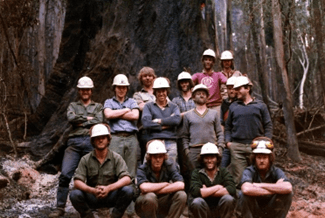
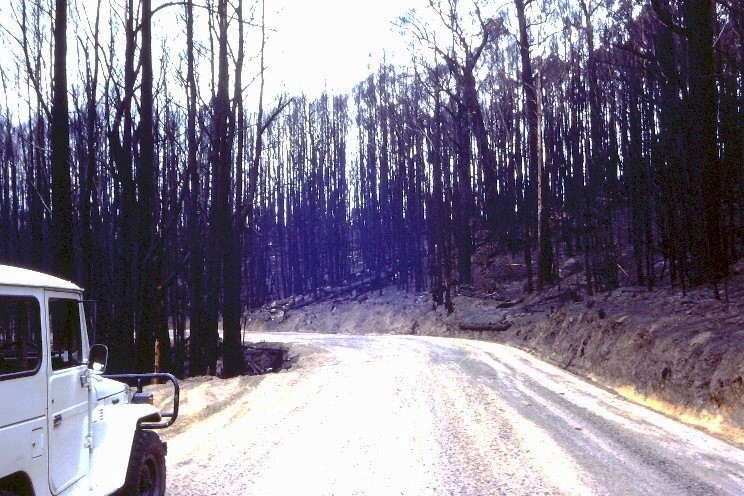


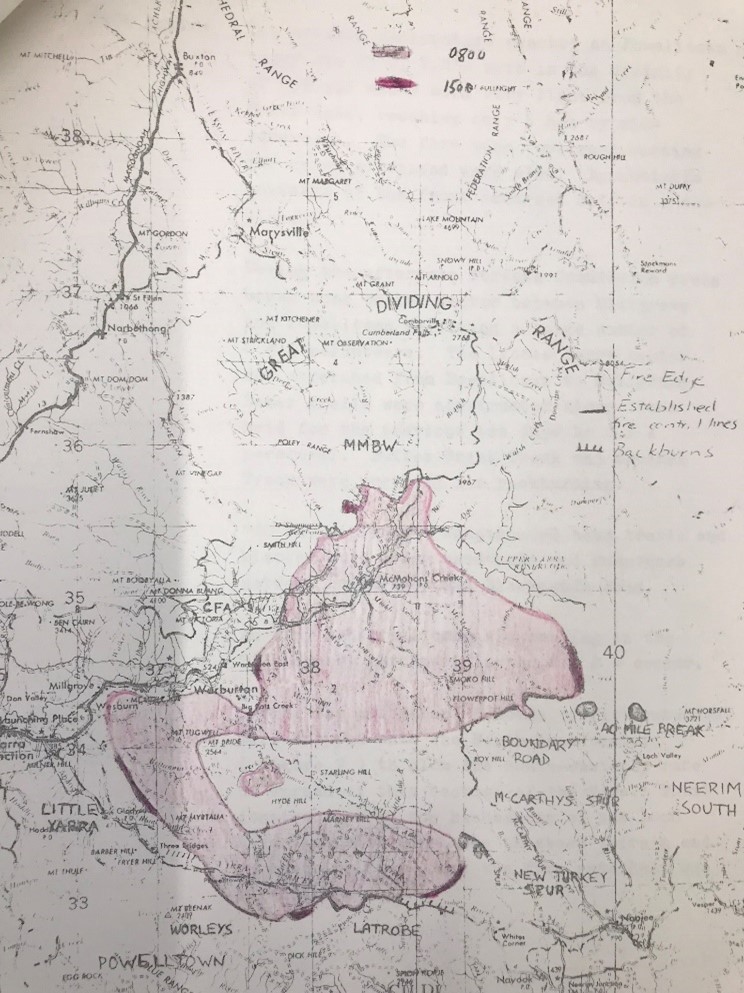
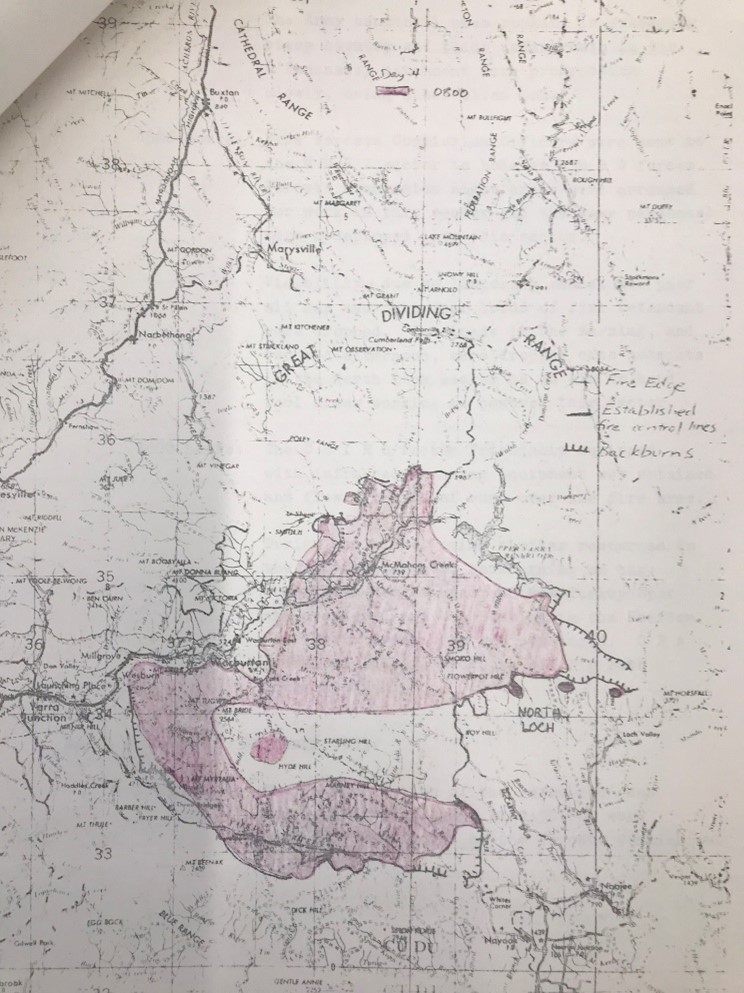
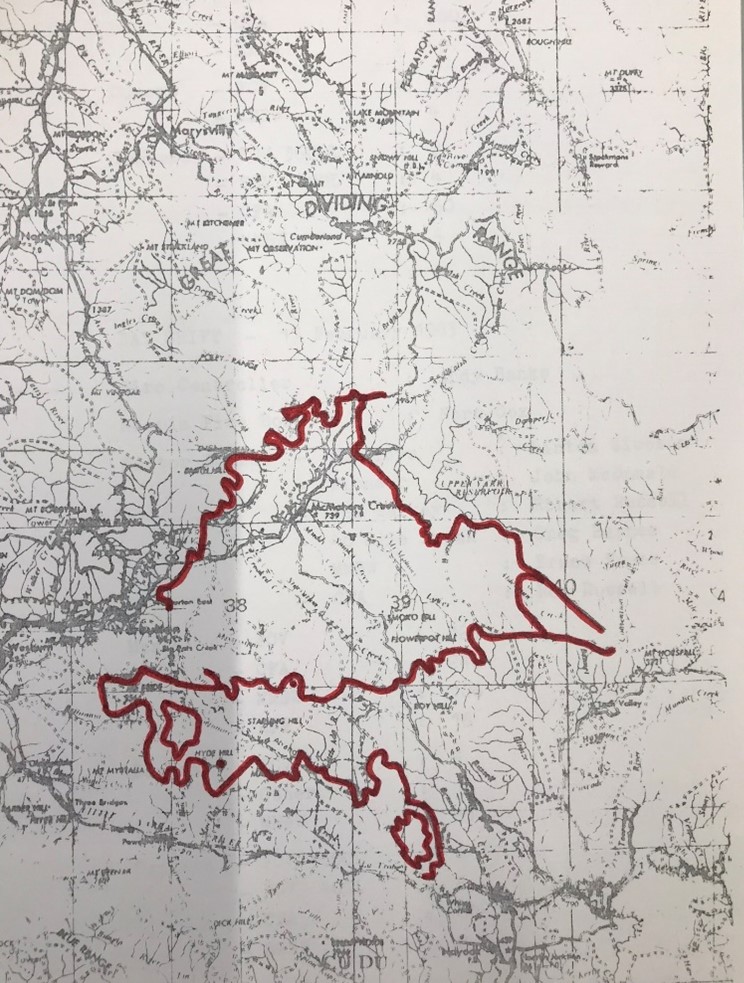


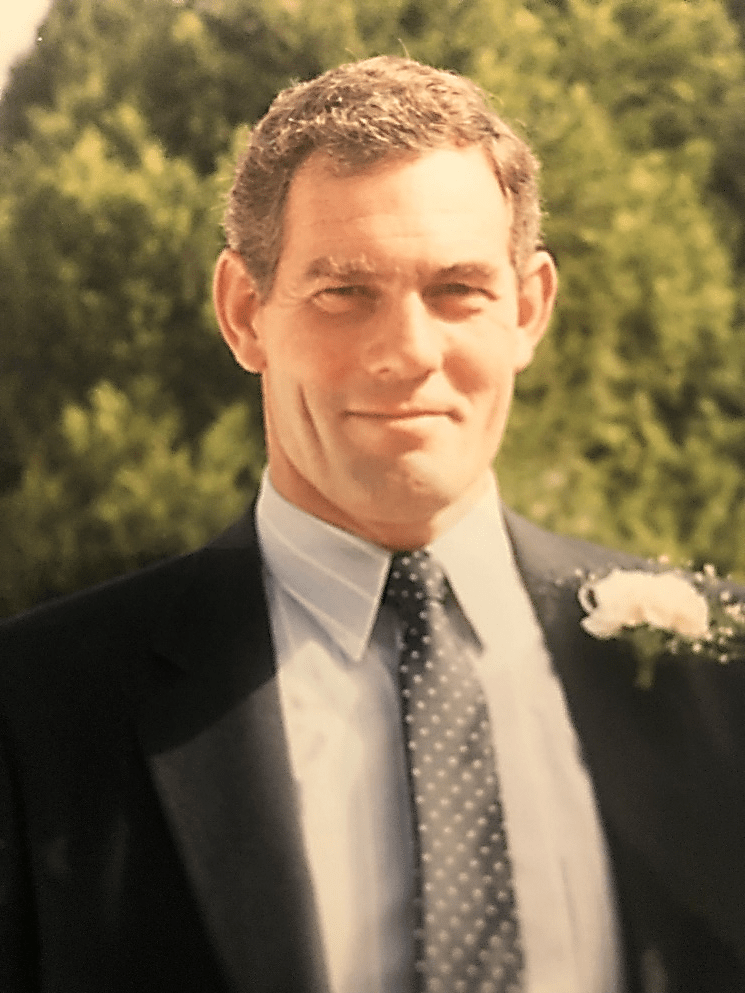
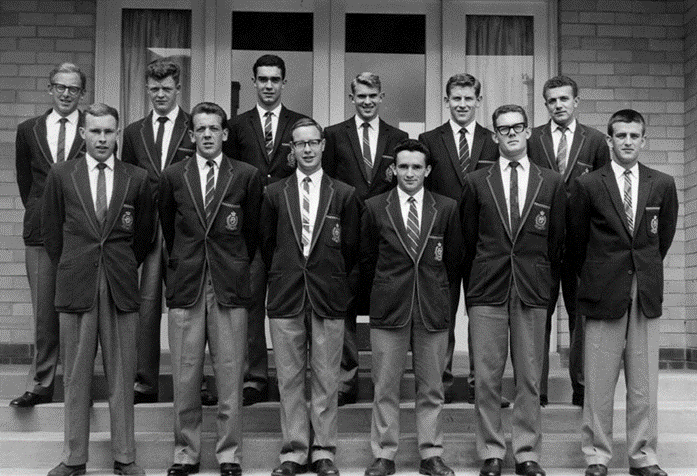

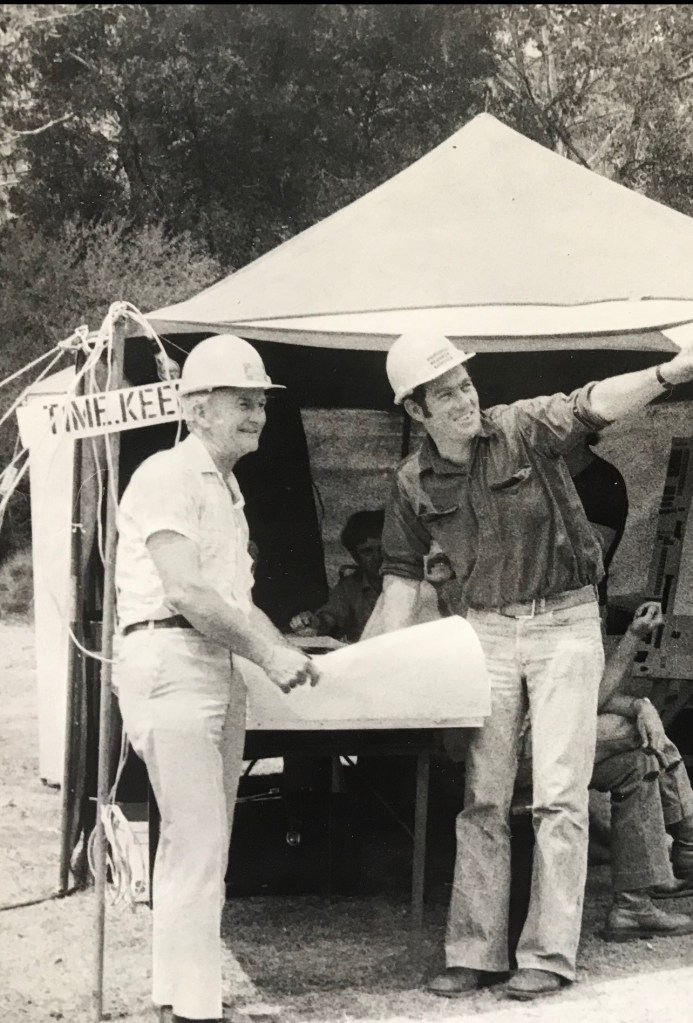
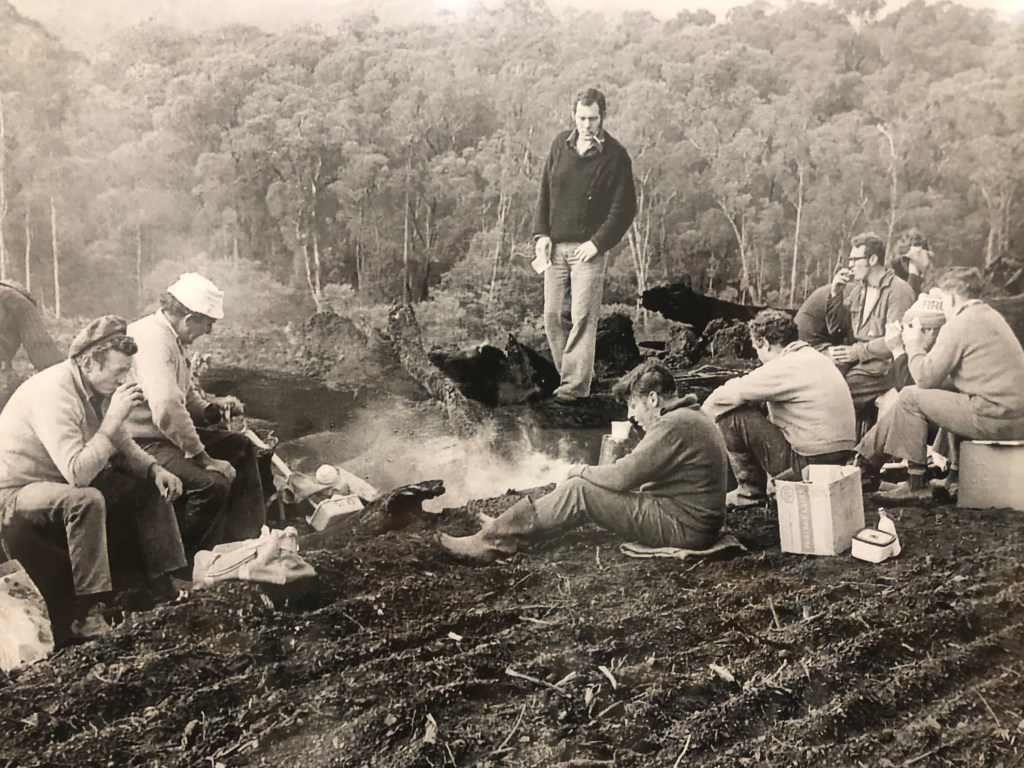

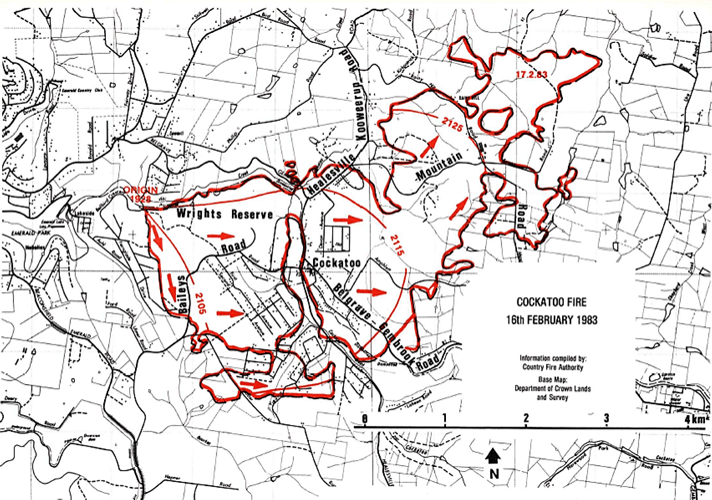


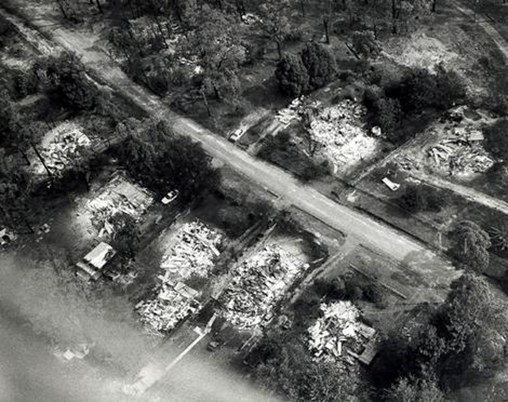


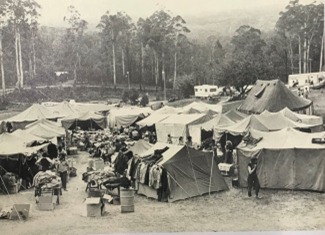


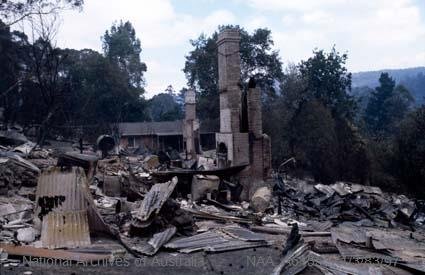

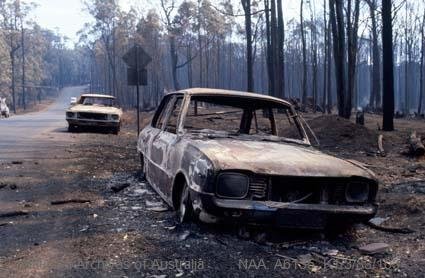
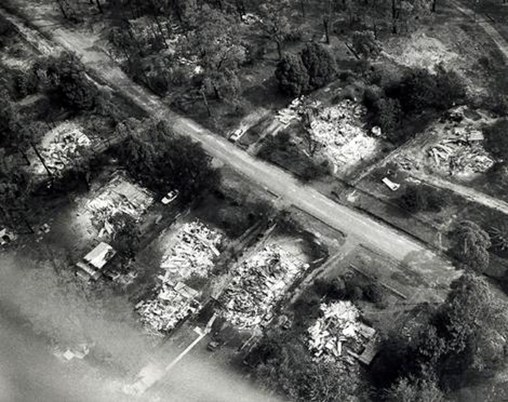


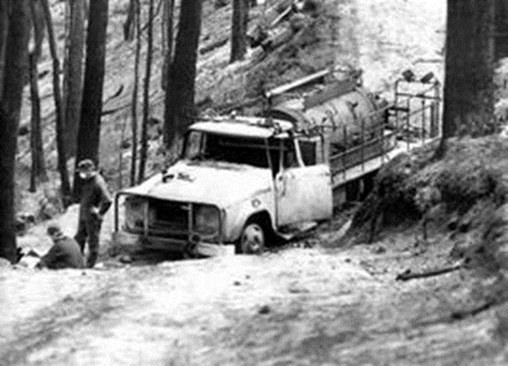

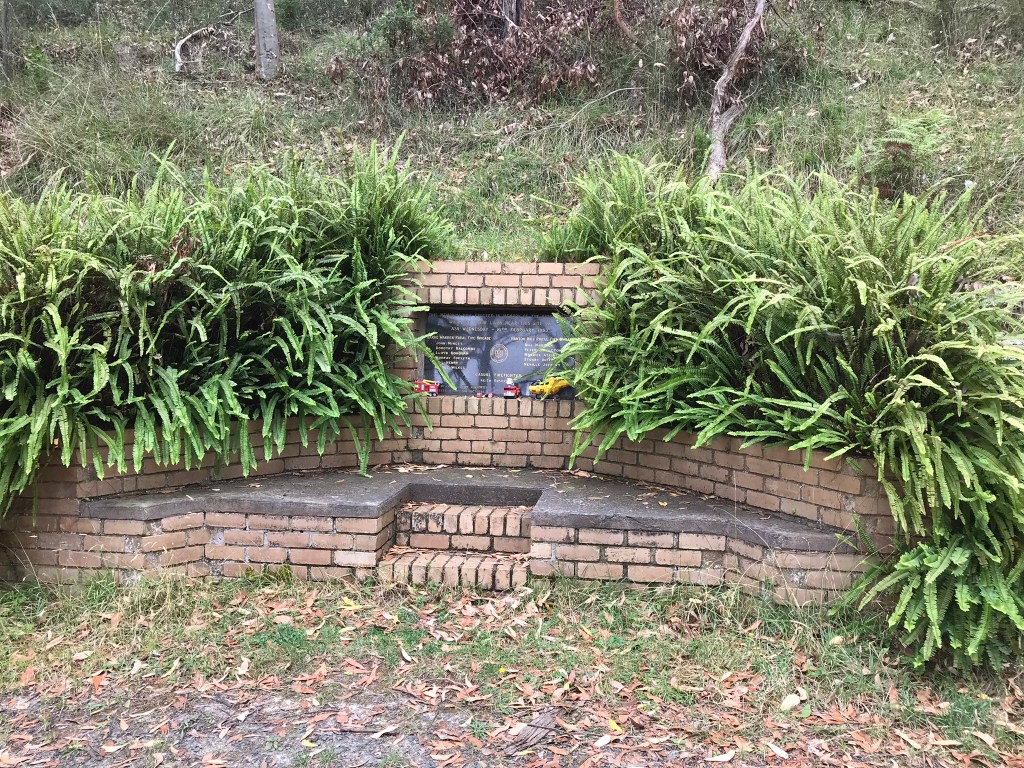

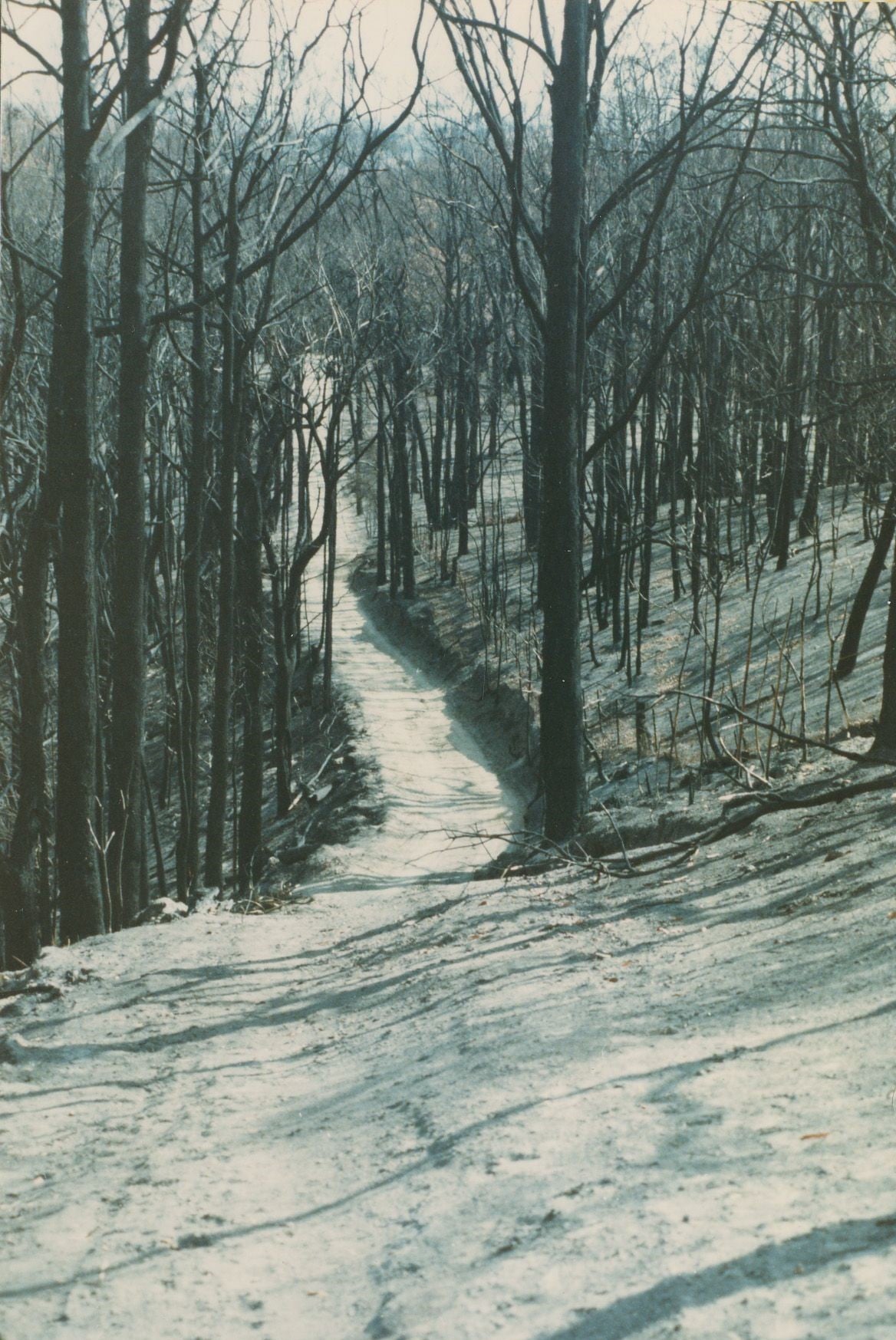


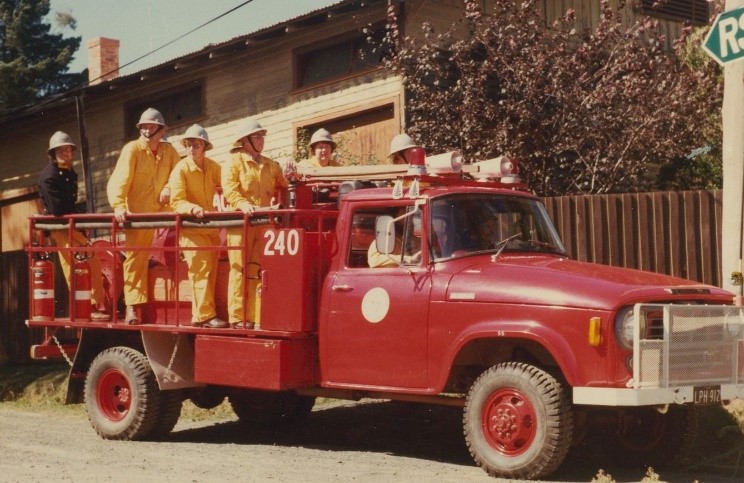
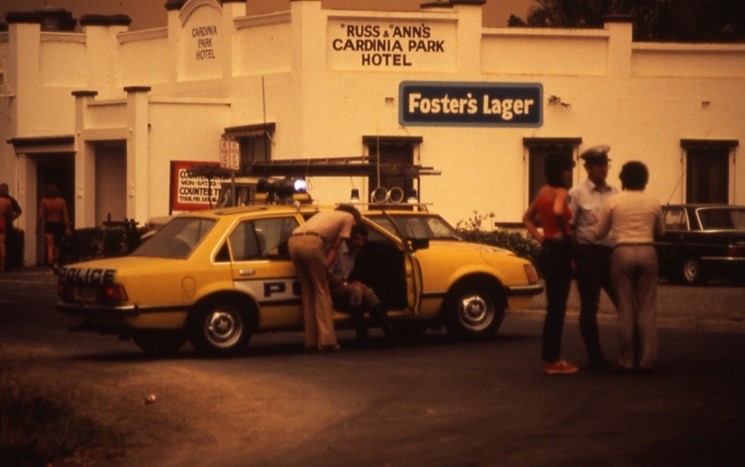
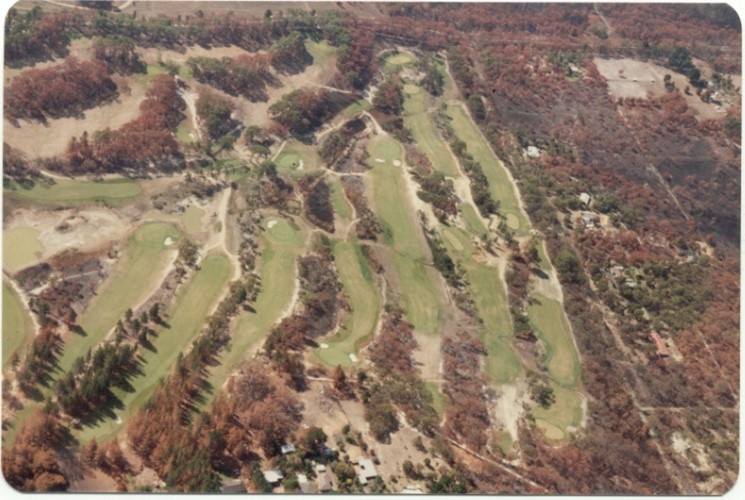
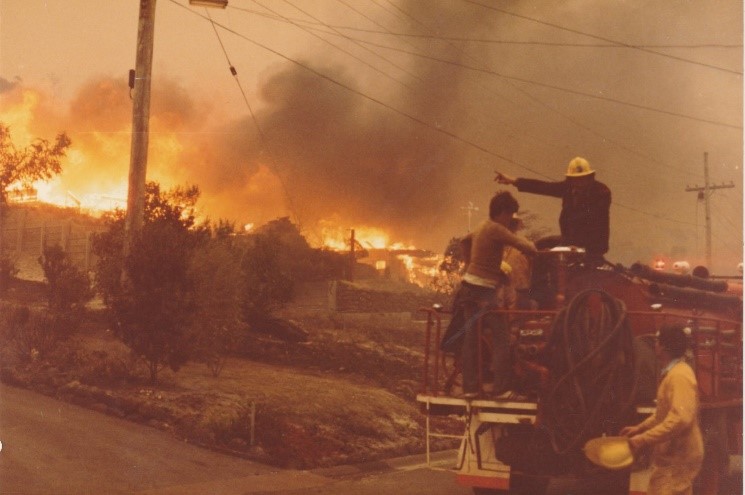

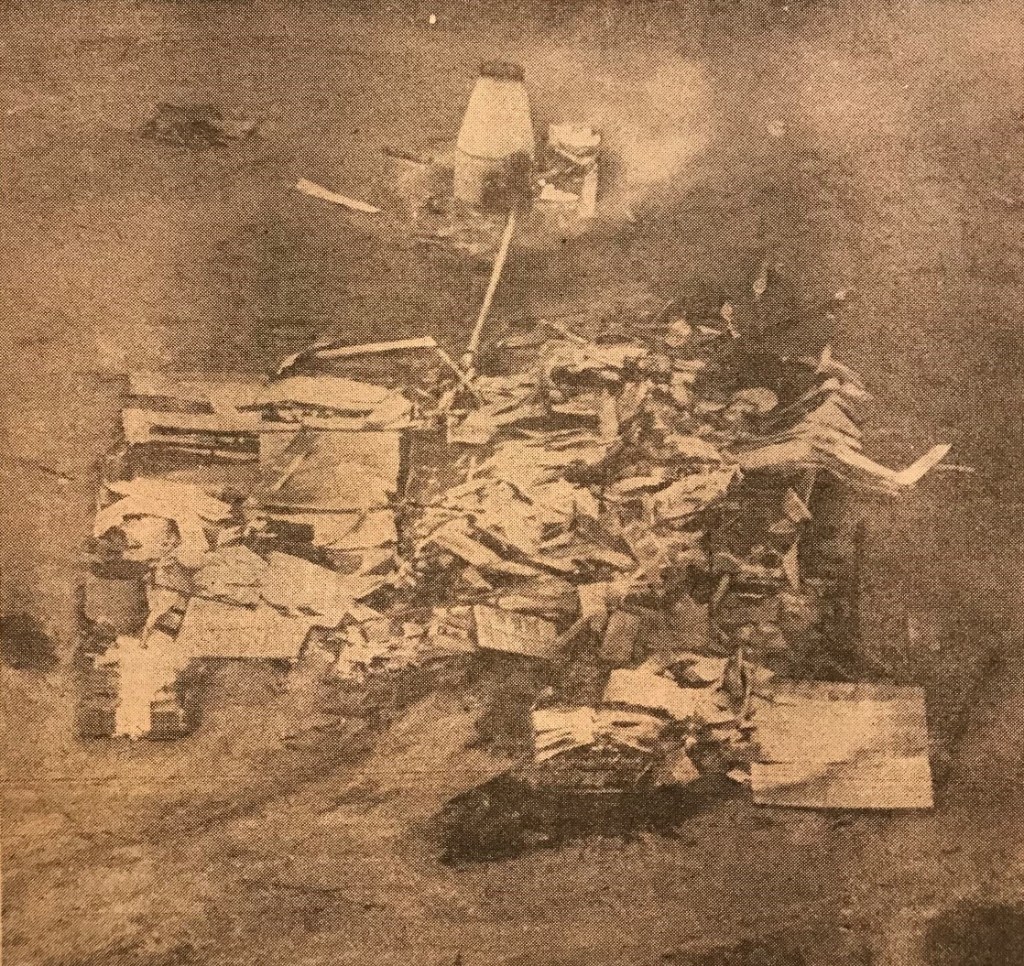



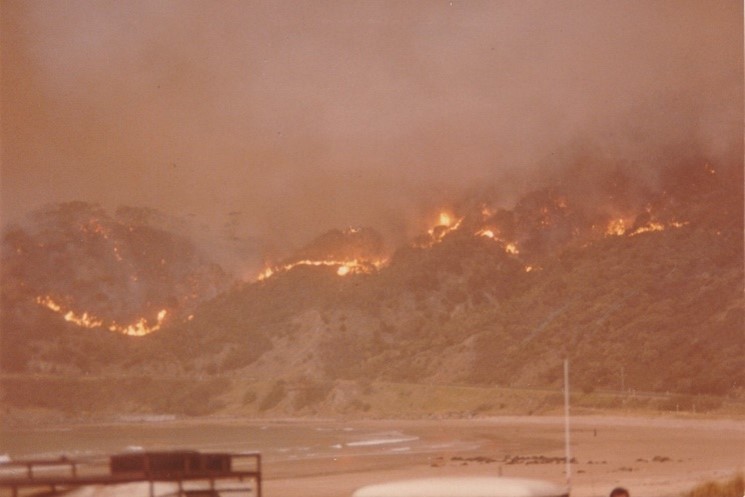


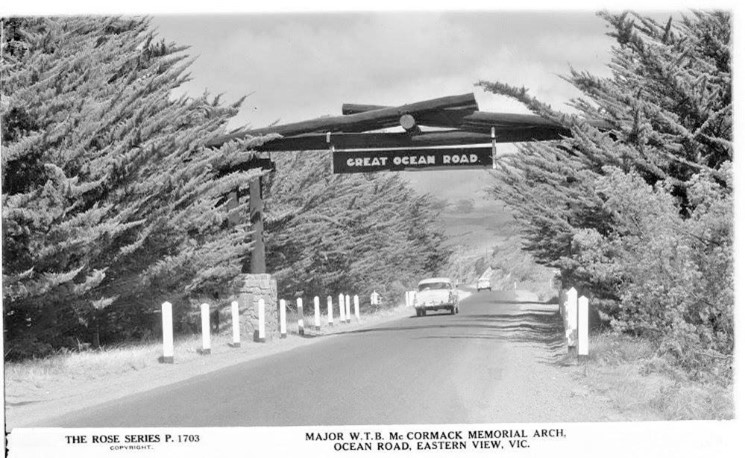


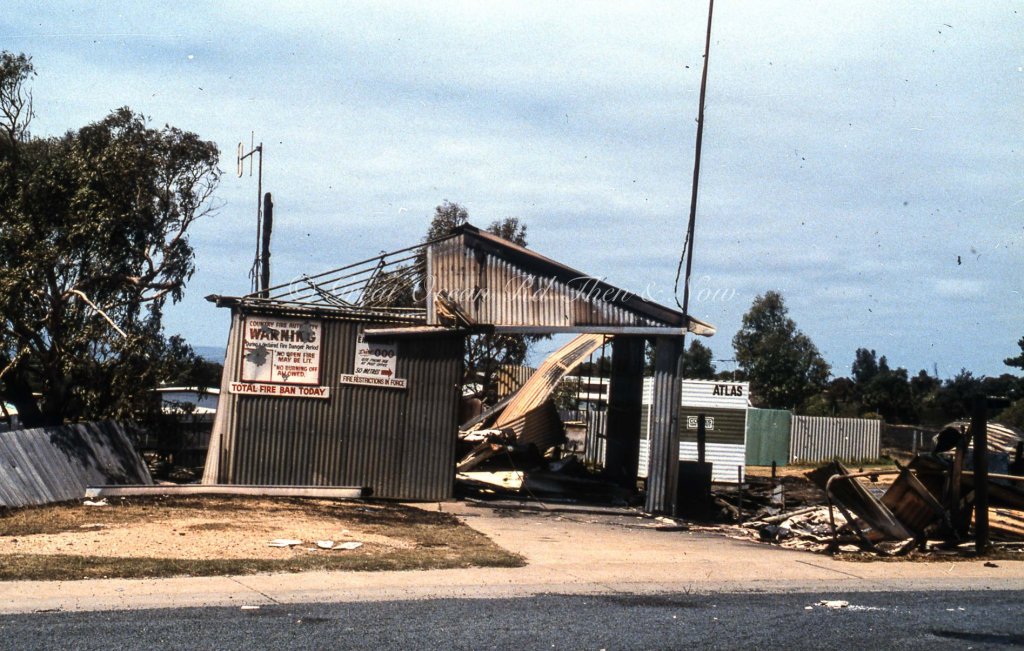
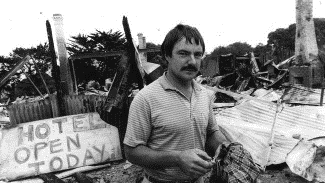

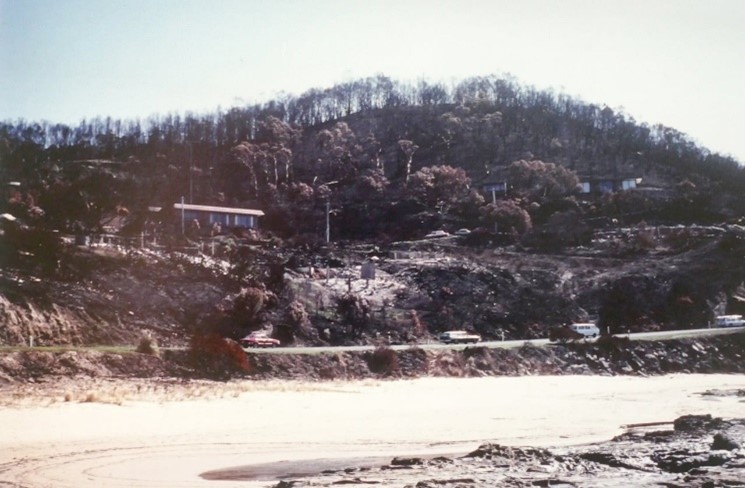


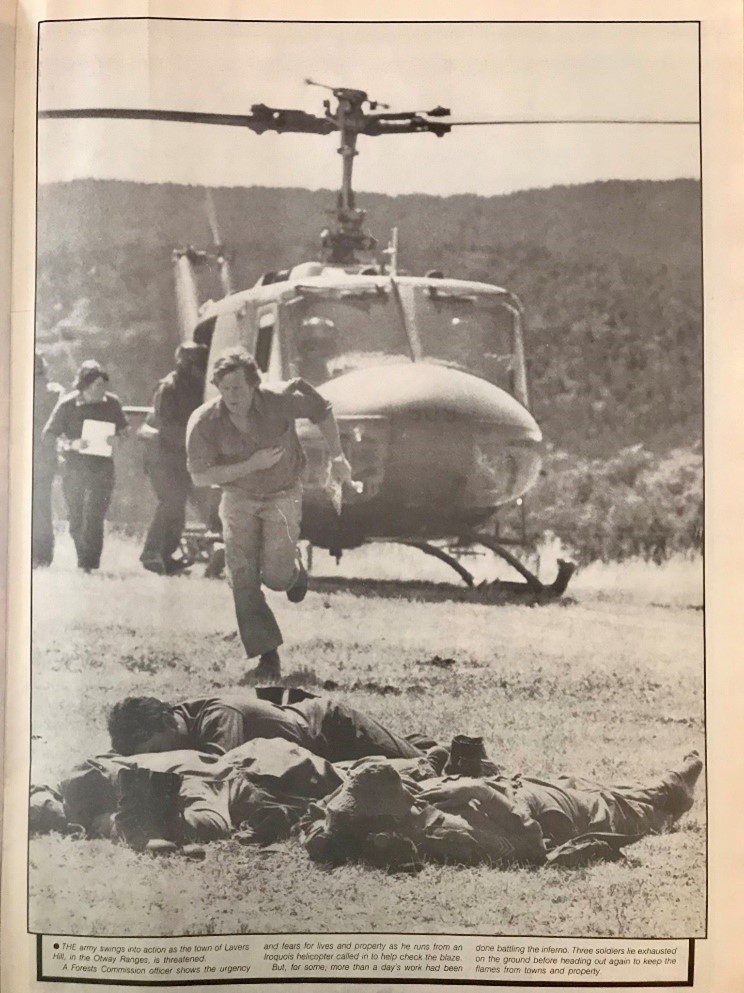


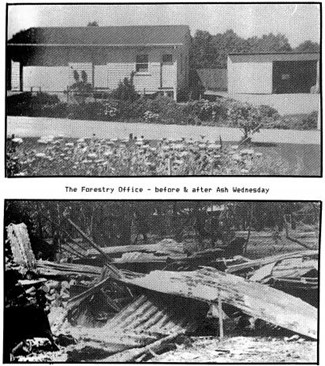
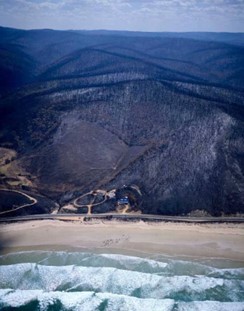


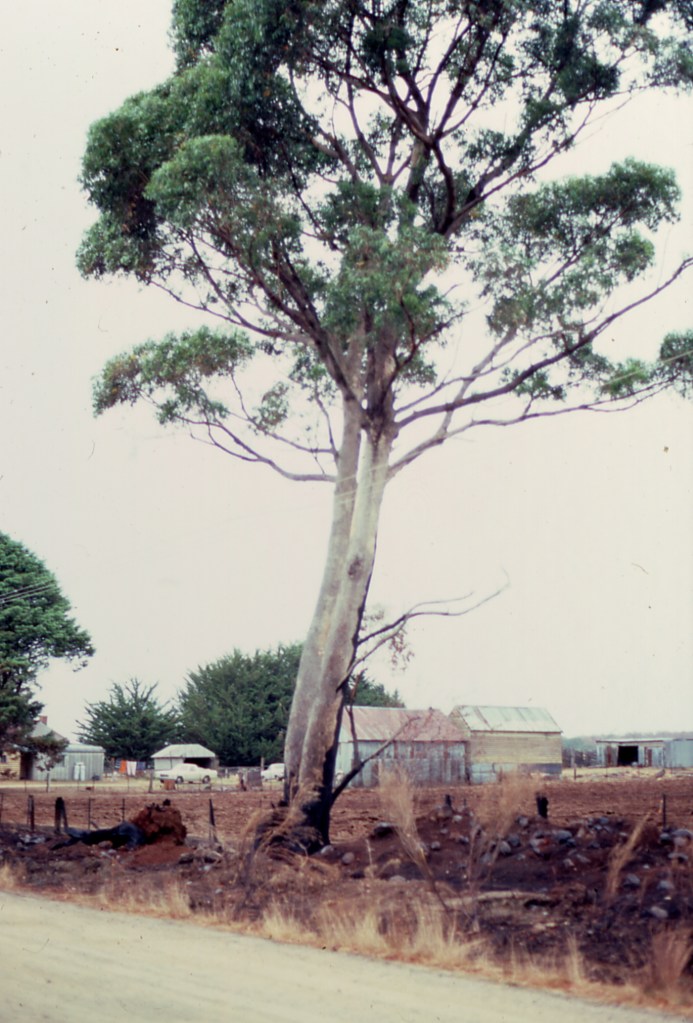


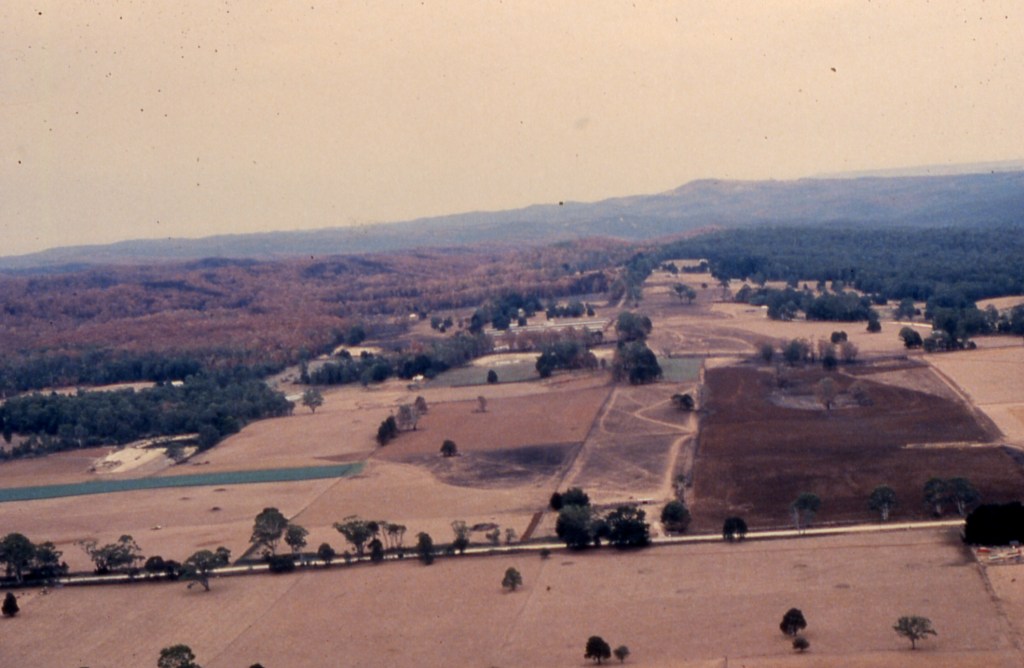

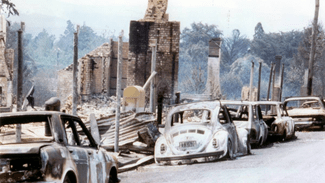


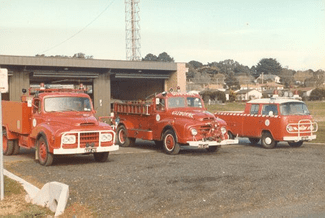
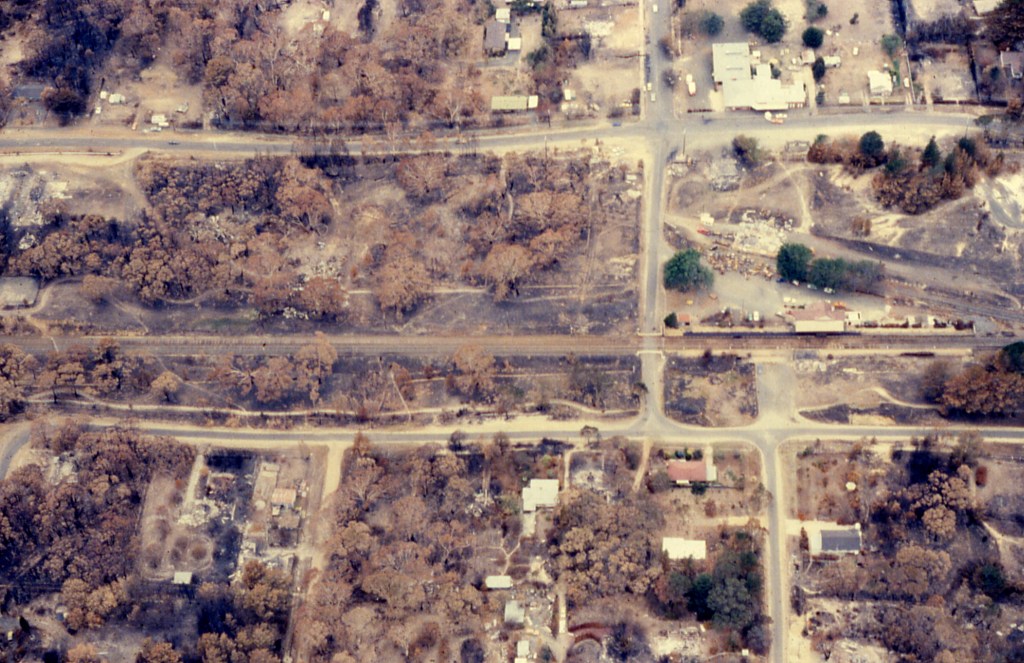

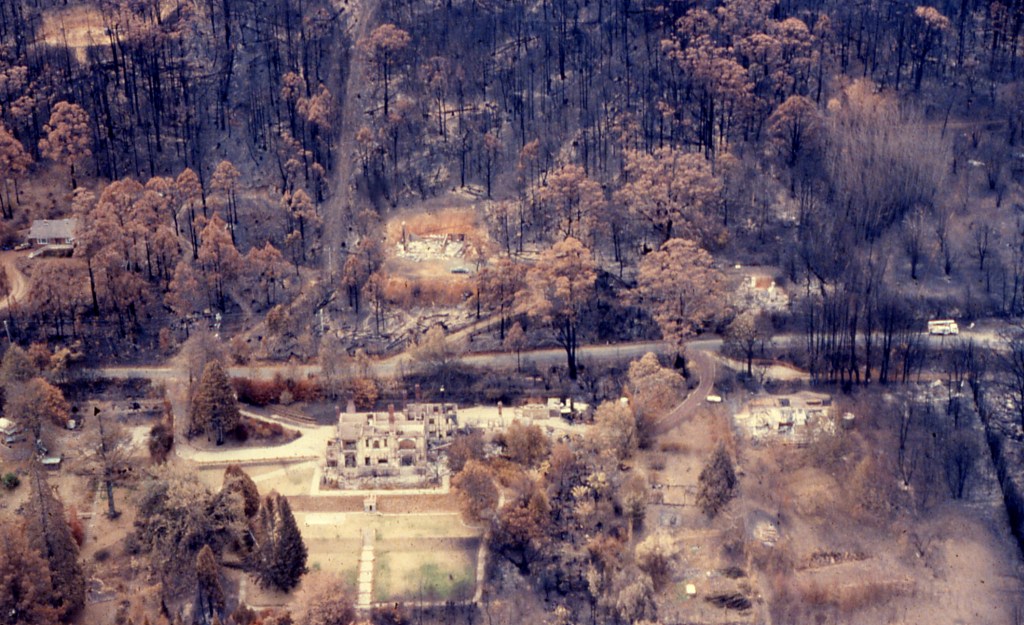
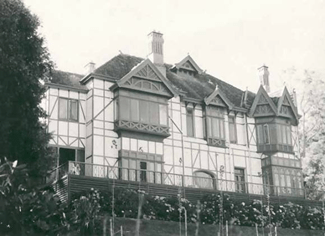
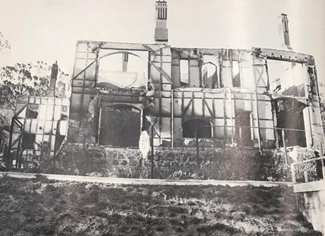


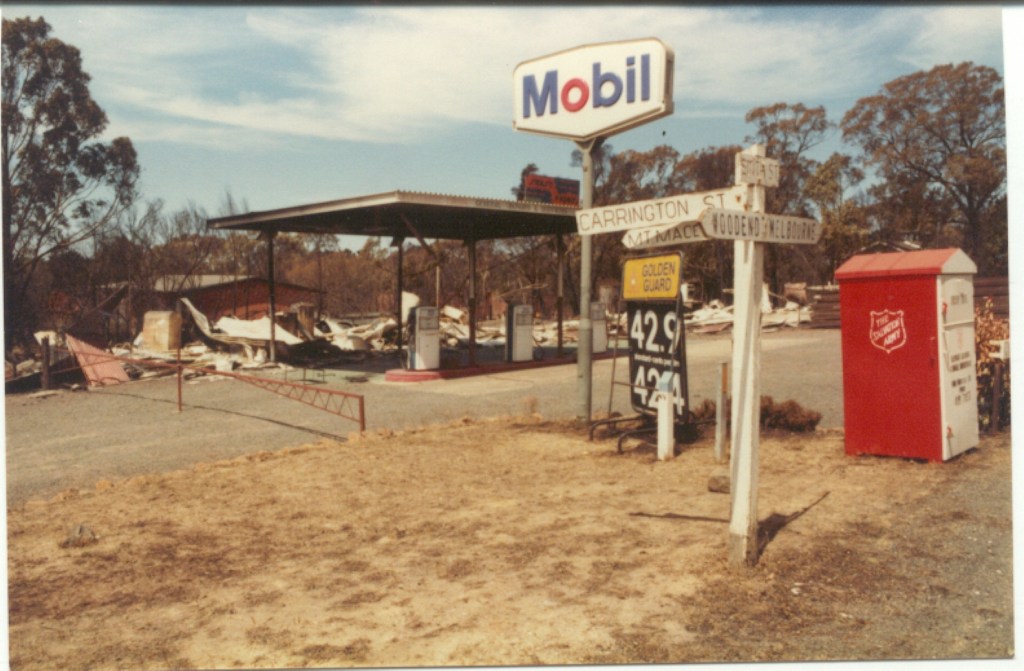
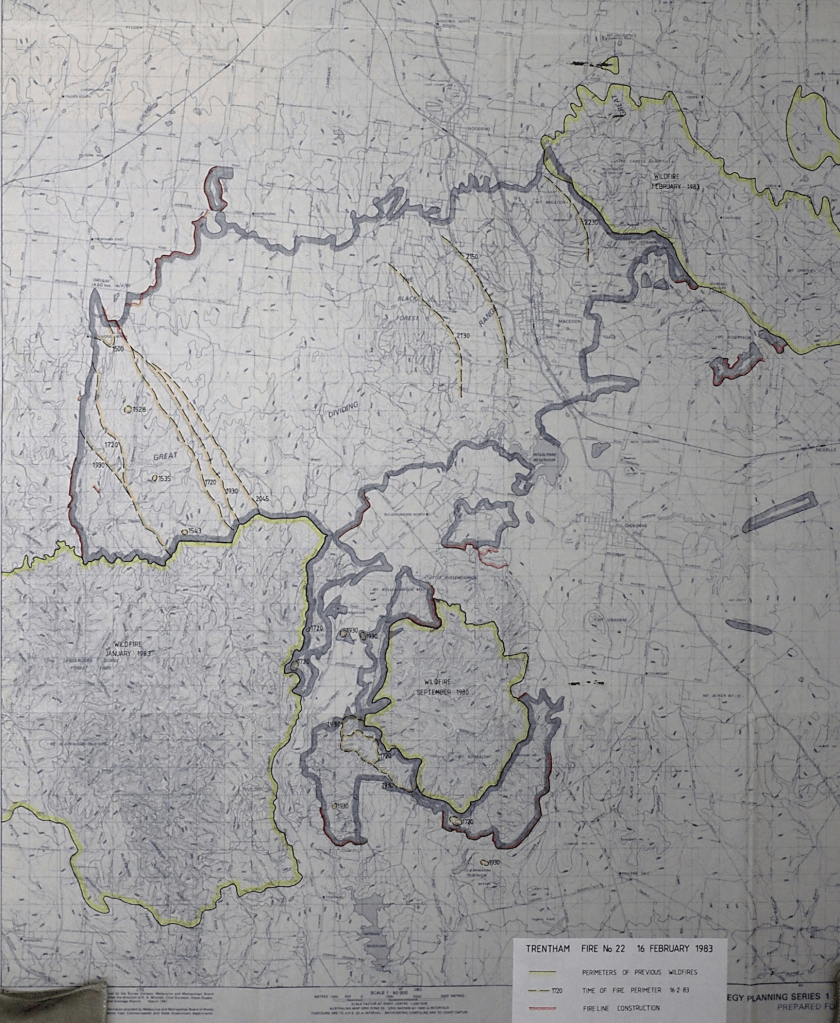
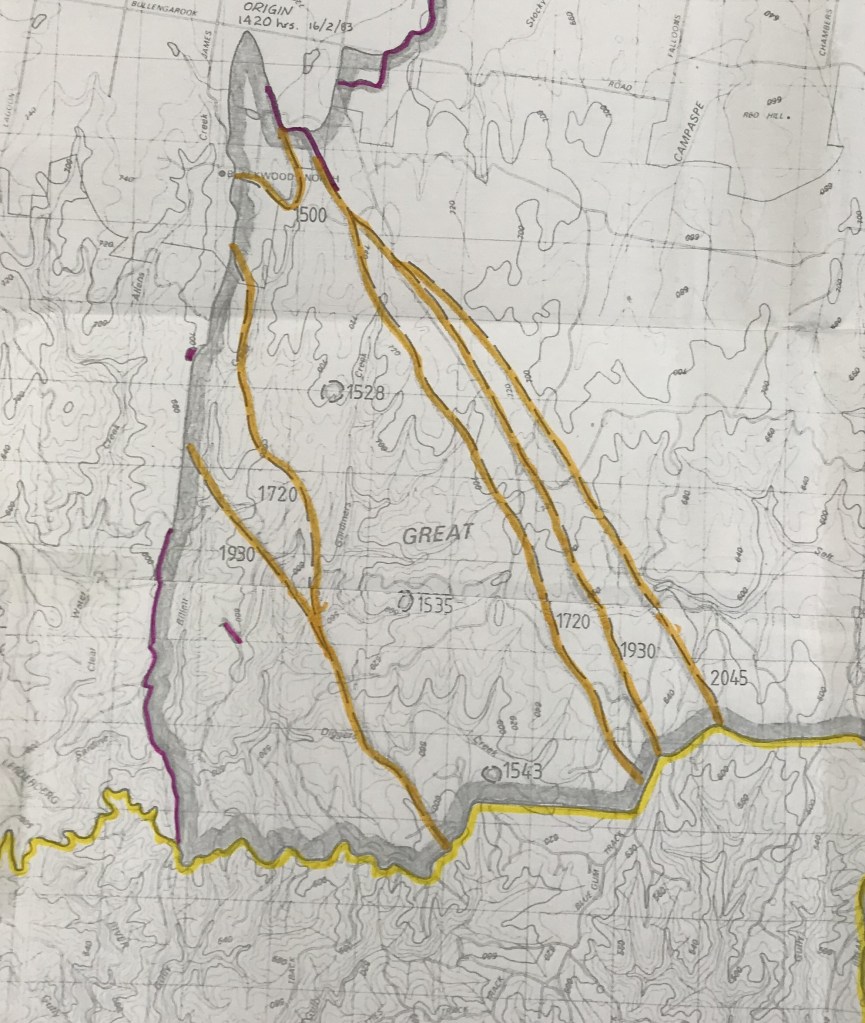
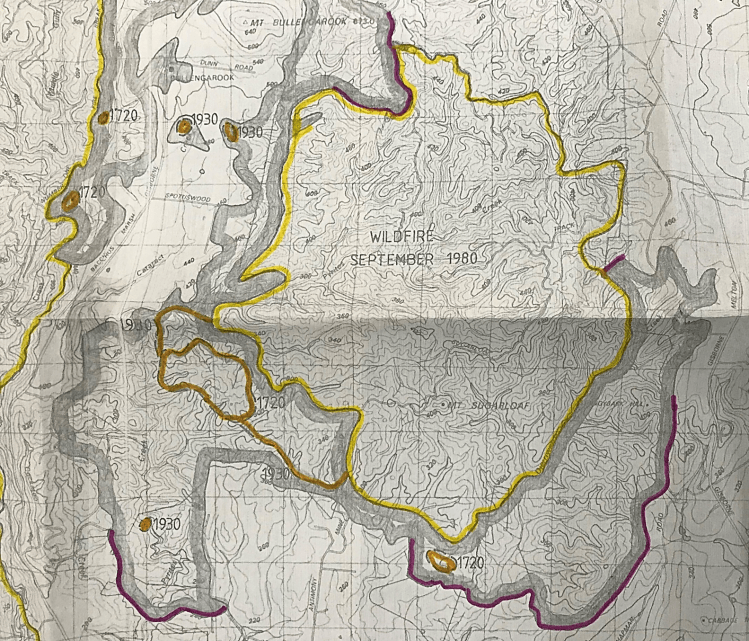
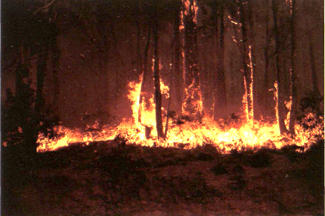

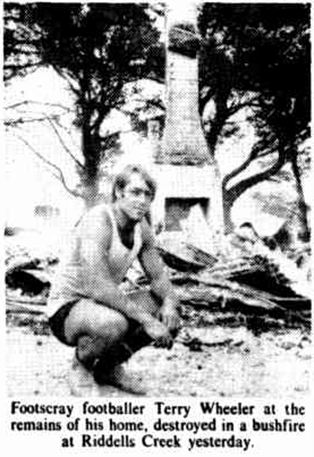


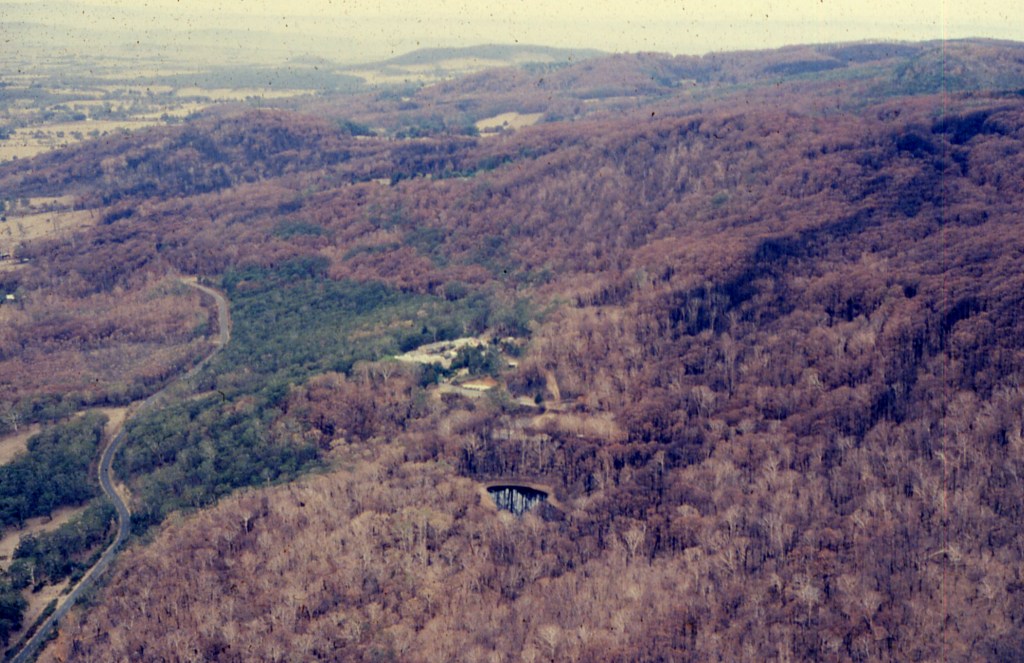
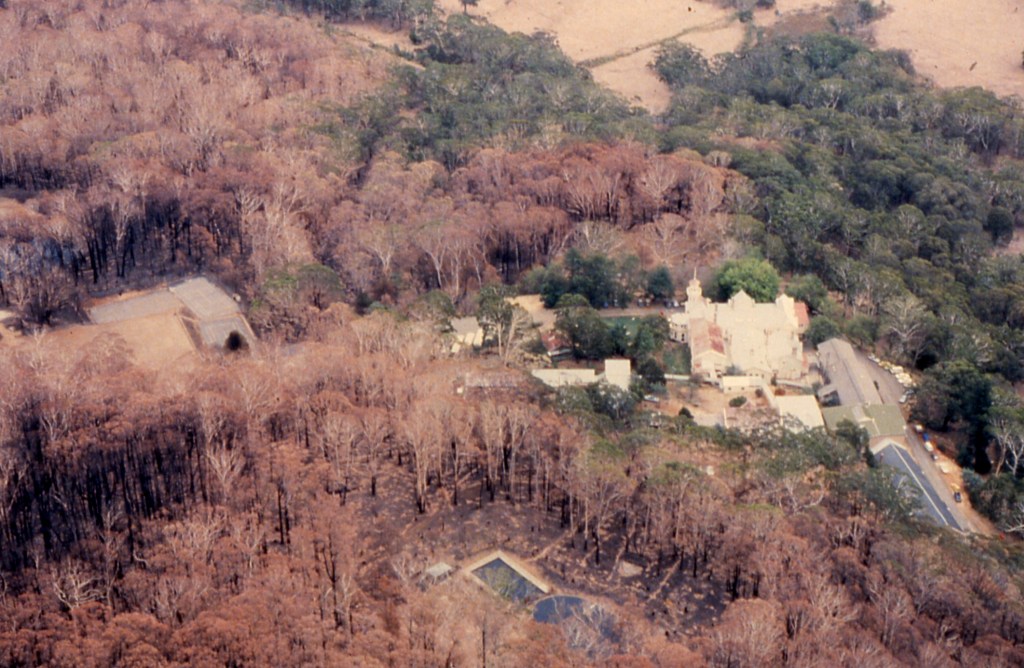
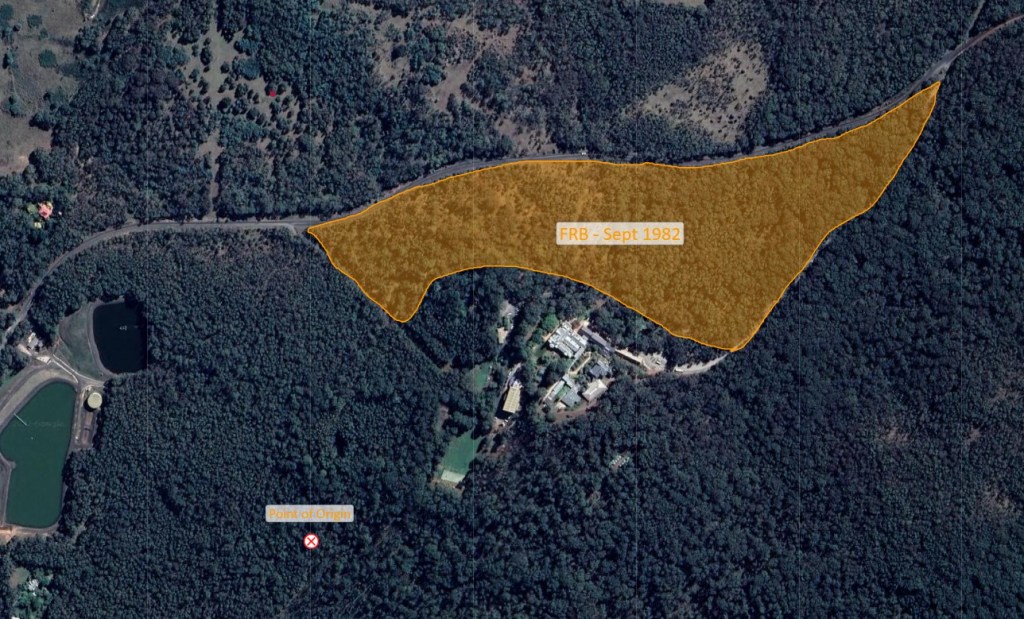


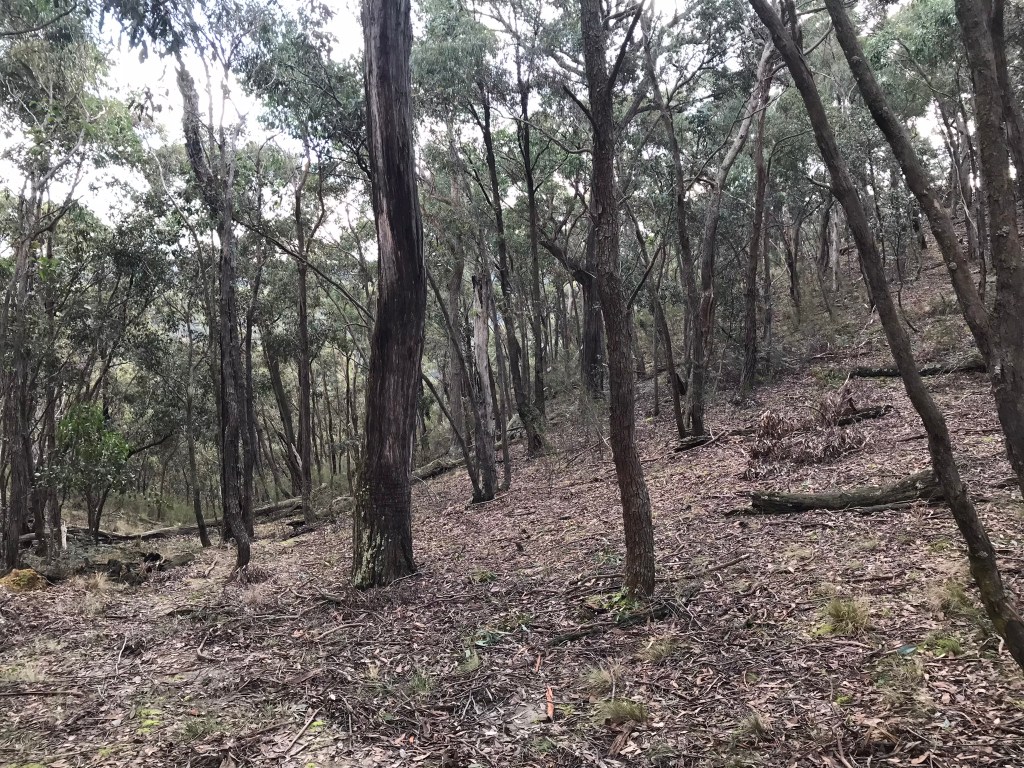

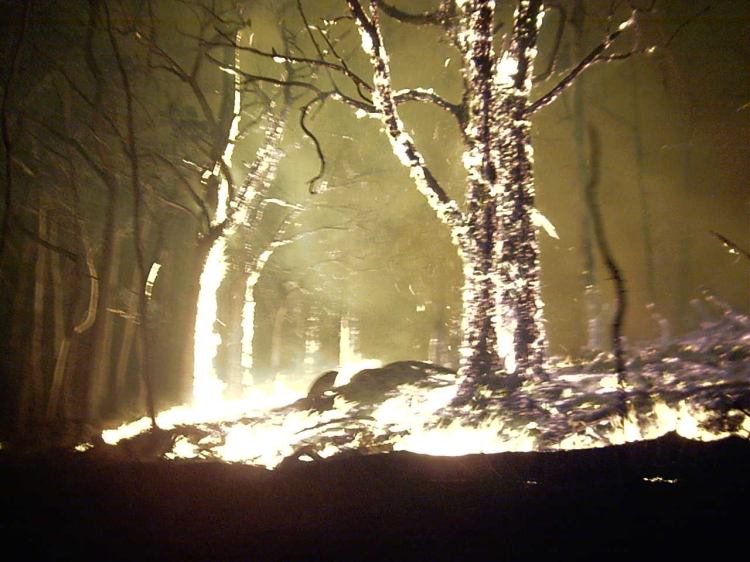

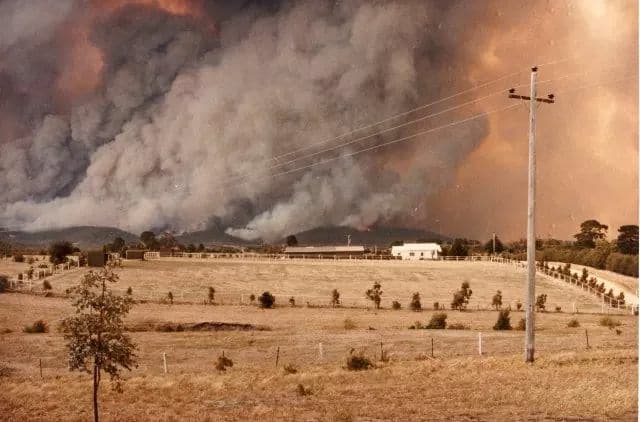

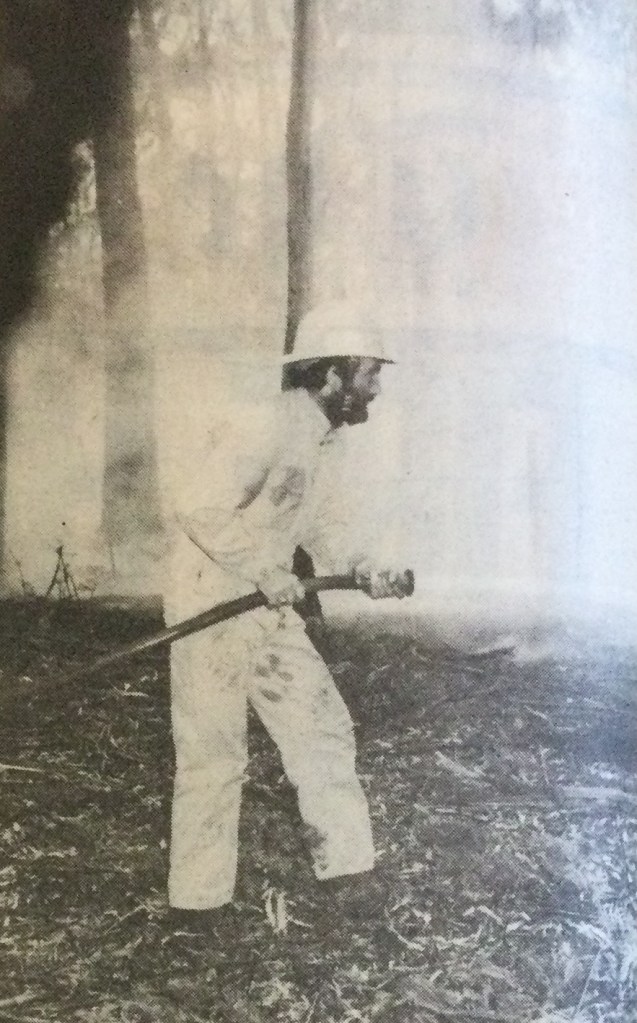

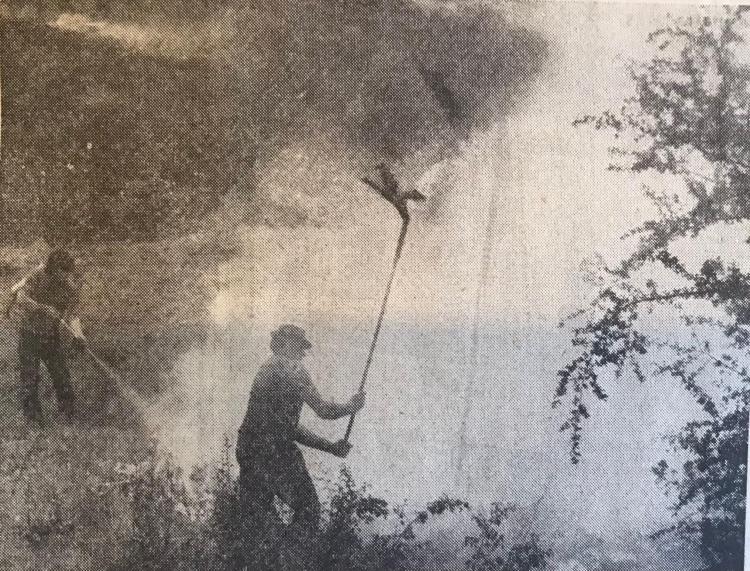


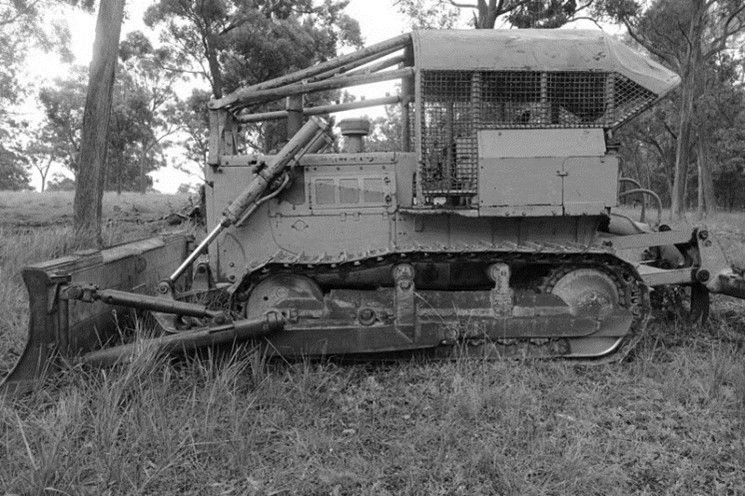
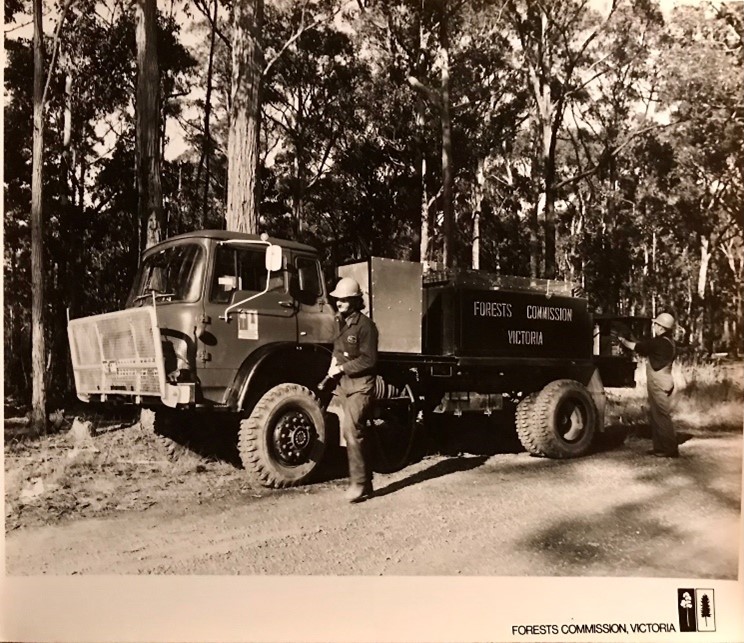


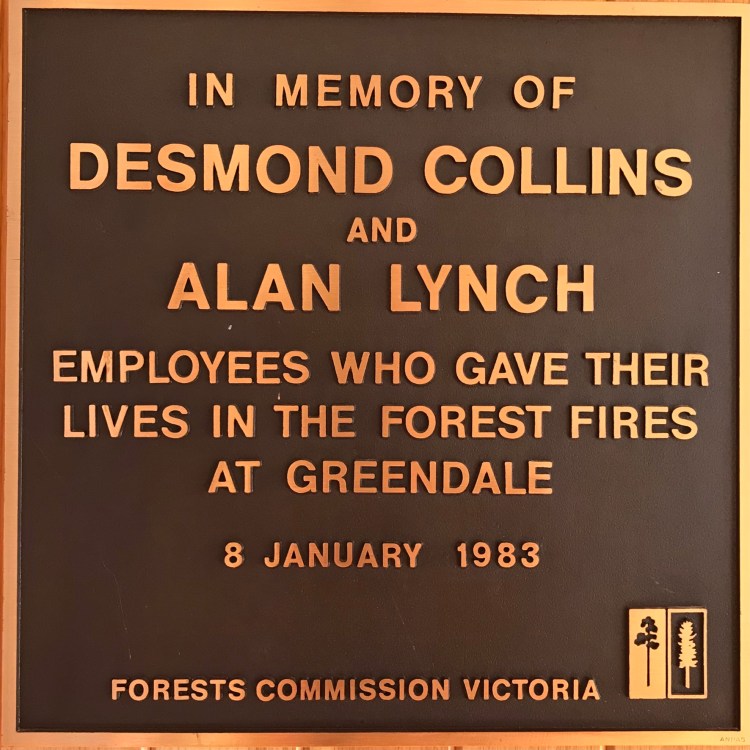











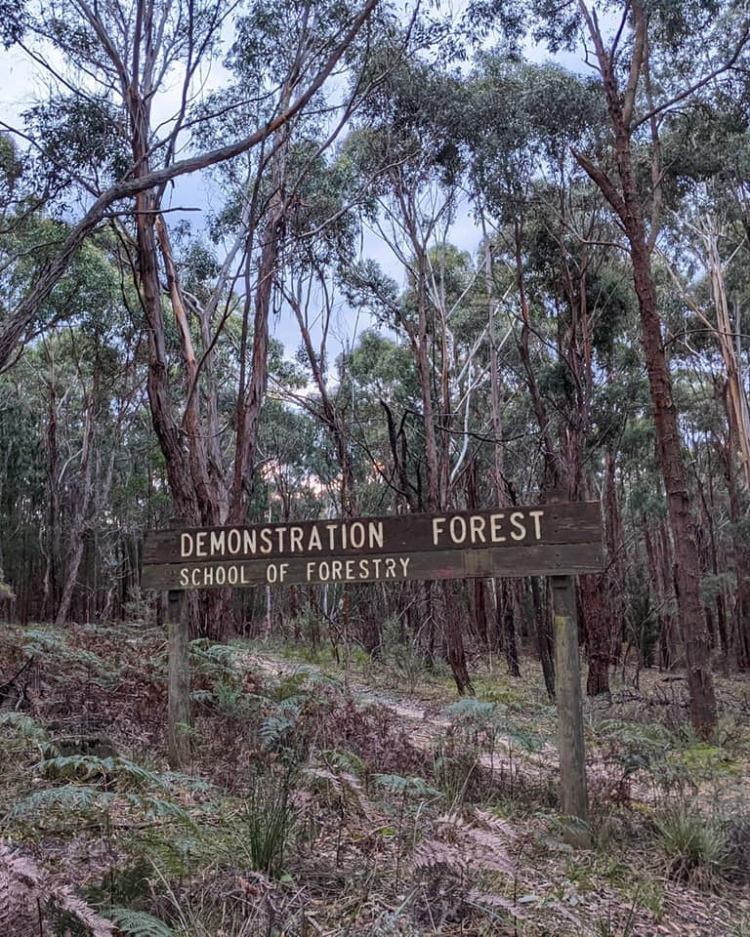



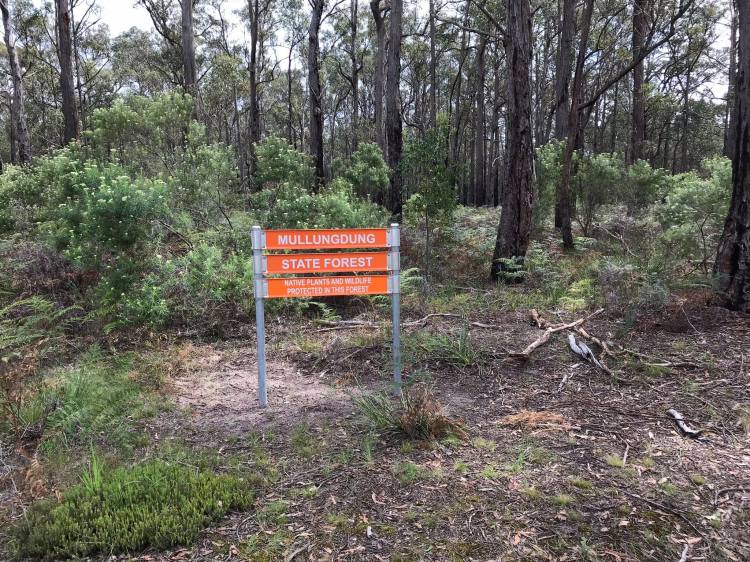


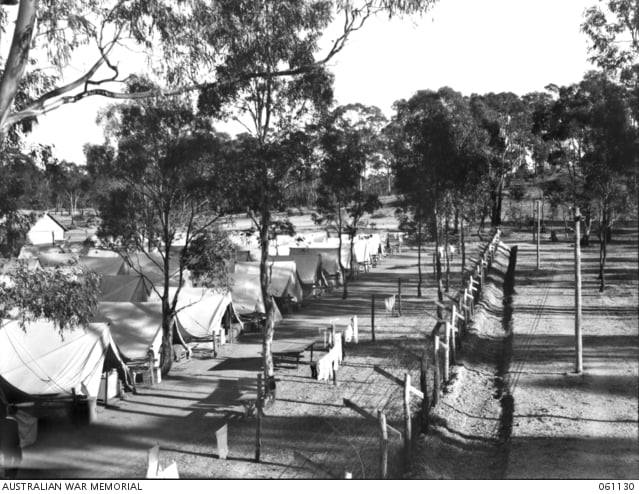


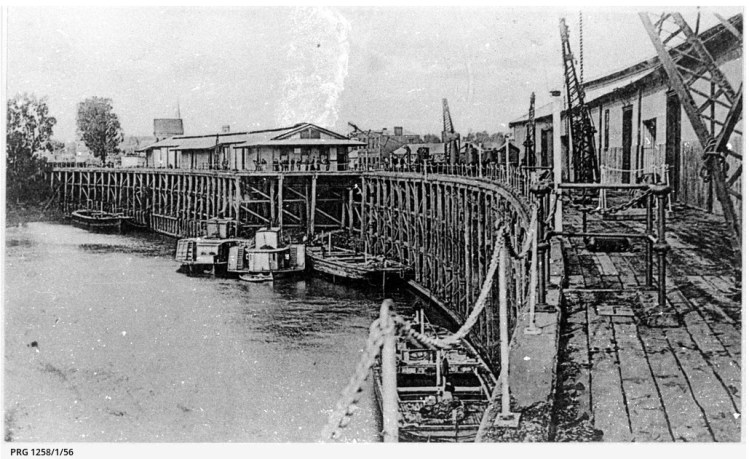
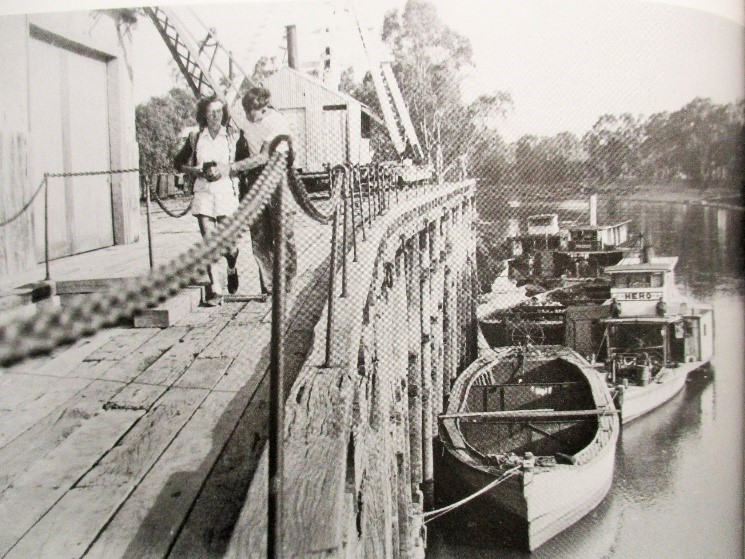
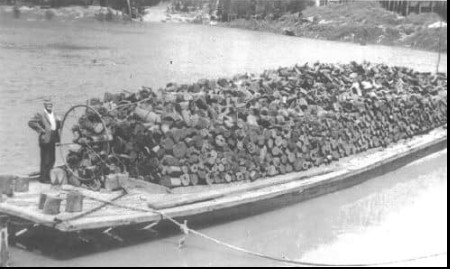

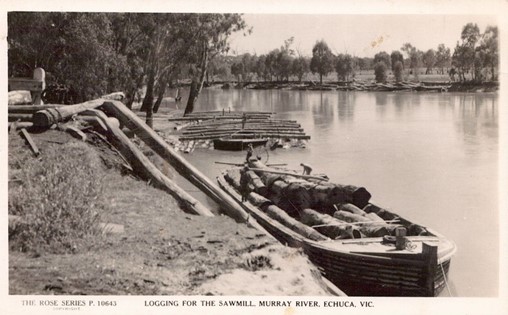






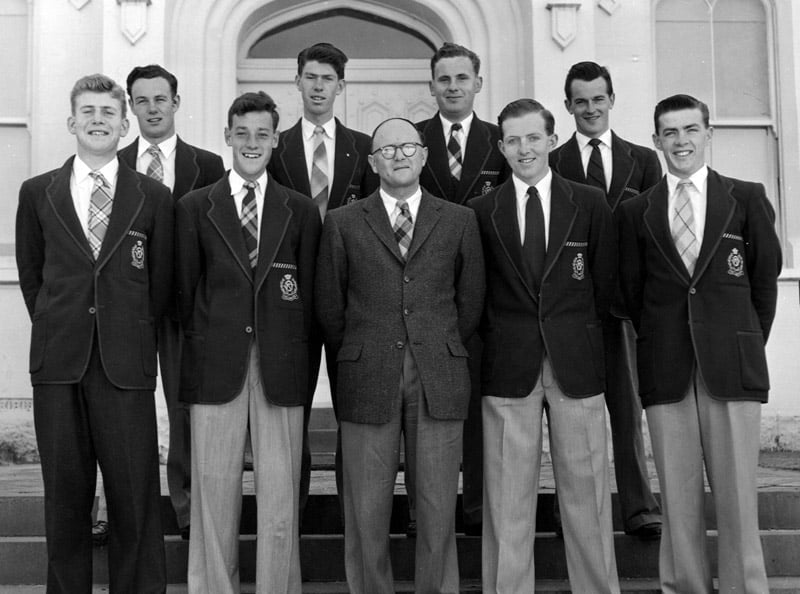




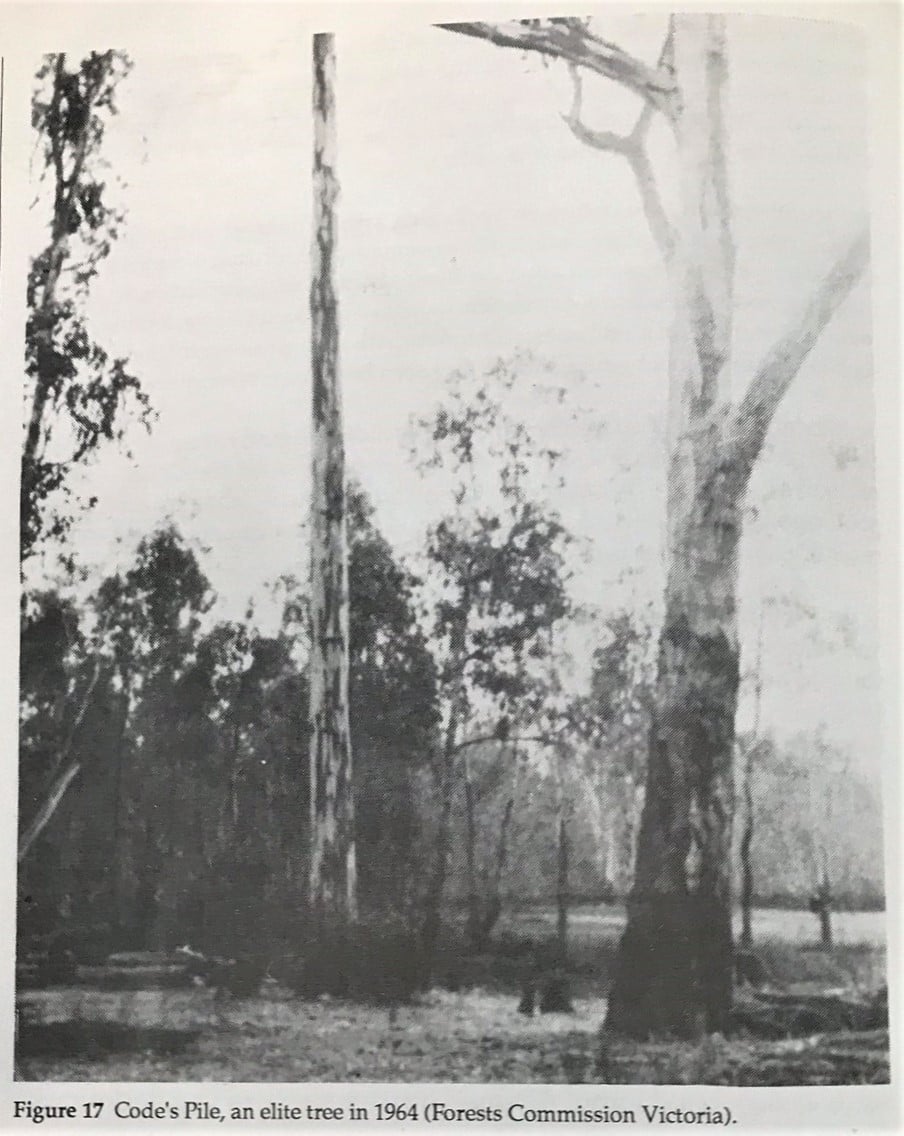


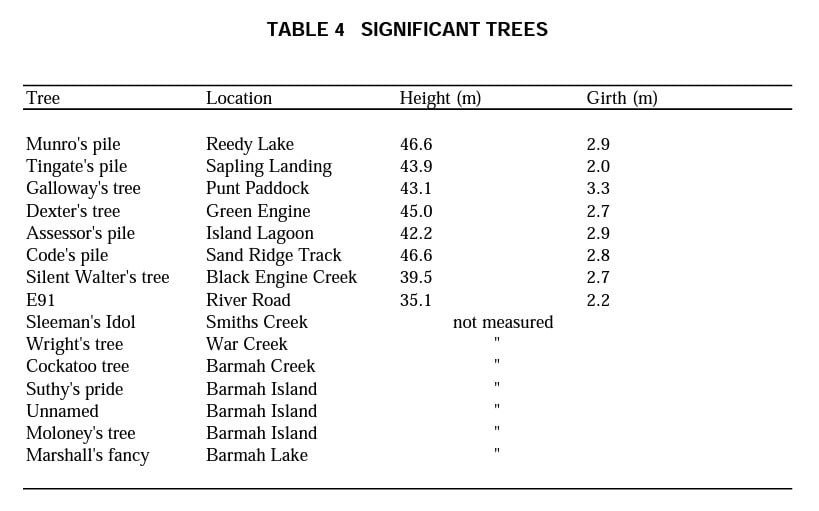


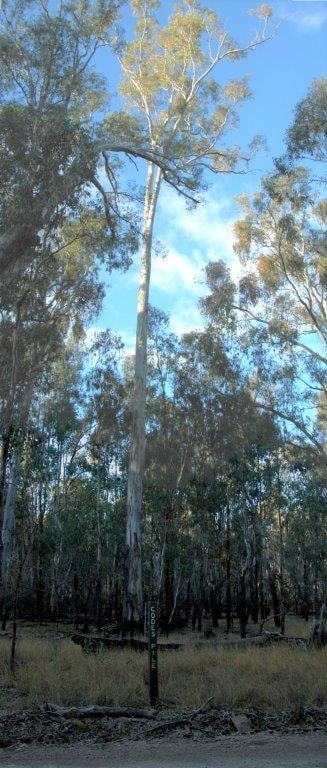

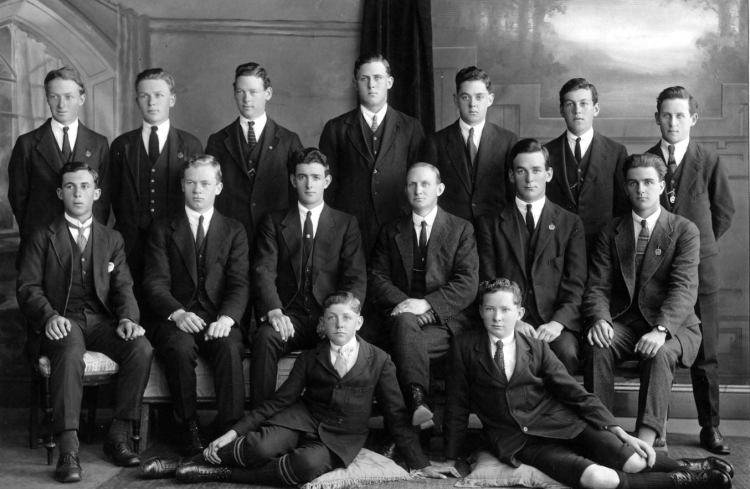
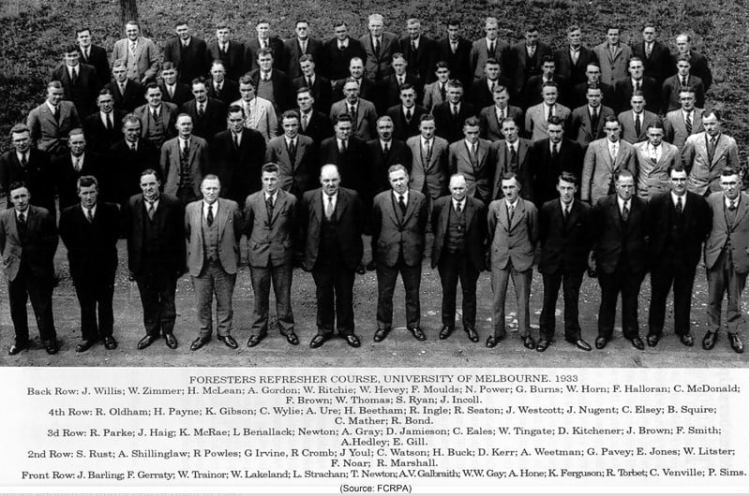


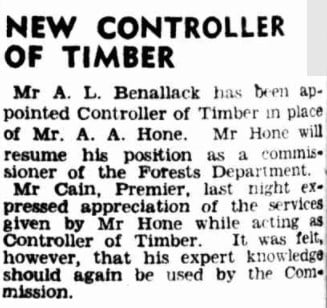





 Victoria’s Forests & Bushfire Heritage