I bet we don’t even give them a second thought as we slurp on the quickly melting Chocolate Paddle-Pop dribbling down our fingers while luxuriating at the beach in the sunshine.
But Australia was once a major producer and exporter of the humble ice cream stick.
I’m aware of two plants, Beddisons at Nangwarry near Mt Gambier in South Australia which processed radiata pine. It was purchased by Carter-Holt-Harvey, but the ice cream stick plant was eventually closed about 25 years ago (I think).
There was another company called Stickmakers at Gladstone in Queensland which was established in the 1930s.
In 1995 the QLD plant made six million ice-cream sticks a day – seven million on a good day – five days a week – three shifts a day. It all adds up to 1.5 billion sticks a year. I think they also made flat dixie cone sticks.
Stickmakers employed about 65 people in its $10 million factory and converted an annual volume of 17,000 tonnes of plantation hoop pine (Araucaria cunninghamii) into sticks. The logs were first peeled into a thin veneer and the ice cream stick then punched, tumbled till smooth and then coated with a thin layer of wax.
Importantly, the stick needed to be taste free, the ice cream must adhere to its smooth surface and obviously it mustn’t have splinters, and, finally, the stick must have the strength not to break.
Stickmakers at one point was also eyeing off the export chopstick market.
But in 2013 the company went the same way has the humble redhead match made by Bryant and May. Production has moved offshore, and timber sourced from exotic places like Scandinavia and France with the sticks often made in China.
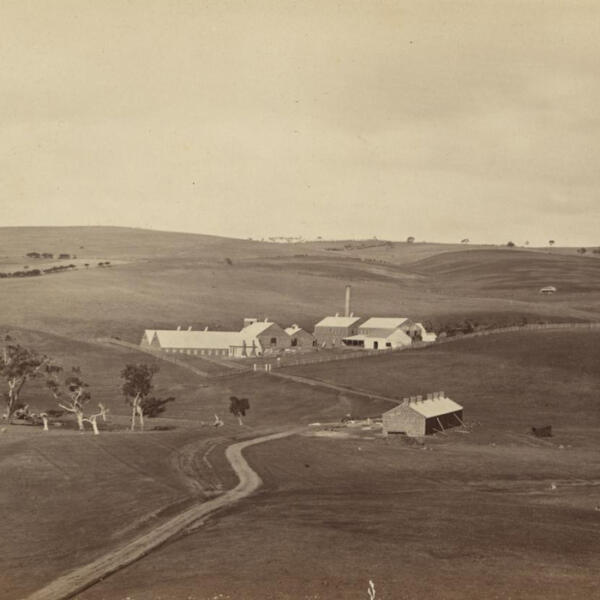
Photo: Beddisons plant at Nangwarry SA where ice cream sticks were punched from Radiata Pine. Source: National Archives
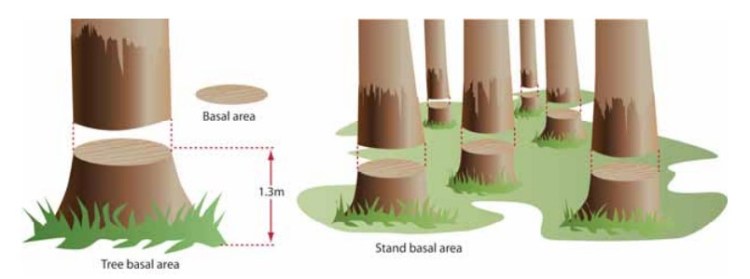
Foresters usually measure the diameter of trees at Breast Height – traditionally 4 foot, 6 inches – now 1.3 m – which is termed Diameter Breast Height Over Bark (DBHOB).
Basal Area is the cross section of the tree trunk at breast height, and the sum for the stand of trees is expressed in square metres per hectare.
Lots of skinny trees, or a few fat ones, can have the same Basal Area, but when combined with the number of stems, Basal Area is a good indicator of stand density.
Two common methods are used to measure of Basal Area – fixed area plots and angle count sampling.
Fixed area plots require setting out a small area, commonly 50 m x 20 m, and measuring all the trees at breast height, and doing some quick sums.
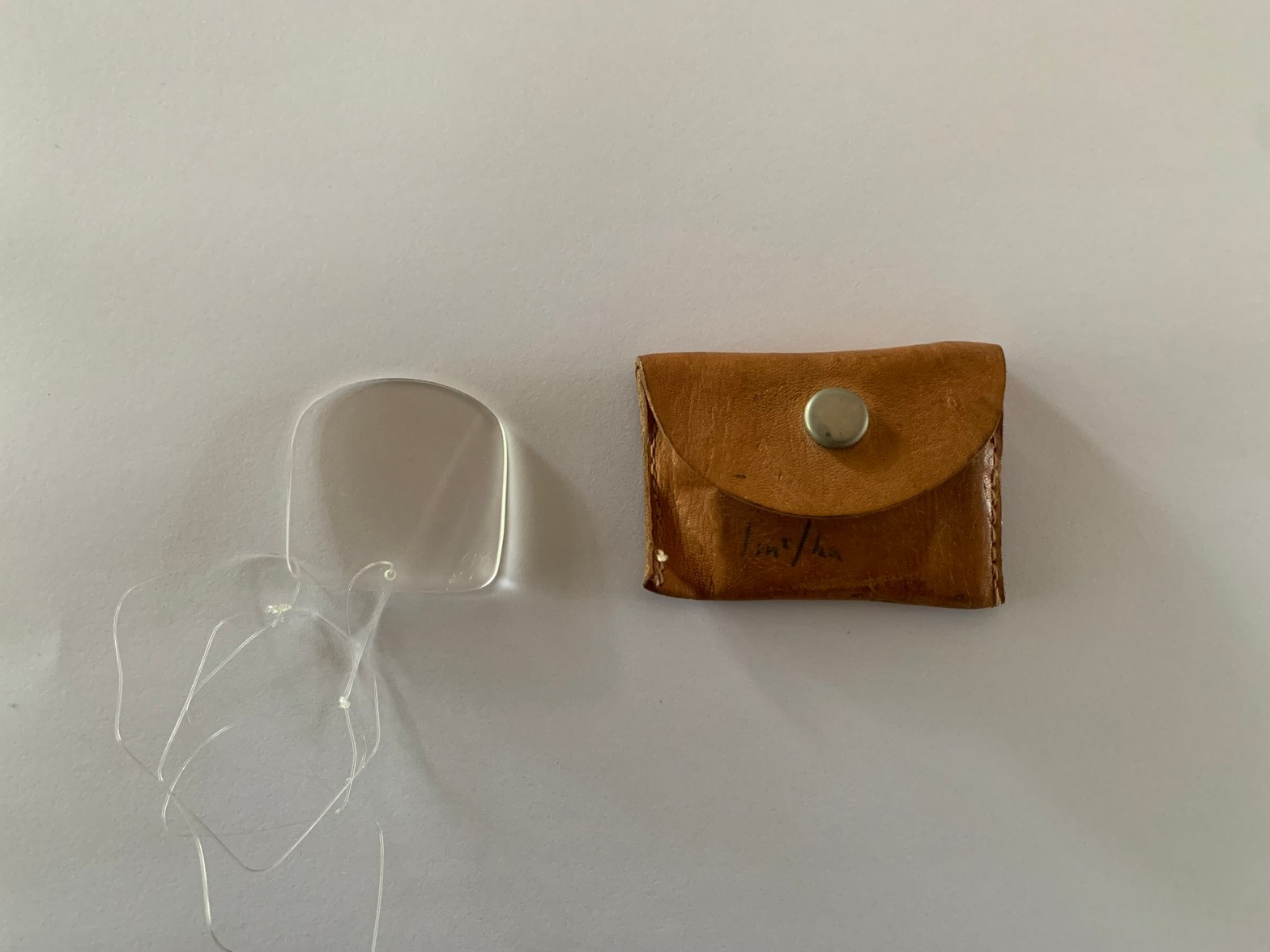
Angle count sampling involves a simple sweep of the forest from a fixed sampling point using a relascope, dendrometer sight, angle gauge, or glass wedge prism.
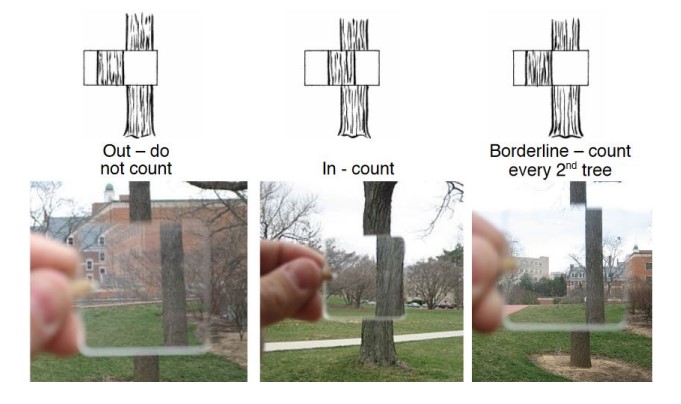
A glass wedge prism has a shallow angle (usually less than 3 degrees) which causes light to refract. Depending on tree size and how close you are, the vertical edge of the tree at breast height can appear separated. Standing in one spot, a sweep is made with the prism held at arm’s length, and trees are counted as either “in” or “out”. The number of trees is multiplied by conversion factor of prism (1 m2/ha in my case) to estimate basal area. It’s very quick and effective.
Basal area is commonly used during thinning operations to reduce the number of smaller or defective stems and concentrate growth on the larger and straighter trees.
A large area of 1950s mixed species regrowth (mostly silvertop and messmate) in the Boola forest, north of Traralgon, was mechanically thinned during the 1980s and ‘90s.
For the older regrowth stands it was usual to retain about 20-25 m2/ha, or at least 50% of the initial Basal Area. The thinned stems were sold to APM for pulpwood.
There are very few native softwoods in Victoria, and those that do exist, like white cypress pine (Callitris glaucophylla), grow too slowly to be suitable for large scale commercial plantations.
From its earliest days in the 1830s, Victoria imported large quantities of softwoods, mostly from north America and Scandinavia. The need for cheaper and more reliable local sources for internal work, furniture and joinery was apparent.
Early foresters quickly discovered that the physical properties of native forest hardwoods were unsuitable for some applications and plantation-grown softwoods offered the chance to replace expensive imports of Baltic Pine, Oregon and other timbers with domestic supplies.
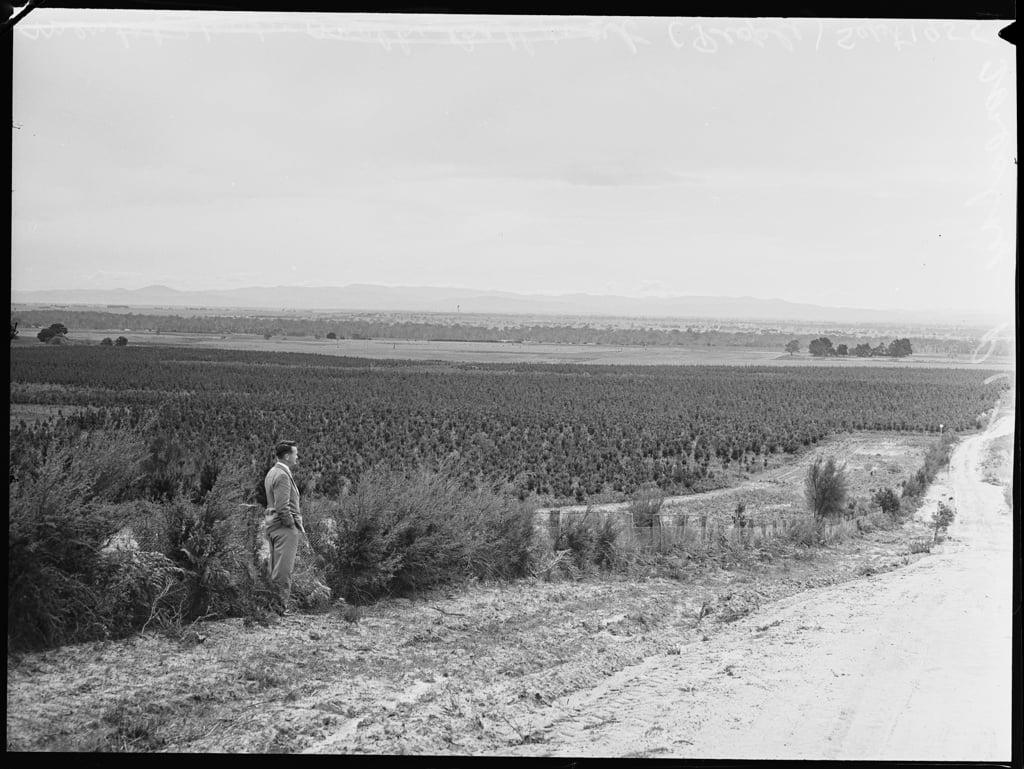
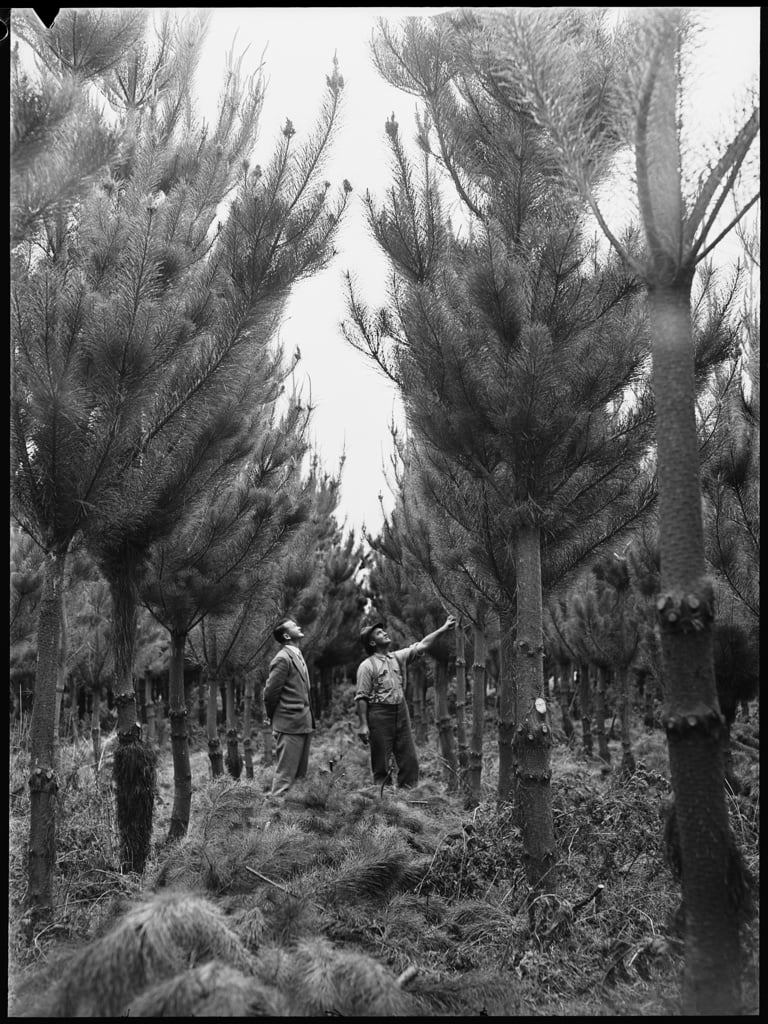
Pinus insignis (now called Pinus radiata), which is native to the central coast of California and Mexico, was first planted in gardens and windbreaks at Doncaster during the 1860s and grew well. It was sufficiently promising for commercial plantings to begin from 1887.
Initially, the planting goals were simply to rehabilitate land cleared during the gold rush, provide some timber and avoid the costs and unreliability of imported timber, generate some revenue and create jobs in local sawmills.
Experimental pine plantations were established under the stewardship of John Johnstone, the Victorian Superintendent of Plantations (and often overlooked founder of the forestry school at Creswick). These were at Frankston and Harcourt (1909), Wilsons Promontory (1910), Bright (1916), Port Campbell/Waarre (1919), Anglesea (1923) and Mount Difficult (1925). The largest plot was some 2,500 acres associated with the new McLeod Prison farm on French Island (1911).
However, nearly all these plantings failed due to poor soil and site conditions, but valuable silvicultural lessons were learned. The earlier success of radiata pine had partly given rise to the fallacy that it could grow anywhere.
Planting activity once picked up again in the 1930s with unemployment relief schemes during the Great Depression.
The Forests Commission began the Strzelecki reforestation program in the 1930s with planting of both softwoods and hardwoods on abandoned farmland of the “Heartbreak Hills”.
APM Forests (APMF) was formed in 1951 with the primary aim of supplying pulpwood to the Maryvale Mill in the LaTrobe Valley through the establishment of plantations and co-ordination of harvesting and transport. The company also invested heavily in plantations in the Strzelecki’s under the stewardship of Norwegian forester Bjarn Dahl.
In 1949, the Commonwealth Forestry and Timber Bureau proposed a national planting program to make Australia more self-reliant in timber after the shortages experienced during the second world war.
But the big leap for Victoria came in 1961, when the Chairman of the Forests Commission, Alf Lawrence, attended the World Forestry Conference in São Paulo Brazil, and upon his return took a bold decision to commit to a massive plantation expansion program which initiated nearly four decades of plantation establishment.
The Commission decision created a new wave of momentum and private investment optimism. The plantation area eventually reached a threshold where manufacturers could confidently establish major processing plants.
In 1964, the newly formed Australian Forestry Council (AFC) set a national estate target of 1.2 million ha by lifting the average annual planting rate from 16,000 ha to 28,000 ha and maintaining that level until 2000.
The Commonwealth agreed to provide loan funds to the States to plant more trees and Victoria took up the challenge by establishing and maintaining its plantations at nearly half the average cost of the other states.
Over time the Commission identified eight major plantation zones at Benalla/Mansfield, Central, Ovens, Upper Murray, Latrobe, Portland/Rennick, Ballarat and the Otways.
Planting in Victoria peaked in 1969 with a record 5,183 ha.
By the end of 1982, when the amalgamated Department of Conservation, Forests and Lands (CFL) was formed, the Forests Commission had established 87,000 hectares of softwood plantations, a five-fold increase since 1940.
And as the government and private plantation base progressively expanded and matured, agreements were reached with private mills such as Bowater-Scott (now Carter Holt Harvey) at Myrtleford in 1972, and the Australian Newsprint Mills at Albury in 1980.
But attitudes towards pine plantations began to change in the 1970s with growing disquiet from environment and community groups about the social impacts of planting. These included changes to the profile of rural communities and farmland leading to the closure of small towns and schools, also concerns about fire protection, clearing of native forests and conversion to pines, together with the use of chemical sprays.
The Victorian Timber Industry Strategy (TIS) in 1986 set new government policies for the industry and management of public forests and plantations.
In 1987, the State Government introduced a policy to stop clearing of native forest for softwood plantations.
The State Labor Government started to explore options to sell the plantation assets in about 1990 but there were a number of complex legal, financial and practical impediments to overcome first. The Premier, Joan Kirner, confirmed in July 1992 that the State’s plantations would be corporatised and sold, with the entire estate vested into a newly formed state-owned enterprise known as the Victorian Plantations Corporation (VPC). The land was not sold.
A year later in 1 July 1993, under a new Kennett Liberal Government, the VPC took full legal control of 106,250 ha of softwood plantations. There were also 7,180 ha of hardwood plantations, which were mostly in the Strzelecki Ranges.
Later in 1998, the VPC was sold to an American and Australian superannuation company Hancock Victorian Plantations (HVP) for $550 million.
In about 2000, HVP acquired the plantation assets formerly owned by Australian Paper Manufacturers Forests (APMF) in Gippsland to become one of Australia’s largest softwood companies supplying over 3 million tonnes of wood annually to local manufacturing industries
The Green Triangle spans the border area between South Australia and western Victoria. Major private growers include Forestry-SA, Auspine, HVP, Associated Kiln Driers (AKD), Timbercorp and ITC with timber processing by Kimberly Clark, Carter Holt Harvey and Auspine.
The green triangle region grows around 160,000 ha of mature softwood plus another 110,000 ha of short-rotation hardwood plantations which were mostly established from the mid-1990s.
Victoria now has 382,600 hectares of privately owned and managed plantations, making up nearly a quarter of the national total.
And Victoria produces around 25% of Australia’s plantation grown wood, while the industry generates an average of $500 million in value per year.
In addition to local processing, about 5.3 million m³ of pulpwood (woodchips) are exported through Geelong and Portland each year.
With native forest timber harvesting set to end in Victoria in 2024, it’s fortunate that the visionary planting schemes by the Forests Commission, which then encouraged others, has left a large and thriving plantation industry.
Short rotation softwoods will never fully replace the beautiful slow-grown hardwood timbers that we all love, but thankfully the plantation legacy will meet some of our future timber needs.
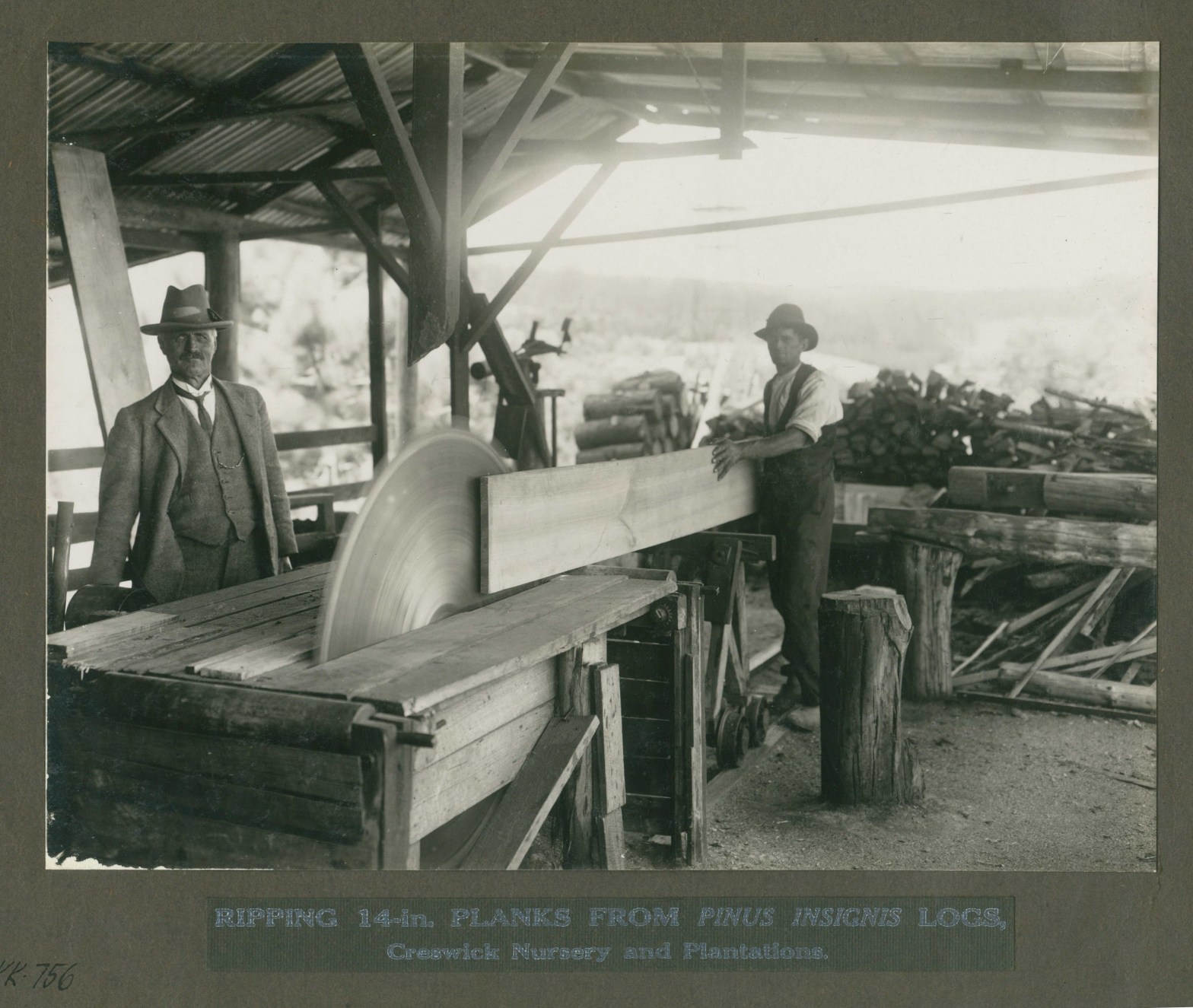
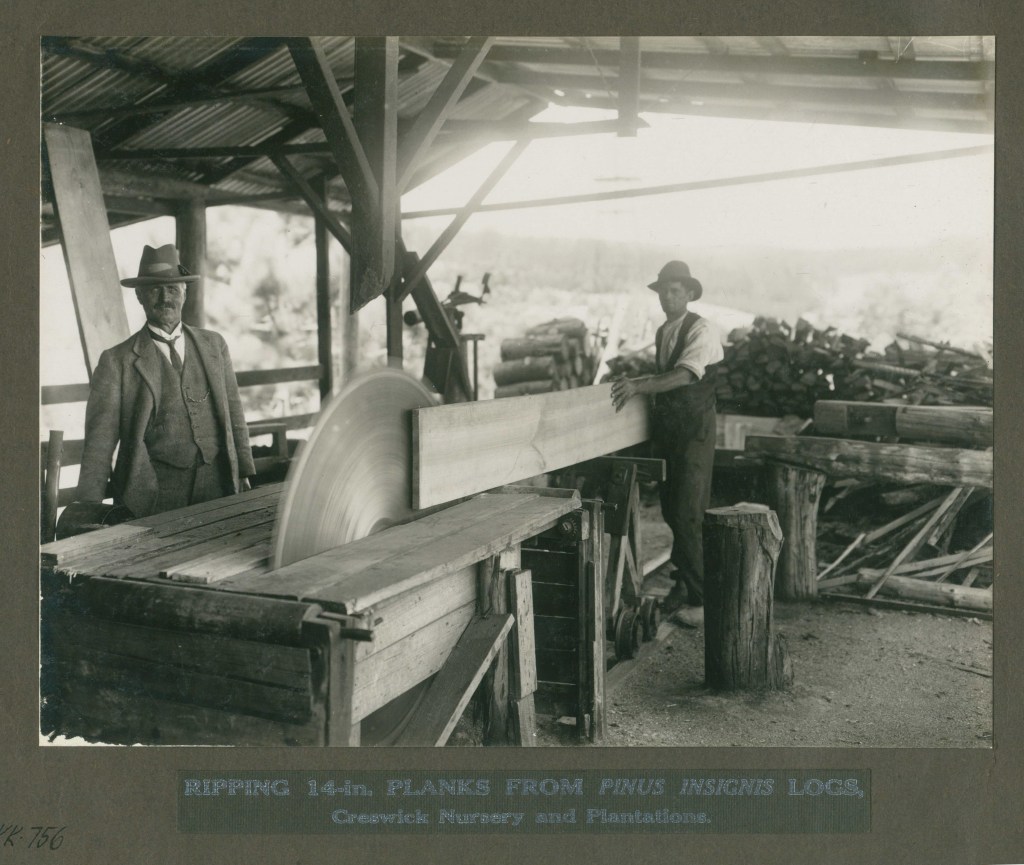
Photograph probably taken in the early 1920s (Source: Item No: 1434-3, Creswick Historical Collection, Uni of Melb. Photographer unknown) : John Johnstone at left. Ripping 14 inch planks from Pinus insignis logs at the Creswick Nursery.
The first reference to the use of crawler tractors in Victorian logging operations was in 1934.
Forester, and later FCV Chairman, Finton Gerraty, reported in the Victorian Foresters Journal.
“A diesel oil caterpillar tractor which may be used either as a stationary winch, or as a mobile haulage unit, is the latest addition to log hauling machinery in use in the Victorian bush”.
The machine was owned by Anderson and Rowe from the Marysville Seasoning Company and was working on Mt Strickland at an elevation of about 4000 feet.
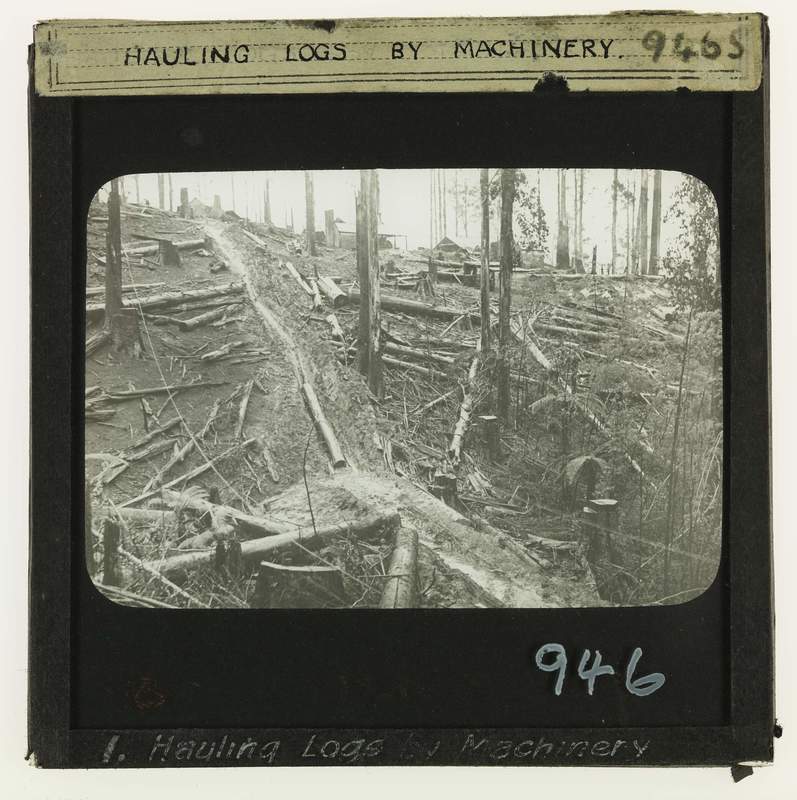
The sawmilling and logging industry had known for a very long time that using animals such as horses and bullocks for hauling heavy logs in the steep and wet mountain forests had its limitations.
For many years logging contractors had been using stationary steam winches which partly solved the problem, but they were costly to set up and operate. For example, they required a licenced engine driver, a whistle string man and track swampers (what great job titles).
Stationary steam engines weren’t much good for harvesting small quantities of timber either. The economic threshold was about 200 acres (80 ha) of heavily timbered forest.
Mobile crawler tractors solved many of these problems. The three-cylinder, water cooled caterpillar tractor produced 35 horsepower which is piddling compared to today’s models.
It also came with a 9-inch, two speed winch with about 1000 feet (300 m) of ½ inch steel rope which could pull 12,700 pounds (5.7 tonnes).
With the winch, the machine weighed about 8 tonnes and had a top speed of 4.6 mph (7 km/hr).
The following production figures were obtained over sixteen day working test.
Average number of logs per hour – 1.1
Average size of logs – 1923 super feet (4.5 m3)
Average length of haul – 67.5 chains (1360 m)
Fuel consumption – 1 gallon per hour at 8 pence per gallon.
Tractors were clearly the way of the future, although steam continued to play a big role in the 1939 salvage operations in the Central Highlands.
Hauling logs by tractor to C.J. Rowe & Sons sawmill, Marysville
Logging in rough and steep country had always presented serious challenges to contractors and sawmillers. In addition to the obvious safety considerations, delays caused by terrain or weather had impacts on operating costs and ensuring smooth wood flows to the sawmill.
In 1936, Erica District Forester, Arch Shillinglaw, gave an account in the Victorian Foresters Journal about skyline and high lead logging operations by notable local sawmiller Jack Ezard.
Ezards operated a number of mills and timber tramlines in the wet mountain forests along the length of the Thomson catchment. They had previously owned and operated sawmills in the Warburton area from 1907, before shifting to Central Gippsland in 1932, and later to Swifts Creek in about 1950.
Ground snigging of logs had serious disadvantages at these higher elevations in the Thomson Catchment. The bush was also studded by massive granite boulders and traversed by steep rocky creeks. It often snowed in winter and, other than the timber tramways operated by the company, there were very few roads.
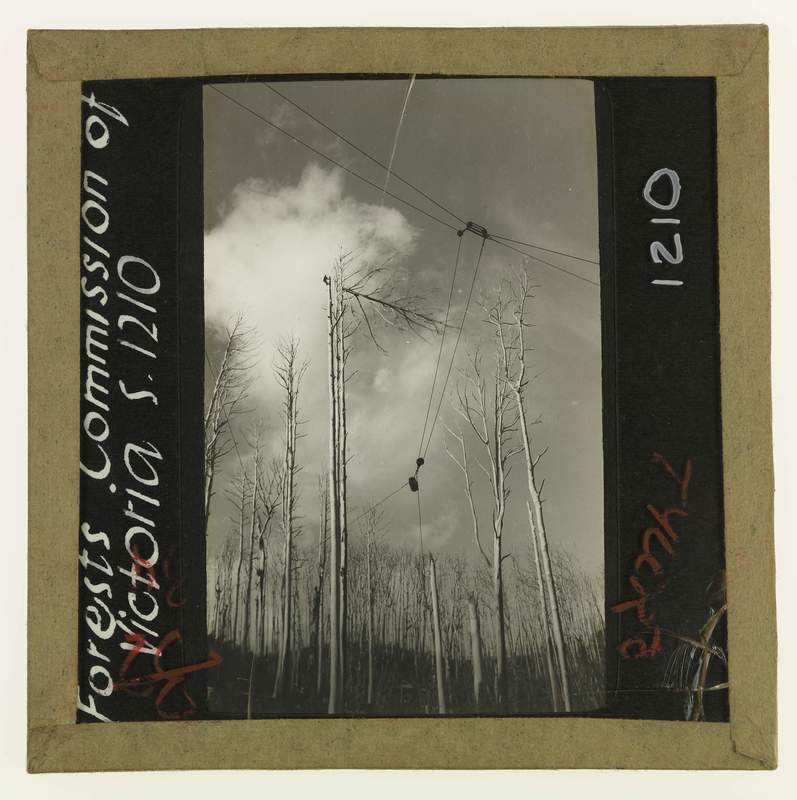
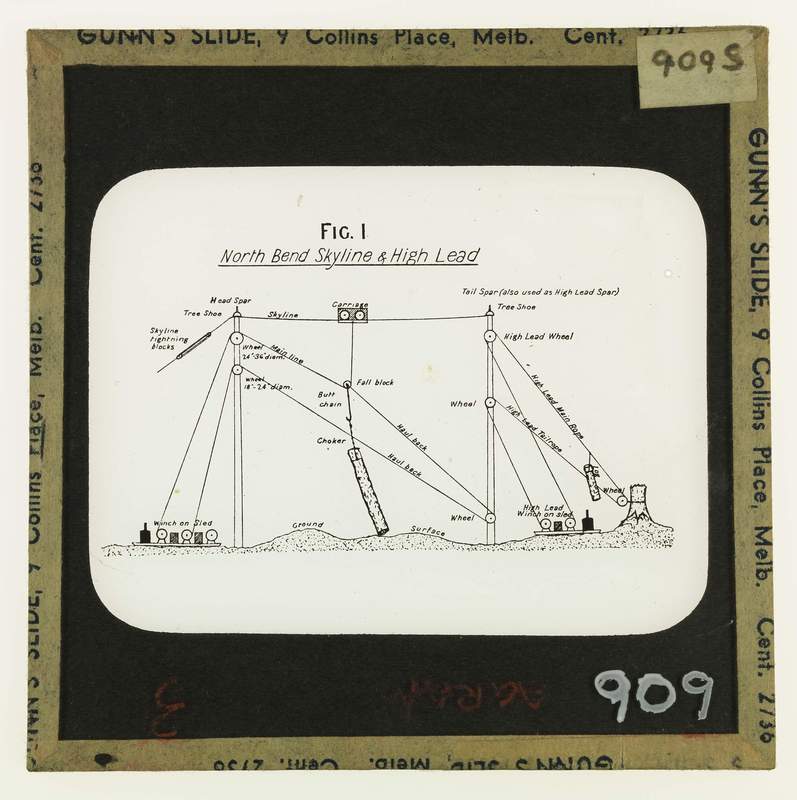
To overcome the steep and difficult logging conditions Ezards purchased an American North Bend Skyline System.
The system was first introduced into the Pacific Northwest by the North Bend Lumber Company based in Washington in 1912 and consisted of a number of key elements.
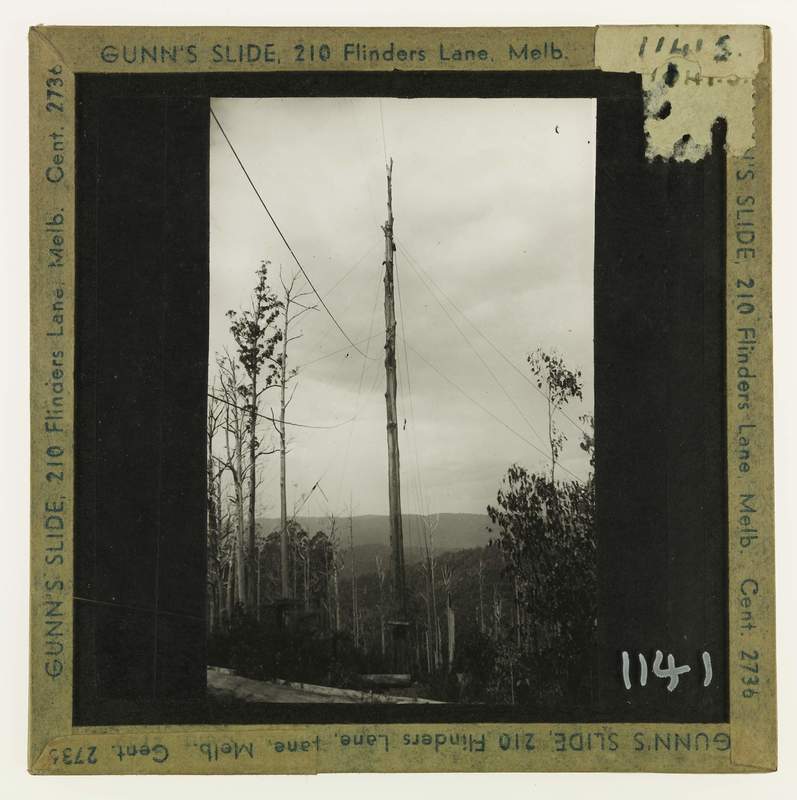
Head and tail spar trees, preferably 200 feet or taller in height, and placed any distance apart to a maximum of 2,500 feet. The spar trees were supported by several stay wires.
The skyline is a wire rope of about 1 ½ to 2 inches in diameter, passing over a tree shoe at the top of each spar then tightened and fixed at each end. A sag of 5% deflection was allowed to prevent undue strain and breakage of the wire.
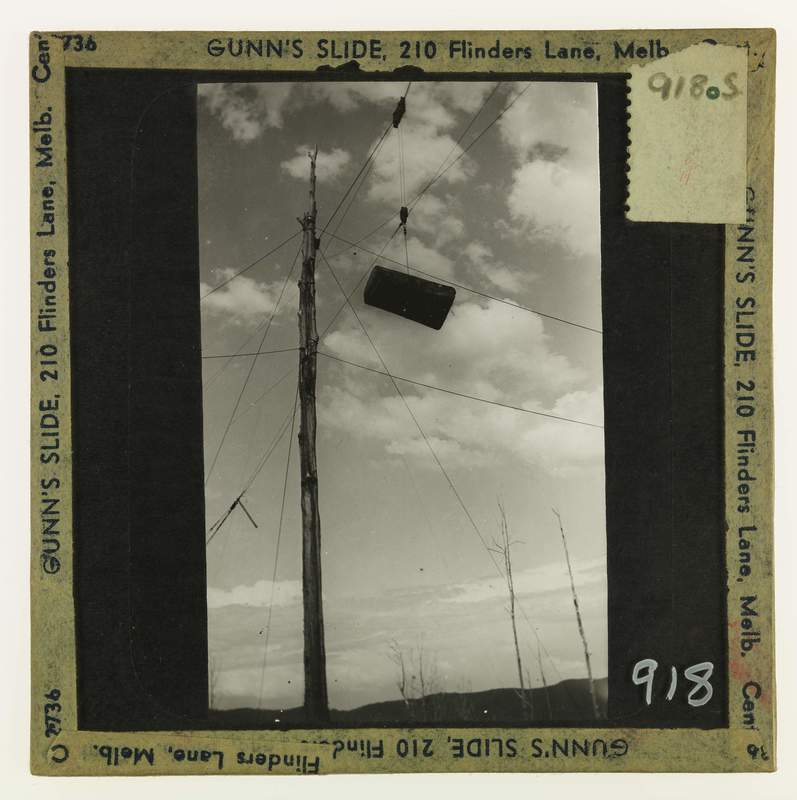
The steel carriage, measuring 4’6” x 2’6” and weighing 7 hundredweight (360 kg) fits over the skyline and runs along on two wheels.
The main line is a wire rope 1 inch in diameter with one end attached to the steel carriage and passing down through a fall block and then over the high lead wheel near the top of the head spar and then to a which drum.
The haul back, or tail rope, is a smaller ½ inch to 5/8-inch diameter wire rope attached to the fall block and then passing over a wheel at the base of the tail spar, then back over another wheel on the head spar before making its way to the winch drum.
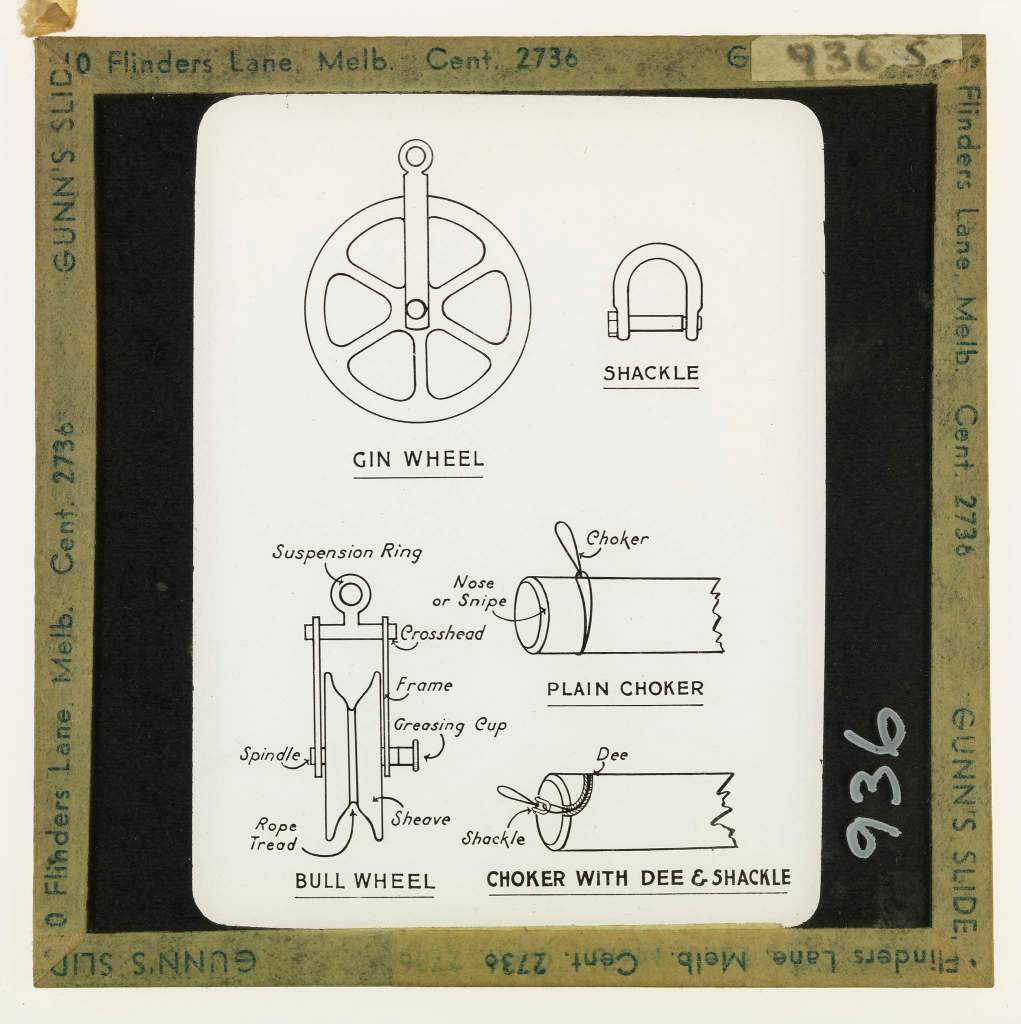
A butt chain is attached to the fall block and to a “chocker” – a wire rope for gripping the log.
The steam winch at the head spar sits on a timber sled to enable movement. It has 10 inch by 12 inch cylinders or greater and operates at 140-200 pounds of stem pressure. If it is a “friction machine” it has two drums for logging (main and tail rope drums) and one drum for loading. If it is a geared machine and additional engine is needed for loading.
The skyline system can log a strip up to five chains wide either side of it. It also lifts logs completely off the ground, or with just the tail dragging. Logs can be brought in much faster than with ground haulage and can straddle streams and go over large rocks.
Once logs arrive at the head spar, they are loaded onto rail trucks by the winch or by tractors.
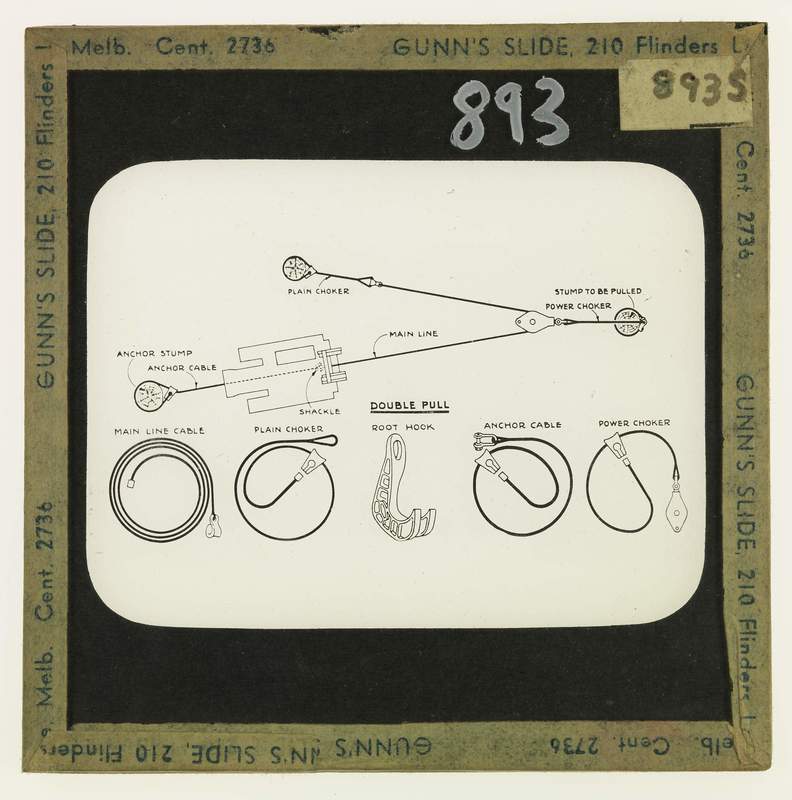
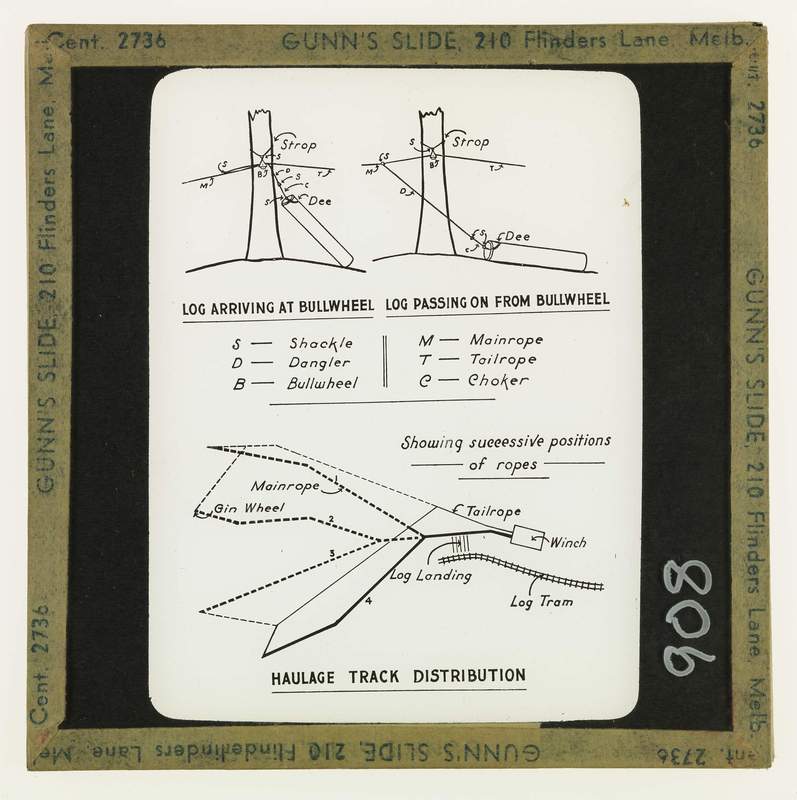
High lead systems have a slightly different arrangement with the main rope from the winch drum passing over the high lead wheel at the top of the tail spar. The rope then leads off into the bush and is tied to a stump. The rope moves in an arc to another stump as the coupe progresses.
A high lead system can gather up and yard logs to the tail spar over a radius of about 2,000 feet, depending on the height of the spar and the nature of the terrain.
Working in conjunction, a skyline and high lead system, can potentially log over 500 acres.
It’s thought the last steam driven high lead logging operation in Victoria was the Washington Winch near Swifts Creek. It was also operated by Ezards as late as 1960-61.
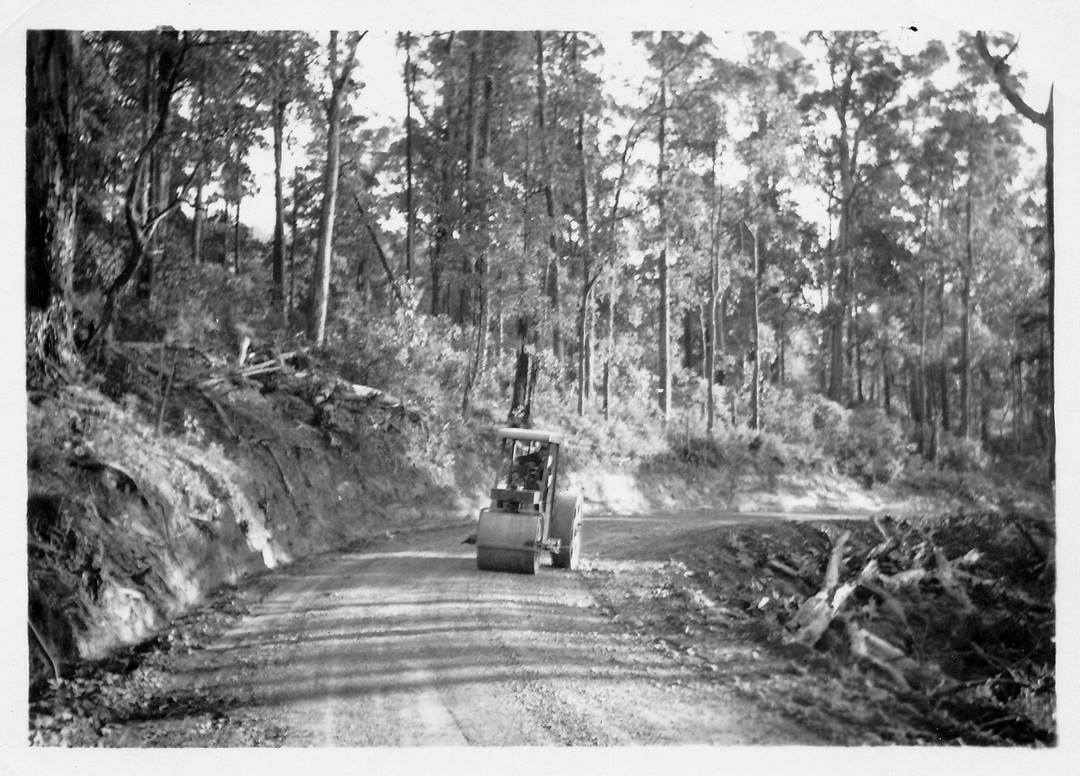
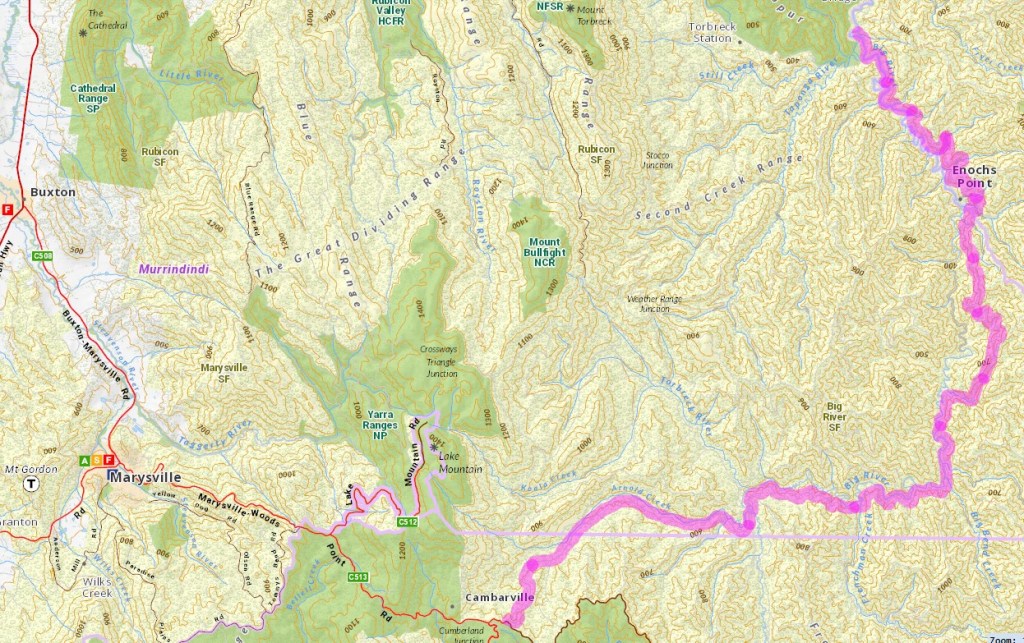
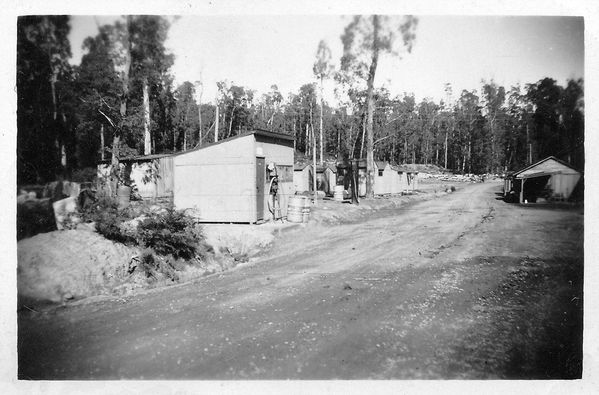
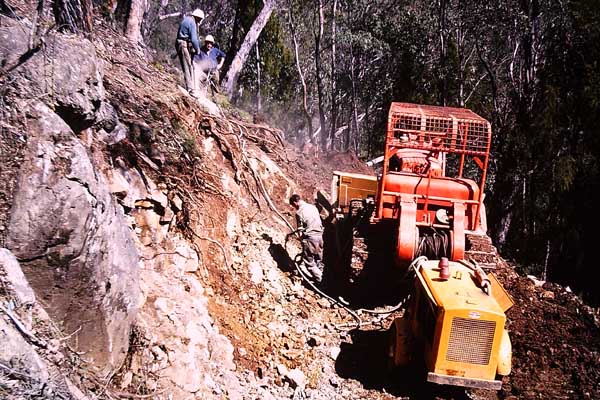
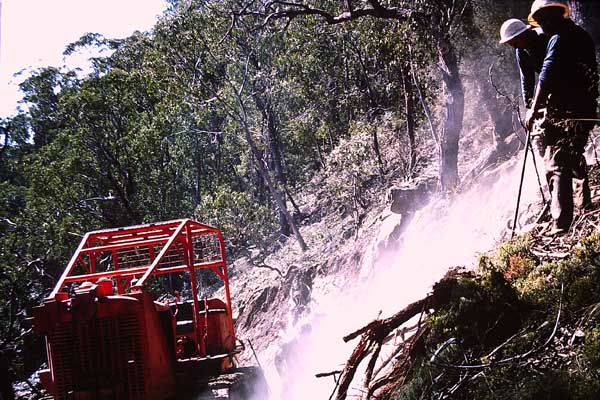
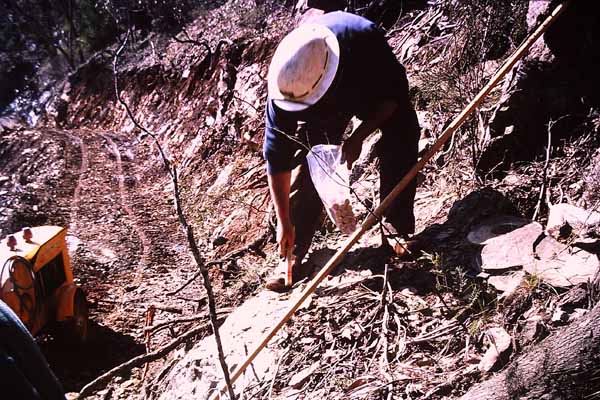
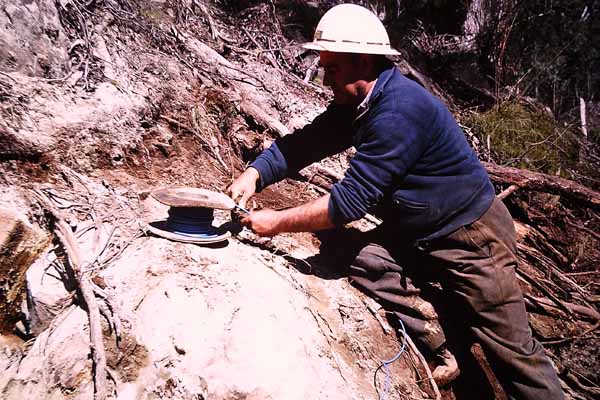
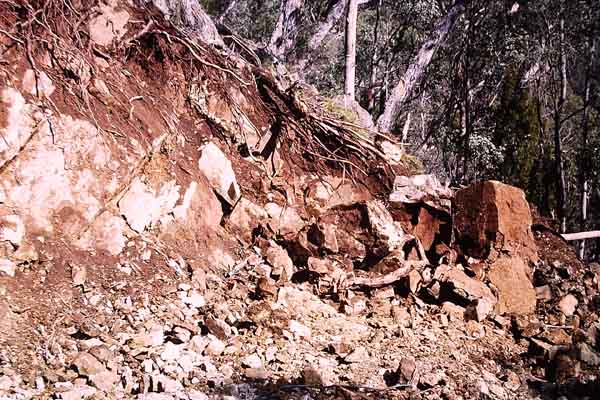
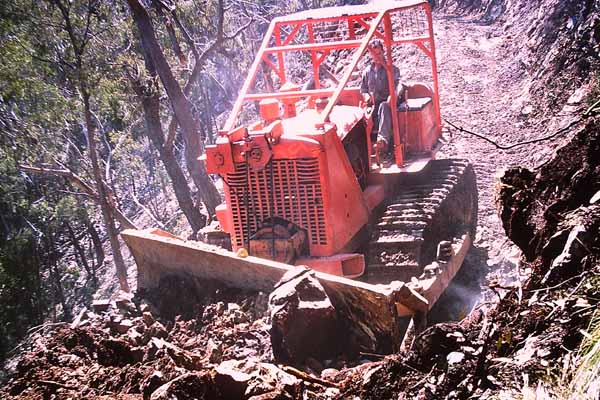
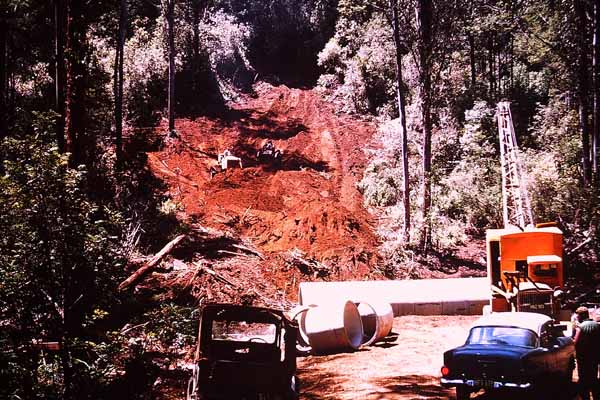
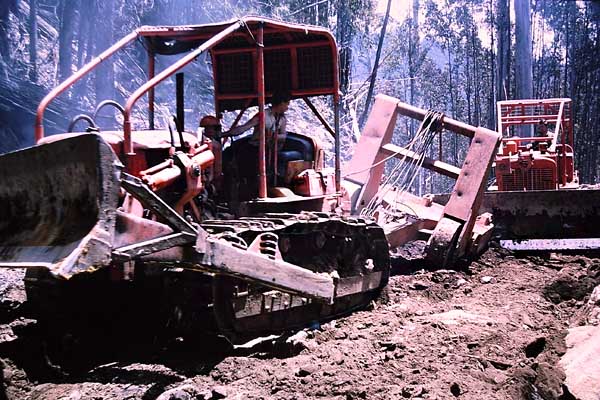
Stretching more than 60 km from the junction of the Woods Point Road near Cambarville, east of Marysville, to the Eildon-Jamieson Road in the north, the Big River Road was a major element in the expanded road network built by the Forests Commission Victoria (FCV) throughout Victoria’s mountains in the post war period to access ash timber resources and for fire protection.
Records are sparce in FCV annul reports, but as far as I can tell the road was begun in about 1944/45.
But unlike the massive Tamboritha Road near Licola, which was completed in about three years, the Big River Road was progressively extended over time and works were still ongoing into the mid-1960s.
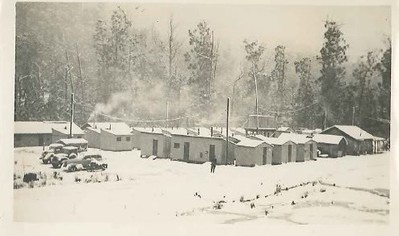
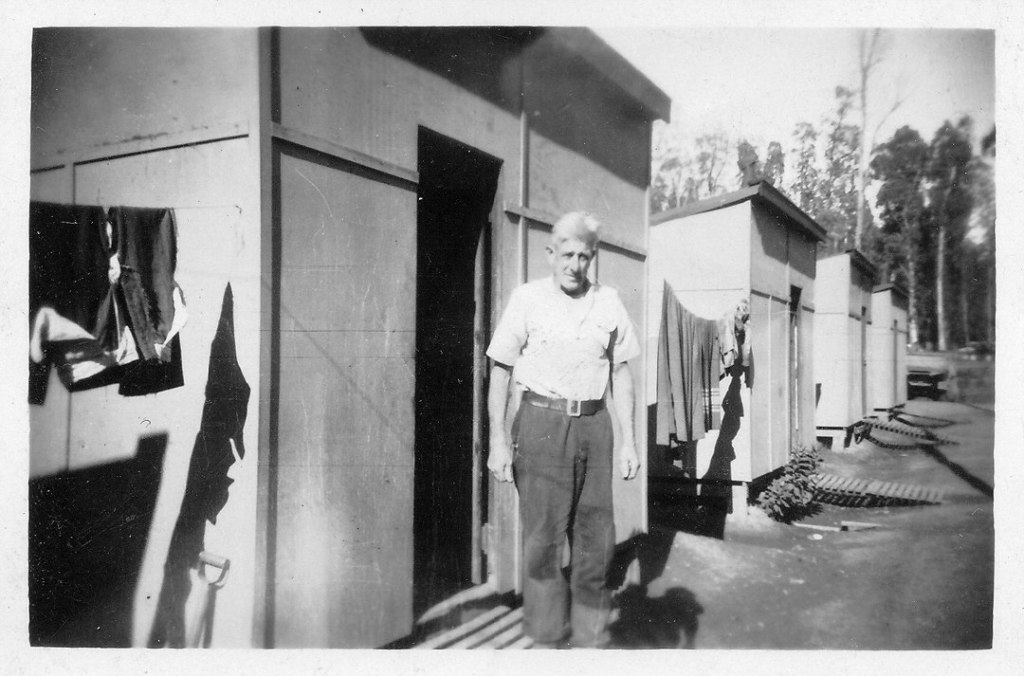
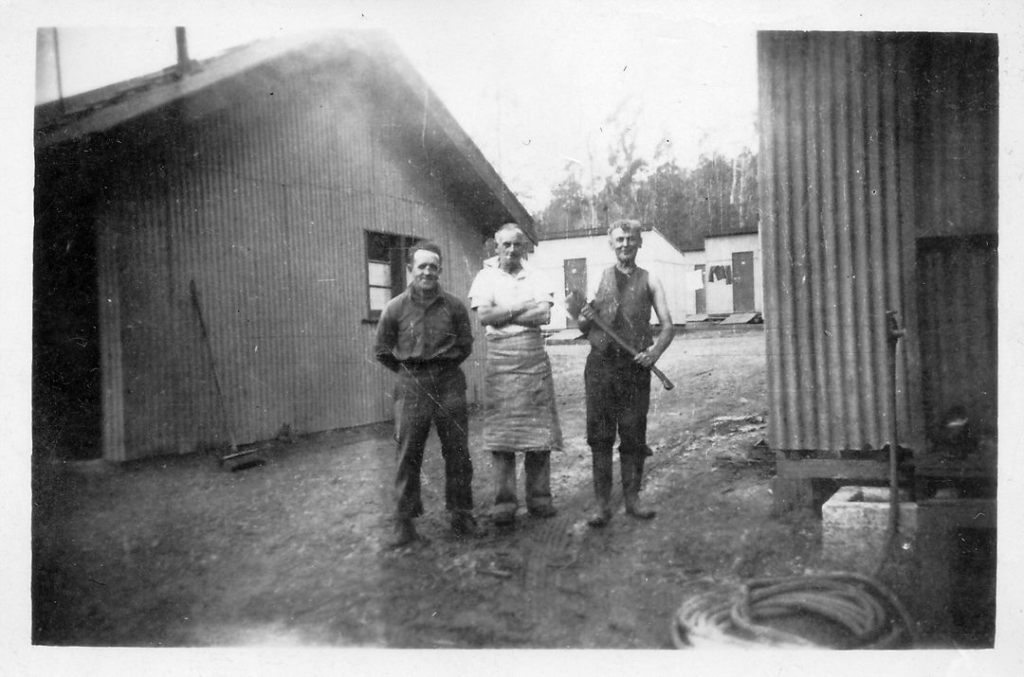
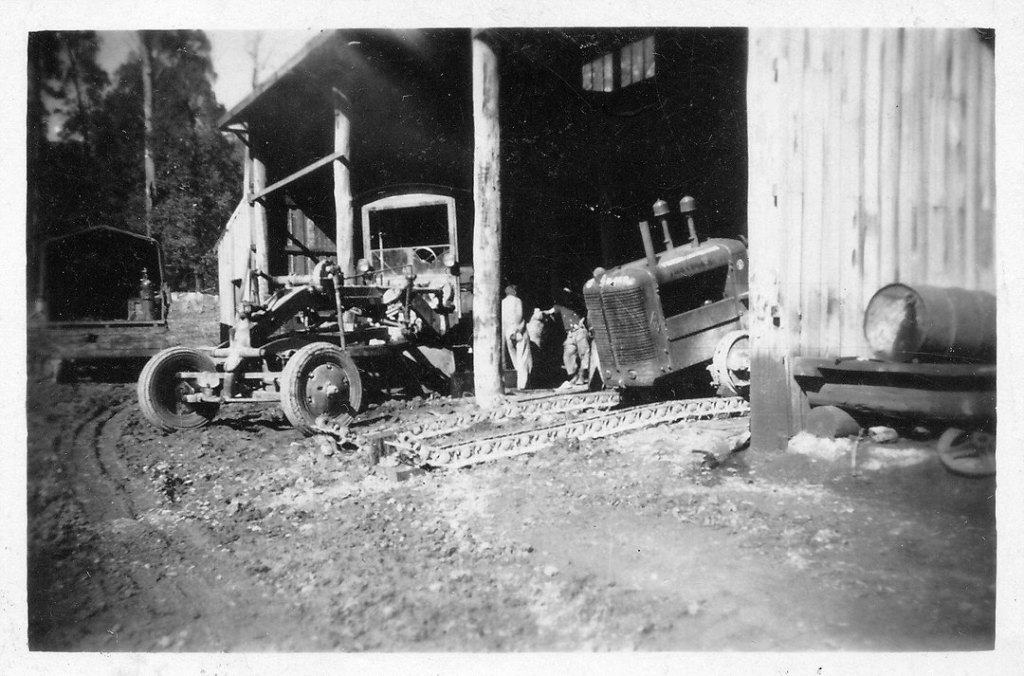
A series of workers camps were established along the way, and I believe that Ray Brown, a FCV overseer from Marysville, was the main construction supervisor after Roy Brown moved to Heyfield in about 1960.
Now a popular 4WD route, I’m keen to know a bit more about this history of this important road project and would welcome any additional information.
Photos are from a variety of sources including the FCRPA collection and the Marysville Historical Society.
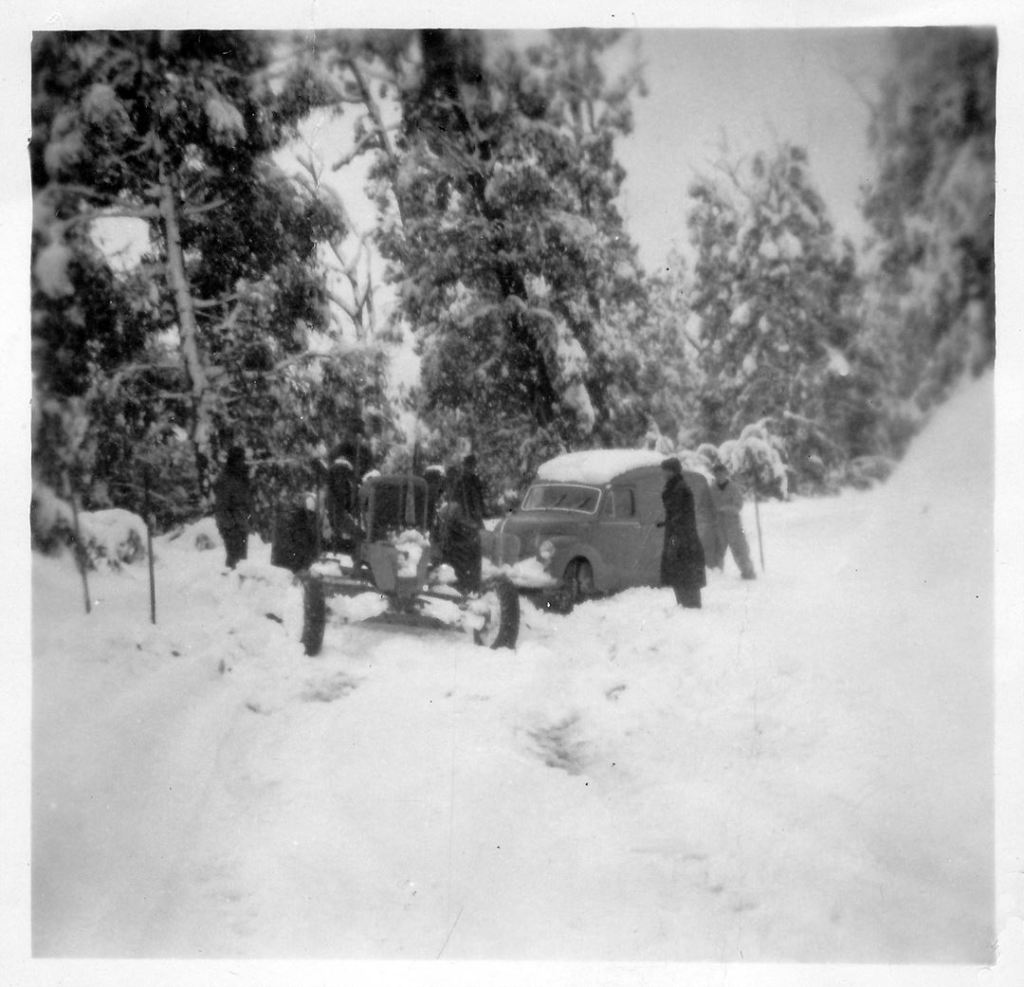
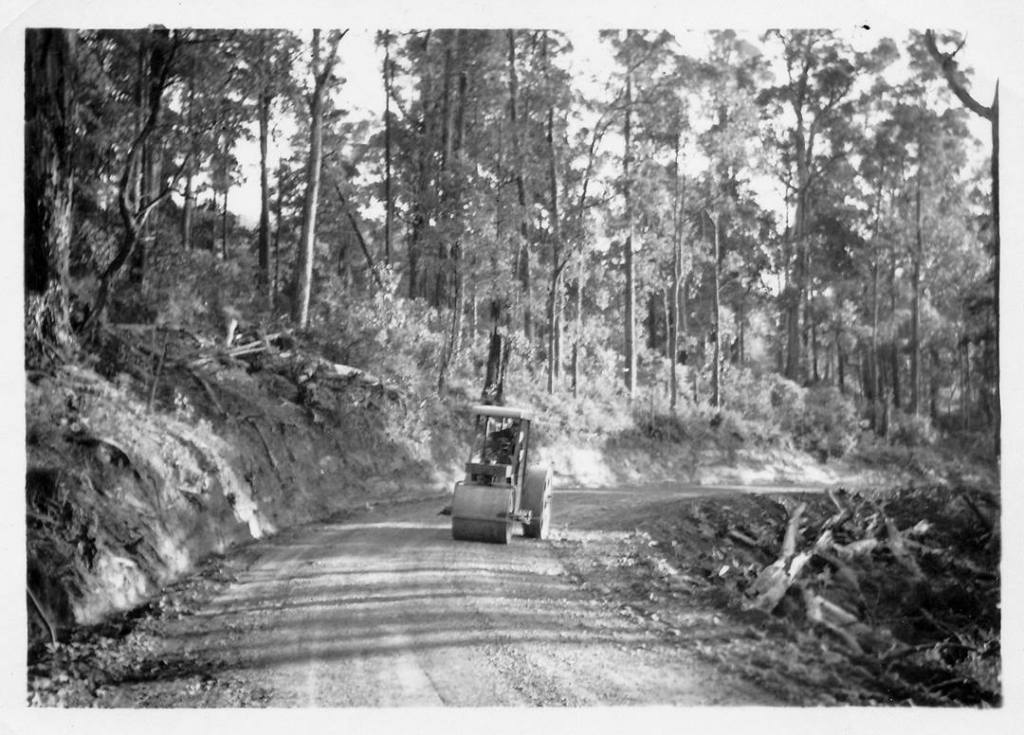
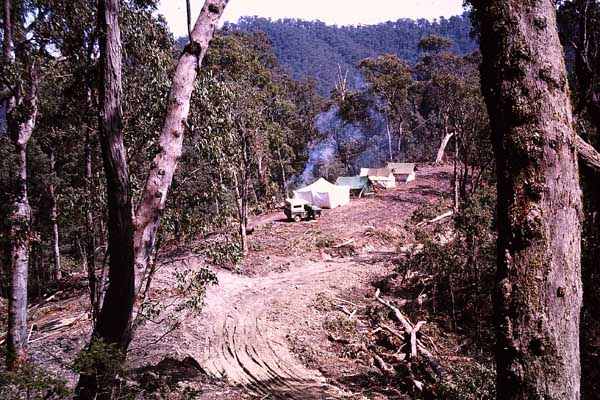
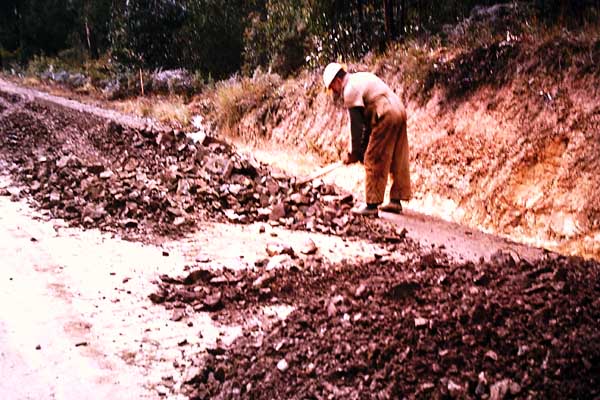
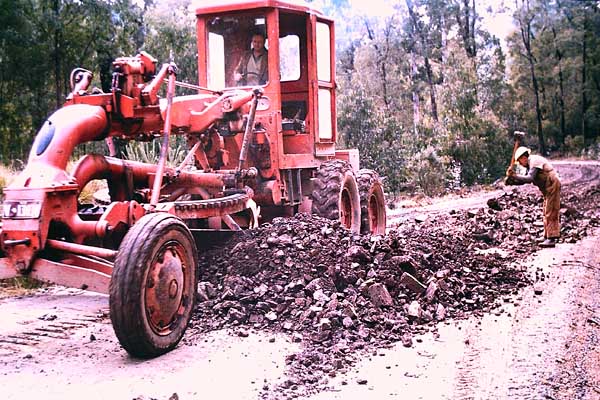
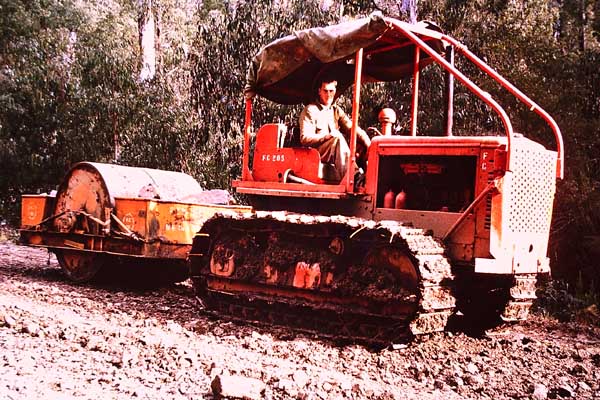
Photograph taken by N Cox in 1963 : FCV Construction camp – Big River RoadPhotograph taken by N Cox in 1963 : FCV Construction of the Big River RoadPhotograph taken by N Cox in 1963 : FCV Construction of the Big River Road – Ern Snell (left) drilling and Chook HopePhotograph taken by N Cox in 1963 : FCV Construction of the Big River Road – Chook Hope placing gelignite into drill holesPhotograph taken by N Cox in 1963 : FCV Construction of the Big River Road – Chook Hope connecting charged holes with cordtexPhotograph taken by N Cox in 1963 : FCV Construction of the Big River Road – after blastingPhotograph taken by N Cox in 1963 : FCV Construction of the Big River Road – breaking out after blastingPhotograph taken by N Cox in 1963 : FCV Construction of the Big River Road – building a culvertPhotograph taken by N Cox in 1963 : FCV Construction of the Big River Road – ripping and widening after breakoutPhotograph taken by N Cox in 1963 : FCV Construction of the Big River Road – breaking up large surfacing materialPhotograph taken by N Cox in 1963 : FCV Construction of the Big River Road – spreading surfacing materialPhotograph taken by N Cox in 1963 : FCV Construction of the Big River Road – compacting the surface
The arrival of the Victorian Railways narrow gauge train (now the iconic Puffing Billy) into Gembrook in about 1900 signalled the rapid expansion of sawmilling in the district.
Sawmills had operated at Gembrook from the 1880s, but their produce was transported by primitive tramways to places like Nar Nar Goon in the south. A new Victorian Railway with direct access to timber yards in Melbourne was a major turning point.
While not on the scale of the harvesting of the mountain ash forests at Noojee and Powelltown, at least sixty small sawmills worked the drier mixed species bush, and for some time the timber industry was the largest single employer in the Gembrook area.
By industry standards the individual mills were not large producers of sawn timber but there were many of them operating in the forest.
The mills ranged in size from small itinerant two-man spot benches to larger more permanent mills operated by well-known local identities like the Mortimer, Russell, Ure, Dyer and Williams families.
Together these mills produced a huge volume of sawn timber for a rapidly growing metropolitan Melbourne, but also fruit cases for the local orchards.
A complex network of tramways developed through the private land and adjoining State forests. These bush railways were built with ingenuity and resourcefulness by men with little or no formal engineering training but plenty of courage and years of experience.
But like most of Victoria’s timber industry, steam and rails were progressively replaced by diesel and roads in the post war area. Then in 1953, a landslide blocked the track and the line to Gembrook closed.
The production of sawn timber from Gembrook peaked in the 1920s and 1930s, with another spike in the 1950s, but then declined steadily over time, and by the mid-1980s only a few local hardwood sawmills remained. The reopening of the post 1939 ash timber resources in the Central Highlands had a big impact on the competitiveness of the smaller under capitalised Gembrook mills.
Today, much of the land around Gembrook is dedicated to farming. The State forests have been redesignated as national park and timber harvesting has ceased. But there is still evidence of these fascinating old tram lines and sawmills if you know where to look.
Ref: Mike McCarthy (1987). Bellbrakes, bullocks and bushmen. LRRSA.
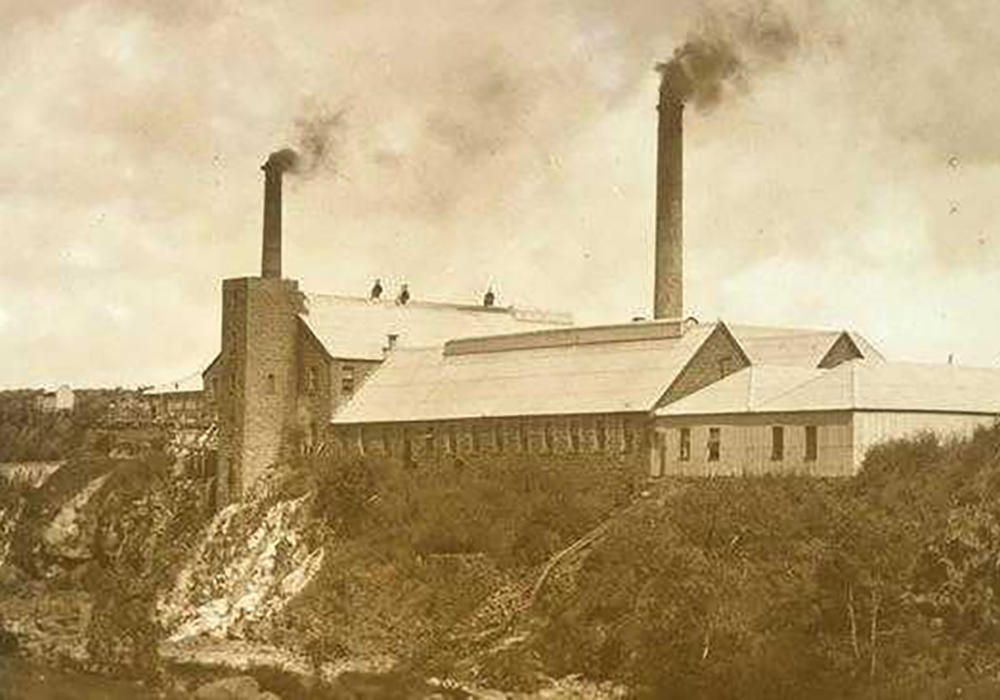
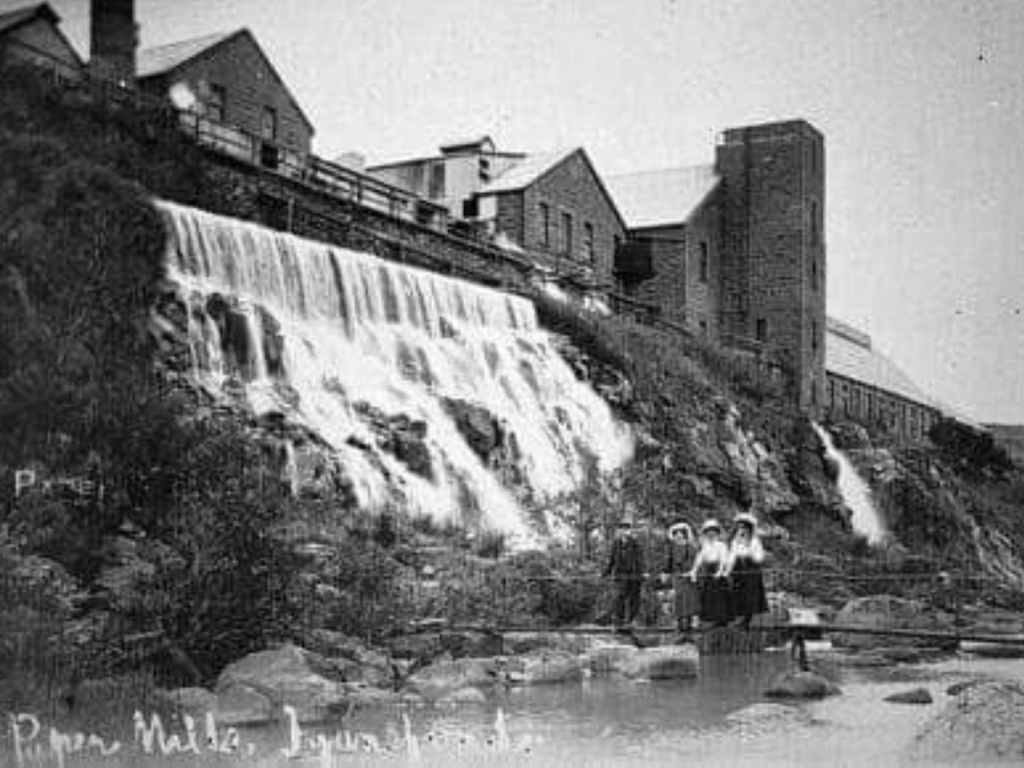
Building the Fyansford Paper Mill, on the Barwon River near Geelong, commenced in the 1870s and was completed in 1878. When the site opened, it was claimed to be one of the most advanced paper mills in the southern hemisphere.
At the time, there were seven paper mills in Australia and Fyansford is one of the earliest and operated for the longest period.
The mill used rags, offcuts of rope, recycled books, sails, straw, cloth and other by products collected from around the region as its main feedstock rather than wood fibre like Maryvale in Gippsland.
In 1895, the Australian Paper Mills (APM) acquired the complex and operated it until 1923.
From 1929 to 1941, the site was home to the Hydro Ice Company which used it as cool stores and to manufacture ice. The site was acquired by the Australian Navy during WWII.
The Fyansford Paper Mill remains as one of the most complete of its kind, still retaining many of its original mill buildings and water race.
Sugar Gum (Eucalyptus cladocalyx) originates in South Australia in three distinct populations: the Flinders Ranges, Eyre Peninsula and Kangaroo Island.
Sugar Gum is also widely planted across the drier western district of Victora as a windbreak or shelterbelt and for durable farming timber as well as magnificent firewood.
Sawn timber harvested from sugar gum has little defect and is prized for its durability. It is particularly suited to situations requiring high strength where appearance is also important, such as flooring and joinery. Its durability also makes it a valuable timber for exterior applications such as cladding, decking, outdoor furniture and pickets.
The Forests Commission recognised value of sugar gum from its earliest days.
In 1890, a nursery was established at Gunbower Island to grow sugar-gums and blue gums for the arid dry plains of the Avoca and Loddon catchments, and the dry sandy mallee wastes of the north-west and northern portions of the Colony.
By 1905, it was reported that large wattle and sugar gum plantations were established in the Portland district, and smaller ones at Mount Beckwith, Eddington and Cave Hill.
The 1907-08 annual report stated that plantations at You Yangs, near Lara cover some 1,300 acres, and consist chiefly of blue gum, sugar gum, pine of several species, and wattles for tanning.
A year later it was reported that commencement has been made at Dimboola, where 2,500 acres are enclosed with sowing and planting of sugar gum, bluegum and various other hardwoods.
The plantation expansion continued, and by 1917 the Commission reported “Eucalypts, chiefly ironbark, spotted gum, blackbutt, red mahogany, and sugar gum, were planted and sown at Dimboola, Dargile, Callawadda, and Korumburra, to the extent of 320 acres. Black featherleaf wattle was sown on 393 acres at the Grampians, at Lake Lonsdale (near Stawell), and at Mount Beckworth (near Clunes).
However, it now appears that there are only four significant areas of sugar gum plantation remaining.
Barrett near Dimboola – 160 ha. A late planting – perhaps 1960s -1970s. Very small areas can also be found in the Bryntirion State forest dating from the 1950s.
Majorca near Maryborough – 210 ha. Establishment of this plantation was underway as early as 1887.
Wail – 300 ha. Surrounding the old FCV nursery from about 1909-1910.
You Yangs – 680 ha. Establishment of this plantation was underway in 1887 and trees can still be found.
Given the expected shortfall in firewood with the cessation of timber harvesting on State forest in 2025, it seems a shame that these plantations were not maintained and expanded.
In the wake of the 1939 bushfires, the Forests Commission invested heavily in a radically new communications network. After suffering some inevitable delays due to the war, radio VL3AA switched into full operation in October 1945 proudly beaming out 200 watts across the State.
The RC-16 radio phone had been designed and built by the Radio Corporation of America (RCA) just before the outbreak of WW2. The Forests Commission adopted a version in 1939 that had been modified for the Australian Army and the RAAF – designated the RC-16B.
The RC-16B weighed about 9 Kg and used fragile valves that failed if the unit was dropped or bumped. As a portable, it was powered by a dry-cell battery weighing 1.6 Kg while a much heavier battery was used in office situations.
They used a thin dipole wire antenna strung up between two trees to get reception in the bush.
The availability of cheap solid-state transistors from the 1960s and 1970s enabled more robust radio sets to be fitted to the 4WD fleet.
Photo: Thought to be Bert Head, District Forester at Warburton and Upper Yarra, with his RC-16B and trusty steed. If you look carefully, you can see the dipole antenna wire. c 1940. FCRPA Collection.
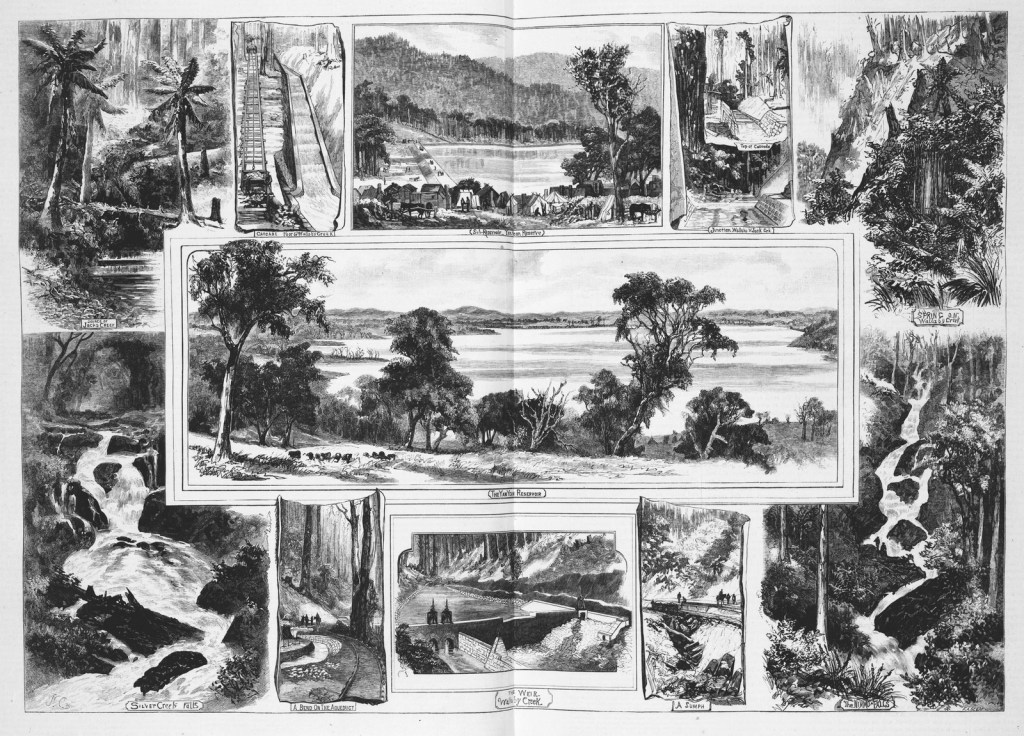
The east branch of the Plenty River, Silver Creek and Wallaby Creek catchments, were permanently reserved for water supply purposes in 1872.
Together with the 5,700-acre Yan Yean, which was completed in 1857, the catchments were part of the first system of reservoirs and aqueducts suppling water to Melbourne. The Toorourrong Reservoir was added in 1885.
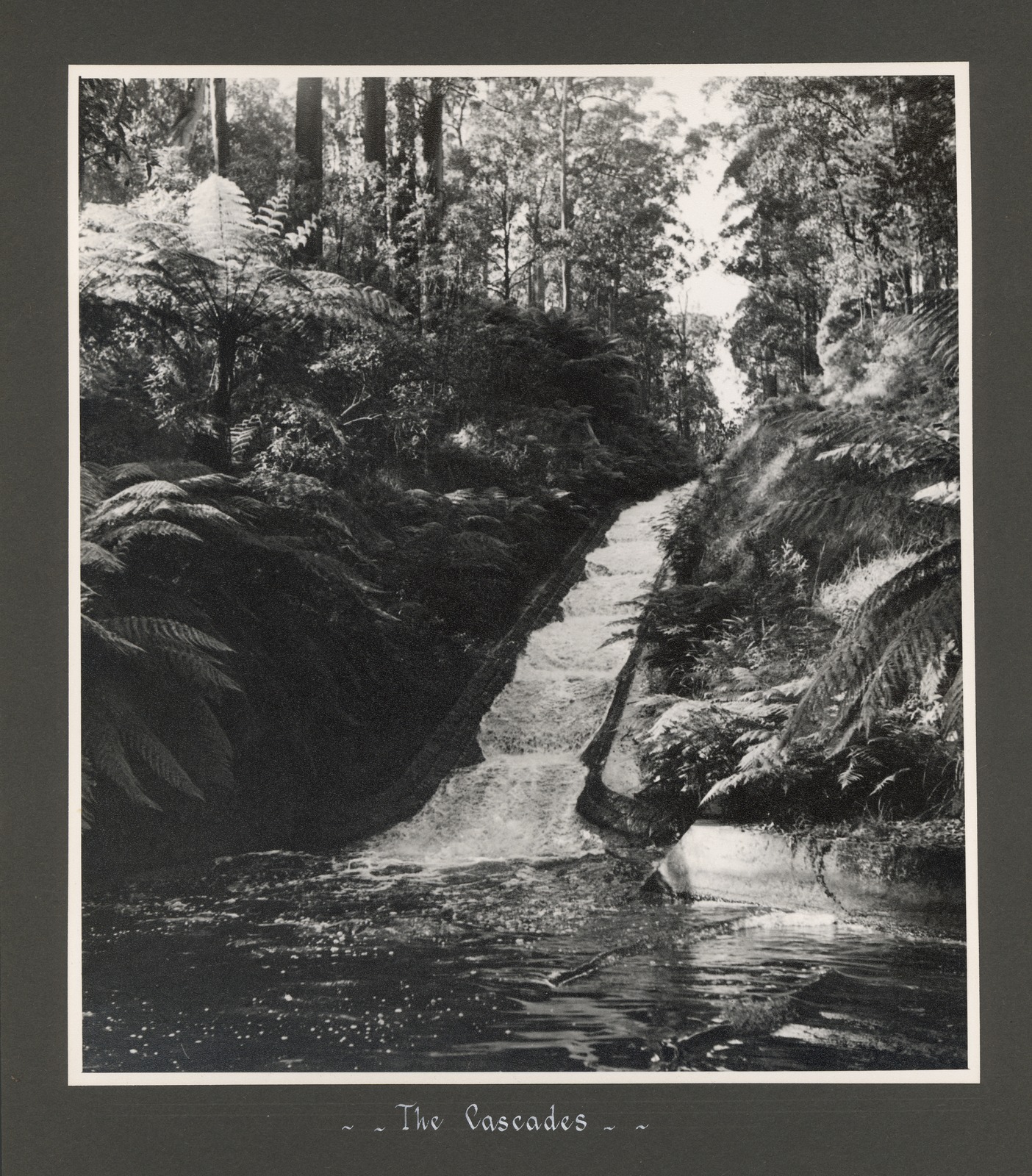
Water from the combined 11,500 acres of the Wallaby and Silver Creeks, which are on the northern side of Great Dividing Range, was diverted via deep granite lined channels over the range at a low saddle into the 10,500-acre Lower Plenty River catchment at Jack Creek, at a glorious spot known as the “Cascades”.
Public Works Department engineer, William Thwaites, designed most of the works.
In 1891, together with surrounding buffer areas, the catchments were vested in the Melbourne and Metropolitan Board of Works.
Wallaby Creek once had some of Victoria’s tallest mountain ash (Eucalyptus regnans), some growing at 300.5 feet. But the forests were extensively burnt in the 2009 Black Saturday Bushfires and the trees were nearly all killed. The MMBW caretaker’s lodge was lost as well. The subsequent thick regeneration has severely affected its water yield in accordance with projections of Kuzera’s Curve.
Long term research by the legendary botanist from Melbourne University, Professor David Ashton, showed that the oldest trees in Wallaby Creek originated from a bushfire in about 1700, whilst other old trees regenerated after the great fire of 1851.
Interestingly, before the fires some stands of mature mountain ash were very open with very little understory
The catchment is now part of the Kinglake National Park.
1947 photo by Professor Ernst Johannes Hartung of Wallaby Creek. FCRPA Collection
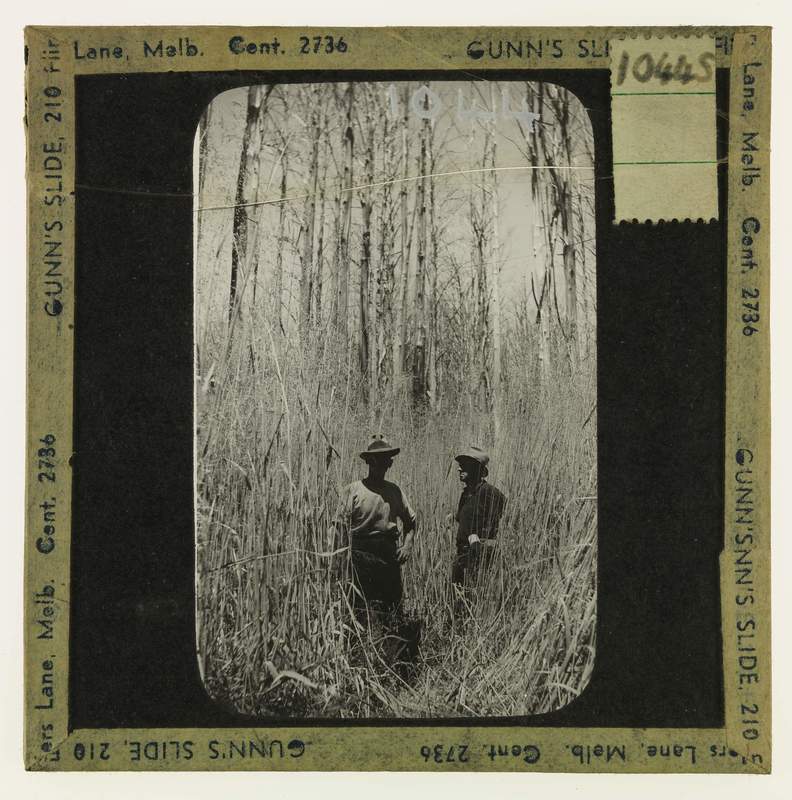
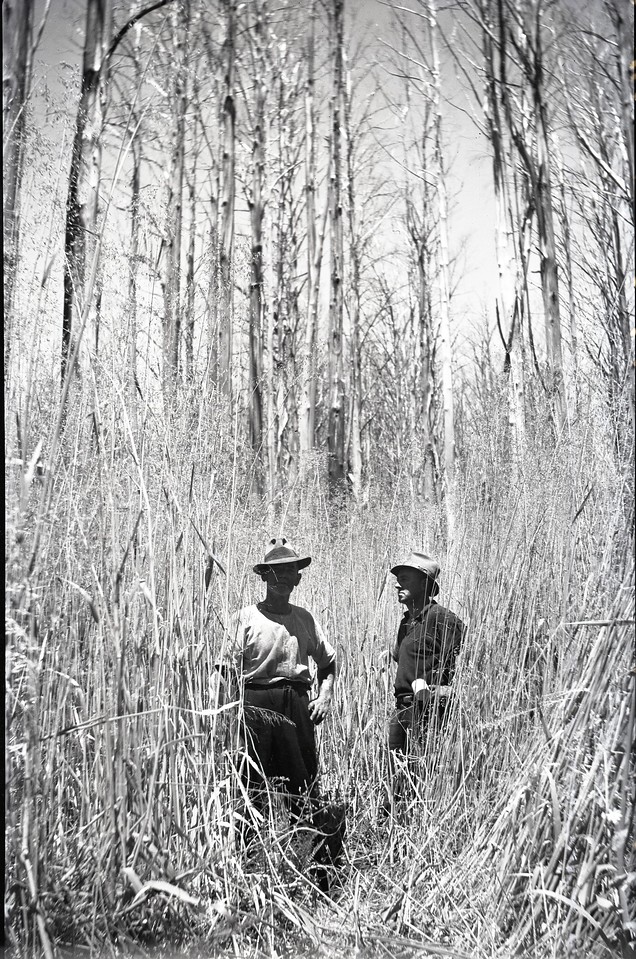
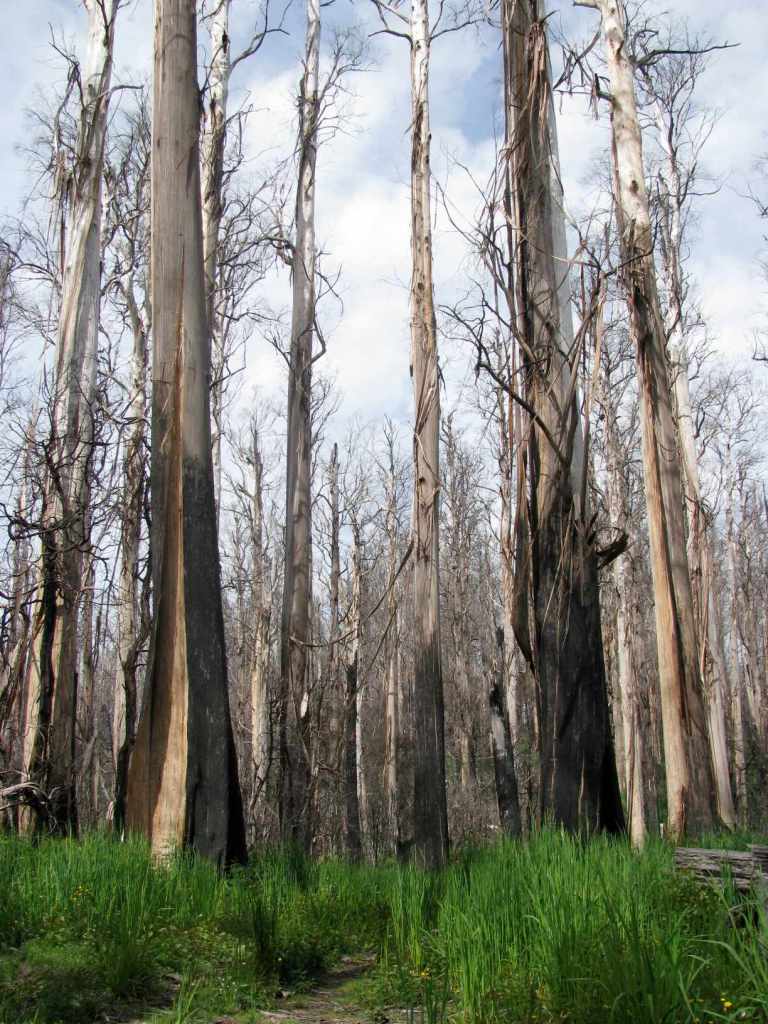
The recovery of the mountain ash forests after an intense bushfire is remarkable. From a blackened and seemingly desolate landscape, new life soon begins.
Giant mountain grass, (Dryopoa dives – previously known as Festuca dives and Glyceria dives – bloody botanical taxonomists), grows back quickly within a few weeks after bushfire.
But the old bushies and some foresters tend to call it wild oats and it looks a bit like an introduced weed.
It can grow up to 5m tall and has the effect of binding loose and exposed soil and preventing erosion. But it smothers receptive eucalypt seedbeds as well.
Even more remarkable is that it appears on burnt sites where it hasn’t been seen for decades, even centuries. Presumably the seed lays dormant in the ground for long periods rather than gets blown-in on the wind.
I can personally attest to climbing through thickets of the stuff after the 1983 Ash Wednesday bushfires at Powelltown.
It was seen again after the 2009 fires by University of Melbourne researchers.
It can also be a fire hazard before the tree canopy closes over and it dies away. A major bushfire at Seaton in 2013 burnt intensely overnight, at breakneck speed and faster than anyone predicted, through giant mountain grass that had sprouted from an earlier Walhalla bushfire in 2007.
Forestry neg H109-107 Glyceria dives Bell’s Ck Erica Jan 1941Mountain grass in the O’Shannassy Catchment – post 2009 bushfires. Some of the burnt stands of mountain ash dated back to the 1700s. Source: Tom Fairman, University of Melbourne.
I spent 40 years as a field-based forester and firefighter in rural Victoria, mostly around the Powelltown and Central Gippsland forests.
And while it had its ups and downs, like any job, I mostly enjoyed my career.
But one of the things that upset me the most, were the small number of people (bogans I shall call them), who deliberately set out to trash the bush.
It’s been a problem for as long as I can remember, and it comes in many forms.
Rubbish dumpers. Things got worse after asbestos rules were introduced and when councils stopped issuing free tip tickets.
People who shoot holes in things, particularly new signs.
Those that get enjoyment smashing toilet facilities and setting fire to picnic tables.
Graffiti that was never clever or witty.
Hoons that threatened and intimated other visitors, scaring them away.
Trail bike and mini bike damage in the 1970s was bad enough, but heavy 4WDs, and now cheap quad bikes and ATVs has raised environmental mayhem to a new level.
Ripping up roads and tracks, or off road, for the fun of it.
Smashing down or stealing gates as trophies.
Setting out to deliberately get bogged, or do burnouts, and then leaving a muddy mess in their wake.
Pyromaniacs and arsonists.
Firewood cutters that indiscriminately cut down living trees.
All good fun…eh…
As a forest manager, I spent a large amount of time and effort developing facilities for visitor enjoyment.
It broke my heart, and made me angry, to go back after a long weekend to see them trashed.
And all this cost money… public money… your money… my money… money that could have been better used to maintain and upgrade facilities.
Weekend patrols were only part of the answer, but it chewed into our meagre State forest recreation budget.
Gathering evidence and prosecutions were difficult. And it’s not possible to be everywhere, all the time, in a 7-million-hectare estate.
Hardening up facilities to look like an ugly fortress, or secret cameras weren’t a 100% effective solution either.
There were some successful education programs like Camp Host and other things, but they seemed to have little long-term impact on bogans.
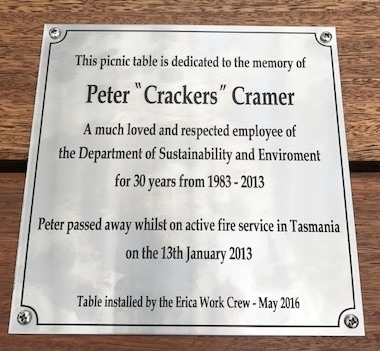
But probably the lowest point was when a new picnic table at Peterson’s Lookout in Tyers Park, north of Traralgon, was stolen.
The table was put there by the staff and crew and dedicated to the memory of colleague and friend Peter “Crackers” Cramer who died in 2013 while on deployment to a bushfire in Tasmania.
I know it’s only a fraction of the visitors… but I don’t have an answer to this widespread problem.
LLiam Doyle (Pete’s stepson), Julie Cramer (Pete’s wife) and Dylan Cramer (Pete’s son) proudly standing at the memorial table. June 2016Words fail me. Stolen over the Christmas Holidays 2016. It was quickly replaced in May 2017.
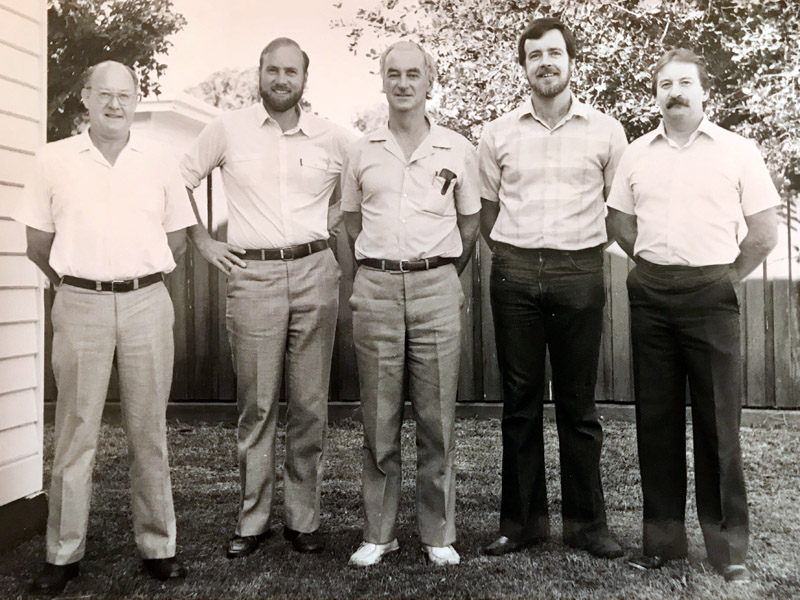
The Department of Conservation, Forests and Lands (CFL) came into effect on 1 September 1983 after a short Act of State Parliament.
The Forests Commission Victoria (FCV), which had existed since 1918 lost its discrete identity and merged into the newly formed mega-department, along with the Crown Lands and Survey Department, National Park Service, Soil Conservation Authority and Fisheries and Wildlife Service.
In 1983, some 70–80% of all CFL personnel were located outside Melbourne.
The subsequent amalgamation and restructure were a protracted and disruptive process over the next three years as working groups formed and people jockeyed for positions.
Eventually a consistent statewide regional structure emerged, and 18 new Regional Management Teams (RMT) were appointed.
There were the inevitable winners and losers, but many of the senior positions were taken-up by ex FCV staff.
There was a short period of stability, with CFL remaining in existence until 1990, but then the tempo of change seemed to accelerate, with many more departmental restructures and name changes occurring over the subsequent four decades.
Over time, and with each successive budget and staff cut, the number of Regions in country Victoria fell from the initial eighteen down to six.
Yarram CFL Regional Management Team (RMT) (L to R) Robert (Bob) Niggl – Operations, Ian Leversha – Resource Conservation, William (Bill) Edgar – Regional Manager, Ken King – Public Land Management, Ralph Hubbert – Services. Source: Bill Edgar c 1985
Morris William Carver was born on 25 October 1896 at Thorpdale in Gippsland.
He enlisted in the AIF in Feb 1918 and set sail from Adelaide, holding the rank of Sergeant, but returned home when the boat was recalled.
On returning, Morris got a job on 5 March 1919 with the Forests Commission Victoria (FCV) as a junior clerk.
The Commission was newly formed in 1918 and, for unknown reasons, the new commissioners directed Morris in 1921 to destroy all the old and inactive files that FCV inherited from all its predecessors (e.g. Lands, Agriculture, Mines Dept etc.) going back to the earliest records of the colony.
It’s said that before completing this task Morris took many of the files home, and lucky for us, started compiling his own summary of the history of the forest service.
He indexed piles of reports, gazettes, references and other documents and provided a summary overview. He also produced staff lists for 1908 and 1917.
The Carver Papers, “Forestry in Victoria 1838-1919”, at around 1300 pages, are considered by some historians as the most authoritative source and an invaluable record of State forest administration for the first eighty years of Victoria’s development.
Vol. A – Appointments, control of forests, legislation, reservations, nurseries and plantations, miscellaneous.
Vol. B – Cutting restrictions.
Vol. C – Royal Commissions.
Vol. D – Reports.
Vol. E – Notes by M Carver and indexes to vols. A-D.
The originals of the five volumes eventually found their way from Head Office into the Public Record Office Victoria (PROV), but I know another copy was closely guarded by the School of Forestry librarian, Jean Baker.
Volume E contains an extensive index covering all volumes but also, and perhaps more importantly, Carver’s own summary. It’s a good place to start.
It’s a long story, but after years of badgering and persistence by Paul Barker, another dedicated archivist who worked for the Commission, the Carver papers have been recovered from the PROV and scanned.
They are now available of the Forests Commission Retired Personnel Association (FCRPA) website.
Some pages are poor quality copies, and they are not in a searchable format, but if you have a real interest in the history of Victorian forests, they are the “go to” documents.
Morris worked his entire career for the Forests Commission and rose to Assistant Secretary. He retired in 1961 when he turned 65 and died, aged 90, on 7 November 1986.
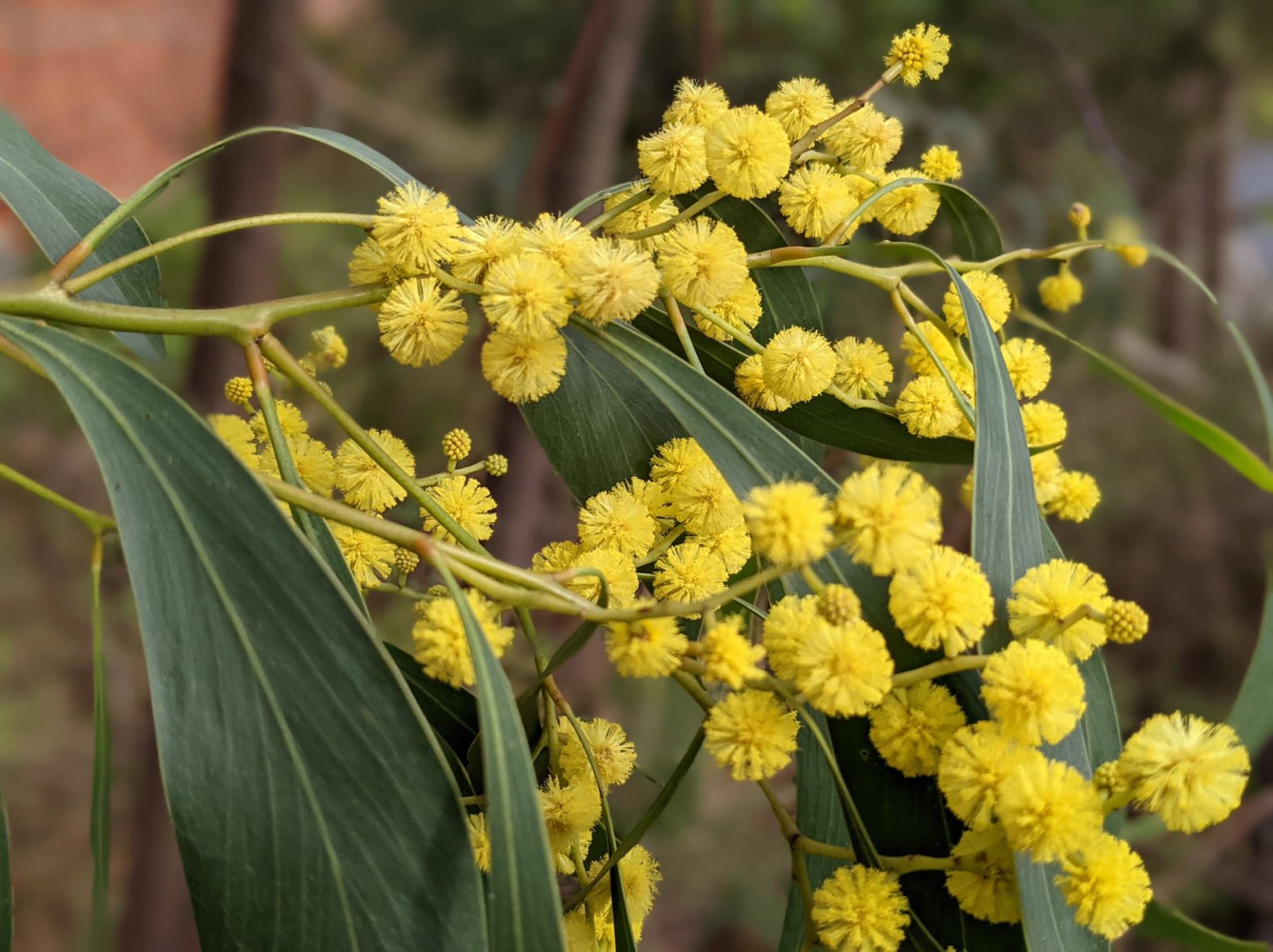
Today, the 1st of September, marks the official beginning of Spring in the southern hemisphere, and wattles are starting to flower in the bush and in gardens around the country.
Wattles feature prominently in Australian ceremonies, literature, poetry, art and song from the 1830s to the early 1900s.
But until the early 1980s, three sets of colours were unofficially associated with Australia.
Red, white and blue formed the colours of the Australian flag.
Blue and gold were Australia’s heraldic colours, seen in the wreath on the Commonwealth Coat of Arms granted by royal warrant in 1912, whilst also being chosen as the colours of the ribbon of the Order of Australia in 1975.
Green and gold represented Australia in many ways – the green symbolising the colours of the Australia bush, with gold symbolising wattle, grain harvests, sheep’s wool, mineral wealth, beaches and sunshine.
The colours of green and gold have also been informally associated with Australian sporting teams since the late 1800s, but were never formally adopted as its “national sporting” colours.
However, on 19 April 1984, Governor-General Sir Ninian Stephen officially proclaimed Australia’s national colours as green and gold.
The gold most closely resembled the shades of Australia’s national floral emblem, the Golden Wattle (Acacia pycnantha).
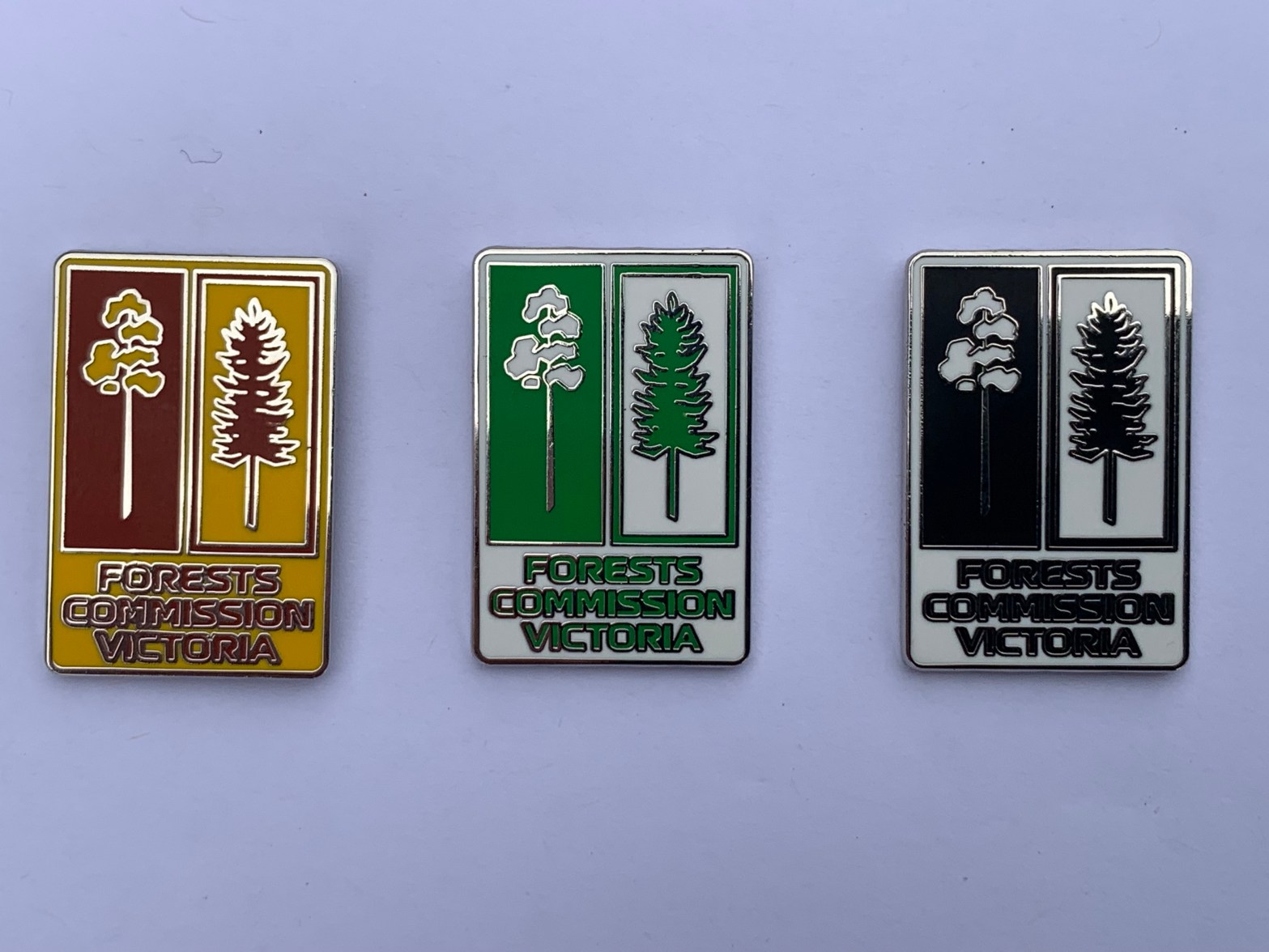
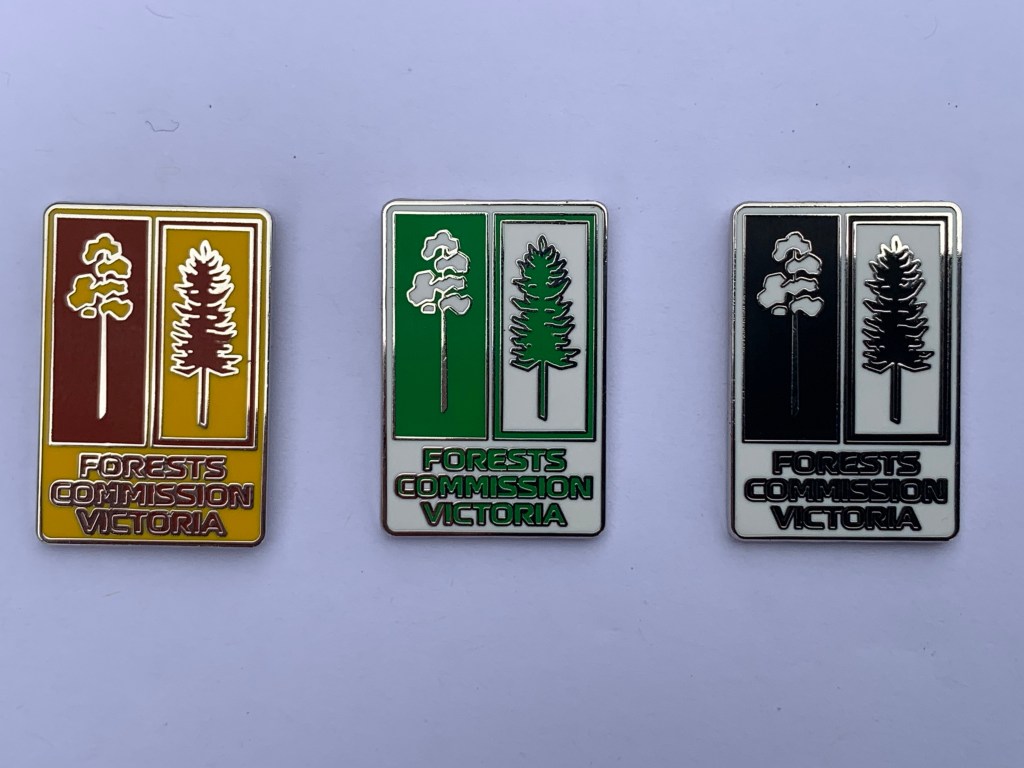
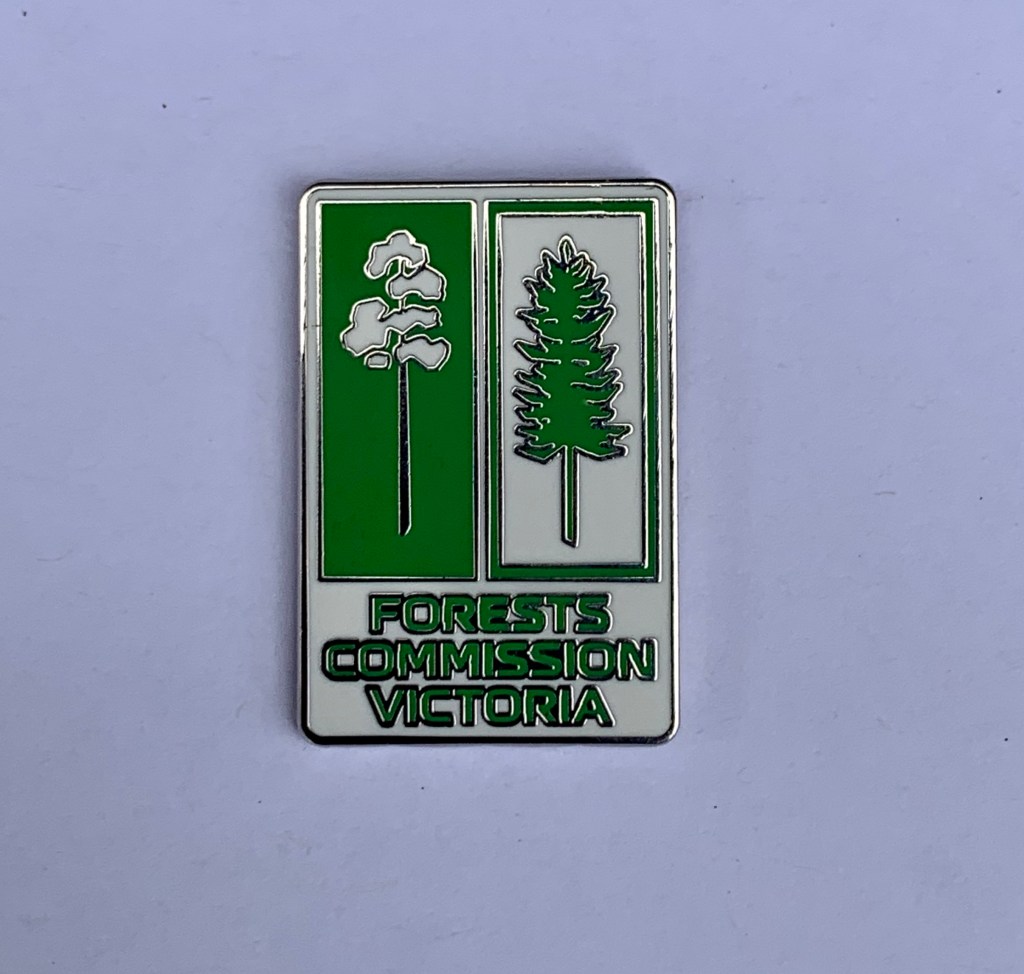
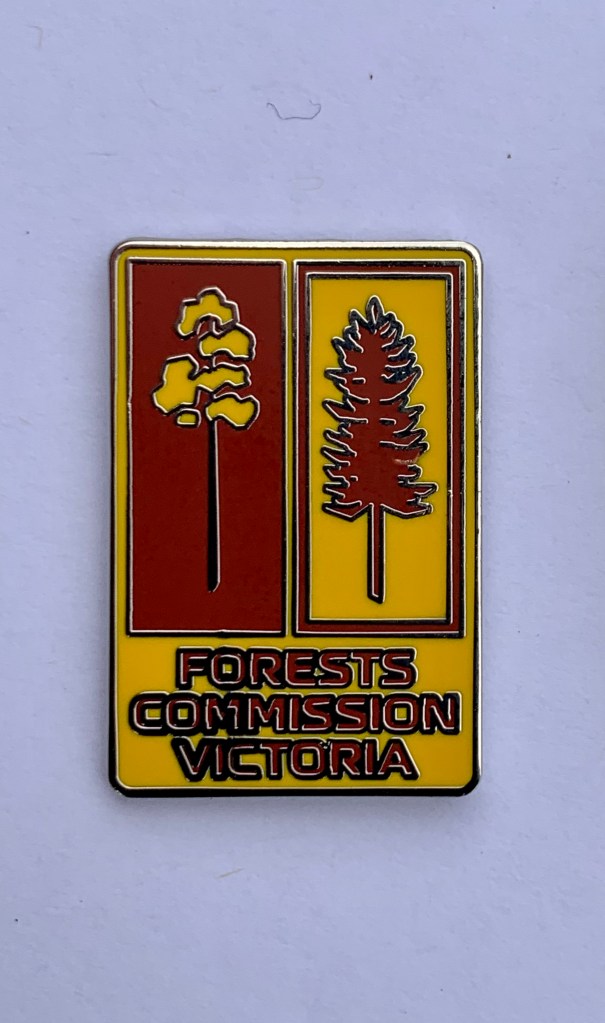
Commemorative lapel badges have been produced for the Forests Commission Retired Personnel Association (FCRPA) to mark the 40th anniversary of the end of the Forests Commission Victoria (FCV).
The Commission began in 1918 and had a long and proud history as the primary forest and bushfire manager of Victoria’s 7.1 million ha public land estate.
The FCV relinquished its discrete identity on 1 September 1983 when it amalgamated into the newly formed Department of Conservation, Forests and Lands (CFL).
After many more restructures over the subsequent four decades the FCV remains primary ancestor of the current agency – Forests, Fire Management Victoria (FFMVic).
The 25 mm hard enamel badges come in either traditional forest green, mission brown and gold, or black and white.
They all have the iconic “two trees” logo which was developed in the early 1960s by FCV graphic artist Alan Rawady.
Proceeds from the badges will go towards photographing, cataloguing and describing the FCRPA collection at its Beechworth forestry museum so that the information can be made freely available online.
The badges cost $11 each and come with free postage.
I have put them on eBay to make it easier for me and the transaction more secure for you.













 Victoria’s Forests & Bushfire Heritage