It’s been said many times before, that internationally, south-eastern Australia is considered one of the three most fire-prone landscapes on Earth. The other places being southern California and the southern Mediterranean.
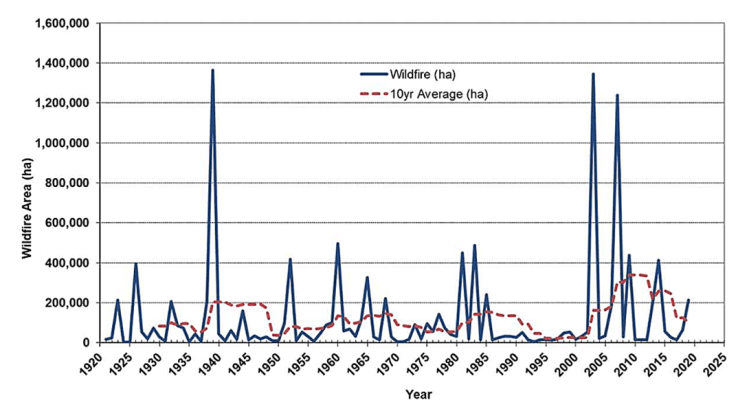
Bushfires have undoubtedly always been a feature of Australian summers. In an average year, between 600 and 1000 bushfires occur in Victoria’s National Parks and State forests, which burn about 110,000 hectares, with a large proportion being in the vast forests of Gippsland and north-eastern Victoria.
Most of the bushfires on State forests and National Parks in Gippsland were small and often started by lightning.
Early detection combined with rapid and determined first attack to keep bushfires small. In most cases, first attack is successful, but the story rarely makes the media.
I was based in Gippsland as the Senior Forester from 1994, and for me, the tempo, size and severity of bushfires seemed to intensify from the late 1990s following the Caledonia fire.
In combination with its many bushfires, floods and storm events, Gippsland became jokingly known as “Disaster Disneyland”.
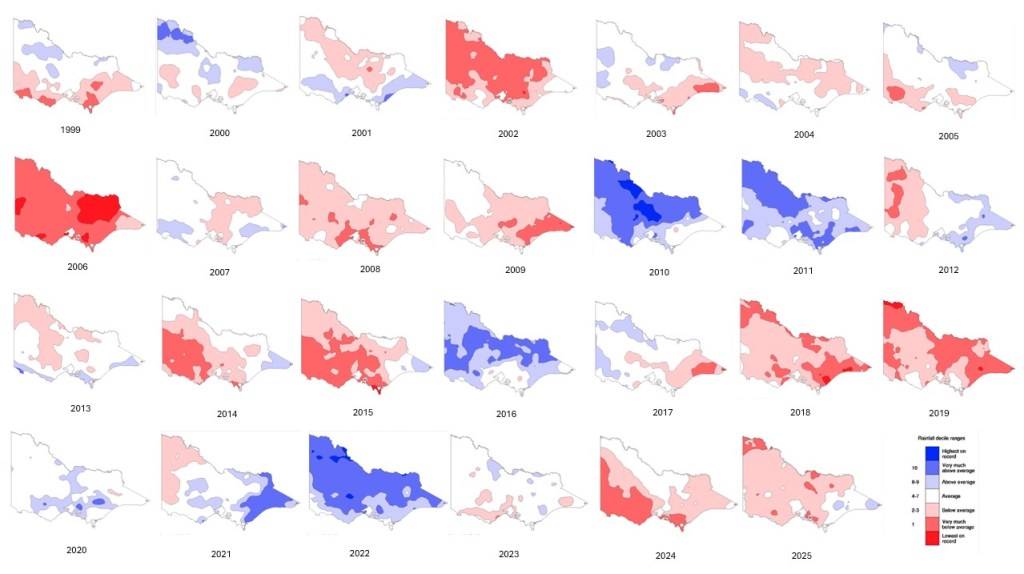
It also seemed that the fire seasons started earlier and lasted longer, with underlying drought and prolonged dryness of the bush and lower relative humidity, particularly at night, being a key factor.
Over time, the terms “mega-fire” and “campaign-fire” became part of the common language of foresters and firefighters.
There were all sorts of theories and allegations advanced to explain the massive and long running campaign bushfires that Victoria experienced beginning from the late 1990s. They ranged from –
- budget and staff cutbacks.
- loss of experienced firefighting staff in the field.
- procrastination, risk aversion and fear of litigation.
- a subtle shift from prevention to suppression.
- lack of fuel reduction burning.
- drought & climate change.
- political interference.
Some of this was partly true, but some was just rubbish, and the Department and the staff came in for all sorts of harsh and unreasonable criticism from politicians, the media, the community and the many armchair experts. Attacks on social media became relentless and toxic…
The answers are never simple and one dimensional as many would hope or claim. Climate Change being the most convenient and simplistic explanation.
Recurring bushfires.
Over the last century, Gippsland experienced major bushfires on Black Thursday – 1926, Black Friday – 1939 and Yallourn – February 1944. The latter two, resulting in groundbreaking Royal Commissions by Judge Stretton.
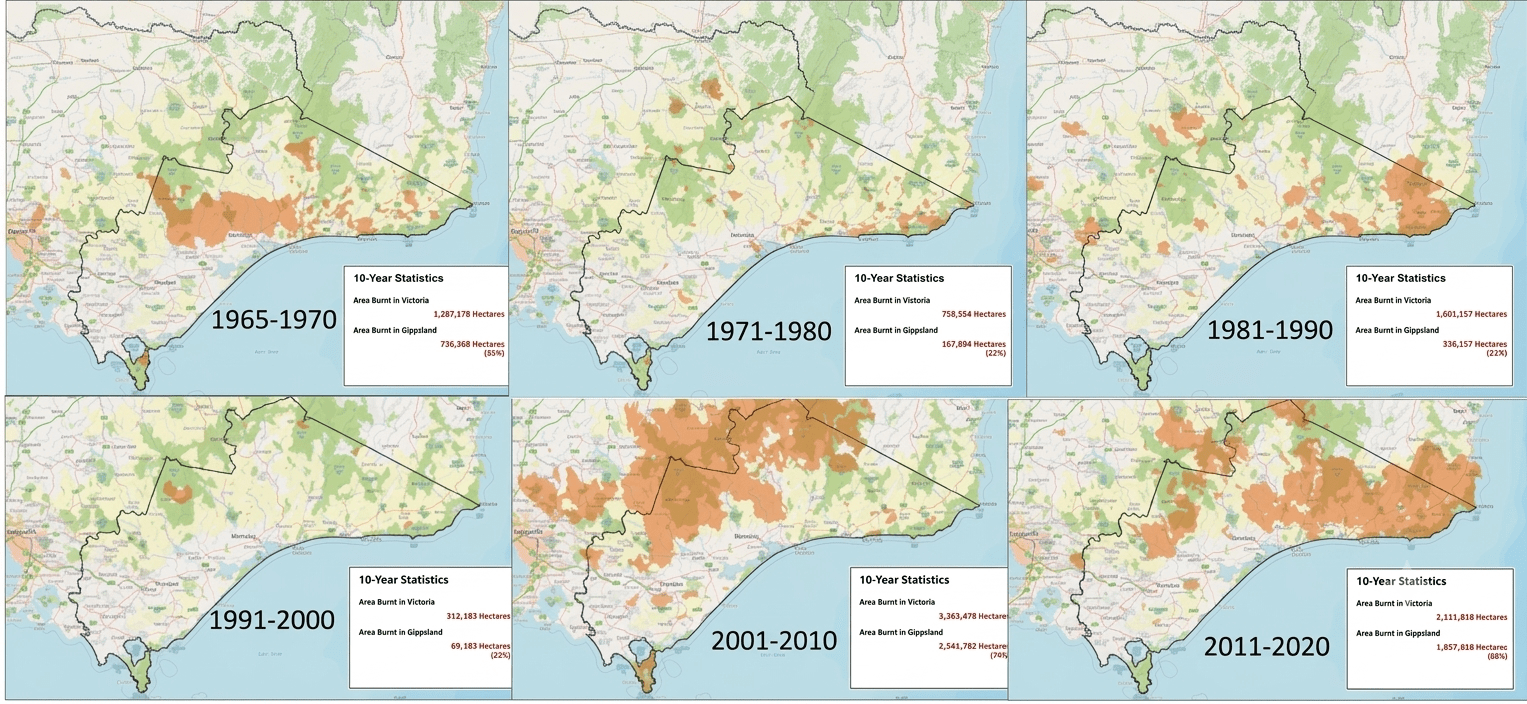
More recently, over the last 60 years, major fires occurred in March 1965, October – 1980, Ash Wednesday – 1983, Caledonia River – 1998, alpine fires – 2002-03, Dutson bombing range – 2004, more alpine fires 2005-06 & 2006-07, Black Saturday – 2009, Aberfeldy/Seaton – 2013, Jack River – 2014, Rosedale – 2019, Black Summer 2019-20, Loch Sport – 2023 and Dargo – 2026. And there were many others too…
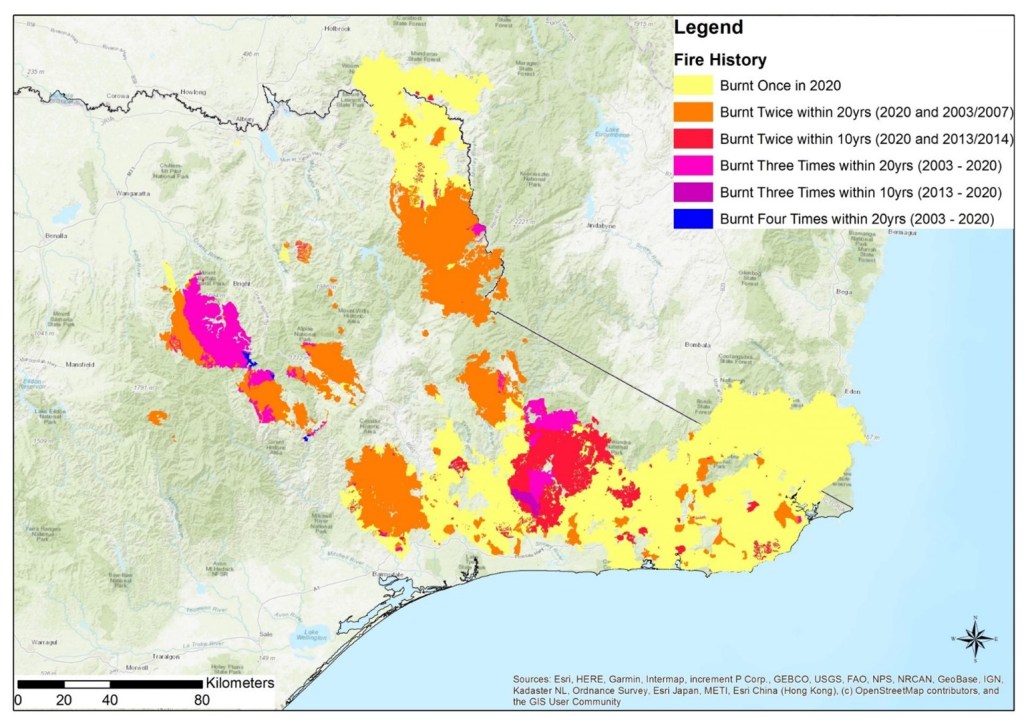
Some parts of the bush in eastern Victoria were burnt severely and repeatedly which had major environmental consequences, particularly for susceptible ecosystems like snow gum woodlands, rainforests, alpine ash and mountain ash forests. About 276,000 ha was burnt multiple times since 2000, and forest stability was undoubtedly compromised.
Known as the Tolerable Fire Interval (TFI), some species and forest types require a relatively short inter fire period, or frequent burning, whereas others need a very long time to allow for plant and seed maturity, and for habitat tree redevelopment.
Another significant consequence of the frequent bushfires was that the complex mosaic of age structures and forest fuels was effectively wiped clean, leaving large areas with just a single age class.
Reintroducing fire back into the broader landscape to achieve some sort of fuel complexity and balance is a major long-term challenge.
Grass fires in the bush?
Major bushfires can totally remove tree crowns, and many trees may even die.
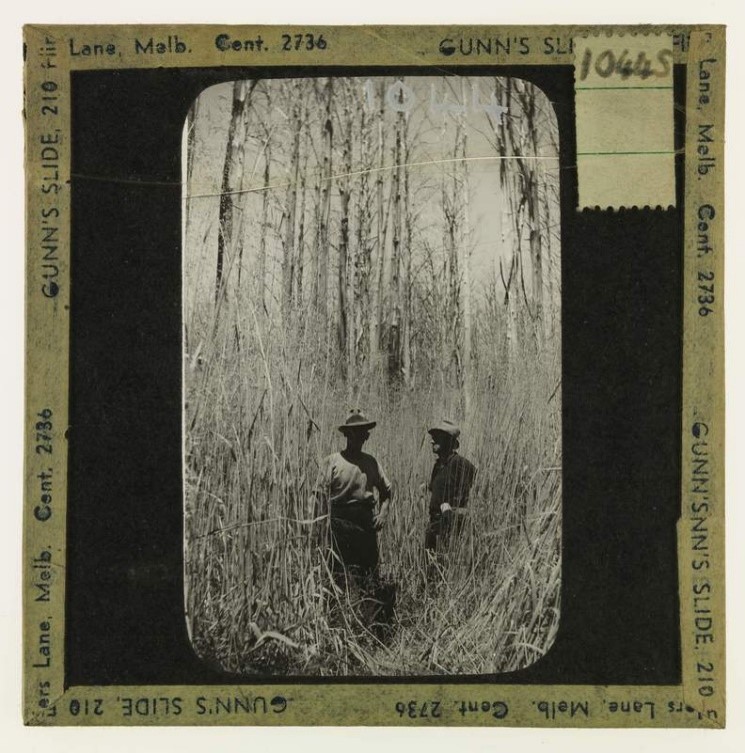
As the bush slowly begins to recover the understory vegetation is often temporarily replaced by grasses, particularly giant mountain grass (Dryopoa dives), until the tree canopy reestablishes and closes over again.
If there is another major bushfire before canopy closure it can develop into a fast-moving grass fire rather than a slower moving bushfire.
A good example was at Seaton in 2013 which burnt intensely overnight, at breakneck speed, and faster than anyone predicted, through giant mountain grass that had sprouted from an earlier Walhalla bushfire in 2007.
Risk Aversion.
There is no doubt that serious injuries or deaths of firefighters or losses in communities shakes all firefighters to their very core.
The risks are very real. There have been several deaths of forest firefighters, mostly from falling trees and branches, over the last few decades.
Understandably, nobody wants to cause or to feel responsible for these losses. PTSD is common among forest firefighters but is largely silent, undiagnosed and untreated.
The unfair attacks by lawyers, the media, the community and armchair experts iduring the 2009 Black Saturday Bushfires Royal Commission against senior CFA and Departmental staff had major long-term ramifications.
Everything always seems inevitable in hindsight…
Risk assessment, risk avoidance and procrastination then became a dominant feature.
AIIMS incident management, which was originally introduced by the Forests Commission after Ash Wednesday in 1983, was designed to be light and nimble, but became centralised, overblown and cumbersome.
There is a VERY big difference between taking risks and being reckless…
Part of the response to risk avoidance after Black Saturday was to add more layers of management (fire ground, incident, regional and State control), more processes, checkboxes, data collection, teleconferences, micromanaging, analysis paralysis and time-wasting procedures. But there is often no time to waste with a fast-moving bushfire and those on the ground are often best placed to decide…
Be decisive…. right or wrong…. make a decision…. The road of life is paved with flat squirrels that couldn’t make a decision…
Senior bushfire staff in Australia also watched in horror as our American counterparts were being regularly taken to court and sued. Some American fire managers even resorted to taking out professional indemnity insurance. For example, the families of the 19 firefighters killed at Yarnell Hill Fire in Arizona in 2013 filed a wrongful death lawsuit against the state and the incident command for negligence. The courts ultimately ruled against the claimants. But the damage was done.
And despite assurances at home in Australia – that if you did your job properly and followed the rules – it sent shockwaves through all senior ICC firefighters.
Claims for industrial manslaughter, stress related illness and community class actions seemed to climb in number.
Some (me included) refused to accept senior ICC roles like Level 3 Incident Controller after being savaged in the Black Saturday and 2014 Hazelwood mine fire inquiries.
Shift from prevention to response.
As technology advanced, firefighters were always quick to embrace it… which is a good thing… (e.g. aerial reconnaissance – 1930, helicopters – 1949, fixed-wing firebombing – 1967, helicopter firebombing – 1983), all began in Victoria.
Don’t get me wrong, there are some very talented and committed young people in FFMVic, but shortages of experienced fire crews, resources and incident managers, became very apparent over time. Aircraft are useful and important but there is absolutely no substitute for “boots-on-the -ground”
These shortages resulted in a steady and subtle shift from prevention (fuel reduction burning) to more expensive suppression (helicopters and large firebombers).
In the summer of 2006-07, lightning started 66 fires between 1 and 3 December. By the 10 December, 46 fires were still uncontained but, more importantly, 24 of them had few, or no on-ground resources allocated to them at all, other than some aerial reconnaissance or firebombing from above, leaving them to burn unchecked and grow in both area and perimeter in heavy fuel.
These fires were all initially in steep inaccessible country and remote from towns and settlements. But the cumulative area of bushfire escalated exponentially.
No amount of heroic suppression effort by on-ground crews or aerial firebombers can then overcome the deadly combination of extreme weather, rugged terrain and heavy accumulation of fuels when a bushfire escalates to landscape scale.
These 2006-07 bushfires eventually joined and burnt for two months, with an overall area in excess of 1 million ha, and impacted settlements and farmland along the interface. A total of 33 houses were lost and over 1300 km of fencing destroyed.
It was a similar story during Black Summer in 2019-20 when several fires deep in the bush, and not presenting an immediate danger, were left to burn largely unchecked. But they eventually grew too big and joined up to threaten Cann River and Mallacoota.
https://www.ffm.vic.gov.au/history-and-incidents/past-bushfires
Kevin Tolhurst & Greg McCarthy (2016) Effect of prescribed burning on wildfire severity: a landscape-scale case study from the 2003 fires in Victoria, Australian Forestry, 79:1, 1-14, http://dx.doi.org/10.1080/00049158.2015.1127197
https://www.tandfonline.com/doi/full/10.1080/00049158.2020.1739883