
I spent 40 years as a field-based forester and firefighter in rural Victoria, mostly around the Powelltown and Central Gippsland forests. And while it had its ups and downs, like any job, I mostly enjoyed my career. But one of the things that upset me the most, were the small number of people (bogans IContinue reading “Peterson’s Lookout.”
Category Archives: Forests
Wattle Day – First Day of Spring.
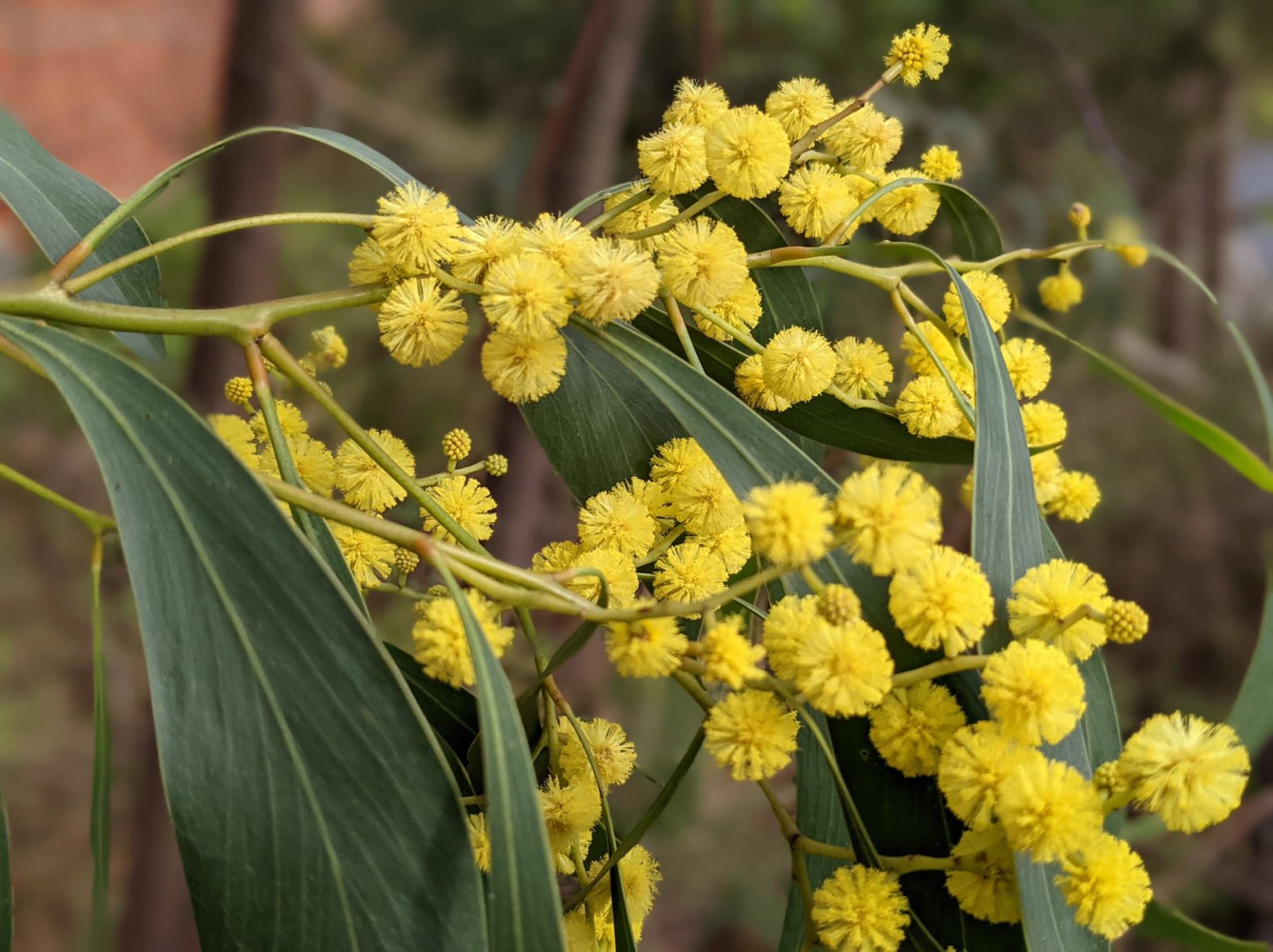
Today, the 1st of September, marks the official beginning of Spring in the southern hemisphere, and wattles are starting to flower in the bush and in gardens around the country. Wattles feature prominently in Australian ceremonies, literature, poetry, art and song from the 1830s to the early 1900s. But until the early 1980s, three setsContinue reading “Wattle Day – First Day of Spring.”
Black Butt – Mt Fatigue.

This photo from the State Library comes in black and white as well as colour versions, so I guess it was sold as a postcard. It also features in the Leader Newspaper published on 30 August 1902. The caption says the road was recently constructed with an unemployment scheme. I clambered all over those soggyContinue reading “Black Butt – Mt Fatigue.”
Power Poles.

Hardwood poles have always been a very high value forest product with a royalty much higher than sawlogs. In 1946 the Forests Commission produced some 250,000 lineal feet (76.2 km) of telephone and electric power poles, mostly for the Post Master General (PMG) and State Electricity Commission (SEC). From about 1947, as the power gridContinue reading “Power Poles.”
Sundial Peak – Grampians.
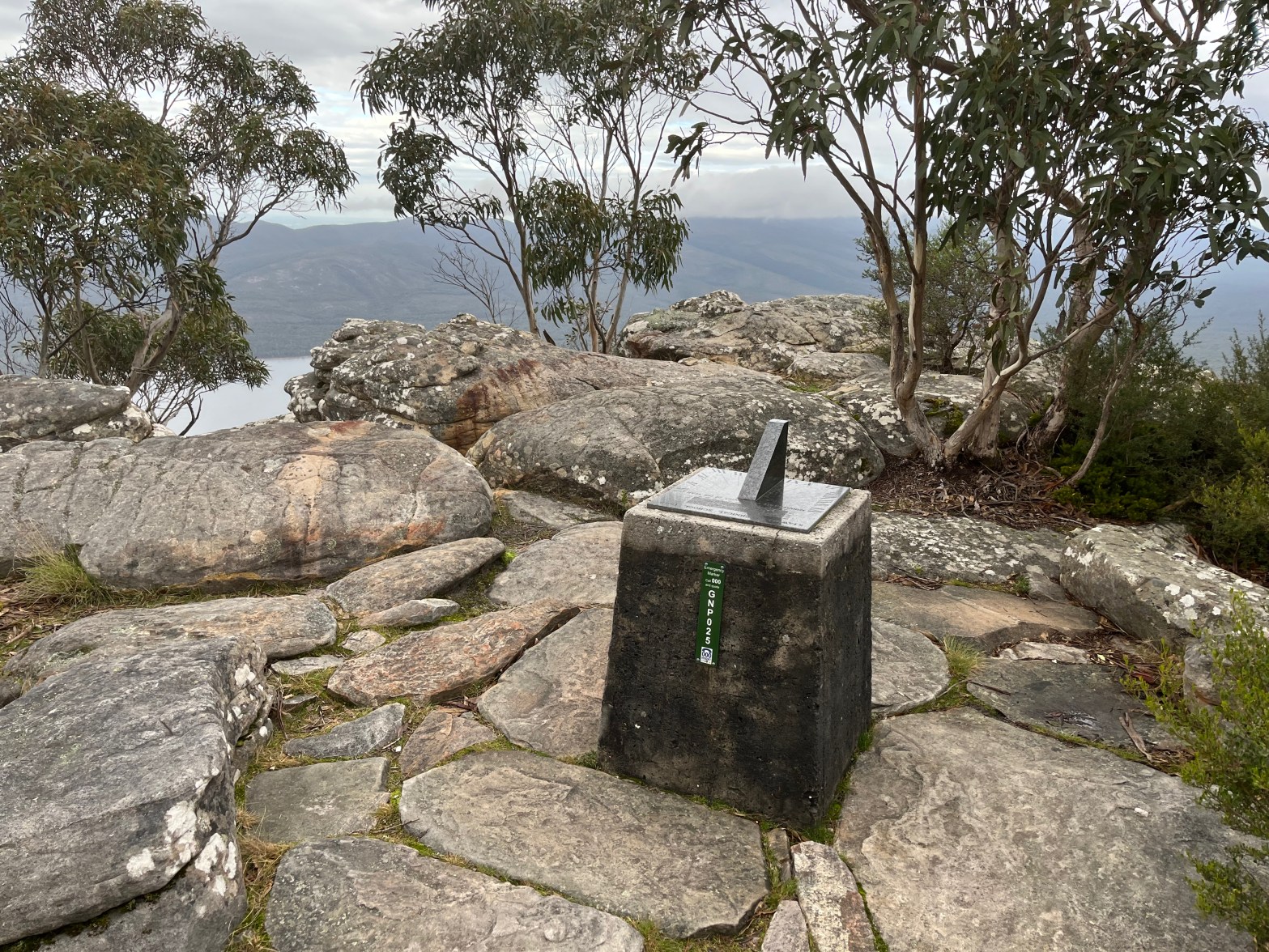
Sundial Peak in the Grampians National Park sits at the southern end of the Wonderland Range and overlooks Lake Bellfield. It was named by early settlers who noticed that the 2360-foot-high peak received the first and last rays of sun each day. In 1968, form-five students at nearby Stawell Technical School, under the guidance ofContinue reading “Sundial Peak – Grampians.”
Pole Plot – Sherbrooke Forest.
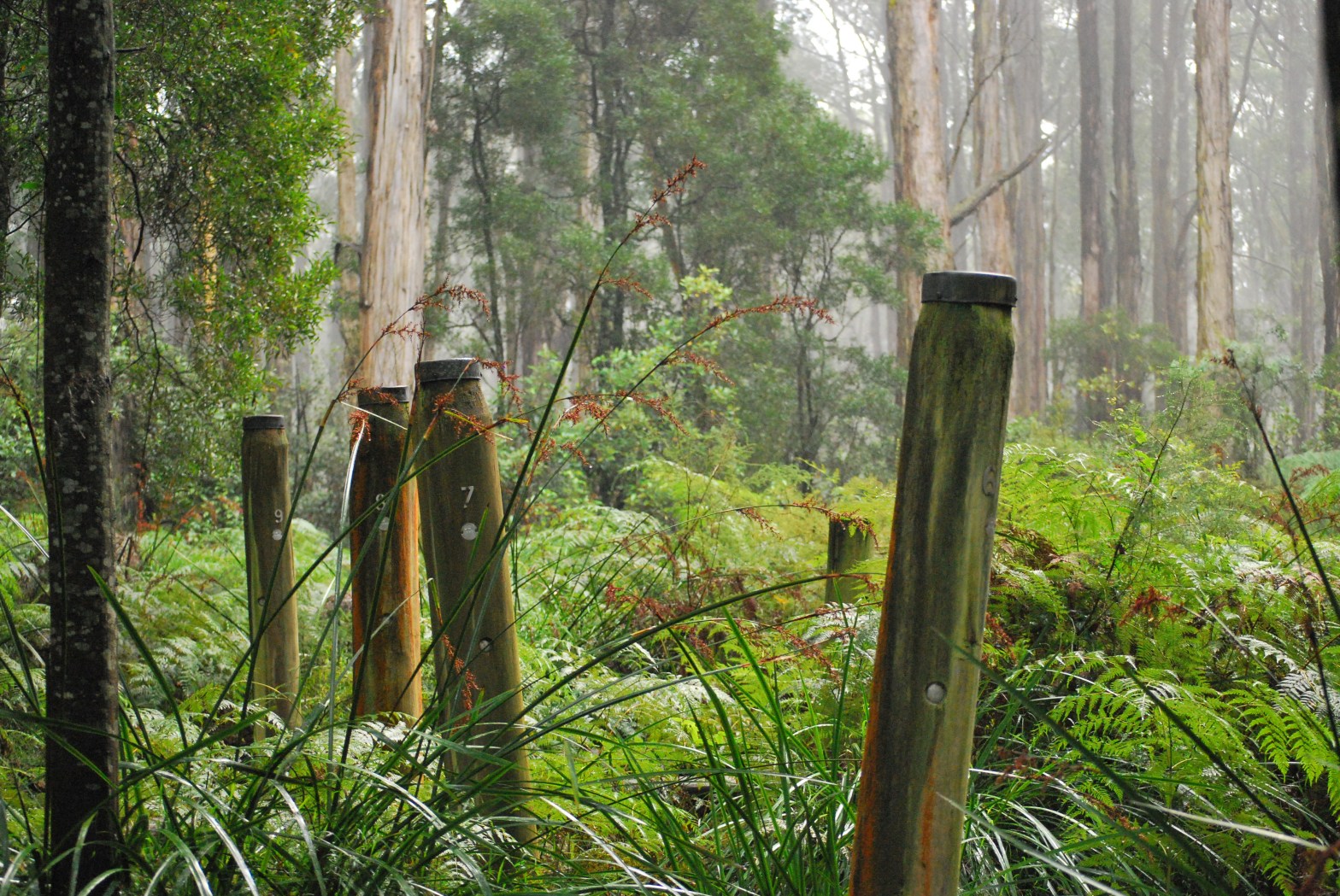
The Sherbrooke Forest pole plot is at the southern end of Coles Ridge Track, between Belgrave and Kallista. The study plot in wet forest was paired with another site in drier bush near Winton, on the old Hume Highway. Both research plots are thought to have been established in the 1930s by Post Master GeneralContinue reading “Pole Plot – Sherbrooke Forest.”
Powell Wood Process – Powelltown.
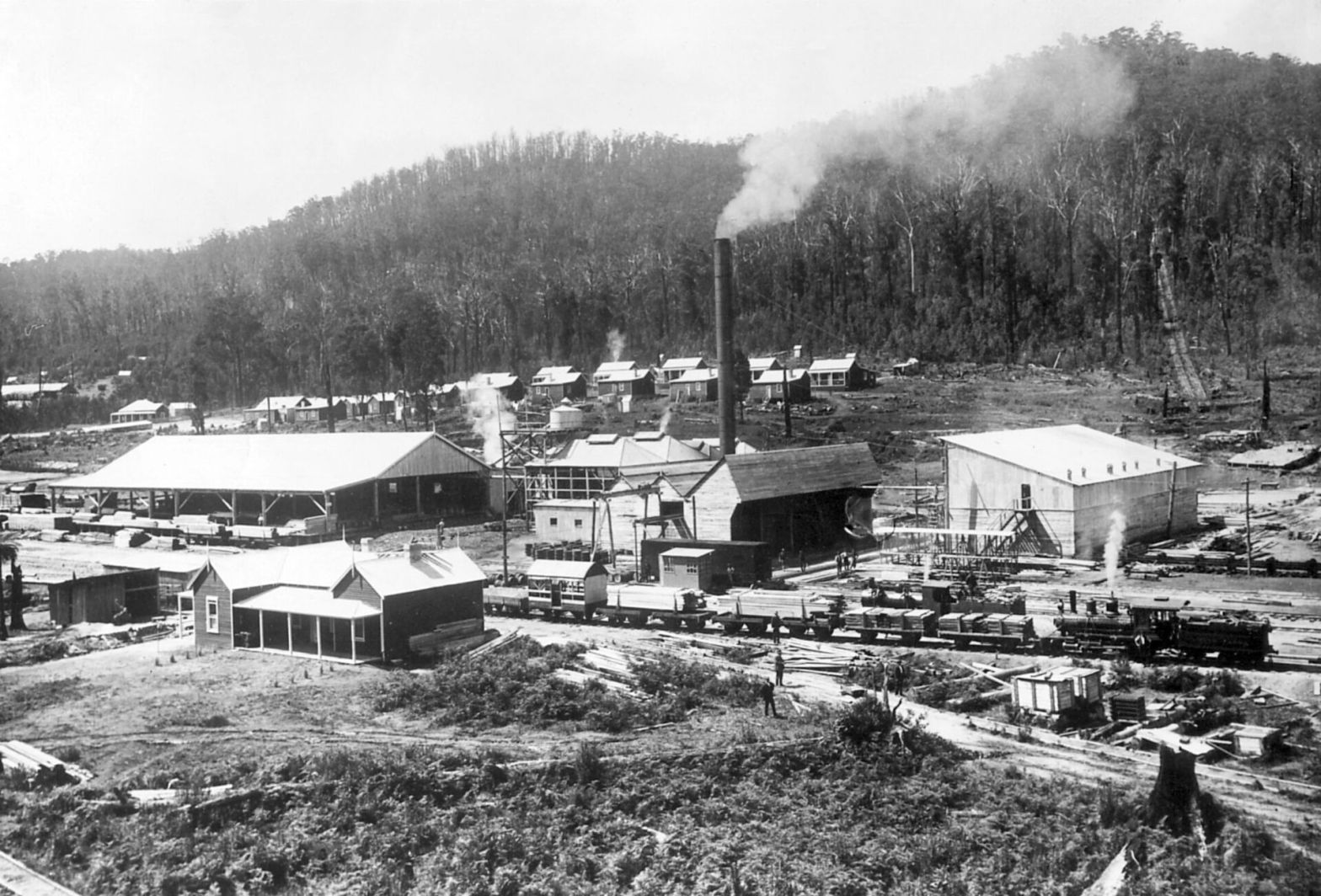
In about 1900, experiments were conducted in England by Mr William Powell to perfect a new process of preserving wood. Mr Powell, who owned a sugar refinery in Liverpool, had noticed that the wooden staves supporting the vats on the side where the molasses was spilt lasted longer than those untouched by the solution. PonderingContinue reading “Powell Wood Process – Powelltown.”
Muckleford Creek Railway Bridge.
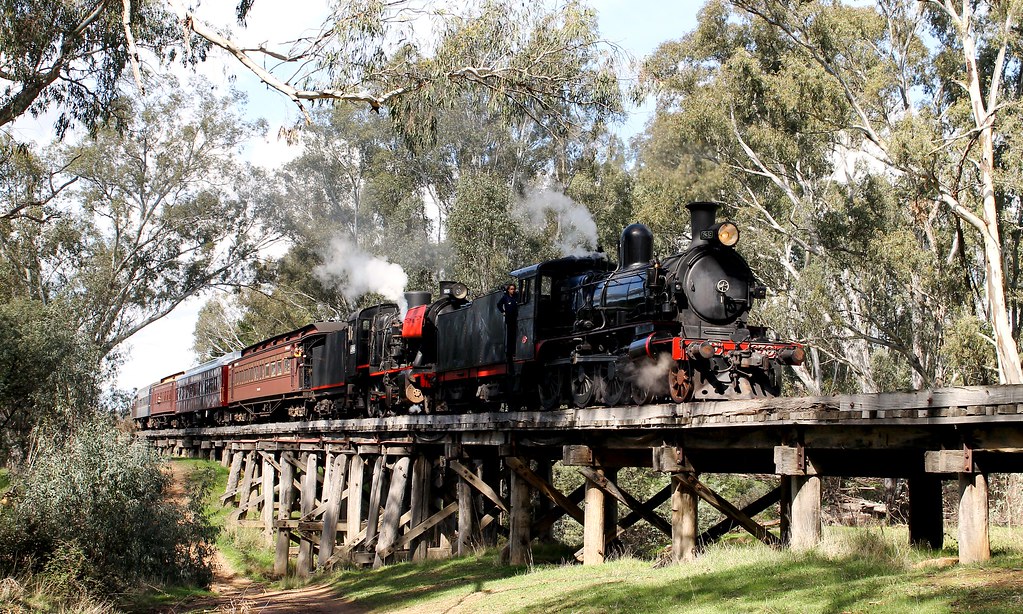
Timber bridges demonstrate the fundamental significance that State forests played in the rapid development of the new colony of Victoria after the gold rush of 1851. Two Acts of Parliament passed in December 1880 and December 1884, authorised the construction of 89 new railway lines, more than doubling Victoria’s network to over 2,900 miles byContinue reading “Muckleford Creek Railway Bridge.”
More blowing stuff up.

The Army Reserve was always willing to help the Forests Commission and rural municipalities blow stuff up. In November 1976, sappers in the 7 Field Engineers Regiment (7FER) from Ringwood, plus some other engineers from Gippsland, helped the Horsham Shire remove an old wooden bridge on Bulgana Road, east of Stawell. About 63 kg ofContinue reading “More blowing stuff up.”
Blowing stuff up.

The Forests Commission Victoria (FCV) had a large and active engineering branch for making stuff… as well as breaking stuff… Most overseers, as well as some foresters, were trained in the use of explosives to “blow stuff up” such as removing stumps and rocks from roads. Districts usually had a small powder magazine tucked awayContinue reading “Blowing stuff up.”
The knitting needle computer.
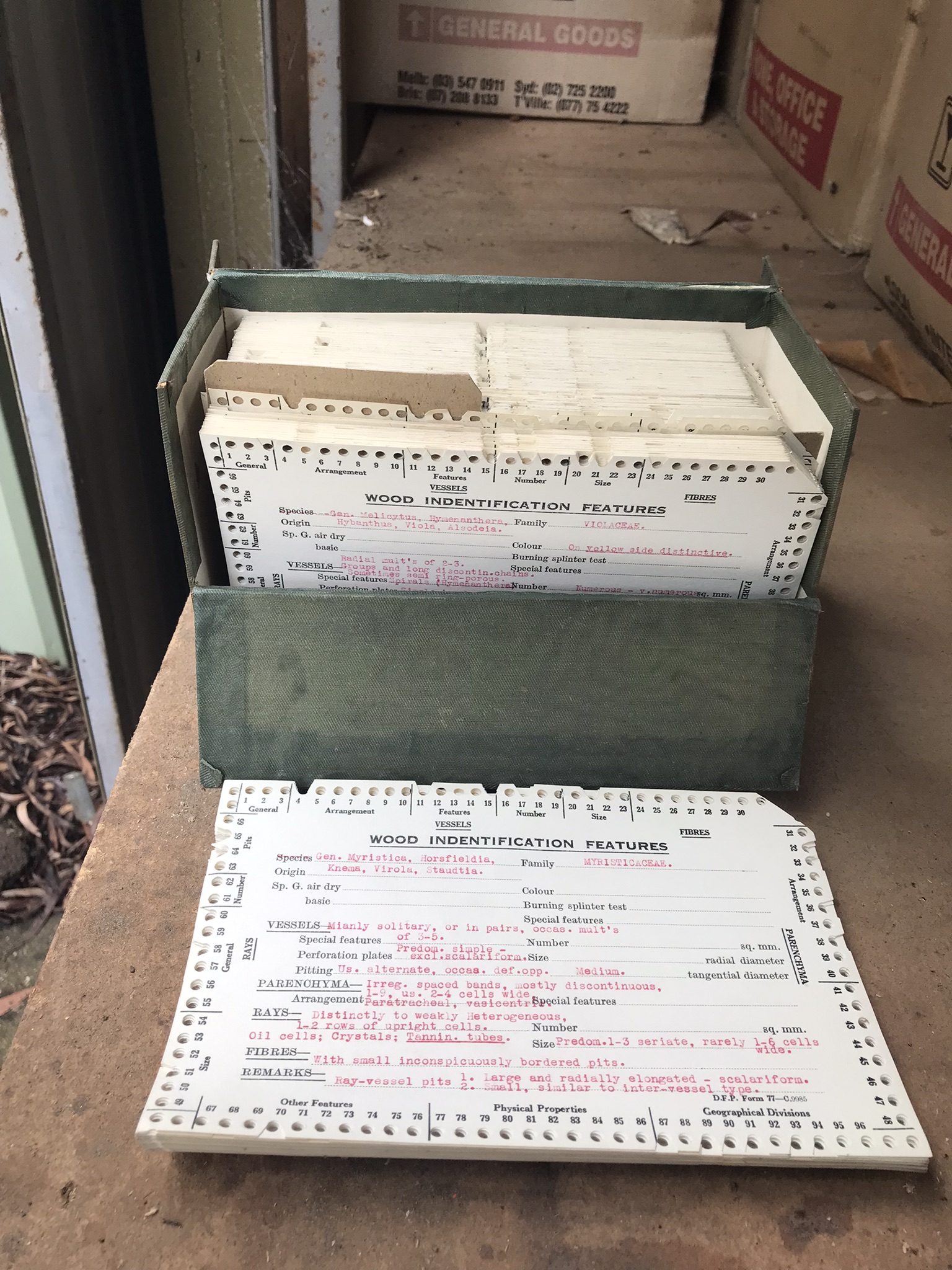
Edge-notched index cards were invented in about 1896 and have holes punched around the borders. The top right-hand corner is also clipped to help stacking the deck. The holes could be clipped to search and sort information. For foresters, these cards were commonly used to identify timber samples. Using a 10X magnifying lens, or aContinue reading “The knitting needle computer.”
Thomson Reservoir High Water Mark.
The decision to build the massive Thomson Dam in Gippsland was a result of a State Government inquiry into Melbourne’s water security in the late 1960s. The dam wall and diversion tunnels were built in three stages between 1969 and 1985. But unlike the Upper Yarra and Maroondah catchments which were “vested“ in the MelbourneContinue reading “Thomson Reservoir High Water Mark.”
Yarra Tribs.
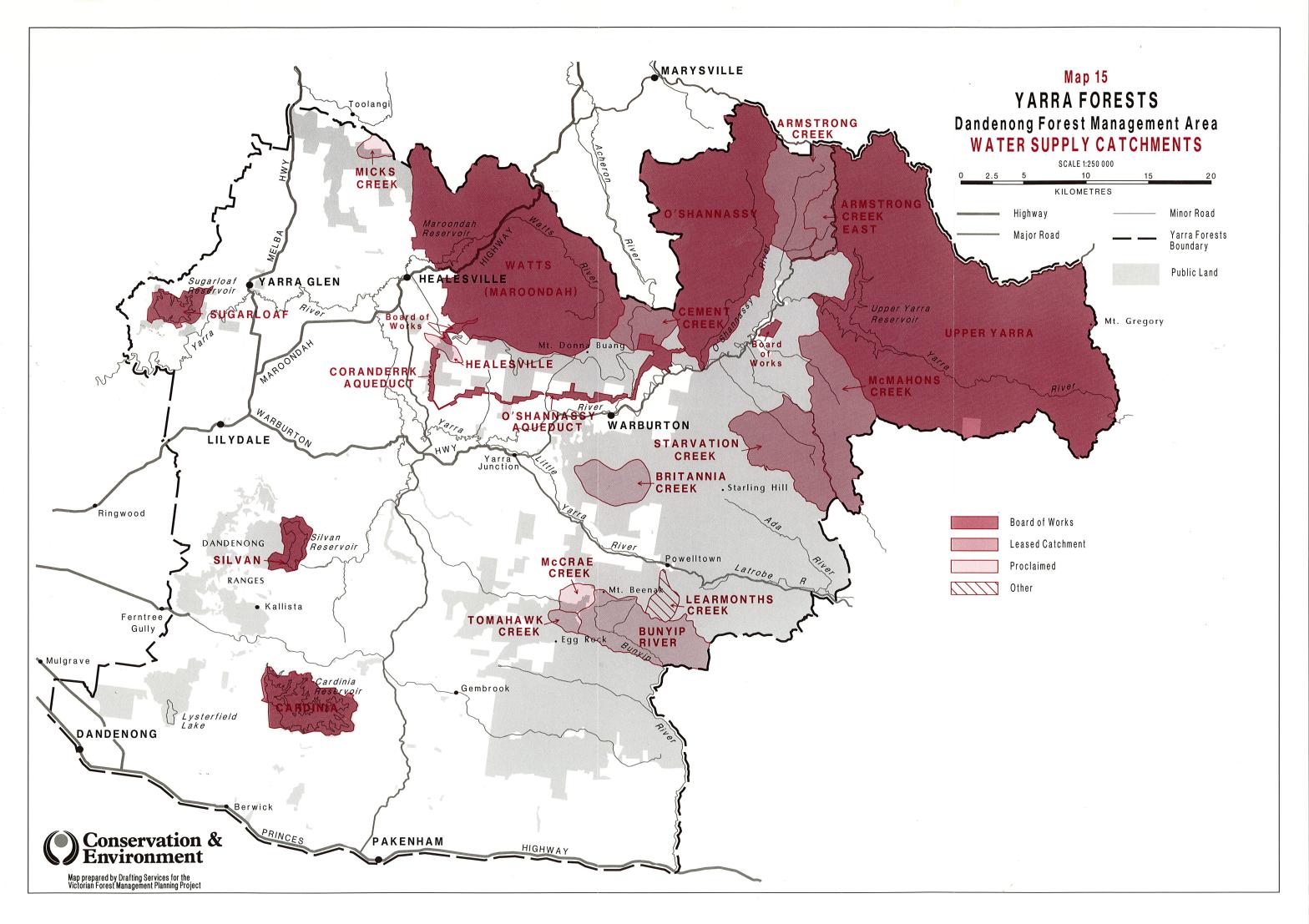
The 1960s saw more prolonged droughts and water restrictions. There were also deadly bushfires on the fringes of Melbourne in 1962, and again in 1968. Growing concerns about long term water security led to a Parliamentary Public Works Committee inquiry between 1965 and 1967. In response to the inquiry, the Bolte Government immediately approved worksContinue reading “Yarra Tribs.”
O’Shannassy Aqueduct.
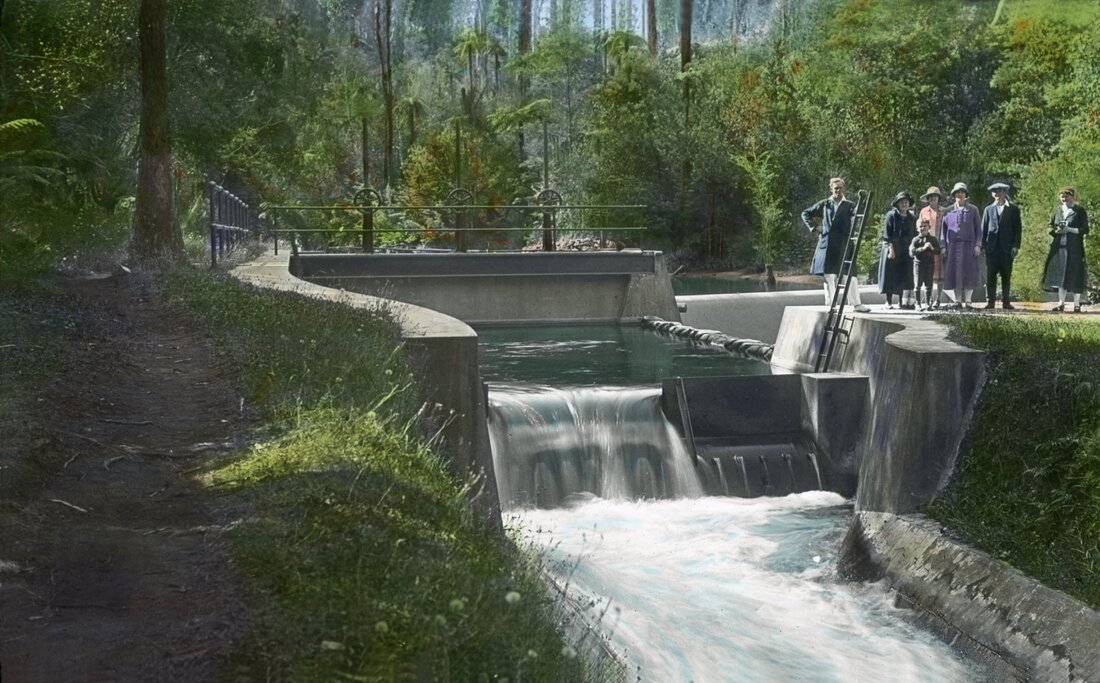
Melbourne grew rapidly after the 1851 gold rush and struggled to maintain adequate water supplies and sewerage disposal. All the night soil, trade waste, as well as waste from kitchens and homes was just thrown into open channels in the street and it simply flowed wherever gravity took it… mostly into the Yarra River. TheContinue reading “O’Shannassy Aqueduct.”
Notre Dame.

Up to a thousand Sessile oaks (Quercus petraea) were felled to reconstruct the ancient 800-year-old timber roof and fallen spire of Notre Dame Cathedral in Paris after it was destroyed by fire in April 2019. A nationwide tree hunt began soon after French president, Emmanuel Macron, decided that the iconic Cathedral would be rebuilt exactlyContinue reading “Notre Dame.”
Butter Boxes.

Warrnambool in southwest Victoria has a strong dairy industry that once boasted two factories making thousands of wooden butter boxes. The first factory was opened in 1896 near the railway station by Welsh immigrant Henry McGennan. The second factory owned by the Western District Co-Operative Box Company, came a few years later in 1912, onContinue reading “Butter Boxes.”
Sleepers
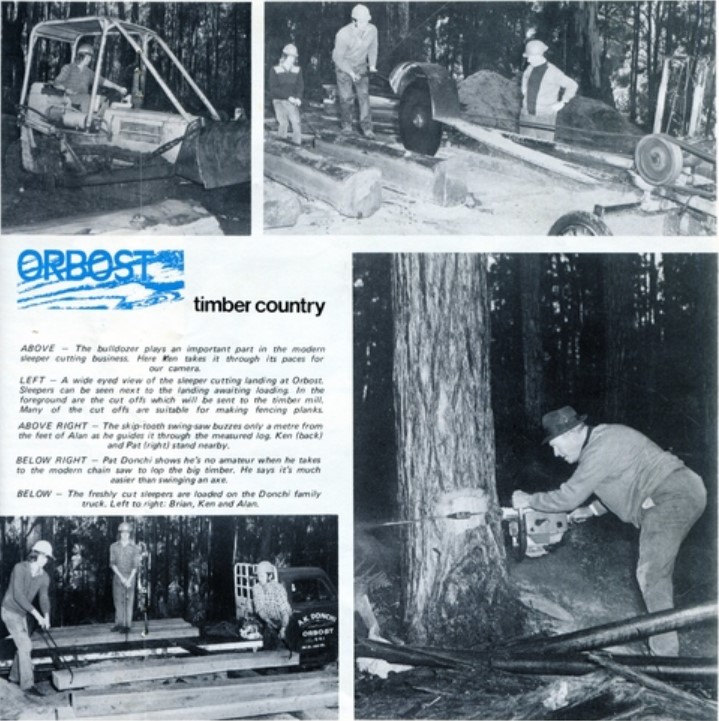
The figures for railway sleepers produced from State forests are simply astounding. More than 26 million were cut between 1919 and 1986, primarily from the red gum forests along the Murray, the yellow stringybark forests of Mullundung near Yarram and greybox from East Gippsland. Sleeper cutting began around Orbost in the 1920s and there areContinue reading “Sleepers”
South Cascade Bridge.

In the wake of the 1939 bushfires, a major log salvage program was undertaken by the Forests Commission Victoria (FCV) across the Central Highlands. Logs salvaged from the Thomson Valley and destined for sawmills at Erica travelled on a complex network of timber tramways. Before the fires, the well-established Ezards company already operated several sawmillsContinue reading “South Cascade Bridge.”
 Victoria’s Forests & Bushfire Heritage