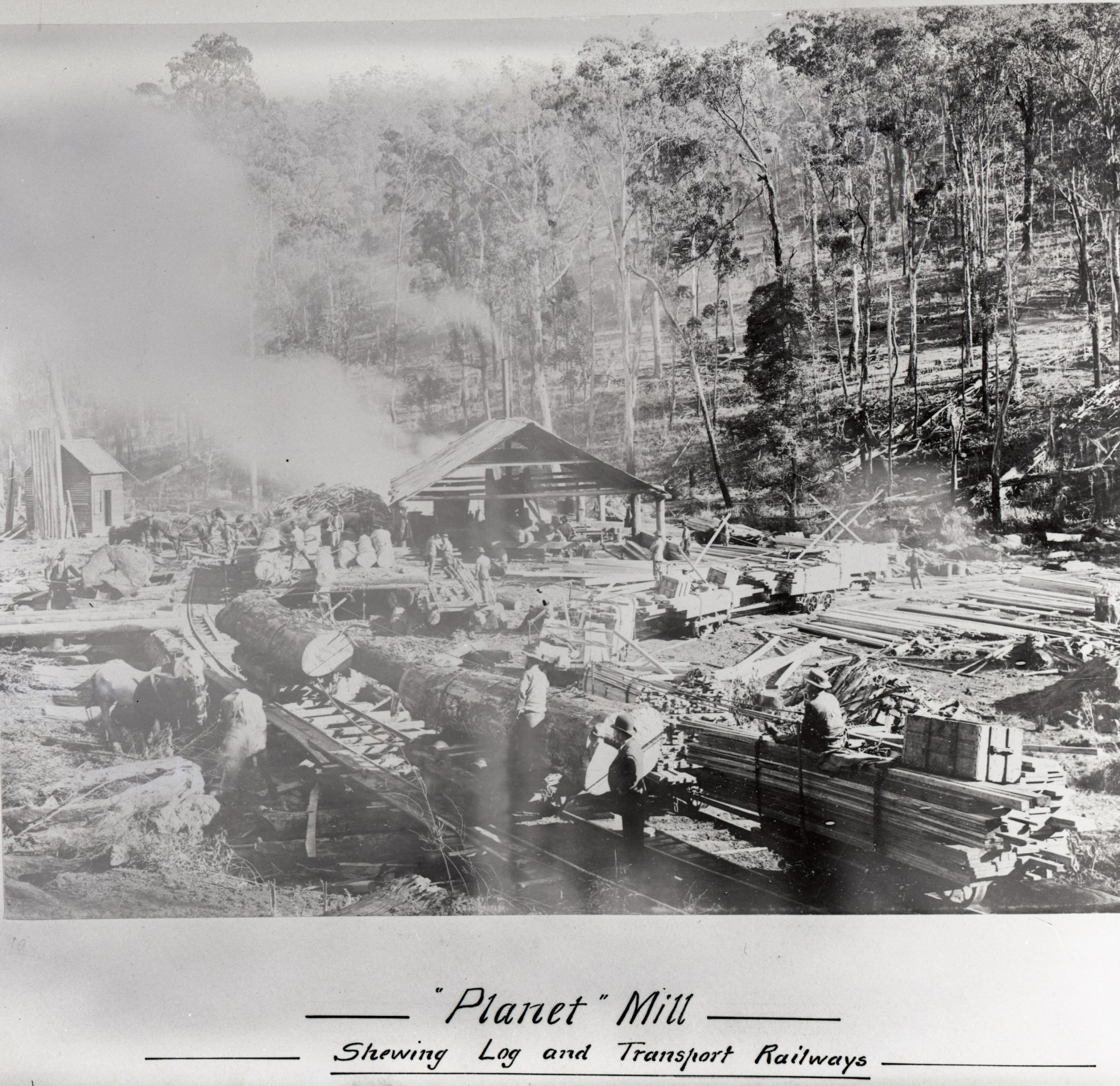
The Australian Seasoned Timber Company (ASTC) operated in the Mount Disappointment State forest, 37 miles north of Melbourne, between 1880 and 1902. It was said to be the largest sawmilling and timber processing company in the southern hemisphere at the time. It owned several sawmills, along with an extensive network of tramlines supplying timber directlyContinue reading “Australian Seasoned Timber Company – Mount Disappointment.”
Category Archives: Forests
Henry’s sawmills – Otway Ranges.
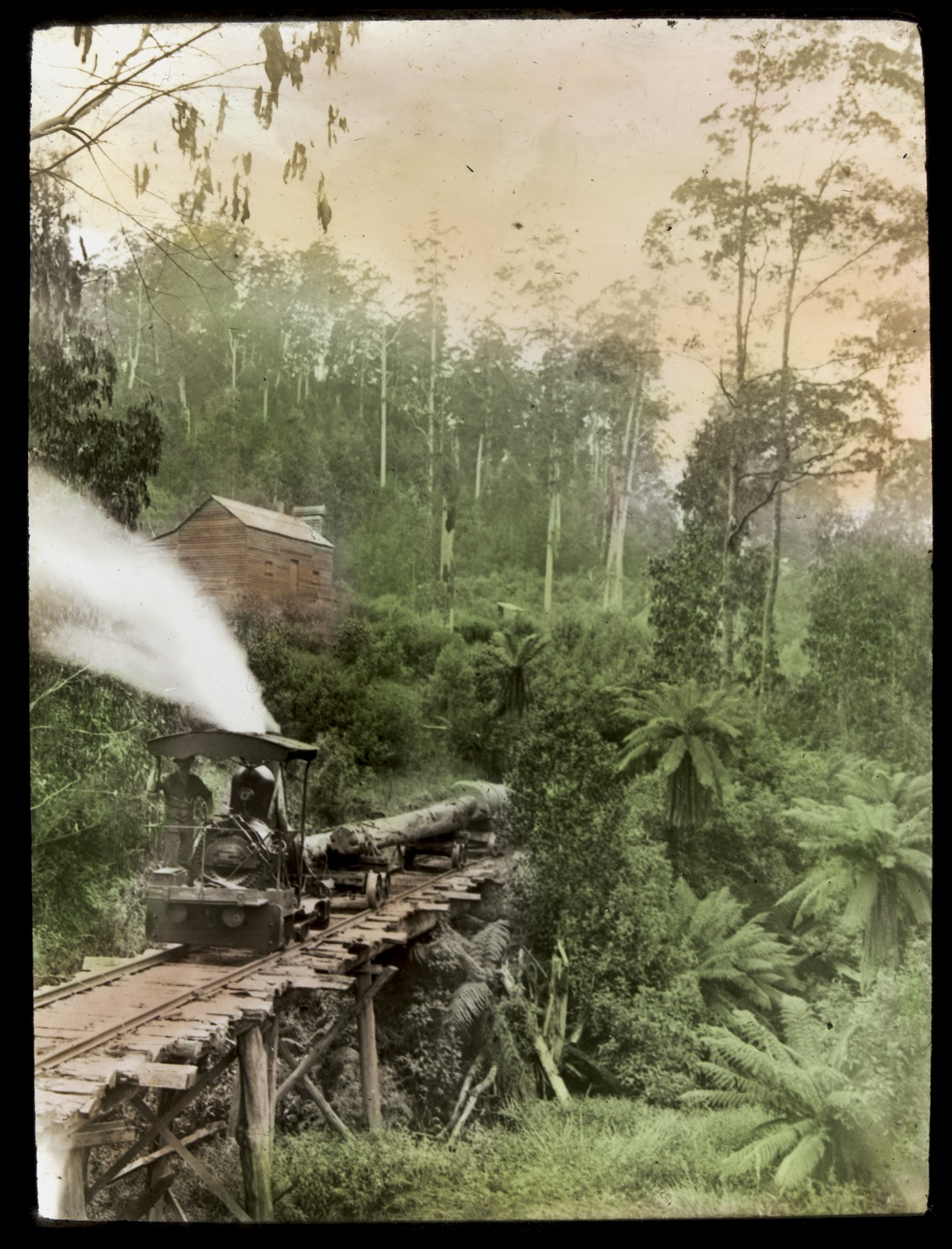
The Otway Ranges is characterised by steep terrain, wet weather and thick forest. An early but unsuccessful attempt was made between 1854 and 1861 to bring Blue Gum (Eucalyptus globulus) railway sleepers to Melbourne in small coastal ships from the Otway Ranges. The voyage was perilous because there were no suitable harbours, and relics ofContinue reading “Henry’s sawmills – Otway Ranges.”
Lone Pine tree – Victorian School of Forestry (VSF).

The battle of Lone Pine at Gallipoli is deeply etched in the psyche of Australians, New Zealanders and the Turks. It took place between 6 and 10 August 1915 with tragic losses of over 2,000 ANZACs and a further 7,000 Turkish soldiers. Over the decades the battle became increasingly symbolic and many memorial parks inContinue reading “Lone Pine tree – Victorian School of Forestry (VSF).”
Grass trees.
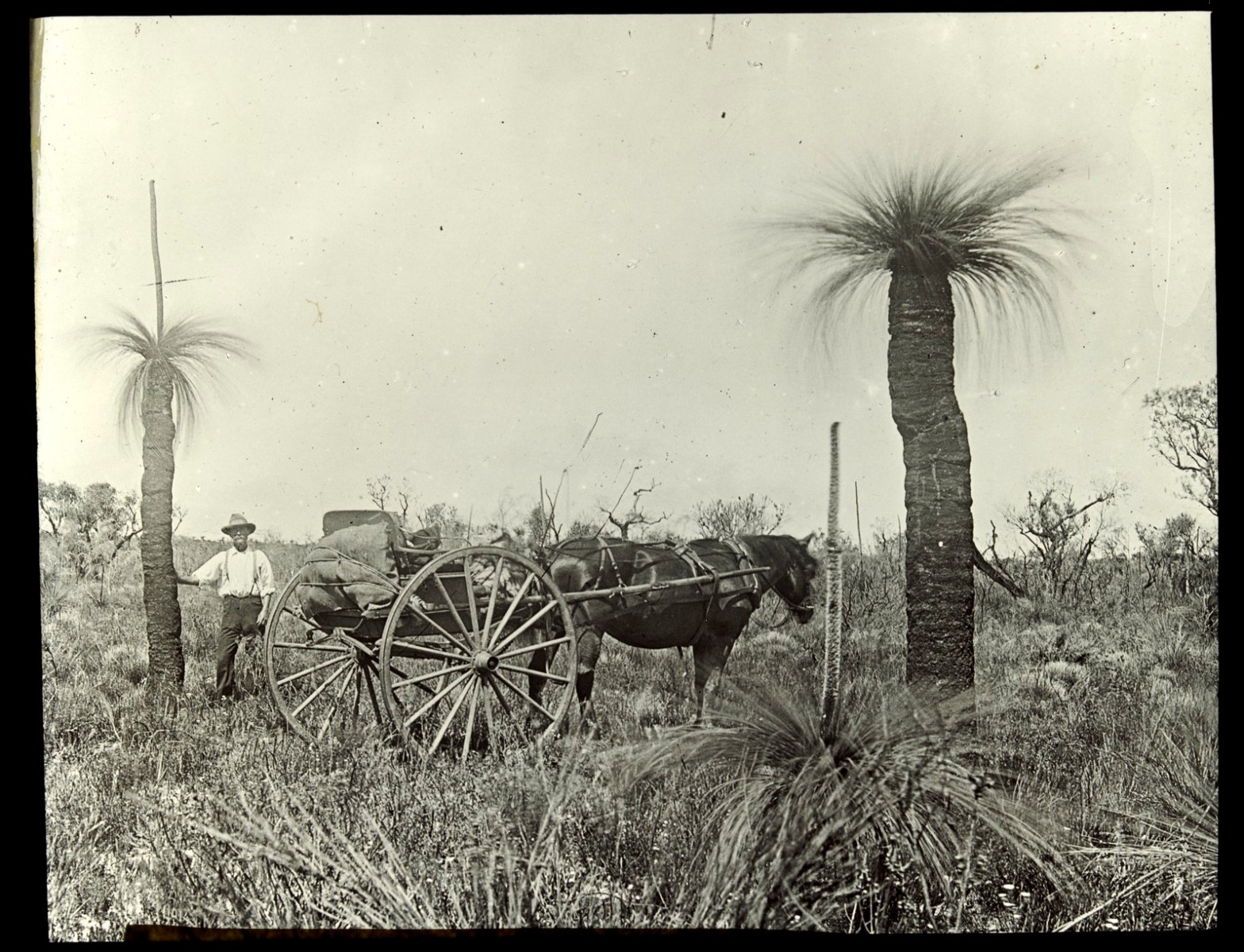
The austral grasstree (Xanthorrhoea australis) is commonly found growing in heathlands on poor sandy soils along the east coastal strip from NSW to SA, as well as Tasmania. They are highly susceptible to the soil-borne disease Phytophthora cinnamomi. In 1882, the Victorian Inspector of Forests William Ferguson made a field survey of the Heytesbury ForestContinue reading “Grass trees.”
Forest Drives.
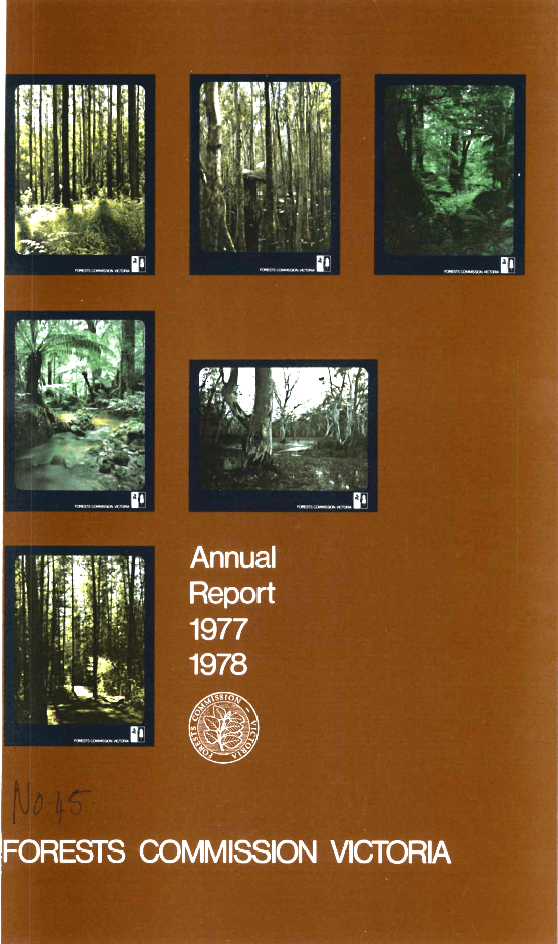
Just about every Forest District had one… the State forest drive. Most people enjoy a leisurely drive in the country, or through the bush, which includes a scenic spot for short walk or a picnic. Staff have always taken pride in their patch of forest and were keen to make the bush available to localsContinue reading “Forest Drives.”
Julia Hale – an extraordinary sawmiller.
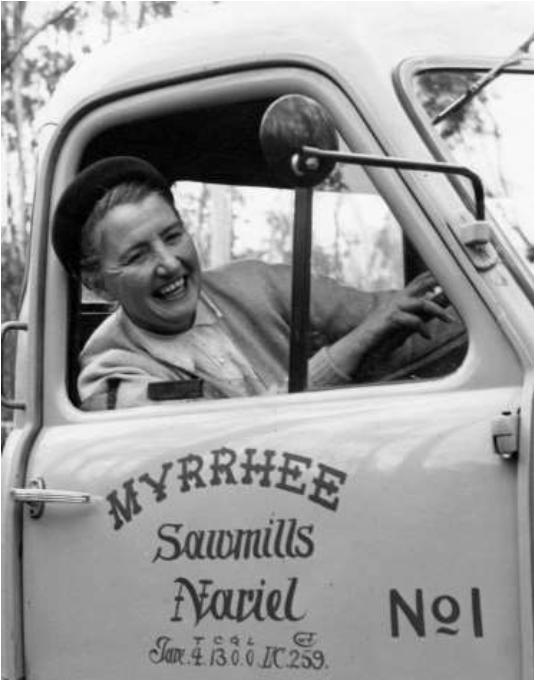
The timber industry in Victoria was arguably very lopsided with the Forests Commission, as a large government-owned monopoly, controlling forest licencing, allocation and supply of timber to sawmillers. In most cases the relationship between sawmillers and the local District Forester were cordial and business like, but it was clearly an uneven one at times. It’sContinue reading “Julia Hale – an extraordinary sawmiller.”
World Forestry Day.
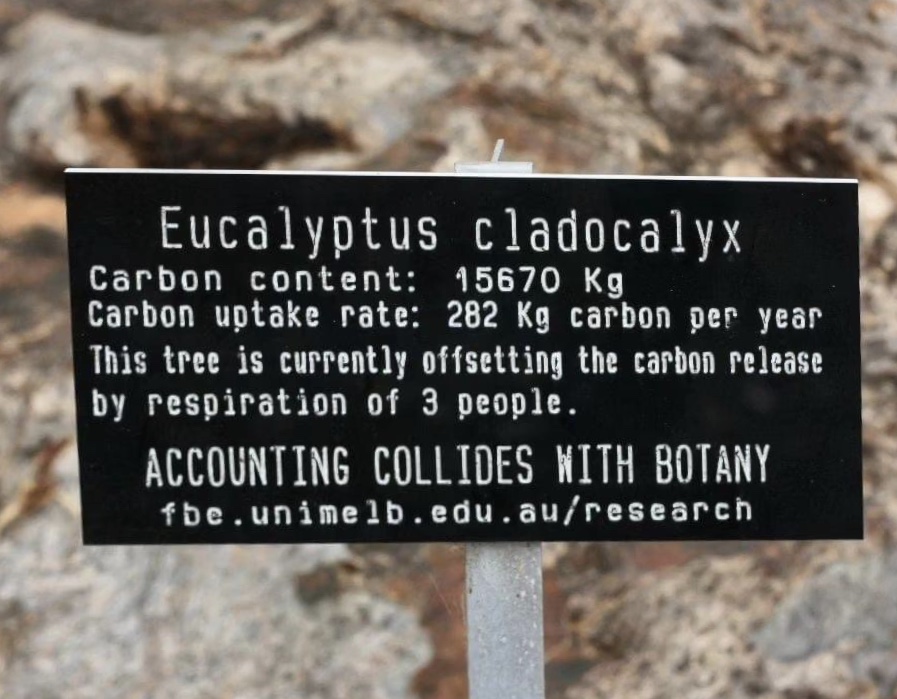
Imagine a machine that uses solar energy to remove carbon from the air and turns it into a beautiful, strong and sustainable building material. Oh wait… that’s what trees are… Today is World Forestry Day and what better way to celebrate than to acknowledge this magnificent Sugar Gum (Eucalyptus cladocalyx) which grows in front ofContinue reading “World Forestry Day.”
Mississippi Quarry – Colquhoun forest.

A large granite outcrop at the headwaters of the Mississippi Creek in the Colquhoun State forest, just west of Lakes Entrance, was identified in the early 1890s. It’s said to be of the same geological formation as the pink granite at Wilsons Promontory, Gabo Island and northern Tasmania. The beautiful granite will take a highContinue reading “Mississippi Quarry – Colquhoun forest.”
Update on the Beechworh Museum Collection.

With the money raised from the sale of the FCV lapel pins last year the Forests Commission Retired Personnel Association (FCRPA) engaged Mark Jesser, a professional photographer, from Wodonga. We recently had a two-day working bee at Beechworth with Leith McKenzie, Andrew Pook, Mark A Webster and myself pulling all the dusty items out of their display casesContinue reading “Update on the Beechworh Museum Collection.”
The loss of Longitude and the “Disputed Territory”.
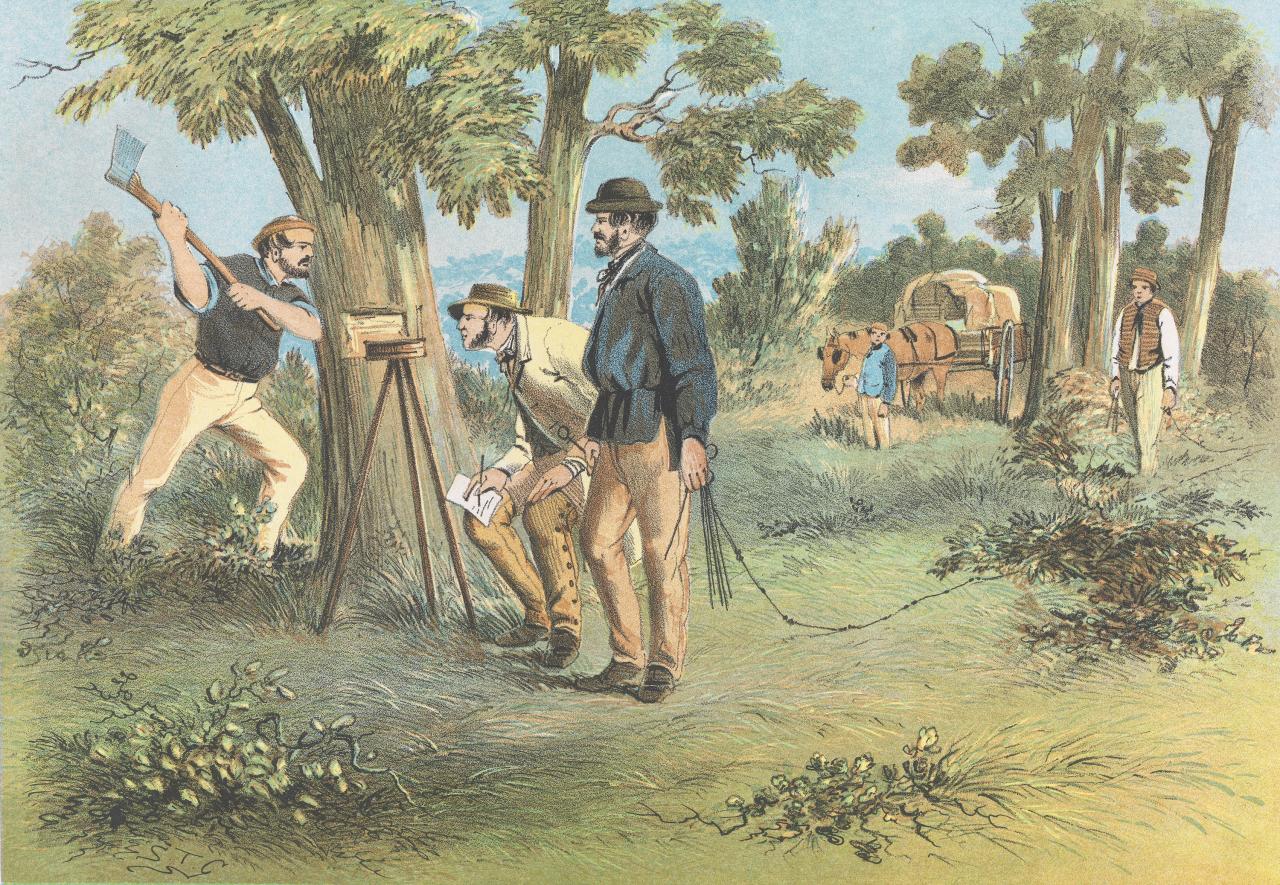
In 1836, the western boundary between colonies of NSW and South Australia, and what was later to become the border of Victoria, was decided as the 141 degree meridian of longitude east of Greenwich. Three years later in 1839, Charles Tyers transferred from the Royal Navy and was given the task to precisely mark theContinue reading “The loss of Longitude and the “Disputed Territory”.”
Christian’s Mill – Wombat Forests.
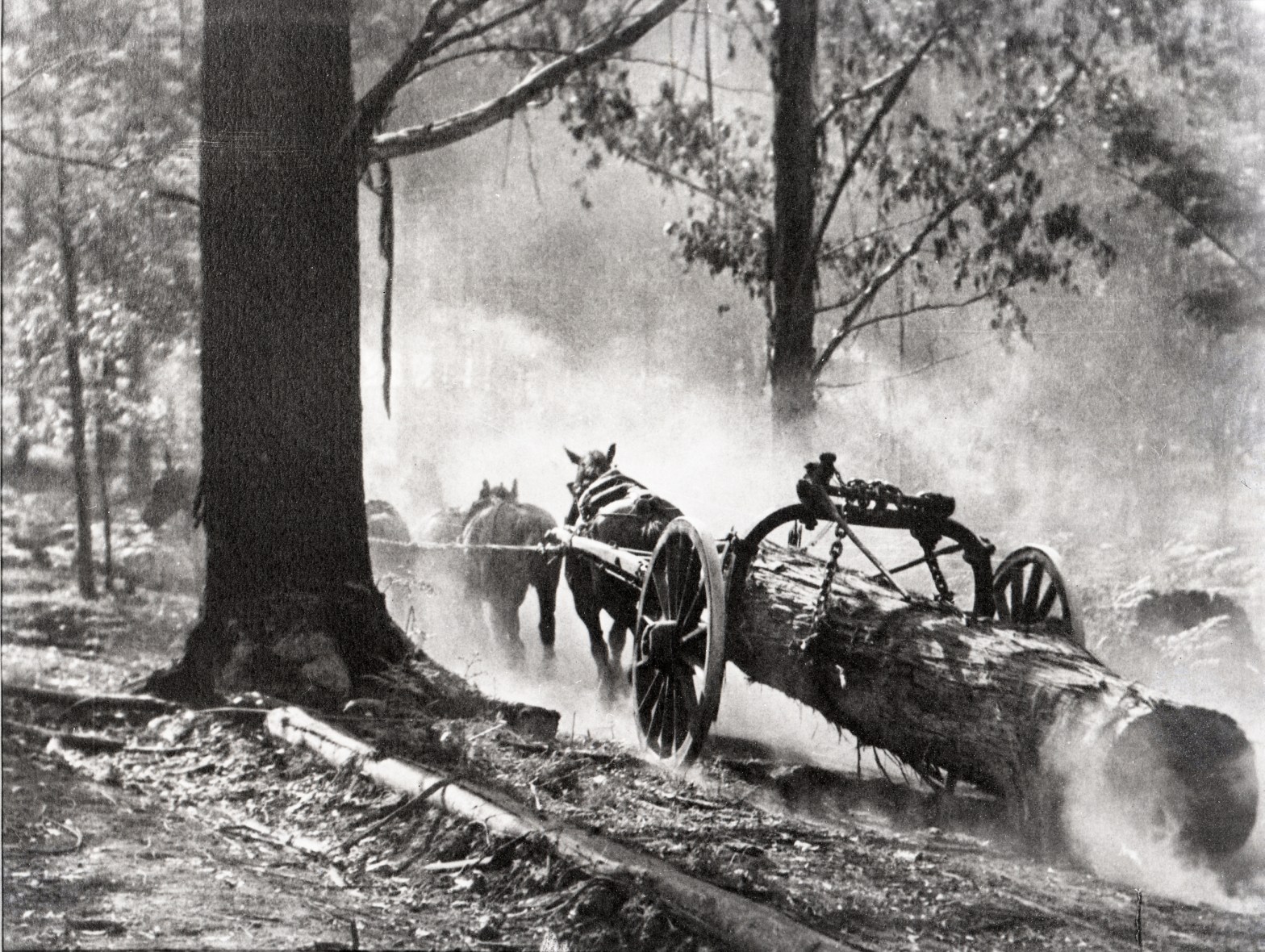
William Christian arrived in Melbourne in 1850 and worked as a pattern maker in a foundry. But like many others he was soon drawn by the lure of the goldfields. After a few unsuccessful years of trying his luck, William ended up in Woodend in 1868 and started a couple of successful sawmills in theContinue reading “Christian’s Mill – Wombat Forests.”
Dog’s Grave.

When travelling around State forests it’s not uncommon to find a lonely and forgotten grave tucked away in the bush. The last resting place of some unlucky traveller or pioneer killed in an accident, unable perhaps to receive medical aid in time. They were usually buried where they died. The grave of former dance girlContinue reading “Dog’s Grave.”
The Parliament House Dummy-Spit.
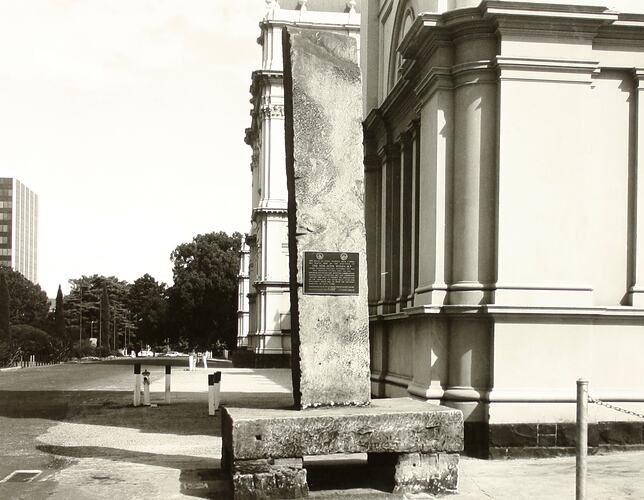
State forests and public land not only produce timber but are also important for sand, crushed rock and dimensioned stone for buildings. Victoria has large quantities of hard basalt, or bluestone, across the western district plains but in the early days of the Colony it had to suffer the indignity of importing sandstone from NSW.Continue reading “The Parliament House Dummy-Spit.”
Victorian timber industry – 1982.

What a difference 42 years makes. This 1982 map shows Victorian hardwood and softwood sawlog production, as well as the number of mills by region. The Forests Commission reported in 1981-82 that there were fewer new houses completed than for the previous 30 years. Home loan interest rates were at a record high of 16.5%.Continue reading “Victorian timber industry – 1982.”
The Bendoc Log.
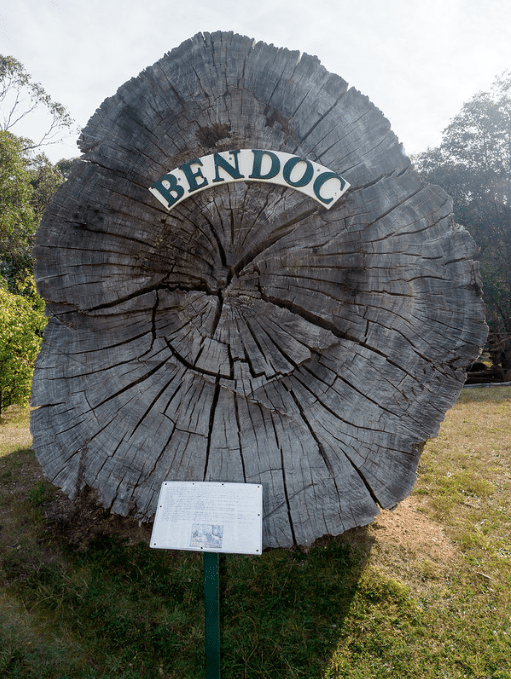
The 1 January 2024 not only marks the beginning of a New Year, but also marks the end of timber harvesting in Victorian State forests. Some people will be rejoicing, but many will be angry and looking for explanations, or someone to blame. However, the demise of native forest timber harvesting has been a veryContinue reading “The Bendoc Log.”
Growth Rings (updated).

There is always a danger making lists but, to my mind, some of the main events that have shaped forest and bushfire management in Victoria are below… • 1820s – Before European settlement around 88% of the 23.7 million ha of what was to become the Colony of Victoria was tree-covered. • 1851 – InContinue reading “Growth Rings (updated).”
Forests and Bushfire History of Victoria – Series 4 (2023)

It’s been another busy year on the Victorian Forests and Bushfire Heritage FB page. Once again, the main stories have been gathered up into free eBook and published in the National and State Libraries so they don’t get lost in the Facebook soup. Other notable things for 2023 include. Im not sure about next year…Continue reading “Forests and Bushfire History of Victoria – Series 4 (2023)”
Splitting guns.
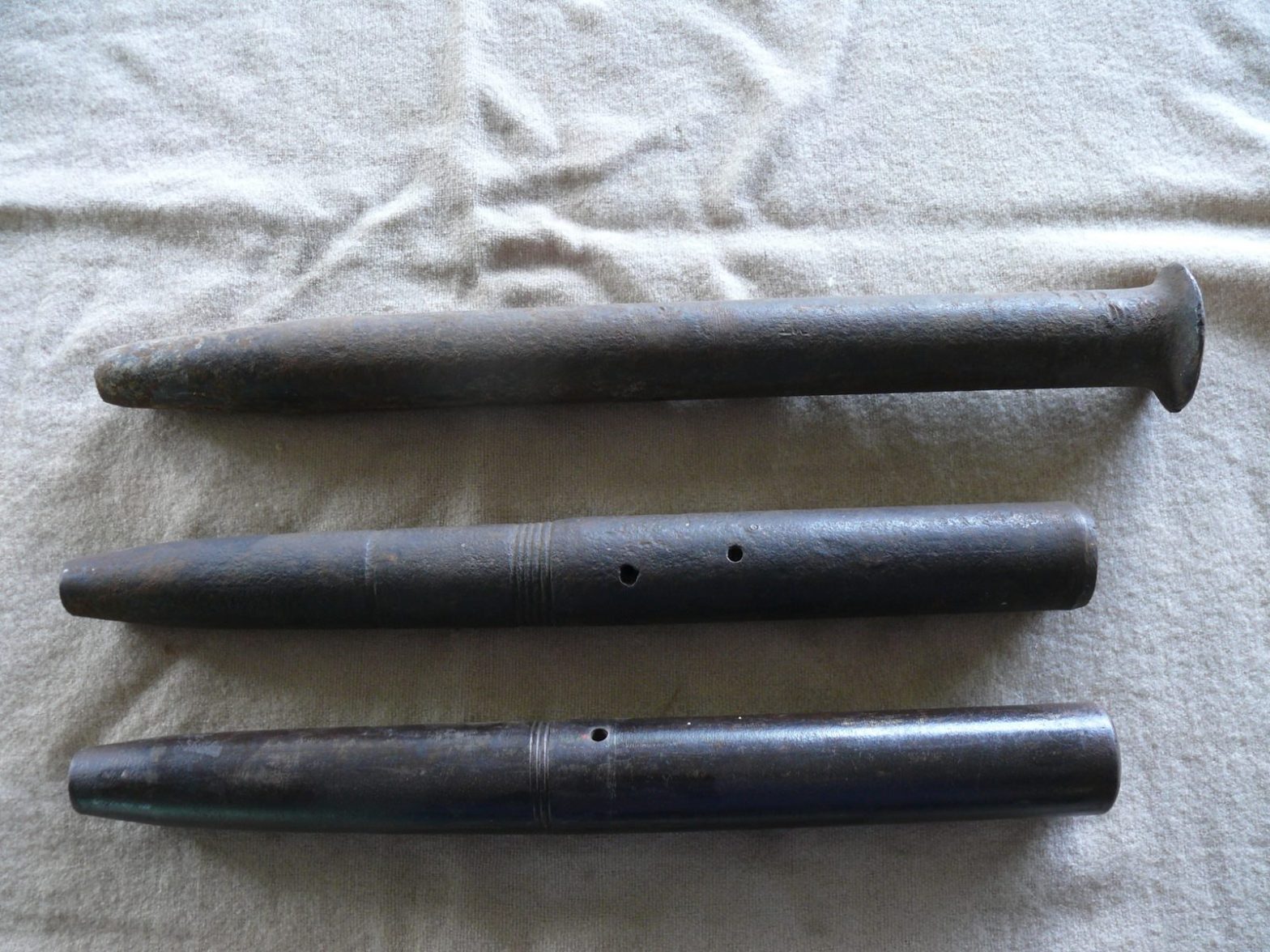
Black powder splitting guns were commonly used to split large logs into more manageable pieces before the advent of excavators and front-end loaders in bush logging operations. A typical splitting gun used in Victorian forests was a piece of high-grade steel about 1-1/2 to 2 inches in diameter and about 16 inches long, and slightlyContinue reading “Splitting guns.”
 Victoria’s Forests & Bushfire Heritage