
Charles was born in Majorca near Maryborough in 1895 and entered the Victorian School of Forestry (VSF) in 1913 as one of the first student intakes. He was also a member of the Creswick 71st company militia. Charles graduated in 1915, and in February 1916, he enlisted in the 59th Battalion (#1769) aged 20. CharlesContinue reading “Charles William Watson.”
Author Archives: Peter McHugh
James Lees Shaw.
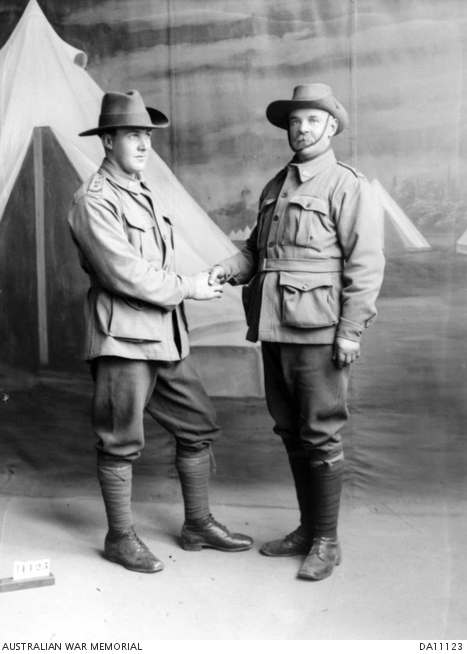
James joined the 29th Battalion on 12 July 1915 at a relatively senior age of 44 and embarked from Melbourne aboard HMAT Ascanius on 10 November 1915. A native of Stawell, he lived at Brimpaen and worked as a forest officer in the Wartook and Murra Murra state forests on the western side of theContinue reading “James Lees Shaw.”
David Kennedy Galbraith.

David Kennedy Tener Galbraith was born in Bendigo in October 1896. He was living in Heathcote when he was one of nine candidates to pass the entrance exam into Victorian School of Forestry (VSF) at Creswick in April 1913. David is not listed as having graduated from the school, but his name is on theContinue reading “David Kennedy Galbraith.”
William Ritchie.

William Ritchie was a from a forestry family. His father, James Stewart Ritchie, trained as a crown land bailiff in the 1890s at Creswick under the now famous John la Gerche. William was born at Glen Park near Ballarat in 1895 and was one of the first students to enter the Victorian School of Forestry (VSF)Continue reading “William Ritchie.“
Robert John Leslie Kerr.

Robert Kerr was born in 1885 as the eldest son of Robert Kerr (senior), the assistant head teacher at the Prince of Wales State School in Northcote. Kerr later gained both First and Second Certificates from the Teacher Training College and was appointed junior teacher at Victoria Park in Collingwood, later becoming assistant at Armadale.Continue reading “Robert John Leslie Kerr.”
Reginald Dennis Hall

Reginald was born on 12 February 1900 at Heathcote. He joined the Forests Commission when he was 16 and transferred to Ferntree Gully. On 25 April 1917, when he was only 17 and 3 months, he enlisted with the 23 Battalion of the AIF (# 6866A) by forging his father’s signature because he was stillContinue reading “Reginald Dennis Hall”
Albert Jacka VC.

Perhaps Australia’s finest fighting soldier, Albert Jacka has the honour of being the first Australian to be awarded the Victoria Cross during WW1, the highest decoration for gallantry in the face of the enemy. Albert Jacka is also one of twenty employees displayed on the Forests Department’s Roll of Honour that hangs at the BeechworthContinue reading “Albert Jacka VC.“
Remembrance.

Friday 11 November is Poppy Day. Over the next week or so I shall post short stories about some of the men from the State Forests Department* and the Victorian School of Forestry that served. I can find some of their military records in the National Archives and the Australian War Memorial, but there areContinue reading “Remembrance.”
Boys Camps.
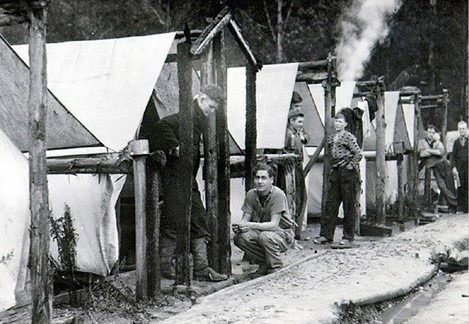
During the Great Depression of the 1930s, the Forests Commission ran a large unemployment program of firebreak slashing, building roads, erecting firetowers, silvicultural thinning, firewood cutting, weed spraying, soil erosion works and rabbit control. Importantly, most of the work was in country areas. By 1935-36 almost 9000 men were employed for periods of up toContinue reading “Boys Camps.”
CHEP Pallets.
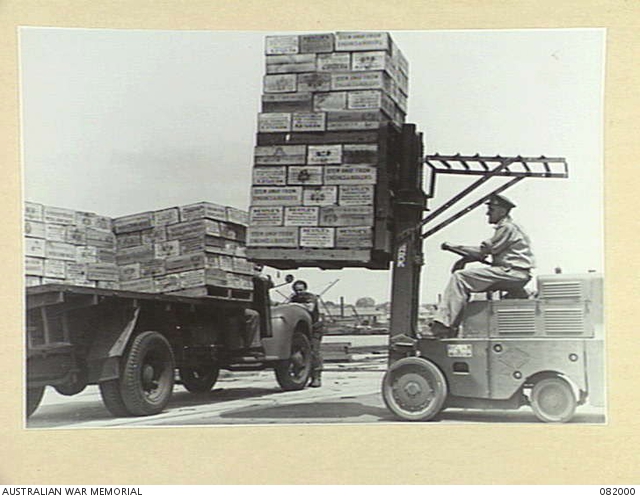
The humble timber pallet (or, less typically, a plastic or metal one) has at some time or another, probably carried almost every type of object in the world. For a mostly unseen and unnoticed item, pallets are everywhere, and there are said to be billions of them circulating through the global supply chain. While thereContinue reading “CHEP Pallets.”
Sir John Jensen.
John Klunder Jensen was born in Bendigo in 1884 but had to leave school at the age of 11 to find work following the early death of his father in 1895. He moved to Melbourne in 1898 and in 1900 took a job as a junior messenger boy in the Defence Department’s ordnance stores branchContinue reading “Sir John Jensen.”
The 1982-83 Victorian Bushfire Season, including Ash Wednesday – 16 February 1983.
Free e-book now available. Forty years ago, south eastern Australia was in the middle of a prolonged drought and facing a perilous bushfire season. A new ebook provides a detailed account of the 1982-83 bushfire season from a Victorian forester’s perspective. And while the bushfire season is best remembered for those on Ash Wednesday onContinue reading “The 1982-83 Victorian Bushfire Season, including Ash Wednesday – 16 February 1983.“
Watle bark stripping.

Harvesting of various wattle species began in Victoria and southern NSW around the time of the gold rush in the 1850s. Black wattle (Acacia mearnsii) is a small, fast-growing, leguminous tree and was highly prized for tanning leather. The tannin is also used to produce waterproof adhesives in reconstituted wood products. Bark was stripped from the wattlesContinue reading “Watle bark stripping.”
Bushfire dugouts.

In addition to building dams and water points, the Stretton Royal Commission recommended expanding the use of bushfire dugouts. Well-constructed dugouts had saved the lives of many sawmill workers and their families during the 1939 bushfires. But in some locations, they had proved fatal. Dugouts became mandatory for those few sawmills that remained in theContinue reading “Bushfire dugouts.”
Russell Grimwade Prize for Forestry.
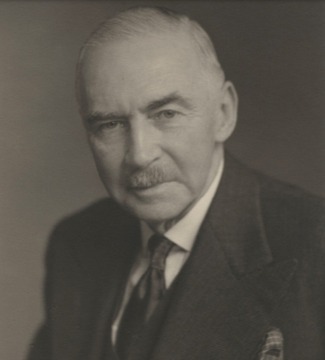
Wilfrid Russell Grimwade was born in 1879, knighted in 1950 and died in 1955. He led a remarkable and diverse life by any measure. He was a chemist, botanist, industrialist and philanthropist. He also had a passion for science, appreciation of art and sense of obligation to the community. An early motoring enthusiast he wasContinue reading “Russell Grimwade Prize for Forestry.”
Splitters.

Forest and bushfire management in the Colony of Victoria from 1851 through to Federation in 1901 can best be described as chaotic. Prior to European settlement, nearly 90% of Victoria had been forested but it was rapidly, and indiscriminately, cleared by miners during the gold rush, by timber splitters and then in a mad scrambleContinue reading “Splitters.”
Fire Dams & Water Points.

Building fire dams was another of the many recommendations of the Stretton Royal Commission after the 1939 bushfires. The Forests Commission annual reports give a clue to the increase in the numbers over the years. There were no fire dams reported in 1939-40, but by the time that the Forests Commission ended and became Conservation,Continue reading “Fire Dams & Water Points.”
Ash Wednesday 1983 – Bushfire mosaics.

There is a common belief that even the slightest bushfire in mountain ash forests (E. regnans) is catastrophic and uniformly kills every tree in its wake. It’s true that mountain ash is very susceptible to bushfire, but the story is not that simple. Fire behaviour and intensity depends on many things, like forest type andContinue reading “Ash Wednesday 1983 – Bushfire mosaics.”
 Victoria’s Forests & Bushfire Heritage