First Nations and Fire.
Victoria’s Aboriginal population prior to European settlement remains very uncertain but is thought to have ranged between 30,000 and 100,000 people. But it’s known that their numbers plummeted primarily due to introduced infectious diseases and displacement from their traditional lands.
The Administrator of Gippsland, Charles James Tyers, in his 1846 Annual Report, estimated the Aboriginal population in the area to the west of Lake Tyers at between 1,000 and 1,300 people. But this was followed by a catastrophic decline to 131 by 1853, and a low of 126 by 1854.
East of the Snowy River, the pre-contact population was estimated at between several hundred and maybe one thousand. But in 1844, George Augustus Robinson, the protector of Aborigines, on his visit through to Mallacoota and Eden reported very few Aborigines between Buchan and Twofold Bay.
But these figures are possibly only those people easily counted in mission settlements or camps and are therefore probably underestimates.
Victorian Aboriginals lived in the forests, coasts, plains and woodlands and were dependent on them for food, shelter, warmth, clothing and all the necessities of life. The forests were an integral part of their lives, and they fashioned them through the sustainable harvesting of resources and the use of fire.
Early colonial explorers and settlers commonly noted that indigenous people possessed great skill shaping the bush by burning to clear the undergrowth, for protection, for food, maintaining travel routes, hunting and complex cultural reasons.
Arguably, before European settlement, indigenous communities had little capacity, or need, to extinguish fires started by lightning, or indeed many of the fires that they had lit themselves.
What happened to these fires would have been variable and they would have been let to travel where topography, fuels and weather took them. And they could have remained smouldering and burning for months.
It’s also often recorded that the Victorian bush was more open, and when conditions were right, fires lit on the grasslands would act as a kind of conveyor belt and burn freely through the forests.
It’s believed that thousands of years of indigenous burning, in combination with fires started naturally by lightning, created the sweeping plains, the open foothill forests and woodlands near the rivers and lakes that the early settlers found across much of Victoria.
However, the presence of large areas of magnificent old wet forests in the mountains at the time of European settlement indicates that they had probably not been burnt by a hot bushfire for many centuries.
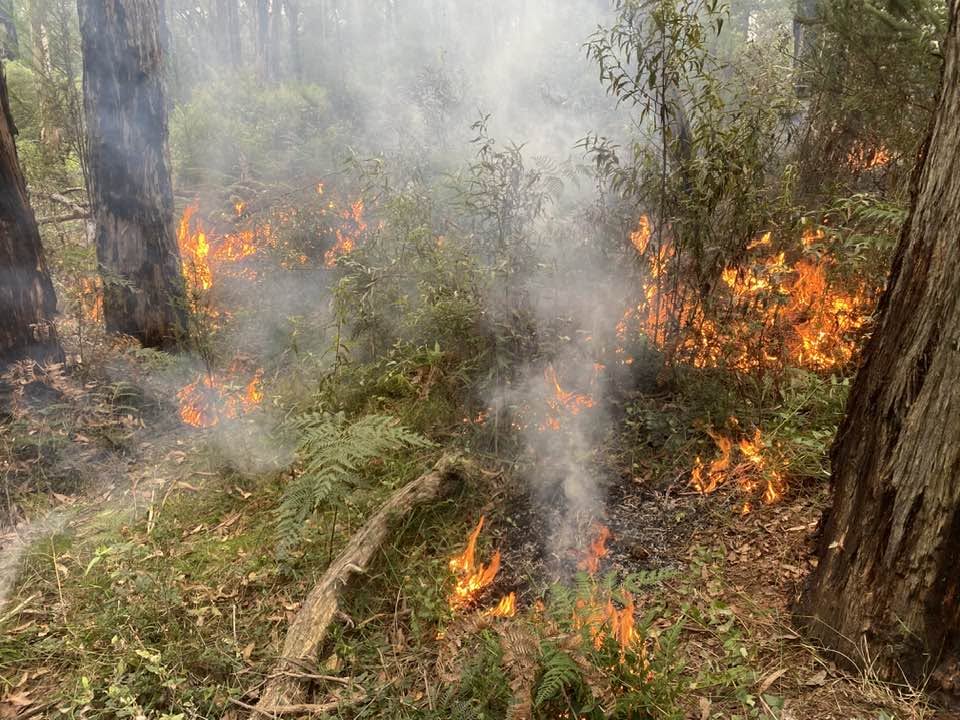
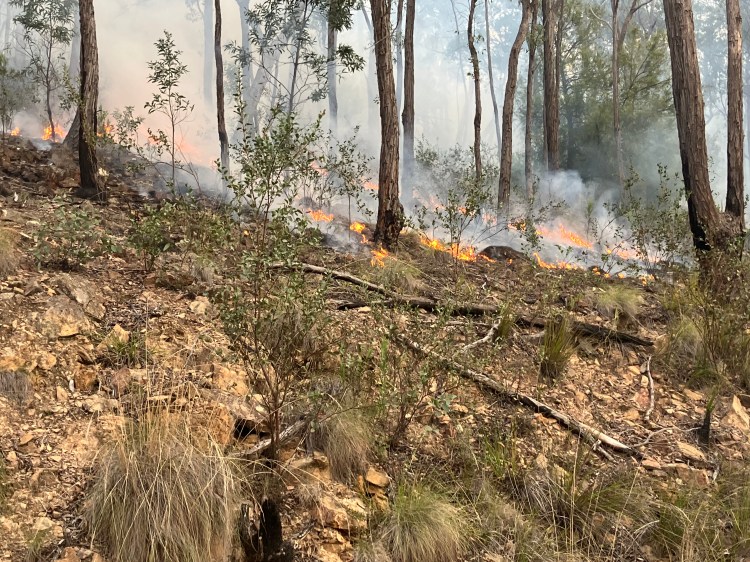
It’s often said that indigenous burning was linked to the rhythm of the seasons, were typically small, low intensity, patchy and frequent. Tree crown scorch was said to be minimal. This is important.
But Aboriginal connection with the forests ended abruptly shortly after the arrival of Europeans. Within a little over 20 years, a way of life which had existed for thousands of years, and which had shaped Victoria’s forests, was gone for ever.
A shift to indigenous or cultural burning ?
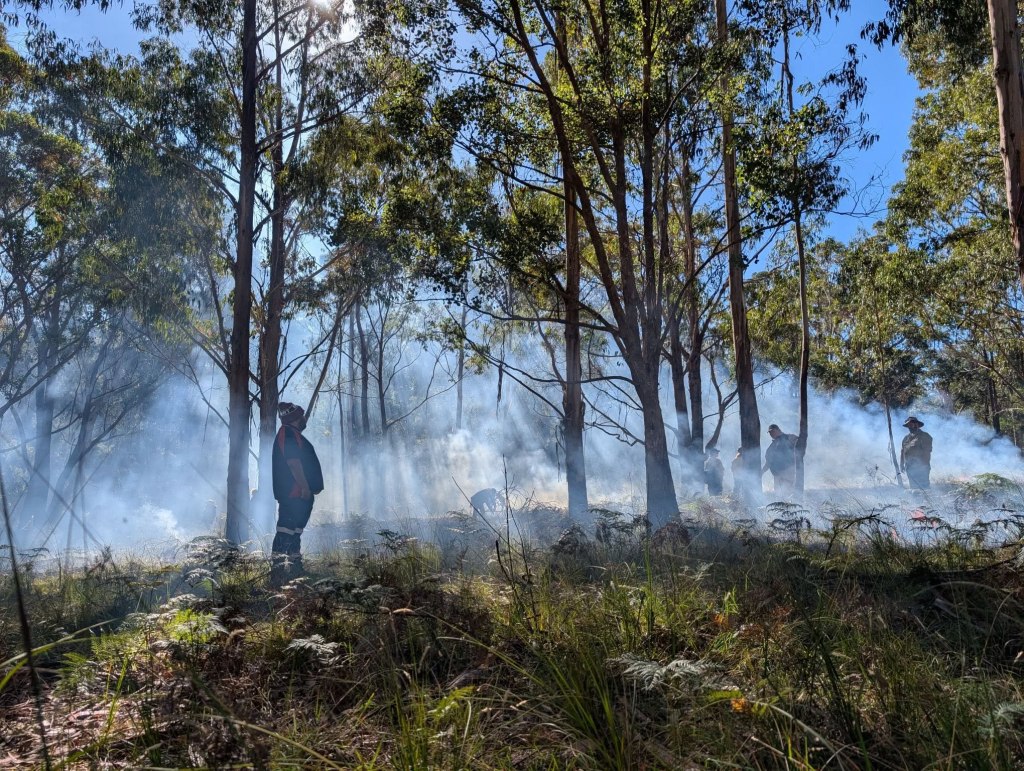
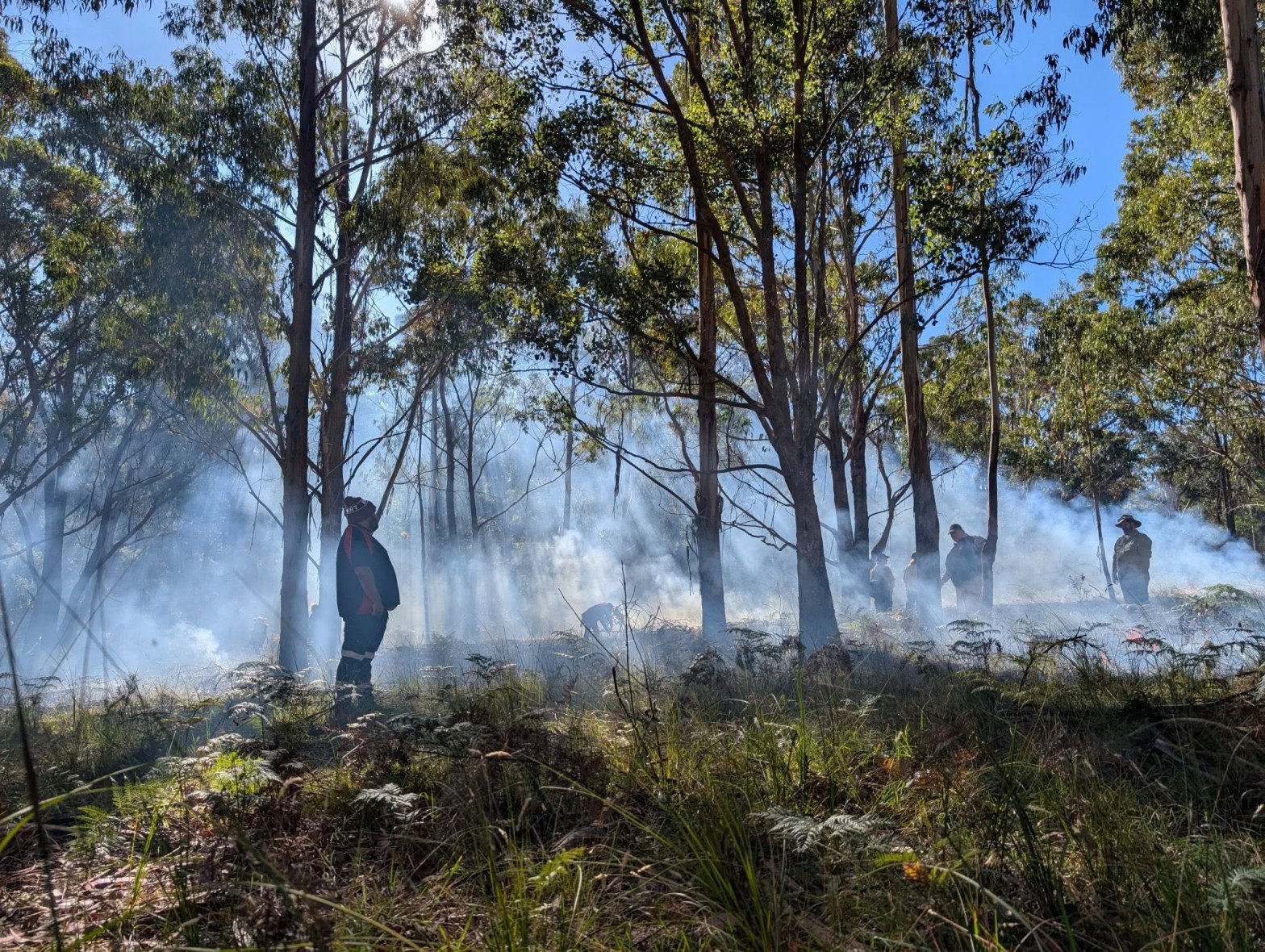
It’s often said that one of the most effective techniques used by indigenous groups to manage the bush was the application of controlled fire, now frequently referred to as “cool burning”, “cultural burning” or “fire-stick farming”.
“Caring for country” rather than allowing vegetation to accumulate and create the conditions for large and destructive bushfires, indigenous communities carefully applied small fires at specific times of the year.
Cultural burns no doubt helped maintain healthy ecosystems by encouraging the growth of new plants, creating habitats for wildlife, and reducing the risk of catastrophic bushfires.
The practice was guided by thousands of years of accumulated knowledge built through careful observation of local weather patterns, soil conditions, plant life, fire and animal behaviour, and then passed down through generations.
It’s also fascinating to ponder how the nature of intentional indigenous burning may have intersected and overlapped with “natural” fires caused by lightning.
So why not have both ?
Some commentators on modern bushfire policy argue for a return to indigenous or cultural burning, without being precise about exactly what that means and how it could be implemented.
Traditional knowledge can, and unquestionably should, contribute to modern land management and restoration of forest ecosystems damaged by fire, particularly in understanding seasonal patterns and improving local mosaic burning.
And indigenous communities should be at the forefront of the renaissance.
Indigenous burning is subject to considerable debate and speculation with many “expert opinions” but, to me, the underlying purpose, location, scale, area, patchiness, intensity, frequency, season and application of fire need some more clarity.
I don’t personally believe the solution is as simple as returning to cultural burning and dumping modern fuel reduction burning or relying solely on traditional knowledge versus modern science and lived experience.
I also understand that traditional cultural burning generally occurred on a much smaller scale and with a very set of different objectives to current fuel reduction burns which are primarily designed for the protection of life and property.
Furthermore, it’s also hard for me to say whether indigenous burning is even feasible anymore at a scale necessary to recreate an imagined pre-European landscape while, at the same time, reduce overall bushfire risk in a modern built-up society with linear boundaries, towns and settlements.
But one consistent theme of indigenous burning is that it was low intensity and slow moving which aimed to protect the tree crowns from scorch and damage. It also helps to recycle nutrients held in the leaf and bark litter but doesn’t expose or damage the soil.
Transposing the indigenous burning practices used widely in the deserts and open forests of northern Australia to Victoria is problematic and doesn’t seem appropriate.
It also seems to me that much of the intricate indigenous knowledge about land and fire applicable to the diverse Victorian forests has been irretrievably lost. There is a lot to relearn.
I certainly don’t have the answers, but, in the meantime, I remain curious and open minded…
Moray Douglas (2007). A History of the Forests and Forestry in East Gippsland. https://nla.gov.au/nla.obj-2586554133/view
Victor Steffensen (2020). Fire Country.
Bill Gammage (2012). The Biggest Estate on Earth. How Aborigines made Australia.
Ron Hateley (2010). The Victorian Bush: its original and natural condition.