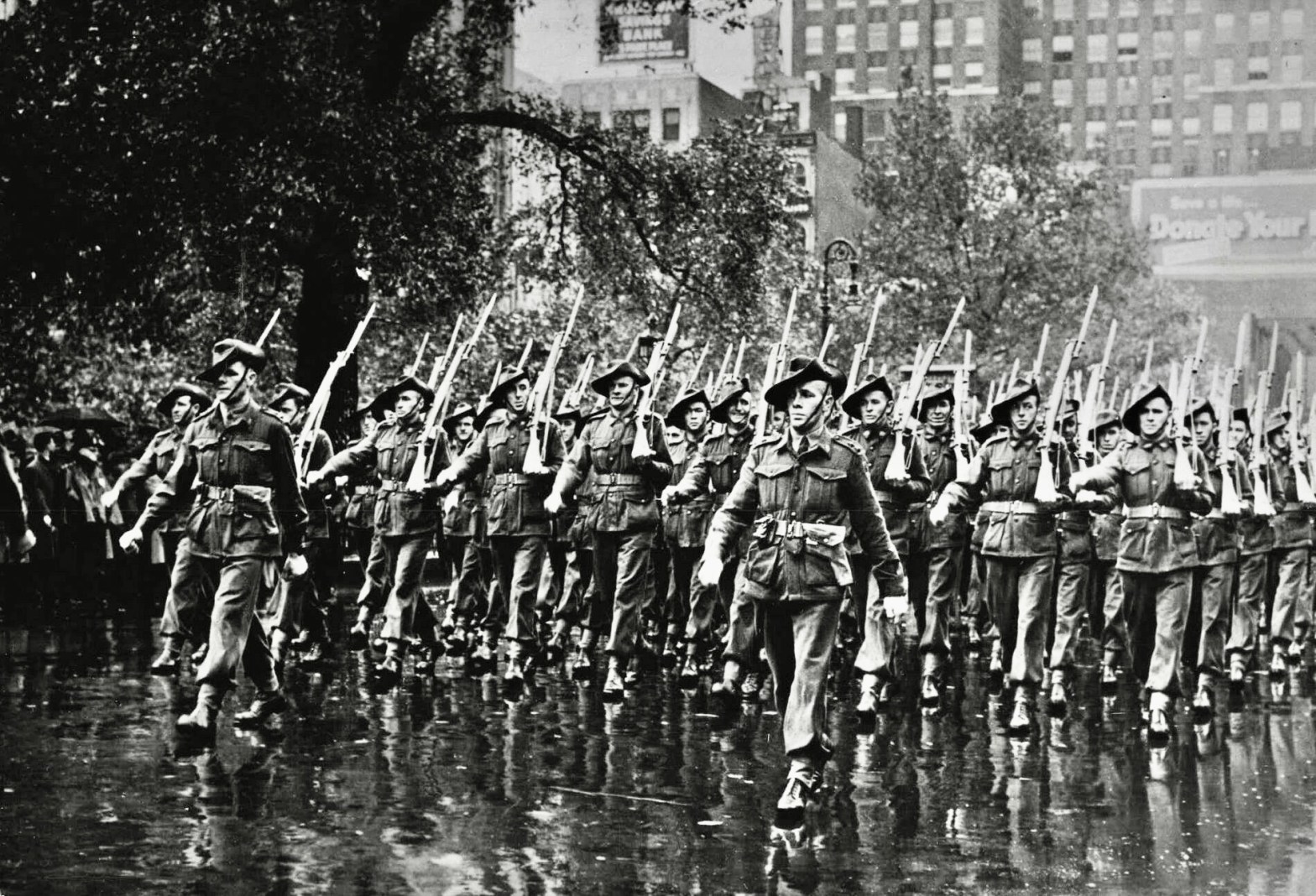
On Friday 1 October 1943, in the pouring rain, six hundred Australian and New Zealand forestry troops, en-route from England to their home countries, were given the unique honour of marching in a ticker-tape parade, with fixed bayonets down Broadway in New York. It’s said to be the only occasion that armed foreign troops hadContinue reading “Foresters on Parade – New York City.”
Author Archives: Peter McHugh
On the Piste.

Prior to the formation of the Alpine Resorts Commission (ARC) in 1983, Victoria’s snowfields were managed by a conglomerate of competing government agencies including the Victorian Railways, National Parks Service, Lands Department, State Electricity Commission and the Forests Commission Victoria. The Forests Commission first developed a substantial interest in the development of Mt Buller asContinue reading “On the Piste.”
Beech Forest Grandstand.

Most of the large and significant trees in Victoria were found in the mountain ash forests of the Otways, Strzelecki Ranges and the Central Highlands. This enormous tree stump was converted into a Grandstand at the Beech Forest turf club in the Otways for their first race meeting in Easter 1893. The Melbourne Cup hadContinue reading “Beech Forest Grandstand.”
Ice Cream Sticks

I bet we don’t even give them a second thought as we slurp on the quickly melting Chocolate Paddle-Pop dribbling down our fingers while luxuriating at the beach in the sunshine. But Australia was once a major producer and exporter of the humble ice cream stick. I’m aware of two plants, Beddisons at Nangwarry nearContinue reading “Ice Cream Sticks”
Basal Area Prism.

Foresters usually measure the diameter of trees at Breast Height – traditionally 4 foot, 6 inches – now 1.3 m – which is termed Diameter Breast Height Over Bark (DBHOB). Basal Area is the cross section of the tree trunk at breast height, and the sum for the stand of trees is expressed in squareContinue reading “Basal Area Prism.”
Row upon Row.
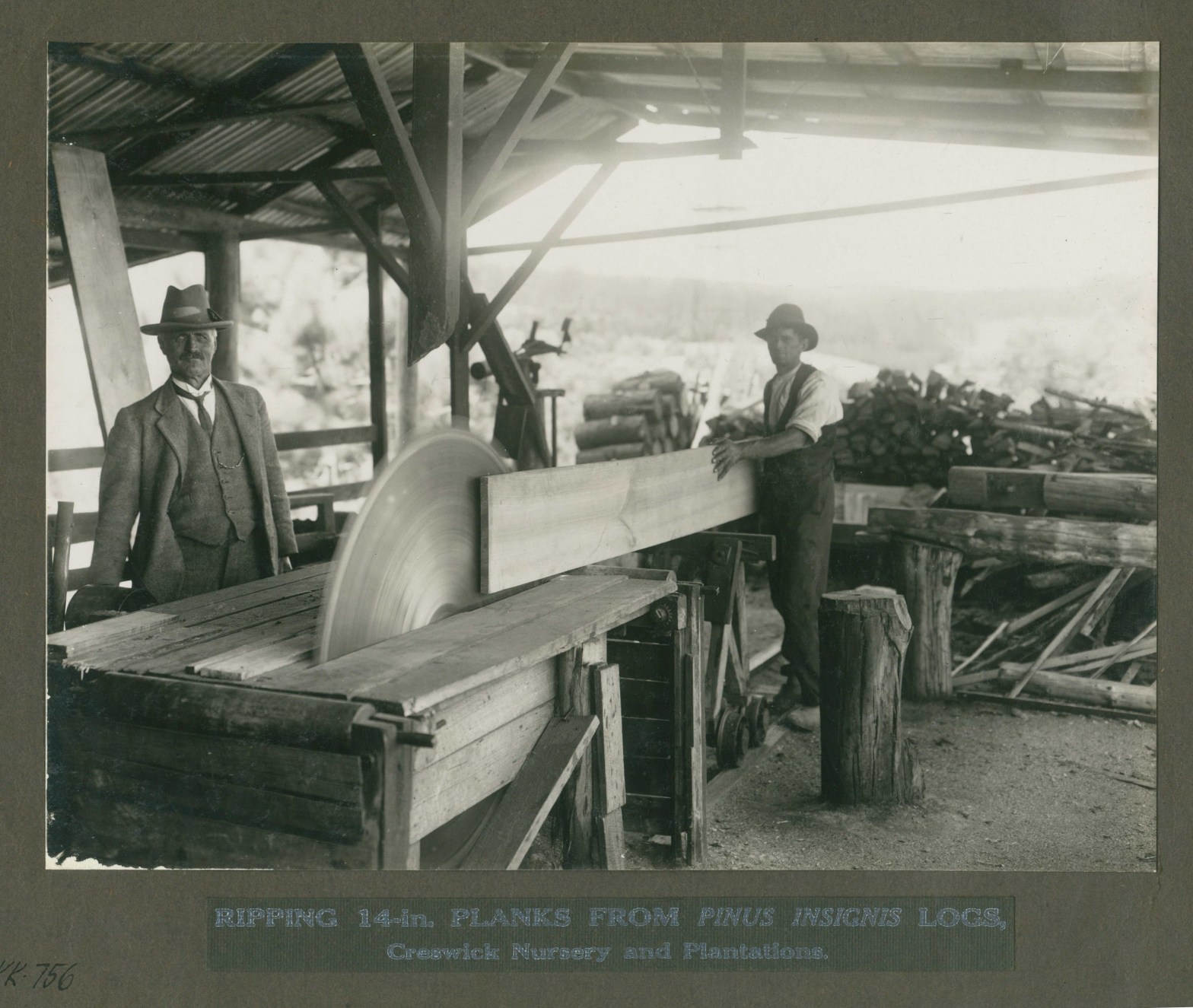
There are very few native softwoods in Victoria, and those that do exist, like white cypress pine (Callitris glaucophylla), grow too slowly to be suitable for large scale commercial plantations. From its earliest days in the 1830s, Victoria imported large quantities of softwoods, mostly from north America and Scandinavia. The need for cheaper and moreContinue reading “Row upon Row.”
Black Sunday Bushfires – 1926.

On 14 February 1926 bushfires swept across Gippsland, the Yarra Valley, Dandenong Ranges and Kinglake. Photo: Loch Valley Tramway near Noojee taken 21 April 1926. https://prov.vic.gov.au/archive/32412F8D-F822-11E9-AE98-F91FA87D70C4?image=1
Caterpillar 35 HP Tractor.
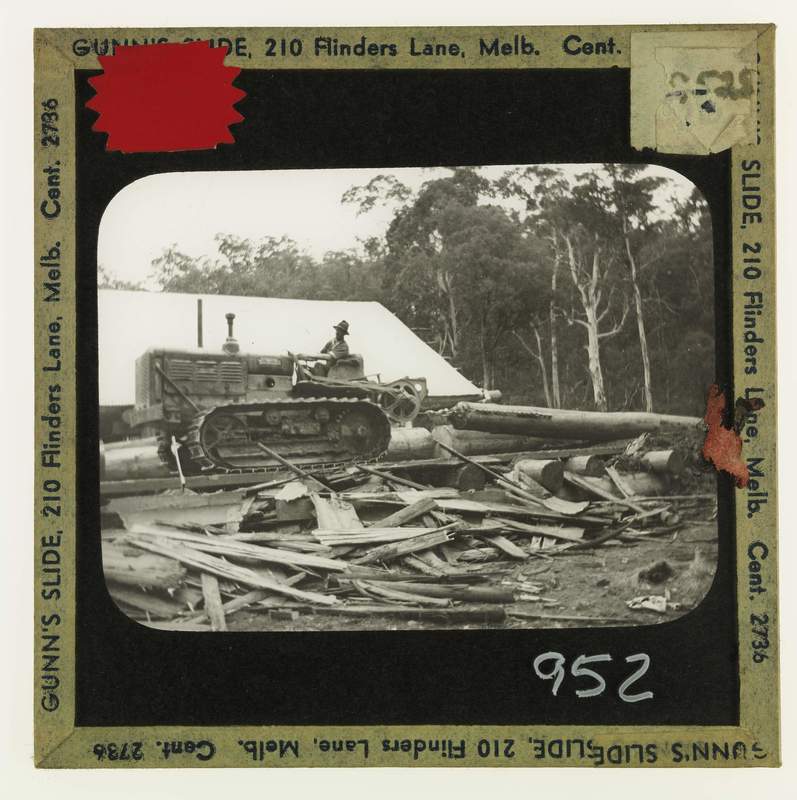
The first reference to the use of crawler tractors in Victorian logging operations was in 1934. Forester, and later FCV Chairman, Finton Gerraty, reported in the Victorian Foresters Journal. “A diesel oil caterpillar tractor which may be used either as a stationary winch, or as a mobile haulage unit, is the latest addition to logContinue reading “Caterpillar 35 HP Tractor.”
Skyline & High Lead Logging.
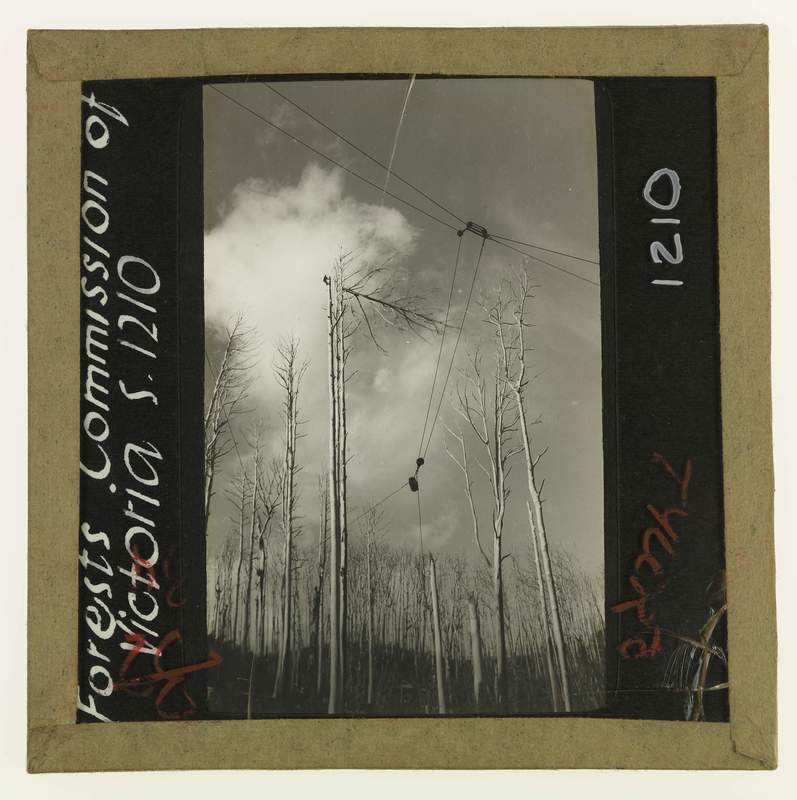
Logging in rough and steep country had always presented serious challenges to contractors and sawmillers. In addition to the obvious safety considerations, delays caused by terrain or weather had impacts on operating costs and ensuring smooth wood flows to the sawmill. In 1936, Erica District Forester, Arch Shillinglaw, gave an account in the Victorian ForestersContinue reading “Skyline & High Lead Logging.”
Big River Road – Marysville.
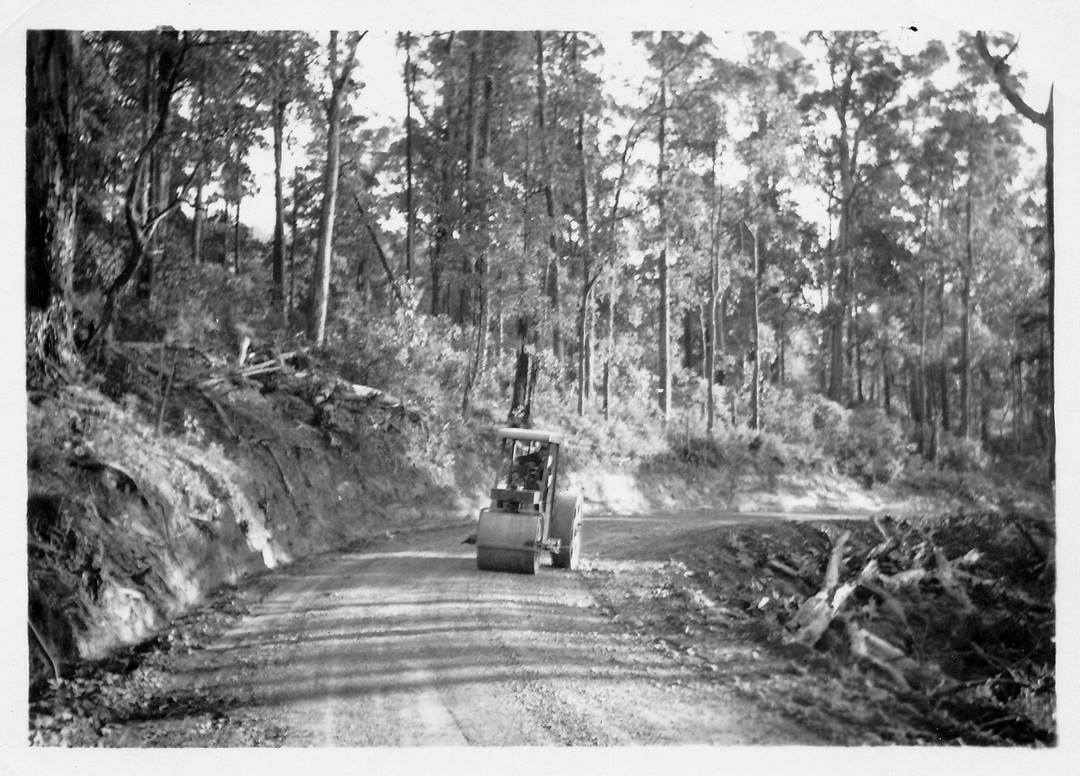
Stretching more than 60 km from the junction of the Woods Point Road near Cambarville, east of Marysville, to the Eildon-Jamieson Road in the north, the Big River Road was a major element in the expanded road network built by the Forests Commission Victoria (FCV) throughout Victoria’s mountains in the post war period to accessContinue reading “Big River Road – Marysville.”
Gembrook forests.
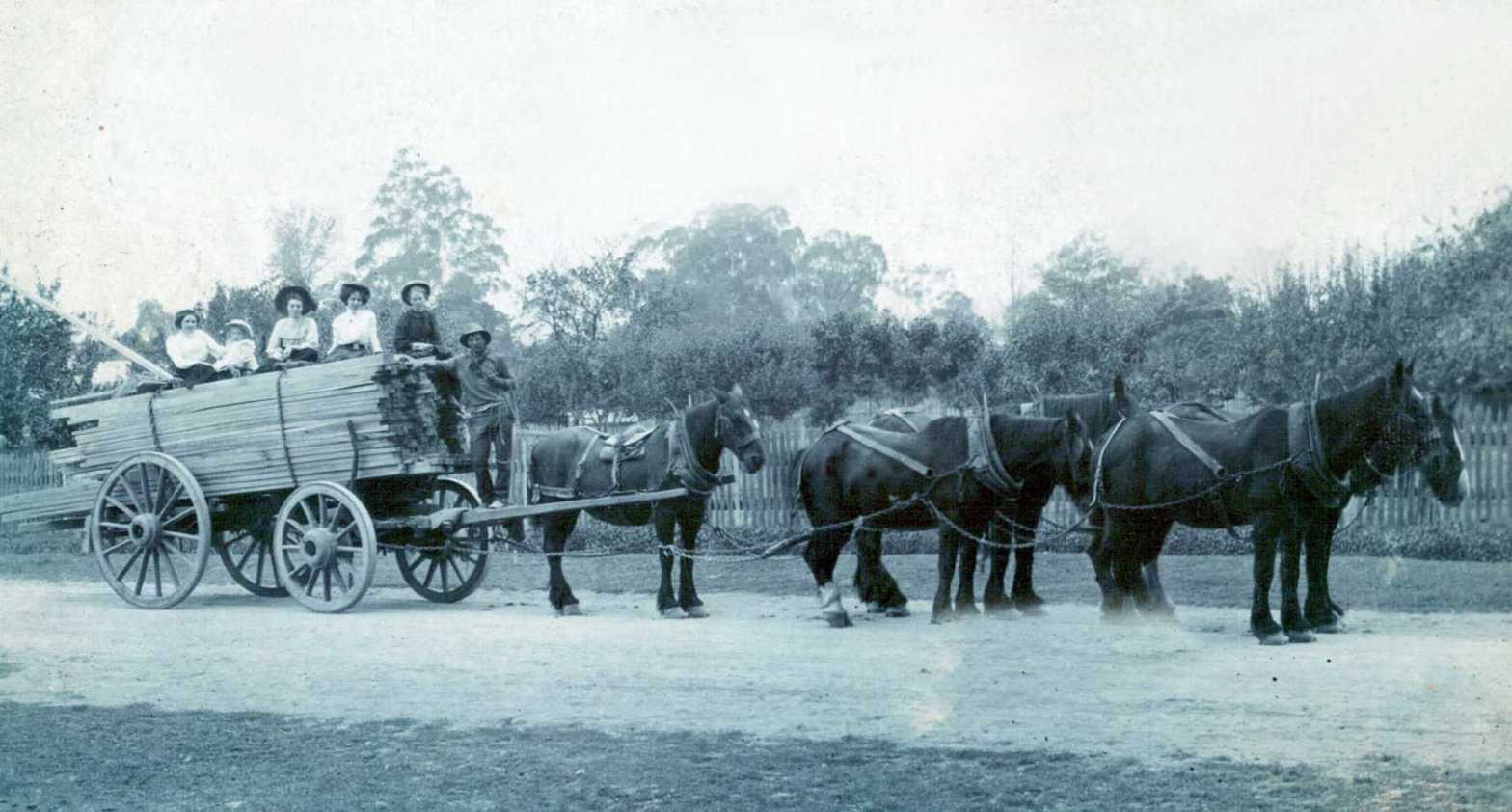
The arrival of the Victorian Railways narrow gauge train (now the iconic Puffing Billy) into Gembrook in about 1900 signalled the rapid expansion of sawmilling in the district. Sawmills had operated at Gembrook from the 1880s, but their produce was transported by primitive tramways to places like Nar Nar Goon in the south. A newContinue reading “Gembrook forests.”
Fyansford Paper Mill.
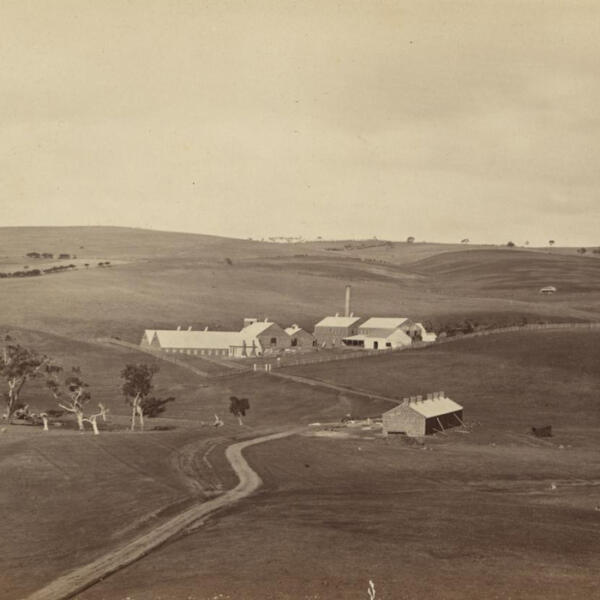
Building the Fyansford Paper Mill, on the Barwon River near Geelong, commenced in the 1870s and was completed in 1878. When the site opened, it was claimed to be one of the most advanced paper mills in the southern hemisphere. At the time, there were seven paper mills in Australia and Fyansford is one ofContinue reading “Fyansford Paper Mill.”
Sugar Gum.

Sugar Gum (Eucalyptus cladocalyx) originates in South Australia in three distinct populations: the Flinders Ranges, Eyre Peninsula and Kangaroo Island. Sugar Gum is also widely planted across the drier western district of Victora as a windbreak or shelterbelt and for durable farming timber as well as magnificent firewood. Sawn timber harvested from sugar gum hasContinue reading “Sugar Gum.”
RC-16B radio phone.

In the wake of the 1939 bushfires, the Forests Commission invested heavily in a radically new communications network. After suffering some inevitable delays due to the war, radio VL3AA switched into full operation in October 1945 proudly beaming out 200 watts across the State. The RC-16 radio phone had been designed and built by theContinue reading “RC-16B radio phone.”
Wallaby Creek Catchment.
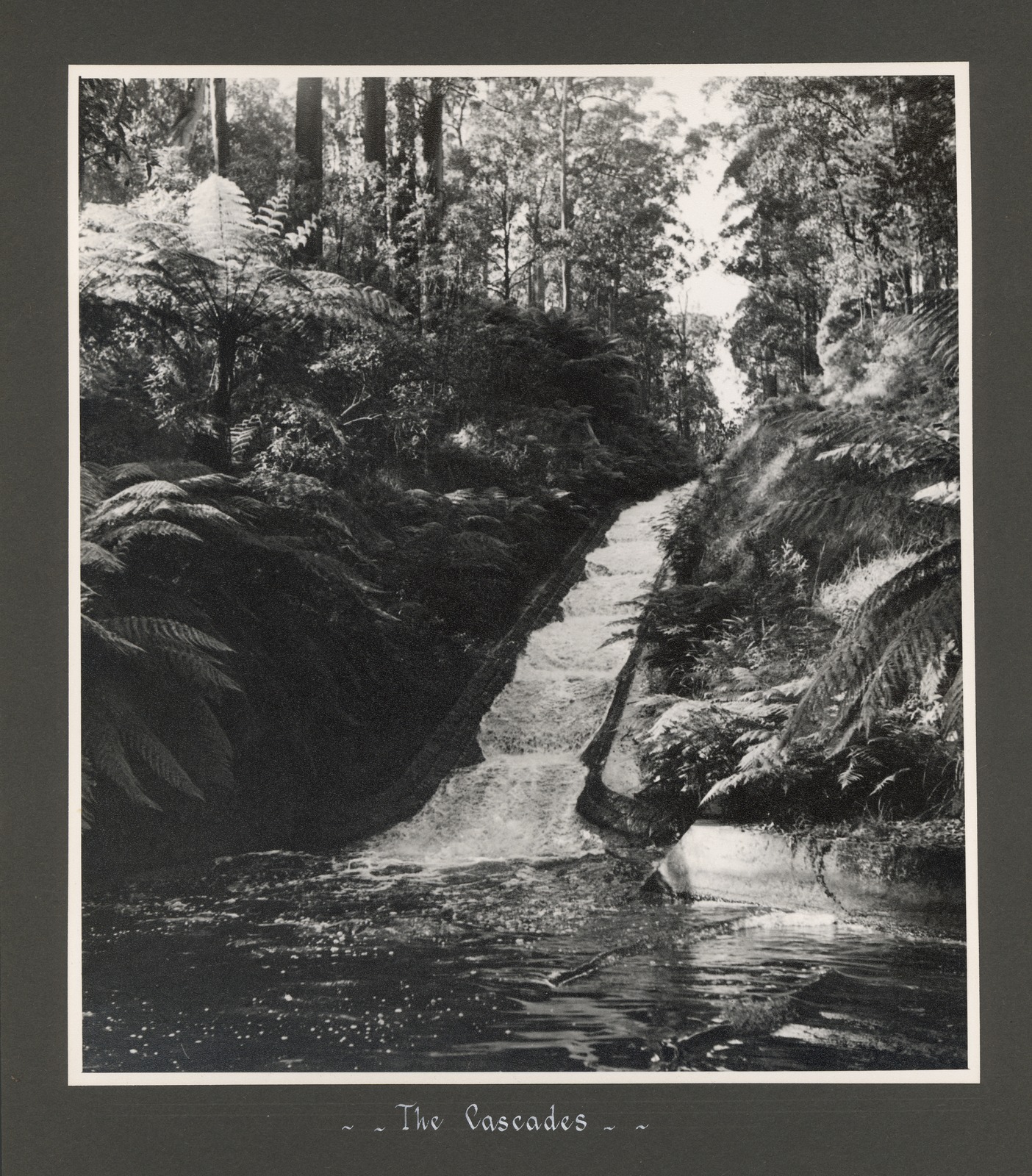
The east branch of the Plenty River, Silver Creek and Wallaby Creek catchments, were permanently reserved for water supply purposes in 1872. Together with the 5,700-acre Yan Yean, which was completed in 1857, the catchments were part of the first system of reservoirs and aqueducts suppling water to Melbourne. The Toorourrong Reservoir was added inContinue reading “Wallaby Creek Catchment.”
Giant Mountain Grass
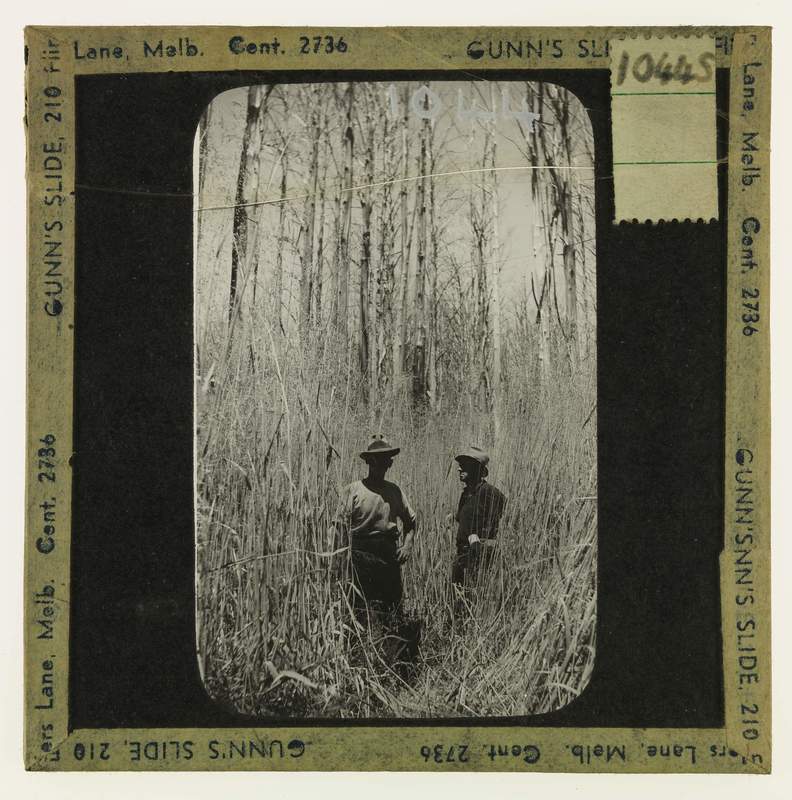
The recovery of the mountain ash forests after an intense bushfire is remarkable. From a blackened and seemingly desolate landscape, new life soon begins. Giant mountain grass, (Dryopoa dives – previously known as Festuca dives and Glyceria dives – bloody botanical taxonomists), grows back quickly within a few weeks after bushfire. But the old bushiesContinue reading “Giant Mountain Grass”
Peterson’s Lookout.

I spent 40 years as a field-based forester and firefighter in rural Victoria, mostly around the Powelltown and Central Gippsland forests. And while it had its ups and downs, like any job, I mostly enjoyed my career. But one of the things that upset me the most, were the small number of people (bogans IContinue reading “Peterson’s Lookout.”
CFL Regions.
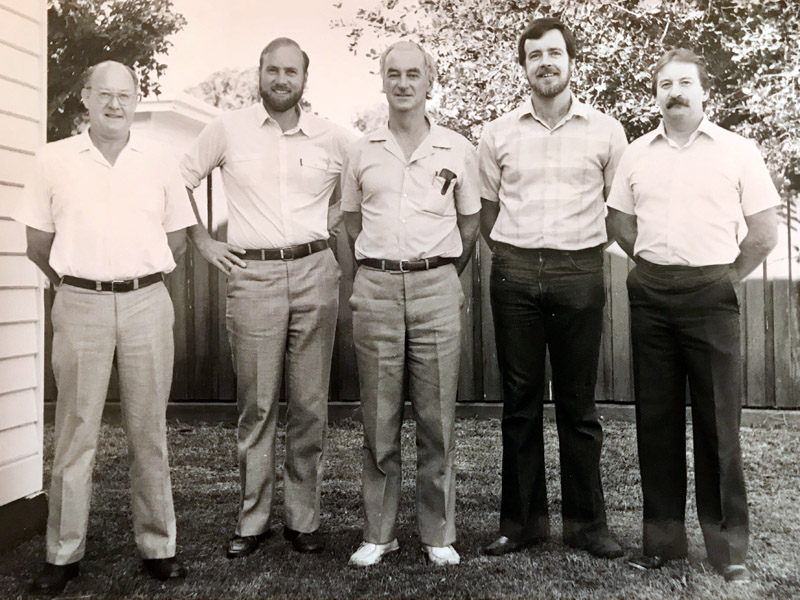
The Department of Conservation, Forests and Lands (CFL) came into effect on 1 September 1983 after a short Act of State Parliament. The Forests Commission Victoria (FCV), which had existed since 1918 lost its discrete identity and merged into the newly formed mega-department, along with the Crown Lands and Survey Department, National Park Service, SoilContinue reading “CFL Regions.”
 Victoria’s Forests & Bushfire Heritage