Forest Age Structure.
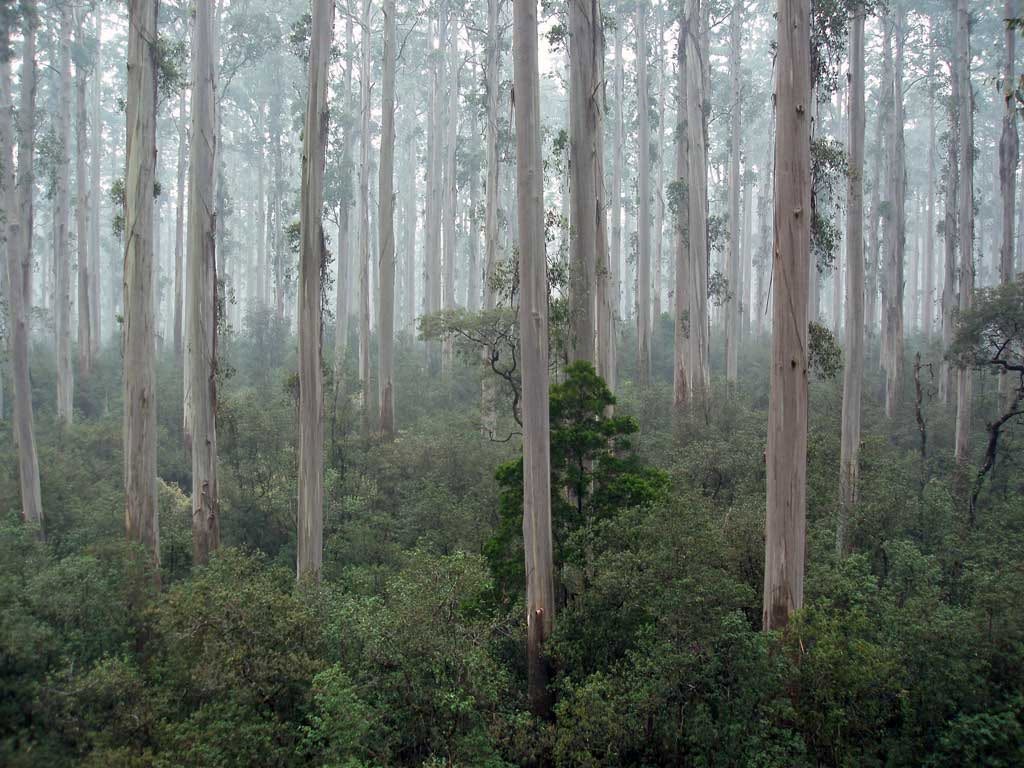
It’s often thought that Victoria’s tall and wet mountain forests, which were perhaps not often visited by Aborigines, would have only burned very infrequently under hot and dry conditions, probably when fires spread from the drier adjoining forests and grasslands.
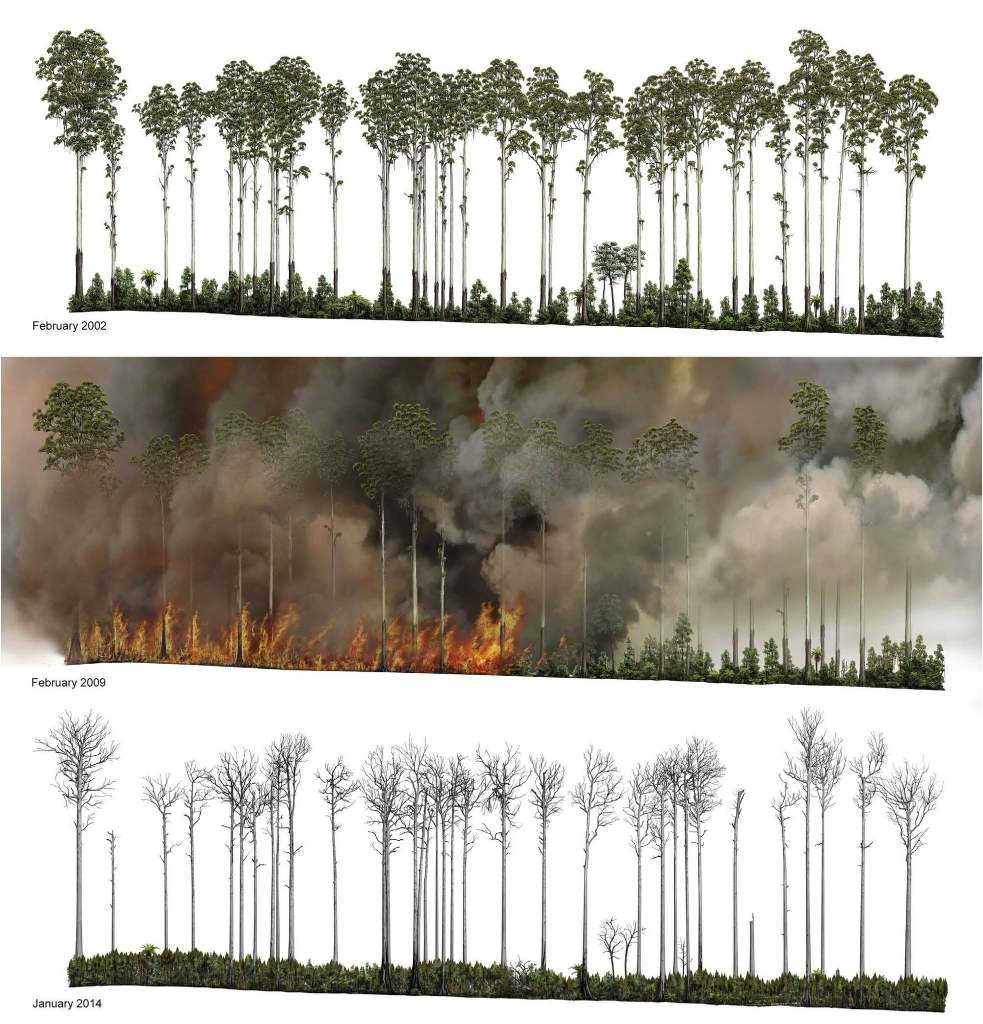
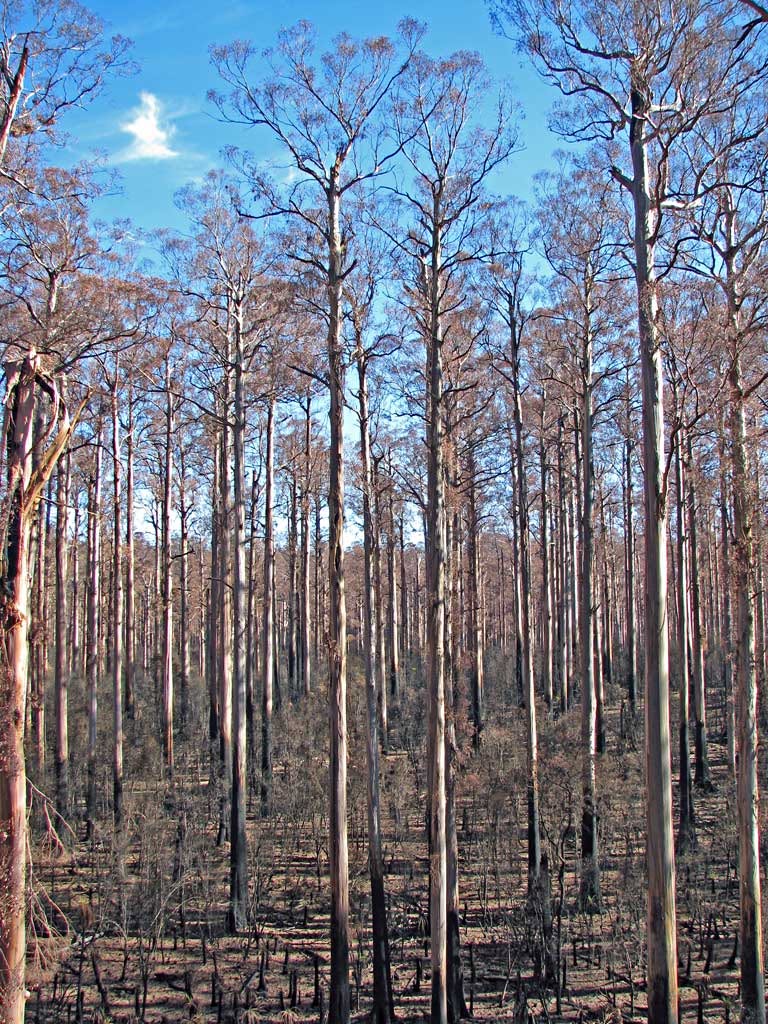
Many of the tree species found in these wet forests, such as mountain ash (E. regnans), are very susceptible to hot bushfire but will readily regrow from seed. The resultant even-aged stands of these fire sensitive tree species can provide a date estimate of the last severe bushfire.
Tree ring studies around the Errinundra Plateau point to widespread bushfires in about 1730, 1760, 1800 and 1840.
Early foresters and surveyors often noted extensive stands of old mountain ash trees in the Central Highlands that had regenerated after the great fire of 1851. But most were then lost in the 1926 and 1939 bushfires which then “wiped the slate clean” and “reset the clock”.
But there were some significant unburnt remnants. The wet forests of the Wallaby Creek near Mt Disappointment and the O’Shannassy catchment in the Upper Yarra Valley originated from bushfires in about 1700, which predates European settlement. But sadly, both stands were also burnt and killed in the 2009 Black Saturday bushfires.
However, not all eucalypt tree species are killed by bushfires and one study in the Cobon Forest (north-west of Cann River), identified 12 fires over a 300-year period. A similar study at Glenbog in NSW, not far north of the border, showed a long-term fire frequency of 14 years in a moist forests and 8 years for a dry forest.
A mountain plumb pine (Podocarpus lawrencei) found in the rainforests on the Errinundra plateau dates from about 1538, which is nearly 500 years old.
Huon Pine (Lagarostrobos franklinii) is found in the rainforests of Tasmania and is also very fire sensitive. It can live for up to 2,000 to 3,000 years and a stand on Mount Read is estimated to be over 10,000 years old.
River red gums are often said to live for 1,000 years or more, but their diameter increment (mm/year) is highly variable depending on the site, so tree girth is not an accurate measure of tree age on its own.
Grass Trees.
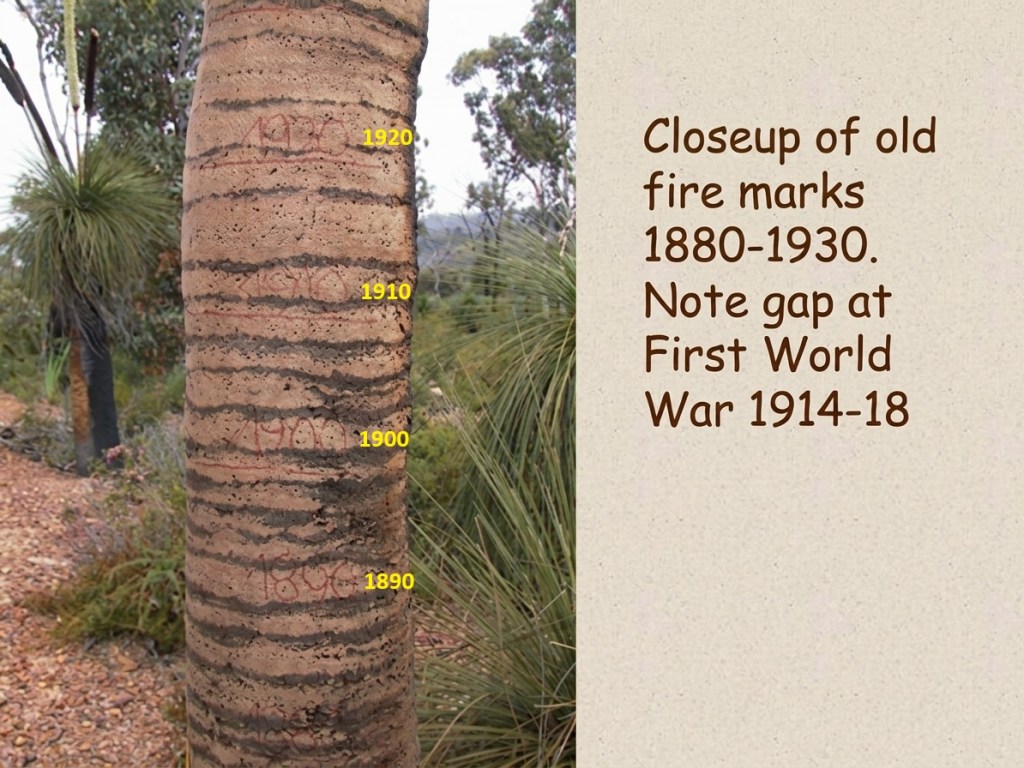
About 40 years ago, Dr David Ward examined the fire scars on the stems of ancient Balga grass trees (Xanthorrhoea preissii) in Western Australia.
The grass trees are resilient to bushfires, and the skirt readily resprouts after fire. But unlike a “normal” tree, they don’t lay down circular growth rings radiating out from the core of the trunk that mark the passing years. Instead, the growth marks on the stem show the passage of time in a vertical direction. They grow very slowly at only 2-3 cms in height every year, and a circular mark is left on the stem by each year’s growth and so bushfires can be dated.
Dr Ward’s reconstruction of the early fire regime showed that most of the drier parts of WA’s southwest forests experienced fire, on average, every 2-4 years.
Pollen Records – Snowy River.
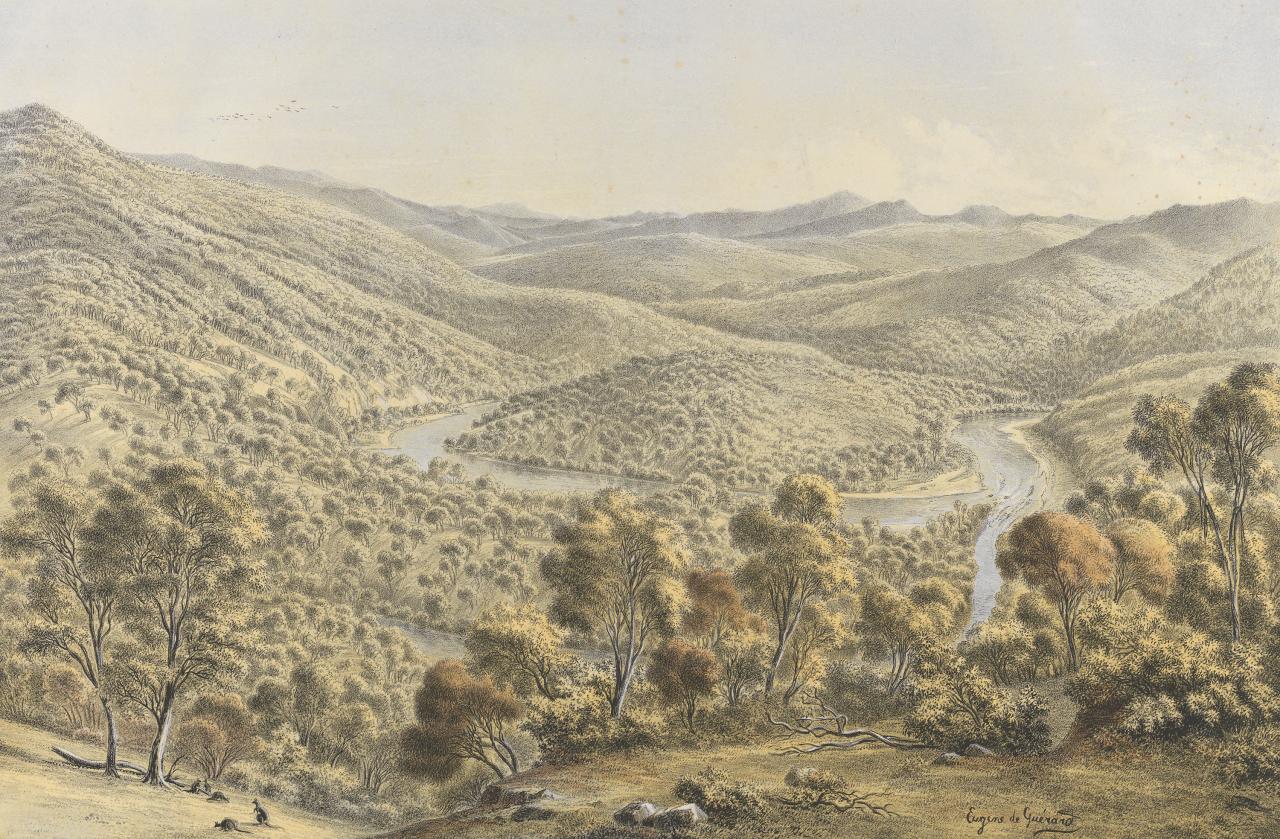
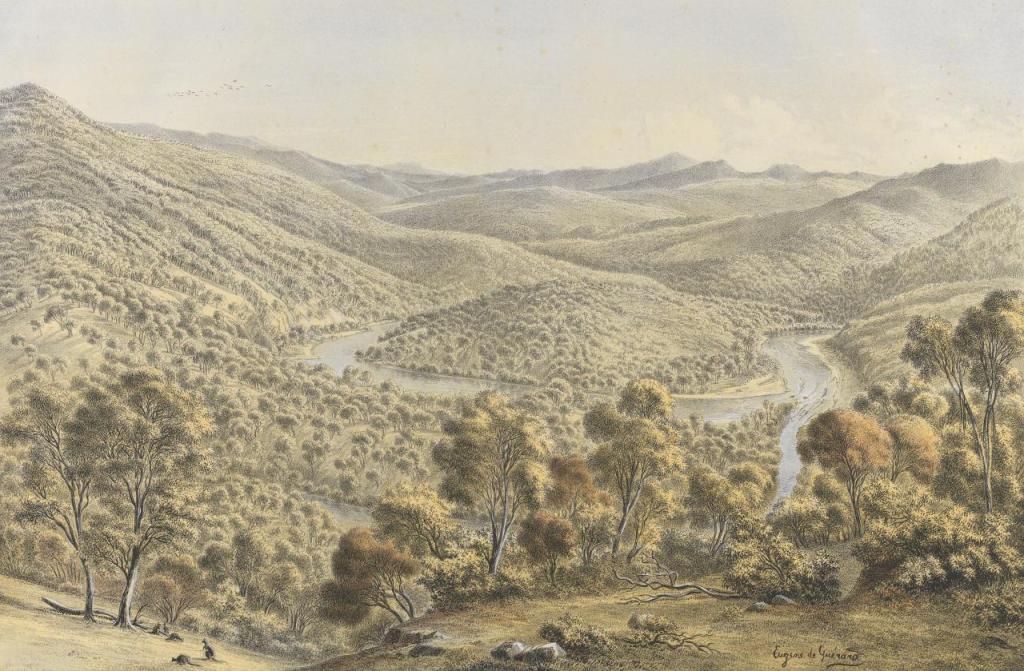
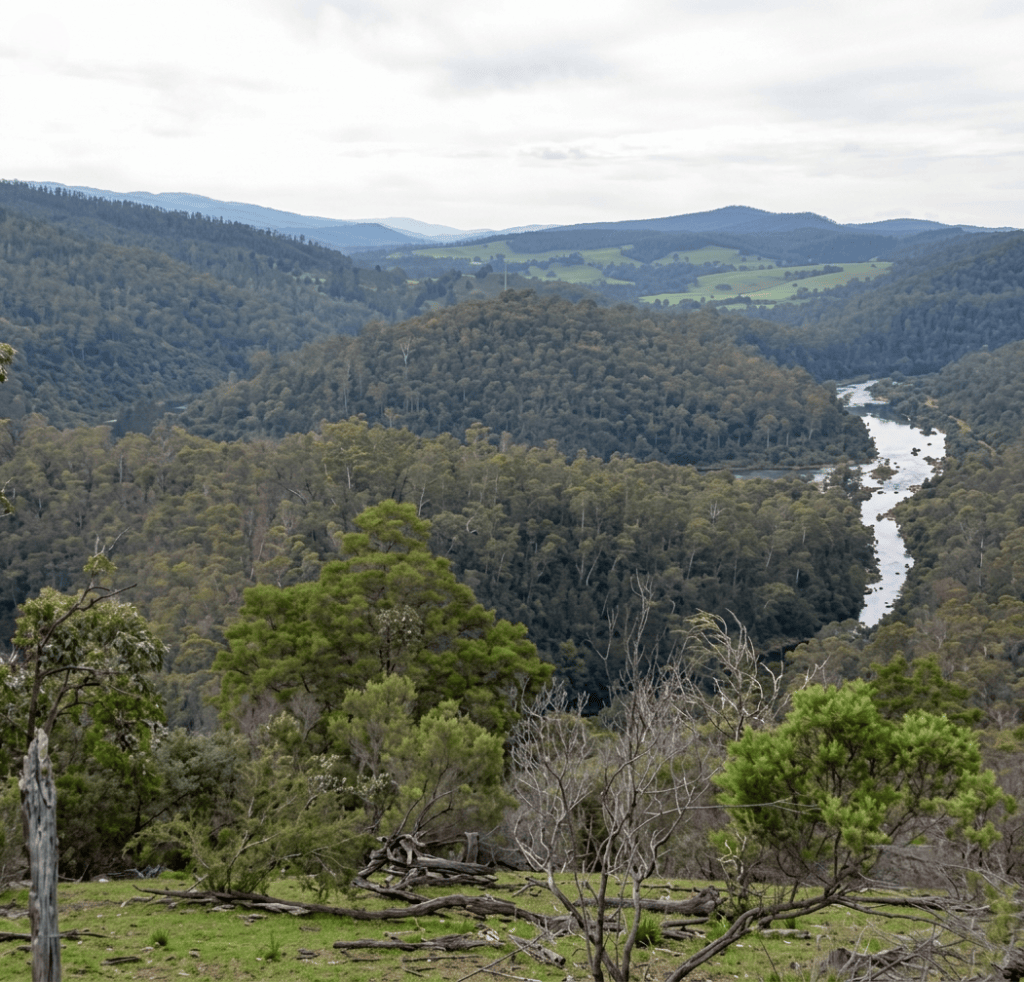
An 1867 painting of the junctions of the Buchan and Snowy Rivers in Gippsland (aka – Balley Hooley) by the famous colonial artist Eugène von Guérard, together with recent pollen records found in nearby swampland, indicates that the forest was once more open and “park like” and that fires became more frequent and intense after European settlement.
The pollen records also indicate that the number of eucalypts and scrubby understory species has increased.
Other studies of sediments at Delegate River and Rooty Break near Bendoc, as well as at Sperm Whale Head on the Gippsland Lakes, all indicate an increase in charcoal deposits coinciding with the arrival of the Europeans.
Singh, G., Kershaw, A.P. & Clark, R.L. (1981). Quaternary Vegetation and Fire History in Australia. In: Fire in the Australian Biota, (eds) Gill, A.M., Graves, R.H. & Noble, I.R. Australian Academy of Science, Canberra.
Moray Douglas (2007). A History of the Forests and Forestry in East Gippsland. https://nla.gov.au/nla.obj-2586554133/view
https://www.ngv.vic.gov.au/explore/collection/work/28520/
https://www.mdpi.com/2571-6255/5/6/175