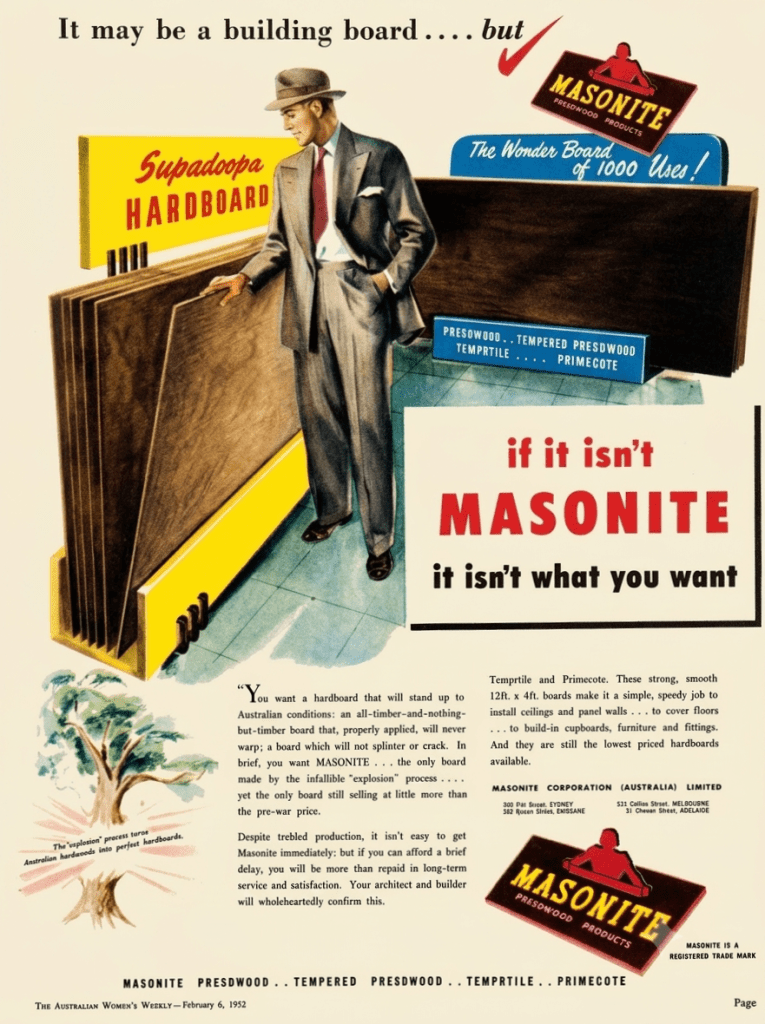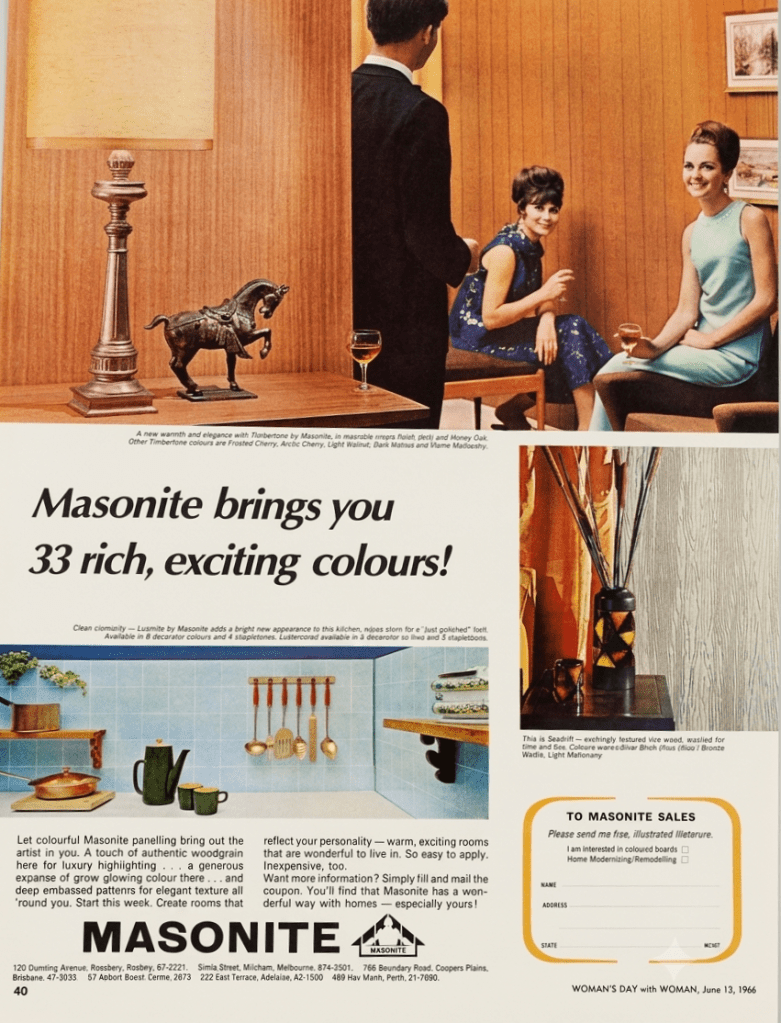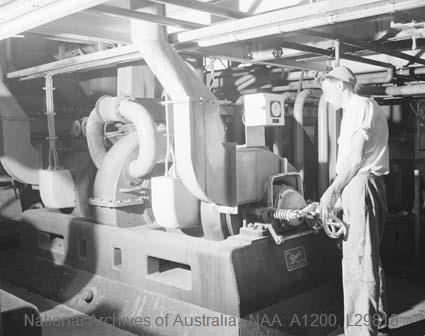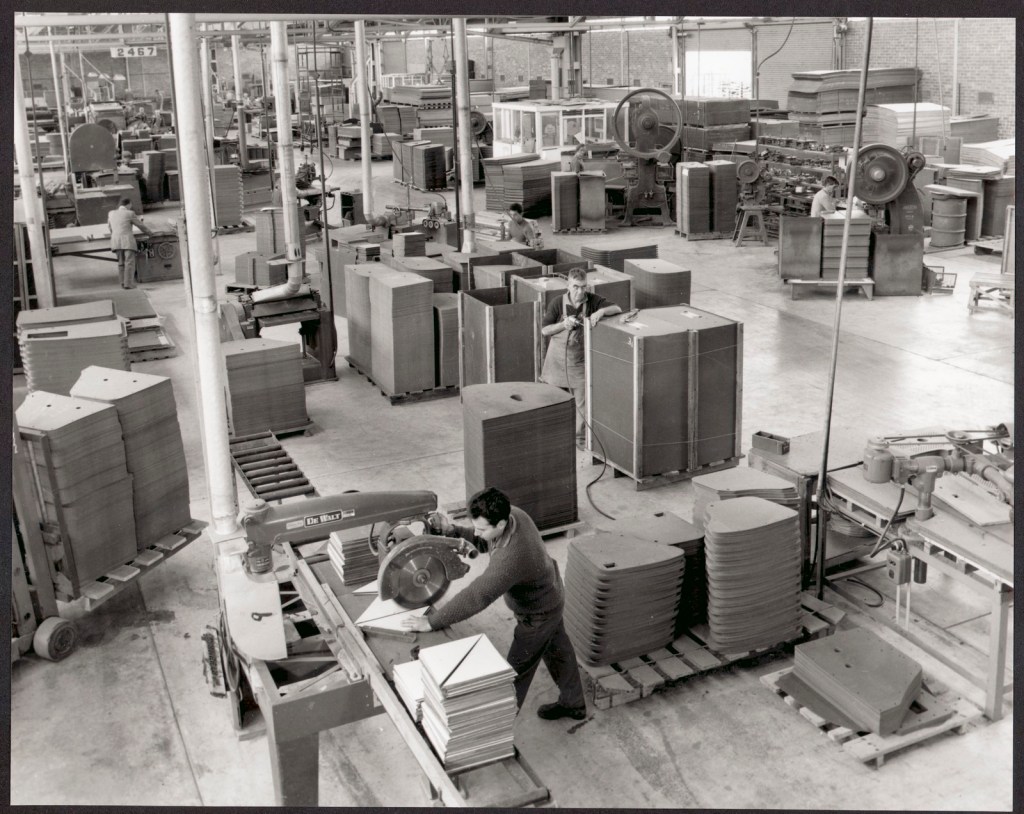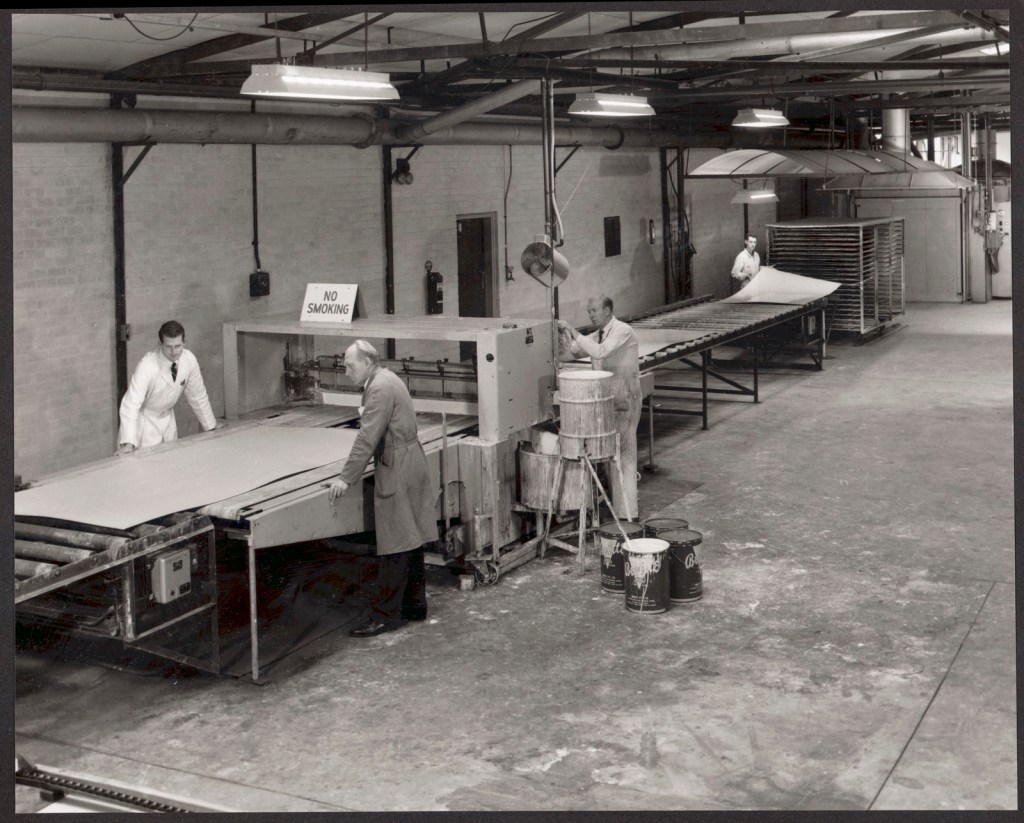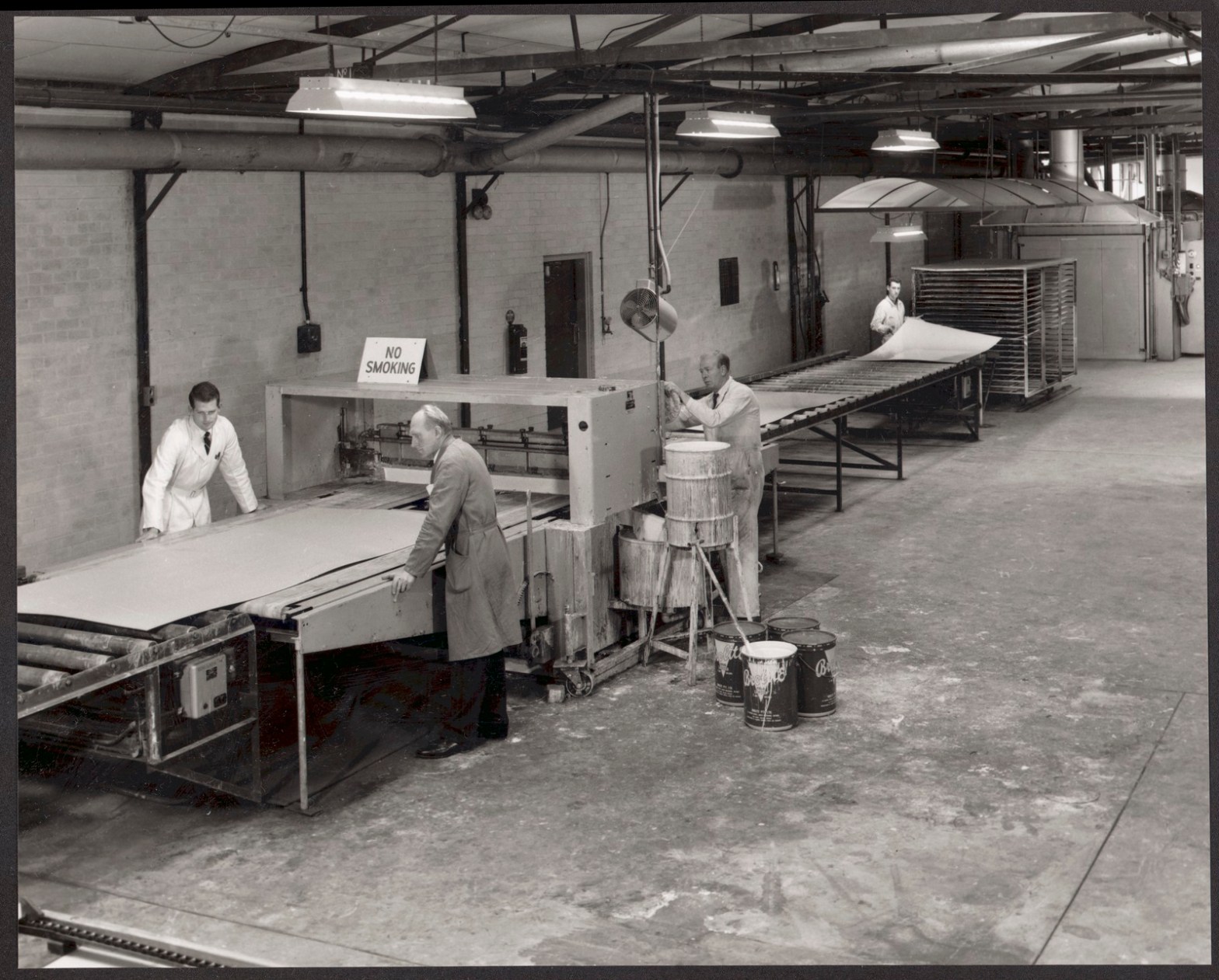
Masonite is an engineered panel board that was patented in 1924 by American inventor William H. Mason. It is made by steam pressurising wood chips followed by explosive decompression through a “Mason Gun”. The wood fibres are then passed through an endless wire mesh to be pressed and dried into thin rigid sheets. The large dimensioned panels use the wood’s natural lignin to bond everything together without artificial glues.
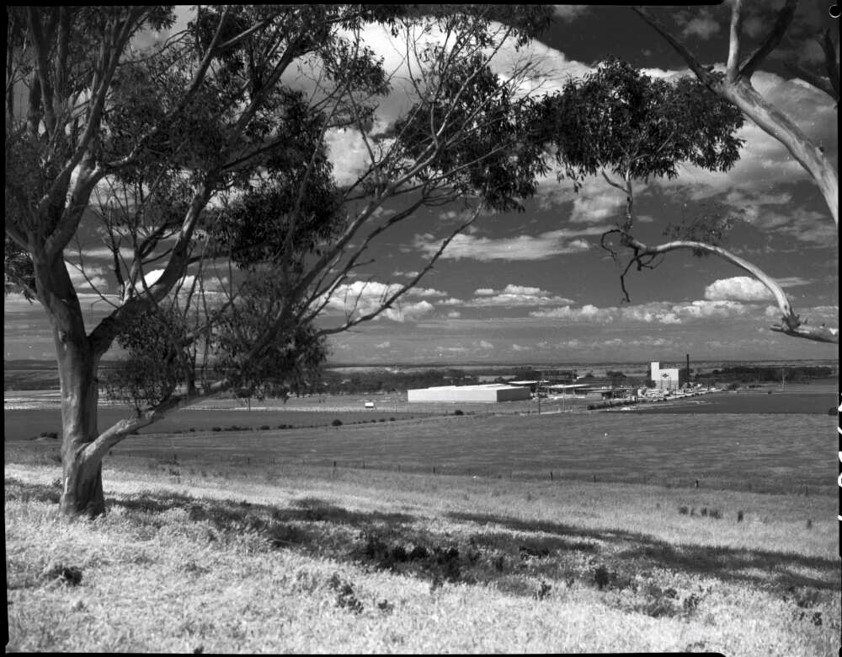
The Masonite Corporation (Australia) Ltd. opened a plant in 1938 at Raymond Terrace in NSW and used chips from local eucalypts.
Meanwhile in Victoria, an agreement was reached with Australian Paper Manufactures (APM) to build a major pulp and paper plant at Maryvale in the Latrobe Valley under a Legislated Supply Agreement. The first intake of pulpwood from State forests was in October 1937.
Anticipating an increase in post-war demand for woodchips for the manufacture of pulp and fibre board like Masonite, the Forests Commission began a major resource inventory across State forests in the early 1950s.
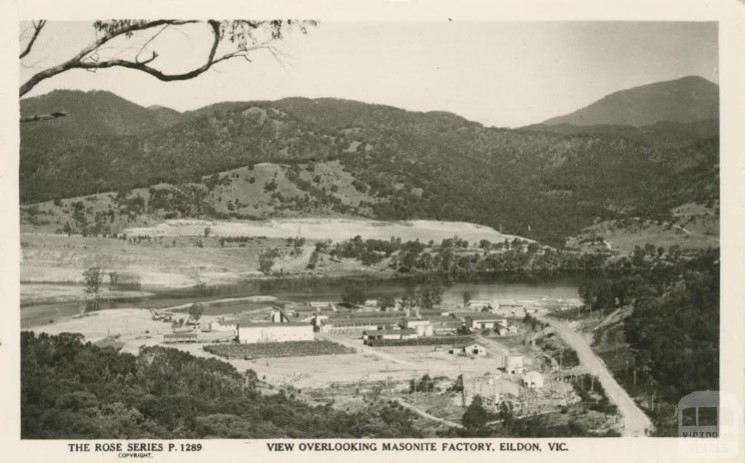
A Wood Supply Agreement with the Masonite Corporation soon followed in 1955 to harvest pulpwood (other than Ash species) from forests in the southern part of the Upper Goulburn River catchment to feed a Masonite and hardboard plant.
The company was using a new dry-forming process developed by the US Masonite Corporation to produce a hardboard which was smooth on both sides.
The company purchased the works area that had been used to build the Eildon dam to manufacture the wallboard, but it proved unsuccessful due to technical reasons.
The Colonial Sugar Refining Company (CSR) took over the Australian operations of the Masonite Corporation in 1959 and closed the Eildon plant.
A new agreement was then reached between the Forests Commission and CSR to supply 70,000 tonnes of pulpwood from the Wombat State Forest for a new hardboard plant at Bacchus Marsh using the Asplund defibration process on eucalypt wood. Production began in 1961. The company also had a factory at Mitcham.
Wood was also supplied by students from the Forestry School at Creswick. Eight-foot billets were hand-cut and split with axes then stacked in the school’s demonstration forest. A cartage contractor then picked up the wood from the bush and delivered it to Bacchus Marsh. After costs were paid, the surplus cash went into the school sports fund
Hardboard made from eucalypts proved to have excellent strength properties, superior to those of similar products based on softwoods, and for a time a significant part of the local production was exported.
However, in 1999, the Bacchus Marsh plant finally closed, and CSR moved its operations to Queensland.
Masonite has fallen from favour but is still commonly used as an affordable flooring underlay and furniture backing. But it best used indoors because, without treatment, it absorbs water which causes the boards to swell and blister.
https://www.austehc.unimelb.edu.au/tia/242.html