
The first personal bushfire survival shelter in Australia was developed by the CSIRO in 1958.
The main issues to overcome were protection from radiant heat, avoiding smoke and any toxic fumes from the tent materials, and being able to breath cool air.
The bell-shaped tent was made of laminated aluminium foil and was tested in January 1959 on the flank of a 100,000-acre fire in East Gippsland, but the formaldehyde adhesive produced toxic fumes.
However, the results were promising enough to continue with testing a second A-frame design in 1959 using a resin rubber adhesive.
Around the same time, the North Americans also began developing a fire shelter and the two countries collaborated closely.
The Forests Commission continued to experiment with shelters as late as 1962 at Trentham but decided not to adopt them.
The current American shelters are designed to be deployed within 30 seconds or less by removing from them from their carry bag and shaking them to expand the tent outward. The firefighter then climbs inside and holds it down with their arms, knees and feet to keep the flames and hot air out
The shelters are intended as a last resort of defence and are sometimes referred to as “shake and bakes”.
Personal fire shelters are mandatory equipment in America and while many lives have been saved there have also been many fatalities using the tents.
In 2013, 19 firefighters from the Granite Mountain Hotshots died in the Yarnell Hill Fire in Arizona after deploying shelters when flames overtook them in a steep canyon.
The idea occasional resurfaces in Australia but the use of bushfire shelters for personal protection has not been adopted. Agencies instead preferring other on-ground tactics to minimise firefighters’ exposure to danger.
https://drive.google.com/file/d/1hs-2VzEGXRueMFpavfYxR7OoFagOJ8vW/view
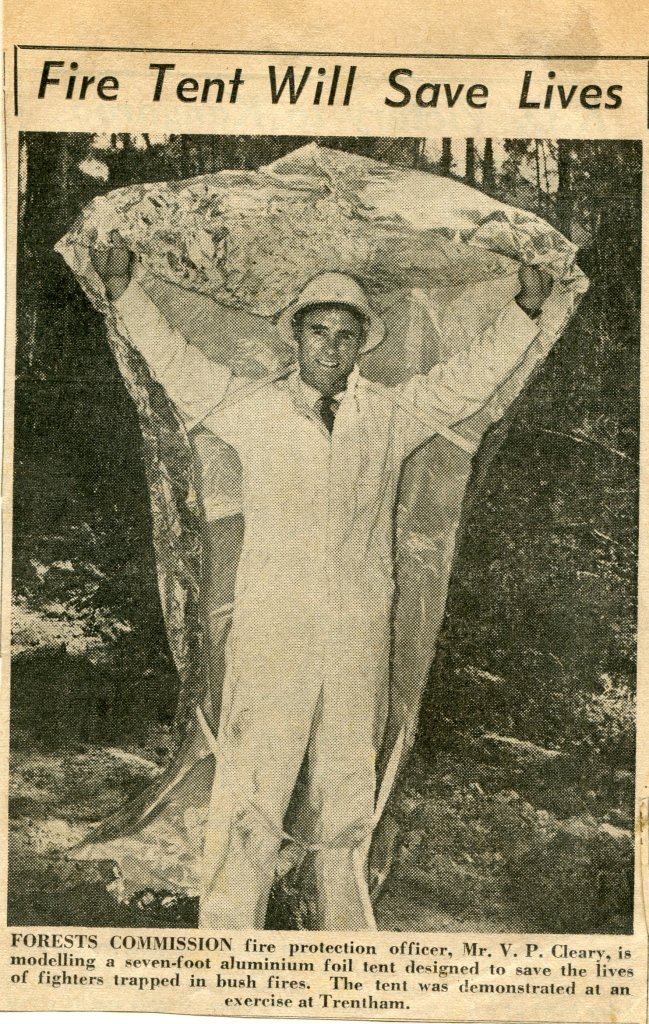
Fire researcher, and later Chief Fire Officer, Val Cleary testing a fire shelter at Trentham 1962. FCRPA Collection

