On ANZAC Day we gather to remember those who served our country. We may attend a dawn service, go to a march, wear some precious family medals, or lay a wreath at a cenotaph. We may even follow with a cold frothy or two and a game of two-up at our local RSL.
But across Australia there are many silent and enduring war memorials we may pass every day, often without realising their significance.
Avenues of Honour might be trees lining a road or street, along a path through a park, or a magnificent lone specimen.
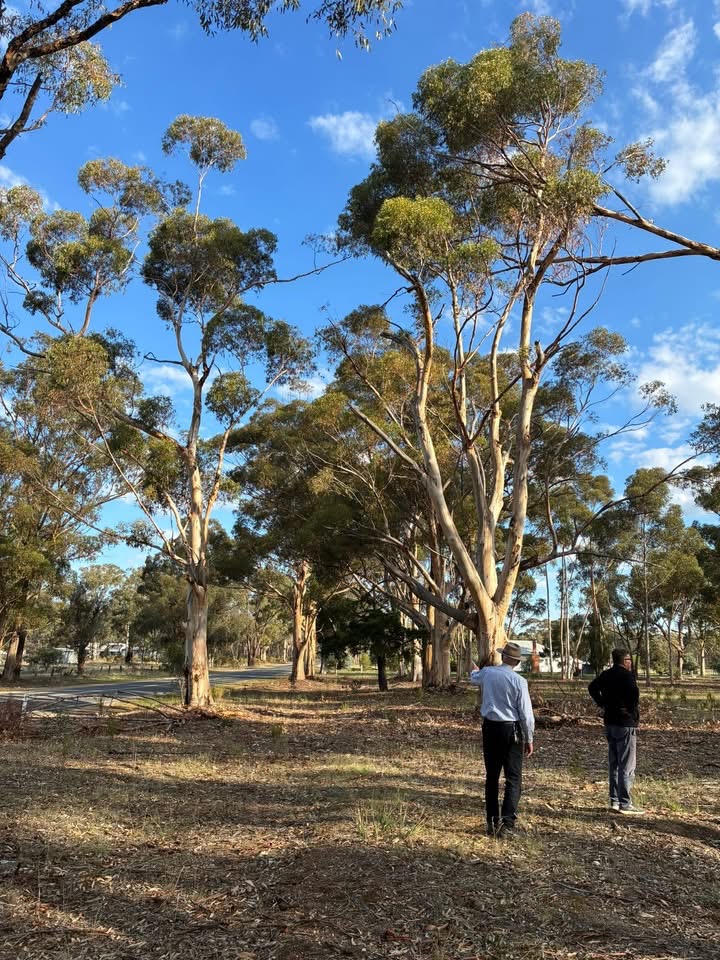
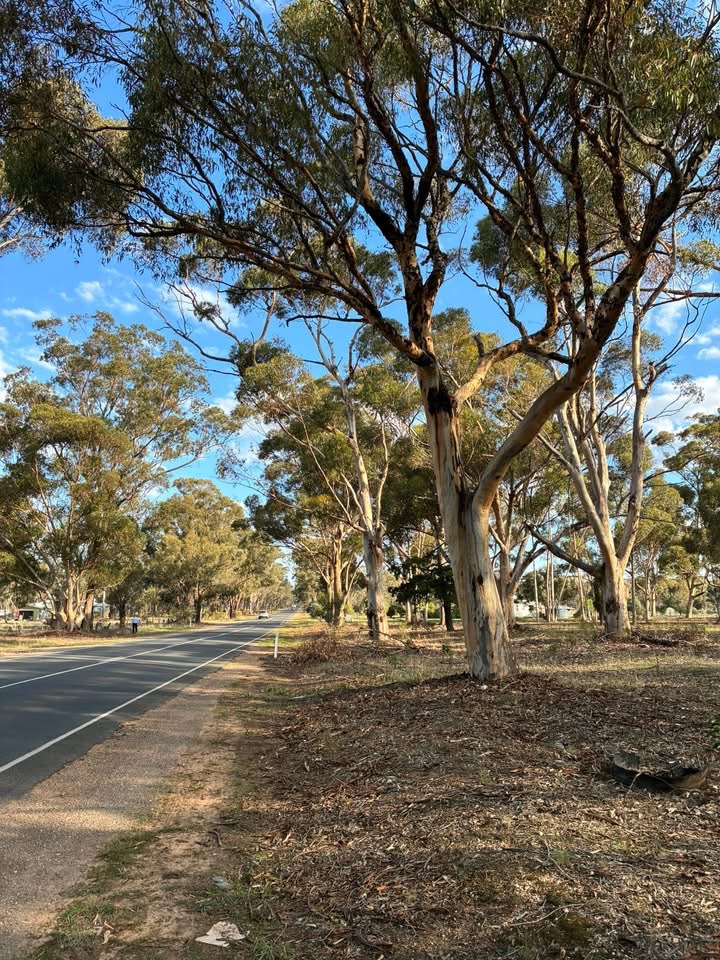
The Baden-Powell Avenue at Havelock near Maryborough is considered Australia’s very first commemorative avenue of trees. It was planted in June 1901 to commemorate those who served in the Boer War.
Reports vary, but between 40 and 50 sugar gums (E. cladocalyx) were planted with seedlings supplied by the Forest Department from its nearby nursery.
The spacing of the trees was generally one chain (66 feet), and they appear to have been planted a set distance back from the road rather than on the edge of the road reserve.
The avenue begins where the old Havelock railway station once stood, through to the site of the local Primary School, and the trees were all named after a dignitary, local person or family.
There are 27 original trees, 2 standing dead trees, 3 replacement trees (probably 1920s), and 13 missing trees.
After World War One, these arboreal tributes were particularly popular, with some 325 planted throughout Victoria alone.
The Australian Government did not repatriate bodies of soldiers after the War, so a tree close to the family home or town became an important way of remembrance.
https://avenuesofhonour.org/places/victoria/havelock/havelock-baden-powell-boer-war-avenue/