Early foresters, as well as some sawmillers and timber merchants, recognised the unique qualities of Victorian hardwood timbers and the Government was keen to promote them to the world market.
But by far, the greatest proportion of dressed timber for internal work, joinery and furniture was expensive imports from North America and Scandinavia. There was also a strong reluctance from most builders, architects and cabinet makers to use local timber.
Native eucalypts had a reputation and being difficult to dry successfully, although there had been some initial success by Robert Affleck Robertson at the Wandong Seasoning Works between 1890 and 1903.
The prized native timber of the day was messmate (E. obliqua) and, generally speaking, mountain ash (E. regnans) was much despised by sawmillers. Many said the timber was unstable and too soft while others said it tended to rot. Few had good words to say of the timber that was often simply split into palings for the fences of Melbourne’s burgeoning suburbs.
Mountain ash was also very prone to excessive shrinkage and collapse of its fibres during the seasoning process. The traditional European method of kiln drying caused boards to severely deform and the corrugations could only be corrected by planing which was expensive and wasteful.
However, major research into native timbers began sometime after Federation in 1901 and progressed with the publication in 1919 of Richard Thomas Bakers seminal work “Hardwoods of Australia and their Economics”.
The Chairman of the State Forest Department, Hugh Robert Mackay, was determined to see the commercial application of Victoria’s vast mountain ash resource and in 1910 persuaded the State Government to establish an experimental seasoning plant on some disused railway land at Newport.
The revolutionary seasoning method was perfected by Mr Harry D Tiemann, a kiln drying expert from America, that Hugh Mackay invited over in September 1921.
Progress was frustratingly slow, but the breakthrough came with the simple discovery that steam reconditioning immediately after kiln drying expanded the timber back into a stable shape and the irregularities on the surface largely disappeared.
This simple technique resulted in mountain ash becoming the “Cinderella Timber” as sawmilling and seasoning plants in the forests east of Melbourne boomed.
The State Seasoning Works at Newport demonstrated the potential uses of Victorian hardwoods and this pioneering work done in partnership with the CSIR bore fruit. By 1931 it was estimated that 80% of flooring laid down in Melbourne was kiln-dried mountain ash milled from the State’s forests.
Some of the finished timber from Newport was even shipped to London to feature as flooring in Australia’s High Commission building.
Most of the seasoned timber produced at Newport was used by government agencies such as the Public Works Department, technical schools and so on.
Also, the ubiquitous Stanley Huts were prefabricated in huge numbers at Newport. The huts came as “flat-packs” and could be easily transported, assembled and disassembled with very few tools.
Most of the timber for Newport was supplied by the State sawmills, first near Nayook and later at Erica.
Newport closed under a controversial financial cloud in 1956. A situation made worse because the works had barely ever been profitable. Newspapers accused the Forests Commission of “juggling the books” to turn a loss into a profit. The Chairman of the Forests Commission, Finton George Gerraty died suddenly in June 1956, right in the middle of the crisis. The State Government was furious about the whole financial fiasco and there was talk of an independent inquiry and appointing an outsider to run the Forests Commission. It took more than six months for the dust to settle and for Alf Lawrence to be appointed as Chairman. He stayed until 1969.
Besides, after 46 years of innovative research and development, Newport had probably served its purpose. The Forests Commission had only ever sought to improve the position of native hardwoods in the market and put the Victorian timber industry on a sound footing.
But, with a few notable exceptions, most of the Victorian sawmilling industry was slow to adopt the expensive kiln drying process, preferring instead to sell green OB timber (Off the Bench) straight into Melbourne’s booming housing market.
Things shifted in 1986 when a long-standing principle of the Forests Commission was formalised in the Timber Industry Strategy (TIS). The better grades and species of sawlogs were then allocated under 15-year license agreements to those sawmills which could cut “value added” products like kiln-dried flooring and panelling.
Australian Sustainable Hardwoods (ASH) at Heyfield grew to become Australia’s largest hardwood sawmiller, kiln drier and quality timber manufacturer, but its future is under a cloud after recent State Government announcements about the cessation of hardwood native timber harvesting from 1 January 2024.
https://www.victoriasforestryheritage.org.au/88-forestry-businesses/459-newport-seasoning-works.html
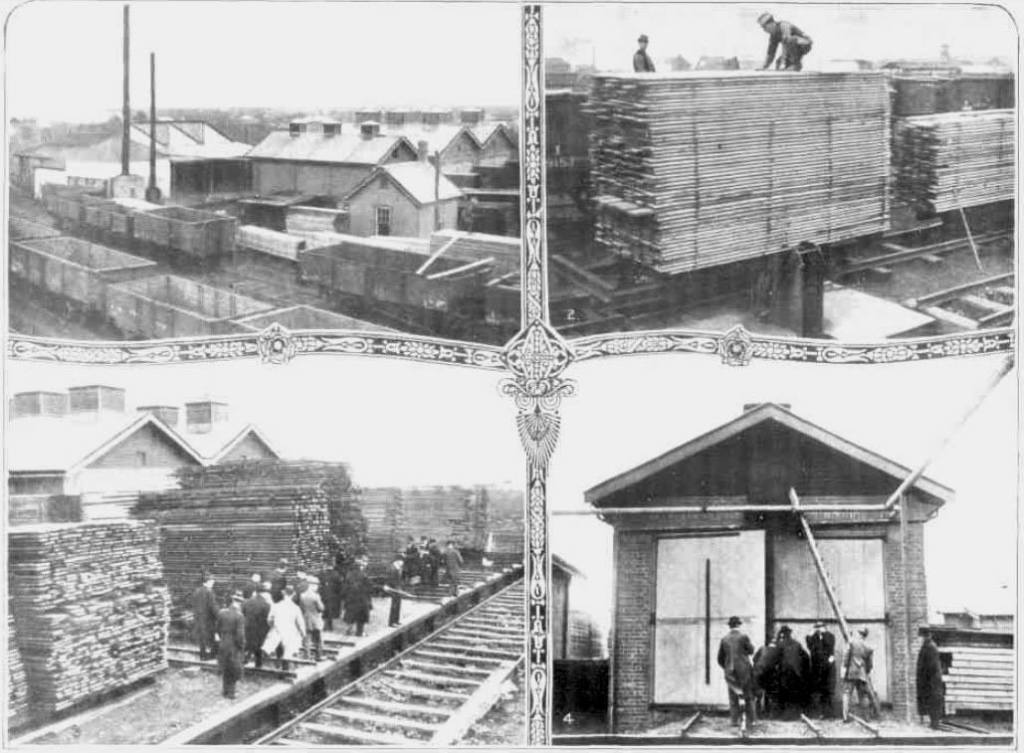
https://trove.nla.gov.au/newspaper/article/140697668
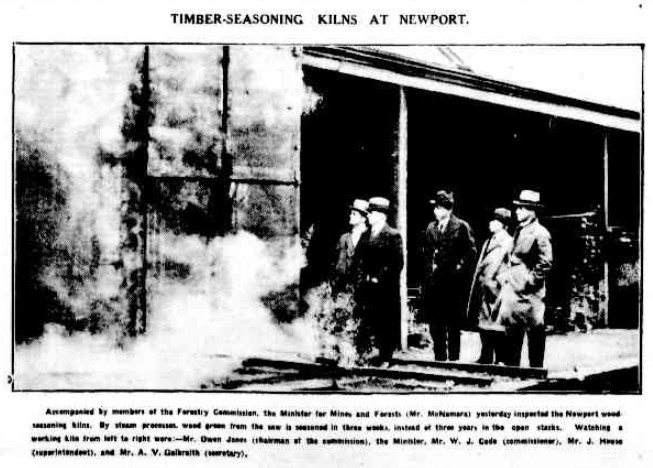
https://trove.nla.gov.au/newspaper/article/4202468
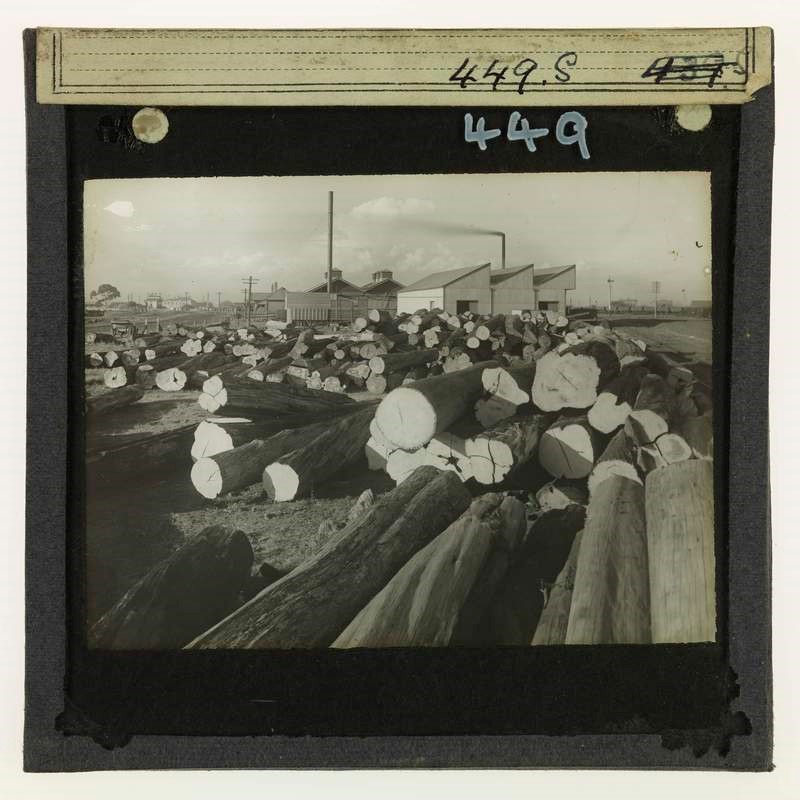


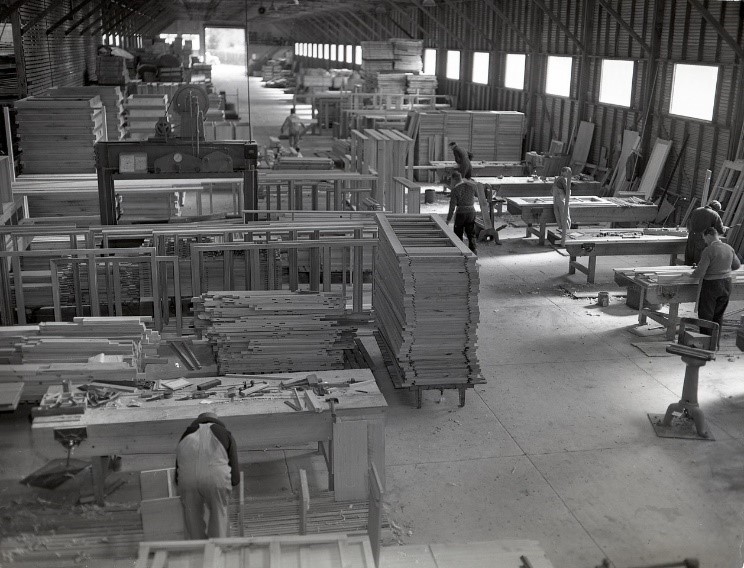

 Victoria’s Forests & Bushfire Heritage
This is a wonderful presentation of the history and current use of our beautiful eastern Australian Timbers.
Without political nuances I’d like to comment that it’s a shame we will resort to importing again instead of making use of our valuable resources. The beautiful mountain ash furniture, spotted gum flooring aesthetically very pleasing to the eye to all who observe, especially overseas visitors!
LikeLiked by 1 person