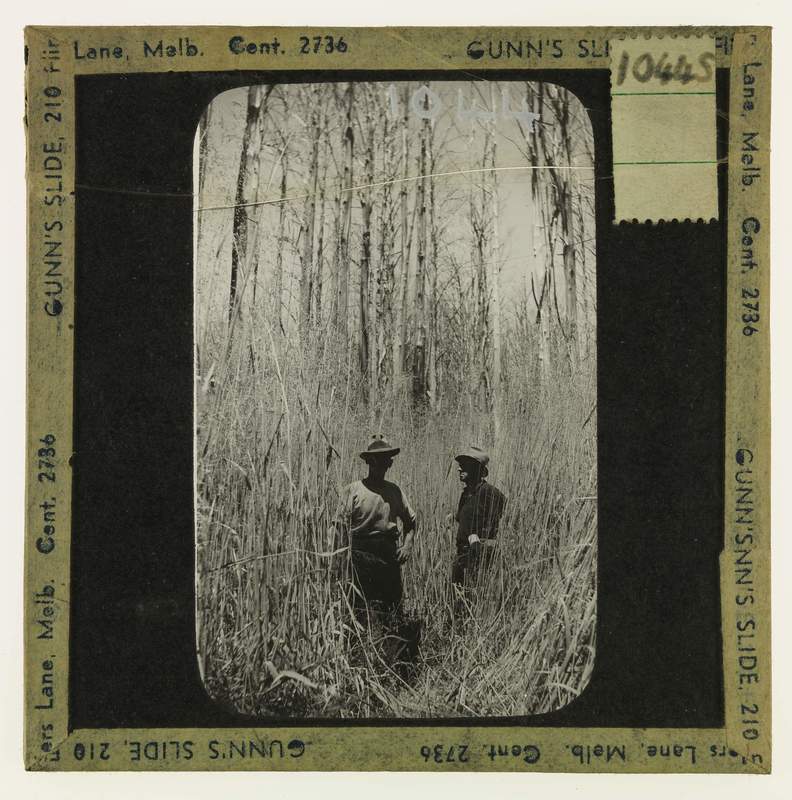
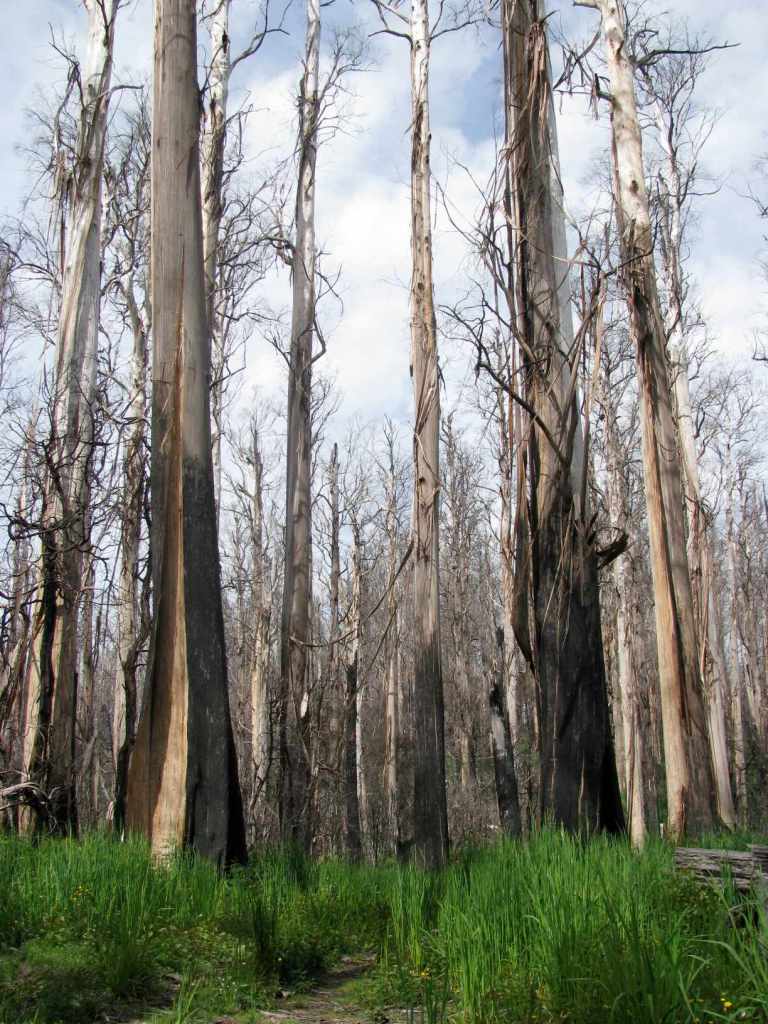
The recovery of the mountain ash forests after an intense bushfire is remarkable. From a blackened and seemingly desolate landscape, new life soon begins.
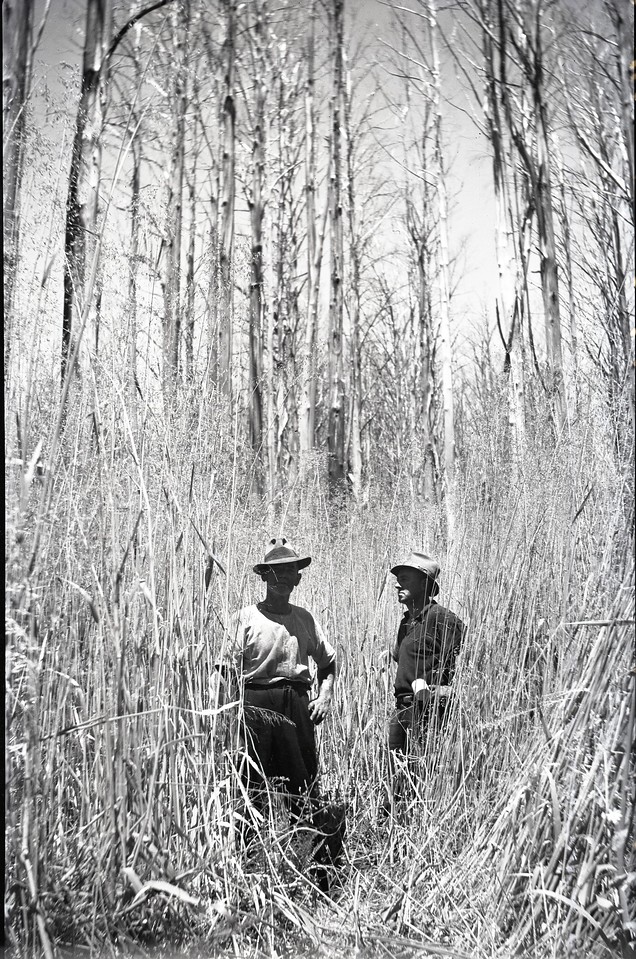
Giant mountain grass, (Dryopoa dives – previously known as Festuca dives and Glyceria dives – bloody botanical taxonomists), grows back quickly within a few weeks after bushfire.
But the old bushies and some foresters tend to call it wild oats and it looks a bit like an introduced weed.
It can grow up to 5m tall and has the effect of binding loose and exposed soil and preventing erosion. But it smothers receptive eucalypt seedbeds as well.
Even more remarkable is that it appears on burnt sites where it hasn’t been seen for decades, even centuries. Presumably the seed lays dormant in the ground for long periods rather than gets blown-in on the wind.
I can personally attest to climbing through thickets of the stuff after the 1983 Ash Wednesday bushfires at Powelltown.
It was seen again after the 2009 fires by University of Melbourne researchers.
It can also be a fire hazard before the tree canopy closes over and it dies away. A major bushfire at Seaton in 2013 burnt intensely overnight, at breakneck speed and faster than anyone predicted, through giant mountain grass that had sprouted from an earlier Walhalla bushfire in 2007.
 Victoria’s Forests & Bushfire Heritage
Peter,
Very interesting, I hadnât come across this species in NSW in 4 districts. The attached distribution map of this plant (at the bottom) tells me why, I wasnât in those areas.
With alpine ash regeneration at Maragle SF in S NSW (using seed trees), it was way too thick regeneration ie wheatfield. A grass like this may have increased fire risk, but would have assisted in reducing the wheatfield effect.
We retained the seed trees for bushfire insurance reasons, important after what is happening with bushfires nowadays.
Any comments appreciated.
John
LikeLike
Hi there. Im not familiar with NSW forests but I assume its the same species of grass. Maybe the thick grass has a thinning effect and stops wheatfield regen of eucalypts. The grass was almost gone after 5 years and hard to find after 10.
LikeLike