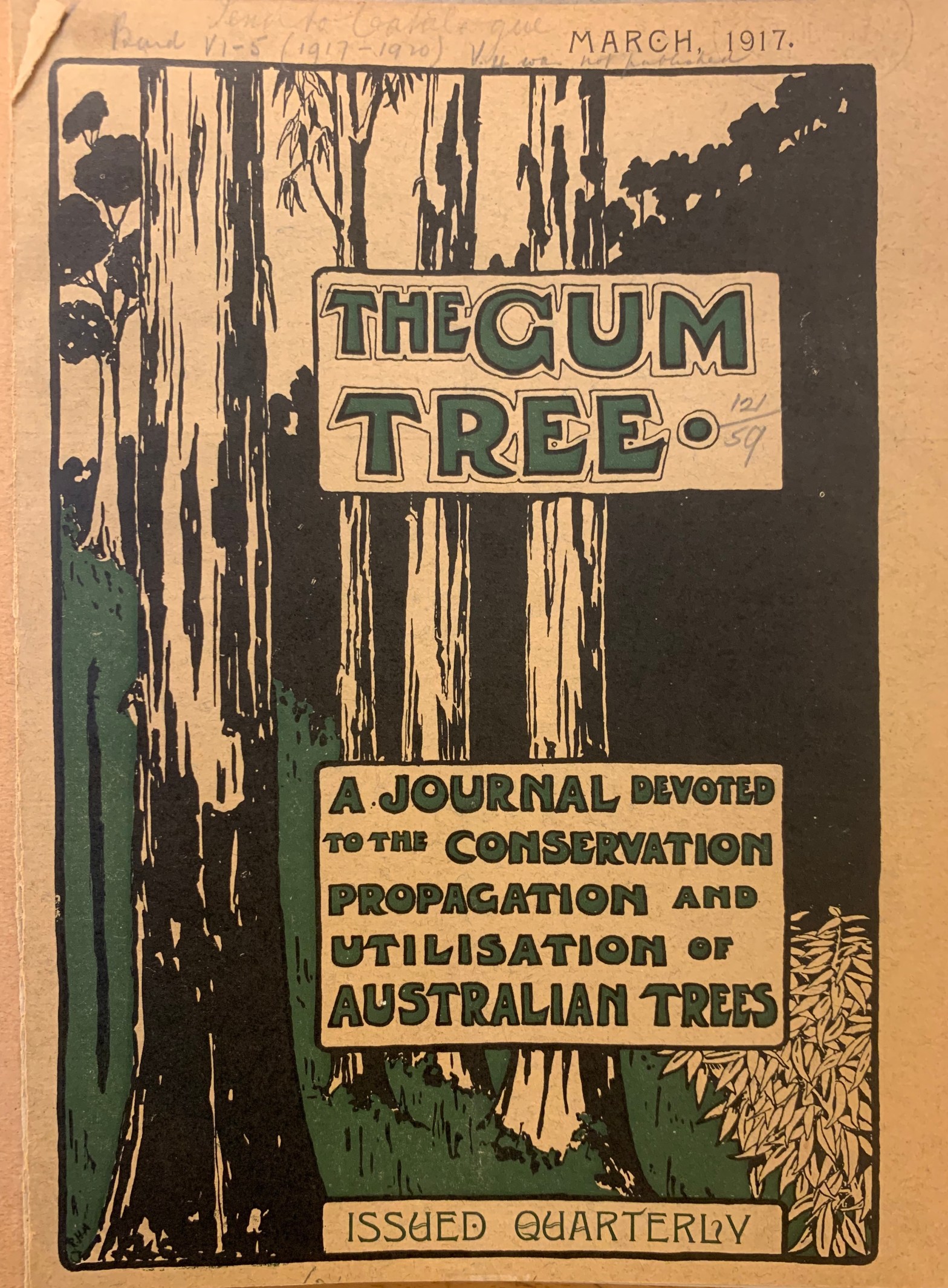
It was primarily a small band of foresters that fought hard behind the scenes to save Victoria’s remaining native forests from settlement and clearing and they were often publicly criticised as opponents of development. The foresters maintained a low public profile, partly because they often worked within the Public Service which forced them to remainContinue reading “The Gum Tree – 1917.”
Category Archives: Forests
Owen Jones – Empire Forester.

Owen Jones was an Empire forester, wartime aviator, foundation Chairman of the Forests Commission Victoria, conservationist and political casualty. A worldwide search began in January 1919 for a candidate for the important new role of FCV Chairman with a salary of £1,000 per year and over 100 applications were received. Owen Jones was born inContinue reading “Owen Jones – Empire Forester.”
Forests Commission Victoria – 1918.
In a lengthy policy speech to Parliament on 27 June 1918, the Premier Harry Lawson, detailed his government’s commitment create a separate and independent Forests Commission Victoria (FCV). Lawson noted that the virtual cessation of timber imports during the war years had forced a major revaluation of Victoria’s forests and the importance of fostering aContinue reading “Forests Commission Victoria – 1918.”
State Forest Definitions.

The Forest Act (1907) contained some important definitions. State Forest, or Forest, included both Reserved Forest and Protected Forest. Reserved Forest[1] was land over which the Forests Department essentially had full administrative control. It had two major components – Protected Forest was virtually all the remaining balance of the Unoccupied Crown lands of the StateContinue reading “State Forest Definitions.”
State Forests Department – 1907.
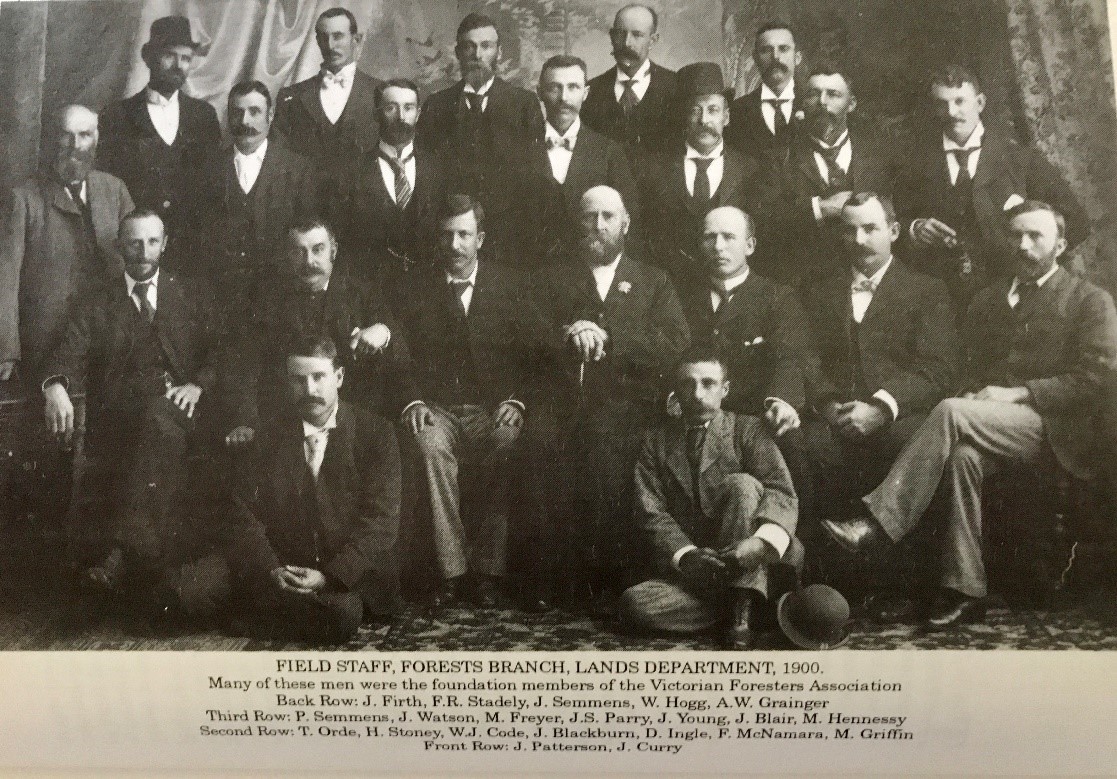
A major recommendation in the 14th report of the Royal Commission in 1901 was a detailed proposal for new forest legislation. The political and social upheavals associated with the formation of the Australian Federation in 1901 probably interfered to some degree, but the forces of opposition within State Parliament from agricultural and grazing interests wereContinue reading “State Forests Department – 1907.”
John Johnstone.

John Johnstone was born in Scotland and initially trained in large-scale landscaping and plantation forestry at the magnificent Gordon Castle. After migrating to Australia and first working on an estate in South Australia, he became the curator of Maddingley Park at Bacchus Marsh in 1887 and stayed for 10 years. In 1898, Johnstone was recruitedContinue reading “John Johnstone.”
Bushfires in Victoria – 1800s.
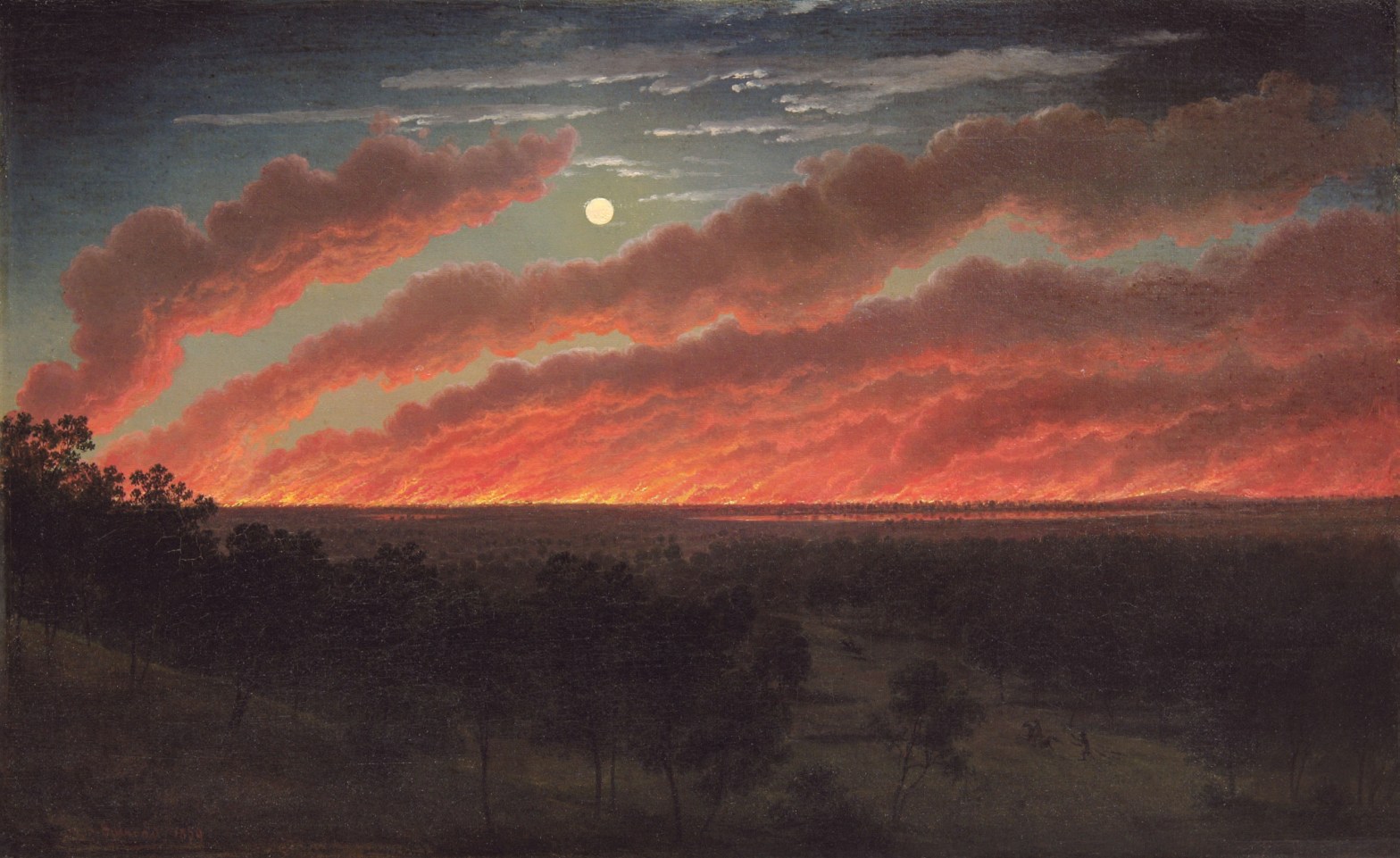
Devasting and uncontrolled bushfires swept the forests and rural farmlands in the Colony of Victoria during the 1800s. Many of these bushfires are recorded in newspapers from the time and feature in colonial artwork. Bushfires have undoubtedly always been a feature of Australian summers. In an average year, more than 600-1000 bushfires occur in Victoria’sContinue reading “Bushfires in Victoria – 1800s.”
Colonial forests – 1800s.

Early colonial art provides some insights into the nature and structure of the pre-European forests and woodlands. While painters arrived on the first fleet, it was the famous professional artists like Eugene von Guerard who probably best depicted Victoria’s forests and landscapes. Surveyors like Robert Hoddle and explorers such as Major Mitchell also provided valuableContinue reading “Colonial forests – 1800s.”
Federation – 1901.

By the beginning of the 20th century Victoria’s forests were in a very sorry state following years of forest clearing and degradation. The first five decades had been characterised by uncontrolled harvesting of forests by a powerful mining and sawmilling industry, a government desire to clear the land to establish a thriving farming sector whichContinue reading “Federation – 1901.”
Royal Commission into Forests and Timber Reserves, 1897 – 1901.
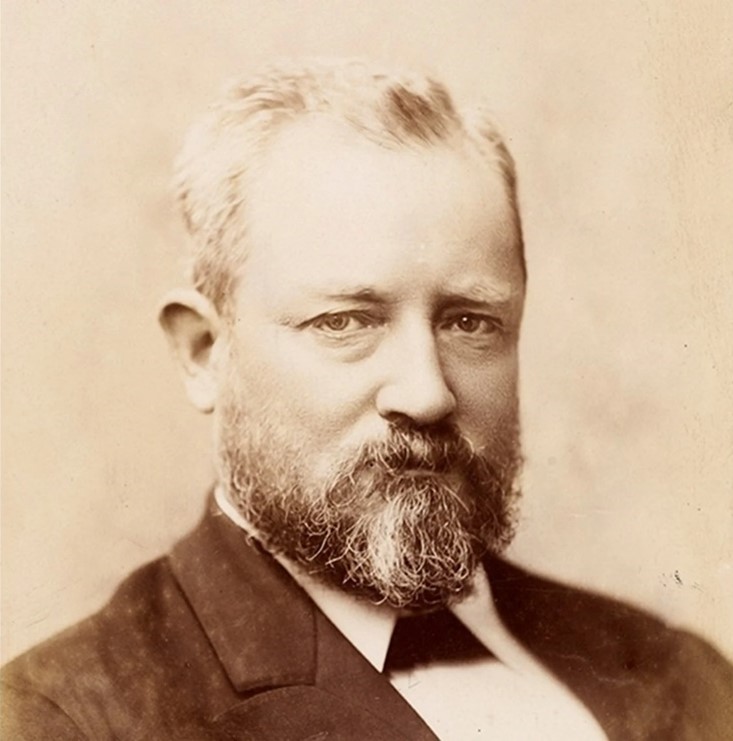
The deadly bushfires, the indiscriminate clearing of Victoria’s public land, and wastage of its forests and timber resources during the 1800s could no longer be ignored. There had already been inquiries and independent reports including those from D’A. Vincent (1887), Perrin (1890) and Ribbentrop (1896) into the parlous state of Victoria’s state forests, but withContinue reading “Royal Commission into Forests and Timber Reserves, 1897 – 1901.”
Inertia, Inquiries and Inaction.
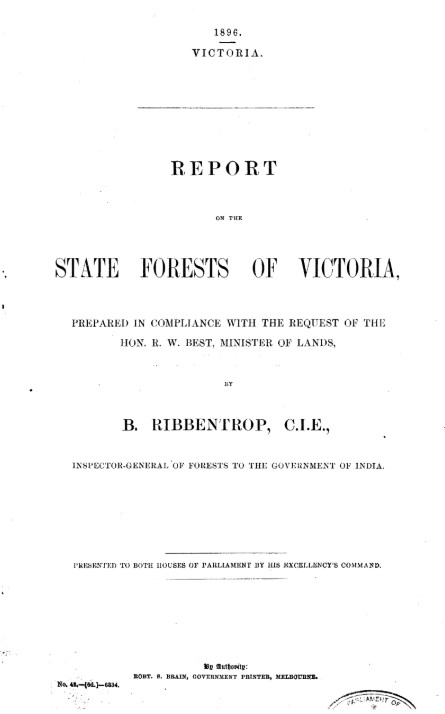
Forest and bushfire management in Victoria in the 50 years between the discovery of gold in 1851, through to Federation in 1901, can best be described as chaotic. Prior to European settlement it’s thought that nearly 88% of Victoria had been forested, with the remaining 12% made up of open grasslands, coastal and alpine heathlands,Continue reading “Inertia, Inquiries and Inaction.”
George Samuel Perrin – Victoria’s first Conservator of Forests.

George Samuel Perrin was born England on 28 November 1849 and in 1880 became a forester with the Woods and Forests Department of South Australia. From 1886 to 1887 he was Conservator of Forests in Tasmania. In 1888, the Lands Minister, John Lamont Dow, brought two bills before Parliament: a measure for the Conservation ofContinue reading “George Samuel Perrin – Victoria’s first Conservator of Forests.”
The tragedy of the Otway & eastern Strzelecki forests.
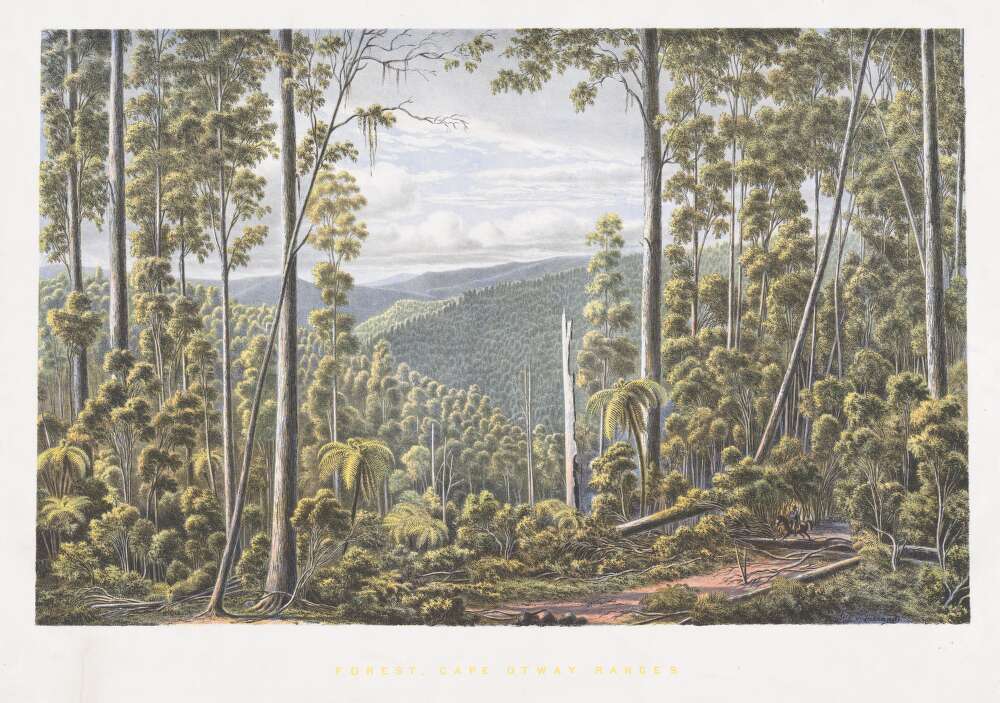
The political jousting over the alienation and sale of Victoria’s valuable Crown Land estate began many years before the Colony separated from NSW in 1851. It continued unabated over the following decades as self-interested and wealthy squatters (pastoralists), who dominated the Upper House of Parliament, were fiercely pitted against those keen to see a homeContinue reading “The tragedy of the Otway & eastern Strzelecki forests.”
Clement Hodgkinson – Father of Victorian Forestry.
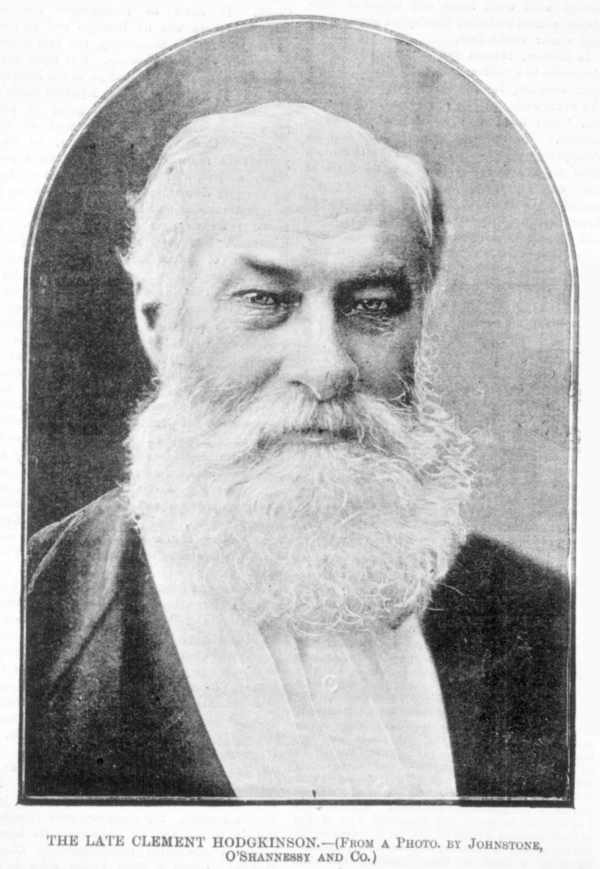
Clement Hodgkinson was as an English naturalist, explorer, senior public servant and surveyor. Born at Southampton in 1818, he studied civil engineering in France before working at topographical fieldwork and mechanical drawing in England. He arrived at Melbourne in December 1851 intending to become a pastoralist but instead joined the Surveyor-General’s Office in January 1852.Continue reading “Clement Hodgkinson – Father of Victorian Forestry.”
Railways.
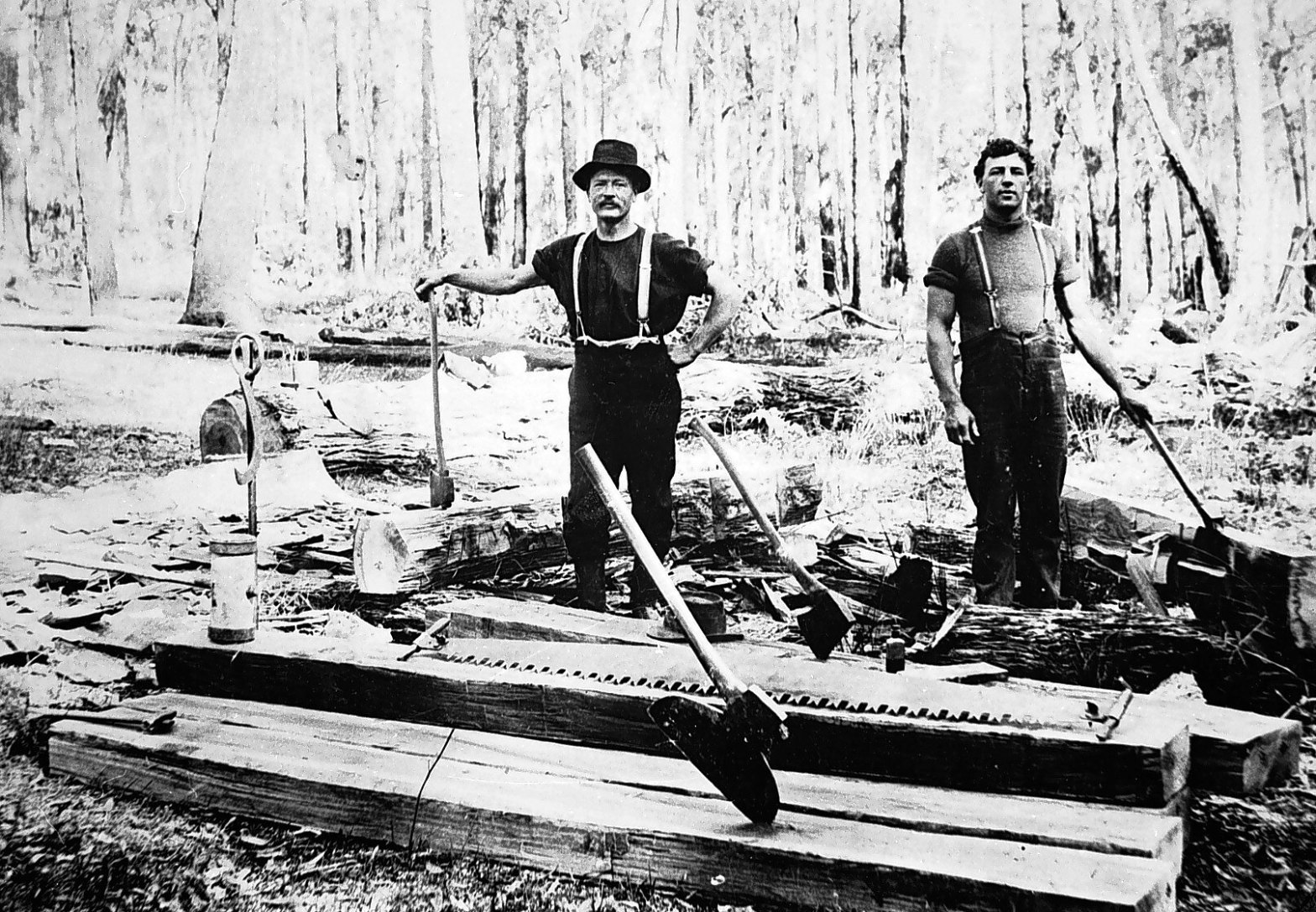
Flushed with tremendous wealth generated by the goldfields, the Victorian government invested over £9 million in the decade between 1854 and 1864 to build just 254 miles of railway, while private companies invested another £1.8 million. The Victorian Railways Department was established in 1856, and the rail network rapidly began to radiate out from Melbourne.Continue reading “Railways.”
Acclimatisation Society.
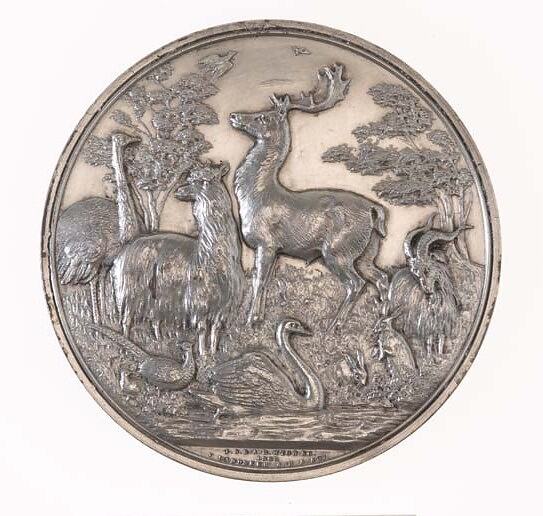
The Victorian Acclimatisation Society was founded in 1861 by Edward Wilson, editor of The Argus newspaper and a private collector, whose motto was “if it lives, we want it”. The Society was governed by the colony’s most eminent scientists who believed that Australia’s plants and animals were greatly inferior to those in Europe, providing onlyContinue reading “Acclimatisation Society.”
Land alienation – Yeoman Ideal.

As gold revenues declined, selling Crown Land to accommodate the thousands of new arrivals on farms and settlements became the next untapped frontier of wealth for the new colonial government. Producing enough food for the expanding population was another important consideration. Besides, farming was believed to provide a “healthy and pleasant pursuit” for ex-miners whoContinue reading “Land alienation – Yeoman Ideal.”
Prosperity – 1854.
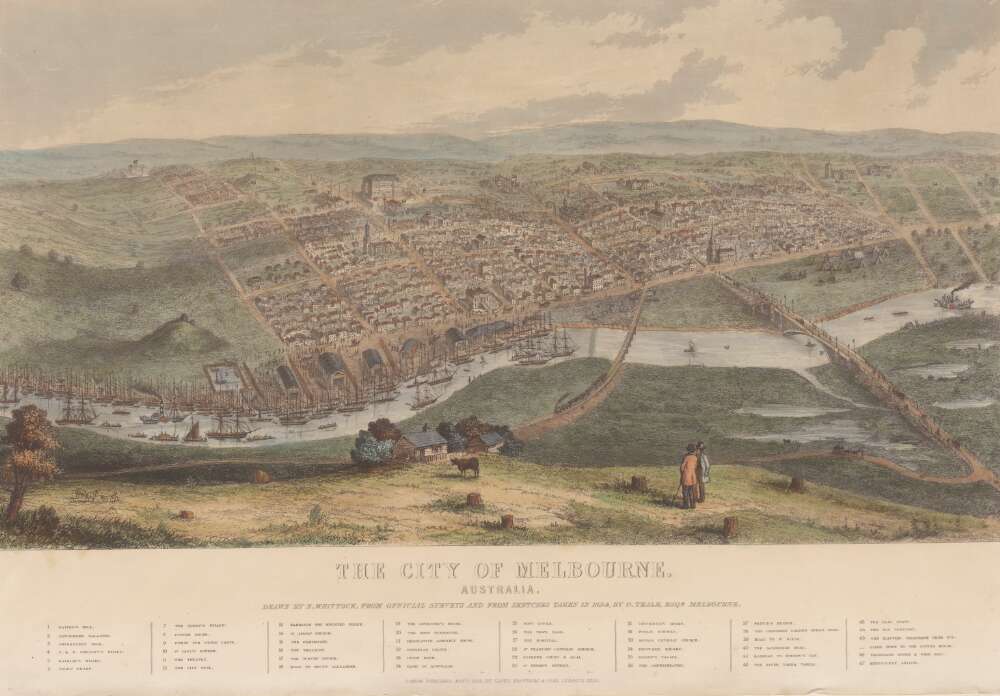
The Marvellous Melbourne we enjoy today began to take shape in 1854 and was paying for it in gold. They were heady times. The MCG, Flinders Street Railway Station, Port Melbourne’s Station Pier, the University of Melbourne, both St Paul’s and St Patrick’s Cathedrals, the Royal Botanic Gardens, Customs House on the Yarra, while theContinue reading “Prosperity – 1854.”
 Victoria’s Forests & Bushfire Heritage