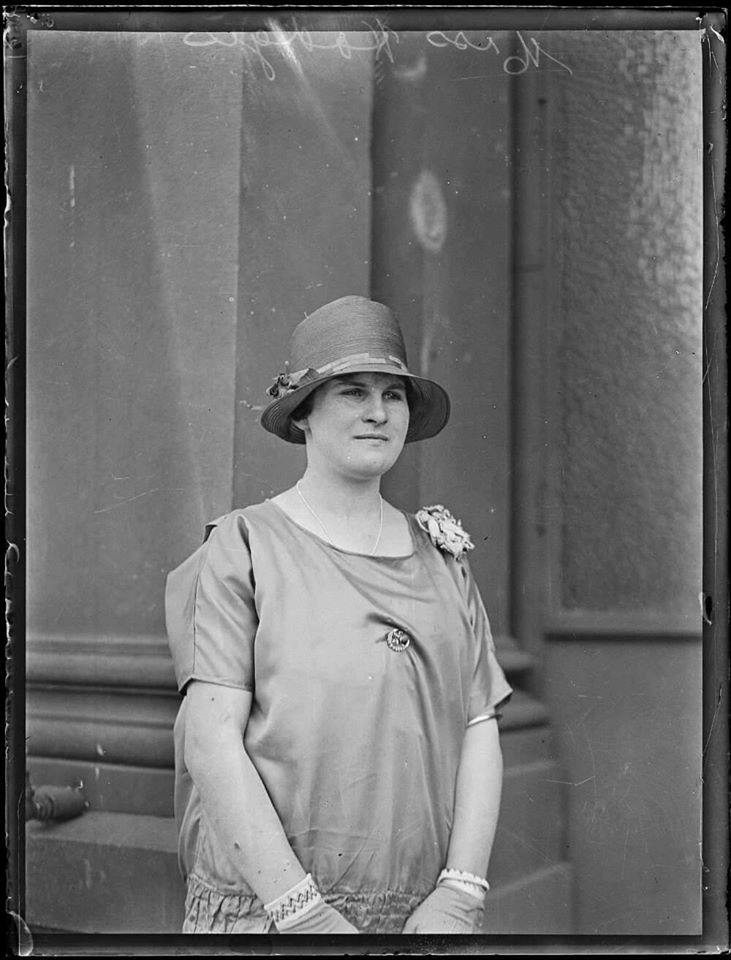
The 1926 Black Sunday bushfires are largely forgotten now, being overshadowed by the catastrophic 1939 Black Friday bushfires thirteen years later. The amazing story of fifteen-year-old Florrie Hodges, who later captured the hearts of the nation, has mostly been forgotten too. Florrie lived with her family at the small Horner and Monett’s sawmill, deep inContinue reading “Florrie Hodges – 1926 bushfire heroine.”
Category Archives: Bushfire
Altona Museum Photography.
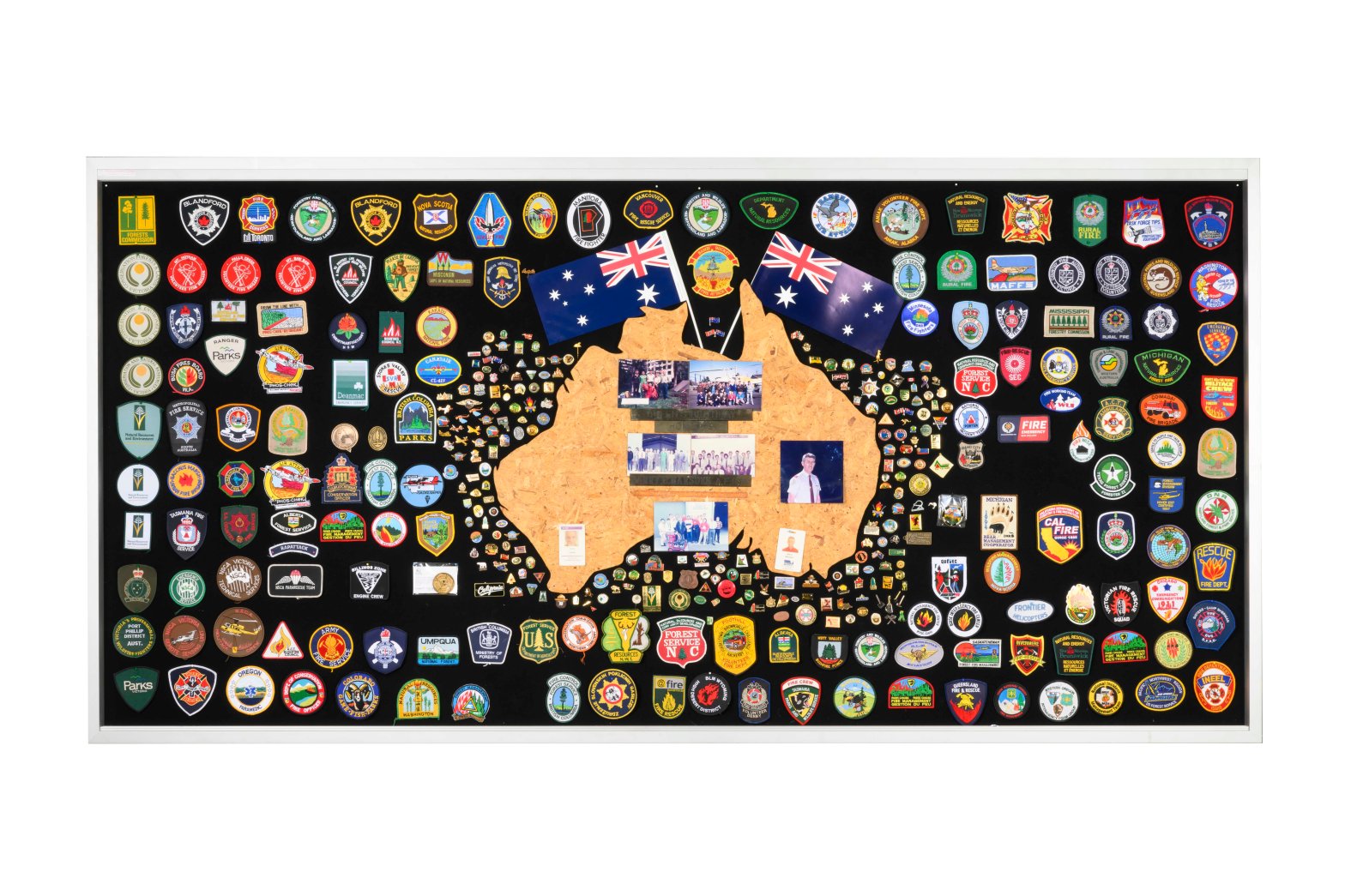
In November 2024, a small group of cheerful volunteers from the Forests Commission Retired Personnel Association (FCRPA) toiled over nine days to dust-off, photograph and record nearly 300 artifacts in DEECA’s Altona Museum. It followed a similar project at the FCRPA’s Beechworth Museum in February 2024. The Altona project was generously supported by DEECA /Continue reading “Altona Museum Photography.”
Black Thursday – 1851.
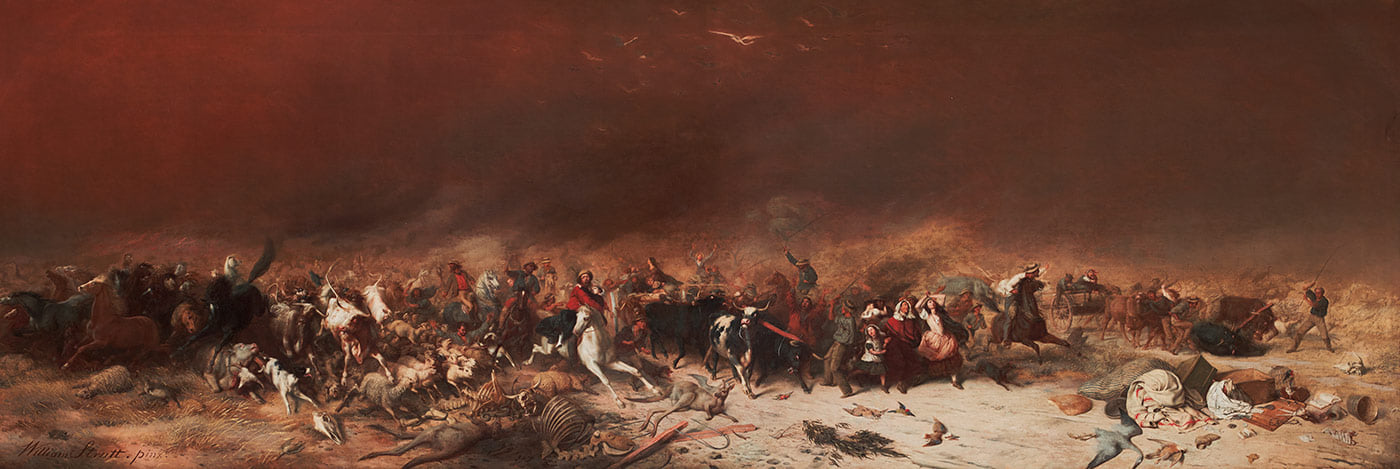
Victoria’s largest recorded bushfire occurred on Black Thursday, 6 February 1851, which is often claimed to have burnt up to 12 million acres (5m ha), or about a quarter of the State. By comparison, the Victorian bushfires in 1939 burnt 2 million hectares, while Black Summer of 2019-20 burnt 1.5 million ha. It must alsoContinue reading “Black Thursday – 1851.”
First international bushfire deployment.
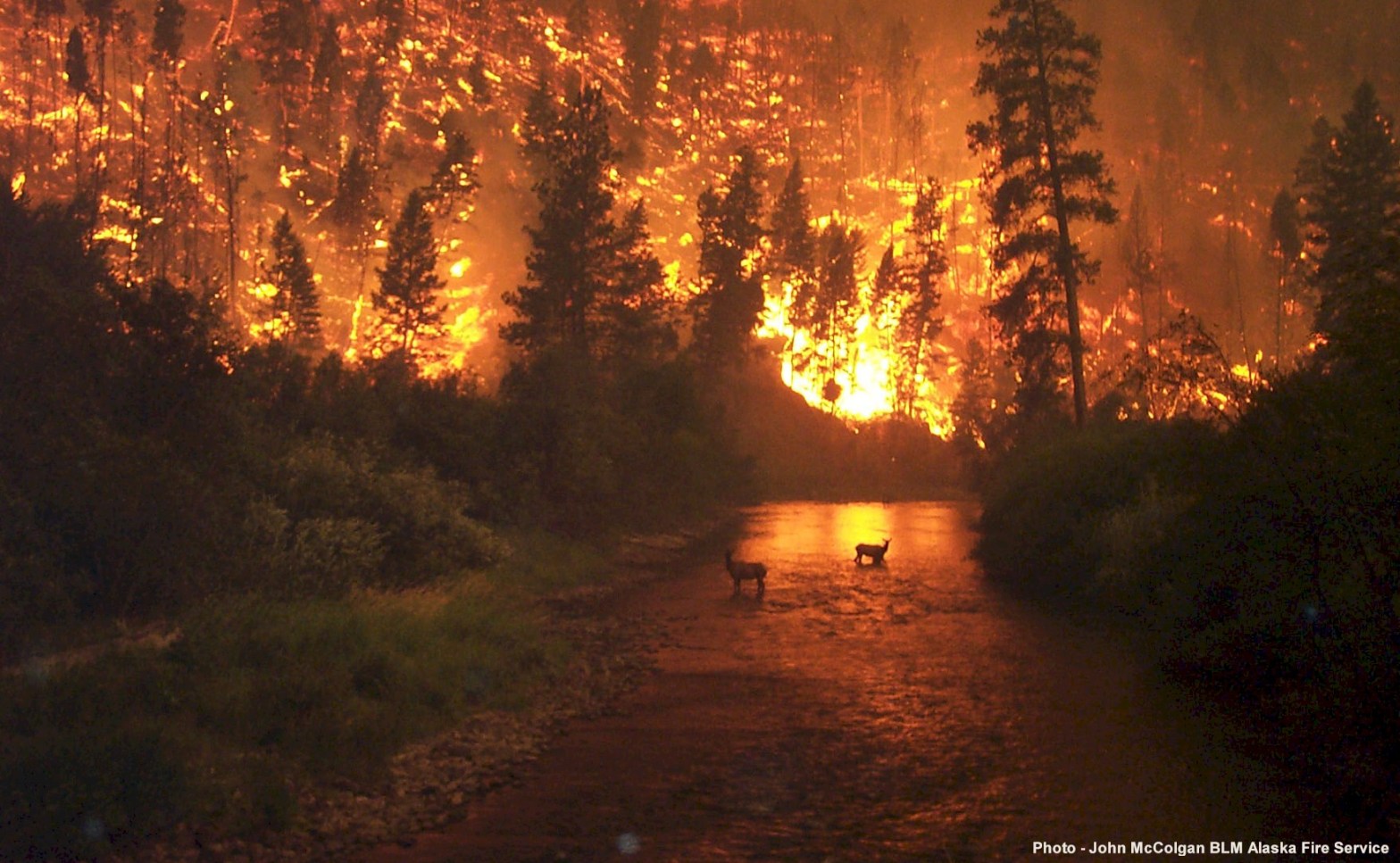
During August and September 2000, a total of 97 firefighting specialists from Australia and New Zealand were deployed to America. This was the first time that a large number of operational firefighters had travelled from Australia and NZ to help their north American colleagues. During the northern summer of 2000, America experienced one of itsContinue reading “First international bushfire deployment.”
Fire gallows signs.
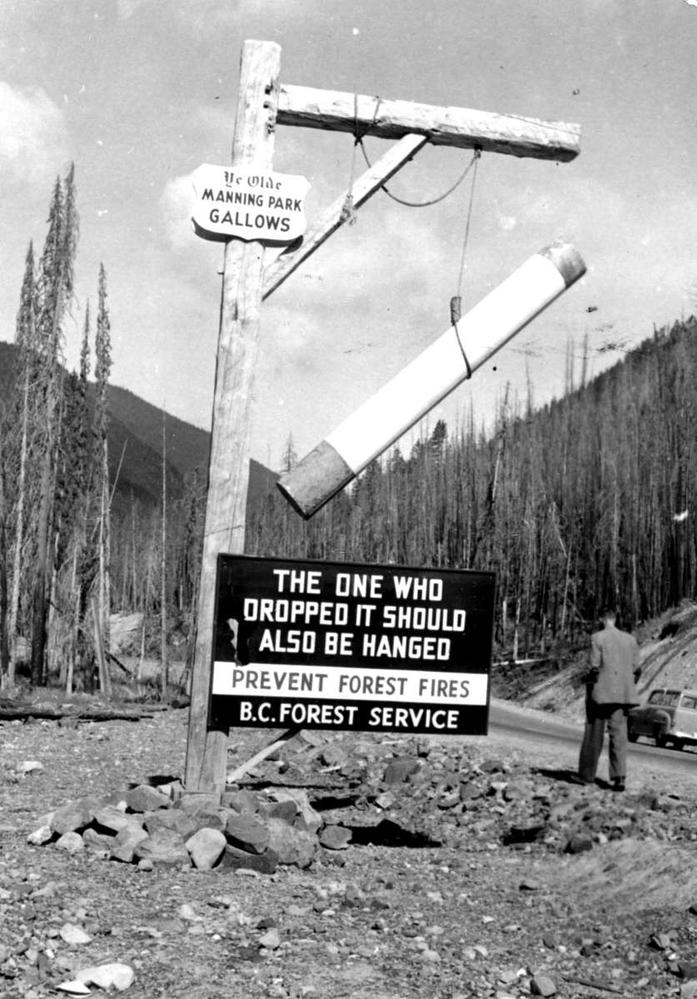
The E.C. Manning Provincial Park in the Cascade mountains of Canada was established in 1941 and named in memory of Ernest C. Manning, chief forester of British Columbia from 1936 to 1941. During his time, Manning championed to set land aside for future generations to enjoy. The park was described as a “holiday land withoutContinue reading “Fire gallows signs.”
Mann Gulch – 5 August 1949.

Seventy-five years ago today, twelve US Forest Service smokejumpers, and one USFS fireguard, lost their lives in a blow-up at Mann Gulch in Montana. And people are still talking about it… The smokejumpers landed at 4.10 pm, and at 5.56 pm a fire storm raced up the steep slope and swept over them. It wasContinue reading “Mann Gulch – 5 August 1949.”
Ernie Richards – Cobungra.

The January 1939 bushfires swept across almost five million acres, killed 71 people, destroyed 69 bush sawmills and almost entirely obliterated several towns. The small and remote township of Omeo lost the hospital, four shops, the main hotel and 27 houses. Workmen from Omeo went to fight the fire at Cobungra Station, but they wereContinue reading “Ernie Richards – Cobungra.”
Charles Watson Perpetual Trophy

This cup was awarded at the annual Northeast Division fire school. Fire schools were an important pre-summer program for all Forests Commission staff and crews. They were designed as refresher courses for existing staff and training of new staff on how to use pumps and hoses. FCV Forest Divisions were made up of separate forestContinue reading “Charles Watson Perpetual Trophy”
Bacharach Sling psychrometer

Bushfire behaviour is influenced by many factors including temperature, relative humidity (RH), forest type, fuel quantity and fuel dryness, topography and even slope. Wind has a dominant effect on the Rate of Spread (ROS), as well as fire size, shape and direction. Temperature and relative humidity have major impacts on fuel dryness and therefore uponContinue reading “Bacharach Sling psychrometer”
Wind speed.

Bushfire behaviour is influenced by many factors including temperature, relative humidity (RH), forest type, fuel quantity and fuel dryness, topography and even slope. But wind has a dominant effect on the Rate of Spread (ROS), as well as fire size, shape and direction. Wind speed can be measured using a variety of anemometers. This simpleContinue reading “Wind speed.”
Alan McArthur – bushfire legend.
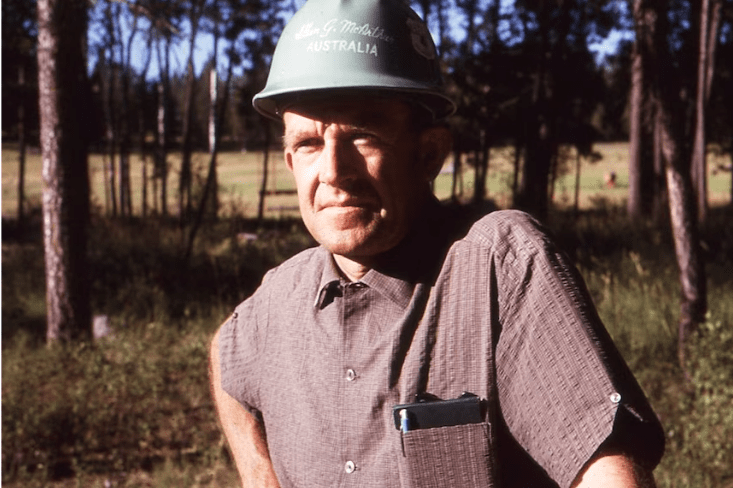
The Forest Fire Danger Index (FFDI) was originally invented by the legendary pioneer of Australian bushfire science, Alan Grant McArthur, during the 1950s and ‘60s. After studying forest science at the University of Sydney in 1945, and later the Australian Forestry School in Canberra, Alan McArthur worked first in softwood plantations in the Tumut andContinue reading “Alan McArthur – bushfire legend.”
Drop chutes.
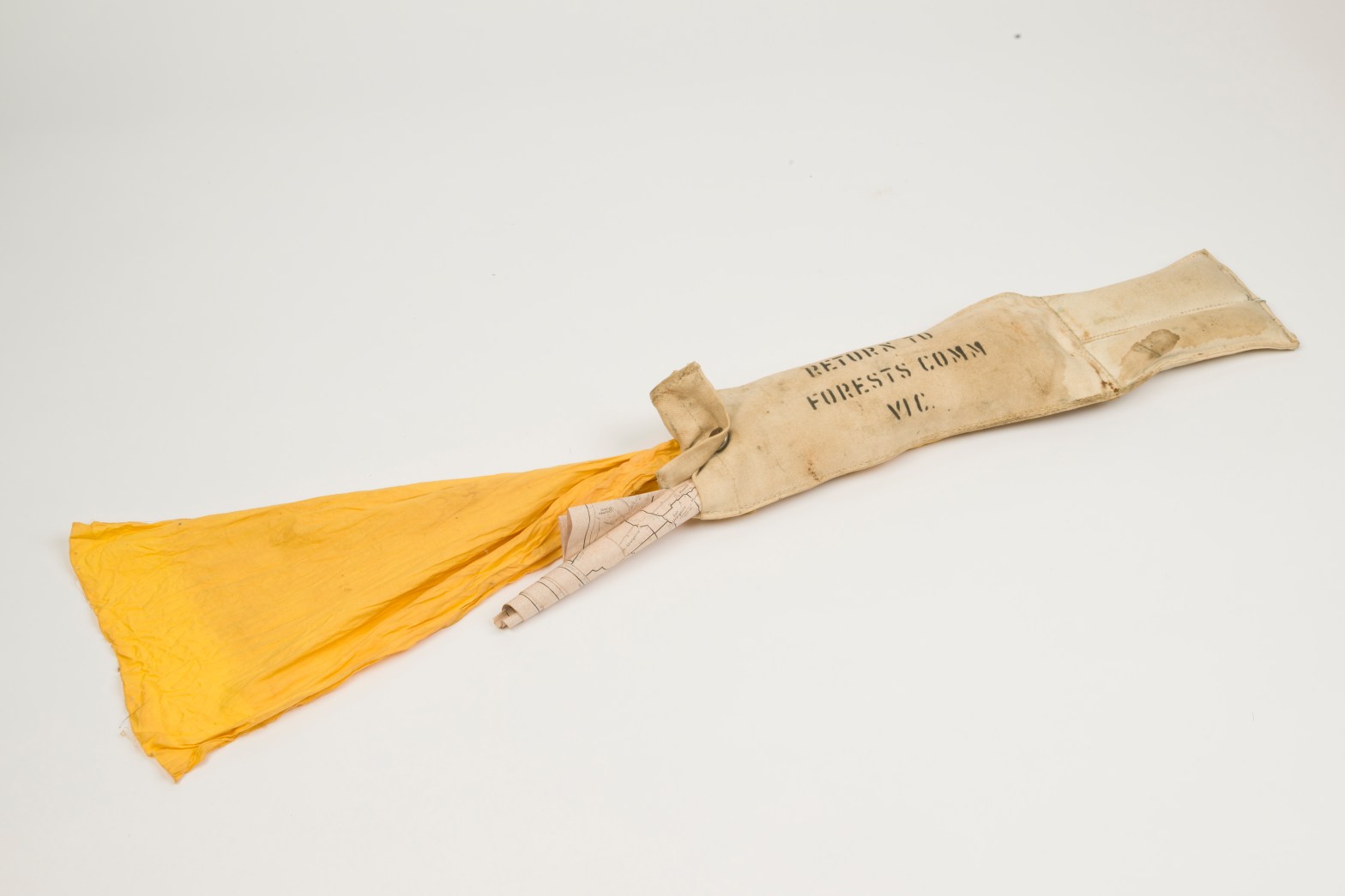
From the early 1960s, the Forests Commission had pre-season arrangements in place with local aeroclubs and pilots across regional Victoria. Air observers from FCV districts routinely flew during the summer months in small, fixed-wing aircraft on fire spotting missions and to map fire boundaries. The information was often needed quickly on the ground or inContinue reading “Drop chutes.”
Update on the Beechworh Museum Collection.

With the money raised from the sale of the FCV lapel pins last year the Forests Commission Retired Personnel Association (FCRPA) engaged Mark Jesser, a professional photographer, from Wodonga. We recently had a two-day working bee at Beechworth with Leith McKenzie, Andrew Pook, Mark A Webster and myself pulling all the dusty items out of their display casesContinue reading “Update on the Beechworh Museum Collection.”
Enough was enough.

Victorian bushfires in summer of 1943-44 burned over one million hectares, killed 51 people, injured 700, and destroyed over 650 buildings. There had been deadly fires just days before Christmas in the northeast which had killed 10 firefighters from the Wangaratta fire brigade. More widespread fires across the State a month later killed 20 peopleContinue reading “Enough was enough.”
Hazelwood coalmine fire – 2014.

As they say… the days are long… and the years are short… but where did those 10 years go? On Saturday 8 February 2014, I was acting as a mentor in a Level 3 Planning Team at the Traralgon Incident Control Centre (ICC). We were working on a small but complex bushfire in the Hearn’sContinue reading “Hazelwood coalmine fire – 2014.”
Delburn bushfires – 2009.

It’s been 15 years since the catastrophic Black Saturday bushfires on 7 February 2009, with the loss of 173 lives, and which devastated townships such as Marysville, Kinglake, Narbethong, Flowerdale and Strathewen. But just over a week before, on Wednesday 28 and Thursday 29 January, there were six deliberately lit blazes south of Morwell nearContinue reading “Delburn bushfires – 2009.”
Fireguards.

The Secretary of the Forests Commission Victoria, A V Galbraith issued instructions to Fireguards in about 1920. They included the following… Probably, one of the most famous FCV fireguards was Bill Ah Chow who lived at Moscow Villa and was the fire lookout at Mt Nugong during the summer months. What a great job… https://drive.google.com/file/d/1qQro7mkEcQFk2W-xR-qEbONaZ3RAwnmm/viewContinue reading “Fireguards.”
A soggy Chief Fire Officer.
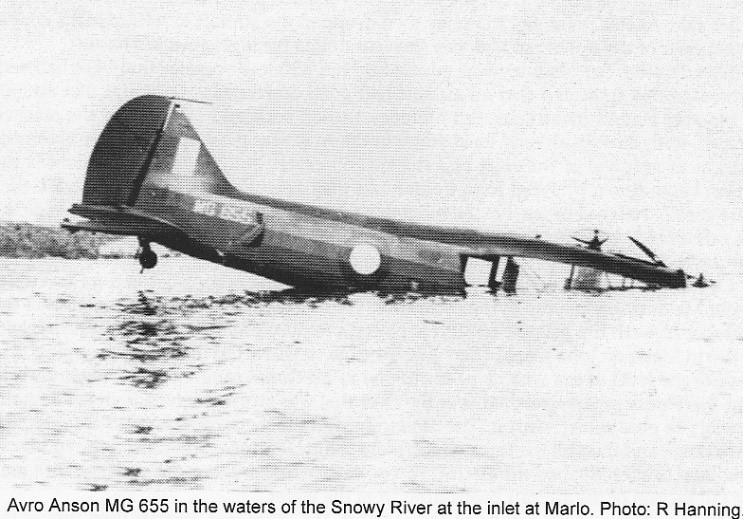
In the summer of 1946, a request was made by the Forests Commission to the RAAF base at Bairnsdale for bushfire reconnaissance flights over the Snowy River area in East Gippsland. Because of the long-standing relationship with the Air Force, authorisation was often given for FCV staff to act as air observers in the RAAFContinue reading “A soggy Chief Fire Officer.”
 Victoria’s Forests & Bushfire Heritage