
Forest hydrology is a complex science but, put simply, water yield or stream flows from forested catchments depends on rainfall patterns, droughts, soil type, soil depth, forest type and forest age. Decades of pioneering research by the MMBW have shown that wet mountain ash forests consume nearly 70% of the rainfall leaving the remainder availableContinue reading “Forests, bushfires and water – the Kuczera curve.”
Author Archives: Peter McHugh
Athol Hodgson.
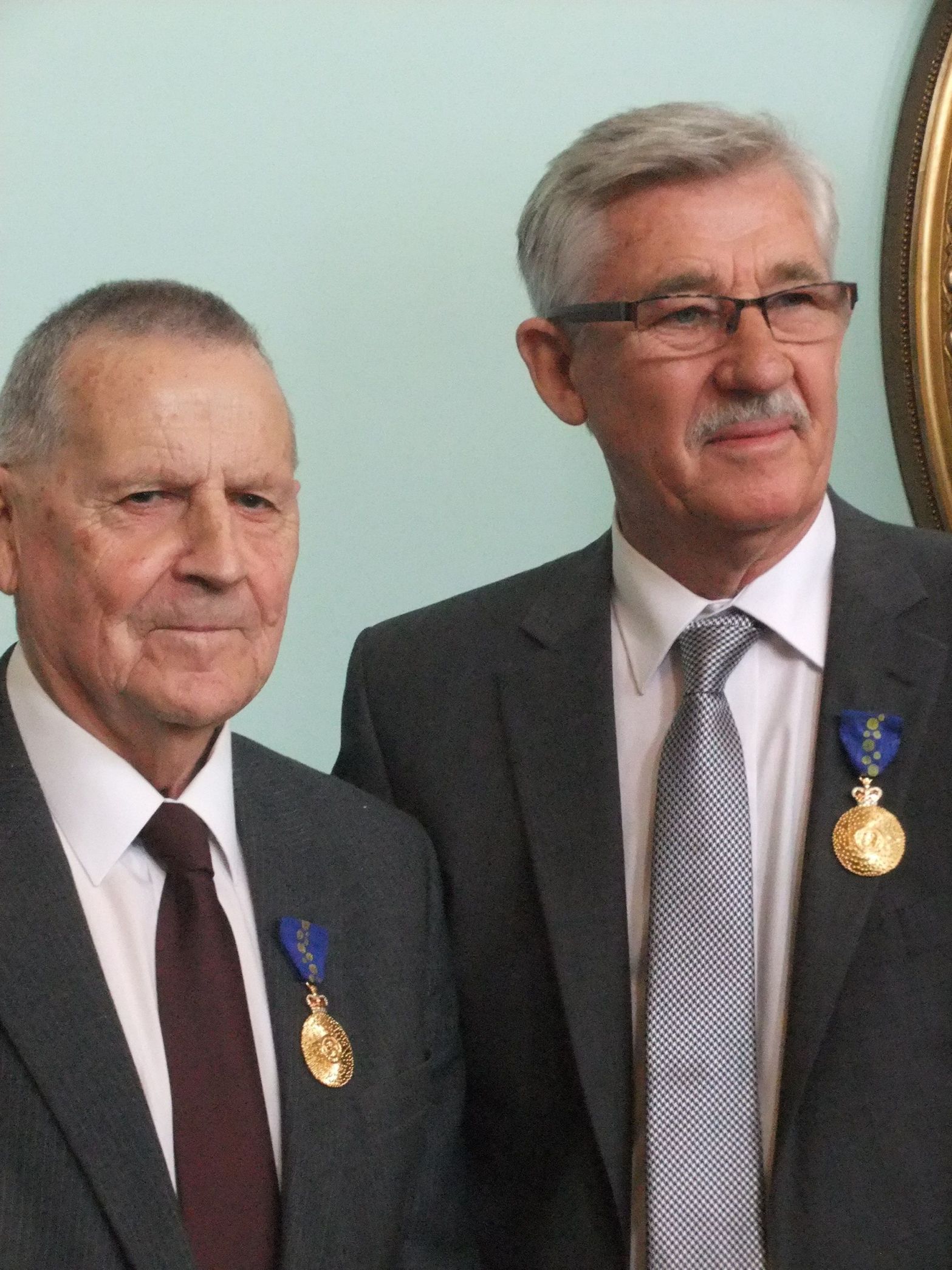
Athol Hodgson made a significant and lasting contribution to Victorian forestry and bushfire management over his long and distinguished career. Born in Wagga Wagga on 20 March 1930 into a large family of seven siblings, Athol spent his early years on the family dairy farm at Nariel near Corryong in northeastern Victoria. He often recalledContinue reading “Athol Hodgson.”
Wattle Day – First Day of Spring.
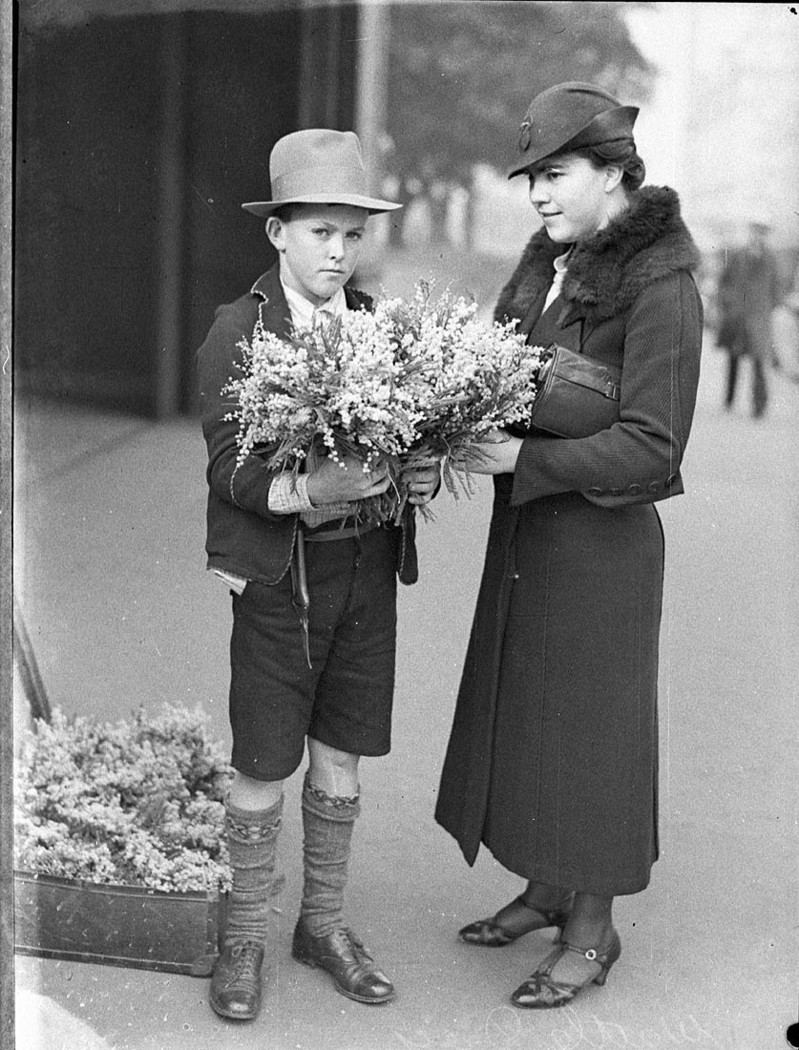
The 1st of September marks the official beginning of Spring in the southern hemisphere, and wattles are starting to flower in the bush and in gardens around the country. Wattles feature prominently in Australian ceremonies, literature, poetry, art and song from the 1830s to the early 1900s. Noted naturalist Archibald James Campbell established the VictorianContinue reading “Wattle Day – First Day of Spring.”
Victorian School of Forestry and arboretum walk.
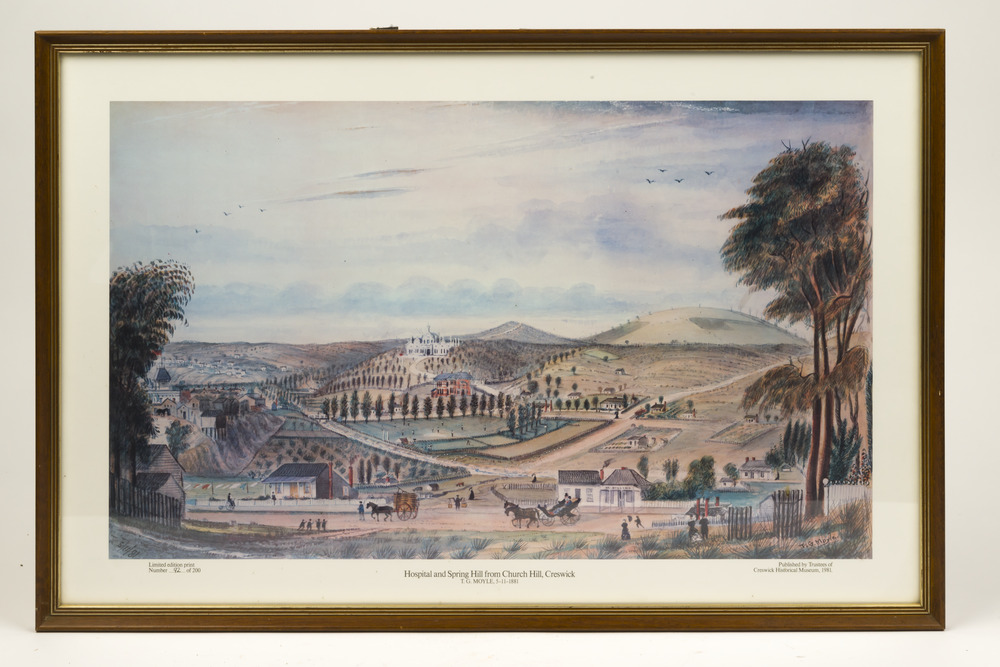
This new self-guided walking map has been prepared to tell some of the story of the Forestry School and the grounds at Creswick. Its based on the 2017 work by Gerry Fahey from the University of Melbourne. https://walkingmaps.com.au/walk/5969
John la Gerche walk.
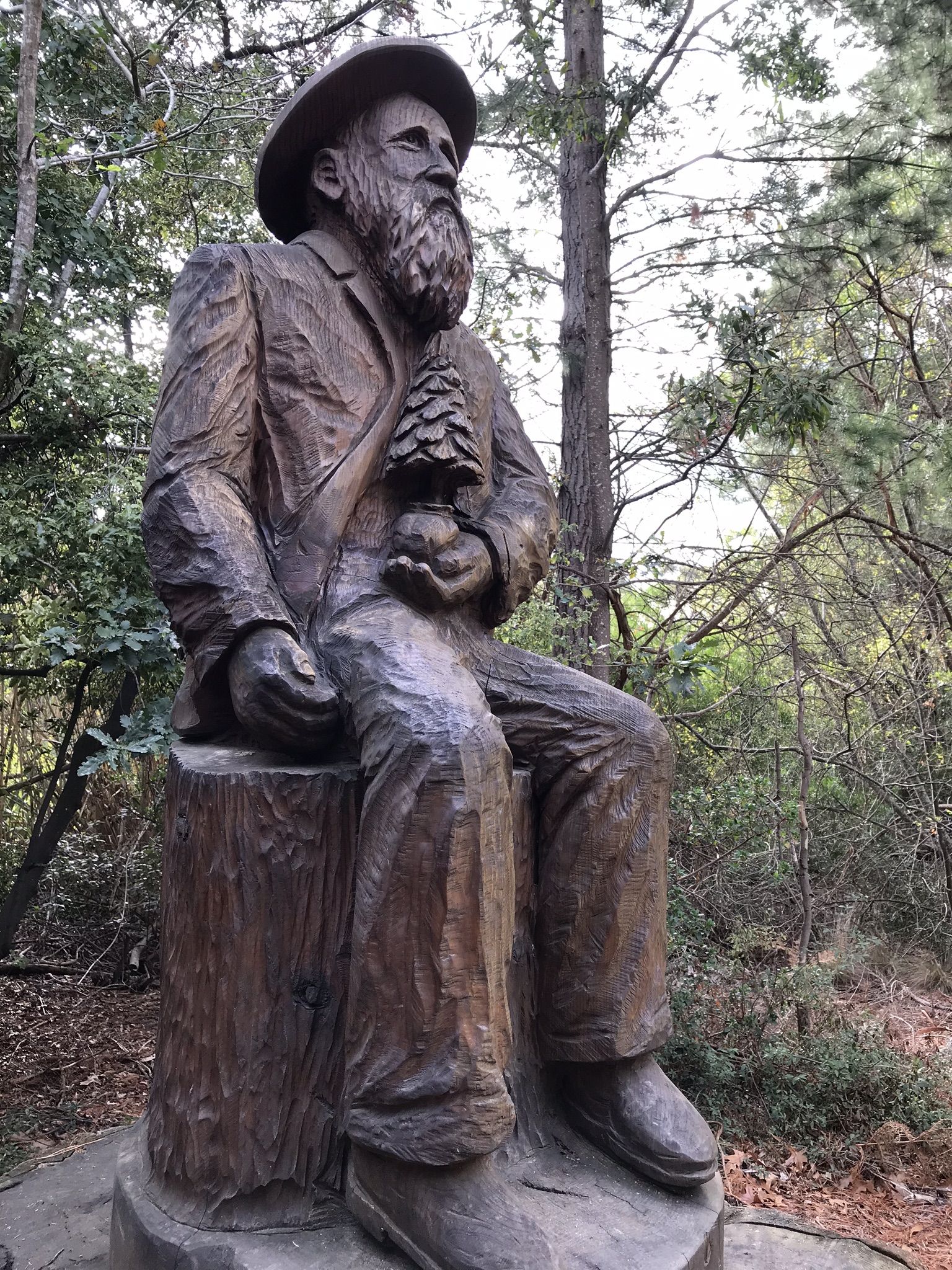
This new self-guided walking map can be used around Sawpit Gully at Creswick. Its based on the commemorative John la Gerche trail established in 1998 by VSF lecturer Ron Hateley and students of University of Melbourne. https://walkingmaps.com.au/walk/5968
The CFA Board – 1945.

Deadly bushfires in the summer of 1943/44, killed 51 people, injured another 700 and destroyed over 650 buildings. In particular, the loss of 13 lives at Yallourn on February 14, 1944, and the impact on the State’s electricity supplies when the critical brown coal fields caught alight brought these bushfires into sharp focus. There wasContinue reading “The CFA Board – 1945.”
Vietnam Veterans Day – 18 August.

Australia had compulsory training in the Citizens Military Forces (CMF) at various times between 1910 and 1945, but after the Second World War it had two very different National Service schemes. The first began in 1951, coinciding with the Korean War, and ran until 1959 with a total of 227,000 men passing through the scheme,Continue reading “Vietnam Veterans Day – 18 August.”
Firewood – home heating cost comparison.

There has been a cold snap recently and everyone knows that the costs of home heating this winter have risen sharply. Firewood has traditionally been a cheap fuel, particularly for country folk… but it’s getting expensive now and harder to source. But how does firewood compare with mains gas or reverse cycle aircon? Comparing applesContinue reading “Firewood – home heating cost comparison.”
Smokey Bear turns 80.
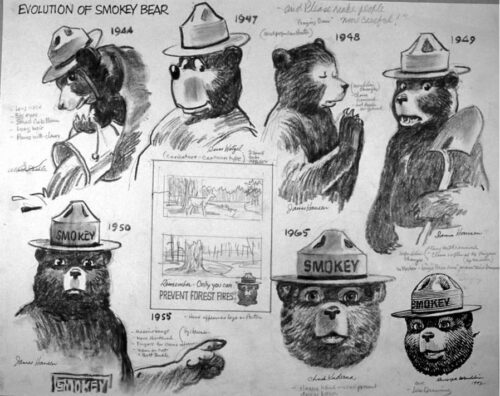
Smokey Bear, the icon of the U.S. Forest Service, is the longest running wildfire prevention campaign in United States history. The character was authorised on August 9, 1944, a date now celebrated as his official birthday. He was originally drawn by Artist Albert Staehle complete with his trademark campaign hat and jeans. Three years later,Continue reading “Smokey Bear turns 80.”
Fire gallows signs.
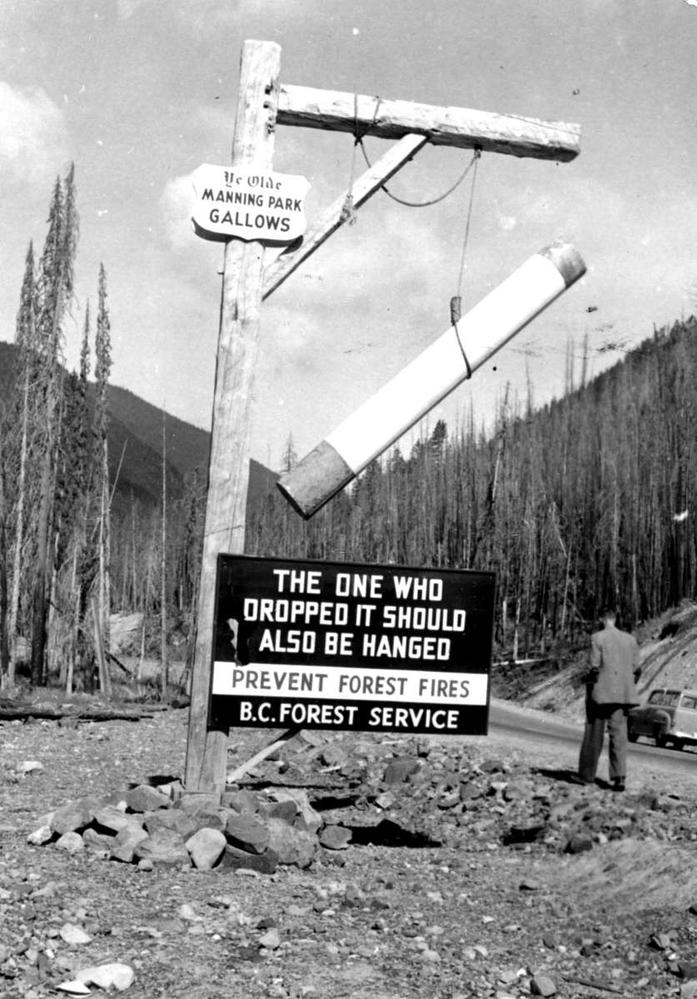
The E.C. Manning Provincial Park in the Cascade mountains of Canada was established in 1941 and named in memory of Ernest C. Manning, chief forester of British Columbia from 1936 to 1941. During his time, Manning championed to set land aside for future generations to enjoy. The park was described as a “holiday land withoutContinue reading “Fire gallows signs.”
Mann Gulch – 5 August 1949.

Seventy-five years ago today, twelve US Forest Service smokejumpers, and one USFS fireguard, lost their lives in a blow-up at Mann Gulch in Montana. And people are still talking about it… The smokejumpers landed at 4.10 pm, and at 5.56 pm a fire storm raced up the steep slope and swept over them. It wasContinue reading “Mann Gulch – 5 August 1949.”
Freda Treasure Tree Reserve – Dargo High Plains Road.

As soon as the winter snows melted, the Treasure family traditionally drove cattle from their home at Castleburn up to the Victorian Alps and the rich grasslands on the Dargo High Plains. The pioneering family could trace its pedigree on the High Plains back to 1878, where they held long-term grazing leases over about 100,000Continue reading “Freda Treasure Tree Reserve – Dargo High Plains Road.”
Talbot Hut – Alpine Walking Track.
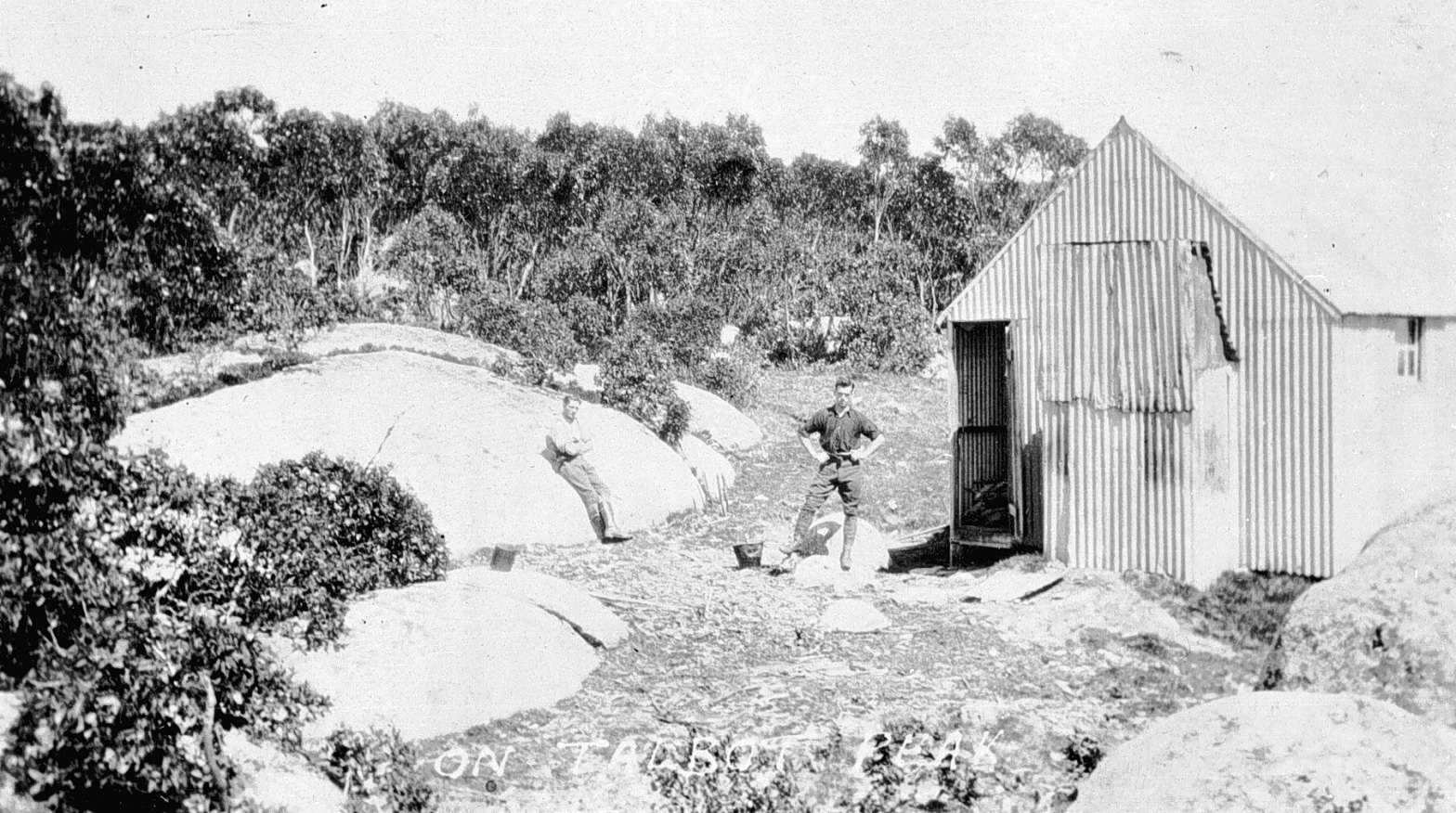
In 1906, prominent surveyor and geologist, William Baragwanath, was commissioned by the Public Works Department to identify a tourist track along the Baw Baw Plateau from Warburton to Walhalla. In February 1907, the new 51-mile route was ridden by a small party of eminent dignitaries including the Governor of Victoria, The Hon. Sir Reginald TalbotContinue reading “Talbot Hut – Alpine Walking Track.”
Mundic Wier – Toorongo Plateau.
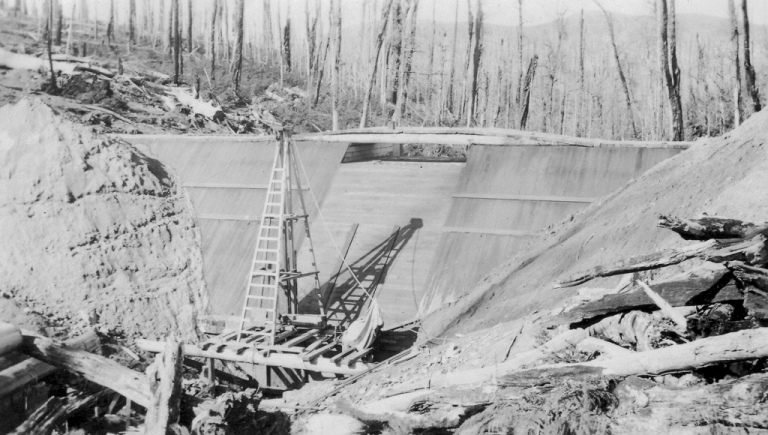
The firestorm tore trees from the ground and scattered them like matchsticks across the landscape. The devastation of the 1939 bushfires was unprecedented. Several towns were entirely obliterated leaving 71 people dead including four FCV staff, 69 sawmills were lost and over 3700 buildings destroyed. Nearly two million hectares of Victoria’s State forests were burned.Continue reading “Mundic Wier – Toorongo Plateau.”
Toyota Land Cruisers.
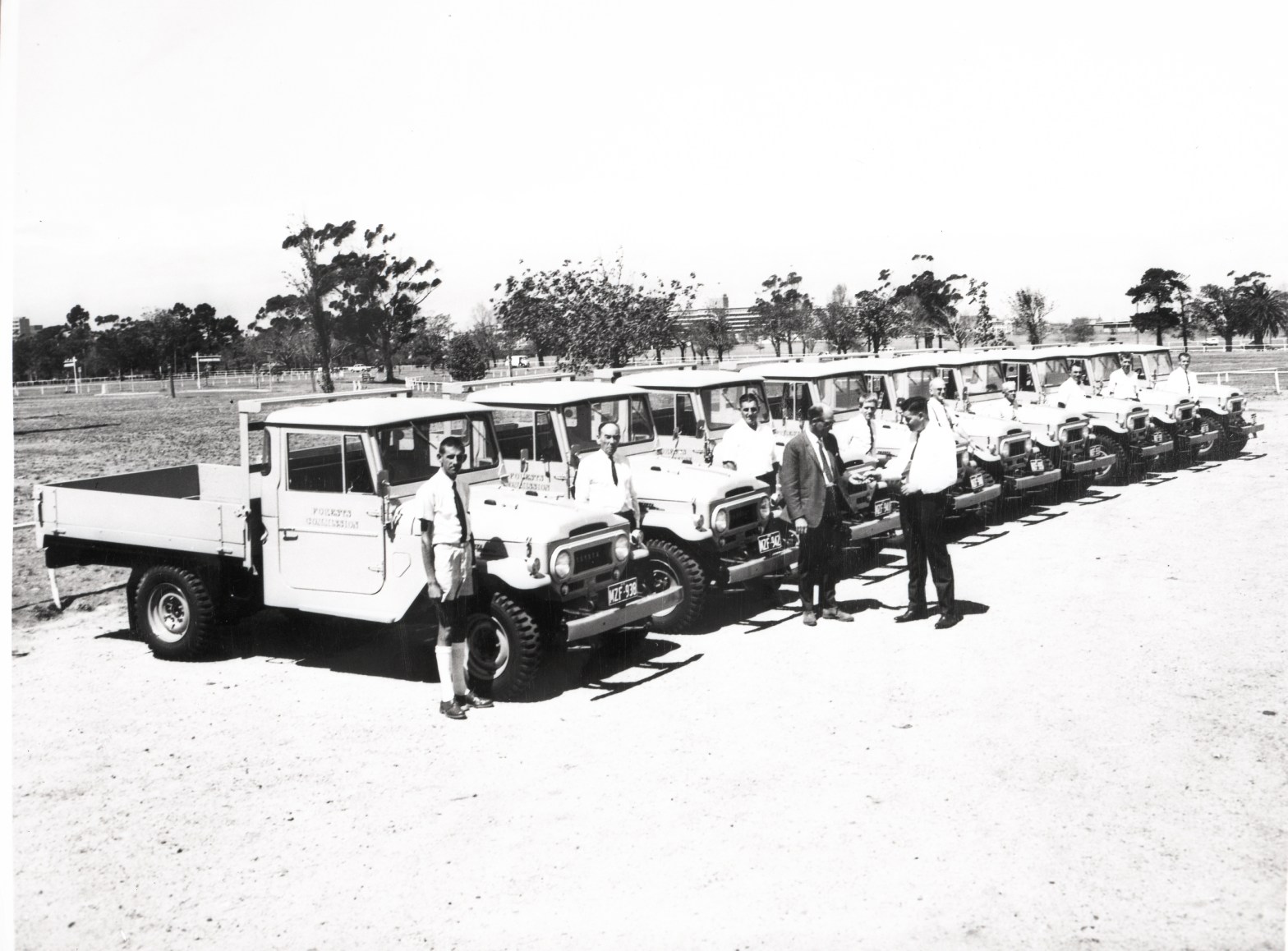
In the post war period, the State Government put a strong emphasis on buying British 4WD vehicles such as Series 1 Land Rovers. They were light weight but pretty primitive and very prone to breakdown. The files in the Public Record Office are thick with warranty claims by the Forests Commission about the reliability ofContinue reading “Toyota Land Cruisers.”
Joe Trent – Toorongo Falls.
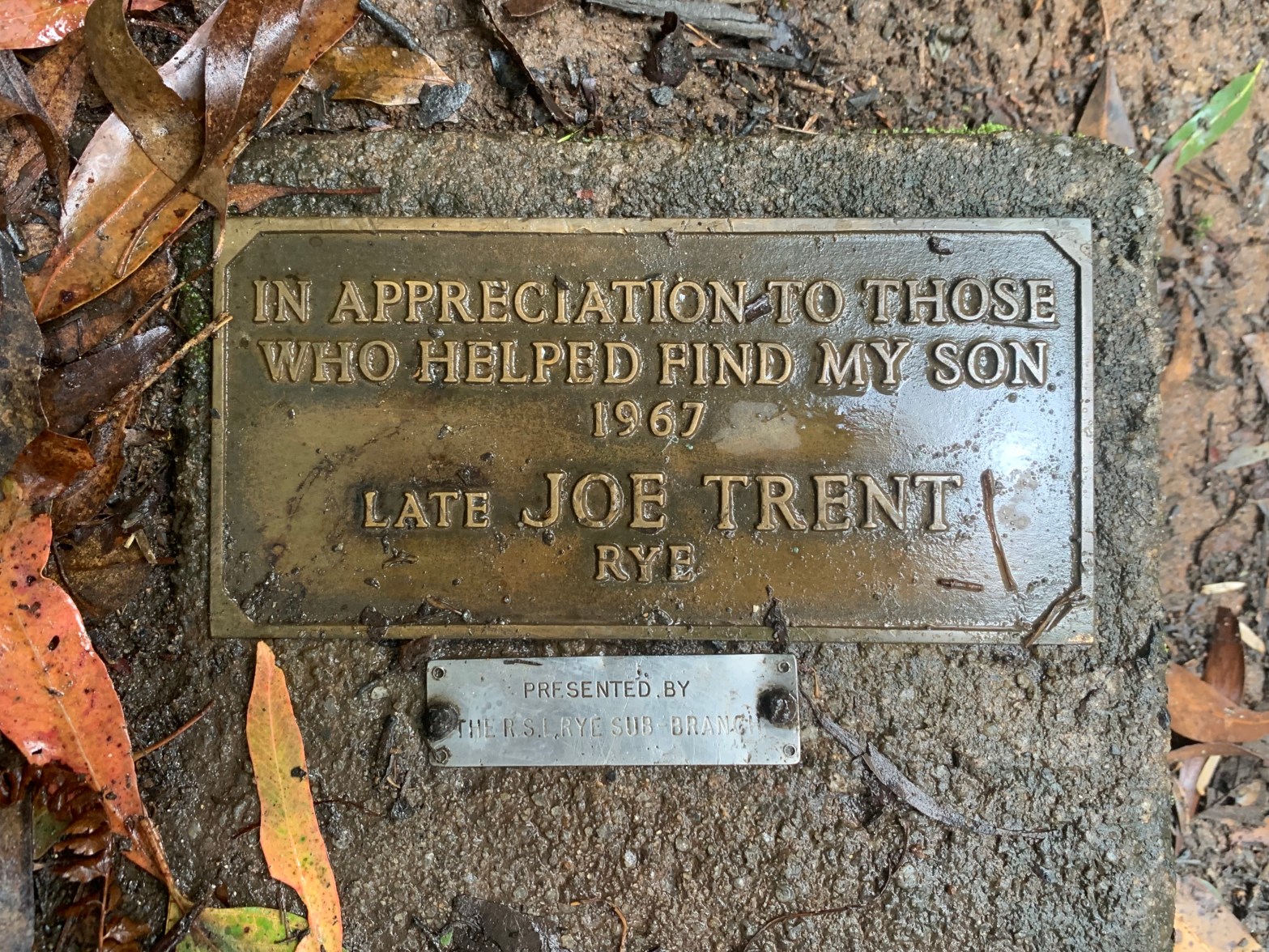
This small brass plaque to the late Joe Trent can be found at the base of Toorongo Falls near Noojee. It was Joe’s son Gregory who had been lost in the bush for 27 hours on July 16 and 17, during the middle of winter in 1967. Joseph Charles Trent died of a heart attackContinue reading “Joe Trent – Toorongo Falls.”
Search and Rescue.
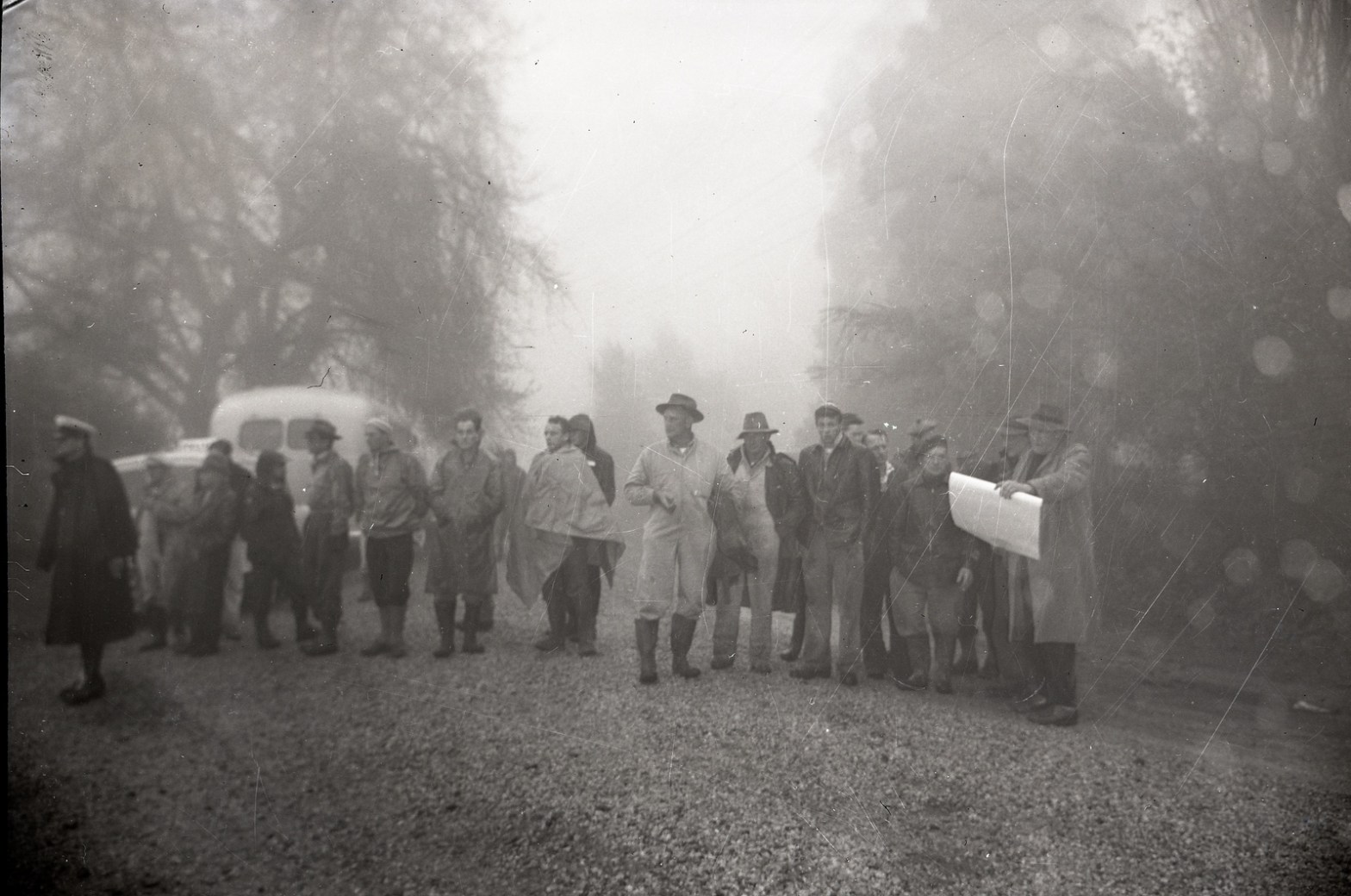
A Victorian Search and Rescue committee was established in 1954 after the earlier successful rescue of a young couple, Kirk McLeod and Jennifer Laycock, at Mt Donna Buang near Warburton. The committee was led by the Police, and included the Federation of Victorian Bushwalking Clubs, the Board of Works, the Forests Commission, the Country FireContinue reading “Search and Rescue.”
Stringy’s Tree – Heywood.
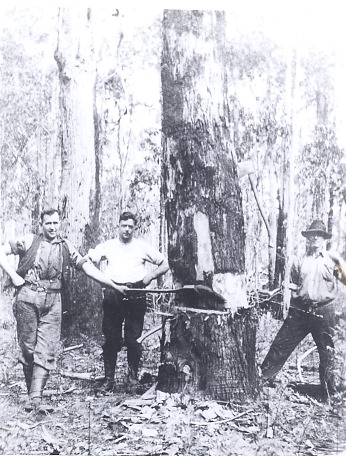
Harold Aldridge (AKA Stringy) worked for the Forests Commission Victoria (FCV) at Heywood in far south western Victoria, firstly as a labourer in 1930, and later from the early 1960s as a forest foreman and overseer. Stringy also served as a driver in the CMF during the war years. During the 1950s and ‘60s forestContinue reading “Stringy’s Tree – Heywood.”
 Victoria’s Forests & Bushfire Heritage