
Morris William Carver was born on 25 October 1896 at Thorpdale in Gippsland. He enlisted in the AIF in Feb 1918 and set sail from Adelaide, holding the rank of Sergeant, but returned home when the boat was recalled. On returning, Morris got a job on 5 March 1919 with the Forests Commission Victoria (FCV)Continue reading “The Carver Papers.”
Author Archives: Peter McHugh
Wattle Day – First Day of Spring.
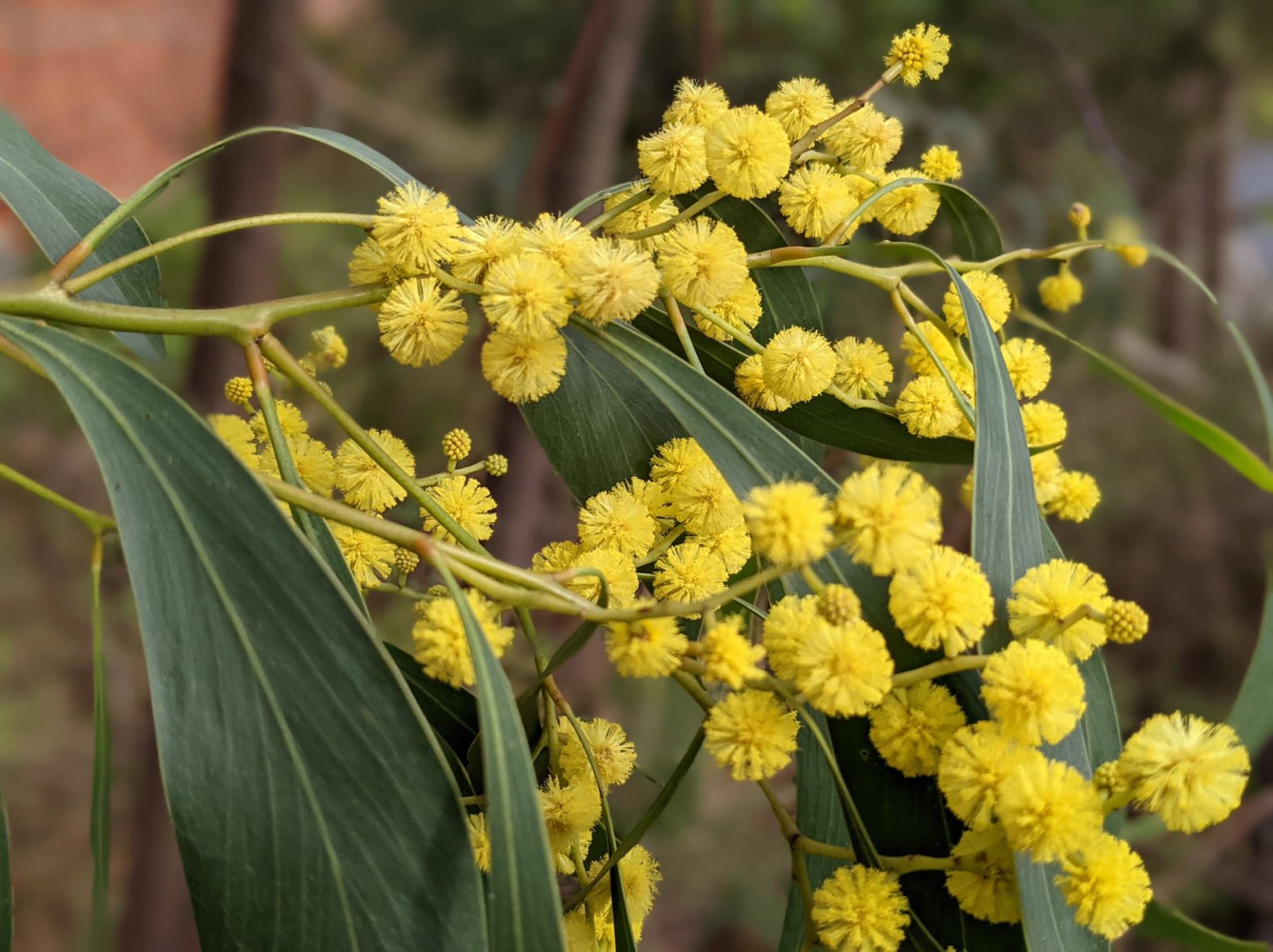
Today, the 1st of September, marks the official beginning of Spring in the southern hemisphere, and wattles are starting to flower in the bush and in gardens around the country. Wattles feature prominently in Australian ceremonies, literature, poetry, art and song from the 1830s to the early 1900s. But until the early 1980s, three setsContinue reading “Wattle Day – First Day of Spring.”
Forests Commission Victoria (FCV) – Commemorative Lapel Badges.
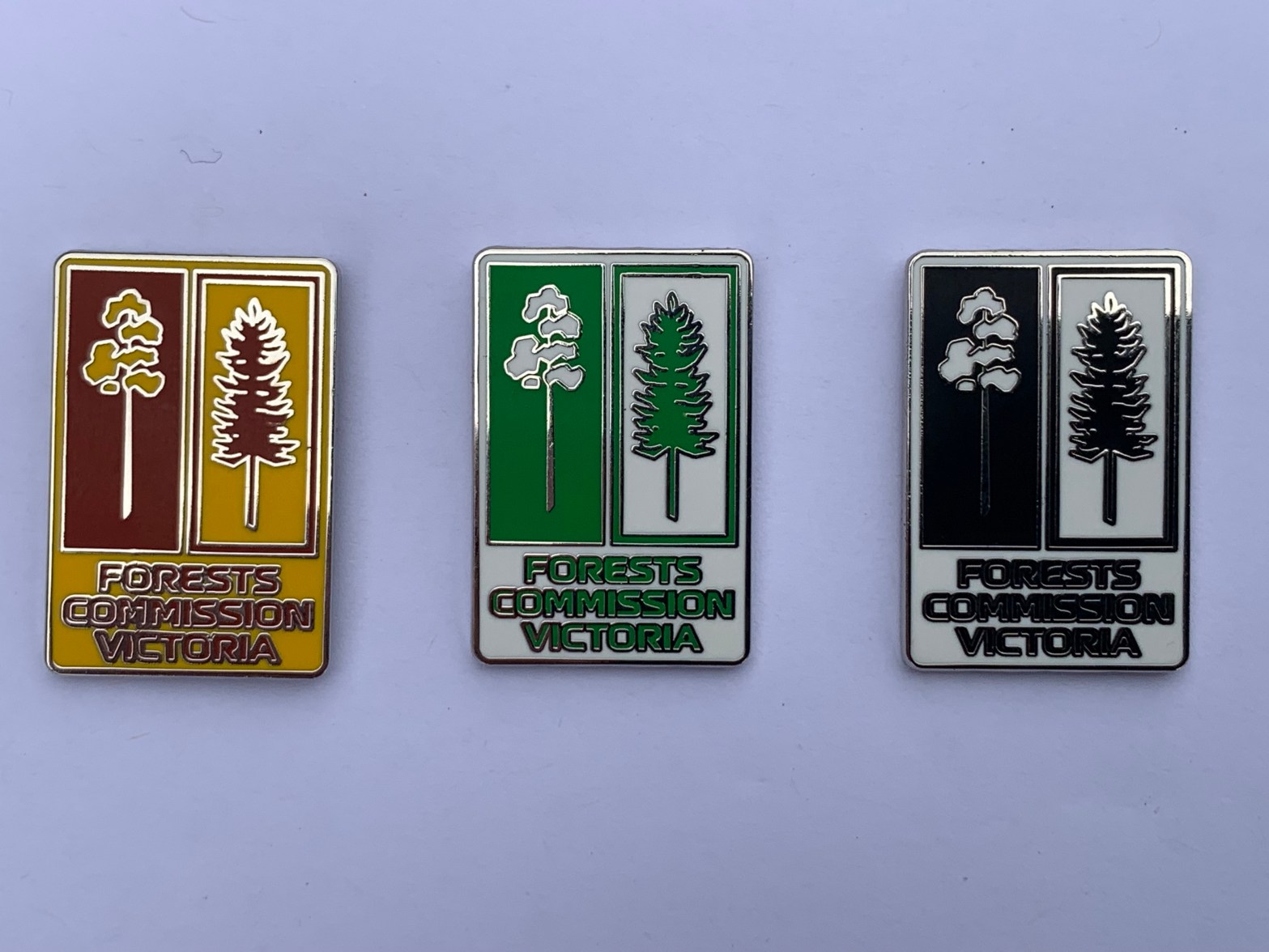
Commemorative lapel badges have been produced for the Forests Commission Retired Personnel Association (FCRPA) to mark the 40th anniversary of the end of the Forests Commission Victoria (FCV). The Commission began in 1918 and had a long and proud history as the primary forest and bushfire manager of Victoria’s 7.1 million ha public land estate.Continue reading “Forests Commission Victoria (FCV) – Commemorative Lapel Badges.”
Black Butt – Mt Fatigue.

This photo from the State Library comes in black and white as well as colour versions, so I guess it was sold as a postcard. It also features in the Leader Newspaper published on 30 August 1902. The caption says the road was recently constructed with an unemployment scheme. I clambered all over those soggyContinue reading “Black Butt – Mt Fatigue.”
Power Poles.

Hardwood poles have always been a very high value forest product with a royalty much higher than sawlogs. In 1946 the Forests Commission produced some 250,000 lineal feet (76.2 km) of telephone and electric power poles, mostly for the Post Master General (PMG) and State Electricity Commission (SEC). From about 1947, as the power gridContinue reading “Power Poles.”
Total Fire Bans in Victoria – a history.
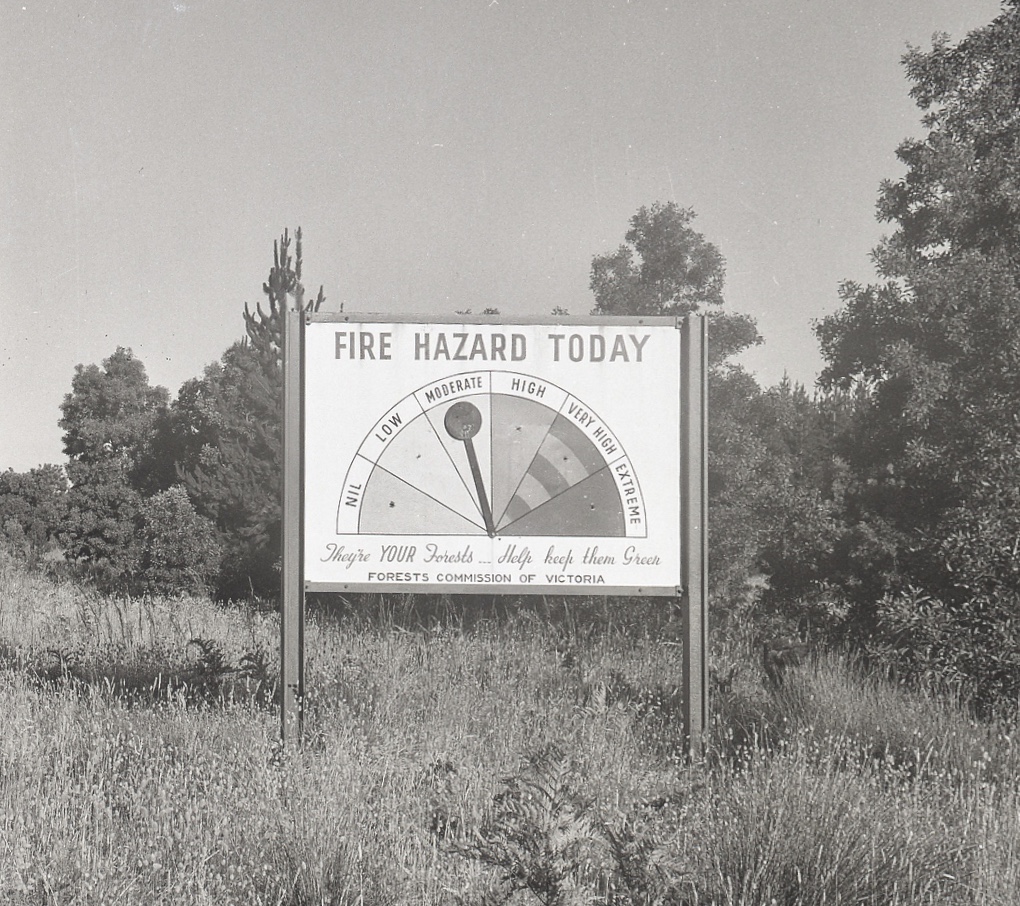
The declaration of a Total Fire Ban (TFB) in Victoria was for many years the key indicator of a day of extreme fire danger for both the fire agencies and the public. But it also served, and indeed continues, to prohibit a range of activities well beyond a ban on barbeques and burning off. TotalContinue reading “Total Fire Bans in Victoria – a history.”
Sundial Peak – Grampians.
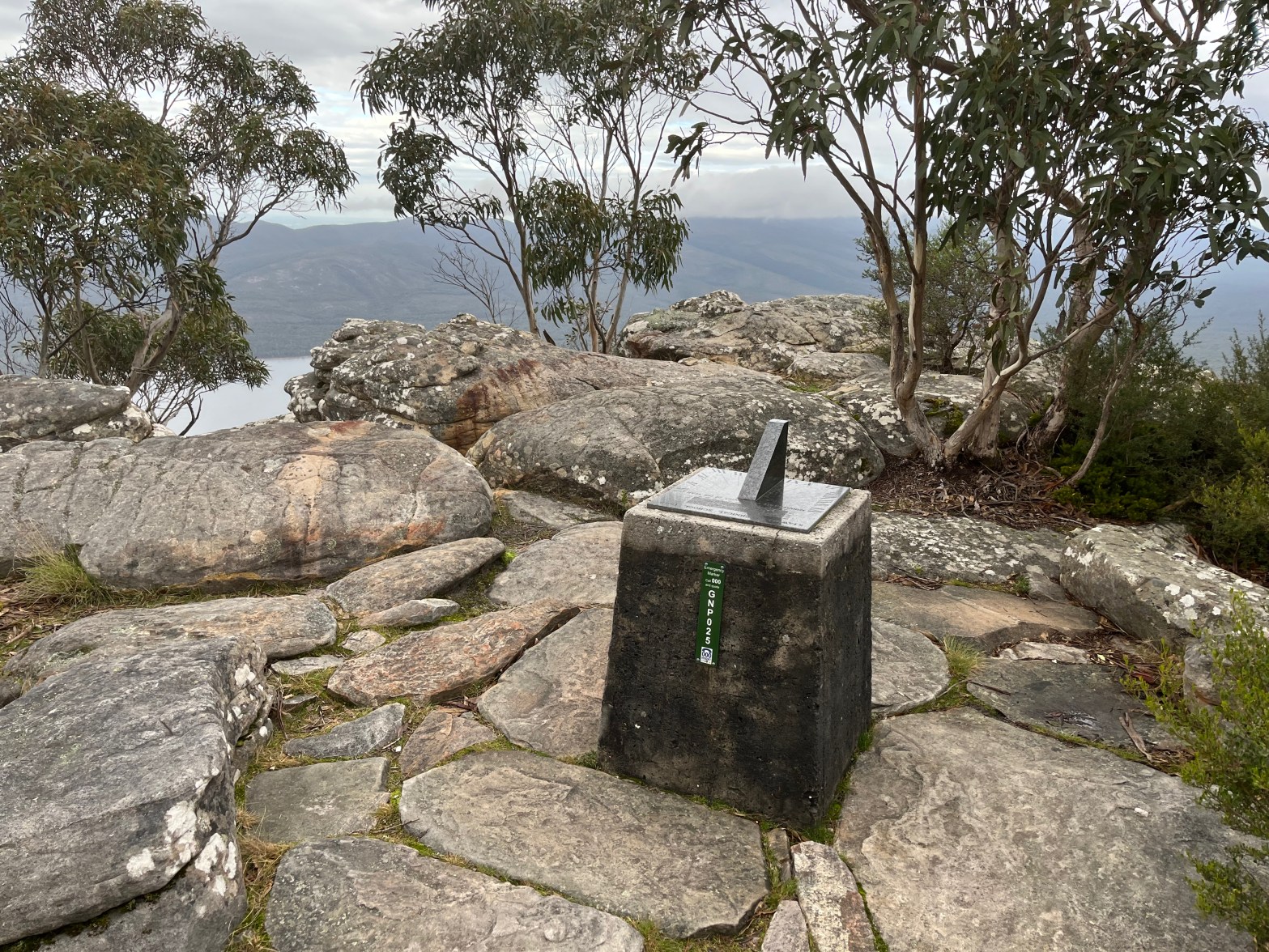
Sundial Peak in the Grampians National Park sits at the southern end of the Wonderland Range and overlooks Lake Bellfield. It was named by early settlers who noticed that the 2360-foot-high peak received the first and last rays of sun each day. In 1968, form-five students at nearby Stawell Technical School, under the guidance ofContinue reading “Sundial Peak – Grampians.”
National Service – Vietnam Veterans Day.
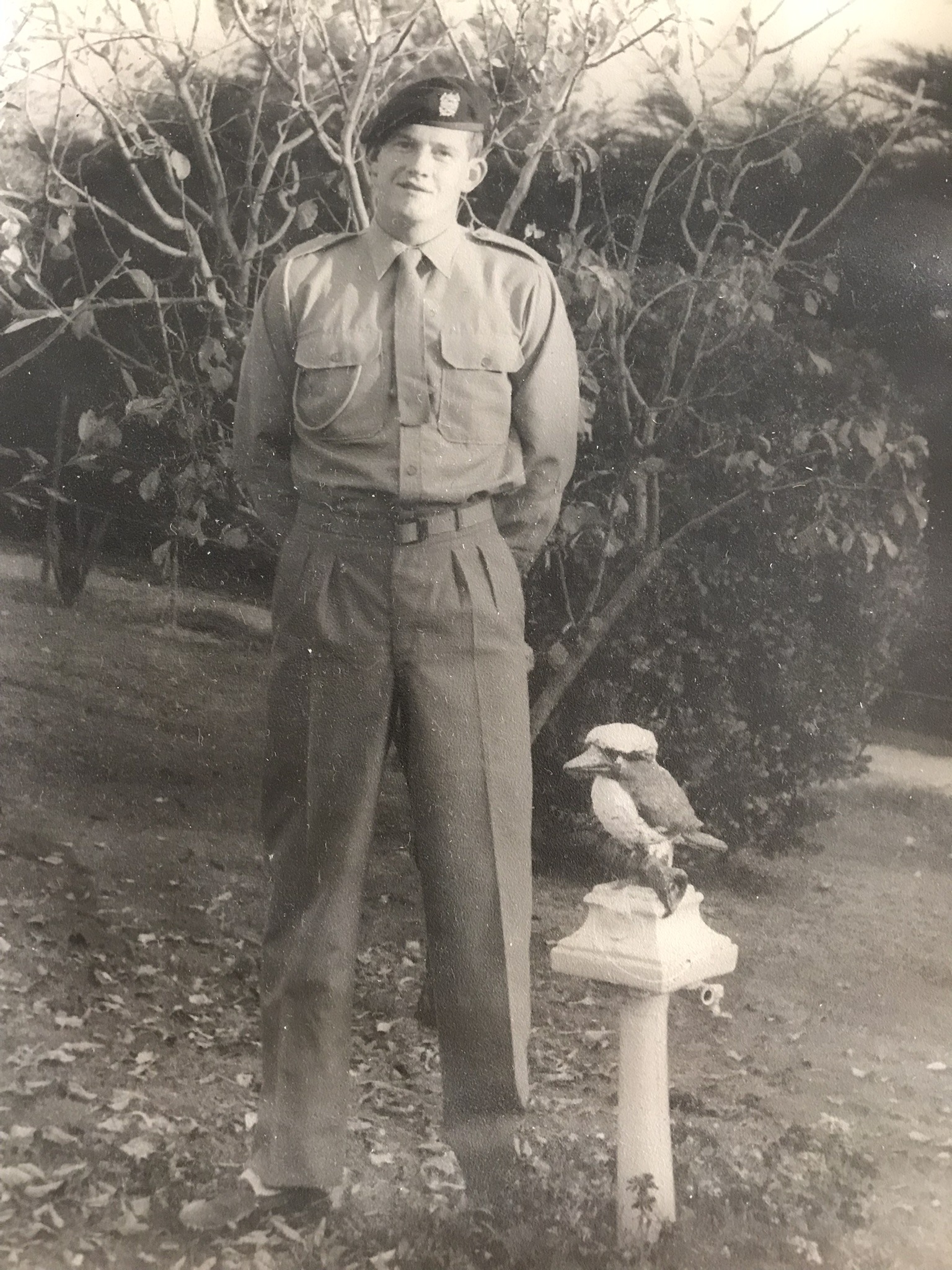
Unlike other military conflicts, the records of Forests Commission staff who served in Vietnam are not consolidated or recognised on honour boards. I know a few names… One of the most notable was Des Collins who worked on the crew at Daylesford and was killed along with his workmate, Alan Lynch, at the Greendale fireContinue reading “National Service – Vietnam Veterans Day.”
Pole Plot – Sherbrooke Forest.
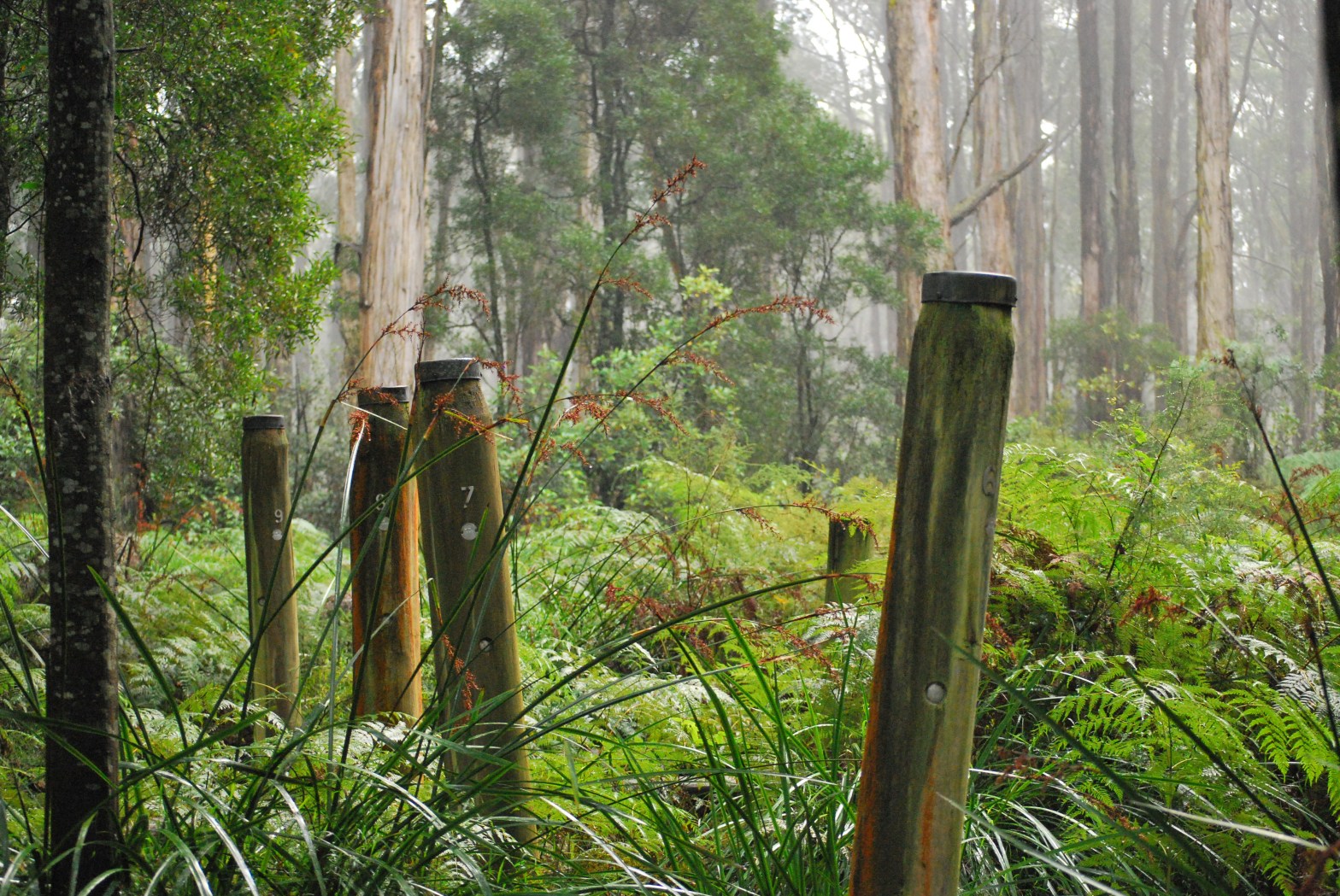
The Sherbrooke Forest pole plot is at the southern end of Coles Ridge Track, between Belgrave and Kallista. The study plot in wet forest was paired with another site in drier bush near Winton, on the old Hume Highway. Both research plots are thought to have been established in the 1930s by Post Master GeneralContinue reading “Pole Plot – Sherbrooke Forest.”
Pennies for Pines.
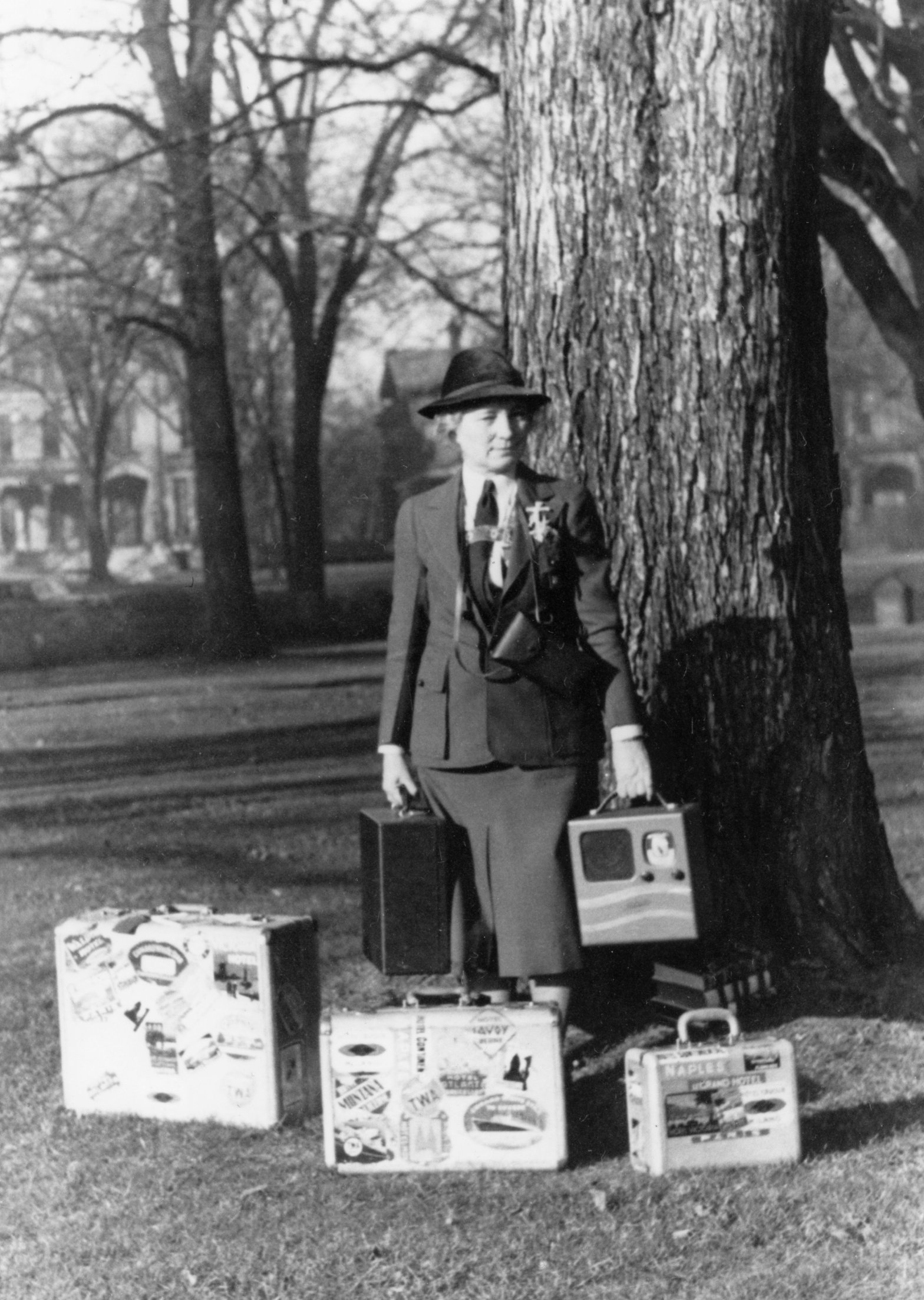
Margaret March-Mount began working for the U.S. Forest Service in 1913 as a clerk on the Bighorn National Forest in Wyoming. Growing up in southern Illinois and Kansas, Margaret had witnessed the devastating effects of erosion from wind and rain. She envisioned a nation of healthy trees so began writing and speaking about the benefitsContinue reading “Pennies for Pines.”
Powell Wood Process – Powelltown.
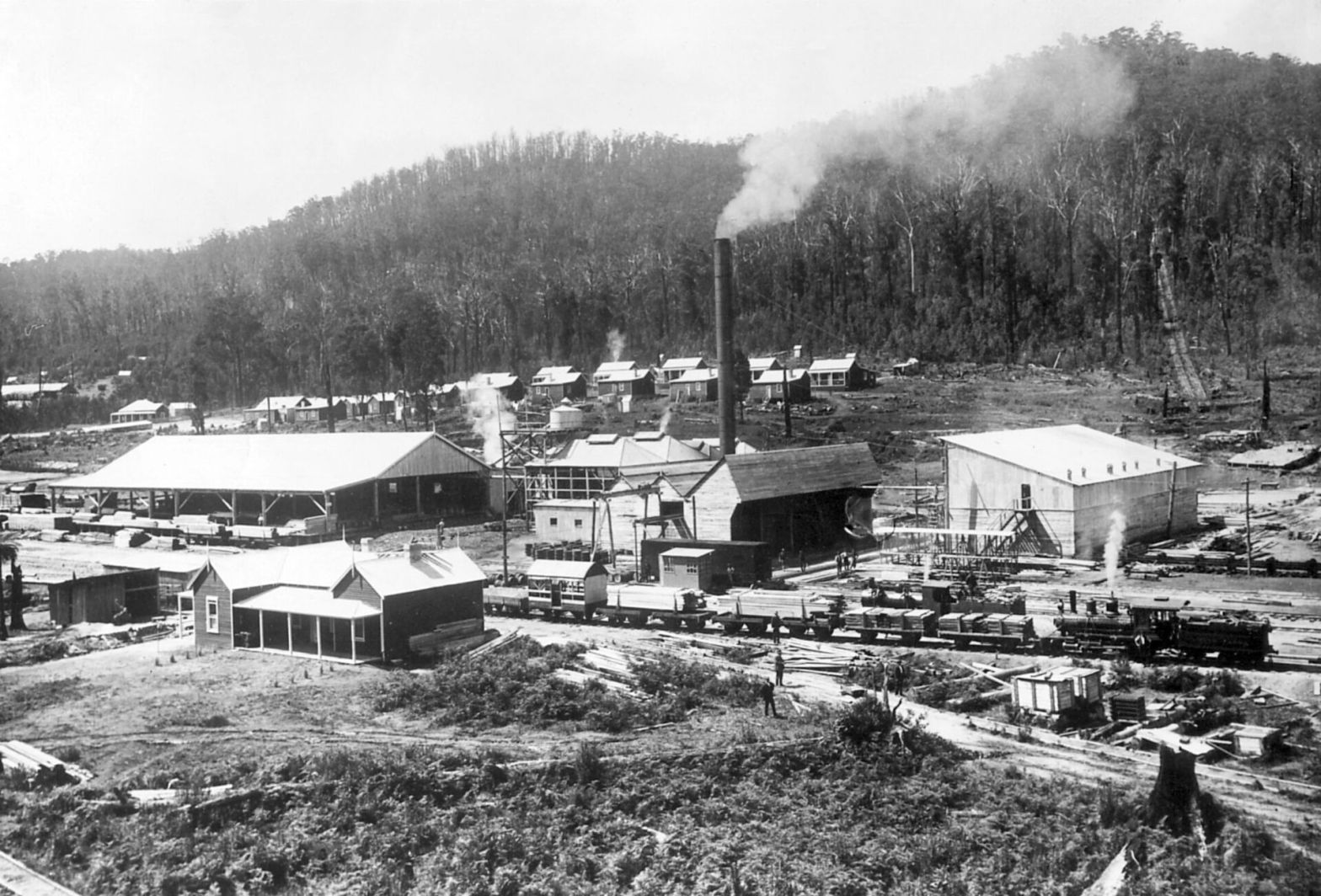
In about 1900, experiments were conducted in England by Mr William Powell to perfect a new process of preserving wood. Mr Powell, who owned a sugar refinery in Liverpool, had noticed that the wooden staves supporting the vats on the side where the molasses was spilt lasted longer than those untouched by the solution. PonderingContinue reading “Powell Wood Process – Powelltown.”
Bailey Bridge – Great Ocean Road.

Almost 11 inches of torrential rain fell over 18 hours during the evening of Wednesday 15 February 1954. The deluge pushed soil and debris down the steep hills adjoining the Great Ocean Road and blocked a small culvert at Hutt Gully, just west of Anglesea. Water spilled across the road, gouging two impassable gaps upContinue reading “Bailey Bridge – Great Ocean Road.”
Muckleford Creek Railway Bridge.
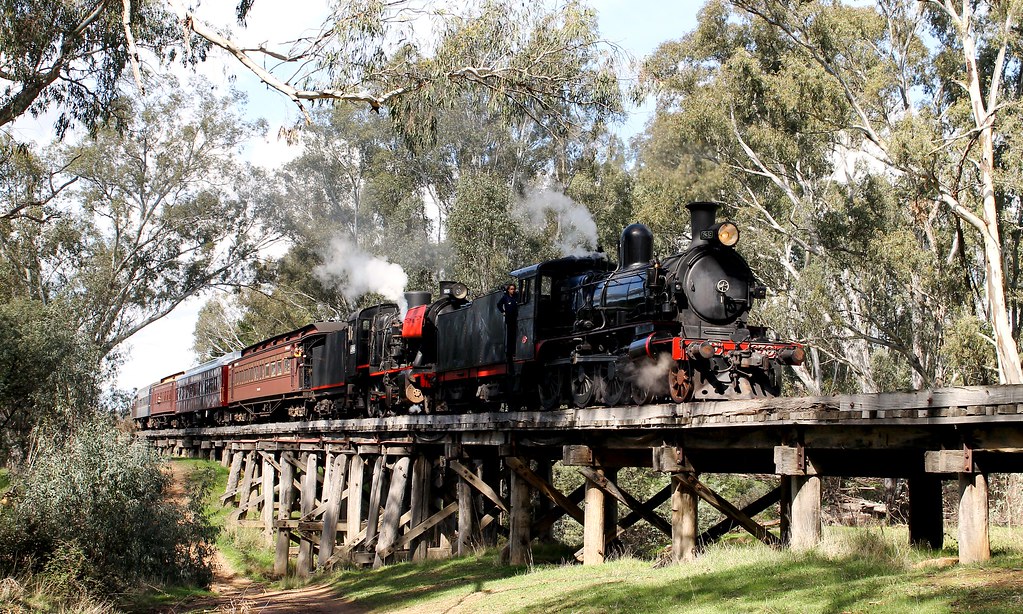
Timber bridges demonstrate the fundamental significance that State forests played in the rapid development of the new colony of Victoria after the gold rush of 1851. Two Acts of Parliament passed in December 1880 and December 1884, authorised the construction of 89 new railway lines, more than doubling Victoria’s network to over 2,900 miles byContinue reading “Muckleford Creek Railway Bridge.”
More blowing stuff up.

The Army Reserve was always willing to help the Forests Commission and rural municipalities blow stuff up. In November 1976, sappers in the 7 Field Engineers Regiment (7FER) from Ringwood, plus some other engineers from Gippsland, helped the Horsham Shire remove an old wooden bridge on Bulgana Road, east of Stawell. About 63 kg ofContinue reading “More blowing stuff up.”
Blowing stuff up.

The Forests Commission Victoria (FCV) had a large and active engineering branch for making stuff… as well as breaking stuff… Most overseers, as well as some foresters, were trained in the use of explosives to “blow stuff up” such as removing stumps and rocks from roads. Districts usually had a small powder magazine tucked awayContinue reading “Blowing stuff up.”
The knitting needle computer.
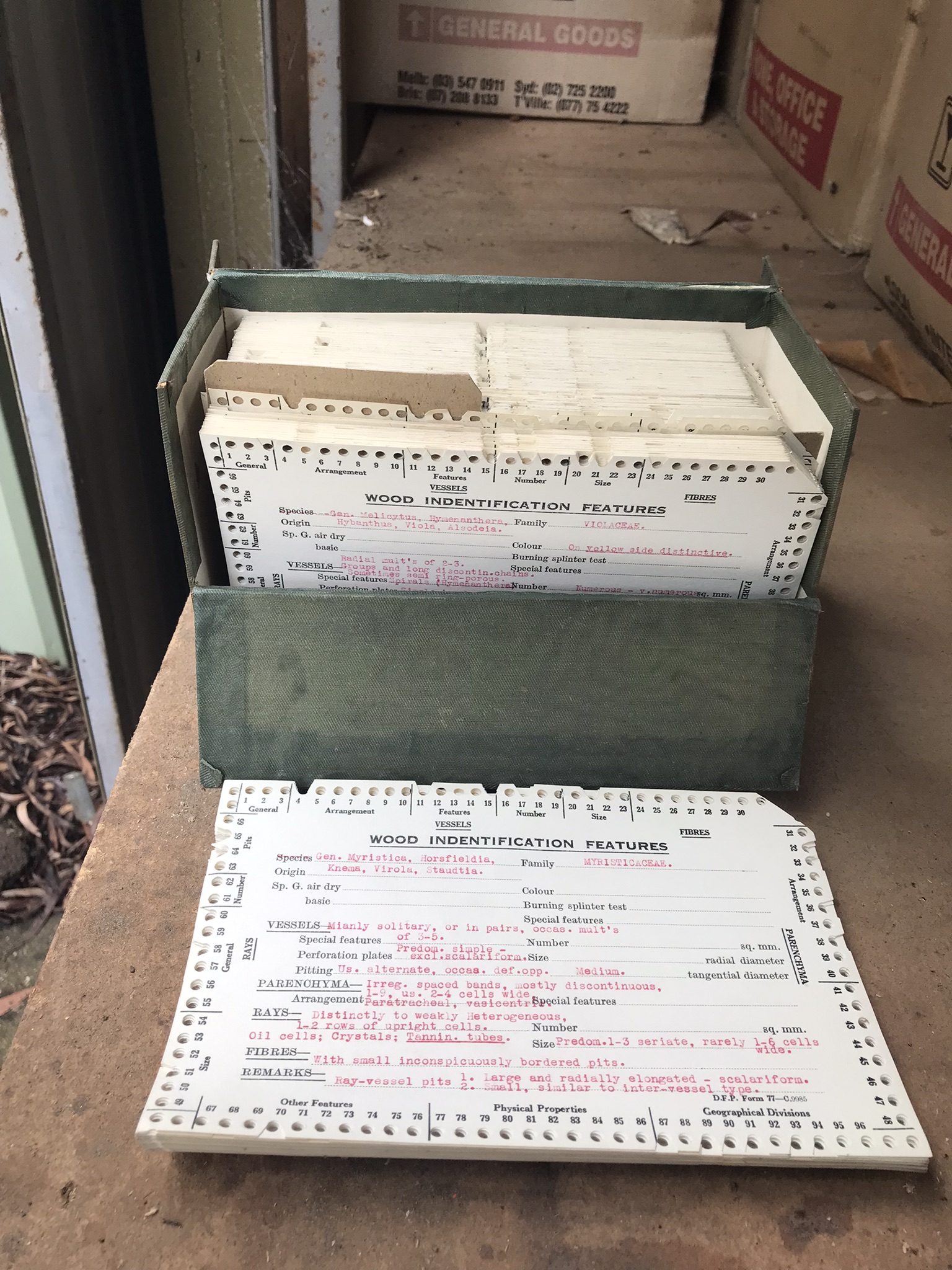
Edge-notched index cards were invented in about 1896 and have holes punched around the borders. The top right-hand corner is also clipped to help stacking the deck. The holes could be clipped to search and sort information. For foresters, these cards were commonly used to identify timber samples. Using a 10X magnifying lens, or aContinue reading “The knitting needle computer.”
Timber Workers Strike – 1929.
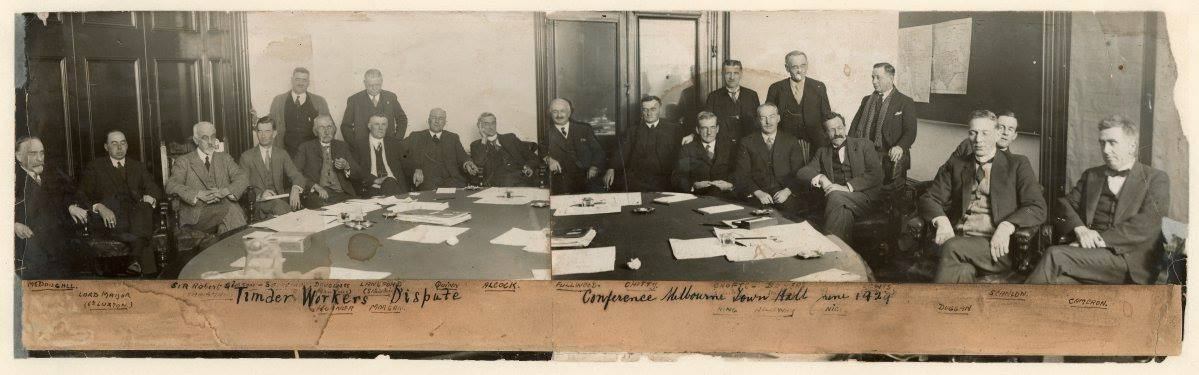
The 1929 timber workers strike was the first in Australia after the onset of the Great Depression. The strike lasted nearly six months and affected all sections of the timber industry including the Forests Commission Victoria (FCV) which supplied logs from State forest. The Commission also operated its own sawmill at Nayook, near Noojee, asContinue reading “Timber Workers Strike – 1929.”
Gateway to a Man’s Career.
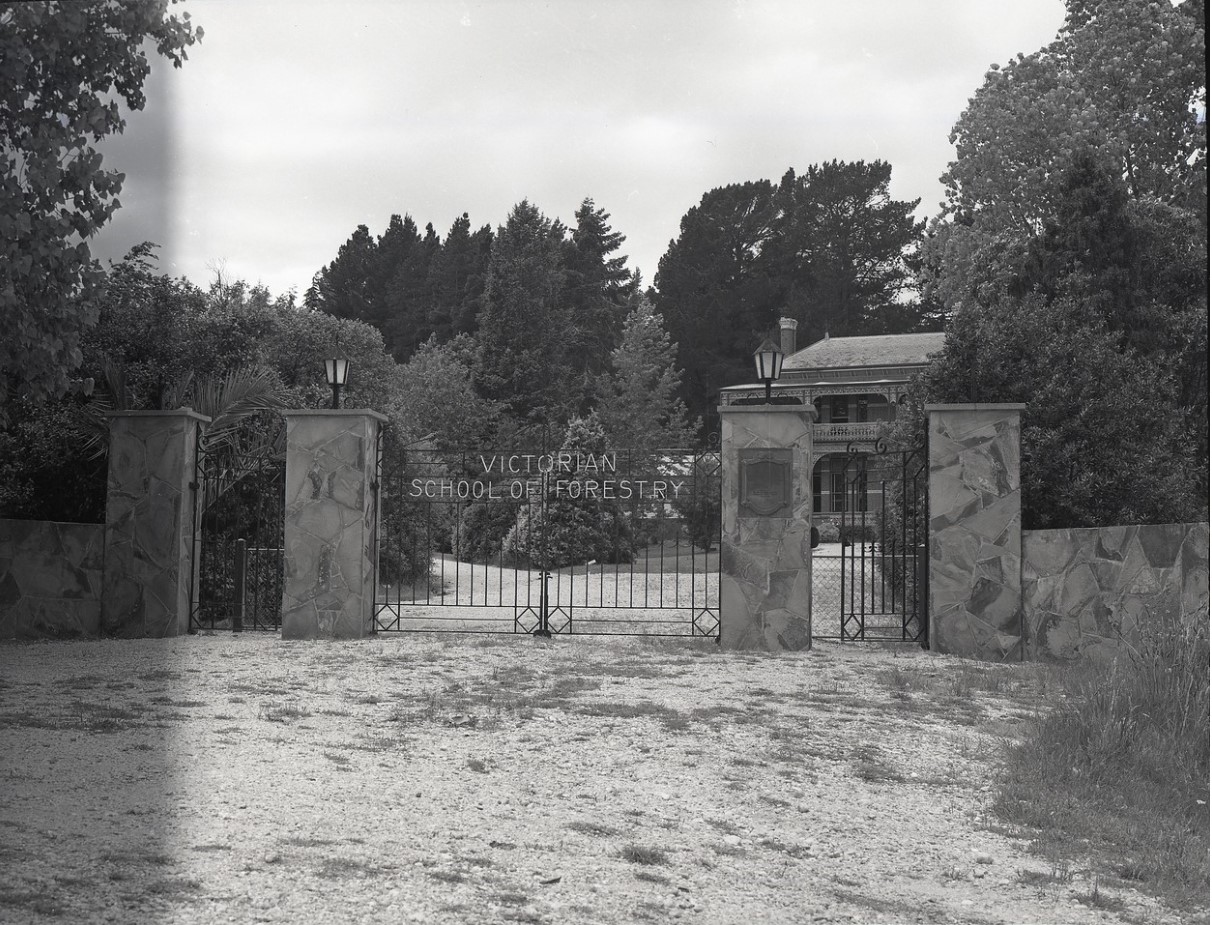
The main gates to the Victorian School of Forestry (VSF) at Creswick were dedicated to Sir Alexander Peacock KCMG by the Minister for Lands and Forests, Sir Albert Lind, on 10 October 1952. Prior to the new gates there was just a simple wire fence. Peacock was born at Creswick in 1861 and was theContinue reading “Gateway to a Man’s Career.”
 Victoria’s Forests & Bushfire Heritage