There are several growth stages of a forest, and it’s much the same for foresters.
Firstly, there is germination, which is followed by the seedling, sapling and pole stages. These are the tree equivalents of childhood, boisterous youth and effervescent adolescence.
But once tree roots have become established there is a long period of growth and consolidation.
There is a healthy jostling for light and space. It’s time to put on height and girth, for flowering, seeding and regeneration of a new forest. Much the same as establishing careers, relationships and families.
It’s a time when trees and foresters develop and grow, take their own unique shape, and influence other trees around them.
There are sunny spring days with blue skies and gentle breezes, but the rhythm of the seasons also brings rain, wind, floods, storms and bushfires.
But the strong thrive and flourish to develop their own distinguishing characteristics. These are the trees you notice as you stroll through the bush.
After peaking in the climax forest phase, a long interval of dignified ageing and retirement begins. Once-upon-a-time these dominant old-growth trunks were not particularly valued and might have even been considered as culls, only suitable to be ringbarked or felled to allow space for the recruitment of younger and more sprightly trees. But times have changed and now these older forests and foresters are not considered as senescent and decayed, but as ones of grandeur.
Yes, there are a few signs of aging… a fire scar here and there, creaky limbs, a bit of saggy or loose bark, a few silvery leaves, a crown that may be thinning a bit, and the trunk may have thickened up too.
These gnarled habitat and seed trees have a few lumps and bumps and need the occasional care of arborists and tree surgeons to keep them healthy and upright, but all the forest critters love ‘em.
These steadfast guardians now proudly and silently watch over the forest as a younger crop of trees, which they helped sow, vigorously grows up around them. The presence of these enduring sentinels unquestionably adds balance to create a healthy and diverse forest ecosystem.
The changing seasons, just like the endless departmental restructures, instils a deep sense of wisdom and resilience.
These mature specimens are like the towering mountain ash, Eucalyptus regnans… the monarchs of the bush.
Foresters tend to devote their lives and careers to service of their communities, as well as protection of the forest they love from the threat of bushfire.
And even in old age they never lose that prickling awareness of the summer seasons, the hot northerly wind, followed by the southwest change with the lightning band moving across the mountains, the whiff of smoke, or the distinctive pong of Jet A1 fuel.
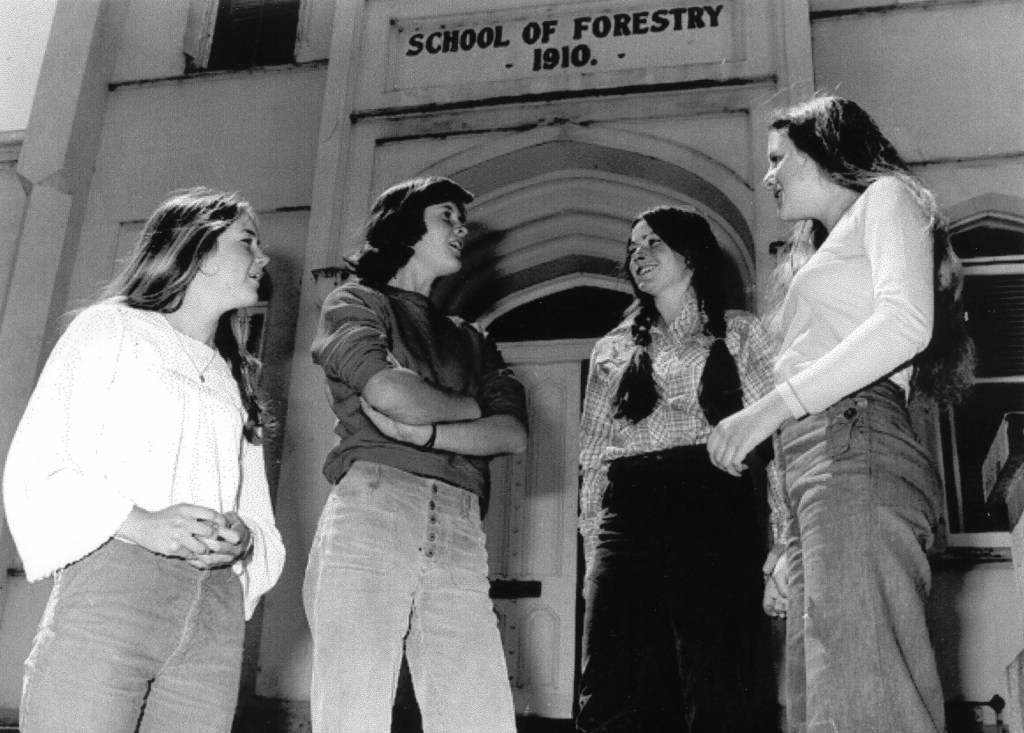
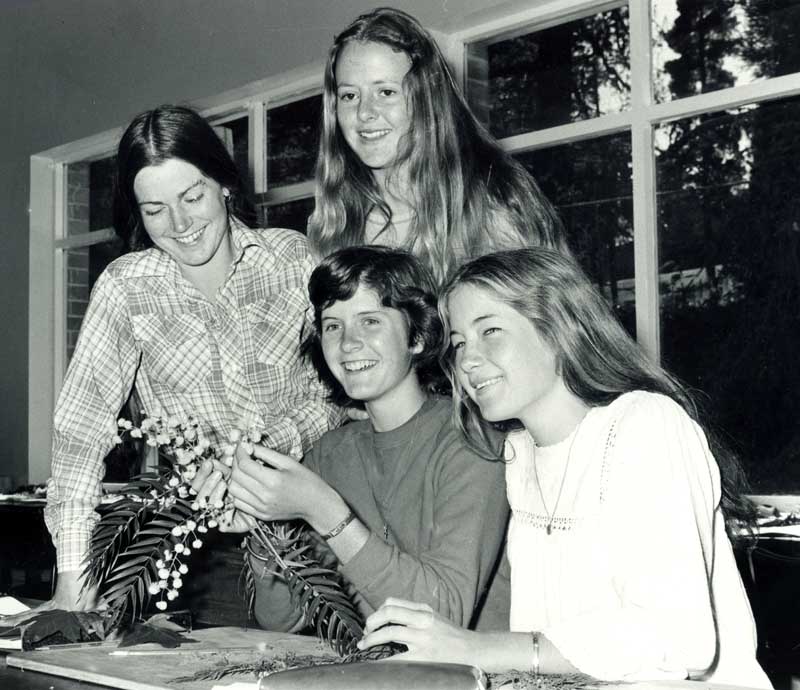
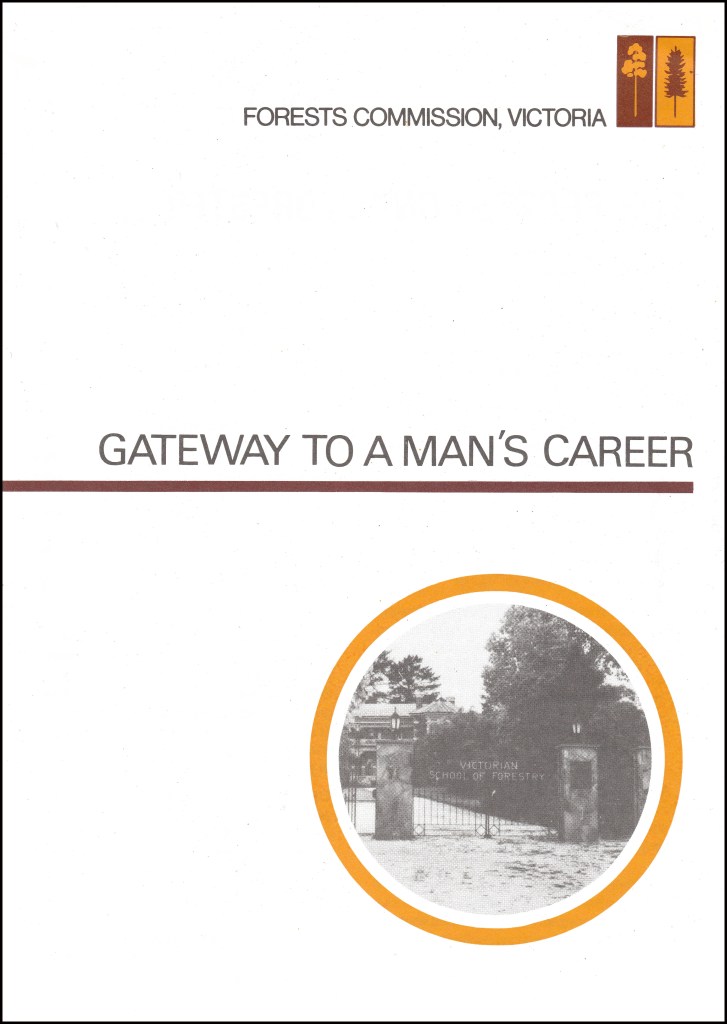
Traditionally, the Victorian School of Forestry (VSF) at Creswick had been promoted as a “Gateway to a Man’s Career”. Although a few had enquired over the decades; it wasn’t until January 1976 that the first group of female students stepped over the coveted threshold to the campus.
Scholarships for the three-year residential course were keenly sought as they offered a free tertiary education for students from modest backgrounds.
While a few privately funded students entered the school over the decades, most were offered generous fully-funded scholarships but were then “bonded” to work for the Forests Commission for a period of three years upon completion of their Diplomas. For many, it turned out to be “a-career-for-life”.
There were often minor fluctuations to the initial intake of students caused by early thinning and weeding. A few didn’t make it past the archaic initiation rituals or manage to endure the rigorous academic and practical curriculum. A few of the cohort left to pursue other callings, but there were also some very successful supplementary plantings too.
But sadly, in the years following their graduation from Creswick, there were a couple of very significant “plus-trees” that prematurely succumbed to natural thinning from the 1976 age-class, but their memory has been cherished and not forgotten.
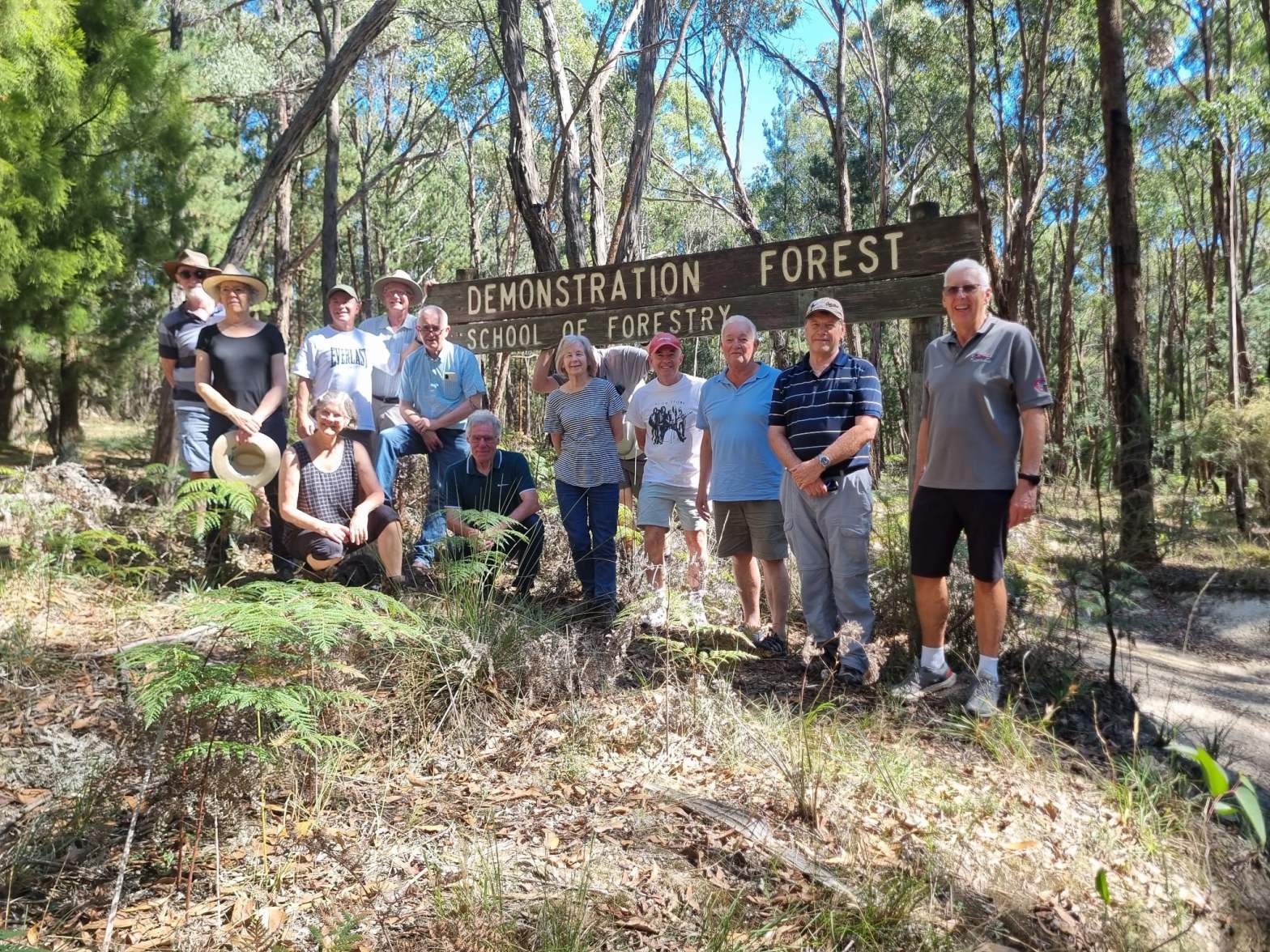
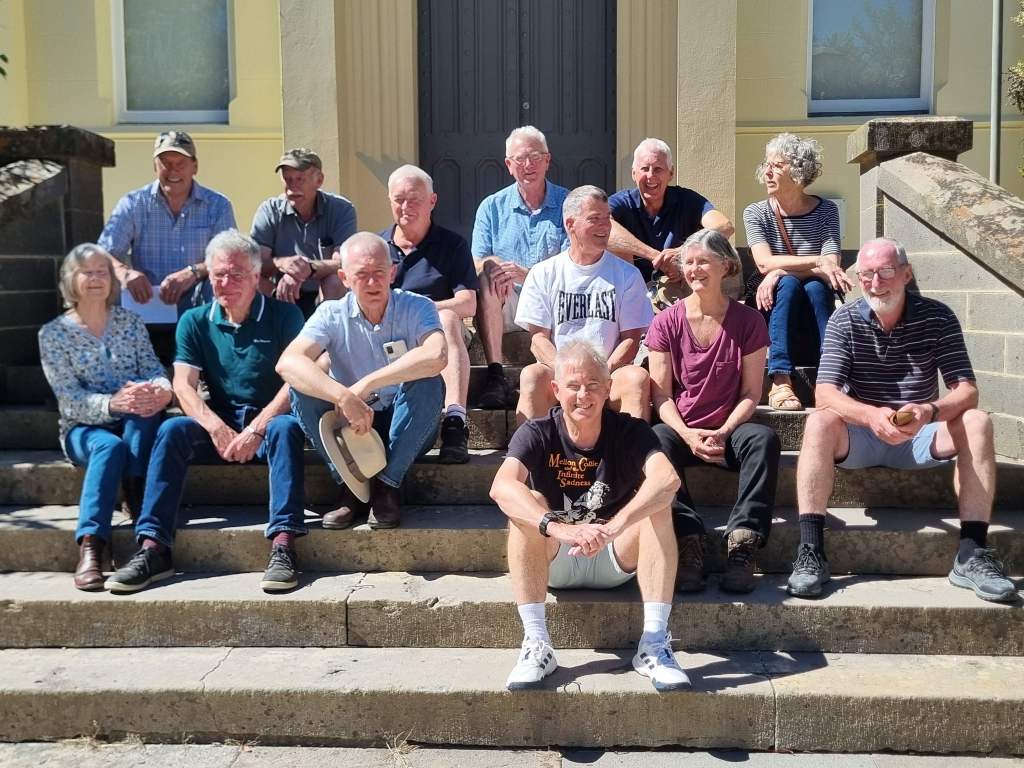
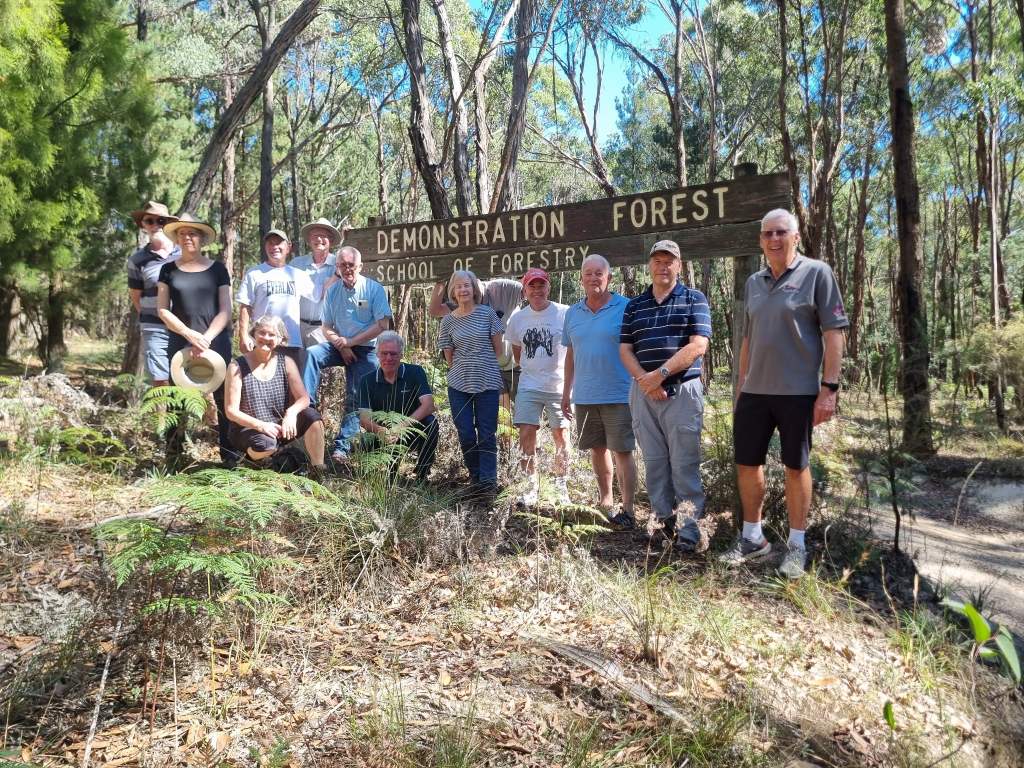
This hardy harvest of foresters recently reached an important milestone. On World Forestry Day last weekend, they gathered to mark fifty years since they first entered the school as eager and fresh-faced students. But a couple were unable to make it to their golden anniversary reunion.
Like the many rotations of VSF graduates before them, this crop formed lasting bonds through shared ordeals and adventures and represent a fine example of what happens when government takes a risk and invests in training young people and giving them an opportunity. It was once much the same arrangement for teachers and nurses.
Each, in their own way, have made significant contributions to their chosen profession, and their communities, and have more than repaid the trust that was placed in them by society.
And finally, amid the noise and haste, and with the passage of the years, those trees remaining in the forest will slowly age to reach their overmature and senescing stage and, in the absence of catastrophic bushfires or storms, will gradually and gracefully surrender the things of youth and gently cede to the bush.
Forestry conjures up an image of a long-term and sustainable cycle of harvest and renewal, of balance and multiple use, while growing and protecting forests for the future.
So, the past is never fully gone, it becomes absorbed into the present and the future. And it sometimes leaves a lasting impression and a valuable legacy.
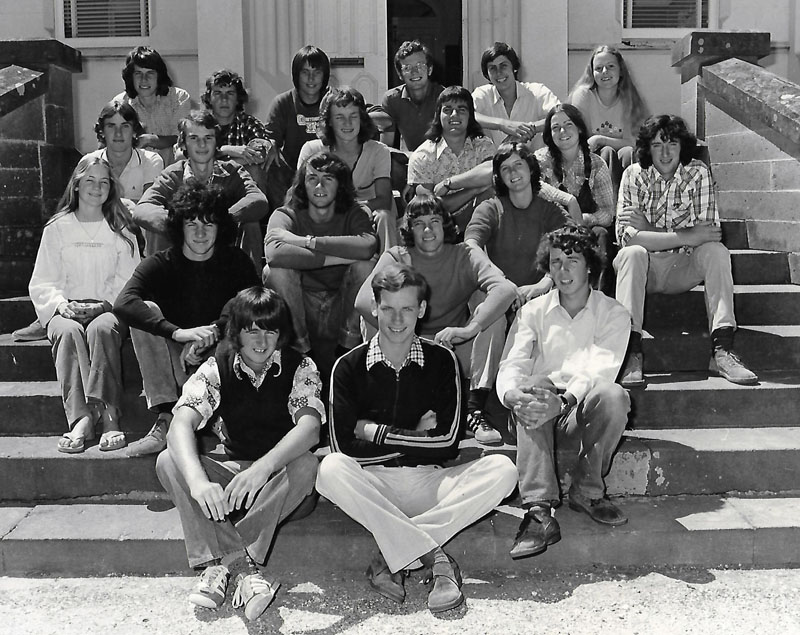
Back Row (l to r) Martin Woodward, ? Mollison, David Miller, Geoff Pike, Gary White, Fiona Hamilton.
Second from Back Row (l to r) Peter Keppel, Peter Woodgate, Adrian Hatch, Michael (Mick) Morley, Anne Coleman, Anthony (Tony) Edgar.
Second from Front Row (l to r) Sue Lowther, David Gallacher, Fred Cumming, Bruce Wehner, Megan Varty.
Front Row (l to r) Peter Stoddart, A Taylor, ? Mollison.
 Victoria’s Forests & Bushfire Heritage