Today, 21 March, is World Forestry Day (WFD), which was proclaimed by the United Nations Food and Agriculture Organisation 55 years ago in 1971.
The date was set down to coincide with the vernal equinox when the sun passes over the equator giving equal lengths of day and night.
It also marks the first day of spring in the northern hemisphere and autumn down under.
WFD was rebadged “International Day of Forests” by the UN in 2012 but still recognises the essential importance of our forests.
Sadly, the occasion has become a bit lost and forgotten in amongst a modern and cluttered calendar full of sometimes bizarre commemorative days complete with different coloured ribbons for this-n-that.
But over 100 years ago, there was a very strong level of community interest in State forests, in part fostered by the Australian Forestry League (AFL).
The League was proposed at the first Interstate Forestry Conference held at Sydney in 1911 and officially formed at the following meeting in Melbourne in 1912.
The inaugural President was notable botanist, Professor Alfred James Ewart from Melbourne University, who also oversaw the curriculum at the Victorian School of Forestry.
The League included other big names like forestry benefactor, industrialist and philanthropist, Sir Russell Grimwade.
Undoubtedly, the patronage of the powerful Australian Natives Association (ANA), which was formed in Melbourne in 1871, gave the Forest League much of its political influence.
The League’s 1917 constitution called for “the advancement of educational and legislative measures and the encouragement of individual effort tending to ensure the maintenance, extension and renewal of the forests of Australia”.
Later in 1921, the Empire Forestry Association (EFA) was formed under royal charter, with the direct patronage of the King and the Prince of Wales.
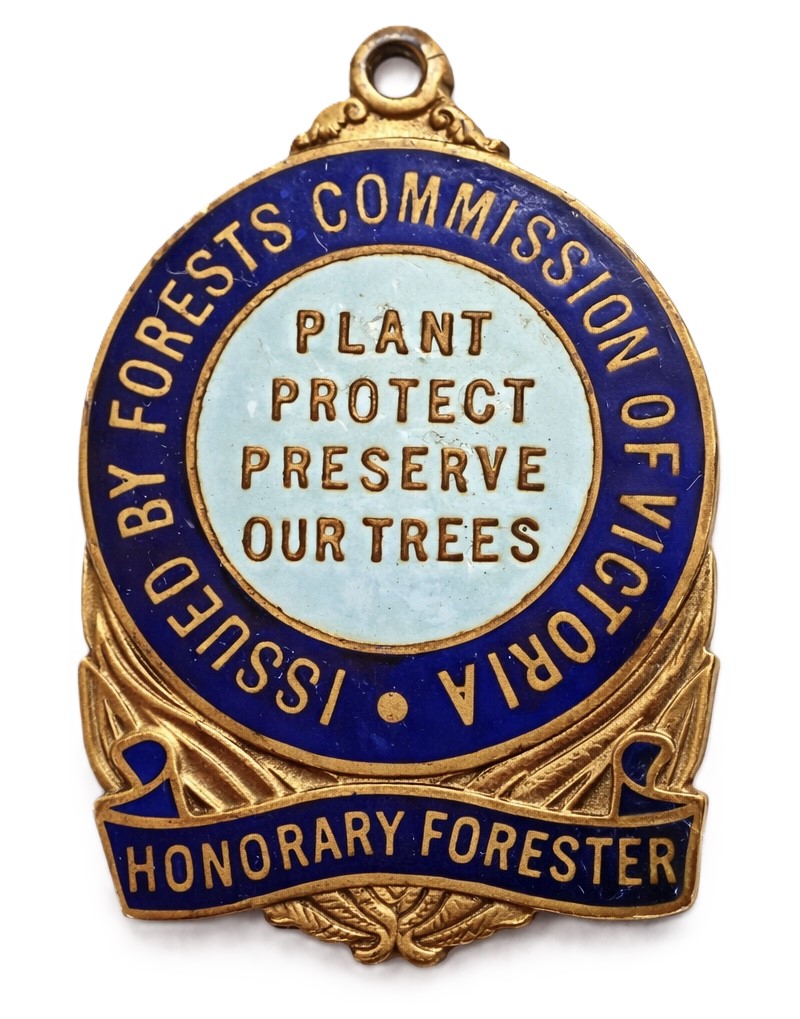
By 1927, interest had grown and responsible members of the general public could be appointed by the Forests Commission as Honorary Foresters under Section 22(4) the Forests Act (1919).
They were mainly appointed in relation to fire protection, prevention of vandalism and theft as well as the protection of flora on State forests.
Some appointments were made to individuals, but many were to people within organisations such as the Progress Association of the Shire of Fern Tree Gully and the Diamond Creek Ratepayers League or to local CFA brigade officers.
Each was issued with a distinguishing badge and given authority under the legislation and were requested to cooperate with District Foresters in the protection of State forests.
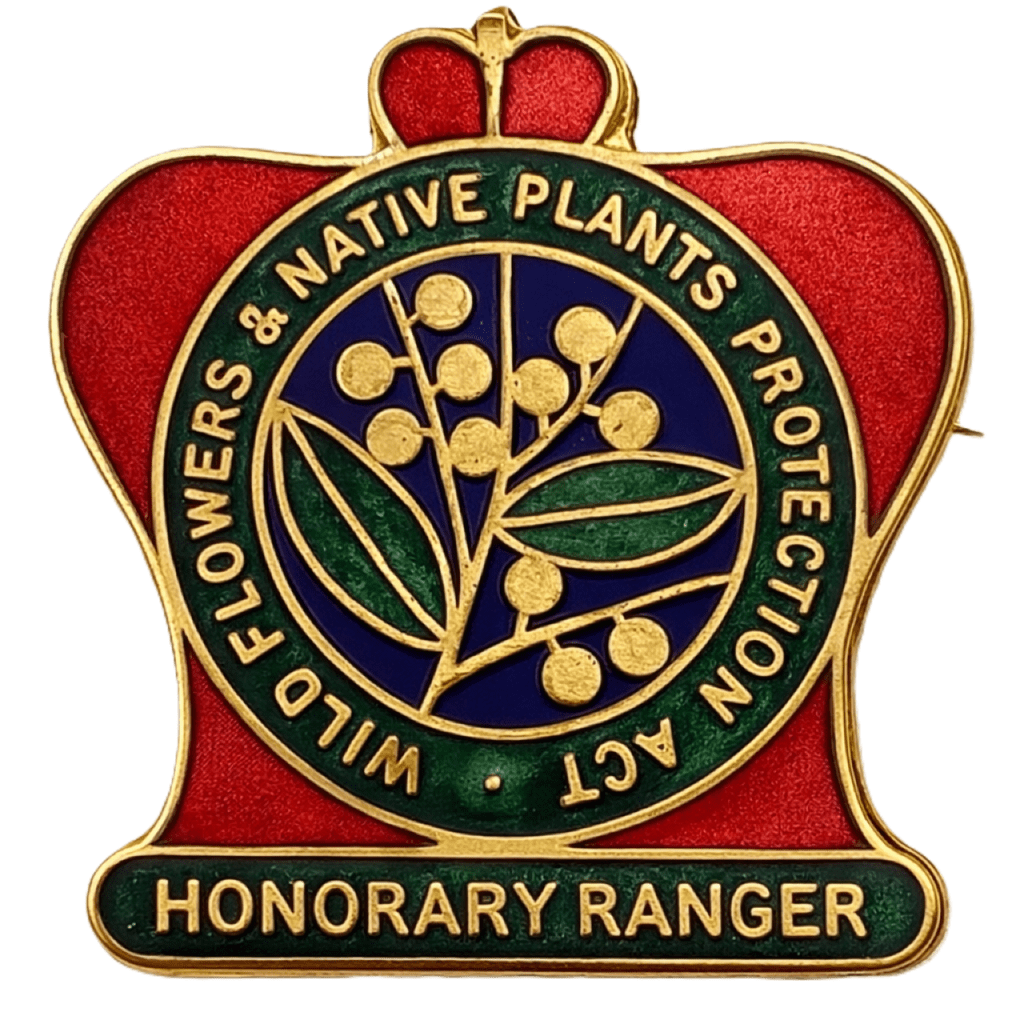
The Wildflowers and Native Plants Protection Act (1930) sought to prevent the picking of protected wildflowers and native plants, and the Commission could then appoint Honorary Rangers to assist.
But a memo held in the Public Record Office of Victoria (PROV), dated October 1965 from the District Forester at Kallista, Jim Wescott, points out that there had been about 400 Honorary Foresters appointed since 1927, but the FCV had lost track of most of them and no central registry had been adequality kept. He was also concerned that records of deaths, changes of address and return of badges had not been maintained. Furthermore, he pointed out that most DFOs were unaware of the active Honorary Foresters in their District and little contact was maintained with them.
The last files in the PROV the date from 1981 for appointment of Officers of the Department Crown Lands and Survey as Honorary Forest Officers.
These magnificent badges were made by Percy John King who was a prominent Melbourne-based manufacturer of medals, badges, and uniform buttons, established in 1893. They are numbered and are part of the FCRPA Collection.
 Victoria’s Forests & Bushfire Heritage