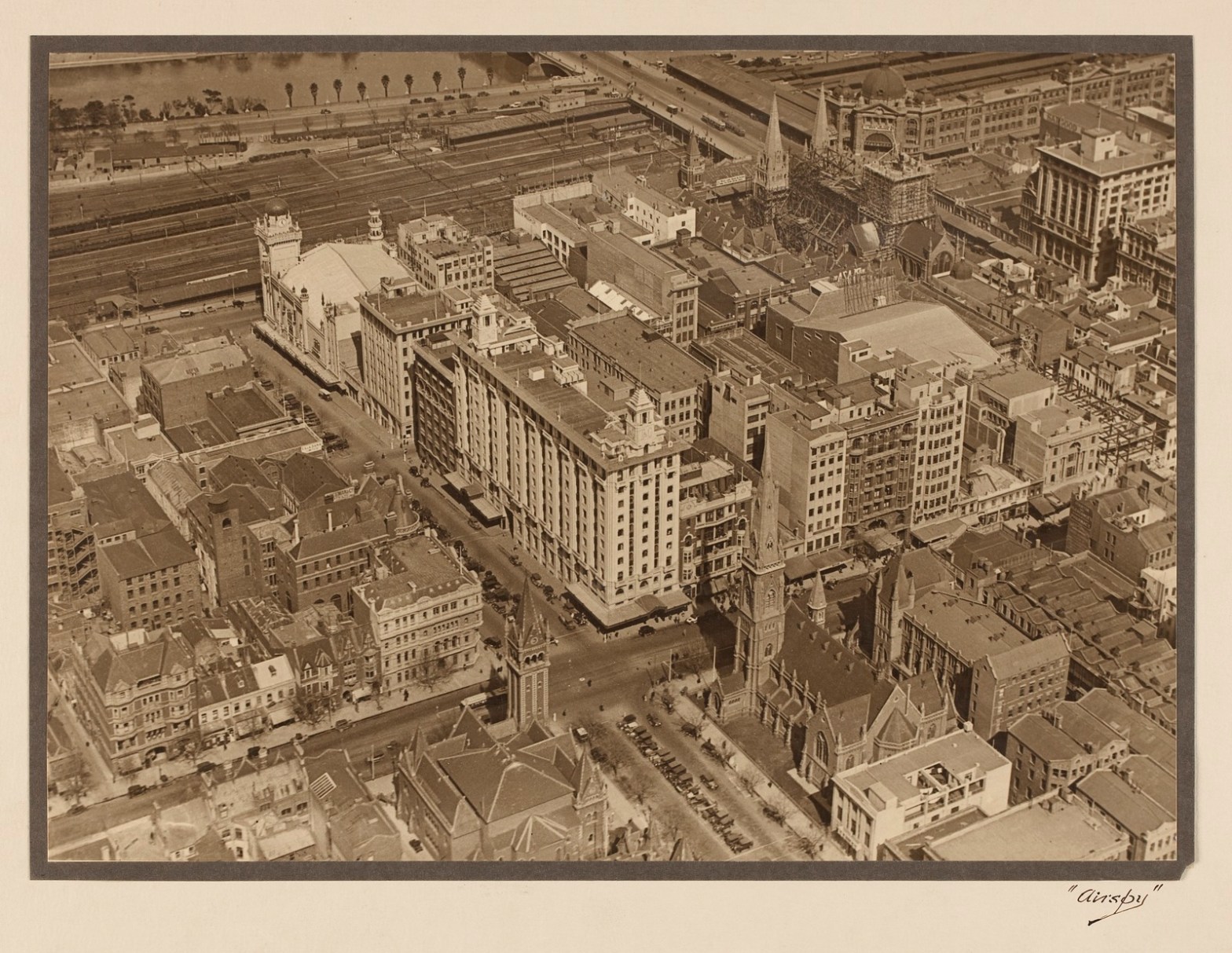
Like lots of people, I enjoy the views from above – from an aeroplane, a helicopter, a hot air balloon, a bushfire lookout or the top of a tall building.
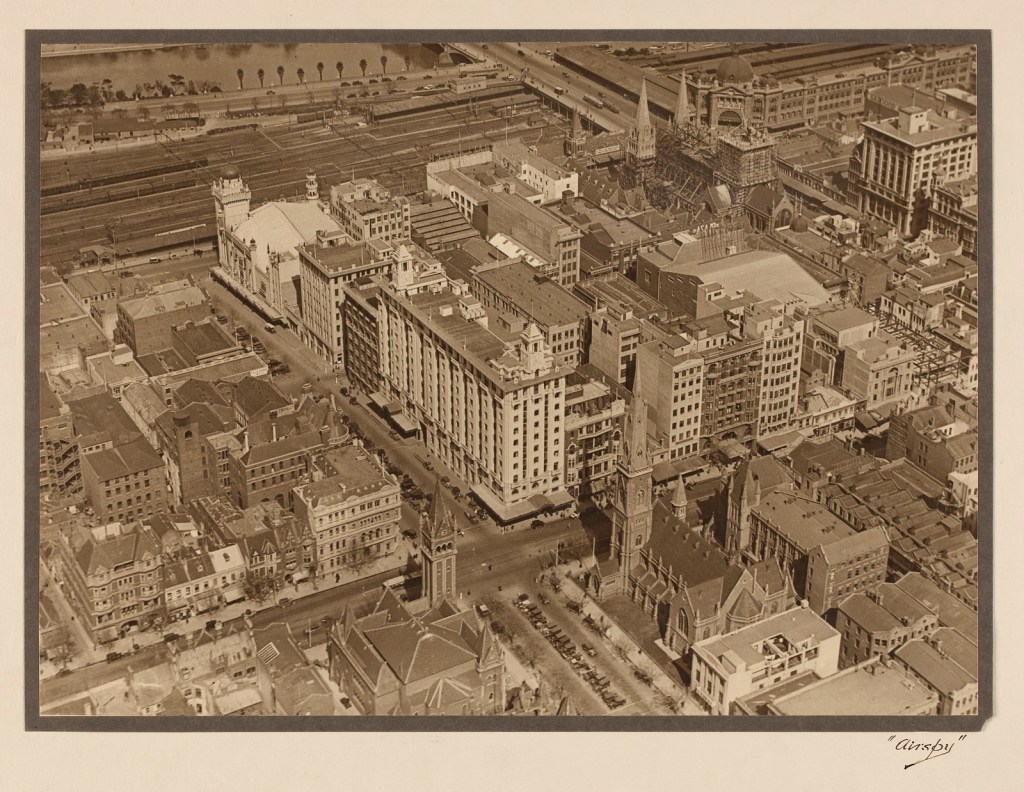
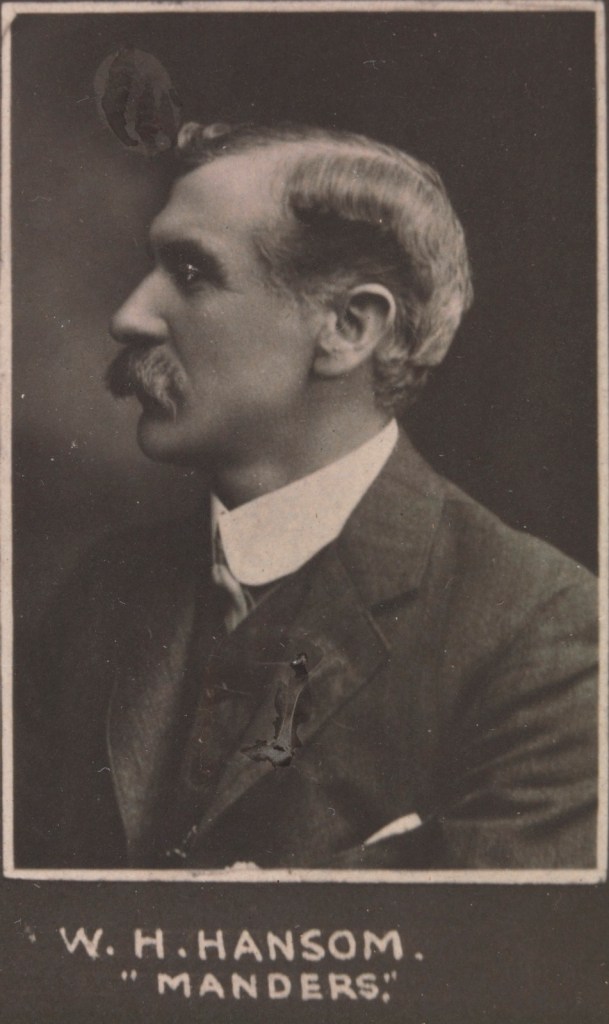
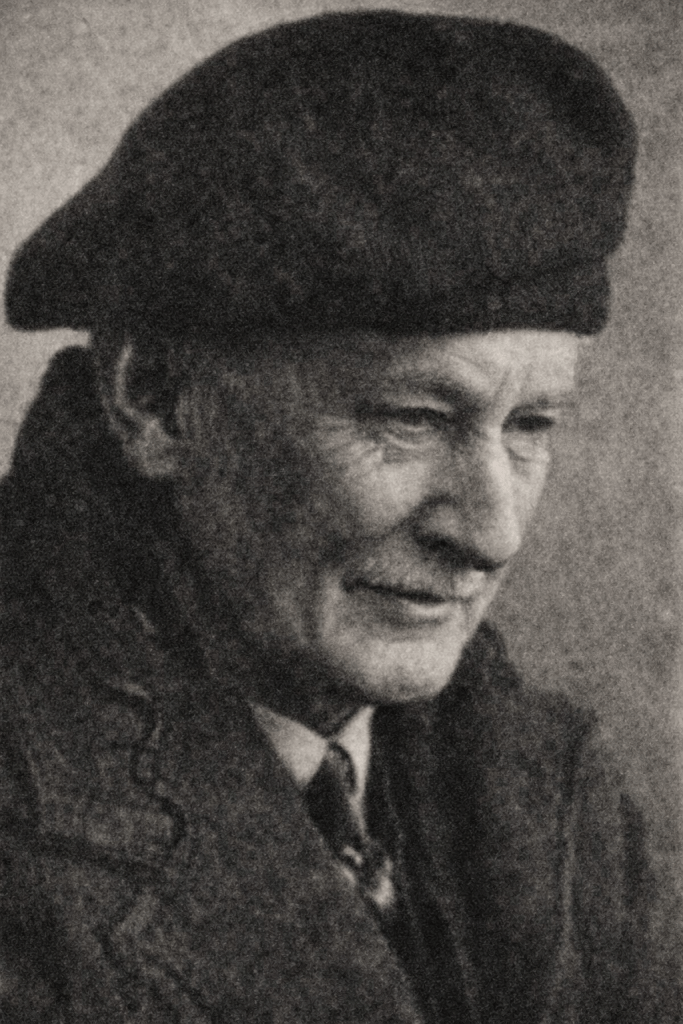
William Herbert Hansom was better known as “Airspy” and was a pioneering aerial photographer based in Melbourne during the period after WW1.
He was born in England in 1862 where his uncle, English architect Joseph Hansom, patented the now famous Hansom Cab in 1834.
William fled the monotony of wool-classing in Bradford and the stolid sanity of Victorian England at the age of 19 to sail on a return trip to Quebec in Canada, where he picked up the taste for adventure.
In the 1880s, after another voyage to Quebec, he left England again for Australia where his ship was shot at by rebels in the Suez Canal. He and the crew went ashore and chased them off.
On arrival in Australia, William reluctantly returned to wool-classing. He also contributed sporting articles to country newspapers and founded one of the first press agencies in Victoria. But his spare time was devoted to the newly evolving hobby of photography.
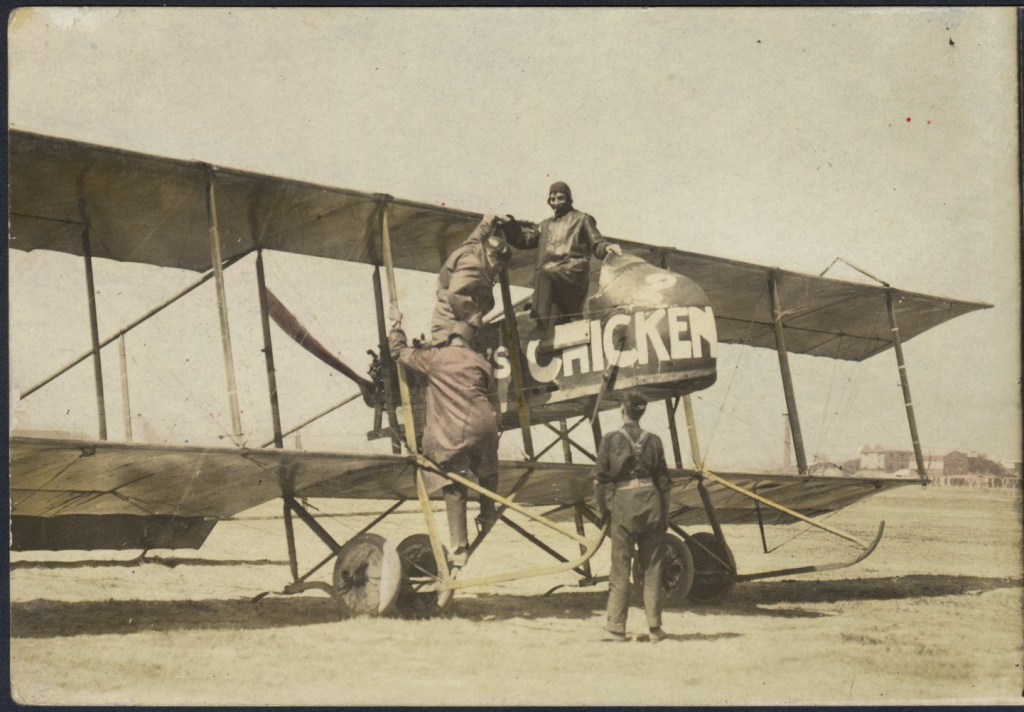
He took up aerial photography at the end of the war, in about 1919, when there was availability of ex-military pilots such as Harry Shaw, Hamilton Hervey and Allan Cobham who owned war-surplus aeroplanes and were looking for charter work. This possibly marked the beginning of commercial aerial photography in Victoria. Hansom later remarked –
Returned Air Force pilots were ideal for my work, because fighting had taught them to be very quick in their turns to keep the enemy off the tails of their machines. They were always able to approach my subject from exactly the right angle. Many club-trained pilots have attained remarkable skill too, and I frequently fly with them.
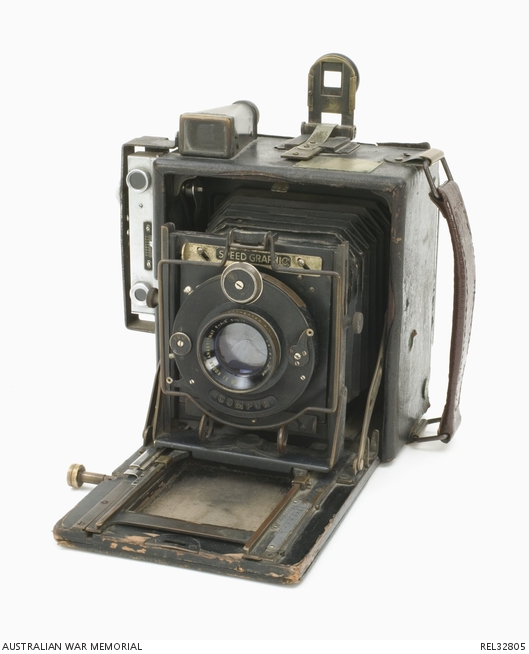
William Hamsom never learned to fly himself, but instead, focused on the intricacies of oblique photography[1] from the aircraft. His images were remarkably sharp and clear. He said in 1932 –
The secret of aerial photography is the study of light. I never take an aerial photograph unless I first go over the ground on foot so that I may study the light. For instance, I recently obtained a fine picture of the building of the Temperance and General Mutual Life Assurance Society building in Collin Street. For three weeks I took observations on foot and found that a satisfactory picture of the building could be obtained from the air only between 20 minutes to 12 o’clock and noon at that time of the year owing to the shadows cast by the spires of Scots Church and of the Independent Church.
There were a few accidents and close calls in the flimsy biplanes of the era.
William Hansom as his nom de plume, Airspy, was one of the main contributors to the 1935 souvenir album – “Views of Marvellous Melbourne”, to mark the city’s centenary.
http://nla.gov.au/nla.obj-3410010489
Meanwhile, Owen Jones was a 32-year-old graduate English forester trained at Oxford with practical experience in Ceylon. He also served as a pilot during WW1 with the Royal Flying Corp. He was appointed the inaugural Chairman of the Forests Commission in 1919 and would have no doubt been very aware of Hansom’s aerial photography work. It’s reported that William Hansom was retained by the State Government for aerial survey work, but it’s uncertain if the Forests Commission ever directly engaged Airspy.
Charles Daniel Pratt was born in May 1891 at Gnaio, a suburb of Wellington in New Zealand, and started his working life as a grocer.
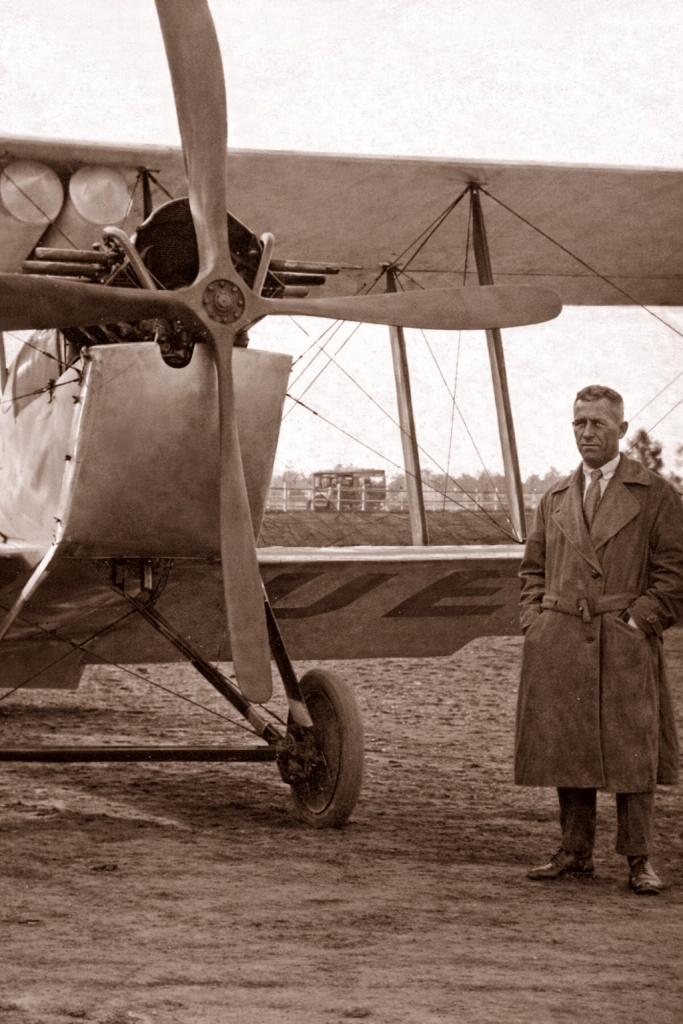
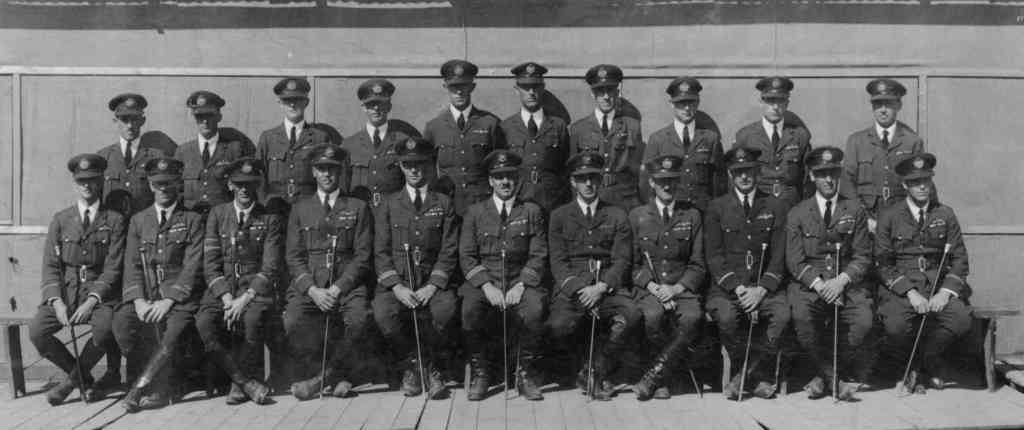
He enlisted in the army at the beginning of WW1 and served in the Gallipoli campaign where he was wounded. He was promoted to rank of corporal and served as a motorcycle despatch rider in Egypt and Palestine. He later volunteered for the Royal Flying Corps in 1917 at Ismailia in Egypt with the 113 Squadron RAF. He was a natural pilot and was soon promoted to Lieutenant and began teaching others.
The Palestine campaign also marked the beginning of aerial photographic reconnaissance to map military movement and remote terrain. Pratt was an accomplished photographer and took many images of his time in the Middle East.
https://handle.slv.vic.gov.au/10381/308567
At the end of the war, and with a small family inheritance from his father who had recently passed away, Pratt purchased four crated aeroplanes at the Army disposals at Heliopolis, including two De Havilland DH6s, an Avro 504K and a Sopwith Pup.
Charles then boarded the Steamer “Cooee” in Cairo for the voyage back to New Zealand with intentions of establishing an aviation business. However, a six-month dock strike saw him stranded in Melbourne in December 1919.
On Boxing Day 1919, there was much public excitement for an aerial pageant run by the newly formed company, Larkin Sopwith Aviation, that operated an aerodrome at Glenhuntly. No doubt frustrated at being stuck on the ship, Charles Pratt persuaded the skipper to unload one of the boxes containing a DH6.
Charlie then assembled the plane with help of the ship’s crew and with much derring-do flew the flimsy aircraft straight off the end of Victoria Dock to land at the private Carey airfield at nearby Fishermen’s Bend.
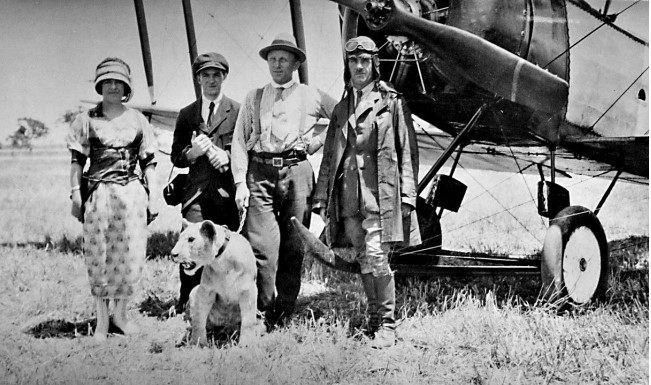
He then took any passengers brave enough to experience the thrill of flight and to see Melbourne from the air.
The novelty of a newfangled aircraft on the beach was such a drawcard that Charles employed men on the weekends with whips to keep the crowd from swarming over the plane and keeping the runway clear. In the first month of flying, at the cut price of £1/1/ per flight, he made £600, which was sufficient to pay shipping freight and flying time.
But apparently, customs were not amused that the ship’s captain had unloaded one of the planes without permission and impounded the other three crates of aircraft, and Charlie had some difficulty later retrieving them from Garden Island in Sydney.
During his enforced stay in Melbourne, Pratt also flew around Port Phillip Bay.
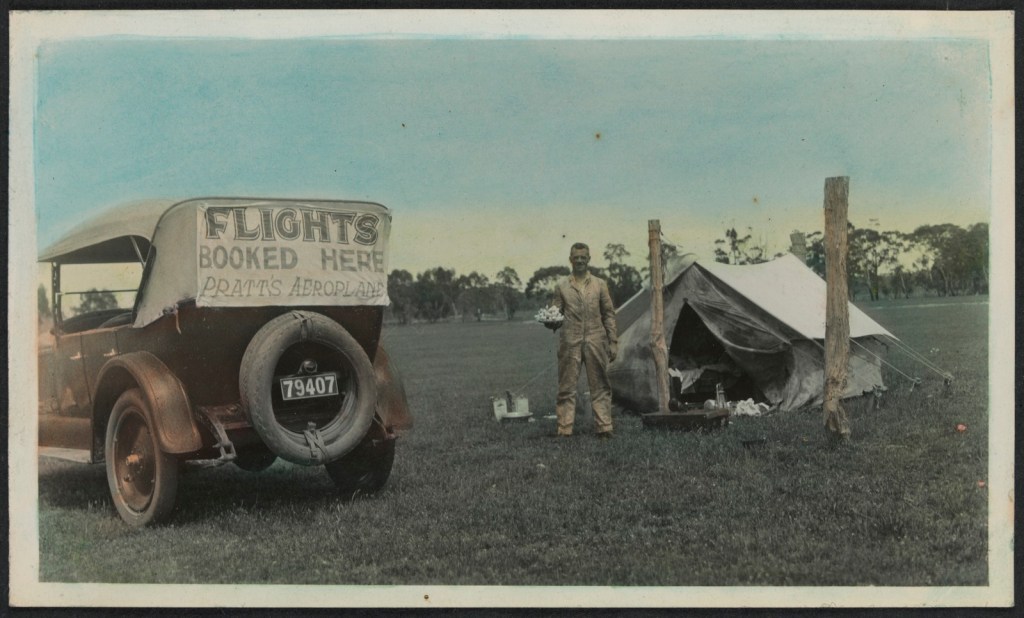
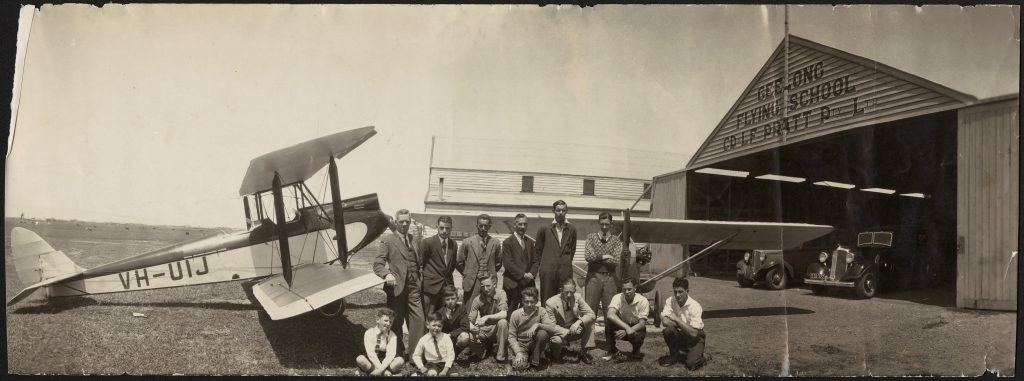
The Geelong Aero and Gliding Club, which was first formed in 1914, was based at Belmont Common and is believed to be the oldest Aero club in Australia. Charles decided it was a good place to offer joy flights and flying lessons and leased the site in 1920 along with a residence.
Charles erected a large hangar and workshops and suggested to his three brothers that they join him where he taught Percy and Len to fly, while the third brother, Alf, operated a motorcycle courier business.
William Hansom from Airspy and Charles Pratt were a natural fit and soon teamed up together to capture and sell unique bird’s eye images. Their photos are mainly of Melbourne and rural Victoria, but also of the early building of Canberra and south to Tasmania. They did their own film processing and enlarging.
Some of Airspy’s images were also used by the popular Rose Postcards company.
But from 1927 to 1929, Charles and his brother, Len, flew in New Guinea transporting cargo for the Bulolo goldfields aeroplane service along with another famous aviator, Ray Parar. It’s uncertain who piloted William Hansom on his Airspy flights during this period.
In 1929, Len Pratt contracted malaria, so both he and Charles returned to the more moderate climate of Victoria.
Another company, Adastra Airways, which began in 1930 as a flying school at Mascot, focused on aerial photographic survey work in NSW.
Charles then moved his business to Essendon in 1938 and took over the operations of Matthews Aviation.
William Hansom died in November 1939, aged 77, leaving his widow and three children. But his company, Airspy, continued to survive long after, presumably with its ownership transferring to Charles Pratt. It’s possible that Charlie Pratt’s brother, Len, accompanied him in the aircraft to take the images and that cameras had become simpler to operate.
Flight Lieutenant John (Jack) Harrison was also associated with Airspy during this period. He became the RAAF’s first public relations photographer.
At the outbreak of WW2, Charles Pratt offered his services to the RAAF as a flying instructor, and he was given a six-month contract. But at the end of the agreement, he was notified that his machines and hangar were to be commandeered by the RAAF and offered only £1300 in compensation.
He was then aged about 50 and the Air Force showed little interest despite his impressive record as an instructor.
Charles was given a job by a private company to supervise maintenance of planes taken over by the Air Force, but that job also finished when the RAAF moved from Essendon to Benalla.
Short of money, Pratt then took a position as pilot with A.N.A. in 1942 and flew DC2s and DC3s through to his retirement as a commercial pilot in 1947.
Postwar, Charles continued with Airspy aerial photography as well as charter and joy flights from Essendon before moving to Moorabbin in 1955.
Charles Pratt was married but the couple had no children. He died in January 1968, aged 77, and his estate donated a large collection of magnificent photos to the State Library of Victoria.
[1] Oblique aerial photography, as the name implies, involves taking landscape photos looking sideways from the aircraft, rather than vertical photos which are used for mapping purposes.
https://trove.nla.gov.au/newspaper/article/4495906
http://pandora.nla.gov.au/pan/147402/20150720-1015/March+2013.pdf
https://trove.nla.gov.au/newspaper/article/59472511
 Victoria’s Forests & Bushfire Heritage