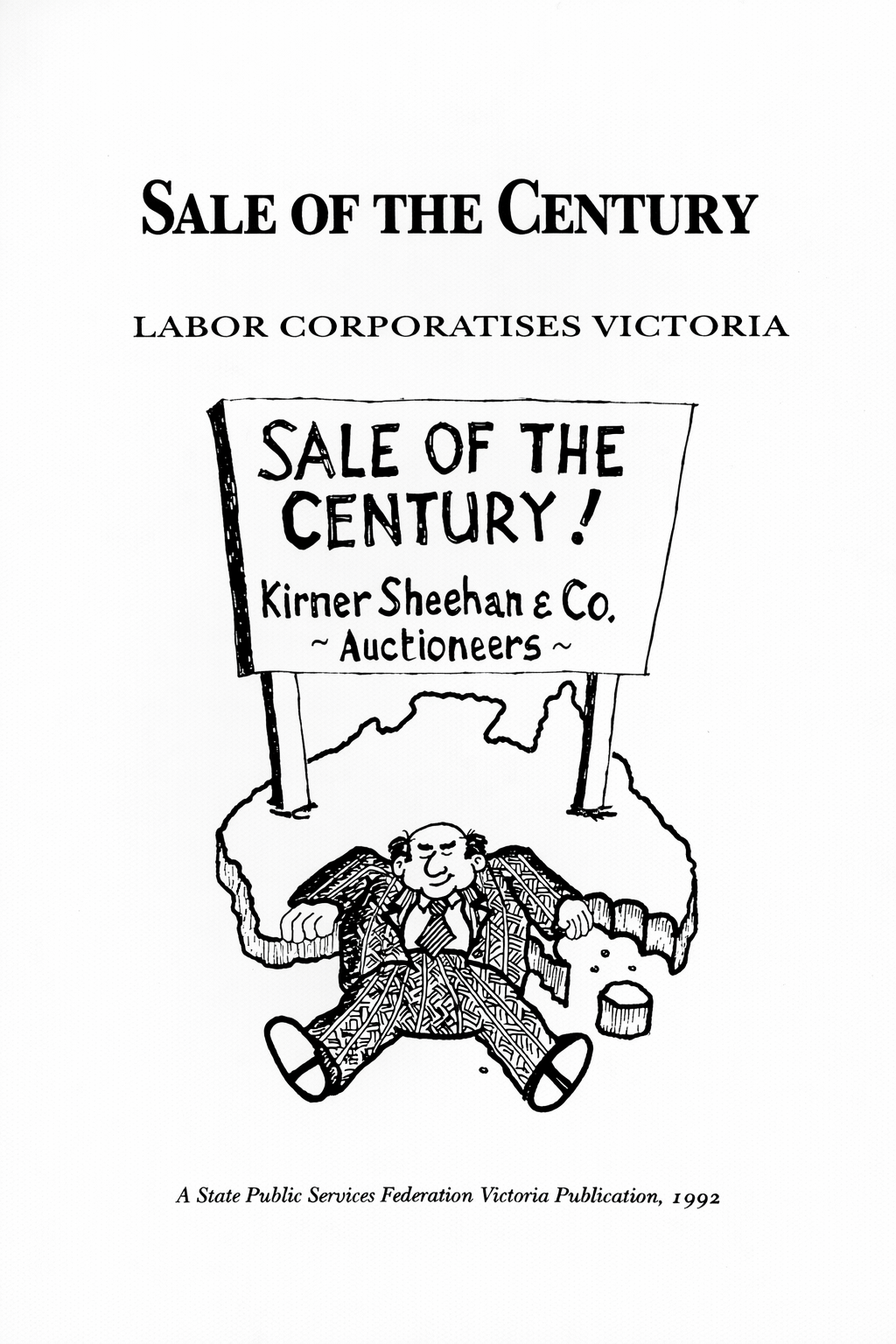
The 1980s will be remembered as the beginning of the heady era of “big money”. An era of conspicuous consumption perhaps best characterised by flamboyant and freewheeling entrepreneurs like Christopher Skase and Alan Bond, celebrities in private jets and luxury tax-dodgem cars, newfangled mobile phones, expensive consultants in sharp Zegna suits, and power dressing with big hair and shoulder pads.
Opportunity seemed to be everywhere for those with a “zeal to deal”. The uber-rich rubbed shoulders with politicians, lobbyists and fellow moguls at fancy restaurants, where million-dollar transactions were brokered over extravagant and boozy business lunches.
Then using loopholes in the tax system, the proceeds of these questionable mega-deals were often squirreled away in offshore tax havens like the Cayman Islands. And in other corrupt “bottom of the harbour” scams, dodgy promoters stripped assets from companies to avoid any tax liabilities and then sold them through a complex web of shelf companies, which rendered them “sunk” and untraceable.
The flimsy justification for this blatant theft; of the total lack of social conscious; of the ruthless take-no-prisoners approach; of profligate bankers recklessly splashing money around; and of rampant insider-trading by some unscrupulous stockbrokers; dishonest tax dodging by accountants; hostile takeovers and overleveraged financial markets, was perhaps best articulated in the famous “Greed is Good” speech by Academy Award winning actor, Michael Douglas, as the fictional corporate villain, Gordon Gekko, in the 1987 film “Wall Street”.
https://www.youtube.com/watch?v=VVxYOQS6ggk
Ironically, the release of the film coincided with a major global share market collapse, high unemployment with home loan interest rates hitting 17% and finally the “recession we had to have”.
Admittedly, the stupidly high interest rates were off a lower mortgage base, and house prices had been hovering around six times the average annual male earnings for yonks but then went “off-the-scale” when the Keating deregulated the banks in the mid-1980s.
It was sometimes said in the 1980s…
You can’t make your first million legally or morally…
Meanwhile, ABBA and the 1970s “Decade of Disco” was pushed to one side as loud Aussie pub-rock anthems from Midnight Oil, Aussie Crawl and Cold Chisel took centre stage on Mollie Meldrum’s iconic “Countdown”, screened each Sunday evening on ABC-TV.
Australia II, skippered by John Bertrand, ended 132 years of American dominance by winning the final of the America’s Cup yacht race in 1983 – prompting Prime Minister Bob Hawke to famously say –
Any boss who sacks anyone for not turning up today is a bum…
Ozi blockbuster movie classics such as Crocodile Dundee, Mad Max, Gallipoli and The Man from Snowy River premiered on the silver screen.
A vigorous and successful “No Dams” campaign in Tasmania reflected the growing shift in public opinion about the conservation of forests. It also led to the consolidation of the small and disparate green movement across Australia which arguably reached the zenith of its influence and power during the 1980s.
The 1980s… you get the picture…
So it was against this backdrop, and riding the new wave of economic, cultural and social change, that Labor governments swept to power in Victoria under John Cain (1982), and Canberra under Bob Hawke (1983). Both were keen to see their bold reform agendas quickly implemented after years in opposition.
The 1980s also heralded the “decade of deregulation”, with an unquestioning reverence for “small government”, “free markets”, along with the “globalisation of trade”, and the unbridled pursuit of “economic rationalism” in all its forms.
Economic rationalists argued very persuasively that almost every government enterprise, assets or service could be corporatised, outsourced, or sold, and better run on private sector lines. Profitability, cost savings and efficiency seemed to override any traditional notions of a “public service”. But the real owners of these valuable community assets and essential services – the public – didn’t get much of a say in the fire sale.
The blind faith placed in the new ideology by politicians and economists of all flavours represented a seismic shift. They certainly provided many benefits, like cheap imported clothing and home appliances, but also led to many unforeseen, and possibly unintended, long-term social and economic consequences.
But the disruptive and turbulent period of the 1980s will also be remembered as the beginning of massive public service restructures, downsizing, razor gangs, budget cutbacks, outsourcing, redundancy packages, uncertainty, employment contracts, new generic job classifications and pay bands, loss of automatic pay increments, flawed performance schemes, meaningless management jargon and snappy buzzwords.
It was an unstoppable and pervasive global crusade which took hold, I believe, in Margaret Thatcher’s England during the early 1980s, where amid the carnage, privatisation and cutbacks, the usually conservative British Civil Service slavishly adopted the principles developed for the corporate world of factories and production lines.
As public servants we were expected to cheer along fervently with them too, particularly if you wanted to keep your job and maybe climb the greasy pole a little bit higher. If you didn’t, that alone made you a subject of suspicion. There was the kind of moral grandstanding that even scientologists hadn’t yet mastered.
Many of the traditional values, customs and history of the Victorian Public Service were then swiftly trashed and hastily brushed aside in what appeared as an unseemly rush towards “corporatisation” and “managerialism”.
There wasn’t much public sympathy for the changes either. A common perception of a typical public servant was of a bloated, clock-watching and overpaid fat-cat, who had somehow faded to a boring shade of beige, sitting behind a big wooden desk in a cozy office full of dusty old files tied up with red tape, wearing a brown cardigan with leather elbow patches and textured buttons, possibly puffing on a smelly pipe, drinking endless cups of tea and doing the crossword puzzle, while shuffling paper and dreaming up new forms and processes to infuriate a long suffering public. It was sometimes unkindly suggested…
Sleep with a public servant… they need the exercise…
All departmental funding was centralised under new Labor Treasurer, Rob Jolly. The Forestry Fund, which had operated successfully since 1919, was taken away in the purge. The fund had enabled the Forests Commission to retain half its revenue from the sale of forest produce to invest back into things like roads or silviculture. It also enabled better long-term planning and a degree of independence from the fickle annual budget cycles.
Ongoing budget and staff cuts of 1.5% were inflicted each year by Treasury. The cuts were outlined by the Minister for Conservation, Forests and Lands (CFL), Joan Kirner, in the Department’s 1986 Corporate Strategy which euphemistically disguised them as “productivity gains”. In the same blurb one of the key objectives was –
a commitment to safe and satisfying work experiences and career structure…
But in the scramble for economic prosperity the State Government then flirted with Tricontinental, a wholly owned merchant bank subsidiary of the State Bank of Victoria, which subsequently collapsed in 1990, with losses over $1.5 billion.
Disturbingly, everything needed a “metric”… something that could be counted and measured, with native forests becoming “habitat hectares”. It was often stated that if it couldn’t be measured it couldn’t be managed… and that if it couldn’t be measured… it wouldn’t be funded.
The over-used lexicon of corporate gobbledygook seemed to rise and fall from favour quickly. Confusing, interchangeable and poorly defined terms like – visions and missions, goals and objectives, outcomes and outputs, triple-bottom-line, strategies and tactics, all came to dominate the way we communicated amongst ourselves and between Head Office and the field.
We focused on widgets, SMART objectives, timelines, KPIs, business planning cycles and traffic light reporting, as well as ticking the box and reporting endlessly against these manufactured and sometimes artificial new measures.
I often grumbled to myself, that it was like reducing a magnificent and complex musical symphony to some trashy advertising jingle.
Meanwhile, the tempo of change accelerated, leaving little time or space to read, research, recover, reflect or renovate.
I was busier than a one-legged man in an arse kicking competition….
And while salaries were never very high, the traditional Public Service once offered “permanency” and a generous “defined-benefit” superannuation scheme. There was also government housing available to rent in most remote country locations to help attract and retain staff along with their families. But these also disappeared during the late 1980s and early 1990s, encouraging high staff turnover.
Opportunities for career progression were reduced in country locations with the staff cutbacks. Why would young people stay in rural Victoria ??
Meanwhile, the newly formed Department of Conservation, Forests and Lands coincided with an internal lack of unity about how State forests should best be managed.
The era of the “specialist” was replaced by one favouring the “generalist”. There was a widespread belief that anybody, even with little or no knowledge or experience of the subject matter, could be appointed as “managers”.
Senior management is supposed to be a tree full of wise owls hooting when the organisation heads into the wrong part of the forest…
But I was unconvinced that some of the owls even knew where the forest was…
We were no longer foresters or rangers working to protect the bush but became “custodians” and “stewards” of “complex forest ecosystems” and “managers of business units”. In fact, the word forester almost disappeared from use altogether.
More infuriating still, was that people and communities became “stakeholders”, “customers” and “clients”. We were instructed to manage up and not out.
While talking to someone and having a friendly chat out in the bush was replaced by “messaging”, “engagement”, “collaboration”, “achieving shared goals and experiences”, “knowledge mobilisation” and “conducting a narrative”. And short term results were more important than building long-term relationships in rural communities.
Spin-doctors and media advisers ran focus groups with sticky labels on white boards and took control of “managing the message” with their bland “talking points”. Although when I think about it a bit more deeply, it’s more likely that Human Resources (HR) was really running the show. And I won’t comment on the push for political correctness…
I accept that every profession has its own language, but corporate jargon and slick sounding buzzwords, rather than simple plain English, began to infiltrate the traditionally conservative Public Service from the 1980s.
The new management vocabulary was typically made up of long, complicated, and obscure words, or abbreviations, catchphrases, euphemisms, and acronyms.
These overblown “word salads” were mostly vacuous, ambiguous and meaningless. And there were hundreds of them too. Weasel words like KPI’s, paradigm, leverage, symbiotic, holistic, operational cadence, proactive, deliverable, empower, synergy, alignment, core-competencies, touch-base, risk-based approach, blue-sky thinking, value-add, and my personal favourite, think outside the envelope, just to name a few.
More tortuous still were the facilitated workshops indoctrinating us into becoming a “values-based” organisation… whatever that was? More meaningless waffle pulled out of the hat included random gibberish such as Integrity, Respect, Innovation, Inclusive, Equity, Collaboration, Accountable, Excellence, Quality, Client Focused, Transparency, Employer-of-Choice and World’s-Best-Practice. It’s a pity that the rhetoric and the reality of these noble goals didn’t ring quite true sometimes.
It was though the organisation had swallowed a thesaurus.
And the long-suffering public or “stakeholders” had no idea what we were talking about either.
I also observed with dismay most of the surviving senior and experienced forest managers being put on limited-tenure and unsecured executive employment contracts, so one of the core principles of the Public Service to remain apolitical and provide frank and fearless advice to government was significantly undermined in my view.
The noticeable rise of political advisers inside the Minister’s office had a big influence on how the department and the traditional Public Service ran. Often a clever, young bossy-boots, straight out of uni, and hoping for a career in politics, they seemed to know more about partisanship than policy and were more inclined to listen to vocal lobbyists and party insiders than experienced land and forest managers.
Advisors often appeared to operate in the shadows on the fringe, had enormous egos and took little accountability for their actions, and the ones I encountered were often doing messy quick–fix deals.
This worrying trend coincided with a progressive reduction in the numbers and seniority of forestry and parks staff, particularly those living in regional areas, together with a centralisation of services, resources, power and decision-making.
The State Government then mandated Compulsory Competitive Tendering (CCT), which saw most organisations and local councils lose the bulk of their experienced works crews. Many took redundancy packages to leave on Friday and do exactly the same work as contractors on Monday. This experience was good for some and difficult for others.
And as someone with a long interest in forest history, I believed most of the corporate memory, and timeless wisdom, was lost in the purge:
If you want a new idea, read an old book…
The loss of experienced and confident senior staff with local knowledge and community connections became very apparent. There was a noticeable increase in the level of procrastination, which was accompanied with a strong aversion to risk and concerns about legal challenges, which progressively replaced the previous Forests Commission’s “get-stuff-done” culture.
Being forced to look silly in staff meetings and wear one of Edward De Bono’s six thinking hats became the substitute for experience and decisiveness. You know the ones – White Hat: focuses on data, facts, and information. Yellow Hat: represents optimism, benefits, and positive outcomes. Black Hat: highlights caution, risks, and potential downsides. Red Hat: involves emotions, feelings, and intuition. Green Hat: sparks creativity, new ideas, and alternatives.
And it seemed to me that the Black Hat, with the fear of something going wrong and, more importantly, who was going to get the blame, exercised power of veto over many good ideas compared to the previous “how do we make this work” culture.
The Forests Commission wasn’t perfect but seemed to have a healthy appetite for risk which allowed new ideas to develop. It enabled (or maybe tolerated) “creative thinkers”, “square pegs in round holes”, or simply those who “coloured outside the lines” to flourish – think bushfire and aviation innovations over the decades.
Part of the response to risk avoidance was to add more processes, check-boxes, data collection, micromanaging, analysis paralysis, and time-wasting procedures to forest planning, without any significant or apparent gain in quality. I often said –
Be decisive…. right or wrong…. make a decision….
The road of life is paved with flat squirrels that couldn’t make a decision…
Consequently, forest management became increasingly complex, politicised, costly and time-consuming, while providing considerable opportunity for individuals and external interest groups to delay or block proposed actions.
The term “process gridlock” came into use.
Many forest and park employees, who had previously worked in the bush each day, were shifted into offices and behind computer screens to conduct environmental checks, attend tedious meetings and perform other administrative tasks.
Meetings are where minutes are kept and hours are wasted…
This led to an increase in the number of staff in offices at the expense of district field staff. It also extended the time needed to arrive at final management decisions.
The advent of desktop computers from the mid-1980s meant more desks were required as field staff became more sedentary and office-bound responding to emails.
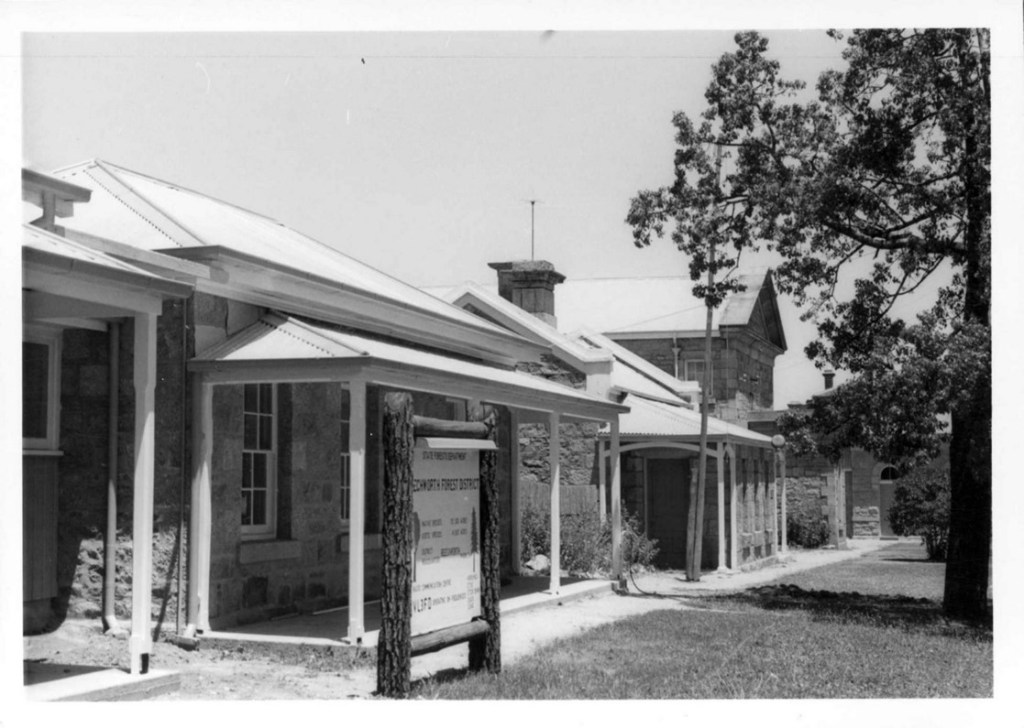
For example, the tiny Beechworth District Forest Office had one desk that was shared between all the overseers (about 5 I’m told) who came in from the bush once a week to complete their paperwork and log dockets. With the progressive changes they all needed a desk in a much larger office.
And who knows what the future may hold for the function and integrity of the long-suffering public service with the unregulated adoption of Artificial Intelligence (AI).
Sorry… it’s a long post… it’s a bit tongue-in-cheek… and it’s a bit of a grizzle… although I’ve had some fun writing this too… and I hope some of it resonates with you…

 Victoria’s Forests & Bushfire Heritage
“Yes Minister” and “Utopia” An ongoing governance.
LikeLike
Was “yes Minister” a comedy or documentary ?
LikeLike
“Yes Minister” was a British sitcom series on BBC television, a parody on the machinations of ministerial staff, and clearly a model for Australia’s “Utopia”.
LikeLike