The Metropolitan Fire Brigade (MFB) was established under the Fire Brigades Act (1890) from fractious beginnings when Melbourne’s 56 existing fire brigades were forcibly disbanded and reformed under a single umbrella.
The Country Fire Brigades Board (CFBB) was founded by legislation at the same time as the MFB and was given power and responsibility over all fire brigades based more than 10 miles from Melbourne.
The CFBB already had a well-established command structure under Superintendent Lieutenant-Colonel Theophilus Smith Marshall, but the organisation was split into two very deeply divided and disparate camps – Urban Brigades and Rural Bushfire Brigades.
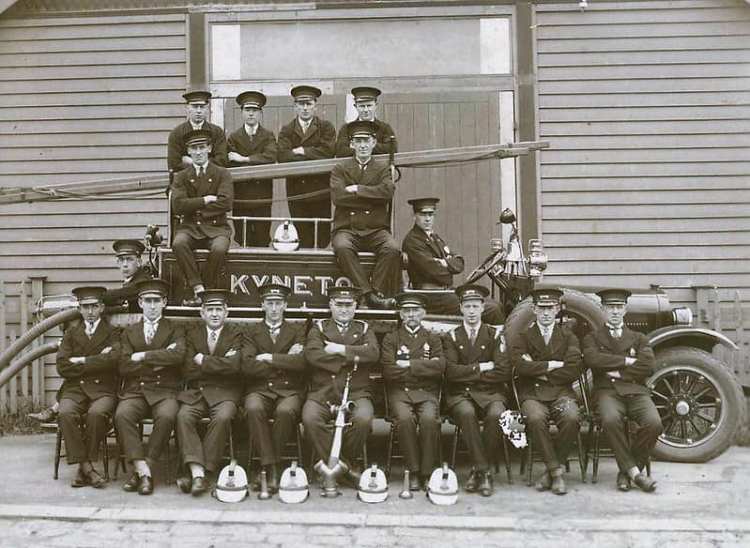
Urban Brigades were largely found in cities and larger towns with access to mains water like Ballarat, Geelong and Bendigo. They mostly trained for and responded to structural fires and had a strong emphasis on discipline, uniforms, polished brass, drills and marching… and don’t get me wrong… that’s a good thing…
These urban brigades mostly consisted of volunteers but there were a few full-time career firefighters at bigger locations.
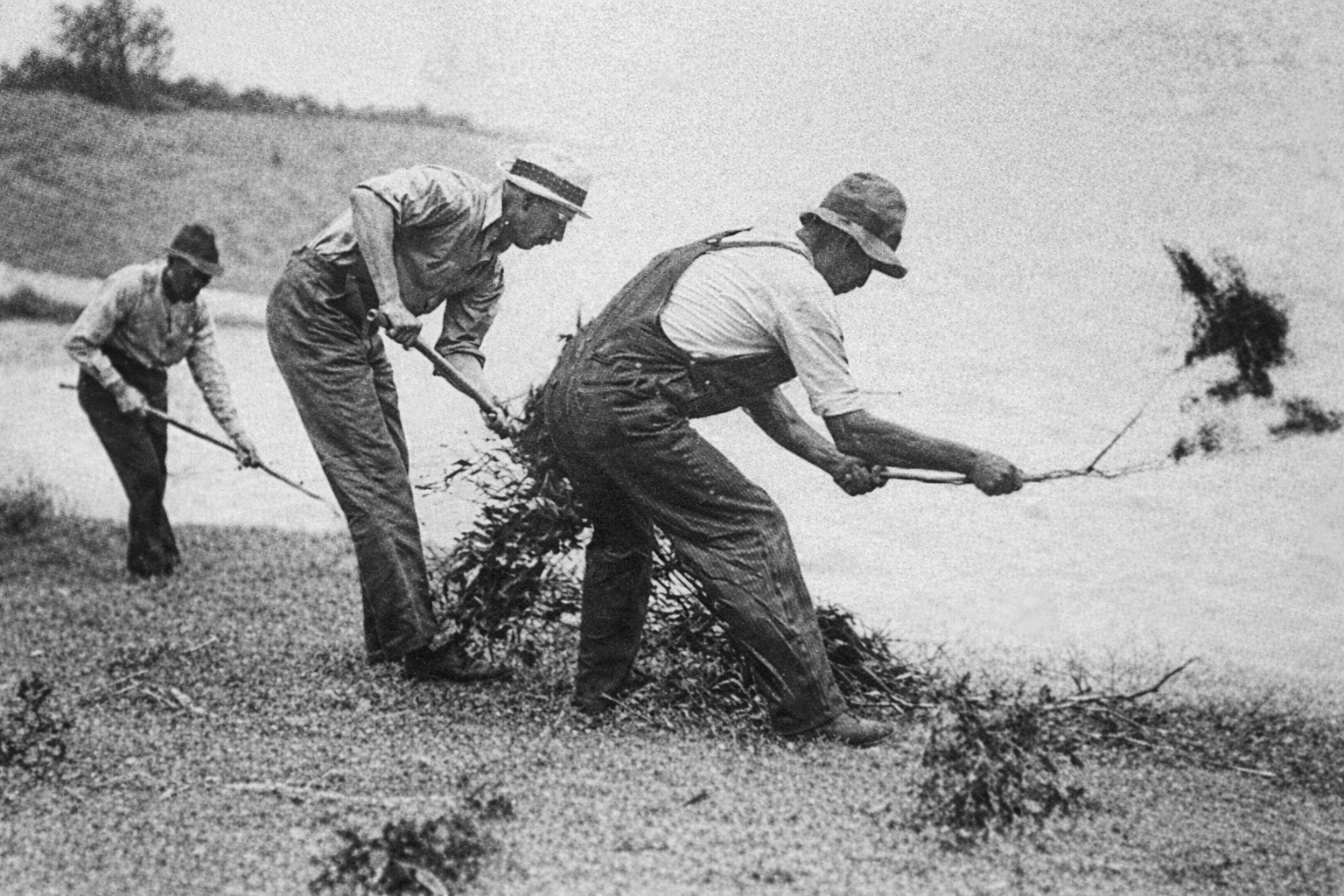
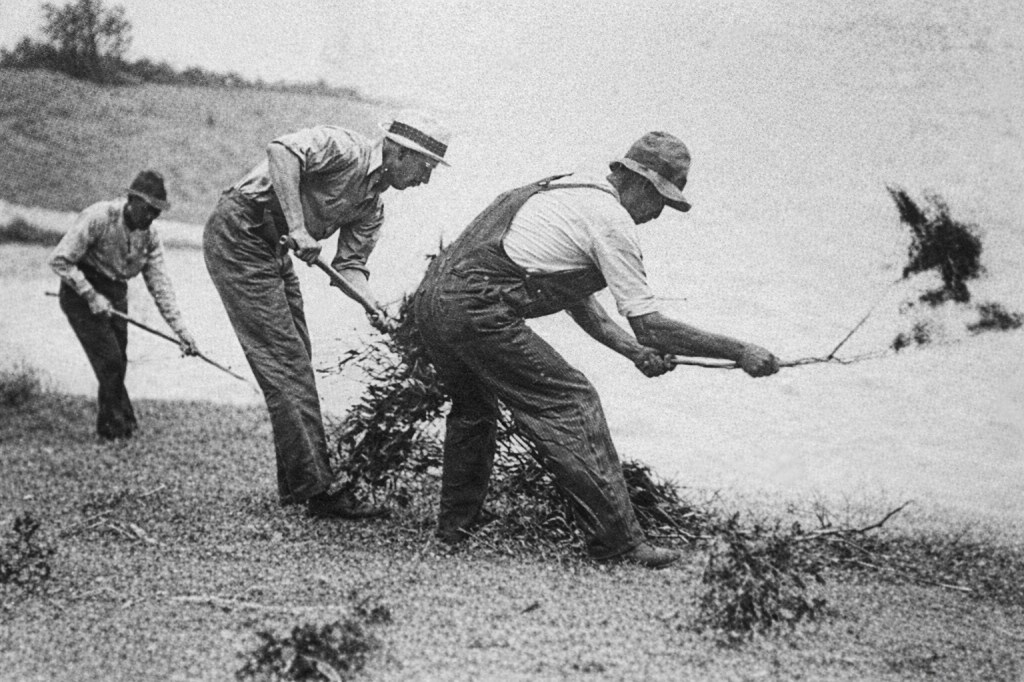
But for the remainder of rural Victoria, local landowners formed Rural Bushfire Brigades, received little or no financial assistance from the CFBB or the State Government, and tended to operate spasmodically and independently from their urban counterparts. They were mostly self-funded through voluntary contributions, chook raffles, donations, levies and membership fees.
The first known Victorian rural fire brigade was formed after a public meeting at Kangaroo Ground in 1892. Other small settlements on the fringe of Melbourne like Warrandyte, Upwey and Belgrave formed fire brigades in response to fires in 1918 and 1923.
The principle of self-help that came to characterise volunteer fire fighting across Victoria was forged.
A loose association of rural Bush Fire Brigades began to emerge in about 1914 to represent the clusters of ruggedly independent rural landowners and neighbours who formed make-shift brigades that responded quickly to grass and scrub fires in their local farming communities.
Bush Fire Brigades had a very different culture, and also had little formal structure, training or equipment compared to urban brigades. However, these firefighters came together quickly when needed, were passionate, committed and effective volunteers.
And needless to say, there was rivalry and, in some cases, open hostility between these town and country outfits… but the rancour often came down to clashes of egos and differences of personalities.
In July 1926, following the summer bushfires, the Minister for Forests, Horace Richardson, who had experienced the bushfires firsthand at the Haunted Hills near Moe, chaired a conference to encourage rural fire brigades and the Forests Commission was charged with providing basic support, equipment and funds.
The Forests Commission then sought the co-operation of the CFBB as well as the Lands and Police Departments to encourage the formation and coordination of rural fire-fighting units.
An “Association of Bush Fire Brigades” was also formalised in 1926 with executive and administrative support provided by Morris Carver from the Forests Commission. There was already a separate Urban Fire Brigades Association.
Visits to all country districts were arranged and within a few years the number of volunteer brigades increased significantly. By 1928, more than 50 were in existence, by 1931, some 220 bush brigades had been organised, the number climbing to 320 by 1937 with around 13,000 volunteers. By the time of the formation of the CFA in 1945 there were 768 brigades with approximately 35,000 members and over £100,000 worth of equipment.
At the time, bush fire brigades had no legal status, no funding, no central organisation, and little equipment or training.
There was no substantial financial assistance to bush fire brigades from either the State Government or CFBB, but for those close to State forest, National Parks and Crown Land, the Forests Commission donated some equipment. Fire-beaters, rakes, slashers, axes, wire cutters and similar tools were standard items. A spirit of mutual self-help was engendered.
But the formation of rural bushfire brigades wasn’t universally welcomed. The Commission noted later in 1928 –
It is unfortunate that in a few instances the formation of brigades was strongly opposed, grazing interests being strong and not in favour of any movement likely to interfere with their annual burn-off.
Late in 1933, the Bush Fire Brigades Act was passed which provided statutory powers and authority to approved officials of registered brigades. This was a major step forward and conferred considerable powers to the brigade captain along with statutory indemnity for brigade members in the event of damage due to the exercising of such powers in good faith.
Prior to the 1933 legislation, all rural Bush Fire Brigades operated without legal authority or protection. If private property were entered and back fires lit, or water taken for the purpose of extinguishing fires, members were potentially open to charges of trespass and damages.
This legislation helped to cement autonomy and gave security for small independent rural brigades. But until an insurance scheme was introduced in 1937 there was no compensation for members injured or killed in the course of their duties.
The 1933 Act also authorised the appointment of a Bush Fire Brigades Committee of seven members, three nominated by the Forests Commission, one by the Country Fire Brigades Board, and the remaining three by local Bush Fire Brigades.
The Committee then registered brigades and determined the suitability of brigade captains and lieutenants to exercise new powers delegated to them under the Act.
The brigade captain was selected for qualities of leadership, knowledge of firefighting principles and tactics, and a thorough acquaintance with the district in which the brigade operated. The captain also needed to be available to attend fires whenever called upon.
The Act also established a Central Council of the Association, which included representatives of the Forests Commission, Lands Department, Police Department, Railways Department, State Rivers and Water Supply Commission, Melbourne and Metropolitan Board of Works (controlling the Melbourne water catchment area), Meteorological Bureau, Country Fire Brigades Board, Melbourne Volunteer Bush Fire Brigade, Pastoralists Association, Boy Scouts Association and the League of Youth. Membership of the Bush Fire Brigades Association was also open to registered brigades on payment of an affiliation fee of 7s 6d.
In 1937, the Chairman of the FCV, A. V. Galbraith, published an article about the FCV’s involvement with these early Brigades, which was stimulated by the impacts of the 1926 bushfires.
So, it was the 1926 bushfires and the support of the Forests Commission which was the main catalyst for change for Victoria’s early volunteer bushfire brigades, rather than the 1939 or 1944 fires, which eventually prompted the establishment of the CFA in 1945 (but that’s another story).
Its no accident that many rural fire brigades celebrate their centenary from 2026.
A. V. Galbraith (1937) The bush fire brigades movement in Victoria, Australia, Empire Forestry Journal, Vol. 16, No. 1
https://drive.google.com/file/d/1kFqHA4_F5vzYxSjQAIgQ2Tl4sM4Kw5dI/view
Enrolment of 1000 men at Belgrave, The Age, Wednesday 17 February 1926.
https://trove.nla.gov.au/newspaper/article/155794109
 Victoria’s Forests & Bushfire Heritage