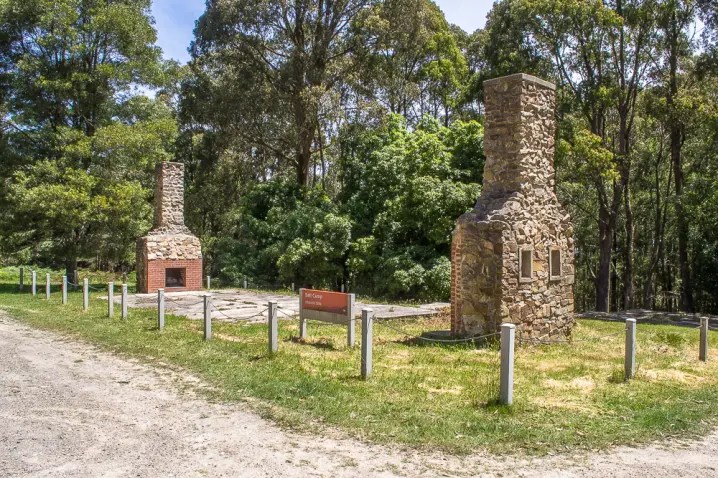
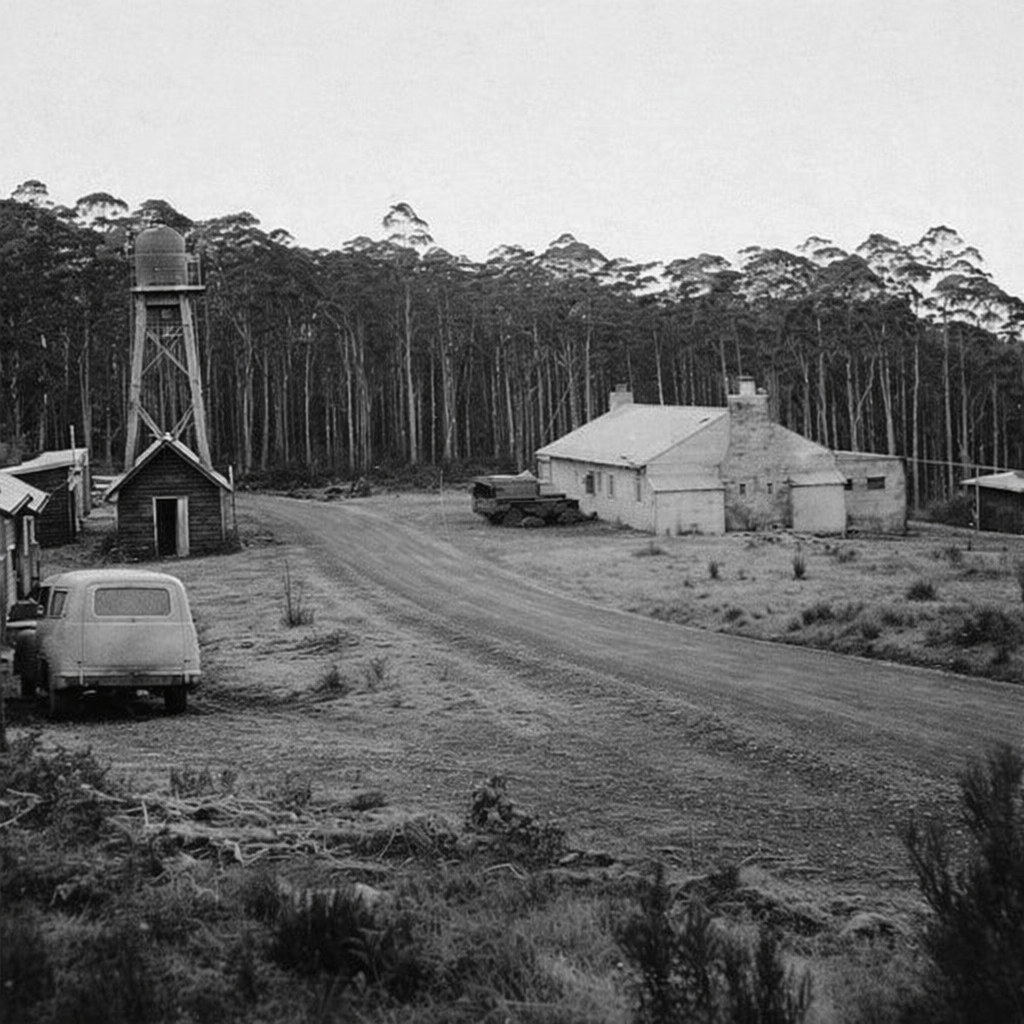
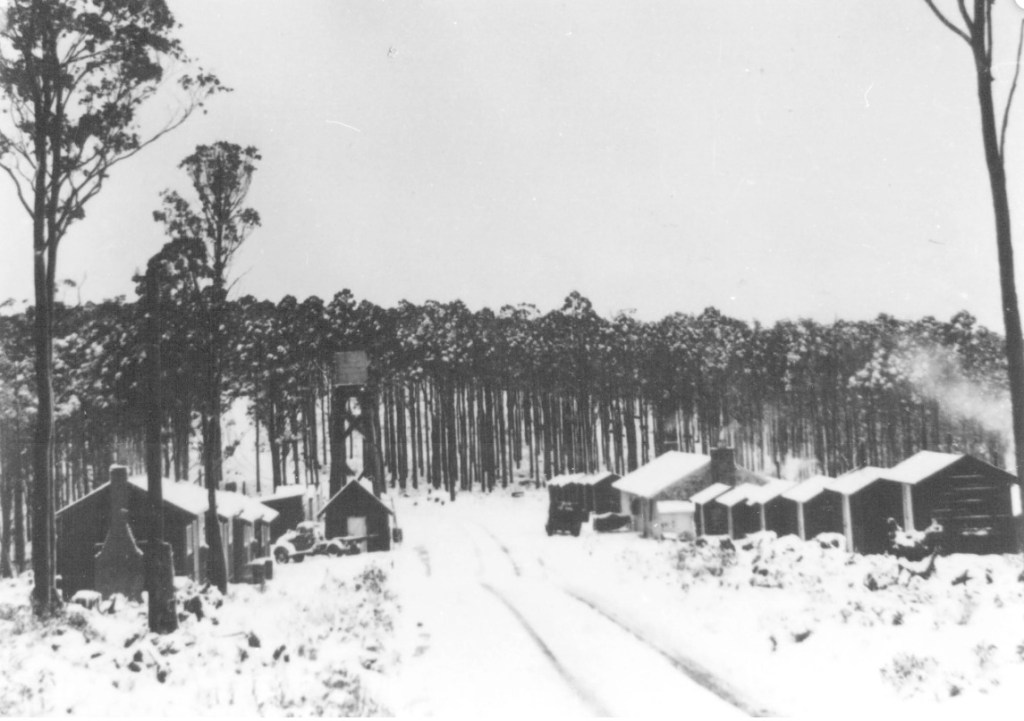
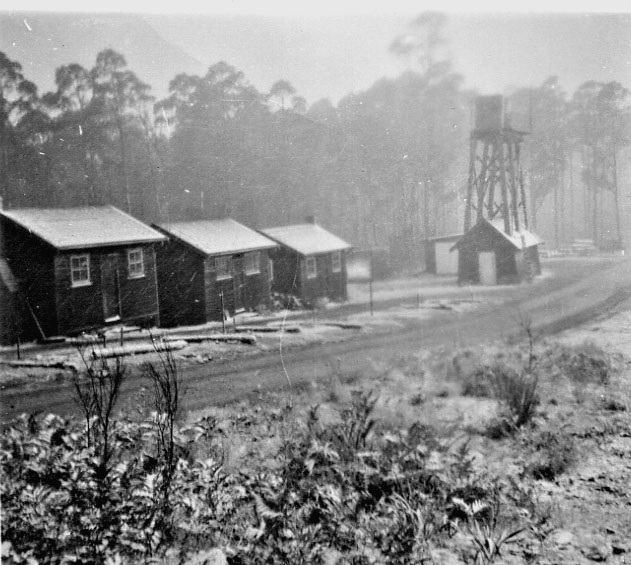
The Balt Camp near Bullarto South in the Wombat State Forest was used for displaced refugees after World War 2, including those from the Baltic States.
It’s unclear if a camp existed at the site before the War but one may have been part of the susso unemployment scheme in the 1930s.
The first group of 843 refugees arrived in 1947 into Australia from the Baltic countries of Lithuania, Latvia and Estonia.
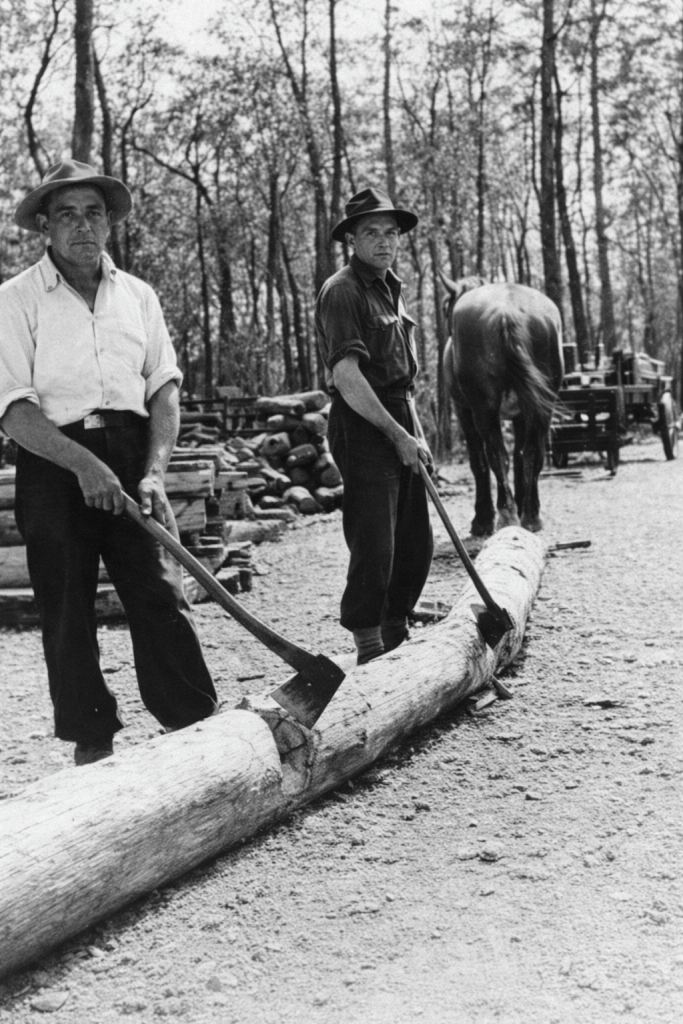
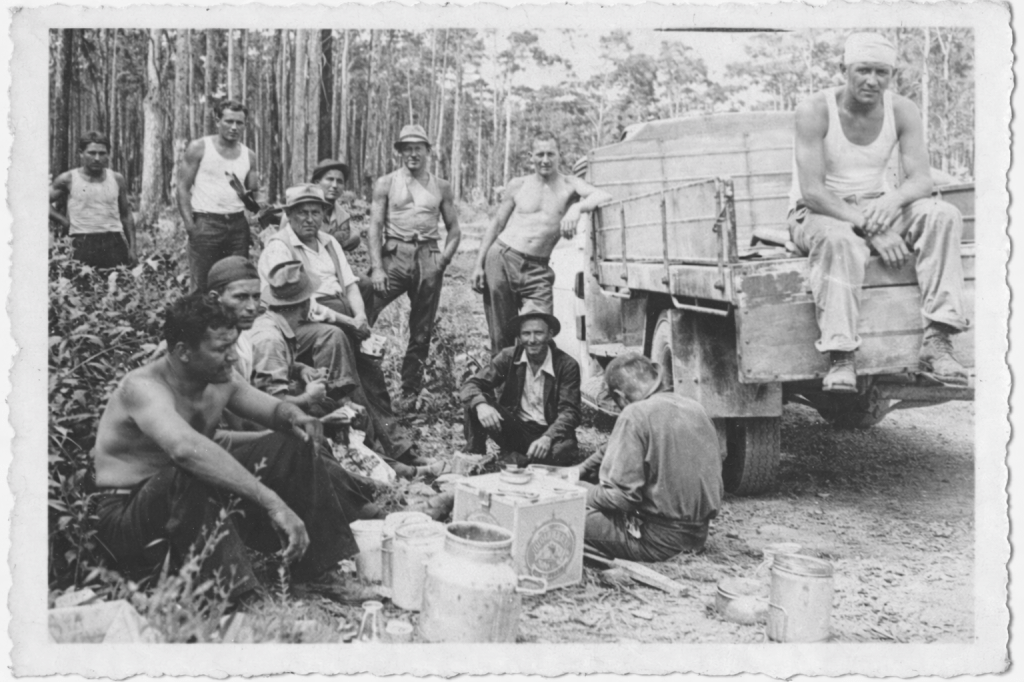
One of the conditions of entry was to work for two years in a government-directed job. Some of the immigrants worked for the Forests Commission cutting firewood, thinning, road making and fire protection.
By June 1949, 180 European immigrants were engaged in FCV work, and by the end of the next year the number had grown to 361.
Balt camps were established at Broadford – Mt Disappointment (84 men), Beaufort (48 men), Castlemaine (19 men), Cohuna (30 men), Daylesford (45 men), Brisbane Ranges (42 men), Graytown (31 men), Scarsdale (20 men), Beech Forest – Aire Valley, Noojee (ex-Boys Camps), Snake Valley, and Mirboo East and Bullengarook (42 men). An additional camp was planned during the year for Holcombe. There may have been others too.
Wherever possible, Stanley Huts and ex-Army buildings were used. In all camps of a permanent nature, amenities such as electric lighting, hot water and septic tank systems were installed.
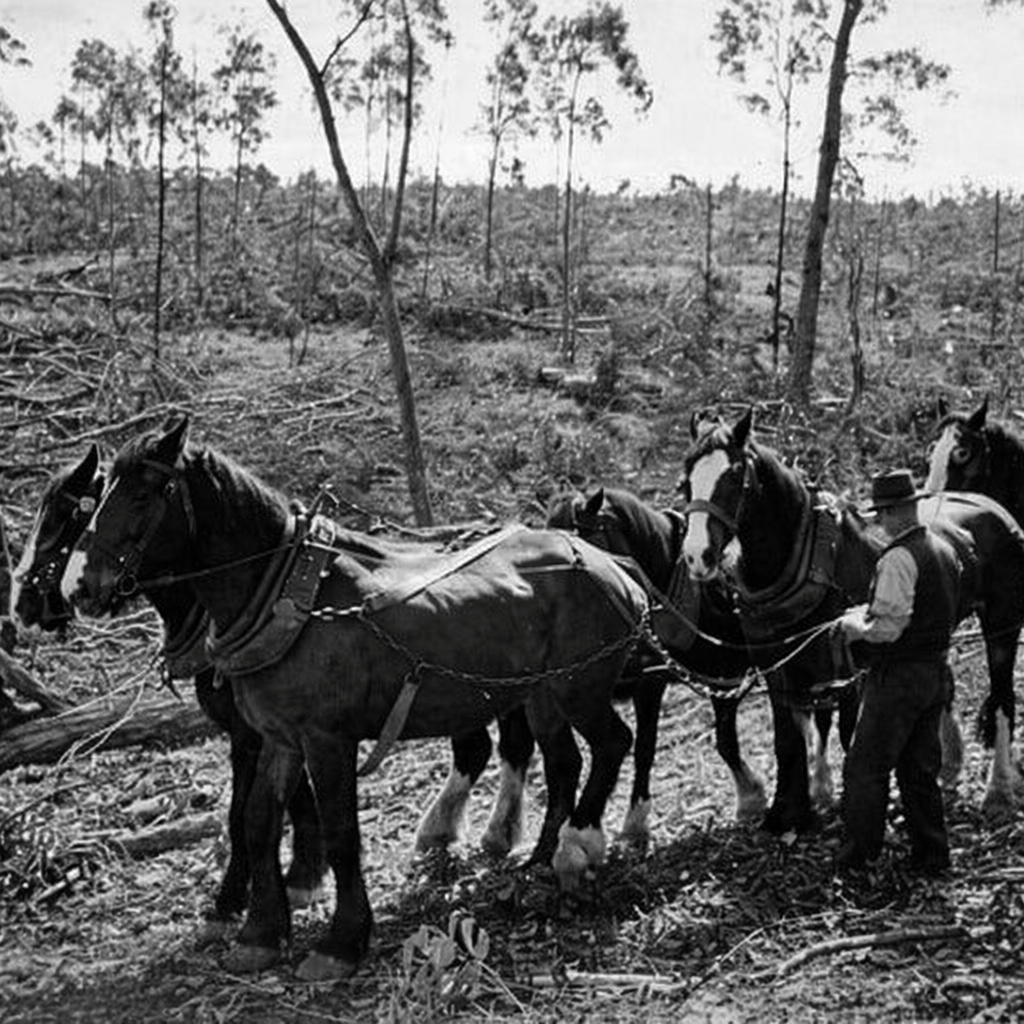
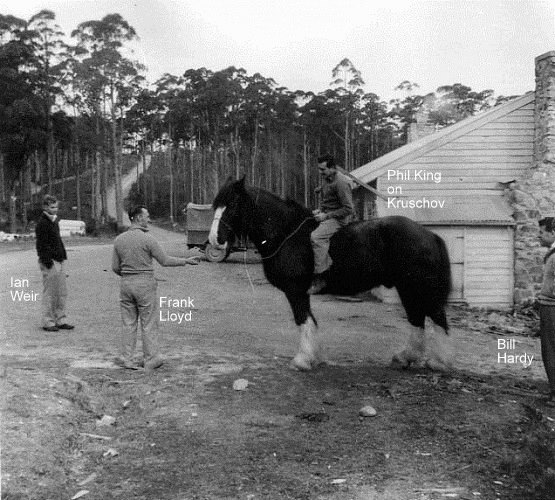
The State forests near Bullarto were thinned by hand and the logs hauled by horse and dray to a saw bench to be cut into blocks for firewood to be sold by the Forests Commission into the Melbourne market. (See: Wartime Emergency Firewood Project – Vol 1)
The large immigrant labour force at work in 1950 resulted in a dramatic increase in firewood production: 156,369 tons were cut, compared to the 66,568 tons the previous year. To assist in maintaining a reasonable distribution of wood from the Commission’s metropolitan depots, local men were employed as road hauliers, transporting the firewood direct from production centres in the forests.
By 1952, the scheme was winding down as the men completed their two-year contracts.
The Balts were not prisoners, so they were allowed out on weekends, and either walked to Bullarto to catch the train or just walked through the forest to Daylesford. Eventually they saved enough money to buy motorbikes.
The camp was later used by Leon Pederick’s assessment crew in the early 1950s.
In about 1957 the camp was leased to the YMCA from Ballarat.
All that remains today are the two stone chimneys from the cookhouse and some other concrete foundations.
https://trove.nla.gov.au/newspaper/article/46809683
 Victoria’s Forests & Bushfire Heritage