It seems to mainly be a Gippsland phenomenon.
Maybe isolation, maybe exemplary axeman’s skills, maybe a whacky sense of humour, or maybe just simple boredom, but Gippsland, in eastern Victoria, has a rich history of mysterious carved wooden characters across its extensive State forests and roadsides.
They include Pons asinorum near Cann River (early 1920s), Alfonso Spaghetti near Orbost (1924), the first Mr Stringy at Dead Horse Gap (1929) followed by the second, and current, Mr Stringy (late 1960s), several Fish Faithfull sculptures near Omeo (1930s), the first Parnaby Bushfire Totems at Noorinbee (1951), through to the more recent Pretty Boy, just south of Dargo (2016).
These, and many other lesser-known examples, are described in a 2021 eBook about Gippsland’s Carved Wooden Faces.
Sadly, most are gone now, having rotted away, burnt by bushfires, stolen or damaged by vandals, their stories often lost.
Gippsland’s most famous surviving wooden man is undoubtedly Mr Stringy who stands stoically at Dead Horse Flat on a lonely stretch of the Great Alpine Road between Bairnsdale and Omeo.
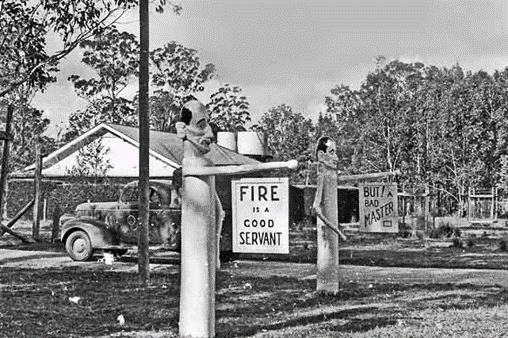
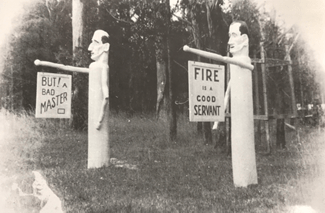
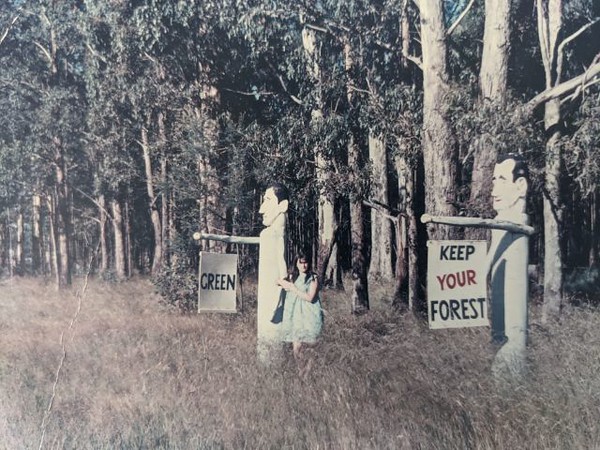
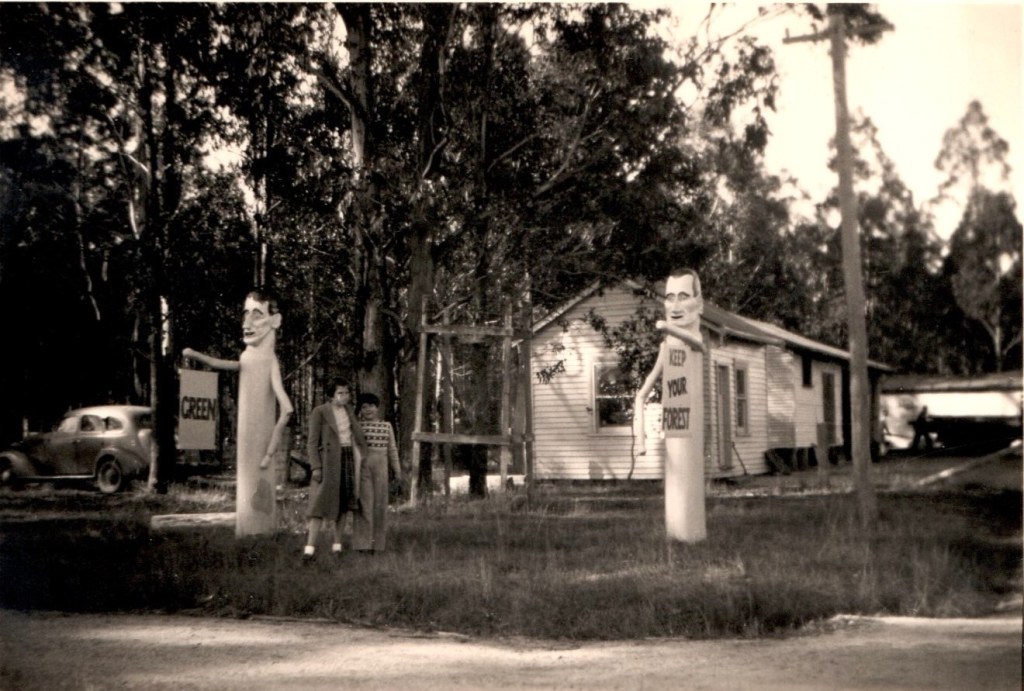
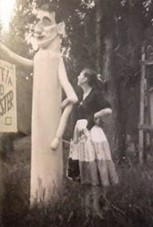
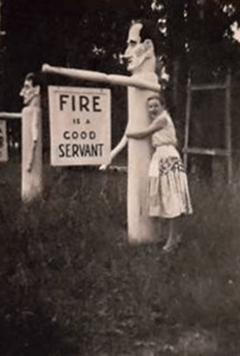
In about 1951, David Parnaby the East Gippsland District Forester, carved two large bushfire awareness totem poles from the very durable Gippsland Grey Box (Eucalyptus bosistoana), which sat outside the Forests Commission Victoria’s (FCV) office at Noorinbee.
David graduated from the Victorian School of Forestry (VSF) at Creswick in 1940 and initially worked in the Assessment Branch of the Commission.
David later had field postings to Heathcote, Powelltown, Dandenong’s, Bruthen and Beechworth Districts before being promoted as District Forester and moving to East Gippsland in 1951.
David was also an accomplished artist and cartoonist who provided insightful and humorous commentary through the Victorian State Forester’s Association Newsletter.
According to Forests Commission folklore, the totems bore disturbing resemblances to the Minister for Forests (Sir Albert Lind) and the Chairman of the Commission (Alf Lawrence), so David hurriedly made some changes with his chisel the night before their arrival from Melbourne.
The totems were moved in about 1965 to the nearby Cann River township, to be outside a new FCV office on the Princes Highway,
The totems were regularly repainted and changed appearance over the years but remained well-known tourist icons of the township.
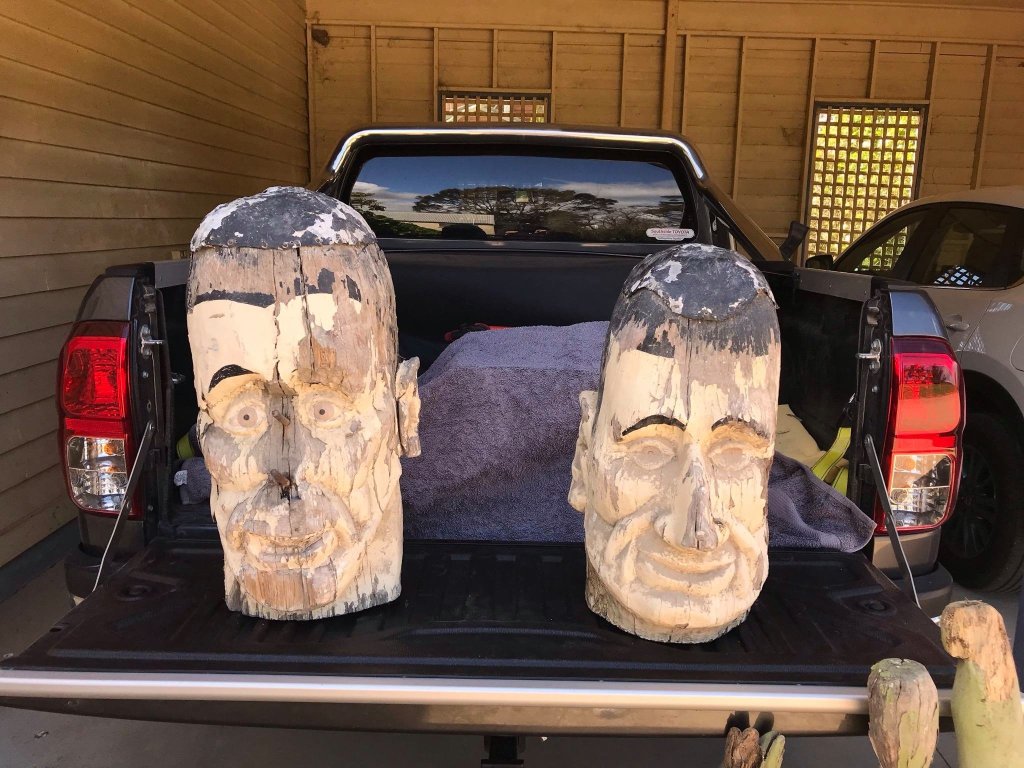
The totems were finally removed in about 1998 when the office driveway was realigned, but the timber couldn’t be saved from rot, which simply collapsed. It was thought they had been lost forever, but miraculously, the heads had been unknowingly salvaged and spent the next 20 years quietly sitting in a private shed in the town.
I became aware that the original heads still existed in October 2021, and, after some negotiations and assurances with their custodian, the heads were recovered.
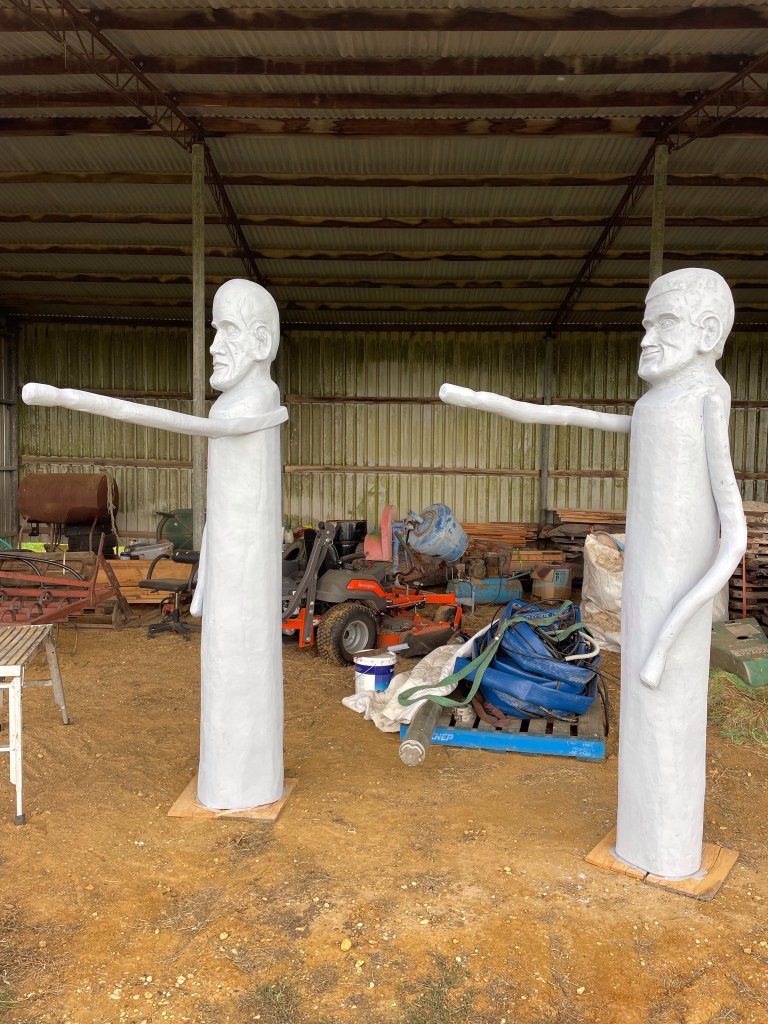
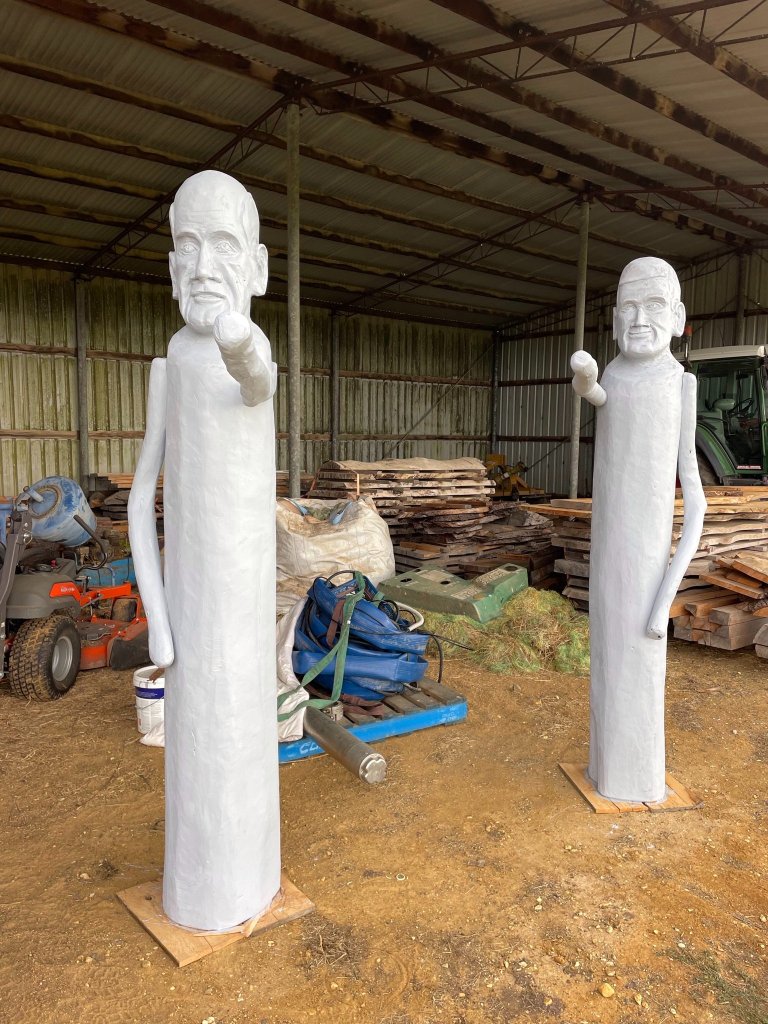
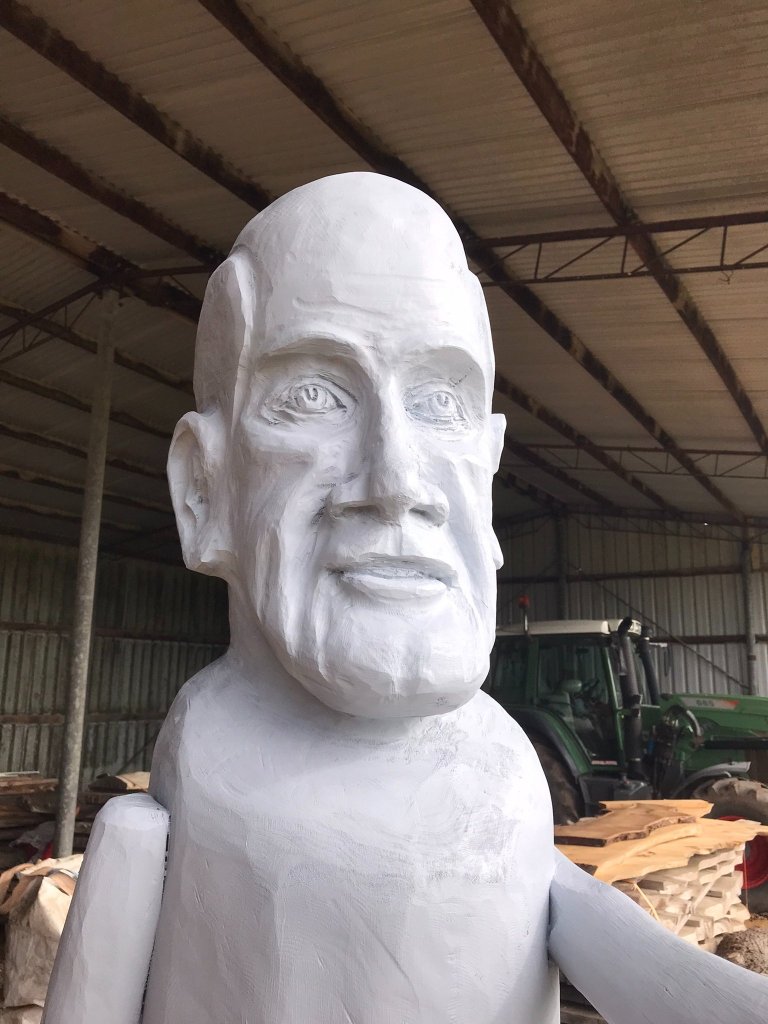
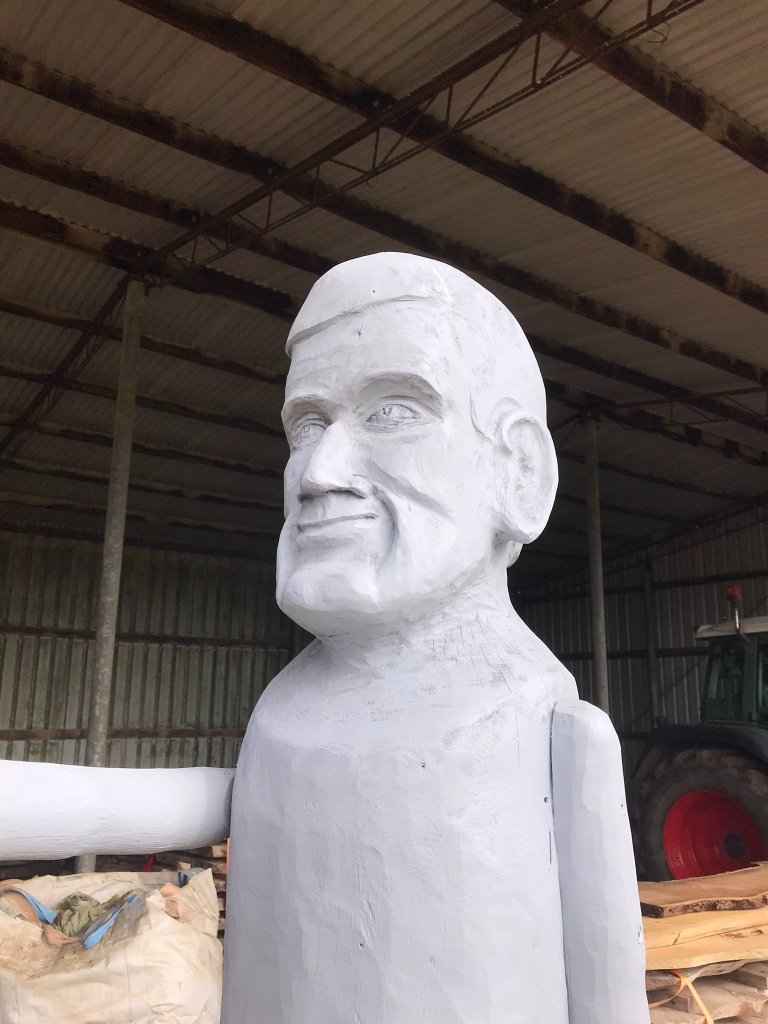
Well-known wood carver, John Brady, from Fulham near Sale was engaged in 2022 to make two fantastic full-size replicas of the totems. They are carved from cypress pine rather than hardwood and DELWP kindly offered pay for them.
The new totems are very imposing at over 8 feet tall and have been painted in one of their original colour schemes by talented local Cann River crew. Replica gallows signs were also made.
It taken time and dedication but its hoped to get them erected at some time in 2026, outside the department’s office on the Princes Highway.
The original heads are fragile and have been returned to their rightful home in Cann River to be displayed inside the Department’s office when it gets refurbished.
https://nla.gov.au/nla.obj-2992950729/view
https://en.wikipedia.org/wiki/Parnaby_Totems
 Victoria’s Forests & Bushfire Heritage