Only a week after the Delburn bushfires, on 7 February, the devastating Black Saturday bushfires broke out.
All the staff were placed on early standby in the Traralgon ICC with the expectation of it being a bad fire day. The morning was ominously calm and there was even a slight dew on the car when I left home.
But as the day progressed, all-time record temperatures were being reached. Melbourne hit 46.4°C, the hottest temperature ever recorded in an Australian capital city and humidity levels dropped to as low as 6%.
The McArthur Forest Fire Danger Index (FFDI) reached unprecedented levels, ranging from 120 to over 200. This was higher than the fire weather conditions experienced on Black Friday in 1939 and Ash Wednesday in 1983.
Nothing happened until around 1.30pm when the fires at Churchill and others north of Melbourne at Marysville and Kinglake took off.
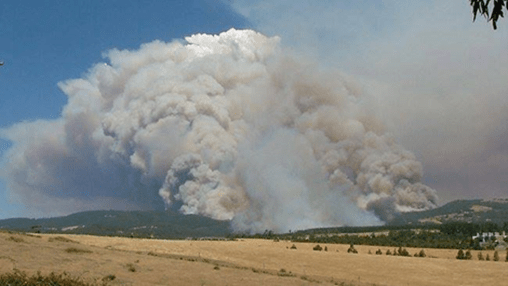
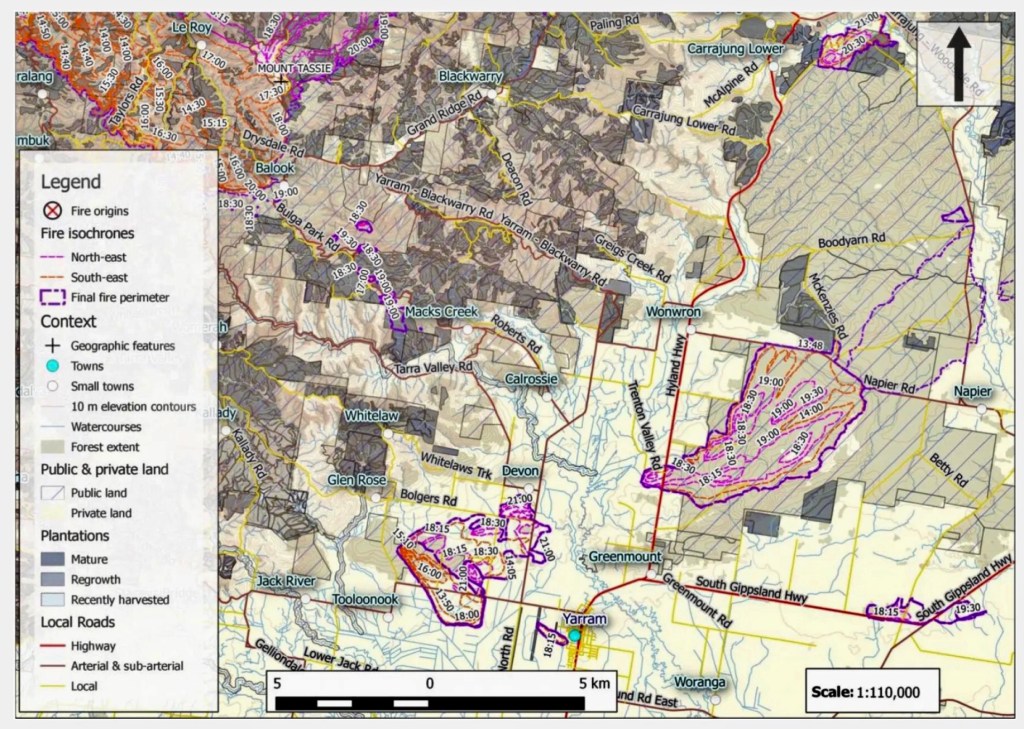
We could see the smoke plume from our office windows at Traralgon. It was huge and boiling up over the Strzelecki’s and heading straight towards Yarram.
It was crazy for the rest of the day, trying to work out where the fire was, where people and crews were, aircraft movements, firebombing, what the weather was doing, predicting fire behaviour and which communities were under threat and so on.
But there was nothing much anybody could do to stop the fire, so our main focus was on the fire spotting over the main ridge into Yarram and warning communities.
The overwhelming majority of the fire activity occurred between midday and about 6pm when wind speed and temperature were at their highest and humidity at its lowest.
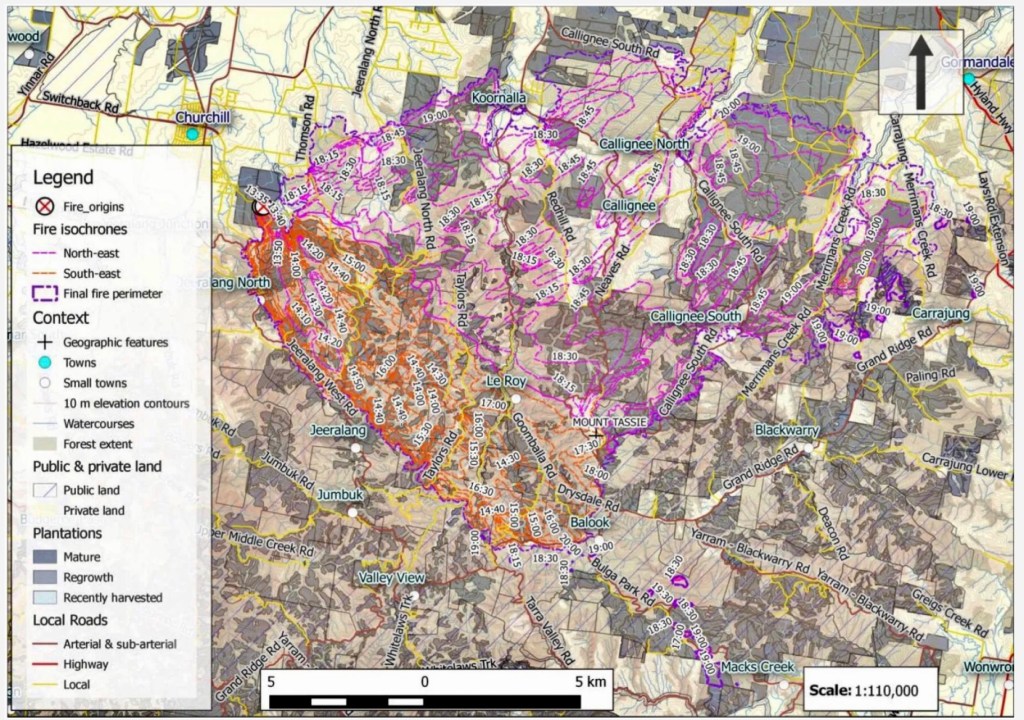
The wind direction changed strongly later in the evening with the SW change, and the fire leaped across small towns in the hills south of Traralgon.
The fire behaved in a way I hadn’t seen since Ash Wednesday in 1983. It spotted great distances and “surfed” its way from hilltop to hilltop, then burnt down into the valleys below. People who were in the way were suddenly surrounded by fire on all sides and had no chance of escape.
At Callignee, south of Traralgon, 57 of its 61 homes were destroyed and 11 people died that night. About 500 evacuees sheltered at an emergency centre established in a theatre in Traralgon.
Fire Progression Maps
 Victoria’s Forests & Bushfire Heritage