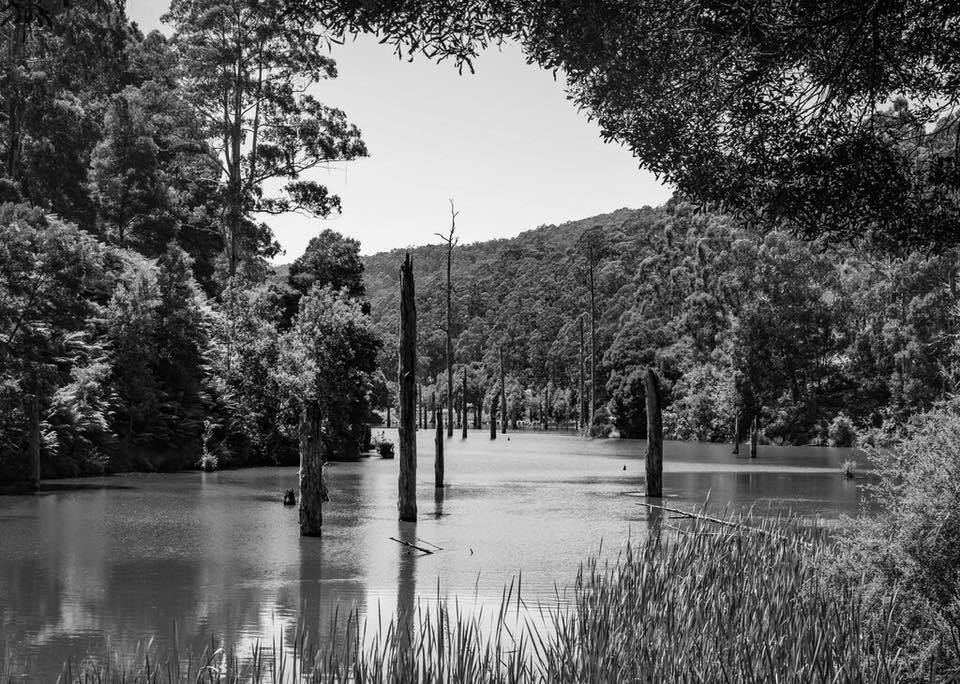
Lake Elizabeth stretches languidly for about a kilometre along the heavily forested valley of the East Barwon River, about seven kilometres east of the township of Forrest in the Otway Ranges.
It’s a popular attraction for campers, walkers, and canoeists, not least because you can spot platypus in the early morning and at twilight…. if you’re quiet and lucky.
Forrest was a thriving timber town from the early days of settlement, but especially after 1945 when timber was desperately needed to feed Melbourne’s post-war construction boom.
For some years the Forester-in-Charge of the District was Bill Meadows.
During a prolonged deluge on a long weekend in June 1952 Bill and his assistant Mark Stump were “playing endless games of monopoly”. Records show that on 17 and 18 June, the total rainfall at Tanybryn near the top of the Otway Ranges was 40 inches, which is over one metre of rain, more than enough to float Noah’s Ark.
Forest Overseer Jack Hoult was told by an East Barwon farmer that while the West Barwon was a raging flood, the East Barwon was just a trickle.
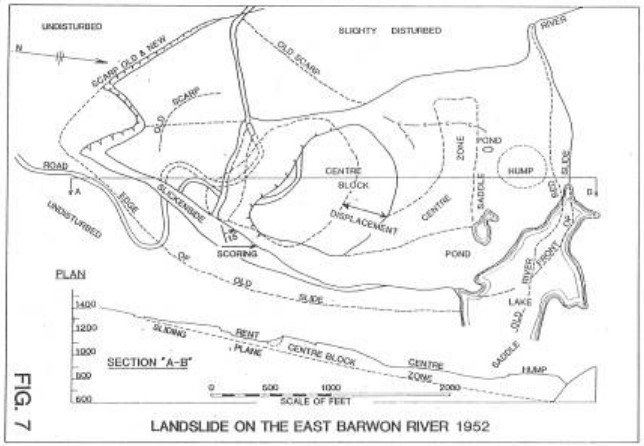
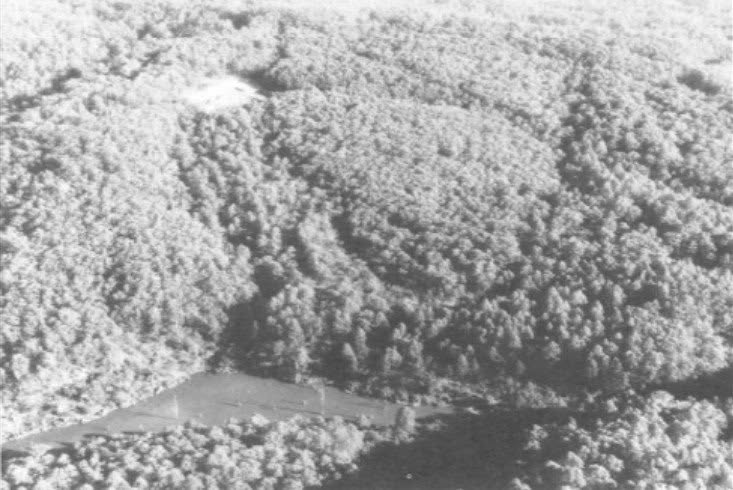
Something was up… so they drove the Land Rover cautiously up the Kaanglang Road, which had recently been completely rebuilt, to discover that the mountainside along with their new road had disappeared in a gigantic landslip, leaving the steeply pitching bedrock glistening in the light rain.
A huge 48-hectare slab of sandstone with approximately 6 million cubic metres of soggy earth had slid into the East Barwon River below damming its flow. The water in due course over-topped the loose earth wall causing more flooding downstream.
Being the man in charge, Bill took numerous calls from Melbourne newspapers who asked what the new lake was called. The headline news in 1952 was the ascension to the throne of new Queen Elizabeth, so Bill patriotically replied: “Lake Elizabeth” and the name stuck, although some of the locals grumbled because they wanted it called Lake Thompson after a local farmer.
Twelve months later on 5 August 1953 and following more heavy rains the top 26 metres of the dam breached, and another surge of water carried tonnes of gravel and boulders several kilometres downstream.
The residual lake now contains about one fifth of its original volume.
Lake Elizabeth is a site of National geomorphological significance. Another well-known example of a perched lake is Tali Karng in the Alpine National Park north of Heyfield which was formed some 1500 years ago.


 Victoria’s Forests & Bushfire Heritage