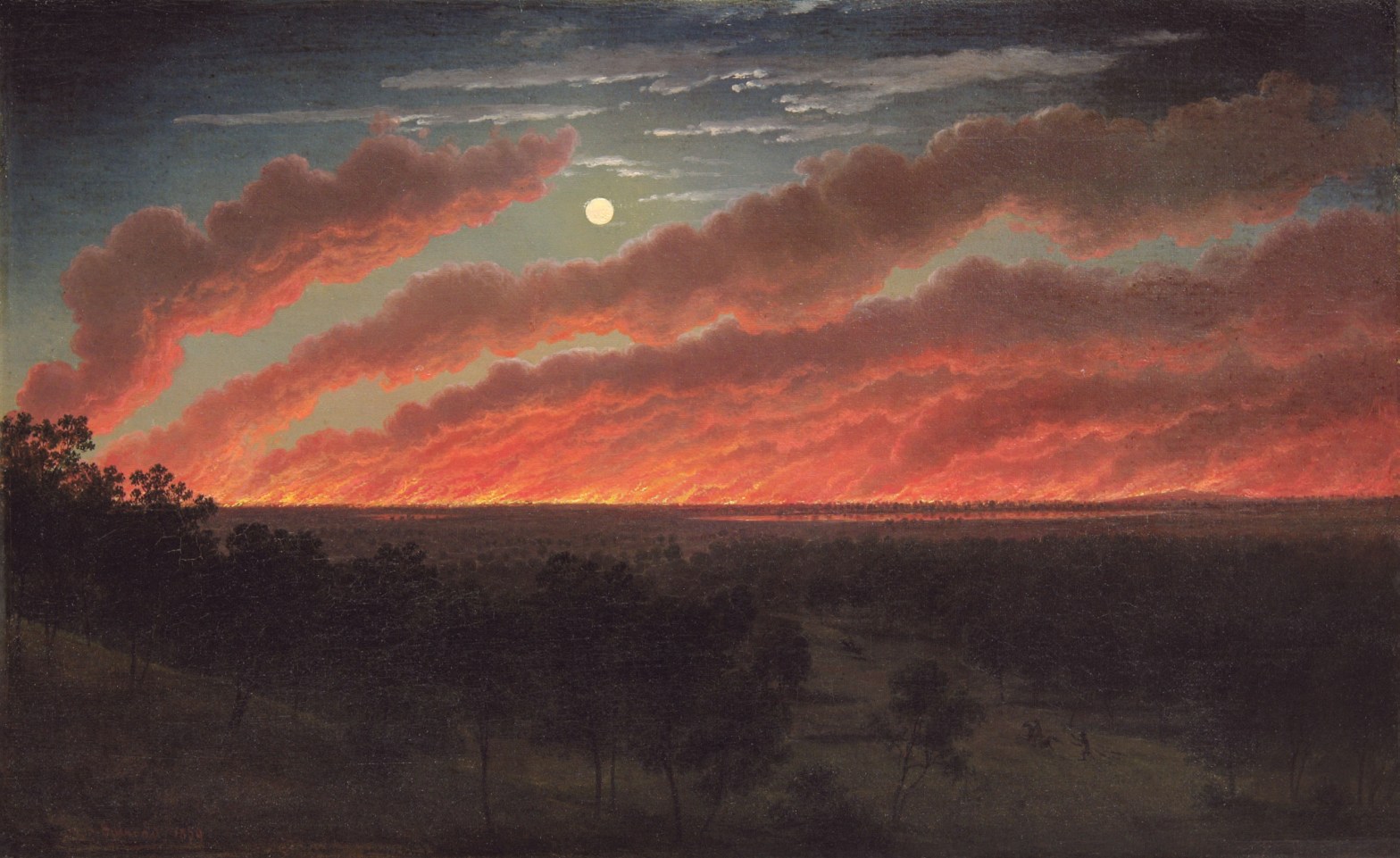
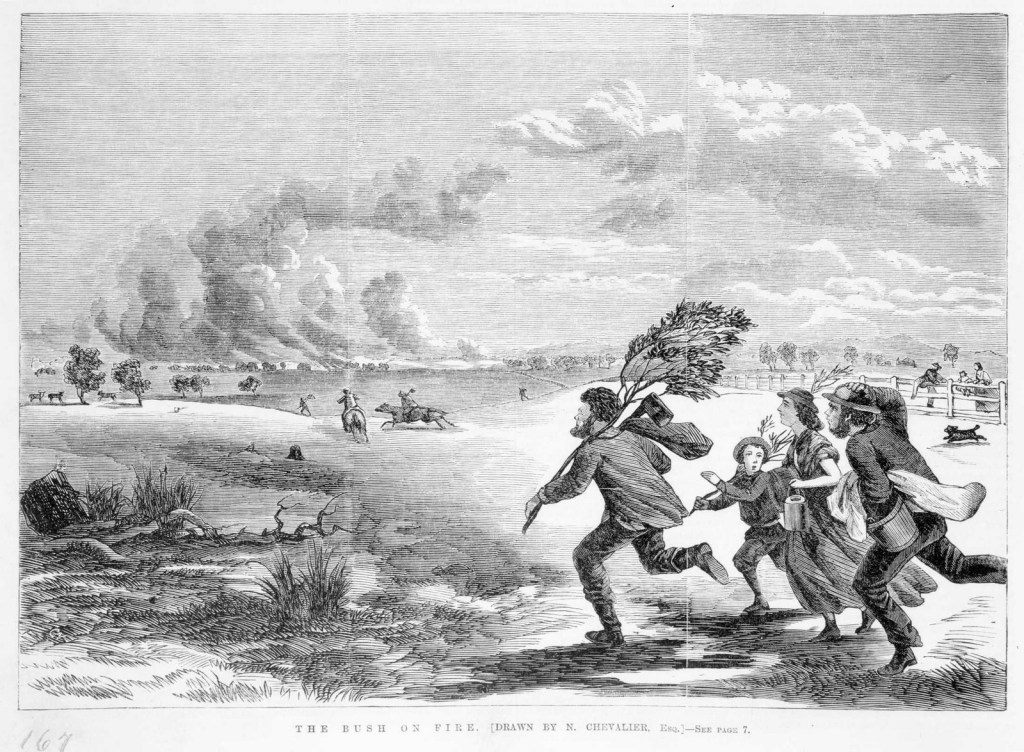
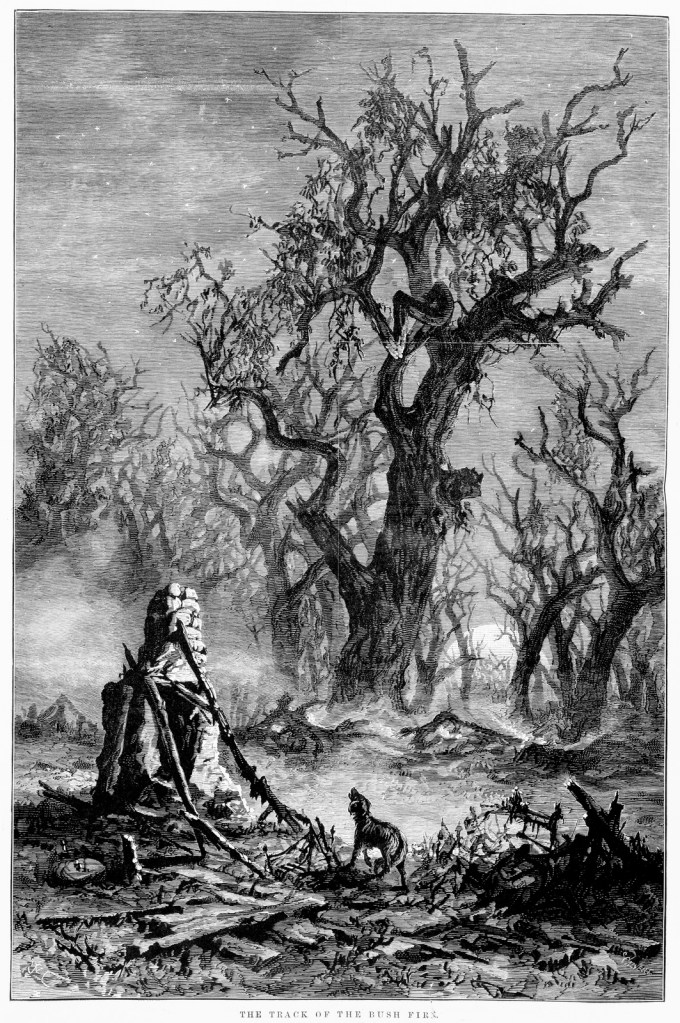
Devasting and uncontrolled bushfires swept the forests and rural farmlands in the Colony of Victoria during the 1800s.
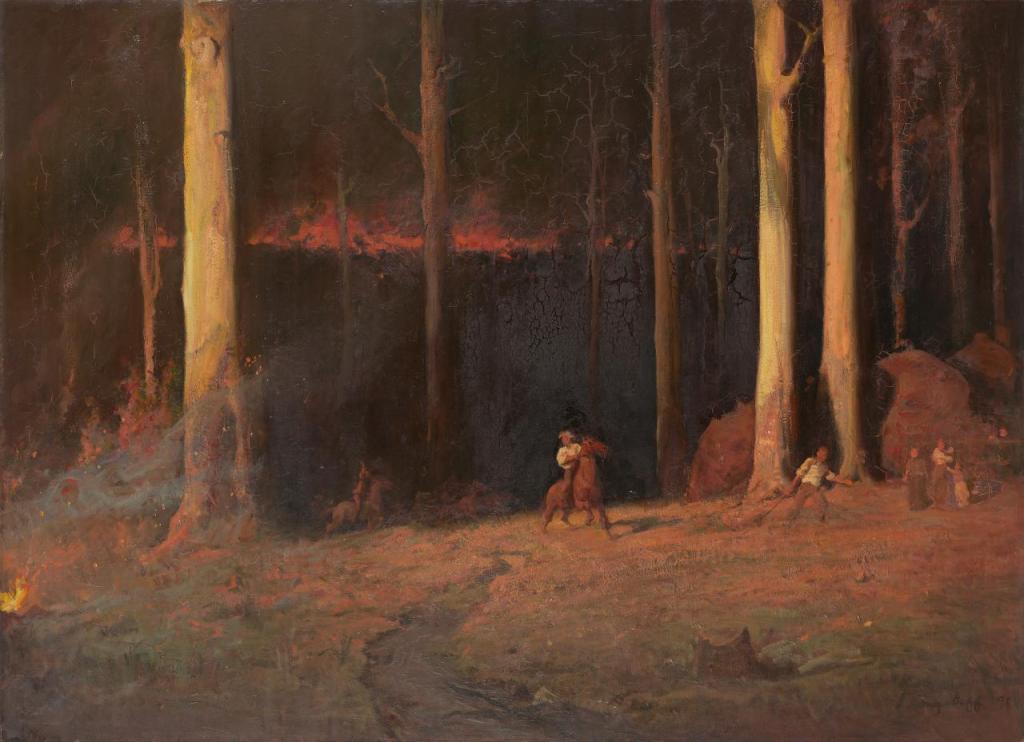
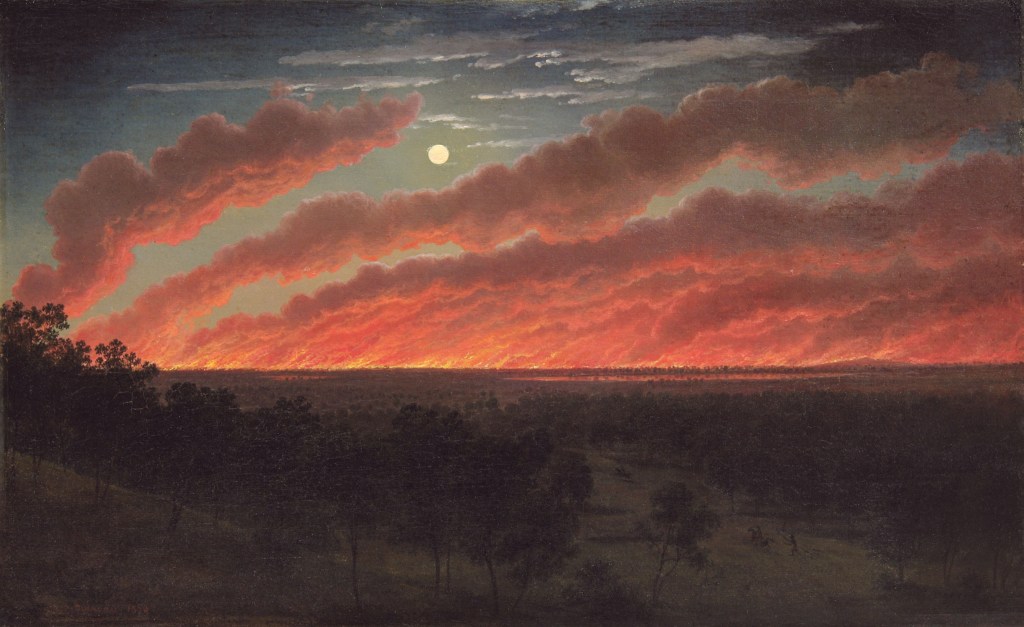
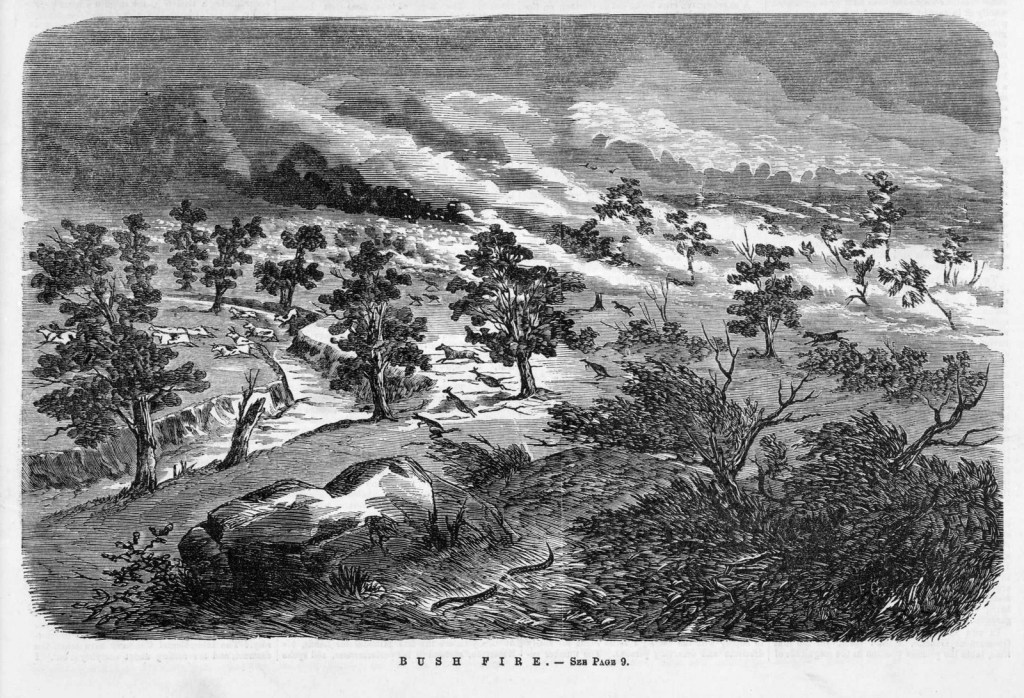
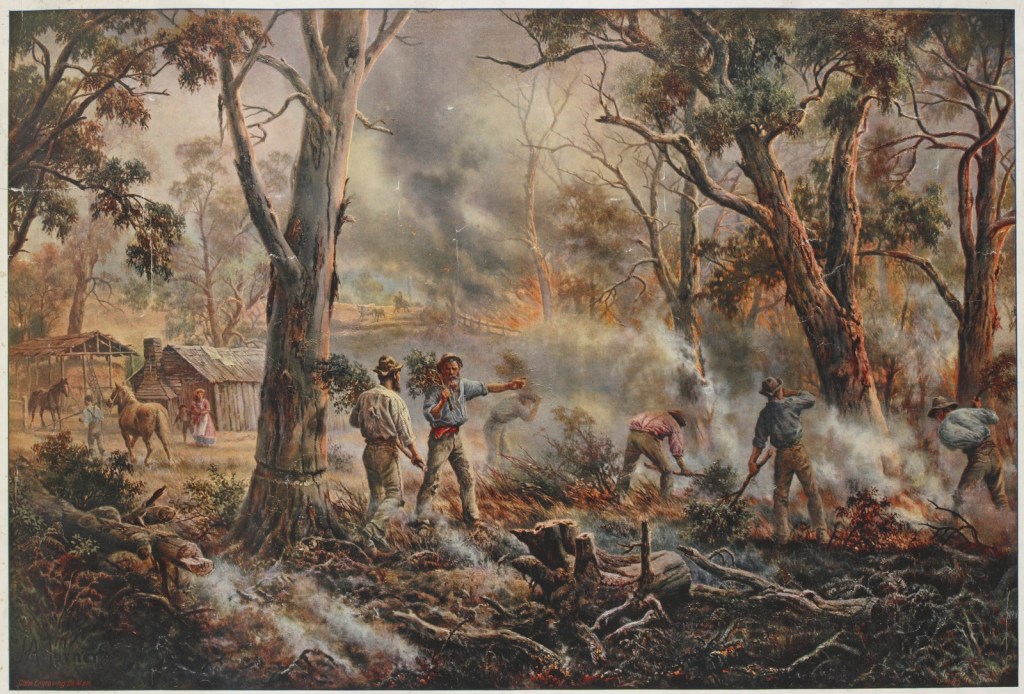
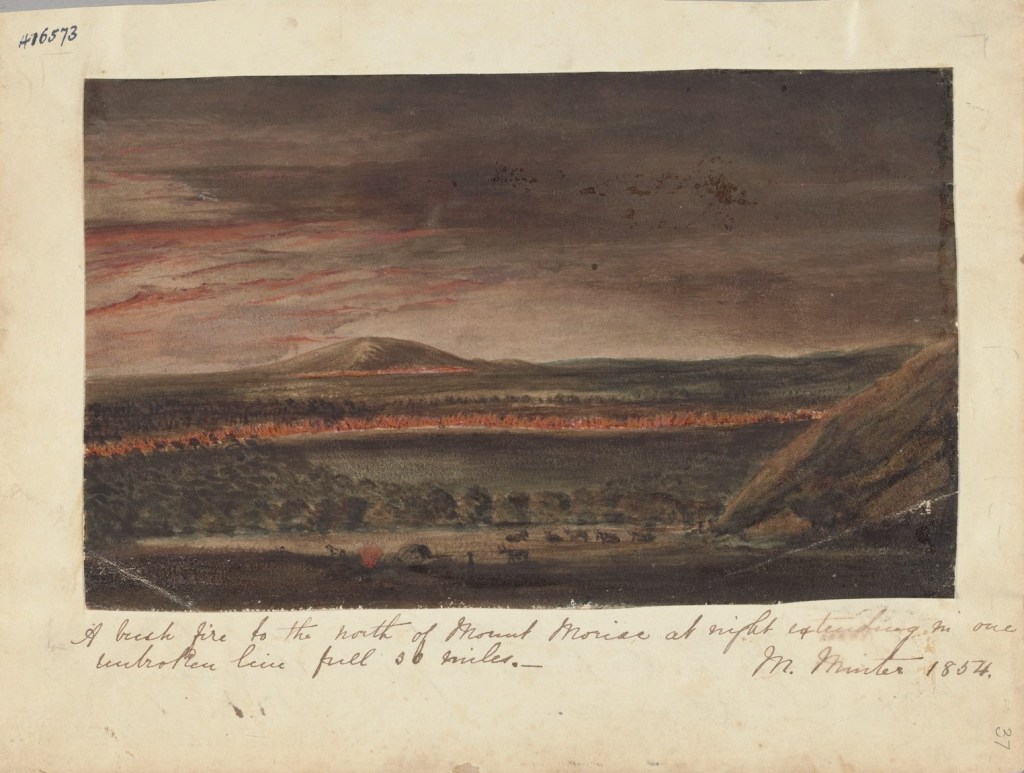
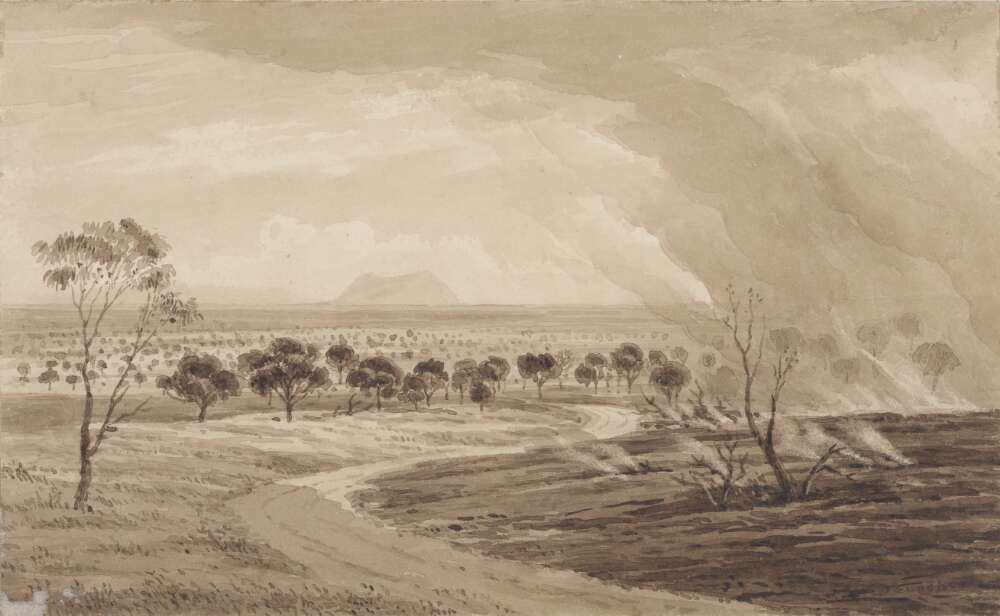
Many of these bushfires are recorded in newspapers from the time and feature in colonial artwork.
Bushfires have undoubtedly always been a feature of Australian summers. In an average year, more than 600-1000 bushfires occur in Victoria’s National Parks and State forests, which burn about 200,000 hectares.
The largest recorded bushfires in Victoria were on Black Thursday 6 February 1851. It’s generally accepted that these fires covered a quarter of Victoria, or approximately 5 million hectares, including Portland, Plenty Ranges, Westernport the Wimmera and Dandenong districts. Approximately 12 lives, one million sheep and thousands of cattle were lost.
In June 1858, the Victorian Parliament introduced “An Act for preventing the careless use of Fire.” But the bushfires continued.
Before the formation of fire services like the CFA, families in rural areas needed to work together to defend against bushfire to save their lives, homes, livelihoods, farms and communities. They had no choice. There were inevitably failures, as well as successes. But they were resilient and rebuilt their lives with strong community support.
In his annual report to Parliament for the year ended 30th June 1890, the Conservator for Forests, George Perrin, deals extensively with the causes and measures for the prevention of forest fire and indicates the impacts of aboriginal burning before the advent of European settlement.
He recommended the following measures to protect the State forests of Victoria.
- All State forests should be placed in charge of intelligent foresters whose duty it would be to watch for fires, and when such occurred to obtain help and suppress them.
- Stop “commonage” on State forests.
- Stop the indiscriminate camping and entrance of the public upon lands devoted to forest conservancy, except under stringent regulations as to fire.
- Placing of forest licensees and their workers, etc. under a code of regulations to protect both themselves and the forest.
- Amend the Fire Act so that land holders who use fire without taking appropriate precautions would be punished.
- Fencing in of State forest to prevent traffic or restrict it to surveyed roads, where proper and efficient firebreaks could be made by employees of the Department.
- The formation of firebreaks running across a forest at stated distances apart, or around the outside boundaries, at any point where danger from fire was most apparent.
The summer of 1886 and 1891 were also bad fire seasons in western Victoria and the Otways.
Red Tuesday occurred on 1 February 1898 when 260,000 ha were burnt, 12 people were killed and 2000 buildings were destroyed. The fires mainly affected Cranbourne, Traralgon, Neerim South and Poowong areas.
Source: Denis O’Bryan. Victoria’s Bushfire History, 1802 to Present.
 Victoria’s Forests & Bushfire Heritage