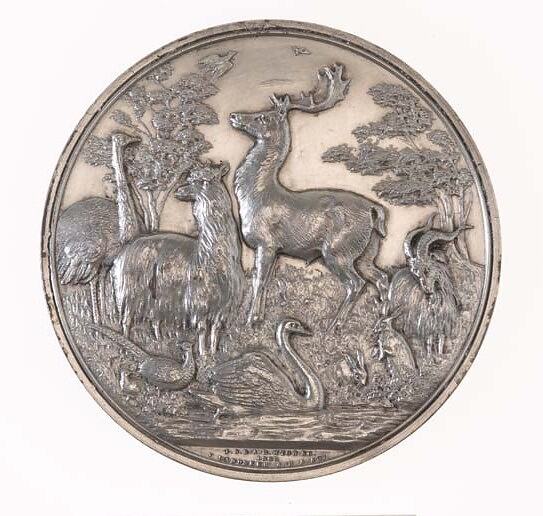
The Victorian Acclimatisation Society was founded in 1861 by Edward Wilson, editor of The Argus newspaper and a private collector, whose motto was “if it lives, we want it”.
The Society was governed by the colony’s most eminent scientists who believed that Australia’s plants and animals were greatly inferior to those in Europe, providing only “a little sport and an occasional meal”.
The Society was primarily responsible for the introduction of deer, starlings, Indian mynas, sparrows and European carp into the Murray River.
Wilson even suggested to the Governor of Victoria that monkeys be released into the Australian bush “for the amusement of the wayfarer, whom their gambols would delight as he lay under some gum tree in the forest on a sultry day.” Fortunately, his request was refused.
Victorian government botanist, Ferdinand von Mueller, a noted member of the Society, distributed thousands of living plants and packets of seed to gardens throughout the colony between 1857 and 1858. Von Mueller is often credited with the spread of blackberry, which now uncontrollably chokes the bush and waterways.
The release of 24 wild rabbits by Thomas Austin in October 1859 on his property near Winchelsea was also to have huge and lasting impacts on native forests and agricultural lands.
Foxes were introduced to combat the rabbits, but this experiment failed, and foxes became a new environmental pest.
Lack of ecological knowledge meant that the consequences of these introductions were generally unforeseen. It was later said of the Victorian Acclimatation Society that “there was never a body of men so foolishly, so vigorously, and so disastrously wrong”.
Domestic animals – such as dogs, cats, pigs and goats – either escaped or were released into the wild.
The list is long with other pests like black rats and scotch thistles which were inadvertently introduced by settlers.
And the later arrival of the soil-borne disease Phytophthora cinnamomi and the honey fungus, Armillaria luteobubalina, devasted large tracts of the southern eucalypt forests in Victoria, Tasmania and Western Australia.

 Victoria’s Forests & Bushfire Heritage