In the early 1990s, a new State Forest Management Planning process was in full swing, and a community advisory committee was appointed by the Minister for Conservation and Environment, Steve Crabb.
The committee for the Yarra Forests was headed by local shire councillor, Gordon Buller, and included representatives from the timber industry, as well as recreation and conservation groups.
Peter Preuss represented the Australian Wildlife Protection Council, while Ron Reid, a local sawmiller from Yarra Junction, represented the timber industry on the committee.
I led the forest planning process at the time, and unsurprisingly there was a strong divergence of views within the advisory committee which occasionally flared up but overall, there was a genuine willingness to listen and work together.
Peter was a school teacher in Yarra Junction and particularly active in the long-running campaign to stop logging and create a large National Park in the Central Highlands. He produced his own “Have Your Say” booklet on the forest planning process in conjunction with other conservation groups. It even included a self-guided forest drive around the bush. The Department was not consulted nor involved in its production.
Meanwhile, Leadbeater’s possum had become a symbolic emblem of the forest conservation movement, particularly when it was rediscovered near Marysville by Eric Wilkinson in 1961, after it was believed to have become extinct.
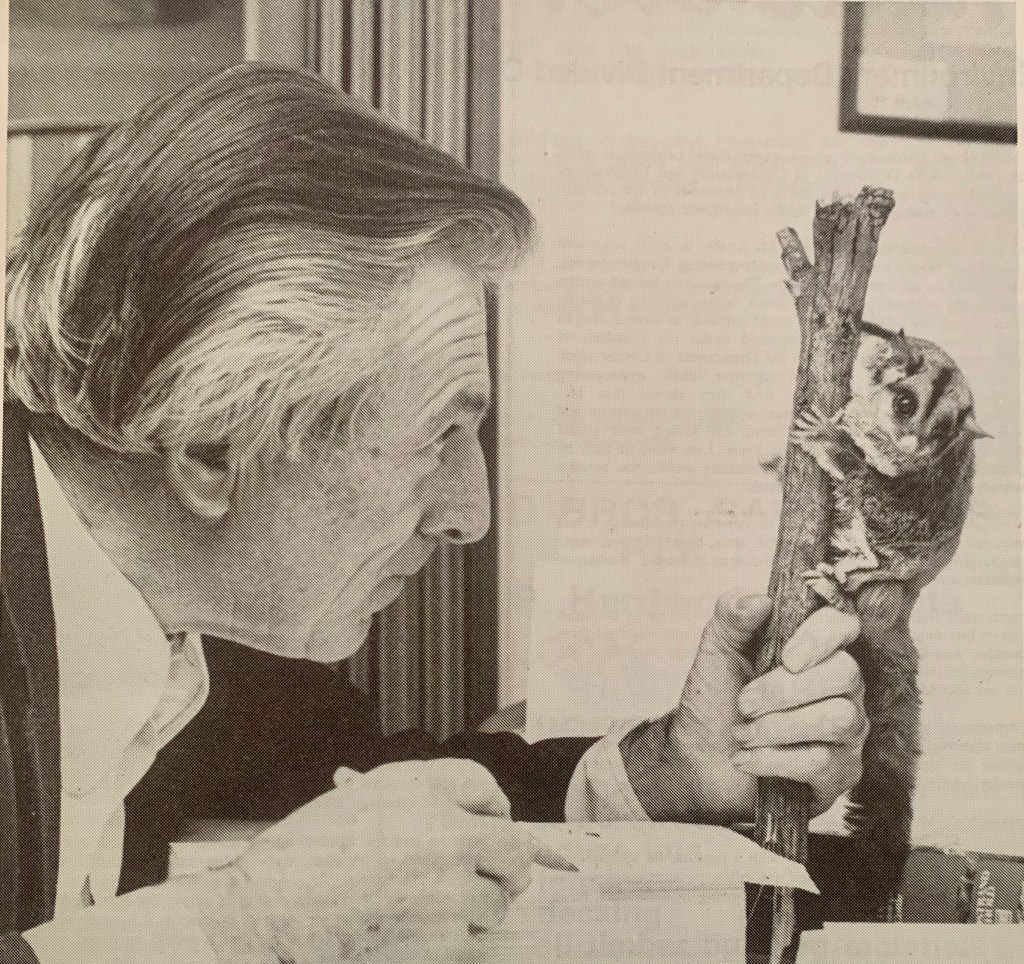
Peter Pruess was a good friend of Des Hackett who is often credited with the first successful captive breeding of Leadbeater’s Possum at his wildlife refuge in his suburban backyard at Blackburn during the early 1960s.
The story goes that Des collected possums by progressively cutting down old-growth mountain ash trees with a chainsaw around Noojee and Powelltown until he had gathered enough of the small arboreal mammals for his captive breeding program. I’m not sure if the Fisheries and Wildlife Department, or the Forests Commission, were aware of his activities at the time, but it’s hard to imagine they would have approved.
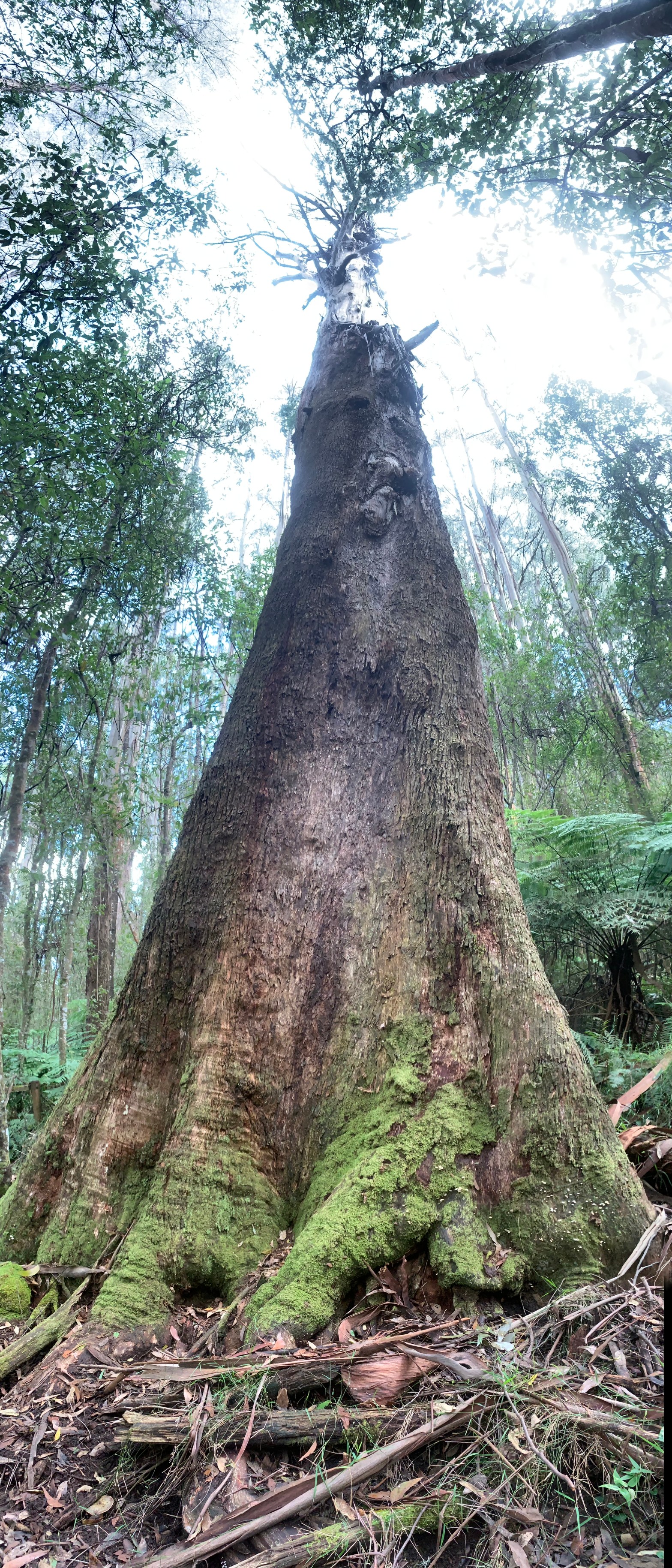
One of the large trees that Des often surveyed was on Pioneer Creek Road, east of Powelltown. The tree was probably 300-400 years old.
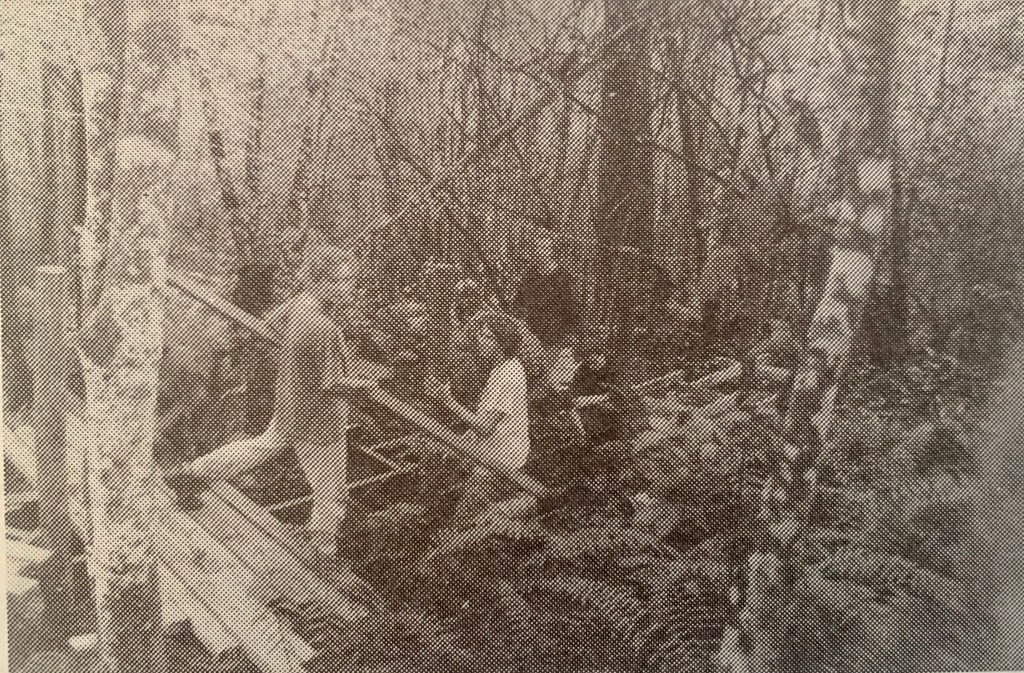
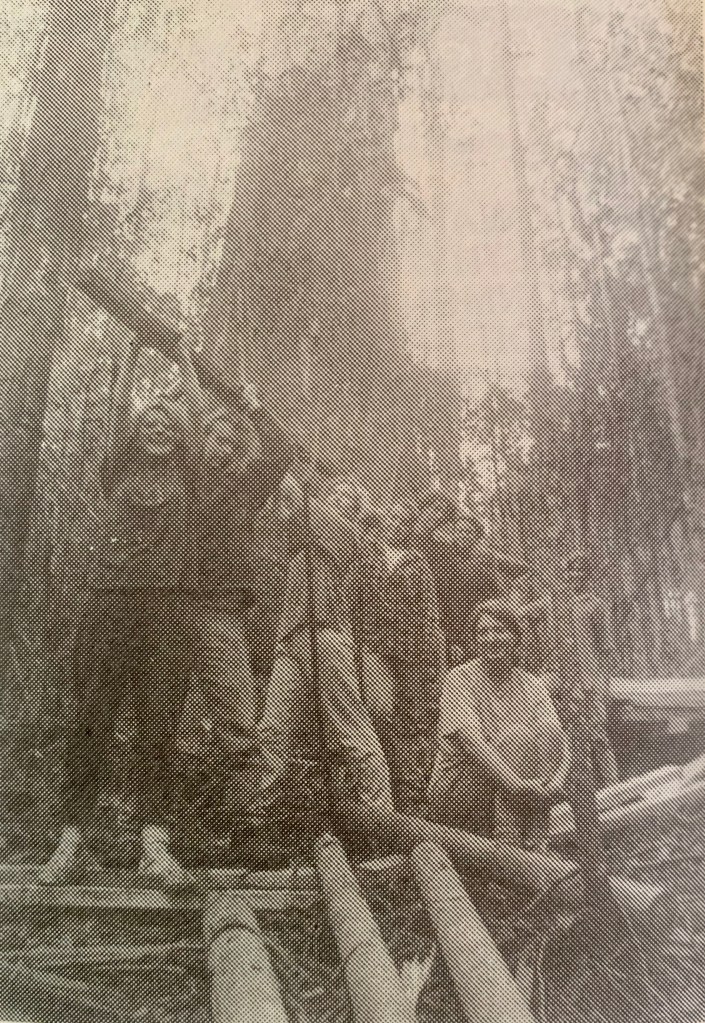
During winter, between May and August 1991, Peter Preuss, together with volunteers from the Australian Wildlife Protection Council, the Australian Conservation Foundation (ACF), the Wilderness Society, the Environmental Youth Alliance and the Upper Yarra Conservation Society, constructed a timber boardwalk and viewing platform at what became known as the Hackett Tree. The timber for the boardwalk was supplied by local sawmiller Ron Reid.
The Department was going through another restructure and downsizing process at the time, and the works on the boardwalk were largely unbeknown to senior management staff in the Regional office.
I later learned that the Operations Area Supervisor at Powelltown had been verbally advised, but he took a redundancy package and left the Department not long after. Furthermore, I saw Peter regularly at advisory committee meetings and I don’t recall him ever saying anything to me about the new boardwalk until it was nearly completed.
There was certainly never any formal or written proposal to the Region. By default, the Department as the manager of the State forests inherited responsibility for the long-term public liability risks if anyone hurt themselves.
Then in late November 1991, the boardwalk was unveiled with great fanfare by Channel Nine’s weatherman and ACF Councillor, Rob Gell. Groups of conservationists, some timber workers and school kids attended. An environmental theatre group, Vox Bandicoot, closed the proceedings with a song especially written for the event called “Don’t Hackett the Trees”.
I also don’t believe that any senior management staff from the Department were invited or attended the event. I recall that the Regional Manager, Peter Sheehan, was furious when he became aware that the boardwalk had been constructed and opened on State forest without his knowledge, or any formal written approval.
Meanwhile, tensions over the future of State forests and timber harvesting were running high and it wasn’t long until there was a reaction.
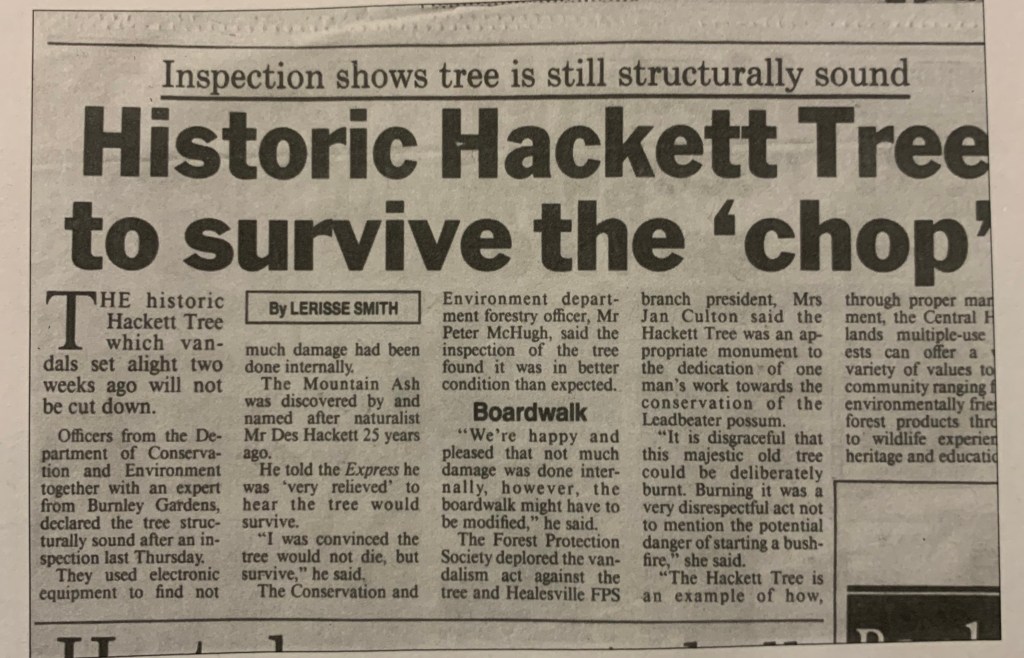
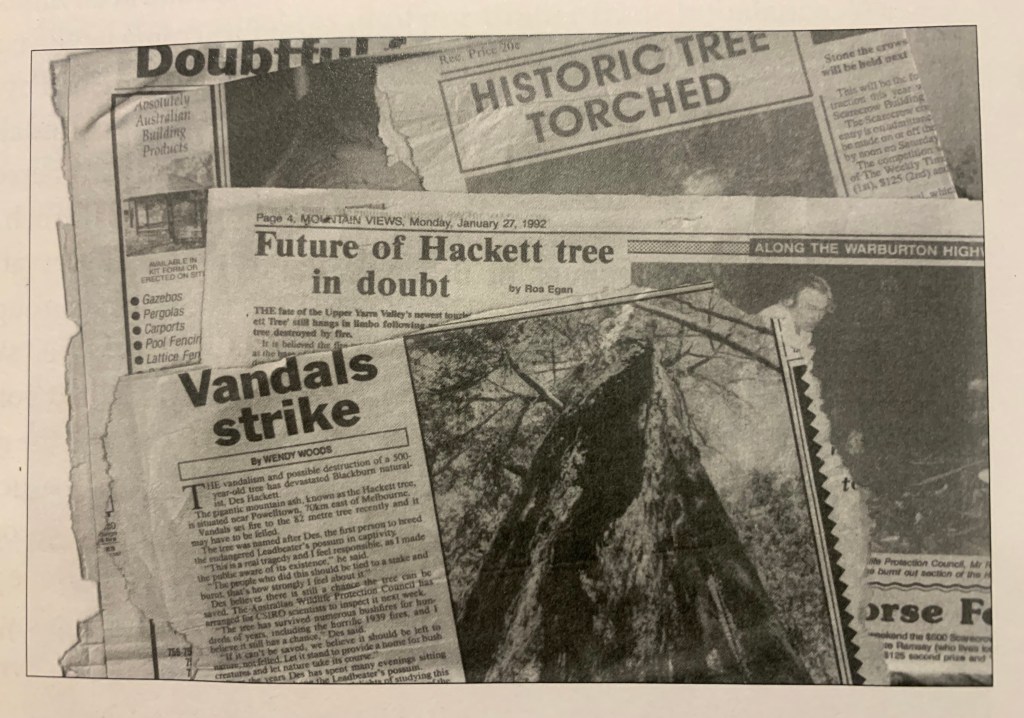
Late on Friday evening, 17 January 1992, someone took matters into their own hands and, with the aid of some diesel fuel, set fire to the base of the Hackett Tree. It was the middle of the fire season but luckily the weather conditions were mild at the time and the small fire was quickly extinguished by local forestry crews and the CFA from Powelltown.
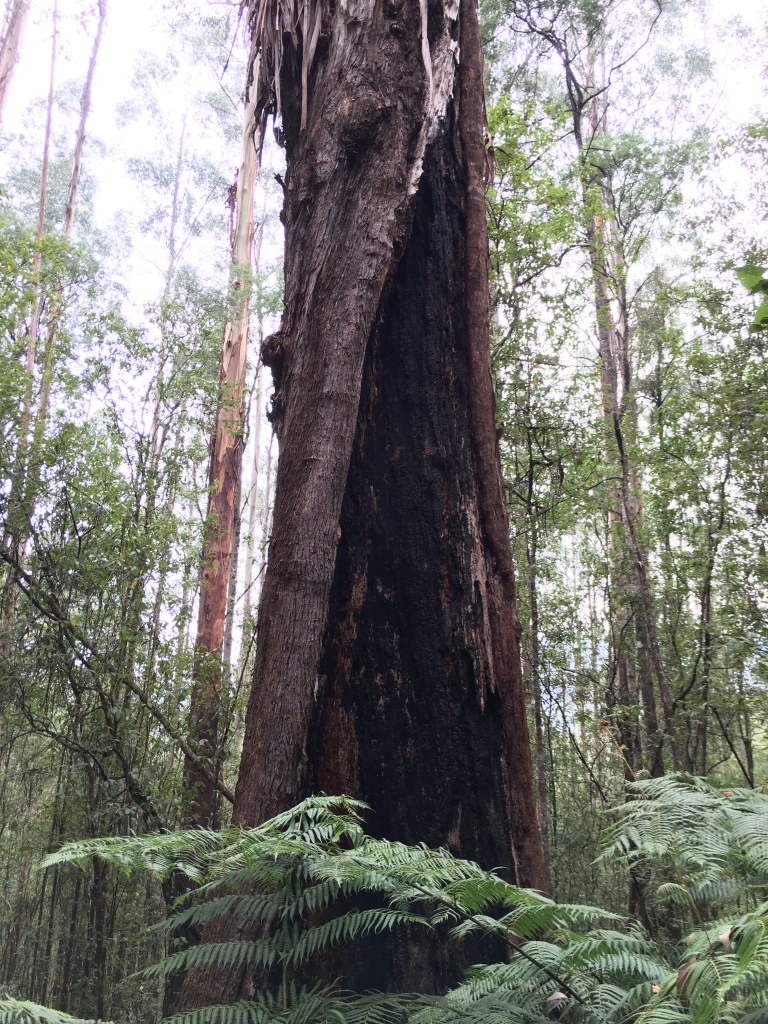
Fortunately, the damage to the tree was minimal. Some people and the media wrongly assumed that the large fire scar on the side of the Hackett Tree was a direct result of the vandalism that night, but it was an older and pre-existing fire scar, possibly a result of the earlier 1939 Black Friday or 1983 Ash Wednesday bushfires.
Not surprisingly, Peter Pruess was seething at the wilful damage, and without any discussion or warning he invited the media to the Hackett Tree on Monday 20 January 1992. I was contacted late on Sunday evening and dropped in the deep end.
Melbourne TV channels including ABC, 9, 7, 10 and SBS converged on the tree. Journalists from The Age, the Herald-Sun and local newspapers also came expecting a clash or a dramatic headline. Local harvesting contractor, Gary Moran, came to represent the timber industry.
Allegations and rumours swirled that someone from the timber industry had lit the fire as a reprisal and, while a very likely cause, there was absolutely no evidence. The local community grapevine was oddly silent. Sergeant Bob Walker from the Warburton Police had been immediately advised and fire investigators from the arson squad later visited the site, but without any firm conclusions.
There were many difficult media interviews that Monday afternoon as I tried to diffuse the issue. I offered to seek professional advice from arborists before making any long-term decisions about the future of the tree.
Arborists from the Royal Melbourne Botanical Gardens as well as the Burnley Horticultural School subsequently visited the Hackett Tree on Thursday 30 January. They included Dr Greg Moore, Kevin Blaze and Steve Fitzgerald.
There had been suggestions and unfounded fears, amplified by the media, of the tree’s imminent collapse because it had been weakened by the fire. The arborists climbed the tree and took core wood samples which confirmed, what all the local foresters already believed, that the tree was healthy for its age and would survive. It certainly didn’t need to be felled because it was unsafe. But they did say it was unwise to encourage people to sit under the tree.
The Melbourne media were invited back to meet the arborists, but the story had gone cold, so only the junior cadet from the local newspaper turned-up.
As the newly appointed Senior Forester for the Yarra Valley, the whole sorry saga put me in a difficult dilemma. Firstly, the slippery boardwalk structure had not been officially approved. But more importantly, it was poorly constructed and presented a significant long-term public safety risk. For example, the timber walking surfaces weren’t flat and sloped downhill making it hard enough to stand on even when it was dry. The steps were uneven, and the tread and lift dimensions didn’t meet any design or safety standards. Some sharp nails and bolts even protruded from the decking and handrails.
But to repair or remove the boardwalk would have been too inflammatory under the circumstances. So, it was decided to adopt a benign stance and allow time and nature to take its course.
Furthermore, it was decided not to maintain the boardwalk or promote the Hackett Tree to the general public with either directional or interpretive signs, nor highlight its location on forest maps and tourist brochures. People could continue to visit, but at their own risk.
I advised Peter Preuss of the Department’s position but not surprisingly he viewed things differently and was not happy with the decision.
But it was also decided to protect the tree from logging or disturbance with a large 200 m buffer. Later, a formal Special Protection Zone (SPZ) was set aside in the Forest Management Plan.
Unlike the previous experience with Werner Marschalek and the Ada Tree, if there had been some consultation in the design and materials used for the boardwalk at the Hackett Tree, it undoubtedly would have been supported and approved.
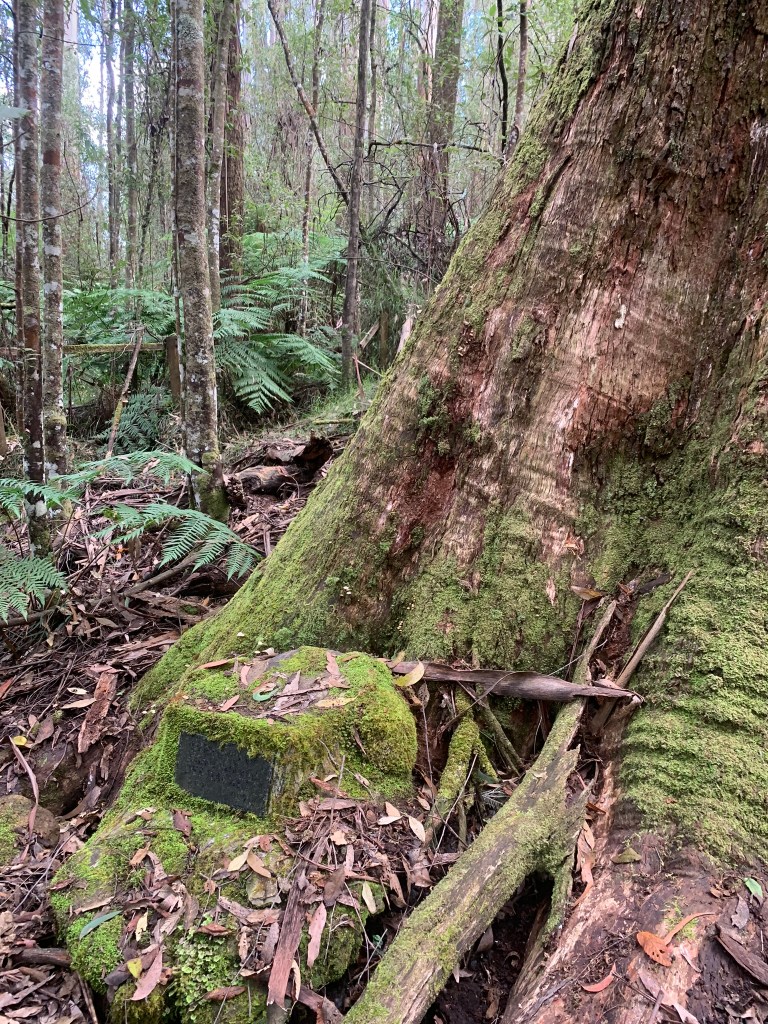
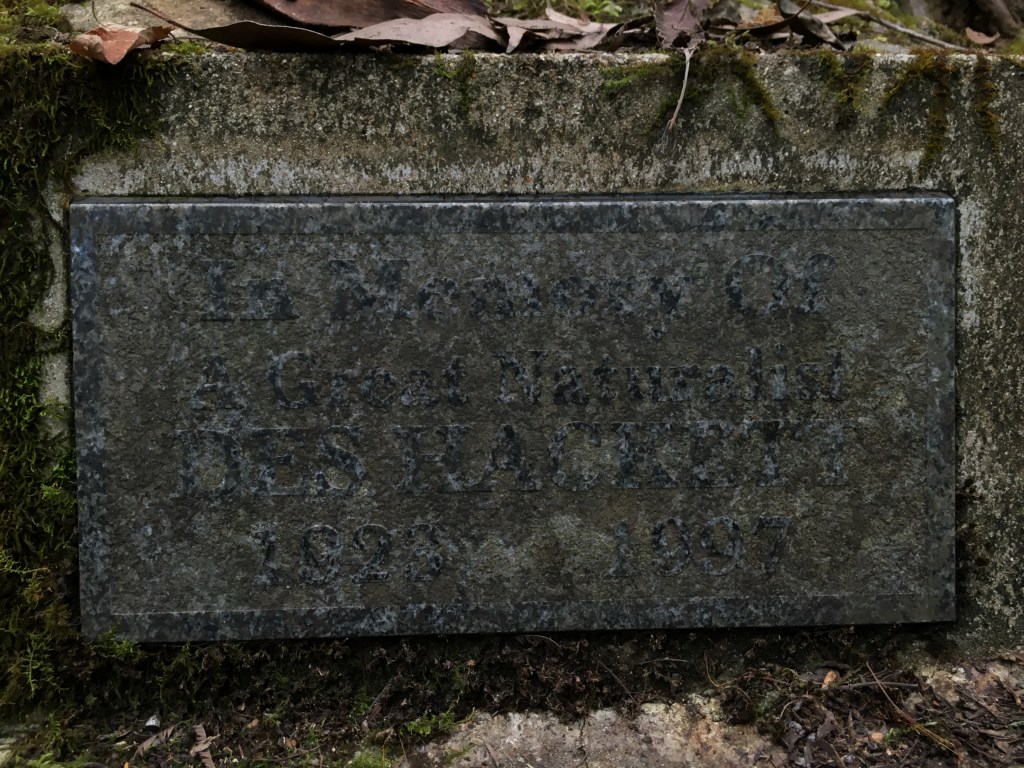
Des Hackett, the man who owes the tree its name, died later in 1997. A small memorial was concreted at the base of the tree, but it has become difficult to read.
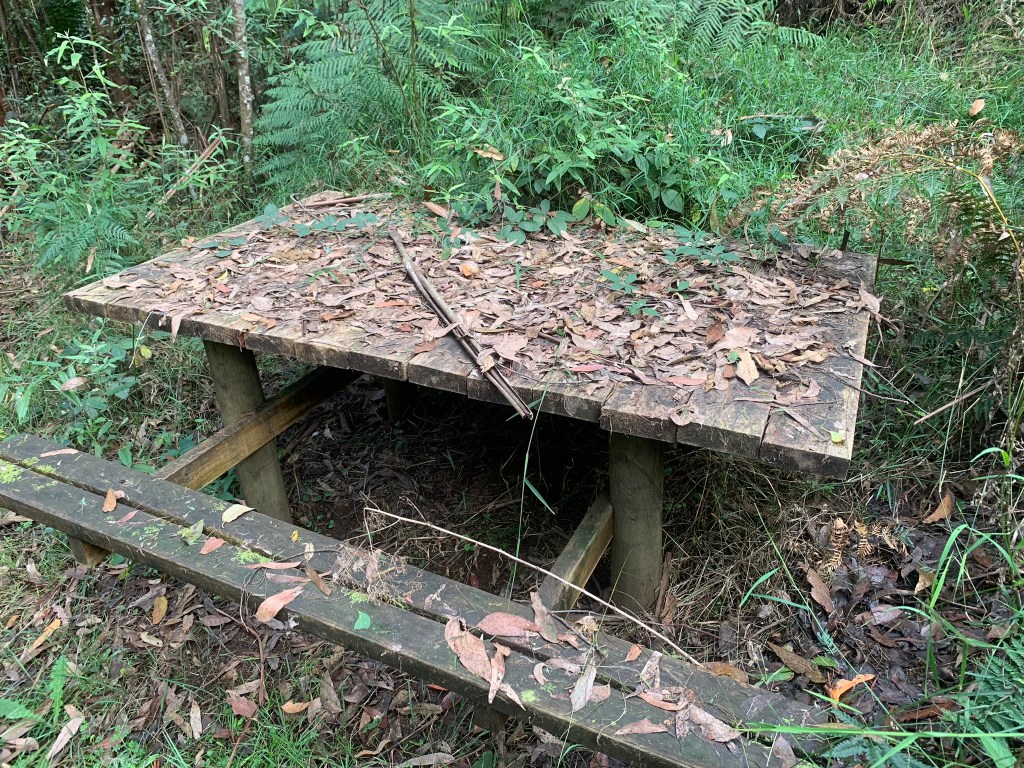
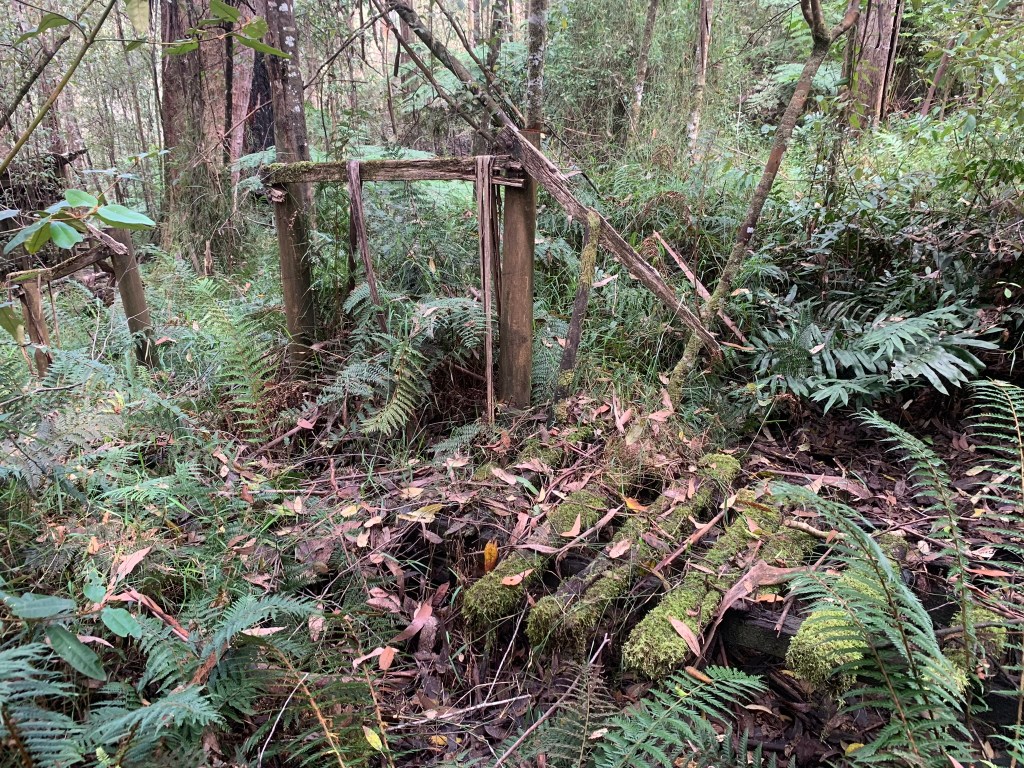
The wooden boardwalk continued to slowly rot away and in about 2003 some of it was removed. The shelter and other remnants remain.
Some schools and conservation groups continue to visit the Hackett Tree, often with Peter as their guide. There is also a geocache at the tree which attracts some visitors.
A recent proposal to rebuild the boardwalk has been examined, but once agian arborists advised that the Hackett Tree was still too dangerous to encourage people to visit, or certainly sit under it.
The Hackett Tree continues to survive but is slowly senescing and its crown is showing its age. I’m not sure if there have been any recent surveys to determine if Leadbeater’s possum still live in it.






 Victoria’s Forests & Bushfire Heritage