Put simply… successful natural regeneration of native eucalypt forests often came down the three S’…
Seed… Seedbed… and Season…
Seed collection, extraction and storage to support regeneration after logging was always a big drain on the District budget.
Seed collection was also subject to the vagaries of the flowering cycle and some commercial eucalypt species only produced a bumper crop every few years.
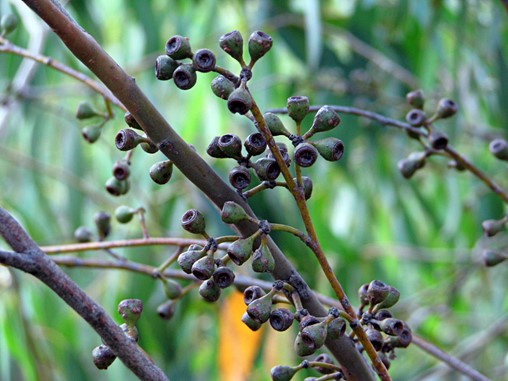
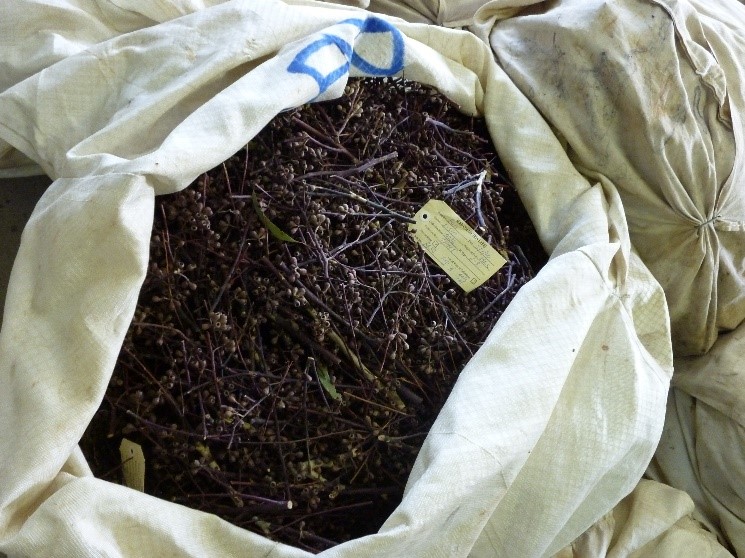
In late summer through to autumn, after the trees has set seed, branches were cut and collected in the field and transported in large wool bales, or on the back of trucks.
The seed capsules and branchlets were usually placed on large wire framed drying racks or on sheets of corrugated iron to extract the seed. This job was very labour intensive.
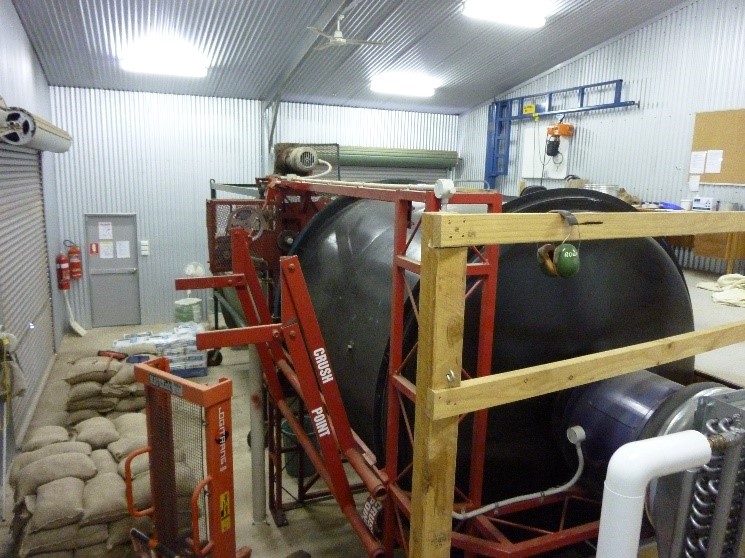
In 1971, Noel Fraser, a FCV Overseer from Omeo, developed the now common rotary drum seed extractor.
Seed capsules were heated inside the metal drum and gently tumbled. It was found that the extraction time for alpine ash (E. delagatensis) seed could be reduced to about 36 hours. It was a lot less reliant on warm weather and significantly reduced handling. The losses of seed compared to air-drying were also reduced.
A full drum of branches and capsules of alpine ash yielded about 20 pounds of seed or enough for about 20 acres of regeneration.
Seed was then stored in a cool dry place, ready for use.
Encouraging and supporting innovation was a key feature of the Forests Commission.
Victorian Forester & VSFA Newsletter No 30. May 1972
https://drive.google.com/file/d/15ETKfQhbiCLZJuH_UNC-wcqaI8H55ou0/view




 Victoria’s Forests & Bushfire Heritage