James (Jim) Fry was born in 1852 and worked as a carrier bringing supplies over treacherous tracks to several gold mining companies in the remote mountains east of Mansfield during the early 1870s.
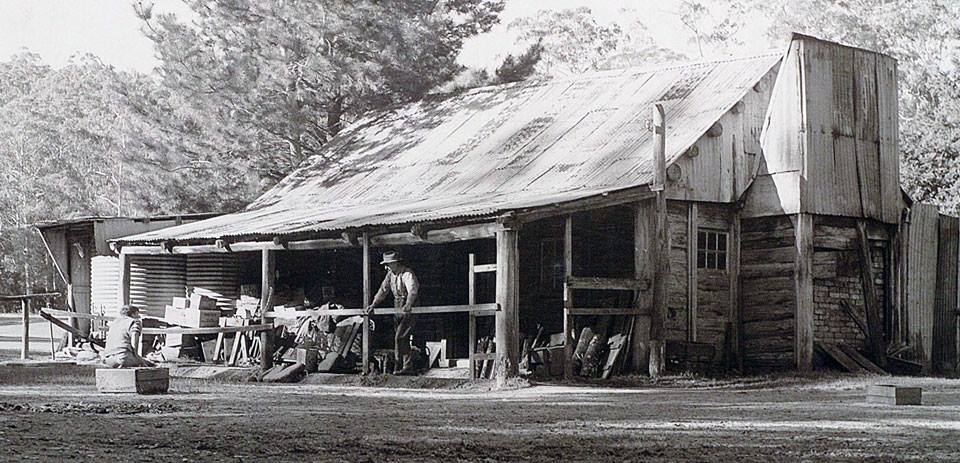
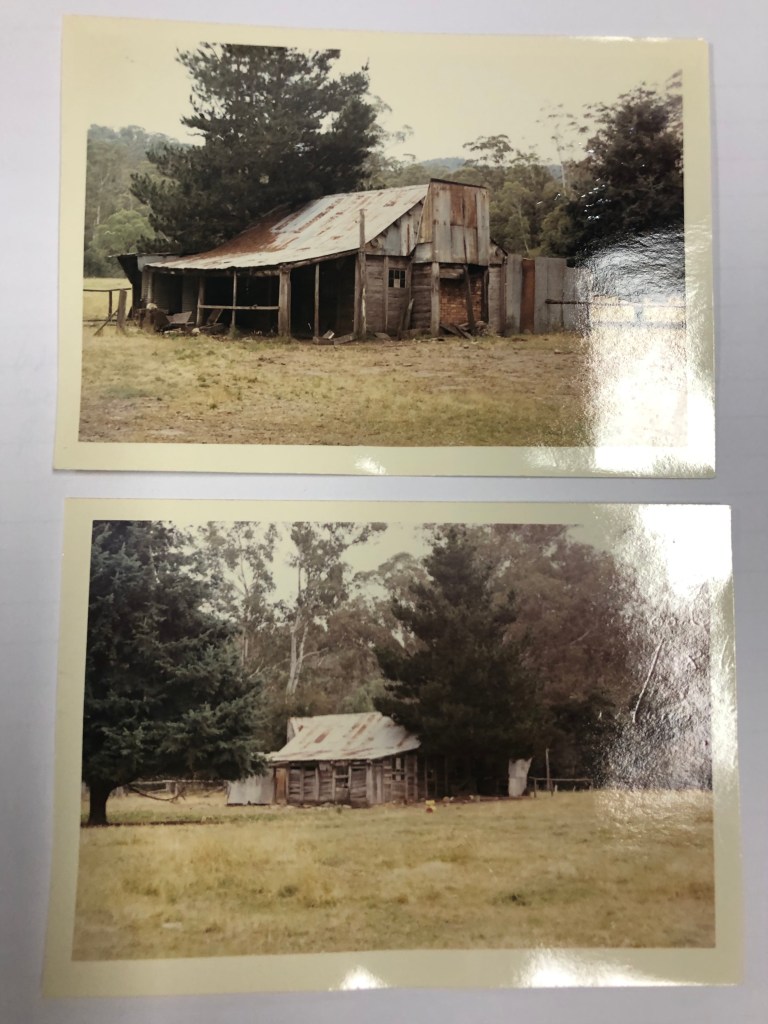
The former manager’s house (c.1874) from the Great Rand Mine had been left abandoned and was shifted from nearby Martin’s Gap by bullock team and rebuilt on the Howqua River flats in about 1897. Jim acquired the building which was clad with corrugated iron, rather than logs or split timbers, while fossicking for gold and lived there with his wife, Mary Agnes Wheeler, and the couple’s two children, who are said to have ridden ponies to the Merrijig school.
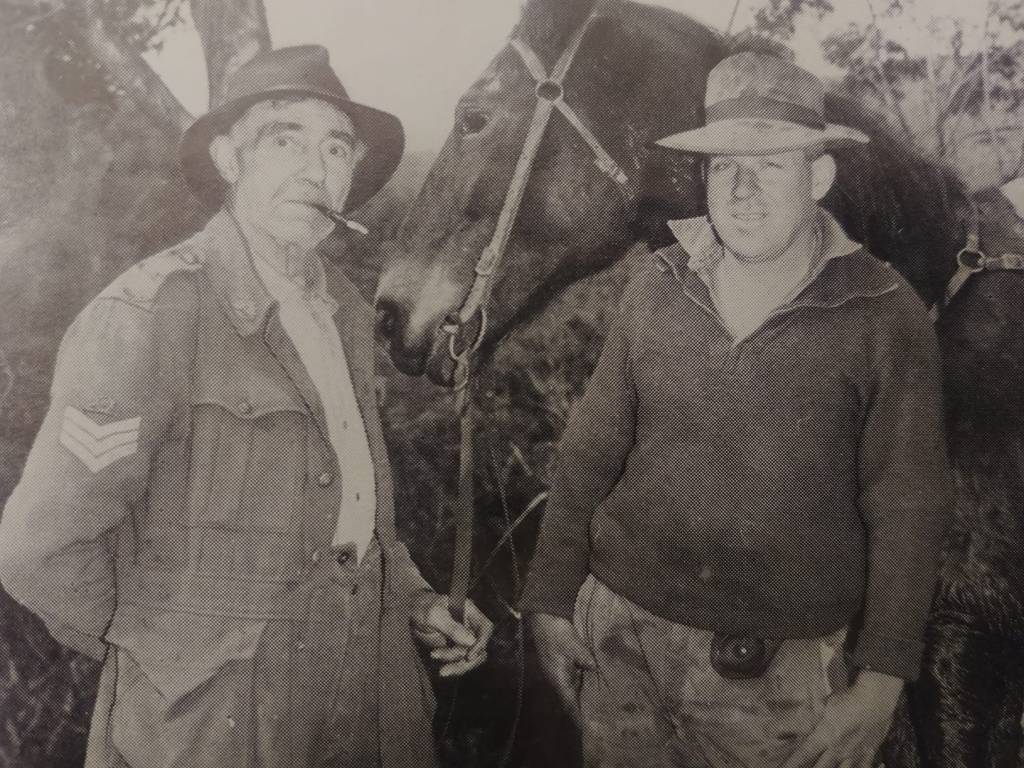
Frederick (Fred) Samuel Fry was born in Mansfield on 14 July 1895 as one of 17 children and was Jim’s nephew. Fred left school when he was eight and mastered his many bushcraft skills while working with the Hoskins family at Jamieson, earning 10 shillings per week plus food and lodgings.
Like his uncle Jim before him, Fred worked a team of draft horses hauling supplies to the Woods Point and Gaffney’s Creek goldfields until he was superseded by roads and motor vehicles. He then took a job on the Wonnangatta Station near Dargo for Arthur Phillips and Geoff Ritche.
When his uncle Jim died, aged 83 on 26 March 1935, Fred moved into the old mine managers house on the Howqua Flats to live with his Aunt Mary. He later inherited the house when she died in 1939, aged 74.
Fred was then joined by his older brother, Stephen (Steve) John Fry, who had been working on the railways. Together, Fred and Steve did some gold prospecting, worked as stockmen, as roustabouts, as guides for more adventurous anglers, and as Forest Rangers (Fireguards) cutting tracks for the Forests Commission Victoria (FCV). They also packed salt for the Lands Department which was used to kill noxious weeds.
In 1942, the Forests Commission supplied Fred with a newfangled RC-16B radio to communicate back to Mansfield. It was powered by heavy dry cell batteries and had a long antenna wire strung up in the trees.
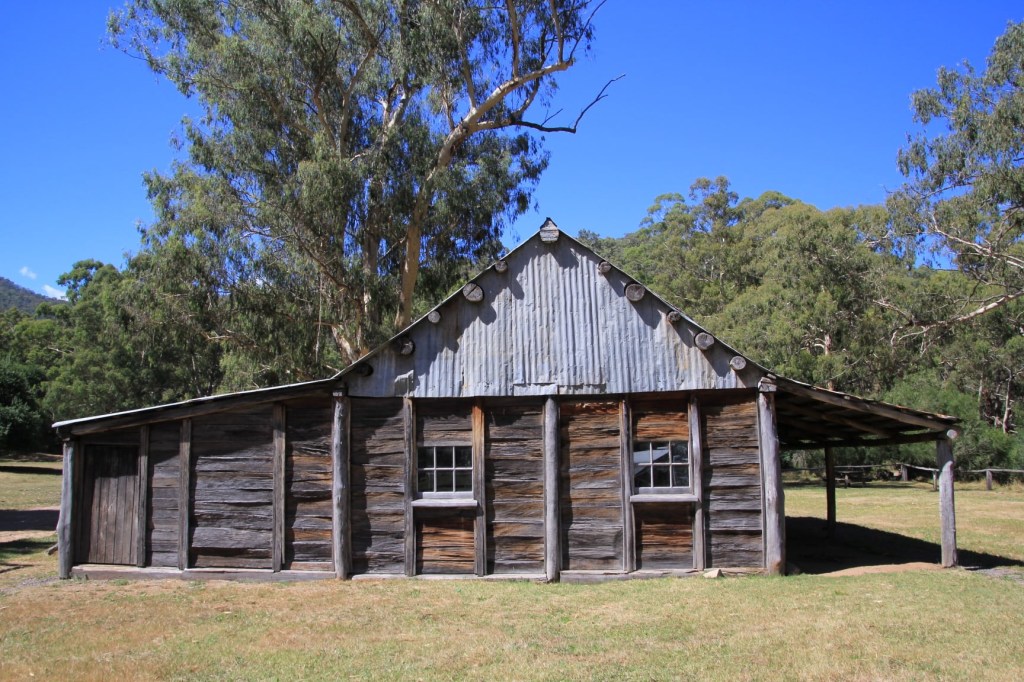
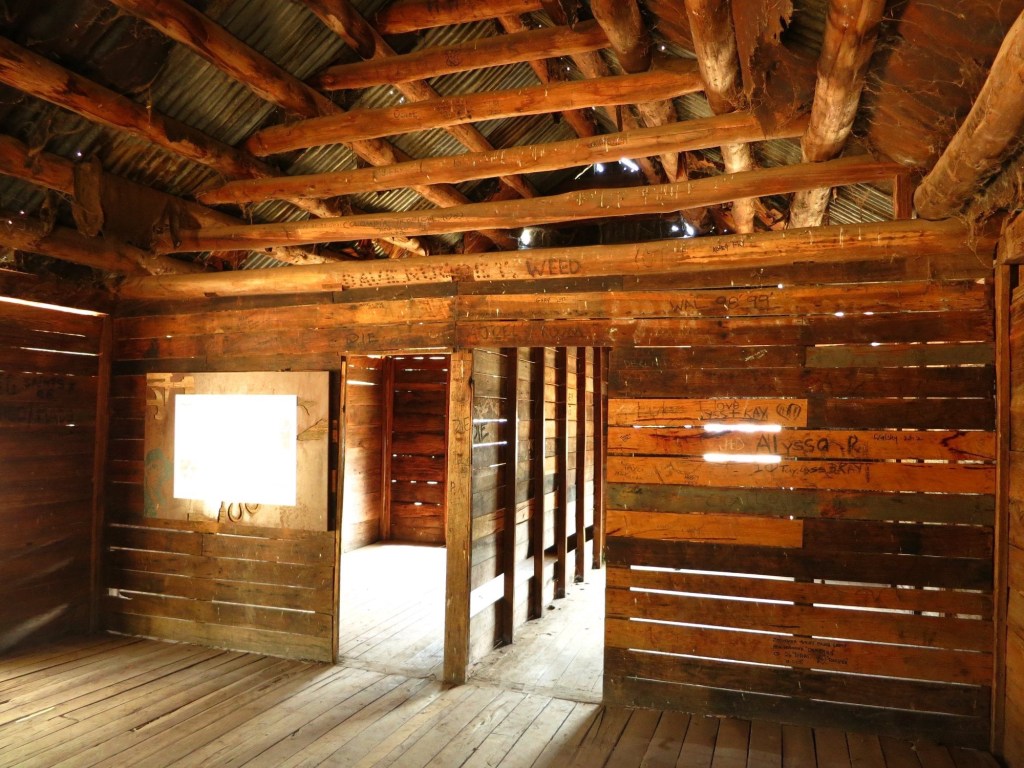
Fred was a notable bushman and had built several unique huts in the valley including Ritchie’s, Ashwin’s, Gardner’s, Pickering’s, Bindaree and Helen Schusters’. He had his own distinctive design of hand-split, drop-timber walls. He rolled the heavy roof poles up a temporary ramp and into place over cribbed-end trusses using a horse and chain to create a long centre ridge.
The new hut was built sometime between 1948-1951.
By the late 1940s, Fred’s old mine manager’s house was just about ready to collapse after being eaten by termites. Fred built the current hut at some stage between 1948 and 1951 – (a report in the Sun Newspaper from 5 July 1947 describes Fred and Steve living in the original mine manager’s hut but indicating that a new structure was planned).
Fred salvaged most of the old timber and iron from the original building and scavenged additional materials from old mining ruins scattered around the valley. Steve Fry, Harry Norris and Charlie Clark all helped with the construction. It’s assumed that the new hut was built close to the old 1897 mine manager’s house.
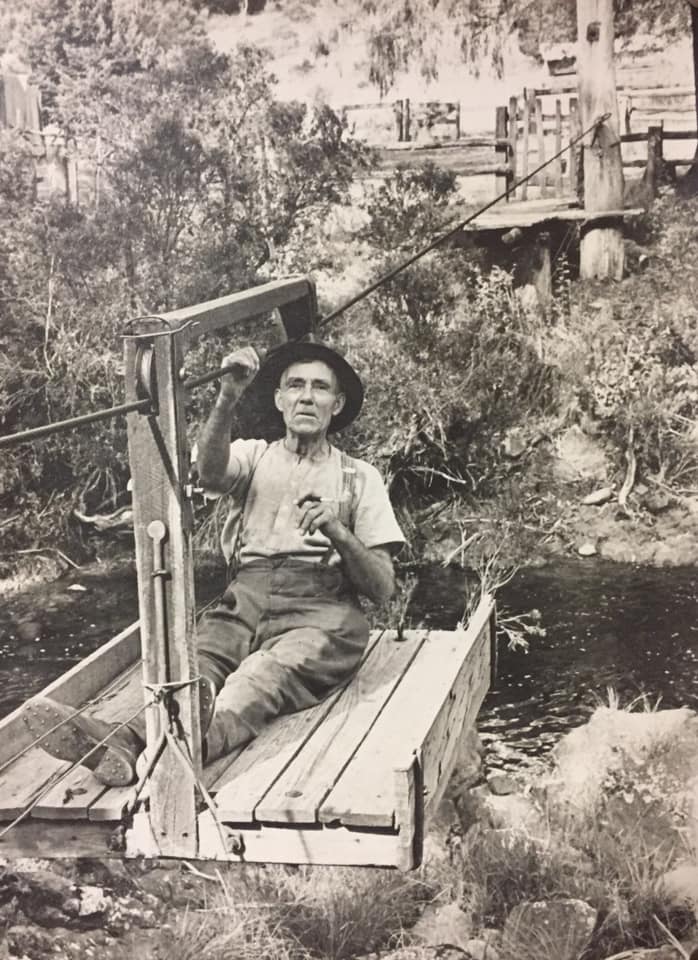
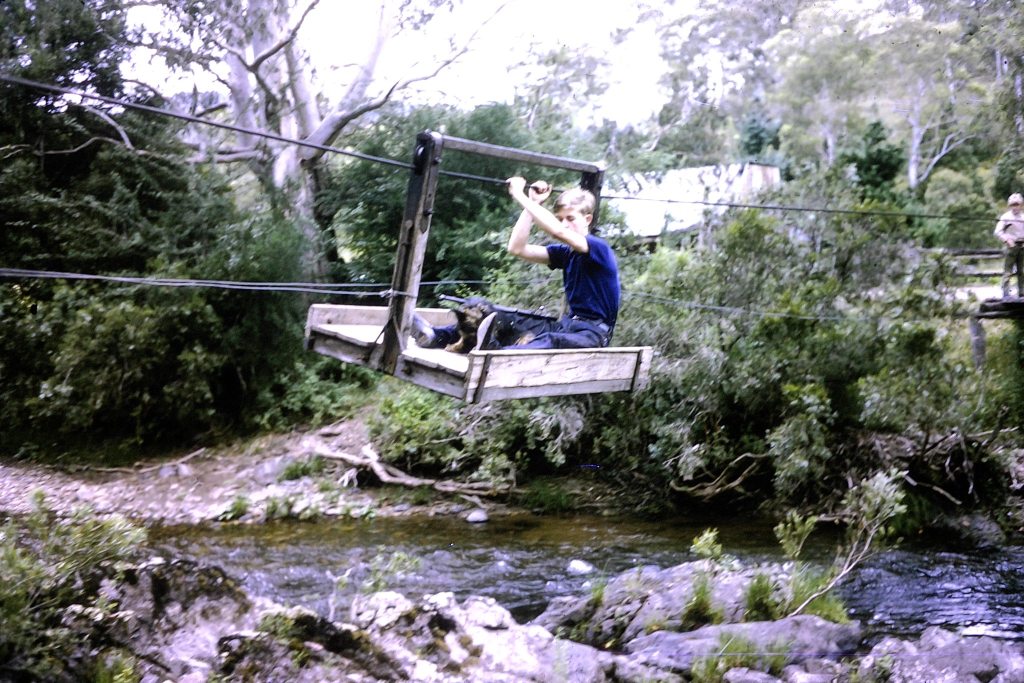
Fred also built a flying fox across the river to the old Howqua township where he owned some blocks of land and where there were a few holiday shacks. The flying fox was always a delight to visitors. It was restored in 1972 but removed in about 2004.
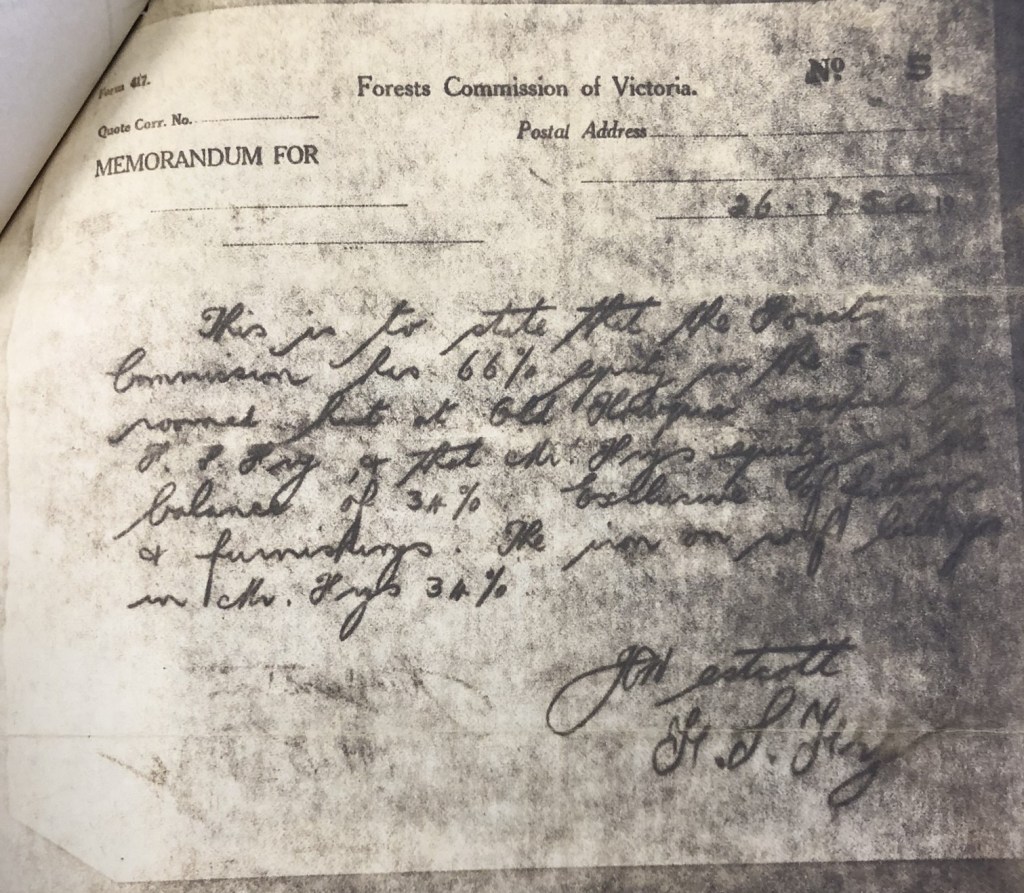
Jim Westcott was the District Forester at Mansfield between 1940 and 1951. Jim negotiated an agreement with Fred Fry on behalf of the Forests Commission, dated 26 July 1950, which gave Fred 34% equity in his new hut, with the FCV holding the remaining 66%. Oddly, part of Fred’s share included the roof sheeting iron.
This is a very unusual tenure arrangement, normally private buildings on State forest were issued with an annual licence, or permissive occupancy, and a rental fee was paid.
But it certainly would have been in the Commission’s interests to have Fred living in the remote Howqua Valley. Maybe the FCV contributed labour or building materials towards it, remembering that there were severe post-war shortages at the time. We will never know.
Why Fred built his hut on Crown Land rather than one of his private allotments across the river in the old Howqua township is also a puzzle.
The house plans, dated June 1951, describe the new building as Patrol Hut – FCV building number – B236.
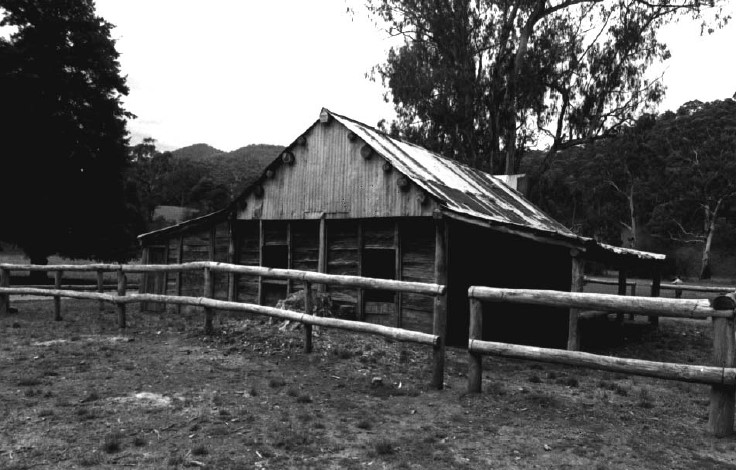
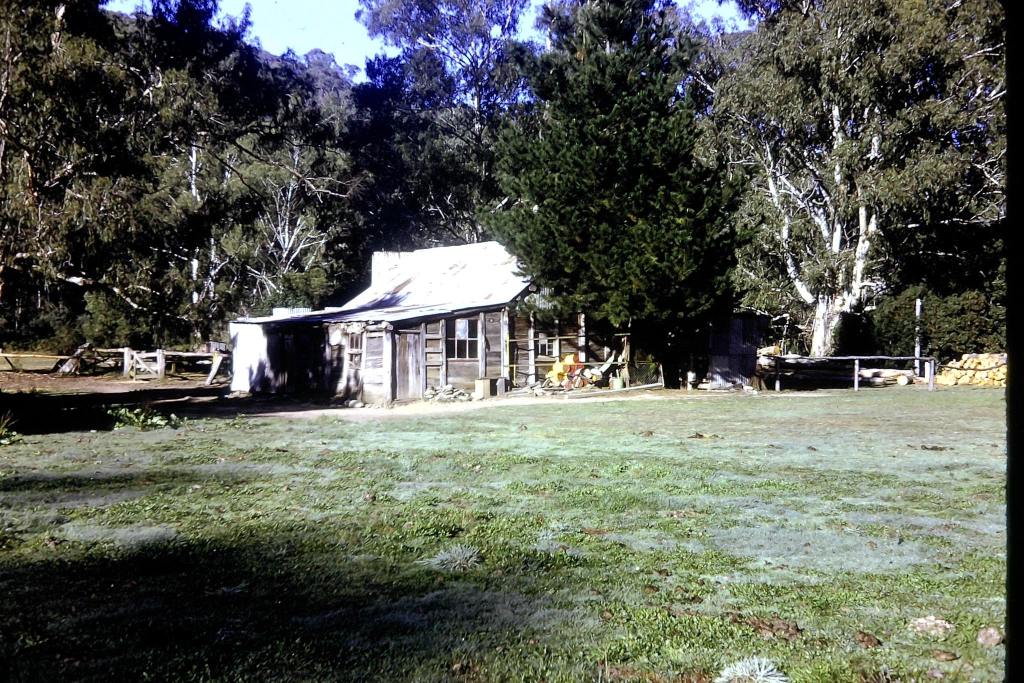
The replacement building had five rooms with a big verandah facing the river and a skillion roof at the back. Two rooms had plank floors, one with an earth floor and the other two rooms had T&G pine flooring. The roof was recycled corrugated iron over Malthoid paper and the walls were made using Fred’s characteristic horizontal “drop slabs” of wood. There were also several casement windows.
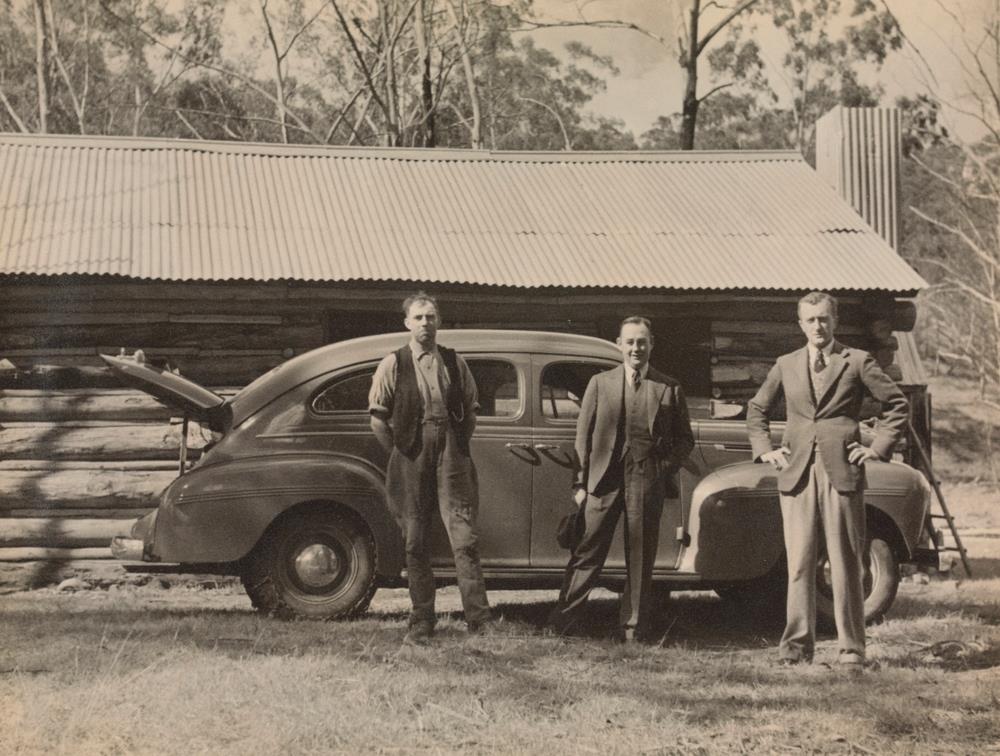
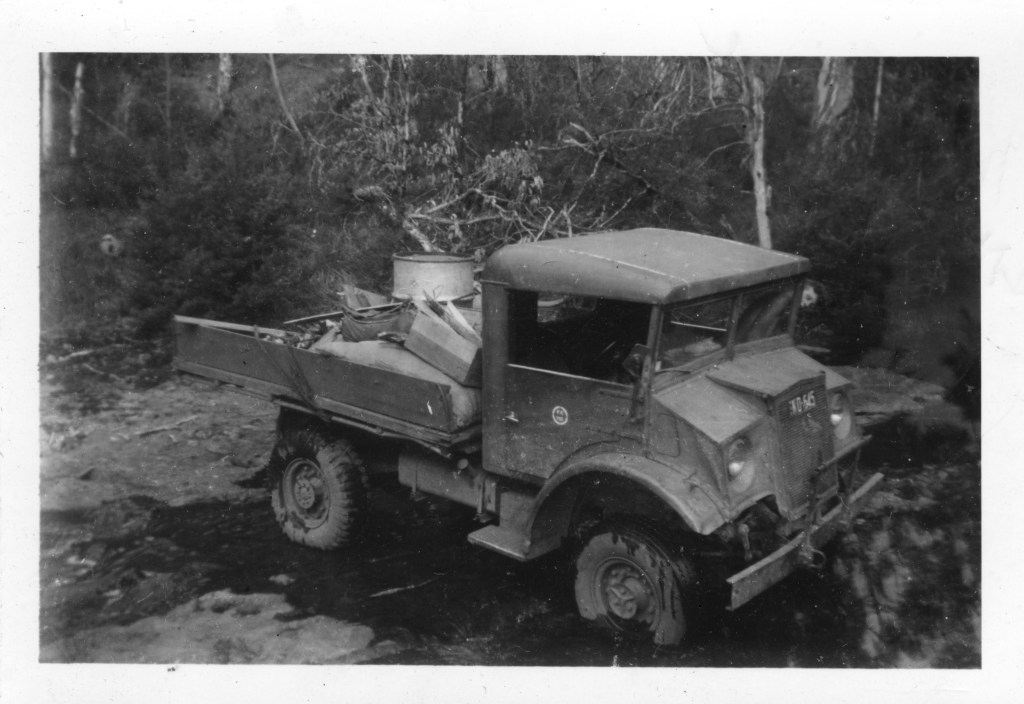
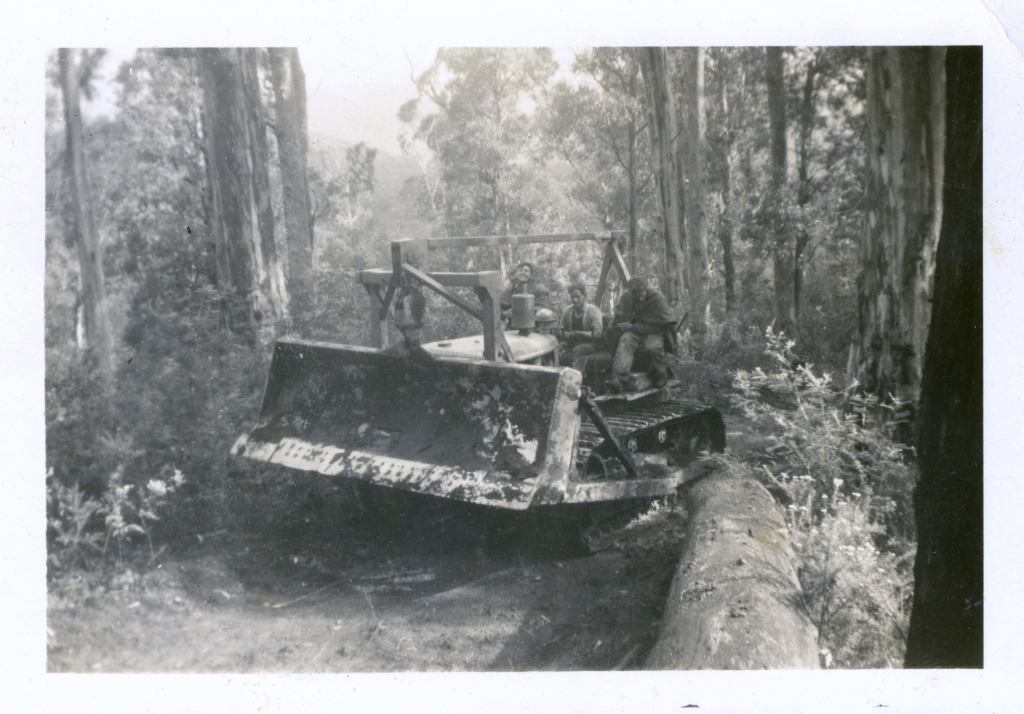
Joe Morley graduated from the Forestry School at Creswick in December 1948 and a short time later, in October 1949, led a Forests Commission assessment team into the remote mountains east of Mansfield. The crew took an unreliable TD-18 Bulldozer, pack horses, an ex-army Blitz Truck and M3 White Scout Car, as well as a Land Rover.
While searching for timber resources, they constructed a rough track over Mt Stirling from King Saddle to Stanleys-Name Gap and then back down various spurs to Bindaree Hut on the Howqua River. They lived like dingos and travelled on horseback and used many huts as basecamps, including Fred’s.
Fred’s brother Steve died at Healesville in 1963, aged 75, leaving Fred to live a solitary existence for his remaining years in the Howqua Valley, although he had a steady stream of visitors including foresters, fisherman, bushwalkers and Geelong Grammar students from the Timbertop campus. Fred’s life formed the basis of the character Billy Slim in Neville Shute’s 1952 novel “The Far Country”.
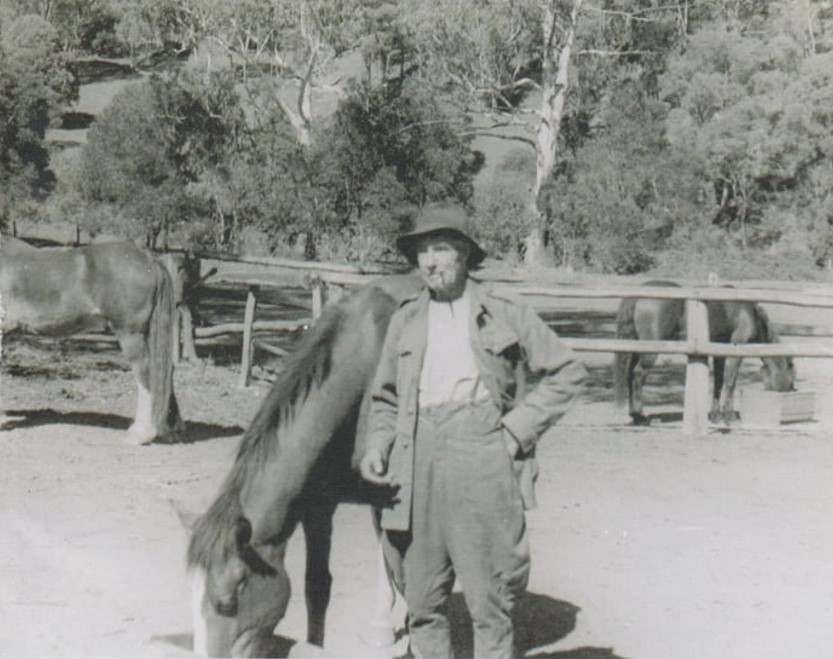
Fred was an expert trout fisherman and often tossed a line while sitting in the middle of the chilly Howqua River on his horse, “Flourbag”. When he rode to Merrijig for supplies, Fred was known to be fond of a drink or two and his trusty horse would bring him home safely in the night.
The Forests Commission inherits Fry’s Hut – 1971.
Over the decades, the financial arrangements surrounding Fred’s hut (number B236) were lost from local corporate memory as well as from the FCV official files. When Fred was reported in a critical condition in a Melbourne Hospital in early May 1971 the Commission found to its surprise that it owned 66% of the building.
Fred died on 10 May 1971, aged 76. He had written his Last Will & Testament 20 years earlier, on 31 January 1951. His executor, Robert (Bob) Ritchie (another proud hut owner and shire councillor), held discussions with the Mansfield District Forester, Jack Channon, soon after Fred’s death indicating he was keen to see the building preserved. Bob generously declared Fred’s 34% equity as nil, so the Forests Commission then found itself the proud 100% owner of Fry’s Hut.
Probate was lodged with the Supreme Court on 21 June 1971. The legal documents record Fred’s total assets as four small building blocks on the other side of the river in the old Howqua township – value $400, one draft horse mare – value $150, one ten-year-old pony mare – value $300 and another old mare with zero value – how sad is that? His household effects and other contents such as horse saddles and harnesses were catalogued as worn and of little or no value. Importantly, there was no mention of any equity in his hut in any of the probate documentation.
Fred was retired from the FCV so would have received an old age pension. He held the grand sum of $500 in the Mansfield Branch of the Bank of NSW. And that was all. He bequeathed his entire estate to Mansfield District Hospital and there were no other beneficiaries.
Jack Channon proposed keeping the hut for public use because of its magnificent setting and rich history. He also added that the Forests Commission could use it as a base for work crews or firefighting.
The hut was described as “quite solid although rough” but vandalism was the main concern if the hut remained unused.
Around the same time, the new 45 km Howqua Feeder Track was being built by the Forests Commission past Fry’s Hut along some old mining tracks to join up with the Alpine Walking Track (AWT) at Mt Howitt. An approach was made to the Federation of Victorian Walking Clubs to gauge their level of interest in maintaining and using the hut. The Federation responded positively but listed many important and expensive works that needed to be undertaken first, and the idea eventually lapsed.
Hughie Brown arrived as the newly appointed District Forester at Mansfield on 20 October 1971 and identified essential works to stabilise the building.
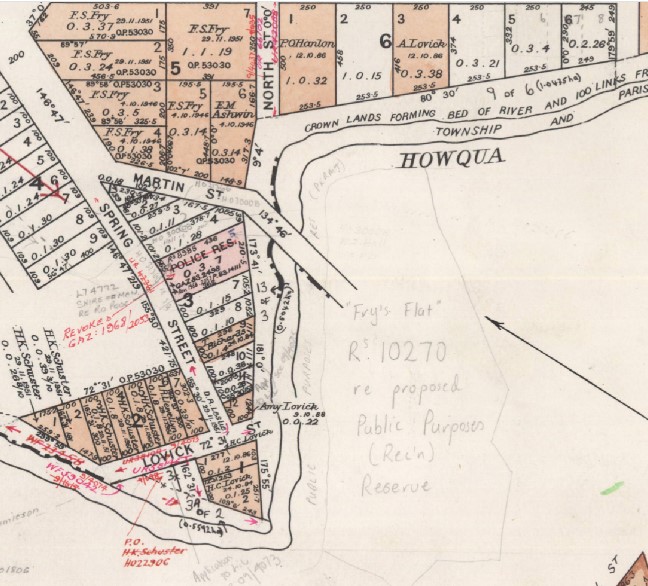
In September 1972, staff from Mansfield completed a chain and compass survey to set aside seven acres of State forest around the hut under the Lands Act as a Public Purposes Reserve to regulate camping and protect the building.
But by June 1973, no works had been done on the hut and Hughie Brown feared for its future. He correctly said, “This building has a great historic value and is treasured by a large section of the community”.
In September 1974, the Commission finally approved expenditure, and by mid-1975 Hughie Brown reported that various works had been completed to secure the integrity of the building and its surrounds. The large pine tree overshadowing the building was removed.
Geelong Grammar, which operated Timbertop, offered in 1974 to take a role in oversight and care of the hut after Fred’s death.
The National Parks Service later took responsibility for Fry’s Hut when the Alpine National Park was declared in 1989, and they undertook refurbishment works between 1988 and 1991.
Additional working bees have been organised by Parks Victoria, the Victorian High-Country Huts Association and 4WD Clubs. There was another major restoration to replace rotting timbers in 2007.
Even though Fry’s Hut has been altered since its original construction it remains historically and socially significant to Victoria.
File – DCNR 09/87/110 & FCV 74/399. (thanks to the staff in DEECA for finding the files)
Graeme Butler & Associates, 1996 & 2005. Victorian Alpine Huts Heritage Surveys.
Chris Stoney (1993). The Howqua Hills story.
Harry Stephenson (1988). Cattlemen and Huts of the High plains.
https://maps.app.goo.gl/44rU8iw2vdaz6AGy7


https://trove.nla.gov.au/newspaper/article/279226389

https://trove.nla.gov.au/newspaper/article/279226389







 Victoria’s Forests & Bushfire Heritage