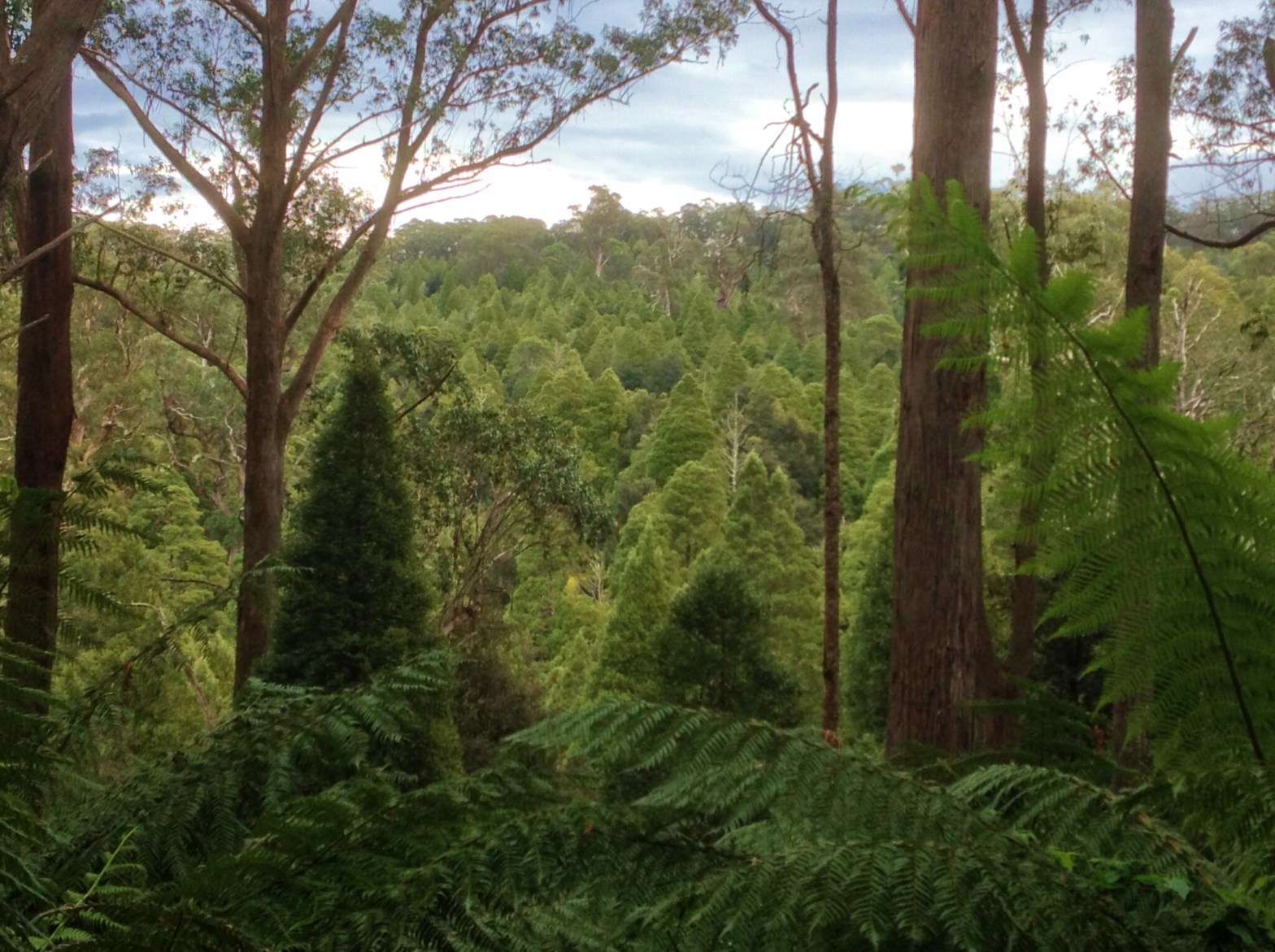
The Forests Commission experimented with the distillation of sassafras oil during the war.
The conically shaped, cool temperate rainforest species, southern sassafras (Atherosperma moschatum), was believed to have medicinal properties, including the prevention of malaria.
The timber is prized for panelling, wood turning, musical instruments, and other specialty work.
Southern sassafras is very different from the Asian and North American Sassafras (Sassafras albidum) which contains the potent chemical, Safrole.
In the summer of 1942, students from the Forestry School cut sassafras leaves along the Warburton – Donna Buang Road to be distilled back at the FCV’s Powelltown depot.
The distillation process was similar to eucalyptus oil where the leaves were placed into a sealed tank and steam injected from a boiler. The steam caused the oil to be released from the leaves and the vapour was condensed as it went through a cooling tank. Sassafras oil is lighter than water and rose to the top where it was decanted off. A meagre four pounds was produced in 1942-43.
Commercial production from State forest peaked in 1943-44 with 660 pounds of oil.
According to Walter Vears, a VSF student at the time, the Commission ceased production of sassafras oil after the war once commercial stocks of quinine became available.
As an interesting side note, Walter resigned from the Forests Commission in 1947 to study chemistry. He ended up working for Carlton and United Breweries and many of his amazing photos of the CUB plant are in the State Library.
Ref: Daniel Catrice (1996). History of forest activities in the Central Highlands & East Gippsland.

 Victoria’s Forests & Bushfire Heritage