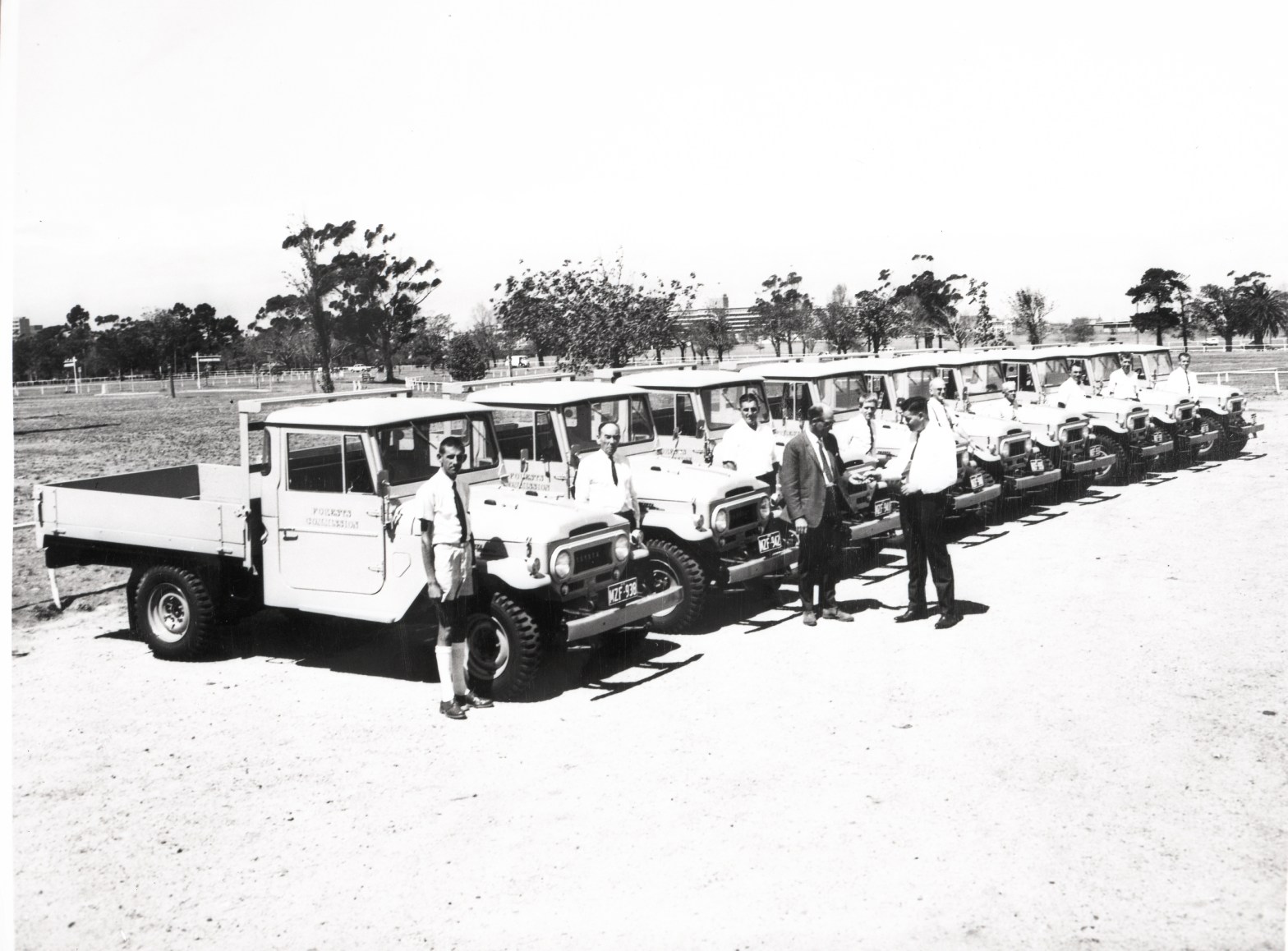
In the post war period, the State Government put a strong emphasis on buying British 4WD vehicles such as Series 1 Land Rovers.
They were light weight but pretty primitive and very prone to breakdown.
The files in the Public Record Office are thick with warranty claims by the Forests Commission about the reliability of Land Rover gearboxes and drive trains.
Meanwhile in the early 1950s, the Korean War created a big demand for light military vehicles, and the United States government tasked the Toyota Company to manufacture what later became the Land Cruiser.
In 1958, Sir Leslie Thiess imported Toyota Land Cruisers into Australia for the Snowy Mountains Scheme which proved they were robust and reliable.
But at the time, there was some outright community hostility towards vehicles made in Japan.
The Forests Commission took the matter direct to the Premier Sir Henry Bolte and State Cabinet to have the purchasing policy overturned.
The Victorian Government Motor Transport Committee (VGMTC) finally acknowledged the mechanical failure of Land Rovers was contributing to higher overall maintenance costs and lower resale values of the Forests Commission’s fleet. This problem was made worse by a chronic shortage, and long delays, in dealers sourcing replacement parts from England. In some cases, differentials from surplus WW2 Austins were being substituted.
Sir Henry grudgingly gave his permission in the mid-1960s for the FCV and other agencies to make a quiet switch to purchasing Japanese Toyotas.
 Victoria’s Forests & Bushfire Heritage