
Milk comes from cartons and water comes out of a tap… doesn’t it? I wonder how many people stop to think about where their water comes from?
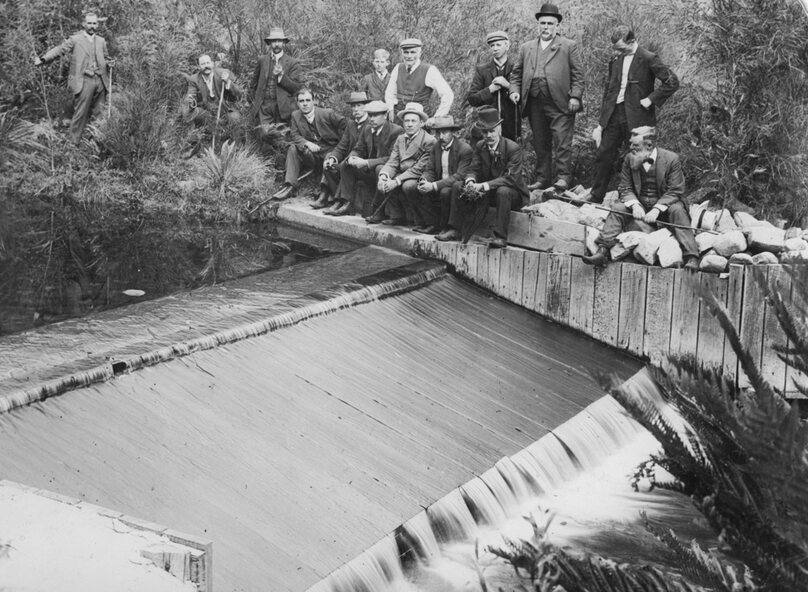
The MMBW catchments supply Melbourne, but State forests have always been an important source of clean water for rural communities. One of the more innovative and unusual water supply schemes was at Stawell in western Victoria.
The discovery of gold in 1853 saw Stawell’s population rapidly expand which required a reliable water supply.
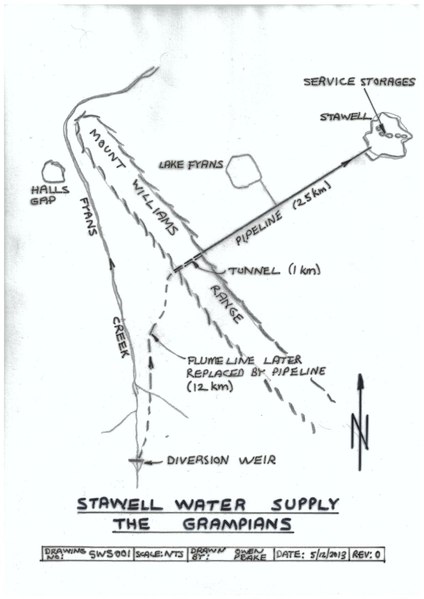
John D’Alton was the Borough engineer as well as the town valuer, surveyor and designer of several buildings, including the Stawell town hall. He devised a gravity scheme to bring water from Fyans Creek in the Grampians via a tunnel hewn under the Mt William Range.
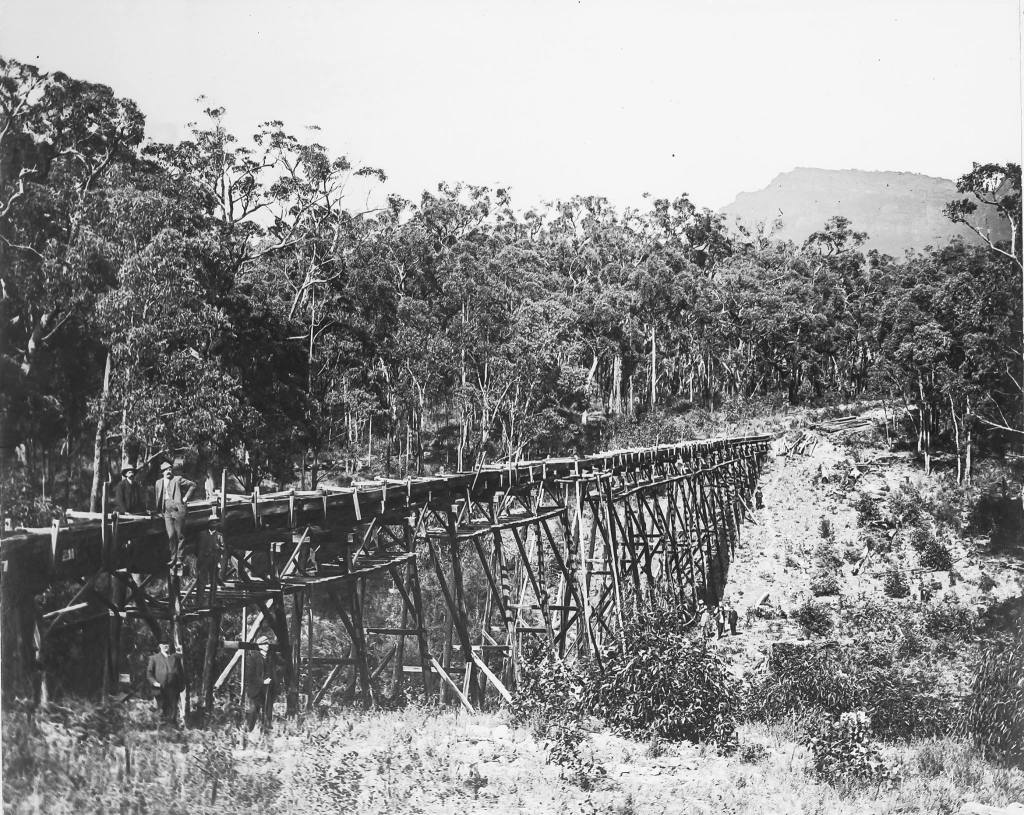
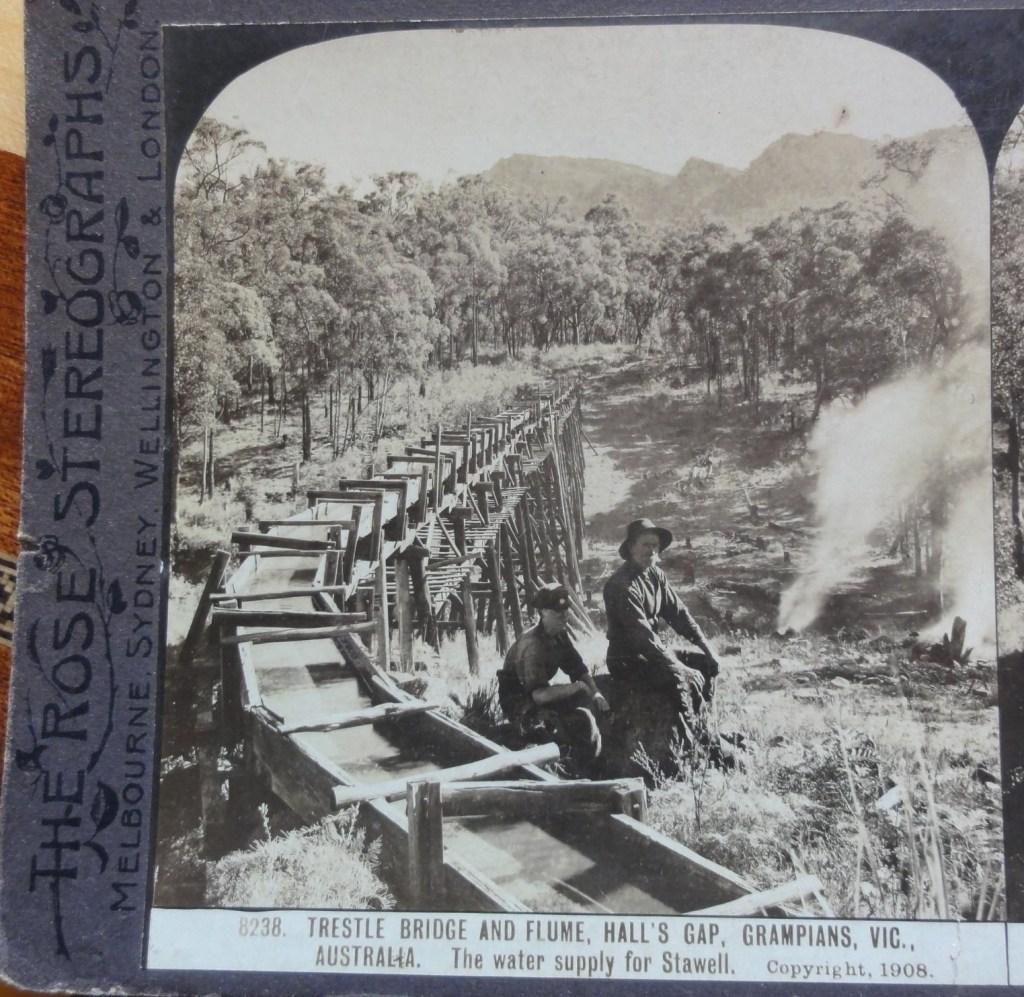
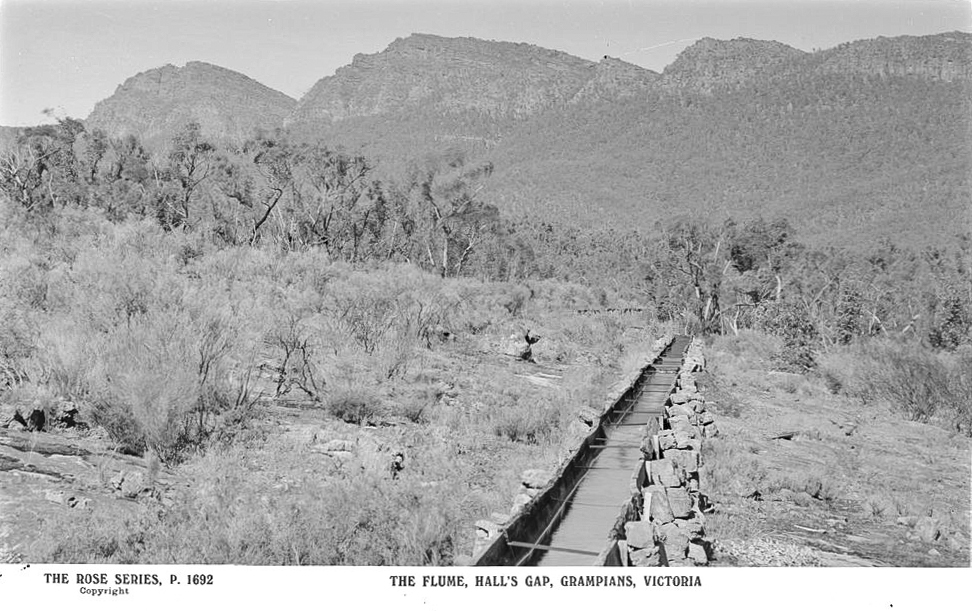
Work began in 1875 on a tunnel over half a mile long, which was linked to Stawell township by nearly 16 miles of pipes and syphons together with about 8 miles of open flume made of metal and wood.
Steam powered rock drills, labourers swinging picks and shovels as well as dynamite, which was used for the first time in Victoria, carved the tunnel through the sandstone rock under the mountains. Dynamite was safer and more effective than gunpowder and the tunnel is still in use.
The project represented a significant engineering achievement at the time and was completed in 1881.
The project bought workers into the area and a small township developed at Borough Huts. The first store was built at nearby Halls Gap in 1876. Holiday homes and Sanderson’s sawmill were also built, along with the workers cottages and a school operated in the 1890s.
Borough Huts was later used as a camp for relief workers during the 1930s depression and is now a large camping area.
Water flows in Fyans Creek were unreliable in summer and the Lake Bellfield storage was completed in 1969.
https://en.wikipedia.org/wiki/John_D%27Alton_(engineer)







 Victoria’s Forests & Bushfire Heritage