The Otway Ranges is characterised by steep terrain, wet weather and thick forest.
An early but unsuccessful attempt was made between 1854 and 1861 to bring Blue Gum (Eucalyptus globulus) railway sleepers to Melbourne in small coastal ships from the Otway Ranges. The voyage was perilous because there were no suitable harbours, and relics of old piers at Wye River and Kennett River still exist.
However, with the completion of railway lines from Colac to Forrest in 1890, and later with an extension to Beech Forest in 1902, sawmilling in the Otway Ranges began to expand.
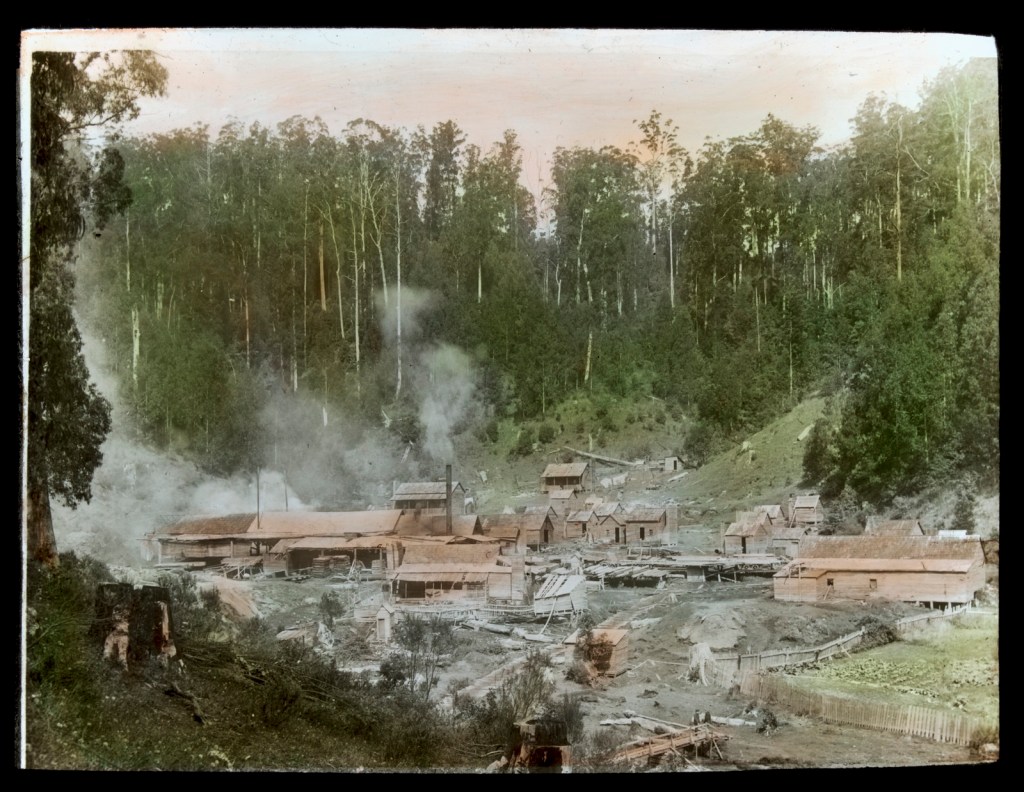
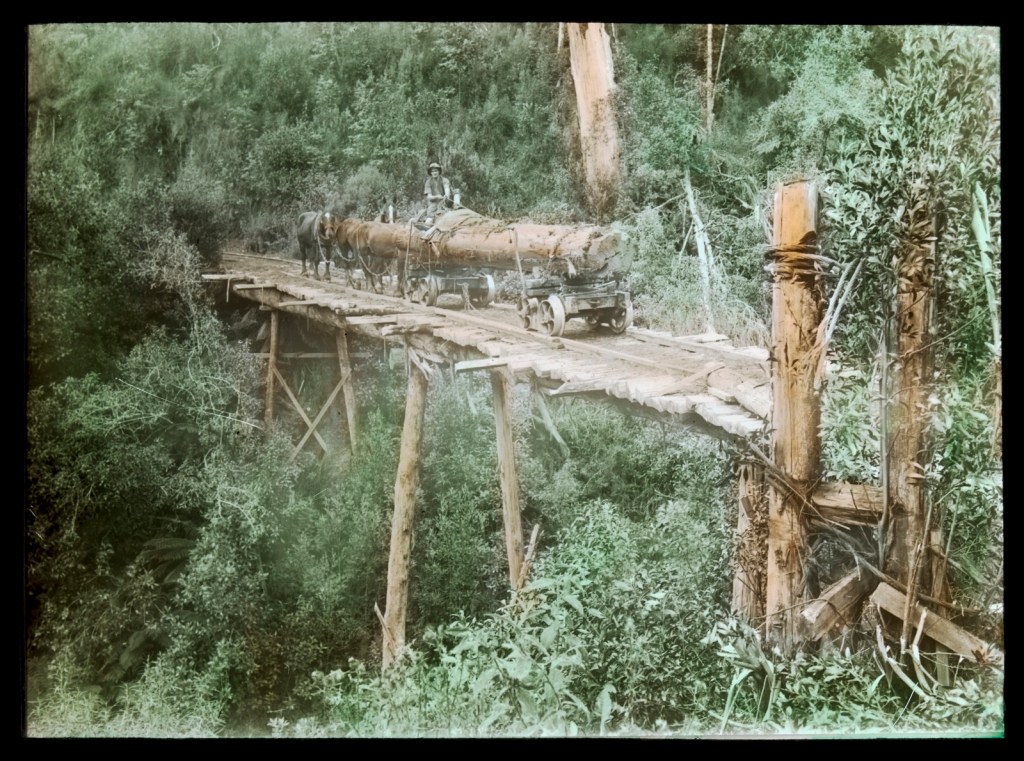
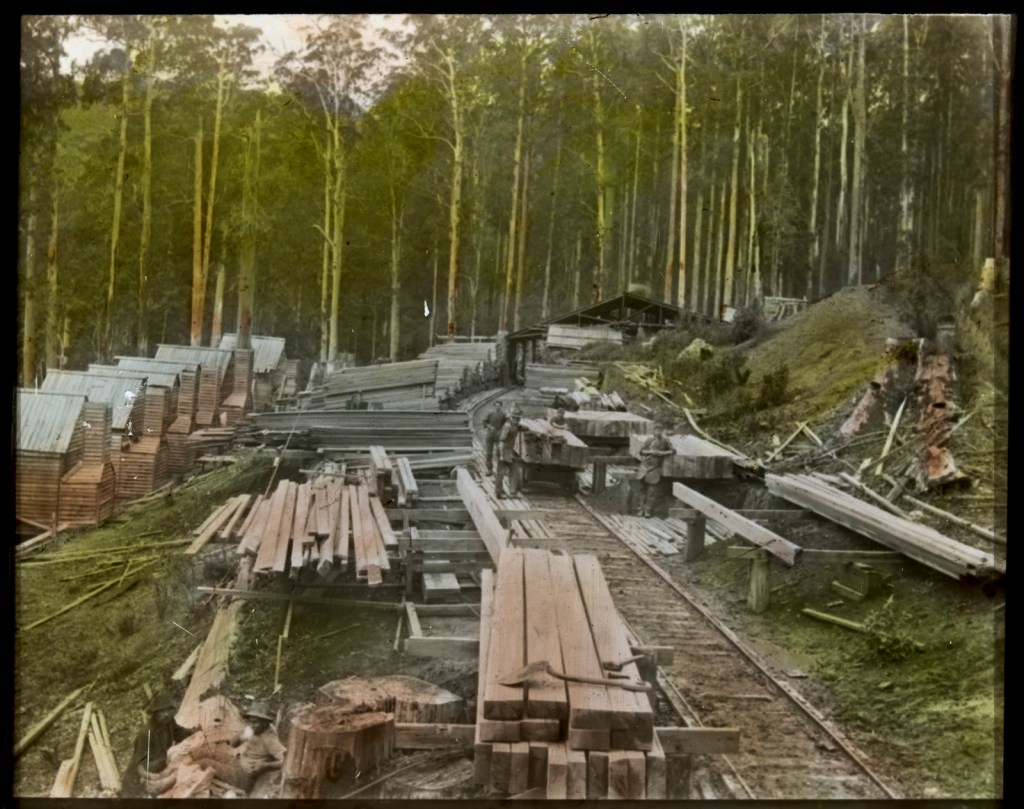
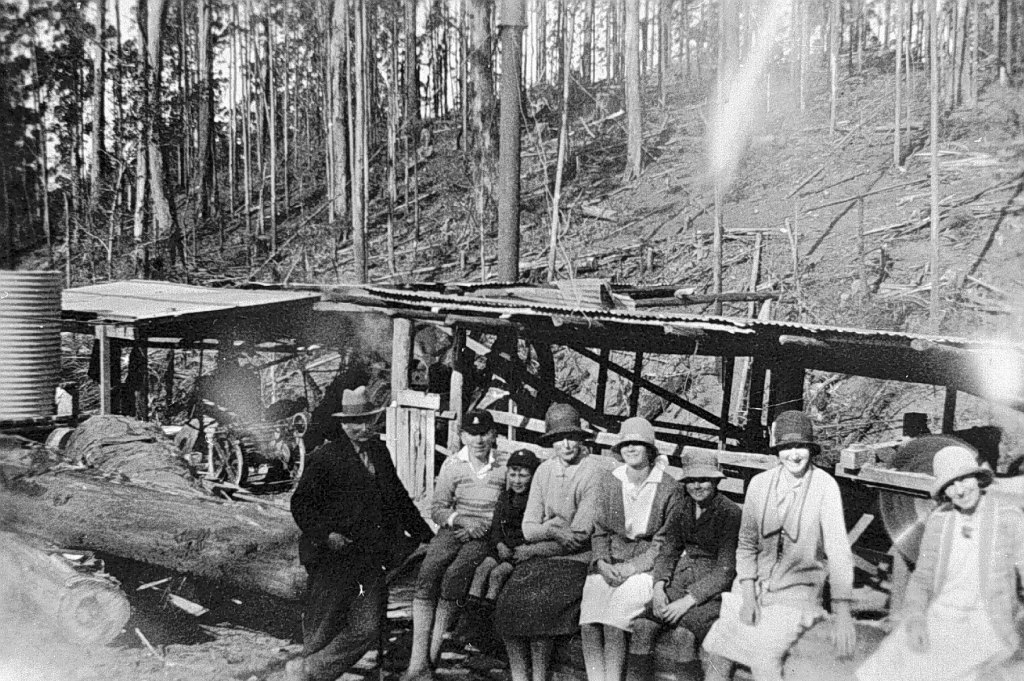
The sawmills were mostly small, isolated settlements established in the forest closer to the timber resources because it was easier and more efficient to cart sawn produce to a railhead rather than heavy logs.
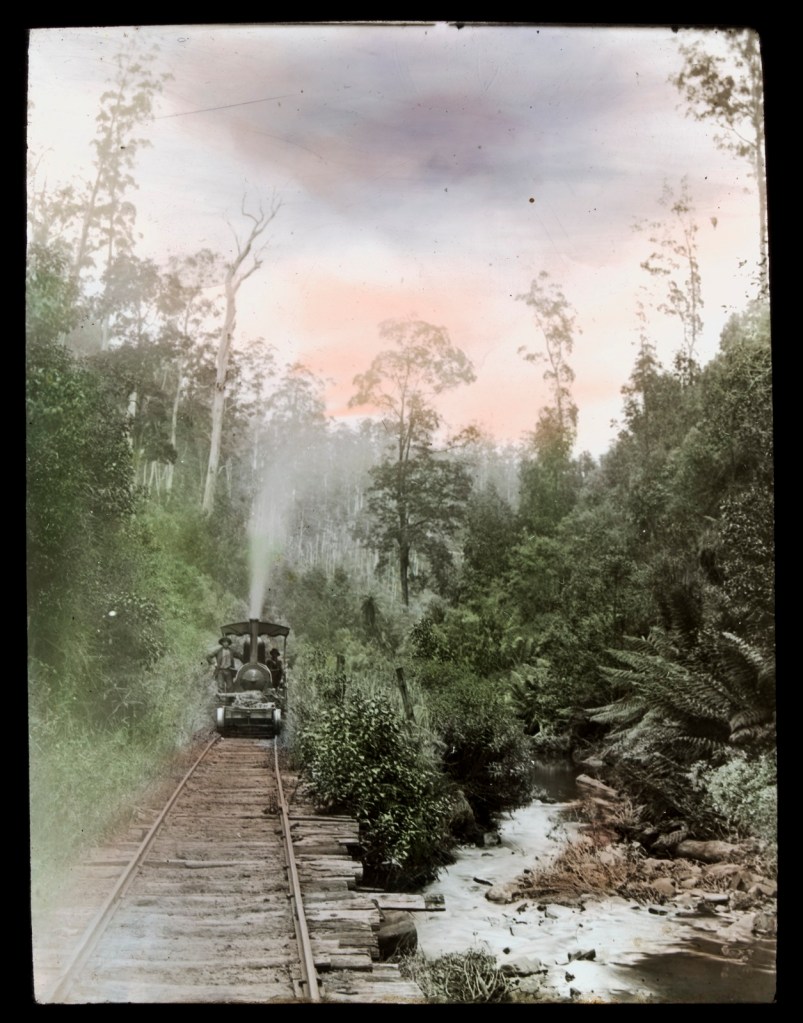
In the end, as many as 400 itinerant sawmills were scattered throughout the bush, linked by over 400 km of timber tramways to roads or rail lines.
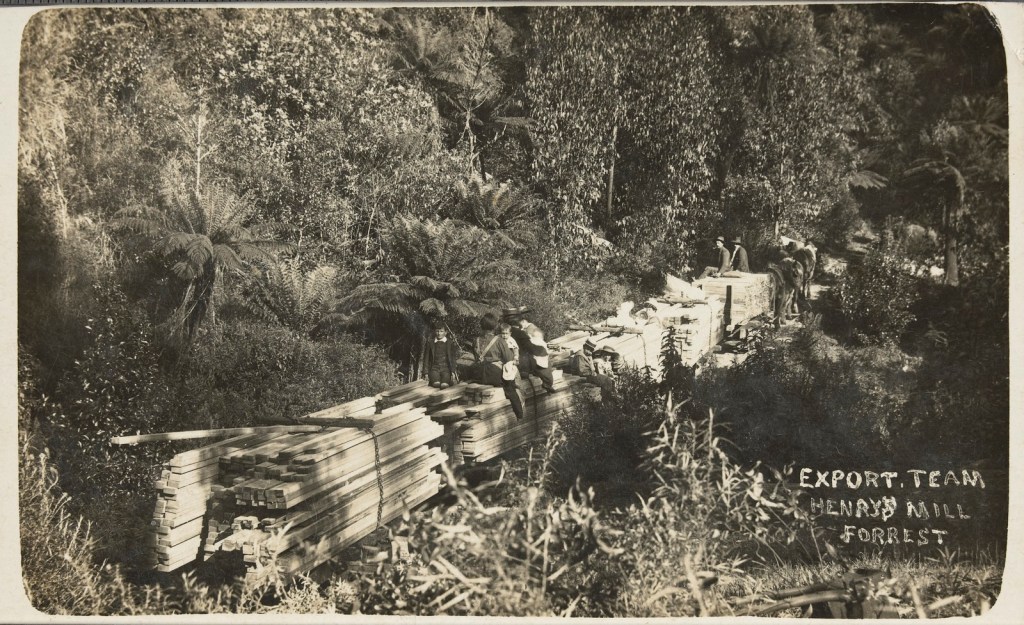
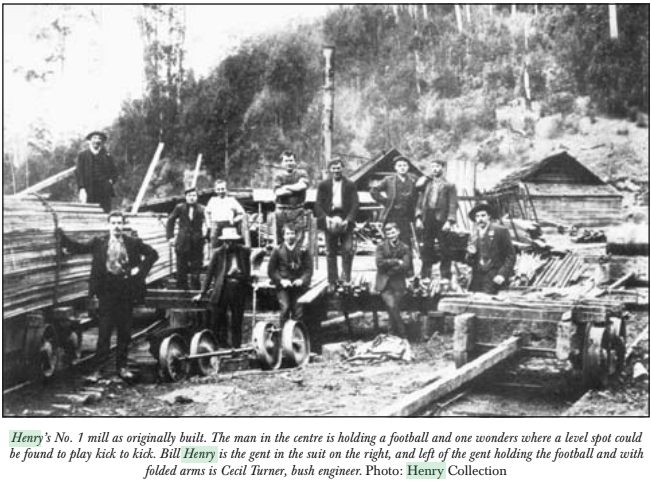
William R. Henry was a plumber by trade who had been successful at the Kalgoorlie and Ballarat goldfields before buying into the sawmilling business in the Otways.
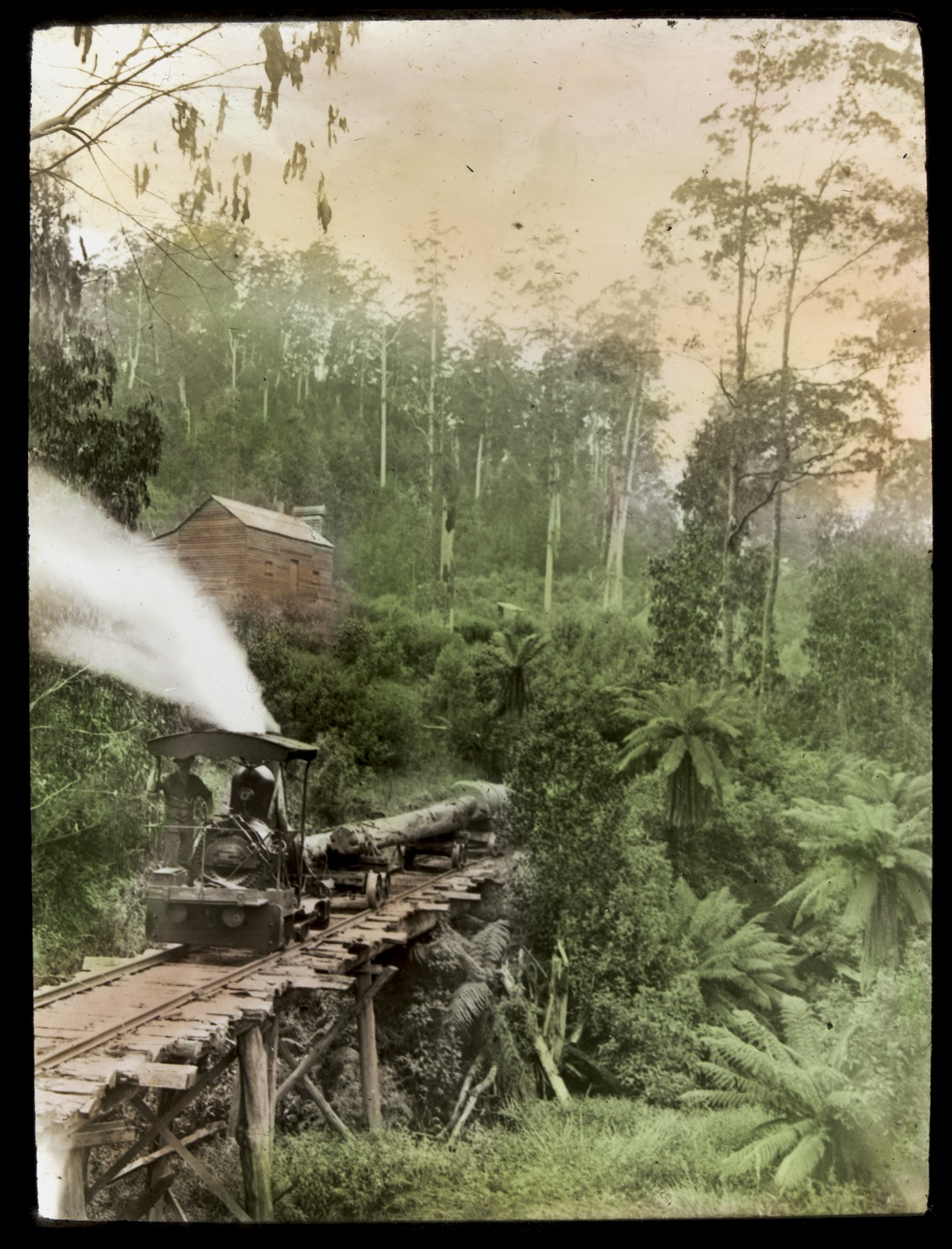
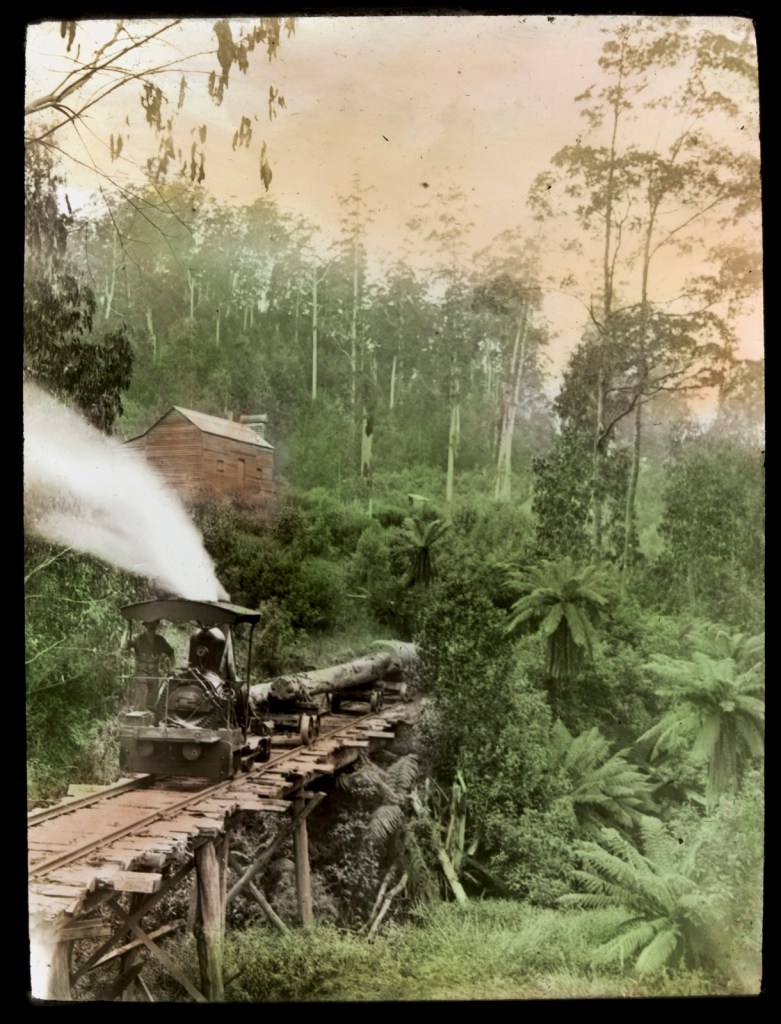
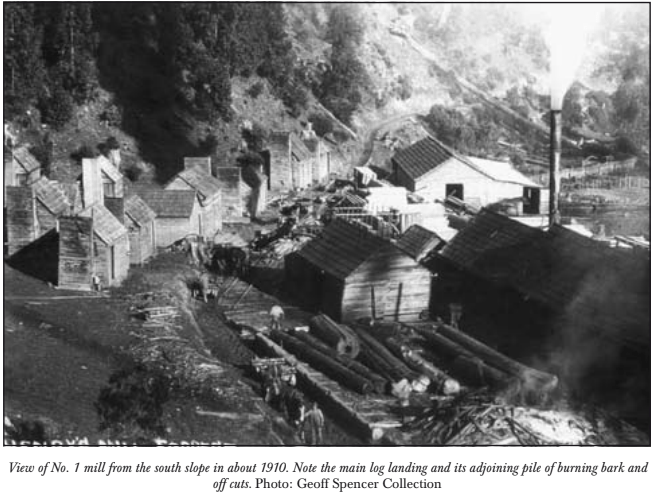
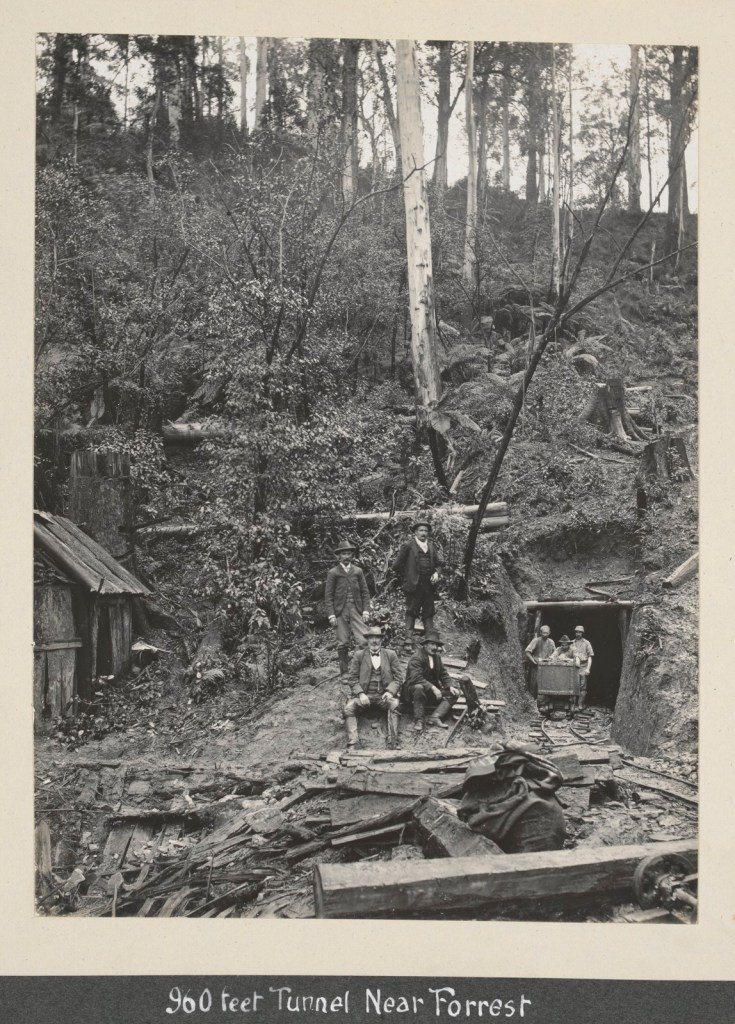
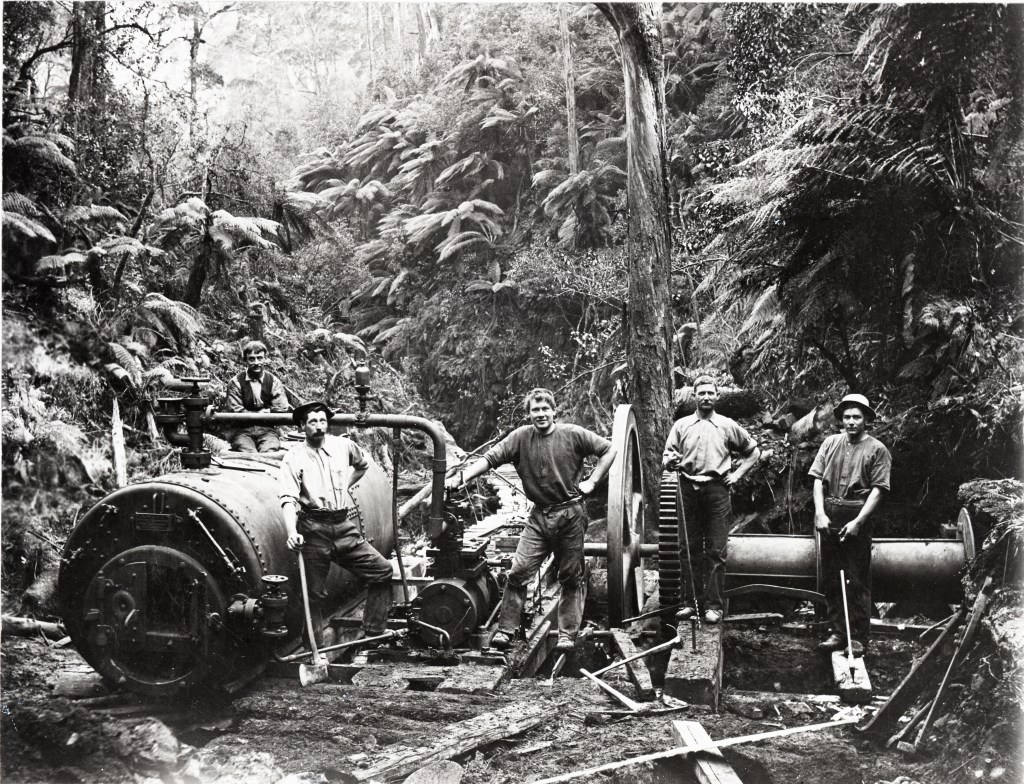
Henry’s No. 1 Mill was established in 1904 deep in the watershed of the West Barwon River. It was one of the largest sawmills in the area and could cut as much as 23 m3 per day. It was connected by a narrow-gauge timber tramline to the railhead at Forrest, ten kilometres to the north. The line included about 57 timber bridges and an impressive 960 foot tunnel at Noonday creek. Several steam engines rode the tracks, the first one in 1911 was known as Tom Thumb.
The Henry Mill had a permanent population of around 100 people and the settlement featured about 30 rough timber huts for single men and modest wooden houses for married men and their families. It also had with a boarding house, stables, school, billiard saloon, baker, store and post office complete with its own franking stamp.
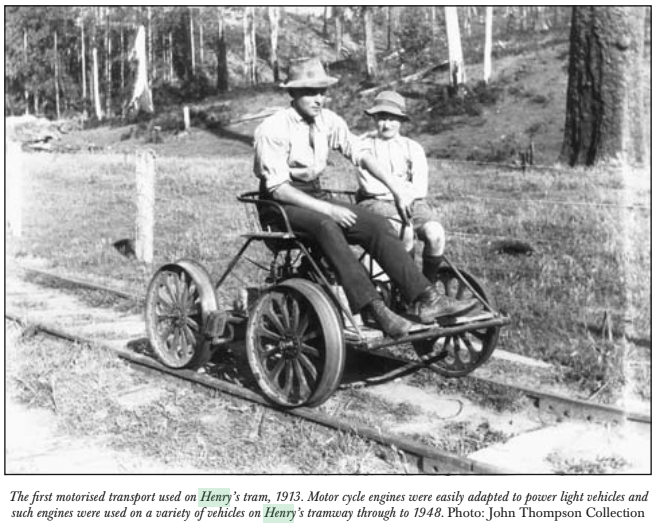
Mail was transported to the mill on a four-wheel trolley powered by 600cc motorcycle engine with a Harley Davidson gear box.
The whistle at the mill was an ex-naval foghorn which was said to be so loud that the entire region could set their clocks. It’s also claimed it could be heard as far away as Bass Strait and became a hazard to shipping.
There were several other Henry sawmills along the line as part of his growing enterprise. But floods, landslips and bushfires all had a major impact on bush sawmills, including those in the Otway Ranges.
From the 1940s, the advent of more powerful bulldozers, crawler tractors, geared haulage trucks and petrol chainsaws dramatically changed logging practices. Diesel and roads were rapidly replacing steam and rails. The newly built and expanded Forests Commission road and track network made it feasible for trucks to haul logs directly from the forest to town-based sawmills within a few hours.
The memory of the loss of 69 forest sawmills and 71 lives in the 1939 bushfires together with Judge Streeton’s Royal Commission recommendations were still fresh. And despite strong and vocal opposition, the Commission refused to allow new sawmills to be rebuilt inside the forest as they had before 1939. But those few that still existed were permitted to remain…. for a while anyway.
Photos: State Library Victoria
Sawdust and Steam. A History of Sawmilling in the East Otway Ranges. 1850-2010. Norman Houghton. 2011
https://drive.google.com/file/d/11U0jjvkMhKhgrCJVlvloSN7gCYzHm4TZ/view


 Victoria’s Forests & Bushfire Heritage
Searching for photographs of the sawmill and houses at Pile Siding in the 1950s.
I worked in the Keith King ( Formerly Pettits / Marshbanks ) mill from 1954 – 1958
LikeLike