William Christian arrived in Melbourne in 1850 and worked as a pattern maker in a foundry. But like many others he was soon drawn by the lure of the goldfields. After a few unsuccessful years of trying his luck, William ended up in Woodend in 1868 and started a couple of successful sawmills in the Wombat forests at East Trentham.
Timber harvesting for sawlogs had commenced in the Wombat forests in the 1850s to serve the goldfields of Ballarat and Bendigo. At its peak output in 1878 some 138,000 cubic metres of sawn timber was produced from more than up to 190 mills using an extensive network of timber tramlines.
But the rampant scale of wasteful and unsupervised timber harvesting where only the best trees were taken, combined with poor regeneration, resulted in the Wombat forests being officially described in the fourth progress report of the Royal Commission in 1899 as a “ruined forest”.
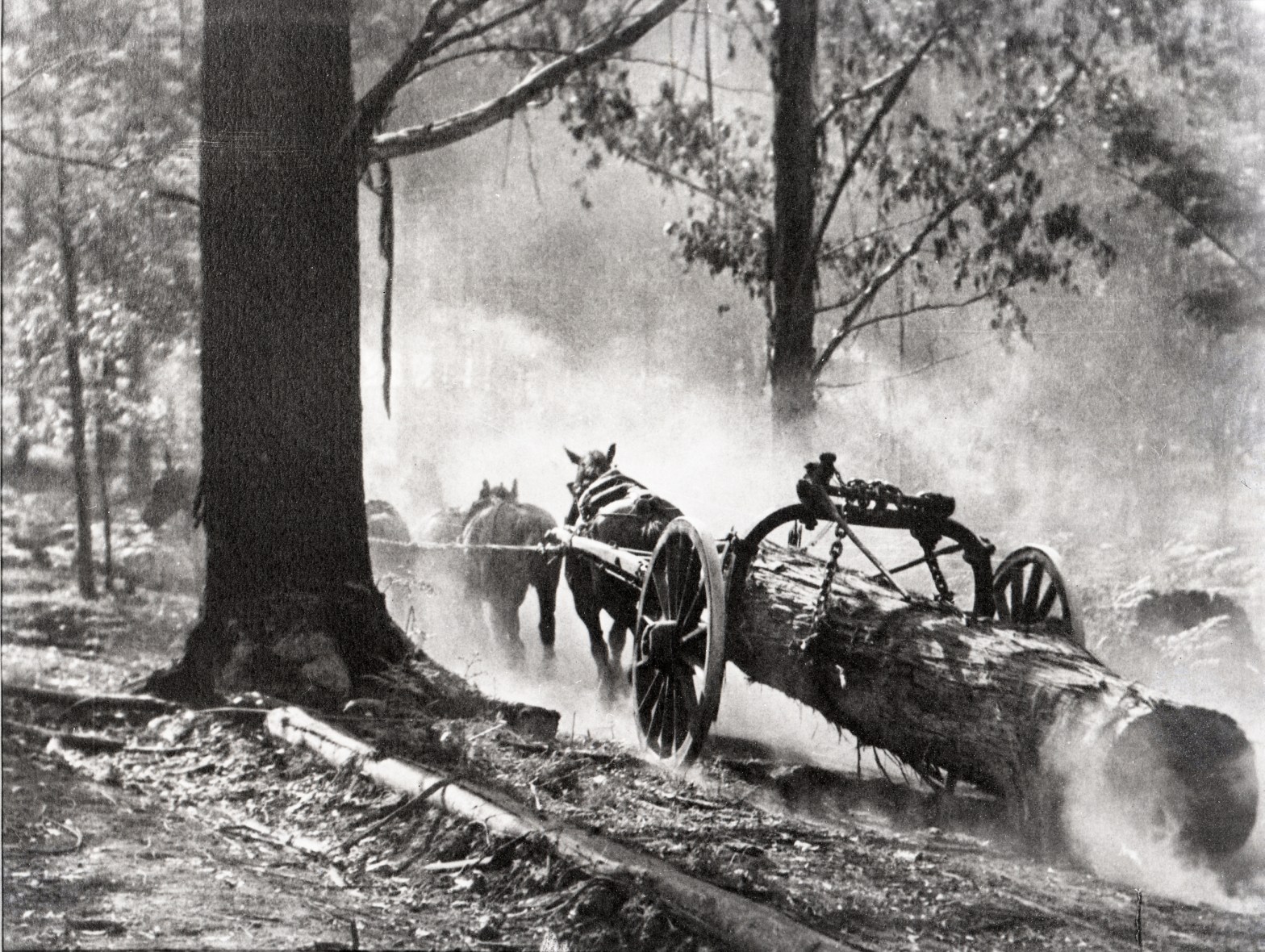
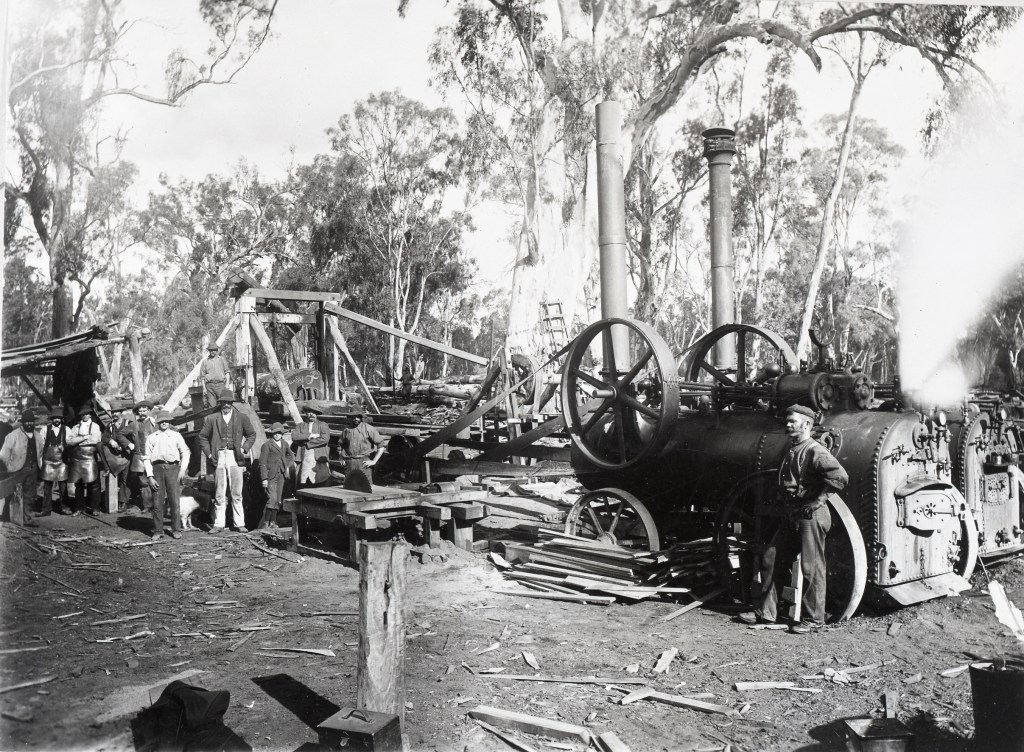
These photos are of Christian’s Mill near the Campaspe River. It was a portable outdoor setup that could be moved between summer and winter operations so it could cut timber all year. Logs were pulled by horses, mostly downhill, on jinkers, from up to two miles away. Using 20 men the mill could cut about 9 cubic meters per day with the vertical framed saw.
William died in 1899 and the business was taken over by his two sons and it continued to operate until 1918 when it was sold.
Houghton, Norm (2013). Wombat Woodsmen. A sawmilling history of the Wombat forest.

 Victoria’s Forests & Bushfire Heritage