State forests and public land not only produce timber but are also important for sand, crushed rock and dimensioned stone for buildings.
Victoria has large quantities of hard basalt, or bluestone, across the western district plains but in the early days of the Colony it had to suffer the indignity of importing sandstone from NSW.
In about 1861 Francis Watkins, a stone mason from Stawell, was hunting at Mount Difficult in the Grampians when he spotted some high-quality and durable rock.
The white sandstone had excellent grain, texture and colour. More importantly, it was weather resistant and easy to work, but hardened when exposed to the elements.
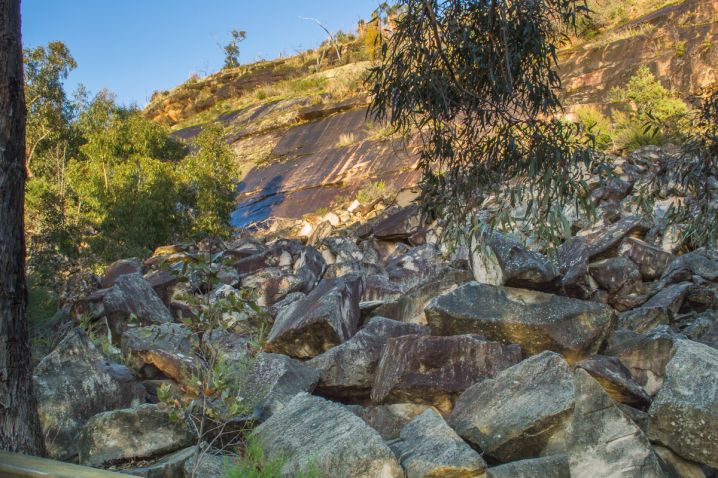
Francis took a lease on 3 acres of Crown land at what later became known as Heatherlie Quarry and by the 1870s was supplying stone to Stawell for the courthouse, Anglican and Catholic churches, the Town Hall and memorial tombstones.
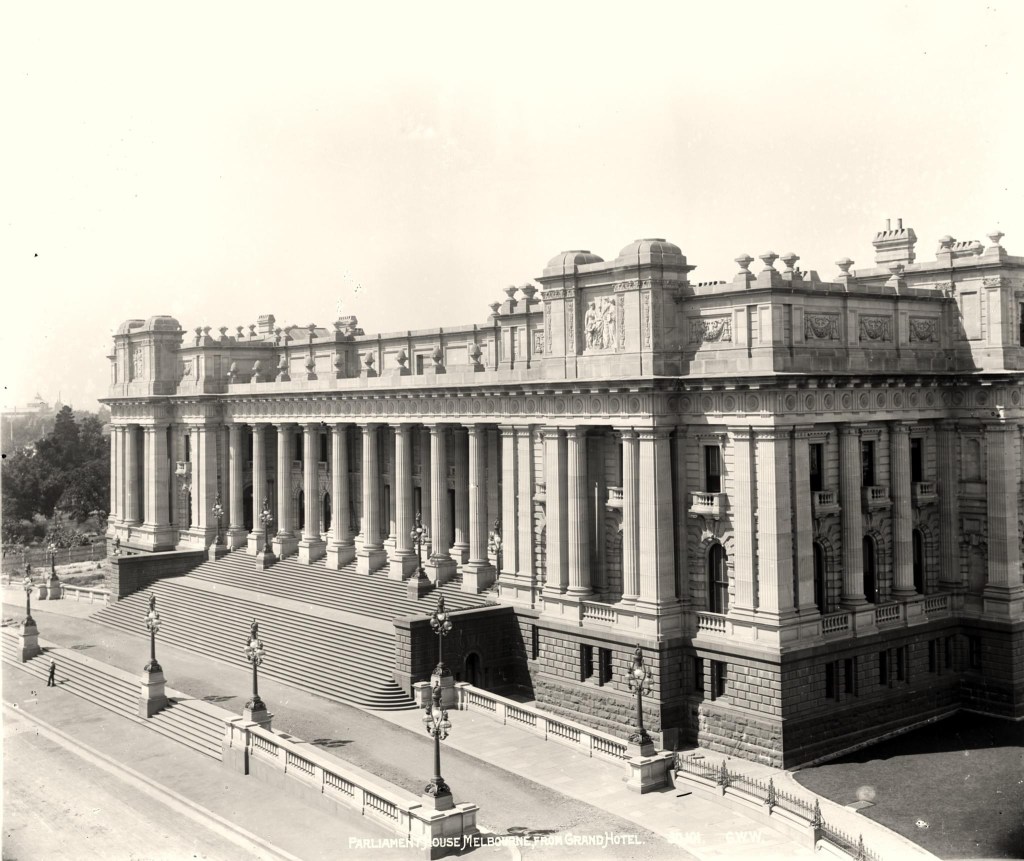
Between 1872 and 1876, Watkins submitted samples of the stone for consideration for the Governor’s proposed new residence, Melbourne’s Law Courts as well as for Parliament House, but was rejected each time because it was deemed either poor quality or too expensive.
Stone for Parliament House was instead chosen from Bacchus Marsh, but it decayed rapidly, and large parts had to be replaced with stone from Tasmania. Such was the outrage over the design and construction of the project that in 1876 a Royal Commission was held into the matter.
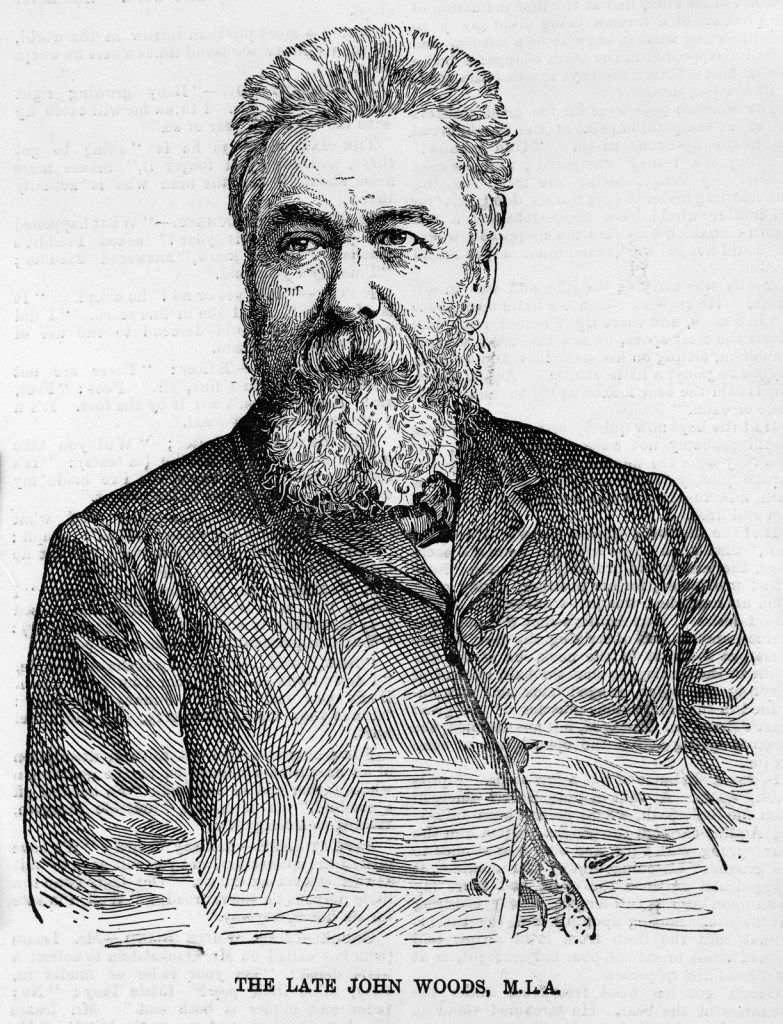
Francis enlisted the support of his local member of Parliament, Mr John Woods MP, who advocated that stone quarried from his electorate would be most suitable for the Parliament Building.
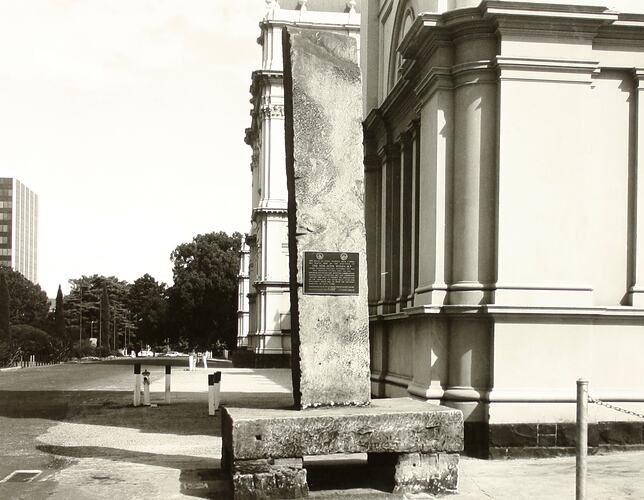
If you look carefully, just near the corner of the Royal Exhibition Buildings in Carlton, there is a lonely column of sandstone which has defiantly stood there since 1881. The odd-looking obelisk with the slightly wonky lean looks a little out of place against the magnificent World Heritage Building. It has always intrigued me, and at first glance it resonates as a century-old dummy spit. The plaque which was put there in 1979 says in part…
this pillar of stone quarried from Stawell was placed here on the insistence of the Hon. John Woods, M.P. to express his indignation of the choice of New South Wales stone for Parliament House and to show the enduring qualities of local stone.
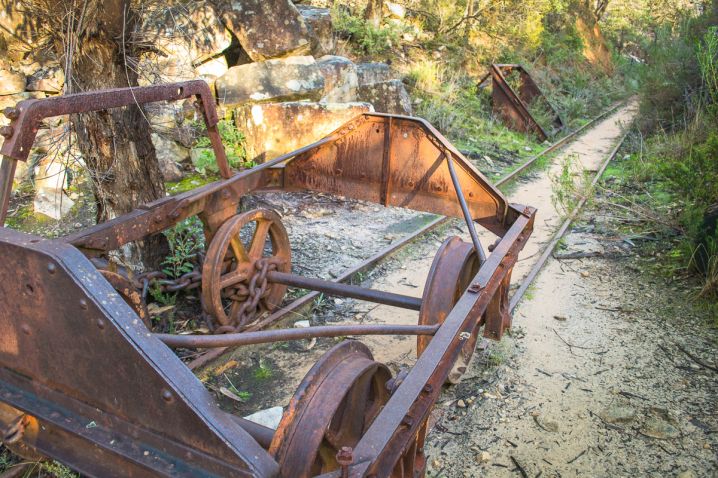
But by 1882 the fortunes of the Heatherlie Quarry had reversed and a government-funded narrow-gauge tramway connected the quarry to Stawell and the main railway to Melbourne. Contracts were signed to use the stone for the next stage of Parliament House and by February the first rail trucks reached Stawell on their way to Melbourne.
But things came to an abrupt halt when there were concerns about the quality of some of the initial samples. The matter was subsequently investigated by an Expert Committee, a Board of Enquiry, and a Parliamentary Select Committee, who all visited the quarry site.
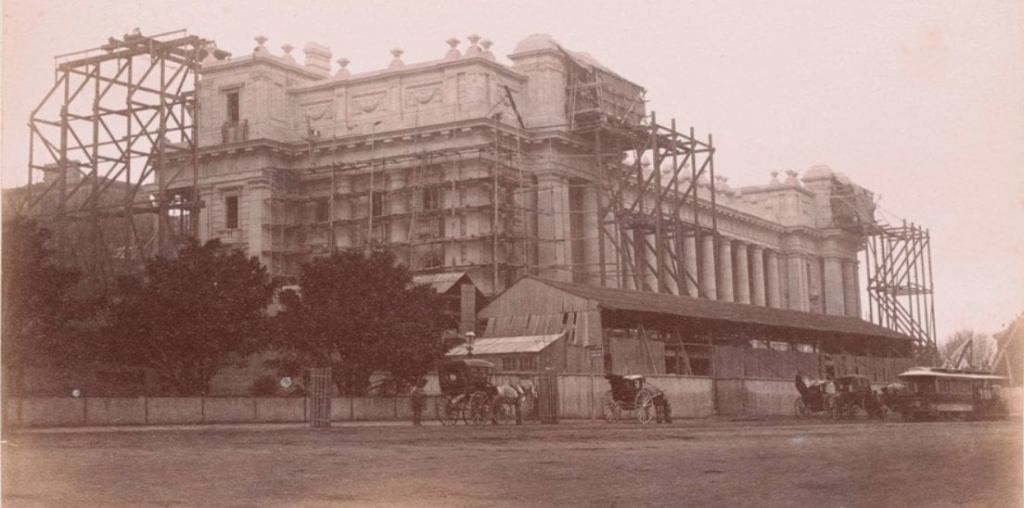
Finally in 1885, a tender to build the classical colonnaded front of Parliament House, which looks down Bourke Street, using Mt Difficult stone was accepted.
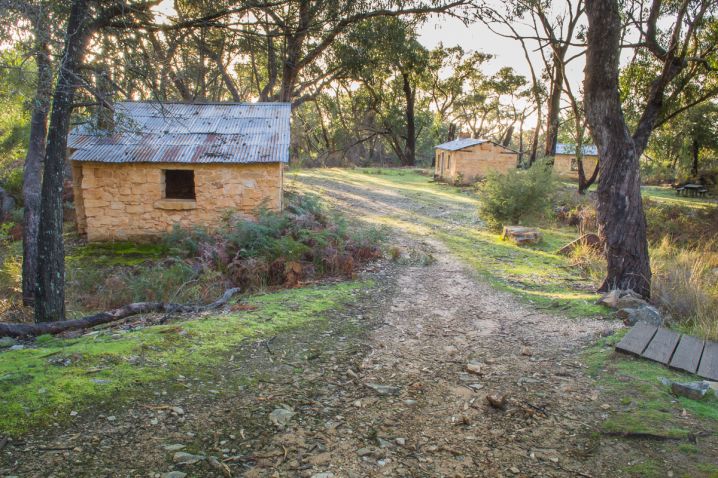
Between 1886-1887 the Heatherlie Quarry was working at peak production employing over 100 men. Optimism was high and a new township was gazetted which even included a school.
The quarry also supplied stone for the Melbourne Town Hall, State Library, General Post Office (GPO), Regent Theatre and Port Authority Building among others.
But Melbourne’s economic boom following the 1850s gold rush turned to bust in 1890, and the demand for building stone plummeted. However, the quarry reopened in 1899 with more orders for significant Melbourne buildings.
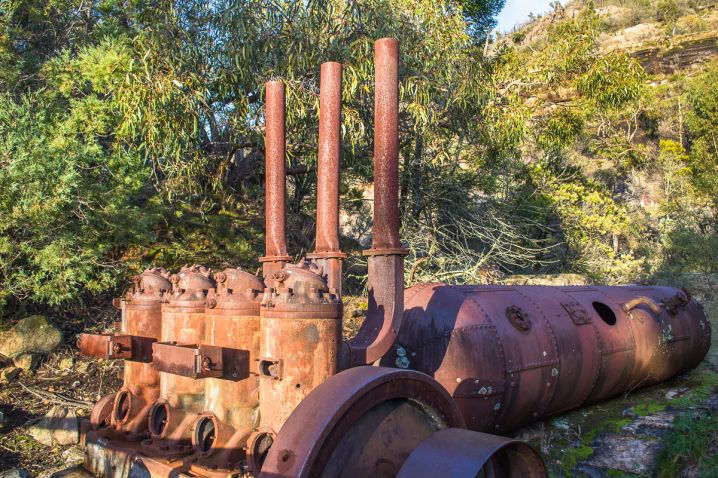
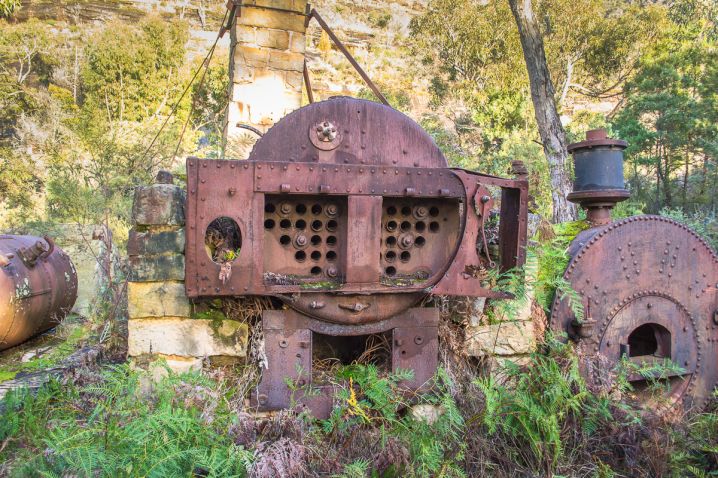
The quarry declined and was eventually closed in 1938 seeing much of the machinery sold. The Tramway (which is now a rail trail) was closed to traffic in 1949.
Limited quantities of stone were used until about 1981 for the repair of existing buildings, as well as facing the wall in Melbourne’s troubled City Square and extensions to an ANZ Bank.
The Grampians National Park was proclaimed in 1984.
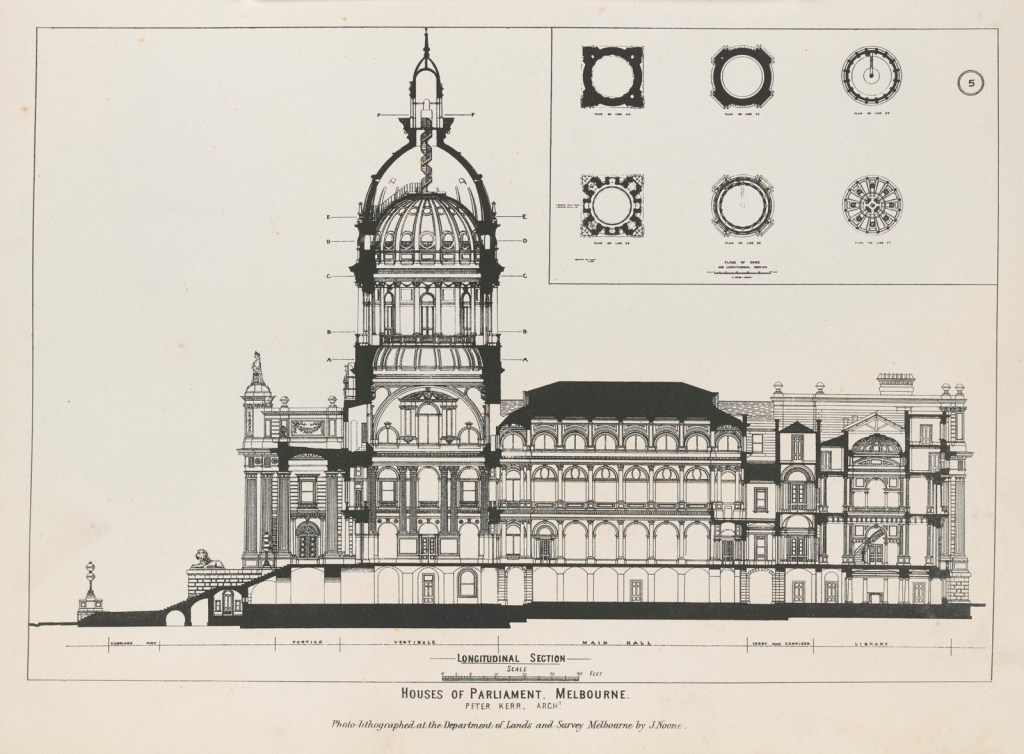
In the 1990s, the State Premier Jeff Kennett suggested completing Parliament House’s unfinished “grand design” which included a large central dome as well as north and south wings. But these new works would have required reopening the Heatherlie Quarry, and it was deemed politically too difficult in a National Park so the idea was shelved.


https://adb.anu.edu.au/biography/woods-john-4884




 Victoria’s Forests & Bushfire Heritage