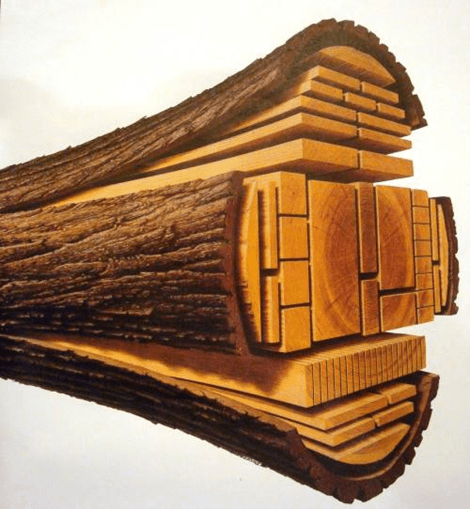
The losses from converting round logs onto square sawn timber depends on the species of tree, the diameter and length of the log, straightness and the overall taper of the log, internal defects and waste.
Sawn timber recovery can vary from 40 to 50% of the gross volume (cubic metres) for a large mountain ash sawlog. Smaller or defective logs have much lower recovery.
The recovery rate was one of the main factors used to determine log royalty (price) and was sometimes hotly contested by sawmillers.
Waste includes the outer round edges, docking of internal defects like knots and rot as well as sawdust.
Sawdust can account for 15-20% of the overall log volume loss.
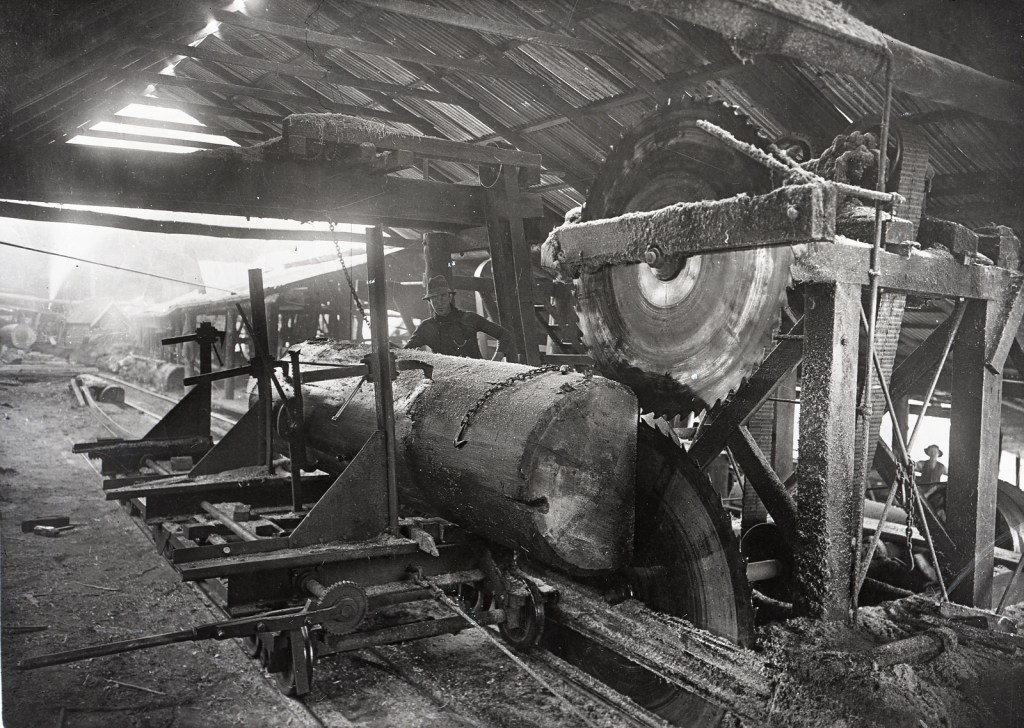
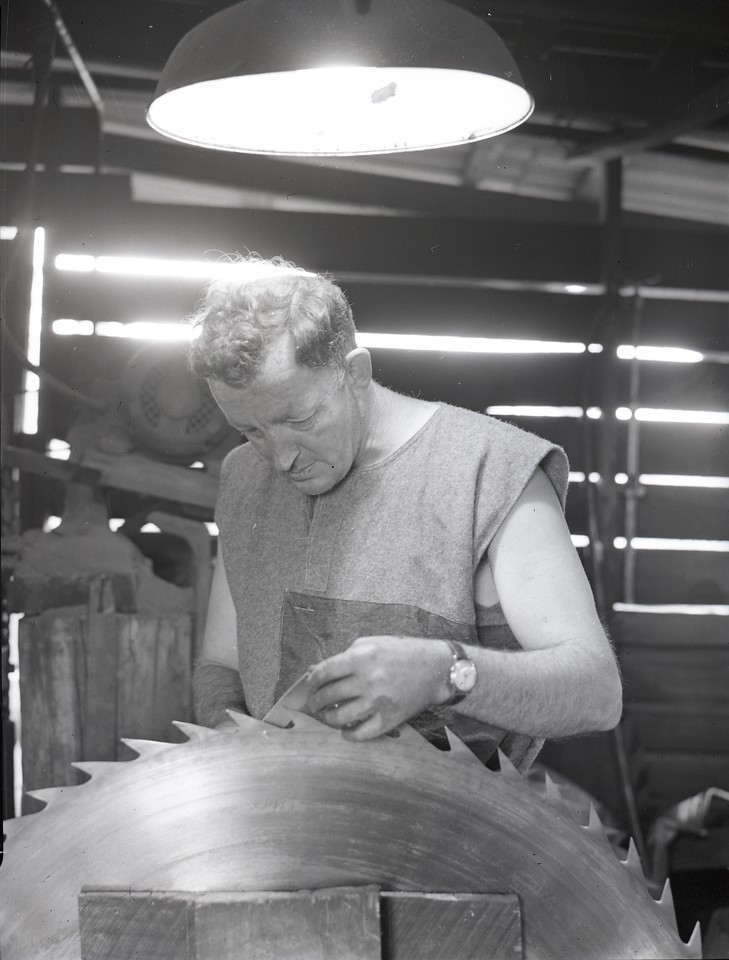
The type of saw is also important. Older circular saws were much thicker than modern band saws. This width is known as the “kerf” and typically was as much as 3/8 inch (9.5 mm) for a large breaking down saw and 1/8 inch (3.2 mm) on resaw benches.
The kerf depends on the thickness of the steel blade and the “set”, or offset of the teeth, the amount of wobble in the blade during cutting, and the amount of material pulled out of the sides of the cut. Keeping saws sharp and in shape required the skills of a saw doctor.
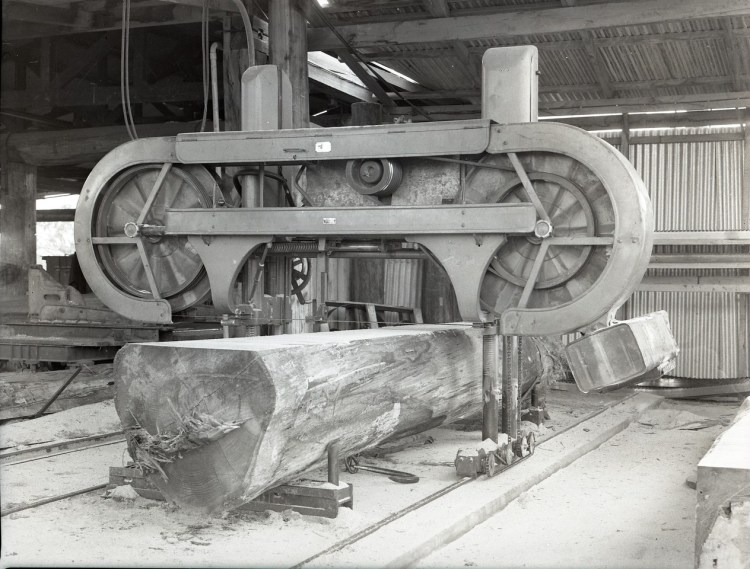
Modern bandsaws have thinner blades and narrower kerf teeth which operate under high tension. They produce more accurate cutting with less sawdust loss.
The quantity of sawdust produced depends not only on the kerf of the blade, but also sawing pattern and the number of cuts. Smaller dimension timber like garden stakes or fence palings need many more cuts than large structural beams or floorboards.
There may be further shrinkage losses as the sawn timber dries and needs to be dressed and planed into shape.
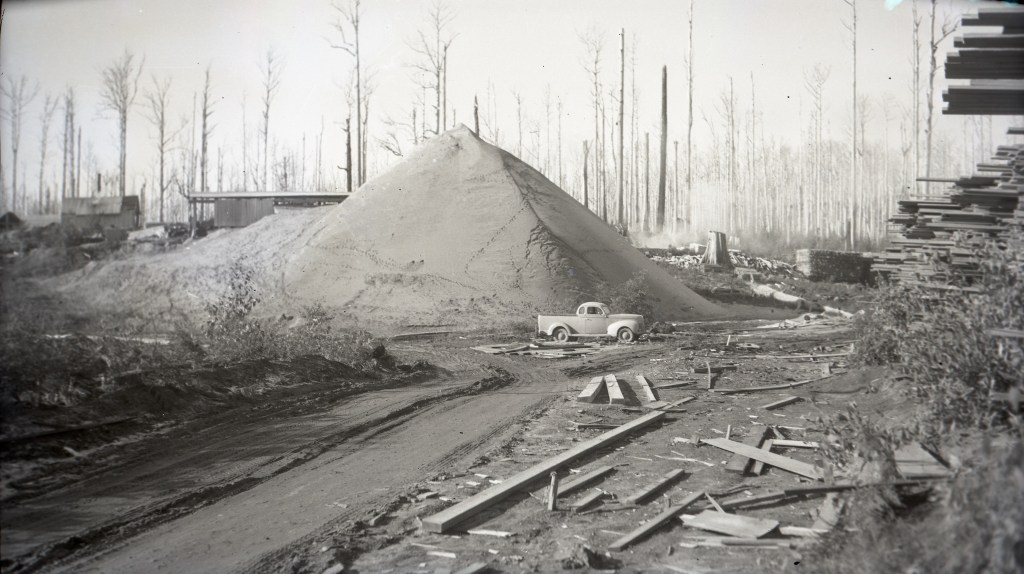
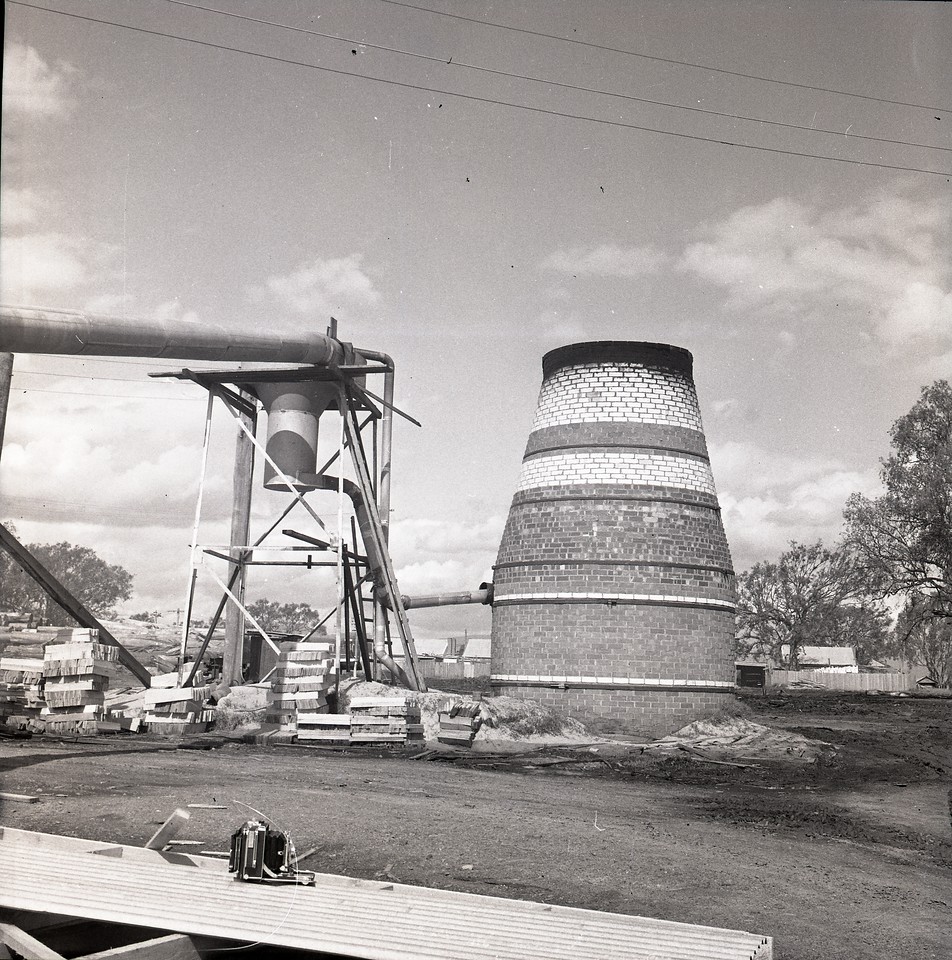
Older sawmills literally produced mountains of sawdust waste if there wasn’t a teepee burner or firepit nearby. In a few cases sawdust was recovered and used to make bricks.
Sawdust can also be made into wood flour and used for soil additives, filters, extenders for glues, fillers in wood composites as well as absorbents for explosives.
But sawdust has high levels of tannin and, in the absence of bushfires, can take decades to break down. There are still plenty of old heaps dotted around the bush.

 Victoria’s Forests & Bushfire Heritage