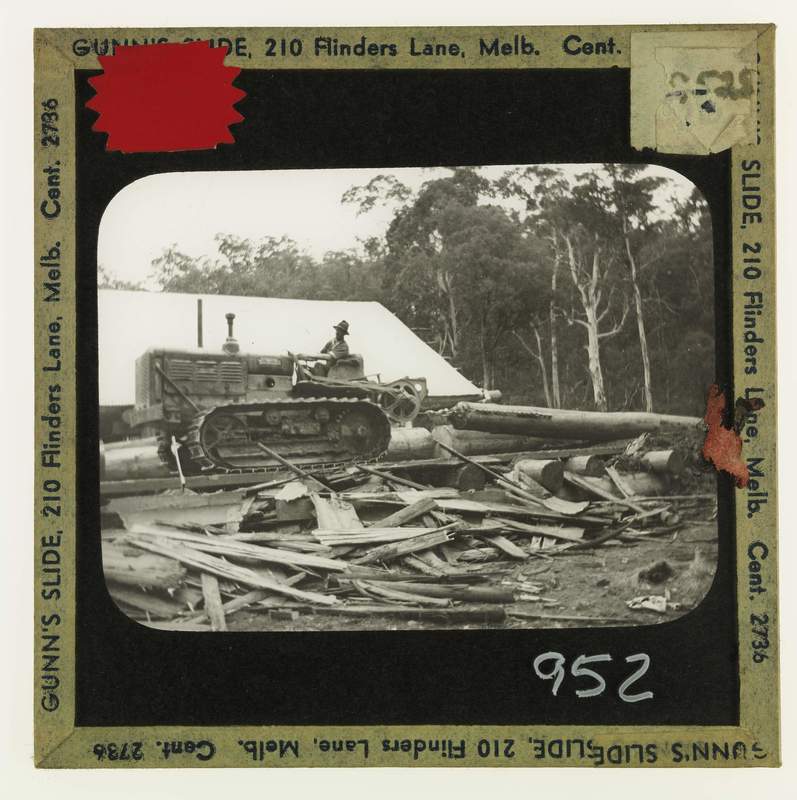
The first reference to the use of crawler tractors in Victorian logging operations was in 1934.
Forester, and later FCV Chairman, Finton Gerraty, reported in the Victorian Foresters Journal.
“A diesel oil caterpillar tractor which may be used either as a stationary winch, or as a mobile haulage unit, is the latest addition to log hauling machinery in use in the Victorian bush”.
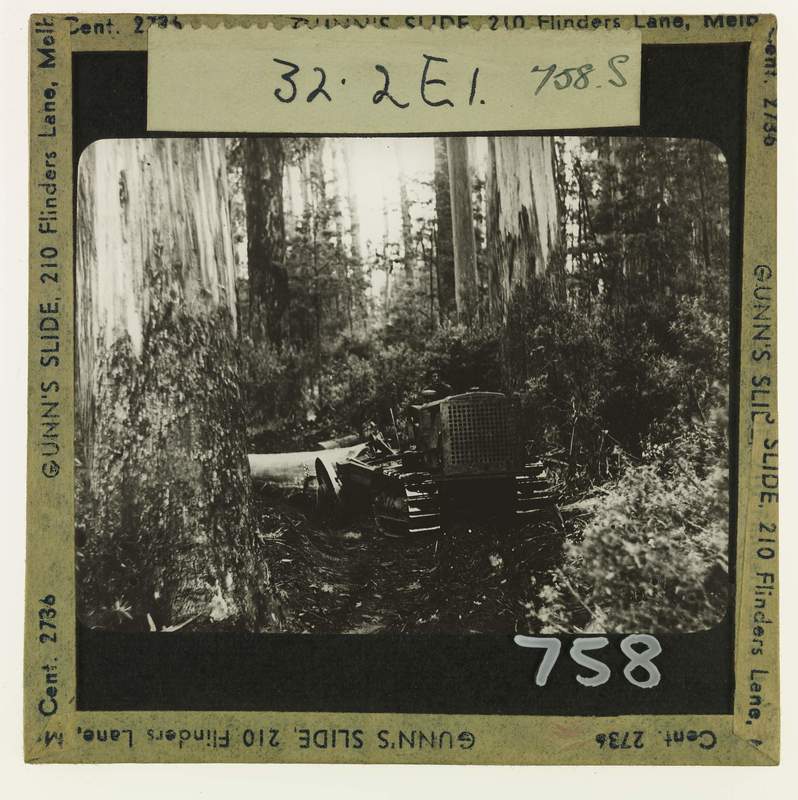
The machine was owned by Anderson and Rowe from the Marysville Seasoning Company and was working on Mt Strickland at an elevation of about 4000 feet.
The sawmilling and logging industry had known for a very long time that using animals such as horses and bullocks for hauling heavy logs in the steep and wet mountain forests had its limitations.
For many years logging contractors had been using stationary steam winches which partly solved the problem, but they were costly to set up and operate. For example, they required a licenced engine driver, a whistle string man and track swampers (what great job titles).
Stationary steam engines weren’t much good for harvesting small quantities of timber either. The economic threshold was about 200 acres (80 ha) of heavily timbered forest.
Mobile crawler tractors solved many of these problems. The three-cylinder, water cooled caterpillar tractor produced 35 horsepower which is piddling compared to today’s models.
It also came with a 9-inch, two speed winch with about 1000 feet (300 m) of ½ inch steel rope which could pull 12,700 pounds (5.7 tonnes).
With the winch, the machine weighed about 8 tonnes and had a top speed of 4.6 mph (7 km/hr).
The following production figures were obtained over sixteen day working test.
- Average number of logs per hour – 1.1
- Average size of logs – 1923 super feet (4.5 m3)
- Average length of haul – 67.5 chains (1360 m)
- Fuel consumption – 1 gallon per hour at 8 pence per gallon.
Tractors were clearly the way of the future, although steam continued to play a big role in the 1939 salvage operations in the Central Highlands.
 Victoria’s Forests & Bushfire Heritage