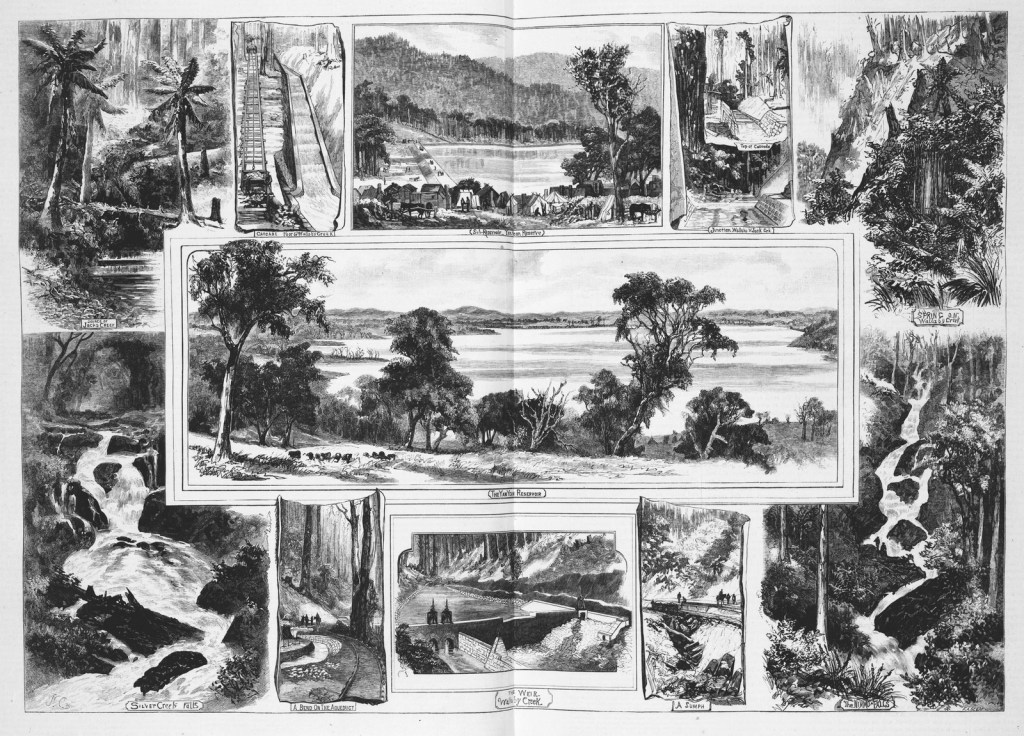
The east branch of the Plenty River, Silver Creek and Wallaby Creek catchments, were permanently reserved for water supply purposes in 1872.
Together with the 5,700-acre Yan Yean, which was completed in 1857, the catchments were part of the first system of reservoirs and aqueducts suppling water to Melbourne. The Toorourrong Reservoir was added in 1885.
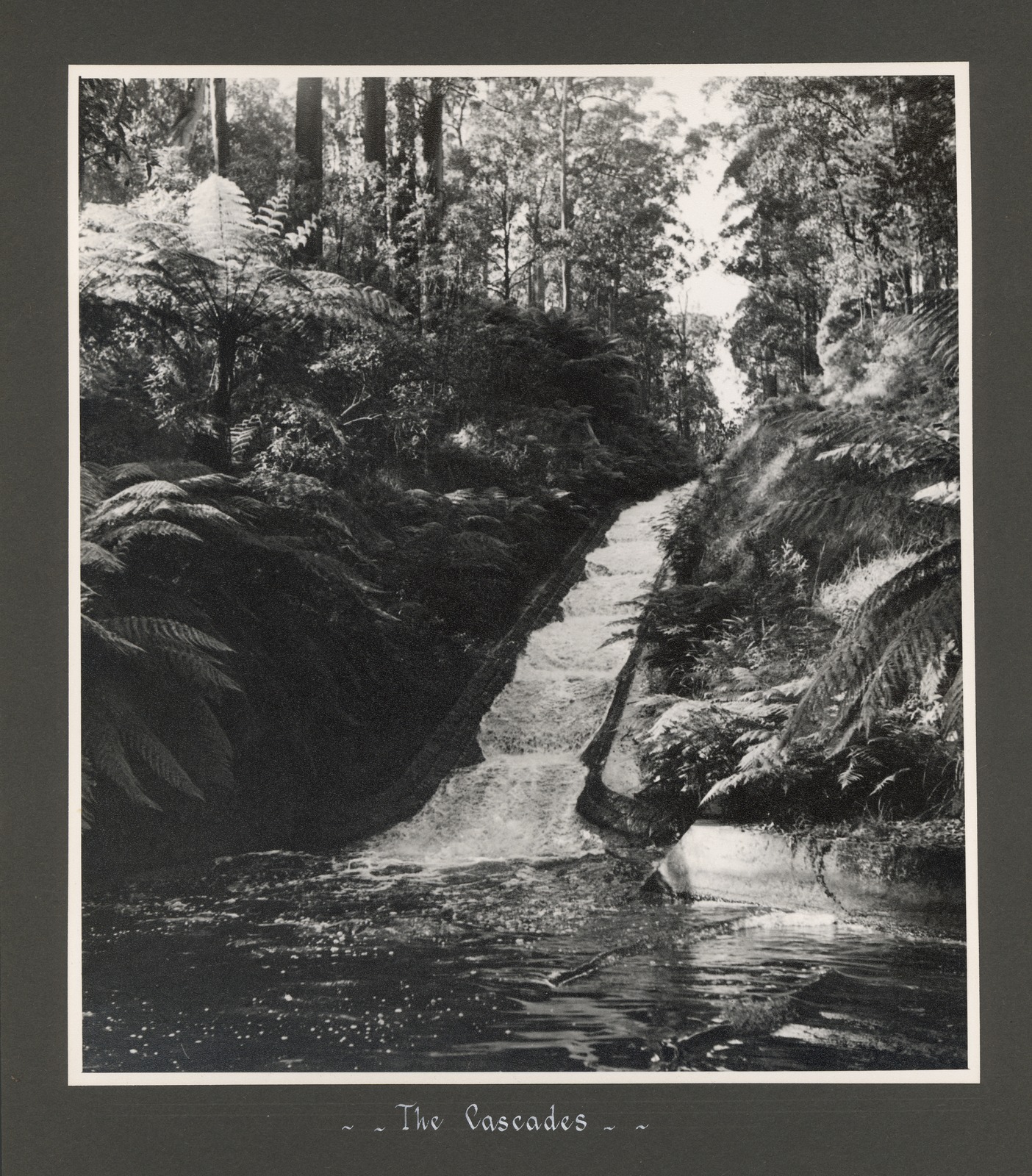
Water from the combined 11,500 acres of the Wallaby and Silver Creeks, which are on the northern side of Great Dividing Range, was diverted via deep granite lined channels over the range at a low saddle into the 10,500-acre Lower Plenty River catchment at Jack Creek, at a glorious spot known as the “Cascades”.
Public Works Department engineer, William Thwaites, designed most of the works.
In 1891, together with surrounding buffer areas, the catchments were vested in the Melbourne and Metropolitan Board of Works.
Wallaby Creek once had some of Victoria’s tallest mountain ash (Eucalyptus regnans), some growing at 300.5 feet. But the forests were extensively burnt in the 2009 Black Saturday Bushfires and the trees were nearly all killed. The MMBW caretaker’s lodge was lost as well. The subsequent thick regeneration has severely affected its water yield in accordance with projections of Kuzera’s Curve.
Long term research by the legendary botanist from Melbourne University, Professor David Ashton, showed that the oldest trees in Wallaby Creek originated from a bushfire in about 1700, whilst other old trees regenerated after the great fire of 1851.
Interestingly, before the fires some stands of mature mountain ash were very open with very little understory
The catchment is now part of the Kinglake National Park.

 Victoria’s Forests & Bushfire Heritage