Hardwood poles have always been a very high value forest product with a royalty much higher than sawlogs.
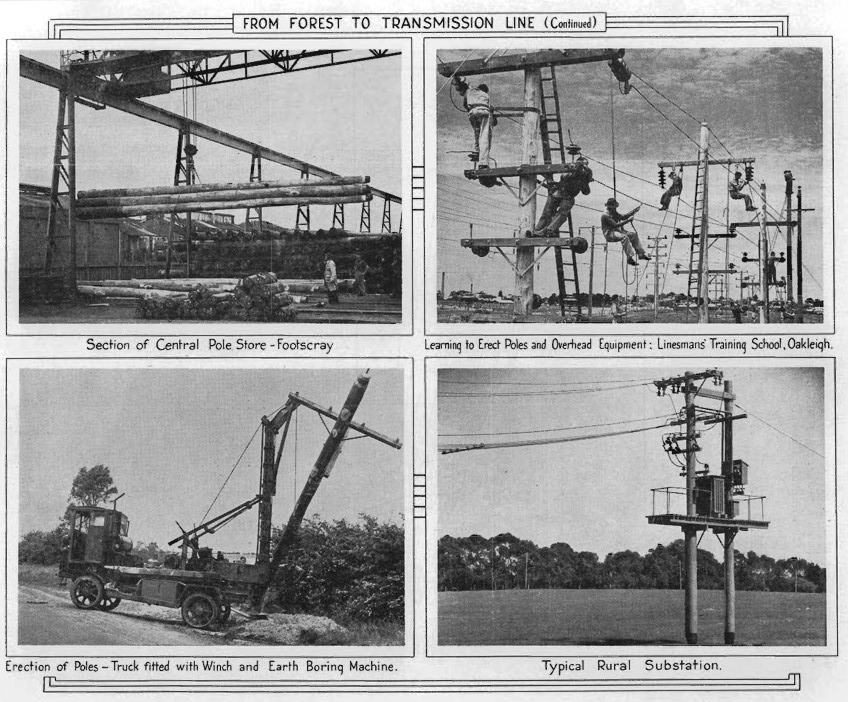
In 1946 the Forests Commission produced some 250,000 lineal feet (76.2 km) of telephone and electric power poles, mostly for the Post Master General (PMG) and State Electricity Commission (SEC).
From about 1947, as the power grid expanded during the post war period, durable species such as Gippsland grey box was getting harder to find so the SEC allowed Class 2 of round timbers such as white and yellow stringybark.
From about 1957, Class 3 species such as messmate and mountain grey gum were also in use.
The use of creosote and CCA to protect poles from decay began in about 1972 while treated pine and concrete poles were in widespread use from the mid 1990s.
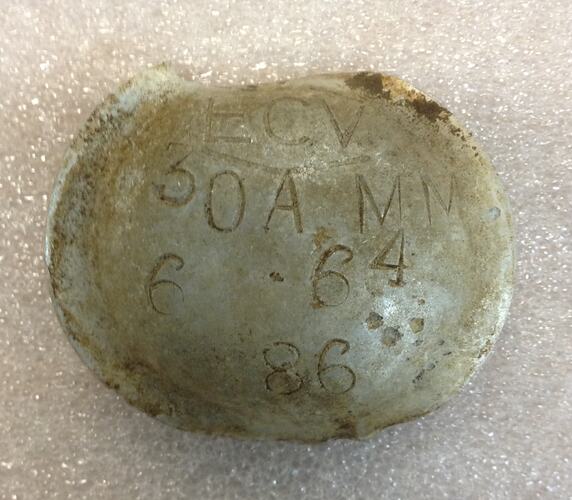
Each hardwood pole carried a metal inspection tag which indicated its date, class, and species.
SEC Annual Report 1946. https://www.parliament.vic.gov.au/papers/govpub/VPARL1945-47No26.pdf



 Victoria’s Forests & Bushfire Heritage