
Almost 11 inches of torrential rain fell over 18 hours during the evening of Wednesday 15 February 1954.
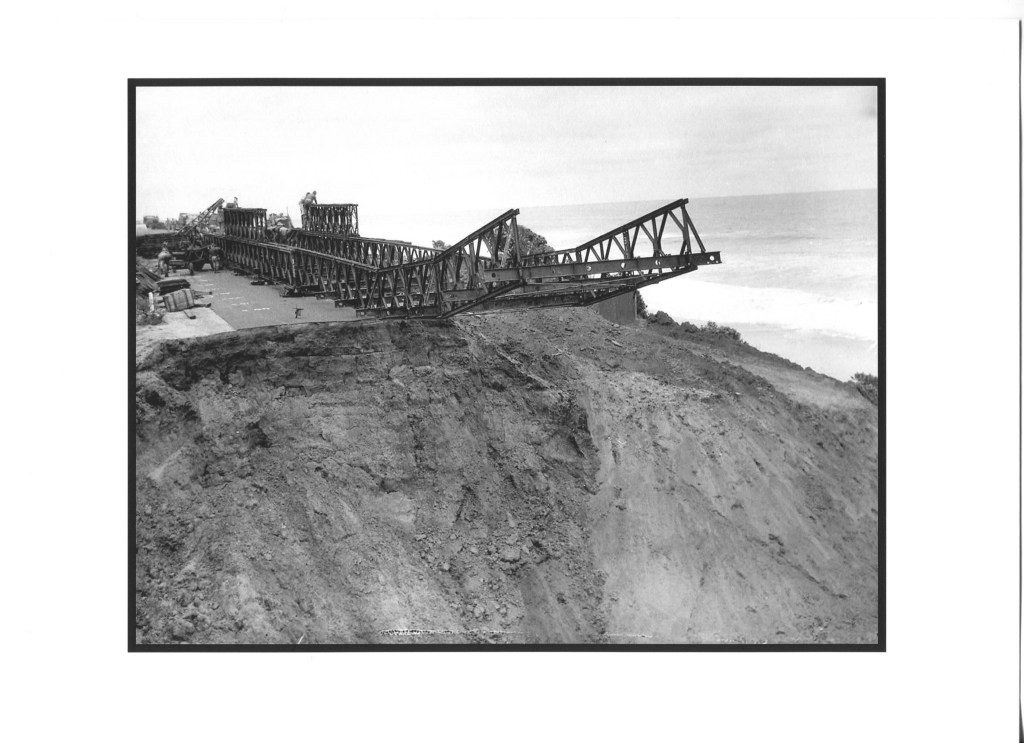
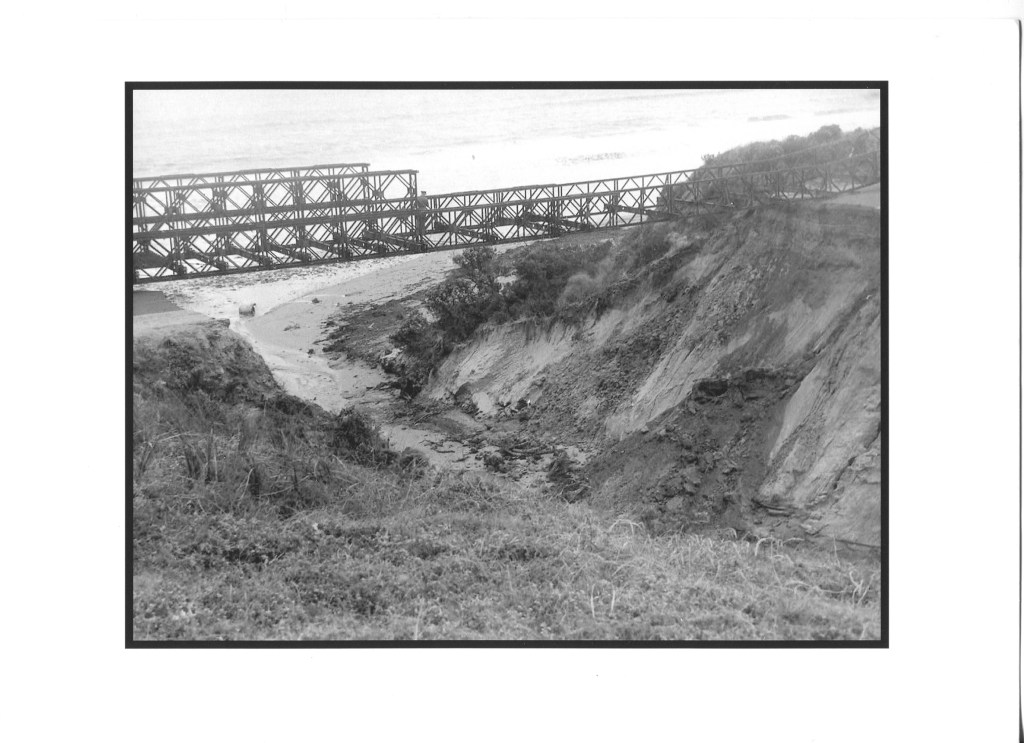
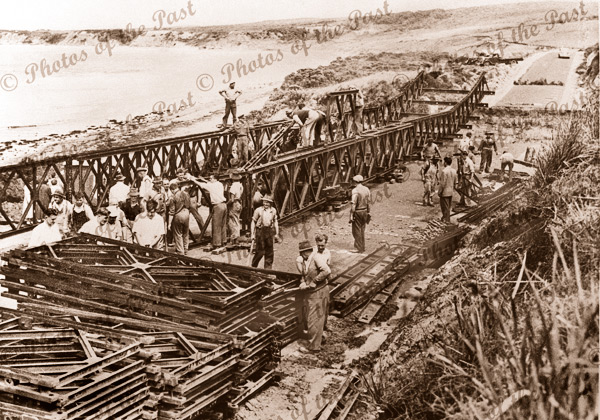
The deluge pushed soil and debris down the steep hills adjoining the Great Ocean Road and blocked a small culvert at Hutt Gully, just west of Anglesea. Water spilled across the road, gouging two impassable gaps up to 150 feet wide and 50 feet deep and cutting the traffic between Anglesea and Lorne.
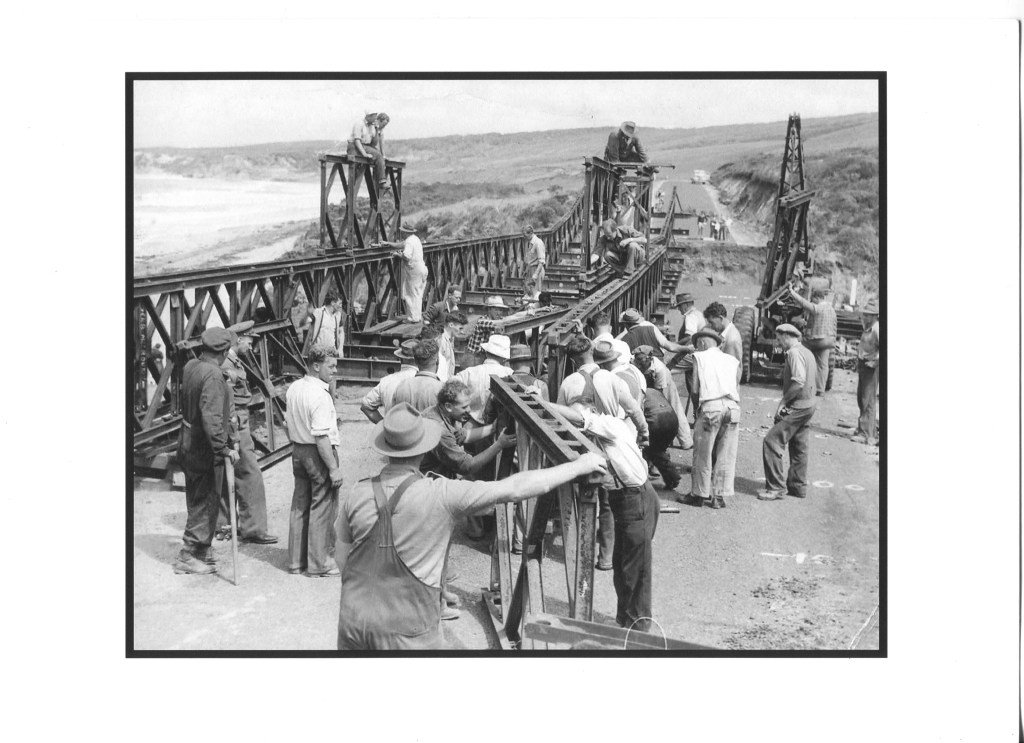
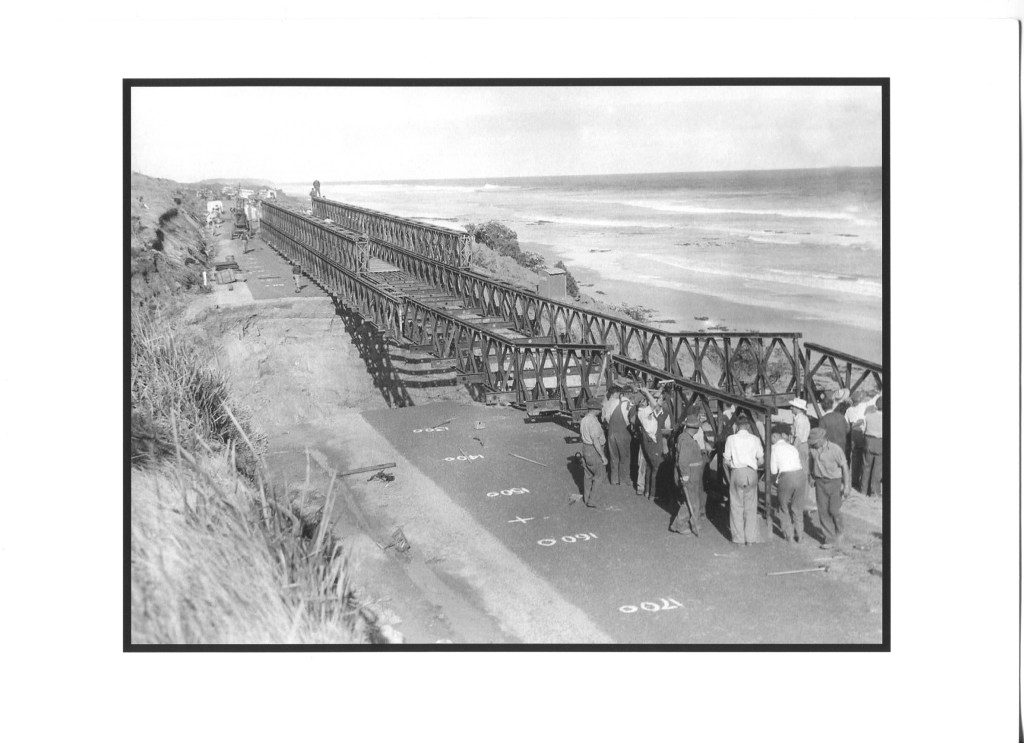
The Country Roads Board (CRB) mobilised the Army Reserve’s 22 Construction Regiment from Melbourne to help erect a single lane Bailey Bridge across the gaps.
In the same way that the Forests Commission sponsored the 91 Forestry Squadron (AKA – The Woodpeckers), 22 Construction Regiment had been formed in 1949 and drew its ranks from ex-servicemen, with the support of the CRB, MMBW and State Rivers and Water Supply.
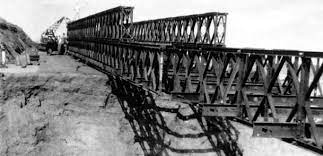
Bailey Bridges were a technical marvel of the Second World War and incorporated portable sections requiring no special tools or heavy equipment to assemble and were light enough to be manhandled and joined.
The cross-braced bridge components, that each weighed 570 pounds, could be progressively assembled on one side of the gap, and with the aid of a launching nose then pushed out on metal rollers, bit by bit, across the gap to reach the other side.
Forty sappers and CRB workers had the Great Ocean Road open to traffic across the temporary Bailey Bridges within two days.
New culverts of larger diameter were later installed by the CRB.
Several Bailey Bridges existed in State forest but sadly I don’t have any good photos.
https://trove.nla.gov.au/newspaper/article/26592361
https://en.wikipedia.org/wiki/Bailey_bridge
Photos: RAE collection.



 Victoria’s Forests & Bushfire Heritage